22 Living Room Curtain Ideas That Instantly Elevate Your Space
Walk into any beautifully designed living room and something feels right. The light hits perfectly, the room feels cozy but open, and everything just flows together. Nine times out of ten, the curtains are doing more work than you realize. They’re not just window coverings — they’re the frame around your whole world inside that room.
If your living room feels a little flat, a little unfinished, or just “almost there” — chances are your curtains are the missing piece. We’ve rounded up 22 genuinely stunning living room curtain ideas that go beyond the basics, so you can finally get that look you’ve been pinning for months.
Let’s get into it.
Why Curtains Matter More Than You Think
Before we jump into the ideas, let’s talk about why curtains carry so much visual weight. They’re one of the largest textile surfaces in your living room. They frame your windows — which are literally the eyes of your home. They control light, add warmth, absorb sound, and set the entire mood of a space.
The wrong curtains can make a beautiful room feel cheap. The right ones can make an ordinary room feel like a designer space. That’s the power we’re working with here.
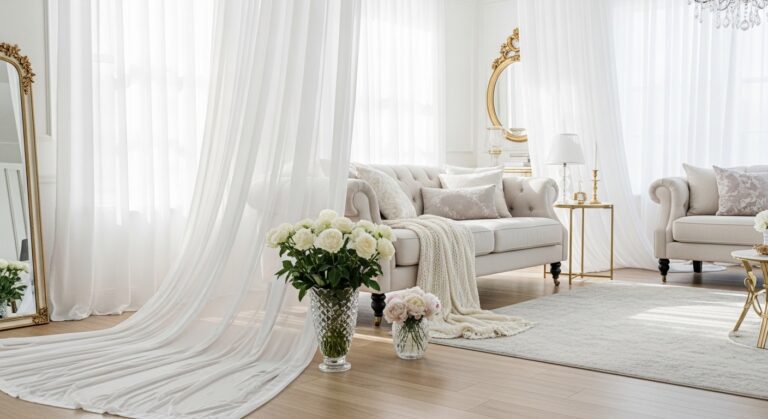
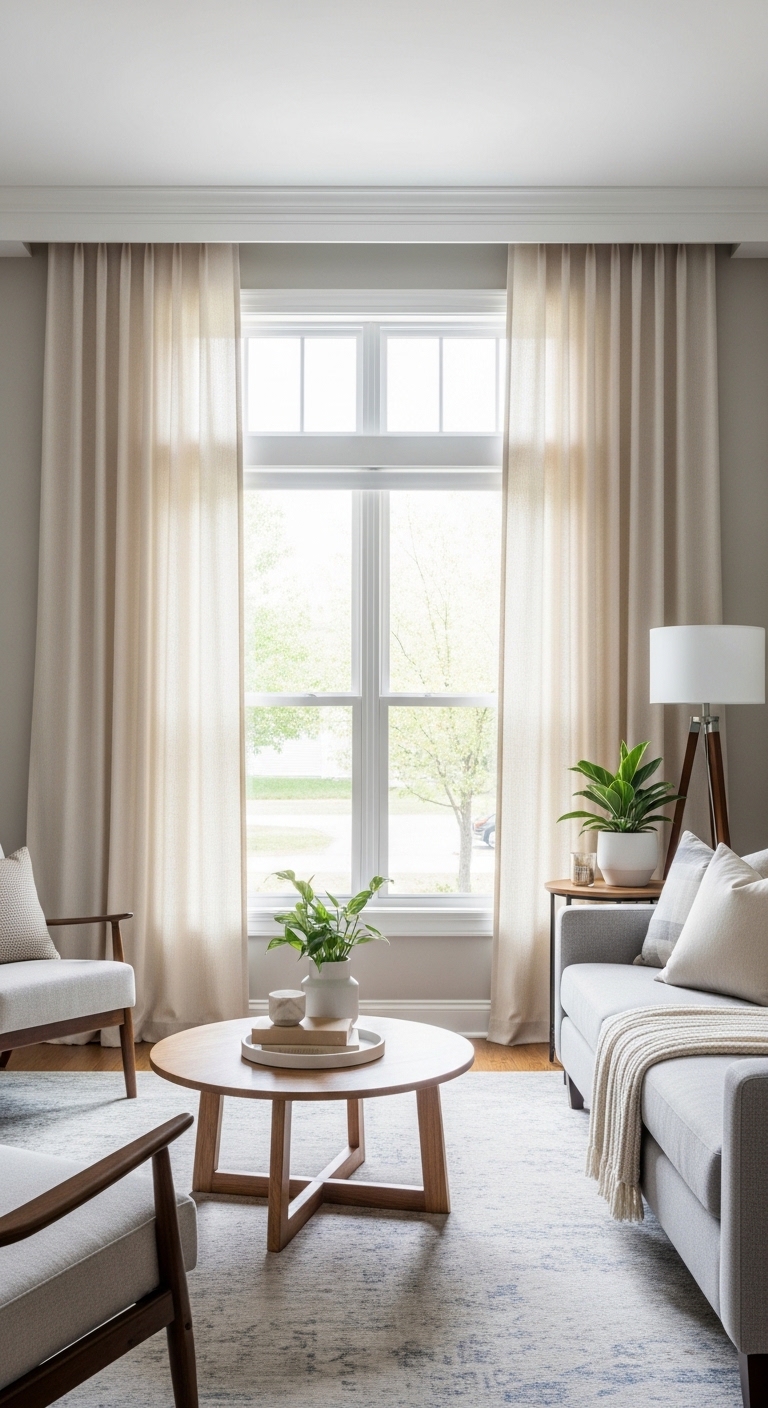
Floor-to-Ceiling Linen Curtains in Warm White
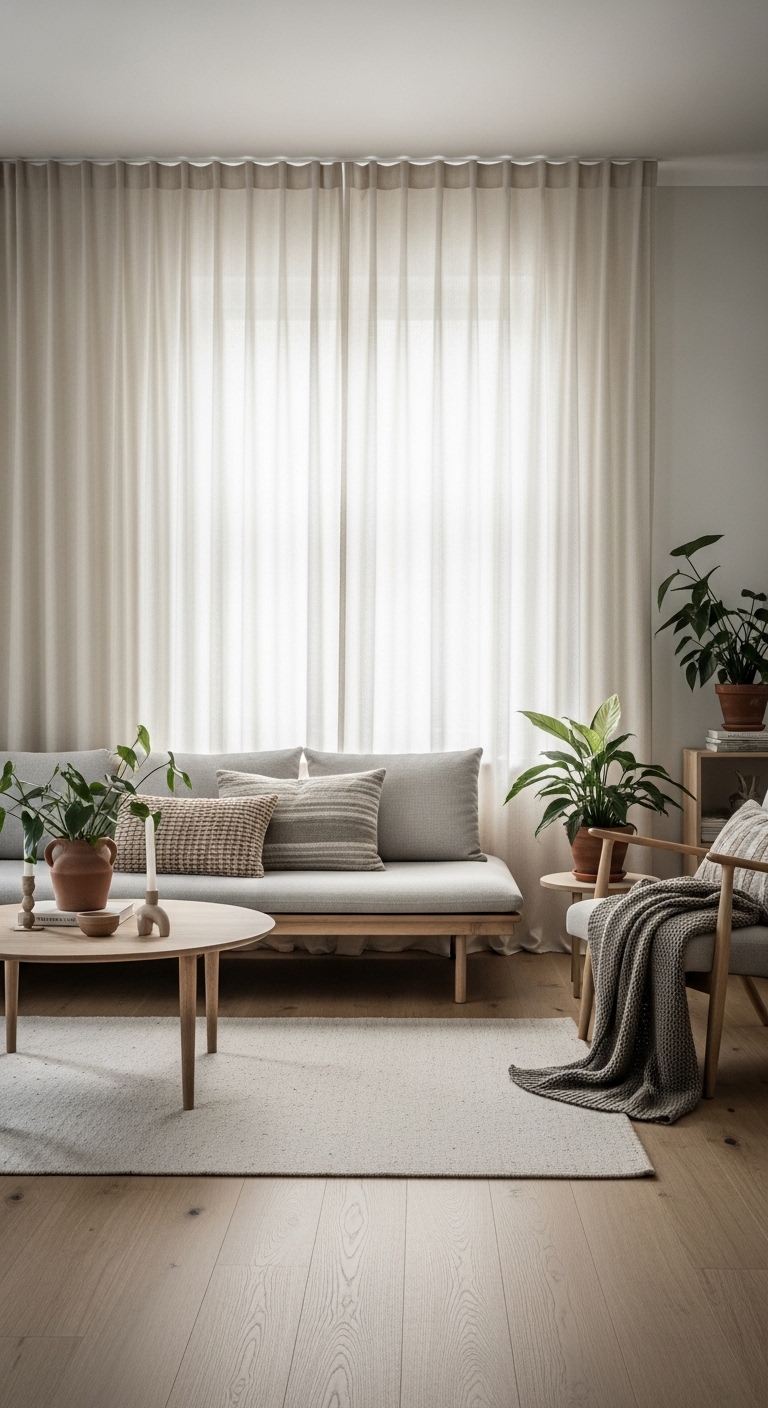
There’s a reason interior designers keep coming back to this one. Tall, flowy, warm-white linen curtains hung from ceiling height down to the floor do something almost magical — they make any room feel taller, airier, and more luxurious.
The trick is to mount your curtain rod as close to the ceiling as possible (ideally within 4–6 inches). Then let the fabric pool slightly on the floor — about half an inch to an inch of extra length. This creates that effortless, lived-in elegance you see in European homes.
Linen is the fabric of choice here because it diffuses light beautifully. It doesn’t block it entirely — it softens it into this warm, golden glow that feels almost like late afternoon sun, even at 10 a.m.
Velvet Curtains in Deep Jewel Tones
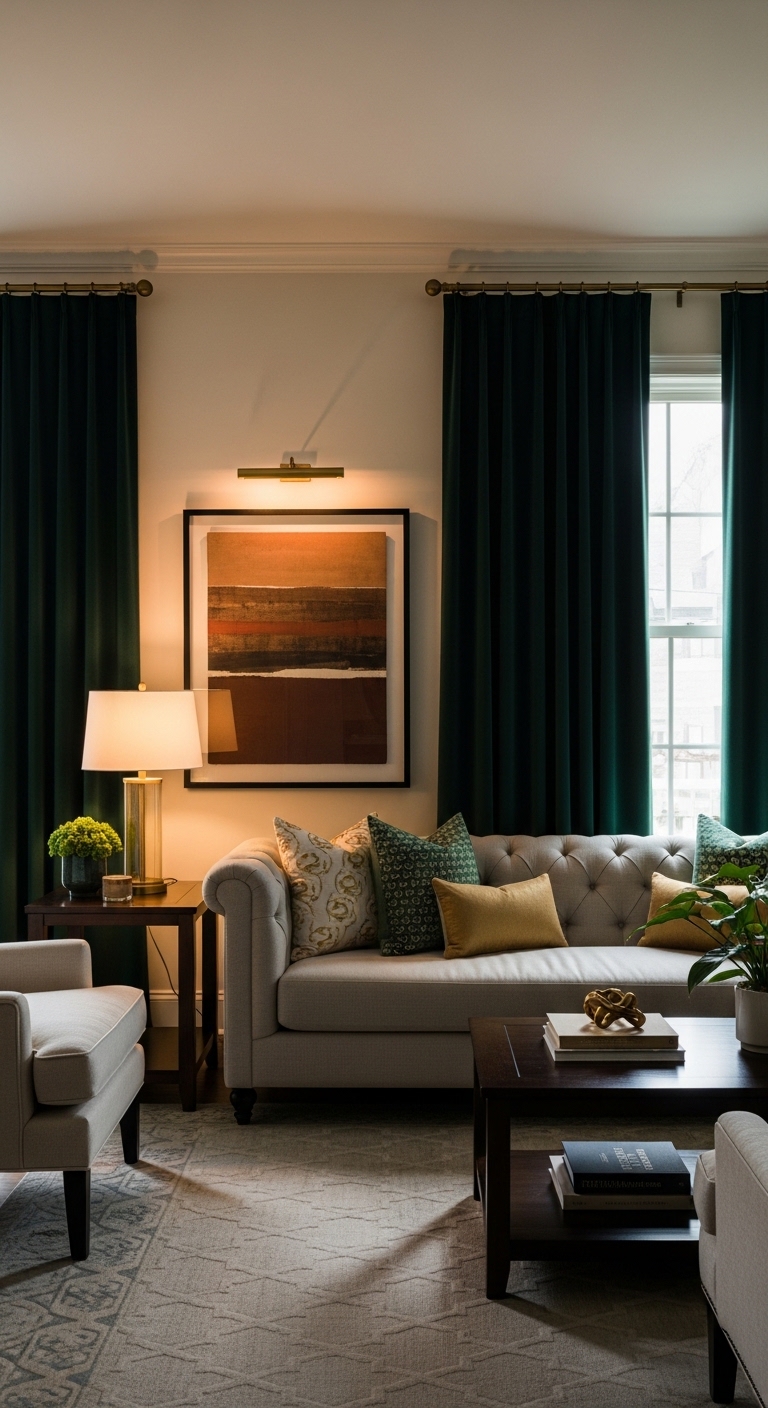
If you want your living room to feel bold, grown-up, and unapologetically gorgeous — velvet curtains in deep jewel tones are your answer.
Think:
- Midnight navy
- Forest emerald green
- Rich burgundy
- Dusty plum
Velvet absorbs light rather than reflecting it, which gives your room an incredible sense of depth and warmth. In the evening with lamps on, velvet curtains glow in a way that no other fabric can replicate.
They work especially well in rooms with neutral walls — cream, white, warm grey — where the curtains become the clear design centerpiece. Pair them with brass hardware for a high-end finish.
Sheer Layered Curtains for a Dreamy, Airy Look
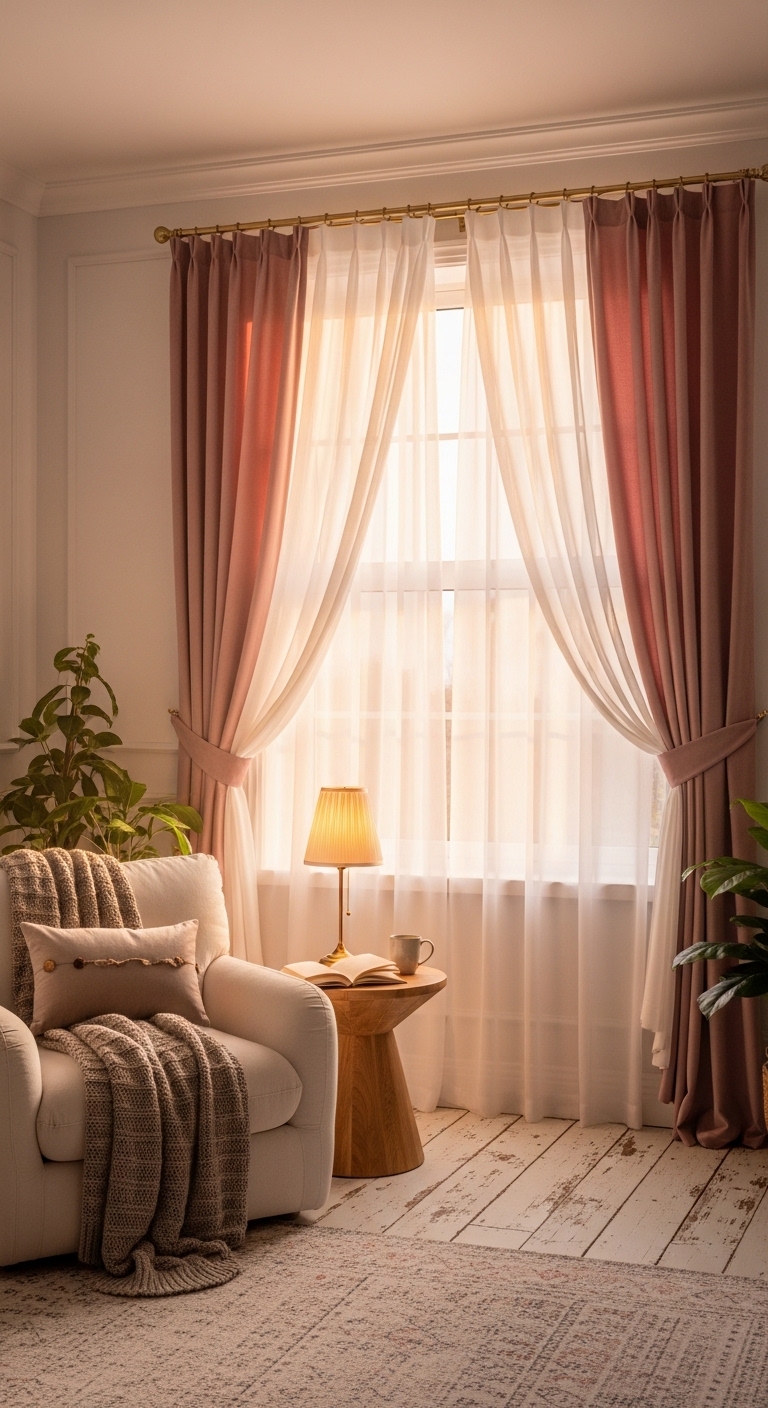
Layering sheers with heavier drapes is one of those tricks that transforms a room from flat to dimensional. The idea is simple: hang lightweight sheer curtains closest to the window, then layer a heavier panel behind or over them on a double rod.
During the day, you can pull the heavy panels back and let the sheers filter the light into something soft and dreamy. In the evenings, close the heavy drapes for privacy and warmth.
This approach works in almost any style of home:
- In a bohemian space, use gauzy white sheers with terracotta or rust outer panels
- In a modern home, go crisp white sheers with slate grey outer panels
- In a romantic, maximalist room, ivory sheers beneath dusty rose velvet outer curtains
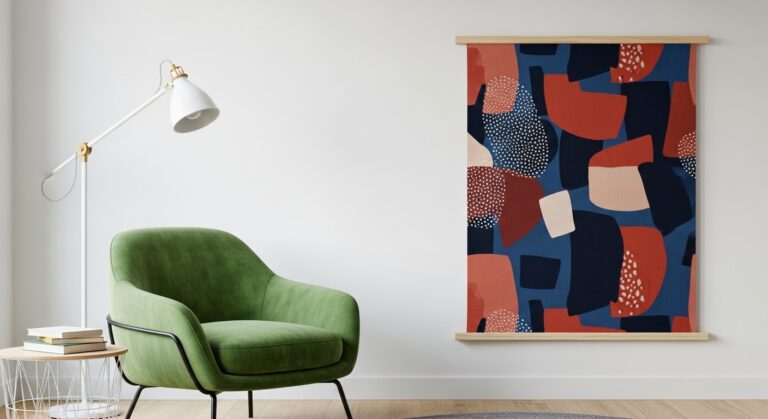
Bold Geometric Print Curtains
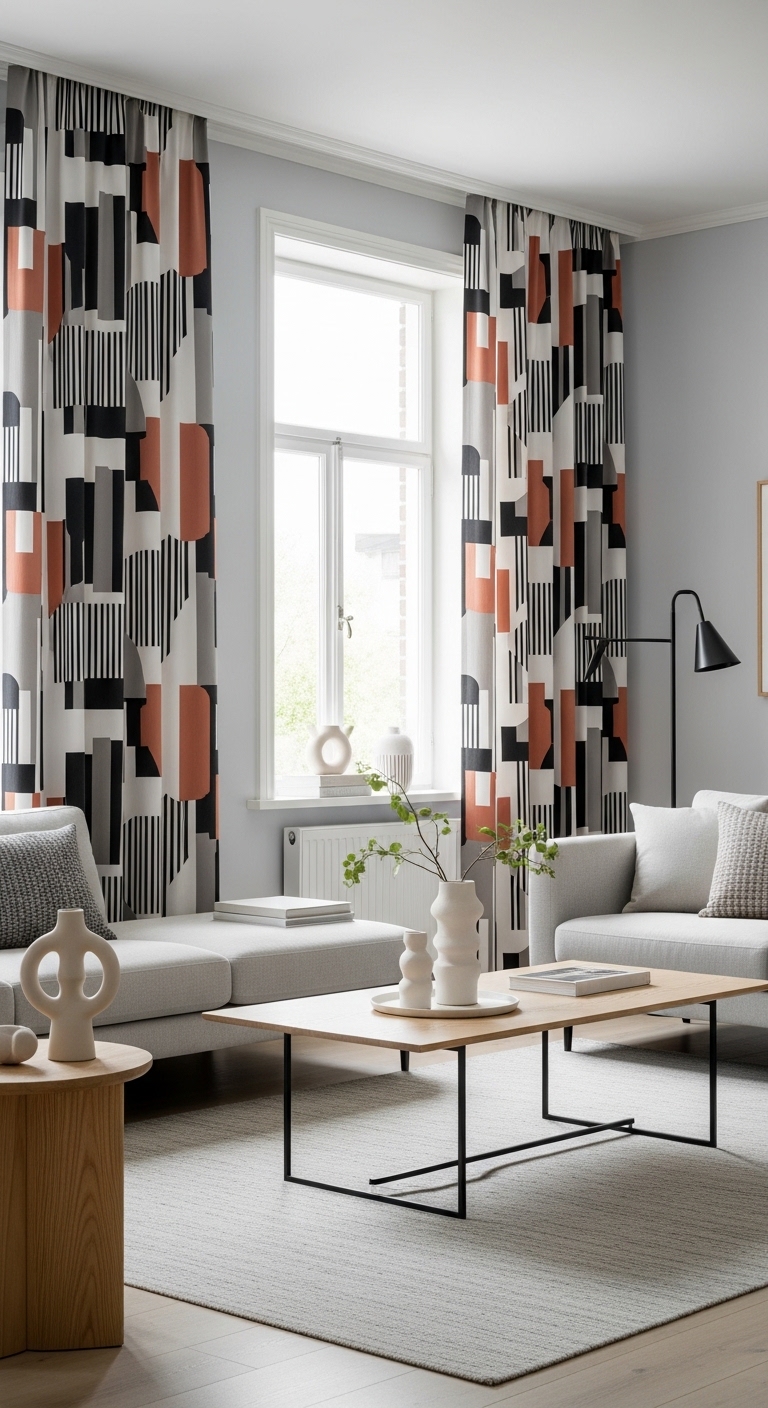
Solid curtains are safe. Patterned curtains are a statement. And right now, bold geometric prints are having a serious moment in interior design — for good reason.
A strong geometric curtain with clean lines and contrasting colors can anchor a room the same way a piece of art would. You don’t need expensive art on every wall when your curtains are doing that visual heavy lifting.
Keep the rest of the room simple. Let the curtains be the star. Choose one color from the curtain print and echo it in a throw pillow or a small accessory — that’s all you need to tie the look together.
Blackout Curtains That Don’t Look Like Blackout Curtains
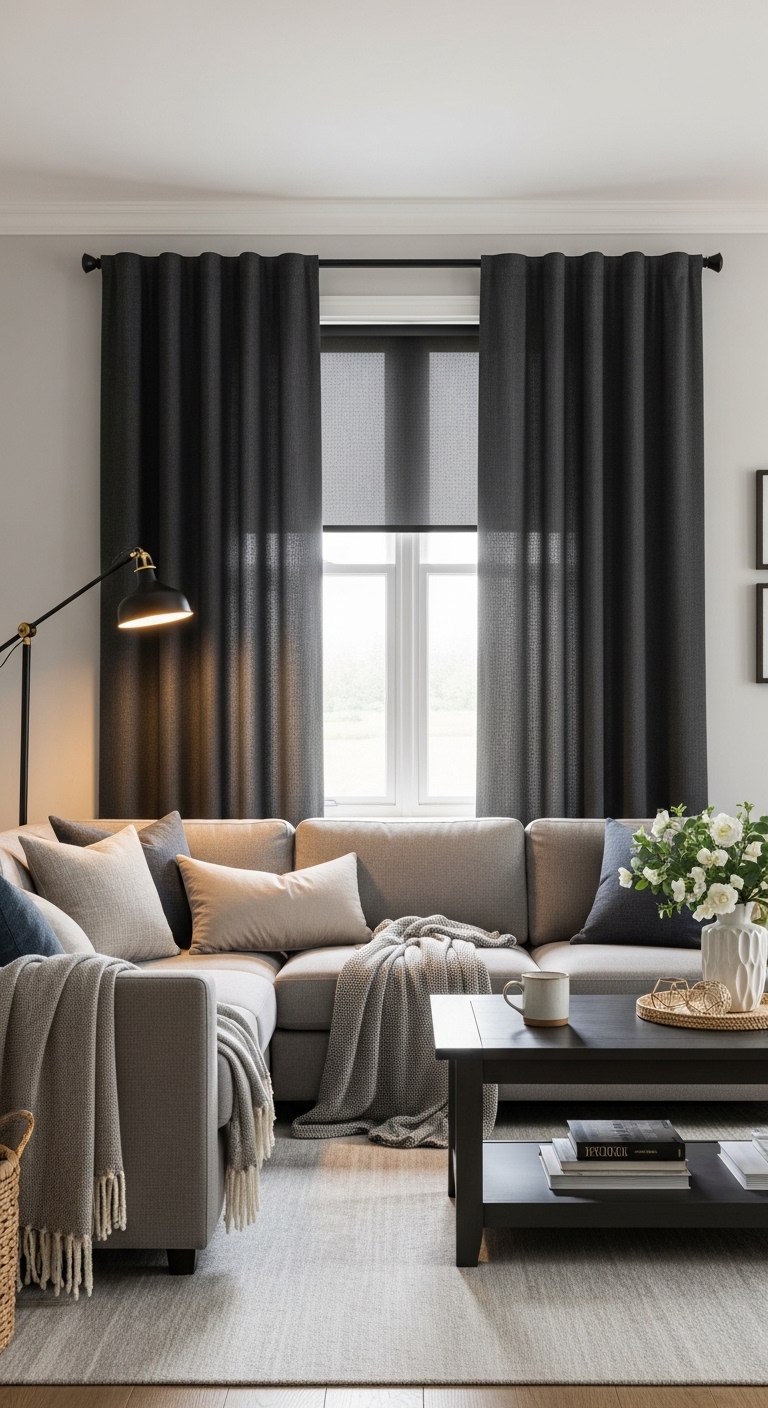
For years, blackout curtains had a reputation for being clunky and institutional-looking. Those days are over. Today’s blackout curtains come in beautiful fabrics, rich colors, and elegant drapes that you’d never guess are fully light-blocking.
This is a game-changer for:
- Home theaters or media rooms
- Rooms that get harsh afternoon western sun
- Anyone who naps in the living room (no judgment — we do too)
Look for blackout curtains in linen-look polyester blends, or lined velvet panels. They block 99% of light but look like designer fabric during the day. Mount them high and wide — extending at least 6 inches beyond each side of the window — for the best result.
Bohemian Macramé Curtain Panels
Macramé isn’t just for wall hangings anymore. Macramé curtain panels add incredible texture, boho warmth, and handcrafted personality to a living room — especially when used as room dividers or as a decorative accent panel alongside a standard curtain.
They don’t block light, which makes them perfect for spaces where you want visual interest but don’t need privacy. Think: a sunny corner, an open entryway, or a reading nook.
Pair them with warm wood furniture, lots of plants, rattan accents, and earthy tones. The result feels artisanal, intentional, and deeply cozy.
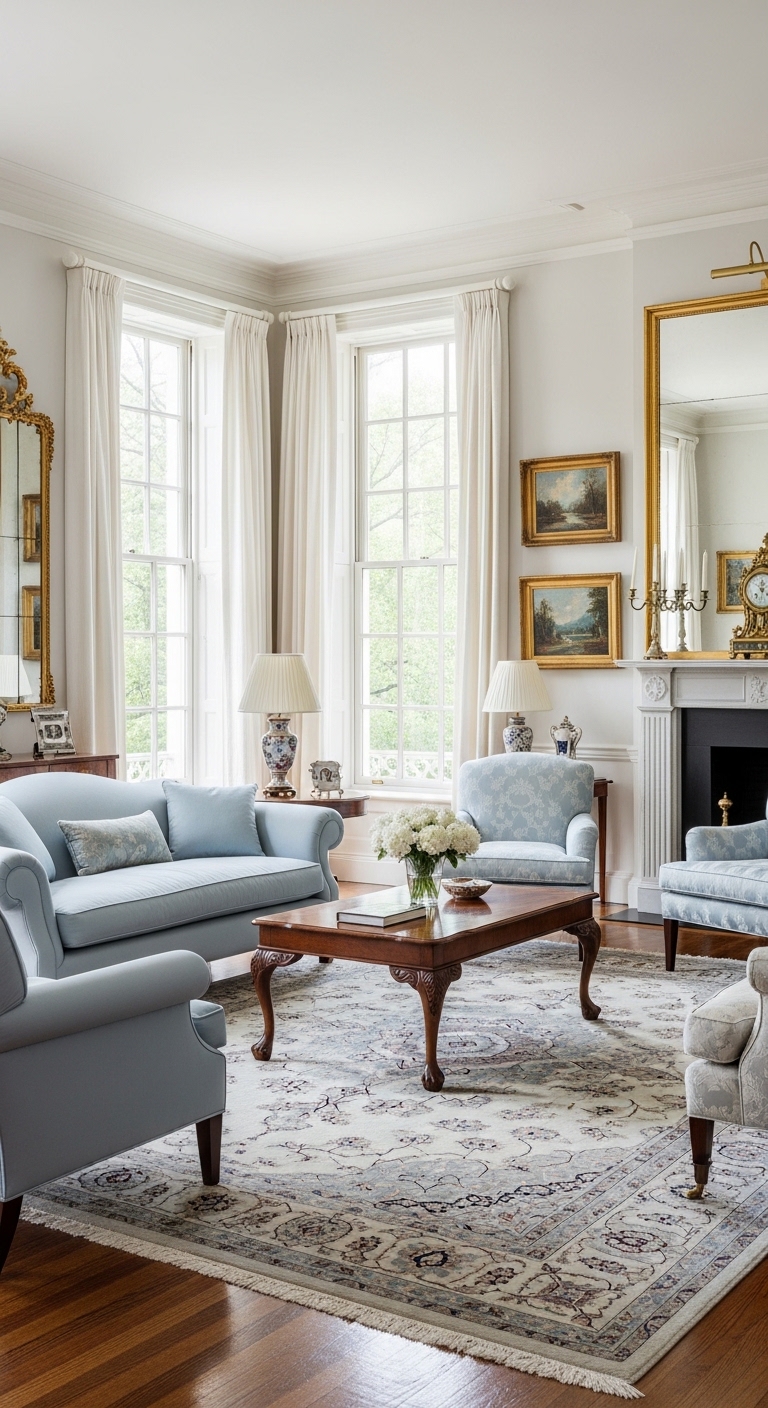
Classic White Pinch Pleat Curtains
When in doubt, you almost can’t go wrong with white pinch pleat curtains. They’re timeless. They work in traditional, transitional, and even modern homes. And when done well, they look genuinely expensive.
The pinch pleat heading creates structured, even folds that hang perfectly. Unlike rod-pocket curtains that bunch awkwardly, pinch pleats have a tailored quality that reads as high-end.
Hang them in crisp cotton for a clean, classic look. Or go with a cotton-linen blend for something slightly more relaxed and organic. Either way, they photograph beautifully and make the room feel polished.
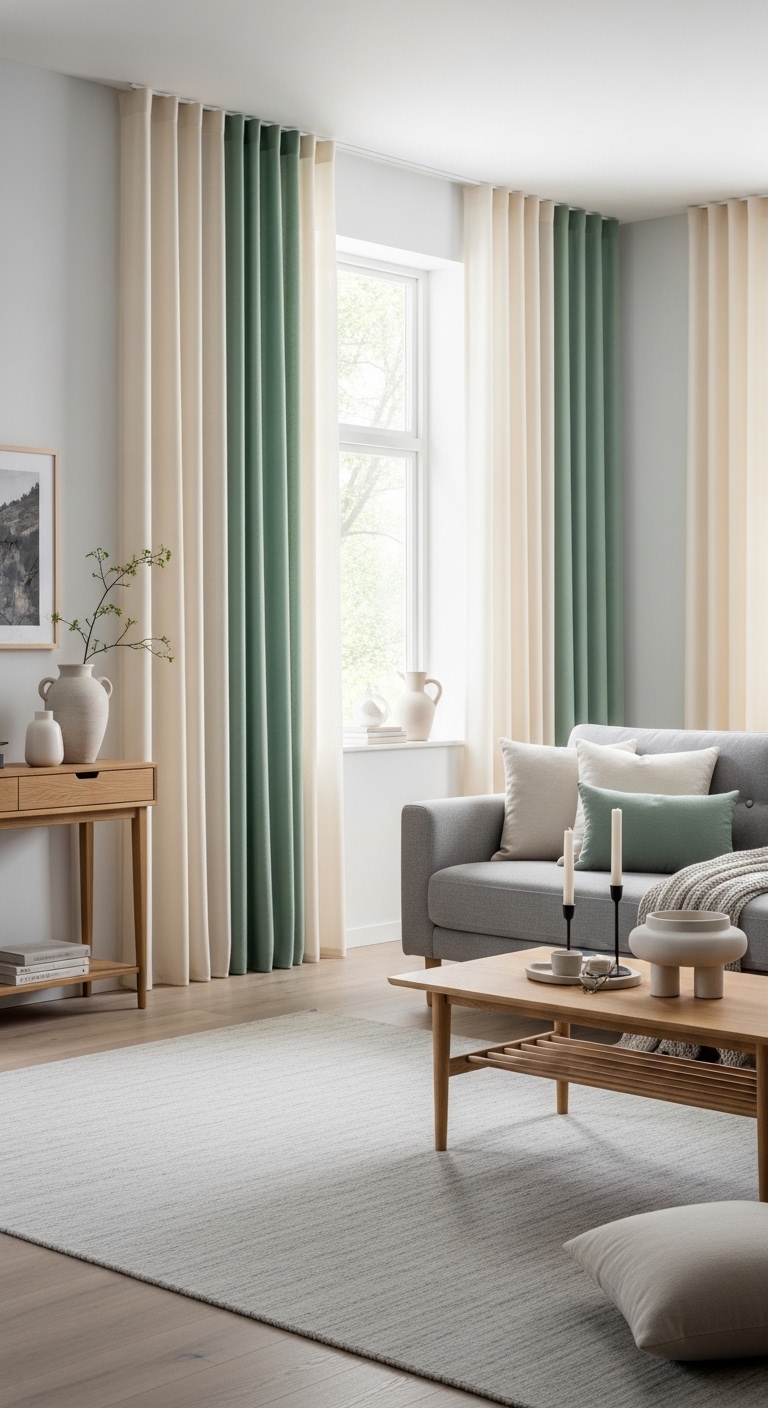
Two-Tone Curtains for Modern Drama
Two-tone curtains — meaning panels that combine two different colors — are one of the most underrated curtain ideas out there. They add visual interest without requiring a busy pattern, and they help you bridge two colors in your existing décor.
Popular combinations right now:
- Cream and camel
- White and soft sage
- Charcoal and warm taupe
- Blush and dusty rose (for a tonal look)
The color break can run horizontally (top half one color, bottom half another) or you can use alternating full-length panels of two complementary colors. Both approaches create a sense of sophistication that solid panels can’t match.
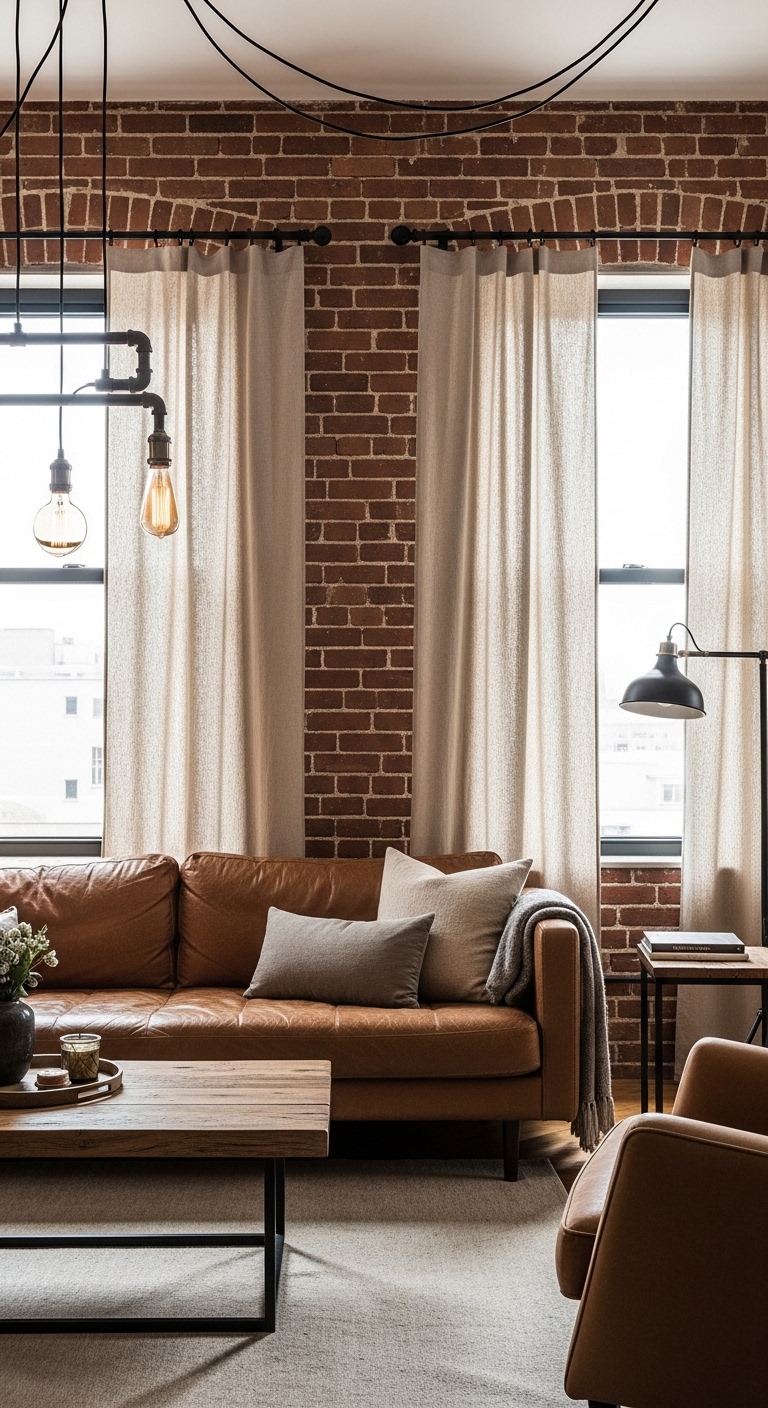
Industrial Pipe Curtain Rods
Sometimes the rod is the design. Exposed black iron or copper pipe curtain rods have become a staple in industrial and modern farmhouse interiors — and honestly, they look incredible in a lot of different styles.
The chunky hardware creates a strong horizontal line across the wall that adds architectural interest. Pair them with:
- Simple white or linen curtains (the contrast is everything)
- Heavier canvas or cotton duck fabric
- Aged cotton in natural or off-white tones
These rods also tend to be more affordable than fancy decorative rods because you can literally use plumbing pipe from a hardware store. It’s one of those designer-looking DIY tricks that costs almost nothing.
Curtains Hung Wide to Make Windows Look Bigger
This is less about the curtain style and more about the technique — but it makes such a dramatic difference that it deserves its own section.
Most people hang curtains to cover just the window. Interior designers hang them much wider — extending 12 to 18 inches beyond each side of the window frame. This does two incredible things:
- When the curtains are open, they frame the window without covering any glass, letting in maximum light
- The window appears significantly wider and more architecturally impressive
Combined with ceiling-height mounting, this technique can make a small, average window look like an architectural feature. It works with literally any curtain style.
Floral Print Curtains for a Romantic, Cottage Feel
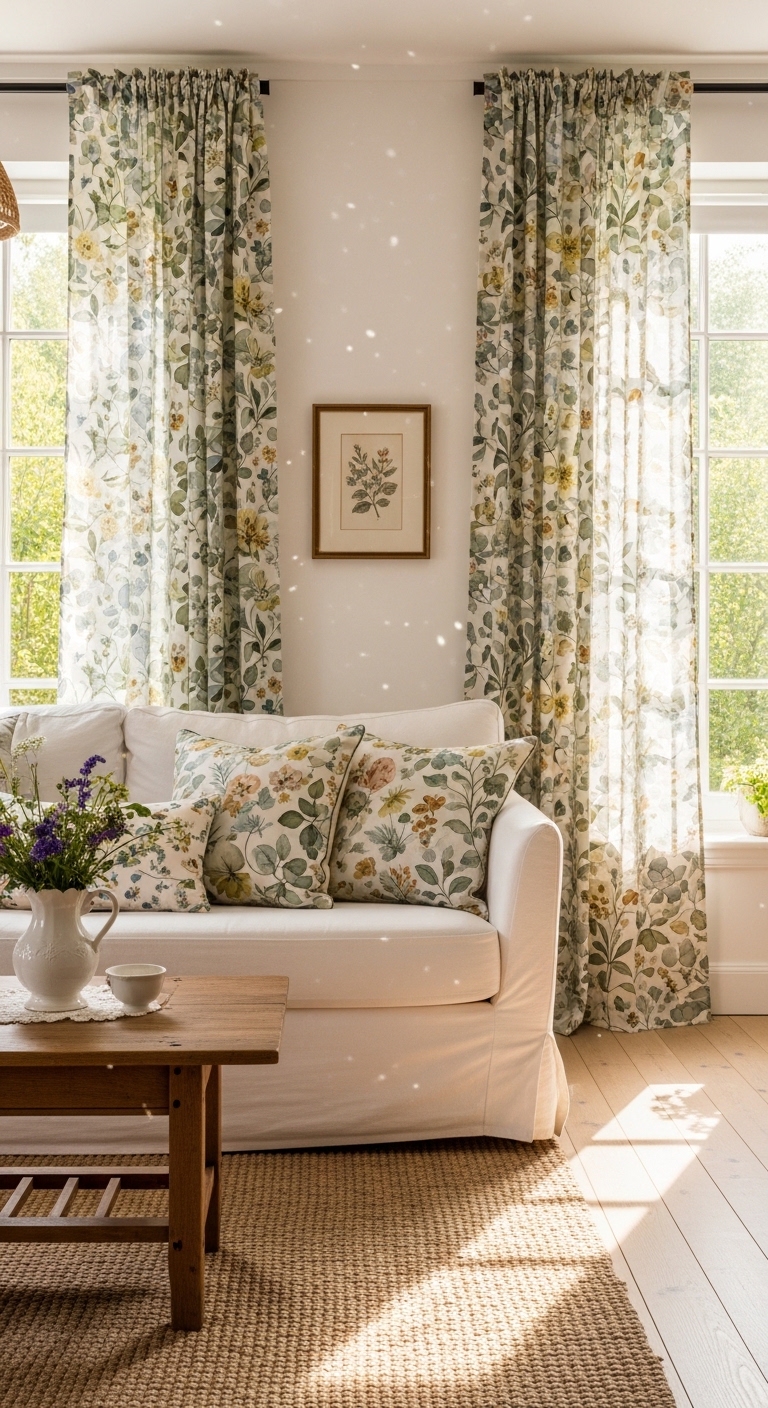
Floral curtains went through a period where they felt dated — the 1980s left some scars. But modern floral prints are completely different. They’re painterly, oversized, and bold in a way that feels fresh and artistic rather than frumpy.
The key to making florals work in a modern context:
- Choose large-scale prints, not tiny, busy ones
- Stick to a limited color palette within the print (two or three tones maximum)
- Keep surrounding furniture and walls very simple
- Use them as a single statement — don’t mix with other patterns
A large botanical print in watercolor shades of sage, cream, and dusty blue can make a living room feel like a beautiful, sun-drenched garden room.
Curtains with Tiebacks for a Classic Sculpted Look
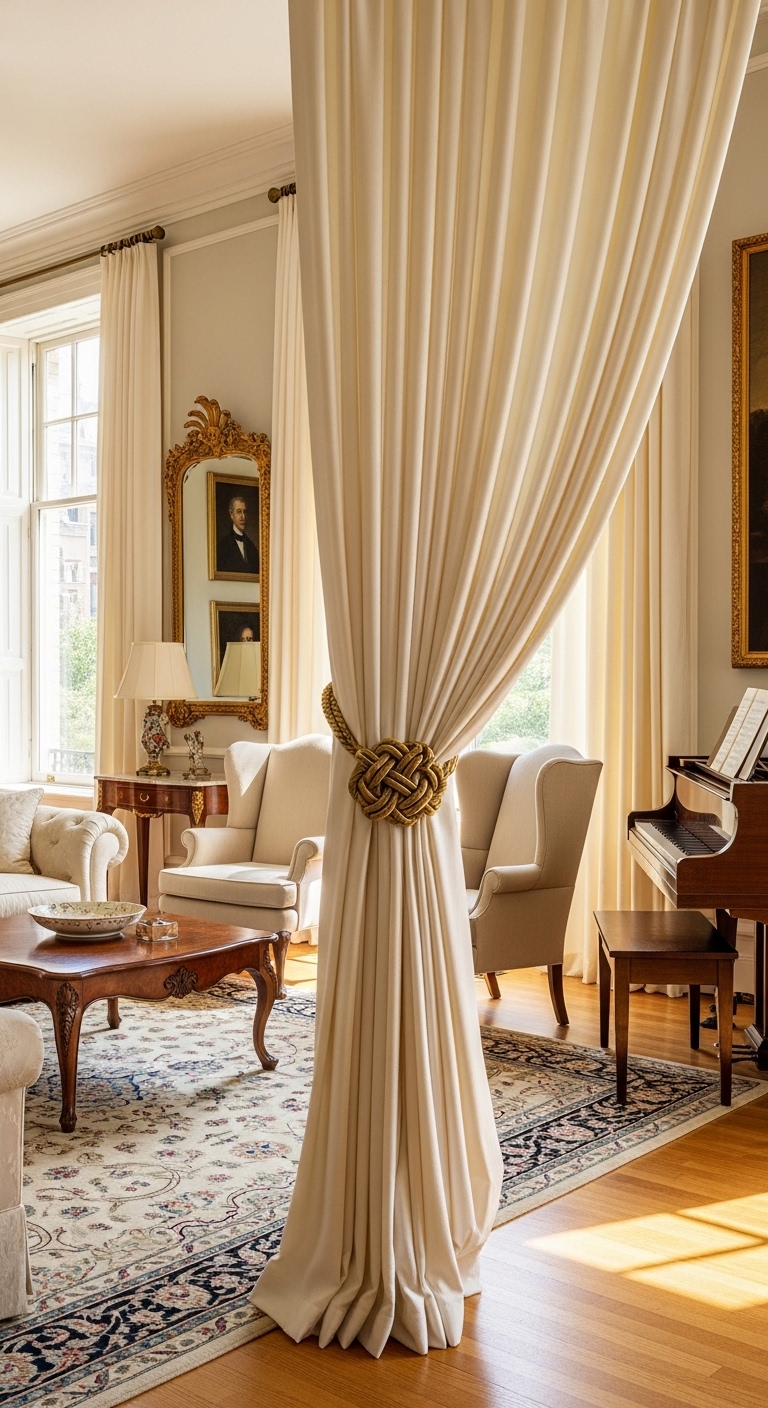
Tiebacks are one of the oldest curtain styling techniques — and they work because they create a beautiful silhouette. When you pull a full curtain panel to one side and hold it with a tieback, the fabric drapes and pools in a sculptural way that’s genuinely elegant.
Modern tiebacks come in:
- Twisted rope in natural jute or silk
- Simple fabric bands in a contrasting color
- Metallic rings or hooks in brass or chrome
- Tassel tiebacks for a maximalist, boho finish
Even a basic panel curtain looks elevated when it’s styled with a proper tieback. It’s a low-cost, high-impact upgrade.
Natural Woven Roman Shades as Curtain Alternatives
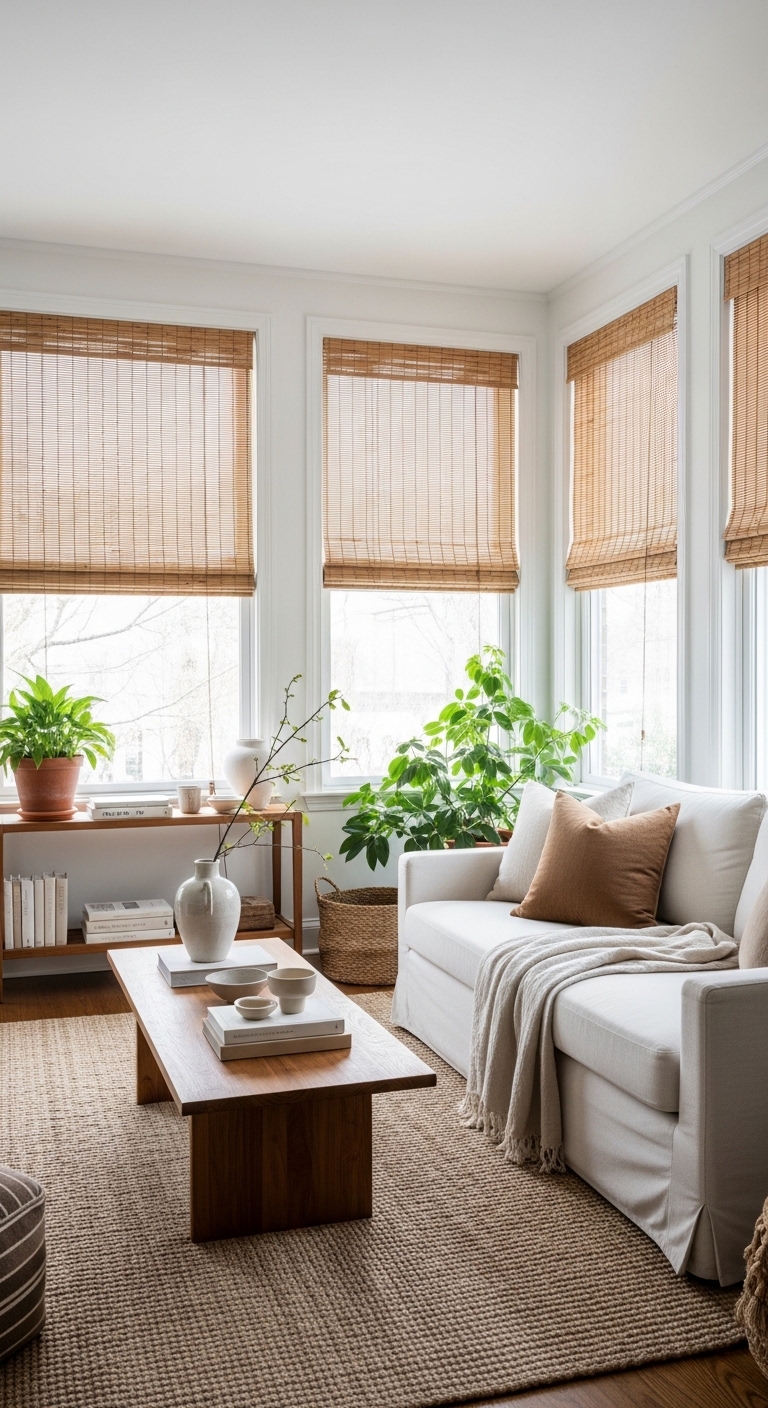
Sometimes a curtain isn’t the right answer — and a natural woven Roman shade is. These are structured, flat shades made from natural grasses, bamboo, or woven jute that stack neatly when raised and lay flat when lowered.
They’re especially beautiful in:
- Coastal or California-casual living rooms
- Japandi (Japanese-Scandinavian) spaces
- Rooms that already have a lot of texture and don’t need flowing fabric
The natural texture adds warmth and organic interest to windows without the heaviness of full drapes. For privacy with style, layer a simple linen panel alongside them on a second rod.
Striped Curtains for Vertical Height or Horizontal Width
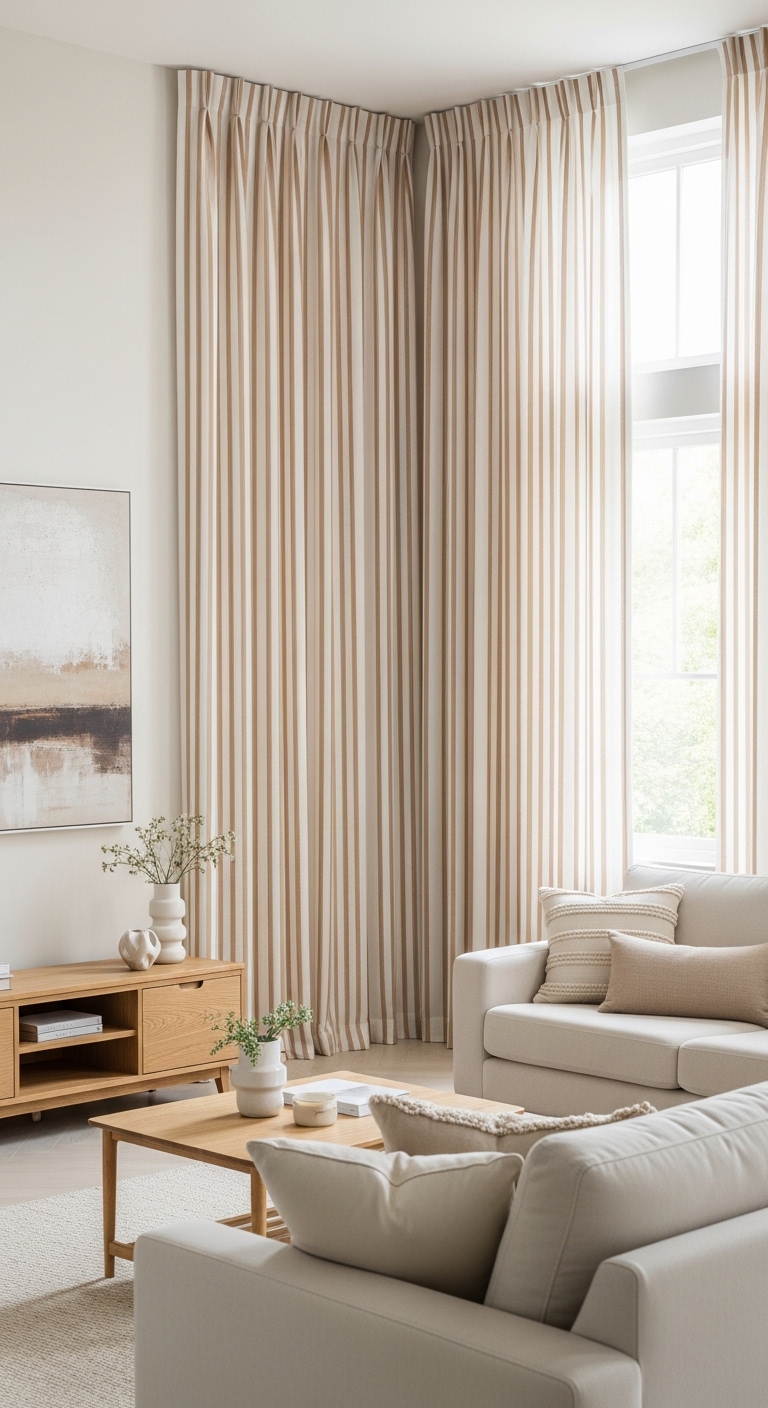
Stripes are a powerful visual tool when used intentionally. Vertical stripes on curtains draw the eye upward and make ceilings feel higher. Horizontal stripes (used more rarely) create a sense of width.
For most living rooms, vertical stripes are the move. A simple alternating stripe in two complementary tones — think warm white and soft camel, or pale blue and cream — creates a curtain that feels both classic and modern at the same time.
Avoid very thin, busy stripes. Wide stripes with clean lines are far more sophisticated and easier to pair with furniture and art.
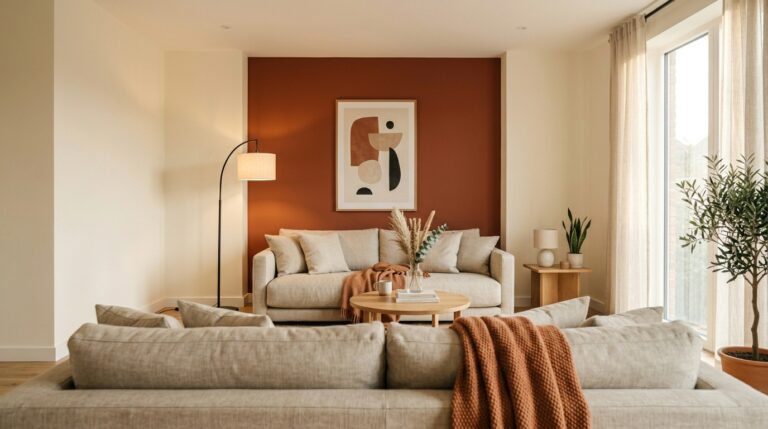
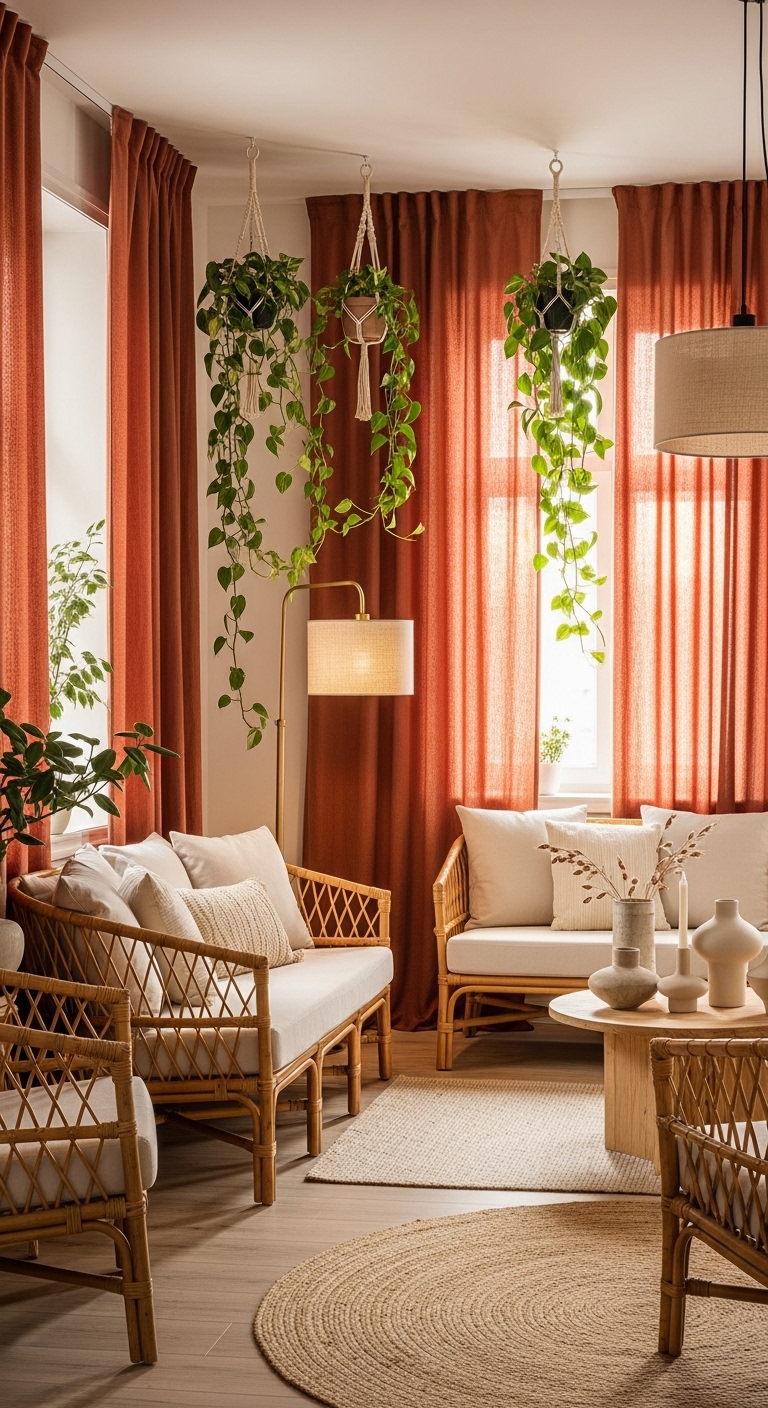
Rust and Terracotta Curtains for Warmth
Color psychology is real, and warm earthy tones — rust, terracotta, clay, burnt orange — make a room feel genuinely warmer and more inviting. These colors were everywhere in 2023 and 2024, and they’re settling into the kind of classic status that means they’ll look good for years to come.
Rust or terracotta curtains work beautifully with:
- Cream, white, or warm beige walls
- Natural wood furniture
- Woven baskets and rattan accents
- Green plants (the complementary color contrast is gorgeous)
- Warm brass or gold hardware
This is one of those color choices that feels both trendy and timeless at the same time.
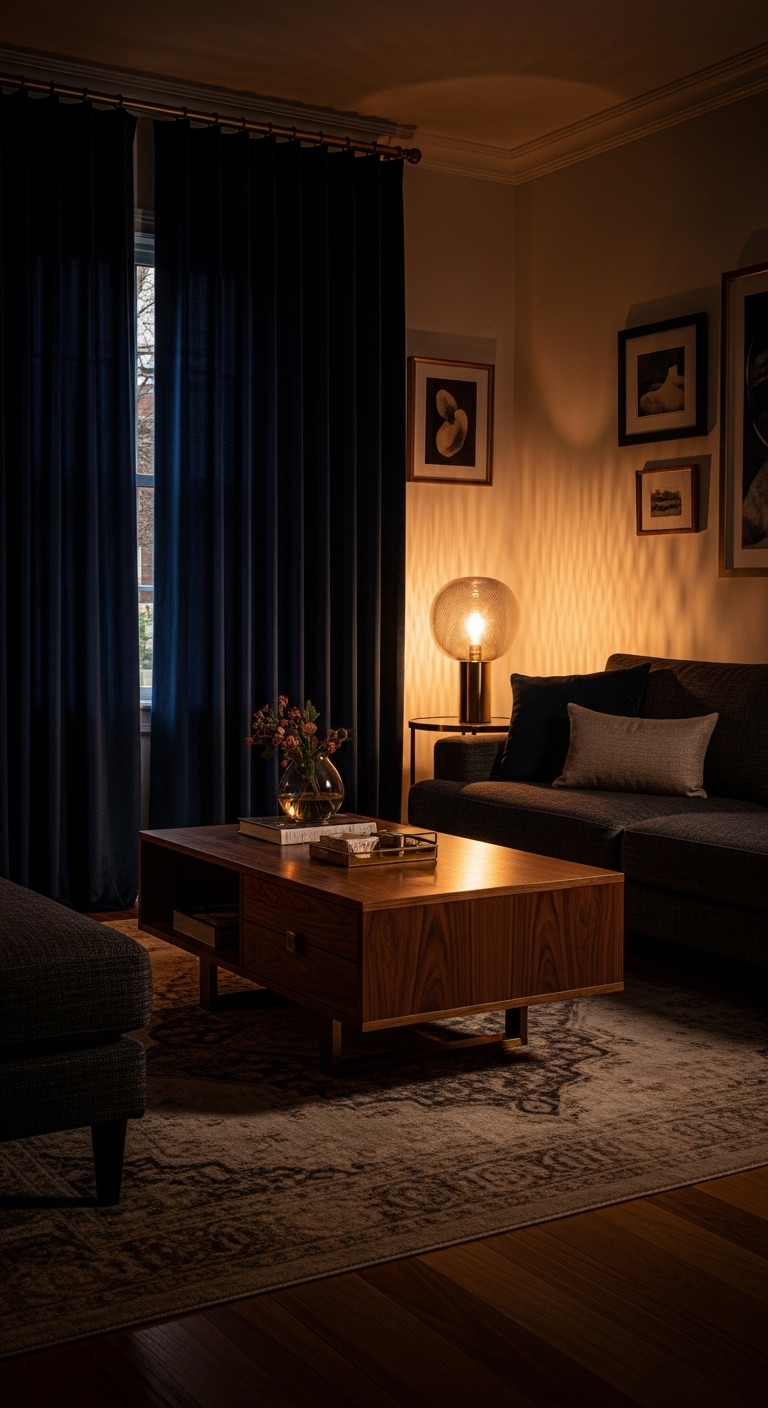
Dark Moody Curtains for a Dramatic Living Room
Not every living room needs to be bright and airy. Some of the most beautiful interiors lean fully into darkness and drama — deep navy, forest green, near-black charcoal, rich chocolate brown.
Dark curtains anchor a room in a way that feels intentional and sophisticated. They work especially well when:
- The rest of the room has medium-toned furniture (not too dark)
- You have good artificial lighting — floor lamps, sconces, statement pendants
- You want the room to feel like a retreat, a sanctuary, somewhere you escape to
Don’t be afraid of the dark. Used well, it’s one of the most powerful design tools in the room.
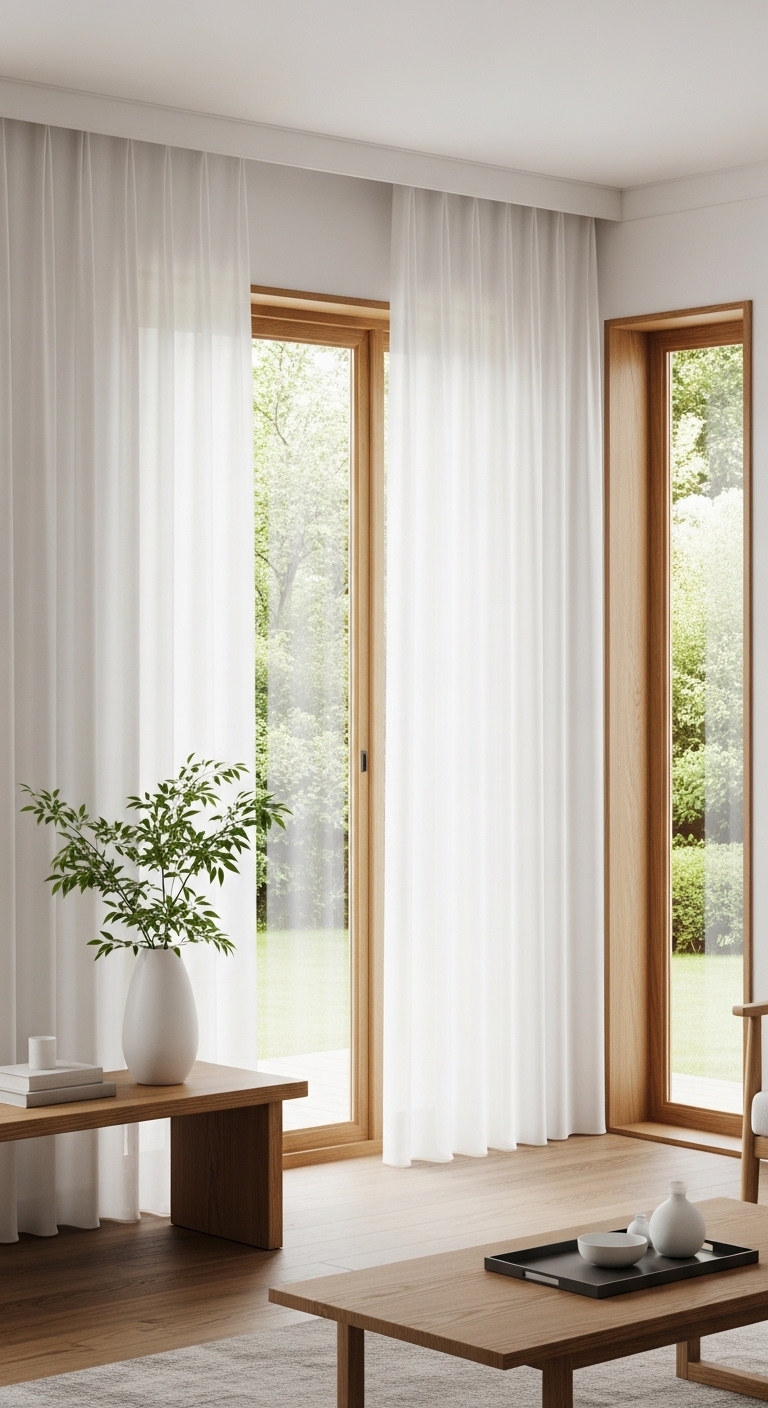
Sheer White Curtains for a Minimalist, Zen Look
On the complete opposite end of the spectrum — white sheers. Pure, simple, almost invisible. They filter light without blocking it, move gently in a breeze, and make a room feel clean and peaceful.
This look works best when:
- You have beautiful views you don’t want to hide
- Your furniture and décor already have visual interest
- You’re going for a Zen, spa-like, or Japandi aesthetic
- Natural light is one of your room’s best features
The trick here is quality. Cheap sheer curtains look cheap. Good-quality sheer linen or voile has a beautiful drape and weight that elevates the whole look. It’s worth investing here.
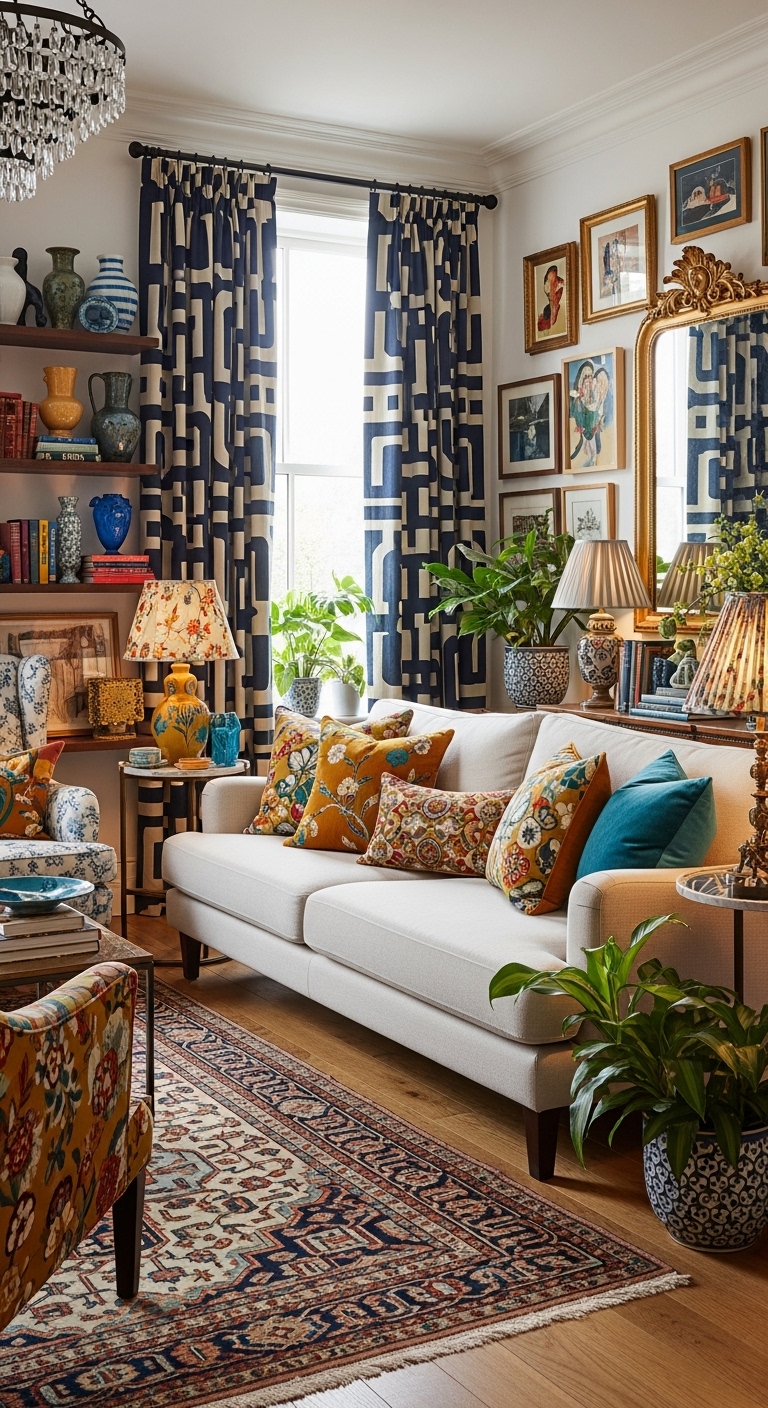
Mixed Pattern Curtains Done Right
Mixing patterns in a room is intimidating, and mixing patterns in your curtains specifically takes confidence. But when you do it right, it creates a layered, collected, personality-filled room that looks like it was styled by a real designer.
The rules for mixing curtain patterns with room patterns:
- Vary the scale (one large print, one small)
- Stay within a consistent color palette
- Use a solid as a bridge between two patterns
- No more than three patterns in the same room total
For example: bold geometric curtains in navy and cream, paired with a small floral throw pillow in navy and soft pink, grounded by a solid cream sofa. That combination is cohesive because navy and cream tie everything together.
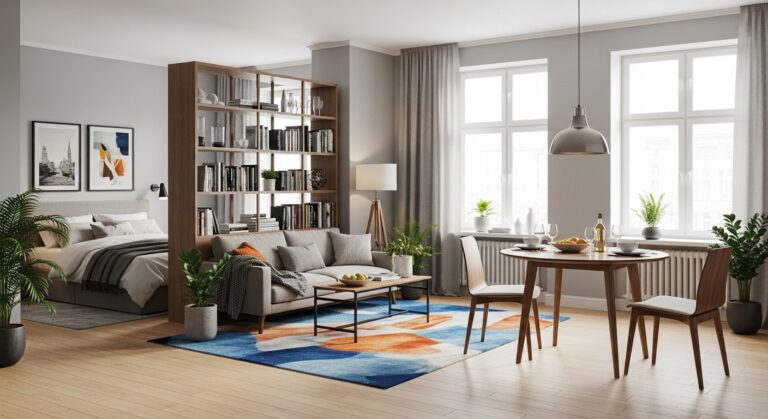
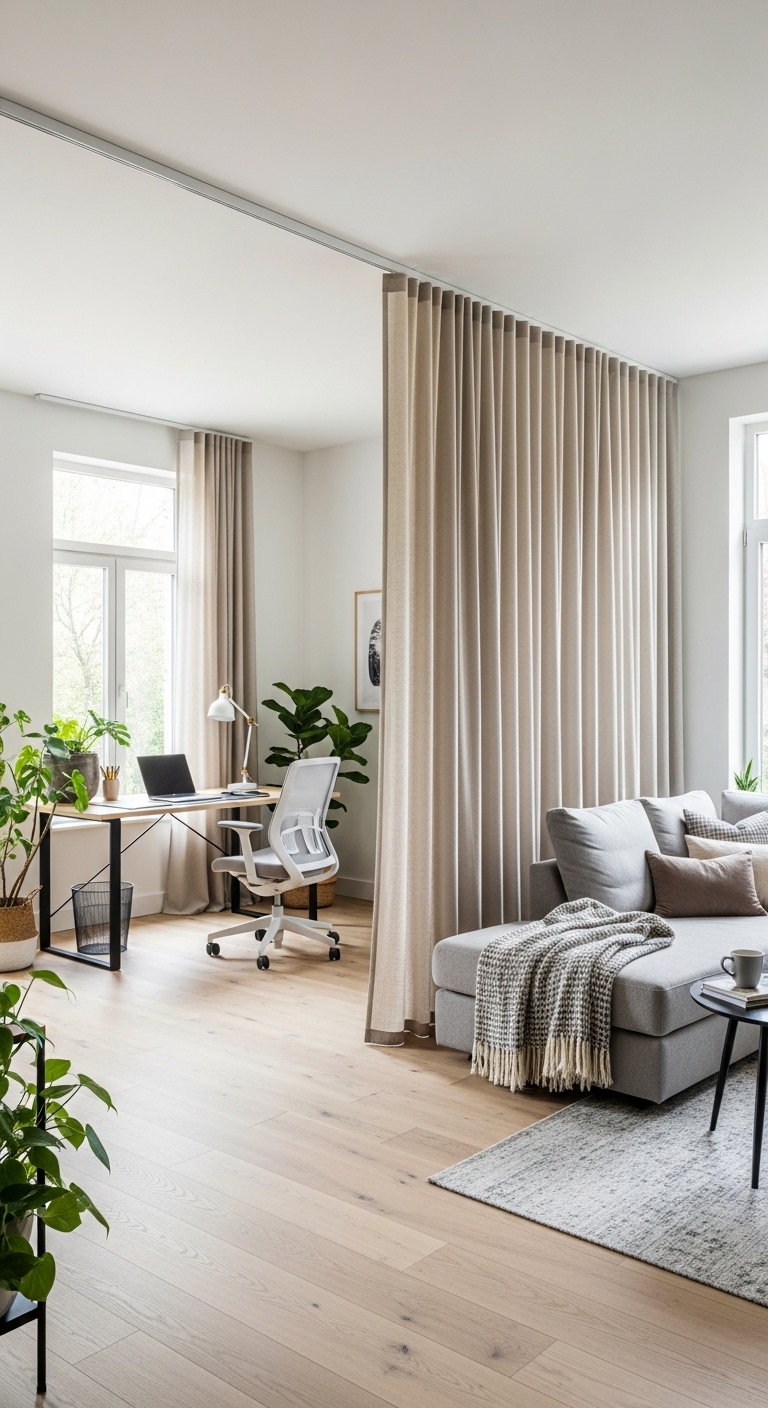
Curtains as Room Dividers in Open-Plan Spaces
Open-plan living rooms are wonderful — until you want some separation. Running a curtain track across the ceiling lets you use curtains as flexible room dividers that you can open or close depending on the day.
This works brilliantly for:
- Separating a home office area from the main living space
- Dividing a dining zone from a seating area
- Creating a “snug” or reading corner that feels enclosed
- Giving a guest sleeping area privacy in a studio or loft
Use floor-to-ceiling panels in a heavy linen or cotton. The visual drama of a full-height curtain divider is genuinely striking and it’s a much more stylish solution than furniture-based dividers.
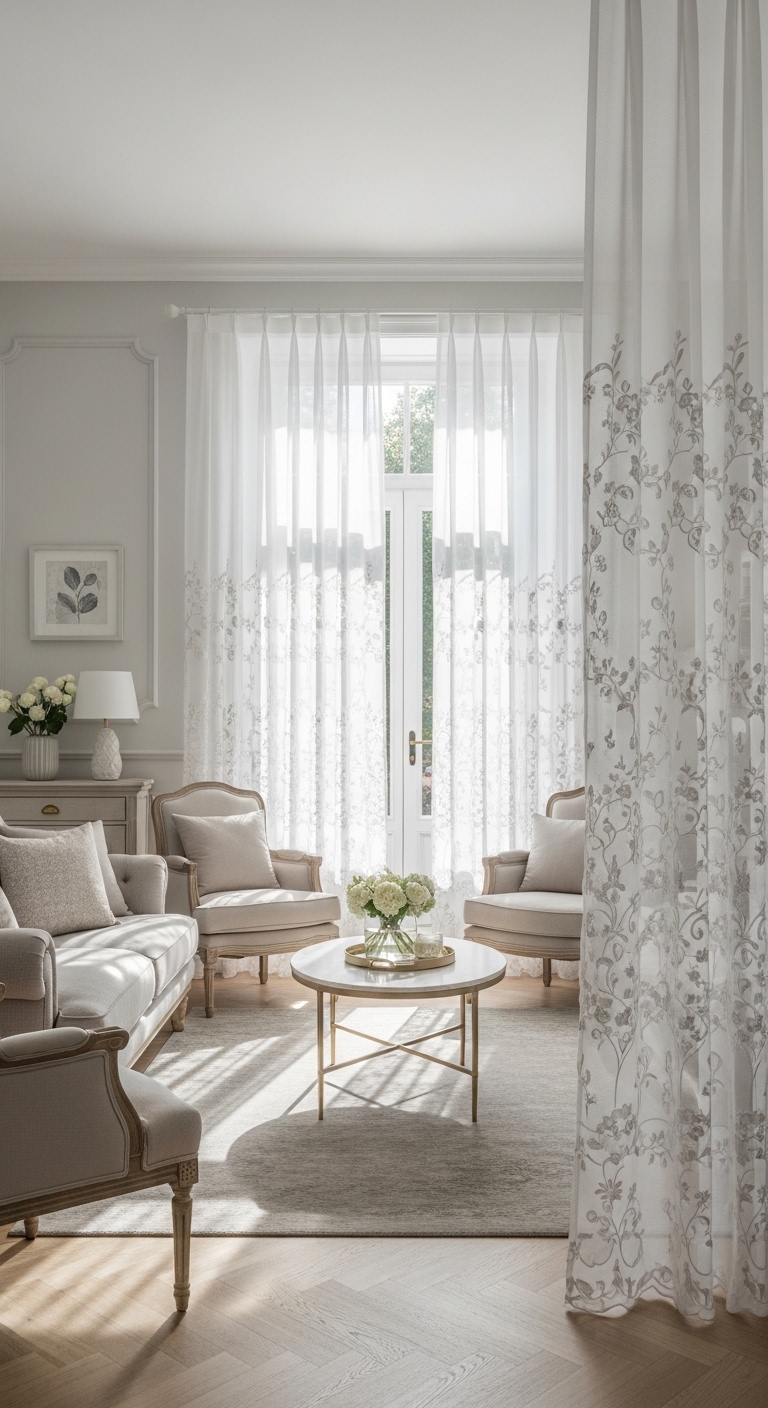
Patterned Sheer Curtains for Subtle Texture
Standard sheers are beautiful, but patterned sheers take things to another level entirely. Look for sheers with:
- Tone-on-tone embroidered patterns (white on white)
- Subtle woven geometric textures
- Delicate floral embroidery
- Eyelet or burnout patterns
These patterns are only visible up close or when light shines through them — and that in-between quality is what makes them so special. Your room looks simple from a distance and intricate up close.
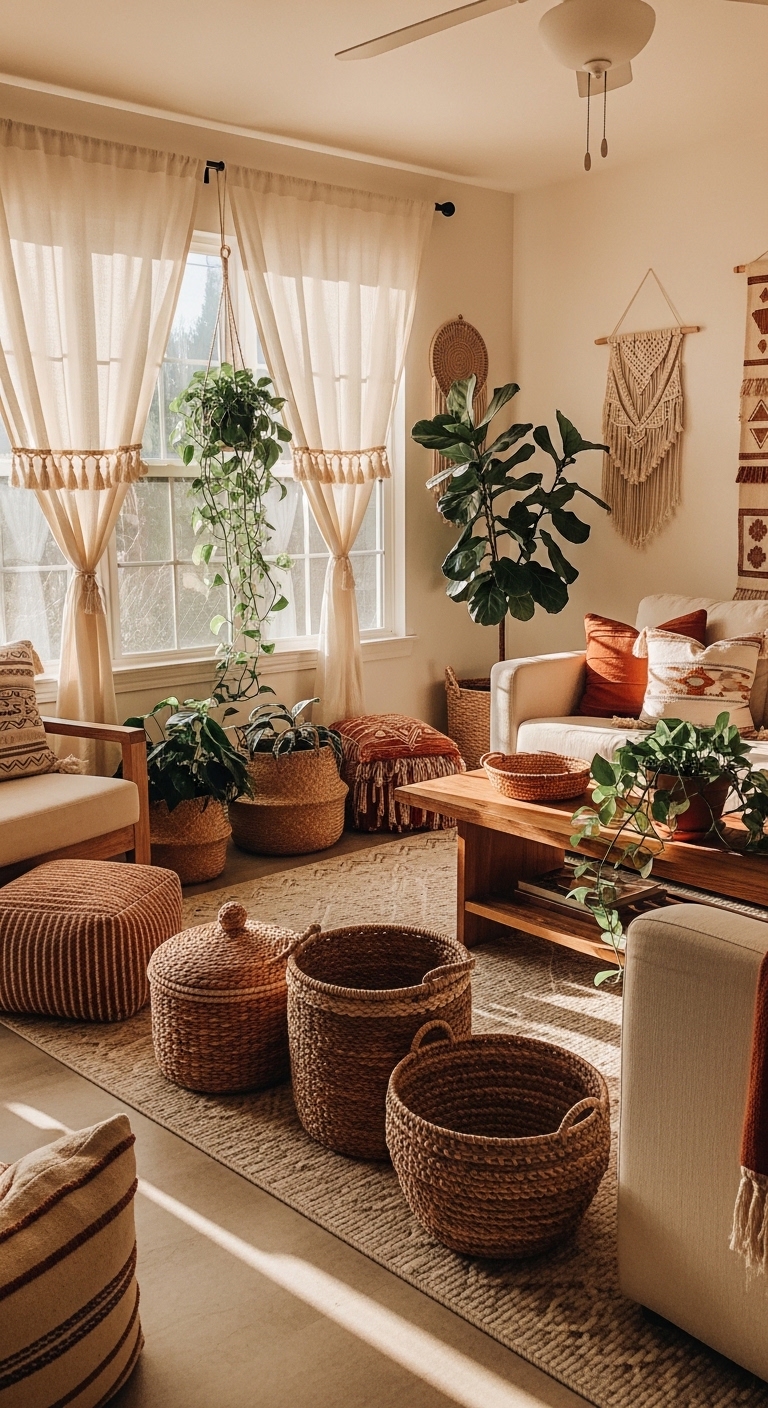
Curtains with Fringe or Tassel Trim
Adding trim to curtains — fringe along the edges, tassel details at the bottom, ribbon border down the leading edge — is the kind of detail that separates a curated room from a generic one.
You can add trim to curtains you already own with fabric glue or a basic sewing machine. Some ideas:
- Pom-pom trim along the bottom of linen curtains for a playful boho look
- Velvet ribbon down the leading edge of simple cotton curtains
- Long knotted fringe along the hem of natural-colored panels
- Brass-tipped tassel tiebacks that echo metallic accents elsewhere in the room
It’s the equivalent of adding a great belt to a simple dress — the base piece is already good, but the trim takes it to a different level.
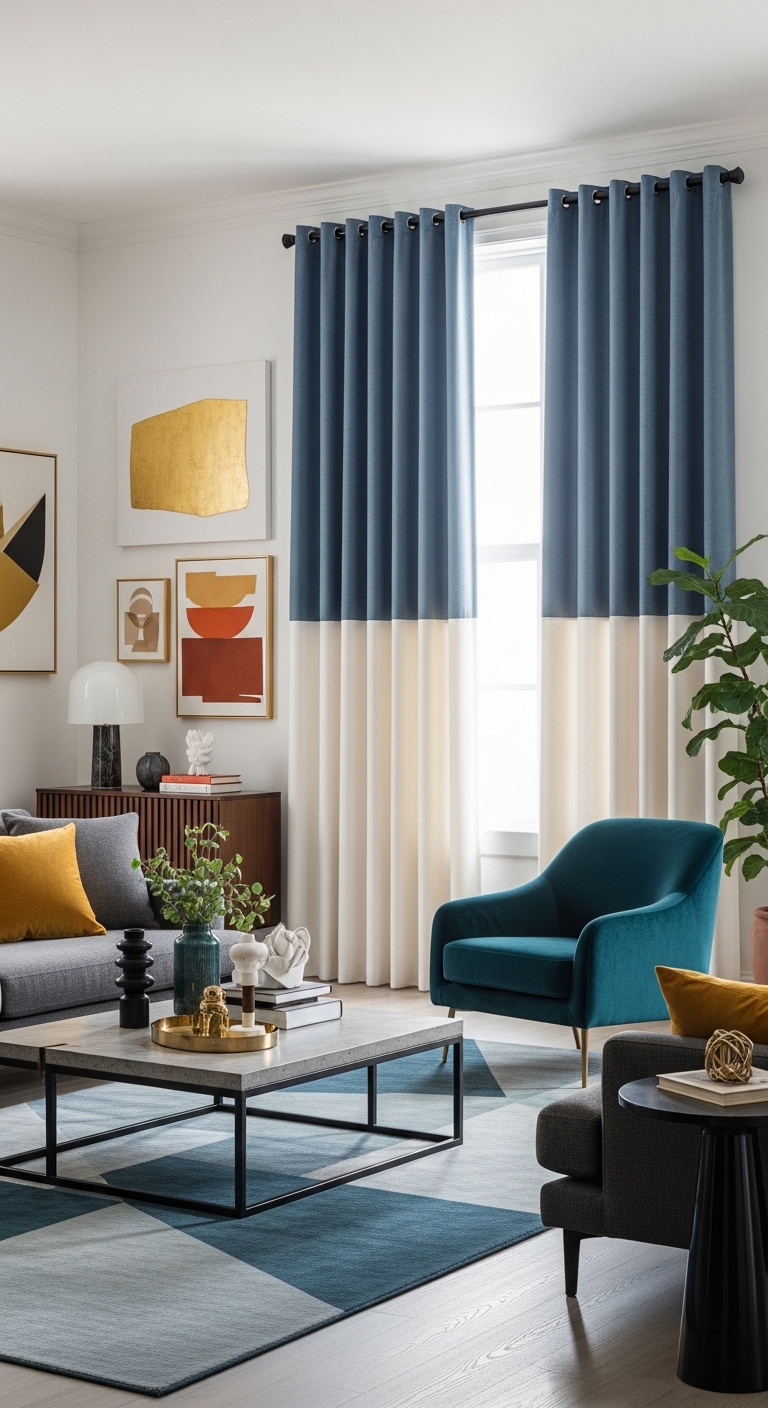
Color-Blocked Curtains for a Modern Art Statement
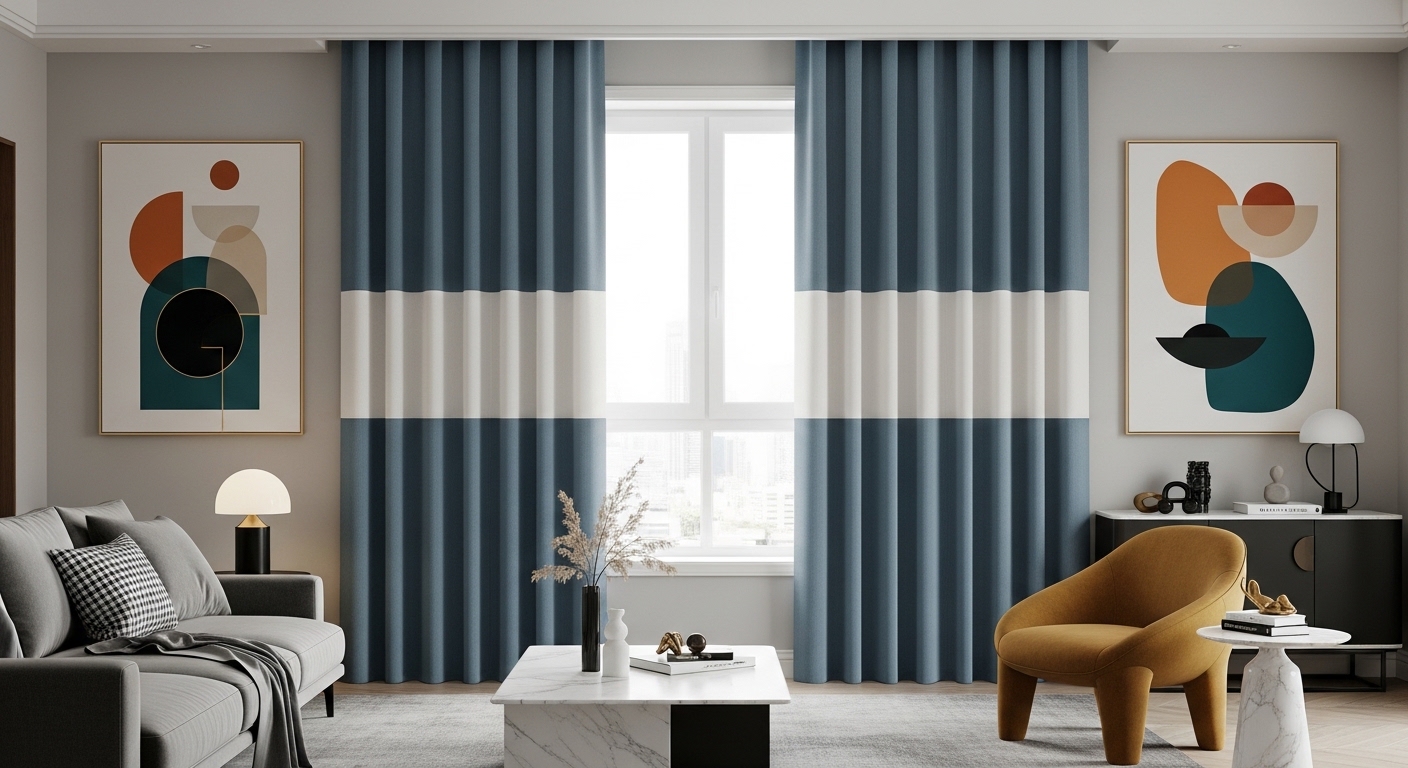
Color blocking — placing two or three distinct solid blocks of color together — is a design approach borrowed directly from fine art, and it translates beautifully to curtains.
Imagine a curtain panel that’s two-thirds dusty blue and one-third warm white, with a clean horizontal divide. Or alternating panels of rich ochre and deep teal hanging side by side.
Color-blocked curtains work like art. They don’t need to match anything exactly — they set the palette. Choose colors from your room (pull from your sofa, rug, or artwork) and you’ll find the cohesion happens naturally.
This is the boldest idea on this list — and potentially the most rewarding if you’re willing to commit to it.
Final Thoughts
You’ve just seen 22 ways to completely change your living room’s energy — and the truth is, you don’t need to overhaul everything. Sometimes one great curtain decision changes the whole room.
Before you shop, ask yourself these questions:
- What’s the dominant light source in this room? Morning sun vs. afternoon sun changes everything about fabric choice.
- What’s the room’s existing palette? Pick curtains that work with it or deliberately contrast it.
- What feeling do you want? Cozy and warm? Light and airy? Dramatic and bold?
- What’s your budget? Some of the best looks — drop cloth curtains, pipe rods, sheer layers — cost almost nothing.
The one rule that never changes: hang them high and wide. Ceiling height, wide span, floor to hem. Every time. Without exception. That single decision elevates any curtain choice by about 40%.
Your living room is worth the investment of getting the curtains right. They’re the first thing people see when they walk in, and the last thing that shapes how the room feels when you’re sitting in it alone on a quiet evening.
Get the curtains right, and the whole room comes alive.