23 Apartment Living Room Decorating Ideas
You walk into your apartment living room and the first thought that crosses your mind is: it’s just too small to look good. Sound familiar? You’re definitely not alone.
Millions of apartment dwellers struggle with the exact same challenge — limited square footage, awkward layouts, and the constant feeling that style is a luxury reserved for big homes with big budgets.
But here’s the truth: small living rooms are not a design problem. They’re a design opportunity.
The best interior designers in the world will tell you that constraints push creativity. When you can’t sprawl outward, you think smarter.
You layer textures, you use vertical space, you choose furniture that does double duty. The result? A living room that feels curated, intentional, and genuinely yours — not just a place where furniture happens to exist.
In this guide, we’re going deep on 23 apartment living room decorating ideas that actually work in real homes with real limitations. Each idea comes with an AI image prompt so you can visualize exactly what we’re talking about before you spend a single penny. Let’s get into it.
Floating Shelves as Statement Walls
One of the smartest moves you can make in a small apartment living room is to go vertical. Most of us stare at bare walls and see wasted space.
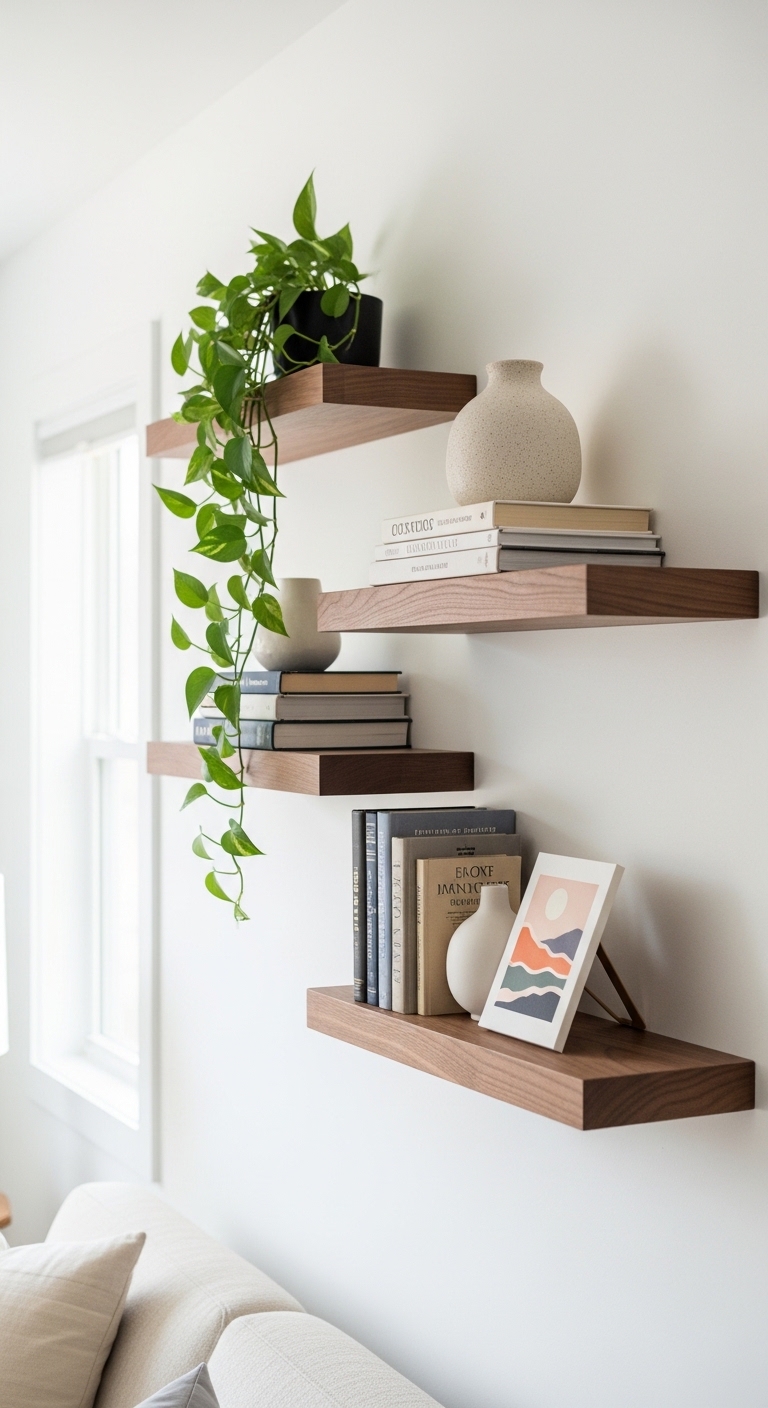
A set of well-placed floating shelves transforms an empty wall into the visual anchor of your entire room — and does it without eating a single inch of your floor space.
The trick is to style them with intention. Don’t just stack books horizontally from edge to edge. Mix book stacks with small plants, a sculptural object, a framed photo leaning casually, and one empty shelf for breathing room. This combination creates visual rhythm — the eye bounces from object to object, which makes the wall feel exciting rather than cluttered.
What to Keep in Mind
- Use three to five shelves at varying heights to create a staggered, organic feel rather than a rigid grid look.
- Stick to a consistent wood tone or finish for the shelves themselves — mixing black brackets with a warm walnut board is a classic that works every time.
- Group items in odd numbers: three books, one plant, one ceramic piece. Odd groupings read as curated while even groupings feel static.
- Keep the largest, heaviest items on lower shelves and let lighter, airier pieces like trailing plants and small candles live at the top.
Mirrors That Fake More Space
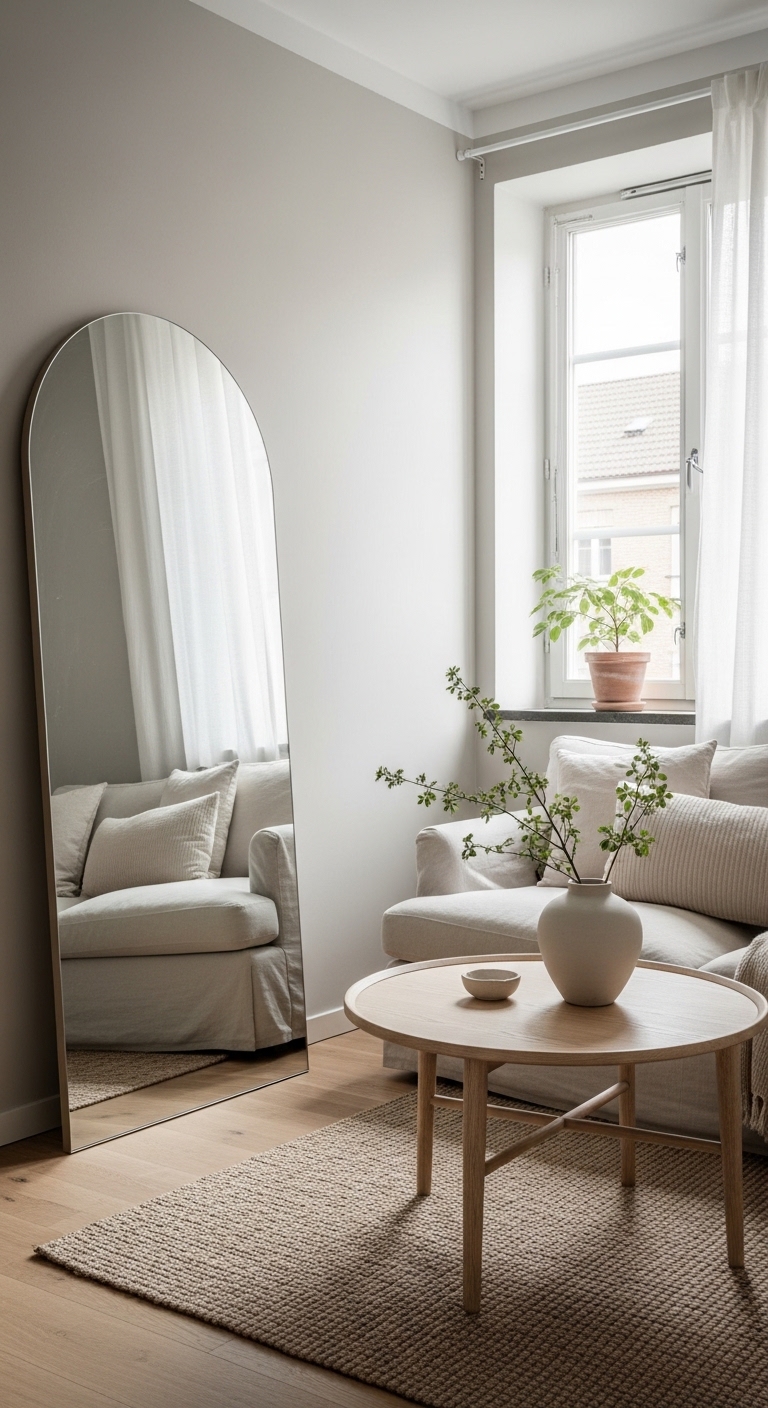
If there is one decorating trick that interior designers use more than any other in small spaces, it is mirrors. A strategically placed mirror does not just reflect light — it visually doubles the depth of a room. Walk into a well-mirrored living room and your brain genuinely perceives more space than is actually there. It is not a trick; it is science.
The most impactful placement? Directly across from a window. The mirror catches daylight and bounces it throughout the room, making everything feel brighter and more open. A large arch-shaped mirror leaning against the wall works beautifully because it also adds a soft, architectural element without any drilling required.
Do not buy a mirror that is too small — it is one of the most common mistakes in small apartments. Go bigger than you think you need. A mirror that is at least 24 inches wide starts to have a real spatial impact. Anything smaller just reads as decoration without the depth effect you are after.
Multifunctional Sofa Beds
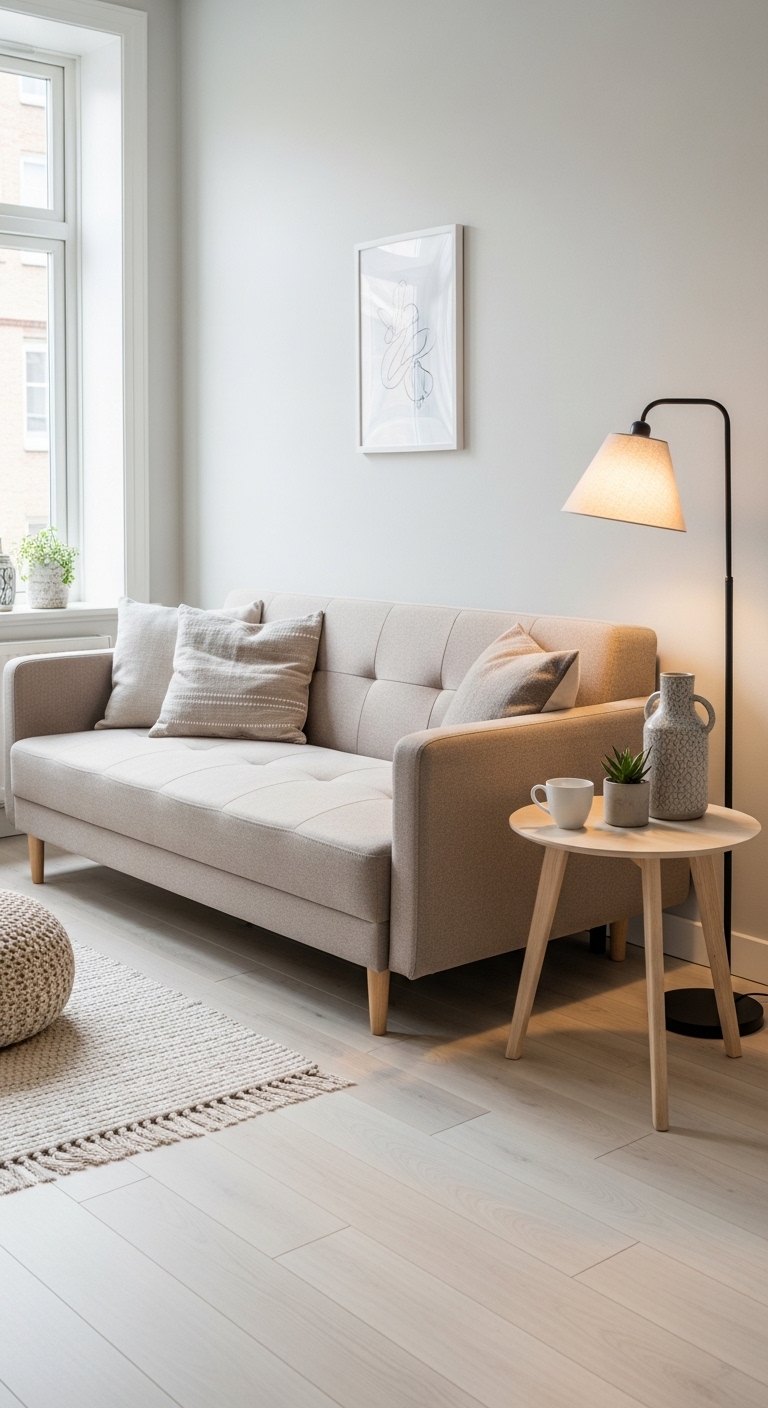
Here is a situation a lot of apartment dwellers know all too well: you want a comfortable place for guests to sleep, but a dedicated guest bedroom is simply not in the cards. The sofa bed has come a very long way from the lumpy, awkward contraptions of the past. Today’s designs are sleek, supportive, and genuinely indistinguishable from a regular sofa at first glance.
The key is choosing one that looks intentional during the day. Go for clean lines, a structured back, and a neutral linen or velvet upholstery. Avoid bulky arms that make the sofa look heavy in a small room. A sofa bed with wooden legs that lifts the piece off the floor adds a sense of lightness and space beneath it.
What to Keep in Mind
- Look for a sofa bed with a pull-out mattress that is at least 4 inches thick — anything thinner and your guests will feel the frame underneath.
- Keep a foldable storage ottoman nearby to store guest bedding during the day without creating visual clutter.
- Linen fabric in warm oat or sand tones ages beautifully and washes well — ideal for a dual-purpose piece.
Vertical Curtains for Height
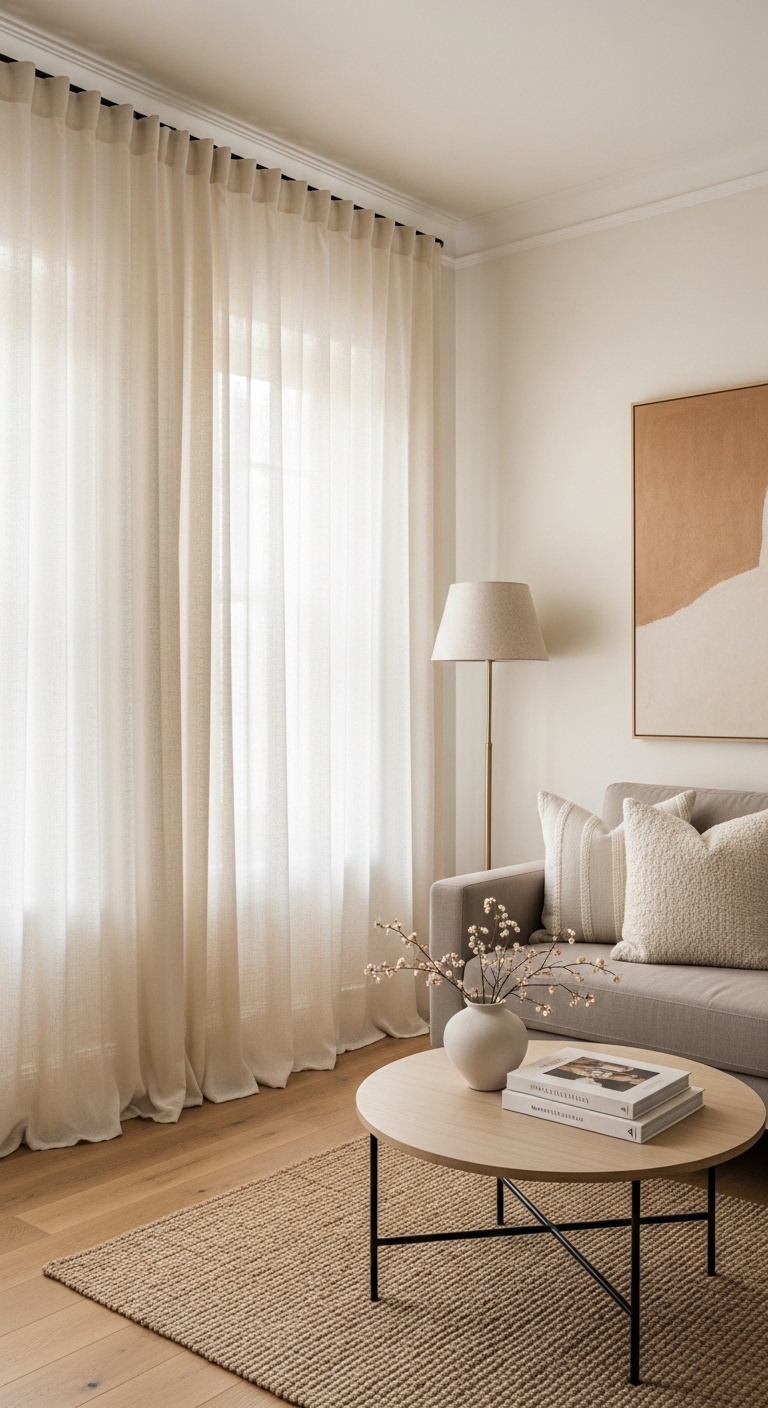
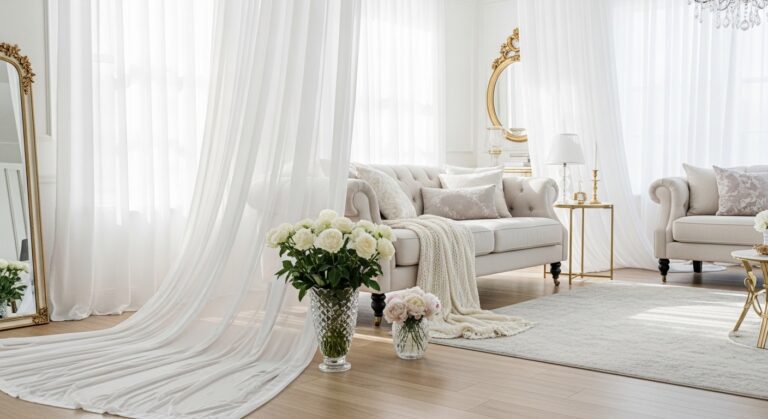
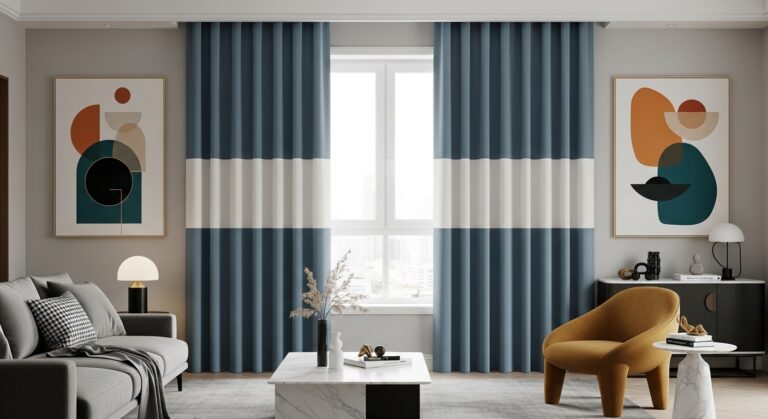
Your ceiling height is one of the most powerful tools in your decorating kit — and most people completely ignore it. Hanging curtains at ceiling height rather than just above the window frame makes your walls appear dramatically taller. It is a visual sleight of hand that costs almost nothing but transforms how a room feels in an instant.
Floor-length curtains in a soft, flowing fabric — think linen, cotton voile, or velvet — draw the eye upward and create that soaring, airy quality that we associate with luxury apartments and boutique hotels. Go a full six to twelve inches above the window frame, and let the curtains pool slightly on the floor for an even more dramatic effect.
Modular Sectional Sofas
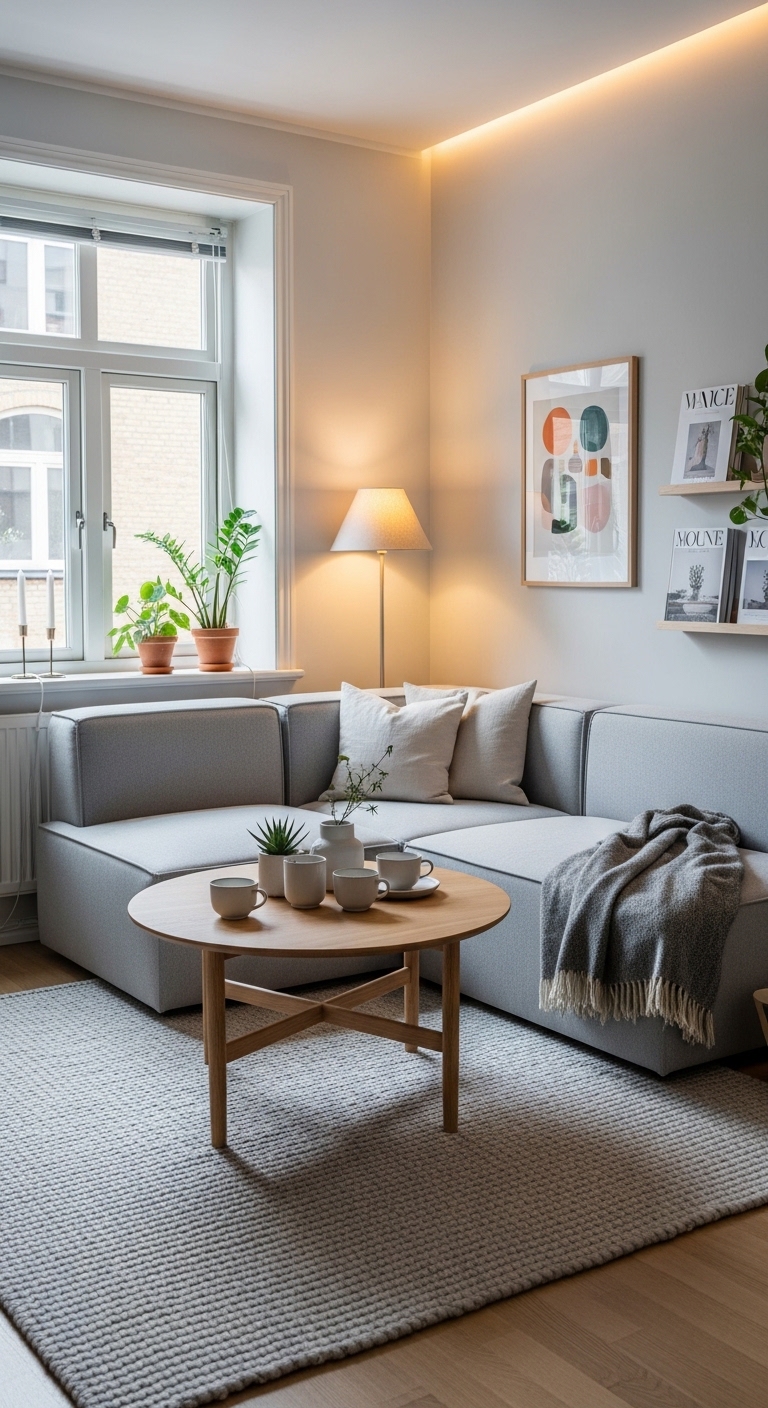
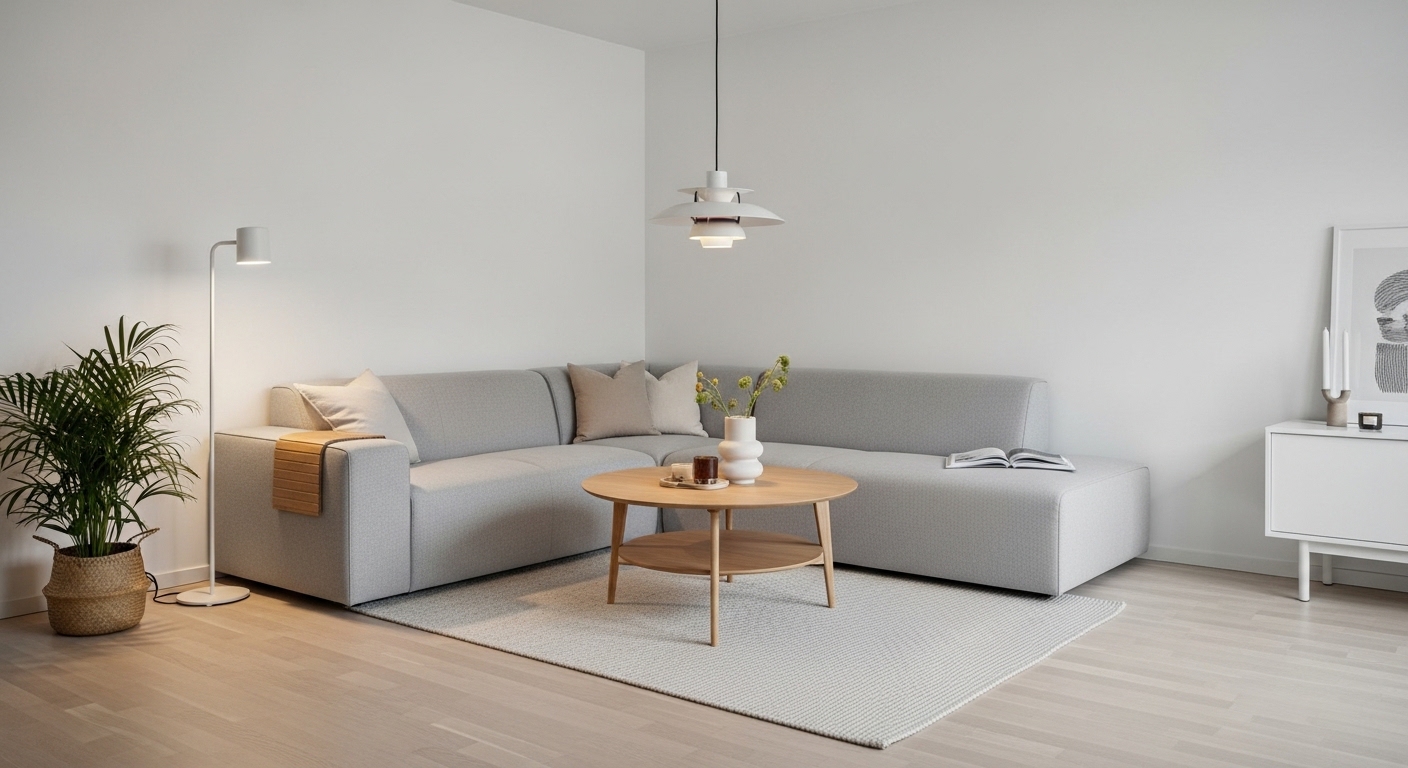
Sectional sofas used to be considered off-limits for small apartments. That perception has completely changed. The new generation of modular sectionals lets you configure pieces exactly to the shape and size of your space — adding or removing a seat, choosing an armless chaise, or creating an L-shape that fits snugly into a corner without jutting out awkwardly.
A corner sectional is particularly powerful in an apartment because it uses the corner space — often completely wasted in small rooms — and frees up the rest of the floor to breathe. Visually, a sofa that hugs the corner feels intentional and organized rather than dumped in the middle of the room.
Rugs That Define Zones
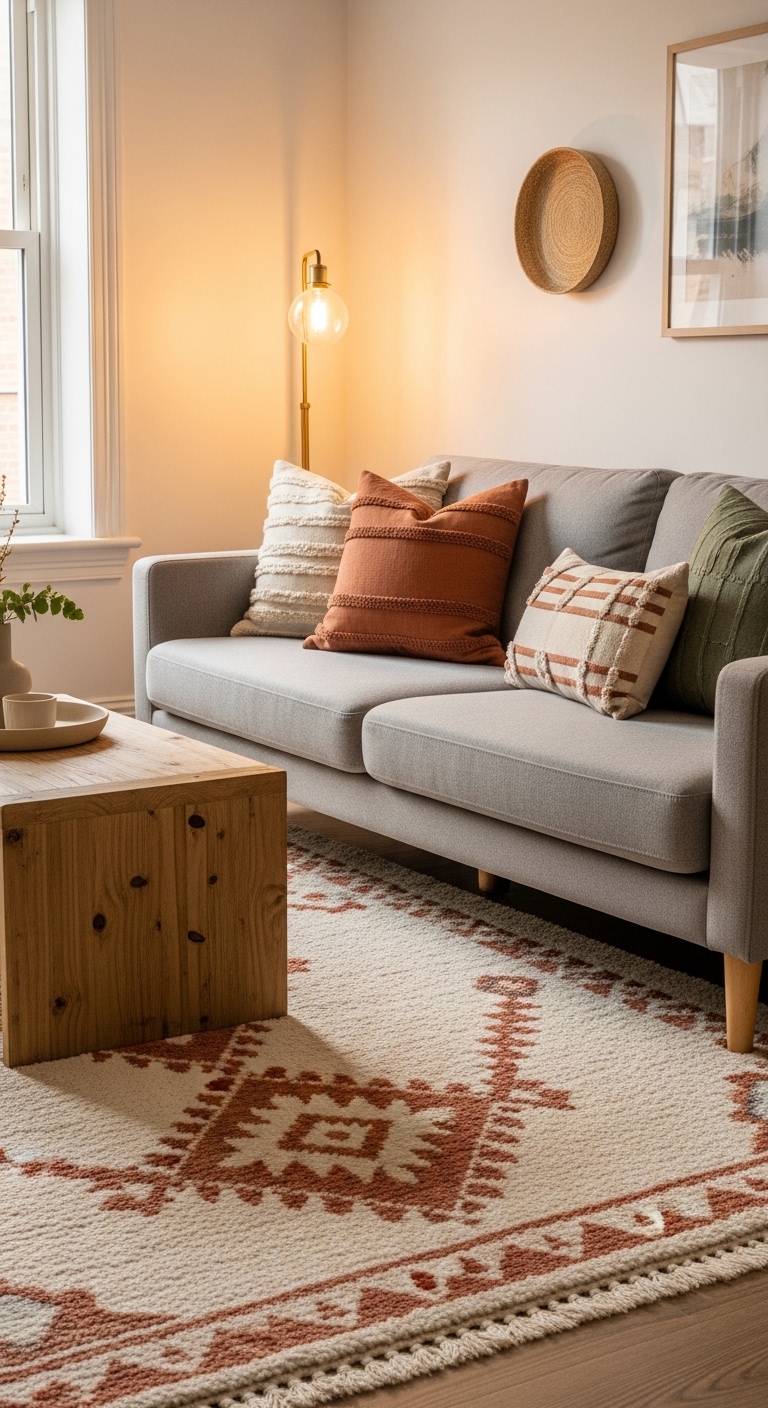
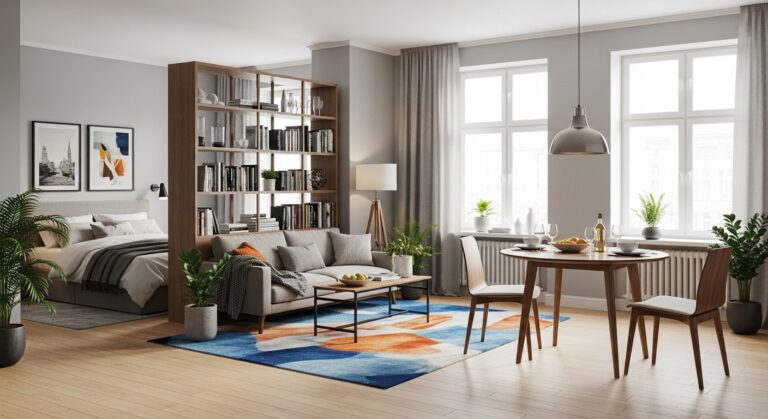
In an open-plan apartment or a studio, a rug does something that walls and partitions cannot — it creates a psychological boundary between spaces without any physical barrier. Place a rug under your sofa and coffee table, and suddenly that area becomes a defined living room even if it is just a section of a larger room.
The most common mistake people make with rugs in small apartments is going too small. A rug that just sits under the coffee table and does not reach at least the front legs of the sofa looks like an afterthought. Size up. A larger rug that anchors all your seating pieces creates a cohesive vignette and makes the whole room feel more grounded and intentional.
Sizing Rule: For a living room seating area, the front two legs of your sofa should sit on the rug, and the entire coffee table should be on the rug. That is the minimum. Ideally, all four sofa legs are on the rug — this creates the most polished, designer-approved look.
Pendant Lighting Magic
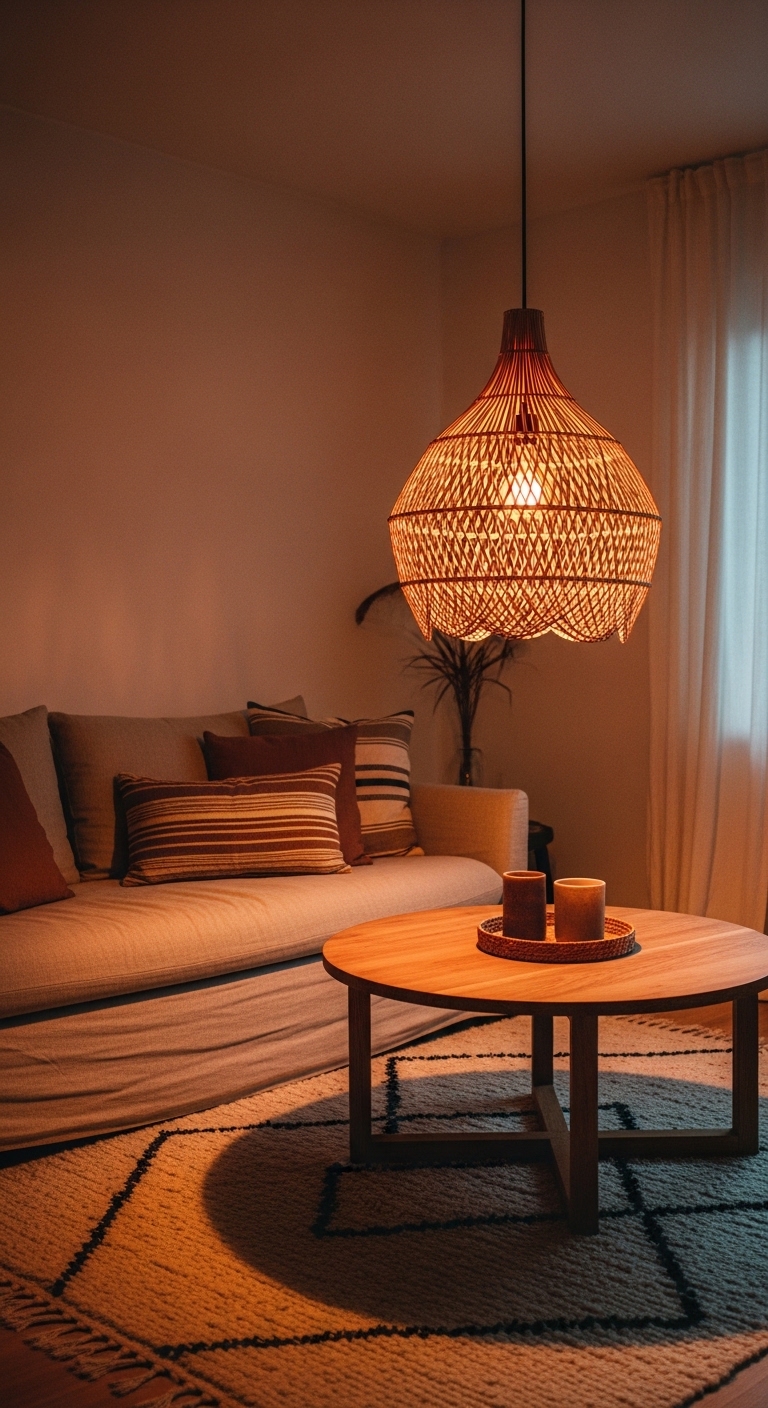
Overhead recessed lighting is the enemy of ambiance. It flattens everything, washes out texture, and makes a space feel more like an office than a home. Swapping out or supplementing flat overhead lighting with a pendant light above your coffee table or seating area is one of the fastest ways to add warmth and personality to your living room.
A pendant light creates a focal point that draws the eye and defines the conversation area below it. In terms of style, a rattan or woven pendant adds organic warmth and texture. A sculptural plaster or ceramic pendant feels more artistic. A classic linen drum shade keeps things timeless. Any of these will do more for your living room than any overhead bulb can.
Gallery Wall With Purpose
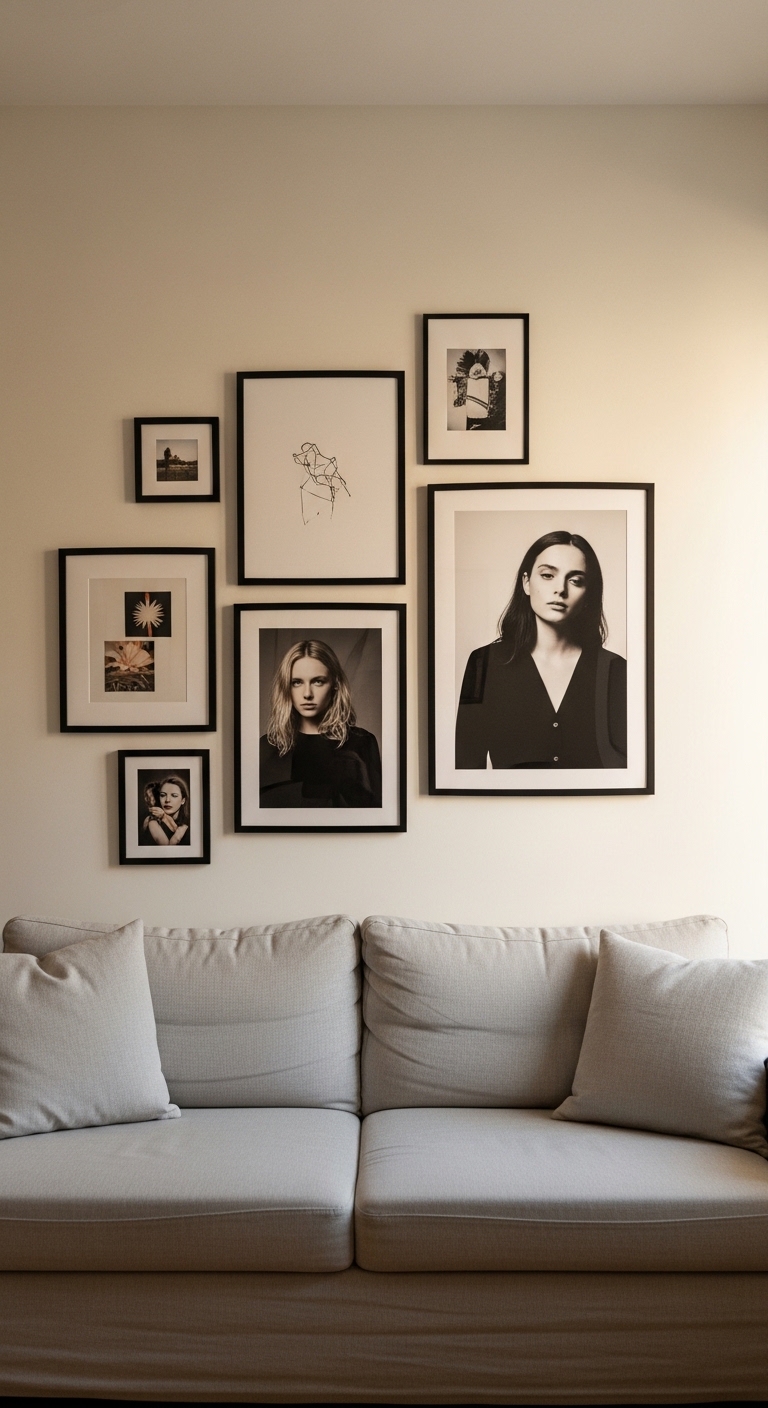
A gallery wall is not just a collection of things you tacked to the wall. When done right, it becomes the personality of your entire living room — a visual biography of your taste, travels, and the things that genuinely matter to you. Done wrong, it looks like a chaotic jumble of unrelated objects. The difference comes down to intention and cohesion.
Before putting a single nail in the wall, lay everything out on the floor first. Play with arrangements until you find one that has visual balance — mix portrait and landscape orientations, vary frame sizes, and keep the spacing between pieces consistent. Three to four inches between frames is the sweet spot. Choose a unifying element: all black frames, all warm wood tones, or all artwork in a similar color palette.
What to Keep in Mind
- Mix art prints, personal photos, and small mirrors for variety without chaos.
- Odd-numbered arrangements — three, five, seven pieces — tend to feel more natural and less rigid.
- Use paper templates cut to the size of each frame and tape them to the wall first. This lets you test the layout without committing to nail holes.
Nesting Tables as Smart Surfaces
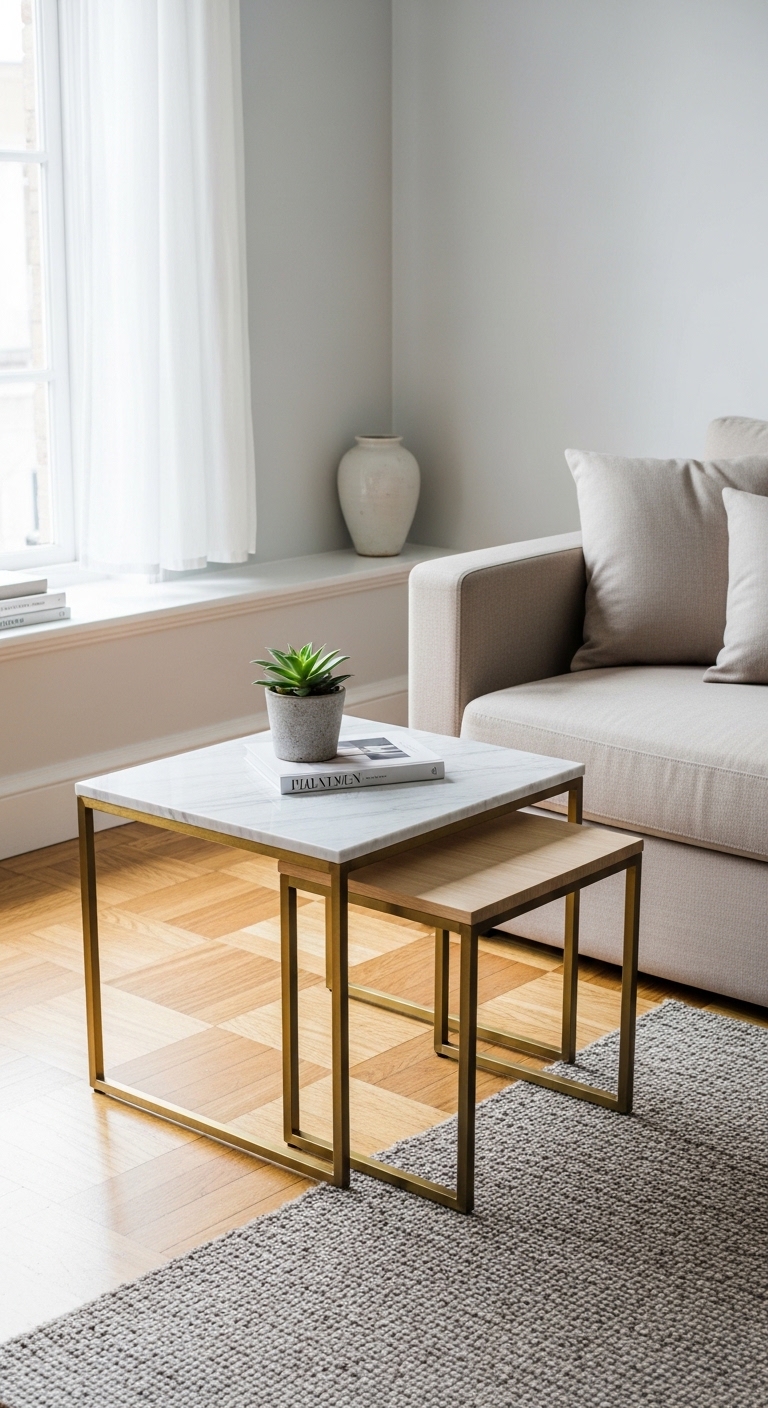
If you want a coffee table that does not overpower your small living room, nesting tables are the answer. A set of two or three tables that slide under each other take up the footprint of just one small table when you do not need them — and expand instantly when you have guests, need a surface for snacks, or want to spread out a book and a drink simultaneously.
The best nesting table sets combine materials for visual interest: a marble top on the largest table with a smaller wooden table beneath it, for example, or a glass top over matte metal legs. This material layering adds depth and sophistication without adding any actual bulk to your space.
Neutral Base + Bold Accents
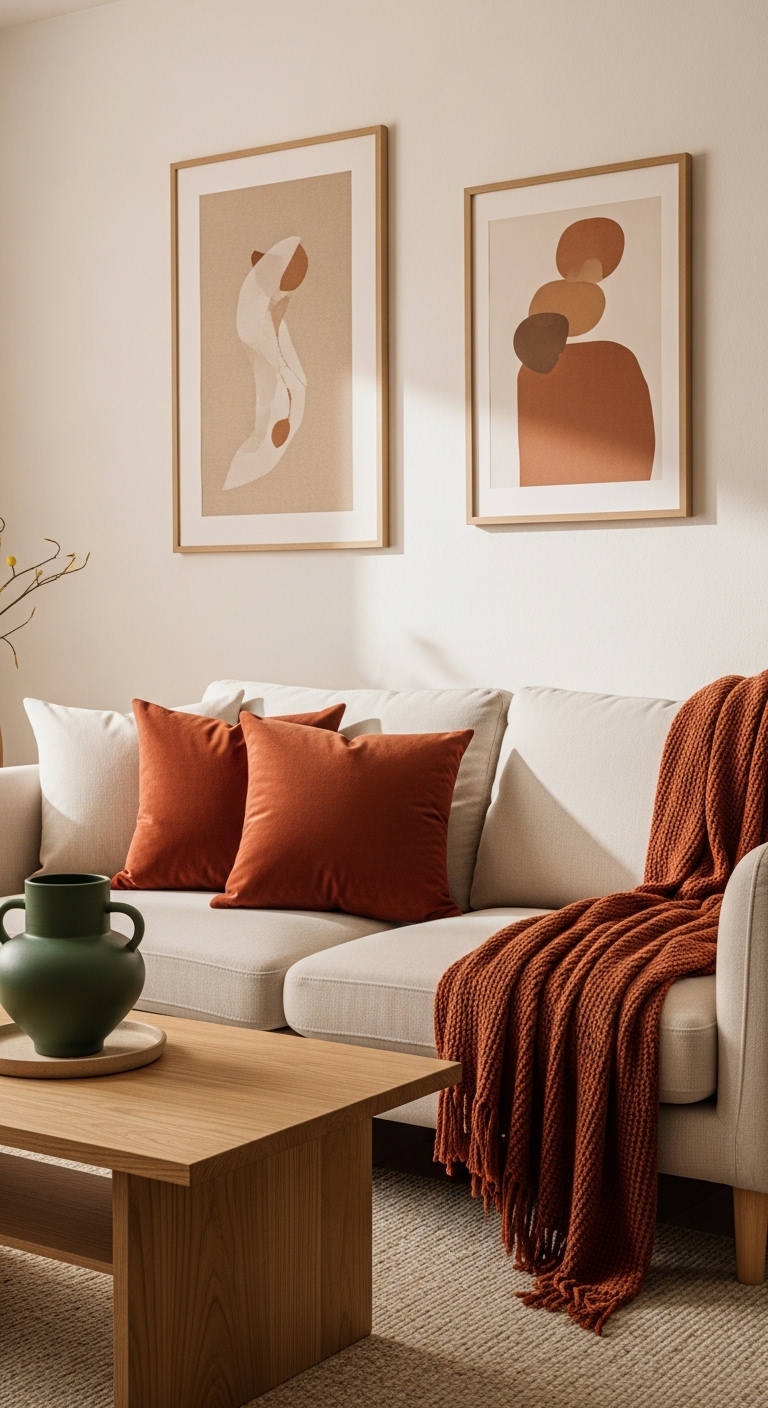
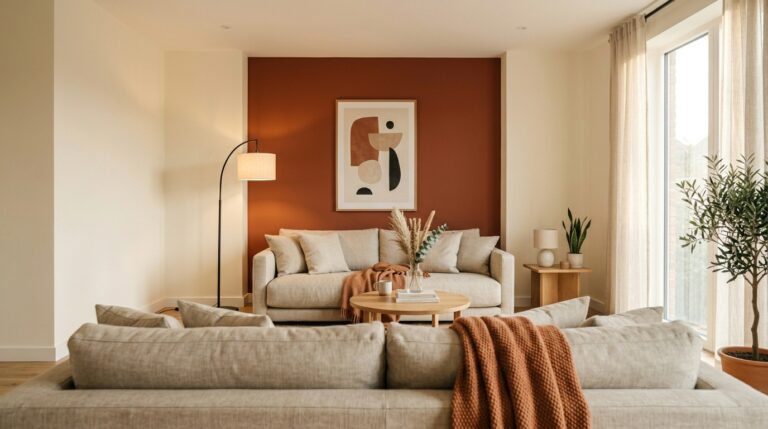
This is probably the most reliable decorating formula for small apartment living rooms, and it never goes out of style. Build your room’s foundation with neutral tones — warm white, soft beige, warm gray, or creamy off-white on walls, sofa, and rugs. Then inject personality through a handful of bold accent pieces that can be swapped out as your taste evolves.
The reason this formula works so well in small spaces is that neutral backgrounds recede visually, making the room feel larger, while bold accents create the visual interest and energy that prevent the room from feeling bland. A deep terracotta throw, a cobalt blue vase, a forest green velvet cushion — these pops of color do all the expressive heavy lifting without overwhelming the space.
A neutral room with the right accents always looks richer than a colorful room with the wrong ones.
Window Seat with Storage
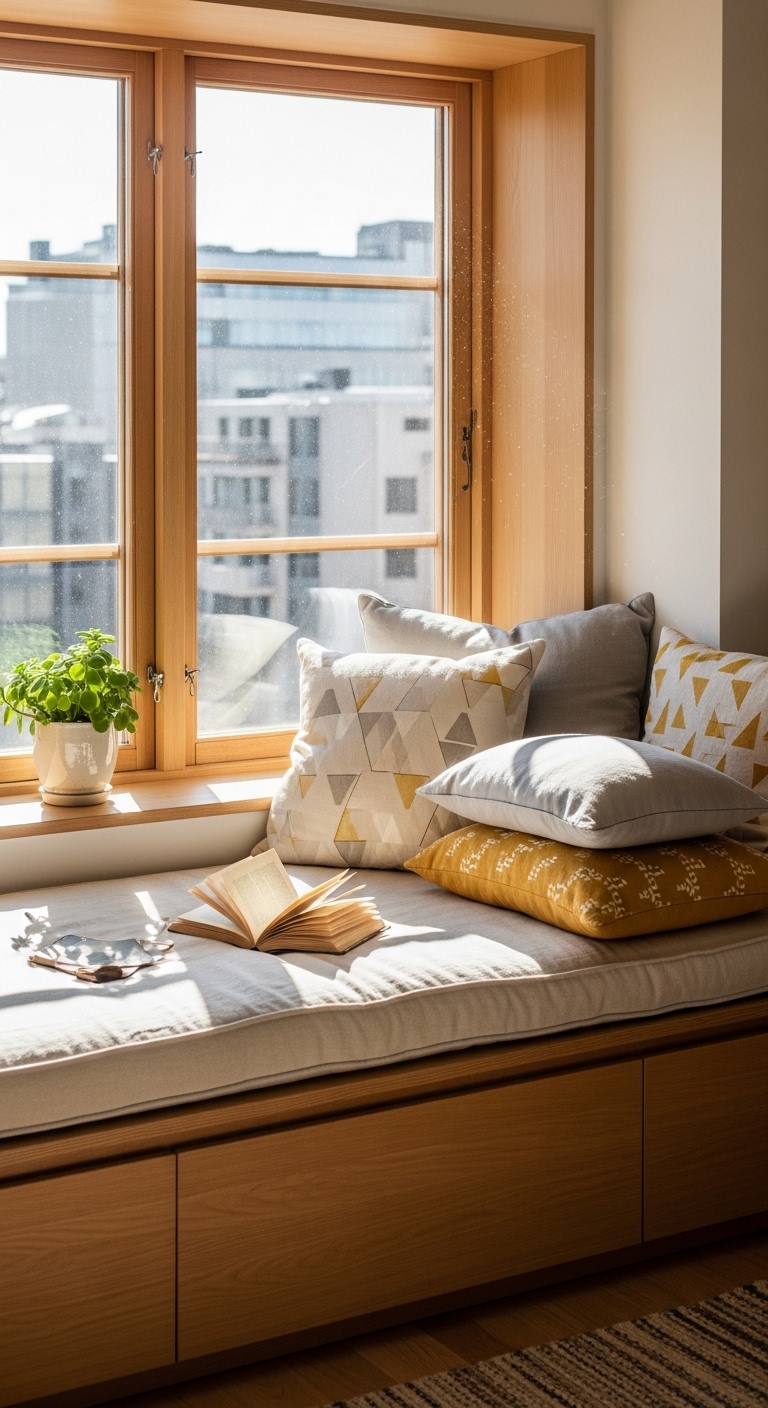
If you have a bay window or even a simple window alcove, you are sitting on a gold mine of decorating potential. A built-in or freestanding window seat turns what is often dead space into the most inviting spot in your entire apartment. Add a cushion, pile it with pillows, and it becomes a reading nook, a relaxation corner, and a storage solution all at once.
The storage benefit here cannot be overstated for apartment living. A bench with lift-up storage or drawers below lets you keep extra throws, magazines, board games, or anything else that usually creates clutter. It is function hidden under style — which is the holy grail of small space decorating.
Velvet Accent Chairs
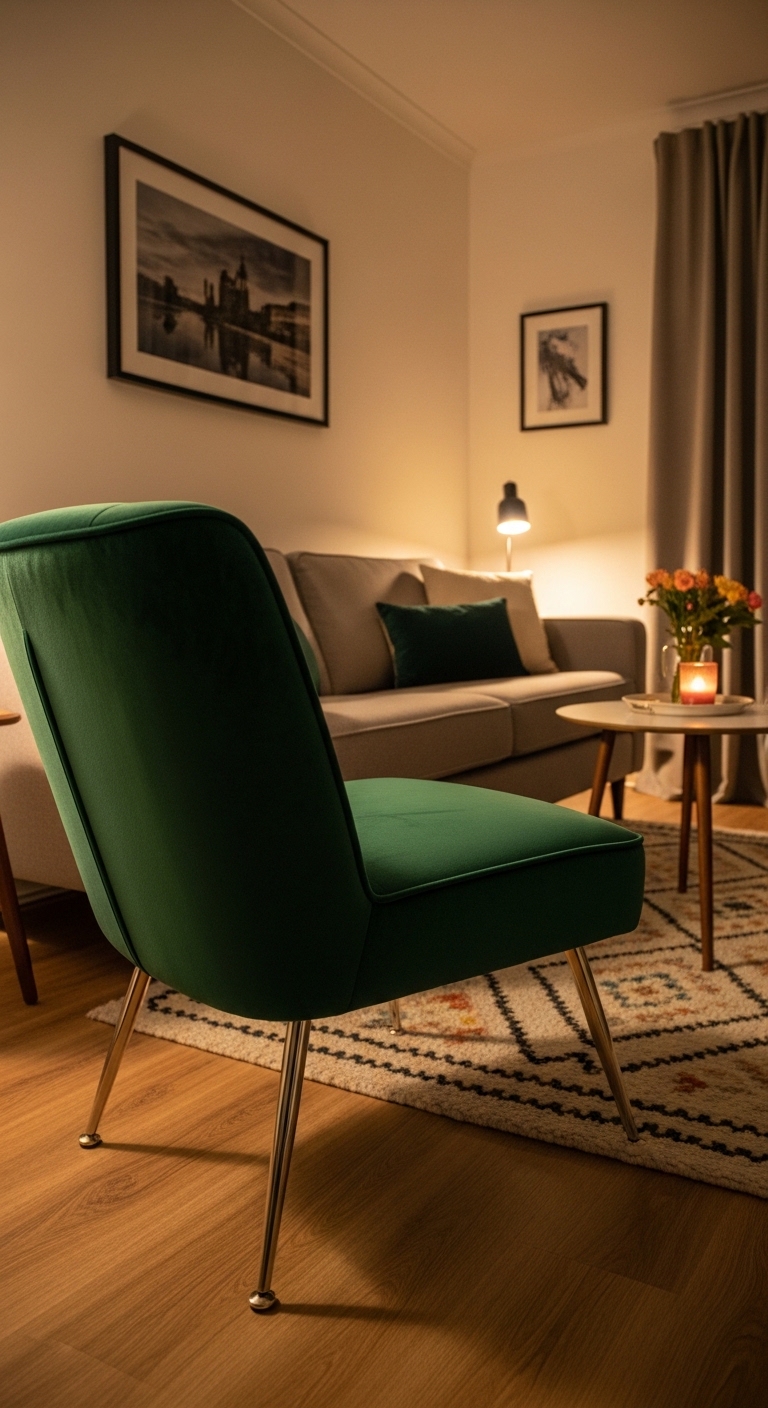
A velvet accent chair is one of those pieces that punches way above its weight in a small living room. It adds color, texture, and a clear second seating option — all in a footprint that is roughly the size of a dining chair. The texture of velvet catches and plays with light in a way that flat fabrics simply cannot, giving your room depth and richness without a single extra accessory.
Color-wise, do not be afraid to go bold here. A deep emerald, dusty mauve, burnt sienna, or midnight blue velvet chair against a neutral sofa creates an instant focal point. Keep the legs slim and tapered in brass or walnut to maintain a light, furniture-floats feel.
Ottoman as Coffee Table
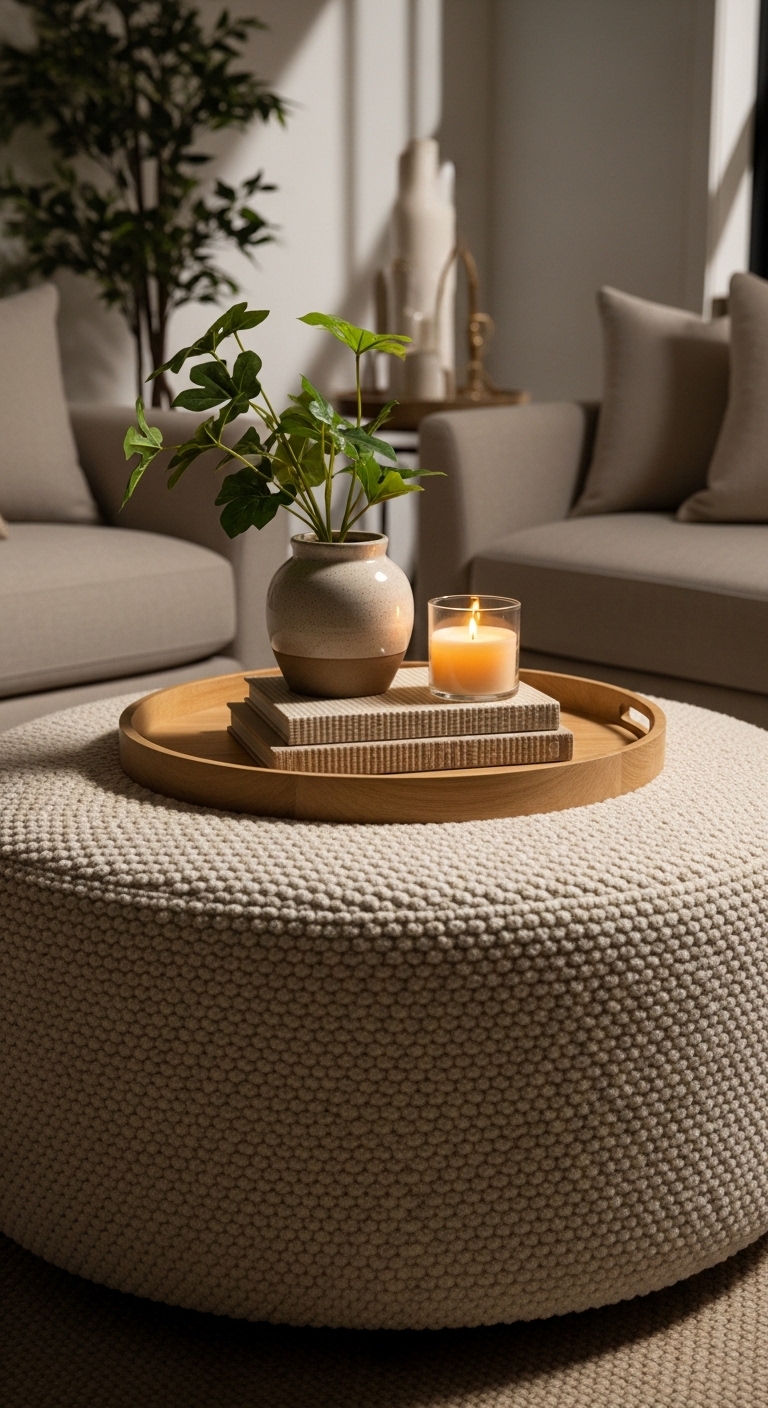
The traditional coffee table — solid, four-legged, usually with a glass or wood top — is a fine piece of furniture in a larger space. In a small apartment living room, a large upholstered ottoman does the same job better. It softens the space visually, it is comfortable enough to put your feet up, it doubles as extra seating when guests arrive, and it eliminates the sharp corners that make tight spaces feel even more cramped.
To make it fully functional as a coffee table, simply place a large serving tray on top. A wooden or marble tray creates a stable surface for drinks, books, candles, and whatever else you would normally put on a coffee table — but the moment you need the whole ottoman surface, the tray lifts away in seconds.
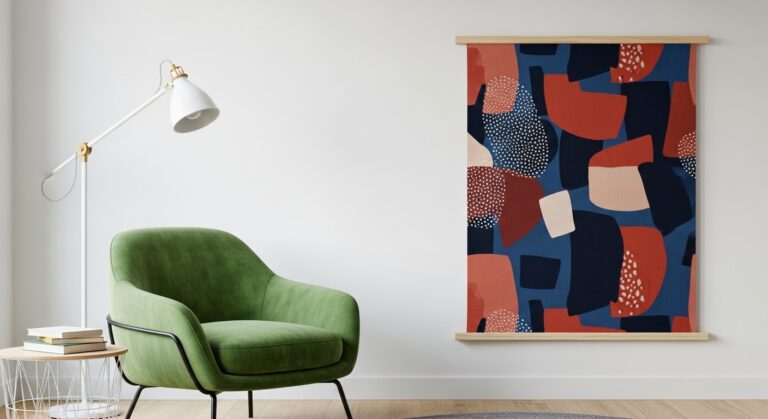
Macramé and Textile Wall Art
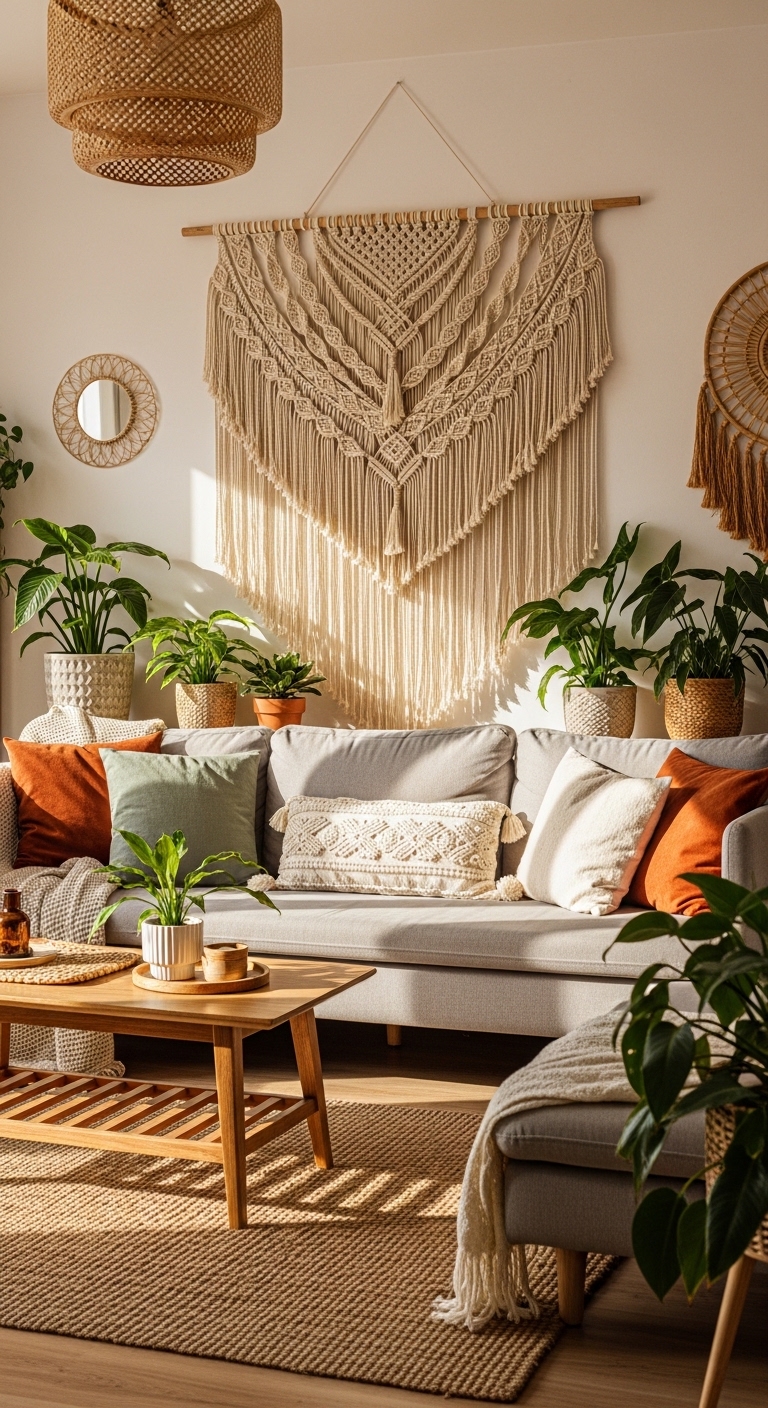
When you want to add warmth and texture to your living room walls without the weight and commitment of framed art, textile wall hangings offer something genuinely different. They bring handmade character, organic texture, and a softness to the room that no printed canvas or poster can replicate.
Macramé has evolved far beyond the beachy, retro look it once had. Today’s designs range from architectural and geometric to soft and flowing. Hang a large piece as a solo statement over the sofa or use a cluster of smaller textile pieces at varying heights for a more layered, intentional look. The natural fiber tones work beautifully with earthy, neutral-based interiors.
Plants as Living Décor
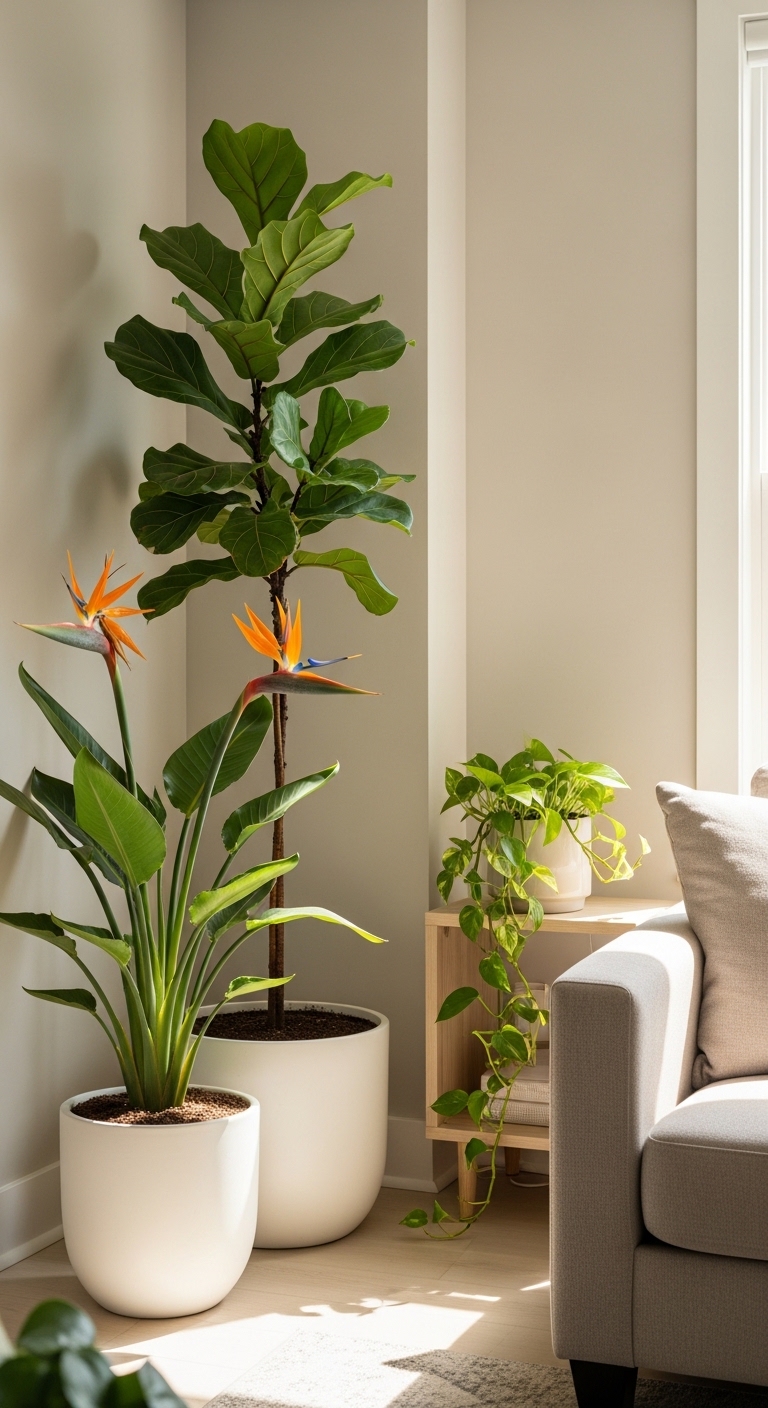
Nothing makes a small apartment living room feel more alive than real plants. They add color, oxygen, and a genuine sense of growth and life that no artificial decoration can replicate. Even a single well-chosen, healthy plant instantly changes the energy of a room in a way that is hard to explain and impossible to ignore once you experience it.
For small living rooms, strategic placement matters. A tall fiddle-leaf fig or a snake plant in the corner draws the eye upward and fills dead vertical space beautifully. A small trailing pothos on a floating shelf or the top of a bookcase adds organic drape and movement. A cluster of three small plants in different textures on the windowsill creates a living tableau.
What to Keep in Mind
- Snake plants and ZZ plants thrive in low light and need minimal watering — perfect for beginners.
- Use planters that complement your room’s palette — terracotta for earthy tones, white ceramic for Scandinavian styles, woven baskets for boho rooms.
- Group plants in odd numbers: one tall, one medium, one trailing creates an effortless vignette.
Slim Console Behind the Sofa
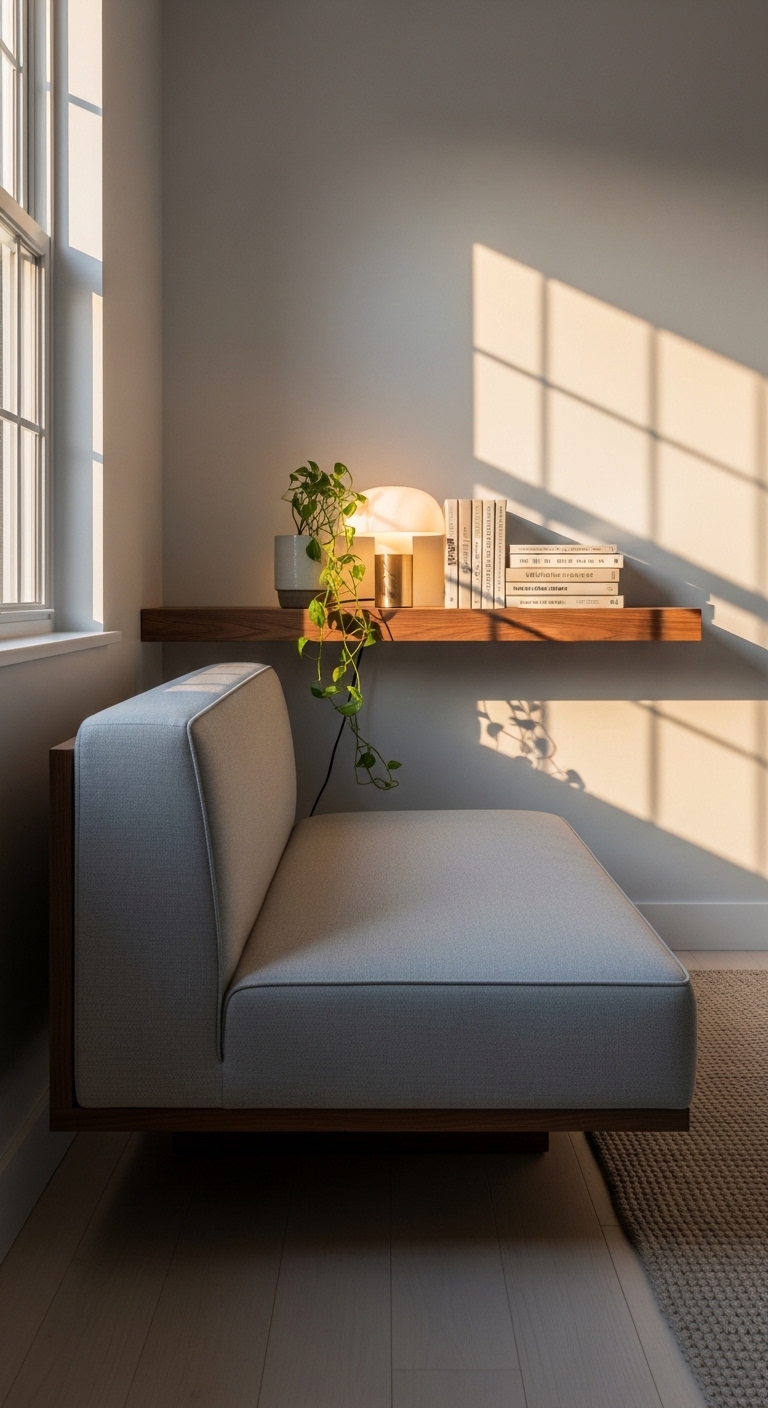
Here is a practical idea that most apartment decorators never think of: the narrow console table placed directly behind the sofa. If your sofa floats in the middle of the room rather than sitting against a wall, this simple addition creates a visual back to the sofa area, adds a surface for lamps, plants, and books, and effectively gives you a mini workspace or display zone that takes up virtually no floor space.
A console table that is around the same height as the sofa back — typically 28 to 32 inches — looks intentional and perfectly integrated. Choose one with a slim profile: no more than 12 to 14 inches deep. That is all you need to add significant function without making the room feel blocked or narrowed.
Color-Blocked Walls
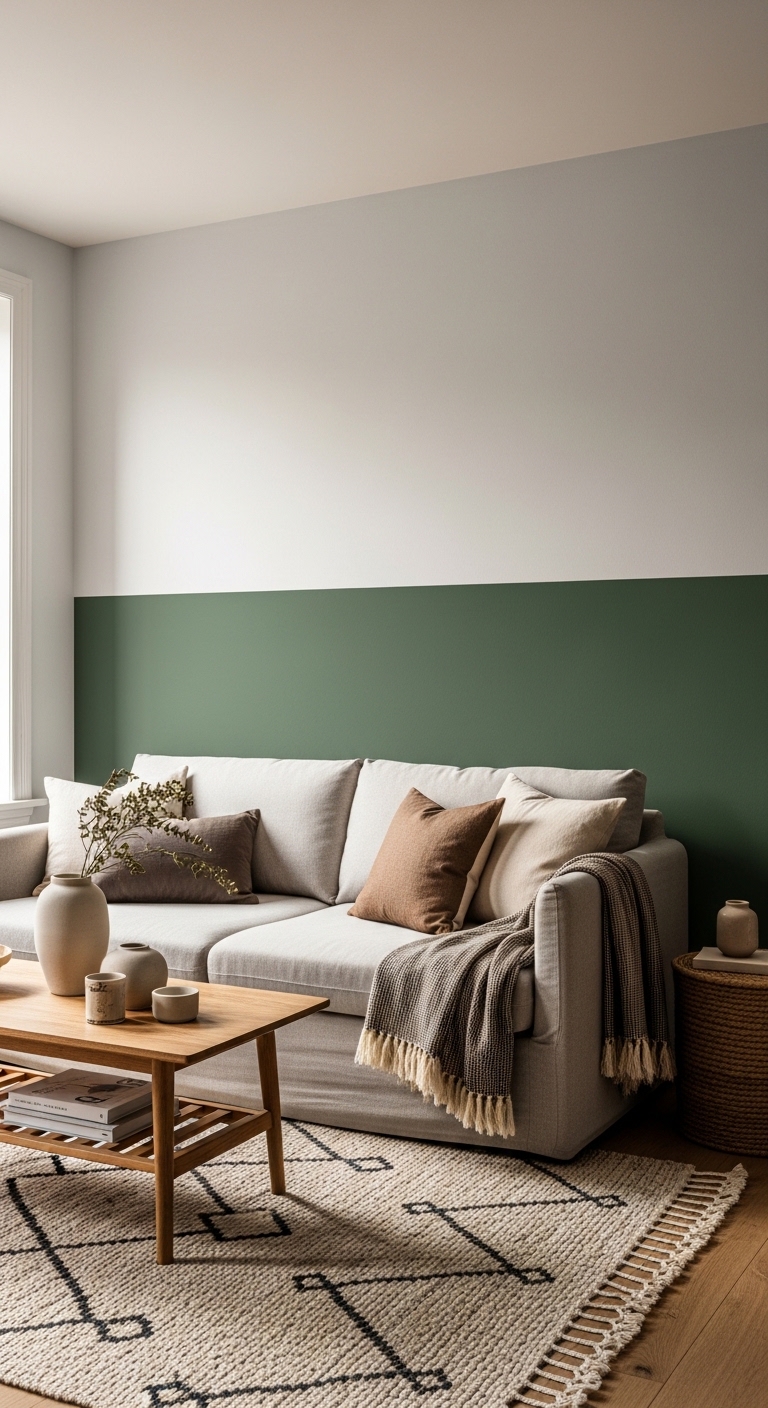
Painting an entire wall a bold color can feel risky in a small room. Color-blocking — painting just the lower portion of a wall a deeper, richer tone while keeping the upper portion and ceiling bright — is a way to get the drama and personality of color without the visual weight of a full dark room.
A two-toned wall with a warm terracotta or deep sage green on the lower two-thirds and soft white above creates a grounding, cocoon-like quality that feels sophisticated and collected. The color keeps the eye at a lower level, which — counterintuitively — makes the ceiling appear even higher because of the contrast above it.
Floating TV Unit
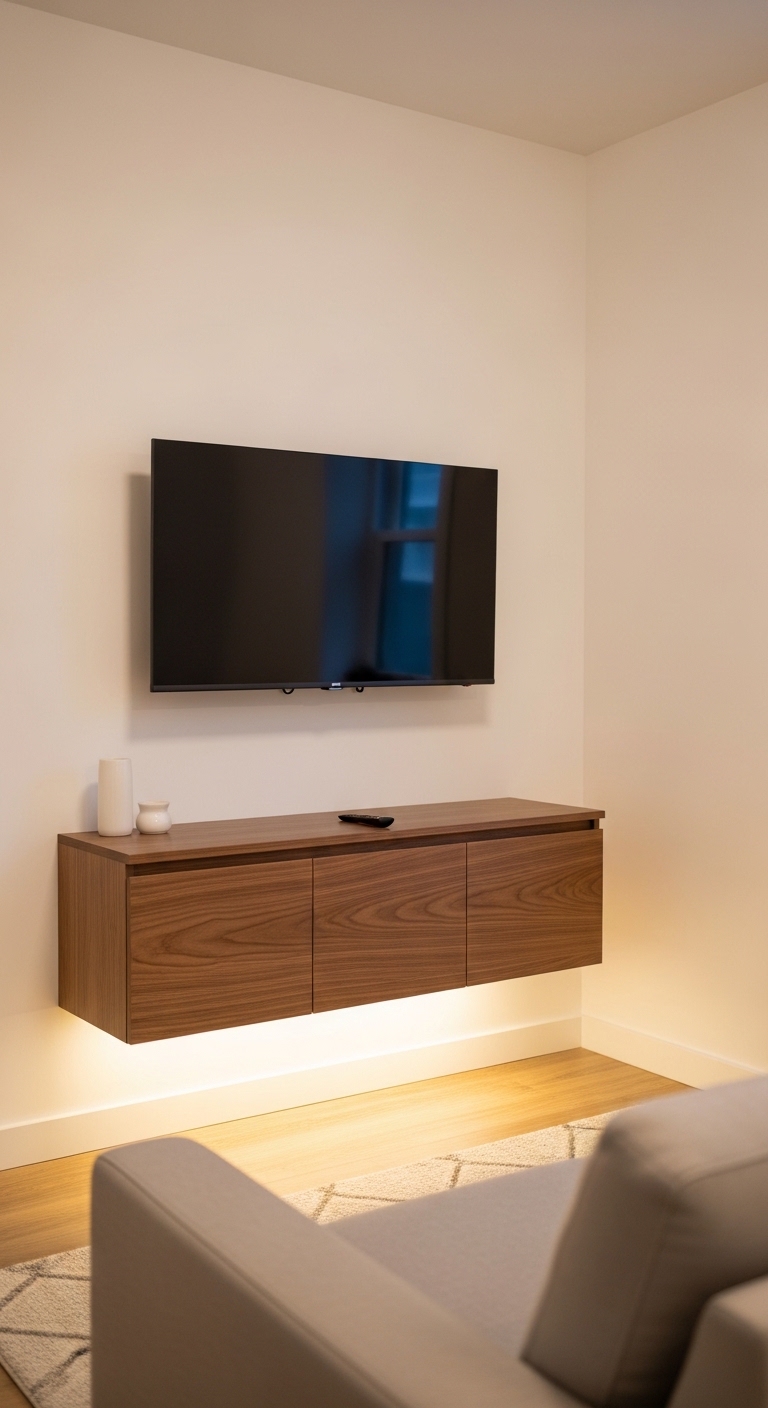
A TV console that sits on the floor takes up visual space even when it is compact. A wall-mounted or floating TV unit immediately frees up floor space, making the room look less crowded and more airy. The floor visible beneath the TV zone adds to the sense of open, breathable space that small apartments desperately need.
When you mount the TV and pair it with a floating media console, choose a unit that gives you storage for remotes, cables, and devices but keeps everything hidden behind closed doors or drawers. Visual clutter around the TV is one of the fastest ways to make a small living room feel chaotic, and a tidy, floating unit solves this completely.
Woven Baskets for Storage
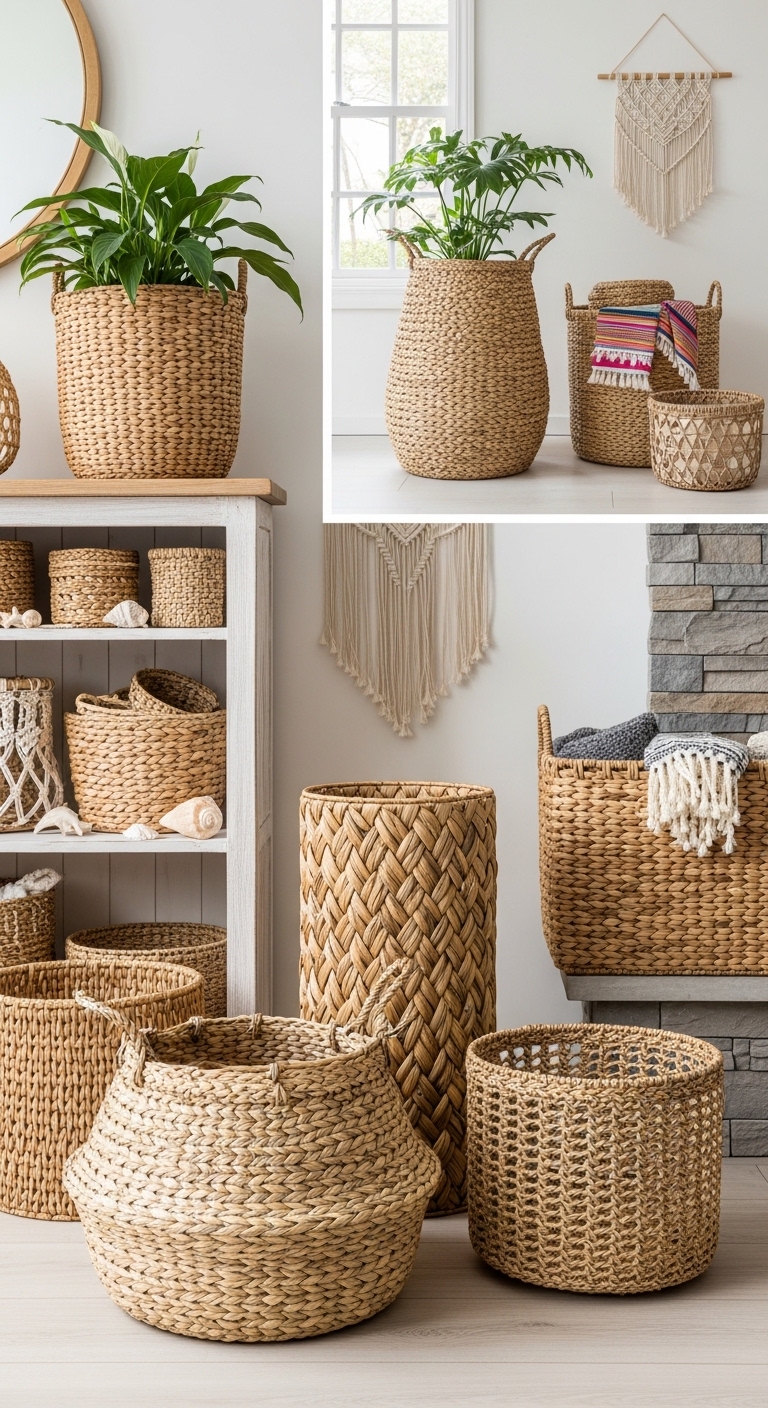
Storage in small apartments is a constant puzzle. Woven baskets are one of the most attractive and versatile solutions because they do double duty as both storage and décor. A large seagrass basket beside the sofa holds throw blankets and pillows while looking like an intentional design element. A smaller basket on a shelf corrals TV remotes, phone chargers, and the random odds and ends that accumulate on surfaces.
AI Image Prompt: A cozy small apartment living room corner with a large round seagrass basket on the floor beside a linen sofa, filled with folded throw blankets. A smaller rattan basket on the nearby floating shelf. Warm neutral tones, soft natural light. Boho-minimalist styled interior photography, earthy and inviting.
Layered Lighting System
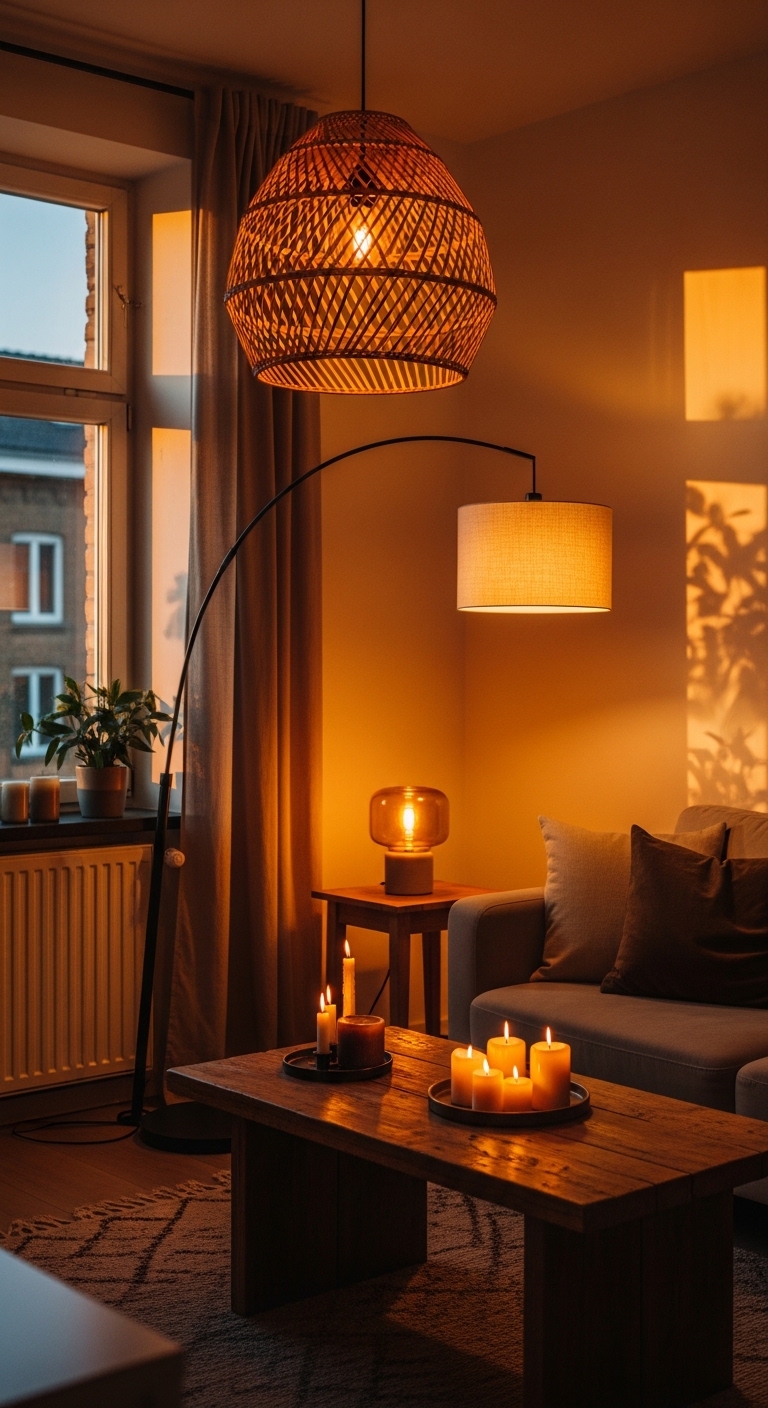
Single-source lighting is the fastest way to kill the mood of a living room. A layered lighting approach — combining ambient, task, and accent lighting — gives you full control over the feel of your space at any time of day or night. In a small apartment, this matters enormously because good lighting can make a compact room feel intimate and luxurious, while bad lighting makes it feel like a storage unit.
The formula is simple: start with ambient light from a ceiling fixture or pendant, add a floor lamp for reading and warm fill light, include a table lamp on a side table for lower, warmer glow, and finish with a few candles or LED strip lights behind the TV for the softest accent layer. This combination gives you a room that transforms from productive and bright in the afternoon to warm and relaxing in the evening.
What to Keep in Mind
- Use warm white bulbs in the 2700K to 3000K range throughout — cool white bulbs make living rooms feel clinical and harsh.
- Plug all lamps into smart plugs so you can adjust everything from your phone without hunting for switches.
- A torchière floor lamp that bounces light off the ceiling creates the most flattering, even glow for a small room.
Minimalist Bookshelf Styling
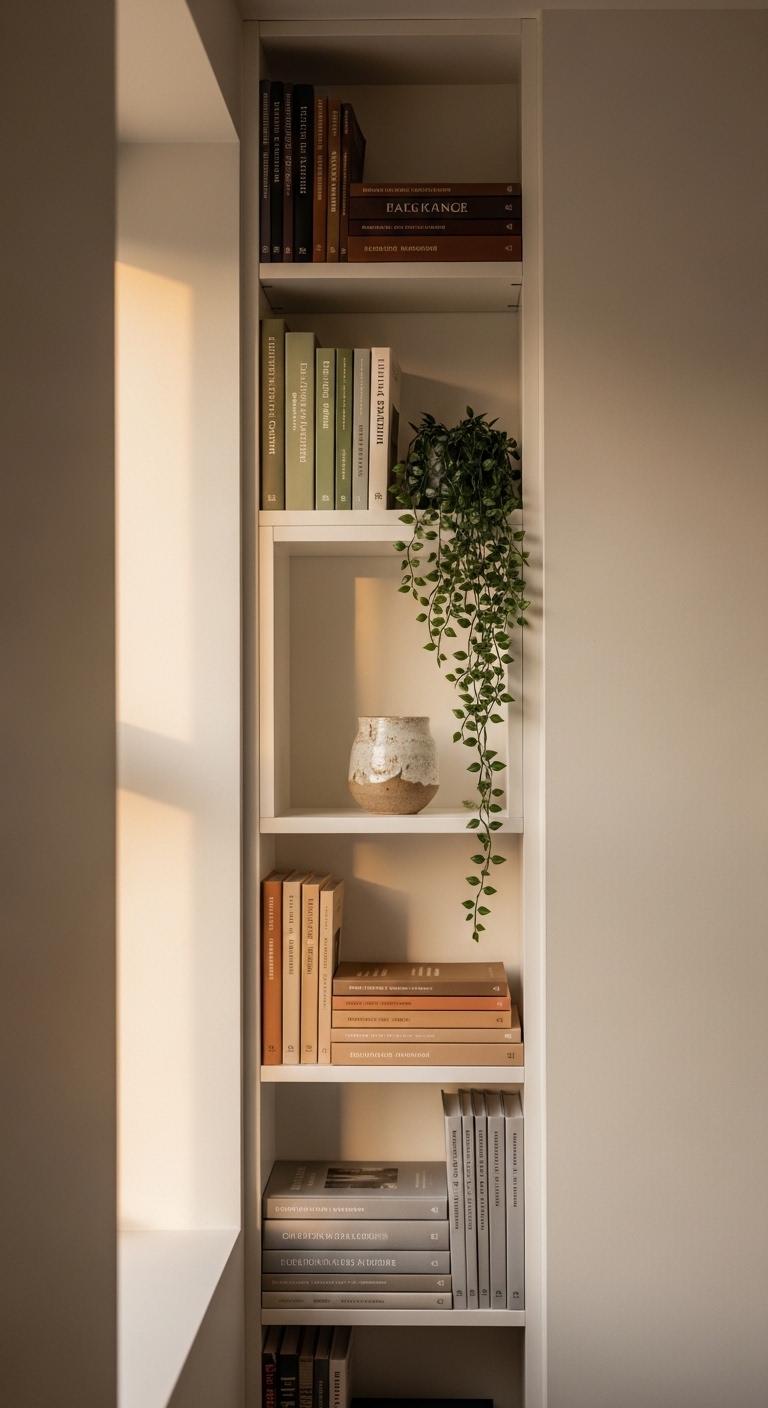
A bookshelf in a small living room is either your greatest asset or your biggest source of visual chaos. A fully packed, floor-to-ceiling wall of books reads as clutter in a compact space. The solution is not to hide your books — it is to style the shelf with the same editorial eye a photographer would use for a magazine shoot.
The key principle is breathing room. Every shelf should have at least one empty section, or a section styled with a single object and open space around it. Organize books by color for a cohesive, aesthetic impact. Mix vertical stacks with horizontal stacks. Add a plant, a small sculpture, or a framed photo as punctuation marks between sections of books.
Mirrored or Glass Furniture
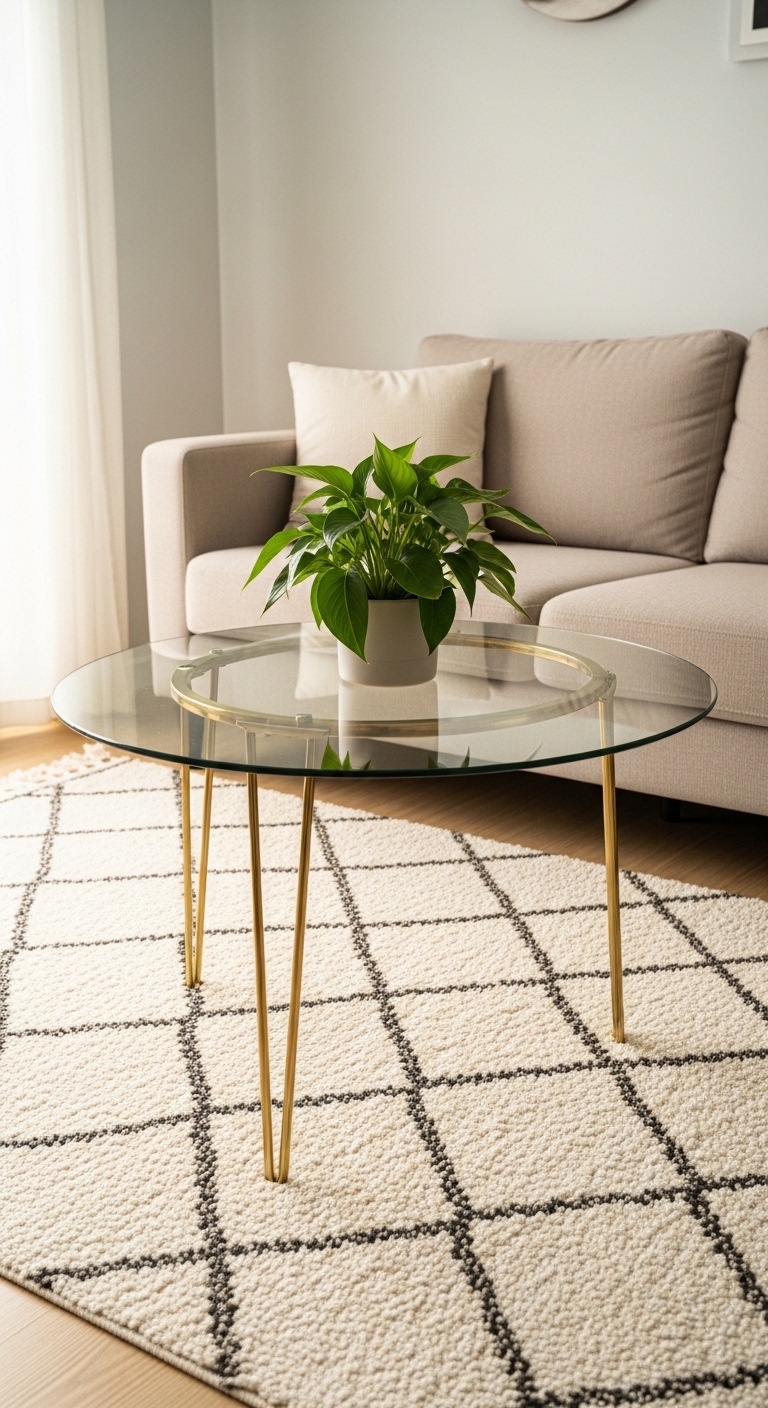
Glass and mirrored furniture pieces — a glass-top coffee table, a lucite side table, a mirrored console — are one of the best-kept secrets of small space decorating. These pieces are visually transparent. Your eye passes through them rather than stopping at their edge, which means they contribute function without adding visual mass to your room.
A glass coffee table in a small living room creates the feeling of more open floor space because you can see the rug and floor beneath and through it at all times. Pair it with a textured rug for contrast — the combination of a transparent surface above a richly textured rug creates a beautiful layered look.
Warm Throw Blanket Layers
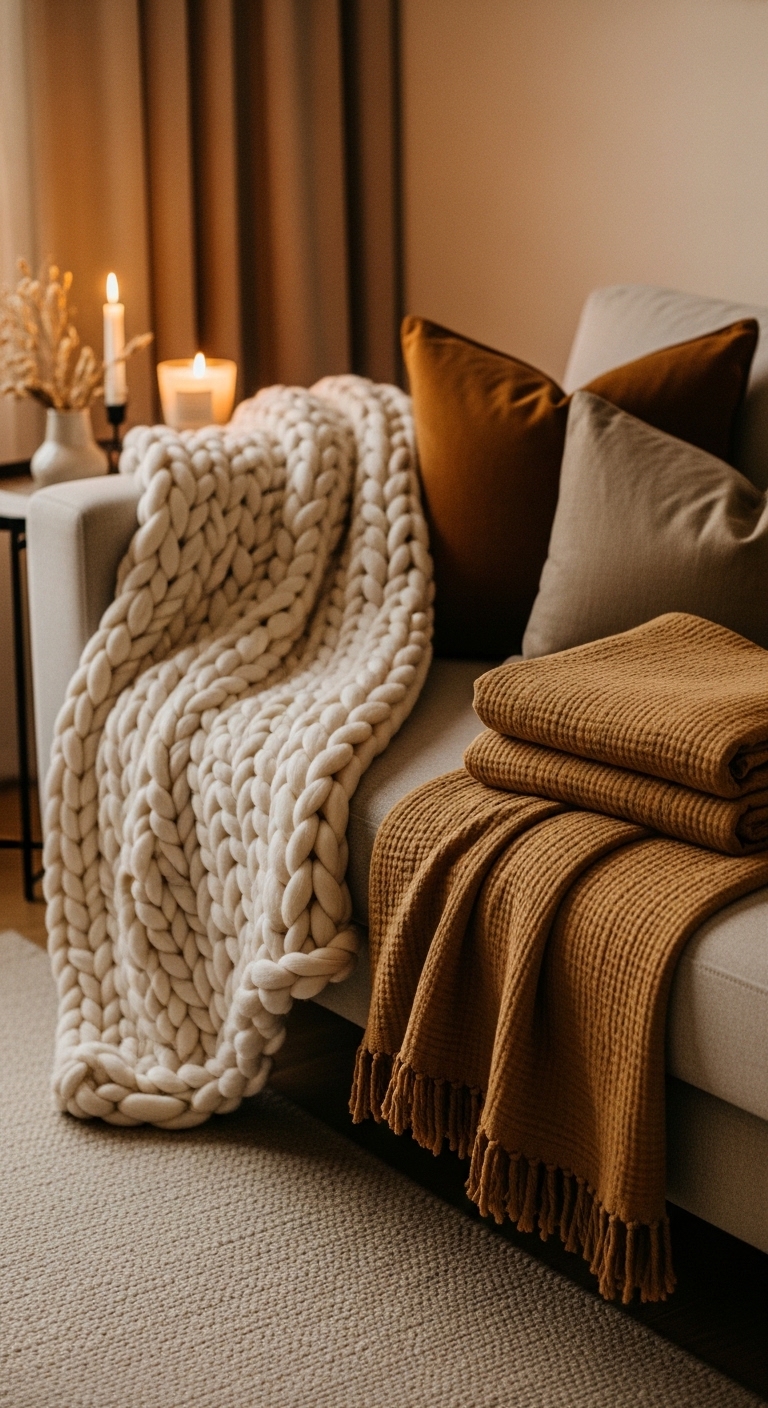
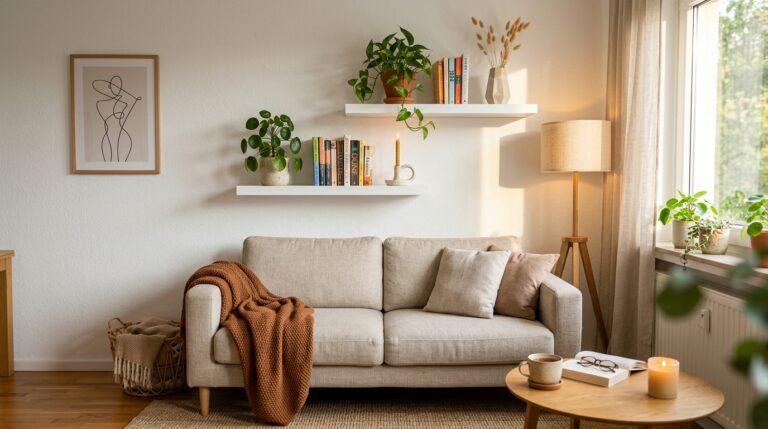
We will close with the most accessible, low-cost, and instantly impactful decorating trick in the book: throw blankets. A well-chosen throw, draped casually over the arm of your sofa or folded over one corner, does something extraordinary to the energy of a living room. It signals comfort. It adds texture. It introduces color. And it softens the geometry of a sofa in a way that no pillow alone can.
Layer two throws of different textures — a chunky knit and a lightweight cotton woven throw, for example — for a look that feels genuinely styled rather than simply a blanket on a couch. Keep them in tones that complement your rug and cushion palette. Bonus: on cold nights, they are actually useful. Functional decor at its absolute finest.
What to Keep in Mind
- Drape one throw over the sofa arm rather than folding it perfectly — messy-but-intentional reads as more lived-in and inviting.
- Choose throws in natural fibers: chunky merino wool, cotton waffle weave, or recycled cashmere. They photograph beautifully and feel genuinely luxurious.
- Keep a third throw rolled up in a basket beside the sofa for easy access and as a decorative element in its own right.
Conclusion:
You do not need more square footage to have a living room that genuinely reflects your personality and makes you feel good every time you walk in. You need intention. You need the right pieces in the right places. You need to think vertically, choose furniture that earns its keep, and use light, mirrors, and texture to create depth where there is not space.
Start with just one or two of these ideas. Pick the floating shelves if blank walls are driving you crazy. Start with a large rug if your furniture feels untethered. Layer in a few plants if the room feels lifeless. Small changes compound into something genuinely beautiful — and that is as true for a 400-square-foot apartment as it is for a 4,000-square-foot home.
Your apartment living room is waiting. Now you have everything you need to make it extraordinary.