12 Living and Dining Room Combo Ideas That Actually Work
You rearranged the furniture three times last Saturday, stood in the middle of the room with your hands on your hips, and still felt like something was off. I have been there — trust me, I spent two full weekends trying to make my open-plan apartment feel like more than just a furniture showroom with good lighting.
Here, I am sharing twelve ideas that genuinely transformed how my own combined space looks and feels. Each one gives you a specific, actionable starting point you can try this weekend — no contractor, no guesswork, just real results.
The Sofa-as-a-Divider Trick (That Nobody Tells You)
Picture yourself walking into a room where everything instantly makes sense — you feel the living zone on one side and the dining zone on the other, yet no wall separates them. That clarity comes from one smart move: turning the sofa so its back faces the dining table instead of a wall. Your eye reads that line as a boundary, and both spaces suddenly feel intentional. I did this in my own home and genuinely could not believe how much definition it created without touching a single wall or spending a dollar.
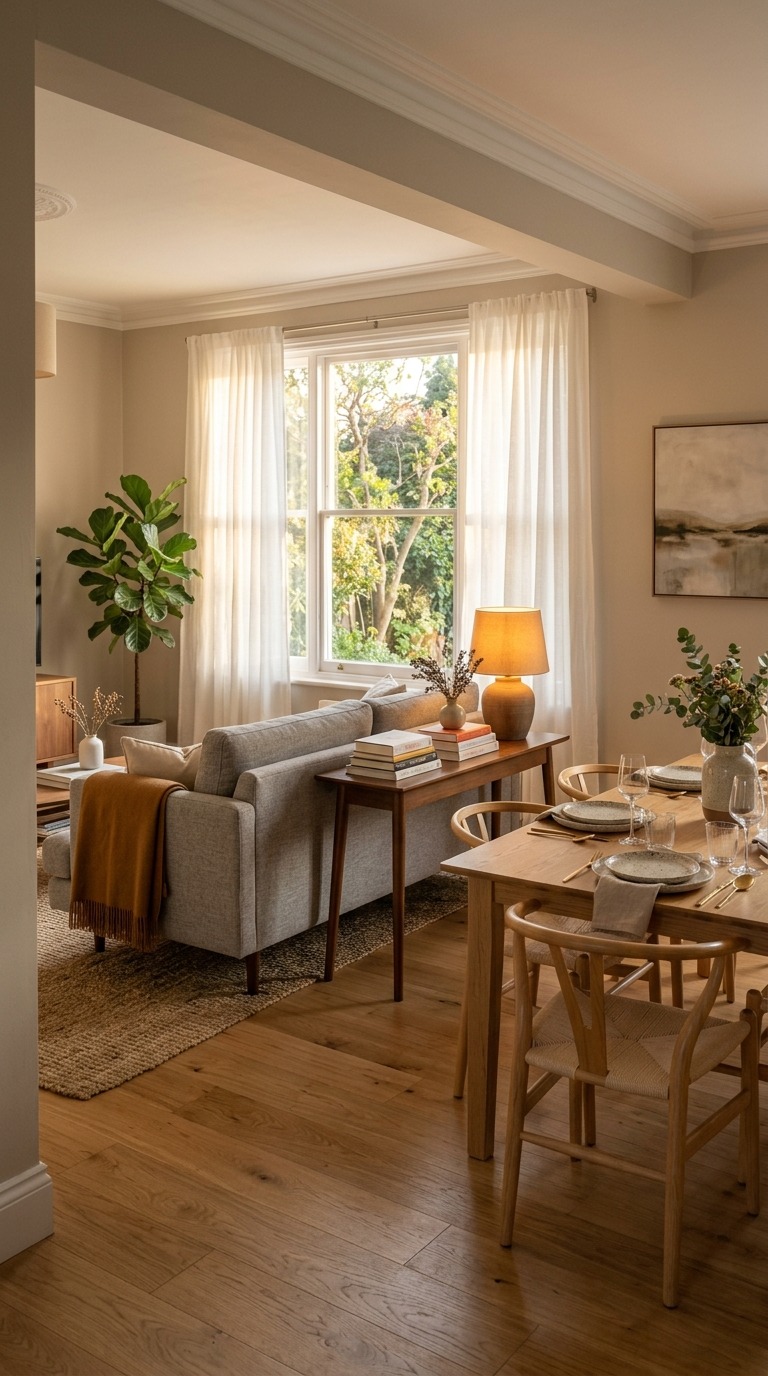
The magic gets even better when you slide a slim console table right behind the sofa. Suddenly you gain surface space for a lamp, a trailing pothos, or a small stack of books — and that console adds even more visual weight to the zone boundary. Keep at least eighteen inches of clearance between the console and the dining chairs so nobody has to squeeze sideways at dinner. Try Sherwin-Williams Accessible Beige on your walls for a neutral that reads warm without going yellow, and it lets your furniture do all the talking.
Two Area Rugs, One Cohesive Space
Two rugs in one room sounds like a recipe for chaos, but hear me out — this is actually one of the most powerful zoning tools I have ever used. Drop one rug under your sofa arrangement and a second, different-textured rug under the dining table, and each zone instantly reads as its own defined area without anything physically separating them. The key is keeping both rugs within the same color family so the room still flows as one cohesive space rather than two competing rooms fighting for attention.
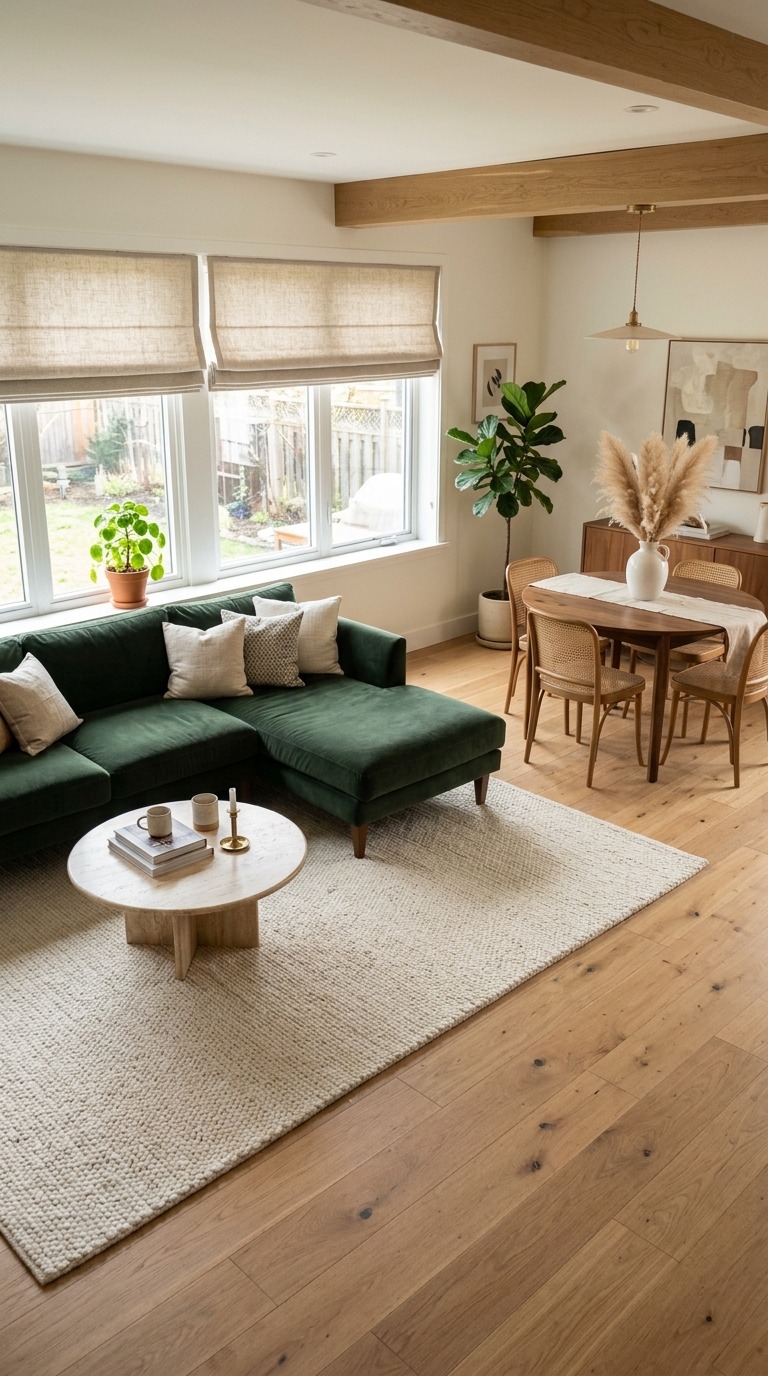
I personally used a soft cream wool rug in the living zone and a natural jute rug under my dining table, and the contrast in texture did all the heavy lifting. The wool felt cozy and relaxed while the jute felt grounded and practical — exactly the right personality for each zone. Paint your walls Benjamin Moore White Dove so both rugs pop against a clean, warm-white backdrop. Pair the living rug with a deep forest-green velvet sofa and the dining zone with a round walnut table, and the whole room tells one beautiful, layered story.
A Unified Color Palette Ties Everything Together
One of the fastest ways to make a combo room feel chaotic is giving the living side one color story and the dining side a completely different one. When I first moved in, I painted an accent wall behind my sofa in a dusty blue and kept the dining area totally white, and the room felt like two strangers sitting next to each other on a bus. The fix was simpler than I expected — one consistent wall color pulled the entire space together immediately and made both zones feel like they genuinely belonged side by side.
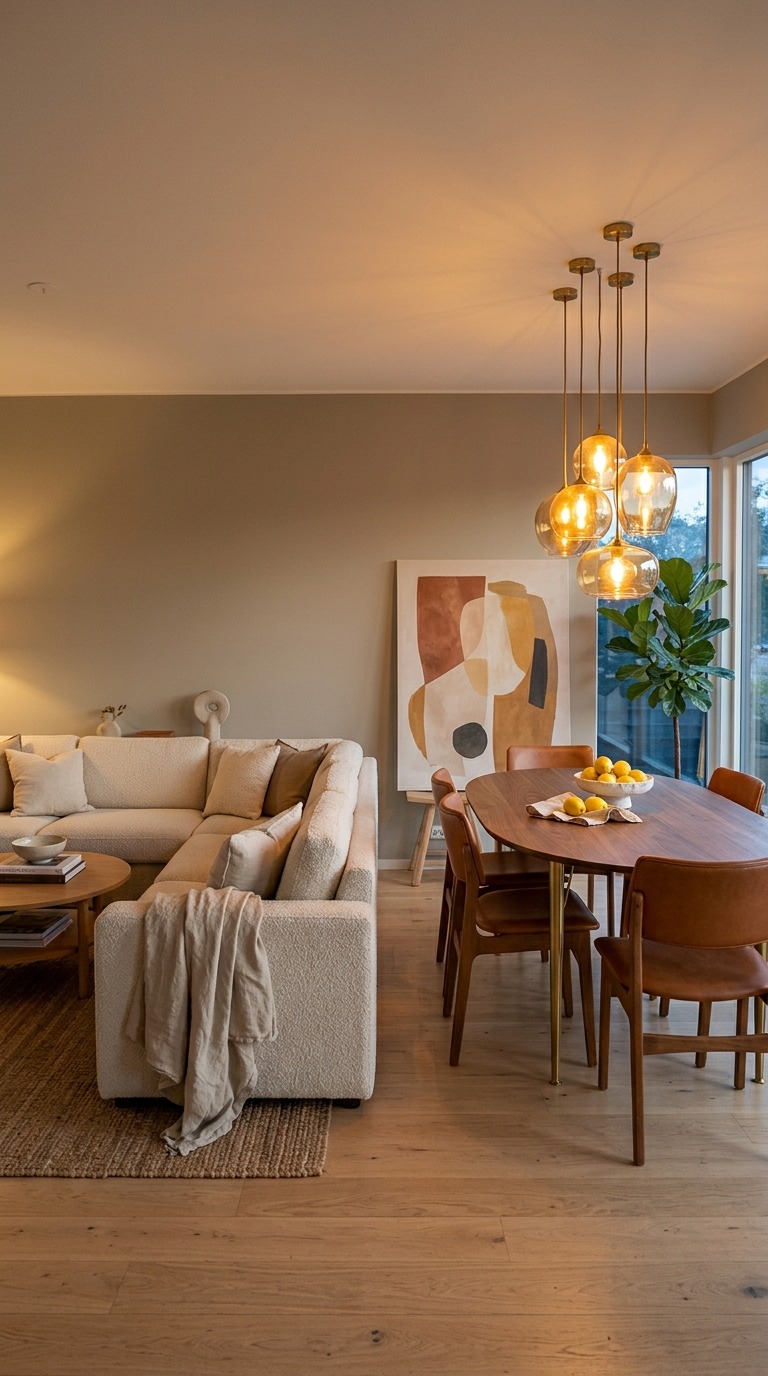
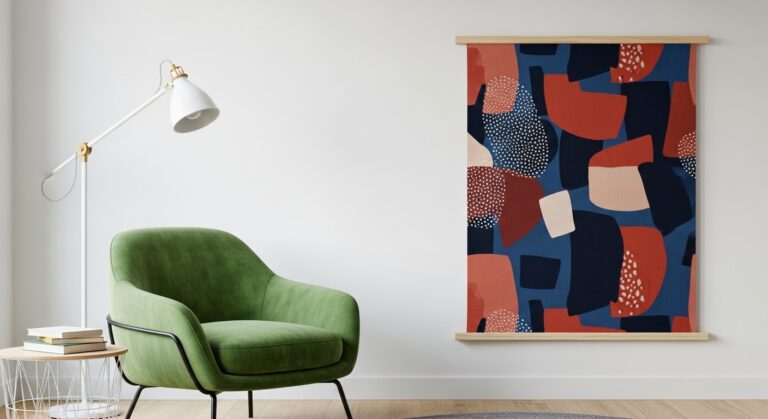
Try Farrow and Ball Elephant’s Breath across all four walls for a warm, sophisticated greige that works beautifully with both living room softness and dining room structure. Repeat one accent color — like cognac leather — in both zones, using it on dining chairs and in sofa throw cushions simultaneously. Hang a large abstract canvas print in the dining area and echo the same artwork tones in your sofa pillows. That visual repetition is what designers call a color thread, and it makes a combined space feel deliberately styled rather than accidentally assembled.
Statement Lighting That Defines Both Zones
Lighting is invisible architecture — it shapes how a room feels without touching a single wall, and in a combo room, it does something incredibly useful: it tells each zone what it is. When I hung a dramatic cluster pendant over my dining table and kept a warm floor lamp in the living corner, the room stopped feeling like one giant undifferentiated space and started feeling like two rooms that simply chose to live together harmoniously. Nobody taught me this trick; I stumbled onto it and then wondered why nobody had told me sooner.
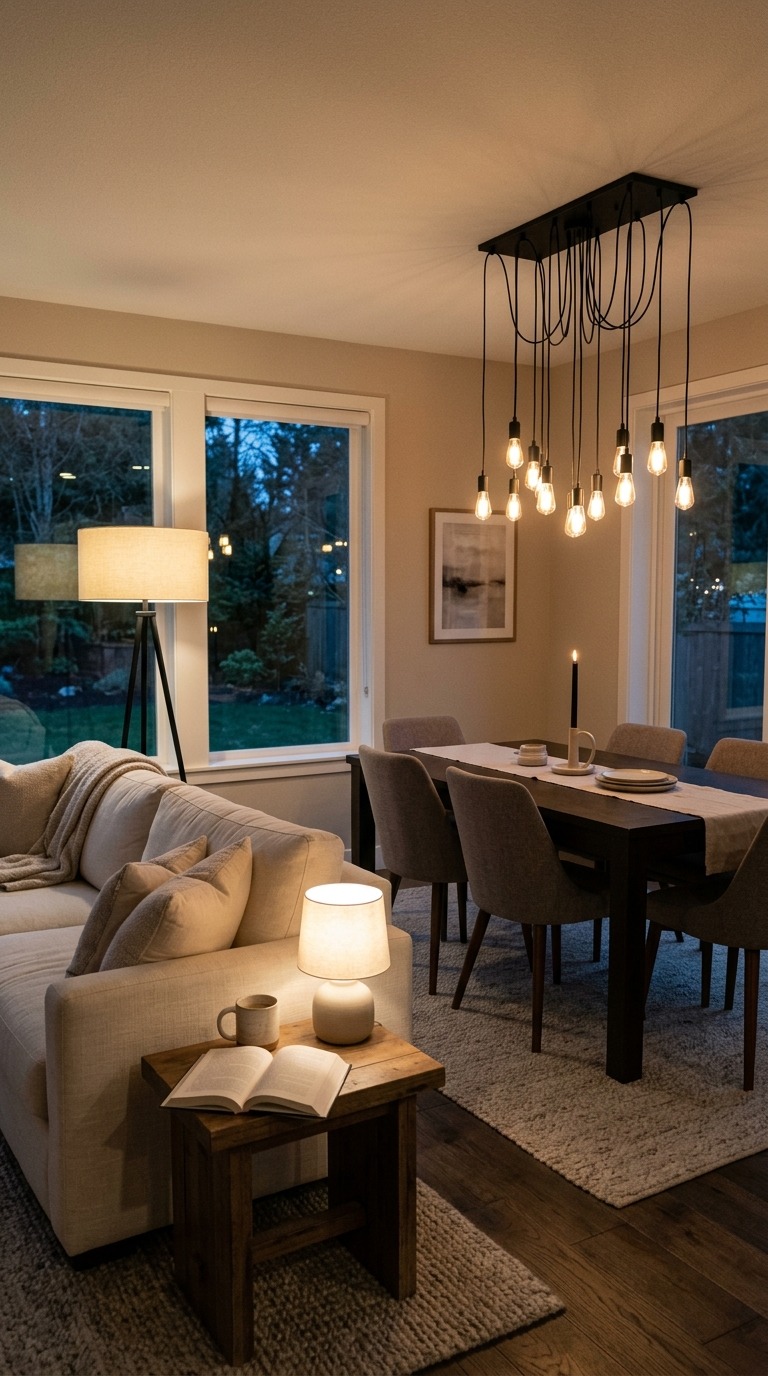
The pendant light over the dining table should hang low enough to feel purposeful — around thirty inches above the tabletop is the sweet spot. Choose something with visual weight, like a black-iron cluster or a woven rattan drum shade, so it reads as a real anchor rather than an afterthought. In the living zone, a tall arc floor lamp or a sculptural table lamp on an end table creates a completely different quality of light, making the sofa area feel intimate and evening-ready. That contrast in light style becomes the invisible wall your open plan was missing.
The Round Dining Table Game-Changer
Rectangular dining tables work beautifully in dedicated dining rooms, but in a combo space they often feel too rigid and too commanding — they cut the room in half like a piece of furniture furniture that refuses to share the spotlight. The moment I swapped my rectangular table for a round one, the energy of the entire room shifted. A round table takes up the same footprint but visually softens the space, creates better traffic flow around it, and makes the transition between dining and living zones feel natural rather than abrupt.
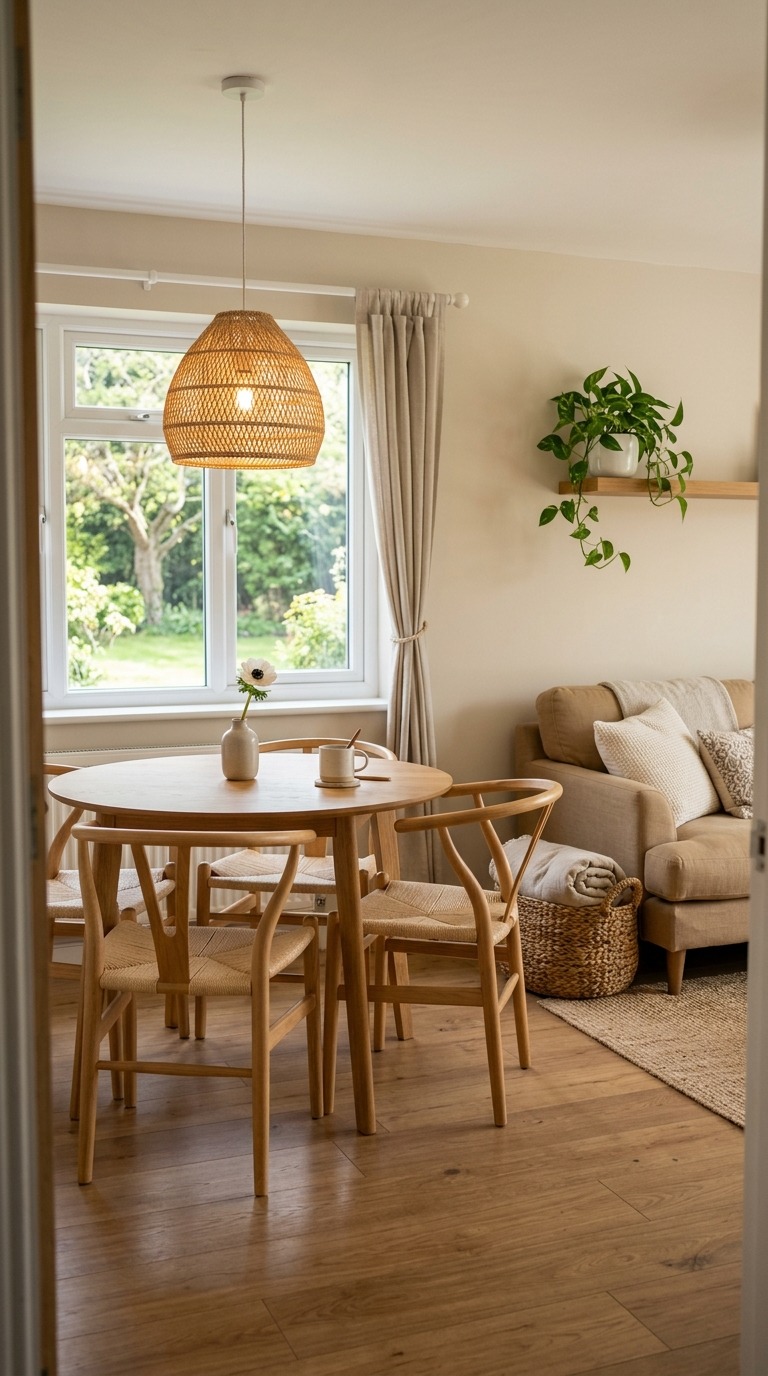
Round tables also solve a practical problem in combo rooms: they have no corners jutting into the living area, so movement between zones stays easy and fluid. Pair a solid round oak table with curved-back chairs rather than sharp angular ones to keep the soft, organic feeling consistent. Paint your walls Benjamin Moore Pale Oak — it is the warmest, most livable neutral I have ever put on a wall, and it makes round natural wood furniture glow like it is lit from within. Hang a rattan pendant above the table and the zone definition practically takes care of itself.
Open Shelving That Bridges Both Zones
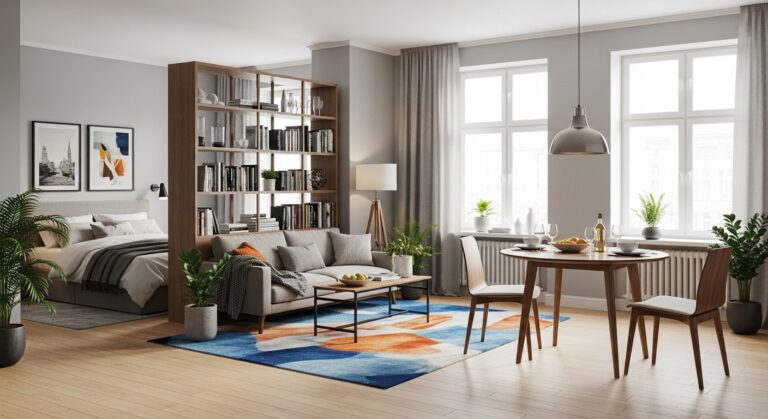
A thoughtfully styled open shelving unit between your living and dining areas does something no rug or lighting trick can do on its own — it creates a semi-permeable wall that defines each zone while still keeping the space completely open and airy. I installed floor-to-ceiling white oak shelves between my two zones and they immediately became the visual backbone of the entire room. They hold ceramic pieces, trailing plants, a few carefully chosen books, and small framed prints — things that decorate both sides of the room simultaneously from one central structure.
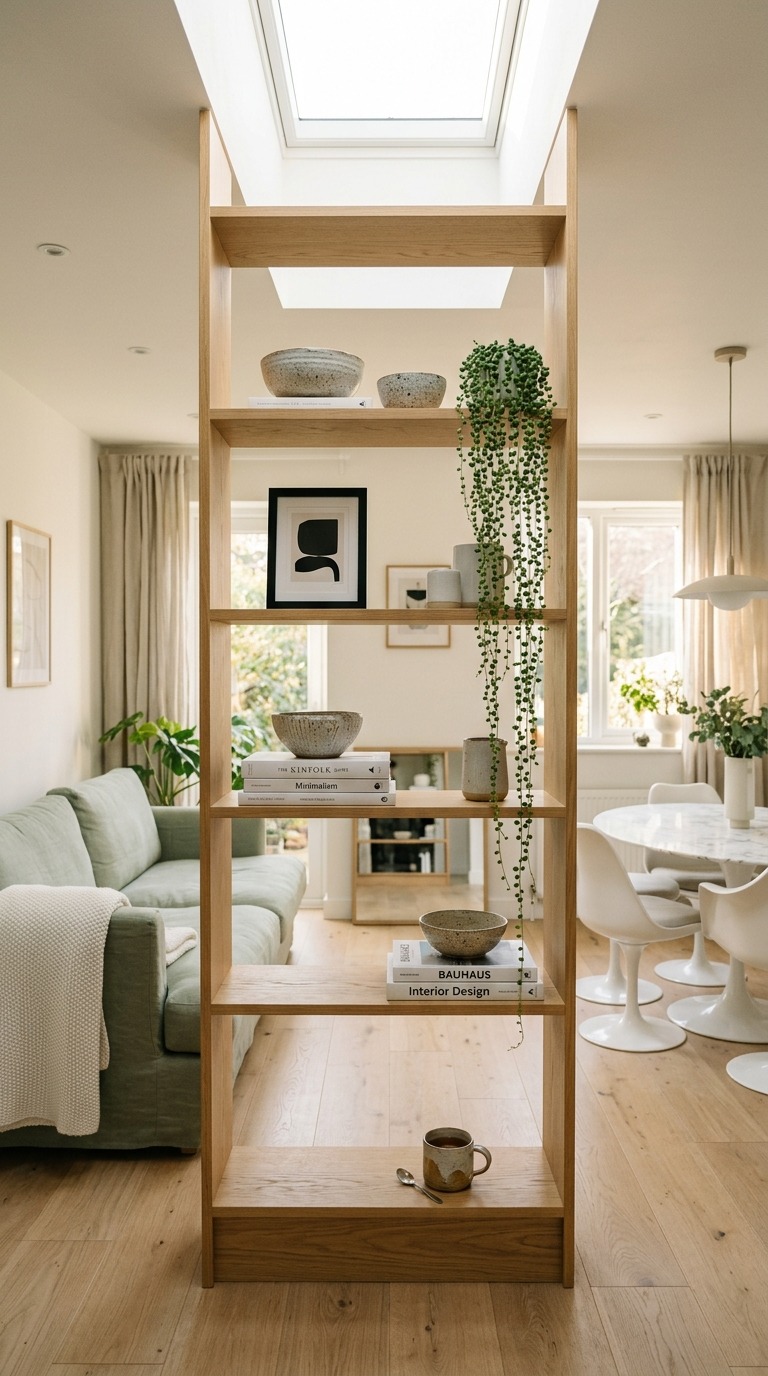
The key to making open shelves work as a zone divider is leaving plenty of breathing room between objects so the shelves feel curated rather than cluttered. Style every other shelf deliberately and leave some shelves empty or near-empty so your eye can rest. Paint the wall behind the shelves in Farrow and Ball Strong White so the shelving pops as a clean architectural element rather than disappearing into the background. On the living side, pair a sage linen sofa with a white knit throw, and on the dining side, a round marble table with white curved chairs keeps the palette cohesive across both zones.
Warm Wood Tones That Unify Everything
Wood is the single most powerful unifying material you can run through a combined living and dining space, and the reason is simple: it looks equally at home in both zones. When I deliberately chose warm walnut tones for my dining table, my media console, and my floating shelves, the room stopped feeling like two separate furniture purchases and started feeling like one considered, intentional home. The wood created a visual thread that pulled both zones together the way a repeated color can, but with more warmth and organic texture than paint ever could.
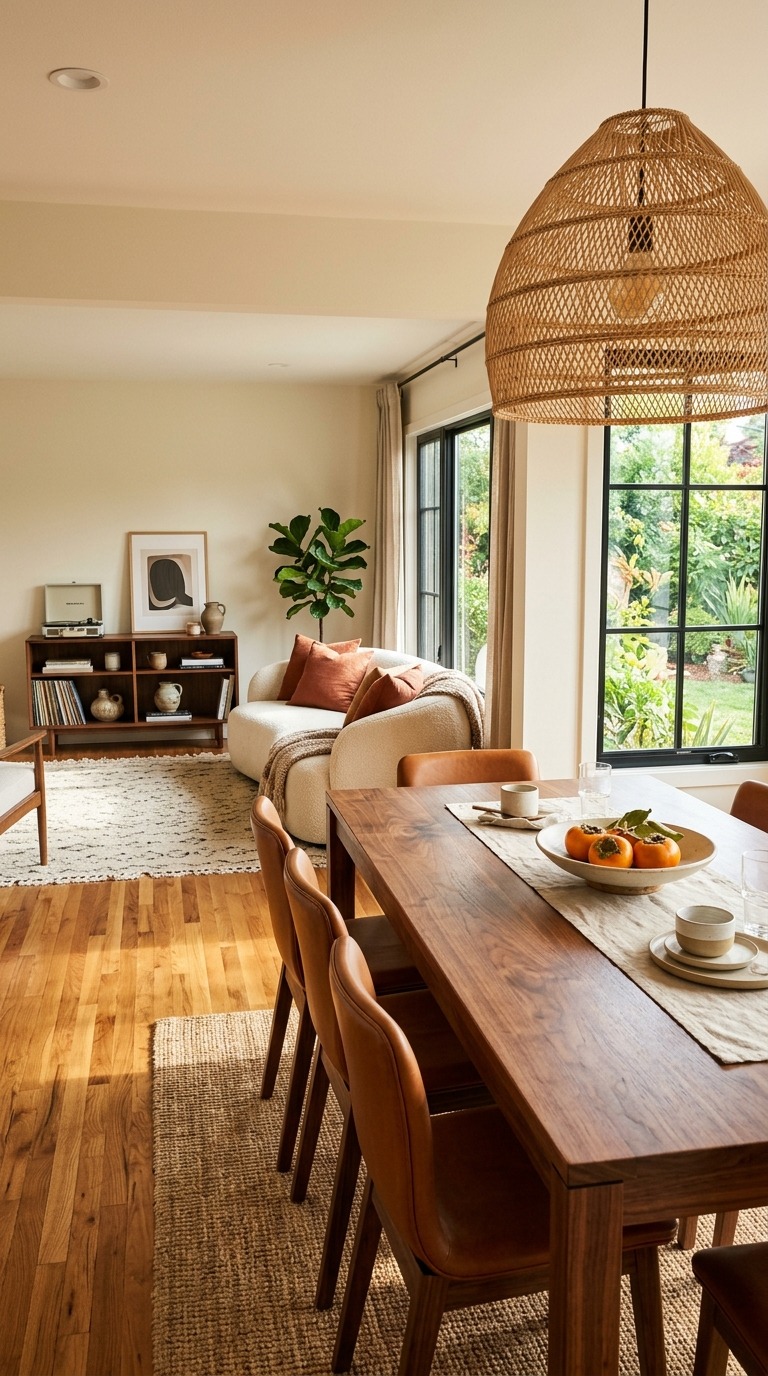
The trick is keeping all your wood tones within the same family — all warm honey, all cool ash, or all rich walnut — rather than mixing them randomly. Mixing undertones makes a room feel accidentally furnished rather than designed. Paint your walls Sherwin-Williams Navajo White, which is a creamy off-white that makes warm honey and walnut tones look absolutely luminous in natural light. Pair a boucle sofa in cream with rust-colored throw pillows in the living zone, and let the dining chairs in cognac leather echo that warm rust note so both areas feel visually connected at a glance.
Moody Dark Walls for a Dramatic Combo Room
Every design rule says go light in a small space, and for years I followed that advice without question until I painted one wall in a deep, moody color and completely fell in love with what happened. Dark walls in a combo room do something counterintuitive — they make the furniture pop with extraordinary clarity and give each piece a sense of drama and intention that light walls simply cannot deliver. Farrow and Ball Railings is my absolute favorite deep color for this because it reads as almost-black with a subtle navy undertone that feels rich rather than cold.
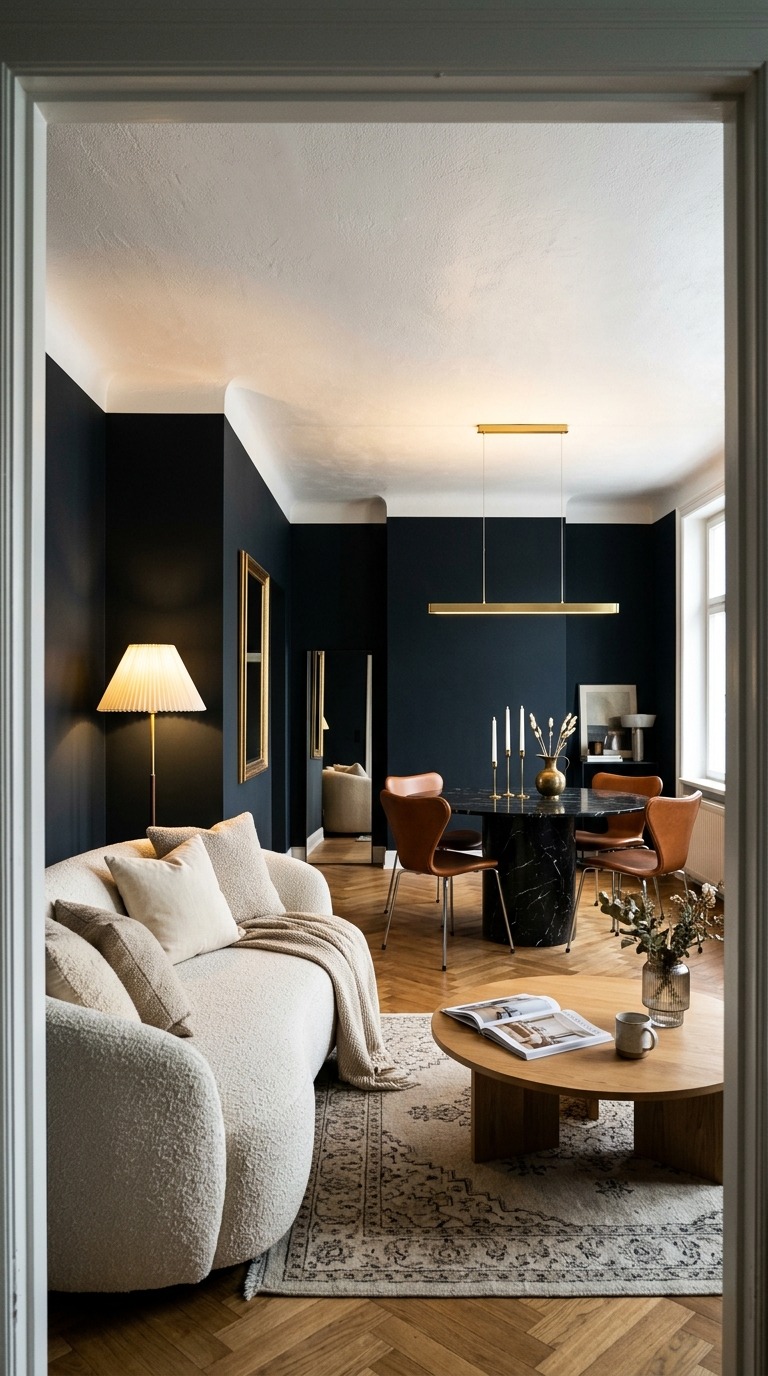
The secret to making dark walls work in a combo room is pairing them with very light, very pale furnishings so the contrast is maximum and neither zone feels cave-like. A cream bouclé curved sofa, ivory throw pillows, and a round black marble dining table with cognac leather chairs create a stunning palette against Railings. Let your white ceiling stay bright and unpainted — that stark contrast between deep walls and a white ceiling makes the room feel taller, not smaller. Add warm brass lighting and a cluster of tall white taper candles on the dining table, and this combo room will feel like the most sophisticated space you have ever hosted a dinner in.
Coastal Breezy Style With Relaxed Flow
There is a reason coastal-inspired open-plan rooms always look so effortlessly relaxed — they lean into natural materials, soft watery color palettes, and an almost deliberate casualness that makes a combined space feel like a permanent weekend. When I styled my combo room with a coastal bent, I stopped worrying about everything matching perfectly and started focusing on making everything feel light, airy, and lived-in. The room started to breathe in a way it never had when I was trying to make it look formally styled and put-together at all times.
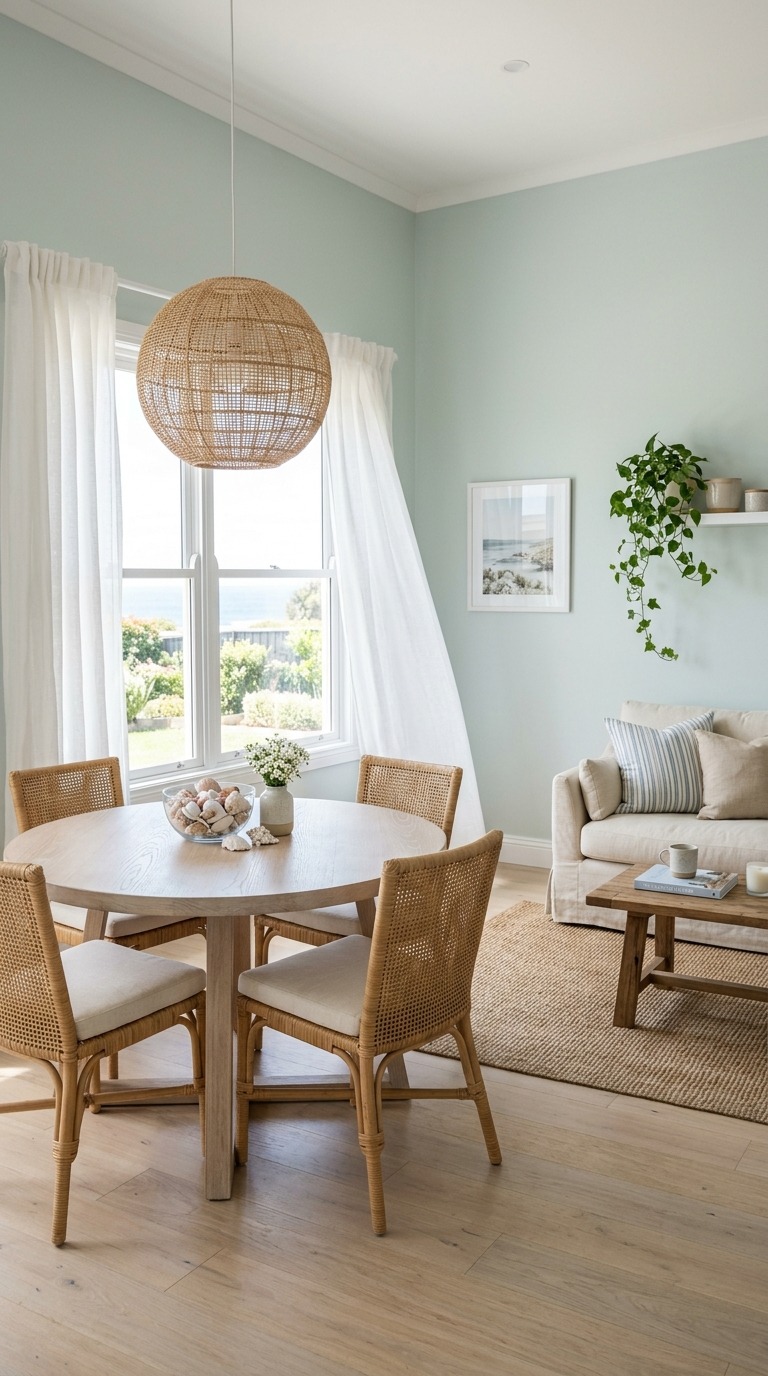
The palette is everything in a coastal combo room — think Benjamin Moore Pale Sea Mist on the walls, bleached white oak for the dining table, natural seagrass for the rug, and linen slipcovers on the sofa. Rattan-woven dining chairs are genuinely one of my favorite furniture finds because they look beautiful in both the dining zone and as occasional seating pulled into the living area when you have extra guests. Hang a woven pendant lantern over the dining table rather than a metal fixture, and the entire room immediately takes on that relaxed, sun-warmed quality that makes coastal interiors so deeply inviting and genuinely easy to live in every single day.
Mid-Century Modern Warmth and Personality
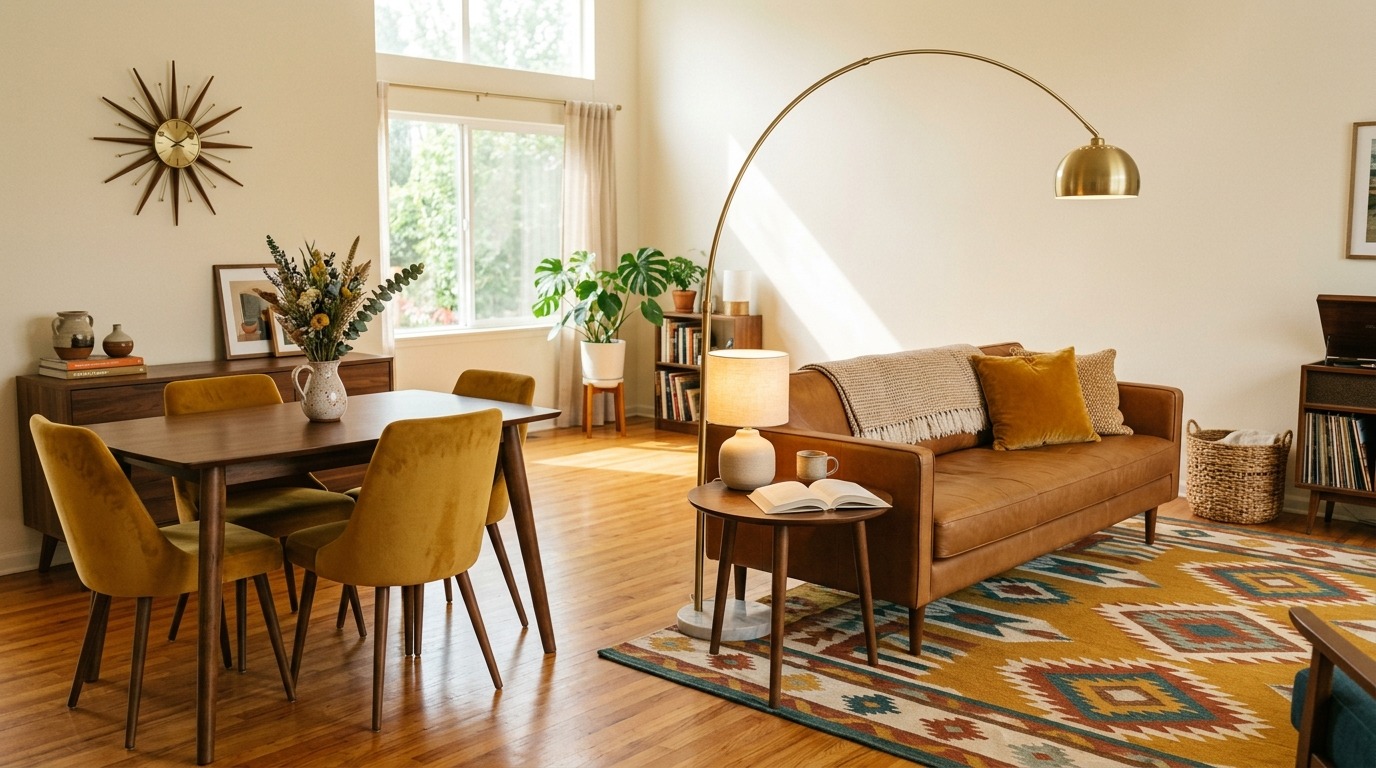
Mid-century modern design was practically invented for open-plan living because its clean lines, tapered legs, and warm organic materials work beautifully across both a dining zone and a living zone without ever feeling heavy or overpowering. I styled my first apartment in this direction with a mustard velvet sofa, a walnut dining table, and a starburst brass clock above the sideboard, and that room got more compliments than any room I have decorated before or since. There is something about mid-century warmth that makes a combined space feel personally curated rather than neutrally designed for the masses.
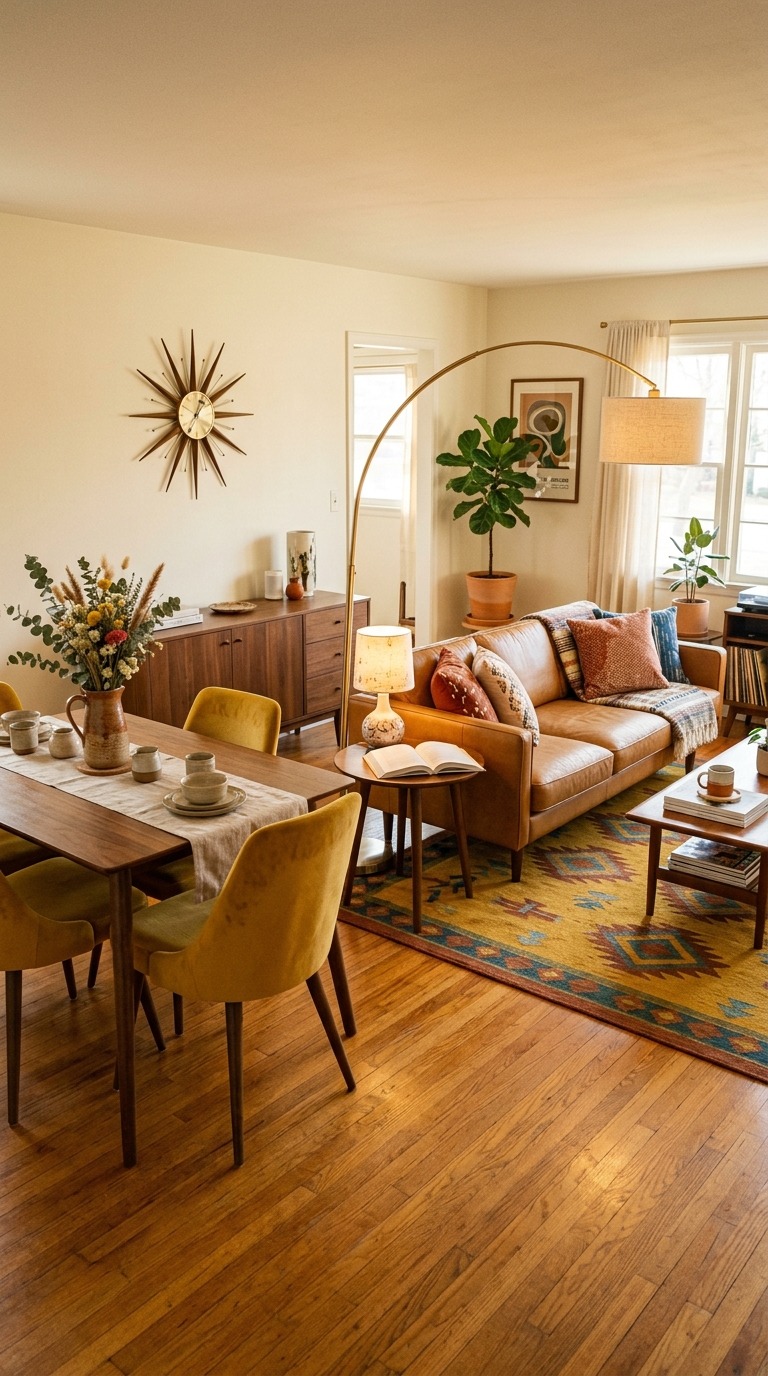
The key elements that make mid-century style sing in a combo room are tapered furniture legs — they make every piece look lighter and let the floor breathe visually — and a warm, tightly coordinated color palette built around honey oak, mustard, rust, and caramel. Paint your walls Sherwin-Williams Antique White, which is warmer than a stark white but light enough to let your warm wood tones and mustard upholstery take center stage. An arc floor lamp in brushed brass is one of those investments I tell every friend to make — it fills the living zone with the perfect quality of warm evening light and doubles as a sculptural statement piece all on its own.
Scandinavian Simplicity for Small Combo Rooms
Scandinavian design is genuinely one of the kindest styles for small combined living and dining rooms because its entire philosophy is built around doing more with less — using fewer, better pieces, leaving generous breathing room between objects, and trusting that simplicity itself is the decoration. When I went through a ruthless Scandinavian-style edit of my combo room and removed every object that did not earn its place, the room instantly felt twice as large and a hundred times more peaceful. Sometimes the boldest design decision you can mke is choosing to take things away rather than add them.
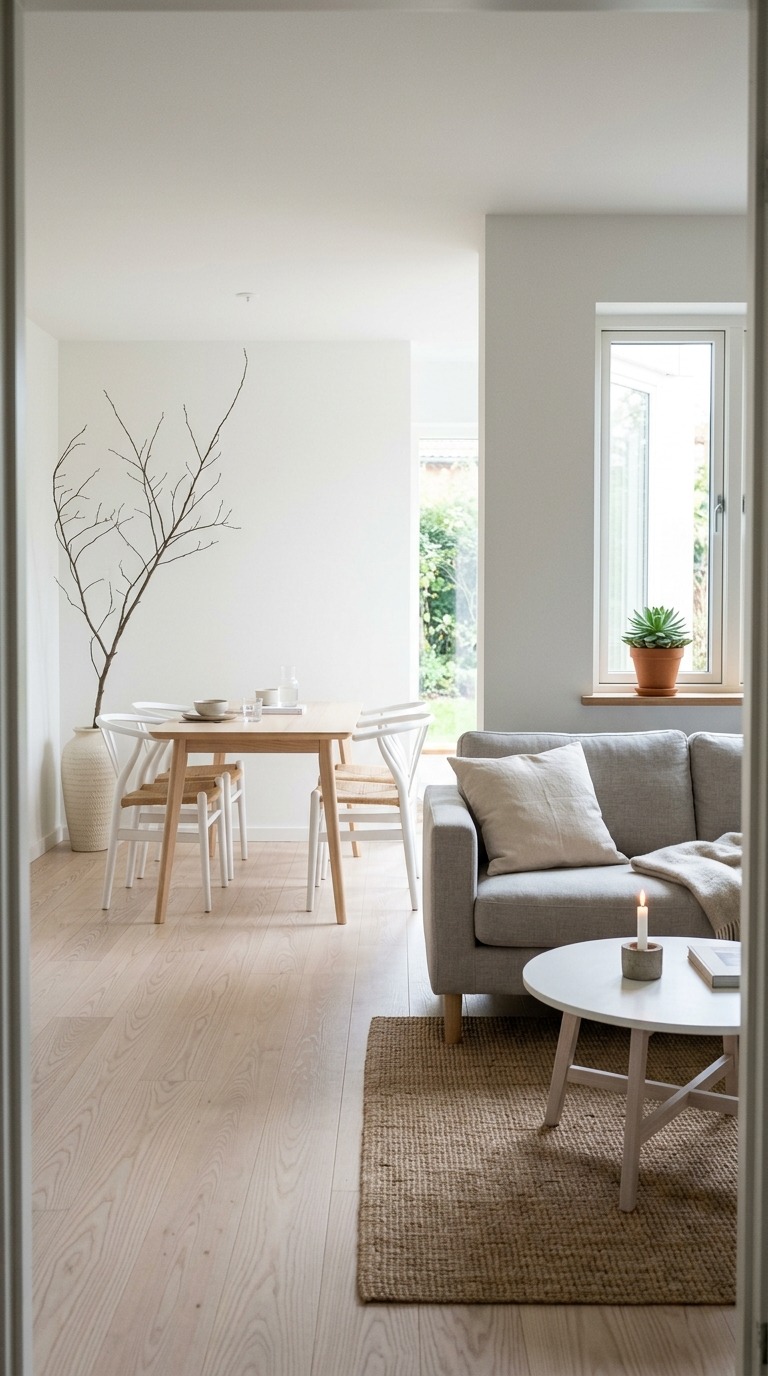
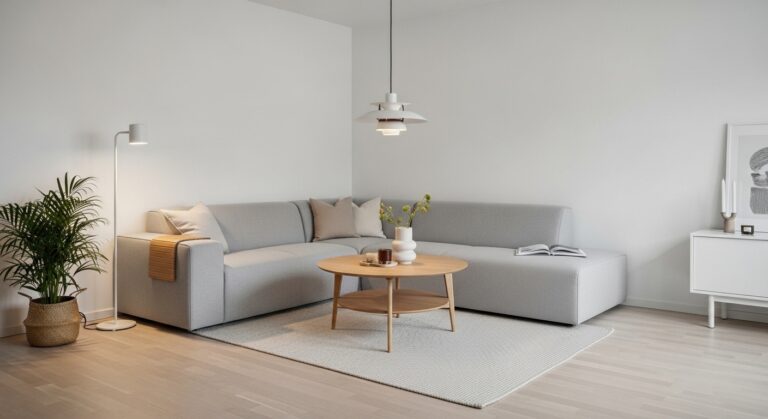
The palette for a Scandinavian combo room stays very close to white with barely-there warm undertones — Benjamin Moore Chantilly Lace is the cleanest, most luminous white I have ever painted on a wall, and it makes pale ash furniture and simple linen upholstery look quietly beautiful. Choose furniture with slim profiles and clean lines — a wishbone dining chair, a two-seat sofa with thin arms, a round coffee table without a shelf underneath. Resist the urge to fill every surface. One bare branch in a tall ceramic floor vase, one small candle on the coffee table, one succulent on the windowsill — that restraint is what makes Scandinavian interiors feel like the most serene spaces on earth.
Boho Layered Warmth for a Soulful Combo Space
Bohemian design gives you total permission to layer textures, mix patterns, collect plants, and let a room feel genuinely lived-in and personal rather than styled for a photo shoot — and that spirit is absolutely perfect for a combo room because it removes every pressure to make both zones feel rigidly coordinated. When I leaned into boho layering in my own combined space, I stopped overthinking whether the dining chairs matched the sofa cushions and started focusing on whether the room made me feel happy every time I walked into it. That shift in thinking genuinely changed how I approach decorating.
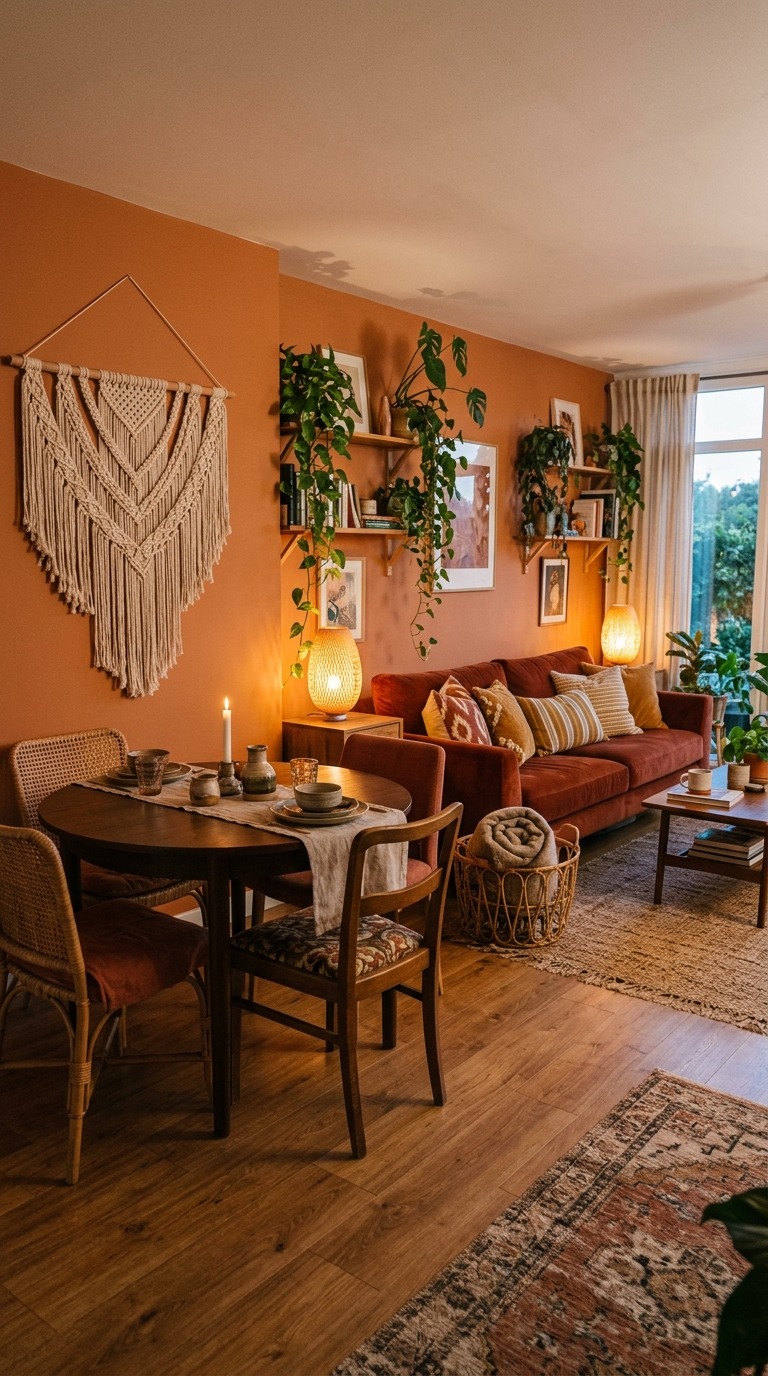
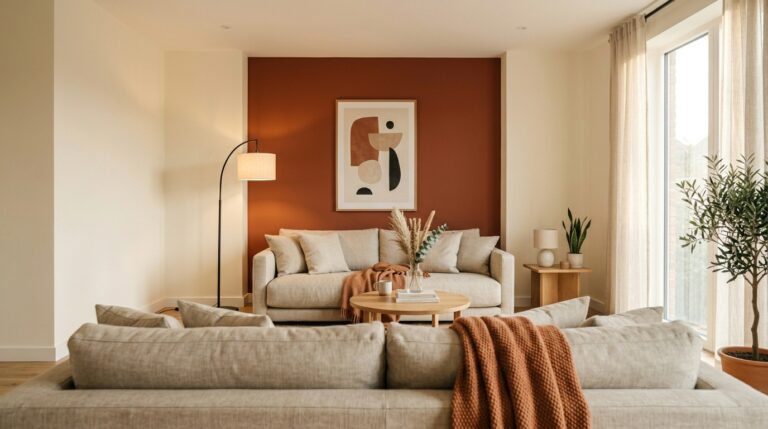
The anchor colors for a boho combo room are earthy and warm — terracotta, rust, mustard, cream, and deep forest green. Paint your walls Sherwin-Williams Nankeen, which is a gorgeous warm clay neutral that makes every earthy tone around it look richer and more intentional. Hang a large woven macrame piece above the dining table to add vertical texture and a focal point that sits beautifully between both zones. Fill your shelves and corners with trailing pothos, large-leafed monstera plants, and wicker baskets — greenery is the single most affordable boho layering element that makes a combined room feel abundantly warm and truly alive.
Conclusion
You do not need to overhaul your entire home to make your living and dining room combo feel like something special — you just need one great idea that fits your style and your space. Pick the single idea from this list that made you feel most excited, gather what you need this week, and put it into action before the weekend. Small, intentional changes compound into rooms you genuinely love living in every single day.
Your combined space deserves to feel like a sanctuary — a place where dinner conversations linger naturally into evening lounging, where every zone feels purposeful and inviting rather than awkward and undefined. I hope one of these twelve ideas gives you exactly the clarity and confidence you need to finally make your combo room feel like the warm, beautiful, intentional home you have always pictured in your mind.