15 Small Space Living Room Ideas
You squeezed past the coffee table again this morning, bumped your shin on the sofa arm, and thought, “There has to be a better way.” I have been there, standing in my own tiny living room feeling like the walls were closing in.
But here is what I learned after redesigning my 11-by-13 living room twice: a small space is not a problem waiting to be solved. It is an opportunity to be smart, intentional, and honestly a little bit brilliant. These fifteen ideas will completely change how you see your room.
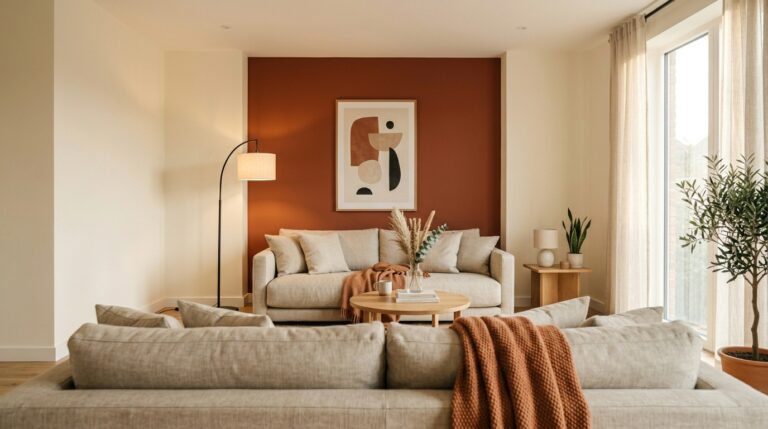
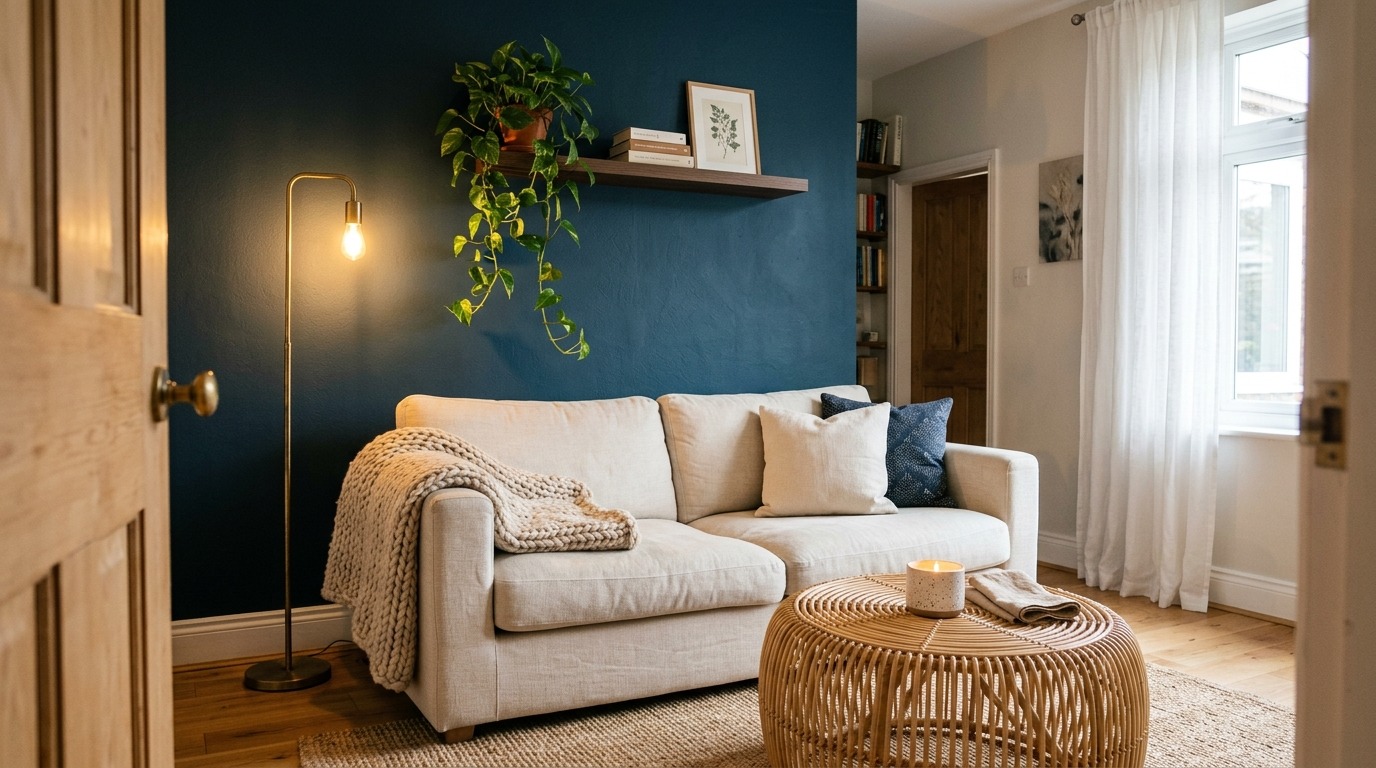
Paint One Wall a Deep, Moody Tone to Anchor the Whole Room
Most people panic and paint small rooms white, thinking it will feel bigger. I did the same thing for years. But the moment I painted my accent wall in Farrow and Ball Hague Blue, the entire room stopped feeling scattered and started feeling like a real, intentional space.
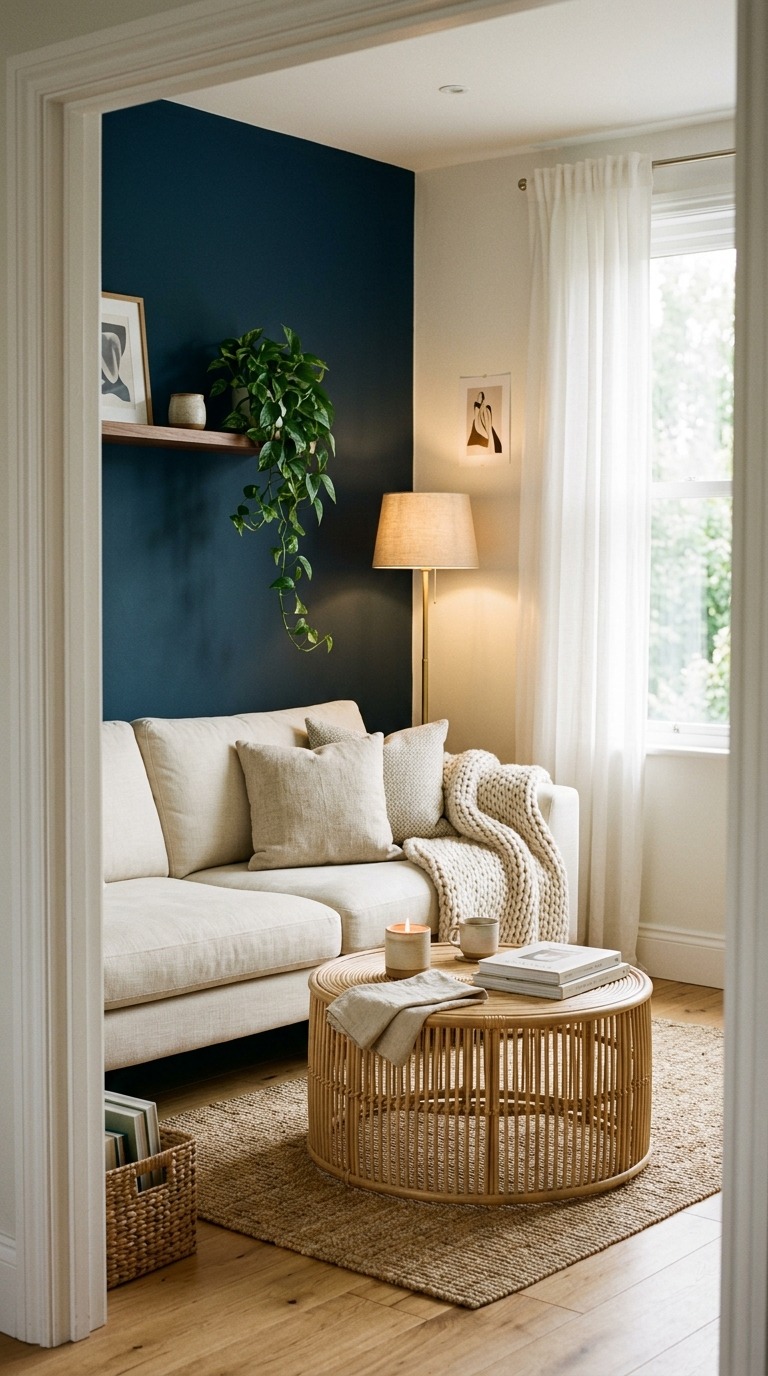
A deep accent wall pulls the room together visually and gives your eye a place to rest. Try Benjamin Moore Newburyport Blue or Sherwin-Williams Naval on the wall behind your sofa. Pair it with cream or warm ivory on the remaining three walls. The contrast makes the room feel layered and purposeful rather than cramped or chaotic.
Choose Furniture With Legs to Float the Floor Visually
One of the biggest mistakes I made in my first small living room was buying a sofa that sat flat on the floor like a solid block of wood. It ate the room alive. Furniture with visible legs lifts the room because it reveals the floor and creates breathing space below every piece.
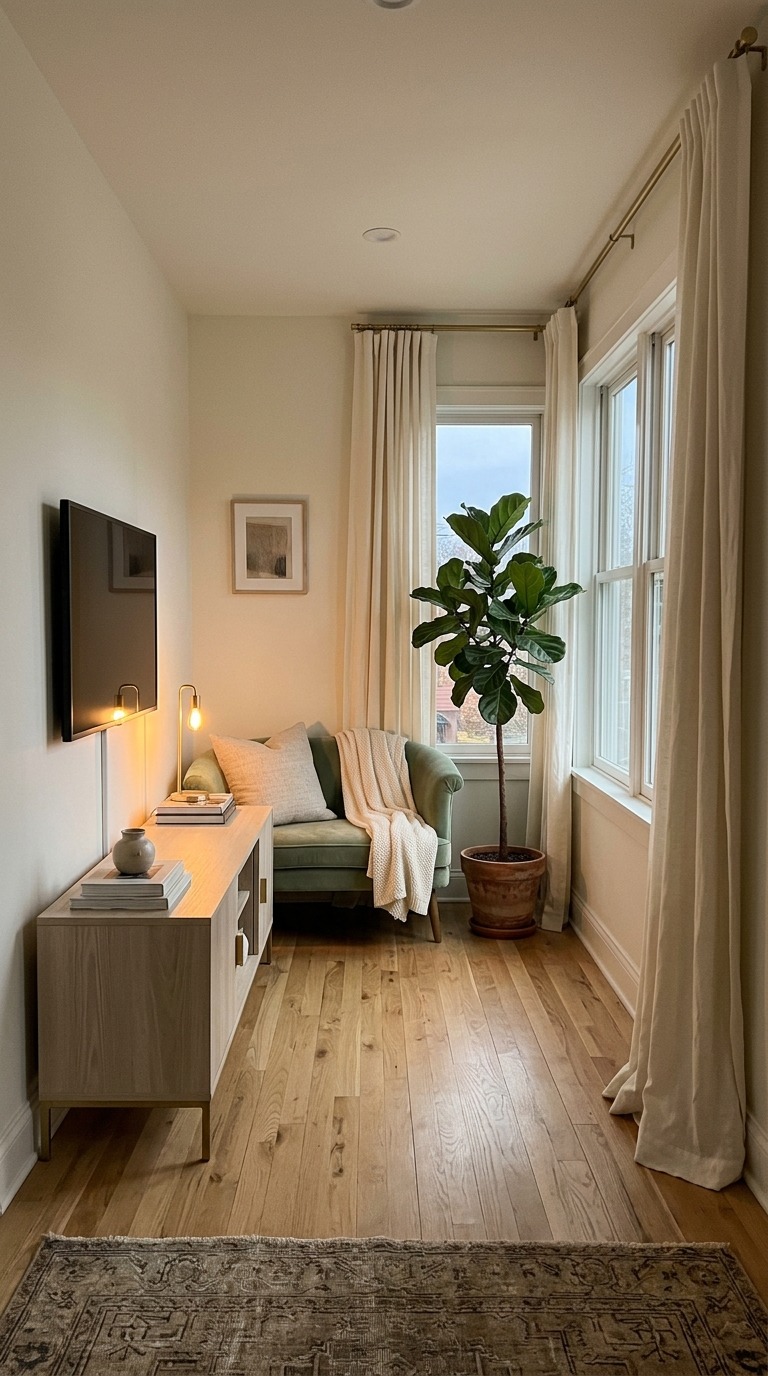
Look specifically for sofas and chairs with tapered wooden or metal legs sitting at least six inches off the ground. Pair them with a natural jute rug in a warm sand tone to anchor the arrangement. Benjamin Moore Pale Oak on the walls will keep everything feeling open and airy without turning cold or sterile.
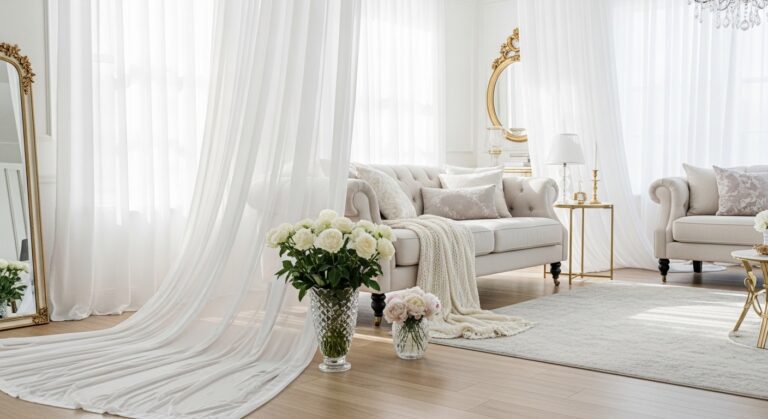
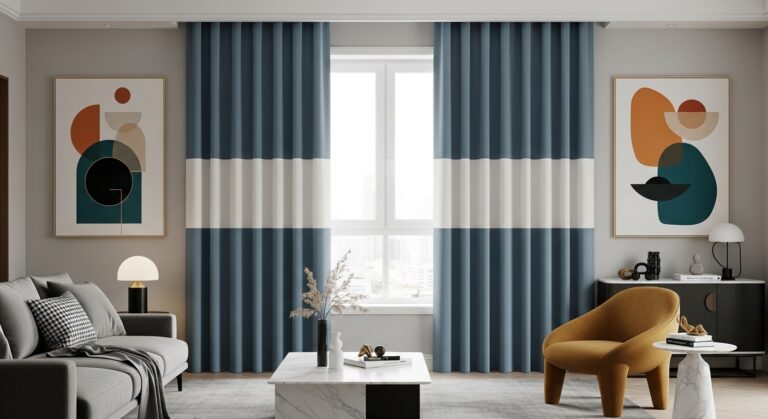
Hang Floor-to-Ceiling Curtains to Fake Tall Walls
Nobody told me this trick until I visited a friend who had an absolutely tiny rental apartment that somehow felt like a boutique hotel suite. The secret was her curtains. They started at the ceiling and fell all the way to the floor, creating an illusion of height that completely transformed the proportions of the room.
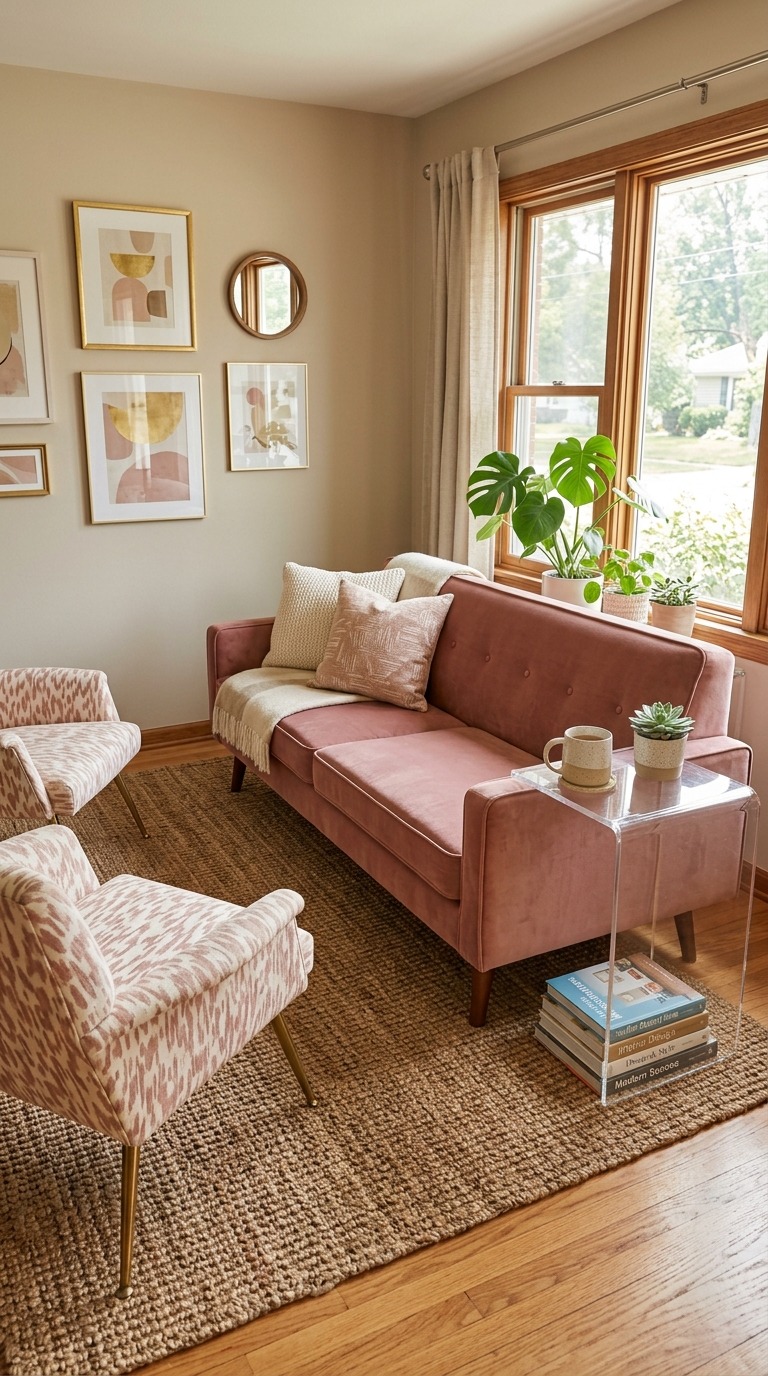
Mount your curtain rods two to four inches below the ceiling line, not just above the window frame. Use sheer ivory linen panels so natural light still floods through. This simple change costs almost nothing but visually doubles the perceived ceiling height of any small living room.
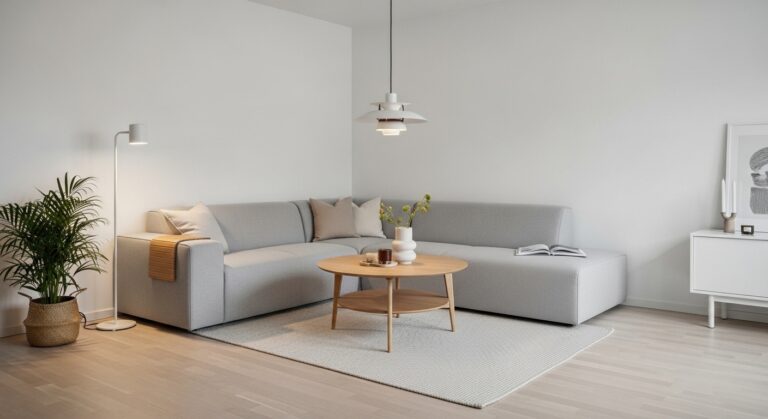
Invest in a Slim Sofa and Skip the Sectional Entirely
I know. You love the idea of a big sectional where the whole family sinks in on movie nights. I did too. But a sectional in a small living room is the fastest way to make a space feel like furniture storage. I finally swapped mine for a slim two-seater and genuinely could not believe how much floor I had been hiding.
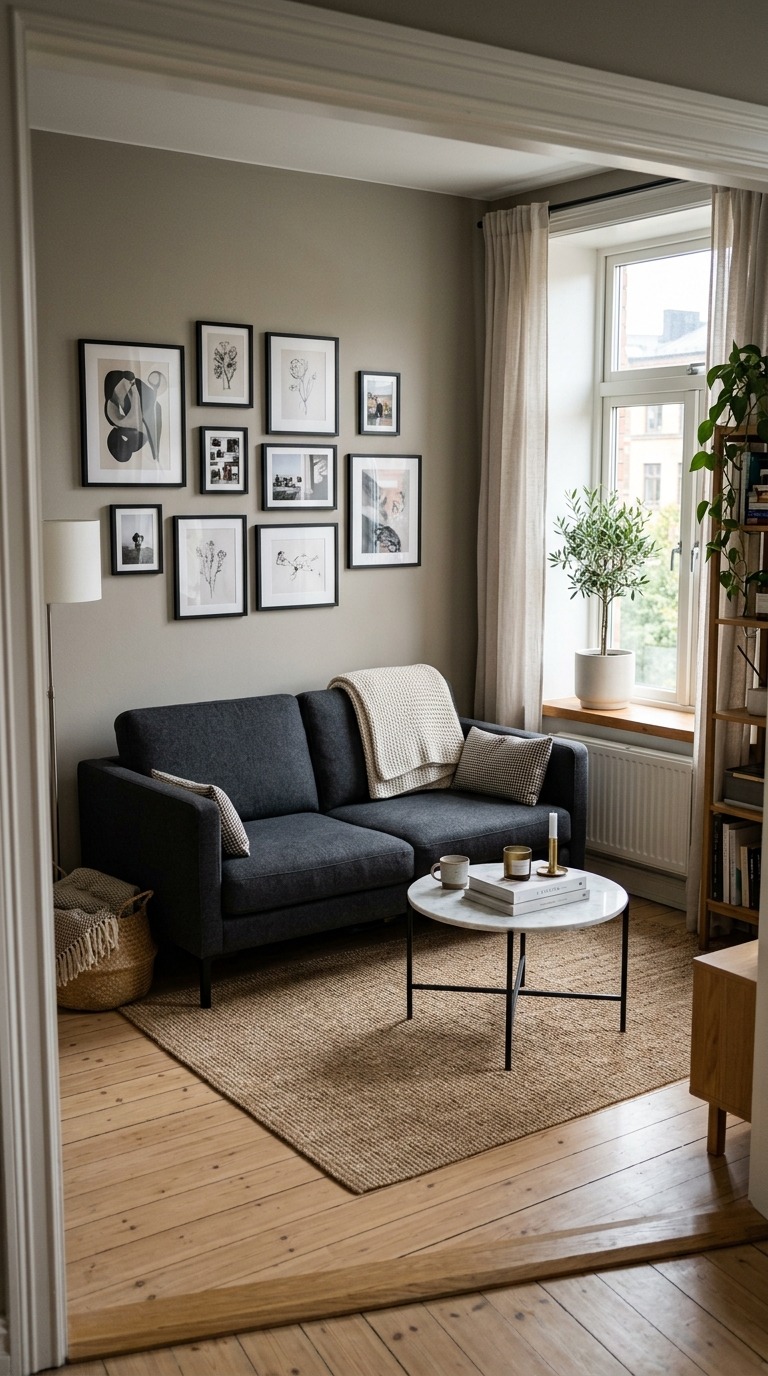
A sofa with a seat depth of 32 to 34 inches and no deep rolled arms keeps sightlines clear across the room. Sherwin-Williams Mindful Gray on the walls and a charcoal wool sofa read as calm and deliberate rather than cramped. Add two small accent chairs instead of a loveseat for flexible seating without bulk.
Use Mirrors Strategically to Double the Light
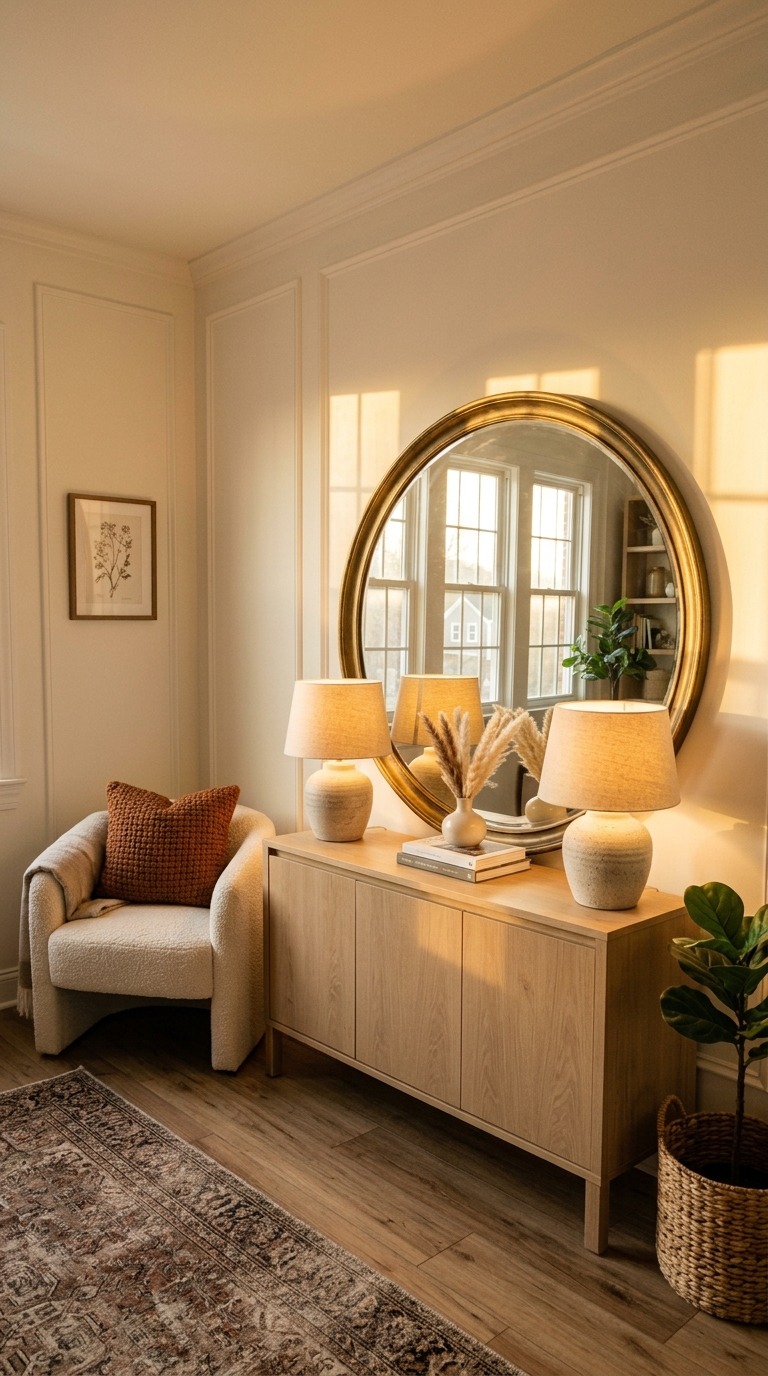
Every single home design magazine tells you to hang a mirror in a small space, but most people hang one tiny mirror above a console and call it done. I spent two years doing exactly that before I finally leaned a large round mirror against the wall above my credenza and nearly dropped my coffee from the transformation.
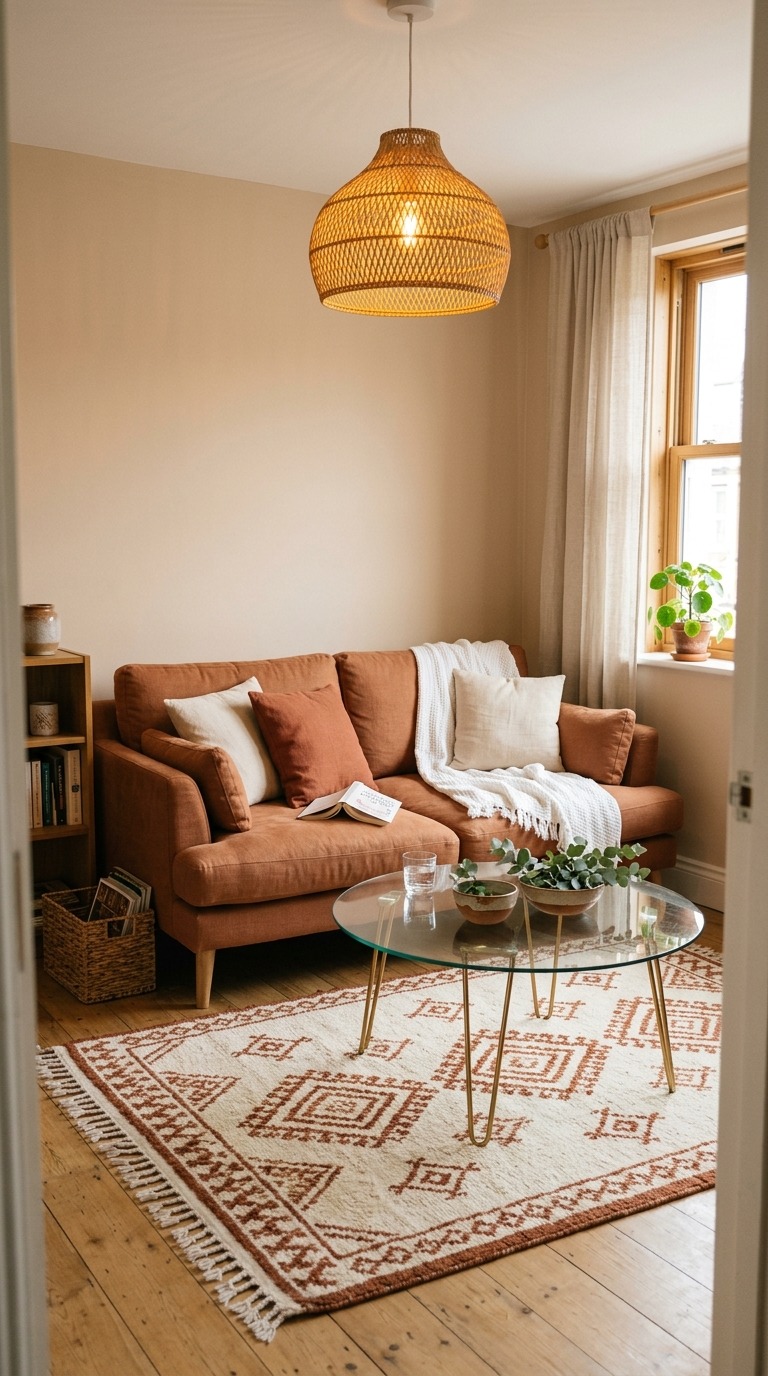
The key is size and placement. A mirror at least 30 inches wide reflects entire light sources and creates a genuine sense of depth. Position it across from your main window so it throws natural light back into the room. Benjamin Moore Chantilly Lace on the walls makes the reflections even cleaner and brighter.
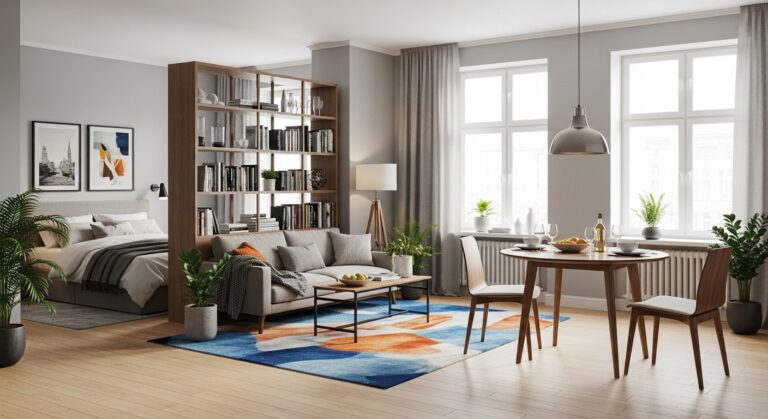
Go Vertical With Built-In or Floating Wall Shelves
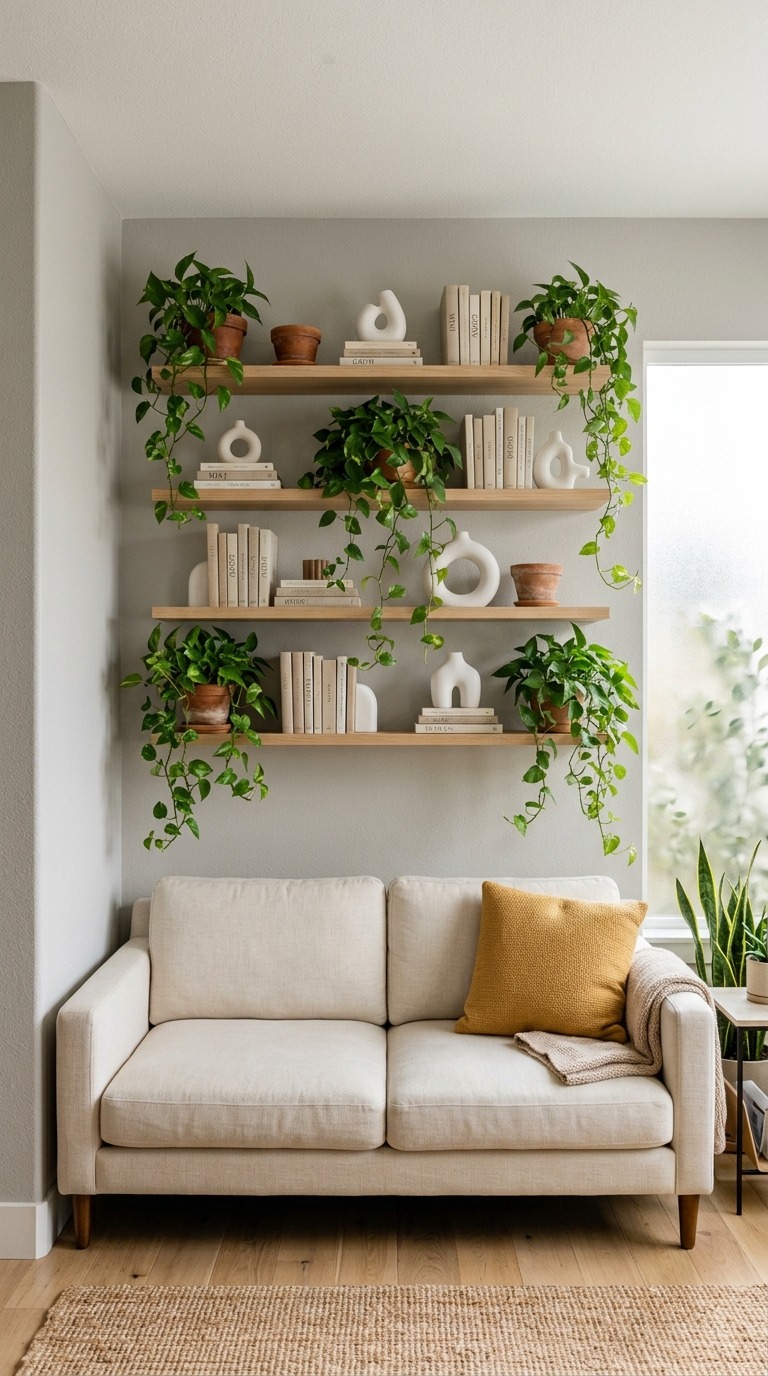
My living room has nine-foot ceilings, and for two full years I used exactly zero inches above five feet. Everything sat at eye level and below while all that gorgeous vertical space went completely to waste. The moment I installed floating shelves running nearly to the ceiling, the room felt curated, spacious, and genuinely interesting.
Style shelves with a deliberate mix of trailing plants, stacked books, and one or two ceramic objects per shelf. Avoid overcrowding each level. Sherwin-Williams Requisite Gray on the walls lets the shelf styling do the work rather than competing with wall color. Keep shelves no deeper than ten inches so they do not visually block the room.
Choose a Glass or Acrylic Coffee Table to Open the Center
I resisted the glass coffee table for years because I thought it felt cold and modern and not at all like my warm earthy style. Then my sister put one in her studio apartment and I stood in the doorway with my mouth open. The floor beneath it was completely visible and the whole room felt twice the size.
Glass and acrylic tables work because your eye travels through them straight to the floor and the rug below. Choose a round shape to eliminate corners that interrupt flow in a small space. Farrow and Ball String on the walls paired with warm terracotta textiles keeps the whole setup from ever feeling cold or sterile.
Layer Lighting Instead of Relying on One Overhead Fixture
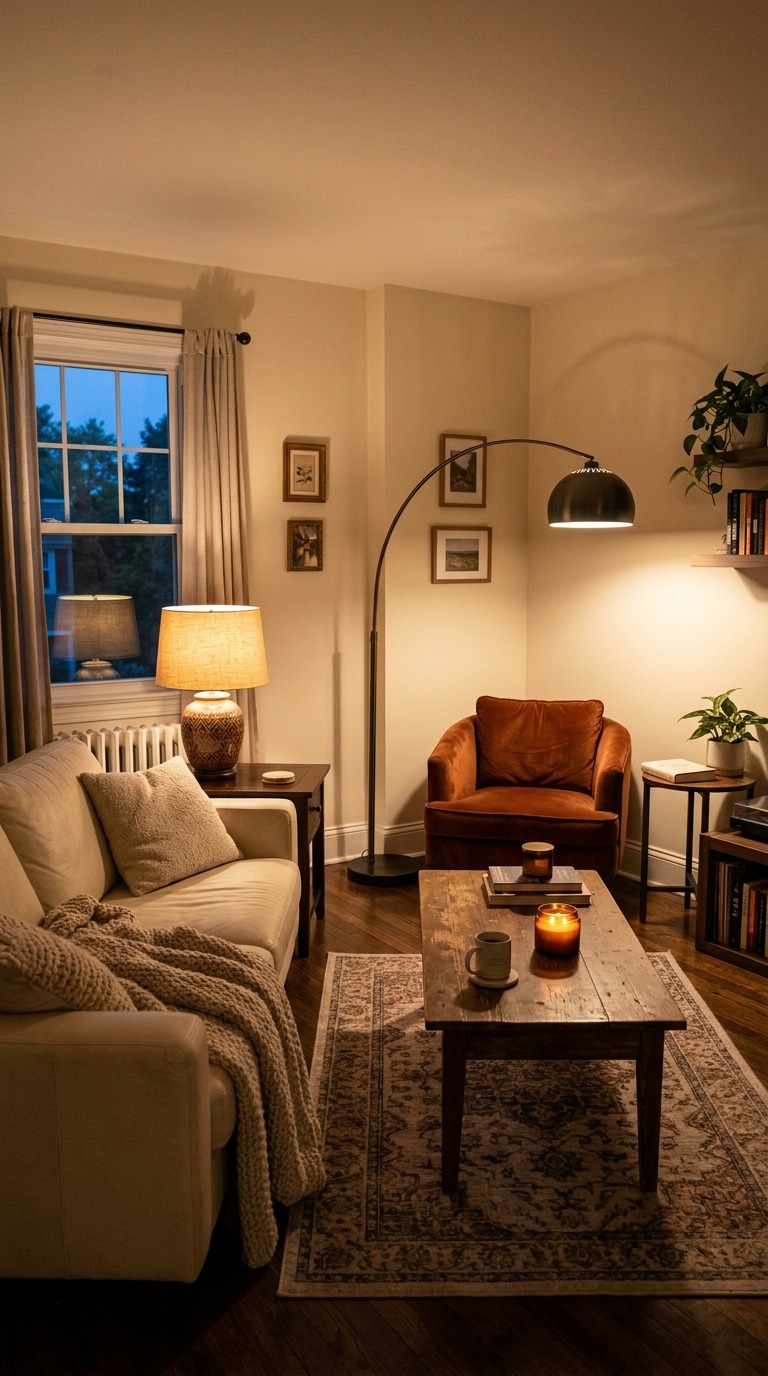
The biggest thing that separated my small living room before and after was not furniture or paint. It was lighting. I used to rely on a single overhead fixture that cast flat unflattering light across everything and made the room feel like a dentist waiting room. Swapping to layered lighting changed everything instantly.
Use at least three light sources at different heights: a tall arc floor lamp, a table lamp on a side table, and a low candle or LED on the coffee table. Sherwin-Williams Antique White on the walls glows the warmest possible tone under layered amber light. This approach creates depth, warmth, and genuine coziness in even the tightest space.
Pick a Rug That Is Larger Than You Think You Need
Every single time I help a friend pick a rug for their small living room they choose one that is way too small. The rug floats in the center of the room surrounded by bare floor and makes the whole space feel choppy and disconnected. I did this myself three times before I finally learned the rule.
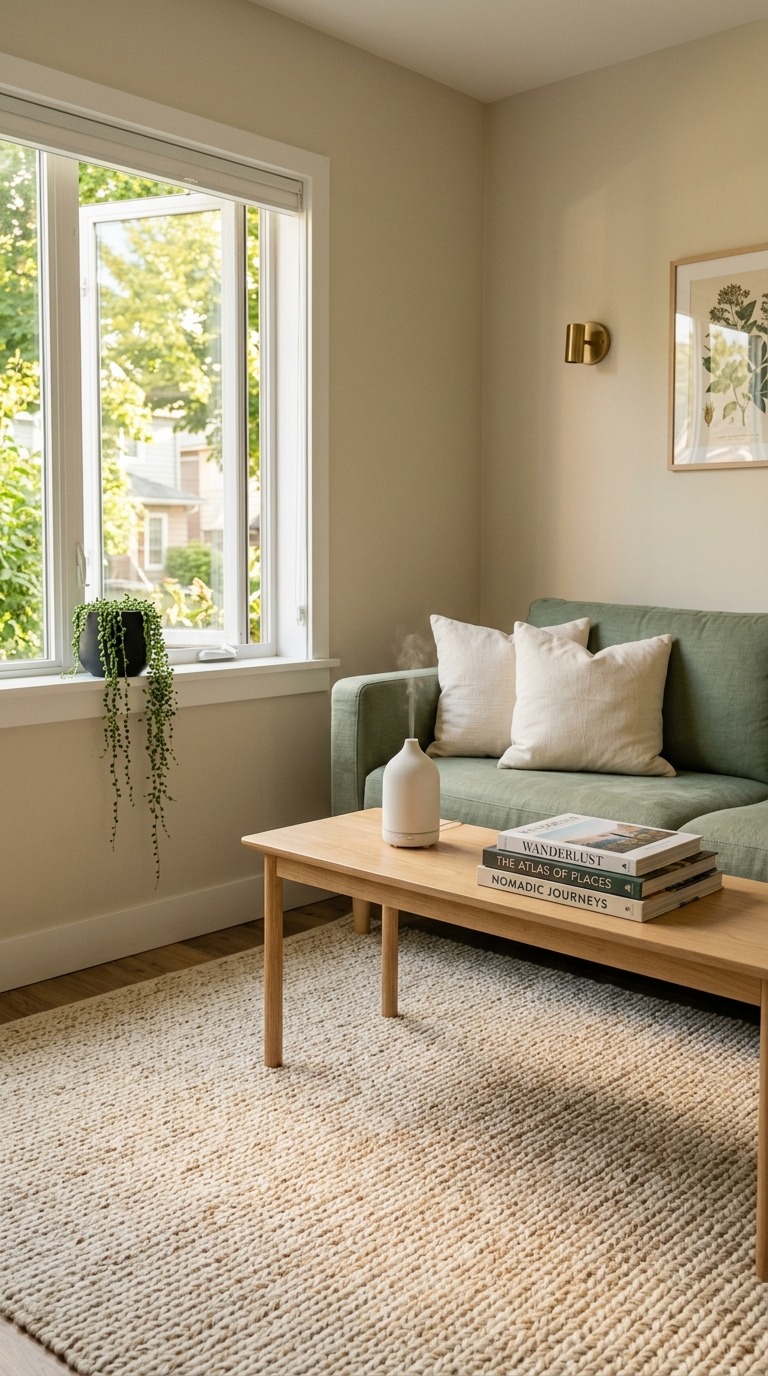
The front legs of every sofa and chair should sit on the rug, not float beside it. In a small room this usually means a rug at least eight by ten feet. Benjamin Moore Pale Oak on the walls and a natural ivory jute rug work together beautifully to ground the whole room in warmth without making it feel heavy.
Mount the Television on the Wall and Free the Floor
My old media console took up four feet of precious wall space and sat fourteen inches deep into the room. When I finally mounted the television directly on the wall and replaced the console with a slim floating shelf, I gained what felt like an entirely new corner of the room. Floor space is visual breathing room in a small living room.
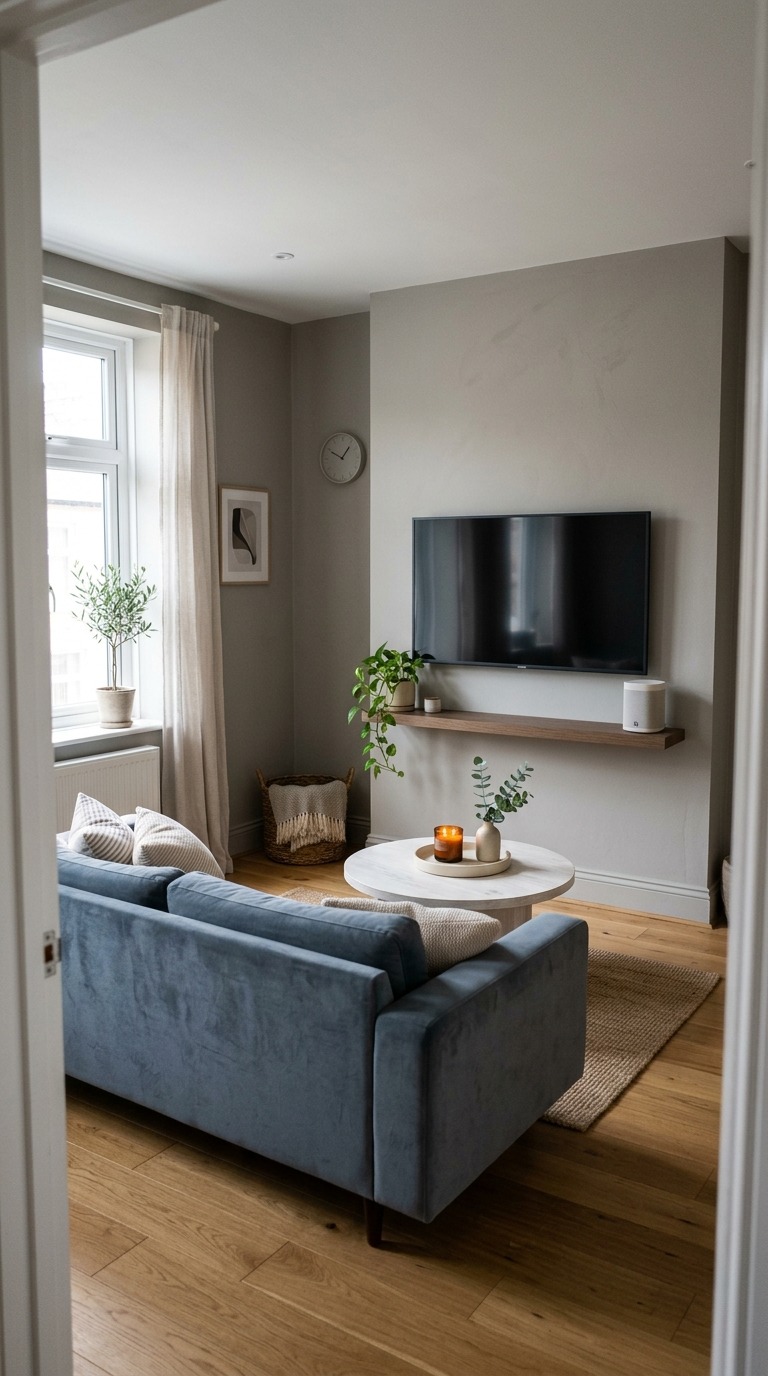
A floating shelf mounted ten inches below the TV holds your components, remote, and one or two small decorative objects. Farrow and Ball Purbeck Stone on the surrounding walls gives the TV wall a warm putty tone that makes the screen feel intentional rather than intrusive. This is genuinely one of the fastest visual wins in any small living space.
Use Multipurpose Furniture That Works Double Duty
The ottoman I bought for my small living room serves as my coffee table, extra seating when friends come over, and blanket storage all at once. That single piece replaced three separate items I used to have crammed into the same corner. Multipurpose furniture is not a compromise in a small room. It is genuinely the smartest possible design move.
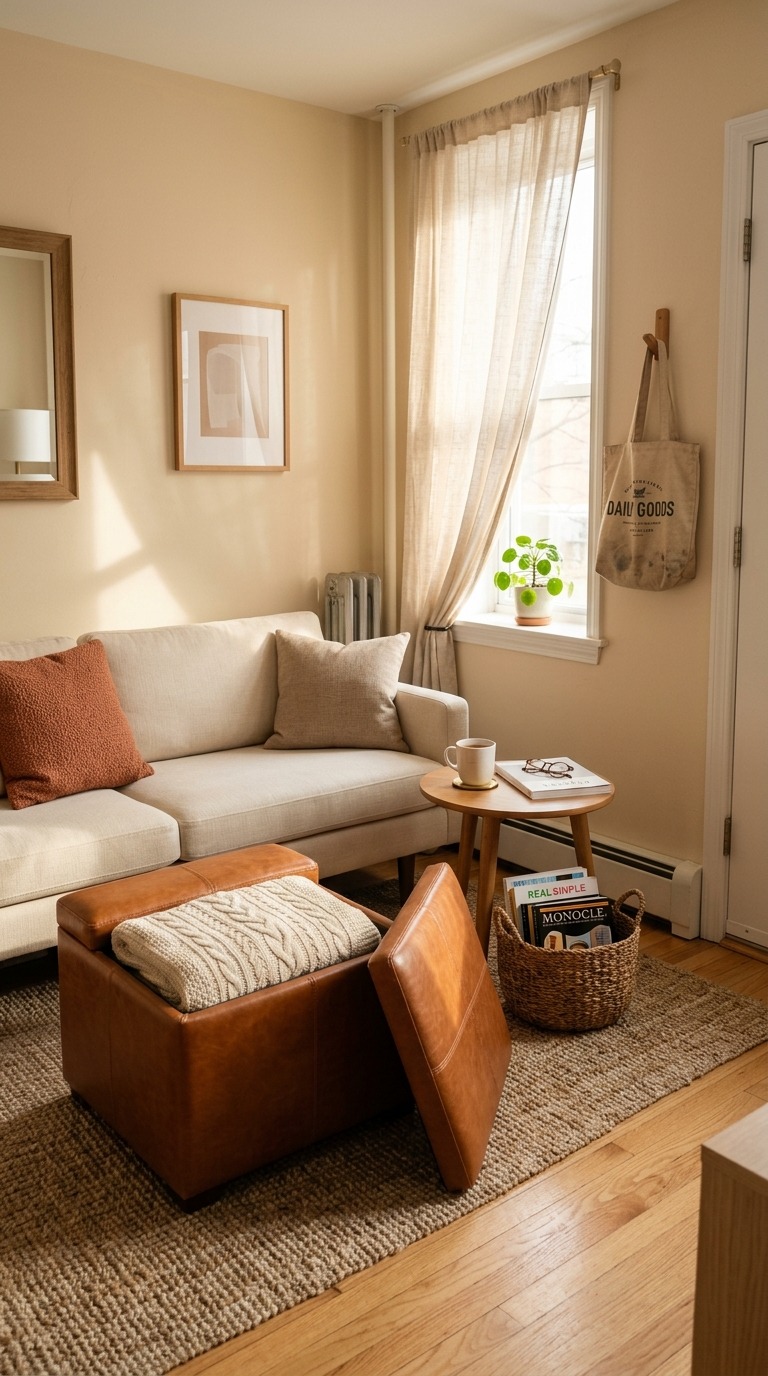
Look for a storage ottoman large enough to serve as a coffee table, at least 18 by 36 inches, with a solid flat lid. Benjamin Moore Muslin on the walls in this warm off-white tone keeps the cognac leather or velvet lid looking rich rather than busy. Add a small tray on top to hold a candle and a book and it instantly reads as intentional styling.
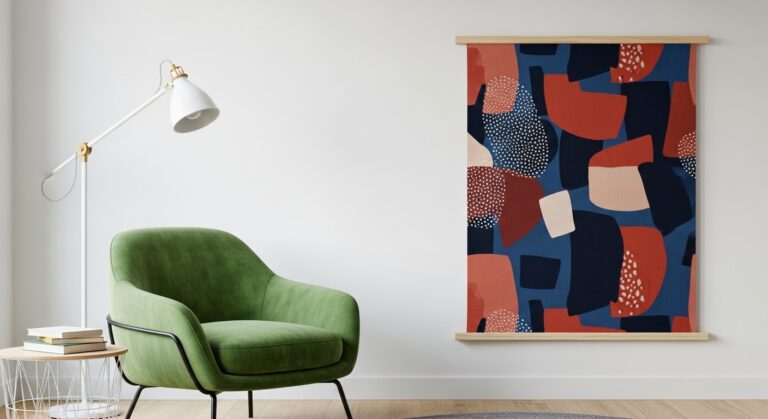
Create a Reading Nook in a Corner to Define the Space
Before I defined my reading corner, it was just a dead zone where packages accumulated and my husband left his jacket every evening. I brought in a curved boucle armchair, a slim arc lamp, and a tiny side table and suddenly that corner had a purpose. Giving every corner of a small room a defined role is one of the most powerful design moves you can make.
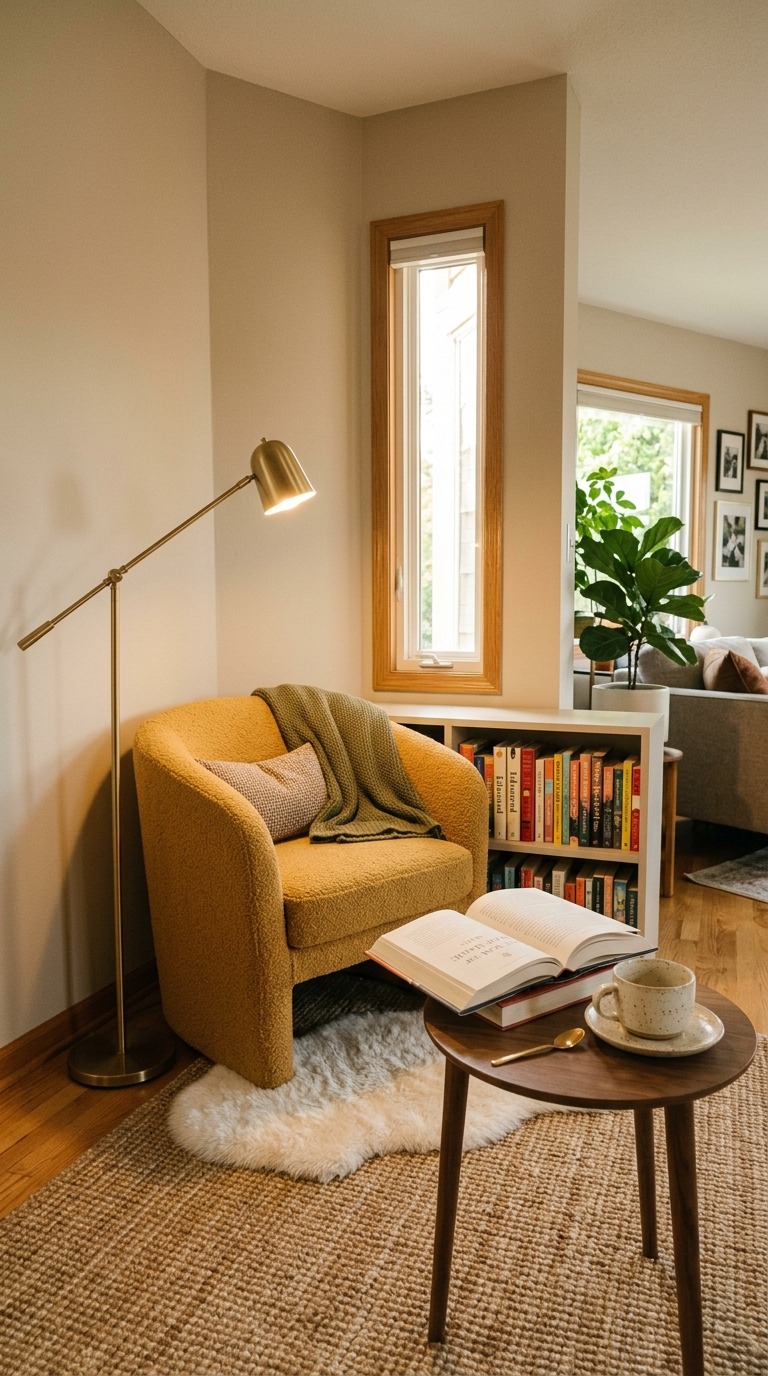
Choose a chair with a high back and curved arms that wraps slightly around you, creating a sense of enclosure that makes the corner feel intentional and private. Sherwin-Williams Accessible Beige on the walls keeps the warm mustard tones of a boucle chair looking incredibly rich. Layer a small sheepskin or wool rug beneath the chair to visually separate the nook from the main seating area.
Style a Gallery Wall That Climbs to the Ceiling
I used to hang my gallery wall the standard way, centered at eye level, the same as everyone else. It looked fine but it did nothing for the height of my room. When I finally extended the arrangement all the way up toward the ceiling, something magical happened to the room’s proportions. Suddenly the walls looked taller and the whole space felt more expansive.
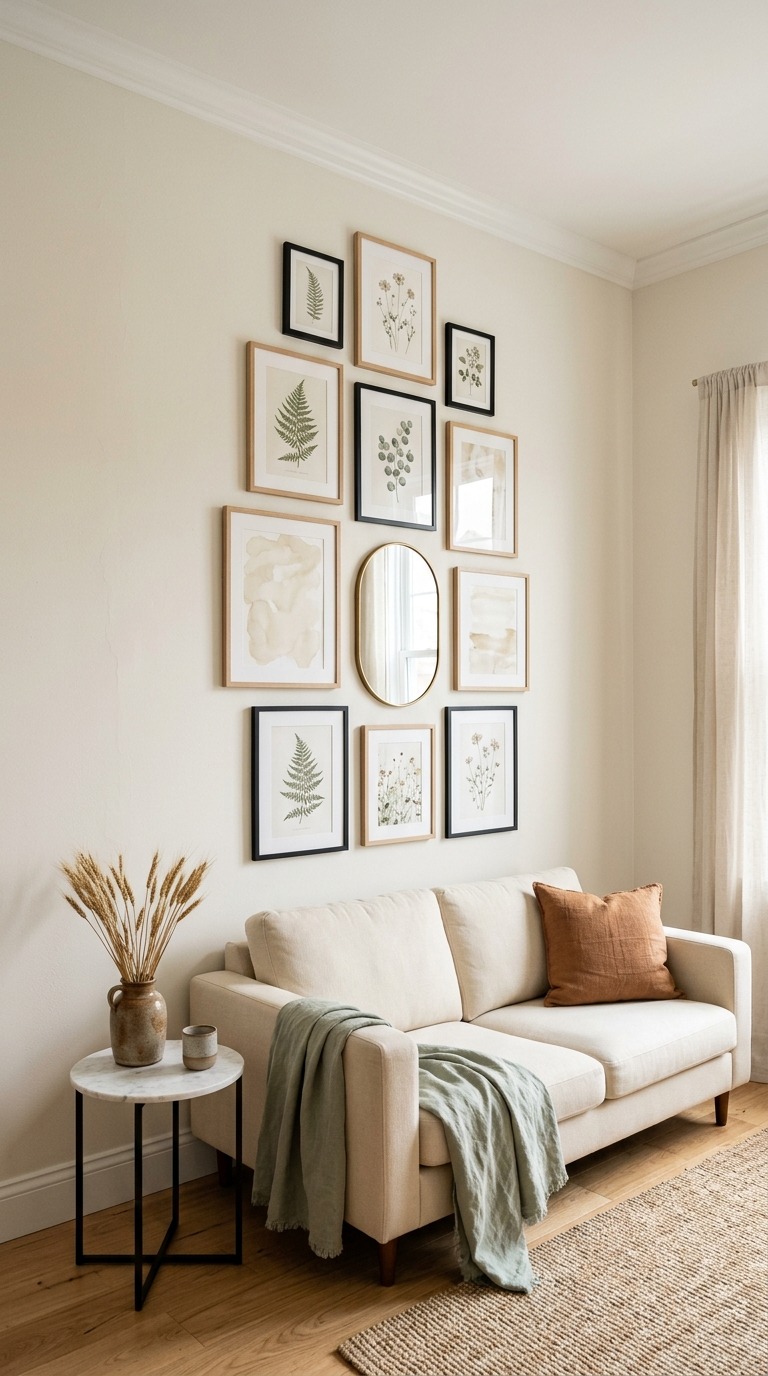
Mix frame sizes deliberately, with larger pieces lower and smaller ones at the very top, to lead the eye upward naturally. Farrow and Ball Pointing on the walls gives gallery art the warmest possible backdrop without competing with the frames. Include one small mirror within the arrangement to bounce light and add dimension the way a flat print simply cannot.
Bring in One Tall Plant to Add Life and Vertical Scale
Plants changed my small living room in a way that no piece of furniture or paint color ever could. There is something about a tall plant in the corner of a room, something alive and growing, that makes the space feel genuinely inhabited rather than staged. A fiddle leaf fig or tall snake plant in a gorgeous pot is worth every bit of effort.
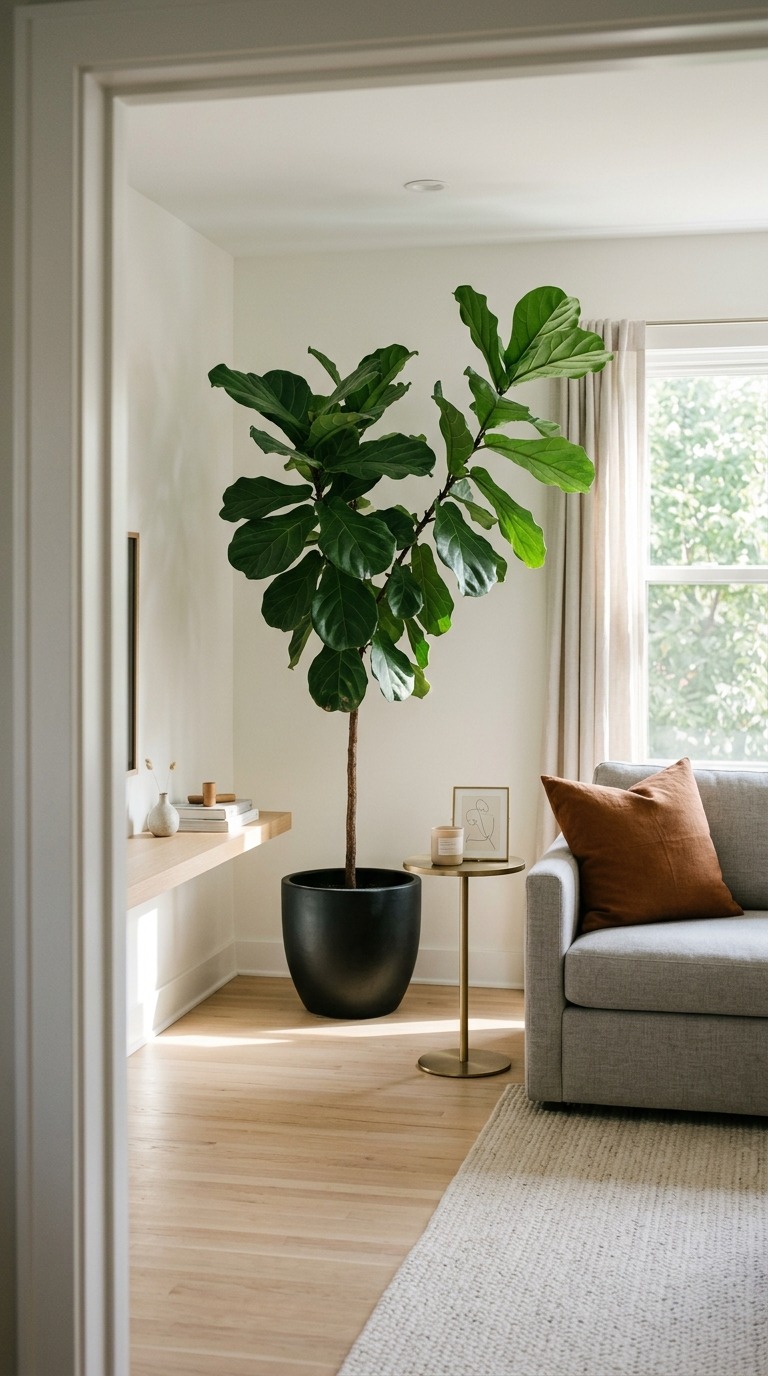
One tall plant in a statement pot pulls the eye upward just like tall curtains or a ceiling-height gallery wall. Choose a matte black or hand-thrown ceramic pot for visual weight at the base. Benjamin Moore Simply White on the walls lets the dark glossy green of the leaves become the most beautiful natural art piece in the entire room.
Keep the Color Palette to Three Tones Maximum
The most common mistake I see in small living room makeovers is too many competing colors. Three accent colors, four throw pillow patterns, two different wood tones, and a rug that matches nothing else. The room ends up feeling visually chaotic even when every individual piece is beautiful. Restraint is the secret weapon in a small space.
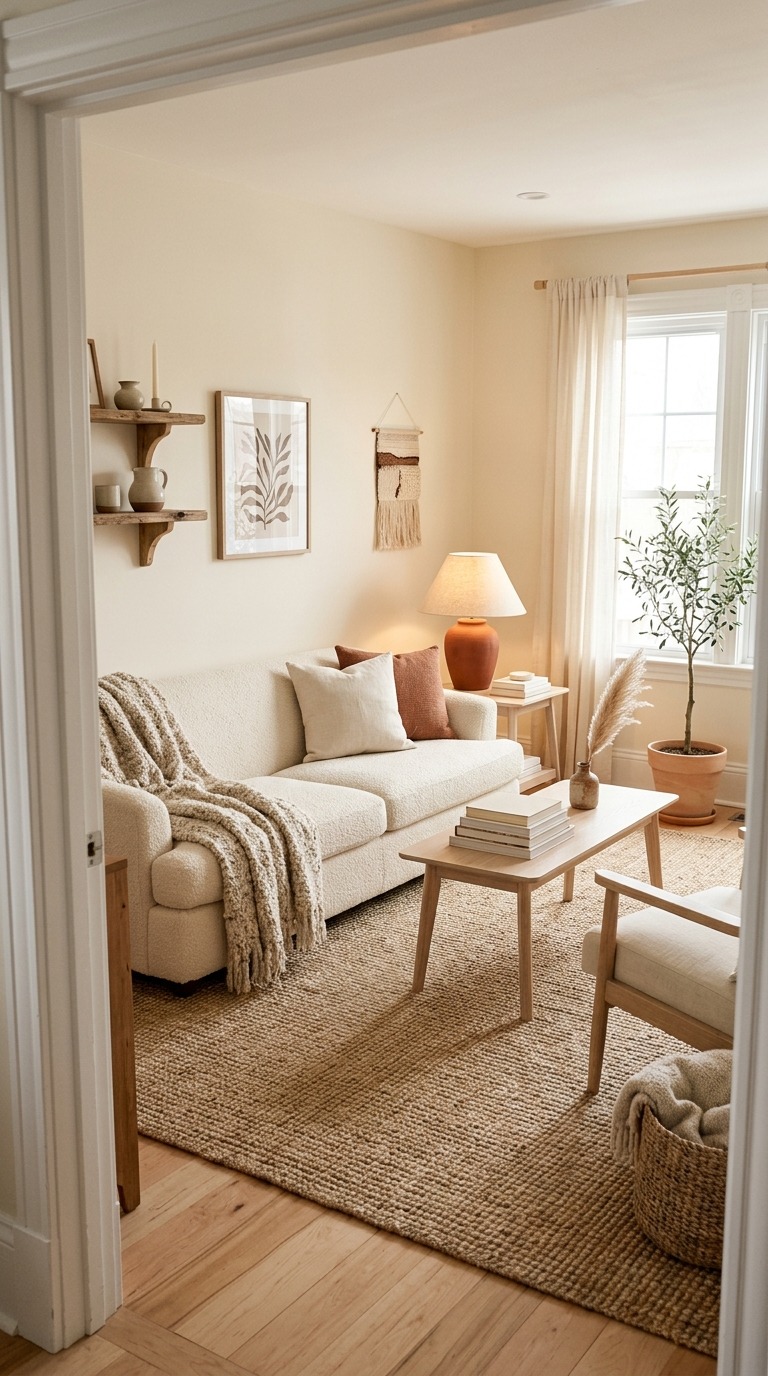
Choose three tones and commit completely: a neutral wall color like Sherwin-Williams Creamy, one warm accent in rust or terracotta, and one natural texture in wood or rattan. This creates a visual calm that makes the room feel intentional, curated, and genuinely larger than its square footage. A disciplined palette is the single most powerful small space tool you have.
Conclusion
Your small living room does not need more space. It needs smarter decisions made with genuine intention. Pick just one idea from this list today, maybe the curtains or the rug size, and start there.
Even a single change shifts the entire feeling of a room. I have seen it happen in my own home more times than I can count. Start small, trust the process, and watch your living room transform into the cozy sanctuary you always knew it could be.