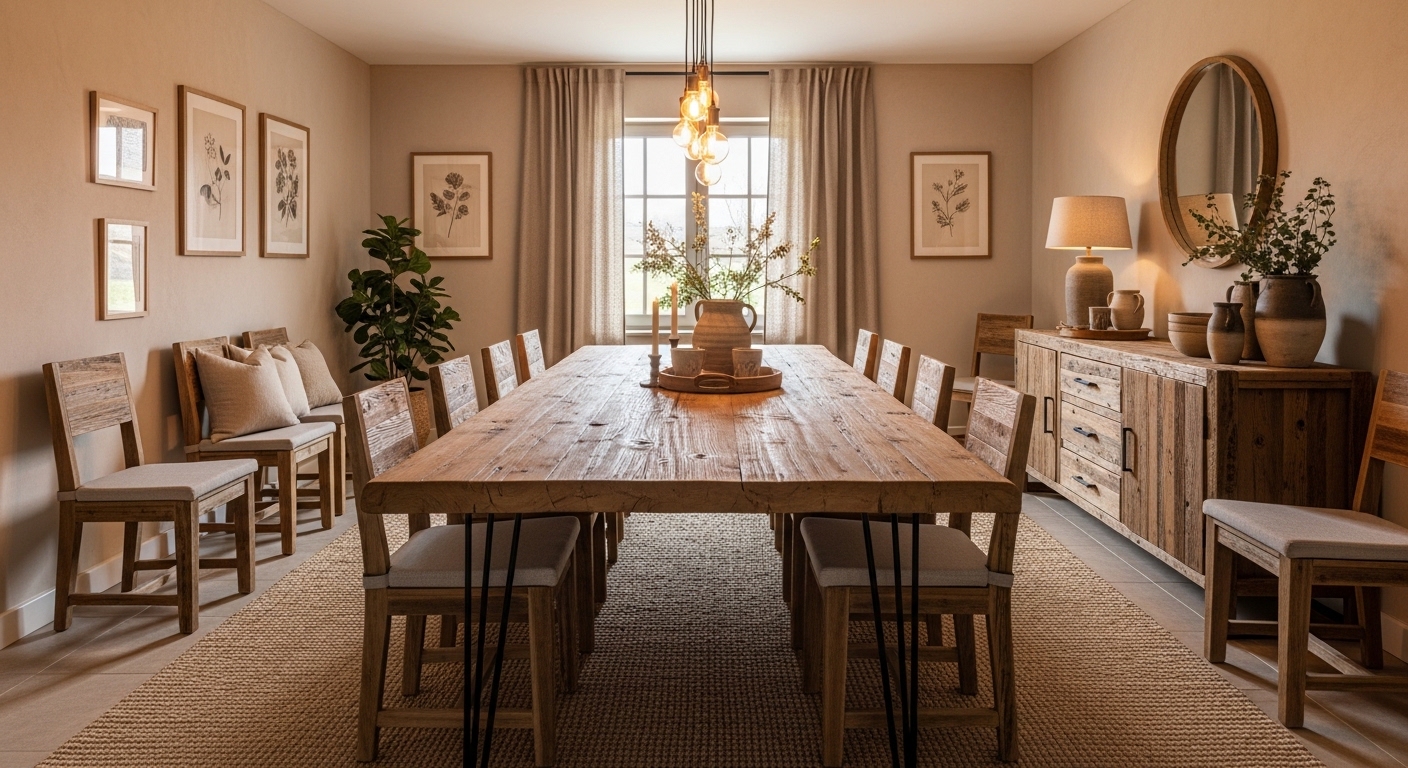
Looking for a Cozy Vibe? 12 Rustic Dining Room Ideas for a Warm Home
Have you ever walked into a dining room and immediately felt like you wanted to pull up a chair, pour a cup of coffee, and stay for hours? That’s the magic of a rustic dining room — and it’s not about spending a fortune or hiring a designer. It’s about layering the right textures, materials, and moods to create a space that feels genuinely lived-in and loved.
At Well Home Life, we’ve spent years exploring what makes a home feel truly warm and welcoming. And honestly? The rustic style wins every single time when it comes to dining spaces. There’s something about raw wood, earthy tones, and soft lighting that turns a regular meal into a memory.
Whether you’re starting from scratch or just refreshing what you already have, these 12 rustic dining room ideas will give you real, actionable inspiration — not just pretty pictures to scroll past.
What Makes a Dining Room Truly “Rustic”?
Before we dive into the ideas, let’s get clear on what rustic actually means in interior design — because it’s not just about throwing a few wooden planks on the wall.
Rustic design is rooted in nature. It celebrates imperfection, authenticity, and the kind of beauty that only comes with age and use. Think:
- Natural materials like reclaimed wood, stone, wrought iron, and linen
- A warm, neutral color palette — think warm whites, deep browns, soft grays, and earthy greens
- Handcrafted or vintage-style furniture that tells a story
- Soft, layered lighting that never feels harsh or clinical
- Organic textures that invite you to touch, sit, and stay
Now, let’s get into the good stuff.
The Reclaimed Wood Dining Table as Your Centerpiece
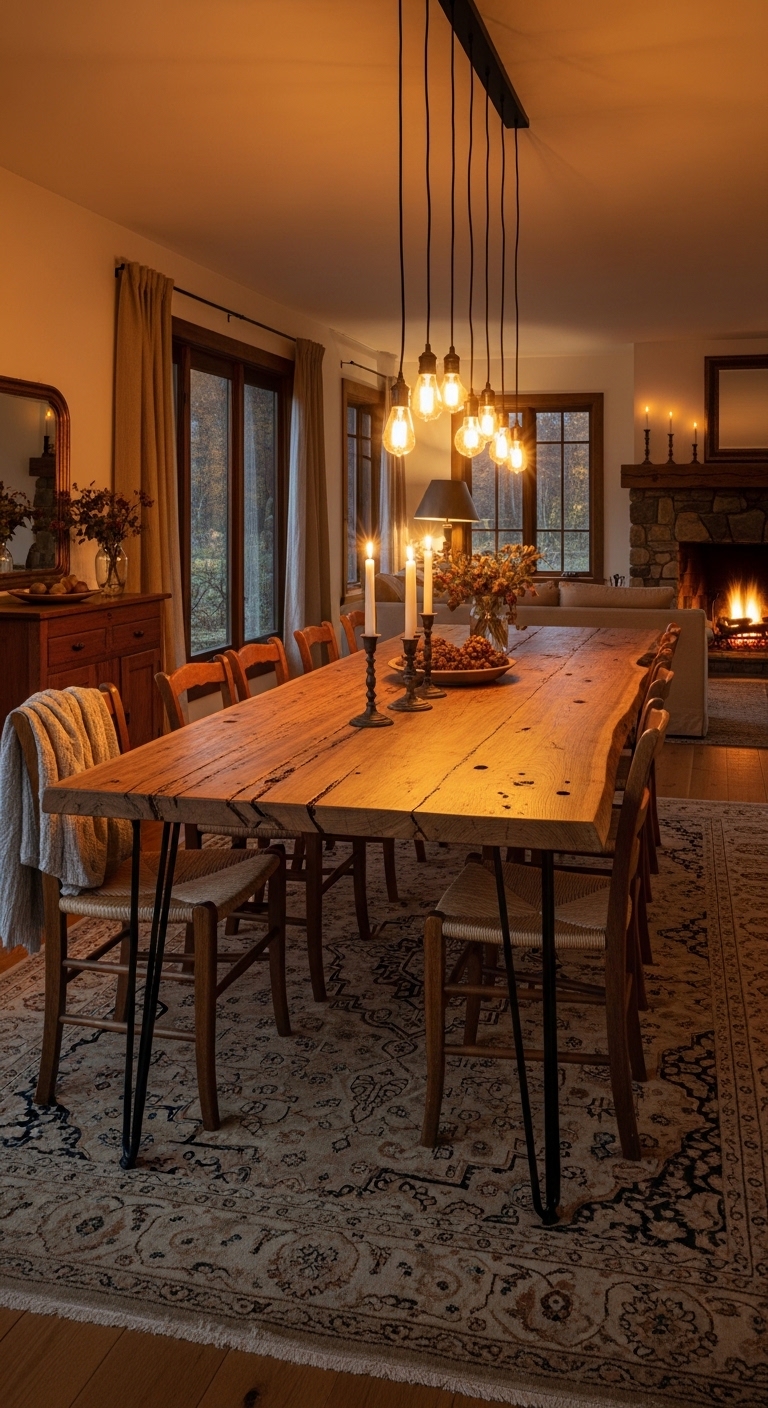
If there’s one investment that transforms a dining room overnight, it’s a reclaimed wood dining table. Nothing else comes close.
A reclaimed wood table brings history, character, and soul into your space instantly. The natural grain variations, old knots, and subtle imperfections aren’t flaws — they’re features. They tell you this wood has lived, and that energy translates into warmth you can feel the moment you walk in.
Practical tips for this look:
- Pair a thick, chunky reclaimed wood table with metal hairpin legs for a modern rustic balance
- Choose a table with a natural oil finish rather than high-gloss lacquer — it stays truer to the rustic spirit
- Size up if you can — a larger table anchors the room and invites people in
Exposed Brick Walls That Do All the Talking
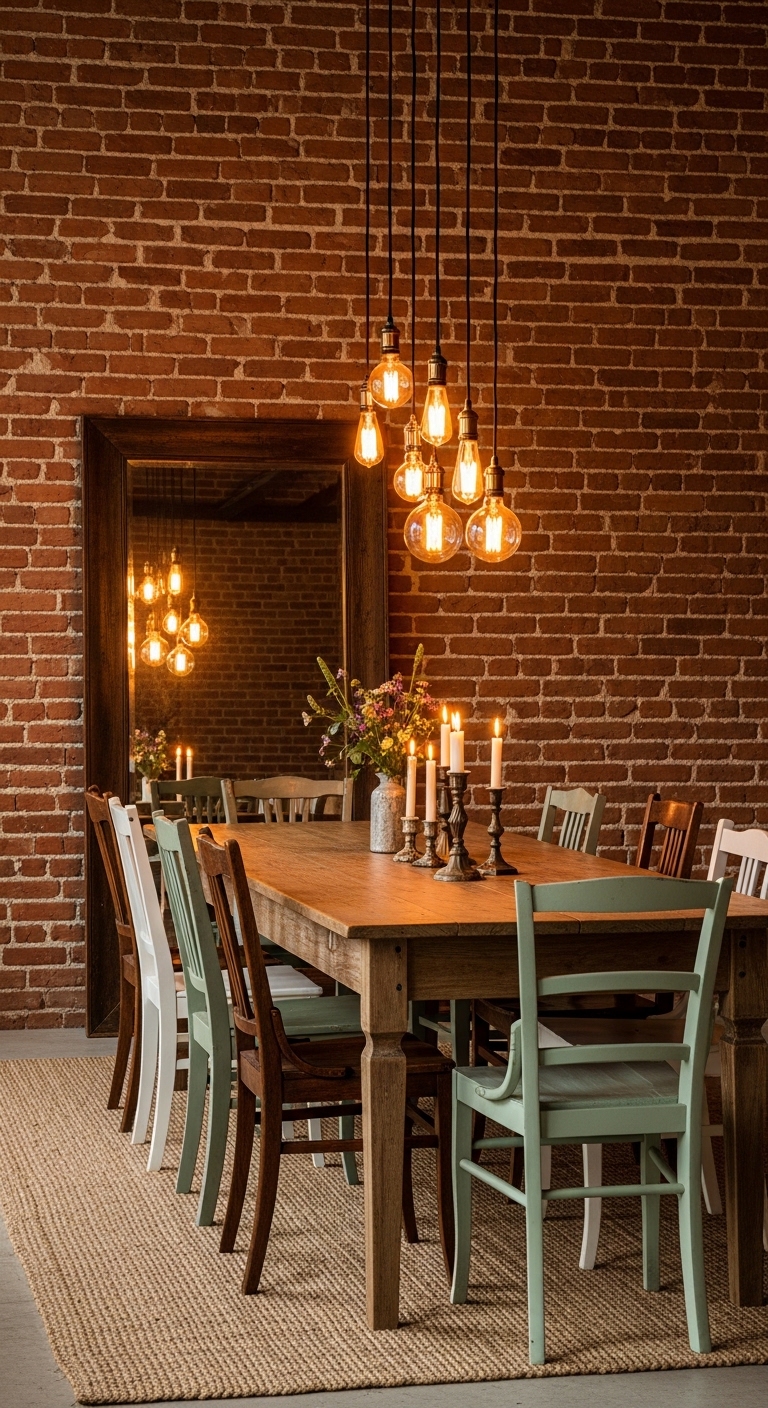
An exposed brick wall behind your dining table is one of those design moves you never regret. It adds instant depth, texture, and that old-world warmth that paint simply cannot replicate.
If you’re lucky enough to have an original brick wall, strip back that plaster and let it breathe. If not, high-quality brick veneer panels are a fantastic alternative — they’re easier to install than you think, and the visual impact is nearly identical.
What makes this work:
- Keep the rest of the room simple so the brick becomes the star
- Warm Edison bulb lighting bounces beautifully off brick tones
- A vintage wooden sideboard against the brick wall creates a layered, gallery-like effect
Farmhouse-Style Wooden Bench Seating
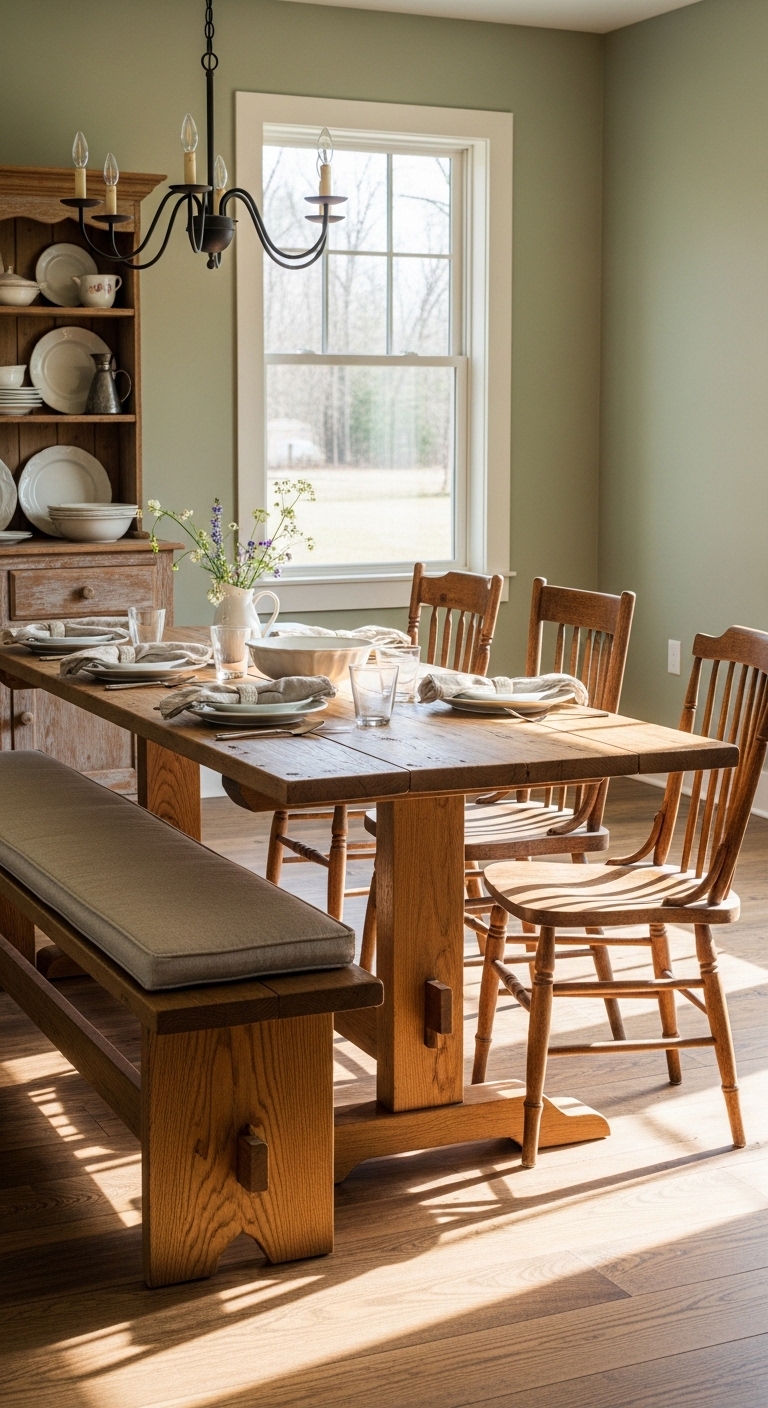
Forget matching dining chair sets. One of the coziest and most practical rustic dining room ideas is replacing one or both sides of your table with a solid wooden bench.
Bench seating has this incredible ability to make a dining room feel communal and inviting. It says, “there’s always room for one more.” And from a design perspective, it creates a beautifully grounded, low-profile look that doesn’t compete with the rest of the room.
How to style it right:
- Add a long linen or cotton runner cushion on the bench for comfort during longer meals
- Mix the bench with two armchairs at the head and foot of the table for visual variety
- A bench with visible wood joinery or raw edges leans perfectly into the rustic aesthetic
Wrought Iron Chandeliers and Pendant Lights

Lighting is the secret ingredient that separates a good room from a great one. In a rustic dining room, wrought iron chandeliers or pendant lights are absolute game-changers.
The dark metal finish of wrought iron creates a beautiful visual contrast against warm wood tones. And when you hang a statement chandelier above your dining table, it instantly becomes the visual anchor of the entire space — drawing the eye up and making the room feel curated and intentional.
Lighting tips that actually work:
- Always hang your chandelier 30 to 36 inches above the tabletop for the most flattering light
- Use warm-toned bulbs (2700K to 3000K) — they mimic candlelight and make everyone look their best
- A multi-arm candle-style chandelier in black wrought iron is the most timeless rustic option
Shiplap or Wood-Paneled Accent Walls
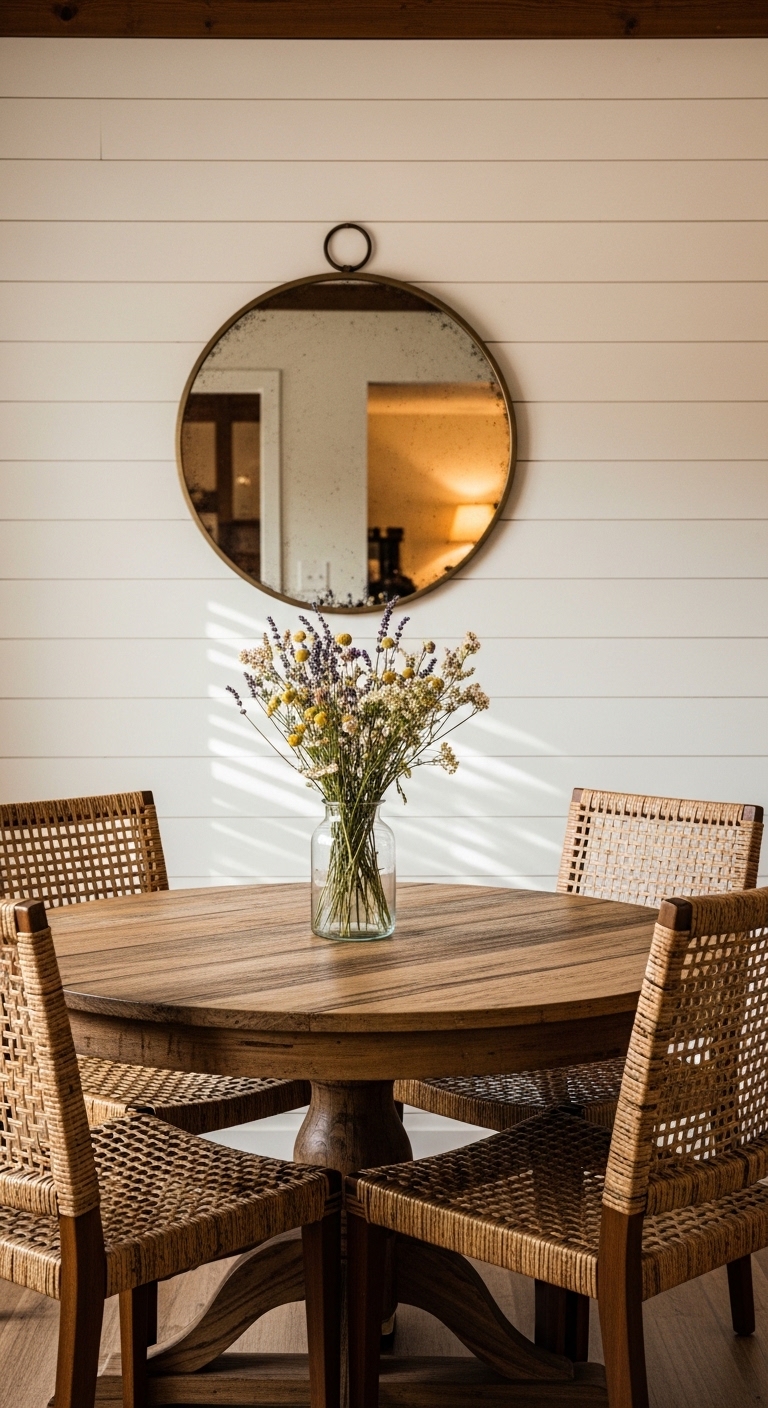
Shiplap has had a massive moment in home design over the past decade, and for very good reason. Those clean horizontal lines of painted or natural wood paneling add a layer of texture and warmth that flat painted walls simply can’t achieve.
In a rustic dining room, a shiplap accent wall behind the dining table or on a side wall creates a cozy, cabin-like atmosphere without making the space feel dark or heavy.
Making shiplap work in your space:
- White or cream-painted shiplap keeps things bright while still adding texture
- Natural wood shiplap in warm honey tones leans more deeply into the rustic look
- Layer in a vintage mirror or a set of botanical prints against the shiplap for added character
A Stone or Brick Fireplace Nearby the Dining Area
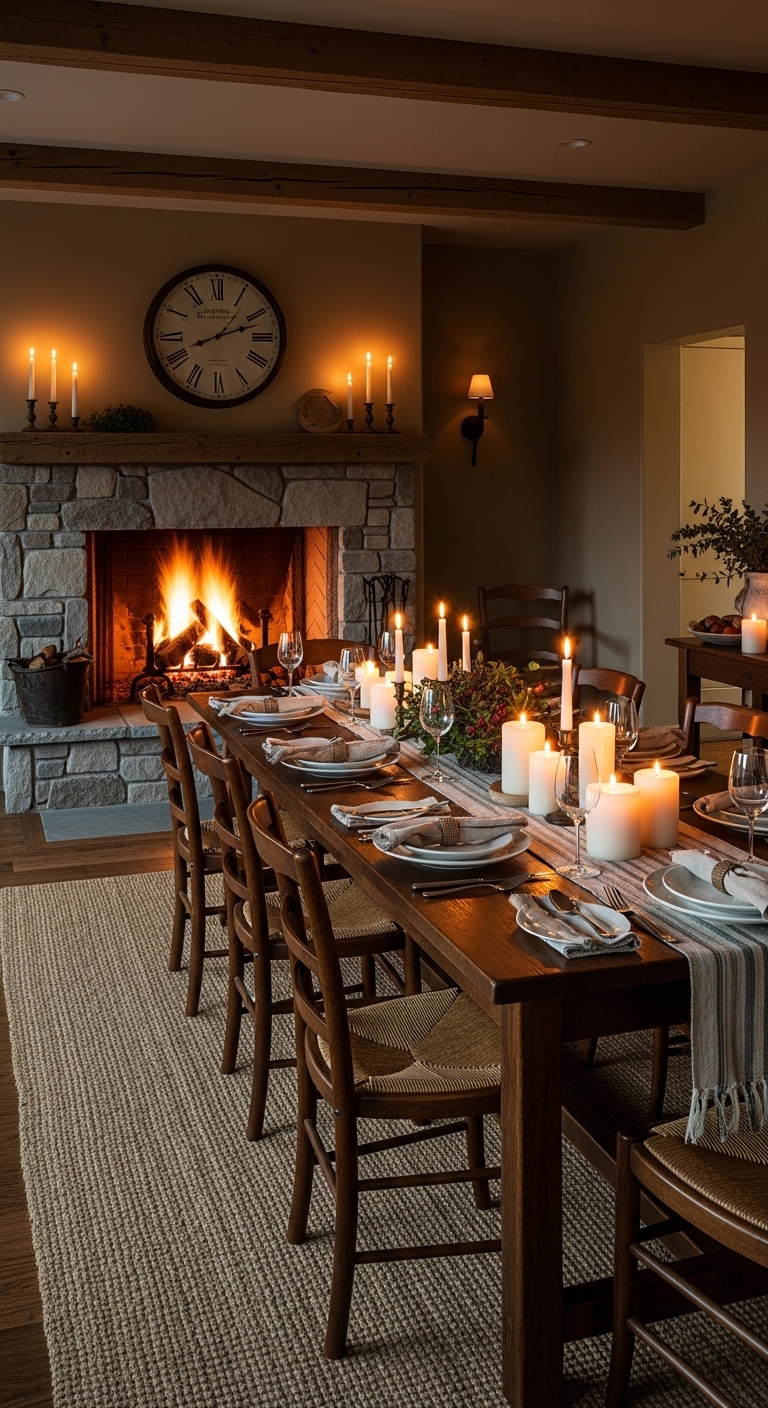
Combining your dining room with a fireplace feature wall is one of the most luxurious and soul-warming design decisions you can make. There’s something ancient and deeply comforting about eating a meal beside an open fire — and you can capture that feeling even in a modern home.
A stone fireplace doesn’t need to be massive. Even a mid-sized stone or stacked-brick surround creates enormous visual impact and floods the space with that cozy, mountain-lodge energy.
How to integrate this beautifully:
- Position your dining table so diners face or have a view of the fireplace
- Use the mantel as a display shelf for candles, greenery, and rustic decor objects
- In warmer months, fill the hearth with large pillar candles for a non-seasonal version of the same warmth
Woven Rattan and Seagrass Dining Chairs
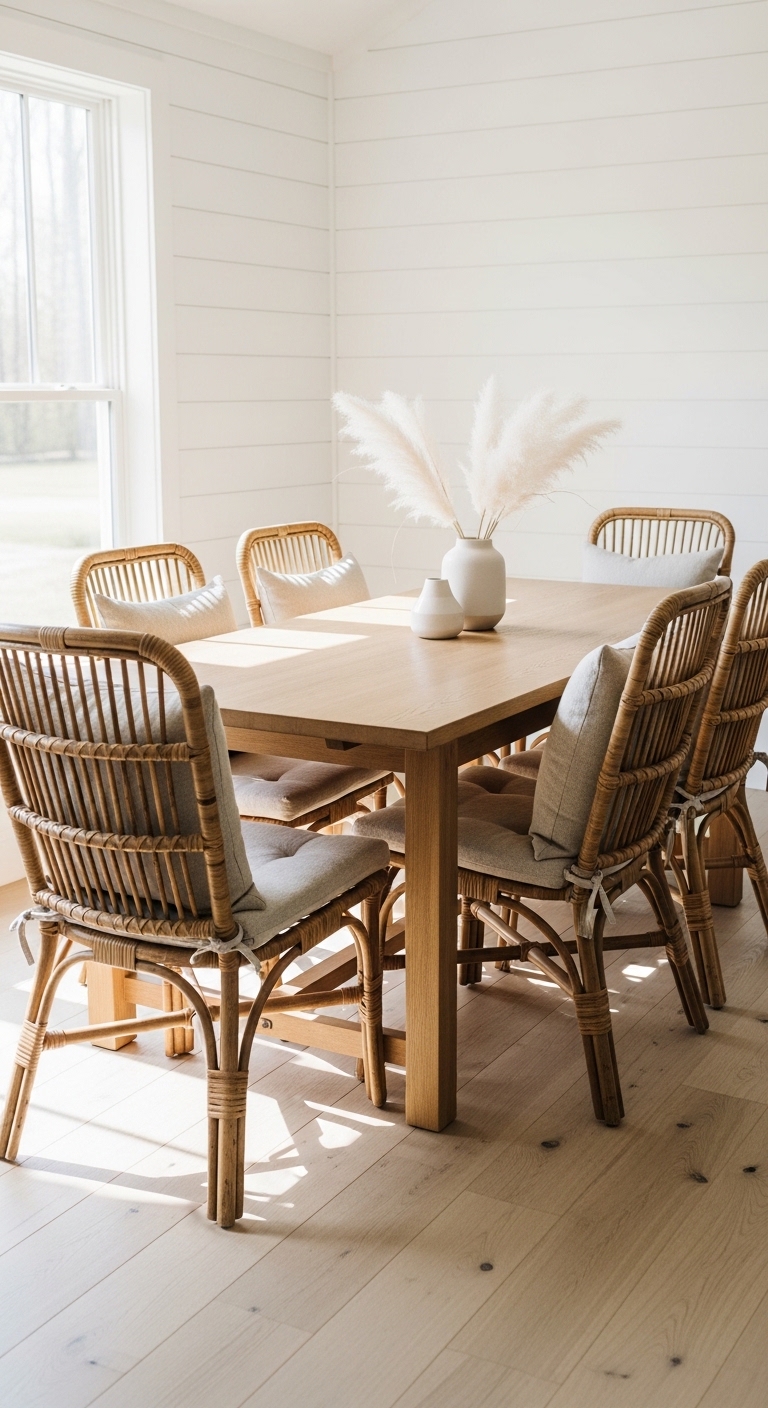
Not every rustic dining room needs to lean heavily into dark woods and iron. Sometimes the warmest, most relaxed version of rustic comes through natural woven materials — and rattan or seagrass dining chairs are perfect for achieving that look.
These chairs bring a slightly bohemian, organic quality to the dining space. They’re lighter visually than solid wooden chairs, which keeps the room feeling airy and welcoming rather than heavy and dark.
Styling notes:
- Pair woven chairs with a bleached or light oak dining table for a coastal rustic vibe
- Mix two rattan chairs at the ends with a wooden bench for an eclectic, layered look
- Add simple seat cushions in natural linen or cotton for comfort and softness
Vintage Wooden Sideboards and Buffet Tables
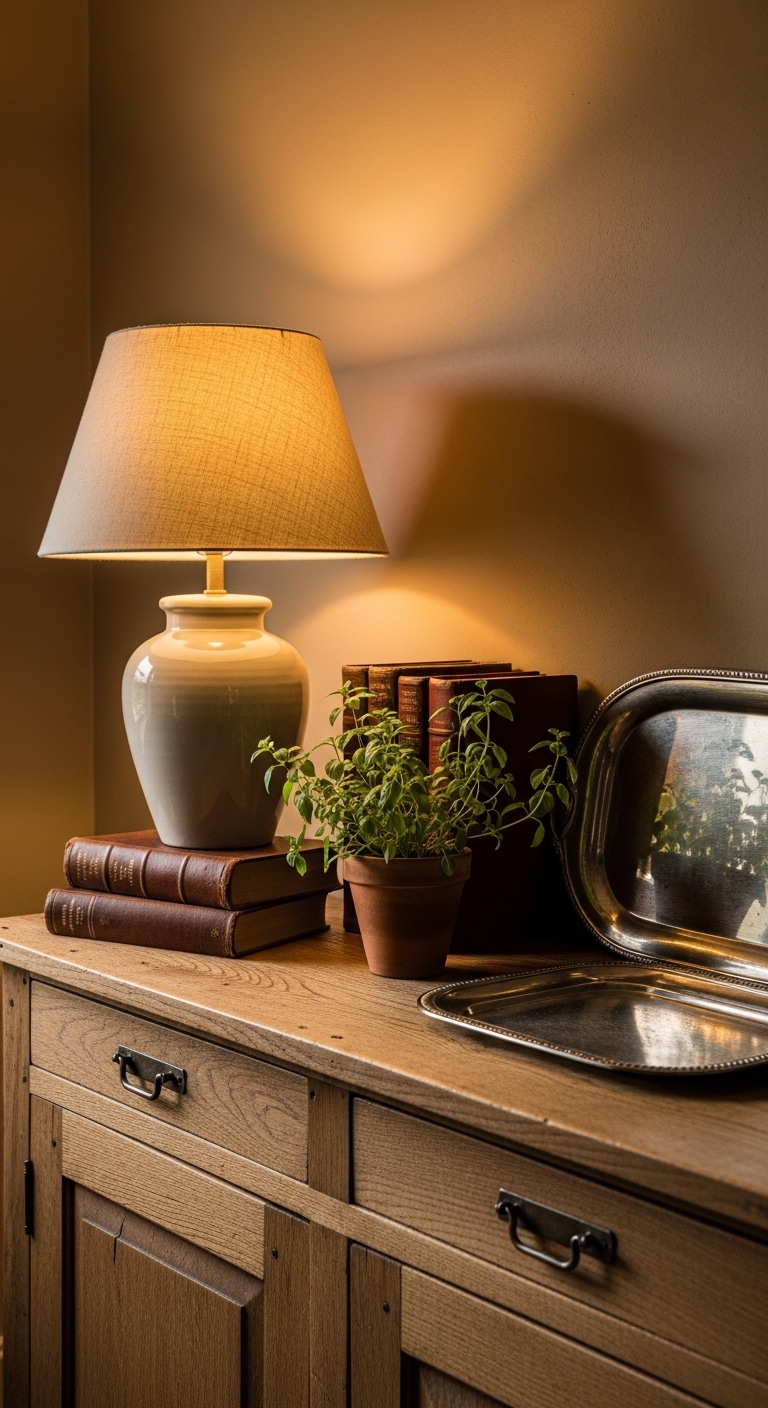
A vintage wooden sideboard or buffet table is one of the most functional and beautiful pieces you can add to a rustic dining room. It adds storage, display space, and an entire layer of character that brand-new furniture simply can’t replicate.
Look for sideboards with visible wood grain, original hardware, and the kind of slight wear that shows genuine age. Antique markets, estate sales, and online vintage shops are goldmines for these pieces — and they’re often more affordable than buying new.
How to style your sideboard:
- Top it with a tray of candles, a stack of linen napkins, and a small potted plant
- Use it to display your favorite ceramics or a collection of vintage bottles
- A large framed mirror or a piece of rustic artwork above the sideboard completes the vignette
Earthy Color Palettes — Warm Whites, Terracotta, and Deep Browns
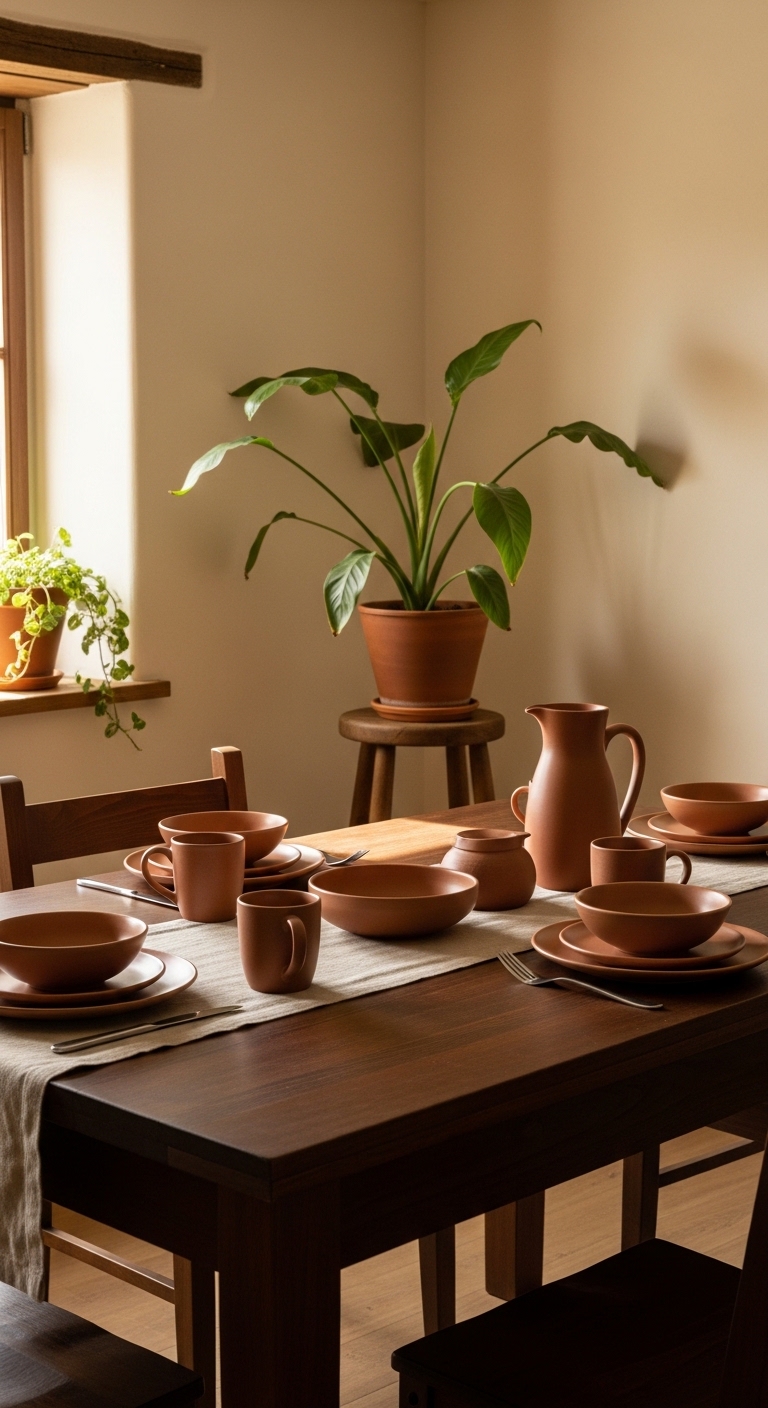
Color is the foundation of any room’s mood, and in a rustic dining room, your palette needs to feel like it came straight from nature. Think soil, stone, bark, dried leaves, and winter wheat.
The most successful rustic dining room color combinations tend to include:
- Warm white or cream for walls — it keeps the space bright while still feeling cozy
- Terracotta or clay tones as accents — in cushions, ceramics, or a feature wall
- Deep walnut or chocolate brown in furniture and flooring
- Sage green or muted olive for plants, textiles, or painted cabinets
These colors work together the way nature does — effortlessly and beautifully. You never feel like they’re trying too hard.
Layered Textiles — Linen Curtains, Table Runners, and Jute Rugs
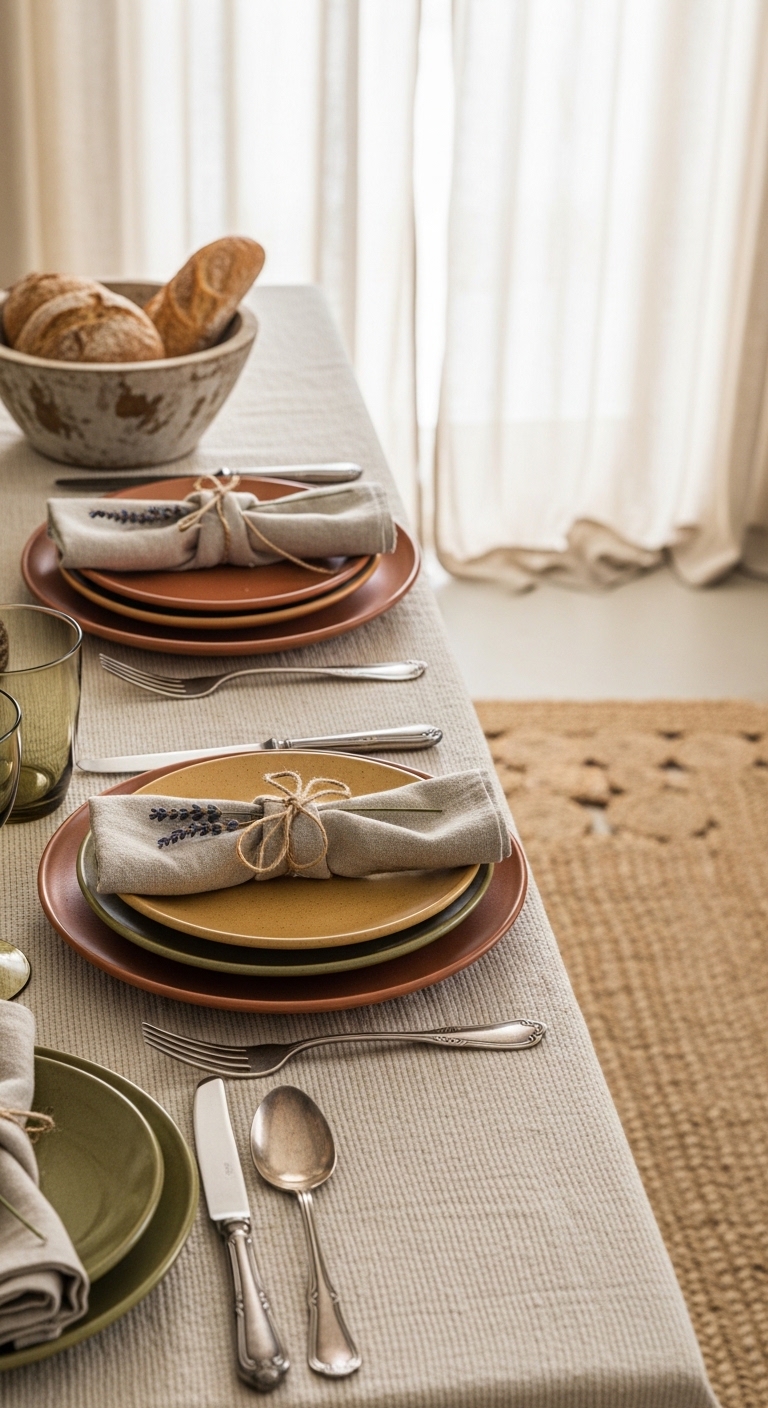
One of the biggest differences between a rustic dining room that feels truly cozy and one that just looks nice in photos is layering. And nothing layers a room quite like thoughtful textiles.
In your rustic dining room, textiles are what make the space feel touchable, livable, and warm. They soften the hard edges of wood and stone, absorb sound (which makes mealtimes feel more intimate), and add visual depth that you simply can’t get any other way.
The key textile layers for a rustic dining room:
- A jute or sisal area rug under the dining table — it grounds the space and adds natural texture underfoot
- Linen or cotton curtains in soft white, oatmeal, or sage — let them pool slightly on the floor for a relaxed, lived-in look
- A long table runner in woven cotton or vintage grain sack fabric — it immediately adds a farmhouse feel to your table
- Linen napkins folded loosely or tied with twine at each place setting
Greenery, Dried Botanicals, and Natural Centerpieces
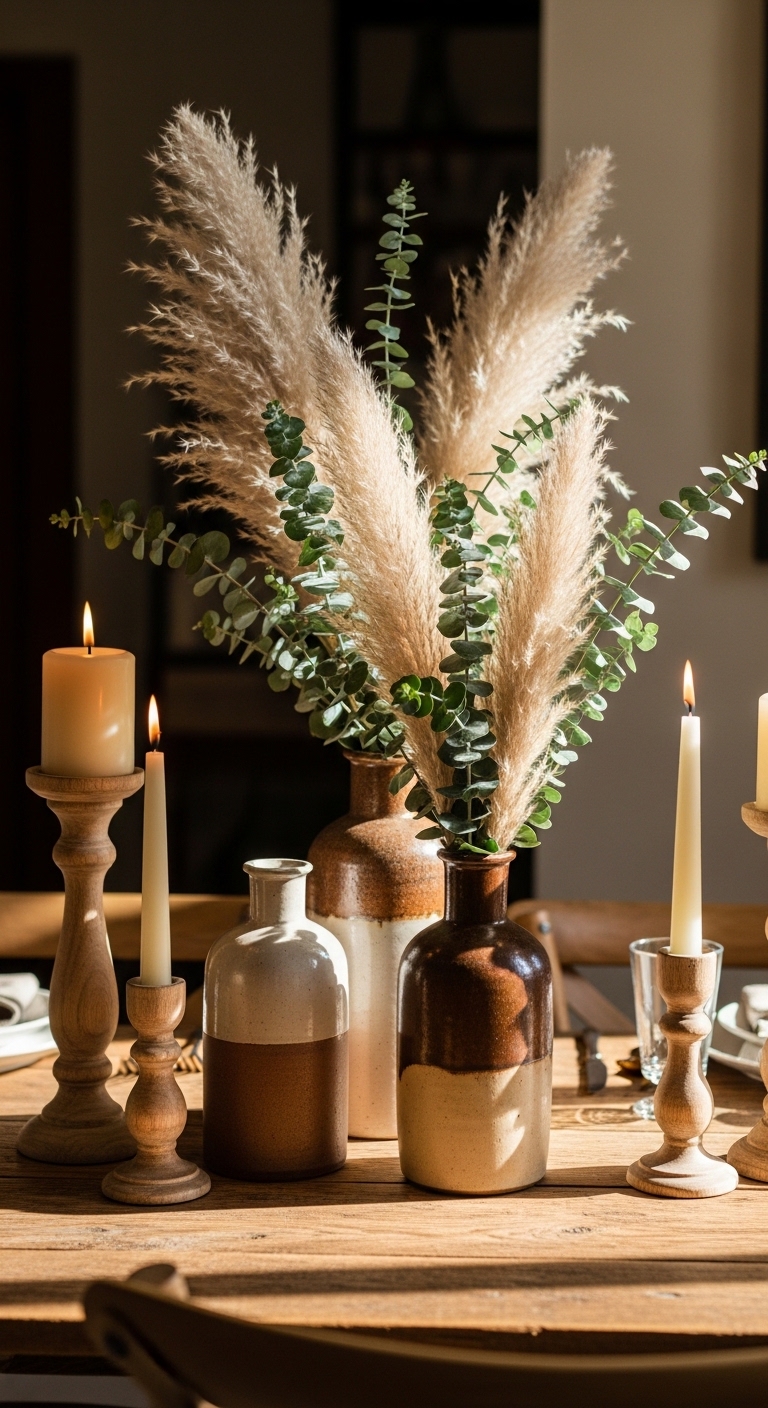
A rustic dining room without plants or botanicals is like a fireplace without wood — technically functional, but missing its soul. Bringing nature indoors is a core principle of rustic design, and your dining table centerpiece is the perfect place to express it.
Fresh greenery, dried wildflowers, olive branches, eucalyptus, and pampas grass all work beautifully in rustic dining spaces. They add height, color, and a living quality that no candle or vase can replicate on its own.
Centerpiece ideas that actually work at the dining table:
- A low wooden bowl filled with pinecones, stones, or dried seed pods for a zero-maintenance option
- A trio of mismatched ceramic vases in varying heights with dried pampas and eucalyptus
- A terracotta pot with trailing ivy or rosemary placed at the center for a fresh, kitchen-garden feel
- Simple beeswax taper candles in rustic iron holders flanking a small vase of wildflowers
Open Shelving With Ceramic and Pottery Displays
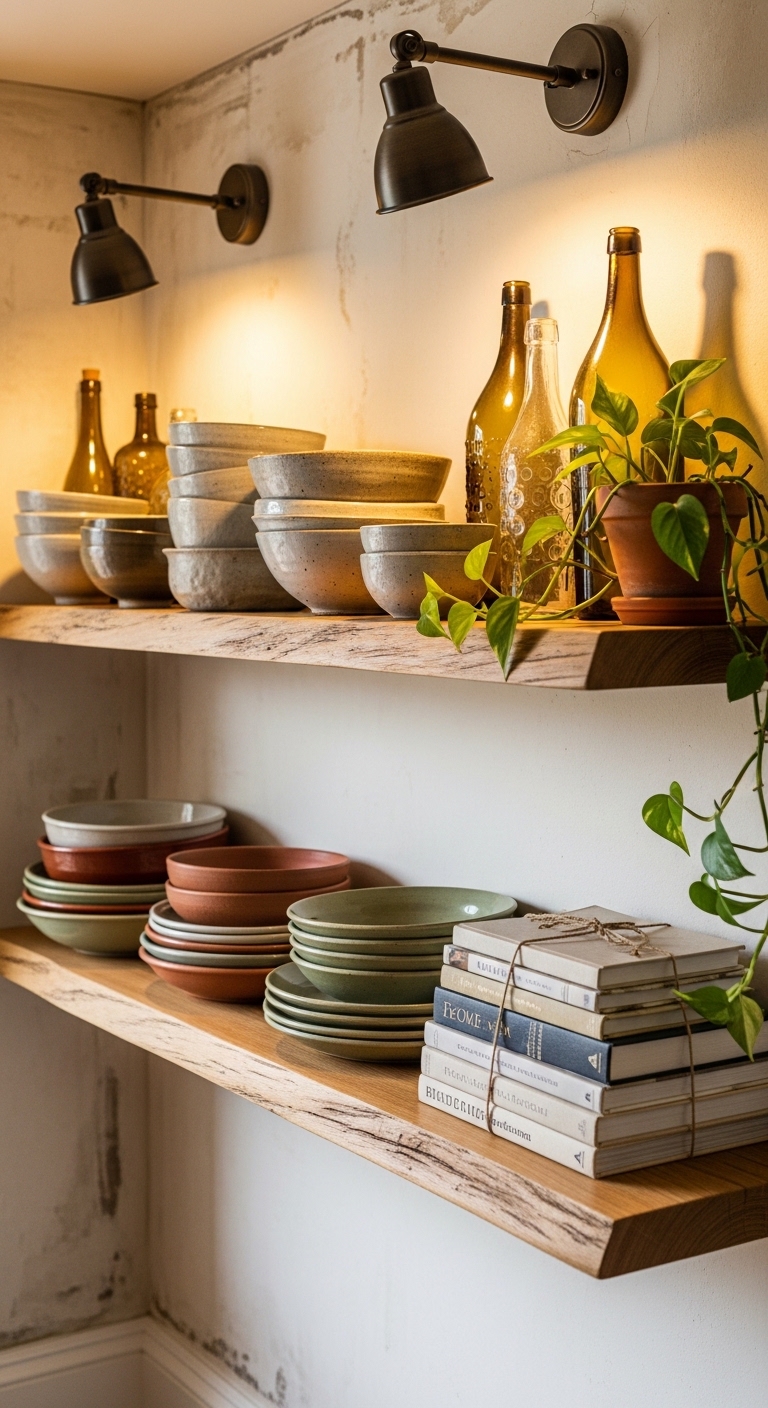
The final idea might be the one that ties everything together — open wooden shelving on a dining room wall, styled with handmade ceramics, pottery, and rustic kitchenware.
Open shelving in a dining room serves a dual purpose. It’s practical storage and display space, but it’s also a deeply personal expression of your taste and your home’s story. When you fill those shelves with things you genuinely love — a hand-thrown pottery bowl from a local artisan, mismatched vintage plates, a stack of well-worn cookbooks — the room comes alive in a way that no designer catalog can replicate.
How to build a beautiful open shelf display:
- Use floating shelves made from solid oak or pine with visible wood grain
- Vary the heights and sizes of objects — don’t line everything up at the same level
- Include functional items (pitchers, bowls, glasses) alongside purely decorative ones
- Add a small trailing plant like pothos or string of pearls to soften the look
Bringing It All Together
Here’s the thing about rustic dining room design — you don’t need to implement all 12 of these ideas at once. The best rustic spaces evolve slowly and intentionally. They collect character over time.
Start with the anchor piece — usually your dining table. Then build outward: the lighting, the seating, the textiles, the walls, and finally the smaller details and decor. Each layer you add makes the space feel more complete, more personal, and more deeply yours.
At Well Home Life, we believe your home should feel like a genuine reflection of who you are — not a showroom or a trend board. Rustic dining rooms do that better than almost any other style because they prioritize comfort, authenticity, and human connection over perfection.
So pull up that bench, light those candles, and start building the dining room that makes every meal feel like a special occasion.
Final Thoughts
The warmest dining rooms aren’t the most expensive ones. They’re the ones where thought, texture, and love have been layered over time. Whether you start with a reclaimed wood table, a jute rug, or simply a set of linen napkins tied with twine — every small step moves you closer to a space that feels truly like home.
Use these 12 ideas as your starting point, trust your instincts, and remember: rustic design celebrates imperfection. That little nick in your wooden bench? That slightly uneven ceramic bowl? Those are the details that make your dining room irreplaceable.