How Can 10 Small Wardrobe Ideas Make Your Tiny Room Feel Bigger?
Does your bedroom feel like it’s slowly closing in on you every time you open the wardrobe door? You’re not imagining it. In small rooms, the wrong wardrobe doesn’t just waste space — it actively makes the entire room feel smaller, darker, and more cluttered. The good news? The right wardrobe idea can completely transform how your room looks and feels, without knocking down a single wall.
At Well Home Life, we’ve explored hundreds of real small-room makeovers, and one thing is always true: smart wardrobe choices are the single biggest game-changer in compact bedrooms. Whether you’re working with a studio flat, a box room, or a modest master bedroom, these 10 ideas will help you reclaim your space and breathe new life into your room.
Why Your Wardrobe Choice Changes Everything in a Small Room
Before we jump into the ideas, let’s talk about why wardrobes matter so much in tight spaces. Most people focus on bed size or paint color when trying to make a small room feel bigger. But your wardrobe is often the largest piece of furniture in the room — and the one that dictates how every other piece fits around it.
A bulky outward-swinging wardrobe in a 10×10 room can consume nearly 15% of your usable floor area before you even open the door. That affects how light moves through the room, how freely you can walk around, and how “open” the space feels overall. Choosing the right style, size, and placement isn’t just a design decision — it’s a spatial one.
Floor-to-Ceiling Fitted Wardrobes
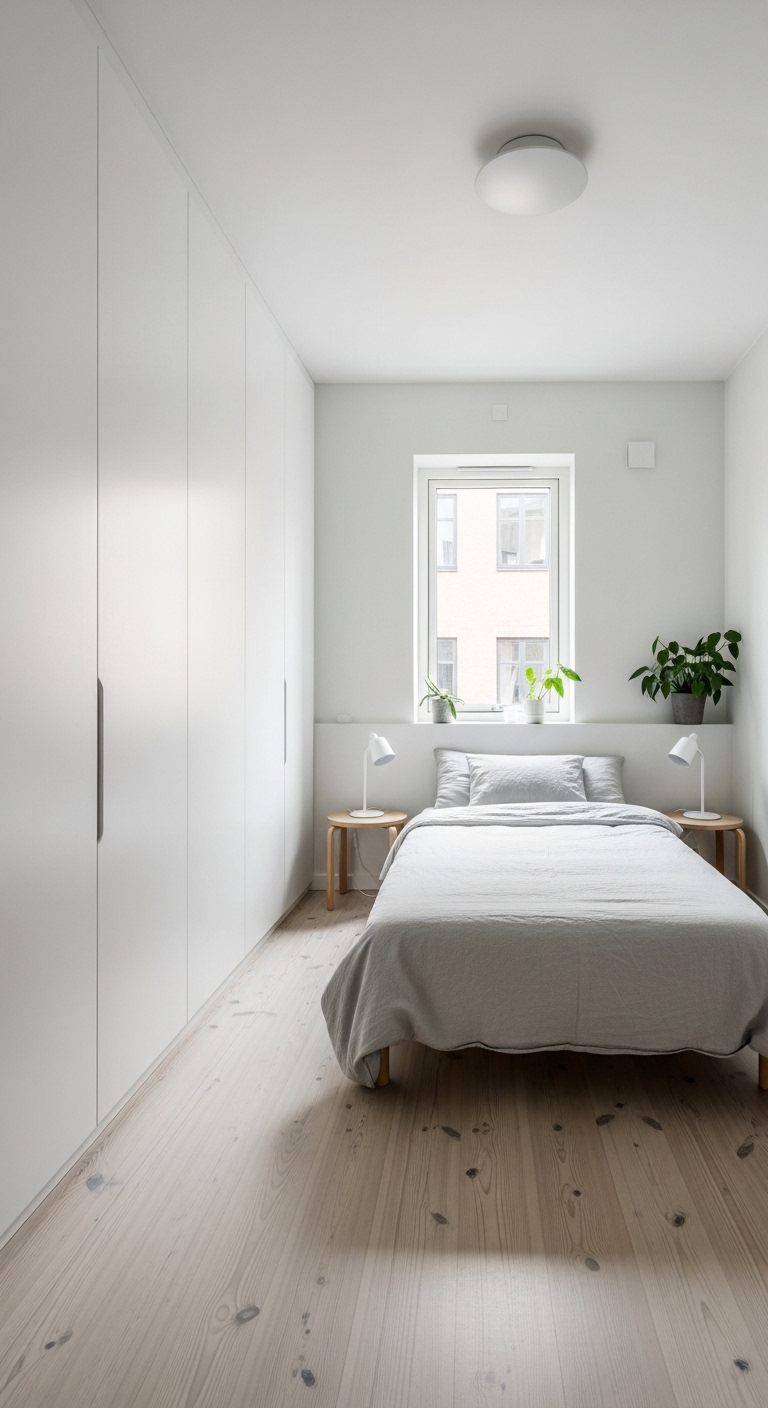
Walk into any professionally designed small bedroom that looks effortlessly spacious, and there’s a strong chance a floor-to-ceiling wardrobe is part of the picture. This single design move eliminates the awkward dead zone above standard wardrobes — that dust-collecting gap that somehow makes your ceiling look lower than it really is.
When the wardrobe runs from floor all the way to the ceiling, your eye reads the wall as one continuous vertical surface. That creates a visual lift that genuinely makes the room feel taller and more expansive.
Why It Works So Well in Tiny Rooms
- Maximum storage, minimum footprint — you use every inch of vertical height without expanding your floor area at all
- Cleaner walls — no exposed top shelf, no clutter pile-up above the unit, no awkward gap collecting grime
- Custom-fit feel — even off-the-shelf floor-to-ceiling units feel bespoke because they’re proportioned to your actual ceiling height
Quick Practical Tip
Choose handleless push-to-open doors in a matte finish. They create a seamless, flat front surface that visually disappears into the wall — making the room feel even more open and uncluttered.
Also Check: 25 Loft Apartment Decorating Ideas
Mirror-Front Wardrobe Doors
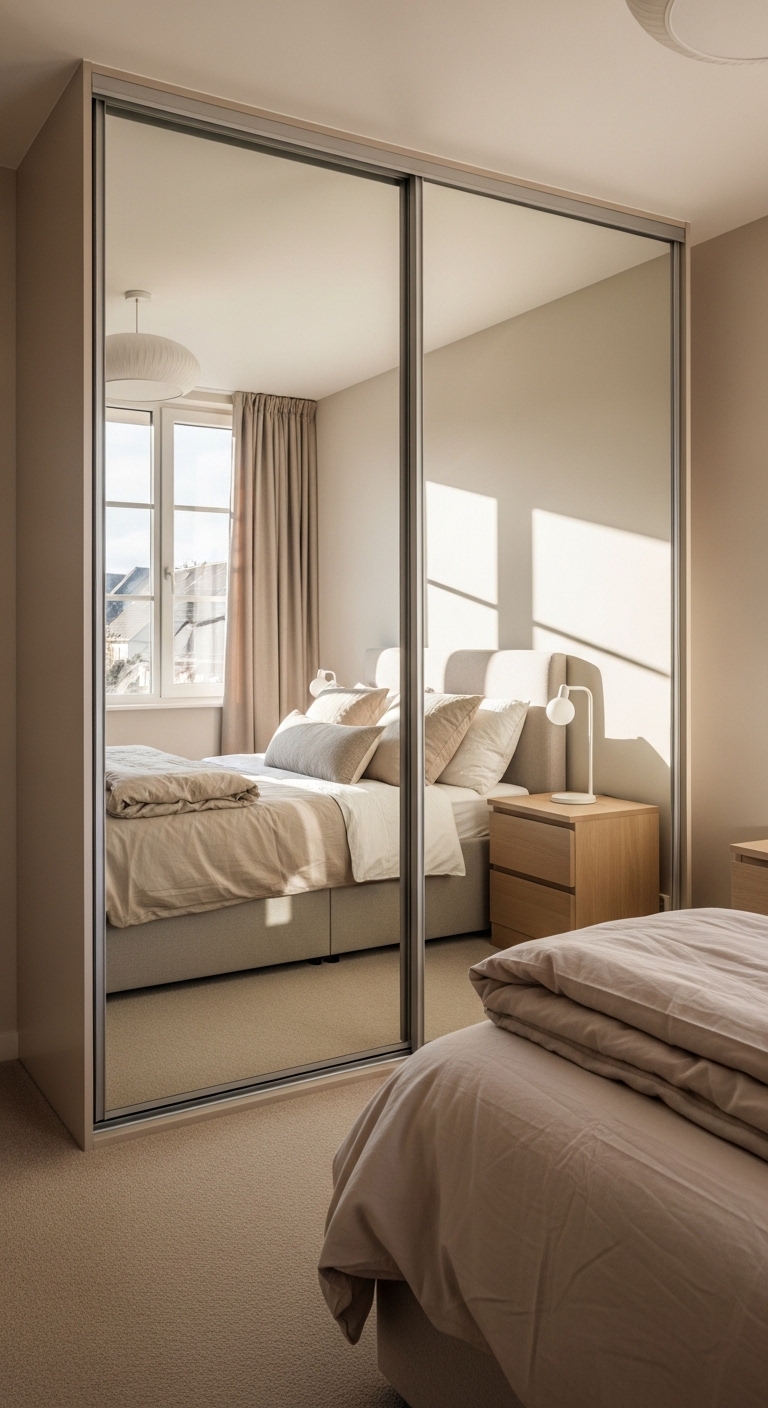
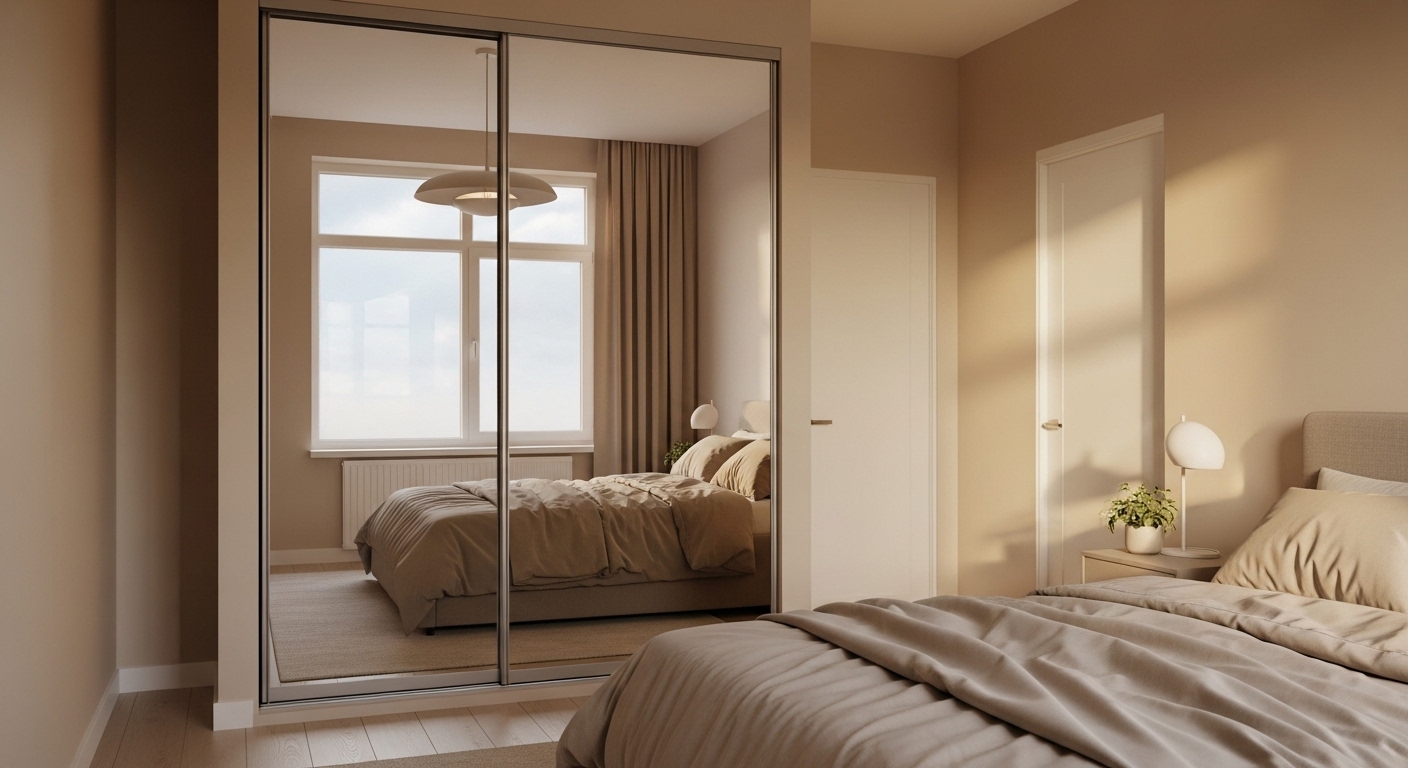
Mirrors are the oldest trick in the spatial design playbook — and they work every single time. When you replace standard door panels with full-length mirrors, you immediately double the perceived depth of your room. The space behind you appears to continue, and your brain registers the room as significantly larger than it actually is.
What makes this particularly clever in a bedroom is that you solve two problems at once. You get a full-length mirror you genuinely need for getting dressed, and you create a powerful visual expansion effect without spending extra on floor space.
How to Position Them for Maximum Impact
- Place the mirrored wardrobe opposite a window to reflect natural light deep into the room
- Use mirrors across the full width of the wardrobe — partial mirrors break the illusion and reduce the effect
- Keep surrounding walls neutral and uncluttered so the reflection reads cleanly without visual noise
Open Wardrobe With a Curtain Cover
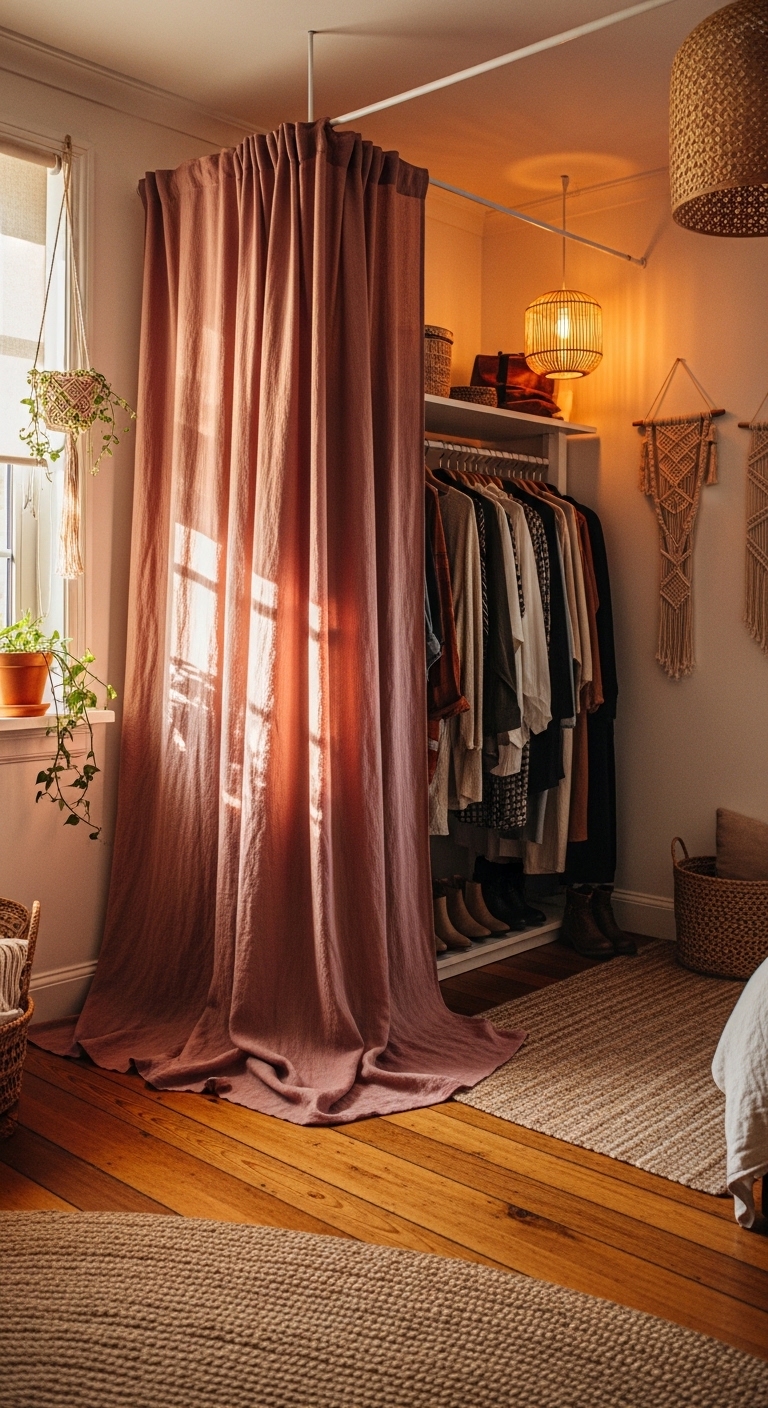
Sometimes the most space-efficient wardrobe is no wardrobe box at all. An open hanging rail mounted directly to the wall, concealed by a simple floor-length curtain, gives you full wardrobe functionality with a fraction of the visual weight. You lose the chunky cabinet bulk entirely, and the room immediately breathes more freely.
This approach works brilliantly in bohemian, Scandi, and budget-conscious rooms alike. The curtain adds a soft textile element that warms up the space while keeping everything hidden and tidy.
What to Keep in Mind
- Choose a curtain fabric that complements your bedding — linen, cotton muslin, and velvet all work beautifully
- Mount the rail as high as possible so the curtain drops from near the ceiling, creating that illusion of height
- Keep the items on the rail genuinely organized — when guests peek behind the curtain, you want calm, not chaos
Also Check: 23 Apartment Living Room Decorating Ideas
Corner Wardrobe Unit
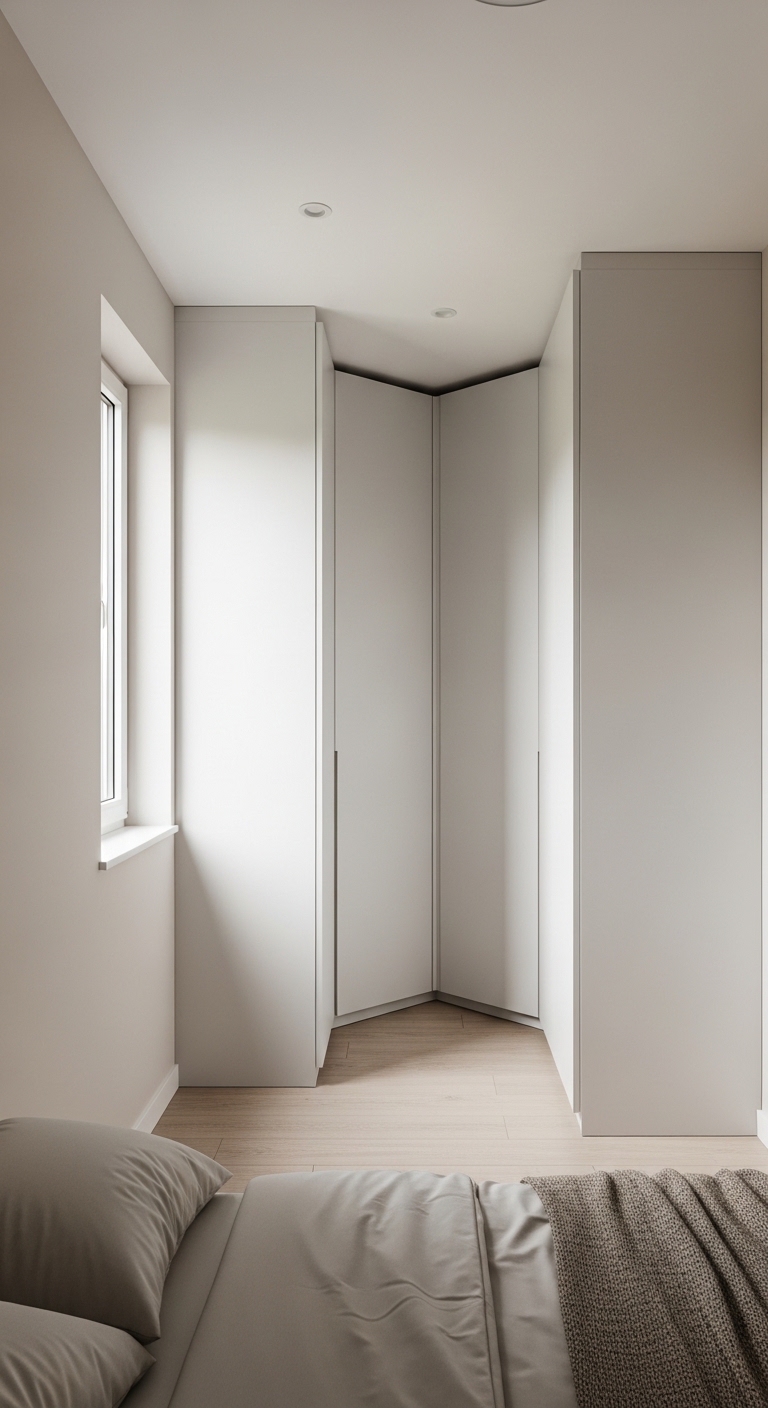
Dead corners are one of the most wasted spaces in any bedroom. A corner wardrobe unit turns that wasted triangle of space into a high-capacity storage solution while keeping the center of the room completely open and walkable.
Corner wardrobes work especially well in rooms where you can’t place a standard unit along a full wall because of windows, doors, or awkward architectural features. You essentially work around the room’s limitations rather than fighting against them.
The Real Benefit Beyond Storage
The biggest win here is psychological. Because the wardrobe tucks into the corner, the open floor space in the middle of the room remains intact. The room feels more breathable, more livable, and significantly less cramped.
Sliding Door Wardrobe
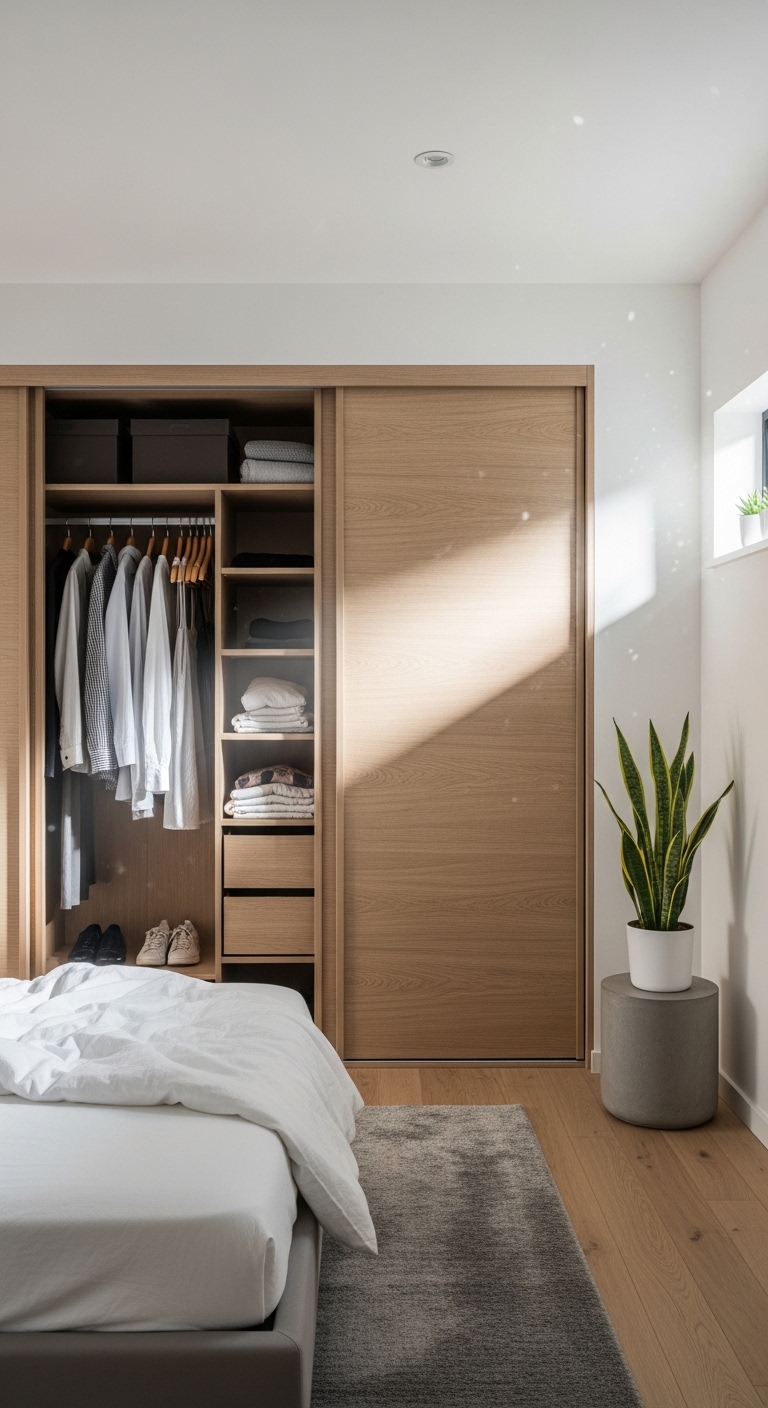
Hinged wardrobe doors need clearance space in front of them to swing open — and in a small room, that clearance is exactly the space you don’t have. Sliding doors eliminate that problem entirely. The doors glide horizontally across the front of the unit, so you never lose that precious floor space between the wardrobe and your bed or desk.
This is one of the most practical upgrades you can make in a small bedroom, and the range of styles available today — from mirrored panels to frosted glass to natural wood — means you don’t have to sacrifice aesthetics for function.
Also Check: 20 First Apartment Decorating Ideas Every Beginner Needs to Try
Choosing the Right Sliding Door Style
- Mirrored panels — best for visual expansion and natural light reflection
- Frosted glass — adds a soft, modern look while hinting at the contents inside
- Solid wood or matte finish — creates a warm, grounded feel that works well in Scandi and natural-toned rooms
Under-Bed Wardrobe Drawers
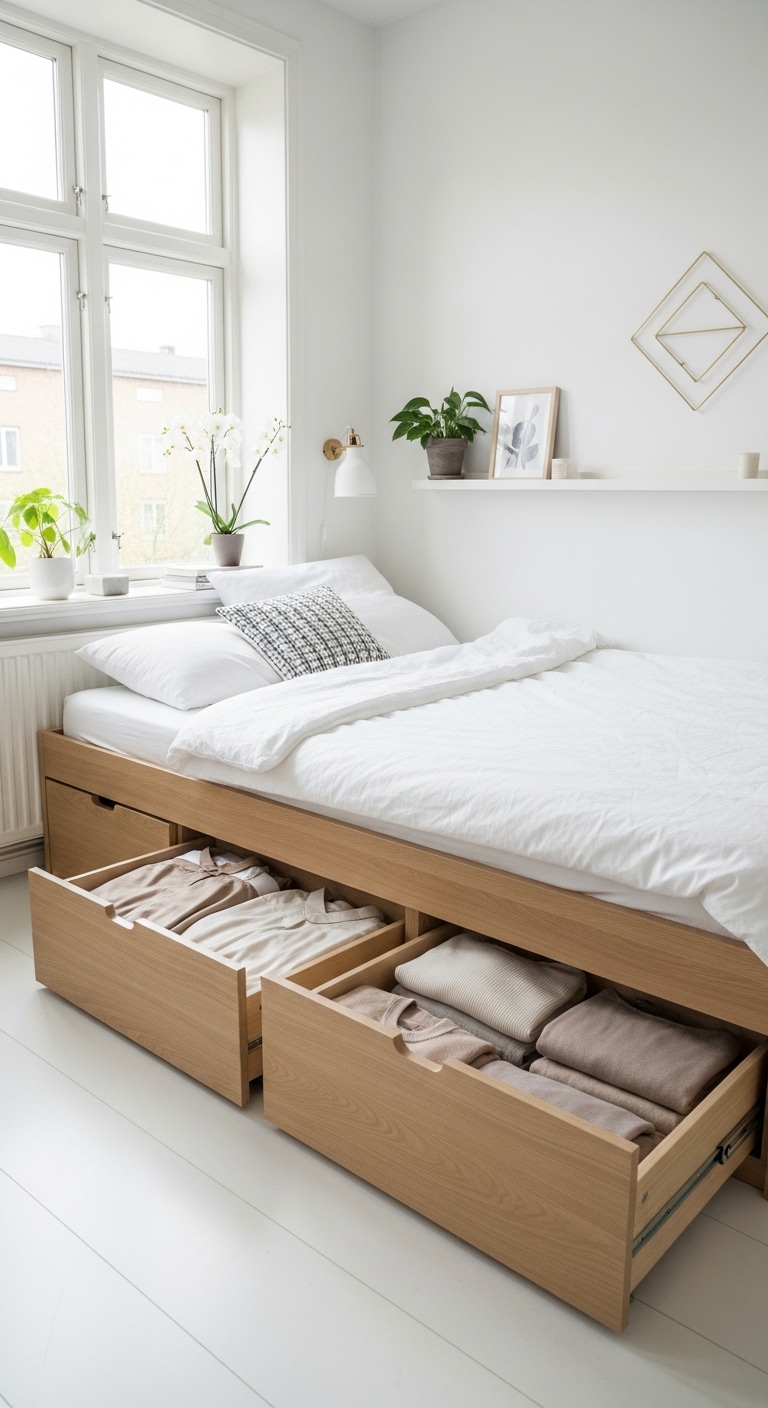
Your bed takes up the largest single footprint of any furniture in your bedroom. It makes absolute sense to put that footprint to work. Under-bed wardrobe drawers — whether built into a platform bed frame or added as rolling units — give you an entire extra zone of clothing storage without using a single extra square foot of wall space.
This idea works especially well for folded items: knitwear, jeans, gym clothes, seasonal layers, and accessories. Pair it with a slimmer wall wardrobe for hanging items, and suddenly a very modest room has genuinely generous storage capacity.
Making It Work Practically
- Opt for drawers with smooth full-extension slides so you can actually access items at the back
- Use dividers or small fabric boxes inside each drawer to keep folded clothes organized and easy to find
- Choose a bed frame with a low-profile design so the drawers don’t make the bed look heavy and raised
Also Check: 13 Small Patio Ideas to Transform Your Outdoor Space
Wardrobe With Built-In Lighting
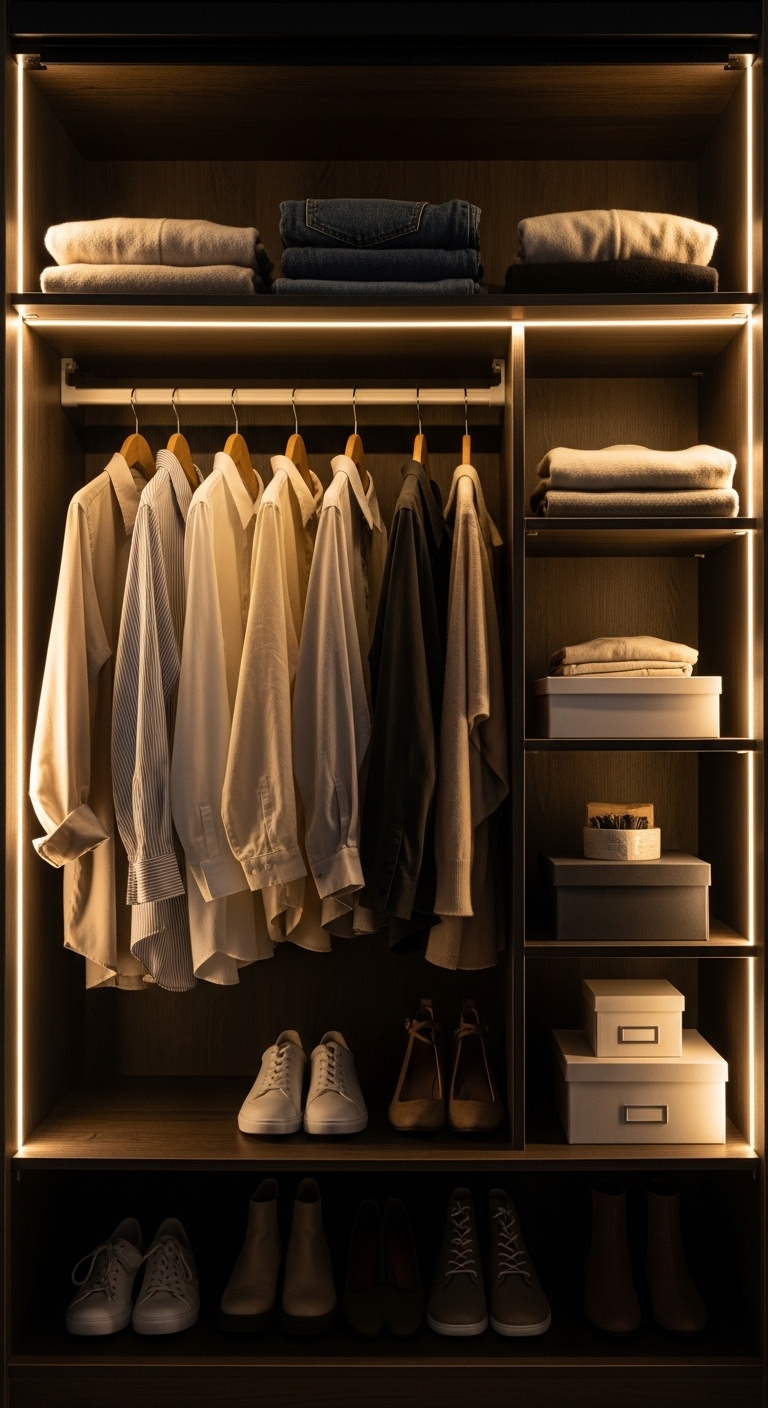
Lighting inside a wardrobe might sound like a luxury, but in a small room it genuinely changes how the space feels. A dark wardrobe interior makes a room feel more closed-in and gloomy. Add warm LED strip lighting inside the unit, and suddenly that wardrobe becomes a warm, inviting feature of the room — not just a storage box.
Beyond atmosphere, interior lighting is incredibly practical. You can actually see what you own, find items faster, and avoid that frustrated morning rummage that starts every day on the wrong note.
The Best Lighting Options for Small Wardrobes
- LED strip lights along shelves and hanging rails — energy-efficient, slim, and easy to install with adhesive backing
- Motion-activated puck lights — turn on automatically when you open the doors, no wiring required
- Warm white (2700–3000K) tones work best — they flatter clothing colors and create a cozy, warm feel
Floating Wardrobe Design
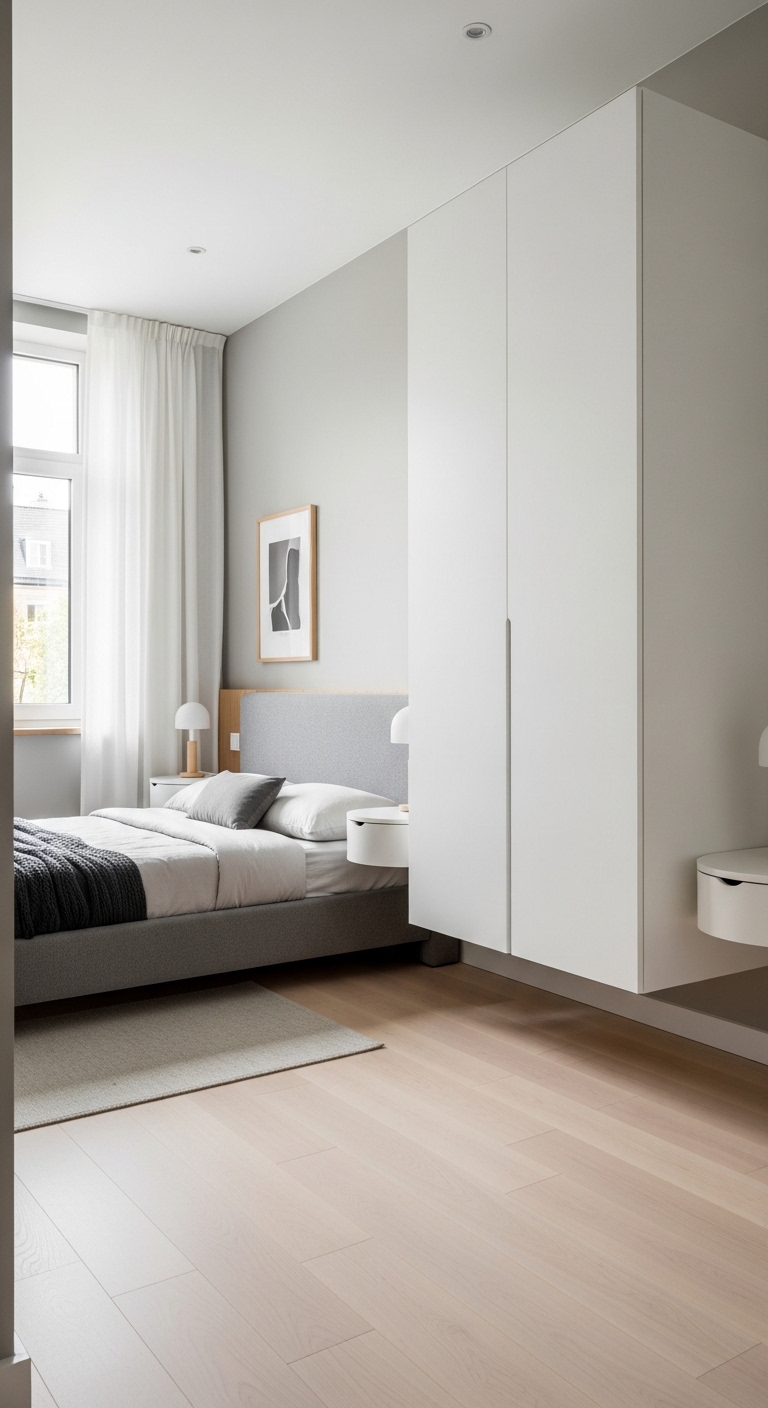
A floating wardrobe — one mounted directly to the wall with the base raised off the floor — is one of the most visually clever ideas in small room design. Exposing the floor underneath the unit creates a visual gap that makes the room feel lighter, more open, and more spacious than a floor-standing unit of identical dimensions.
This same principle is why floating vanities became so popular in small bathrooms, and it translates beautifully into bedroom wardrobes. The continuous floor line runs uninterrupted across the room, and that continuity reads as space.
What to Combine It With
Pair a floating wardrobe with light flooring — white oak, pale birch, or light-toned laminate — so that the exposed floor area beneath the unit genuinely reflects light and enhances the airy effect.
Multi-Zone Compact Wardrobe
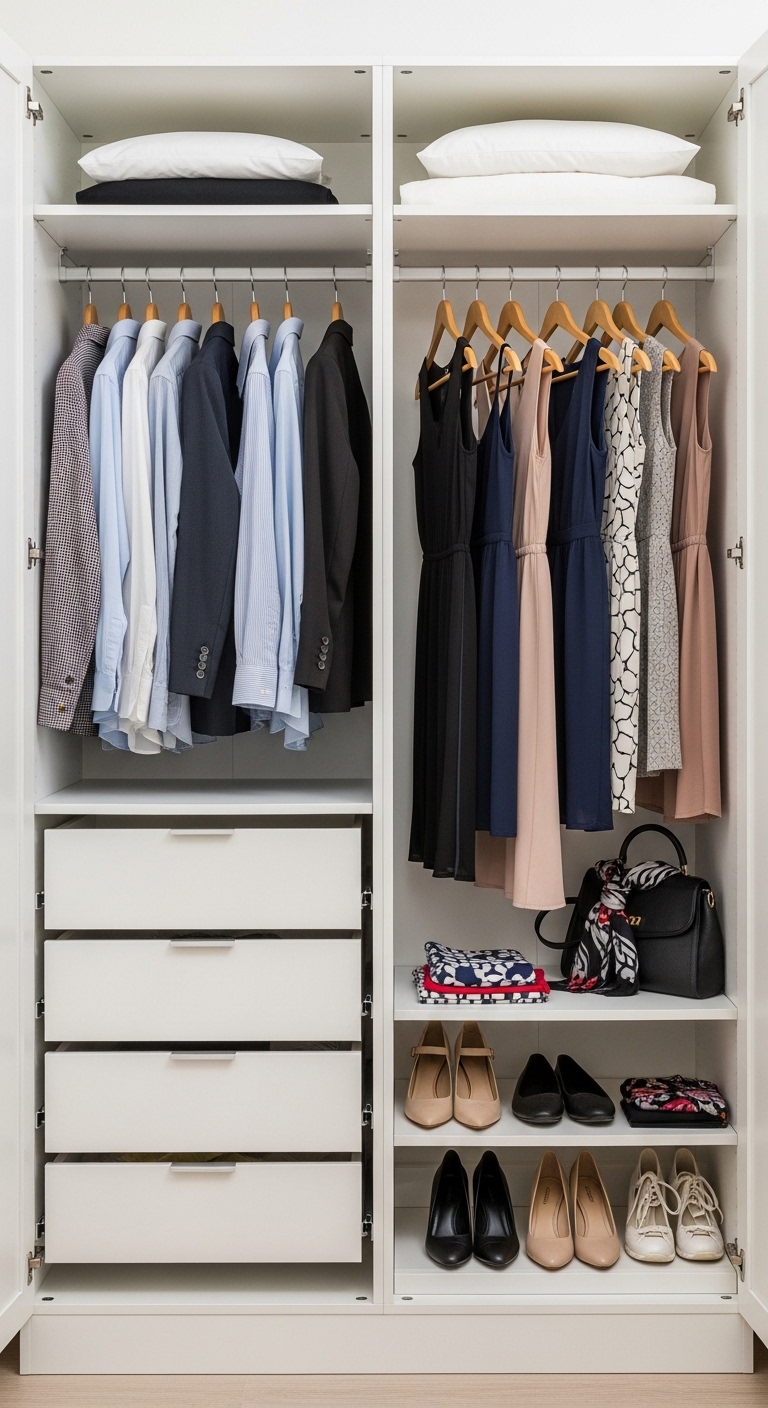
One of the biggest space-wasting mistakes in small wardrobes is hanging everything at full length when most items only need half the vertical space. A multi-zone wardrobe divides the interior into purpose-built sections: a short hanging zone for shirts, jackets, and blazers; a full-length zone for dresses and trousers; shelving for folded items and shoes; and small drawers for accessories and underwear.
This zoning approach can double your effective storage capacity inside the exact same wardrobe footprint. You stop wasting the lower half of the hanging space on short items, and you assign every category of clothing its own logical home.
How to Zone Your Wardrobe Efficiently
- Measure your longest garment first and design around that — everything else fits shorter
- Place the most frequently used items at eye level and arm’s reach
- Use the highest shelves for seasonal storage like thick winter coats or holiday items you access rarely
Wardrobe Behind the Bed Headboard
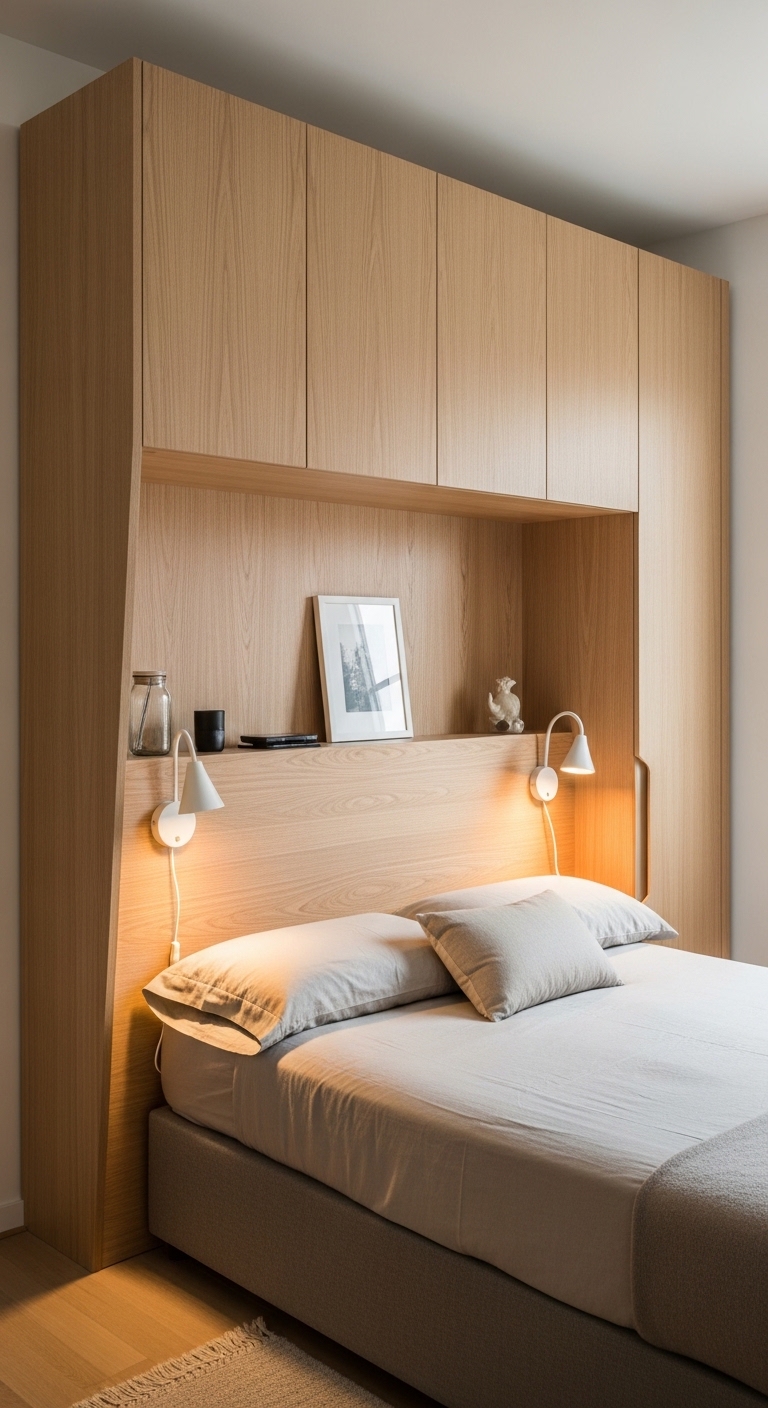
This one is genuinely underused and wildly effective. Instead of treating the wall behind your bed as just a backdrop for the headboard, you build shallow wardrobe cabinetry directly into that wall — wrapping around or behind the headboard itself. The wardrobe becomes part of the headboard architecture, and you gain storage without advancing the wardrobe into the room at all.
This works brilliantly for shallow, built-in units storing folded items, shoes, books, and accessories. It gives the room a designed, architectural quality that feels intentional and custom — and every inch of that back wall suddenly pulls its weight.
Making the Most of This Layout
- Keep the depth of the headboard wardrobe at 30–40cm for folded items and accessories
- Use matching finishes across the headboard panel and wardrobe doors so the whole wall reads as one unified feature
- Add integrated bedside lighting within the unit to make the headboard zone feel warm and functional
Final Thoughts: Start Small, Think Smart
You don’t need to renovate your entire room to make a real difference. Pick one of these 10 wardrobe ideas that fits your room’s specific layout, your budget, and your personal style — and commit to it fully. Even a single change, like switching to sliding doors or adding interior lighting, can shift how your room looks and feels every single day.
At Well Home Life, we believe that smart home design isn’t about spending more — it’s about thinking more carefully about the space you already have. Your small bedroom has more potential than you think. These wardrobe ideas are just the beginning.