21 Small Study Area Ideas for Tiny Spaces (That Actually Work)
Let’s be honest — not everyone has a dedicated home office with a panoramic window and a sprawling L-shaped desk. Most of us are working with a corner, a closet, or a sliver of wall space between the couch and the bookshelf. And you know what? That’s completely fine. Some of the most productive study setups in the world live inside incredibly small footprints.
If you’ve been putting off building your study area because you think you need more space, this guide is going to change your thinking entirely. We’ve pulled together 21 genuinely creative, budget-friendly, and space-smart study area ideas — each one designed for real people living in real small homes, dorm rooms, studio apartments, and shared spaces.
Whether you’re a student, a remote worker, a freelancer, or just someone who needs a quiet corner to focus, there’s an idea here that fits your life. Let’s get into it.
Why a Dedicated Study Area Changes Everything
Before we dive in, let’s talk about why this matters. Your brain is remarkably good at associating environments with behaviors. When you sit on your bed to study, your brain half-expects sleep. When you sit at the kitchen table surrounded by food smells and family noise, focus becomes a battle.
A dedicated study area — even a tiny one — sends a clear signal to your brain: this is where we focus. That signal alone can boost your productivity more than any app or habit tracker. You don’t need a big space. You need a purposeful space.
21 Small Study Area Ideas for Tiny Spaces
1. The Floating Wall Desk Setup
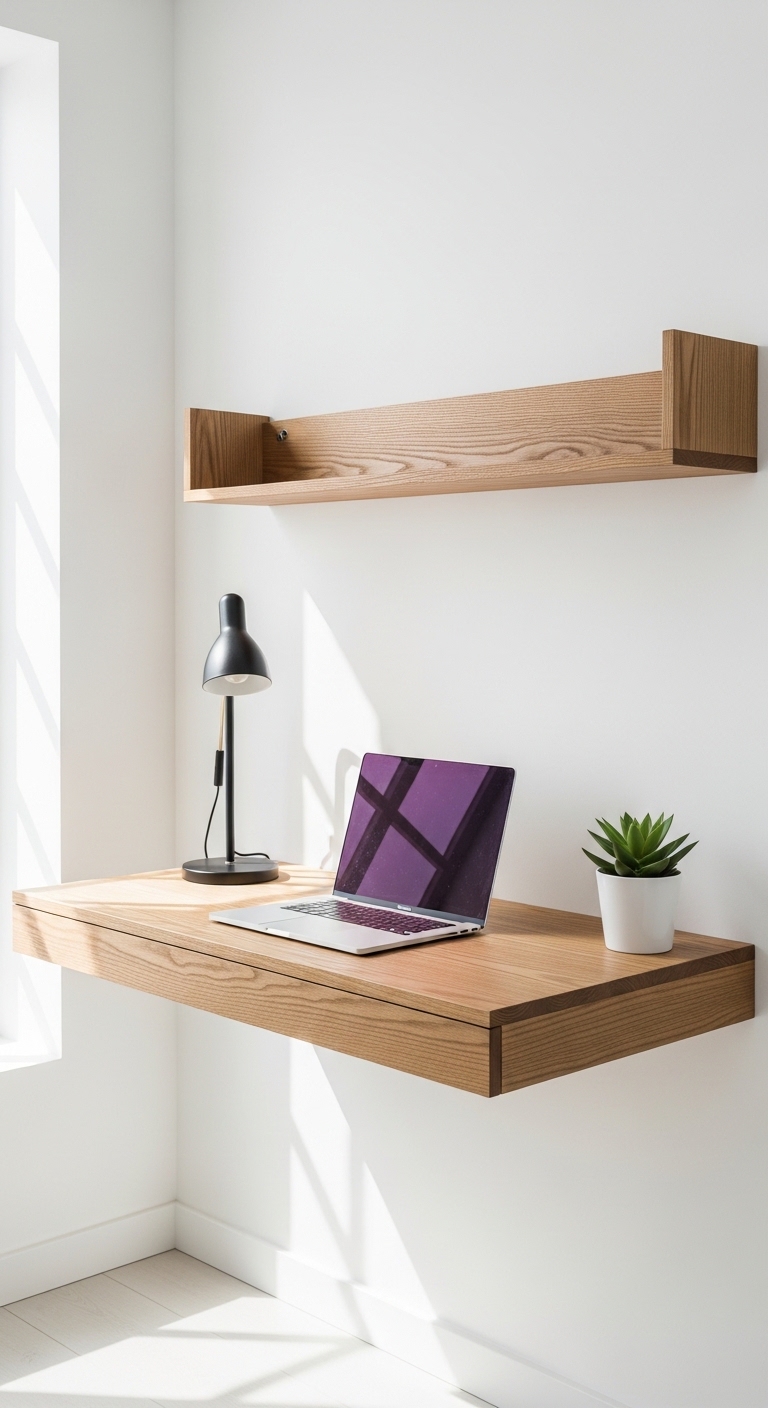
A floating wall desk is one of the smartest investments you can make in a small space. It mounts directly onto your wall, takes up zero floor space, and folds up flat when you’re done. When it’s down, it’s a full working surface. When it’s up, the room breathes again.
Key Features:
- Folds completely flat against the wall when not in use
- Supports a laptop, notebooks, and a small lamp with ease
- Available in wood, MDF, and metal finishes to match any decor
- Most models install with just four wall anchors
Look for versions with a small built-in shelf or pegboard panel above — that extra vertical storage turns a simple desk into a whole workstation.
2. The Closet Conversion Study Nook
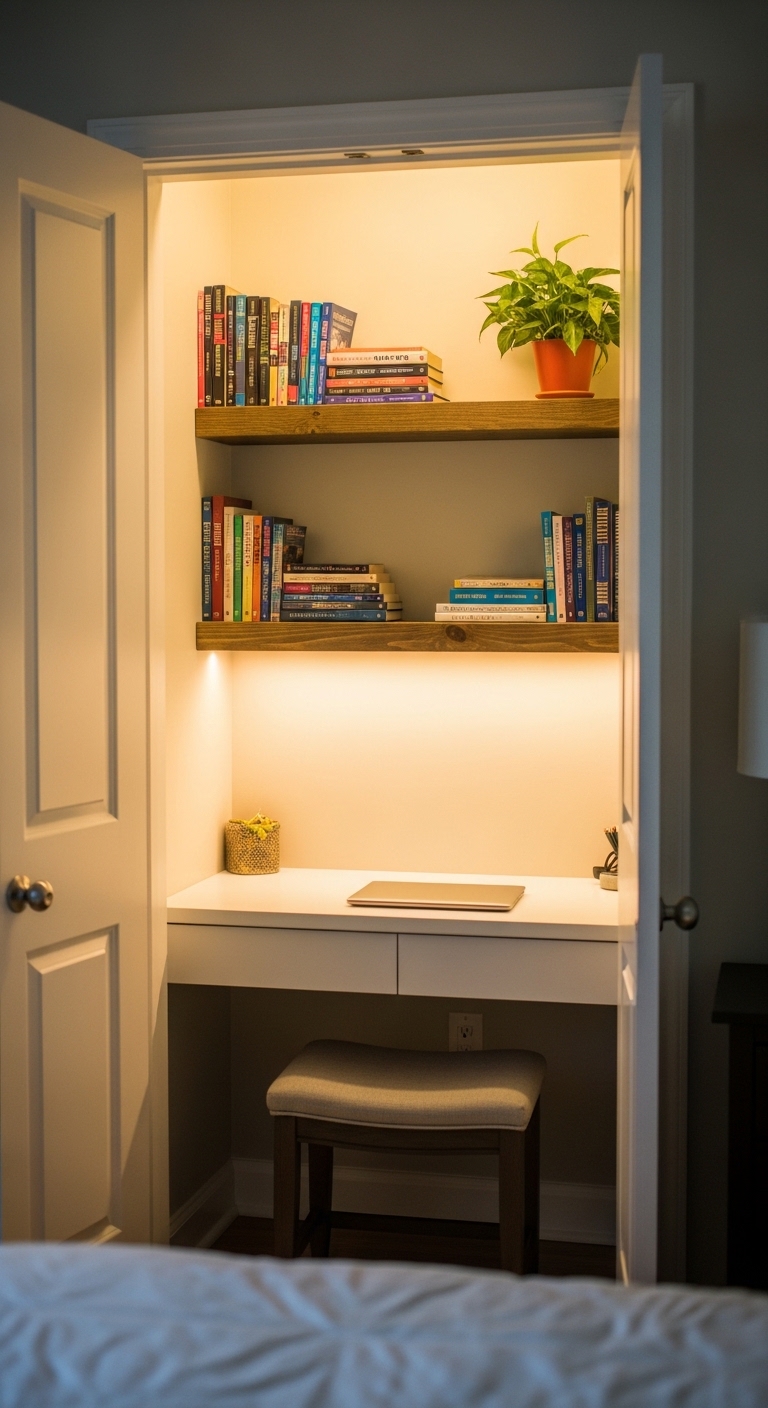
Got a closet you barely use? Remove the doors, pull out the hanging rod, add a desktop surface at desk height, and install two or three shelves above. You’ve just created what interior designers call a “cloffice” — and it’s one of the most effective small-space study transformations out there.
Key Features:
- Uses existing wall cavity so no floor space is consumed
- Closet doors can be reinstalled to hide the workspace after hours
- Natural shelf brackets keep everything organized vertically
- LED strip lighting transforms the nook into a focused, well-lit station
The genius of this setup is privacy — when you’re in there, you feel separated from the rest of the room, which does wonders for concentration.
3. The Under-Stair Study Corner
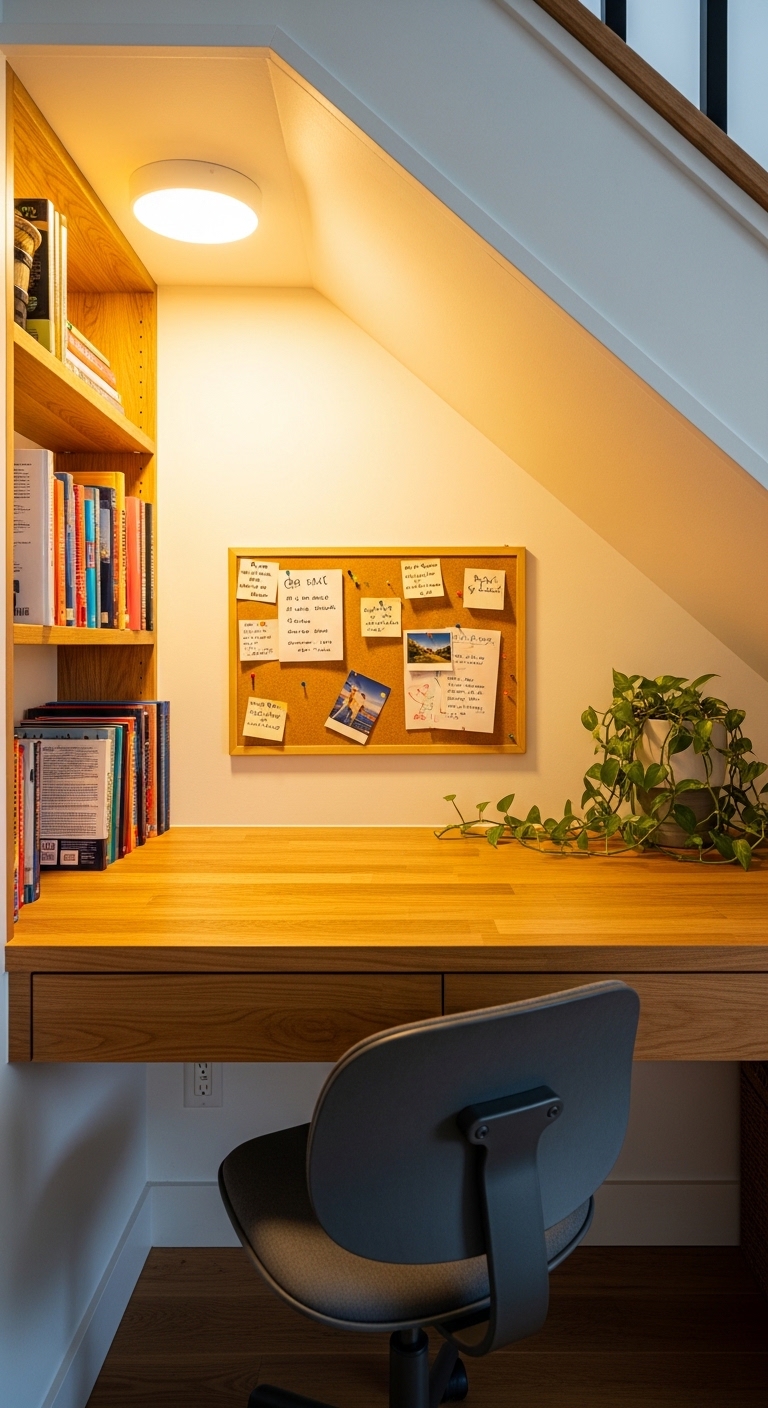
If you live in a home with stairs, the space underneath is almost always wasted. A custom-fitted or IKEA-hacked desk unit can turn that awkward triangle into the coziest study corner you’ve ever had. Add a good task light, a small chair, and a corkboard, and you have a fully functional study cave.
Key Features:
- Custom fits into an otherwise dead architectural space
- Naturally enclosed feel promotes deep focus
- Can include built-in drawers beneath the desk surface
- Pairs beautifully with open shelving along the slanted ceiling
4. The Window Seat Study Bench
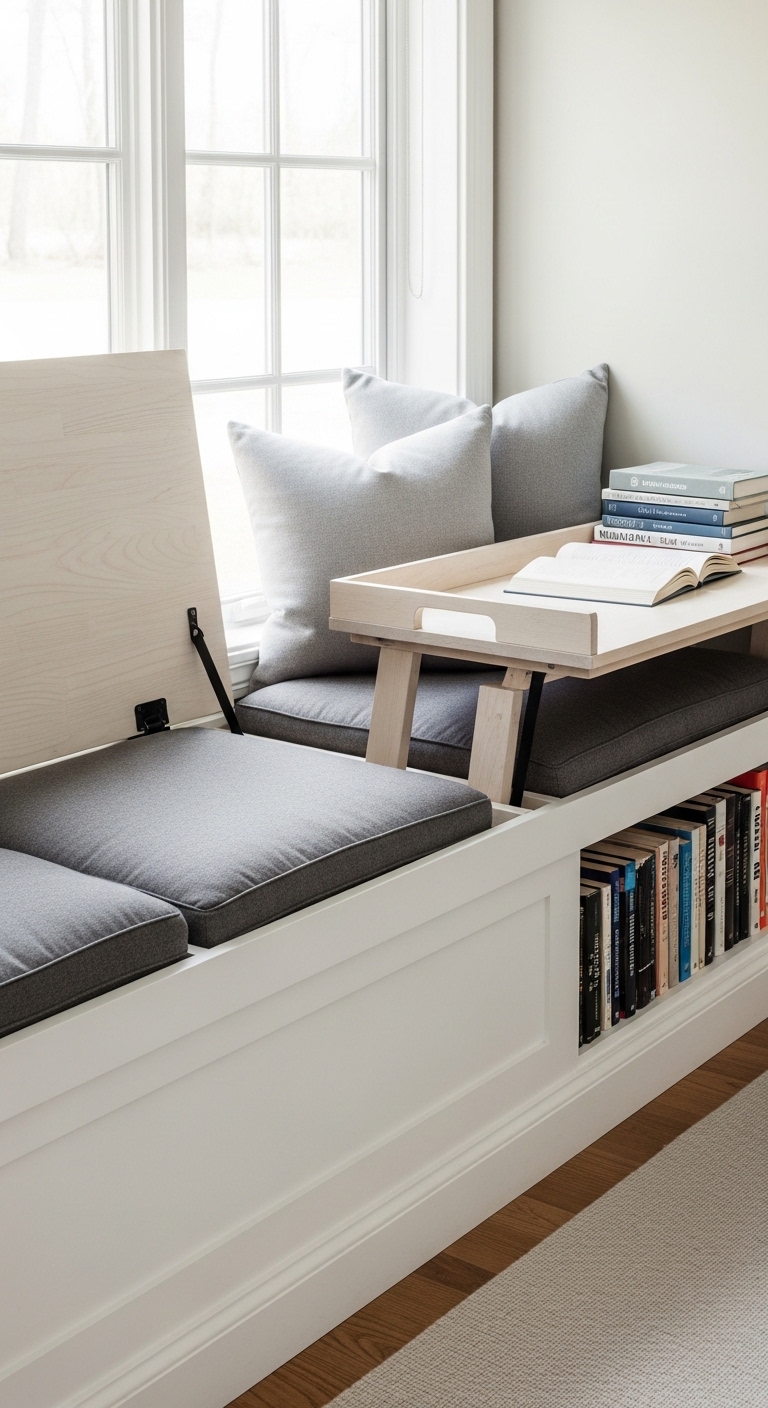
A window seat isn’t just for reading novels on rainy afternoons — though it’s perfect for that too. With a fold-out tray or a small side table extension, it doubles as a study area that gets the best natural light in your home.
Key Features:
- Built-in storage beneath the seat cushion maximizes utility
- Natural light reduces eye strain during long study sessions
- Compact form fits into alcoves, bay windows, or any window wall
- Cushion makes extended sitting comfortable without a separate chair
5. The Gallery Wall Pegboard Workstation
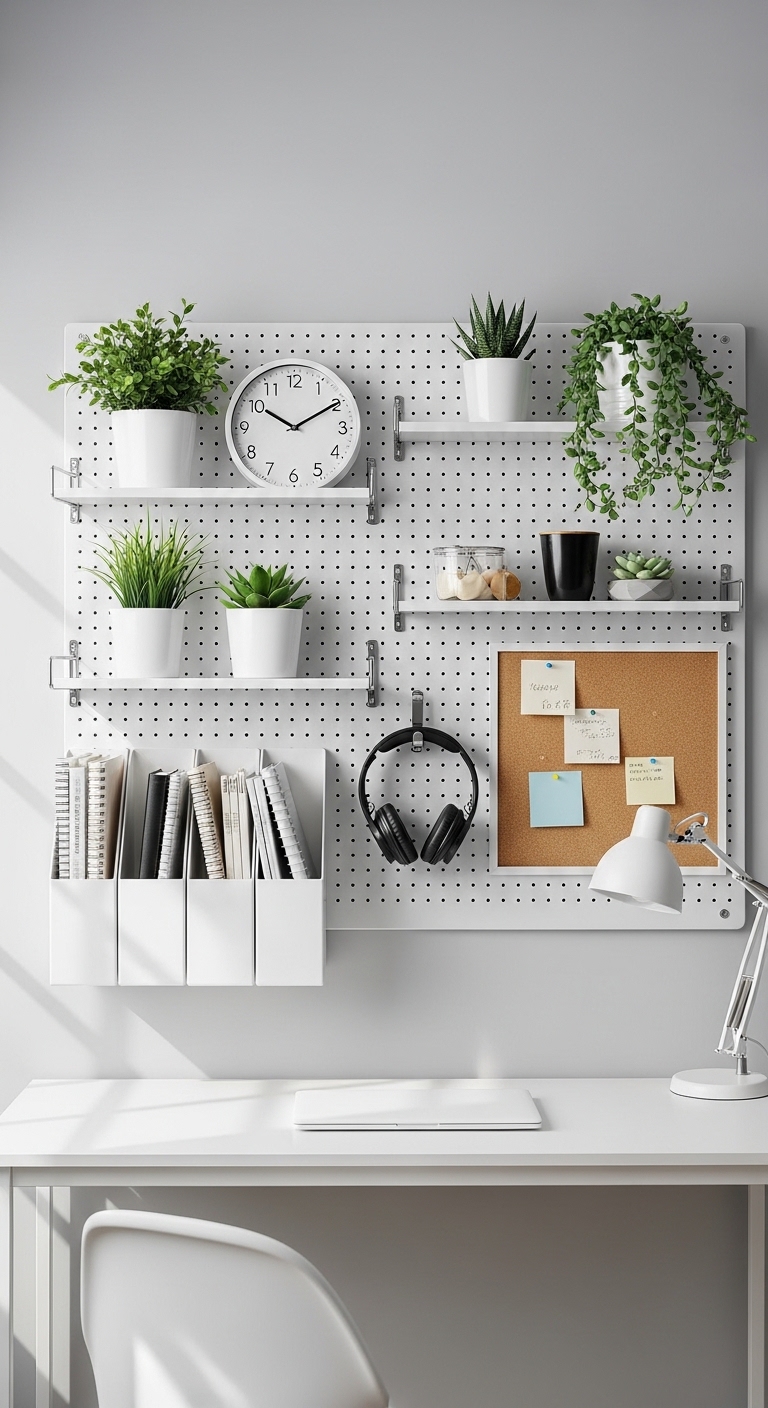
Pegboards are having a serious moment in home organization — and for good reason. A full pegboard panel above your desk turns bare wall space into a completely customizable command center. Hooks, shelves, containers, and panels all slot in wherever you need them.
Key Features:
- Fully rearrangeable — move components as your needs change
- Accommodates plants, tools, lighting, and storage simultaneously
- Available in white, black, natural wood, and pastel color options
- Dramatically reduces desktop clutter by moving items to the wall
6. The Murphy Bed Desk Combo
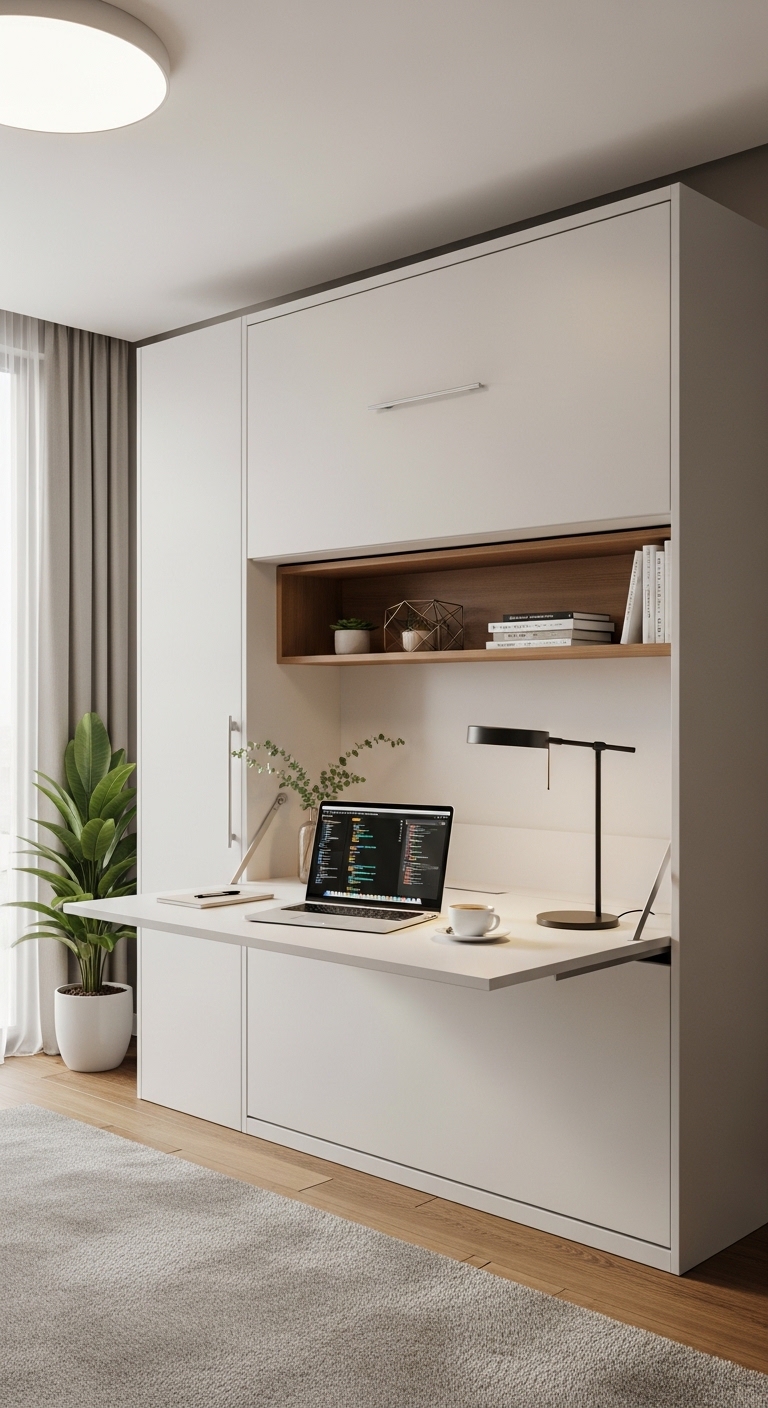
If your study space doubles as your bedroom, a Murphy bed with an integrated desk is one of the most space-efficient pieces of furniture ever invented. When it’s bed time, fold up the desk. When it’s study time, fold up the bed. Your room essentially becomes two different rooms depending on the time of day.
Key Features:
- Combines sleeping and working functions in one cabinet footprint
- Desk surface stays stable even as the configuration changes
- High-end models include shelving, lighting, and cable management built in
- Ideal for studio apartments and single-room living situations
7. The Slim Console Desk Against the Hallway Wall
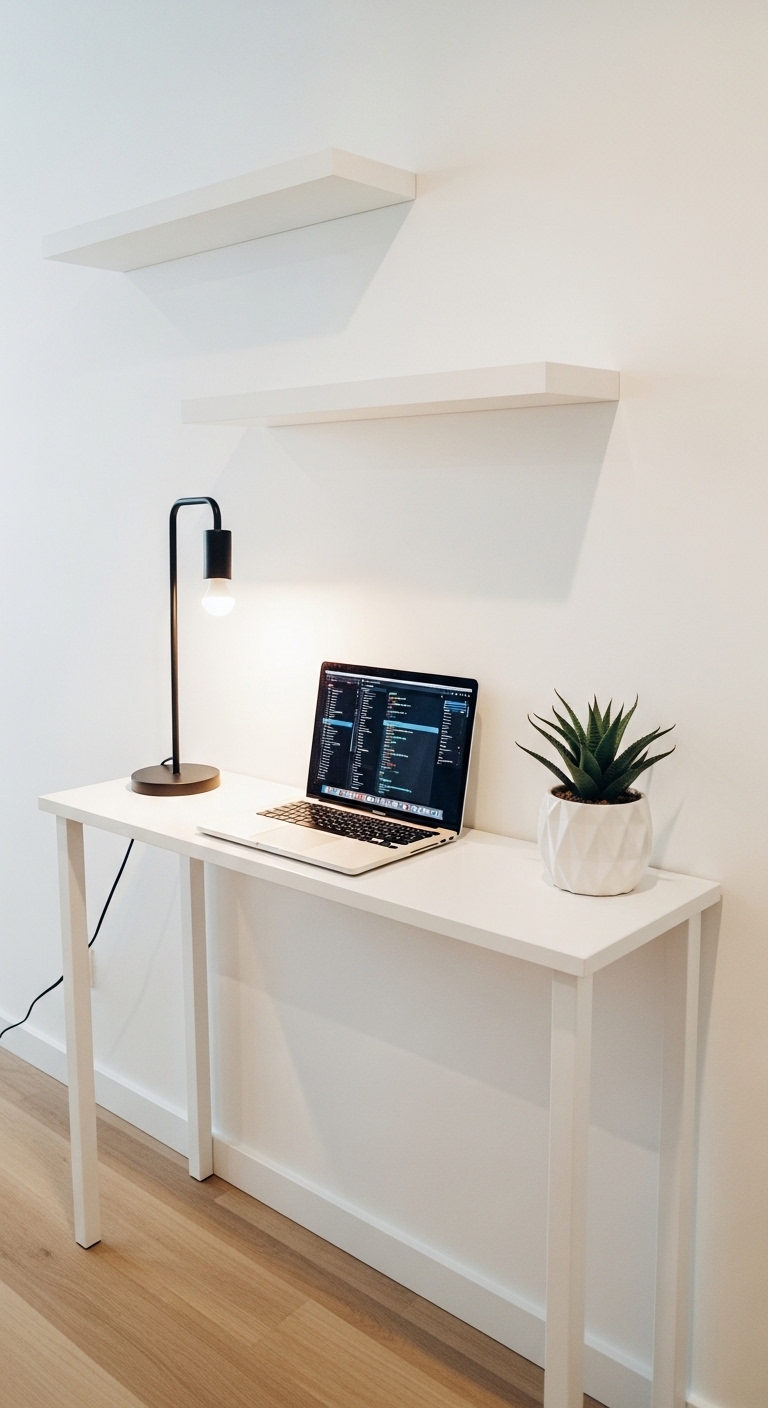
Your hallway is probably untapped real estate. A slim console table — typically 10 to 14 inches deep — fits flush against the wall without blocking foot traffic. Add a wall-mounted shelf or two above it, and you have a compact study station that doesn’t eat into any living space.
Key Features:
- Extremely narrow depth makes it viable in even the tightest corridors
- Wall shelves above provide vertical storage without extra floor footprint
- Works as a decorative element in the hallway when not in use
- Easy to style with a plant and some art so it doesn’t feel purely functional
8. The Bedroom Corner Desk Triangle
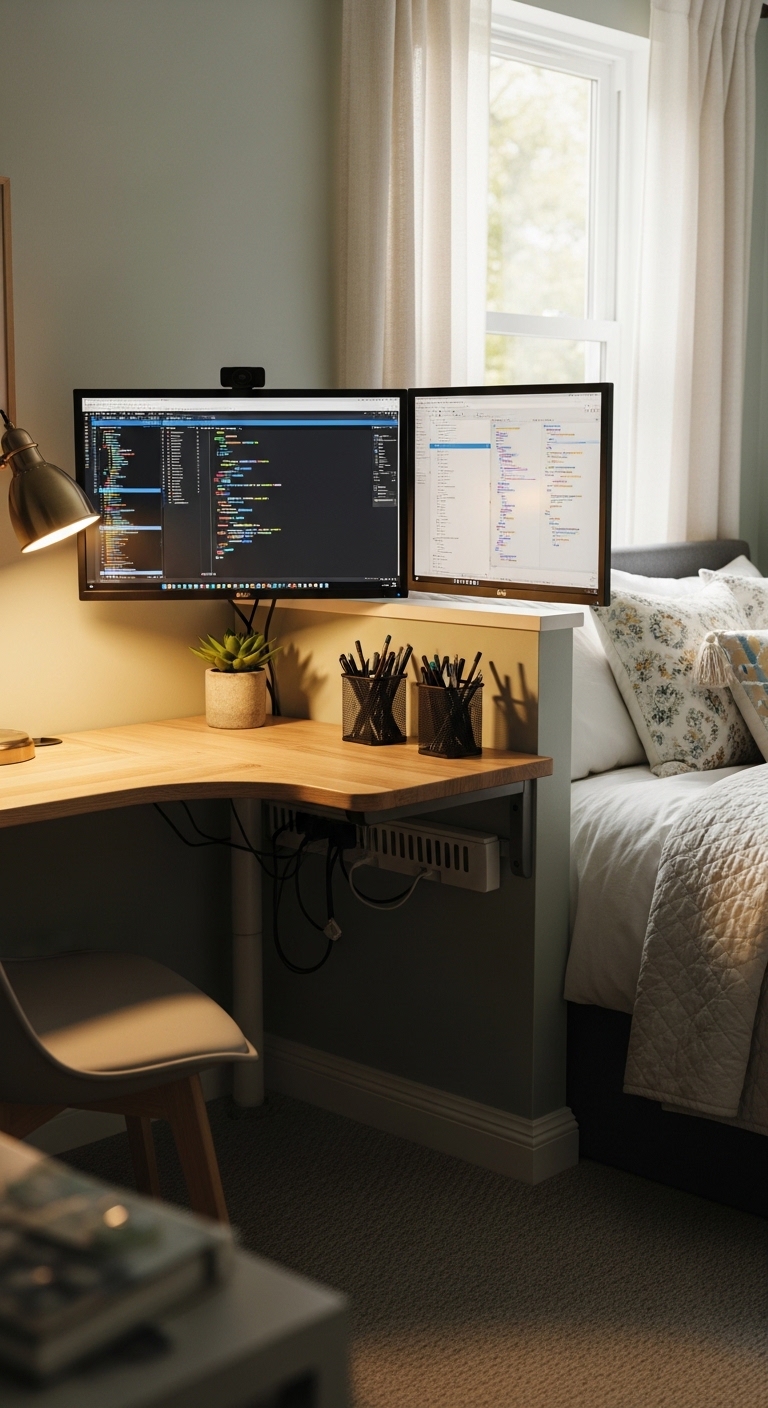
Corners are often the most ignored square footage in any room. A corner desk exploits that dead space perfectly. The L-shape gives you significantly more surface area than a straight desk while using only the space that was previously doing nothing.
Key Features:
- Maximizes surface area without extending into the room
- Two-surface configuration separates screen work from notebook work naturally
- Corner placement creates a natural sense of enclosure and focus
- Available in space-saving triangle shapes for the smallest bedrooms
9. The Standing Desk Converter on a Dresser
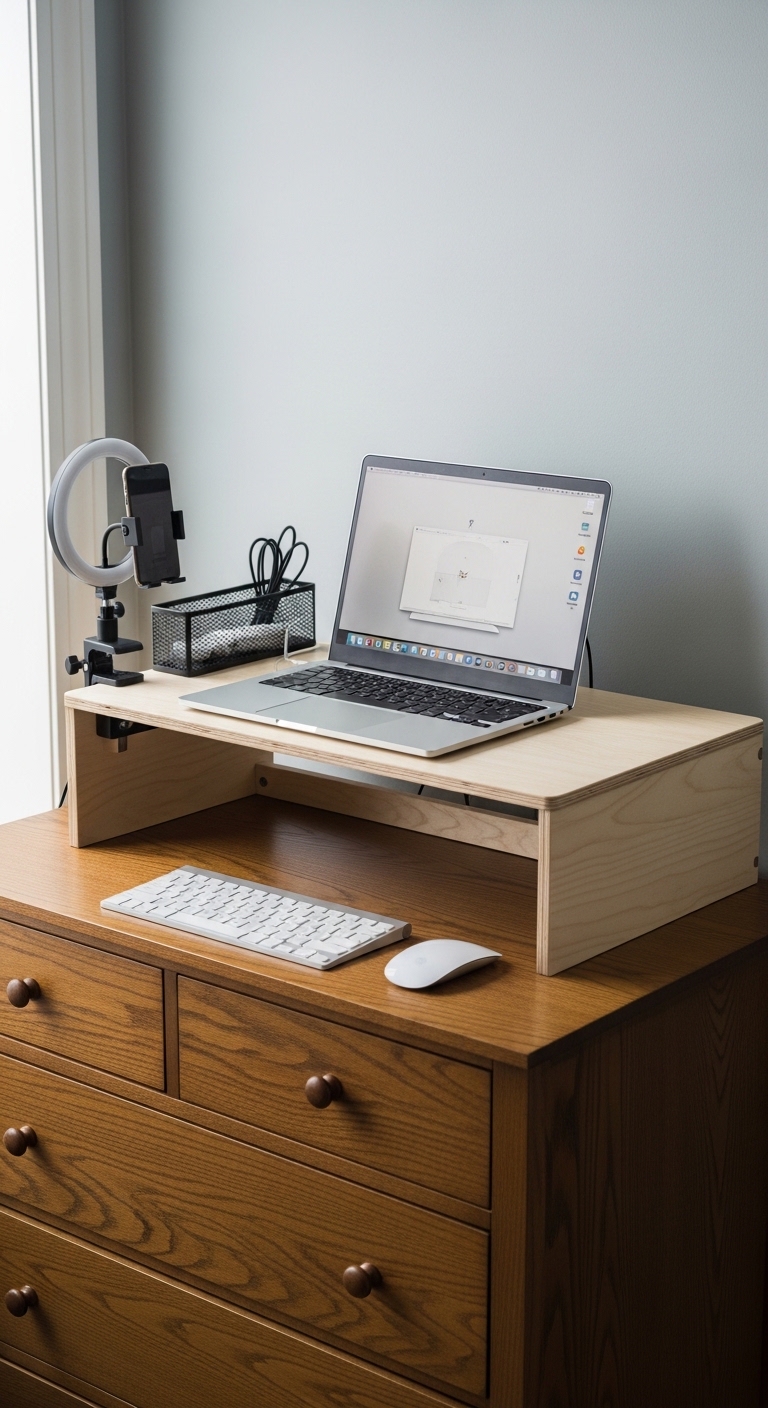
You don’t need to buy a new desk. If you have a dresser or a chest of drawers at roughly the right height, a standing desk converter sitting on top turns it into a full ergonomic workstation. Raise it for standing sessions, lower it when you want to sit on a stool.
Key Features:
- Converts existing furniture into a standing workstation at zero renovation cost
- Adjustable height platforms accommodate monitors, laptops, and accessories
- Gas-spring models lift and lower with one hand in under two seconds
- Ideal for people who want the health benefits of standing without a full desk replacement
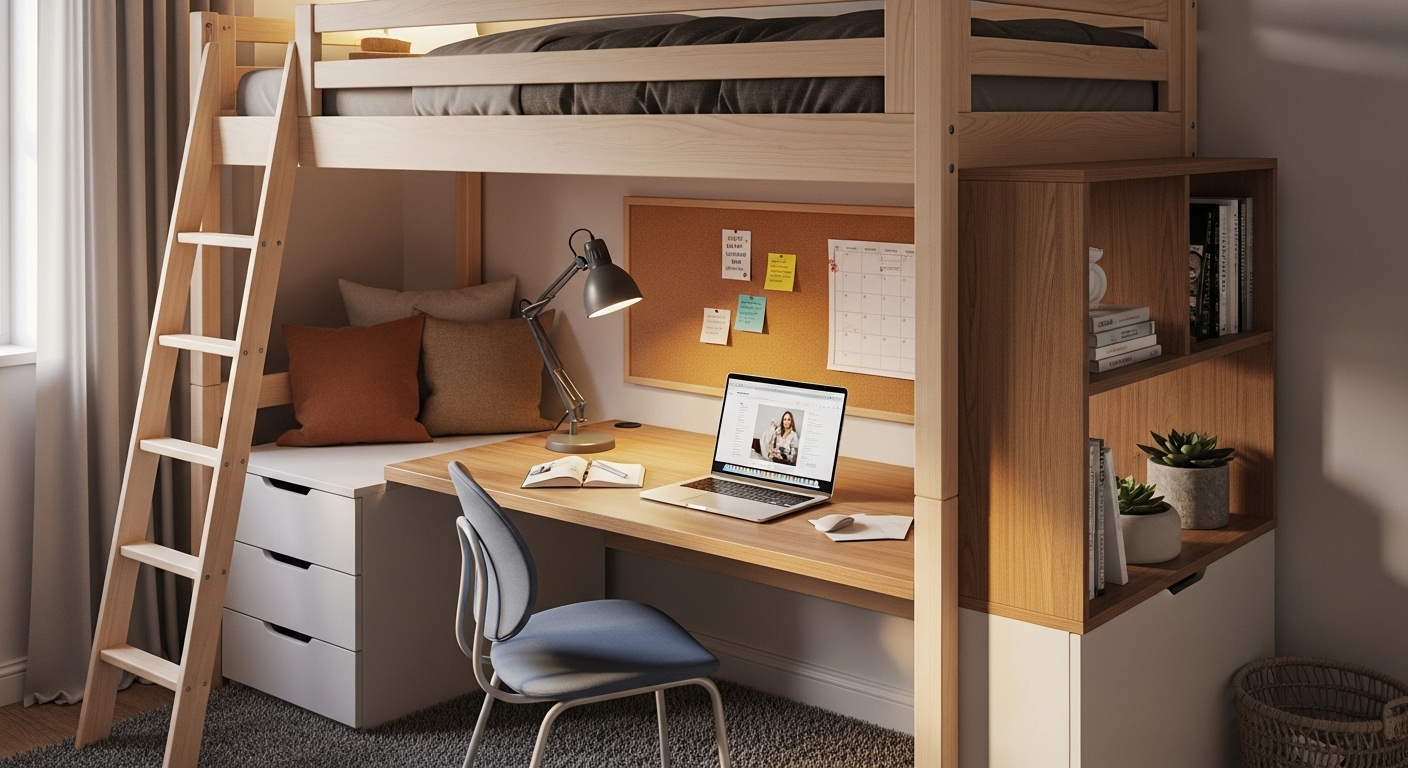
10. The Bunk Bed Desk Underneath
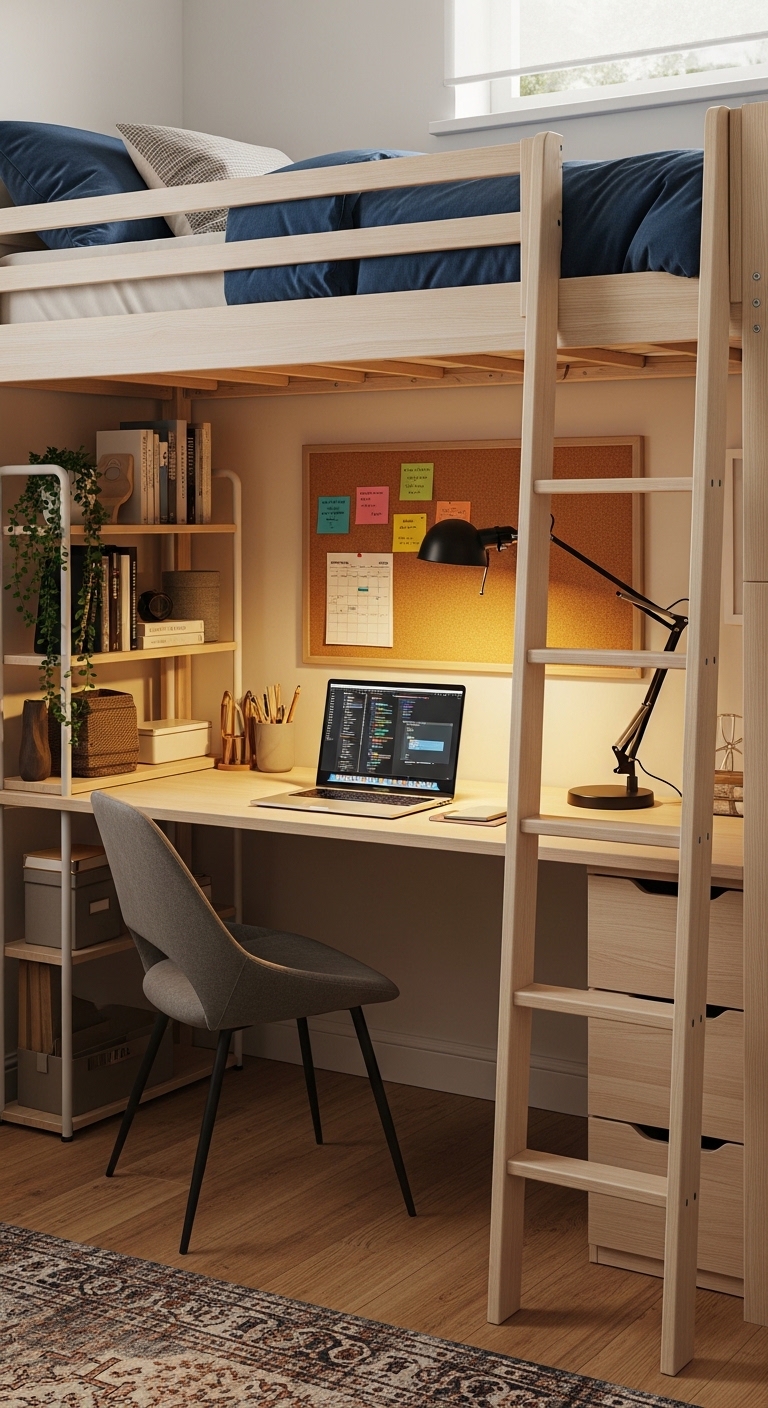
This one’s popular in kids’ rooms and dorm setups — but it works just as well for adults in studio apartments. A loft bed raises your sleeping surface up, leaving the floor space below free to build a full study nook. You get a bedroom AND an office in one room’s worth of square footage.
Key Features:
- Utilizes vertical space rather than floor space for sleeping
- Creates a naturally enclosed study space with overhead privacy
- Many loft beds come with built-in ladders, shelves, and desk surfaces
- Perfect for studio apartments, dorms, and children’s bedrooms
11. The Kitchen Island Study Station
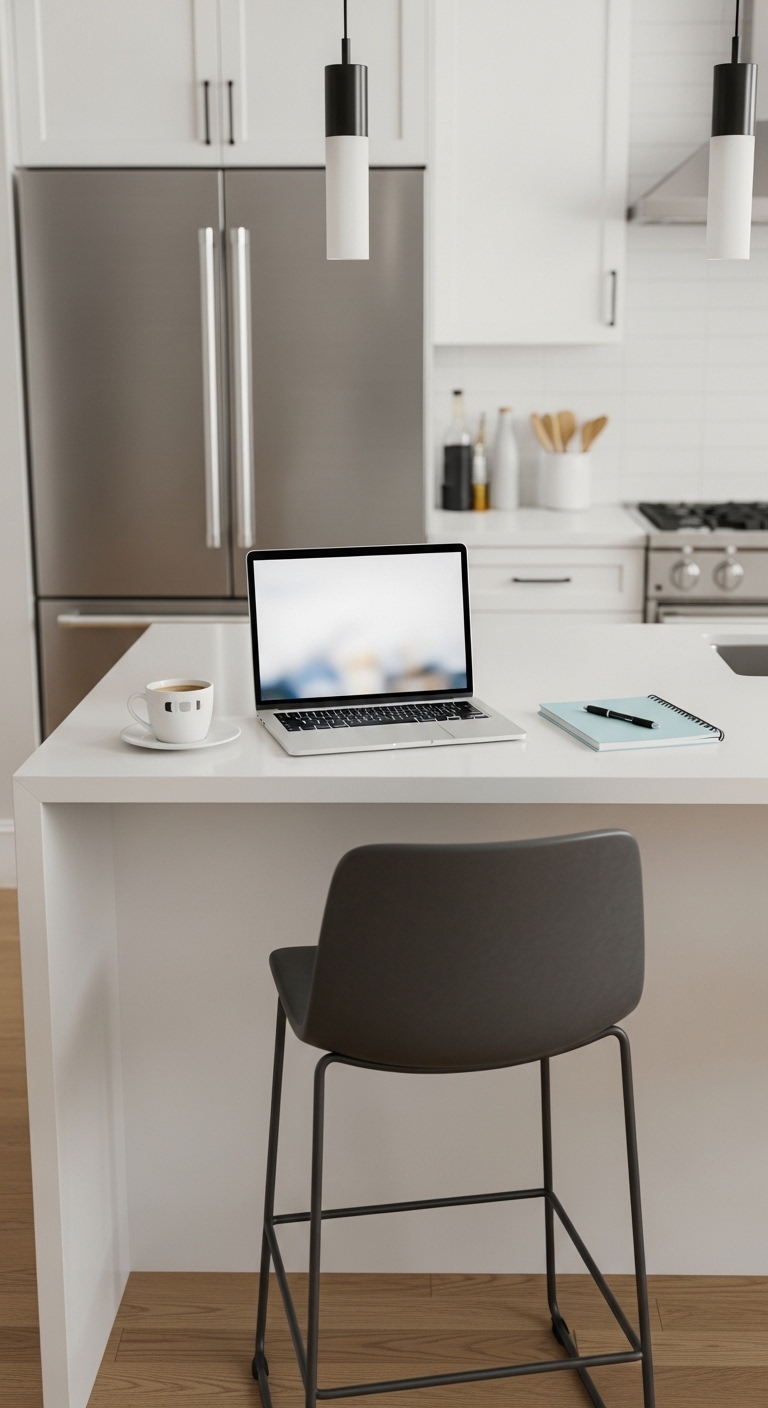
If you live in a small apartment where the kitchen island is the biggest flat surface in your home, lean into it. Style one end of the island as your informal study zone — a stool, a good lamp overhead, and your laptop. It’s not glamorous, but it’s effective, and it keeps your bedroom separate from work mentally.
Key Features:
- Uses furniture you already have at no additional cost
- Bar stool height keeps posture more upright than a sofa or bed
- Good overhead lighting from kitchen pendants reduces eye strain
- Easy to clear up and return to a kitchen surface after study sessions
12. The Bookshelf Desk Hybrid
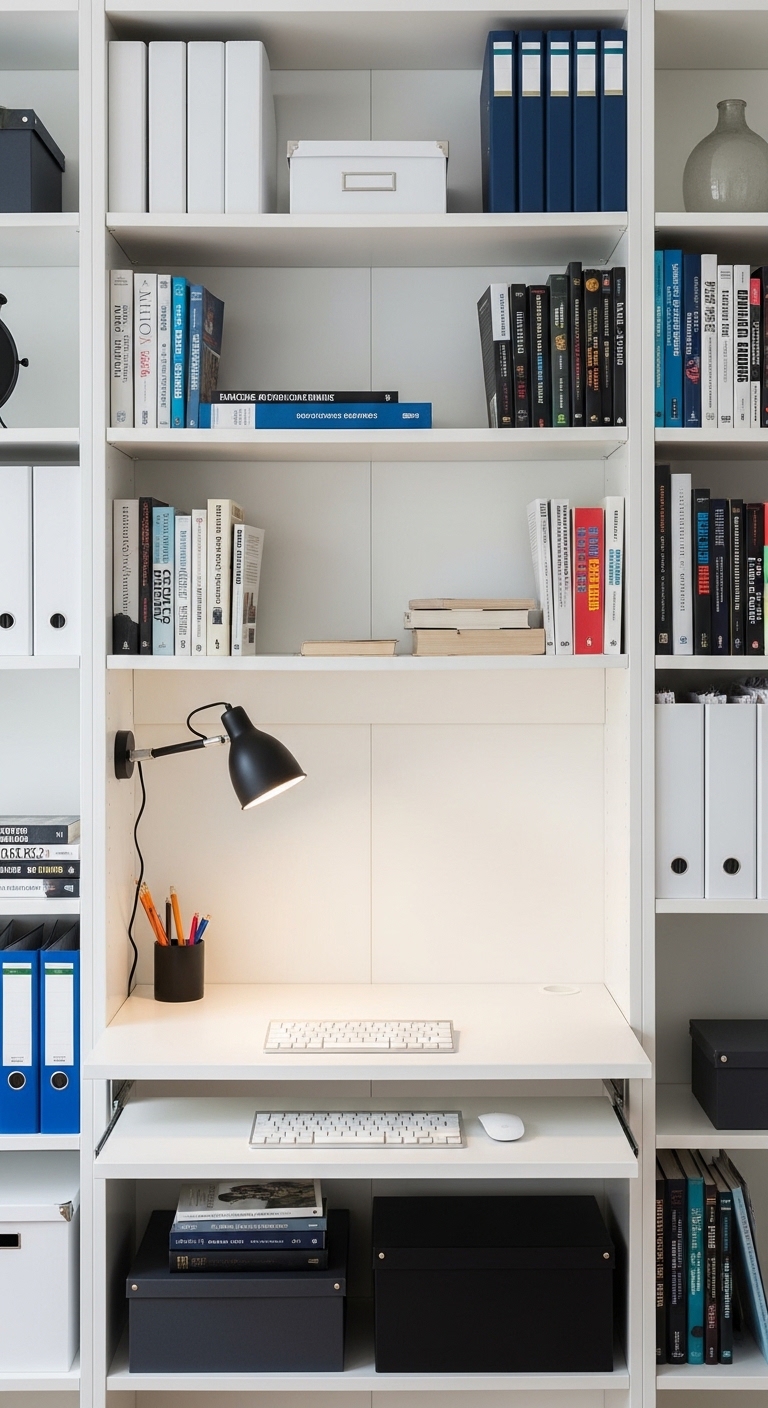
Some tall bookshelves — particularly KALLAX-style or Billy-style units — have a shelf at perfect desk height. Clear that one shelf, add a keyboard tray underneath it, and you have a study station that’s completely embedded in your bookshelf. Everything is at arm’s reach, and the footprint is identical to just having a bookshelf.
Key Features:
- No additional floor space required beyond the bookshelf itself
- Surrounding books and materials stay organized and within reach
- Clip-on task lights attach to the shelf above without extra wiring
- Fully reversible — remove your items and it becomes a regular shelf again
13. The Outdoor Balcony Study Desk
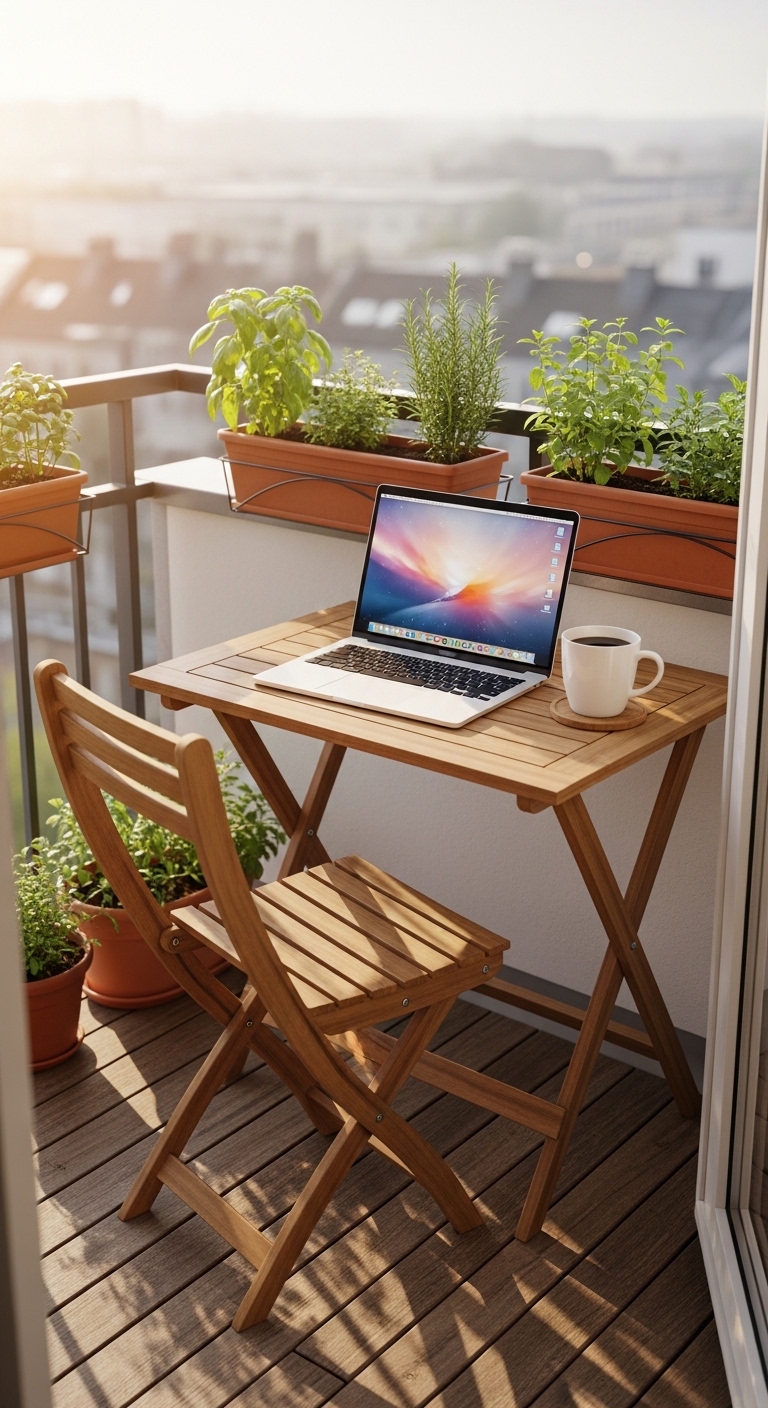
Fresh air does something incredible for focus and creativity. If you have even a tiny balcony — enough room for a slim table and a chair — you have a seasonal study space that beats any indoor setup for mental clarity. A small weather-resistant fold-up table is all it takes.
Key Features:
- Natural light and fresh air measurably improve alertness and mood
- Foldable tables pack away flat when not in use
- Outdoor ambient sound is often more conducive to focus than indoor noise
- A simple outdoor rug makes the space feel intentionally designed
14. The Bedroom Door Back Organizer Desk
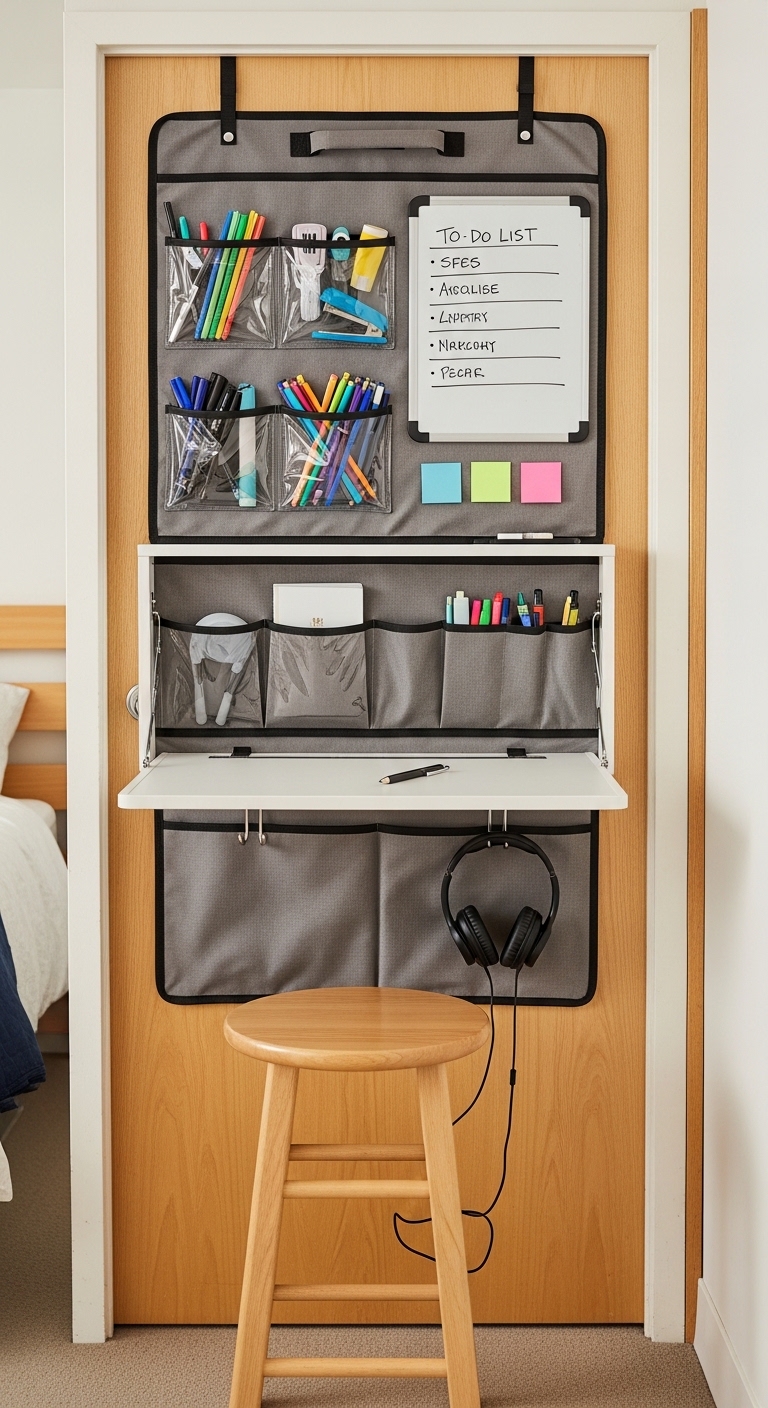
The back of a door is a surprisingly underused study surface. Over-door organizer systems with fold-down surfaces exist specifically for dorm rooms and small apartments. Combined with pockets for stationery, a whiteboard panel, and a simple stool, it becomes a genuinely functional mini-workstation that disappears when you close the door.
Key Features:
- Zero floor and wall space required — uses the door itself
- Fold-down surfaces support a tablet or lightweight laptop comfortably
- Integrated pockets replace the need for a pencil cup or supply drawer
- Ideal for renters who cannot drill into walls
15. The Reading Chair with Side Table Study Nook
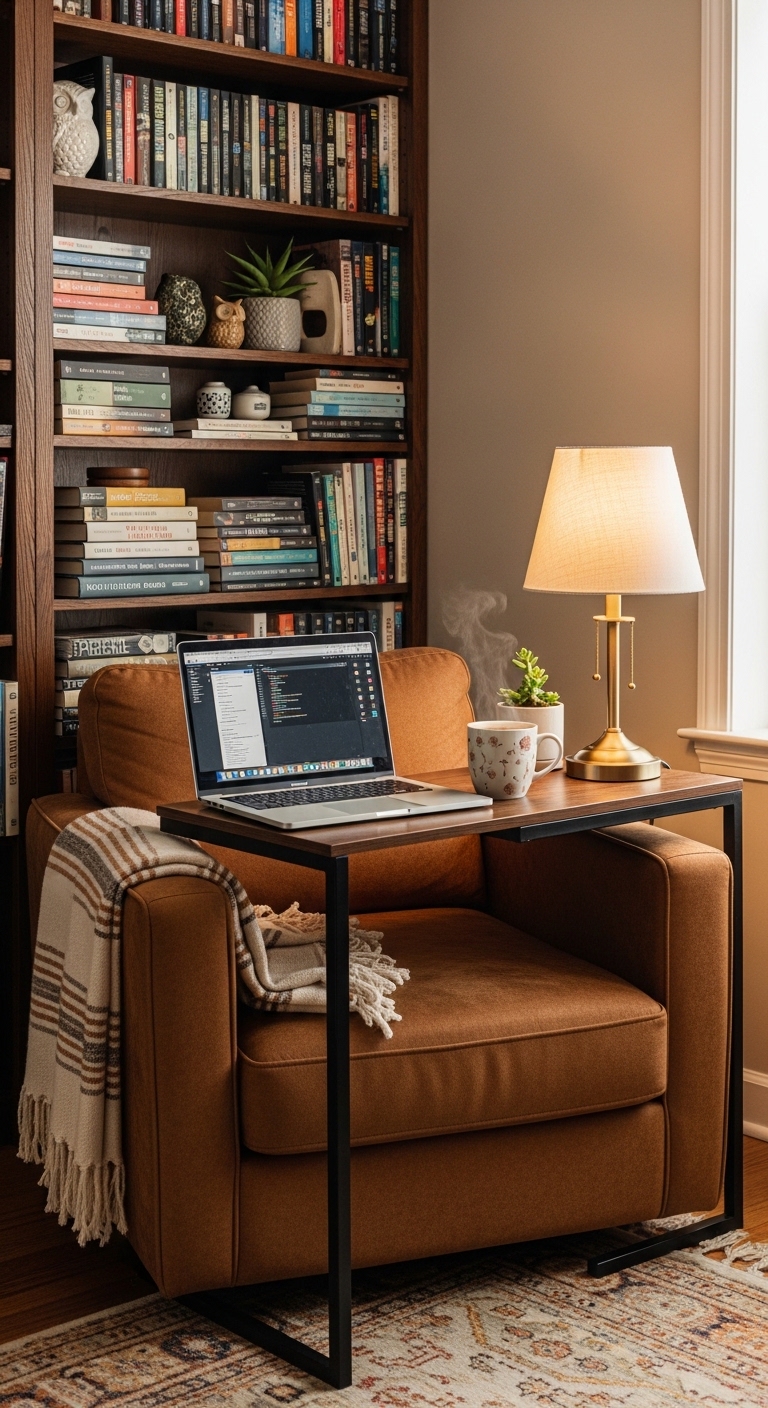
For people who genuinely cannot focus at a traditional desk, an armchair study setup is a revelation. A C-shaped side table slides right over the arm of the chair, giving you a stable laptop surface while you stay in a comfortable, relaxed position. It sounds informal, but many people do their best thinking here.
Key Features:
- C-shaped design slides over chair arms without needing floor space
- Adjustable height on most models accommodates different chair styles
- Pairs naturally with a floor lamp for excellent targeted lighting
- Creates a cozy, low-stress study environment ideal for reading-heavy subjects
16. The Minimalist Floating Shelf Desk for Kids
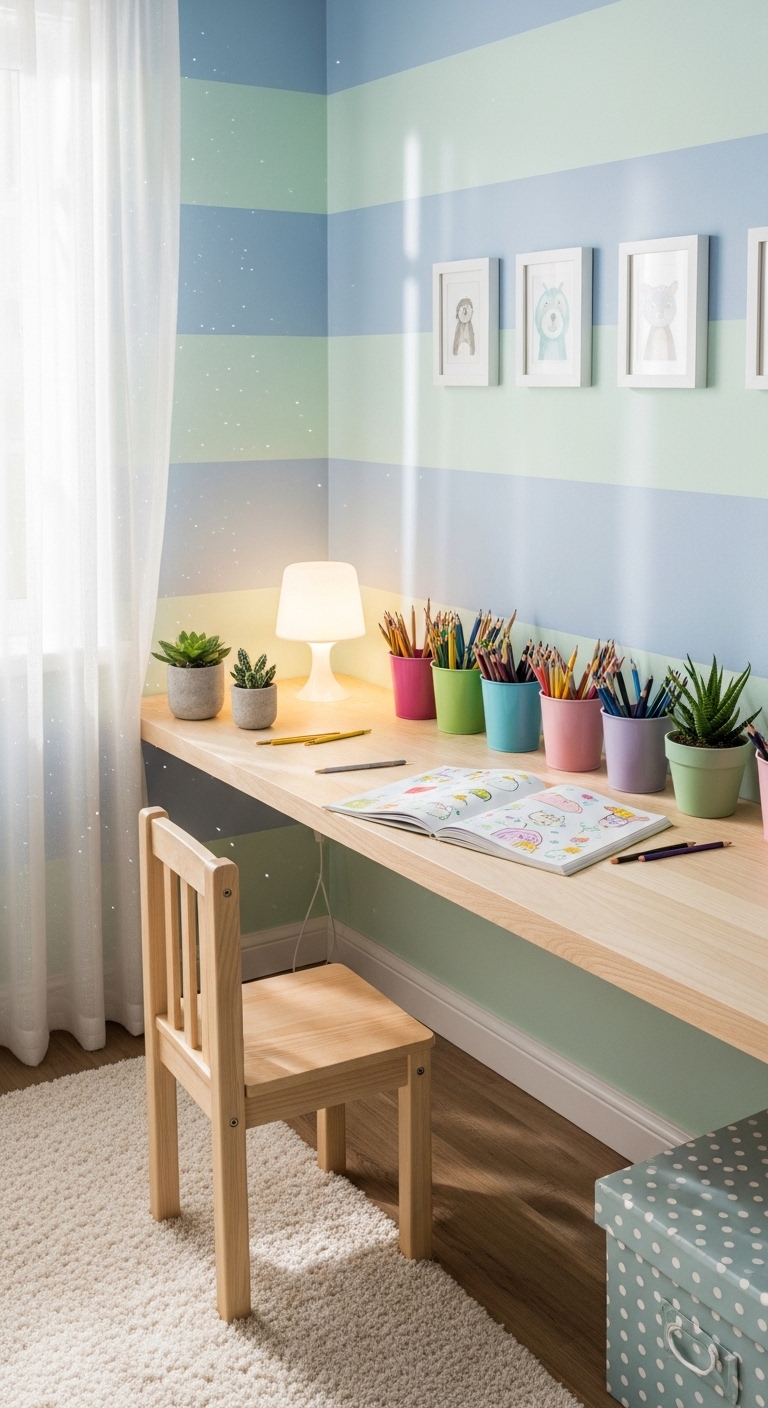
For a child’s bedroom where floor space is already occupied by a bed and toy storage, a wide floating shelf at desk height works perfectly as a study surface. It mounts to the wall at whatever height suits your child, and it takes up no floor space at all.
Key Features:
- Height-adjustable as your child grows by simply remounting
- Wide shelves (60cm+) comfortably accommodate a notebook and supplies
- Easy to add a second shelf above for books and school supplies
- Lightweight and easy to install with standard wall anchors
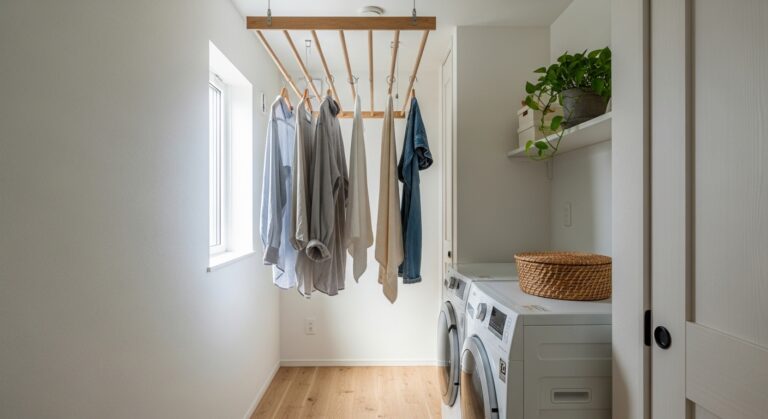
17. The Laundry Room Study Corner
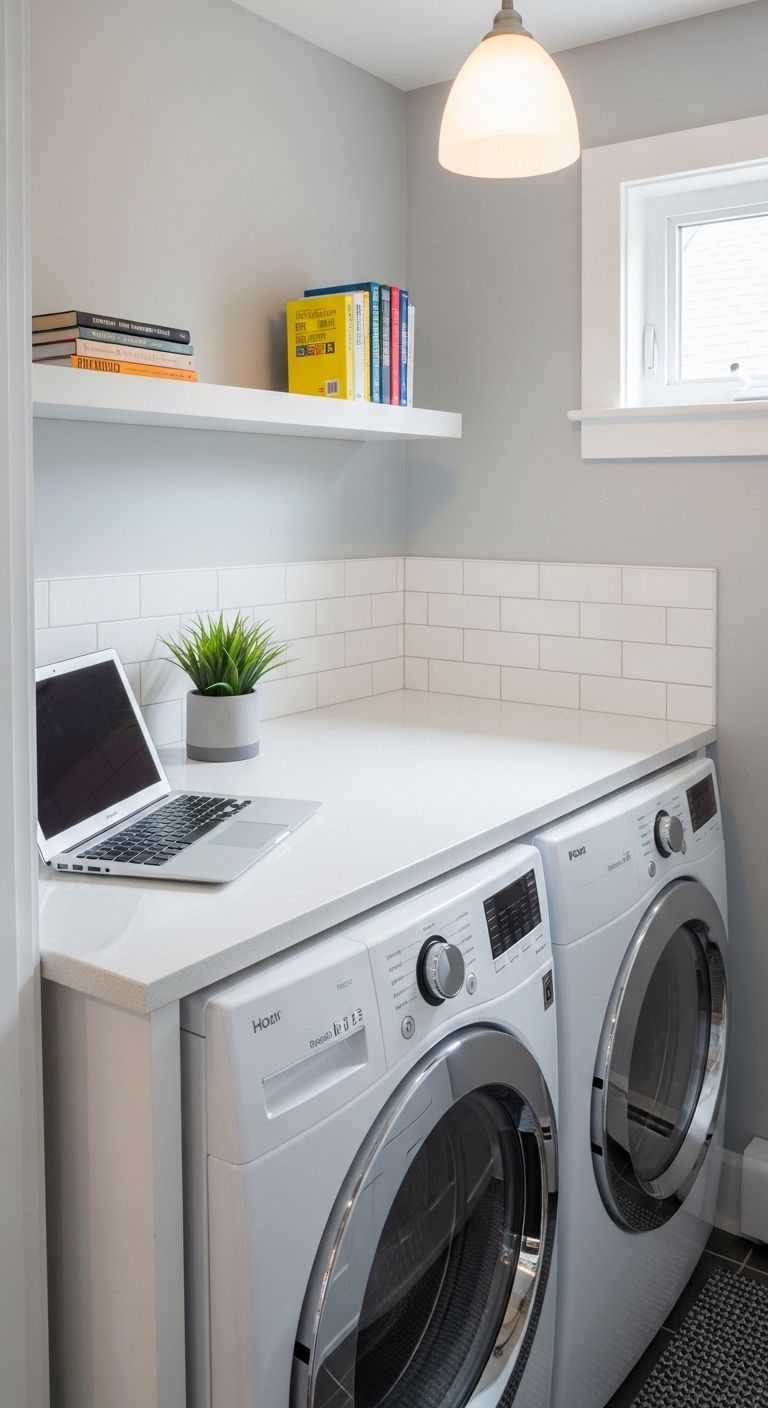
This one surprises people every time, but it works. If you have a laundry room with a washer and dryer side by side, a countertop installed above them creates an instant desk-height surface with absolutely zero footprint cost. Add a shelf above and a simple stool, and you have a surprisingly quiet, out-of-the-way study corner.
Key Features:
- Uses existing appliance height to create a desk surface at no extra cost
- Laundry rooms are often quiet and naturally separate from living areas
- A wall-mounted shelf above keeps books and supplies organized
- Easy to clean countertop surface resists spills and stains
18. The Room Divider Desk Combo
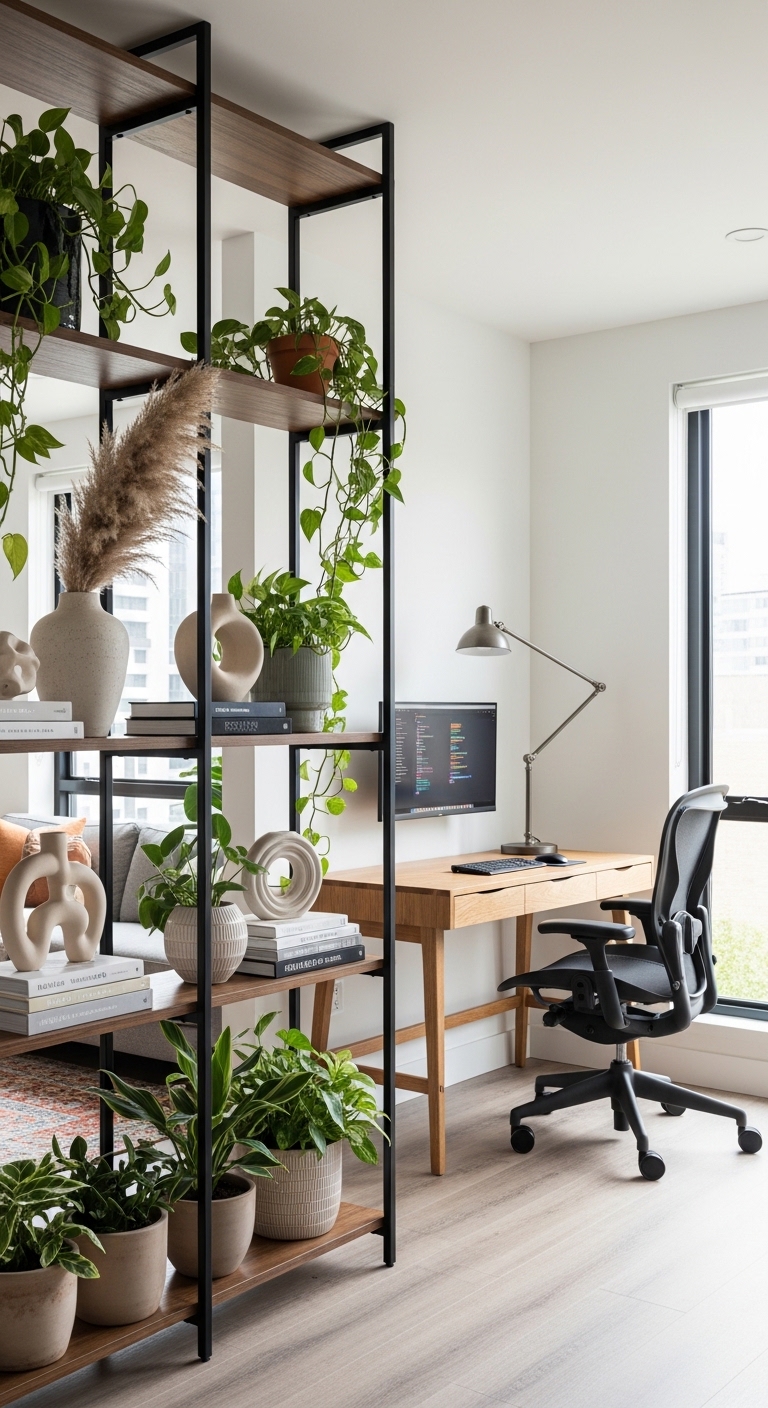
In a studio apartment or open-plan living space, a bookshelf room divider does double duty — it creates the illusion of a separate study room while also providing shelving storage. Your desk sits just on the other side of it, and psychologically, you feel like you’ve stepped into an office.
Key Features:
- Creates visual separation between living and study zones without walls
- Bookshelf side provides storage; study side provides focused workspace
- Many divider shelves are open on both sides, allowing shared storage
- Adds architectural interest to an otherwise boxy open-plan room
19. The Staircase Landing Study Spot
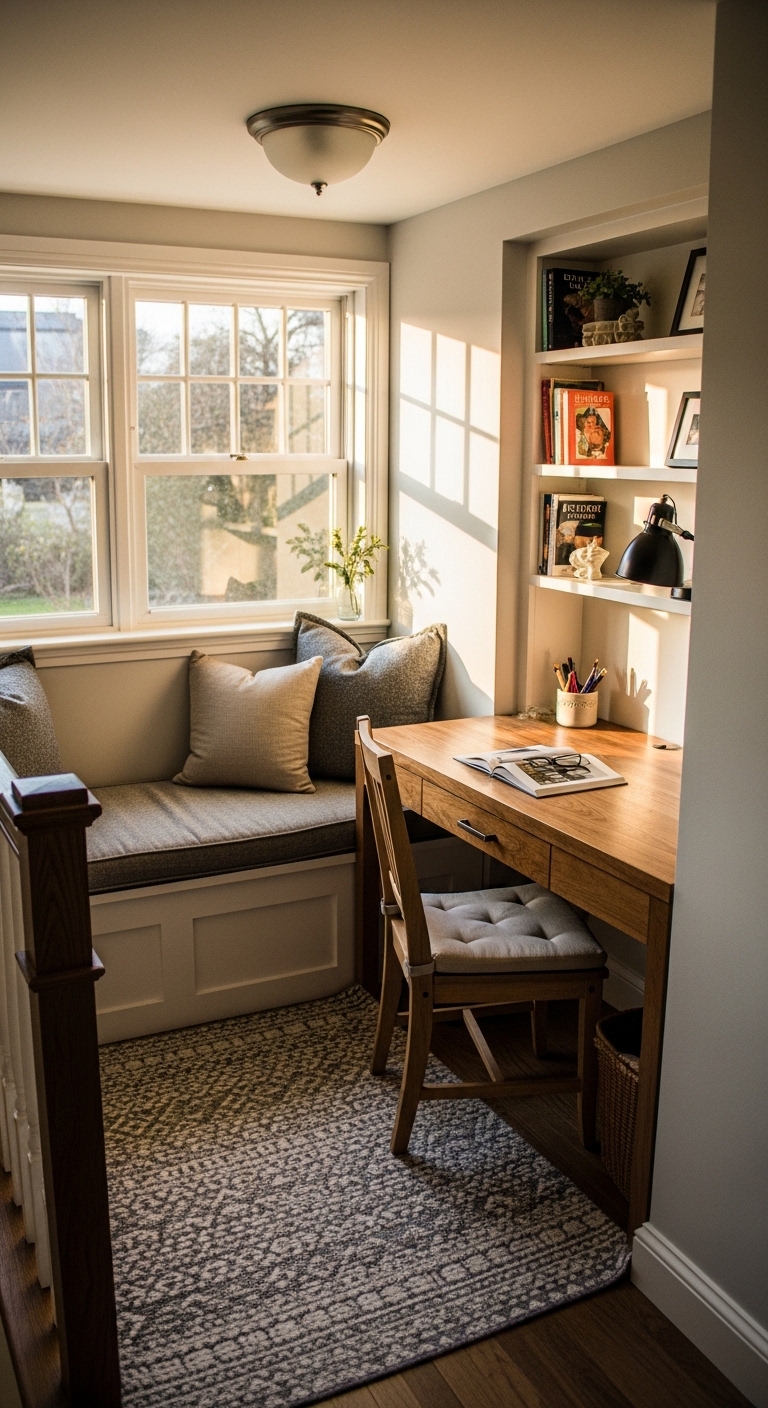
Staircase landings — especially in older homes — often have awkward alcoves or bay windows that go completely unused. A small built-in desk fitted into that space costs very little to build and creates a dedicated study spot with natural light and a bit of natural separation from the main living areas.
Key Features:
- Uses architectural dead space with no impact on usable room square footage
- Naturally quiet location away from living room and kitchen noise
- Landing windows often provide excellent natural light throughout the day
- A built-in bench alongside creates dual-purpose seating and storage
20. The Tray-on-Sofa Portable Desk Setup

Sometimes life doesn’t allow for a fixed desk setup, and that’s okay. A quality lap desk with a wrist cushion, built-in phone slot, and non-slip base turns your sofa into a surprisingly effective study station. It’s not permanent, but it’s intentional — and intention is half the battle.
Key Features:
- Completely portable — works on the sofa, in bed, on the floor, or outside
- Built-in wrist cushion reduces laptop keyboard fatigue significantly
- Phone slots and pen holders keep essentials within reach
- Bamboo and MDF options are lightweight but sturdy enough for full-size laptops
21. The Outdoor Garden Study Shed
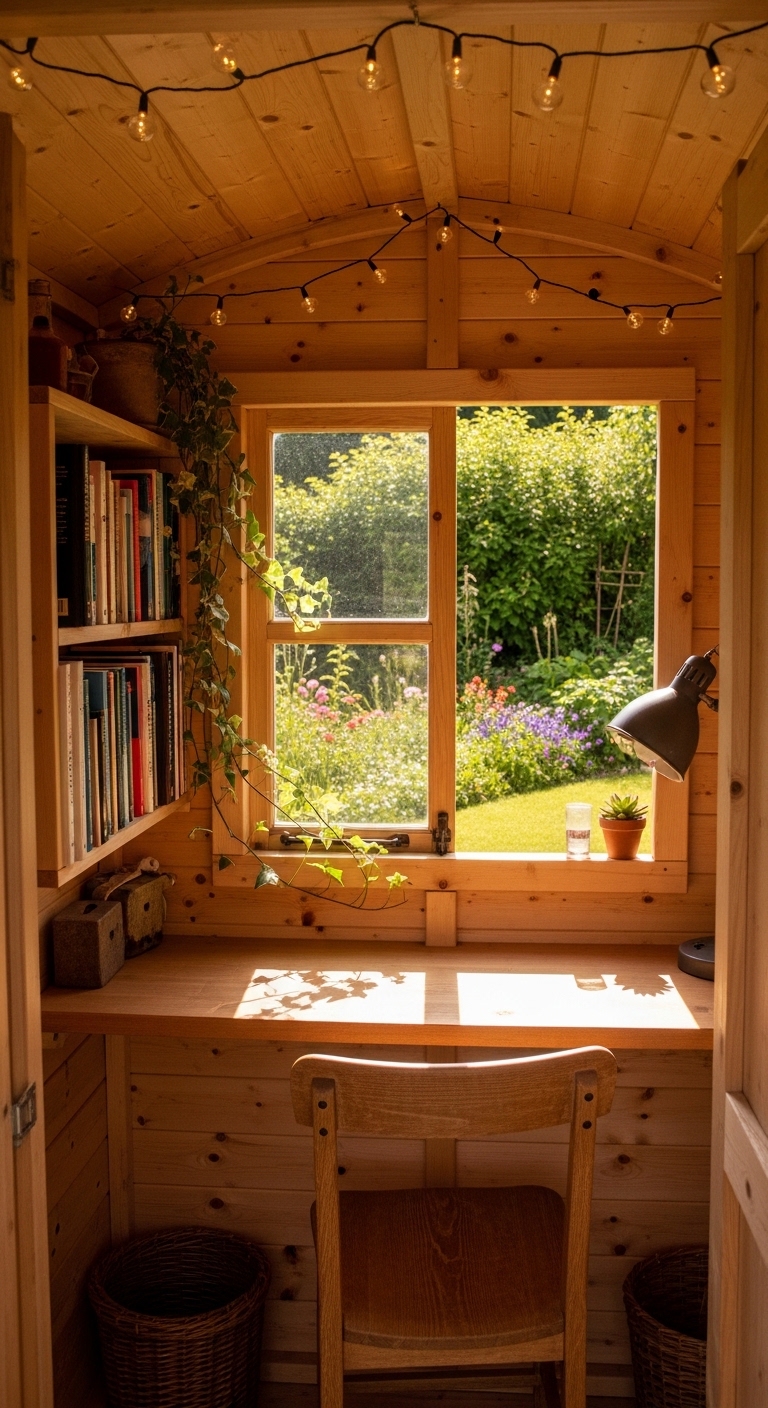
If you have even a tiny garden or yard, a small garden shed transformed into a study shed is the ultimate work-from-home upgrade. You don’t need electricity (solar-powered LED lights work beautifully) and you don’t need much space — even a 6×6 foot shed becomes an incredibly productive, distraction-free workspace.
Key Features:
- Complete physical separation from home = zero domestic distractions
- Solar-powered lighting makes it viable without electrical installation
- The visual separation from home creates a genuine “going to work” ritual
- Inexpensive flat-pack sheds are available from most garden centers
How to Choose the Right Study Area Idea for Your Space
Not every idea on this list works for every home. Here’s how to narrow it down quickly.
Ask yourself these three questions:
First, how permanent do you want the setup to be? If you rent or share space, folding desks, lap trays, and over-door systems require zero installation and zero commitment. If you own your home, built-in solutions like closet conversions and staircase nooks pay dividends for years.
Second, how much natural light does your space get? Wherever possible, position your study area near a window. Natural light isn’t just nice — it’s a genuine productivity tool. Studies consistently show that access to daylight reduces fatigue and improves alertness during focused work.
Third, what’s your biggest distraction? If noise is the problem, enclosed nooks and garden sheds win. If space is genuinely the constraint, floating desks and bookshelf conversions are your friends. If motivation is the struggle, a visually appealing, well-lit setup that you’re proud of makes a bigger difference than most people expect.
Quick Tips to Make Any Small Study Area Work Harder
You can have the best desk setup in the world and still struggle if the fundamentals aren’t right. Here are a few things that make a real difference in small study spaces.
Control your lighting. A warm overhead light is fine for living, but focused task lighting at desk level is what your brain needs during study sessions. A good adjustable LED desk lamp is one of the highest-ROI purchases you can make.
Use vertical space aggressively. In a small space, your walls are storage. Wall shelves, pegboards, magnetic strips, and floating cabinets all move clutter off your desk and onto surfaces that aren’t in your way.
Invest in cable management. Nothing makes a small desk feel more chaotic than tangled cables. A few cable clips, a cable box, and some velcro ties cost almost nothing and make your space feel infinitely calmer.
Add one plant. This sounds minor, but it isn’t. A single plant — a pothos, a succulent, a small monstera — introduces a living element into your study area that measurably reduces stress and improves mood. It’s not decoration; it’s function.
Keep only what you use daily on your desk. The single most effective productivity habit in a small study space is ruthless desk minimalism. Everything that isn’t part of your daily workflow goes on a shelf or in a drawer. Your desk surface is prime real estate — treat it like it.