21 Study Nook Ideas for Cozy Small Spaces
Have you ever sat down to study or work and just… couldn’t focus? The couch feels too relaxed, the kitchen table is covered in last night’s dishes, and your bedroom desk doubles as a laundry chair. Sound familiar?
Here’s the truth — you don’t need a whole home office to build a productive mindset. What you need is a dedicated study nook. A small, intentional corner that tells your brain, “Hey, we’re here to get things done.” And the best part? You can create one even in the tiniest apartment, dorm room, or shared space.
We’ve pulled together 21 genuinely creative and cozy study nook ideas that work beautifully in small spaces. Whether you have a full spare wall or just a narrow corner by the window, there’s something here for you. Let’s dive in.
Why a Dedicated Study Nook Actually Changes Everything
Before we get into the ideas, let’s talk about why this matters. When you study in the same spot where you eat, sleep, or scroll through your phone, your brain struggles to shift into focus mode. Context switching is exhausting, and your environment plays a massive role in your concentration levels.
A study nook — even a simple one — creates what psychologists call an “environmental anchor.” You sit there, and your brain knows it’s time to think. Over time, that association strengthens. You focus faster, feel less scattered, and actually enjoy your work more.
You don’t need expensive furniture or a perfect room. You just need to be intentional about your small space. Now, let’s get creative.
The Window Ledge Desk
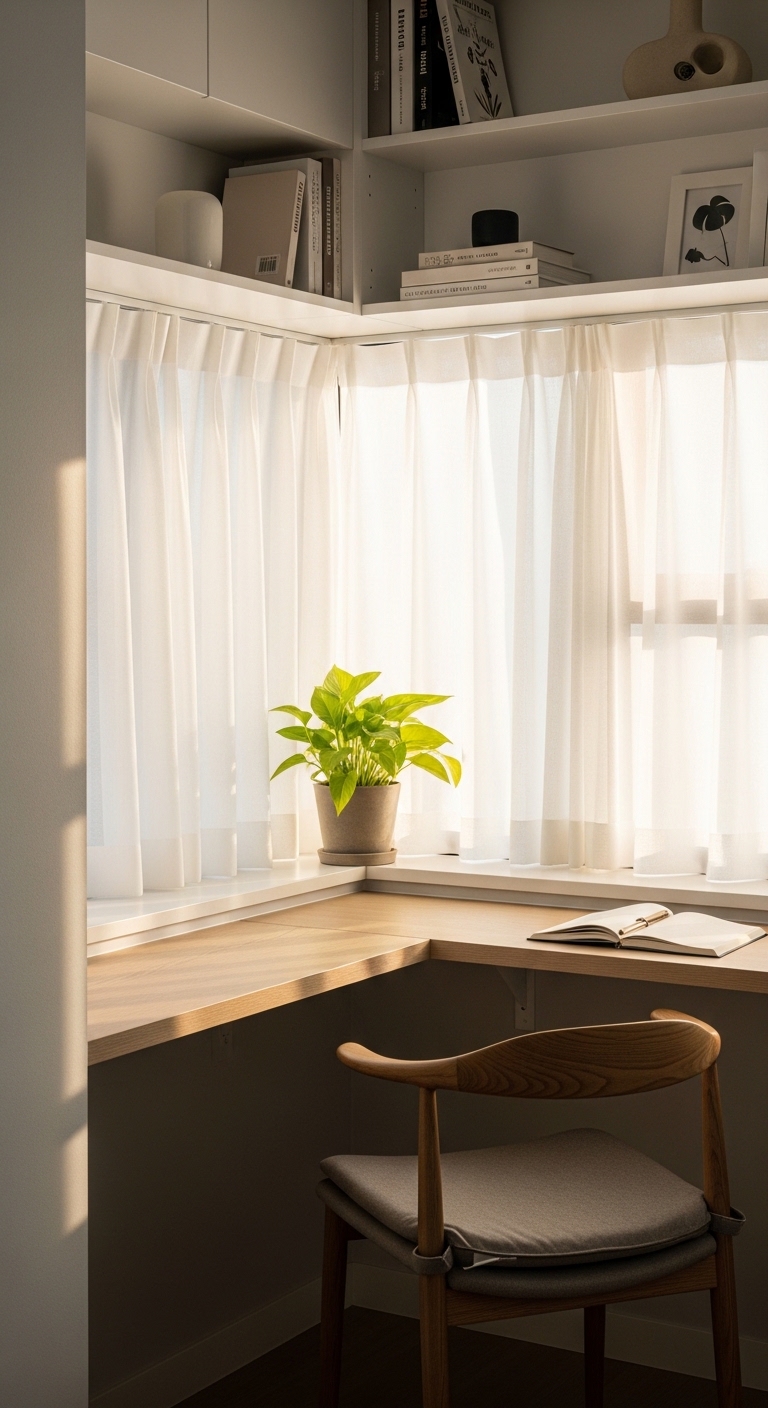
If you have a window with any kind of deep ledge or an alcove nearby, this is pure gold. A slim floating shelf or a custom-cut plank of wood placed across the window ledge becomes an instant desk that feels luxurious.
Natural light is the best thing for your eyes and your mood. Working here gives you:
- A view to rest your eyes on every 20 minutes (the 20-20-20 rule, which eye doctors actually recommend)
- Soft, even lighting that reduces screen glare
- A sense of calm that a bare wall simply can’t give you
Use a folding chair or a small wooden stool to keep the footprint minimal. Add one small plant on the corner and you’ve got a space that genuinely feels designed.
Idea 2: The Closet Conversion Nook
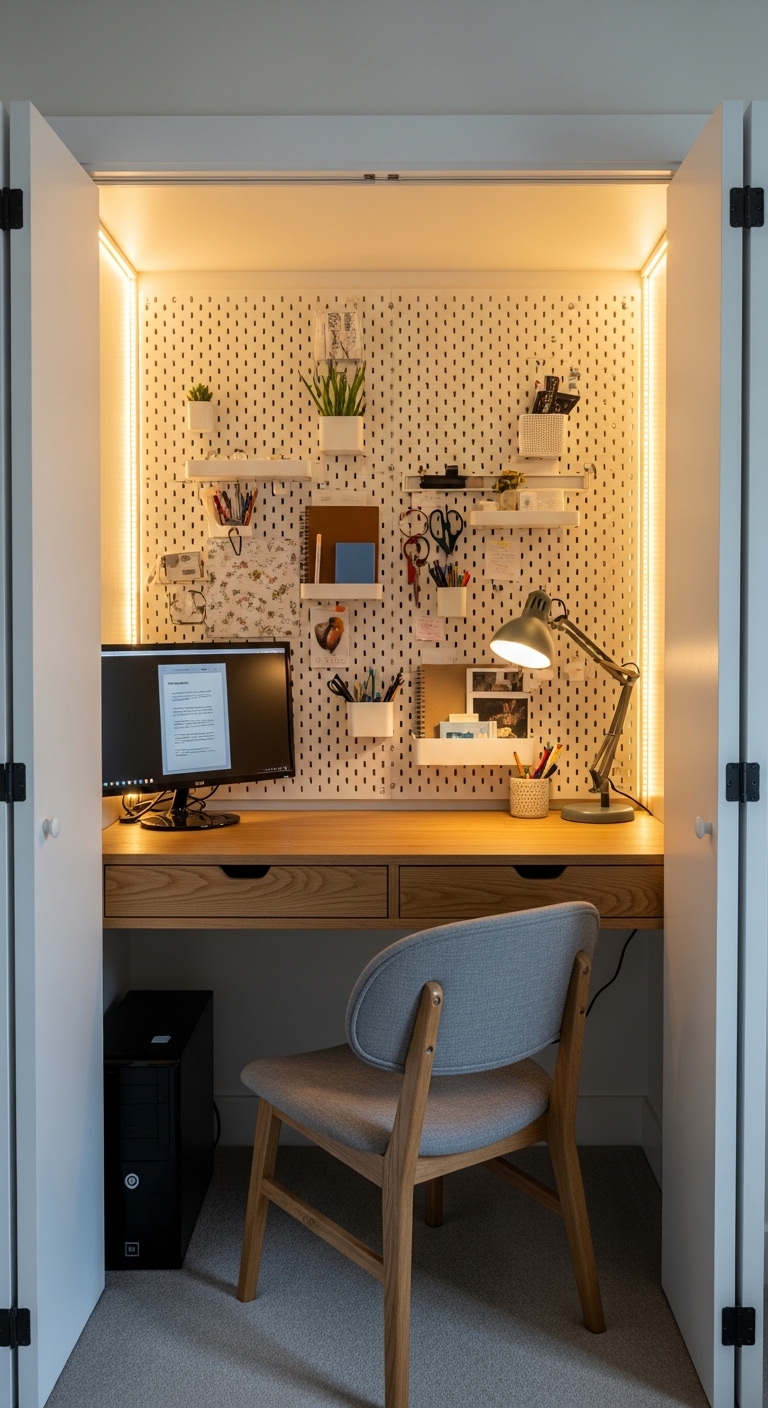
This is one of the smartest moves in small-space living. Take any closet — even a shallow coat closet — remove the hanging rod, and install a floating desk at the right height. The back wall becomes your bulletin board, pegboard, or shelf zone.
When you’re done studying, close the doors. Your workspace disappears completely. For people who live in studio apartments or shared spaces, this is genuinely life-changing. Your work doesn’t invade your relaxation zone anymore.
A few tips for making this work:
- Add an LED strip light under the top shelf for warm, shadow-free lighting
- Use the closet door interior for a magnetic whiteboard or cork board
- Keep the desk surface minimal — one monitor or laptop, one notebook, done
The Under-Staircase Study Corner
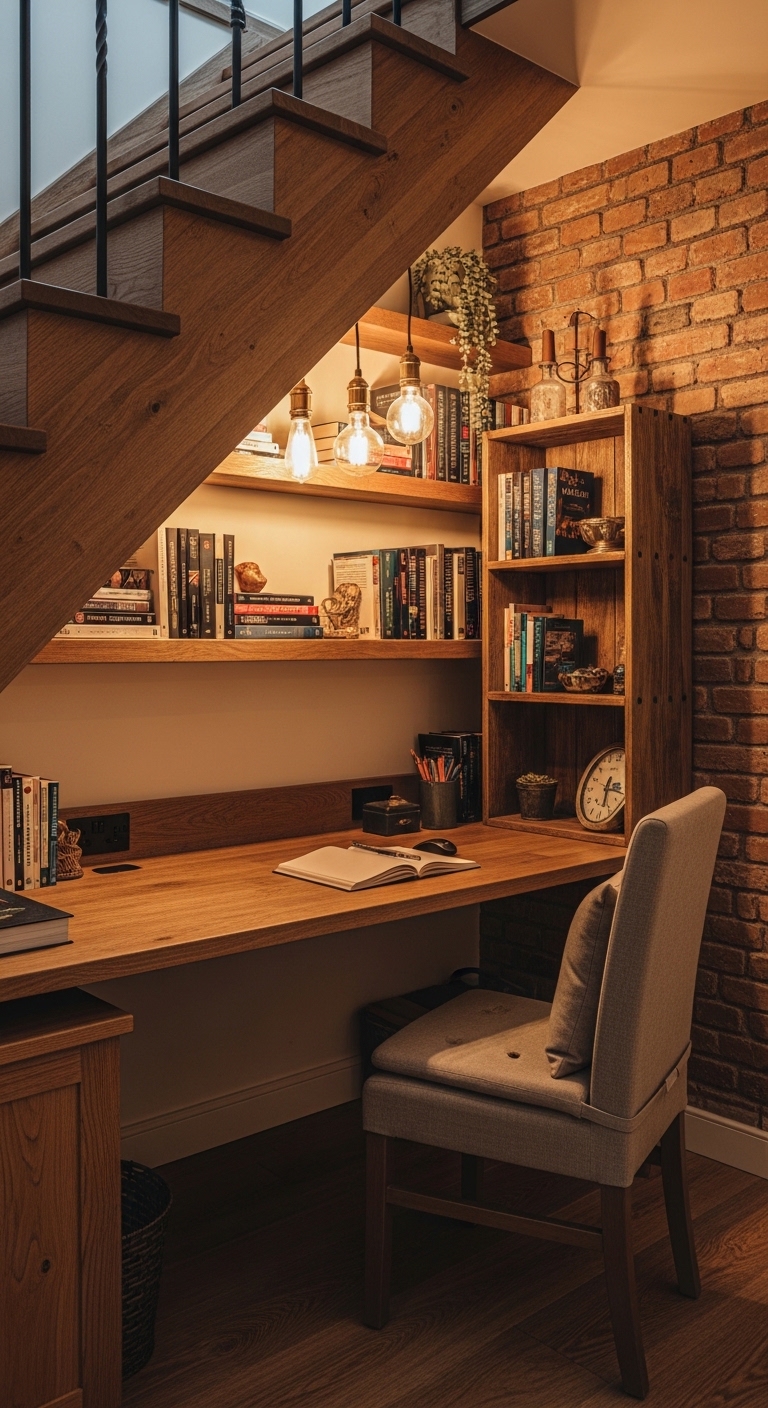
The space under your stairs is almost always wasted. A small built-in desk that follows the natural slant of the staircase turns it into the coziest little nook imaginable. It feels almost like a secret study, tucked away from the rest of the house.
This works especially well for:
- Students who need a quiet corner away from the main living areas
- Parents who want a dedicated homework station that keeps kids’ clutter contained
- Anyone who loves that “hidden library” feeling
You can fit a compact desk, a few shelves, and good lighting in this spot without touching any other room in your home.
The Floating Desk Wall Setup
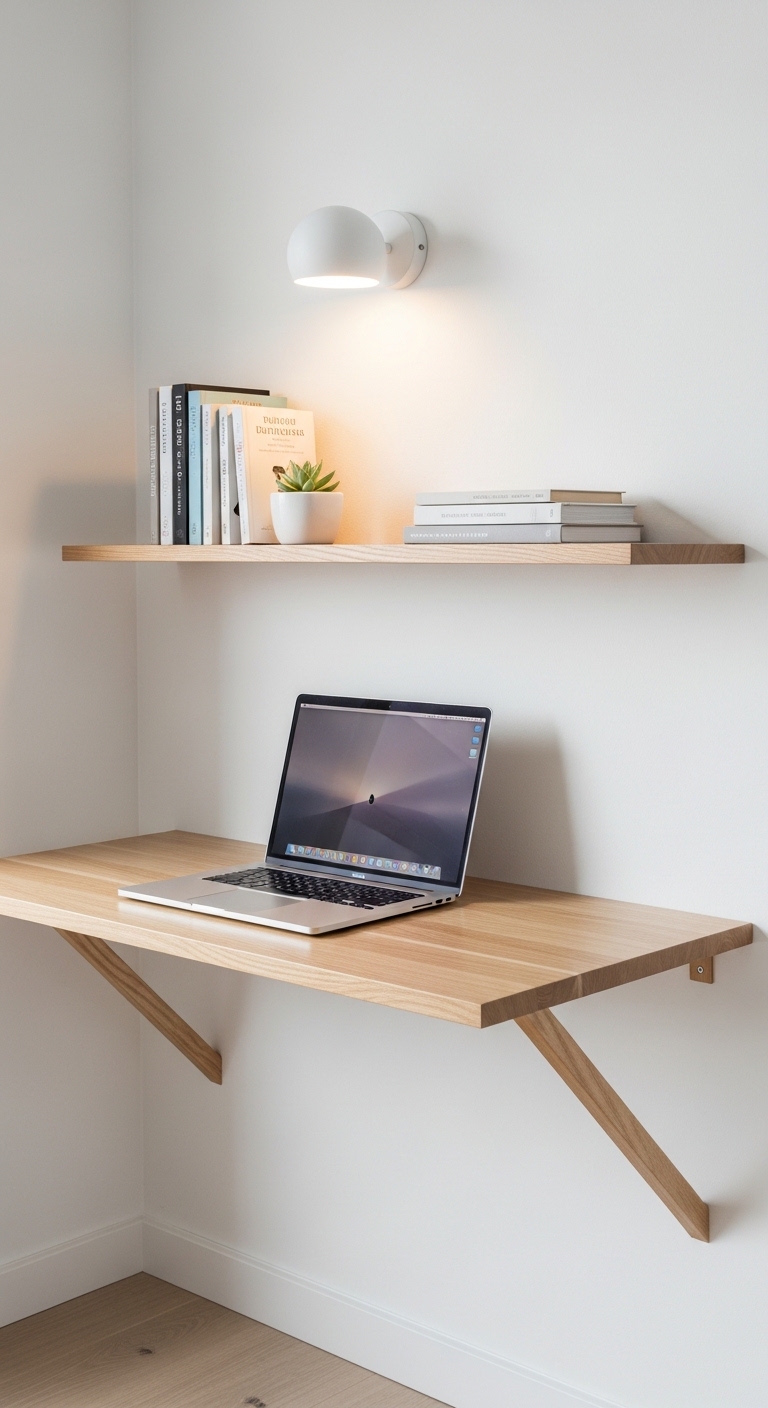
Floating desks are the unsung heroes of small-space design. They attach directly to the wall, take up zero floor space, and look incredibly intentional. You can get them in wood, white-painted MDF, or even glass for a more open feel.
The trick is placement. Mount it at the right height for your body — seated elbow height is the sweet spot. Then add:
- One floating shelf above for your books, speaker, or lamp
- A comfortable chair that can tuck completely underneath
- Minimal decor so the space feels clean and focused
No clutter. No chaos. Just you and your work.
The Corner Desk Nook With Curtain Divider
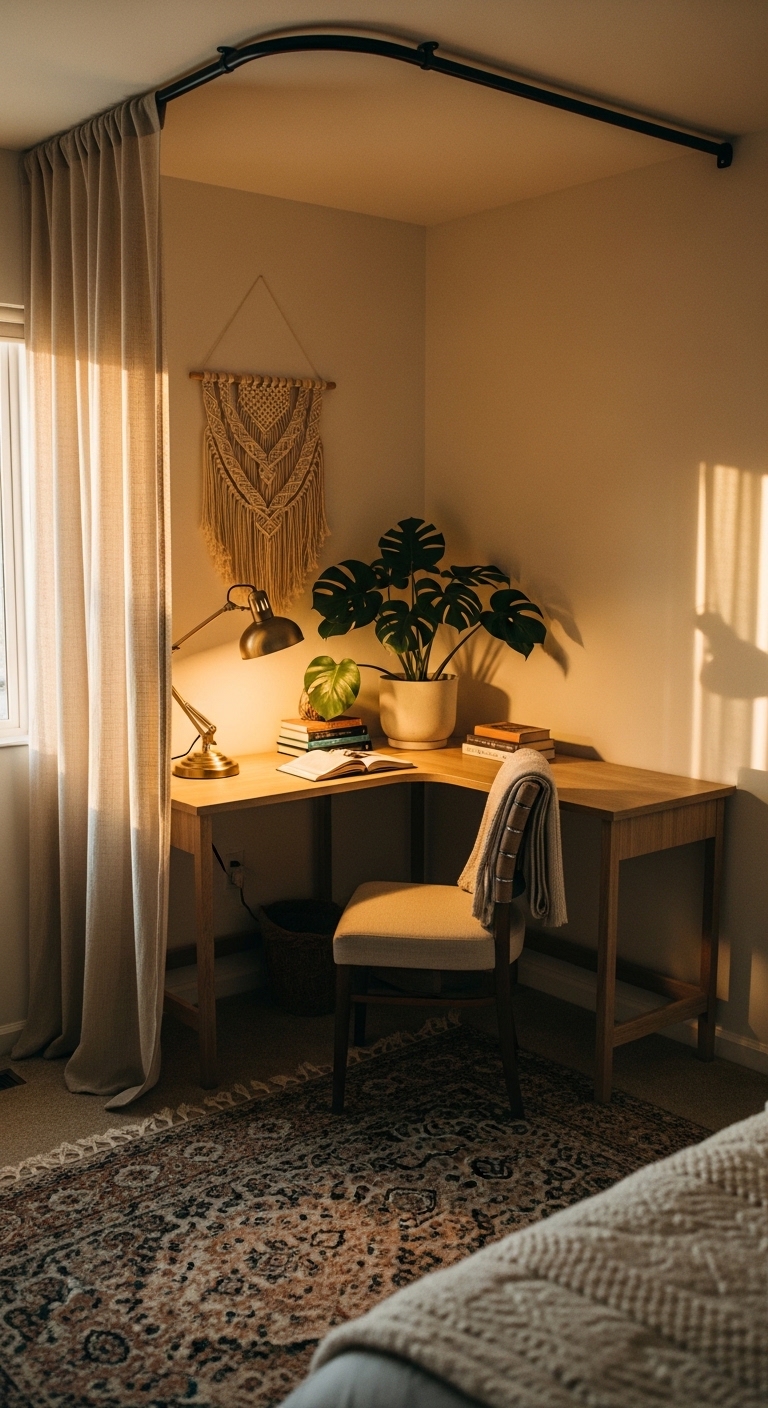
If you share a bedroom or studio apartment, creating visual separation without building actual walls is a game changer. A ceiling-mounted curtain rod with a sheer or blackout curtain can define your study zone beautifully.
Pull the curtain closed when you need to focus. Open it when you want the space to feel open again. It’s flexible, affordable, and genuinely stylish. This idea works especially well with:
- Boho or maximalist decor styles (use patterned linen or velvet curtains)
- Minimalist setups (go with white or off-white sheers)
- Shared spaces where you need physical AND psychological separation
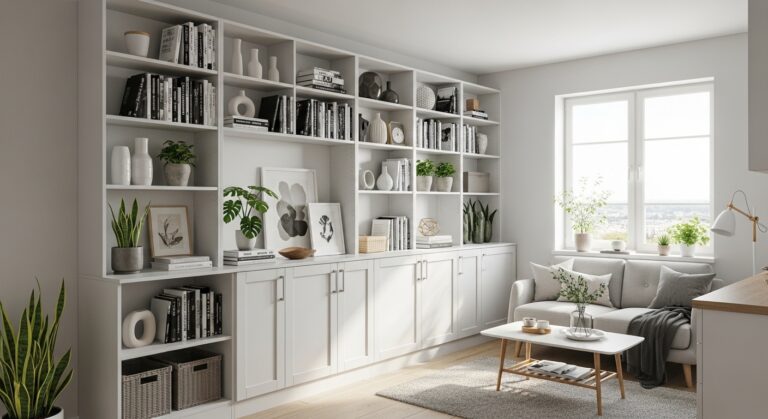
The Bookshelf Nook

Got a big bookshelf? Turn it into your study nook. By positioning two tall bookshelves facing each other with a bench or small desk between them, you create a natural alcove. It feels like your own personal library, and the books surrounding you actually help — research shows being surrounded by physical books increases your motivation to learn.
Add a cushioned seat, a pendant lamp overhead, and a small side table for your laptop or notebook. This setup is perfect for readers, writers, and anyone who does deep work that requires quiet immersion.
The Murphy Bed Desk Combo
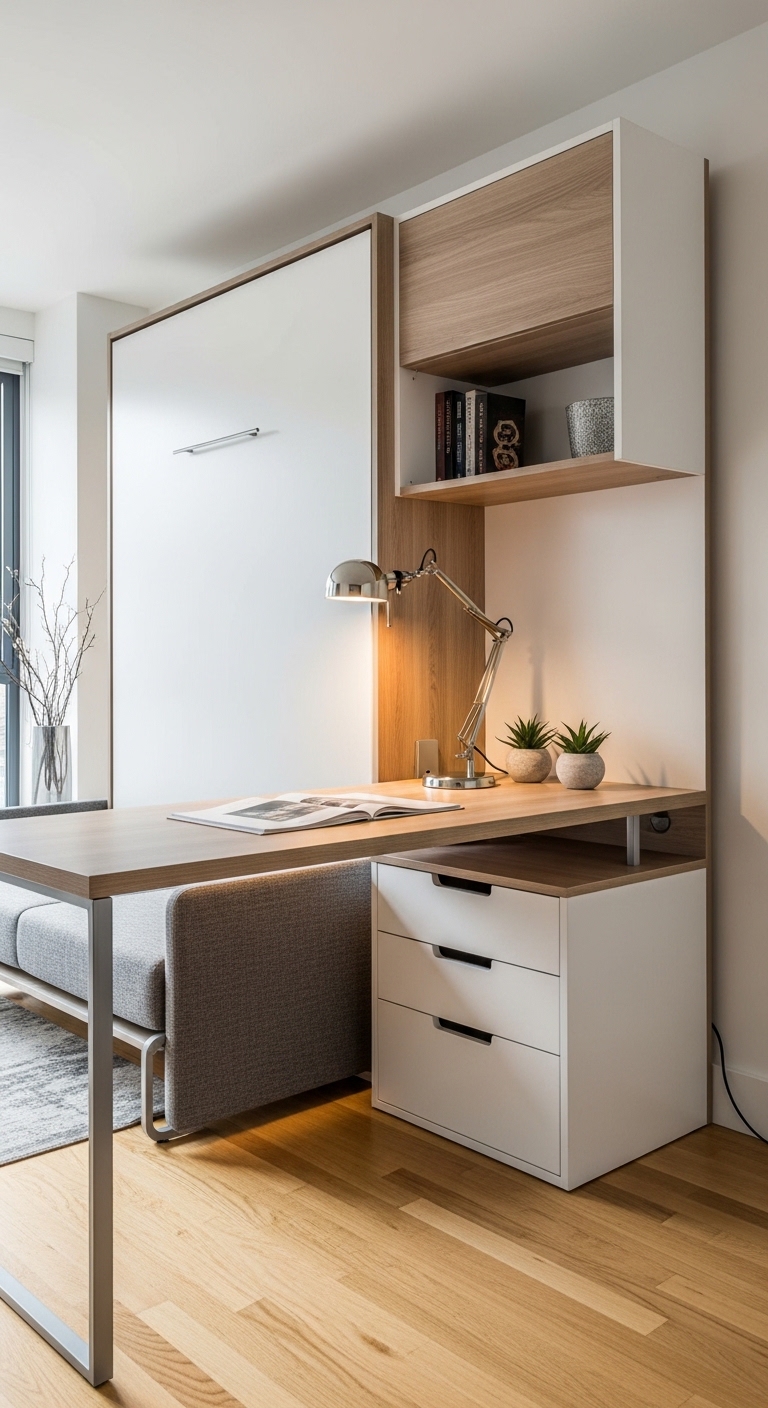
Murphy beds are brilliant, but Murphy bed-desk combos are next level. These integrated units fold the bed up into the wall, revealing a fully functioning desk beneath. Your bedroom becomes your office during the day and flips back into a sleeping space at night.
This is ideal for:
- Studio apartments where every square foot costs money
- Guest rooms that double as a home office
- Anyone who genuinely hates feeling like their bedroom and workspace are the same place
They’re an investment, but the functionality return is enormous.
The Bay Window Study Nook
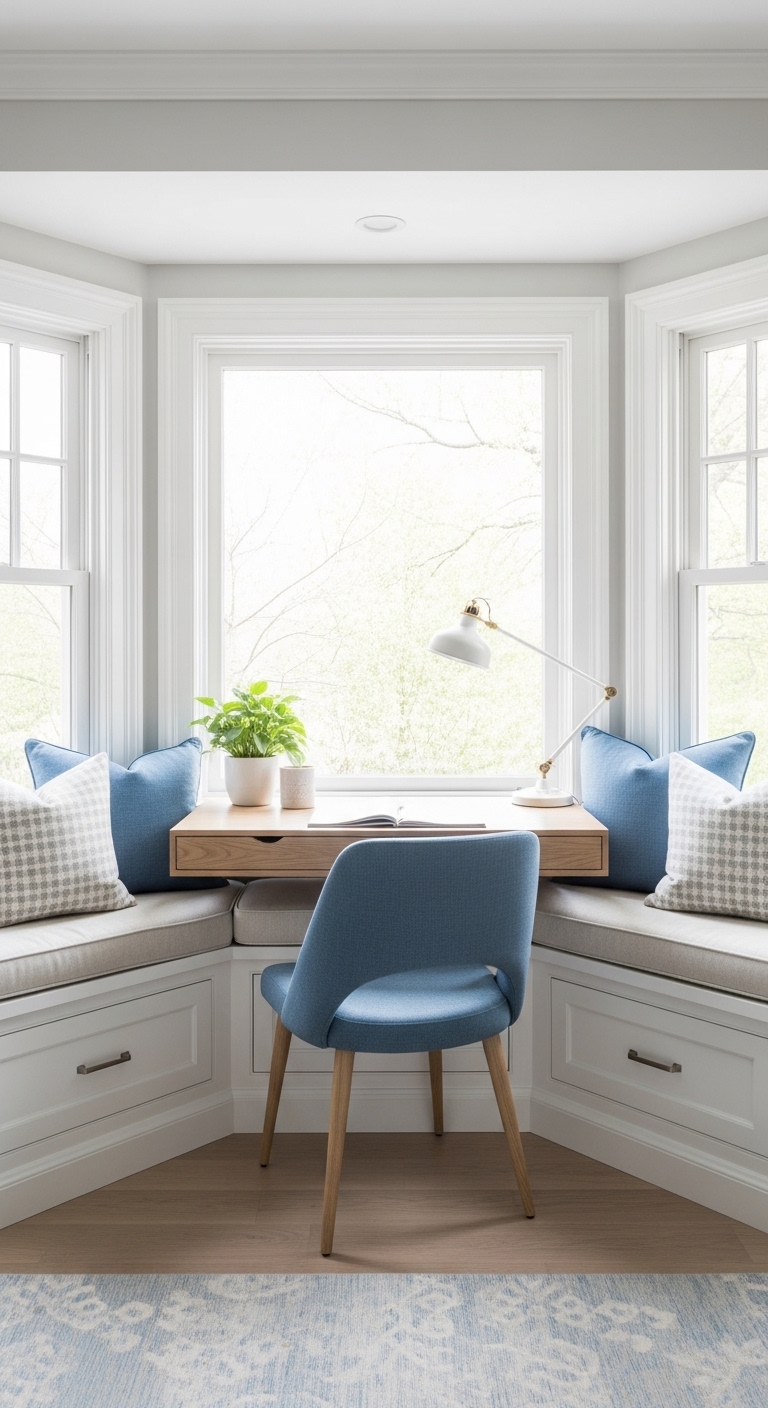
Bay windows are an absolute gift for small-space study nooks. The wraparound seating gives you a comfortable, enclosed feeling, and the natural light from three sides keeps the space bright without needing overhead lights.
Build storage into the bench seat — those drawers below are perfect for notebooks, stationery, and extra supplies. Place a slim desk in the center section, keep the cushions soft, and you’ve got a study nook that also doubles as the most enviable reading spot in your home.
The Pegboard Productivity Wall
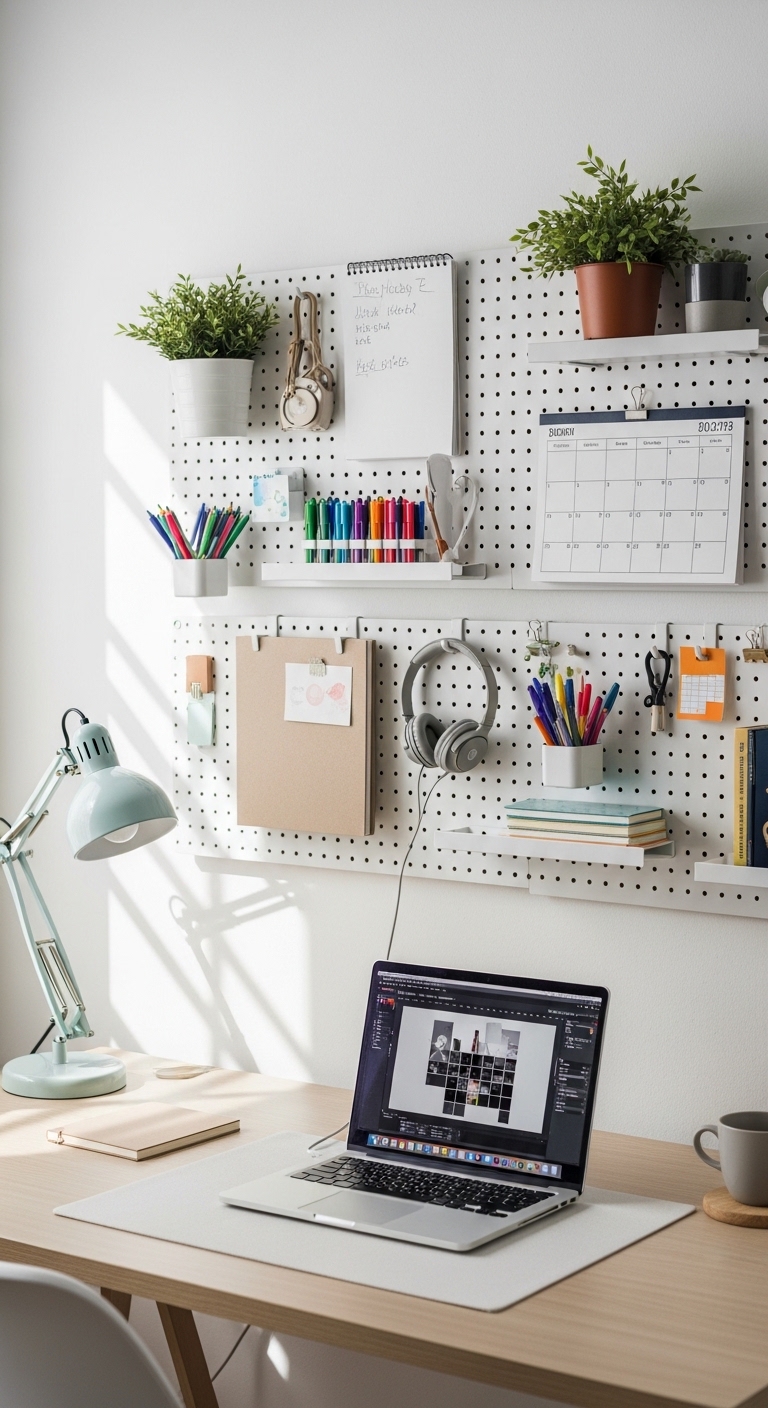
Pegboards aren’t just for garages. When you mount one above your desk, you gain vertical storage that keeps your entire workspace organized without taking up any desk surface. Everything has a home — your pens, scissors, headphones, sticky notes, even a small shelf for a plant.
The beauty of a pegboard system is that it’s completely flexible. You can rearrange it every month if you want to. It grows with your needs, which is something a fixed shelf never can.
The Hallway Study Alcove
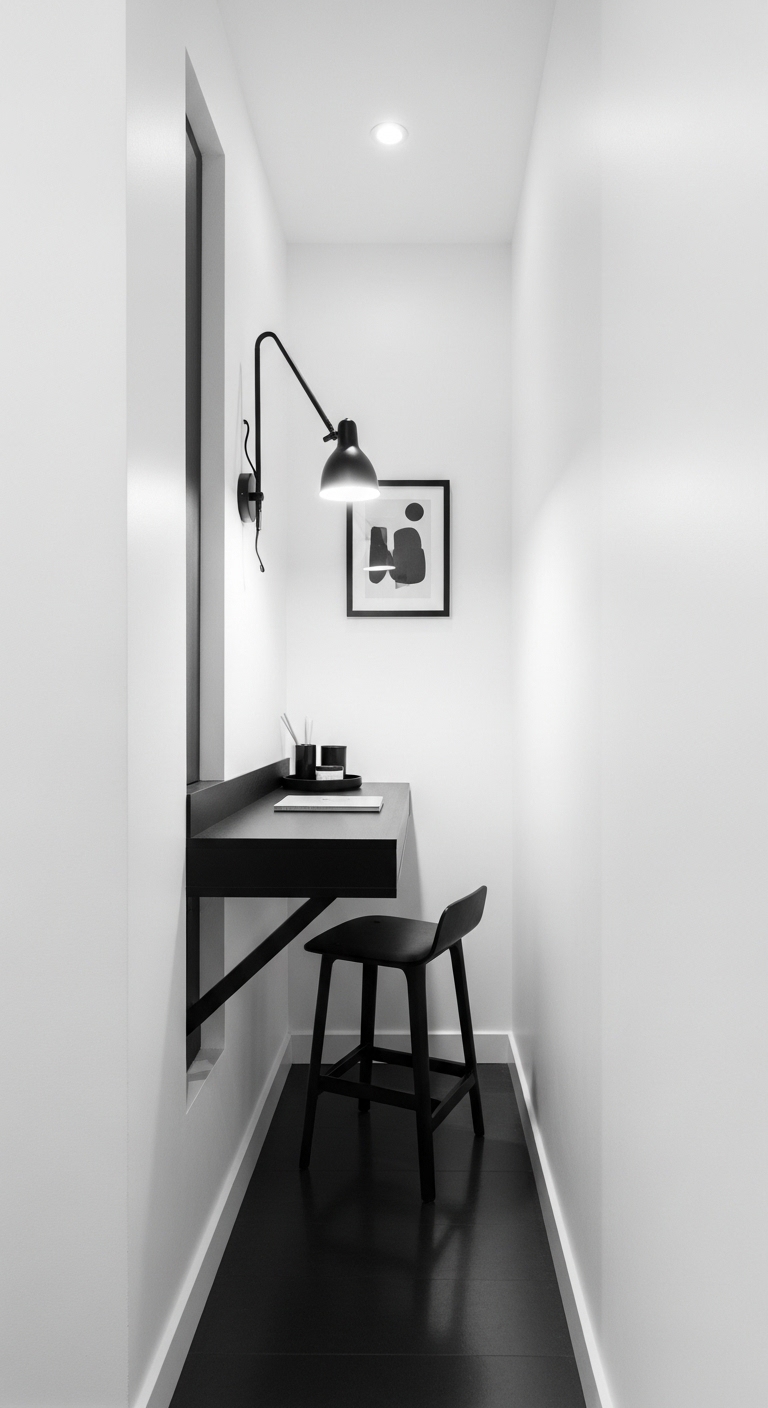
Most hallways have at least one wall that’s doing absolutely nothing. A recessed or floating desk installed here creates a functional study spot without removing any usable living space.
It takes some planning — you need to think about lighting, seating, and making sure the spot doesn’t feel claustrophobic. But when it’s done right, a hallway alcove feels designed and intentional rather than squeezed in. It’s one of the most underused small-space solutions out there.
Idea 11: The Bedroom Corner Nook With Canopy
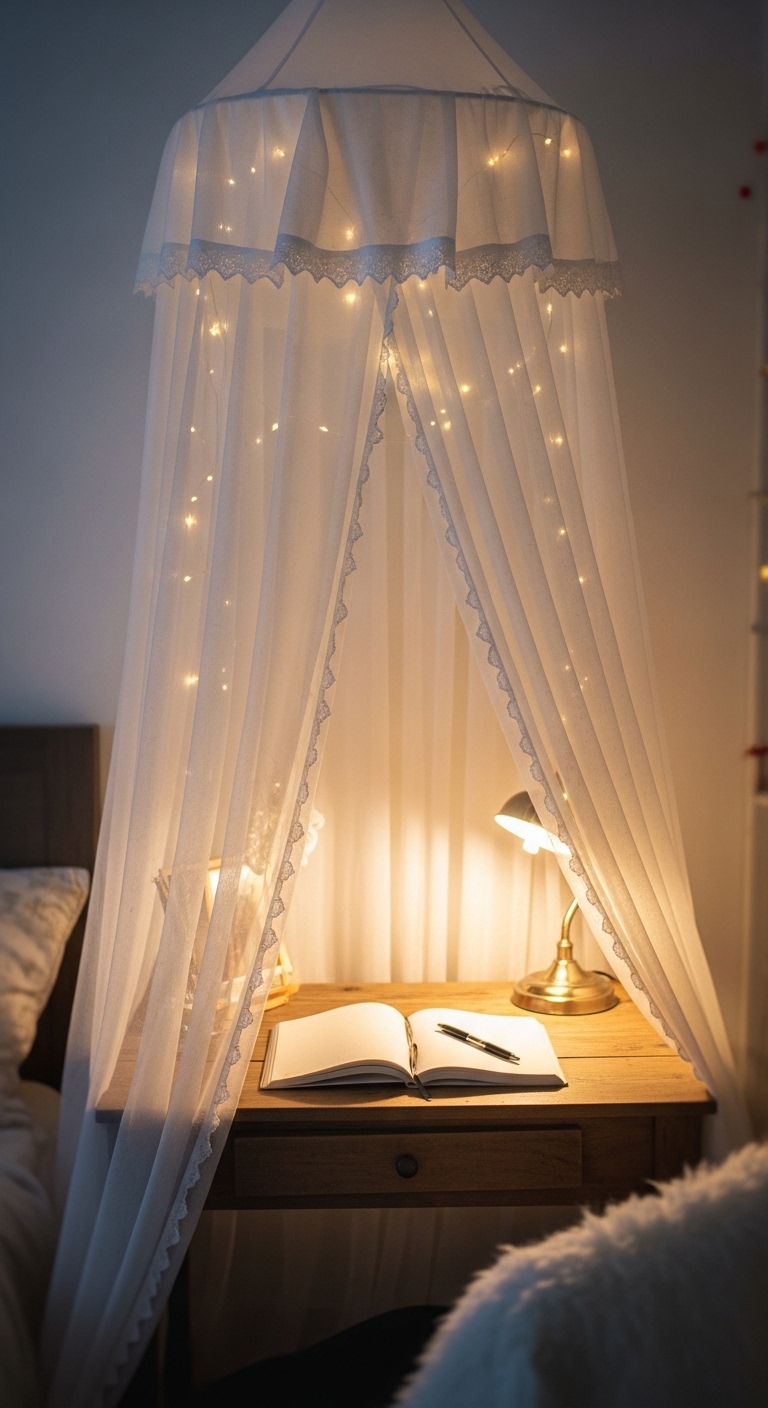
If you want your study nook to feel like a retreat rather than a workstation, add a canopy. A simple sheer fabric canopy draped from a ceiling hook over your corner desk creates an enclosed, intimate feeling that genuinely reduces distraction.
Pair it with fairy lights along the inner edge and a warm table lamp. This setup works especially well for creative work — writing, drawing, journaling — where you want to feel immersed and inspired rather than in productivity grind mode.
Idea 12: The Loft Bed Study Area
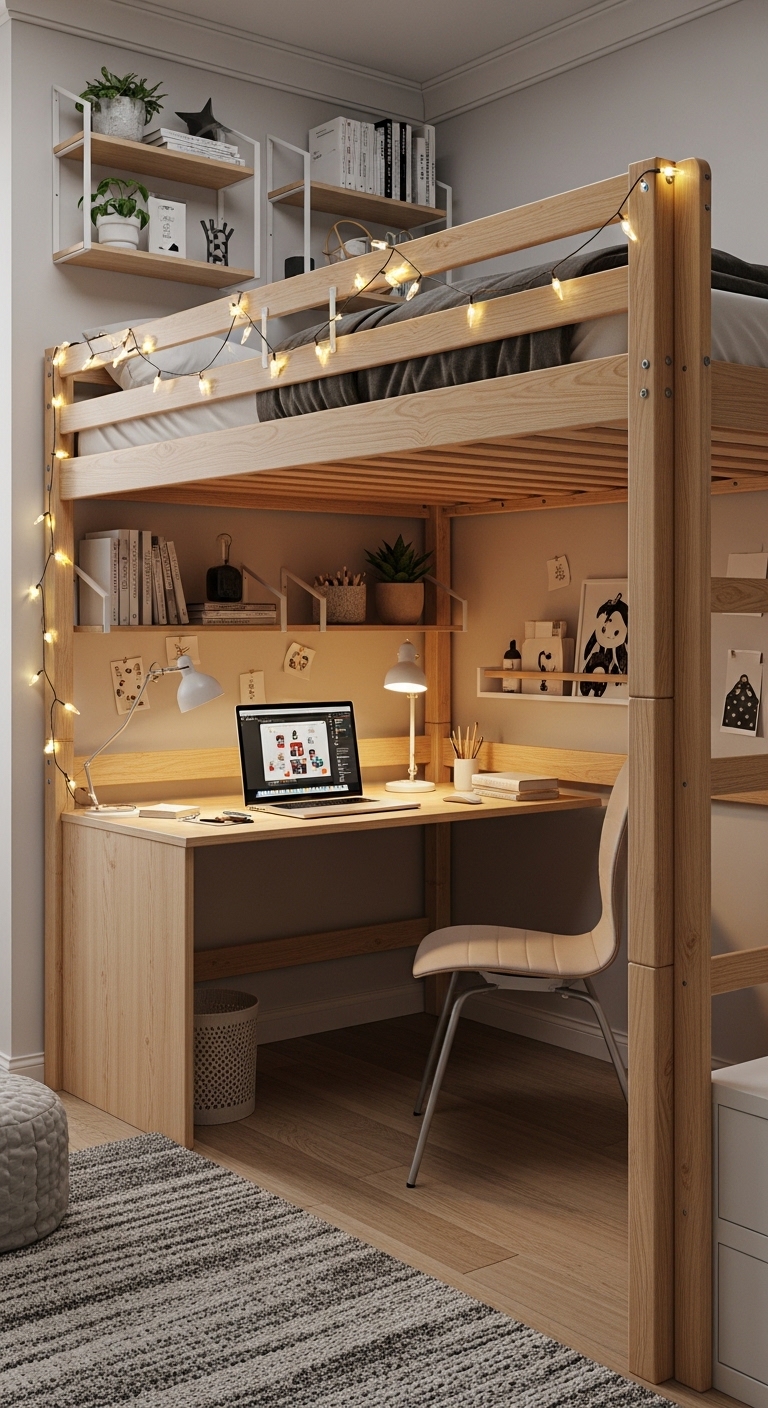
If you have or can install a loft bed, the area beneath it is a naturally defined nook. The low ceiling creates a cave-like focus environment, and you have the full width of the bed footprint for a desk, shelves, and even a small bookcase.
This setup is enormously popular in:
- Kids’ and teens’ bedrooms where space is tight
- Studio apartments where vertical space is the only space left to use
- Rental homes where you can’t knock down walls
A rug defines the floor zone and makes it feel like its own room within a room.
Idea 13: The Outdoor-Inspired Indoor Nook
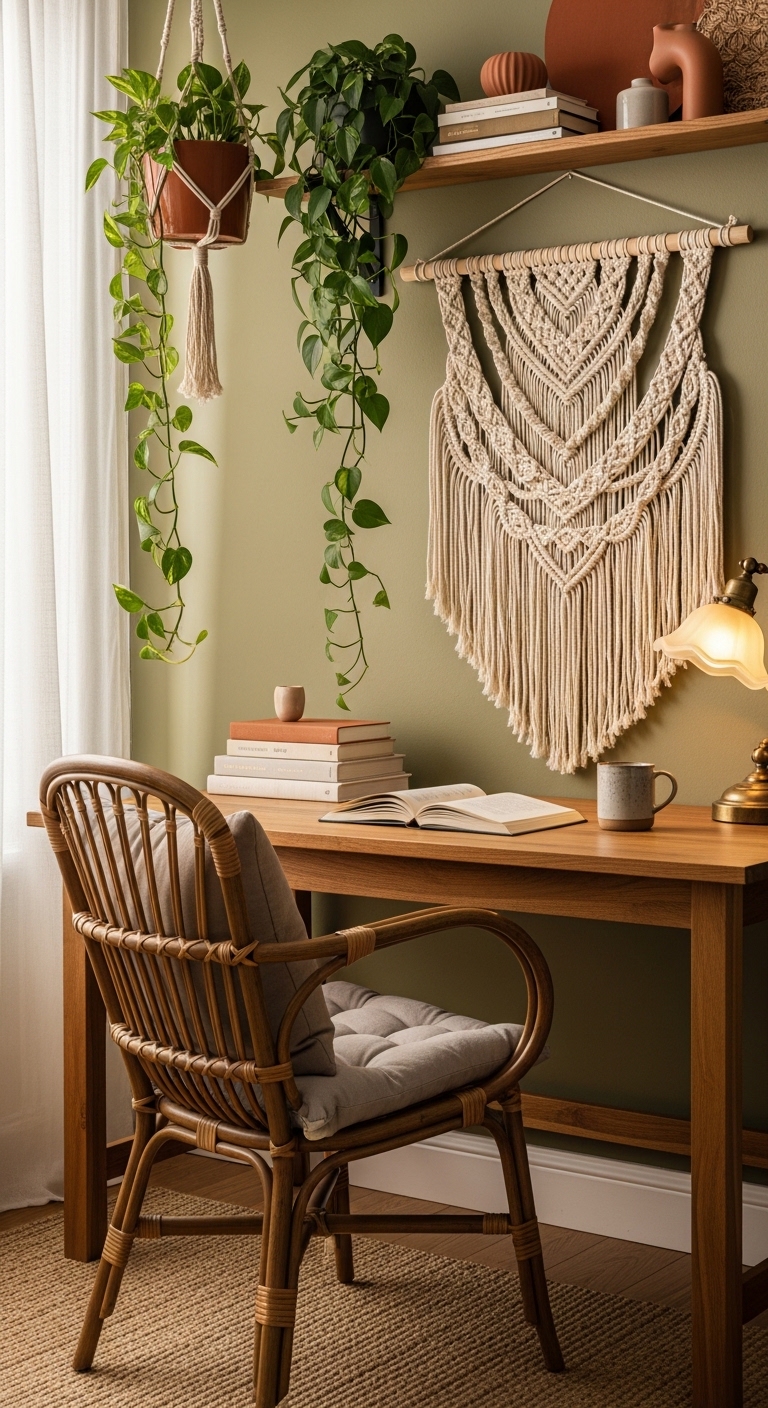
Sometimes the best way to fight the frustration of a small indoor space is to bring the outside in. An outdoor-inspired study nook leans into natural materials — rattan, bamboo, wood, woven textures — and fills the space with living plants.
The result feels open and airy even in a compact corner. More importantly, plants have well-documented positive effects on focus and stress levels. Even one trailing pothos or a small monstera changes the energy of a space entirely.
Idea 14: The Fold-Down Wall Desk
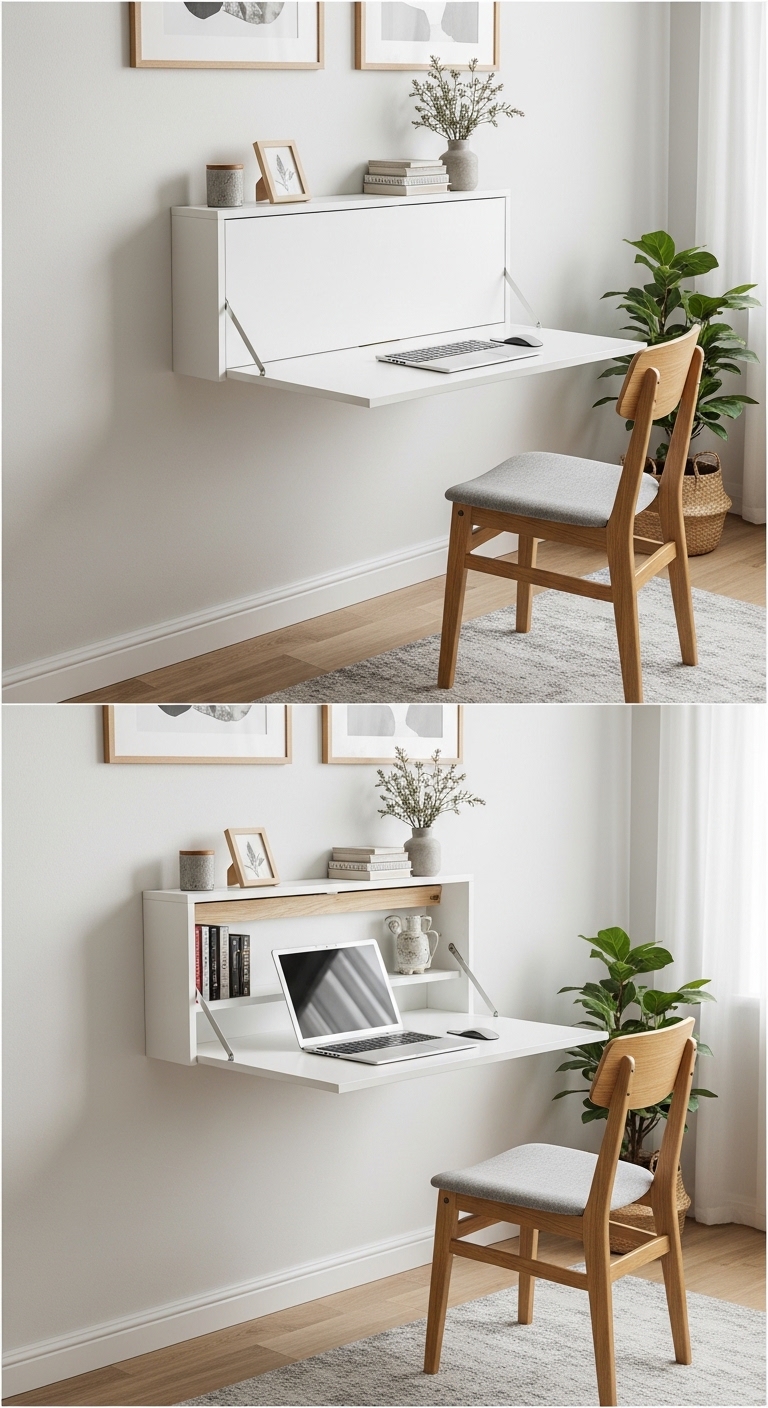
A fold-down wall desk is perhaps the most space-efficient study solution that exists. When closed, it looks like a decorative panel or cabinet on your wall. When open, it drops down to reveal a usable desk surface.
These are perfect for:
- Renters who can’t make permanent changes (most fold-down desks require only two wall screws)
- People in truly micro spaces like studio apartments or shared rooms
- Anyone who wants a “clean slate” policy — when the desk folds up, work is done
Pair it with a pouffe or a slim folding chair that stores in a nearby closet.
Idea 15: The Reading Chair Study Corner
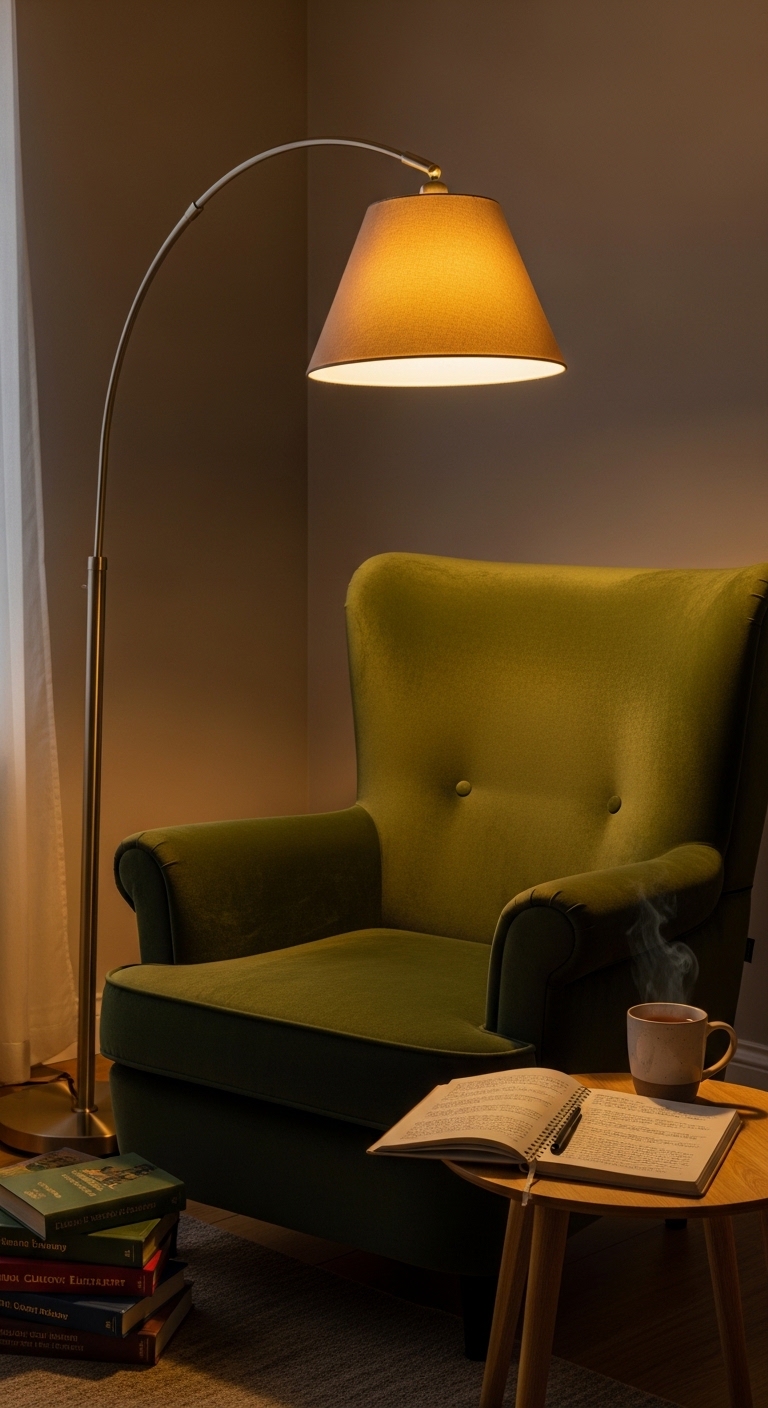
Not every study session needs a traditional desk. For light reading, reviewing notes, or brainstorming, a well-designed armchair corner is all you need. The key is the lighting — a good arc floor lamp that positions light directly over your shoulder makes all the difference.
Add a small side table (a drum table, a C-table that slides over your lap, or even a wooden crate) and you have a fully functional light study zone. Deep, comfortable chairs actually promote longer reading sessions, which is exactly what you want for slow, absorptive learning.
Idea 16: The Kitchen Counter Nook
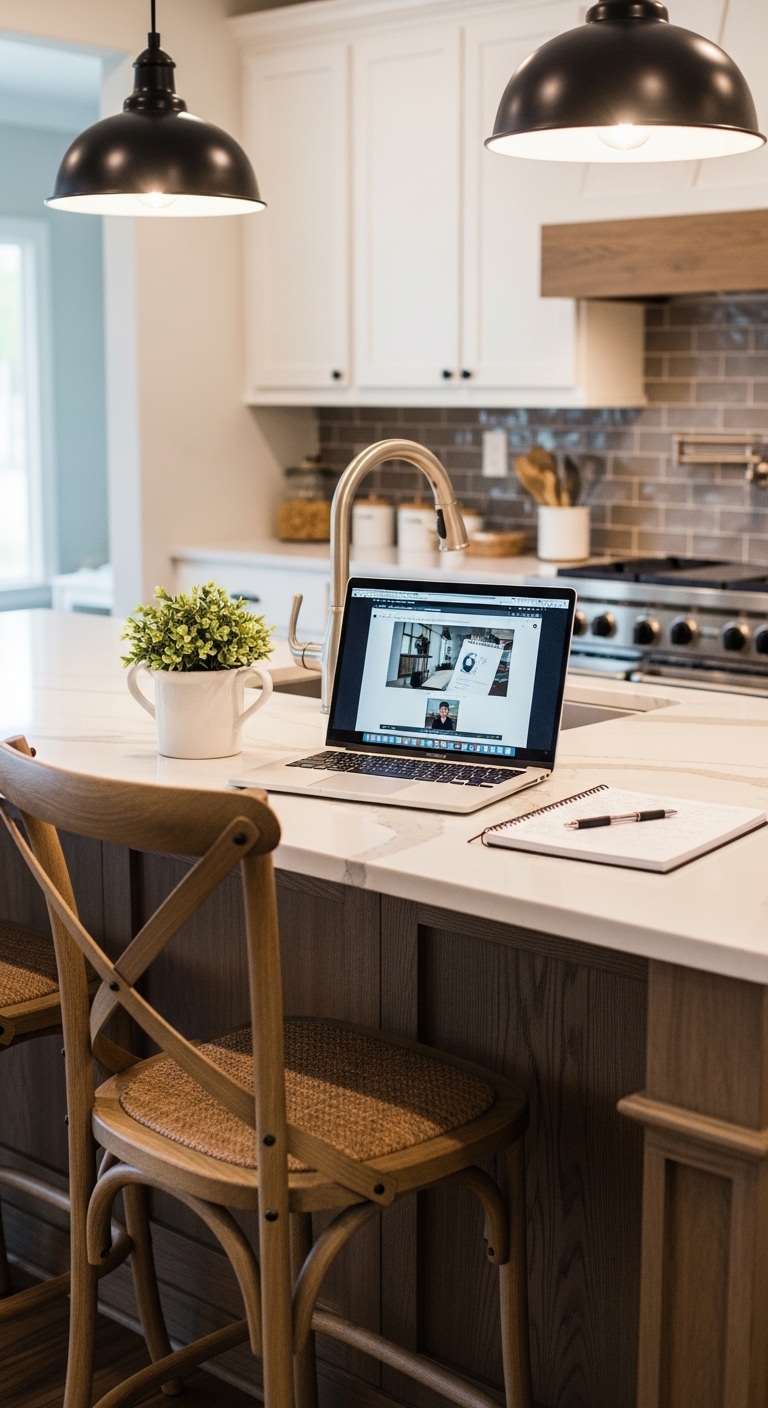
Kitchen counters — especially the end sections or peninsula edges — are underrated study surfaces. If you live alone or your mornings are quiet, pulling a bar stool up to an unused stretch of counter gives you a surprisingly effective quick-work station.
This isn’t meant to be a permanent setup, but for checking emails, reviewing notes over coffee, or studying for an hour in the morning, it works beautifully. Keep a small tray with your laptop charger, a pen, and a notebook stowed in the nearby cabinet so setup takes less than thirty seconds.
Idea 17: The Attic or Dormer Window Nook
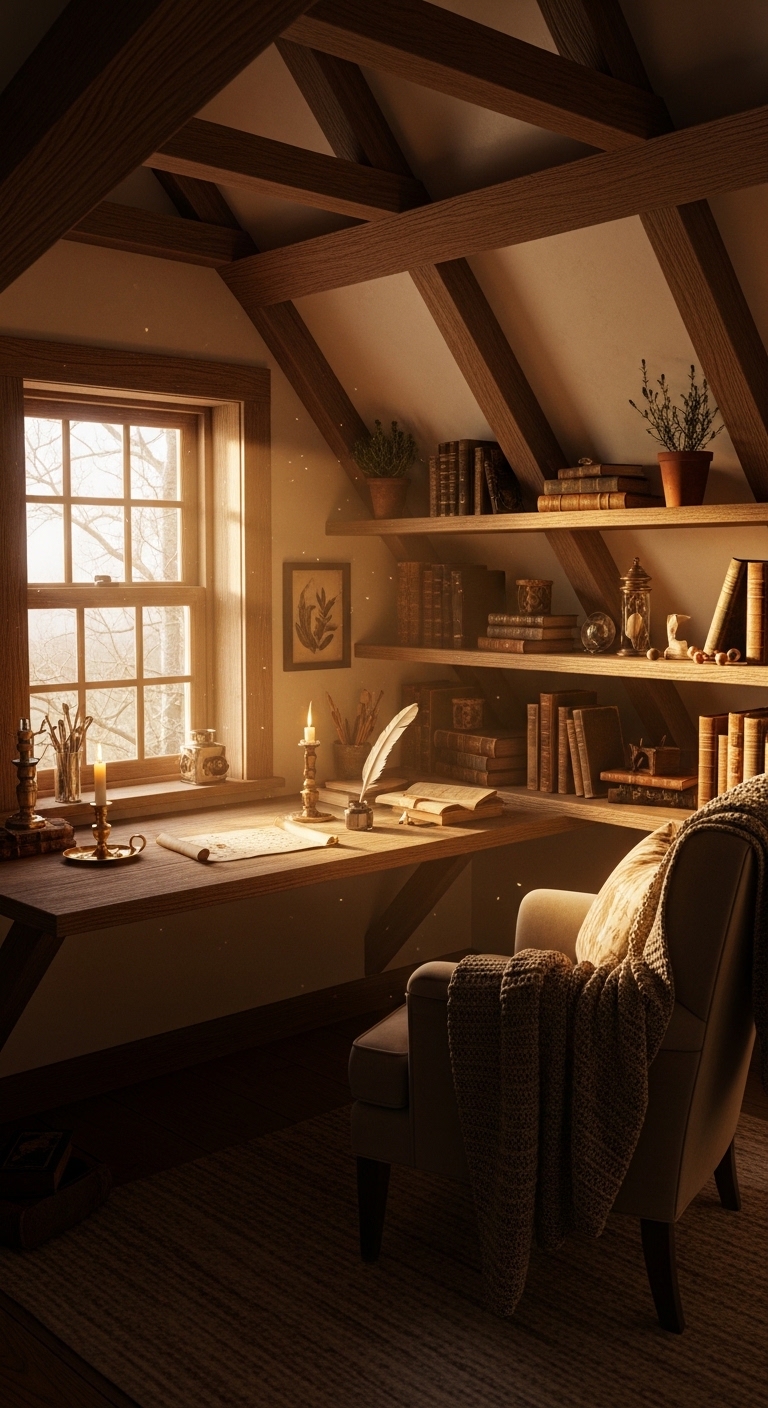
If you have any attic space with even a small dormer window, it’s one of the most charming study nooks you can create. The slanted ceiling feels intentionally intimate, the dormer window floods the space with focused natural light, and the whole setup feels removed from the rest of the house in the best possible way.
Work with the angles rather than against them. Low shelves, a slim desk, and a cushioned chair that fits under the slope make this feel purpose-built. It’s the kind of study nook that makes you want to sit there for hours.
Idea 18: The Dual-Purpose Dining Nook
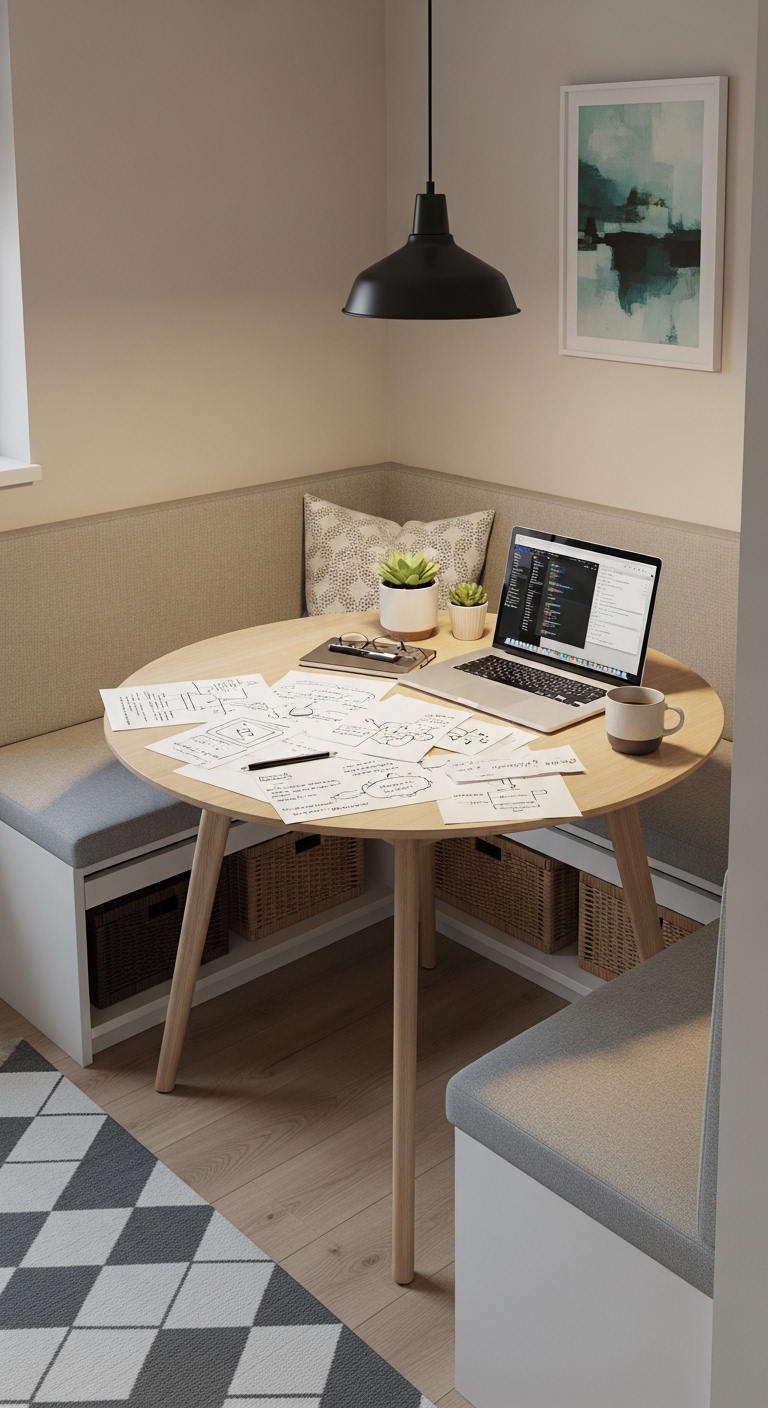
Banquette dining nooks — those built-in bench and table setups — are incredibly functional as study spaces too. The hidden storage under the bench seat keeps all your study supplies out of sight, and the fixed table gives you a firm, stable surface.
The trick is establishing a simple transition ritual. When you study here, your laptop and notebook come out from under the bench. When you eat, everything goes back. The clear separation of function keeps the space from feeling chaotic.
Idea 19: The Kids’ Study Nook in a Small Bedroom
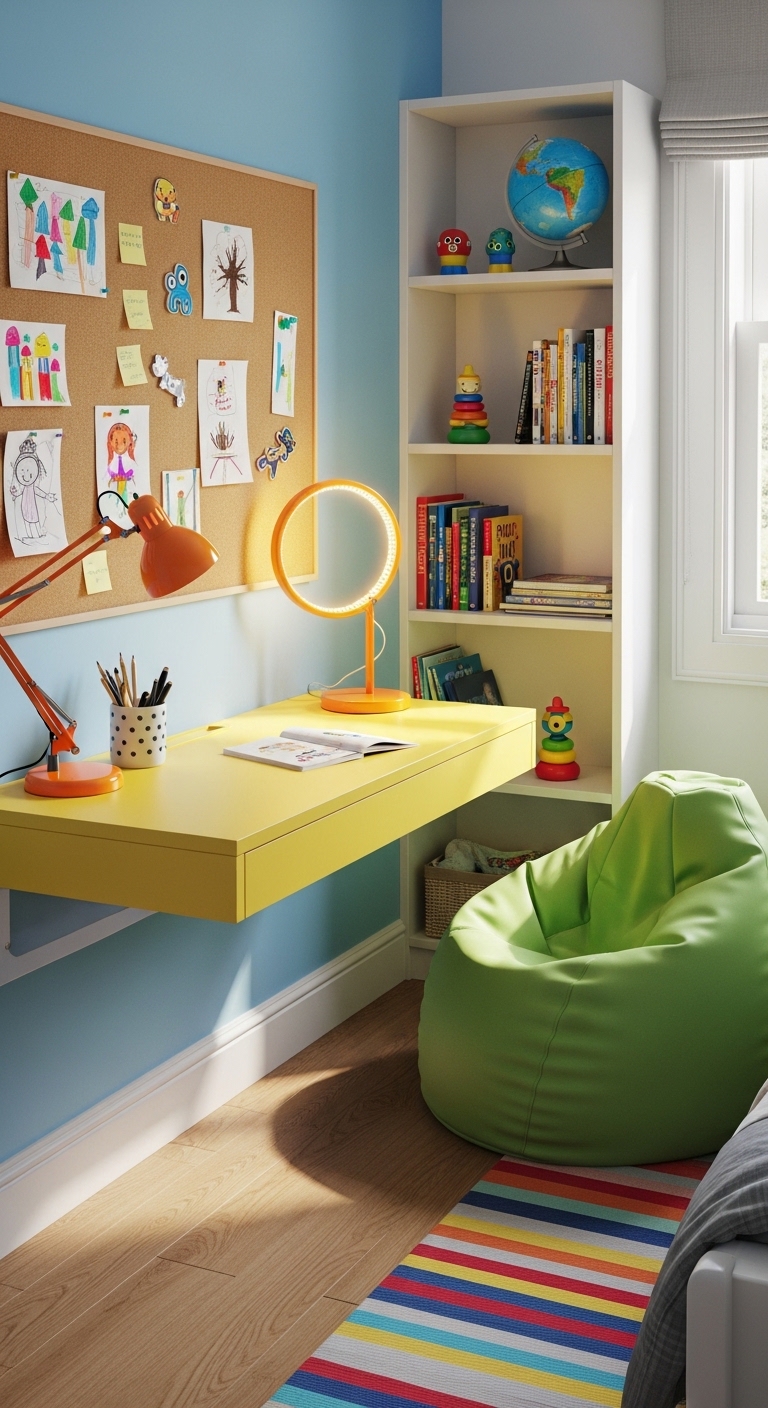
Kids need dedicated study spaces just as much as adults do — maybe more. When a child has their own defined homework corner, they’re less likely to try to do it on the sofa while watching TV. Keep the setup simple and at the right height for them.
A wall-mounted desk at child height, a corkboard for their drawings and notes, and a small bookshelf nearby is all you need. Let them personalize it — adding their own drawings, favourite colours, and small decorations gives them ownership of the space and makes them want to use it.
Idea 20: The Built-In Bedroom Desk Nook
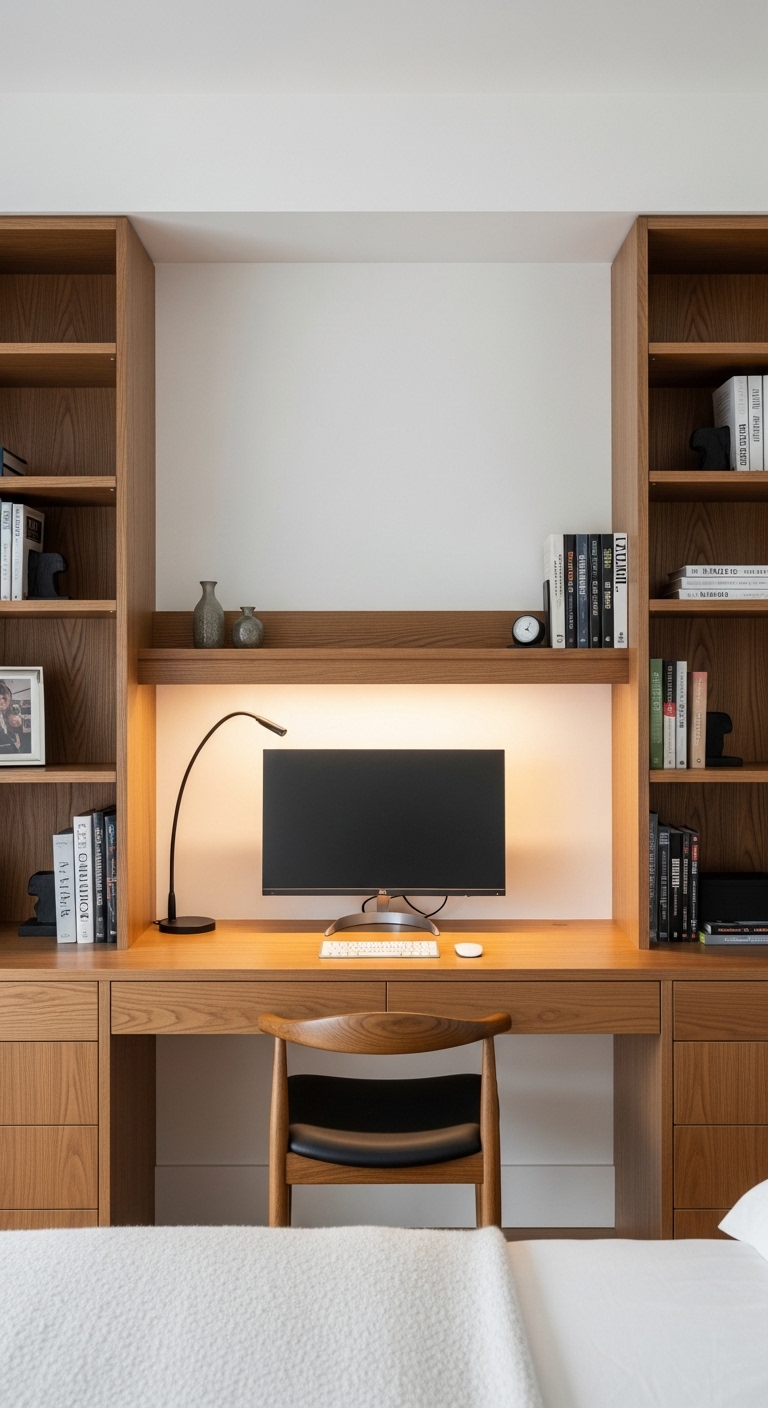
A built-in desk that’s part of a larger wall unit takes a small bedroom from cramped to magazine-worthy. By integrating the desk into the shelving system, everything feels cohesive and intentional. There are no awkward floating furniture pieces — just one unified piece that uses every inch of vertical space.
If you’re renting, you can achieve a similar effect with IKEA-style modular systems that look built-in without requiring any permanent carpentry. The key is to choose one consistent finish and make sure all the pieces align.
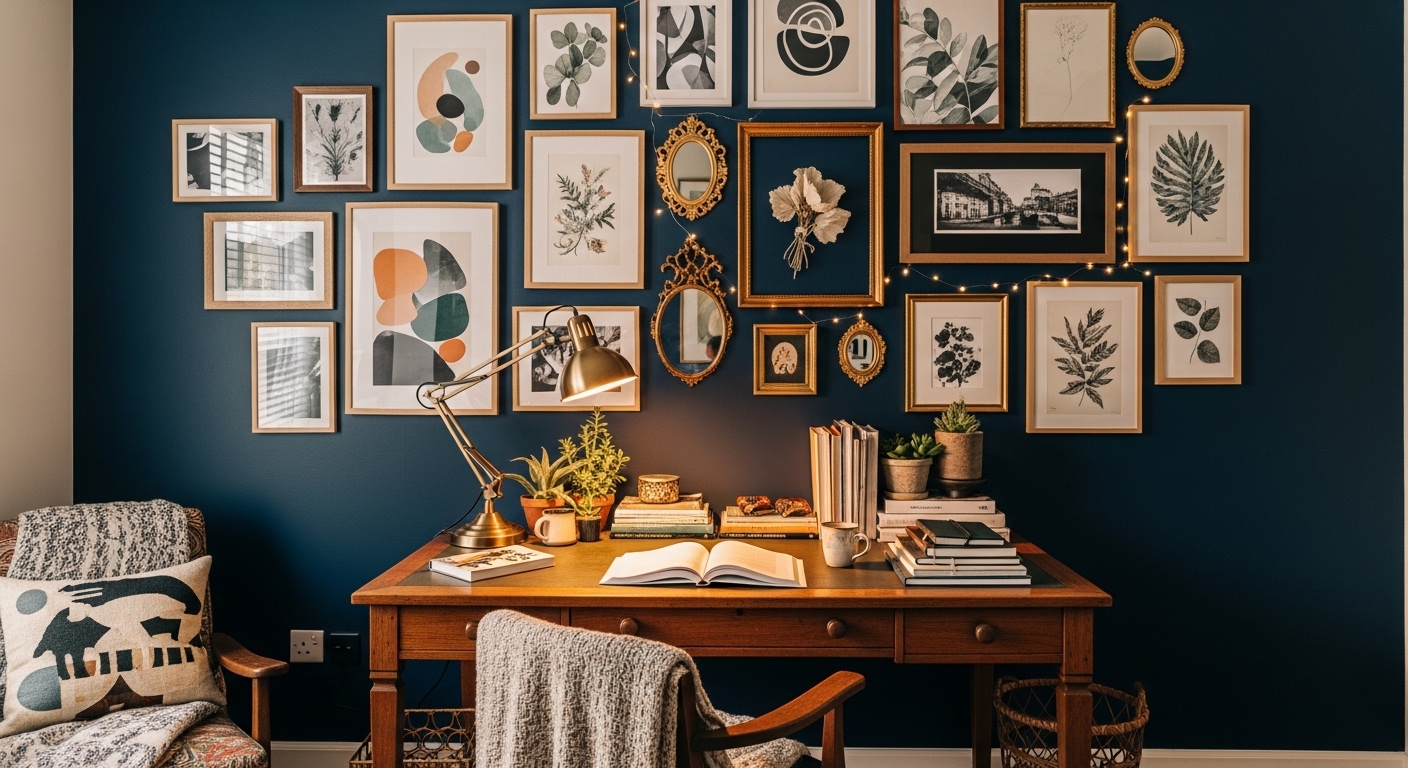
Idea 21: The Maximalist Gallery Wall Study Nook
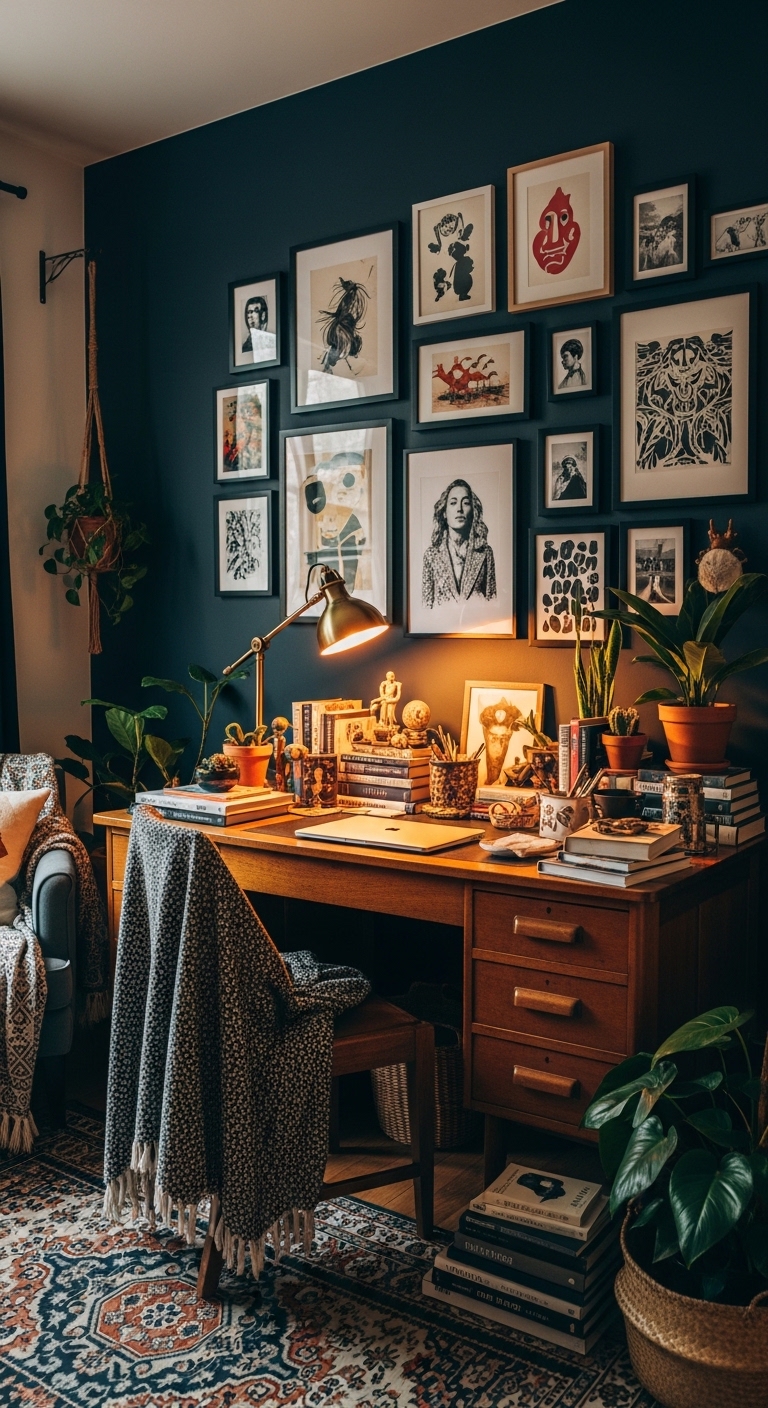
Who says study nooks have to be minimal and white? If you love bold, layered spaces, lean into it. A dark accent wall behind your desk immediately defines the nook as its own zone. Then fill that wall with framed art, photos, motivational prints, and anything that genuinely inspires you.
This kind of environment works incredibly well for creative people. The visual stimulation feeds your imagination rather than distracting you. The trick is to curate what goes on the wall deliberately — everything there should mean something to you.
How to Choose the Right Study Nook for Your Space
By now you probably have two or three ideas that made you think, “Oh, that could actually work.” Trust that instinct. Here’s a quick checklist to help you decide:
- How much space do you actually have? Measure before you commit. A floating desk needs at least 45cm of depth and 90cm of width to be comfortable.
- What kind of work do you do? Deep reading and writing needs a quieter, more enclosed nook. Quick email and admin work can happen at a kitchen counter or fold-down desk.
- What’s your budget? Some of these ideas (fold-down desk, floating shelf) cost under $100. Others (Murphy bed combo, custom built-ins) are bigger investments.
- What’s your aesthetic? Your study nook should feel like you. If you hate minimalism, don’t force it. If clutter stresses you out, go clean.
Quick Tips to Make Any Study Nook Work Better
No matter which idea you choose, these practical tweaks will make your nook dramatically more functional:
- Always address lighting first. Poor lighting is the number one reason people abandon their study spots. Use warm, directed light — never harsh overhead fluorescents.
- Control your tech environment. Put your phone face-down or in a drawer when you sit down. Your phone is not part of your study nook.
- Keep only what you actually use. A cluttered nook defeats the purpose. If you haven’t touched something in two weeks, it doesn’t belong there.
- Add one sensory comfort element. A scented candle, a small speaker, a soft seat cushion — something that makes the spot feel like a reward rather than an obligation.
- Personalize it genuinely. A photo of someone you love, a quote that actually means something to you, a plant you named. Make it yours.
Final Thoughts
Your study nook doesn’t need to be big. It doesn’t need to be expensive. It just needs to be intentional.
Every single idea on this list proves that small spaces can be transformed into genuinely inspiring, productive corners. The magic isn’t in the square footage — it’s in the thought you put into the design. When you sit down in a space that was created just for thinking and learning, something shifts. You feel more capable, more focused, and honestly, more like the person you want to be.
Pick one idea, start small, and build from there. You’ll be amazed how much a cozy little corner can change your relationship with studying, working, and learning. Now go create your nook.