22 Dining Room Light Fixture Ideas to Try Right Now
Have you ever sat down for dinner and noticed something felt… off? Not the food, not the company — just the room itself. Chances are, your lighting is doing more harm than good.
The right dining room light fixture doesn’t just illuminate your table — it sets the entire emotional temperature of the space. It’s one of those details that quietly does everything. Let’s fix that, together.
Whether you’re doing a full renovation or just want to swap out one fixture and completely change the vibe of your dining room, this list gives you 22 seriously good ideas — from timeless chandeliers to unexpected, conversation-starting designs.
We’ve paired every idea with practical styling advice and a real AI image prompt you can use to visualize it before you commit. Think of this as your personal lighting lookbook.
Classic Crystal Chandelier
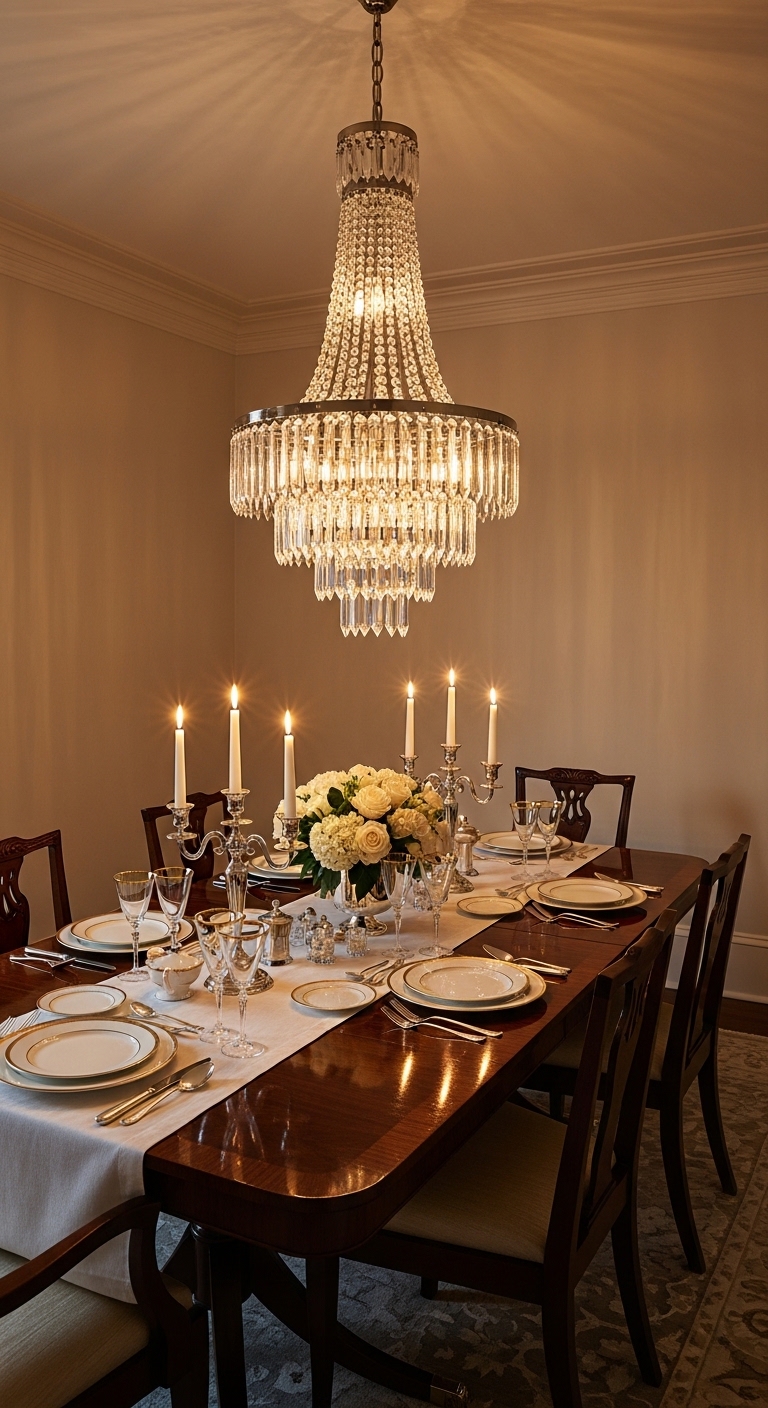
Nothing in the world of dining room lighting has held its ground quite like the crystal chandelier. This isn’t a trend — it’s a permanent fixture in the design vocabulary. When light hits hundreds of hand-cut crystals, it scatters into the most magical constellations across your walls and ceiling, and suddenly even a Tuesday night dinner feels like an occasion. The trick is scale. A crystal chandelier that’s too small looks timid above a long dining table. You want something that commands the space without feeling like it’s about to drop on your guests. For an 8-person table, aim for a fixture that spans at least 24 to 30 inches in diameter.
Crystal chandeliers work across more styles than you’d think. In a modern all-white dining room, a crystal fixture introduces glam without clashing. In a traditional space with crown molding and wainscoting, it looks perfectly native. Pair it with a dimmer switch — crystal chandeliers at full brightness can feel clinical, but lowered down to 40%, they’re breathtaking.
Rattan Pendant Light
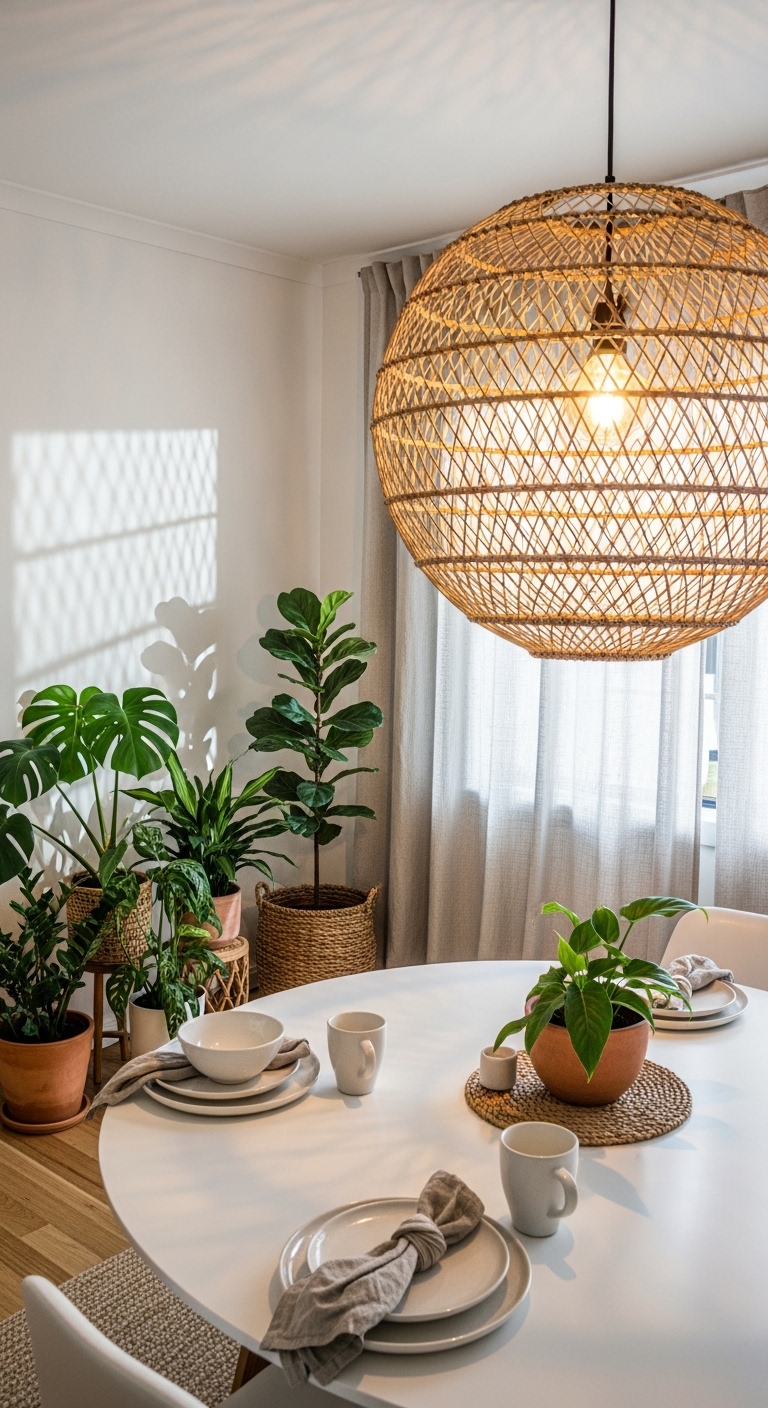
The rattan pendant is having its moment and honestly, it deserves it. Woven rattan brings an organic warmth to dining spaces that no metal or glass fixture can quite replicate. The natural fibers cast incredible textured shadow patterns across the ceiling and walls when lit, creating a dappled, almost forest-like atmosphere. It feels relaxed, lived-in, and genuinely inviting — perfect for family dinners and casual entertaining alike.
What makes rattan so versatile is how well it plays with other materials. Over a white marble dining table with natural linen chair covers, it creates a fresh coastal look. Above a reclaimed oak table with leather chairs, it leans more earthy and eclectic. Go for a large open-weave globe style if you want maximum texture, or a tighter woven drum shape for something more refined. These fixtures also tend to be surprisingly affordable, which makes this one of the highest-value upgrades you can make.
Brushed Brass Cluster Pendant
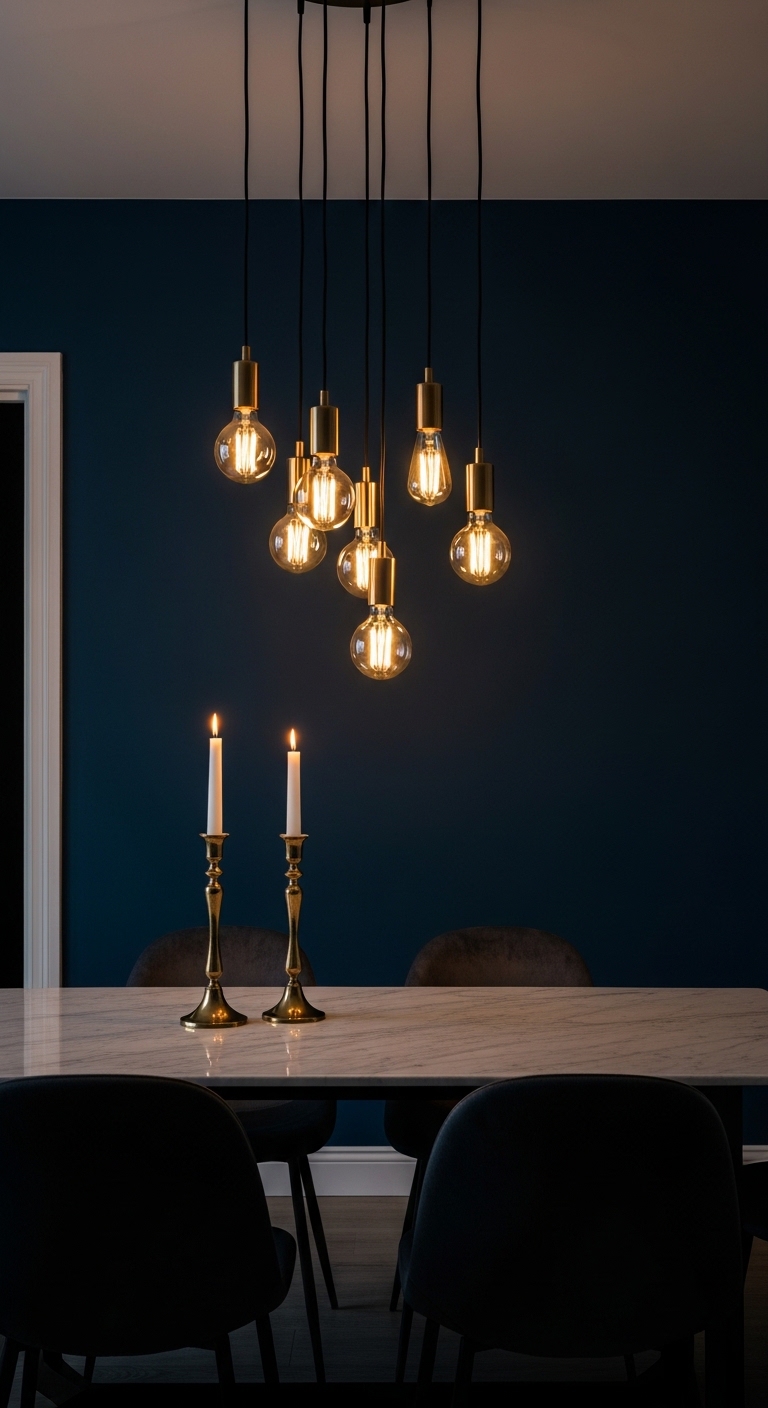
Brushed brass came back and it’s not leaving anytime soon — and cluster pendants might be the most exciting way to use it. A cluster pendant is exactly what it sounds like: multiple pendants at varying heights, grouped together above the dining table to create a kind of sculptural installation rather than a single light source. In brushed (not polished) brass, the effect is warm, considered, and just a bit artsy.
The beauty of a cluster pendant is that it fills vertical space in a way a single pendant can’t. If you have high ceilings, this is your answer. The staggered heights draw the eye upward and make the room feel more dynamic. Keep the rest of your metal finishes consistent — brushed brass cabinet hardware, a brass-trimmed mirror — and the whole room starts to feel intentionally curated rather than randomly assembled.
Drum Shade Pendant
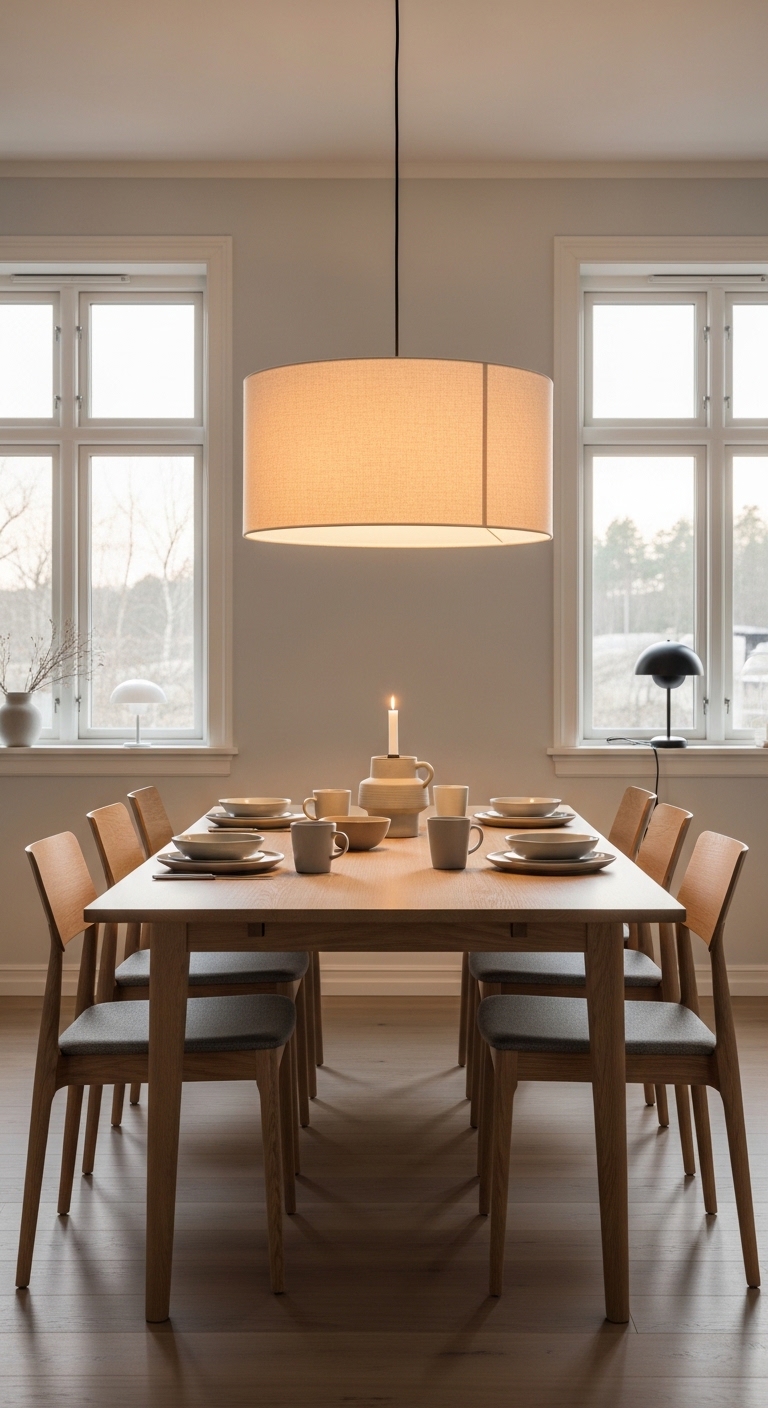
The drum shade pendant is the quiet sophisticate of dining room lighting. It’s not flashy, it’s not trendy — it’s just genuinely good-looking in almost any space. A wide cylindrical shade, whether in linen, velvet, or a painted finish, directs light beautifully downward onto the table, creating a soft, intimate pool of warm light exactly where you need it. No glare, no harsh spots. Just dinner-party-ready illumination.
For a dining room that feels pulled-together and calm, a linen drum shade in ivory or warm gray is almost impossible to mess up. Want something a little more expressive? Go for a drum shade in a deep jewel tone — forest green, midnight blue, or terracotta. The interior of the shade reflects that color subtly onto the table and people sitting around it, adding a gorgeous depth. Size up if you’re unsure — a drum shade that’s too small above a large table looks underpowered.
Linear Multi-Pendant (Island Style)
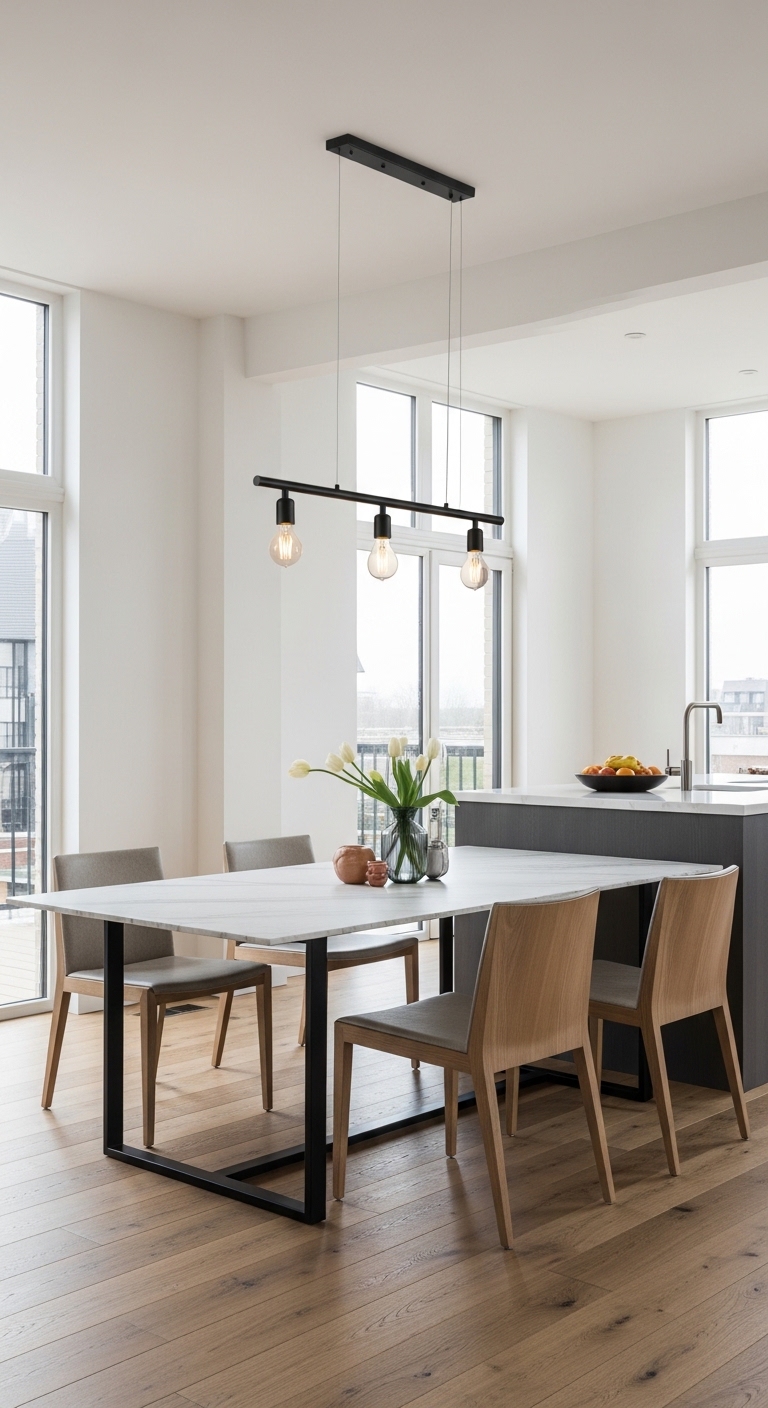
If you have a long rectangular dining table — and most of us do — a linear multi-pendant fixture is the most logically satisfying lighting choice you can make. Rather than one pendant hovering awkwardly in the middle, a linear fixture runs the length of the table, distributing light evenly from end to end. Guests at both ends get equal illumination, and the entire fixture creates a visual line that actually reinforces and celebrates the shape of your table.
These come in two main forms: a single elongated bar with multiple bulbs or shades, or a series of individual pendants mounted on a single canopy plate. The bar style reads more contemporary and sleek; the individual pendants have a more artisanal, collected feel. For open-plan dining rooms that flow into a kitchen, linear pendants also create a natural visual boundary that defines the dining zone without needing a physical wall.
Exposed Bulb Industrial Pendant
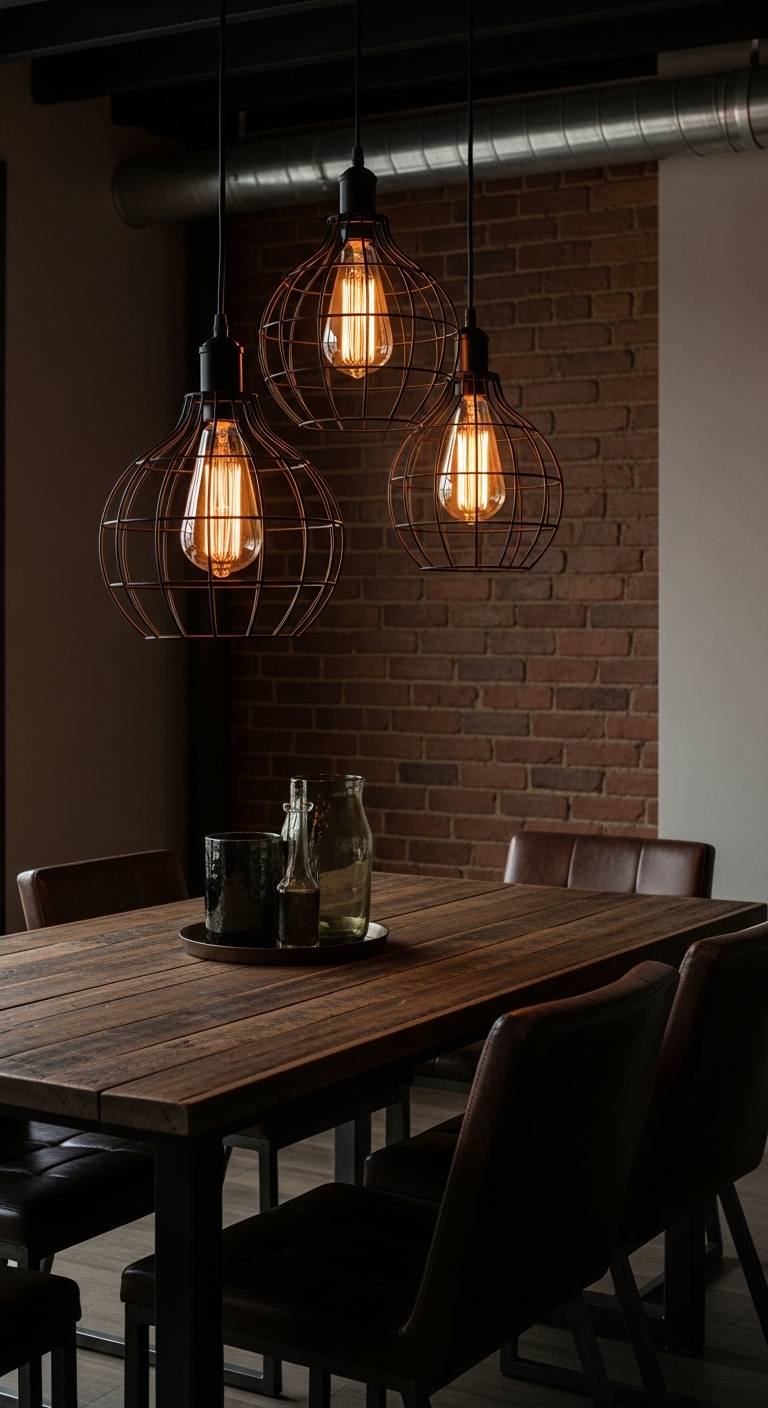
The industrial pendant is raw, honest, and deeply satisfying in the right space. Strip away the shade and let the bulb itself be the statement — especially a large-format Edison or globe bulb with visible filaments, which glow in the most inviting amber tone imaginable. This style started in converted loft apartments and has since made itself completely at home in everything from farmhouse dining rooms to modern urban spaces.
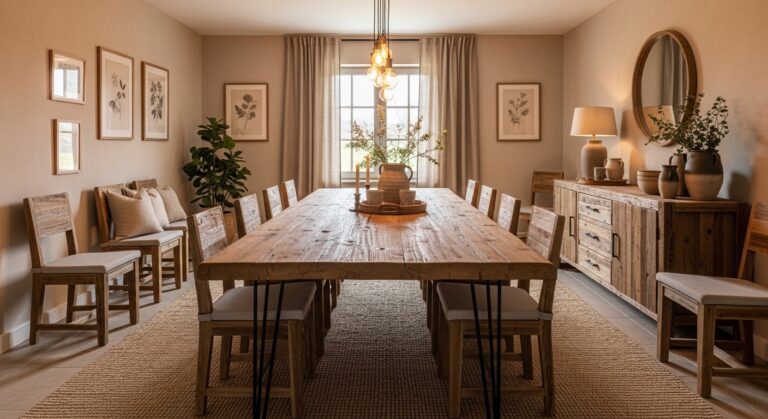
The key to making exposed bulb pendants work in a dining room is clustering them. One solo bulb pendant looks like an afterthought. Three or five, hung at varying heights above a reclaimed wood table, look intentional and striking. Use a dimmer to control the mood — these bulbs at full power can feel harsh, but pulled back to 60 to 70%, they’re pure golden-hour magic. Mix with black iron and aged leather for a full industrial moment, or contrast with soft textiles for an interesting tension.
Woven Bamboo Globe
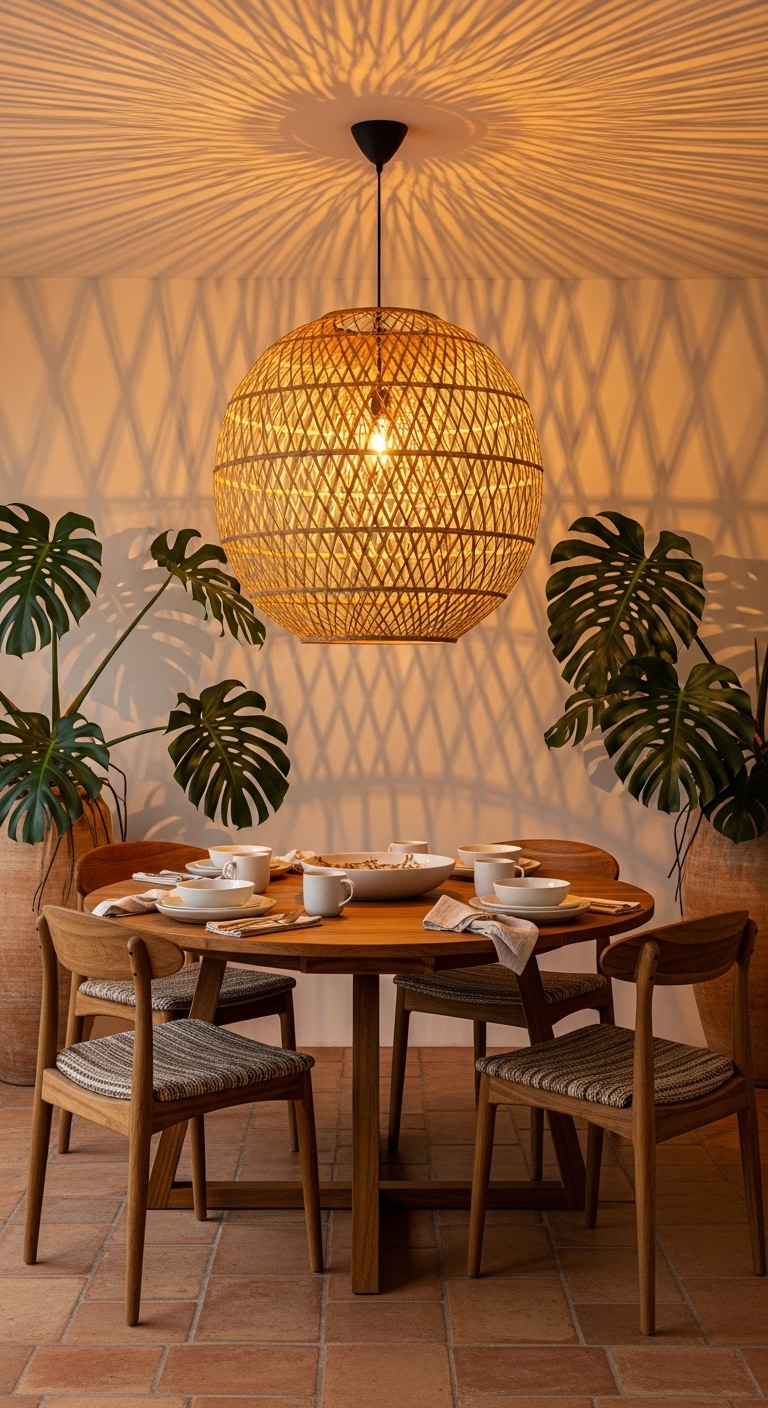
The bamboo globe pendant takes the warmth of the rattan idea and cranks it up. These spherical, intricately woven fixtures have roots in Southeast Asian craft traditions, and they bring an irreplaceable sense of handmade humanity to a dining room. The weaving creates a pattern of light and dark gaps, so when the bulb is on, you get this gorgeous dappled glow that transforms the ceiling into something almost decorative.
Bamboo globes are a natural fit for eclectic, bohemian, or tropical-influenced dining rooms, but they also work beautifully in contemporary minimalist spaces where one organic element provides essential visual relief. Go oversized — a 20-inch or larger globe above a round dining table creates a real centerpiece moment. These are also among the most environmentally responsible choices you can make, since bamboo is one of the fastest-growing natural materials on earth.
Sputnik Chandelier
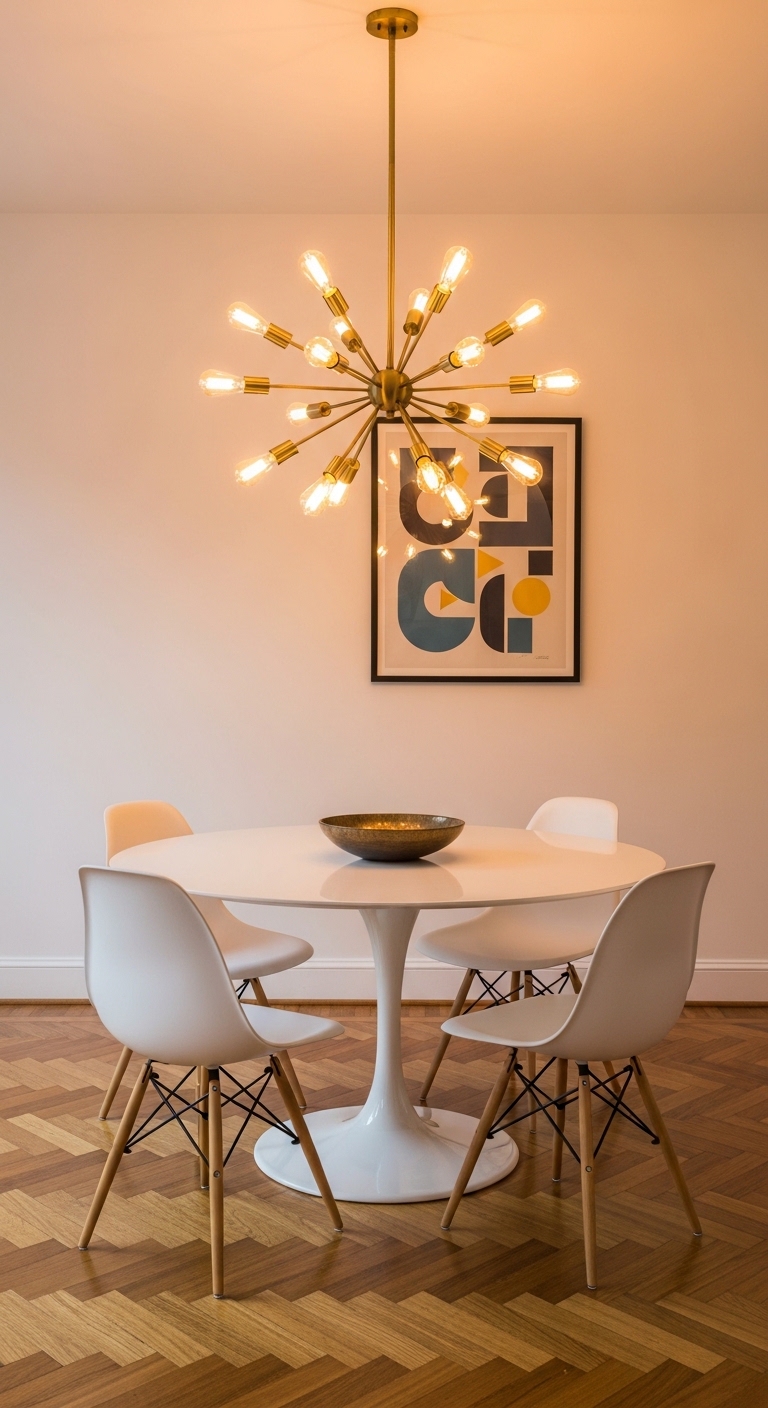
Named after the Soviet satellite, the Sputnik chandelier looks like something out of a mid-century science museum — and it’s absolutely thrilling above a dining table. Multiple arms radiate outward from a central sphere, each tipped with a small exposed bulb. The result is a fixture that reads as both retro-futuristic and timeless, a genuine conversation piece that works as visual art even when switched off.
Sputnik chandeliers are particularly powerful in dining rooms with high or vaulted ceilings — the radiating arms give the fixture a sense of scale and drama that flat or simple fixtures can’t achieve in tall spaces. Gold and brass finishes lean warm and glamorous; chrome and brushed nickel versions feel cooler and more sculptural. They pair naturally with mid-century modern furniture — think tulip chairs, a walnut sideboard, and clean architectural lines throughout the room.
Sculptural Black Metal Pendant
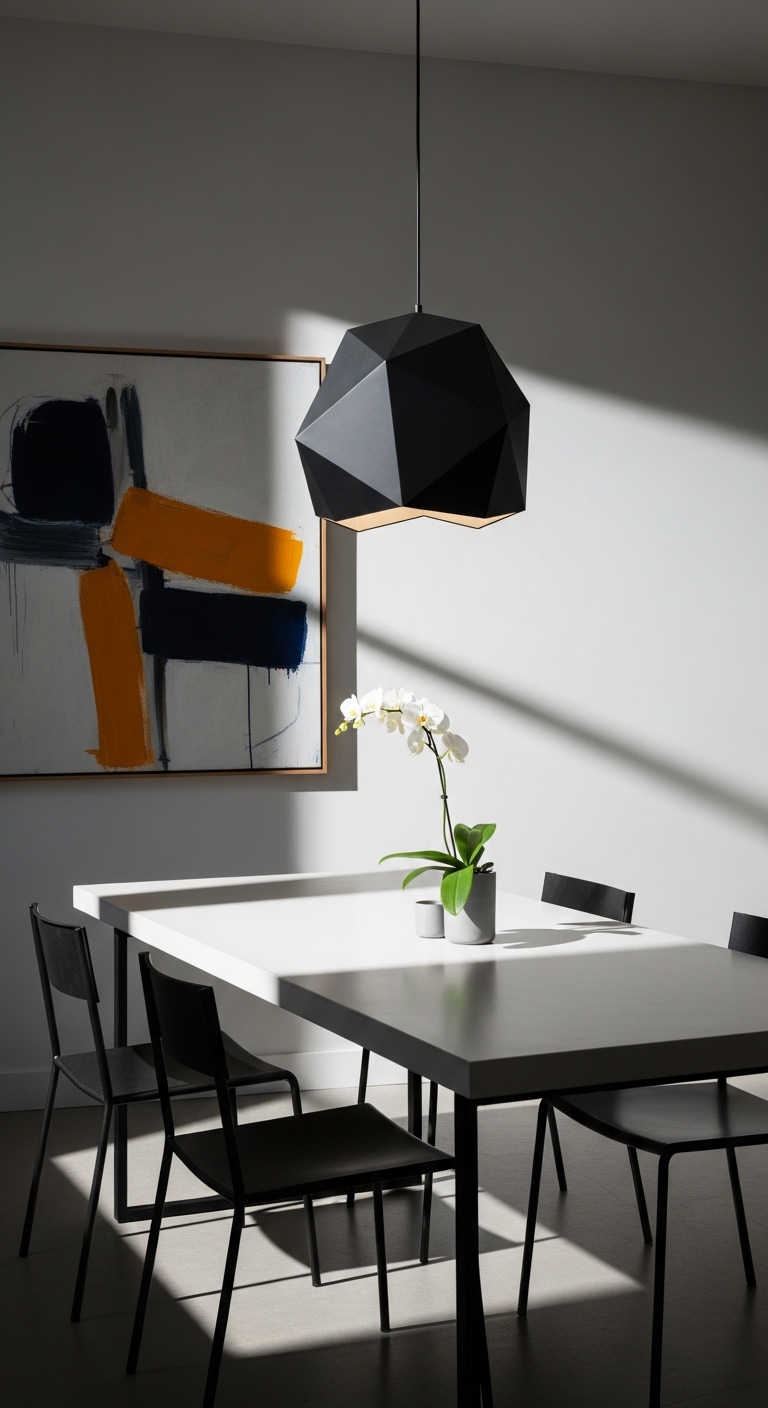
Matte black fixtures have dominated design trends for several years now, and for good reason — they create a visual anchor in any room without competing with color, pattern, or material. A sculptural black metal pendant, with an interesting geometric or organic form, brings architectural sophistication to the dining room. It doesn’t try to blend in. It asserts itself as a deliberate design choice, which is exactly what you want from a pendant that’s essentially always in your line of sight during meals.
What separates a sculptural pendant from a standard one is its form even with the light off. Look for interesting angular profiles, unexpected negative space, or intersecting rings and curves. These fixtures become conversation starters long before dinner is served. They work best in dining rooms that are otherwise relatively neutral — white, gray, warm beige — where the black fixture can stand out as the star rather than compete with busy wallpaper or heavily patterned rugs.
Candle-Style Chandelier
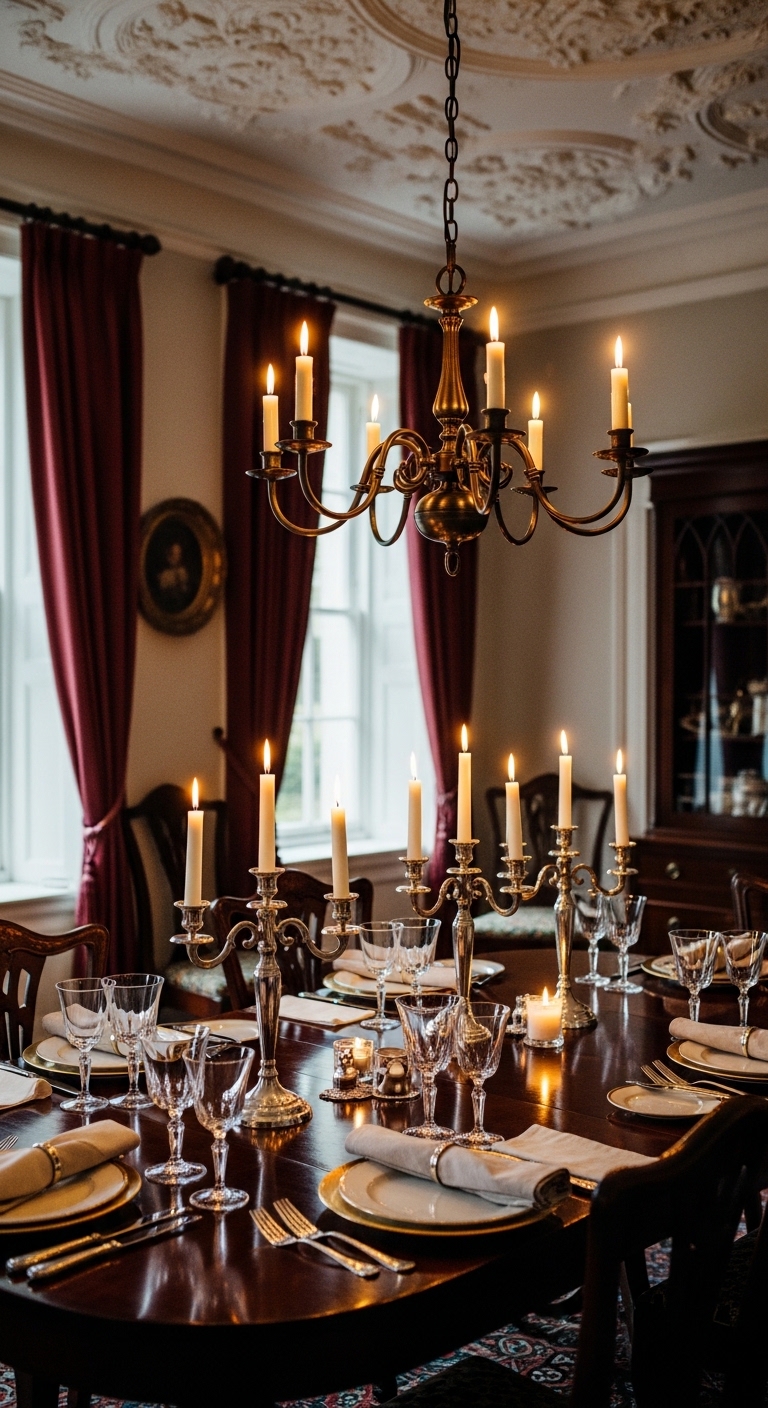
Before electricity, candlelight was the only option — and there’s a reason we still romanticize it. A candle-style chandelier mimics this with multiple arms each holding a flame-shaped bulb, recreating that warm, dancing quality of real fire in a far more practical format. This fixture type spans centuries of design, from Gothic wrought iron to Rococo gilded gold to clean contemporary interpretations in oil-rubbed bronze.
For a dining room with traditional or transitional styling, a candle chandelier feels perfectly native. For a more modern space, look for a candle-style chandelier with cleaner lines and minimal ornamentation — the concept carries, but the aesthetic shifts to suit the room. Use candle-flame LED bulbs rather than traditional ones; they have a flickering quality built in on some models that’s genuinely beautiful, and they’re far more energy-efficient. Always pair with a dimmer for the full effect.
Oversized Paper Lantern
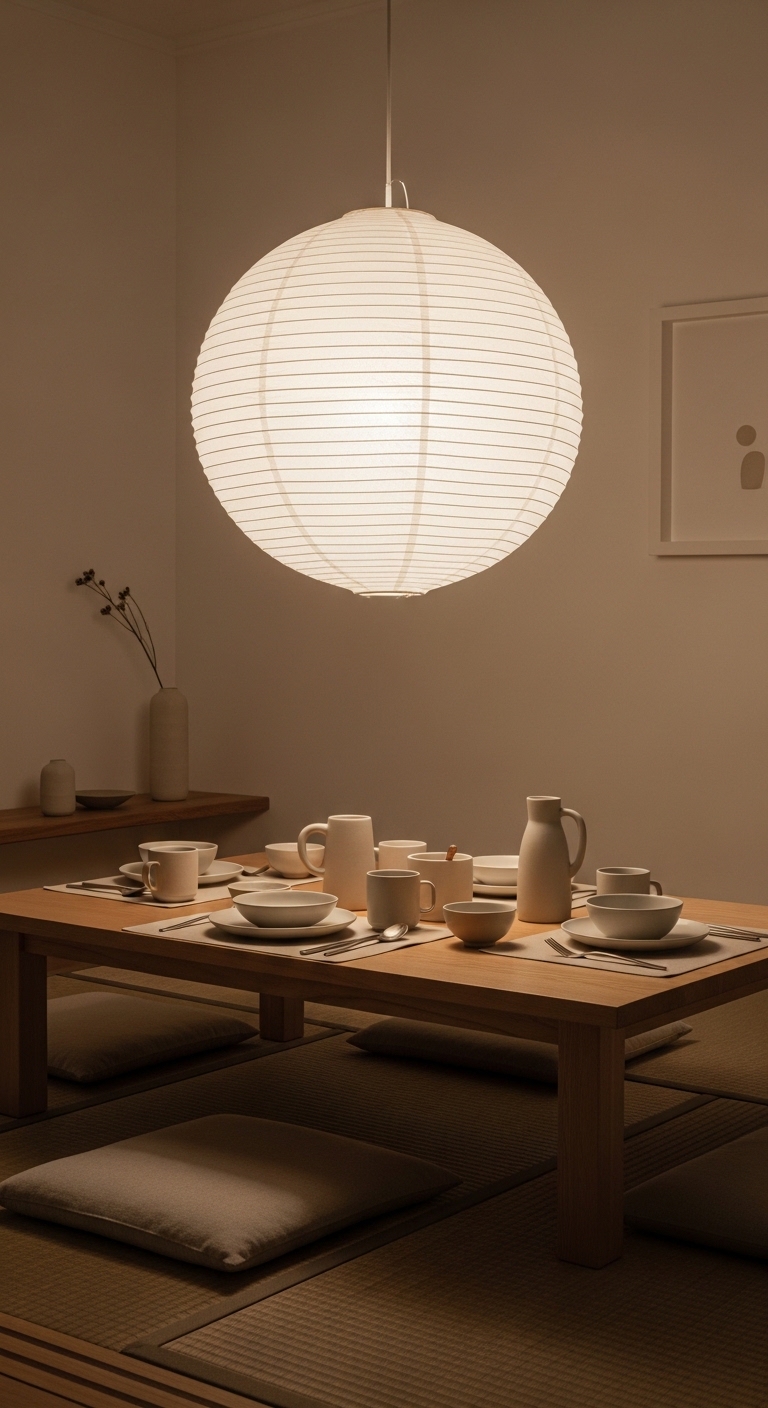
Paper lanterns have been part of dining culture across Asia for centuries — and the West finally caught up. An oversized paper lantern pendant (think 20 inches and above) above a dining table creates soft, diffused, utterly flattering light. Paper is one of the best light diffusers that exists; it absorbs and scatters light so evenly that it virtually eliminates harsh shadows. Everything and everyone looks better under it.
White paper lanterns are clean and serene, perfect for minimalist and Japandi-influenced dining rooms. But don’t overlook natural fiber versions or handmade rice paper lanterns with subtle texture — these have more visual warmth and feel more artisanal. You can also find incredible paper lanterns in sculptural shapes — folded geometric forms, accordion structures, or layered origami-inspired designs. These land in the art-as-fixture category and genuinely elevate the room.
Tiffany-Style Stained Glass Pendant
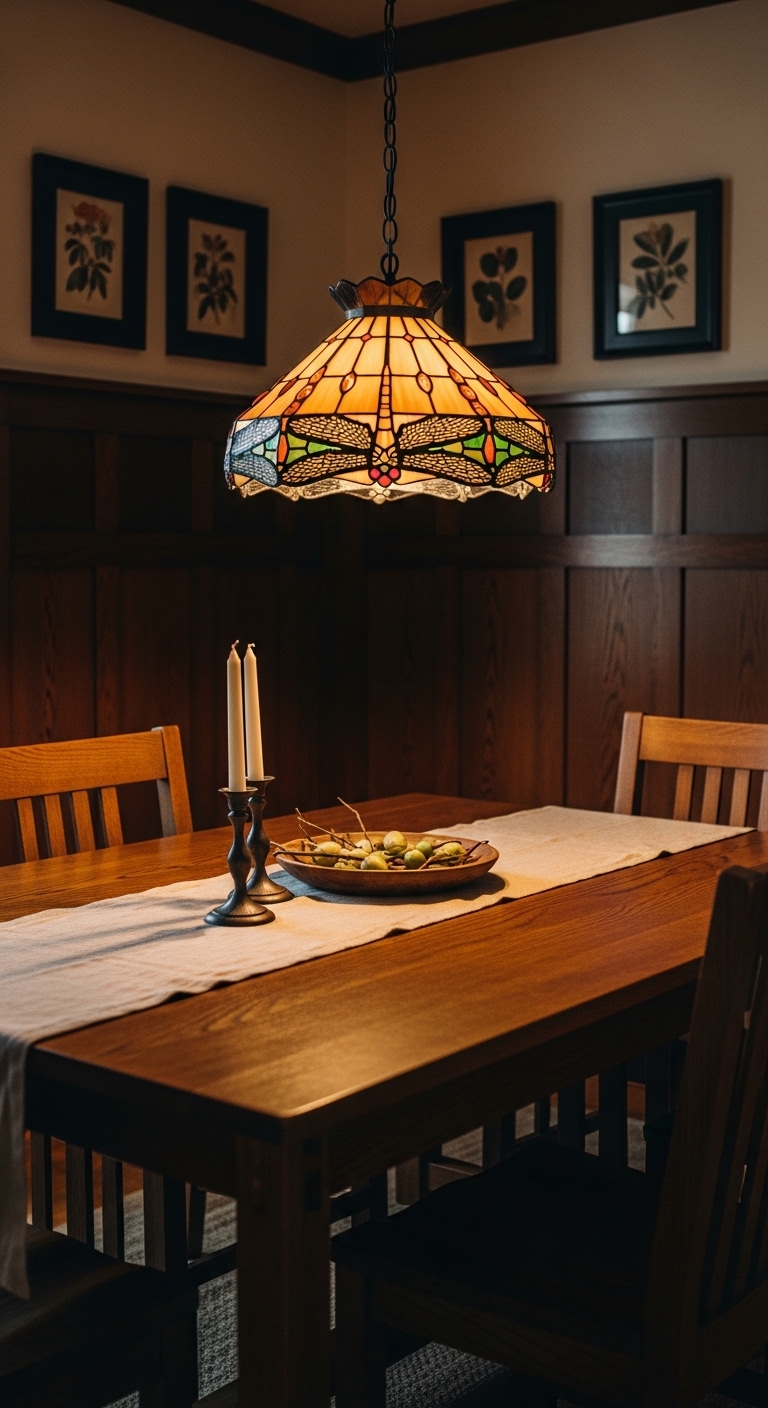
Louis Comfort Tiffany invented something genuinely extraordinary — a way to make light itself feel like art. A Tiffany-style stained glass pendant above your dining table turns on like switching on a painting. The lead-bordered segments of colored glass filter light into rich jewel tones that wash across your table, your guests, and your walls in the most stunning way. It’s warm, it’s intimate, and it carries a craftsman heritage that few other fixtures can match.
True antique Tiffany pendants are museum-worthy investments, but excellent quality reproductions exist at accessible price points. Look for hand-poured glass segments and genuine copper foil or lead construction rather than plastic. Floral motifs in amber and green are the most classic; geometric patterns feel more contemporary. Tiffany pendants work beautifully in craftsman, arts-and-crafts, and eclectic dining rooms, and they add incredible character to older homes.
Modern Arc Floor Lamp (Dining Edition)
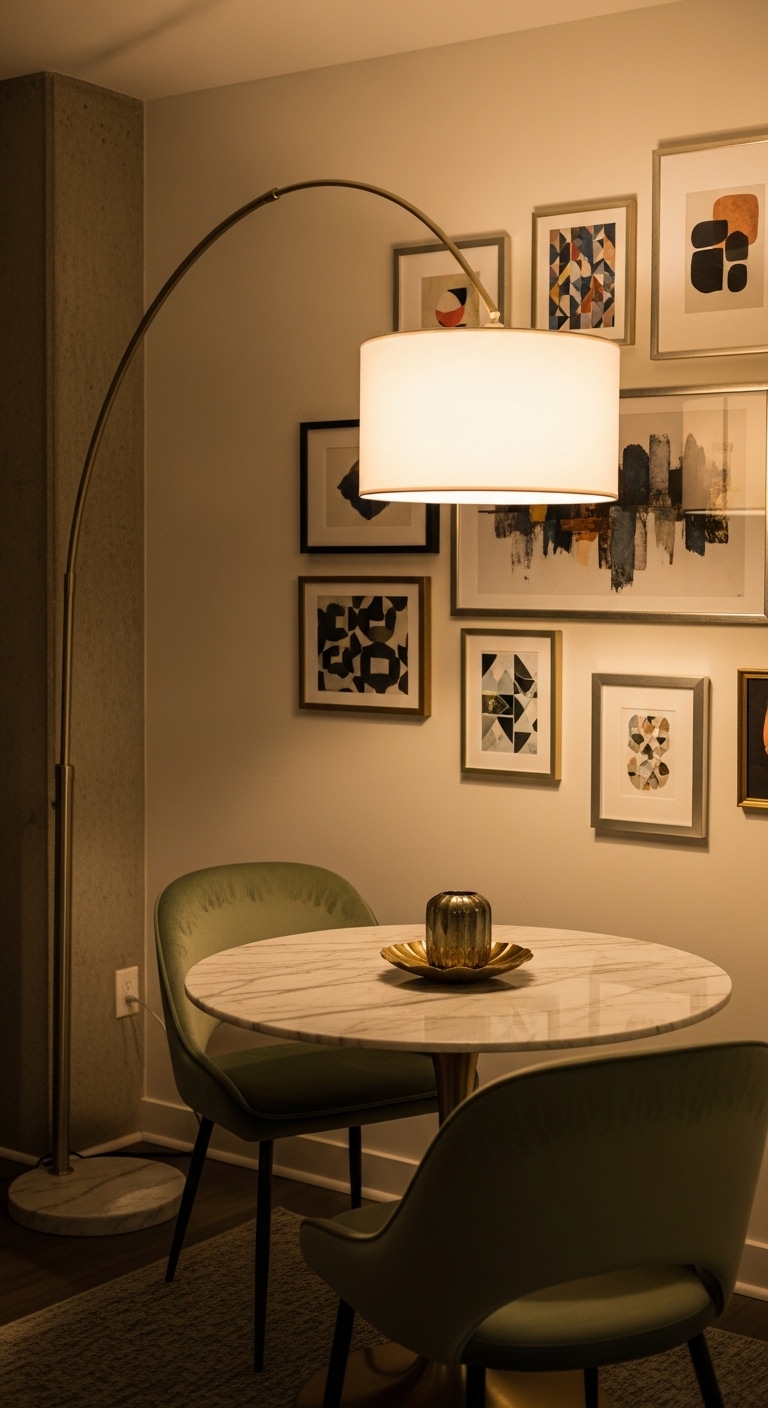
Wait — a floor lamp for dining room lighting? Absolutely yes, and this idea changes everything for renters or anyone who wants flexibility. A large arc floor lamp with a wide shade positioned to arc over the dining table provides beautiful overhead-style illumination without touching the ceiling at all. This works especially well in smaller dining spaces, rentals, or loft apartments where ceiling fixtures are limited or awkward to install.
Choose a floor lamp with a wide, downward-facing shade (at least 12 to 14 inches across) so the light actually pools over the table properly. Marble-base arc lamps in brass or gold add a high-end gallery feel; black powder-coat versions are sleek and modern. Because you can reposition a floor lamp easily, it gives you total flexibility — push it aside when you don’t need it, swing it into position for dinner. Layer with candles on the table for the ideal combination of ambient and intimate light.
Geometric Cage Pendant
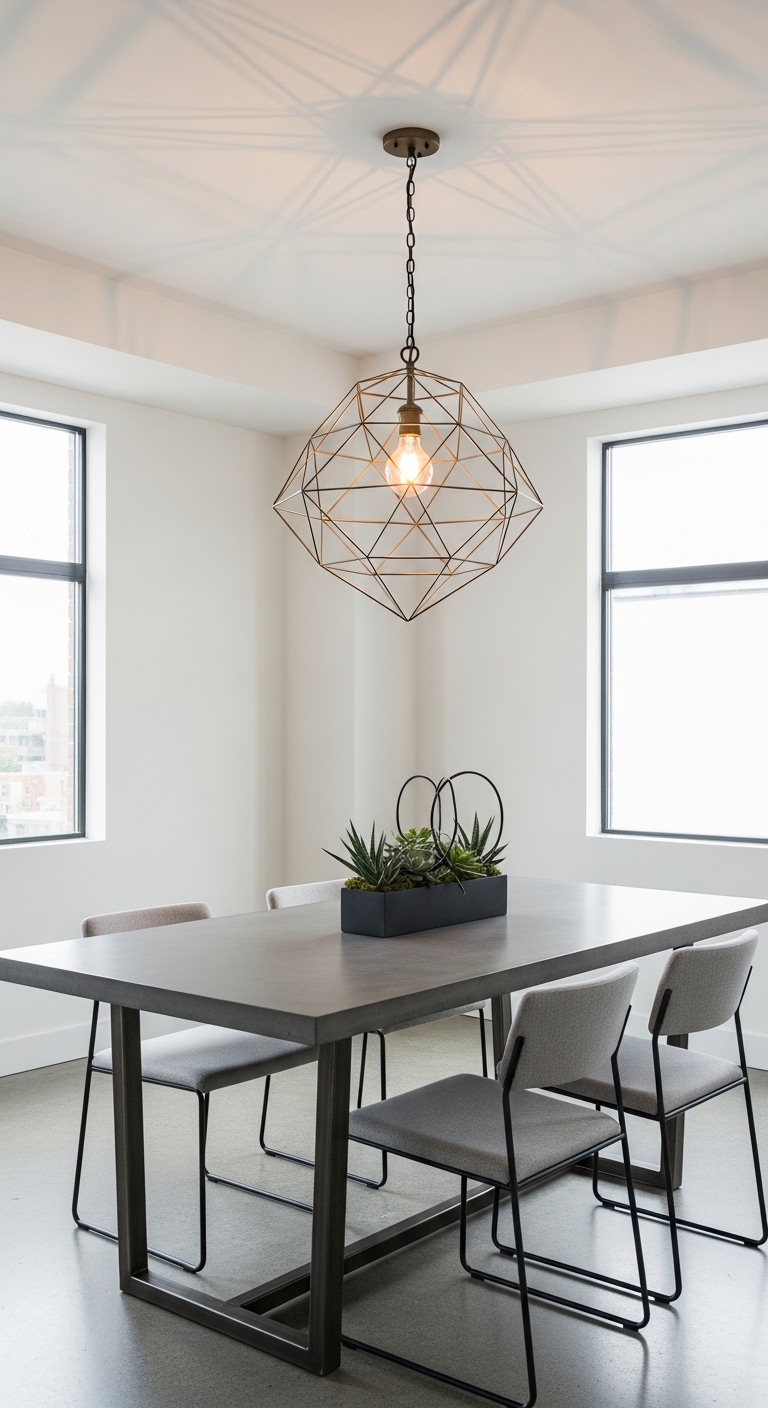
Geometric cage pendants — think open-wire polyhedrons, diamond shapes, and faceted structures — occupy an interesting middle ground between industrial and contemporary design. They’re structural without being heavy, decorative without being fussy. When lit from within, the wire frame creates a shadow geometry on the ceiling that functions almost like projected wallpaper. It’s subtle, beautiful, and endlessly interesting.
These work best above dining tables in modern, transitional, or eclectic spaces. In a room with clean lines and neutral colors, a geometric cage pendant adds just enough texture and visual complexity to make the space feel finished without overwhelming it. Oversized versions — 18 inches and above — make a stronger architectural statement. Go for finishes that match your other hardware: black, brass, copper, or chrome all read completely differently within the same cage form.
Plaster or Ceramic Handmade Pendant
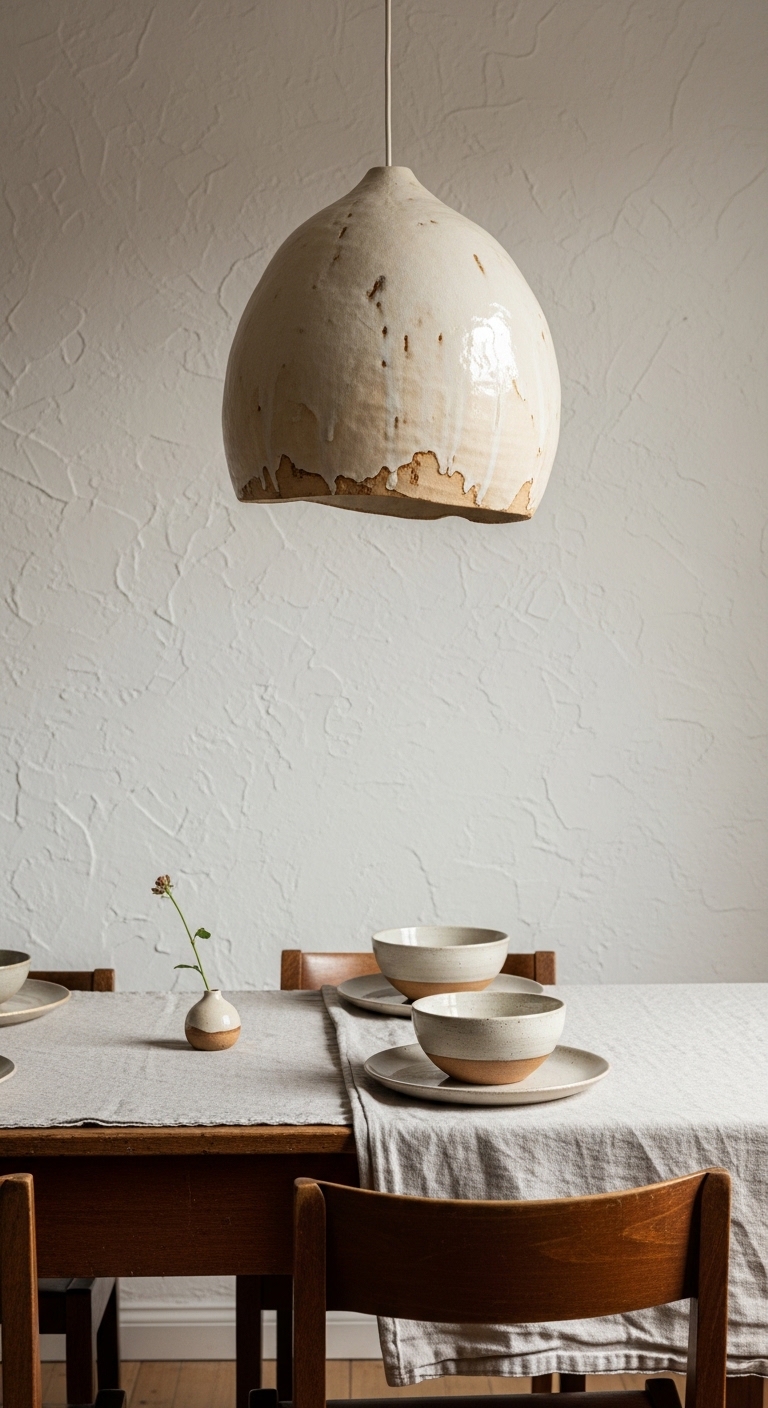
In an era of mass production, there’s something deeply satisfying about a dining room fixture that was made by actual human hands. Plaster pendants have a tactile, sculptural quality that photography barely captures — they absorb and reflect light in completely unique ways depending on the time of day and angle of the sun. Ceramic pendants carry the marks of the throwing process: subtle ridges, organic asymmetry, and a glaze that catches light unexpectedly.
These fixtures work especially well in dining rooms with a focus on texture and craft: Wabi-sabi interiors, warm Mediterranean styles, and layered eclectic spaces. Because plaster and ceramic tend toward neutral tones — whites, creams, terracottas, and earthy grays — they blend beautifully with almost any color scheme. A single large ceramic pendant above a farmhouse table, maybe from an independent ceramic artist, feels like a piece of collected art more than a light fixture.
Smoked Glass Globe Pendant
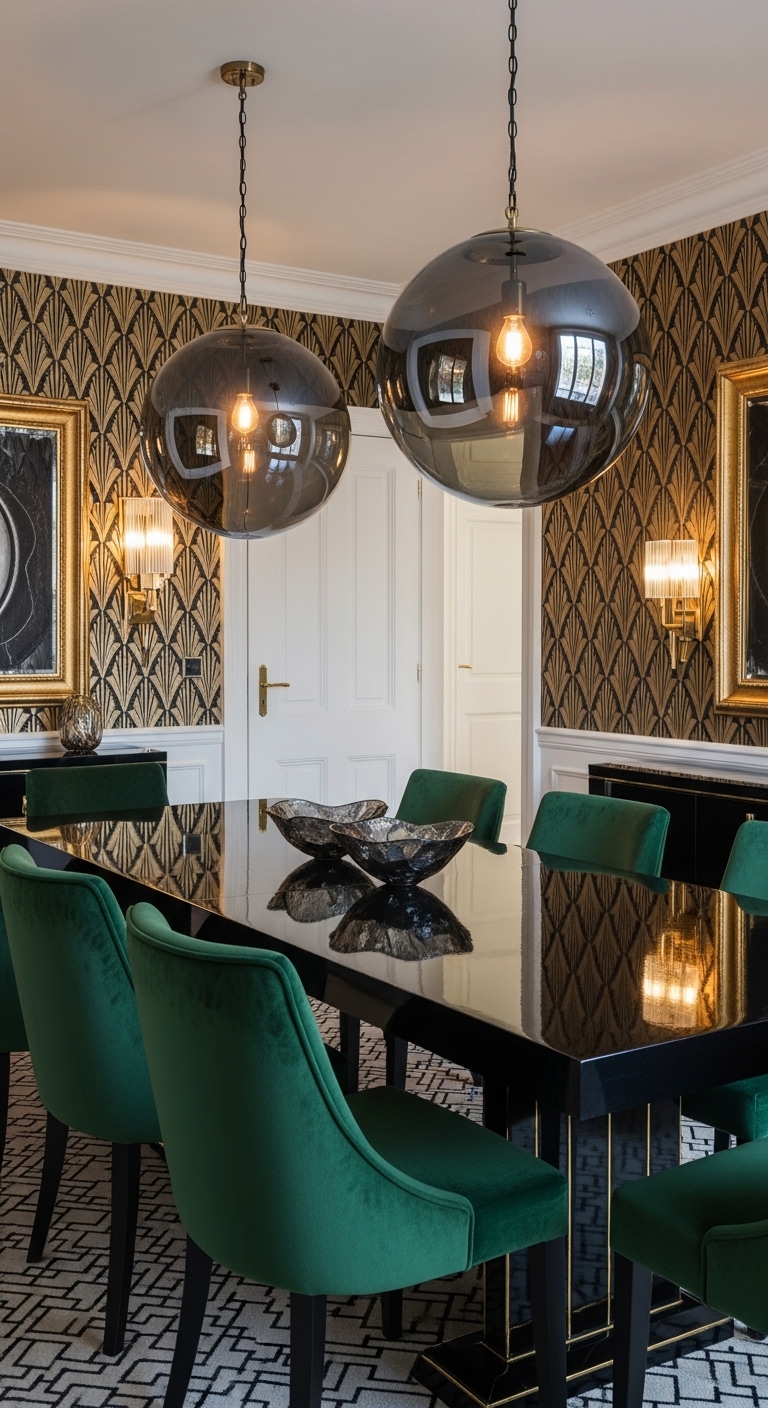
Smoked glass occupies a very specific visual territory: it’s simultaneously transparent and mysterious. You can see the bulb inside, but the dark tinted glass softens it, adds depth, and gives the fixture a sophistication that clear glass can’t quite match. A smoked glass globe pendant above the dining table reads as quietly luxurious — the kind of thing you’d see in a boutique hotel dining room and immediately want to know where to buy.
Grey and amber-smoked glass are the most popular choices. Grey keeps things cool and contemporary; amber-smoked glass warms everything with a subtle golden cast. These pendants work in clusters of two or three just as beautifully as they do as single statement fixtures. Pair with a brushed brass or chrome ceiling canopy and a matching bulb for a fully coordinated look. They’re particularly effective in art deco-influenced dining rooms, where the interplay of geometry and glass is already a design language.
Capiz Shell Chandelier
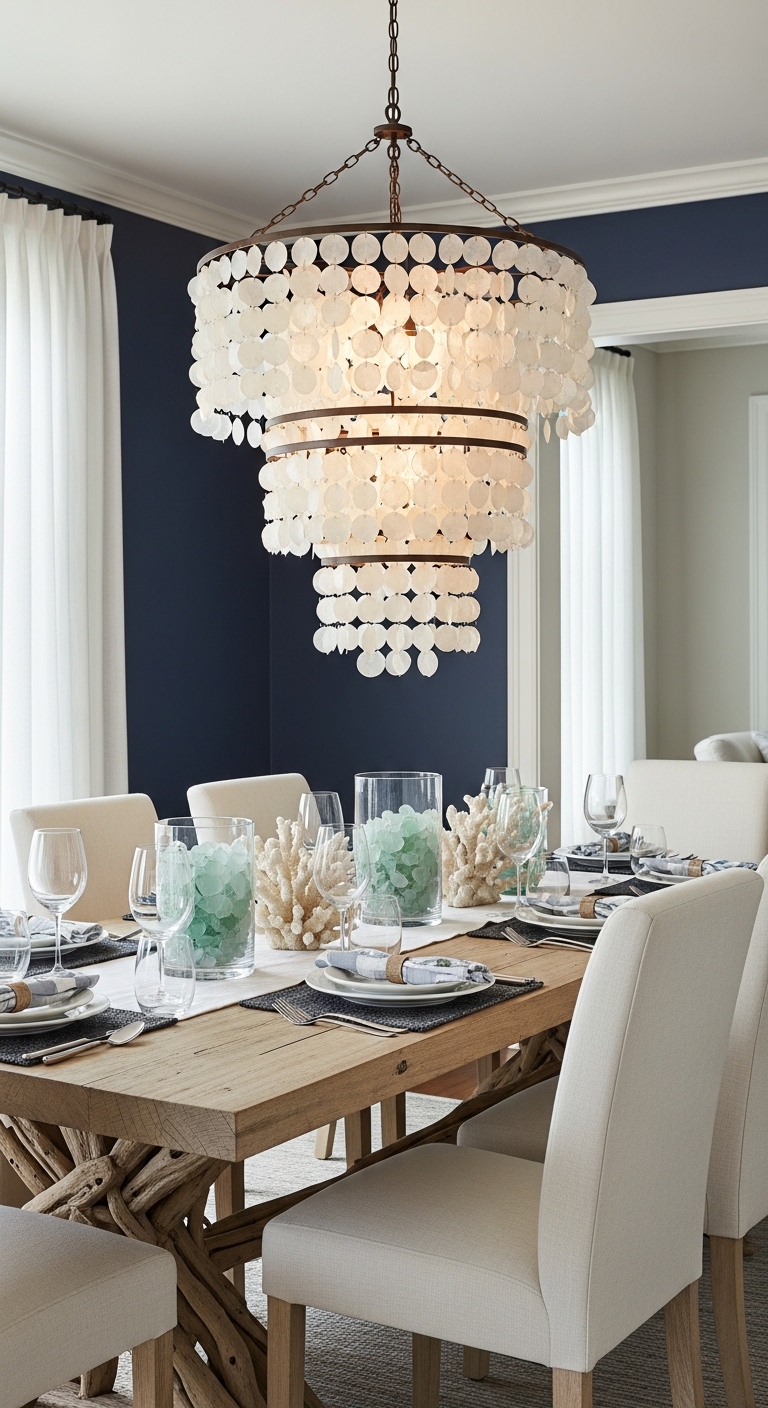
Capiz shell chandeliers are one of those fixtures that look like they belong in a dream. Capiz is a thin, translucent shell harvested sustainably from the Philippines, and when arranged in overlapping layers, it catches and diffuses light with a pearlescent shimmer that nothing artificial can replicate. The shells move slightly in air currents, creating a gentle, organic motion that makes the fixture feel almost alive.
These chandeliers skew coastal and tropical in their associations, but in a white, airy dining room, they can transcend any specific style and just read as beautiful. They’re particularly striking against a backdrop of deep color — a navy or forest green accent wall makes the white-pearl shimmer of the capiz shells almost luminous by contrast. Handle these with care during installation — capiz is delicate — and keep them away from very high-traffic areas.
Rustic Wagon Wheel Chandelier
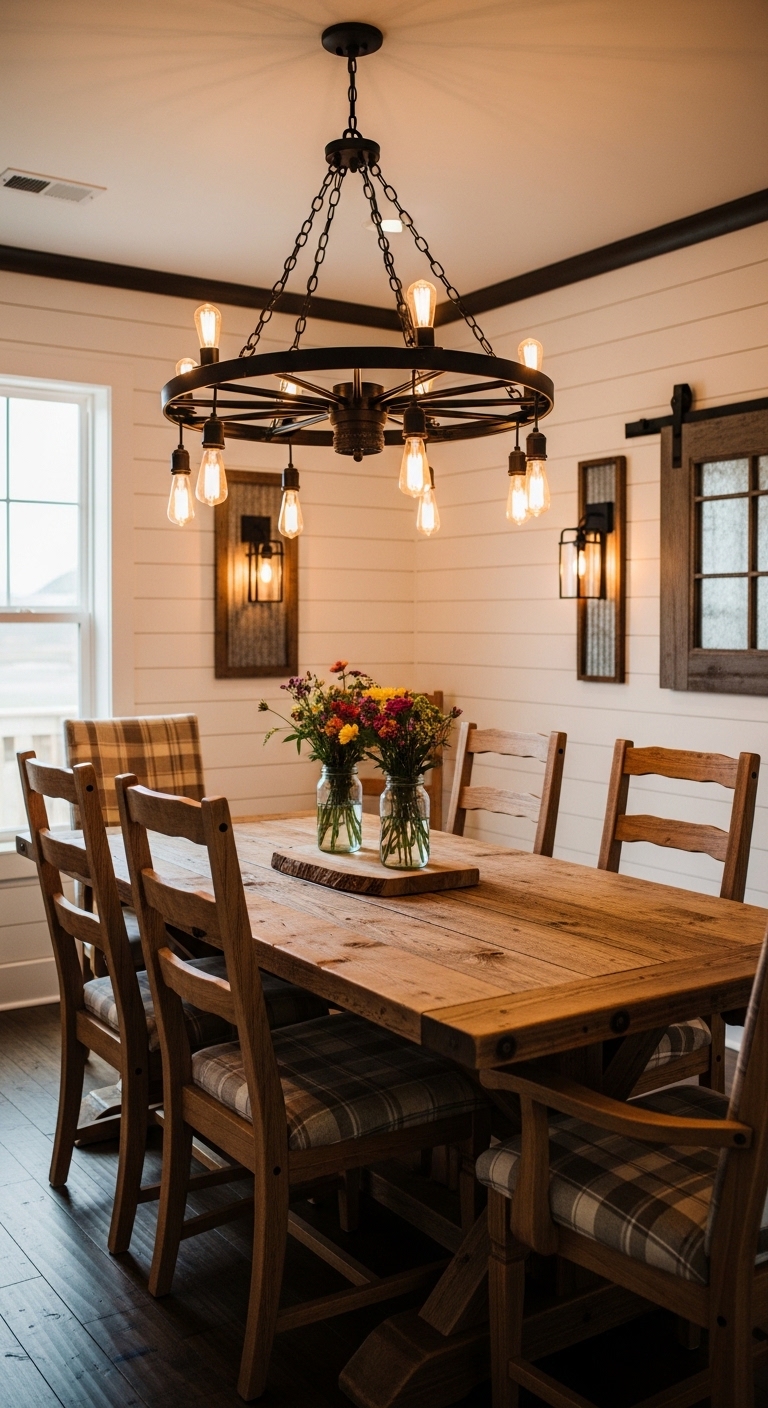
Farmhouse and rustic interiors have a genuine loyal following, and the wagon wheel chandelier is their most iconic fixture. A wrought iron ring — shaped like a wagon wheel, sometimes with faux-wood spoke accents — fitted with candle-style bulbs creates a statement that’s unapologetically country, warmly nostalgic, and genuinely striking in the right space. In an open-plan farmhouse dining room with shiplap walls and a barn door, it’s practically required.
Don’t let the rustic label fool you into thinking these are unsophisticated. Modern wagon wheel chandeliers come in refined finishes — distressed black, aged bronze, even whitewashed iron — that elevate the design beyond the purely decorative. Scale up confidently in rooms with high wood-beam ceilings. Pair with simple Edison bulbs for a warm, heritage feel, and combine with a hand-hewn wooden dining table for maximum authenticity.
Cloud-Shaped Ceiling Light
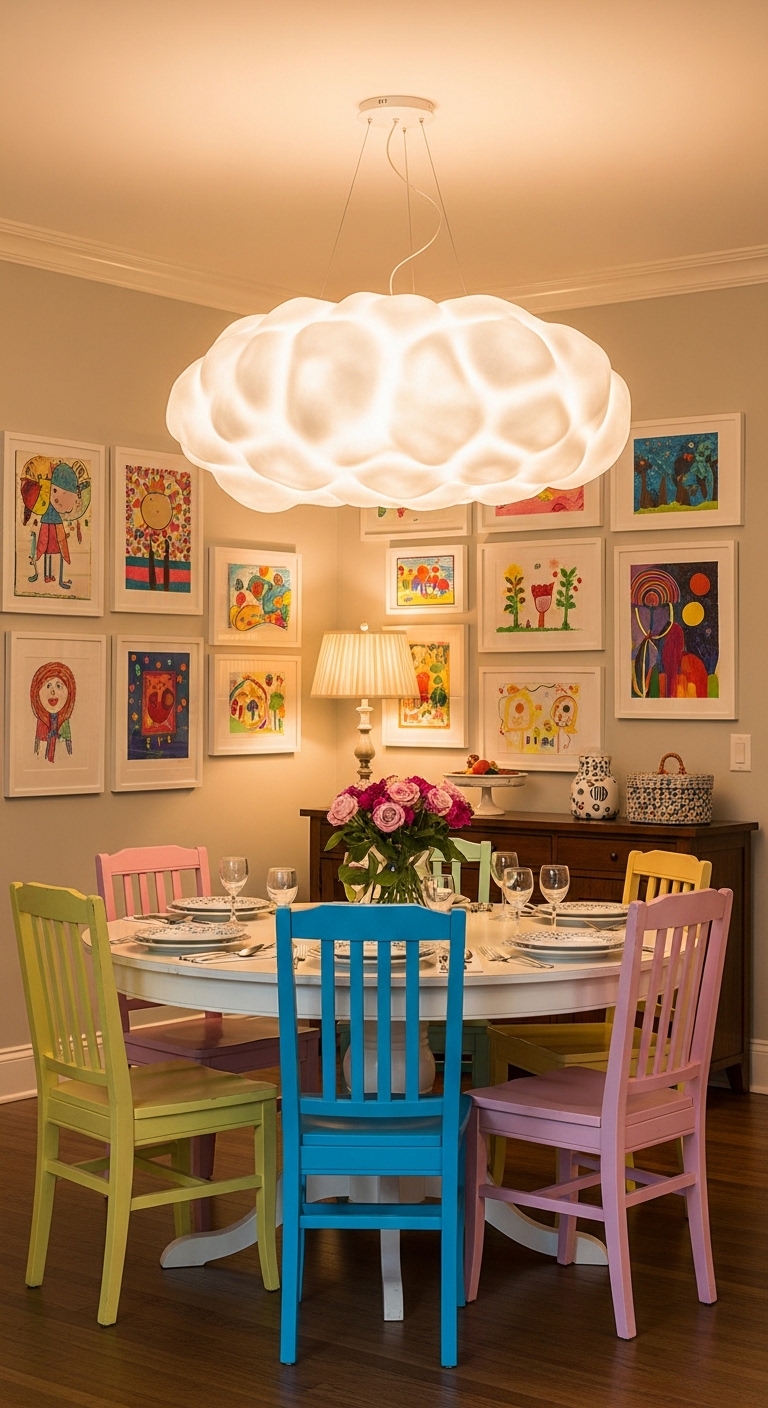
If you want the most playful, unexpected, and utterly charming dining room fixture on this list, here it is. Cloud-shaped ceiling lights — available in everything from simple white fiberglass puffs to elaborate multi-layered sculptural forms — bring whimsy and imagination to a space where it’s least expected. And that surprise factor is exactly what makes them so effective. Guests look up, see a cloud, and the entire room suddenly feels different — lighter, more joyful, more human.
These work especially well in dining rooms for families with children, in eclectic creative homes, and in any space where the goal is joy over formality. Pair a cloud pendant with clean white walls and minimal furniture to let the fixture be the full personality of the room. LED versions with built-in warm light strips allow you to control the mood without a visible bulb. This is the fixture for people who believe that dining rooms should feel like an adventure, not a ceremony.
Terrarium-Style Glass Pendant
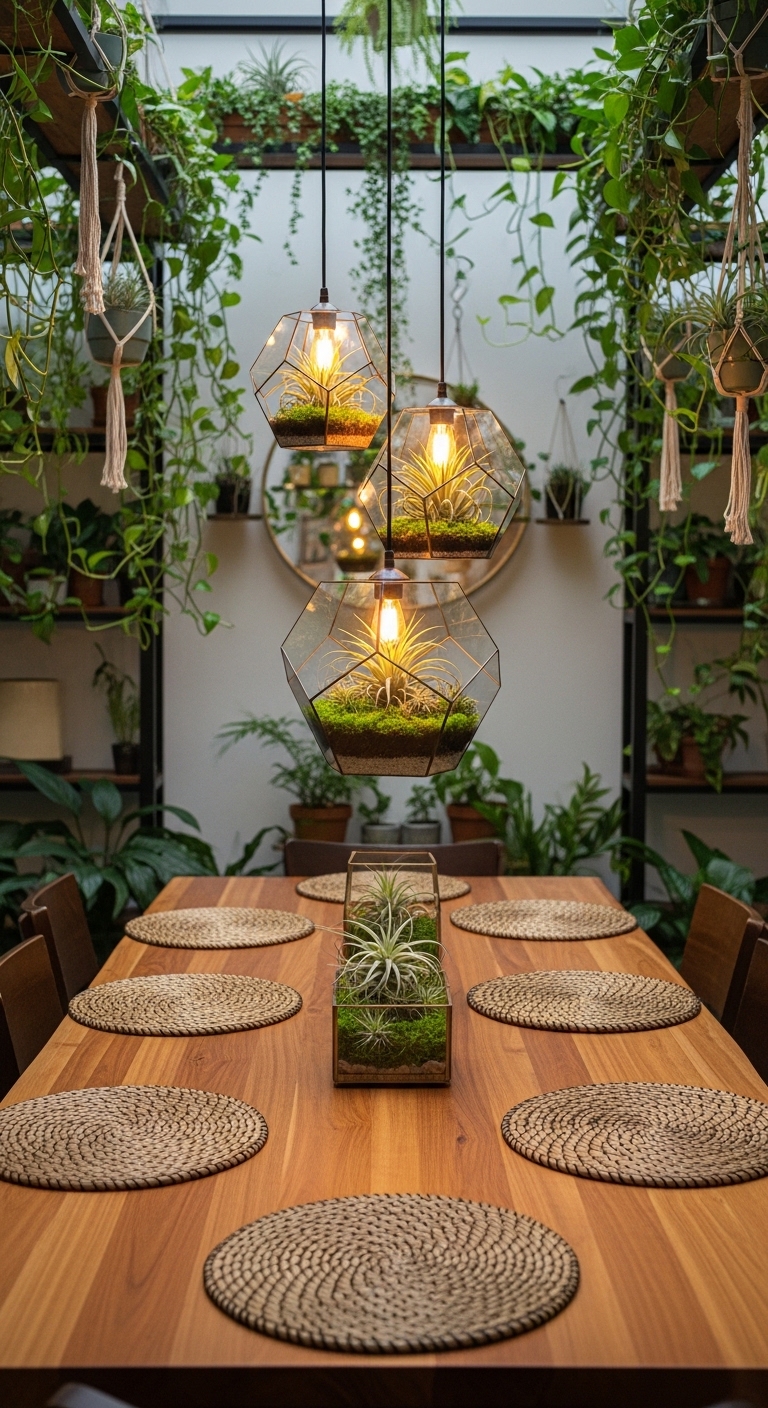
The terrarium pendant takes the geometric cage idea and evolves it into something more naturalistic. An angular glass enclosure — think a Victorian terrarium or a geometric greenhouse in miniature — houses a bulb and sometimes even a small preserved plant or moss arrangement inside. The result is part lighting, part living art installation. It’s remarkable above a dining table because it draws the eye and the imagination in equal measure.
These pendants are particularly well-suited to botanical-themed dining rooms, biophilic design spaces, and any room where nature and interiors are in ongoing conversation. Hang them at slightly different heights in a grouping of two or three for maximum impact. The glass walls catch reflections from the room around them, making the fixture change throughout the day as the light shifts — it genuinely never looks exactly the same twice, which is a rare quality in a light fixture.
Low-Hung Canopy Cluster
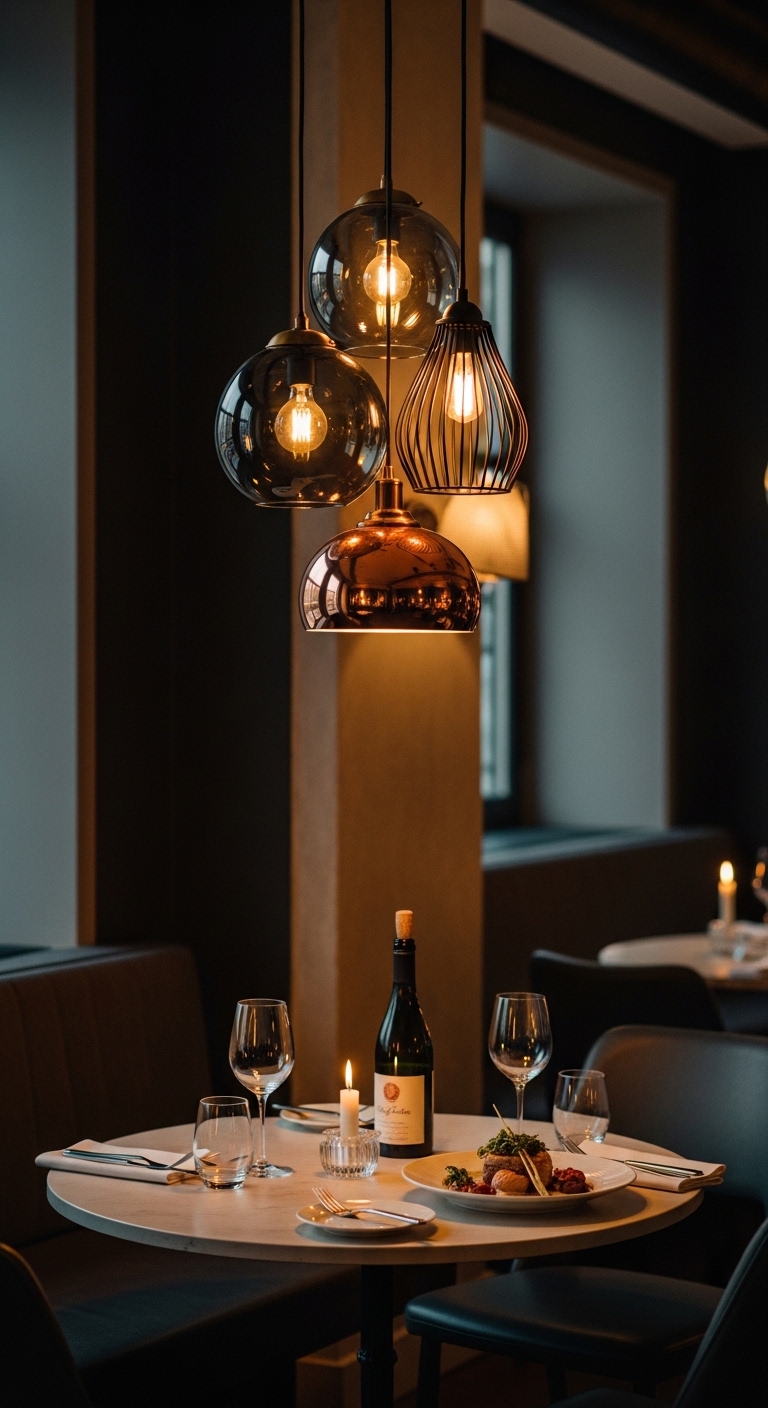
The low-hung cluster is a more intimate, considered approach to pendant lighting. Rather than one fixture at standard height, you hang multiple pendants from a single canopy plate, pulling them low — sometimes as close as 28 inches above the tabletop — and letting them exist almost in the same visual plane as the space itself. It creates a profoundly intimate atmosphere, almost like the light is leaning in to your conversation.
This works especially well in intimate dining rooms, smaller spaces, and anywhere that the goal is a cozy, restaurant-quality feel. Mix pendant styles deliberately — say, two smoked glass globes and one open-cage design — for an eclectic, collected aesthetic. Or keep them uniform for a sleeker look. The key rule: make sure no one will hit their head. Keep the lowest pendant at least 28 inches above the table surface, and ensure you have clear sightlines across the table between pendants.
Modern LED Flush Mount
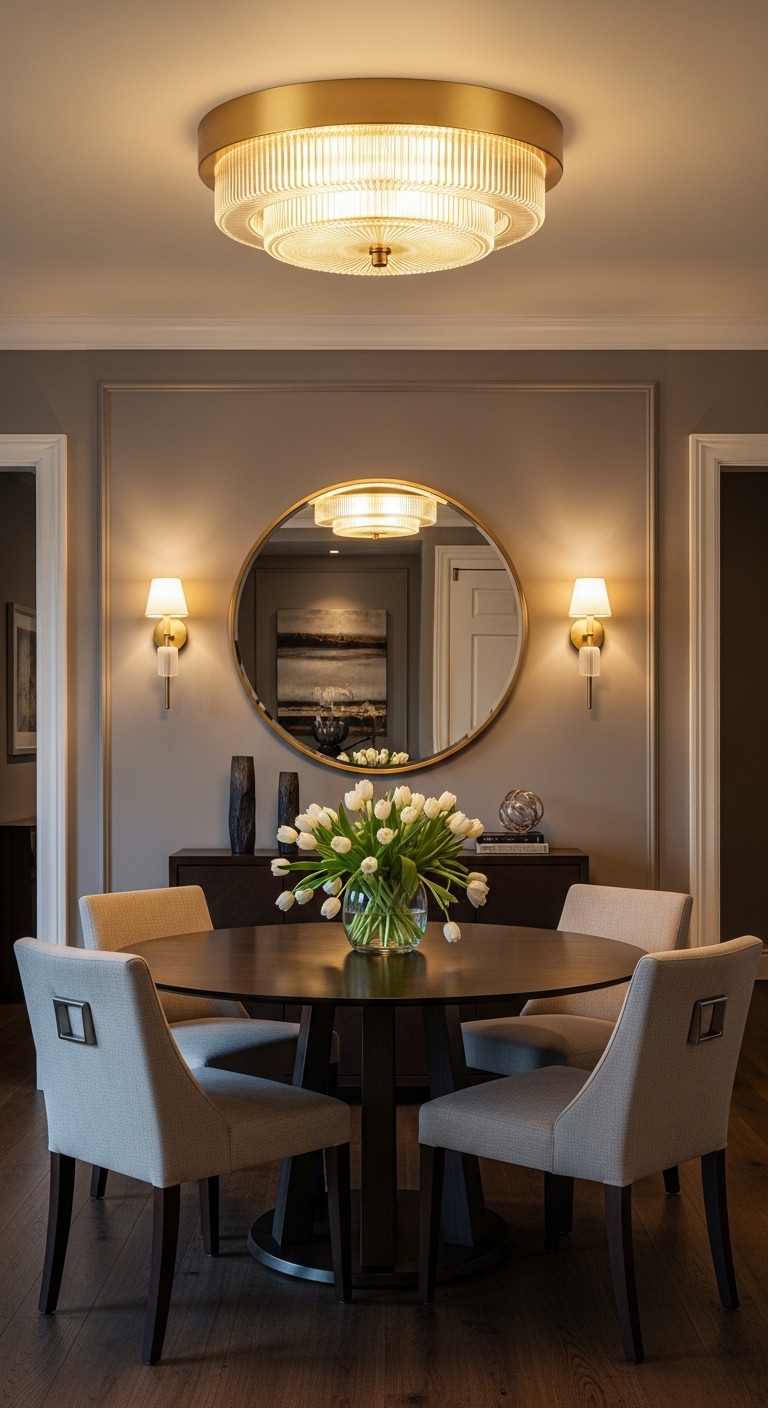
Not every dining room has the ceiling height for a pendant or chandelier, and that’s completely fine — because modern LED flush mounts have evolved into genuinely beautiful, design-forward fixtures that don’t compromise at all. Forget the basic white circle of years past. Today’s flush mounts come in architectural forms — ribbed glass discs, layered gold rings, sculptural alabaster-look panels, and backlit geometric panels — that look great even without a dramatic drop.
For low-ceiling dining rooms, a flush mount with a frosted or opal glass panel provides beautifully diffused, even illumination without the visual weight of a hanging fixture. Pair with wall sconces on either side of a dining room mirror or artwork to layer your light sources and create depth. LED flush mounts also offer the most versatility in color temperature — look for a fixture with a 2700K to 3000K warm white rating for a flattering, dinner-table-appropriate glow.
So, Which One Is Right for Your Dining Room?
Here’s the honest truth: there’s no universally correct answer — and that’s the most freeing thing about this decision.
Your dining room is a reflection of how you live, who you entertain, and what matters to you about being at home. The right fixture is the one that makes you want to sit down at your own table more often.
If you’re still unsure where to start, use this simple framework. For formal dining rooms, crystal chandeliers, candle-style chandeliers, or Tiffany pendants are your best friends.
For casual and family dining, rattan pendants, bamboo globes, or oversized paper lanterns create exactly the right relaxed warmth.
For modern minimalist spaces, smoked glass globes, geometric cages, or sculptural black metal pendants hit the mark.
For eclectic and bohemian rooms, brushed brass clusters, low-hung canopy clusters, or terrarium pendants give you personality without trying too hard.
For low-ceiling rooms, modern LED flush mounts, drum shades, or arc floor lamps are smart, stylish solutions that never feel like compromises.
One last tip worth remembering: whatever fixture you choose, install a dimmer switch. It costs almost nothing and transforms your chosen fixture from a light source into a mood-maker.
The best dining room lighting isn’t just about brightness — it’s about having control over the atmosphere at any given moment. Dinner parties deserve different light than Sunday breakfasts. Give yourself that flexibility and your dining room will always be exactly right.