25 Loft Apartment Decorating Ideas
Have you ever walked into a loft apartment and felt that rush — that wide-open, sky-high, “anything is possible here” feeling? That’s the magic of loft living.
But here’s the thing: all that gorgeous square footage, those exposed brick walls, and those soaring ceilings can quickly become overwhelming if you don’t know how to work with them.
Whether you’ve just moved into your first loft or you’ve been living in one for years and it still doesn’t feel quite right, this guide is for you.
We’re going to walk through 25 genuinely creative, practical, and personality-packed decorating ideas that turn raw open space into a home that actually feels like you — without losing that spectacular loft energy that made you fall in love with the place in the first time.
Let’s get into it.
Why Loft Apartments Demand a Different Decorating Approach
Before we jump into the ideas, let’s talk about why decorating a loft is genuinely different from decorating a traditional apartment.
In a conventional space, walls do the work for you. They define the bedroom, separate the kitchen, give the living room its shape. In a loft, you’re working with one massive canvas. That’s thrilling — but it also means every single design choice carries more weight. A wrong furniture placement doesn’t just look awkward; it makes the whole space feel chaotic. A great color choice doesn’t just brighten a corner; it transforms the entire mood of your home.
The goal here isn’t to fill the space. It’s to shape it, guide it, and give it rhythm — so that moving through your loft feels intentional and comfortable, not like wandering through a warehouse.
Idea 1: Use an Area Rug to Anchor Your Living Zone
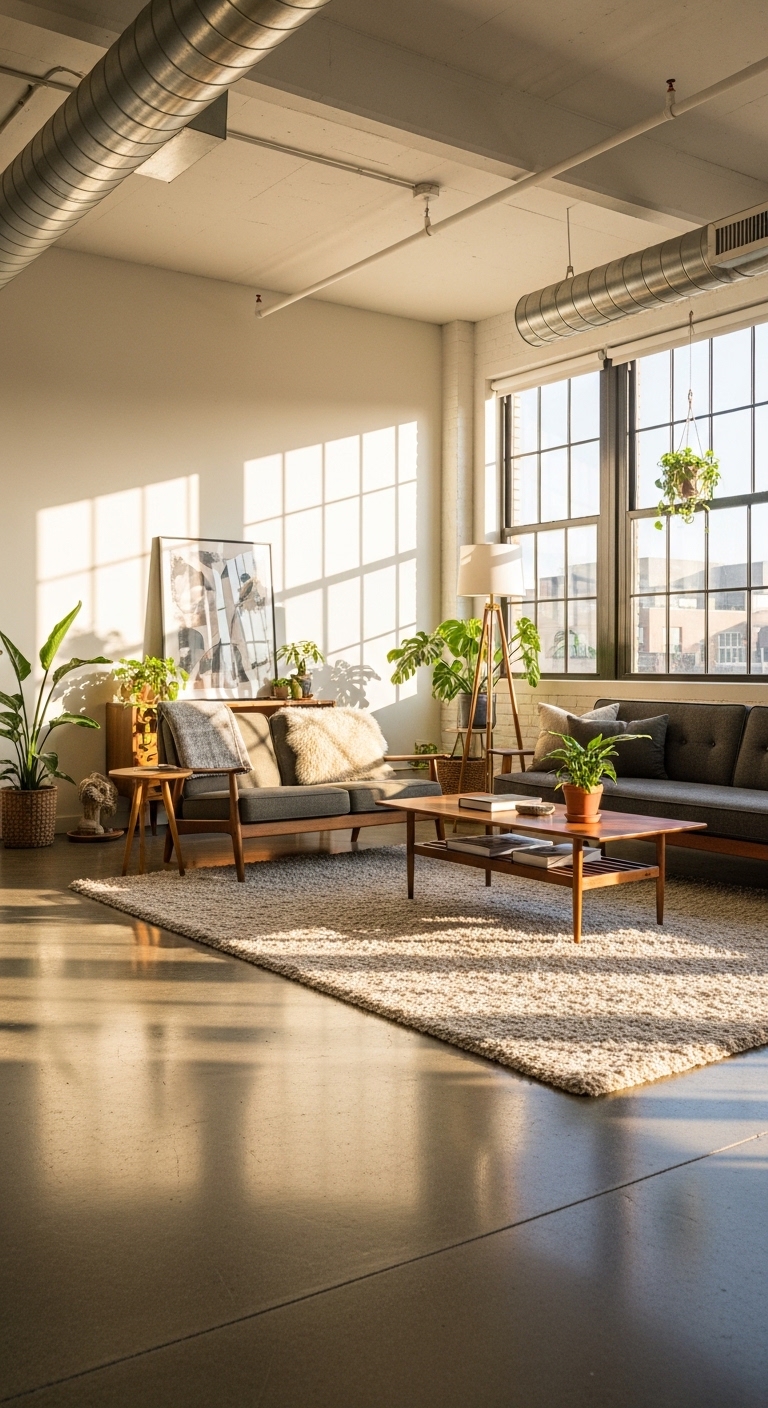
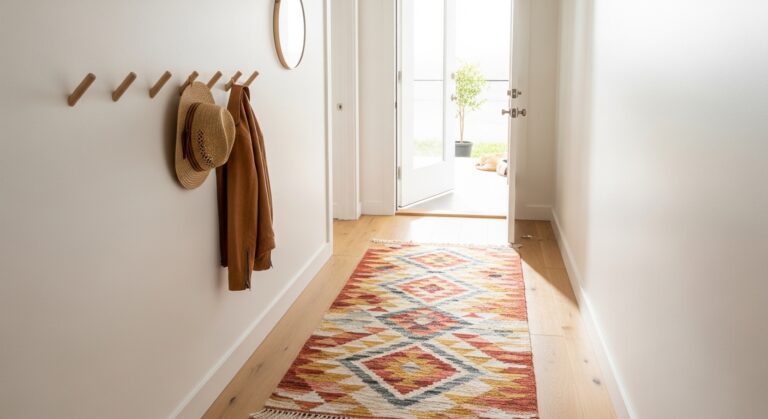
One of the most powerful moves you can make in a loft is placing a large, well-chosen area rug under your main seating arrangement. In an open space with no walls to define “the living room,” the rug does that job visually and immediately.
Go bigger than you think you need. In a loft, small rugs look lost. A 9×12 or even a 10×14 rug grounds the sofa, armchairs, and coffee table as one cohesive zone. Stick with natural textures — jute, wool, or a low-pile Persian — because they hold their own against the industrial rawness of exposed concrete and brick.
Idea 2: Install Floor-to-Ceiling Curtains for Drama and Softness
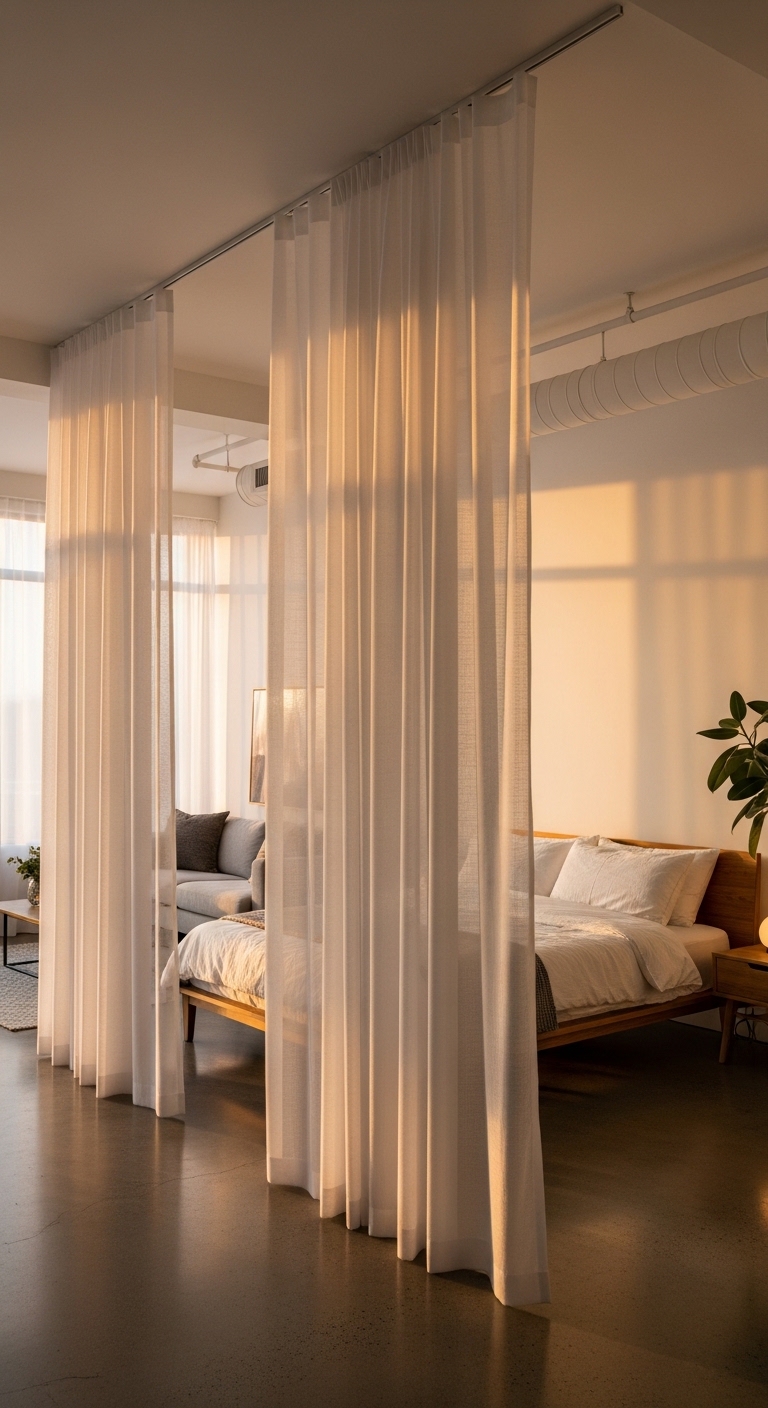
Here’s a loft decorating secret that interior designers swear by: tall curtains make everything feel more luxurious. When you hang curtains from the very ceiling — not from a low rod near the window — you draw the eye upward and add visual warmth to all that exposed height.
In a loft, curtains also serve a practical purpose. Use them to:
- Create a soft visual boundary between the sleeping area and living space
- Add texture and color to walls that might otherwise feel cold
- Absorb sound in an echo-prone open-plan layout
- Let natural light filter gently throughout the space
Linen and velvet both work beautifully in lofts. Linen keeps things airy; velvet leans dramatic. Choose based on the mood you’re chasing.
Idea 3: Build a Platform Bed to Define the Sleeping Zone
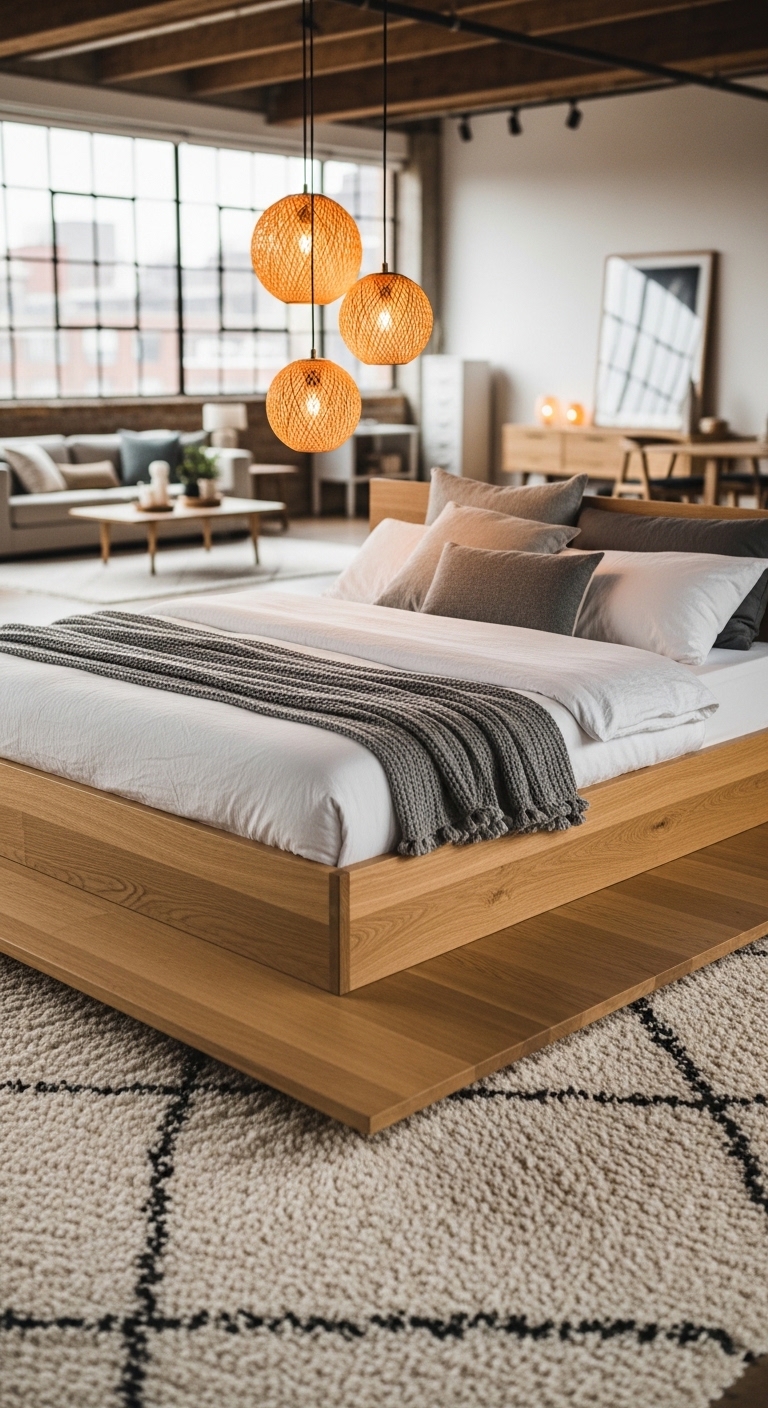
When your bedroom doesn’t have walls, you need another way to say “this is the sleeping space.” A raised platform bed does this beautifully. Even a 4–6 inch elevation change is enough to signal a different zone without blocking sight lines.
Build the platform from plywood and hardwood for a clean, modern look. Paint it the same color as the floor for seamless flow, or go for a contrasting wood stain for definition. The platform can also hide storage underneath — shallow drawers for bedding, books, or seasonal items work perfectly here.
Idea 4: Embrace Exposed Brick as Your Feature Wall
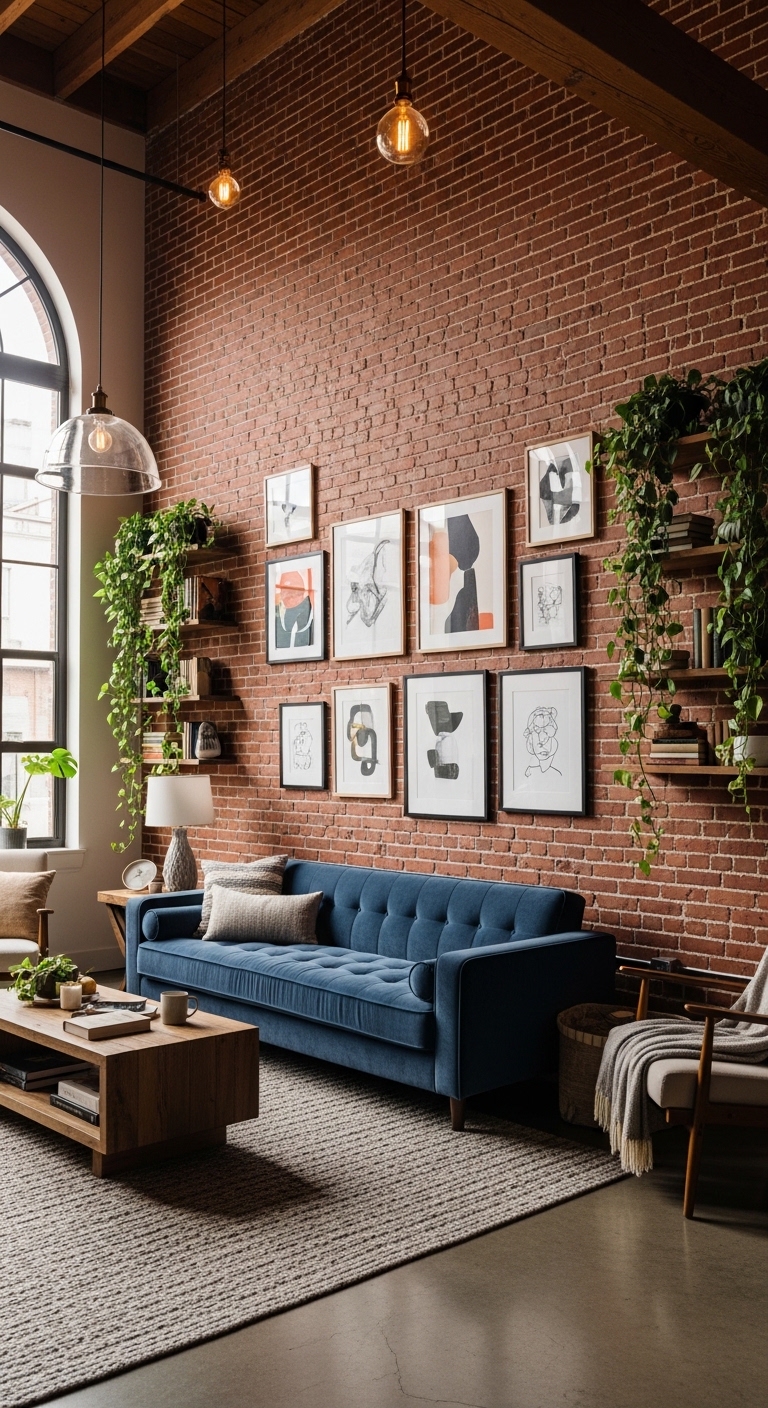
If your loft has exposed brick, stop trying to cover it. That wall is your greatest decorating asset. Instead of fighting it, lean into it completely.
Layer warm tones against it — terracotta, camel, deep forest green, or navy all sing against brick. Hang oversized framed art in bold, graphic prints. Add trailing plants on floating shelves that let greenery drape down the brick face. Warm-toned Edison bulb fixtures bring out the red and orange in the brick and create an evening atmosphere that feels straight out of a boutique hotel.
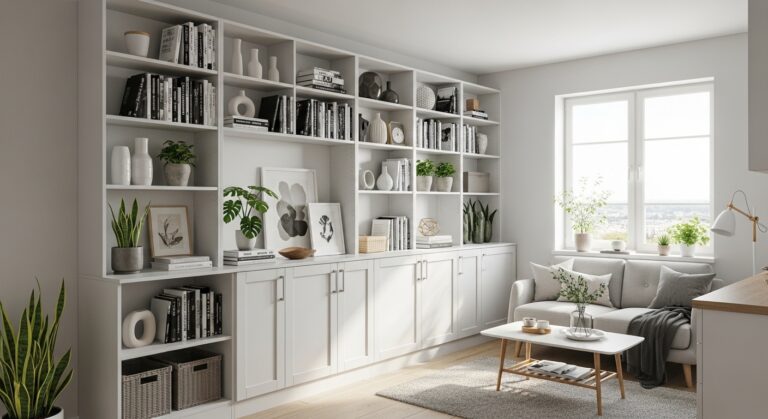
Idea 5: Use Tall Bookshelves as Room Dividers
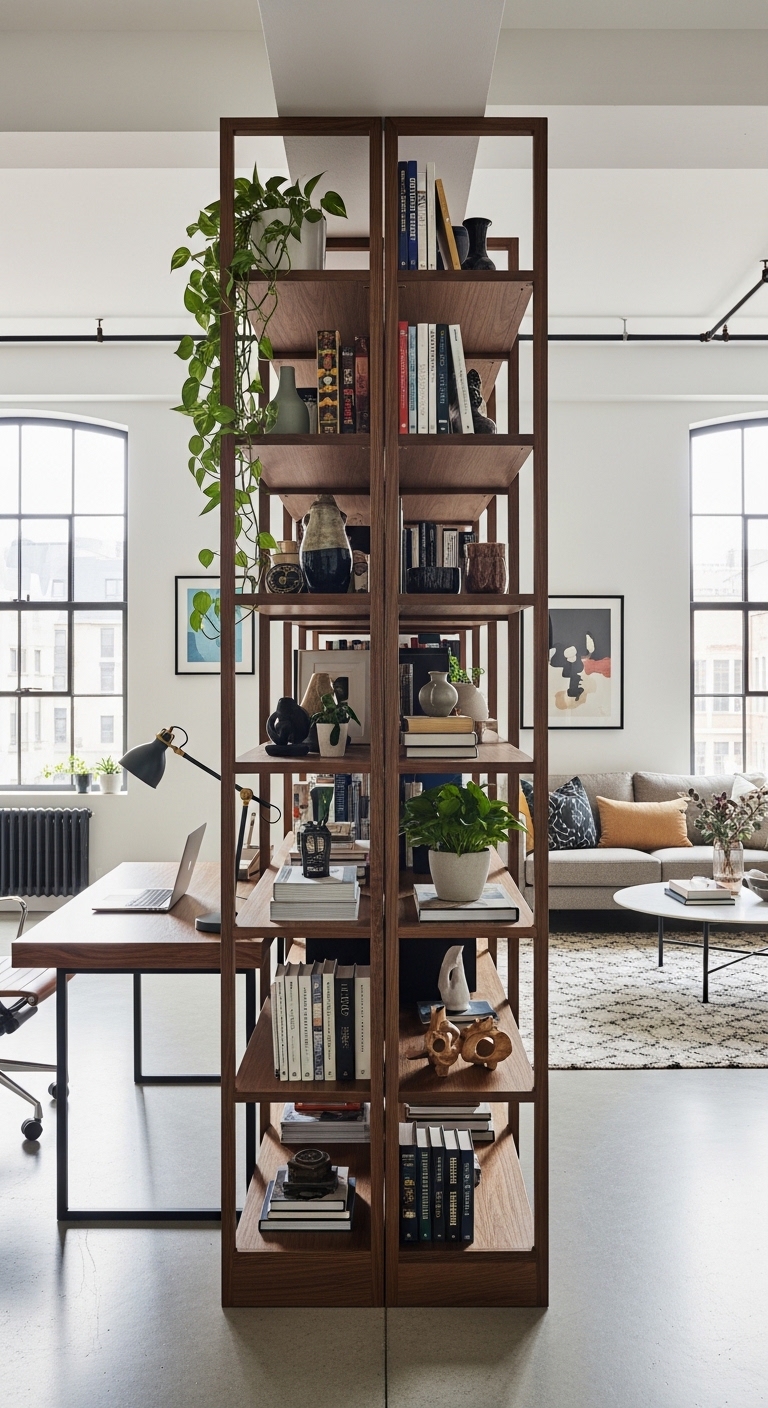
One of the smartest functional dividers you can use in a loft is a pair of tall bookshelves placed back-to-back. You get storage on both sides, a visual boundary between two zones, and you maintain the open, airy feel because the shelves don’t reach the ceiling and block light.
Style them thoughtfully:
- Alternate books with decorative objects, small plants, and framed photos
- Leave some shelves partially empty — negative space looks intentional, not incomplete
- Use matching shelf styles on both sides for a cohesive, designed look
Idea 6: Go Bold With an Industrial-Style Kitchen Island
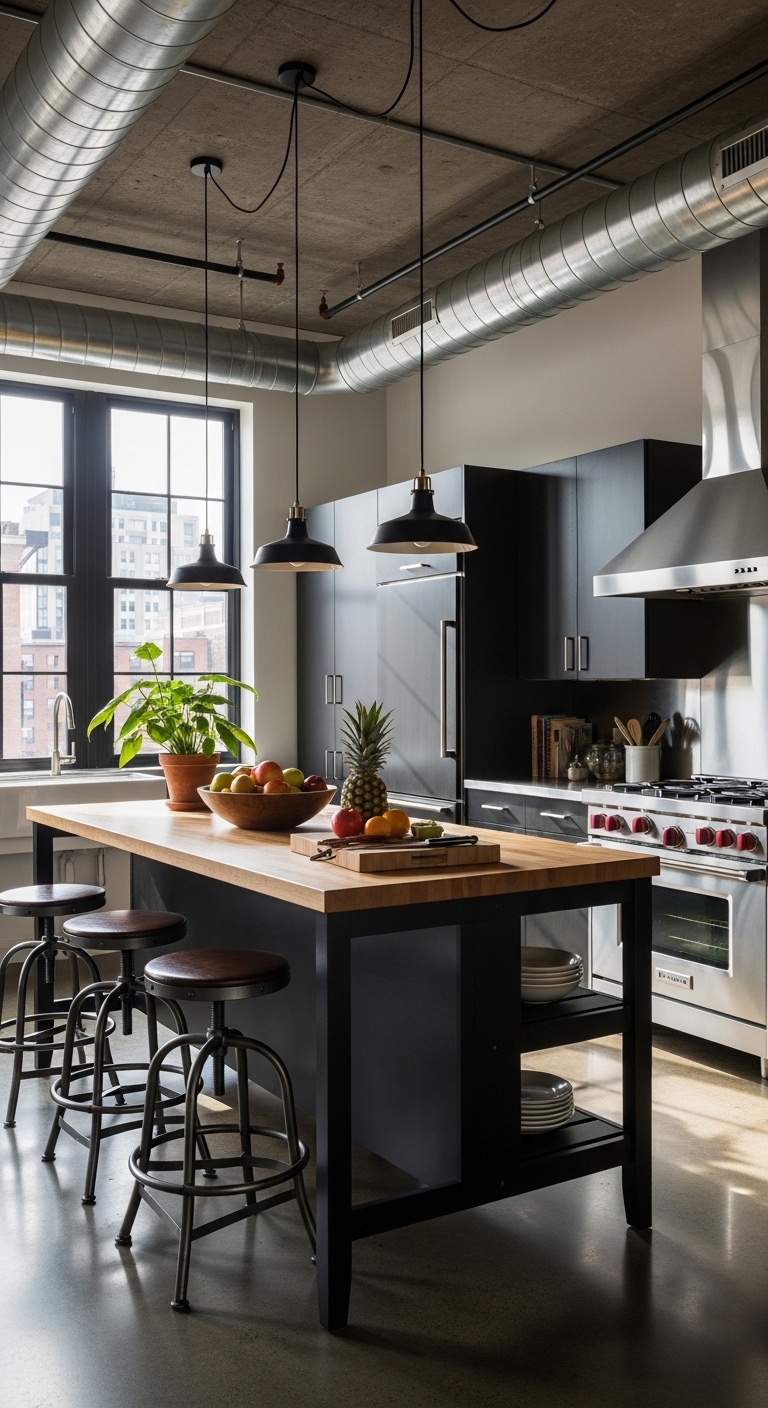
In a loft where the kitchen flows directly into the living space, the kitchen island becomes a central design element — not just a prep surface. Make it count.
A butcher block top with a matte black steel base is the sweet spot between warmth and industrial edge. Size it generously. Add leather-seat bar stools that invite people to pull up and stay. Hang pendant lights above the island that connect visually to the ceiling height — elongated pendants in brass or black work particularly well.
Idea 7: Paint Your Ceiling a Deep, Moody Color
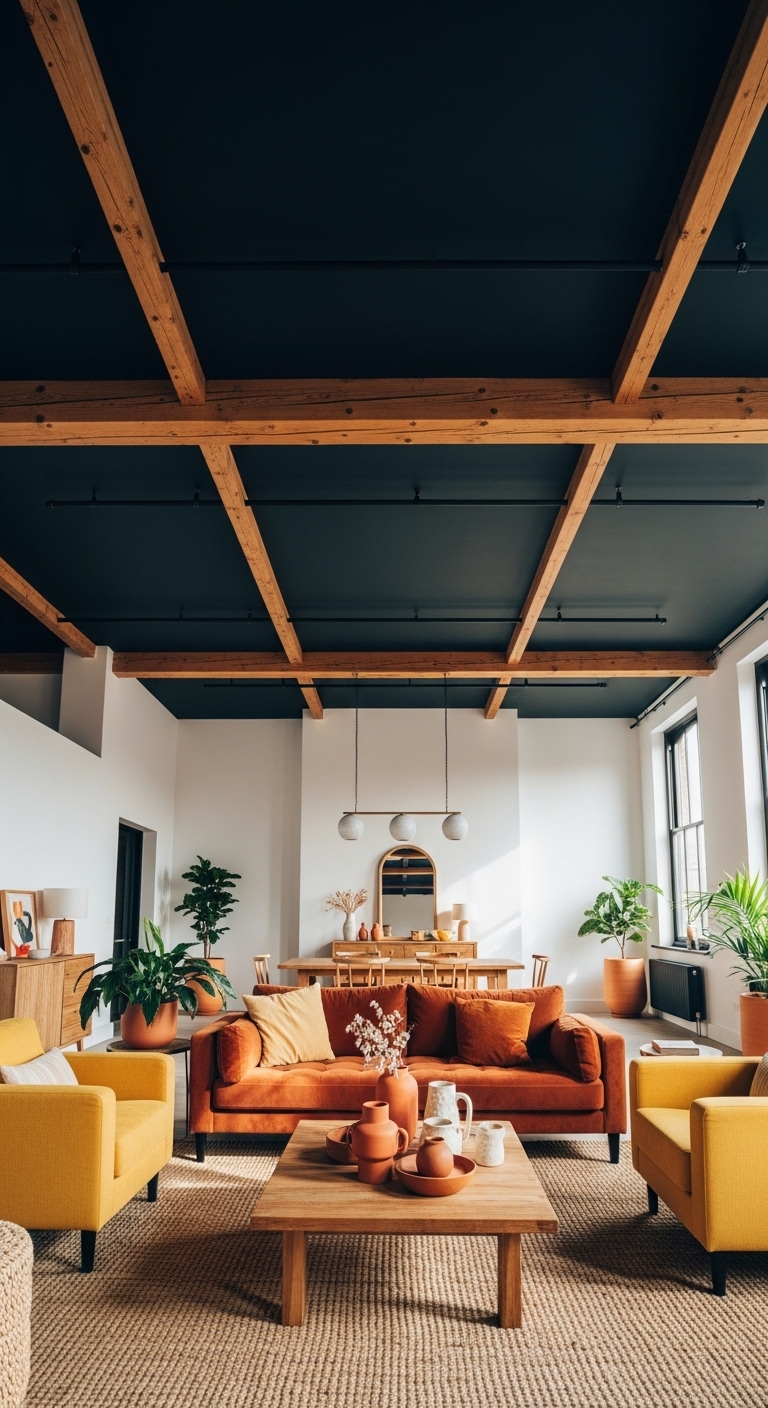
This one surprises people every time, but hear us out. Painting your loft ceiling a deep, moody color — charcoal, navy, forest green, or even black — actually makes the space feel more intimate and cozy rather than smaller.
All that vertical height can feel cold and disconnected. A dark ceiling visually “brings it down” without reducing the actual square footage. It also makes your industrial beams, ductwork, and exposed pipes look intentional and designed rather than unfinished.
Idea 8: Create a Reading Nook With a Hanging Chair
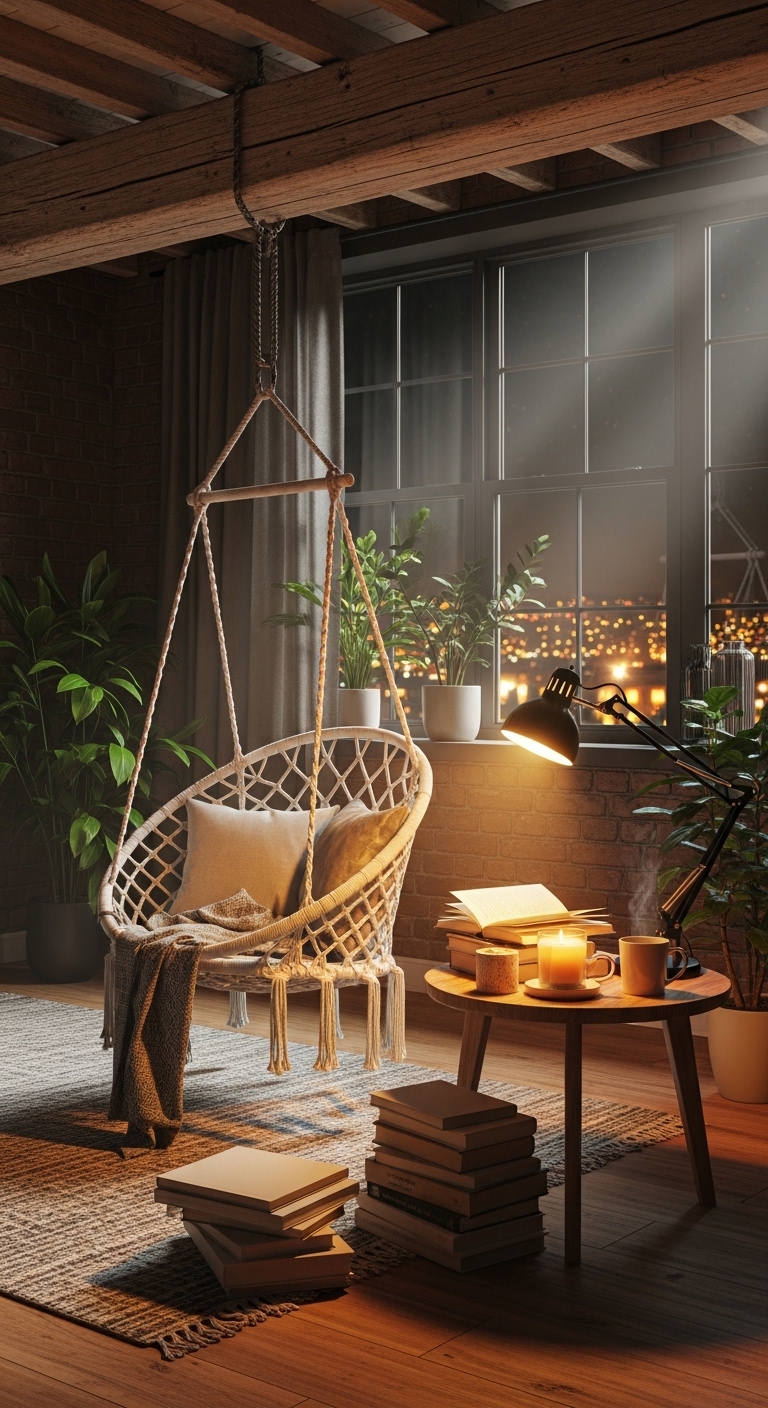
Open lofts can feel like they lack intimate corners — those little pockets of personal space where you recharge. A hanging chair solves this beautifully. Suspended from an exposed beam, it creates a defined micro-zone within the larger space.
Surround it with a small side table, a task lamp, and a stack of your current reads. Hang some trailing plants nearby. Suddenly, you’ve carved out a personal sanctuary inside your wide-open home.
Idea 9: Use Concrete Planters and Indoor Trees
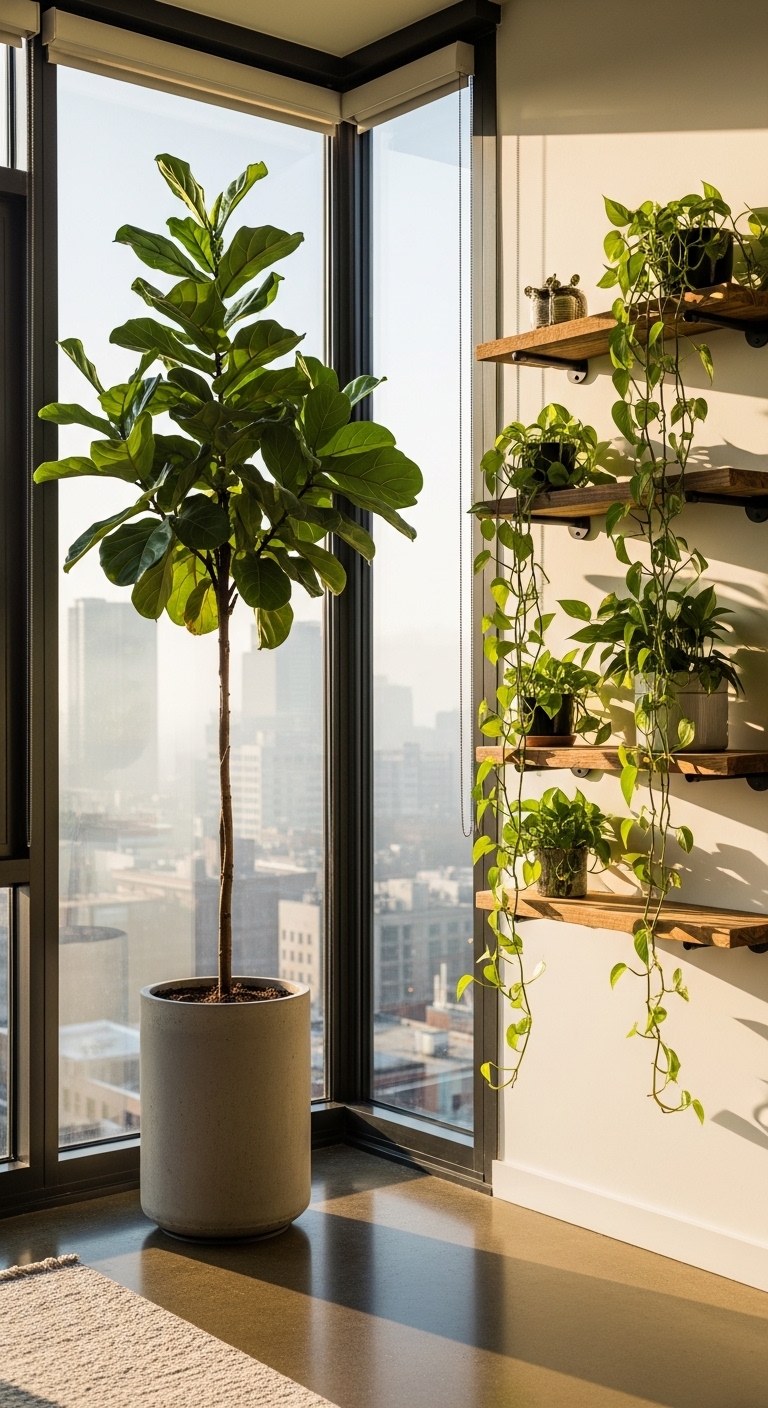
Large plants in a loft don’t just add life — they add scale. When your ceilings hit 12 or 14 feet, standard-sized decor objects look small. A 6-foot fiddle leaf fig, a tall snake plant, or a sprawling monstera in a concrete planter suddenly makes sense. It fills the vertical space without cluttering the floor.
Cluster plants of different heights in corners to create visual mass. This softens the hard industrial edges of the space while adding genuine warmth and organic texture.
Idea 10: Layer Your Lighting in Every Zone
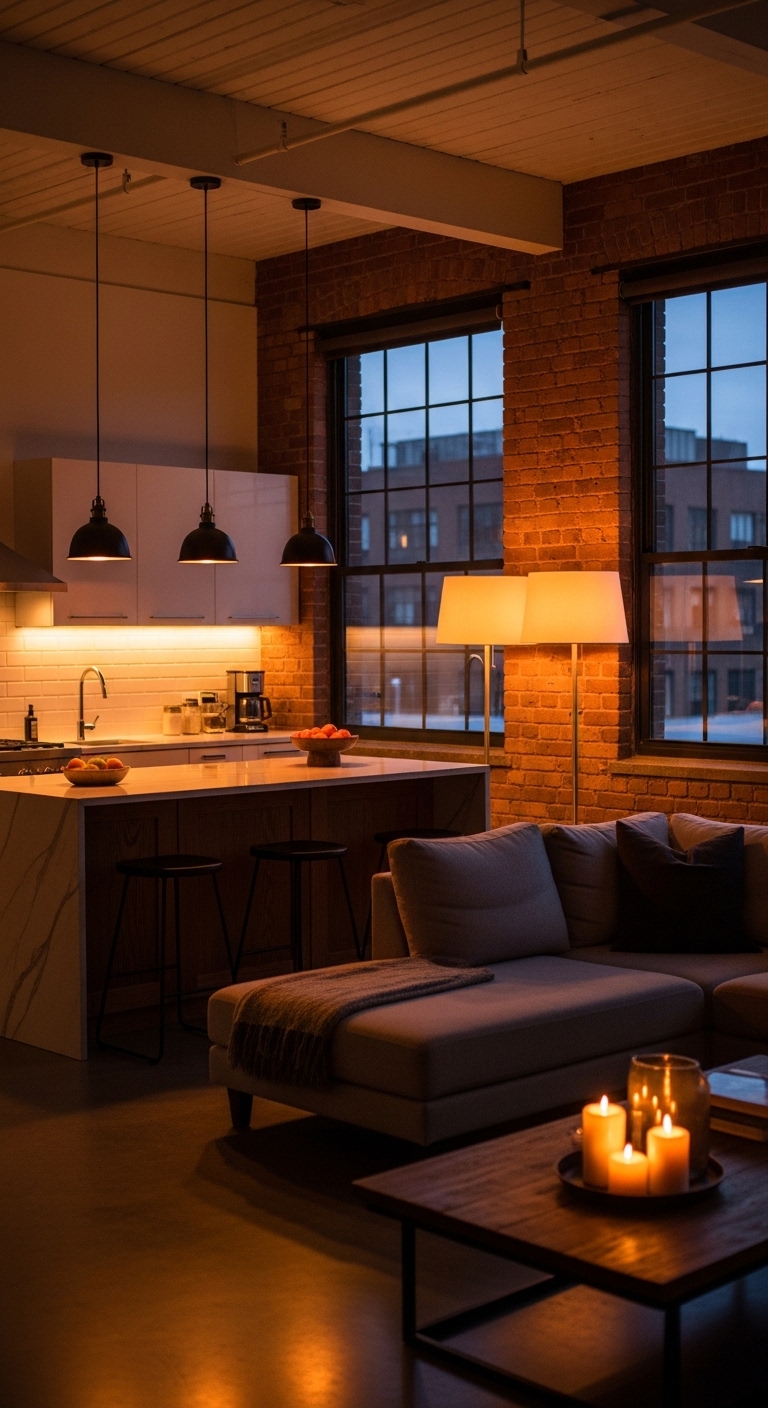
Lofts are notorious for one problem: harsh overhead lighting that flattens everything and destroys the mood. The fix is layered lighting — using multiple light sources at different heights and intensities.
Every zone needs:
- Task lighting — over the kitchen counter, above the desk, beside the bed
- Ambient lighting — a floor lamp beside the sofa, a table lamp in the corner
- Accent lighting — LED strips under shelves, picture lights over art, candles on the coffee table
When you layer light sources, your loft shifts from feeling like a showroom to feeling like a home you never want to leave.
Idea 11: Hang an Oversized Art Piece to Fill Vertical Space
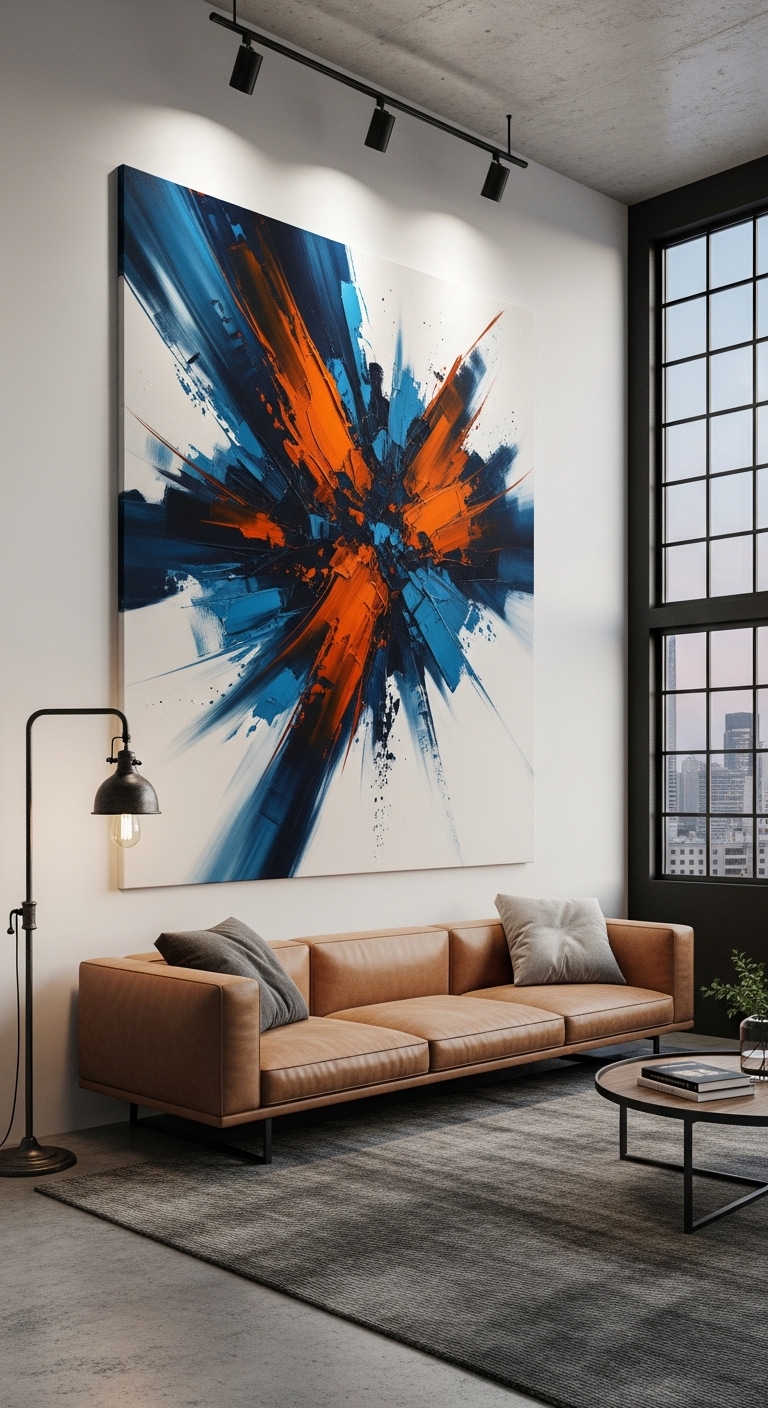
Standard-sized art looks like a postage stamp in a loft. To make your walls feel designed rather than empty, go oversized. A single large abstract canvas — 4 feet wide and 5 feet tall or bigger — has more visual impact than a gallery wall of smaller pieces.
Commission a local artist for something original, or look at art print sites that offer large-format printing. Abstract works in earthy tones, bold geometry, or moody landscapes hold their own against the scale of a loft without competing with the architecture.
Idea 12: Install a Sliding Barn Door for the Bathroom
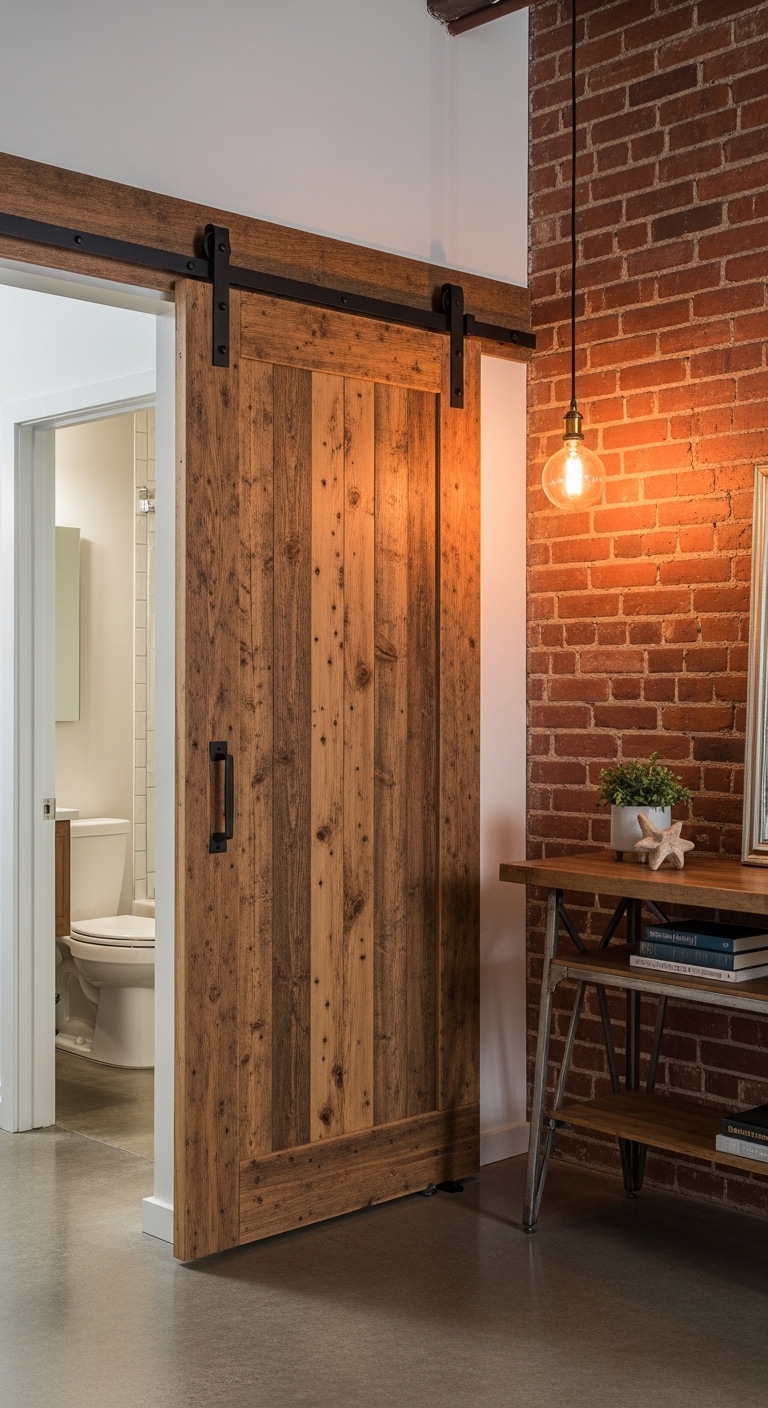
In an open-plan loft, any door that swings open takes up precious floor space and creates visual interruption. A sliding barn door solves both problems at once — it requires zero swing clearance, and it adds a design feature that feels intentional and stylish.
Reclaimed wood with visible grain and a black metal track is the classic choice. For a more modern look, try a frosted glass panel on a steel track — it keeps light moving through the space while maintaining privacy.
Idea 13: Build a Mezzanine Level for Extra Bedroom Space
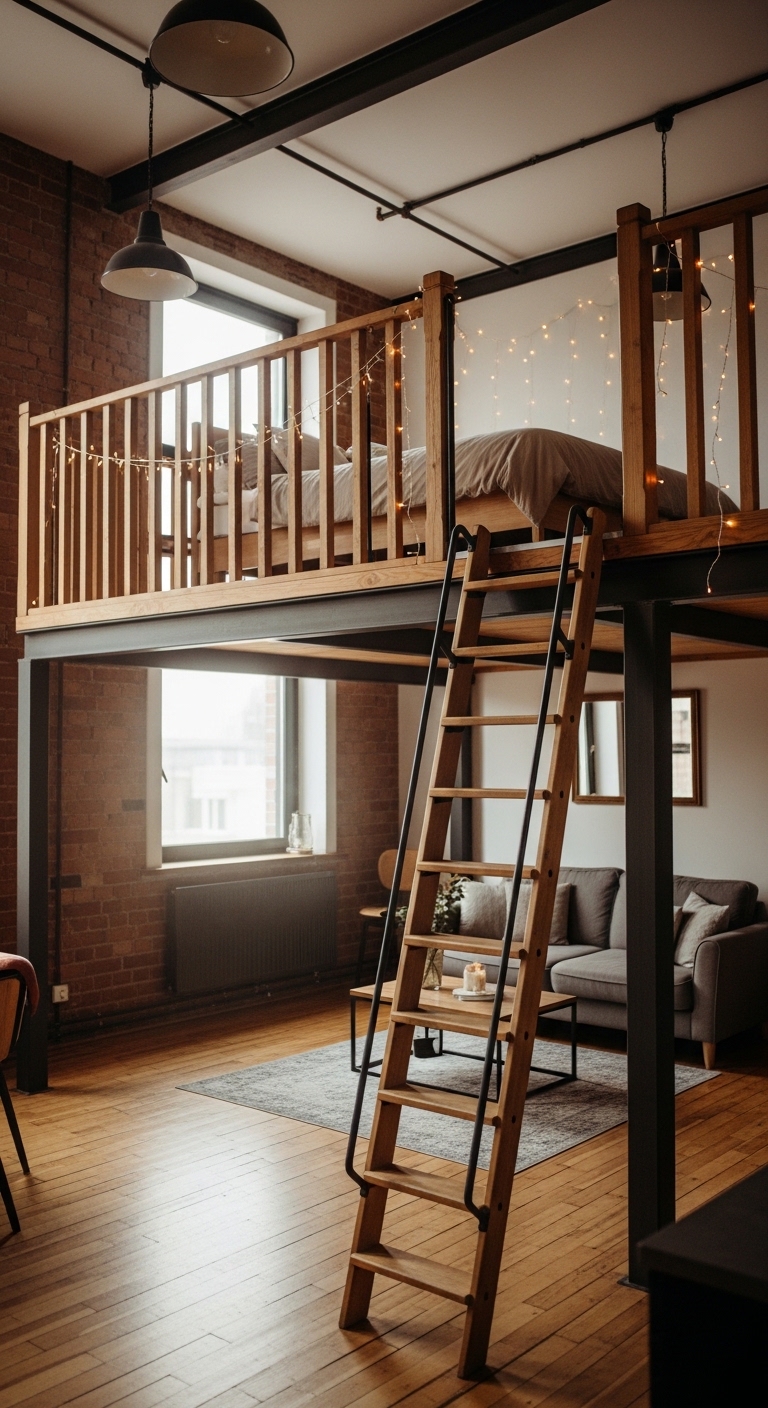
If your loft has ceilings above 12 feet, a mezzanine level is one of the most transformative upgrades you can make. Essentially a second floor without full walls, it creates genuine separation between your sleeping and living zones without sacrificing the open-plan energy.
Even 6 feet of clearance below and above is enough. Access it via a ship ladder, a spiral staircase, or a custom wooden staircase with open risers. The mezzanine bedroom feels private, elevated, and genuinely special.
Idea 14: Use a Kitchen Backsplash to Add Visual Anchor
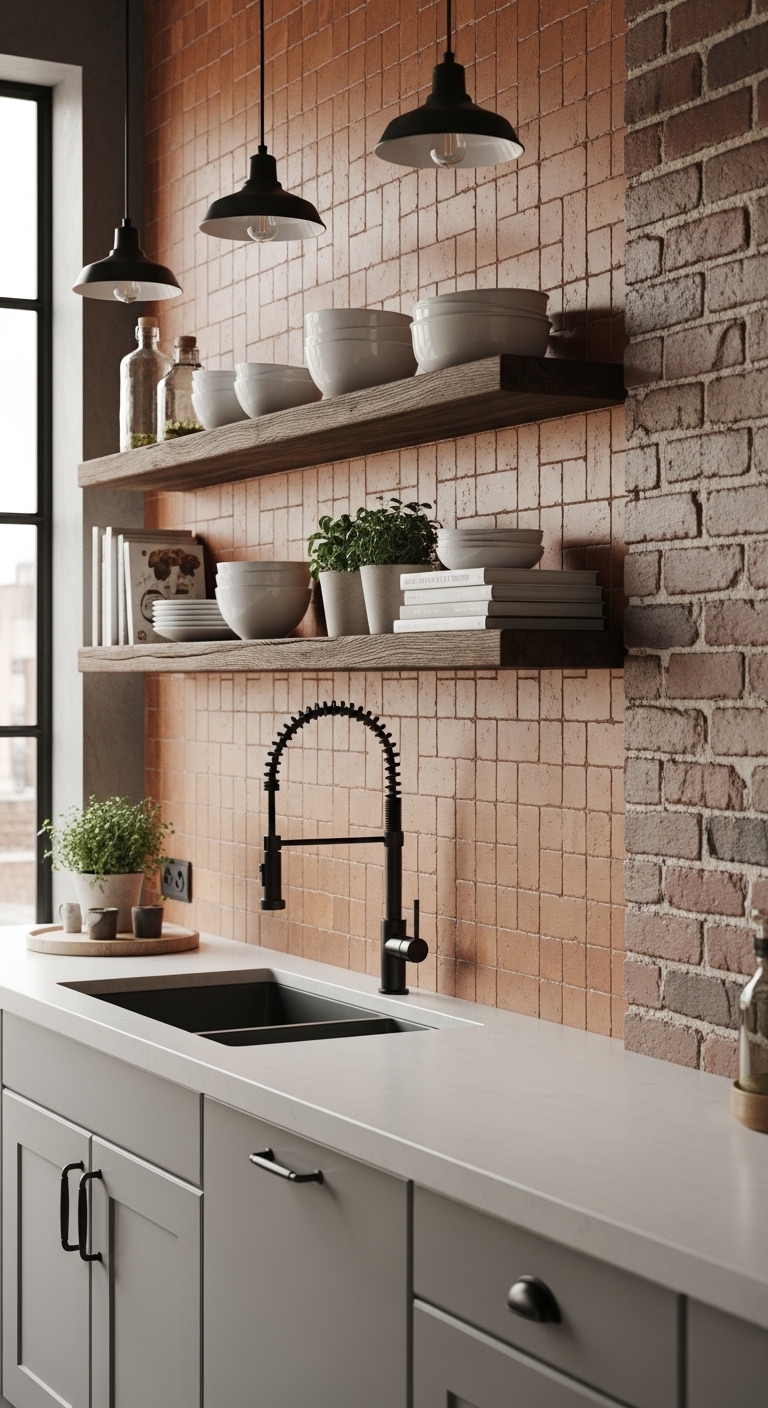
In an open-plan loft kitchen, the backsplash does more than protect the wall. It acts as a focal point that draws the eye and signals where the kitchen zone lives within the larger space.
Go all the way to the ceiling with it. Handmade zellige tile in warm terracotta, glossy subway tile in sage green, or large-format concrete tile in warm grey — all work brilliantly in loft kitchens. The visual weight of a full-height backsplash grounds the kitchen within the open floor plan.
Idea 15: Create a Gallery Wall Using Mixed Frame Sizes
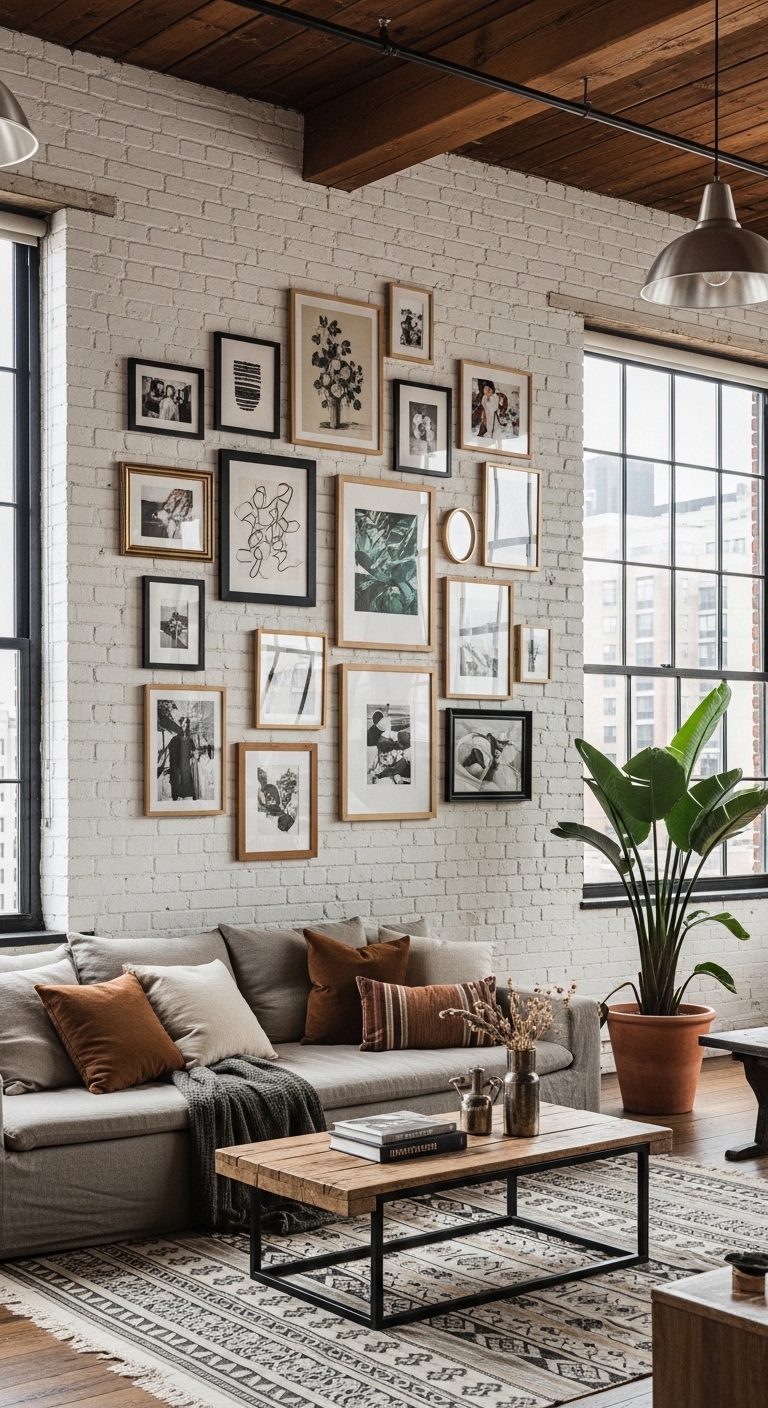
A well-executed gallery wall is one of the fastest ways to inject personality into a loft. The trick with loft gallery walls is scale — they need to be bigger than you’d hang in a regular home.
Mix frame materials: matte black, natural wood, thin brass. Mix content: art prints, personal photos, a small mirror, typography. Lay the full arrangement on the floor before you hang a single nail. Step back and look at it from the sofa distance — that’s how visitors will experience it.
Idea 16: Add a Bar Cart or Built-In Bar Station
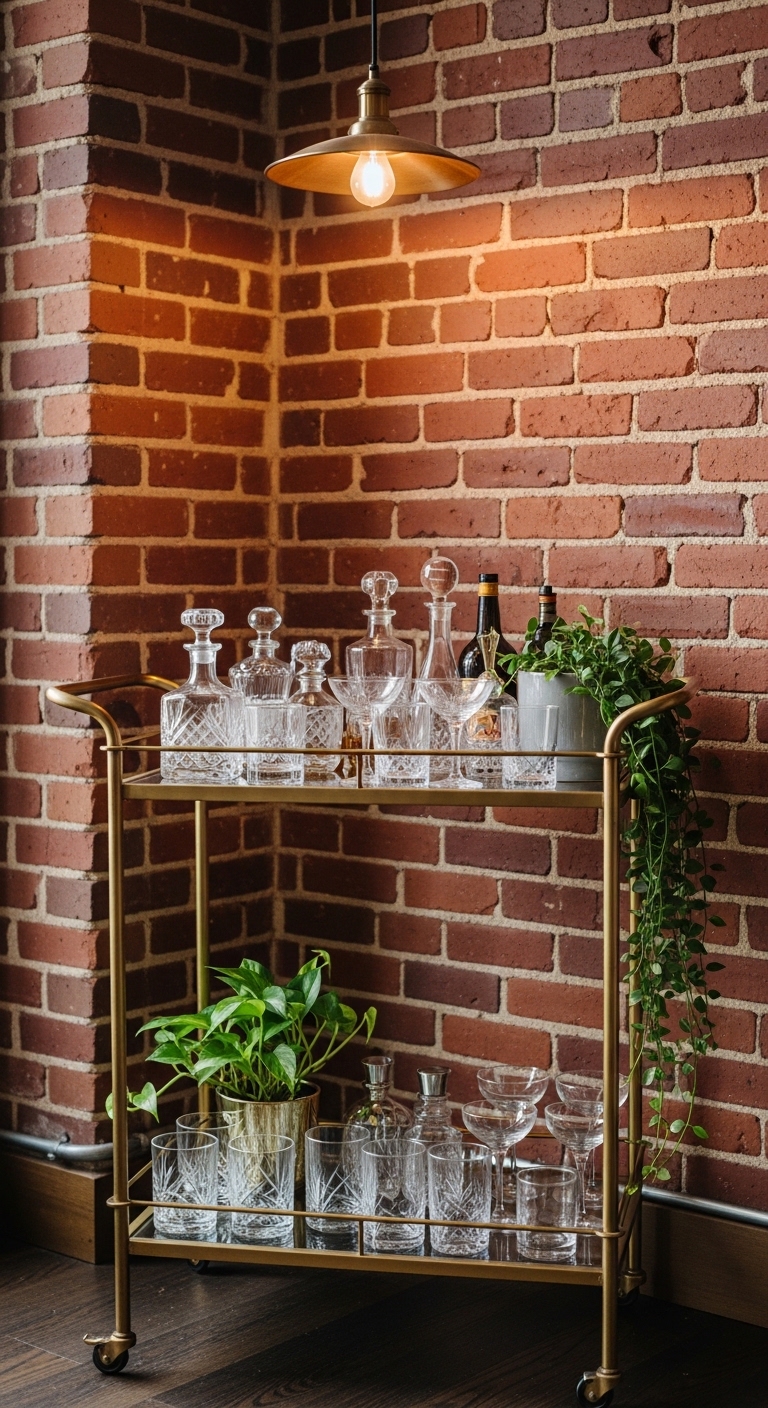
A dedicated drink station adds both function and personality to a loft. A vintage brass bar cart is the easiest entry point — moveable, affordable, and endlessly stylish when loaded with glass decanters, glassware, and a small plant.
For a more permanent touch, build a built-in bar shelf on an unused wall section. Open shelving, under-counter wine fridge, pendant light above — it becomes an entertainingly functional feature that looks like it belongs in a boutique bar.
Idea 17: Incorporate Vintage and Antique Furniture Pieces
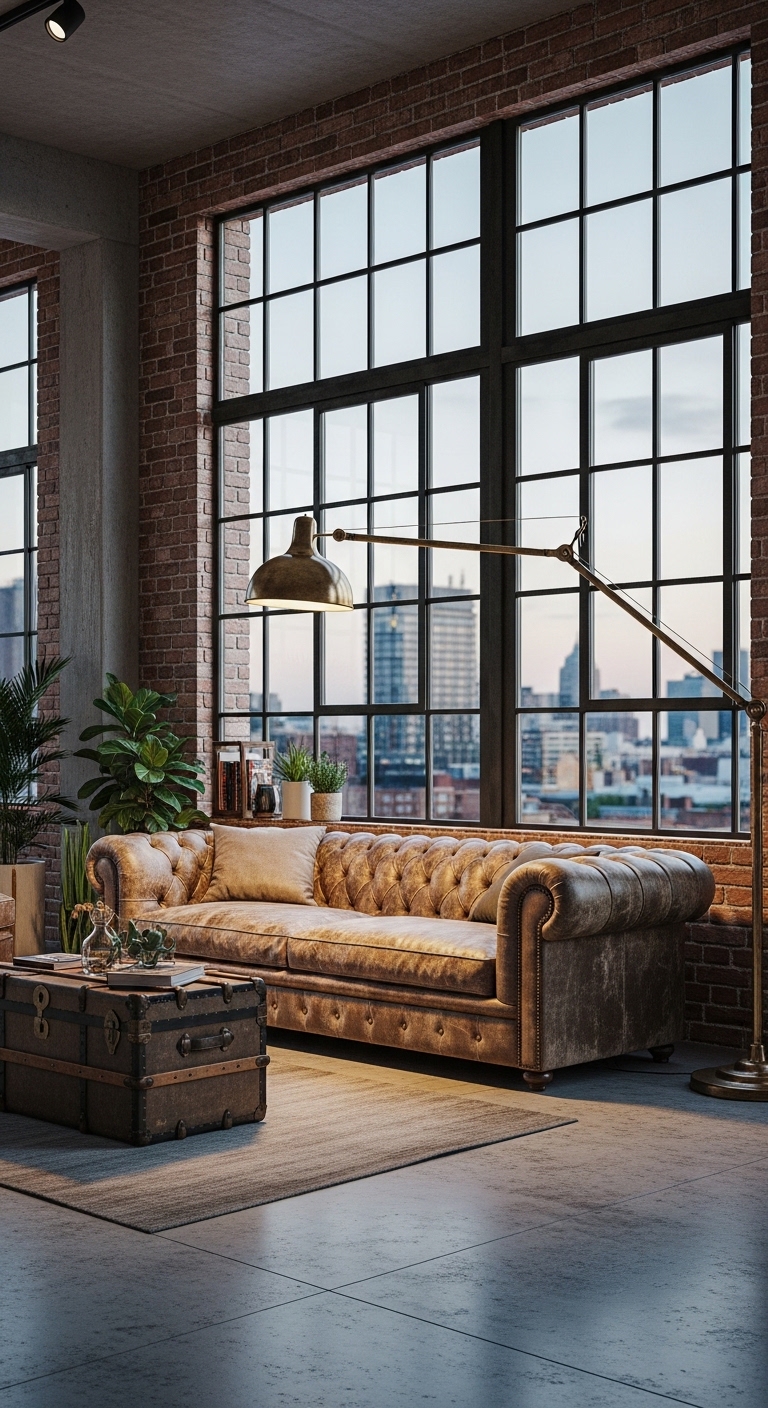
The risk with loft decorating is that it can start looking like a showroom — all clean lines and matching sets. The way to avoid that? Vintage and antique pieces that have genuine history.
A worn leather Chesterfield sofa grounds the space with warmth. An old steamer trunk as a coffee table adds texture and story. A mid-century floor lamp in a corner adds a glow that no modern replica can match. Mix one or two genuinely old pieces into your loft and watch how much more alive the space becomes.
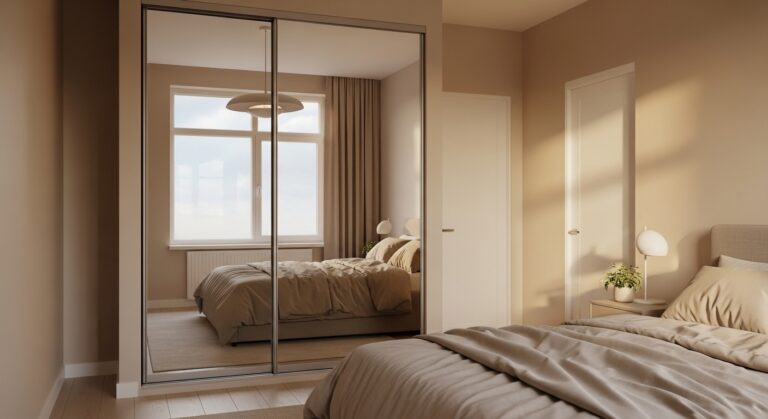
Idea 18: Use Mirrors Strategically to Bounce Light
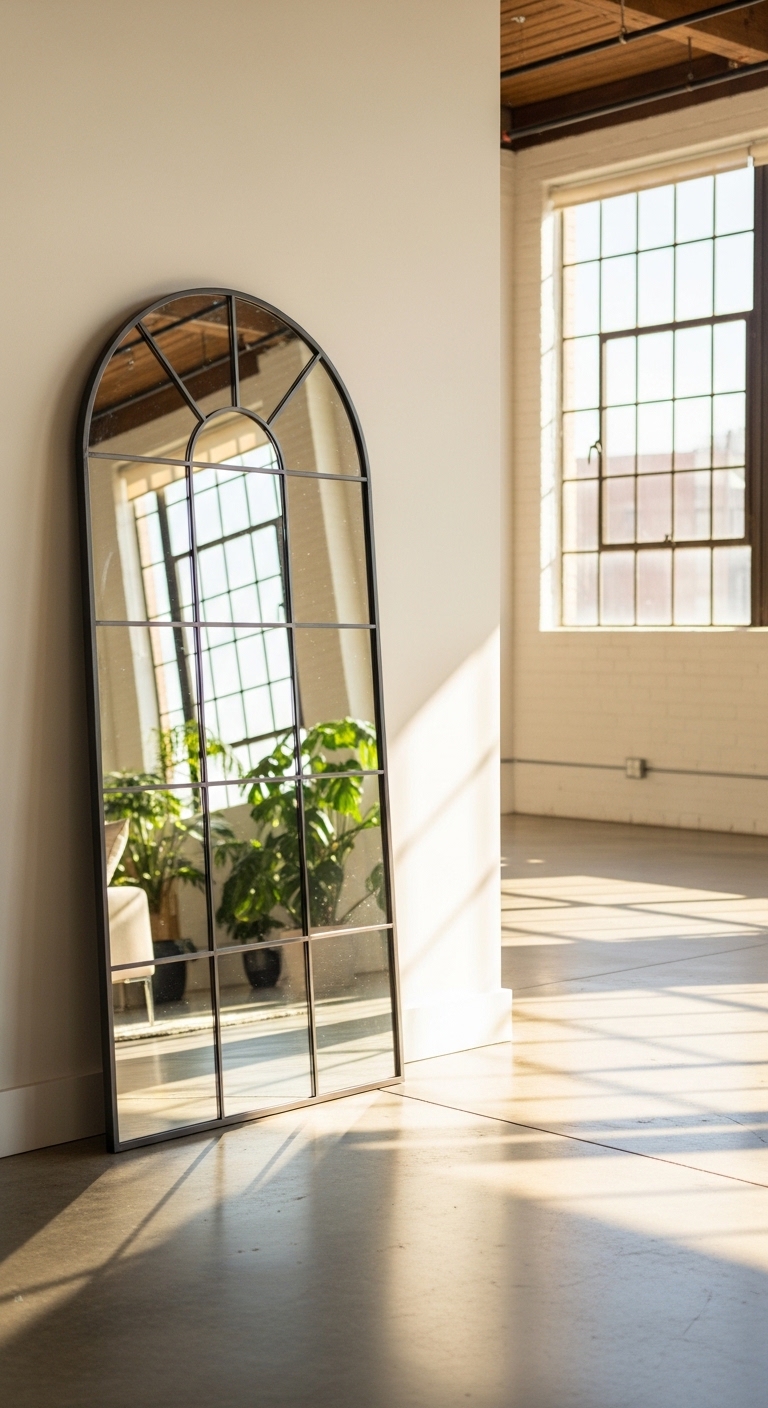
In a loft with high ceilings and large windows, mirrors are multipliers — they capture natural light and throw it deeper into the space. One large leaning mirror against a wall does more for your loft’s light and perceived size than five smaller mirrors combined.
An arched full-length floor mirror leans casually and looks deliberately styled. A large round mirror above the sofa adds a sculptural moment. Placing a mirror directly opposite a window essentially doubles the window in your space.
Idea 19: Bring in Warm Textiles to Fight Industrial Coldness
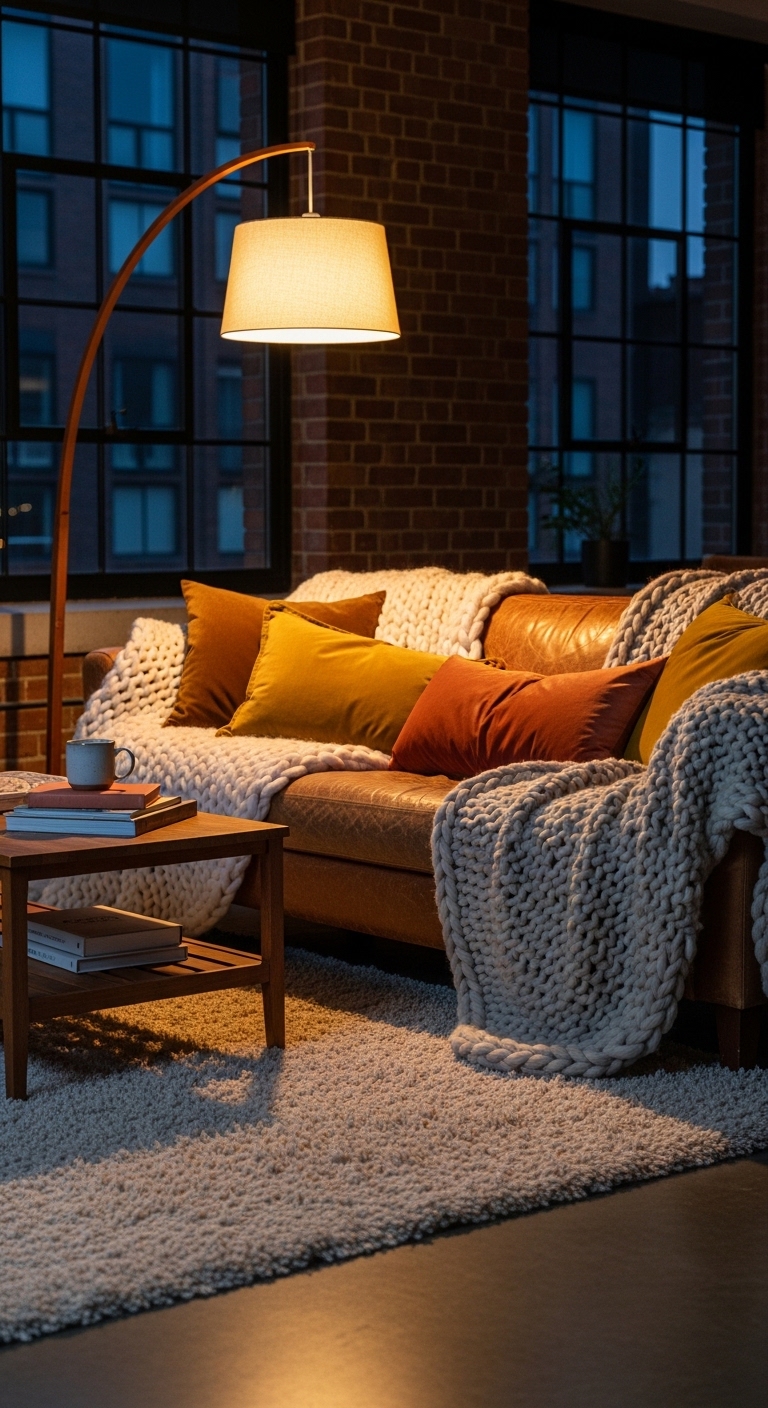
Concrete floors, metal fixtures, and exposed ductwork create that raw, industrial loft atmosphere — but without soft textiles, it starts to feel cold and echo-y. Layering warm fabrics transforms the experience of the space without changing its structure.
Stack throws on the sofa arm. Layer cushions in velvet, linen, and knit. Add a shaggy rug beside the bed. Hang a heavy linen curtain panel in a warm tone. Every textile you add reduces echo, adds visual warmth, and makes the space feel genuinely lived-in.
Idea 20: Install Open Shelving Throughout the Kitchen
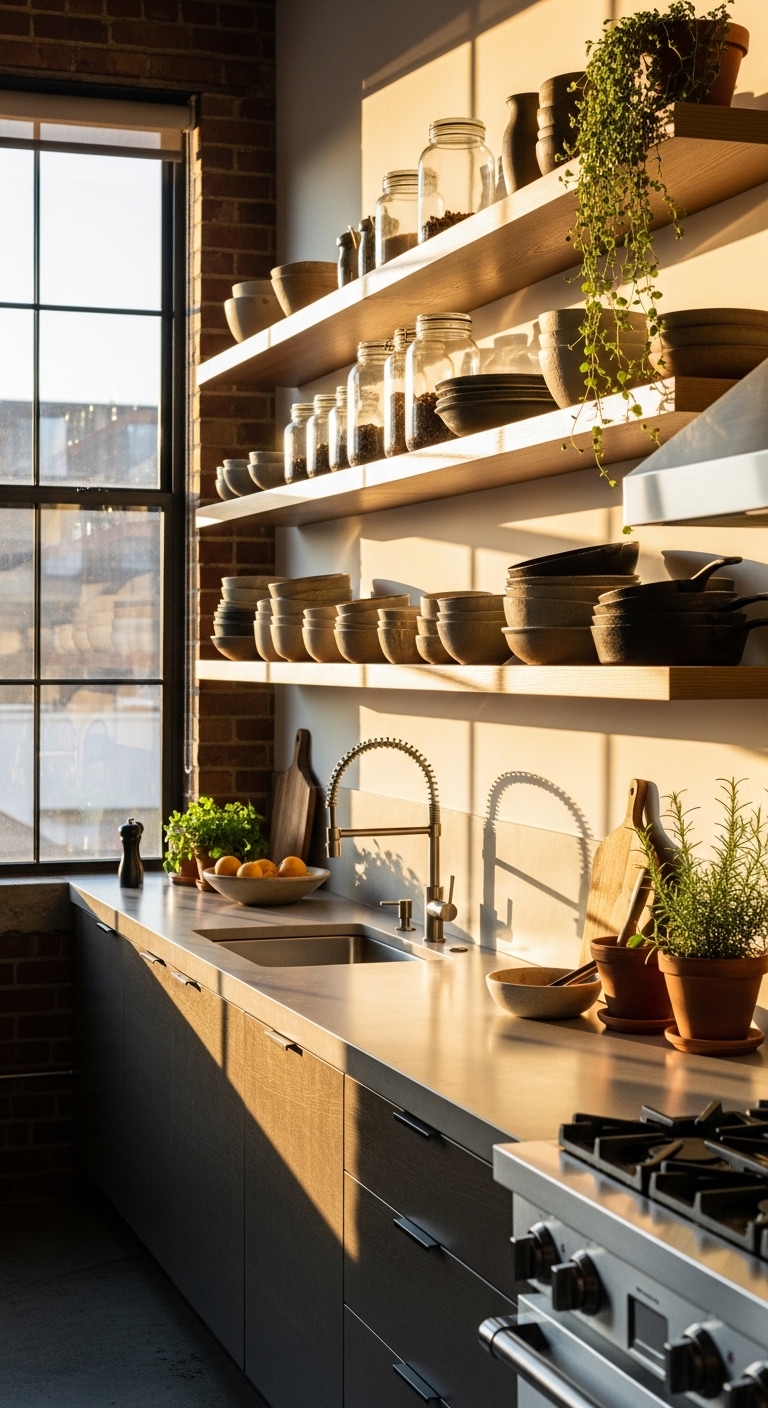
Upper kitchen cabinets close off the kitchen visually and make the space feel heavier. In a loft where openness is the whole point, open shelving keeps the kitchen airy and connected to the rest of the space.
Use warm-toned wood for the shelves — walnut or white oak are both beautiful. Style them with purpose: matching ceramics, glass storage jars for dry goods, a few cast iron pieces, and small herb plants. Keep them edited — open shelves show everything, so everything visible needs to be intentional.
Idea 21: Design a Home Office Nook Using the Mezzanine or Corner
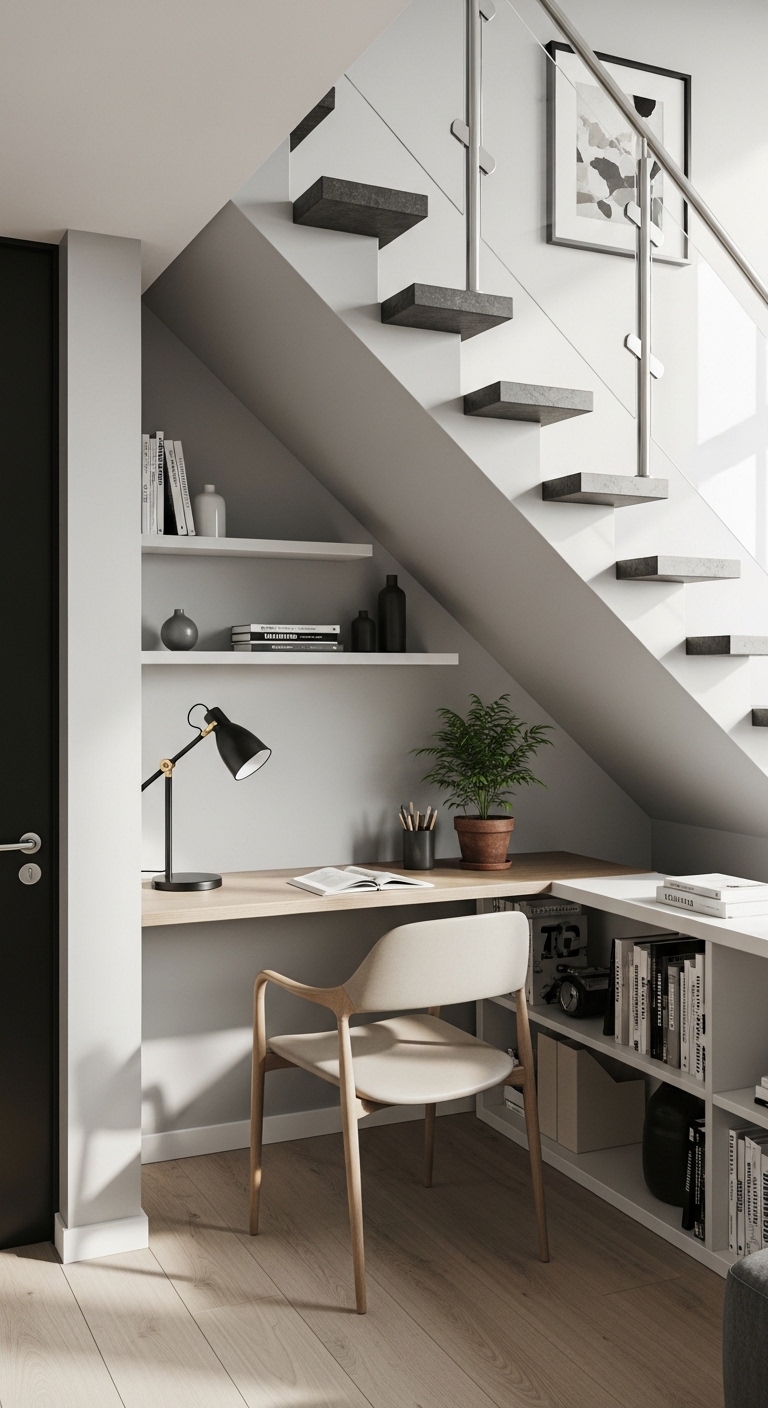
Working from a loft without a designated office zone leads to one thing: your laptop permanently parked on the dining table and your work life bleeding into your living space. Carve out a proper nook.
The space under a mezzanine staircase is perfect. A slim wall-mounted floating desk, a task lamp, and two wall shelves above give you everything you need without taking up floor space. Separate it visually from the living zone with a low bookshelf or a pendant light positioned specifically above the desk.
Idea 22: Choose Furniture That Sits Low to the Ground
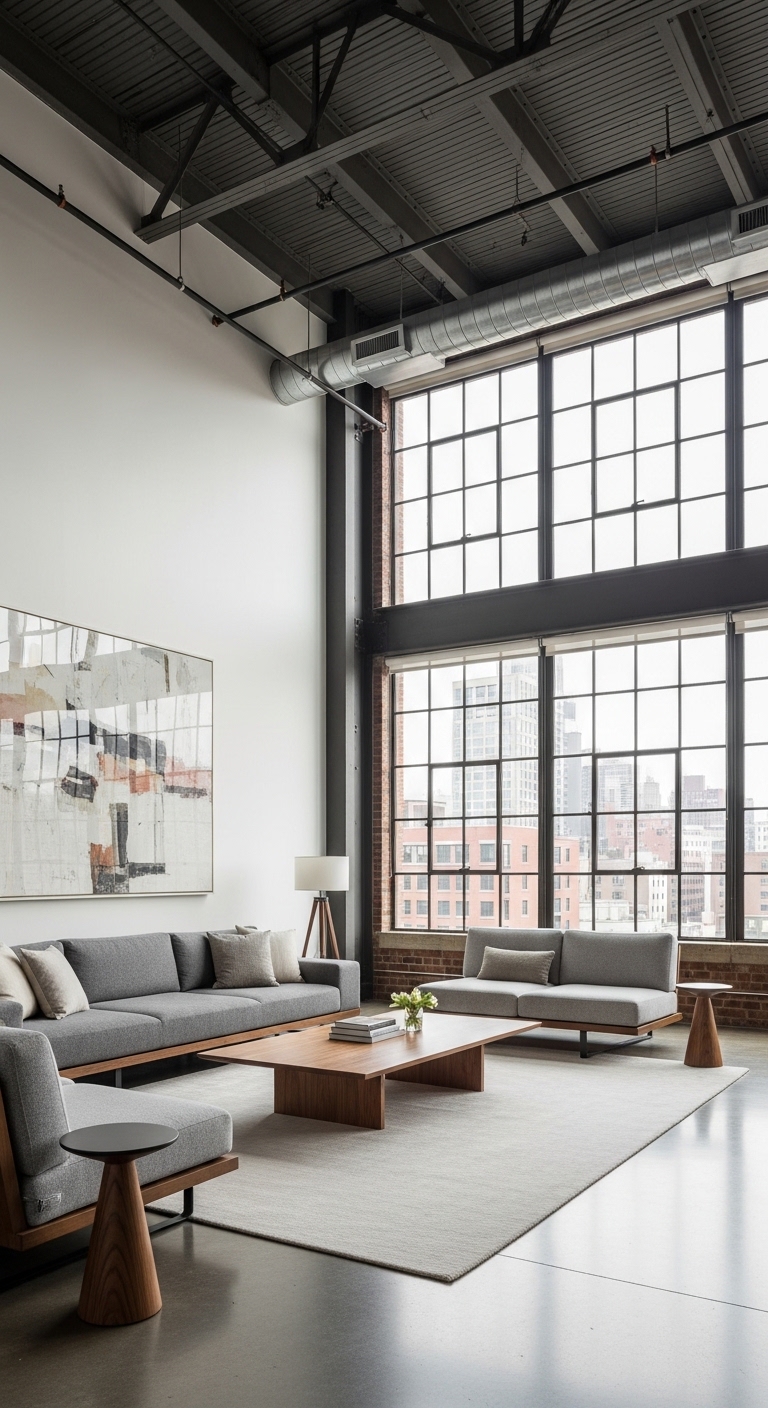
Here’s a counter-intuitive decorating principle that works brilliantly in lofts: the lower your furniture, the taller the room feels. Low-profile sofas, flat coffee tables, and ground-level cushion seating push your eye upward toward the ceiling and make the vertical drama of your loft hit harder.
Look for sofas with legs under 6 inches. Choose coffee tables under 14 inches tall. Consider a floor cushion section for casual seating. The contrast between low furniture and high ceilings is one of the most satisfying visual tricks in loft design.
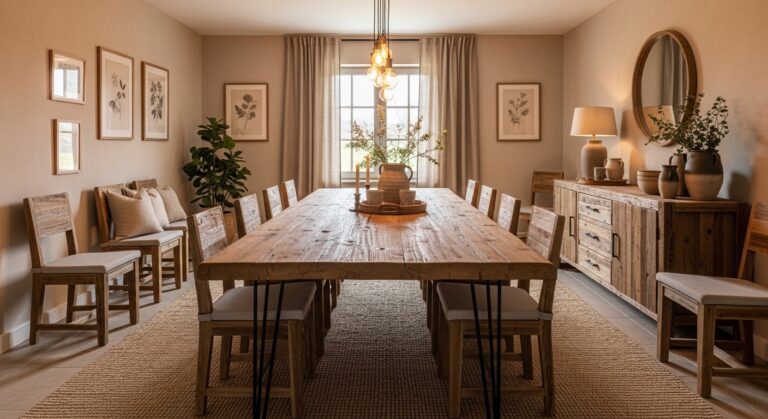
Idea 23: Add a Statement Pendant Light as Sculpture
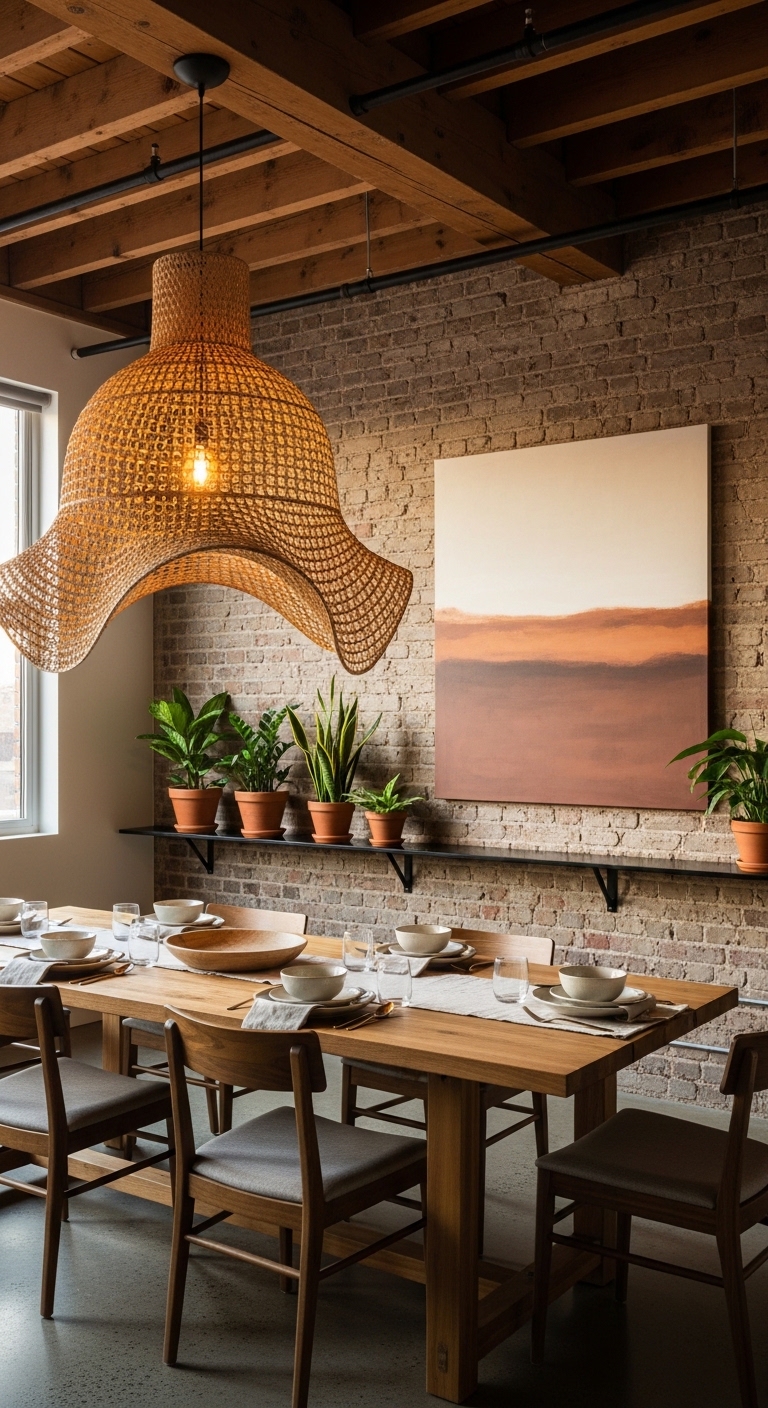
When you have 12-foot ceilings, you have the luxury of hanging oversized pendant lights that would be comically large in a normal home. Use that luxury. A sculptural pendant light in a loft is art that also functions.
Oversized rattan dome pendants, woven grass spheres, branching metal fixtures, or hand-blown glass pendants in amber — any of these hung at the right height over a dining table become the first thing guests notice when they walk in. Size up dramatically from what you’d instinctively choose.
Idea 24: Use Color Blocking on Walls to Define Zones
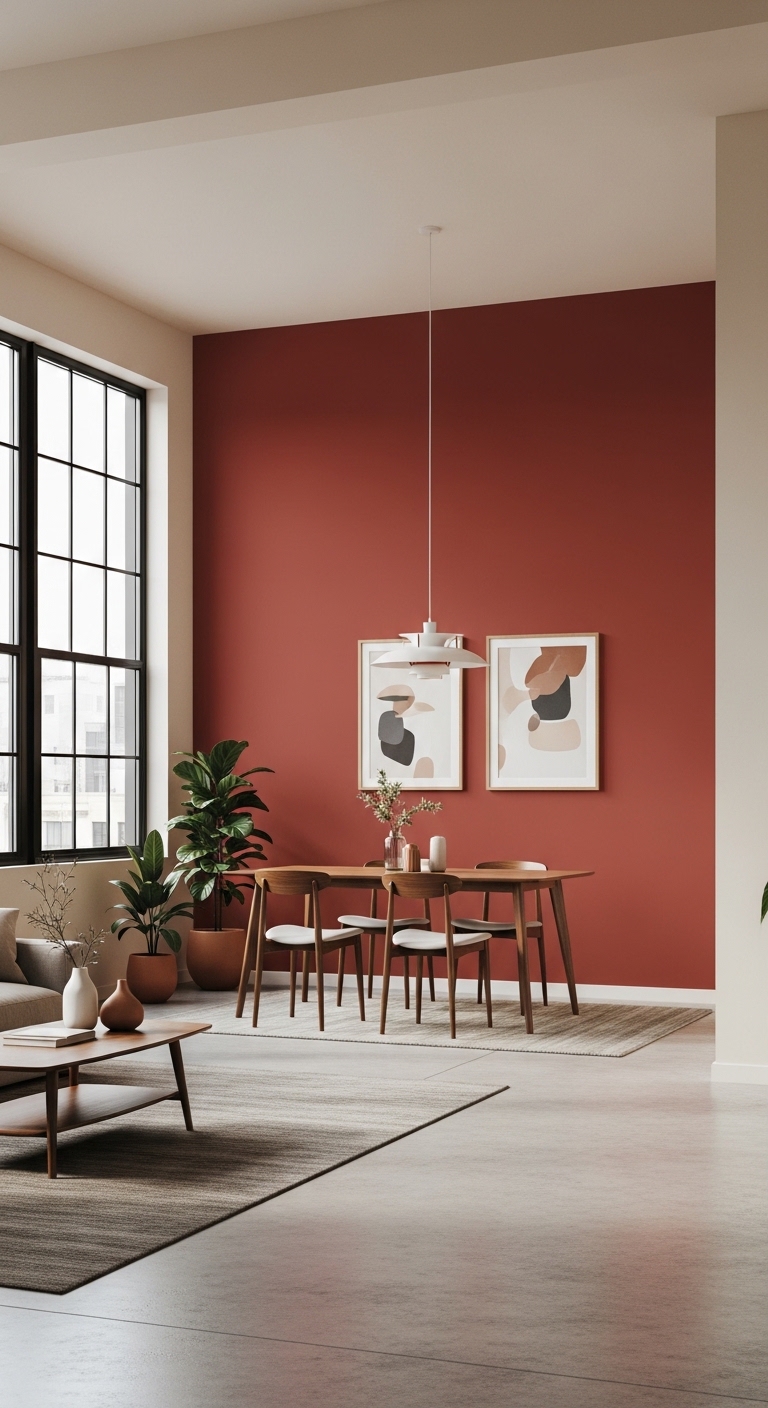
Paint is one of the cheapest, most impactful tools in a loft. Instead of painting every wall the same color, use color blocking to define distinct zones within the open plan.
Paint the wall behind the dining area in a deep terracotta. Keep the kitchen wall bright white. Use a muted sage green behind the bookshelf that separates the home office. Each color choice signals a different zone, creating the sense of separate rooms without a single wall being built.
Idea 25: Curate a Collection of Meaningful Objects on Display
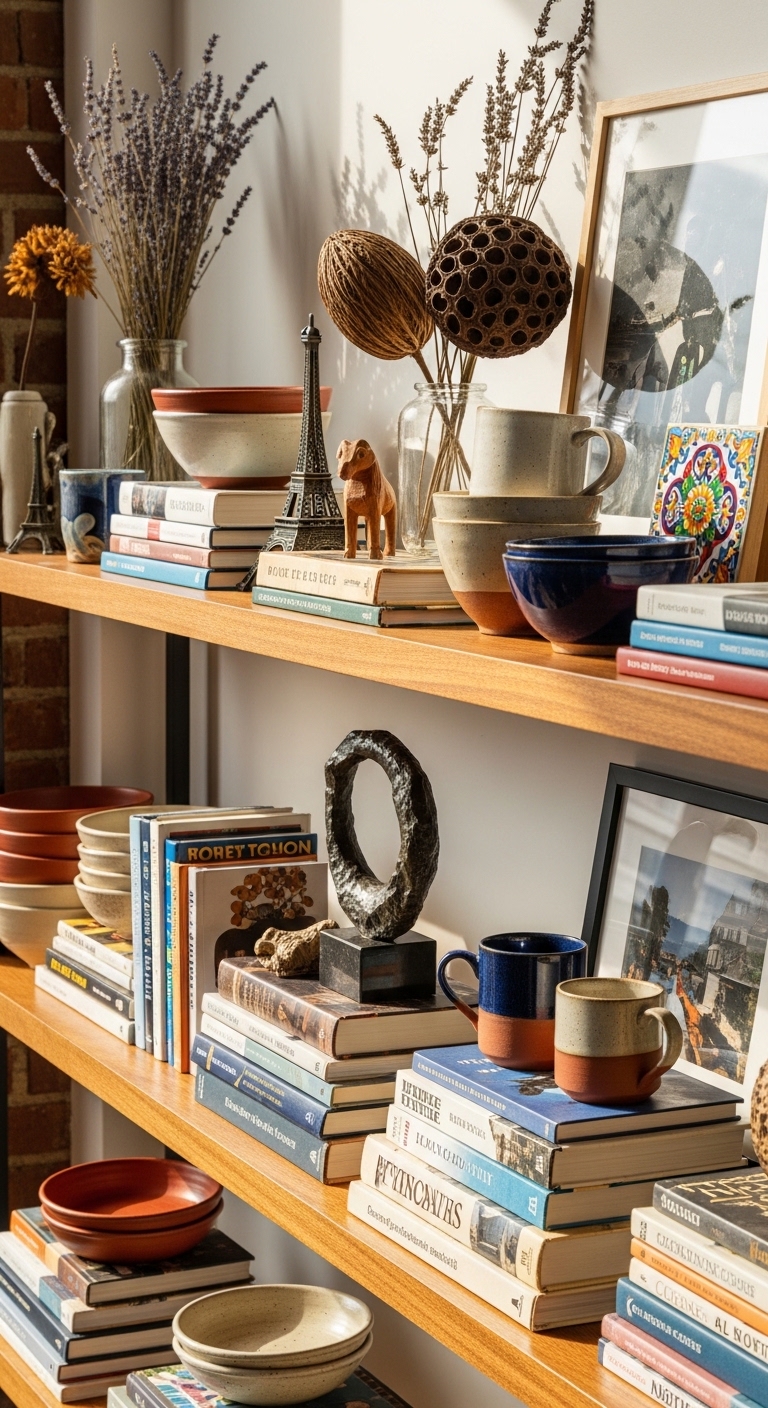
The final — and perhaps most personal — loft decorating idea is this: display things that are actually yours. Not a set of decorative objects bought as a matching collection, but things you’ve collected, inherited, been gifted, or fallen in love with over time.
A shelf that holds your grandmother’s ceramic bowl, a stone you picked up on a hiking trip, a small sculpture by an artist you love, and a stack of books with broken spines is infinitely more interesting than any perfectly curated showroom shelf. Your loft should tell the story of who you actually are.
Bringing It All Together: Your Loft, Your Rules
Decorating a loft apartment isn’t about following a rigid formula. It’s about understanding the unique opportunity you have — all that volume, that light, that rawness — and making choices that honor it while making the space genuinely yours.
Start with the structural moves: define your zones with rugs, shelving, and color. Then layer in warmth through textiles, lighting, and plants. Finally, add personality through art, vintage pieces, and the objects that carry meaning in your life.
The best-decorated lofts don’t look like the work of an interior designer who swept in and made everything match. They look like someone lives there — someone with a real life, real taste, and genuine warmth. That’s what you’re going for.
Take your time with it. Live in the space before you commit to everything. Move the furniture three times before you settle on the layout. Try a curtain before you build the platform. The loft will tell you what it needs, and you’ll know when you’ve found it — because it’ll finally feel like home.