15 Large Master Bedroom Decor Ideas That Actually Transform Your Space
Let me ask you something honest — do you walk into your master bedroom and feel nothing? No exhale, no “ah, this is mine,” no sense that the biggest room in your home is actually working for you?
Most large master bedrooms suffer the same problem. People fill the space instead of designing it. A big bed, a couple of nightstands, maybe a dresser — and suddenly a 400-square-foot room feels like an afterthought. The truth is, large rooms demand more intention, not just more furniture. They need layers, purpose, and personality.
These 15 ideas go beyond basic decorating advice. They’re rooted in real design logic — the kind that turns a large, echoing room into a place you genuinely never want to leave.
Build a Bedroom Within a Bedroom Using a Canopy Framework
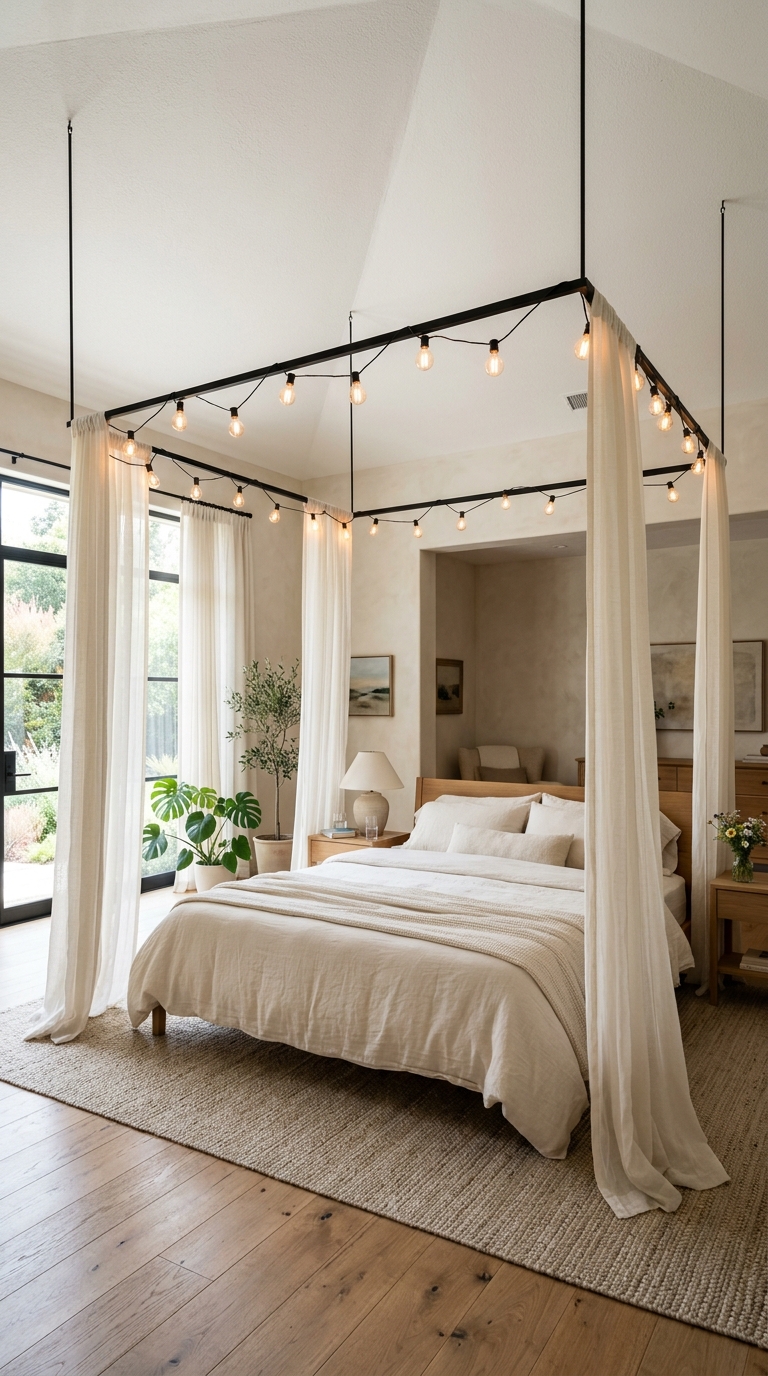
Here’s what most people miss about large master bedrooms — all that open space can actually make the room feel less intimate, not more. A canopy framework solves this beautifully by creating a defined sleeping zone that feels cozy and grand at the same time.
You don’t need a traditional four-poster bed to pull this off. Think about floating a simple rectangular frame from the ceiling directly above your bed. Use raw brass piping, matte black iron, or even thick natural wood dowels. Then layer:
- Sheer linen panels that pool softly on the floor for romance without heaviness
- Velvet curtain ties in a deep jewel tone to anchor the look
- Fairy lights or warm Edison bulbs woven through the top frame for ambient glow
- A ceiling medallion or plaster detail centered above to reinforce the focal point
The visual effect is incredible — your sleeping area becomes its own defined world within the larger room, and the rest of the space gets to breathe without feeling abandoned.
Anchor the Room With a Statement Wall That Tells a Story
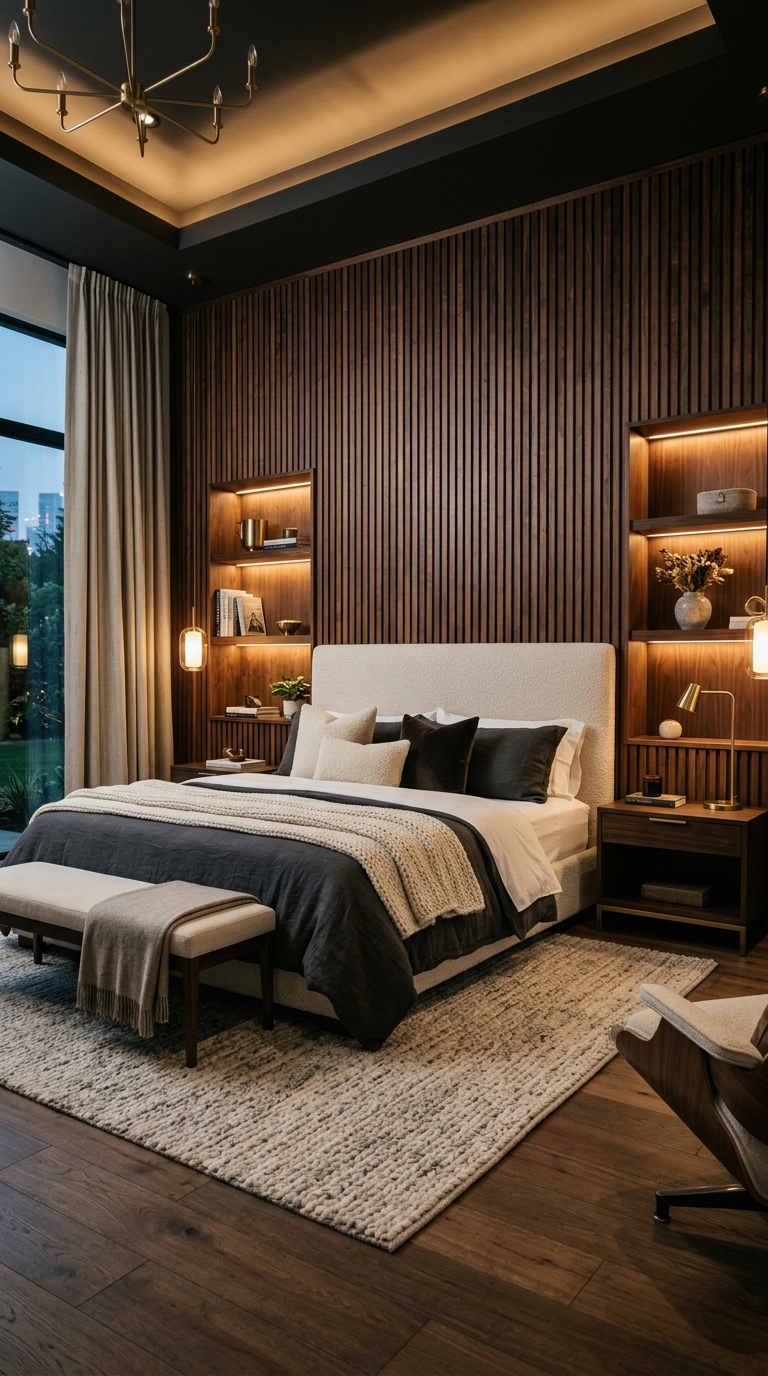
Forget the standard accent wall in a bold paint color. In a large master bedroom, a statement wall has to do more than pop — it has to anchor the entire visual narrative of the room.
What works brilliantly in oversized bedrooms is combining two or three materials on a single wall to create depth and texture you can feel from across the room. Some combinations that work beautifully:
- Limewash plaster in warm terracotta paired with a thin oak ledge running horizontally at headboard height
- Dark fluted wood panels from floor to ceiling flanked by built-in floating shelves with integrated lighting
- Stone veneer or thin-cut marble in a bookmatched pattern behind the bed, with plaster on the sides to soften it
- Grasscloth wallcovering in an earthy tone with a painted plaster upper section separated by a decorative molding
The key principle: your statement wall should look like it was designed, not decorated. Homeowners who nail this usually spend more time thinking about the wall’s architecture than its color.
Dedicate a Corner to a Proper Reading and Relaxation Nook
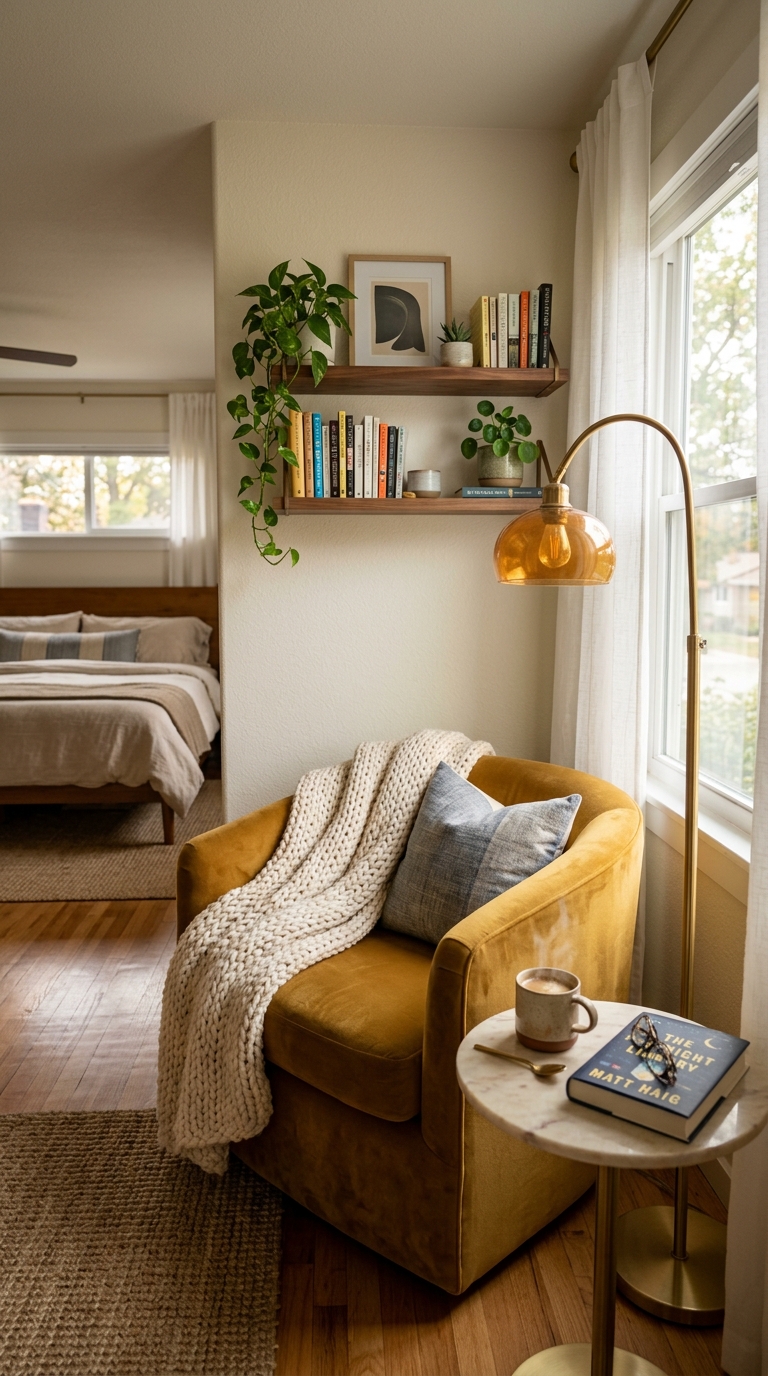
In most large master bedrooms, corners are wasted. A chair gets shoved into one with good intentions, and it becomes a clothes holder within a week. Here’s why — it’s not a destination, it’s just furniture placed near a wall.
A real relaxation nook changes the purpose of that corner entirely. The goal is to make it feel like a room within a room:
- A deep, curved accent chair or a small loveseat with a high back that wraps around you
- A swing arm or arched floor lamp positioned to cast reading-perfect light without straining your eyes
- A small round side table at the exact right height (elbow-level when seated) for your coffee or book
- A plush low ottoman to stretch your legs out on
- Built-in or floating shelves climbing the wall nearby, styled with books, plants, and a few meaningful objects
The secret is layering textures in that corner so it feels intentionally soft — a faux sheepskin throw over the chair arm, a textured rug that defines the nook’s footprint, woven baskets tucked underneath.
Use a Large-Scale Area Rug as the Room’s Foundation Layer
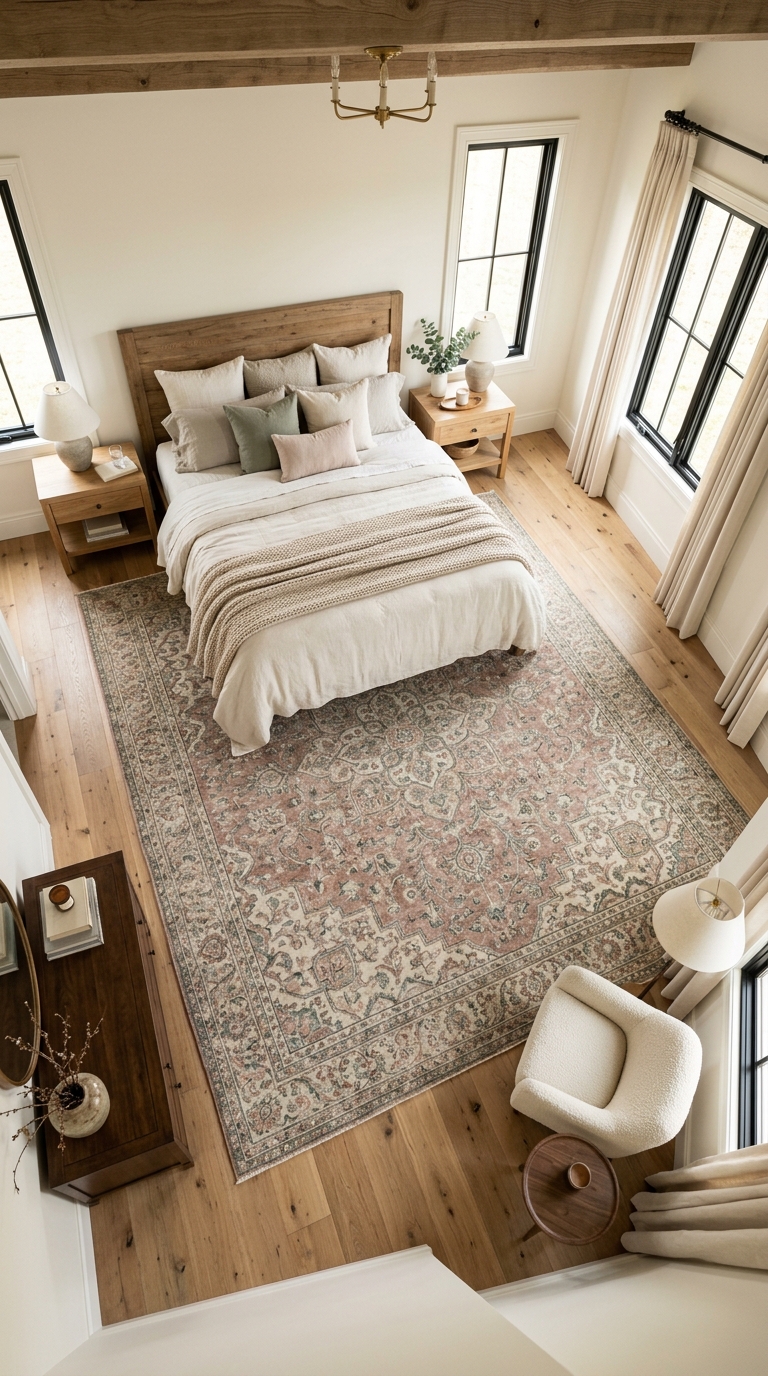
This sounds basic until you realize how many people get it wrong — and how dramatically a correctly chosen, correctly sized rug transforms a large master bedroom.
The rule most designers quietly apply: in a large master bedroom, go bigger than you think you should. The rug should extend at least 24 to 30 inches beyond each side of the bed. In practice, that often means an 10×14 or even a 12×15 rug in a room that could accommodate it. What this does:
- Visually grounds the entire sleeping zone so the bed doesn’t float awkwardly in the space
- Adds acoustic warmth — large rooms echo, and a substantial rug absorbs sound beautifully
- Creates a clear zone that defines where the bedroom starts even if there are other areas (sitting, dressing) in the same room
- Introduces texture underfoot that makes mornings and evenings feel genuinely luxurious
Patterns to consider: hand-knotted Persian or Moroccan designs in muted, aged tones bring incredible warmth. A large abstract or painterly rug adds artfulness. Plain bouclé or high-pile neutral rugs let the rest of the room take the spotlight.
Design a Functional and Beautiful Dressing Area Inside the Bedroom
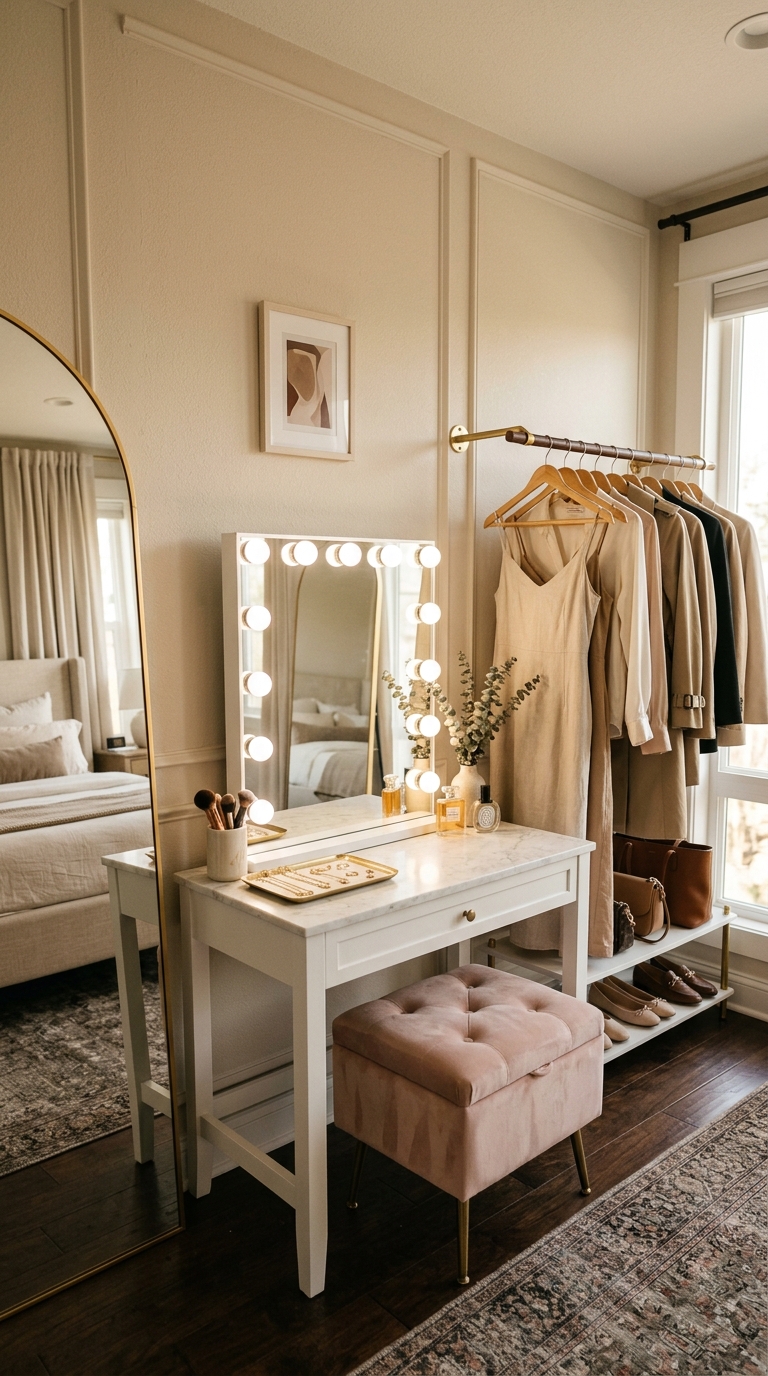
One of the biggest missed opportunities in a large master bedroom is treating the dressing function as purely practical — a wardrobe, maybe a mirror, done. In reality, a well-designed dressing area inside your bedroom is one of the most indulgent upgrades you can make.
You don’t need a separate walk-in closet. A section of your large bedroom can become a proper dressing zone:
- A vanity with integrated lighting — backlit mirrors or Hollywood-style bulb surrounds — positioned near natural light if possible
- An open clothing display section with hanging rods, cubbies for folded items, and a ladder or low storage bench
- A full-length mirror that’s framed like artwork rather than propped against a wall
- A small upholstered bench or stool in front of the vanity for comfort during morning routines
- Hooks or a decorative valet stand for tomorrow’s outfit
When the dressing area is beautifully styled, it becomes part of the room’s visual identity, not a practical corner you’re trying to hide.
Layer Your Lighting Across Three Distinct Levels
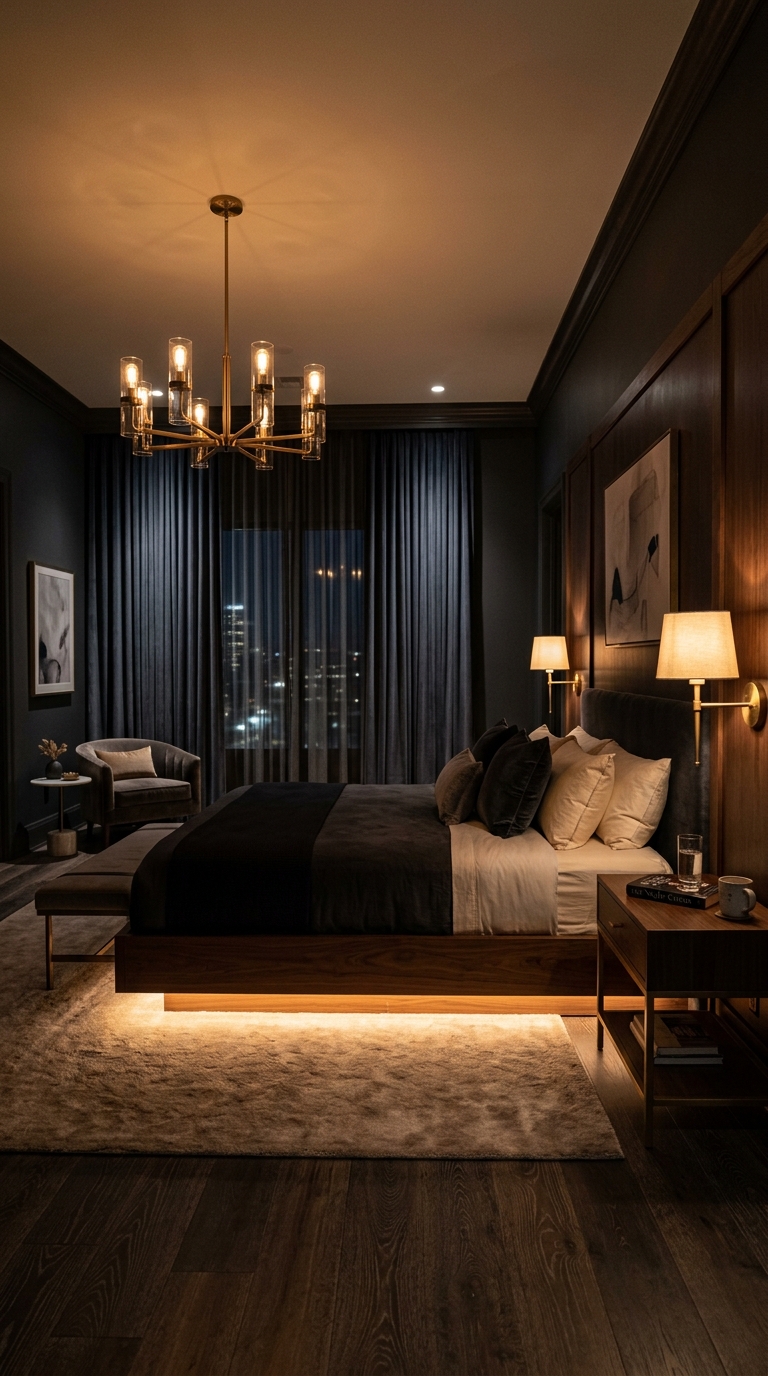
If your bedroom relies on a single overhead light, you’re missing the entire point of what lighting can do in a large room. The rooms that feel the most luxurious and livable have lighting designed in three intentional layers.
Layer one — ambient: This is your overhead source. In a large bedroom, a statement chandelier or a cluster of pendant lights does this beautifully. Choose something with a dimmer — this layer should go from functional brightness to soft background glow.
Layer two — task: Bedside sconces mounted at the right height (center of the sconce at roughly 56 to 60 inches from the floor) or adjustable swing-arm lamps on the nightstands. These light your book, your phone, your evening wind-down without flooding the room.
Layer three — accent: This is where magic happens. Think:
- Recessed LED strip lighting above a floating shelf or under a floating bed base
- A backlit headboard panel
- Uplights behind plants or in corners
- Candles on the dresser grouped in varying heights
When all three layers are on dimmers and you have them working together, the same room transforms completely from morning to midnight.
Bring Nature In Through a Living Plant Wall or Curated Greenery Display
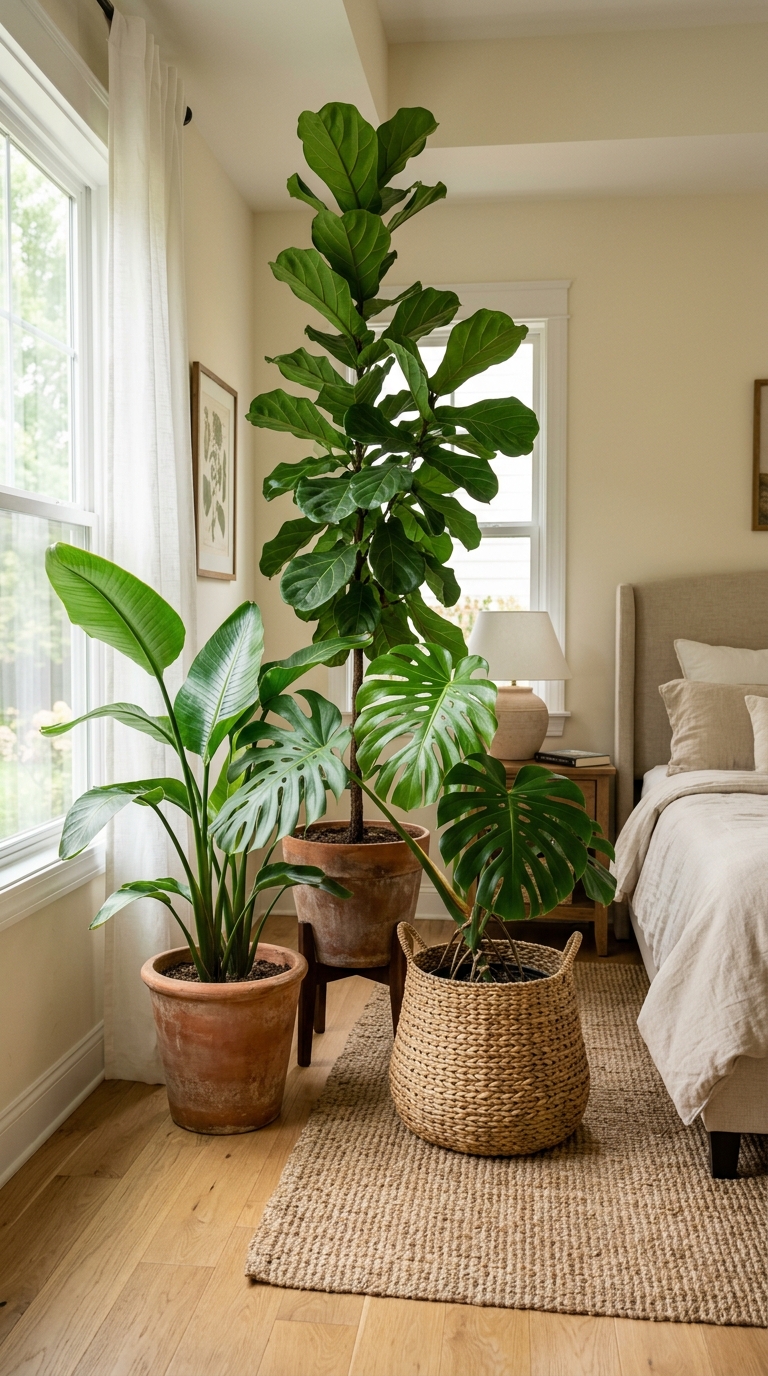
Plants in bedrooms often feel like an afterthought — a pothos on the dresser, a succulent on the windowsill. In a large master bedroom, greenery can become a genuine design element that adds life, warmth, and even sound absorption.
A few approaches that work at scale:
- A vertical living plant wall on a non-bed-facing wall — either a fully irrigated system or a modular panel of potted plants in geometric frames
- A cluster of oversized tropical plants (large monstera deliciosa, fiddle leaf fig, birds of paradise) grouped in varying heights in an empty corner
- A floating shelf system dedicated entirely to potted plants at different levels, creating a lush green column of life
- Hanging macramé plant holders at different heights near a window corner
Beyond aesthetics, plants genuinely improve bedroom air quality, add natural humidity in dry climates, and create a sensory experience that no piece of furniture can replicate. Pair terracotta pots, woven baskets, and sleek ceramic planters to keep the arrangement cohesive rather than chaotic.
Create Visual Height by Taking Curtains From Floor to Ceiling
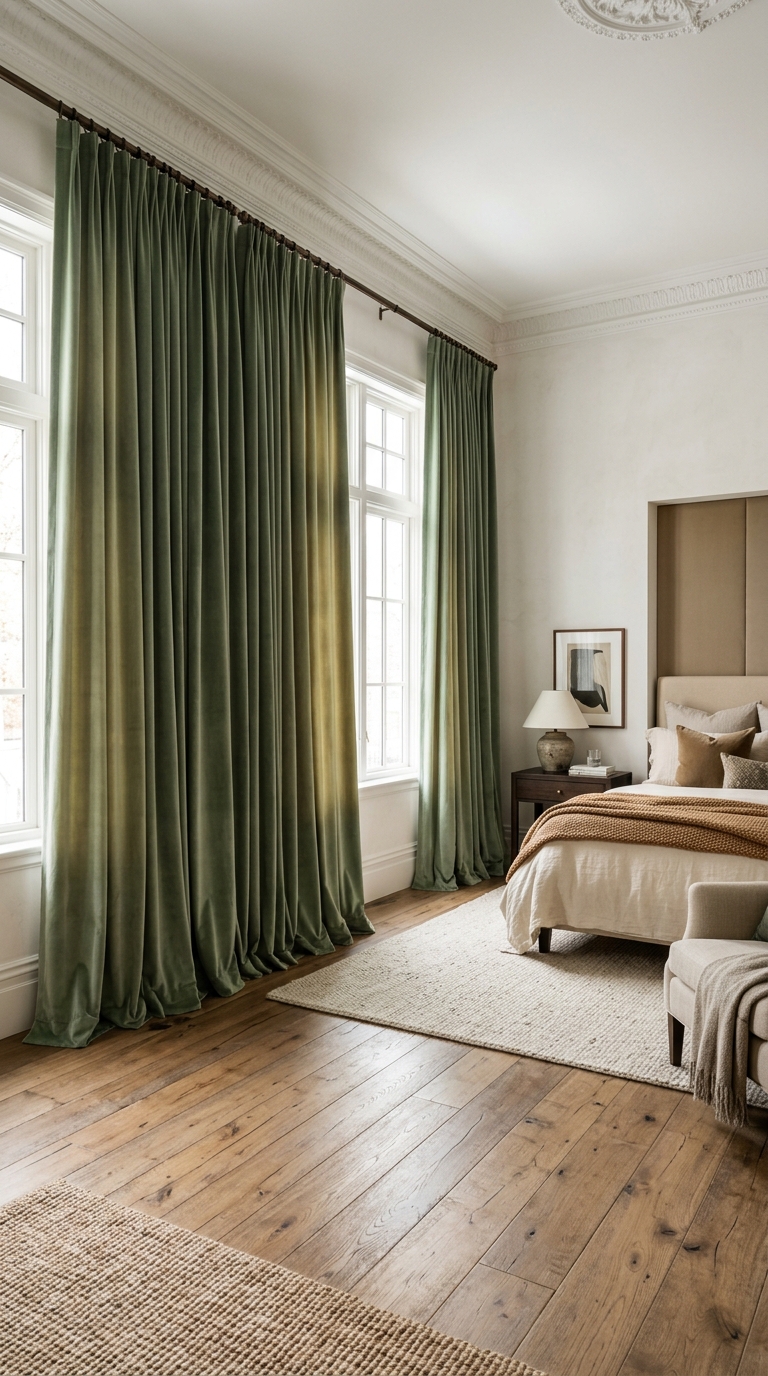
In rooms with high ceilings — which most large master bedrooms have — the window treatment can either amplify that height or completely waste it. Most people hang curtains right above the window frame. This cuts the room’s perceived height almost in half.
The transformation of mounting curtain rods as close to the ceiling as possible and letting fabric pool generously on the floor is genuinely dramatic. Here’s how to do it right:
- Mount the rod 2 to 4 inches below the ceiling (or right at the crown molding if you have it)
- Choose curtains that are longer than the actual window — they should puddle or at minimum kiss the floor
- Use full, generous fabric — double the width of your window for proper draping
- Consider double rods with sheers behind and a heavier drape in front for depth and light control flexibility
Fabric choices for large bedrooms:
- Velvet in deep tones for drama and sound absorption
- Linen in natural tones for relaxed, airy elegance
- Silk or faux silk for reflective luxury
Introduce an Unexpected Material — Woven, Rattan, or Organic Texture
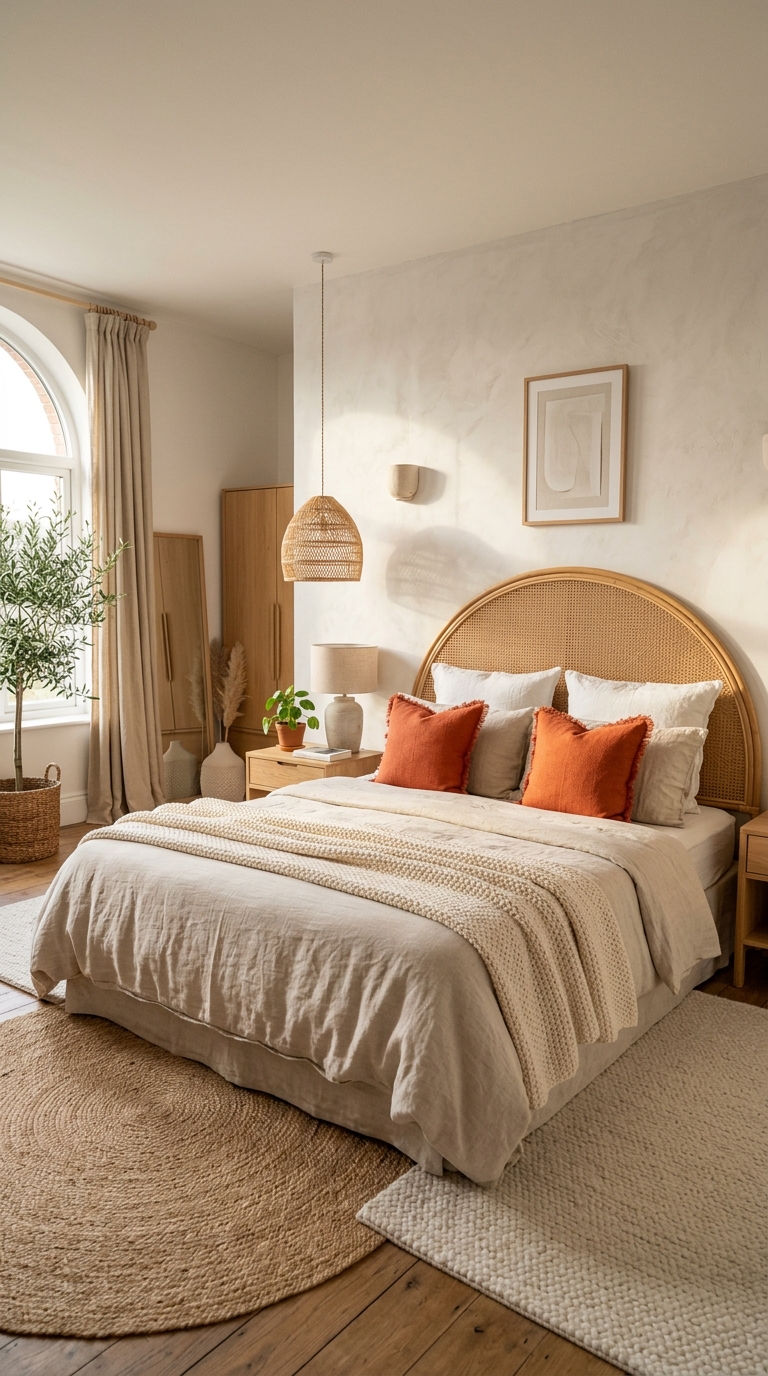
The rooms that feel genuinely interesting rather than catalog-perfect have at least one material that surprises you. In large master bedrooms, this is often a woven, natural, or organic texture that contrasts beautifully against smoother, more refined surfaces.
Here’s where to introduce these materials:
- A large rattan or wicker headboard that brings warmth against a crisp white or plaster wall
- A woven pendant light — a sculptural rattan or seagrass shade that turns ceiling lighting into a piece of art
- Jute or sisal layered under a softer rug for textural depth underfoot
- A woven cane bed frame or dresser front that references nature without being rustic
- Macramé wall art scaled generously — a large piece above a dresser or in the reading nook area
The design principle here: contrast creates interest. A room full of smooth, shiny, or soft surfaces eventually reads as flat. One material that has genuine texture — that you’d want to reach out and touch — elevates every other surface around it.
Use Built-In Storage to Make the Room Feel Intentional, Not Stuffed
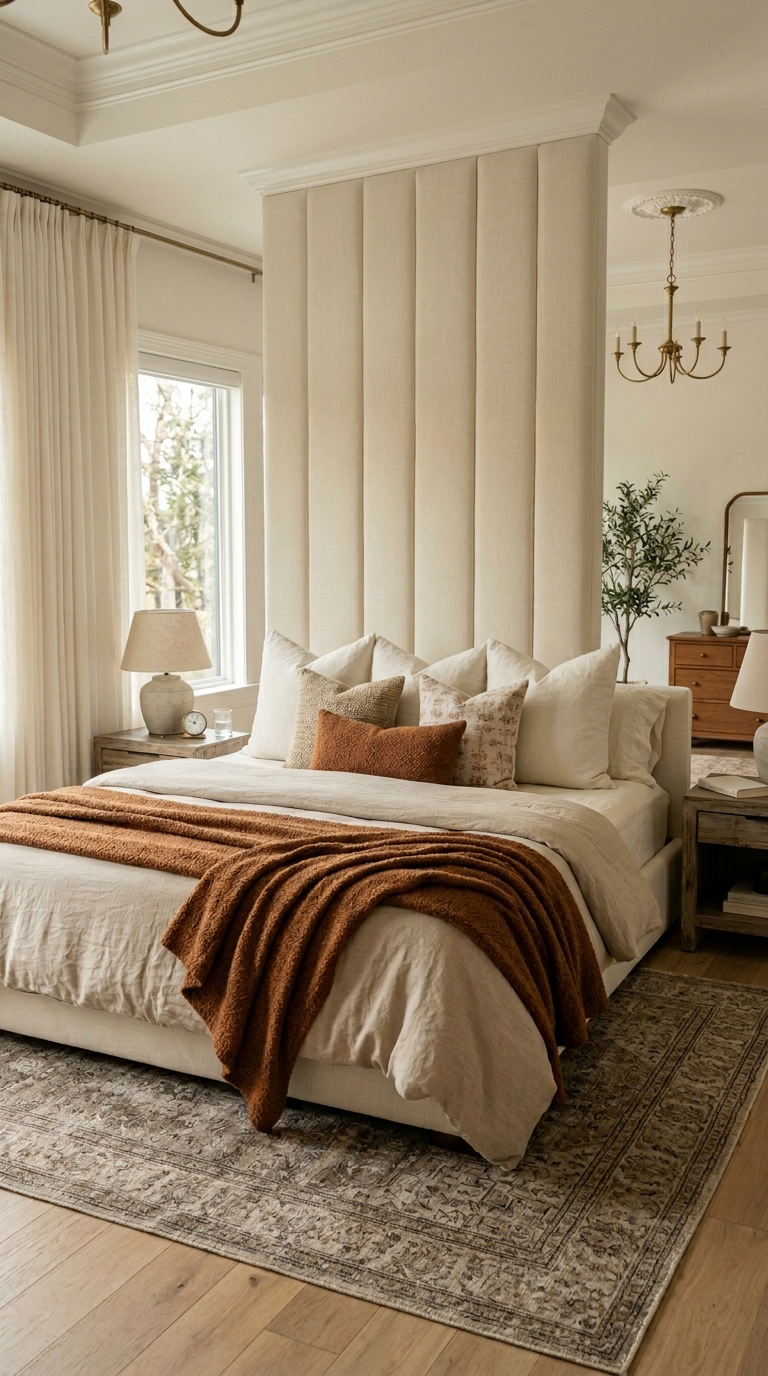
Large bedrooms often accumulate furniture because there’s room for it — a freestanding wardrobe here, a chest of drawers there, a bench at the foot of the bed. The result is a room that feels furnished rather than designed. Built-in storage changes the entire visual language of the space.
Built-ins worth considering in a large master bedroom:
- Flanking the bed with built-in cabinetry that includes nightstand surfaces, closed storage below, and open shelving above — creating a full headboard wall with storage built in
- A built-in window seat with lift-up storage underneath, combining functionality with a beautiful architectural moment
- Ceiling-height built-in wardrobes that disappear into the wall when closed, especially effective in painted wood that matches the wall color
- A built-in entertainment unit that houses the TV, hides cables, and includes integrated shelving and closed storage all in one cohesive unit
The key visual benefit: built-ins make a room feel designed, as if the furniture grew from the architecture. The room feels calmer, even when fully furnished
Style Your Bed Like a Destination, Not Just a Place to Sleep
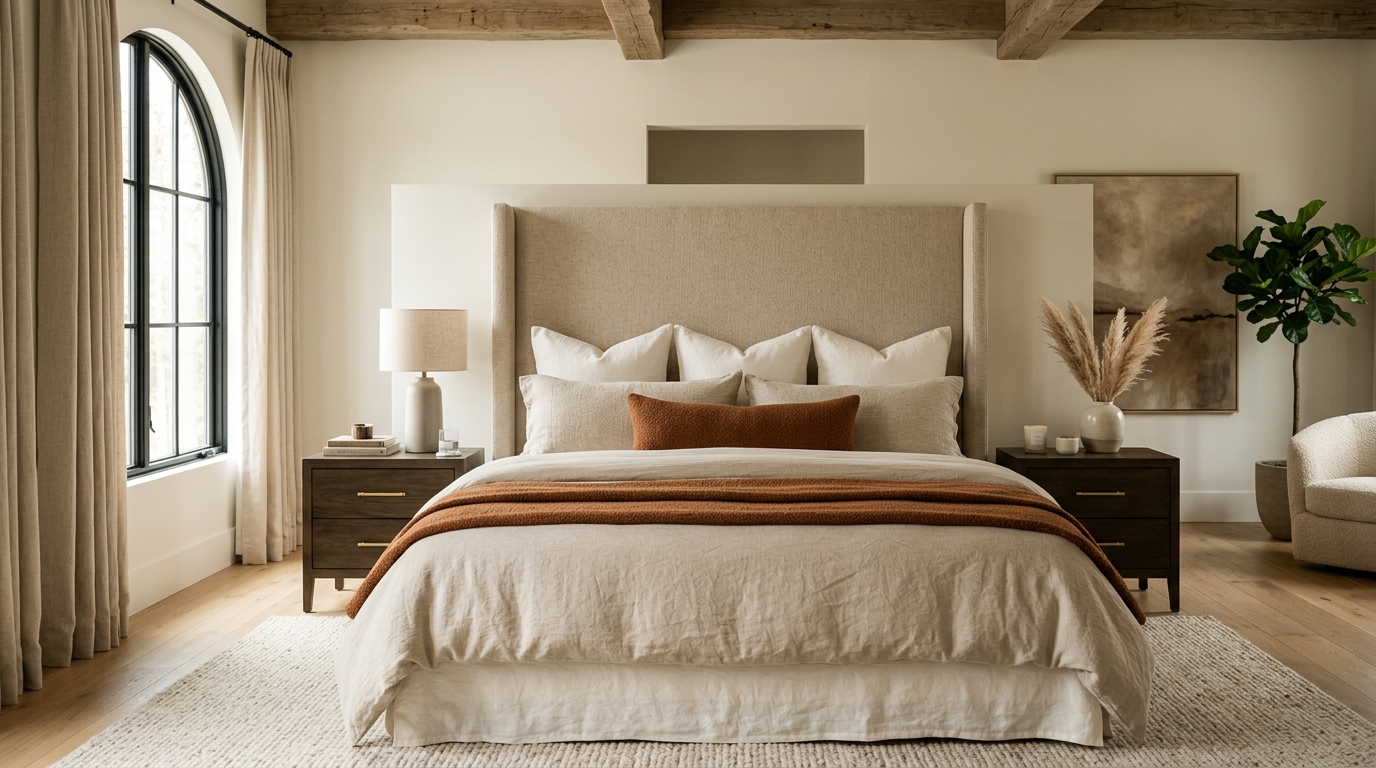
The bed is the undisputed centerpiece of a master bedroom, yet most people under-style it dramatically. Sheets, a duvet, done. In a large room, a beautifully layered bed becomes the entire focal point — and it takes no permanent changes, just intention.
The layering formula that always works:
- Fitted sheet in a high thread-count cotton or linen — the foundation
- Top sheet or coverlet in a complementary tone or subtle texture
- Main duvet or comforter — this is where you introduce your primary bedroom color or texture
- A folded throw or quilt across the foot of the bed in a contrasting texture (think bouclé, waffle-knit, or velvet)
- Pillow architecture — start with sleeping pillows in cases, add European squares behind them for height, then two or three decorative pillows in front, and finish with a lumbar pillow at center
Beyond the layering: the headboard height matters enormously in large rooms. A headboard that goes to 60 inches or even to ceiling height makes a statement that a low-profile bed simply cannot achieve.
Use Mirrors Strategically to Double the Visual Space
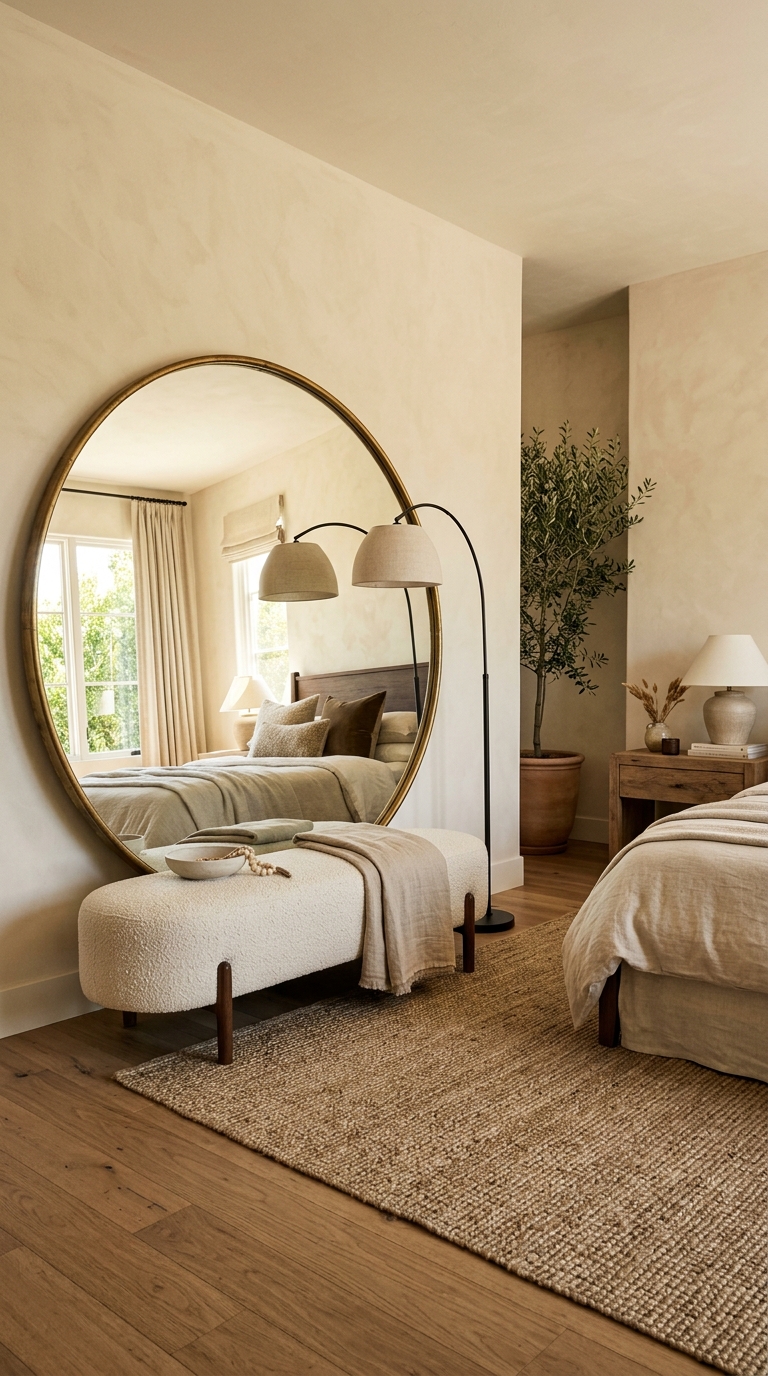
In a large room, mirrors seem counterintuitive — why add the appearance of more space when you already have plenty? The answer is that mirrors in a large bedroom don’t just expand visual space, they amplify light, add depth, and create moments of reflection that make the room feel finished.
The strategic approaches that work best:
- A large leaning mirror (at least 72 inches tall) positioned at an angle in a corner, which bounces light across the room and adds a relaxed, editorial quality
- A pair of matching mirrors flanking the bed on either side, used in place of or alongside artwork
- Mirrored furniture — a dresser, side table, or console with mirrored fronts catches light beautifully, especially near a window
- An oversized round mirror above a dresser or fireplace that reads like a porthole and softens a room full of rectangular shapes
- A mirror gallery wall on one lateral wall — mixing sizes and frame finishes creates an artful, collected look
Avoid placing mirrors directly opposite a window in a bedroom — the glare can be uncomfortable at different times of day. Instead, position them at a right angle to the window so they catch and scatter light without creating direct reflection.
Design the Ceiling as a Fifth Wall You Actually Thought About
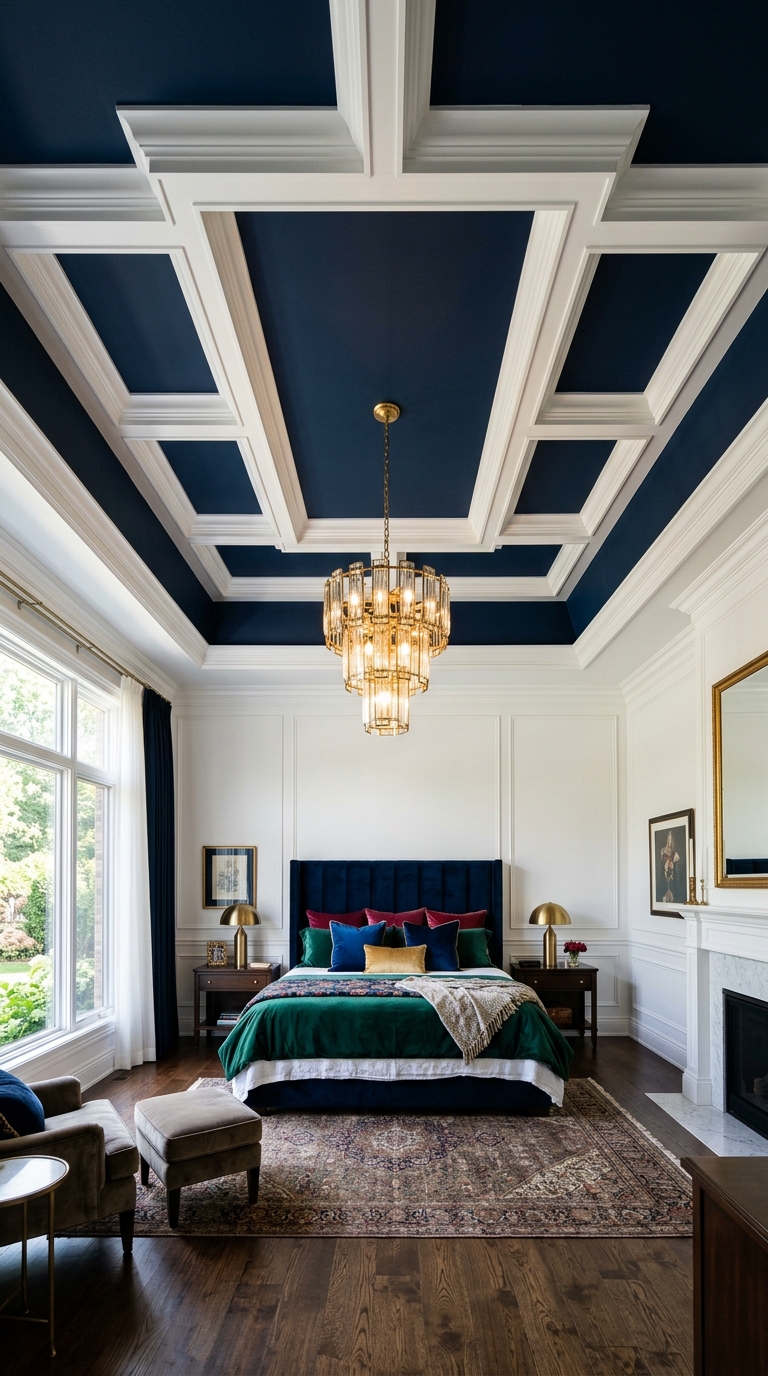
The ceiling of a large master bedroom is almost always ignored. At best it gets a coat of the same white paint as the walls. At worst it’s left with a builder-grade light fixture and nothing else. In a large room with significant height, the ceiling is a massive design opportunity you’d be crazy to waste.
Ideas worth seriously considering:
- Coffered ceiling with painted-in detail — even a simple two-depth coffer adds architectural richness that elevates the entire room
- Painted ceiling in a tone darker than the walls — a dusty blue ceiling over cream walls, or a terracotta ceiling over white, creates an envelope of color that feels deliberately luxurious
- Wooden beam installation — real or faux beams in a dark stain running the length of the room add warmth, texture, and scale
- Ceiling medallion with a sculptural chandelier centered within it — the combination makes even a plain ceiling feel intentional
- Wallpaper on the ceiling — botanical, geometric, or textural patterns applied above you create a genuinely unexpected and beautiful overhead experience
Define Multiple Zones in the Room With Different Rug and Furniture Arrangements
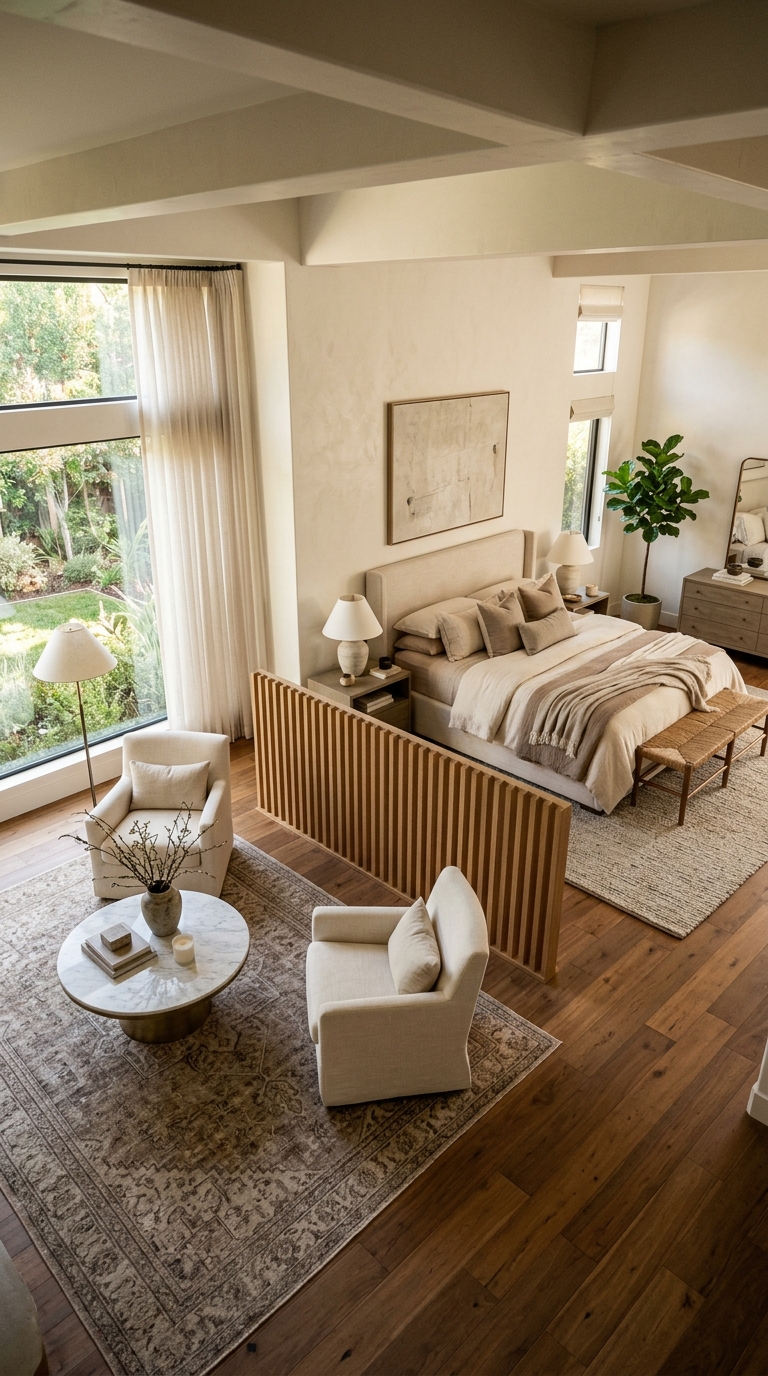
Here’s a mindset shift that changes everything about large master bedroom design: stop thinking about it as one room and start thinking about it as two or three small rooms sharing a space. The sleeping zone, the sitting zone, the dressing zone — each can have its own visual identity while connecting cohesively.
The tools that define zones without walls:
- Separate area rugs in complementary colors or textures, each anchoring a different zone
- A consistent lighting tone across zones that unifies them even as furniture arrangements shift
- A half-wall or decorative room divider — a slatted wood screen, an open bookshelf, or even a row of tall plants that creates a visual break without blocking light
- Consistent use of one or two finishes (say, brass hardware and natural wood) that appear in each zone and tie them together
In practical terms: the sleeping zone has the bed, nightstands, and headboard wall. The sitting zone has a rug, chairs or a small sofa, a coffee table, and perhaps a TV opposite. The dressing zone has a vanity, mirror, and storage. When each of these has its own purposeful setup, a 400-square-foot bedroom doesn’t feel oversized — it feels complete.
Idea 15: Add Art at a Scale That Commands Respect
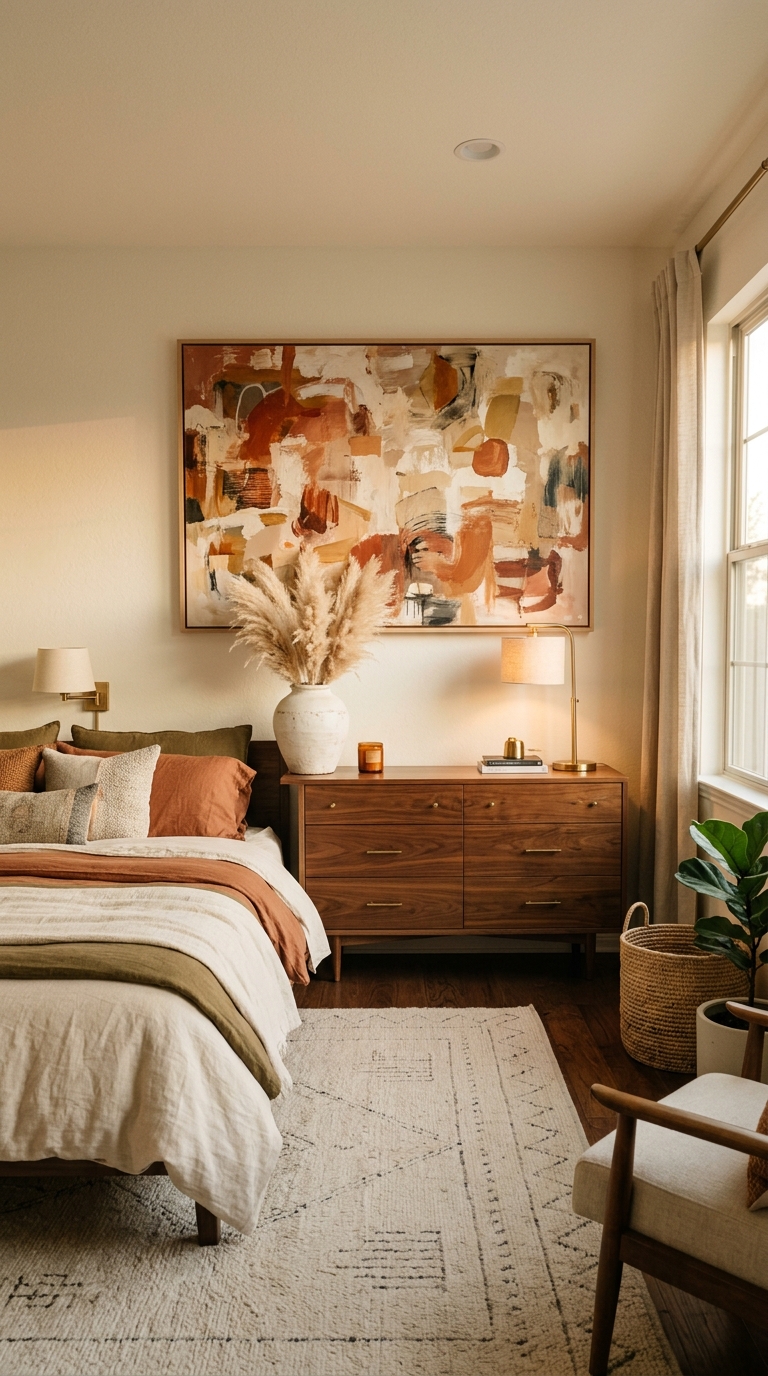
Nothing makes a large bedroom feel more thoughtfully designed than artwork chosen and hung with genuine intention. The mistake most people make: hanging a small piece of art that gets lost on a big wall, or creating a gallery wall that reads as cluttered rather than curated.
In a large master bedroom, the art needs to be scaled to the room:
- One oversized canvas or print — at minimum 48×60 inches — hung centered above a dresser, fireplace, or on the blank wall opposite the bed
- A diptych or triptych of related pieces hung together as a set, with tight spacing between them so they read as a single composition
- A large-format photograph — black and white architectural or landscape work in an oversized frame makes a sophisticated statement
- Woven tapestry or textile art mounted on a large wall, which introduces color, texture, and visual warmth all at once
- A floating sculpture or relief piece that breaks the two-dimensional expectation entirely
The hanging height matters: in a large room, art can go slightly higher than the traditional 57-inch eye-level rule. Centering the piece at 62 to 65 inches draws the eye up and honors the ceiling height.
The Through-Line That Ties All of This Together
Every one of these ideas points toward the same truth: a large master bedroom rewards intentionality. Empty space doesn’t become luxurious on its own. It becomes luxurious when someone has thought carefully about what belongs there, what serves a purpose, and what makes the room feel genuinely like a destination.
Start with one idea that resonates with you most. Maybe it’s the layered lighting because your room feels cold and dim at night. Maybe it’s the reading nook because you’ve always wanted a private corner to escape to. Maybe it’s the ceiling treatment because you’ve walked past that blank overhead space every single day and finally want to do something with it.
Pick your one, execute it well, and watch how one thoughtful change inspires the next. The most beautiful bedrooms aren’t designed all at once — they’re built slowly, with care, over time. Yours is no different.