Bathroom Plants That Will Make Your Daily Routine Feel Like a Spa Escape
There is something almost magical about walking into your bathroom on a slow Sunday morning, the steam from your shower curling through the air, and catching the lush green shimmer of a trailing pothos draped over the edge of a floating shelf. That single moment — plant, light, warmth — shifts the entire energy of the space from purely functional to something that genuinely feels like a retreat you designed just for yourself.
I know because I spent years staring at my own plain white bathroom walls, convinced that plants belonged in living rooms and kitchens only. Then I brought home one little fern, set it on the corner of my bathtub ledge, and everything changed completely for me.
In this article, I am sharing sixteen bathroom plants that I have either grown myself, gifted to friends, or personally tested in humidity-heavy, low-light conditions so you can decorate with total confidence. I will walk you through each plant’s personality — how it behaves in a steamy bathroom, how to style it for maximum visual impact, what kind of light and watering it actually needs, and the truth about whether it is beginner-friendly or better suited for someone who already has a few houseplant wins under her belt. By the end, your bathroom is going to feel completely transformed, and you will finally understand why plant styling is the fastest, most affordable upgrade any bathroom can get today.
Pothos (Epipremnum aureum)
There is a reason pothos is the first plant every bathroom decorator falls in love with, and I say that from genuine personal experience rather than just surface-level observation. The trailing vines grow fast, drape dramatically, and that heart-shaped leaf pattern creates this lush cascading effect that instantly softens every hard surface in a bathroom — the tile grout lines, the chrome fixtures, the boxy vanity cabinet edge. When morning light catches the golden and green marbled leaves of a Golden Pothos variety, the entire room glows with this warm organic energy that no candle or paint color can fully replicate on its own. It genuinely transforms the most utilitarian room in your home into something worthy of a slow, intentional morning.
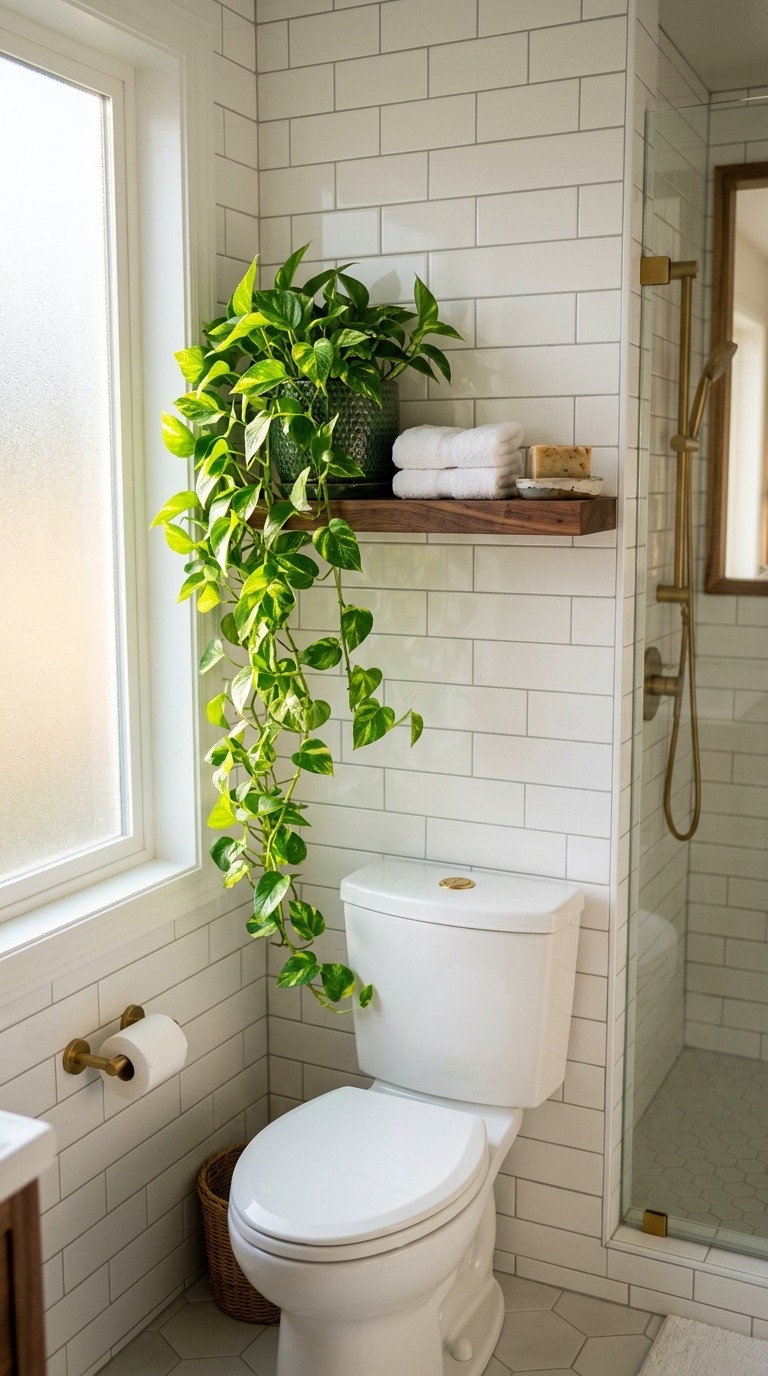
Pothos thrives in low to medium indirect light, which makes it absolutely perfect for bathrooms with a single frosted window or even an interior bathroom with nothing but artificial lighting. The humidity from your daily shower basically waters this plant for you between regular sessions, so you rarely need to worry about it drying out too fast. I keep mine on a floating shelf above my toilet, letting the vines trail down past the tank, and I give it a thorough drink about once every ten days. The Marble Queen variety is my personal favorite for bathrooms because the cream and green variegation reads almost luminous in low light. This plant forgives inconsistent care better than almost anything else in the plant world.
Boston Fern (Nephrolepis exaltata)
A Boston fern in a bathroom is pure old-world romance, and every time I look at mine I think of Victorian conservatories and the kind of homes where every surface is beautifully intentional. The fronds on a healthy Boston fern are feathery, arching, and incredibly voluminous — a mature plant can span two feet wide and creates this dramatic overhead curtain effect when hung from the ceiling near a window. The deep emerald green is rich and saturated in a way that cheaper artificial plants never quite manage to replicate. When steam fills the room during a long bath and the fern just drinks in all that moisture with visible satisfaction, there is genuinely no better visual proof that your bathroom decor choices are working exactly as they should.
Boston ferns are humidity lovers above almost every other plant on this list, which is precisely why the bathroom is their absolute happiest home. They struggle in dry indoor air — I learned this the hard way when I tried keeping one in my living room and watched it turn crispy within weeks — but in a steamy bathroom they flourish with minimal intervention from you. Place yours near a window for bright indirect light, and mist the fronds lightly on days when you skip your shower. Water when the top inch of soil feels dry. I use a terra cotta hanging planter for mine because the porous material helps prevent root rot. This is not the most forgiving plant for total beginners, but the payoff in sheer visual drama is absolutely worth that small extra effort.
Snake Plant (Sansevieria trifasciata)
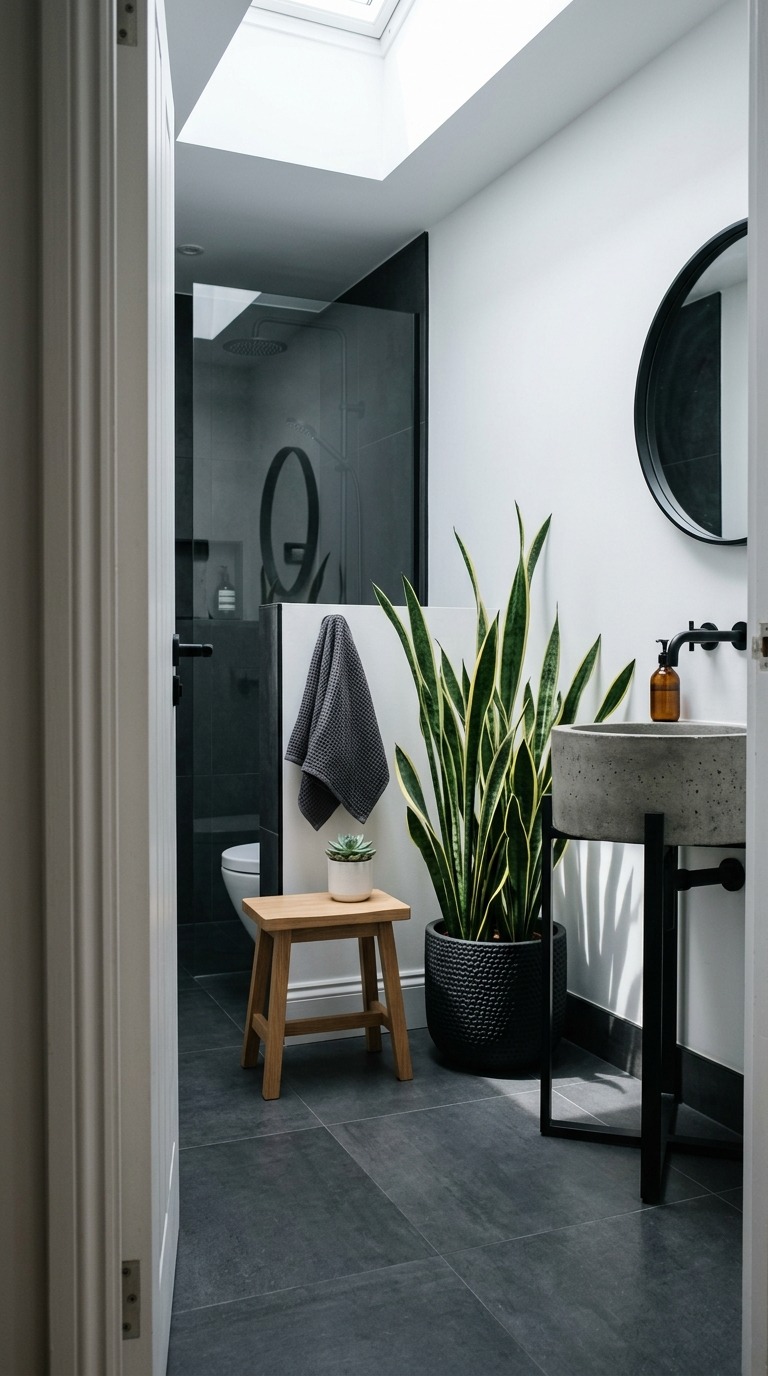
The snake plant has this commanding architectural quality that makes it feel less like a decoration and more like a structural design decision, and I mean that as the highest possible compliment. The stiff upright leaves — dark green with lighter horizontal banding and those crisp yellow margins on the Laurentii variety — read almost sculptural in a bathroom with clean lines and minimal clutter. I placed a large Sansevieria in the corner of my guest bathroom beside the vanity and every single person who uses that bathroom comments on how sophisticated and intentional the space feels now. It adds vertical interest without crowding the room, and it holds its shape perfectly even in the kind of indirect or artificial lighting that most other plants simply struggle to survive in long-term.

Snake plants are genuinely the most forgiving plants I have ever grown, and in a bathroom they practically take care of themselves with almost zero effort from you. They tolerate low light, irregular watering, and temperature fluctuations without complaint, which makes them the perfect choice if your bathroom does not get great natural light. Water yours deeply about once every two to three weeks and let the soil dry completely between sessions — overwatering is the only real way to hurt this plant. I repot mine every two years into fresh well-draining soil. The Zeylanica variety has slightly darker banding and a more compact form that works beautifully in tighter bathroom corners. This is the plant I recommend first to anyone who tells me they kill everything they touch.
Peace Lily (Spathiphyllum wallisii)
Peace lilies carry this quiet elegance that I find completely irresistible, and the combination of those deep, polished dark green leaves with the occasional white bloom rising above them is nothing short of stunning in a bathroom setting. When a peace lily blooms — which mine does reliably several times a year in the steamy bathroom environment — it produces these graceful white spathes that look genuinely luxurious against a backdrop of pale tile or painted walls. I have mine sitting directly on my vanity countertop beside the mirror, and every morning when I brush my teeth I notice it first. It softens the entire vanity area in a way that even the most thoughtful hardware selection never quite achieves on its own without some organic life present.
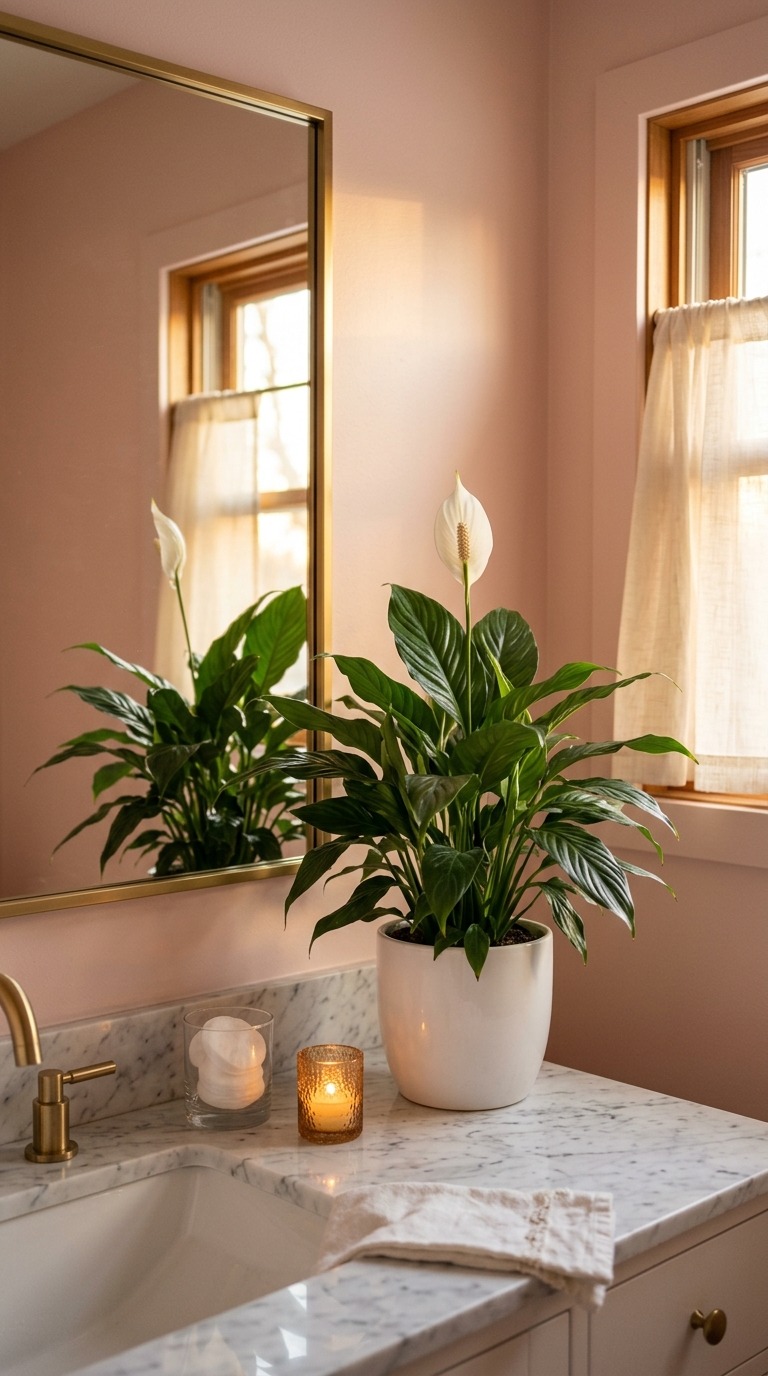
Peace lilies are one of the few flowering plants that genuinely thrive in low light and high humidity simultaneously, which puts them in a rare and valuable category for bathroom decorators. They will tell you when they are thirsty by drooping their leaves very slightly — not dramatically, just a gentle lean — and will perk back up within hours of a good watering. I water mine about once a week, always using filtered water because peace lilies are sensitive to the chlorine and fluoride in tap water, a detail most care guides skip right over. They prefer temperatures above sixty degrees and dislike cold drafts, so keep them away from air conditioning vents. The Domino variety has beautiful white-flecked leaves that add extra visual interest even when the plant is not in bloom.
Spider Plant (Chlorophytum comosum)
Spider plants have a certain joyful, cascading energy that feels almost celebratory in a bathroom, and I mean that in the best possible way — like the room is happy to see you every morning. The long, arching leaves striped with cream and green fan outward in every direction and then send out long runners tipped with tiny baby plantlets that dangle like little green ornaments below the mother plant. In a hanging planter near a bathroom window, this effect is visually spectacular. I hang mine on a handmade macrame hanger at about eye level beside my mirror, and the babies dangle down past the edge of the vanity in this effortlessly boho way that took absolutely no styling effort on my part. The plant literally does the decorating itself.
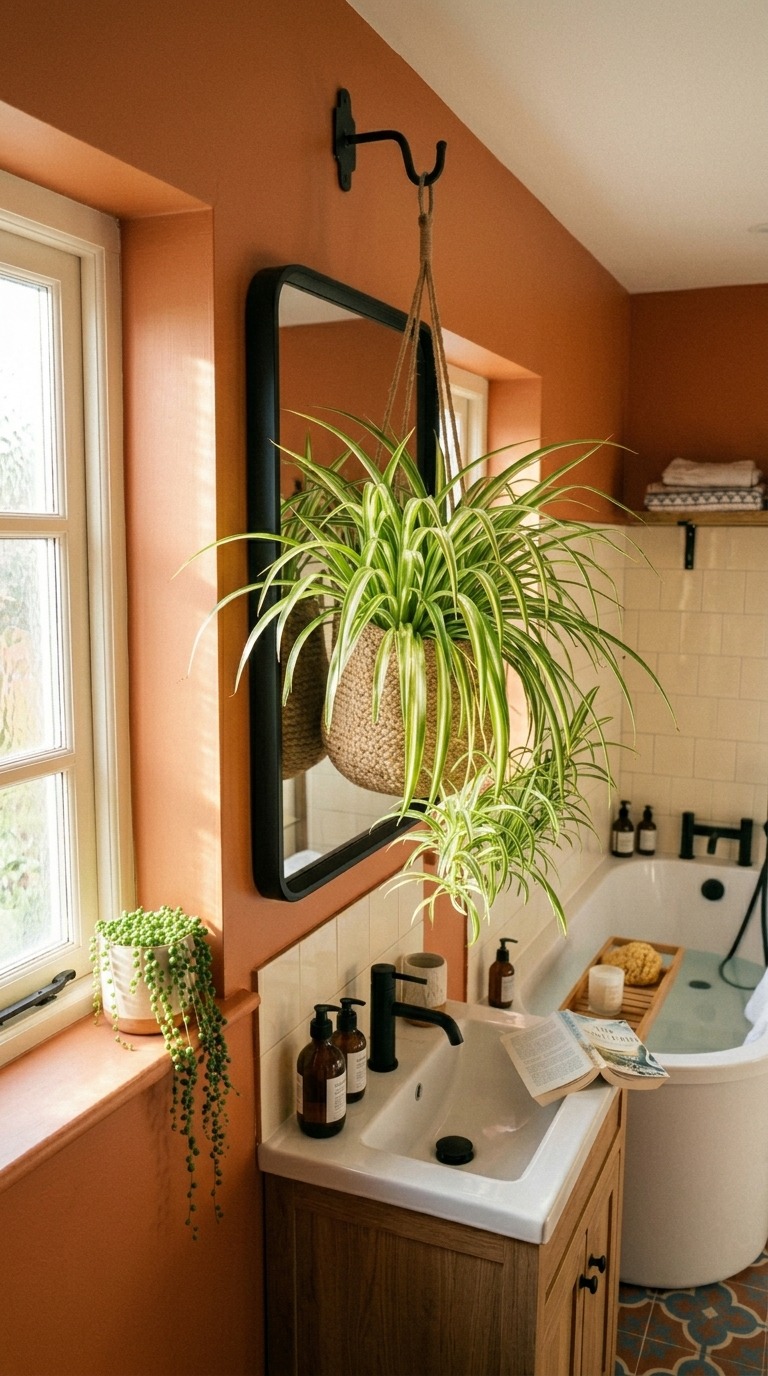
Spider plants are wonderfully tolerant of the variable light conditions that make so many other plants struggle in bathrooms. They prefer bright indirect light but adapt gracefully to lower light situations without losing that vivid variegation that makes them so decorative. Water yours moderately — I water mine every seven to ten days and let the soil dry slightly between sessions. They are especially sensitive to fluoride in tap water, which can cause brown leaf tips, so I switched to leaving tap water out overnight before watering and the browning stopped almost immediately. The Vittatum variety with its central white stripe is slightly more compact than the classic Variegatum and works beautifully in smaller bathrooms where a full-spreading plant might feel visually overwhelming. Propagating the babies into little pots makes excellent gifts too.
Aloe Vera
Aloe vera might be the most quietly beautiful functional plant you can possibly place in a bathroom, and once you live with one on your shelf you will genuinely wonder how you managed without it. The architectural quality of the thick, fleshy leaves — that muted blue-green color with tiny serrated edges — looks stunning against natural wood shelving or white tile, and the upright rosette form reads clean and deliberate in a minimalist bathroom without any fussiness. What I love most is that the gel inside those leaves is immediately accessible whenever you step out of the shower and notice dry skin on your elbows or heels — it is skincare and decor living together beautifully in one very satisfying plant. I keep mine on a lower shelf right at arm’s reach for exactly that reason.
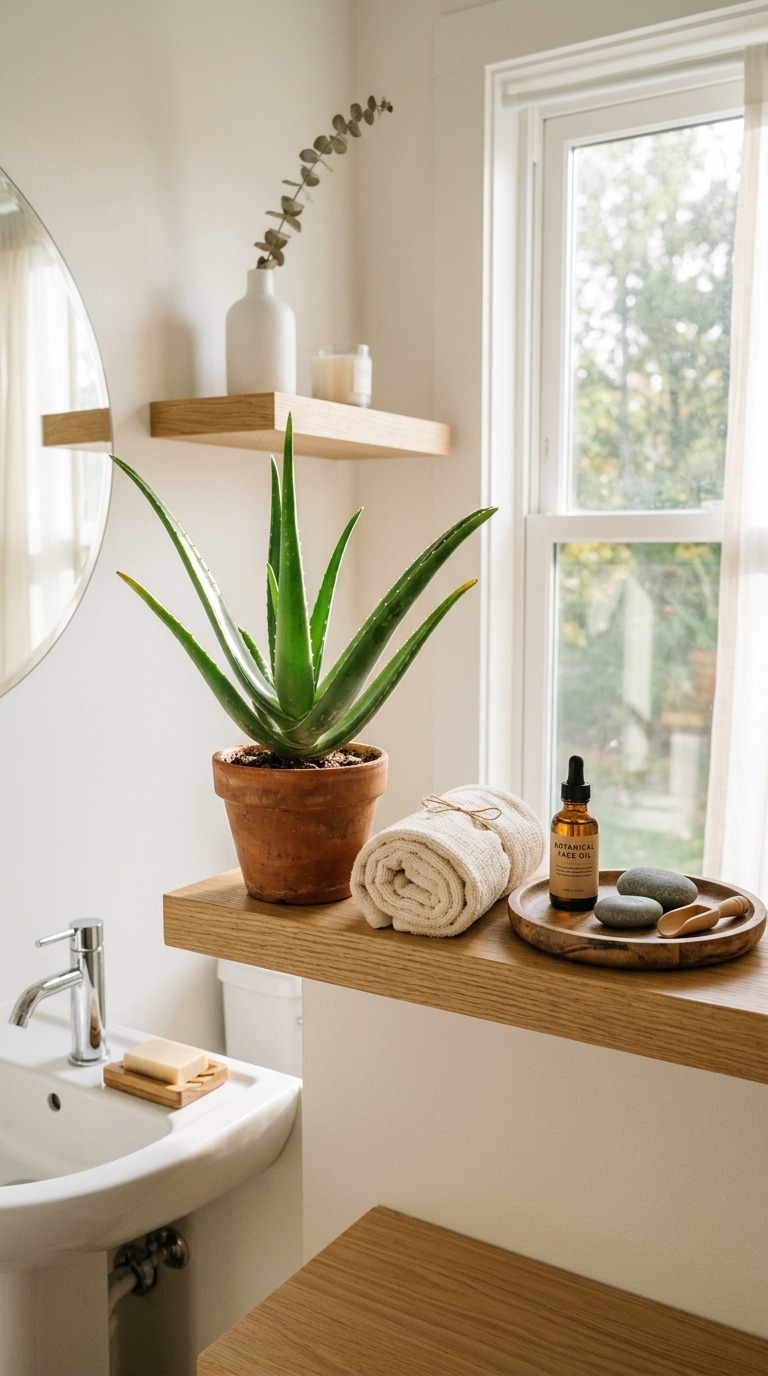
Aloe vera needs bright indirect light to stay plump, healthy, and genuinely decorative — without adequate light the leaves start to stretch and lean toward the nearest light source, losing that tight rosette shape that makes it so visually appealing. A bathroom with a clear or lightly frosted window is ideal. Water sparingly, only when the soil is completely dry several inches down, because aloe stores water in its leaves and root rot from overwatering will kill it faster than almost anything else. I water mine deeply about once every three weeks in winter and once every two weeks in summer. Use a fast-draining cactus mix in a terra cotta pot and never let it sit in standing water. This is one of the most genuinely useful plants you will ever bring into your home.
Bamboo (Lucky Bamboo, Dracaena sanderiana)
Lucky bamboo in a bathroom creates this effortlessly serene, spa-like atmosphere that I spent years trying to achieve with candles and essential oils before I realized the missing ingredient was actually this simple sculptural plant. The straight green stalks rising from a clear glass vase filled with smooth river stones is one of the cleanest, most visually satisfying arrangements you can create, and it requires almost zero design skill to pull off beautifully. The vivid green against stone gray walls — a color like Sherwin-Williams Peppercorn softened by warm stone floor tiles — creates a genuinely calming contrast that feels expensive and intentional. I placed mine on a teak bath shelf spanning my soaking tub and that single styling decision made the entire bathroom feel like a five-star hotel experience every single evening.
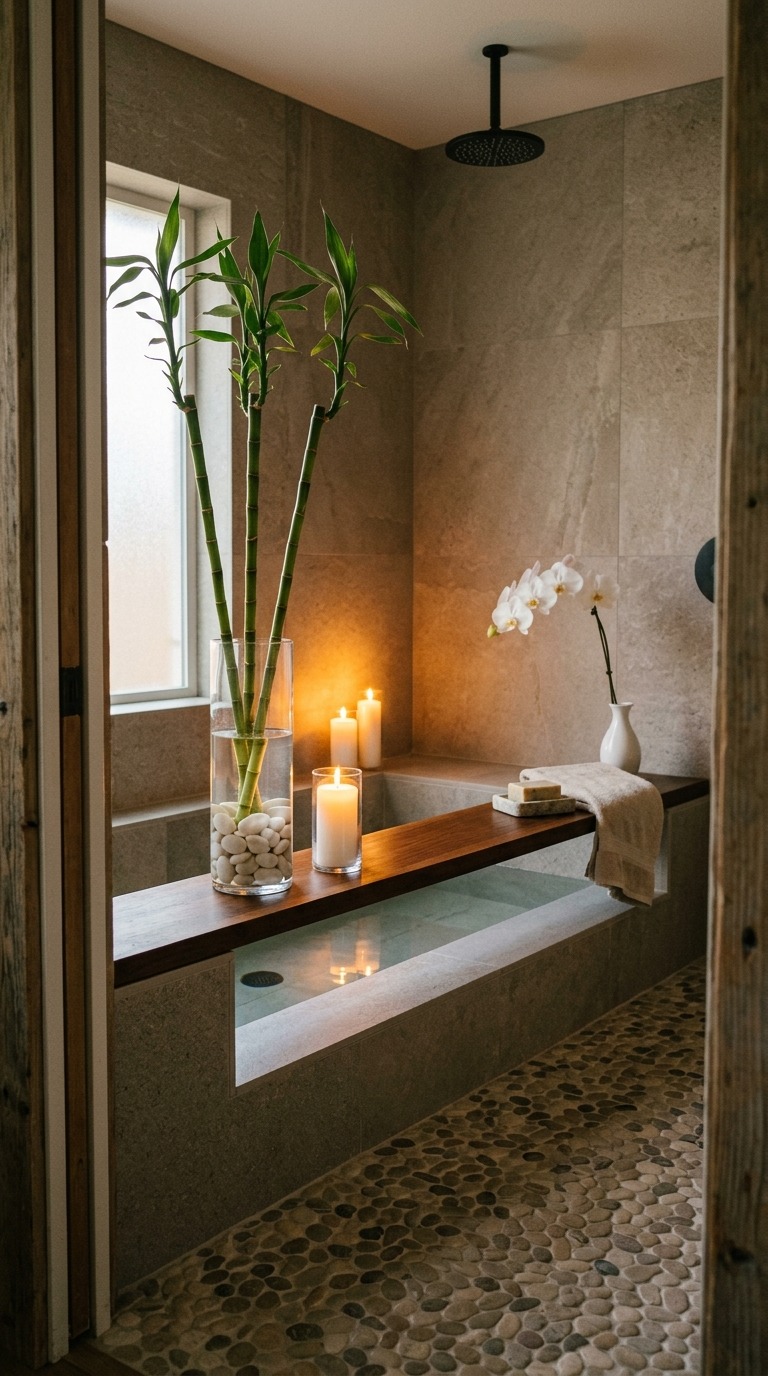
Lucky bamboo grows in water rather than soil, which makes it uniquely perfect for a bathroom — no potting mix, no drainage tray, no mess anywhere. Simply keep the roots submerged in about an inch of clean water and refresh that water completely every two to three weeks to prevent algae buildup and keep the stalks healthy and vibrantly green. It tolerates low to medium indirect light well, though it grows a little faster with brighter indirect light near a window. Avoid direct sun, which yellows the leaves quickly. Adding a drop of liquid fertilizer to the water once a month keeps the color rich and the growth steady. I find the three-stalk arrangement most visually pleasing in a bathroom setting — it feels balanced and intentional without tipping into busy or overdone territory.
Orchid (Phalaenopsis)
A Phalaenopsis orchid in a bathroom is pure drama in the most restrained, elegant way possible, and nothing else on this list comes close to its ability to make a bathroom feel genuinely luxurious without any other changes to the space. Those arching sprays of blooms — whether classic white, blush pink, or deep magenta — against a rich wall color like Benjamin Moore Hale Navy or Farrow & Ball Hague Blue create a contrast so sophisticated it looks professionally styled every single time. I placed a white orchid on the marble counter of my master bathroom about a year ago and I have kept one there consistently ever since because the visual impact is simply too good to give up. Guests always mention it, and it genuinely elevates every single bathroom routine I have.
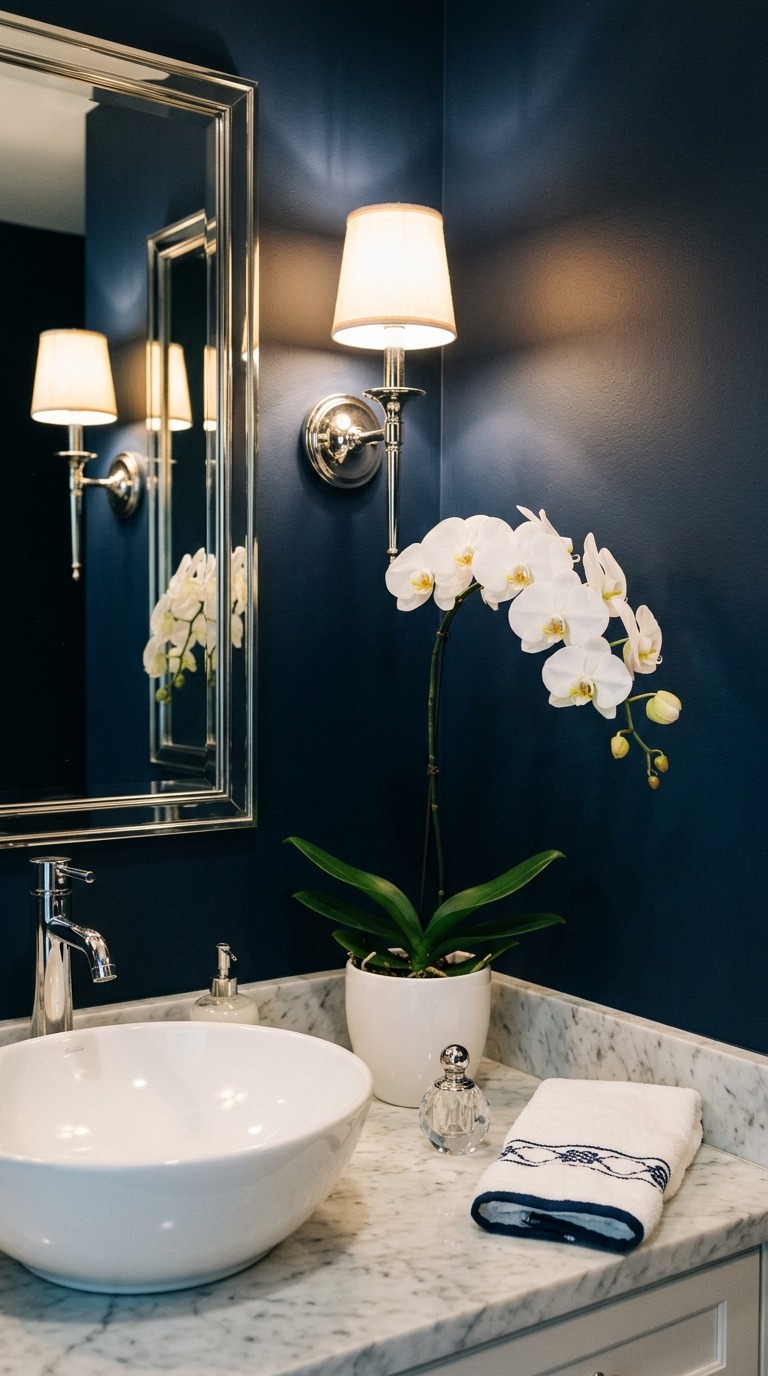
Orchids have a reputation for being difficult, but in a bathroom they actually receive two of their most important care requirements effortlessly — warmth and humidity. Water yours by setting the inner pot in a bowl of water for about fifteen minutes once a week, then letting it drain completely before returning it to its decorative outer pot, because orchids hate sitting in water with their roots constantly wet. They need bright indirect light — near a window is ideal — but direct sunlight will scorch the leaves and bleach the blooms. After the flowers drop, cut the spike above a node and wait patiently for the next bloom cycle, which typically arrives within a few months. I feed mine with a diluted orchid fertilizer every two weeks during the growing season and the results have been consistent and genuinely rewarding.
Calathea (Calathea orbifolia)
Calathea orbifolia is the most visually dramatic plant I have ever placed in a bathroom, and the moment I set mine on a wooden stool beside my soaking tub I completely stopped noticing every other decorative detail in the room. Those enormous round leaves — silver-green with deep forest green pinstripes radiating outward from the center like a living piece of abstract art — create an instant tropical, luxurious atmosphere that transforms even the most ordinary bathroom into something that feels genuinely exotic and considered. The leaves move slightly throughout the day in response to light changes, a behavior called nyctinasty, and watching that gentle, slow movement while soaking in a warm bath is one of the most quietly beautiful things I have experienced in my own home.
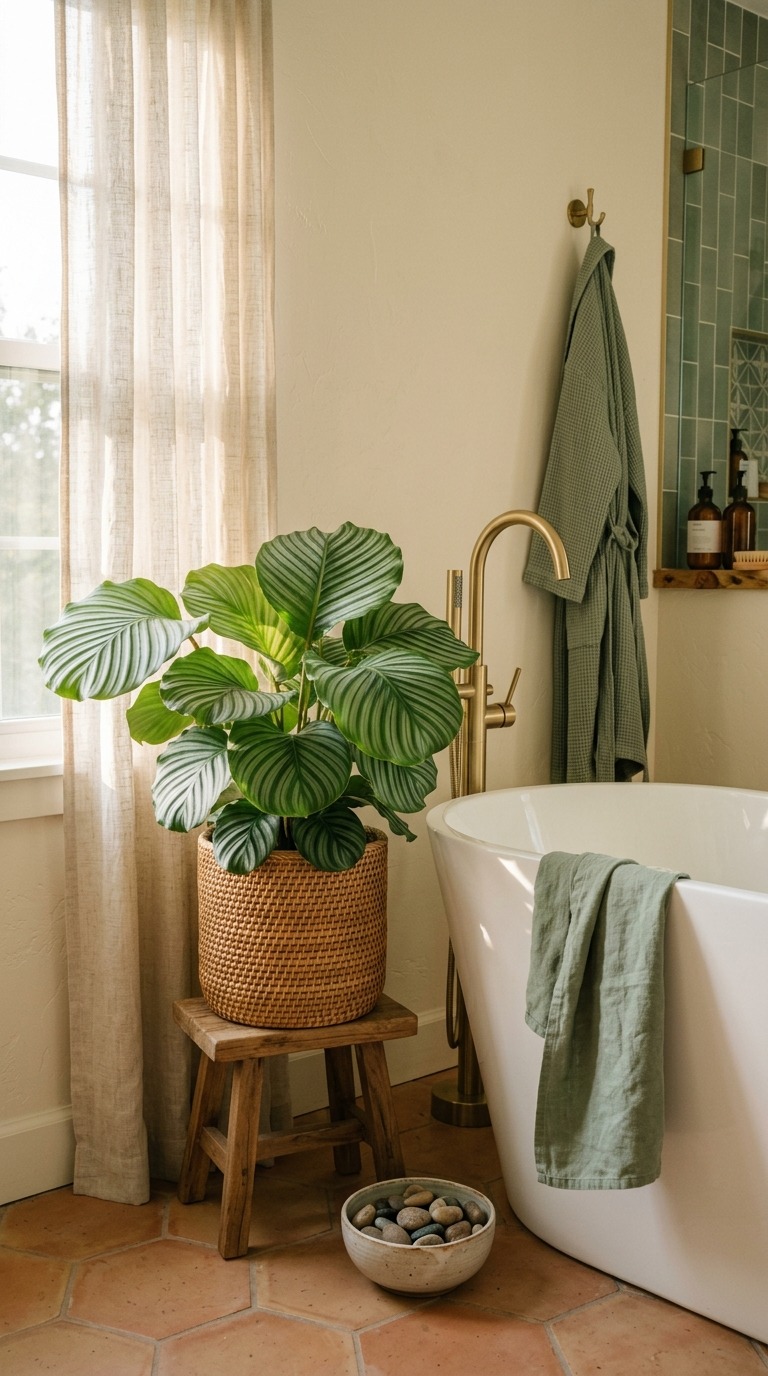
Calatheas thrive in the warm, humid, low-light conditions that bathrooms naturally provide, which makes them genuinely one of the best-suited plants on this entire list for that specific environment. They struggle in dry air — which is exactly why mine always looked stressed in my living room but absolutely flourished the moment I moved it into the bathroom. Water with filtered or distilled water only, as calatheas are extremely sensitive to the minerals and fluoride in tap water, and keep the soil consistently moist but never waterlogged. I water mine every five to seven days and the leaves have stayed lush and fully patterned without a single brown edge. Benjamin Moore Silver Satin on the walls pairs beautifully with the silver tones in the Orbifolia leaves in a way that feels genuinely intentional and quietly sophisticated.
Air Plants (Tillandsia)
Air plants are the most liberating plant discovery I have ever made as a home decorator, and I say that with complete sincerity because they removed every single barrier that had previously stopped me from adding greenery to certain areas of my bathroom. No soil, no pot drainage, no watering schedule to remember, no spills on surfaces — just a sculptural, living, textural object that you place wherever it looks good and then mist a couple of times a week. The variety within the Tillandsia genus is extraordinary — some have curling wire-like foliage, some have silvery frosty leaves, some bloom in vivid pink and purple — and arranging several together on a raw wood shelf creates an organic botanical display that looks genuinely curated without requiring any design training at all.
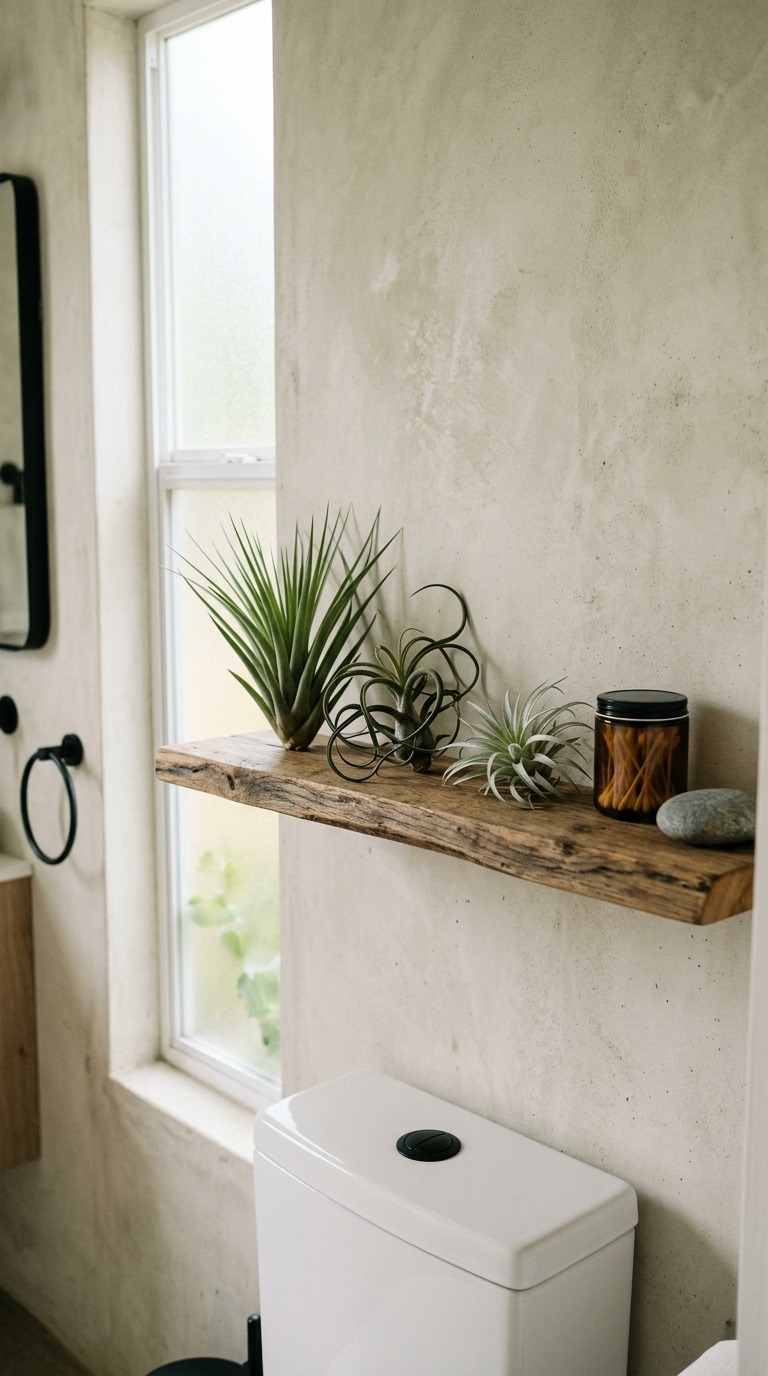
Air plants absorb moisture and nutrients through their leaves rather than roots, which makes the naturally humid bathroom environment a genuinely ideal habitat for them. Mist yours two to three times a week with a fine spray bottle, or soak them in a bowl of water for about twenty minutes once a week and then shake gently and let them air dry completely before returning them to their display — never let water sit in the center of the leaves as this causes rot. They prefer bright indirect light and good air circulation, so avoid sealing them in glass terrariums in a bathroom where airflow is already reduced. I arrange mine on a reclaimed wood board that I mounted directly to the wall with small brackets, and the combination of living plants against natural wood grain against concrete walls is genuinely one of my favorite styling moments in my entire home.
ZZ Plant (Zamioculcas zamiifolia)
The ZZ plant might be the most visually sophisticated low-maintenance plant I have ever brought into my home, and in a moody, dramatically decorated bathroom it reads like an absolute design statement. Those upright stems lined with perfectly oval, impossibly glossy leaves have a sculptural quality that feels architectural rather than casual, and in a deep space with dark walls — something like Farrow & Ball Treron or Benjamin Moore Black Forest Green — the contrast between the reflective leaf surfaces and the matte painted wall creates a tension that is genuinely stunning. I have mine on a small rattan side table in my guest bathroom, which has almost no natural light, and it thrives completely without complaint while looking like something you would find in a designer hotel lobby. It is effortlessly cool.
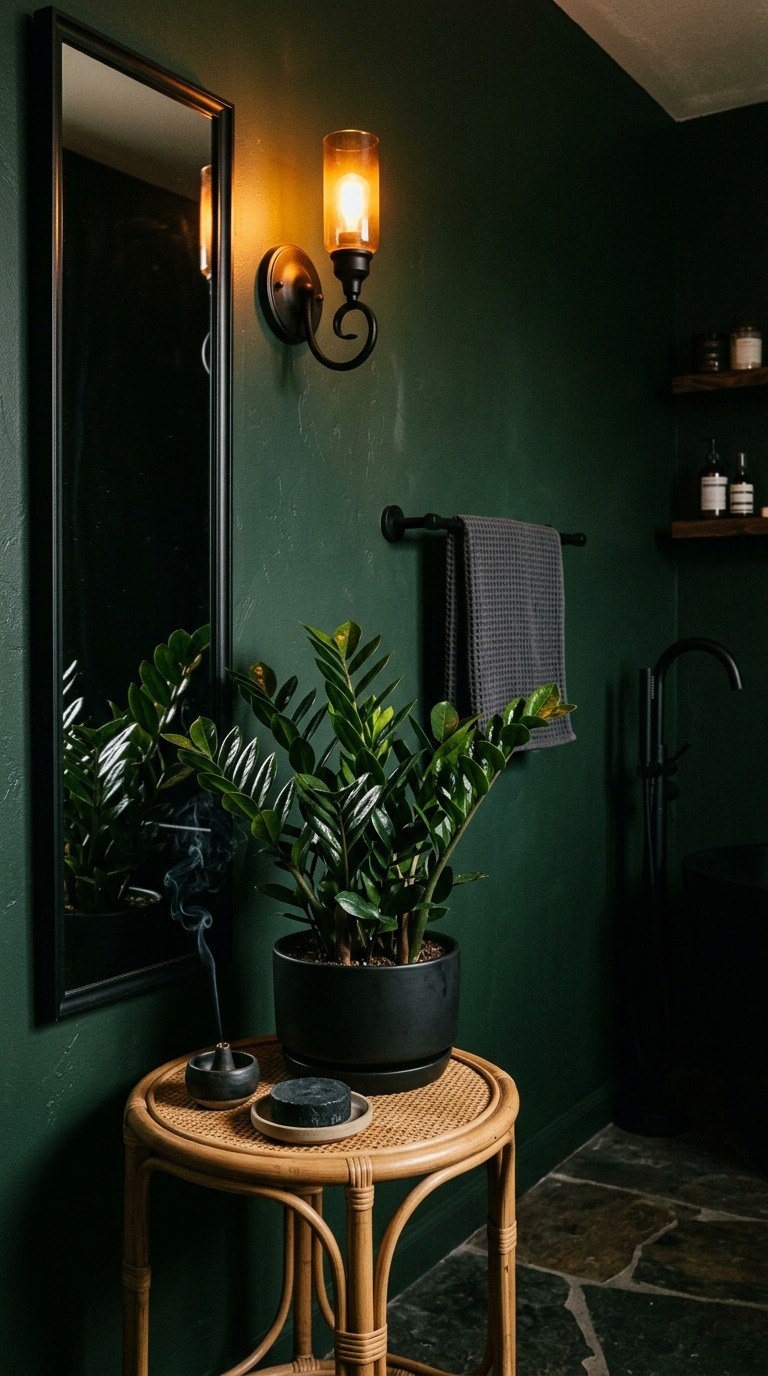
ZZ plants store water in their thick rhizomatous roots and can survive extended periods of neglect without showing stress, which makes them the most forgiving plant on this entire list for people who travel frequently or who simply forget to water things. Water deeply about once every two to three weeks, always letting the soil dry out completely between sessions — this plant would genuinely rather be slightly too dry than slightly too wet, and keeping that in mind prevents the only real mistake you can make with it. It tolerates very low light conditions better than almost any other decorative plant, which makes it invaluable for interior bathrooms without windows. The Raven ZZ, with its deep almost black leaves, is extraordinarily dramatic and pairs beautifully with brass hardware and dark walls in a way that feels genuinely editorial and current.
Lavender (Lavandula angustifolia)
Lavender in a bathroom is one of those rare design choices that serves you on absolutely every sensory level simultaneously — visual beauty, living fragrance, and the kind of organic texture that no scented candle or reed diffuser can genuinely replicate. The silver-green foliage has this soft feathery quality that looks beautiful against painted wood wainscoting or cream tile, and when the purple flower spikes appear in bloom the entire color story of the bathroom shifts into something warmer, more intentional, and more personally curated. I keep two small pots on my bathroom windowsill — the Hidcote variety, which stays compact and blooms generously — and on mornings when steam from the shower releases the fragrance into the air, stepping into that bathroom feels genuinely therapeutic in a way I struggle to describe adequately with words alone.
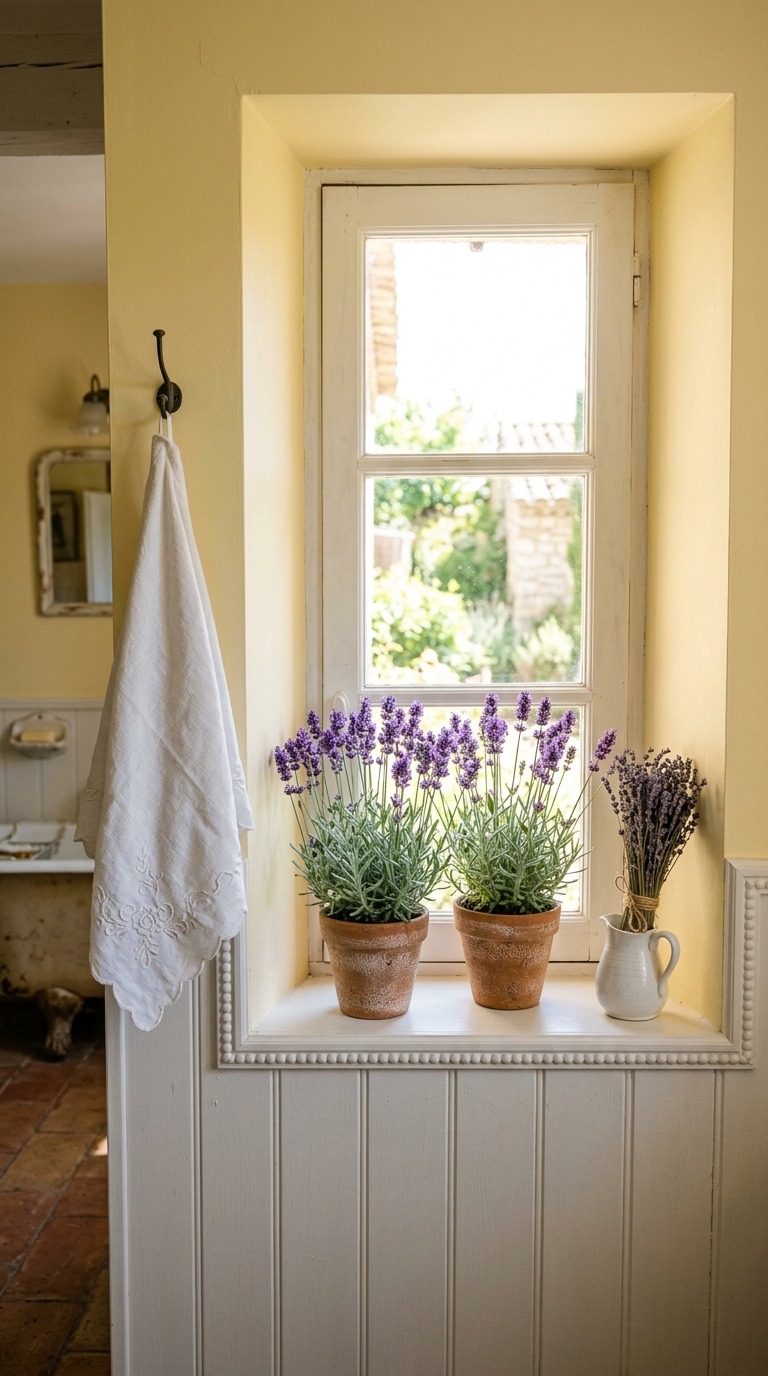
Lavender demands the one thing that many bathrooms struggle to provide generously, which is direct sunlight, so position yours on the sunniest windowsill you have and rotate the pot a quarter turn every few days to keep growth even and prevent it leaning toward the light. Water moderately — lavender is Mediterranean by nature and handles dry spells far better than wet feet, so let the soil dry partially between waterings and always use a well-draining pot. The humidity from a bathroom actually helps lavender stay healthy in indoor conditions where central heating typically dries the air too aggressively. Deadhead spent blooms promptly to encourage continuous flowering throughout the season. This is the one bathroom plant that will have you lingering in your morning routine just a little longer than necessary every single day.
Chinese Evergreen (Aglaonema)
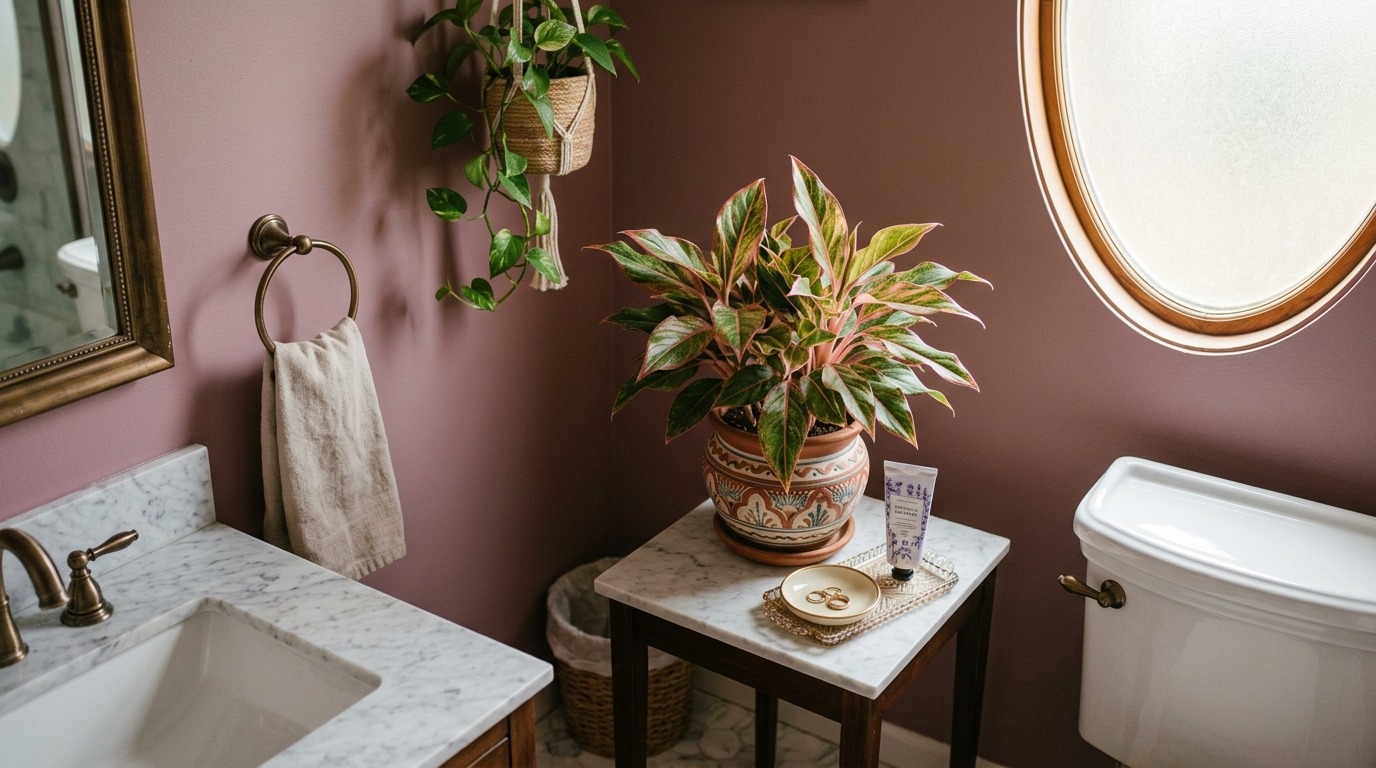
Chinese evergreens are the most underrated bathroom plants in the entire world of indoor decorating, and I say that with complete confidence because their extraordinary foliage color range — from deep forest green to vivid pink, red, silver, and creamy yellow — makes them infinitely more versatile and visually interesting than most popular bathroom plant choices. The Pink Dalmatian variety, with its irregular splashes of deep rose against dark green, looks like an abstract watercolor painting sitting in your bathroom, and it pairs beautifully with dusty, muted wall colors that are having such a wonderful design moment right now. I placed mine beside the toilet in my main bathroom — an area that always feels awkward to decorate — and it turned a dead styling corner into the most commented-on detail in the entire room.
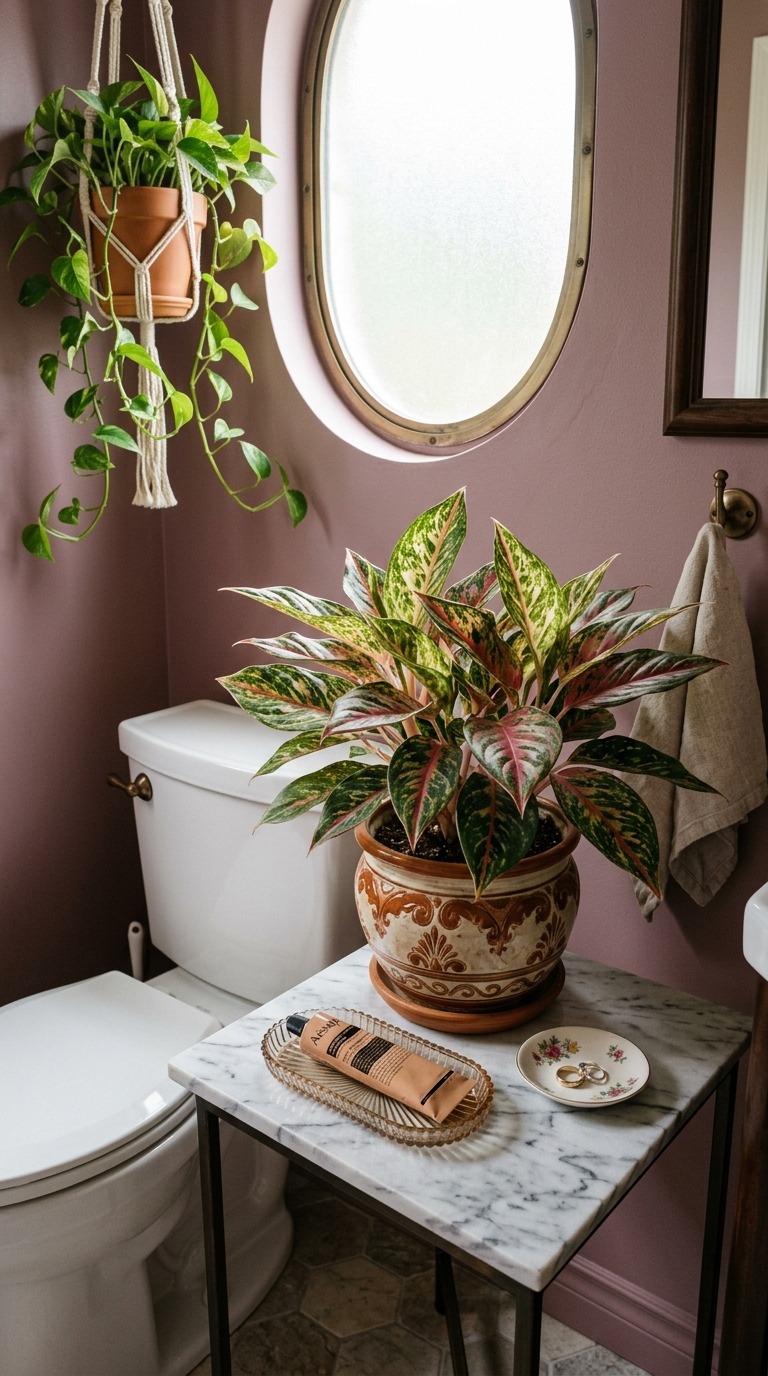
Aglaonemas are wonderfully tolerant of the low light and high humidity conditions that define most bathroom environments, making them reliable performers in spaces where more demanding plants would quickly struggle and decline. The more colorful, pink-and-red varieties prefer brighter indirect light to maintain their vivid pigmentation, while the classic green varieties manage beautifully in lower light with no complaints. Water when the top inch of soil feels dry — roughly every seven to ten days in a humid bathroom — and avoid cold water, which can cause dark spots on the sensitive leaves. I use room-temperature filtered water for mine and the foliage has stayed immaculate. Wipe the leaves occasionally with a damp cloth to keep the color looking saturated and luminous. This plant delivers extraordinary visual impact for minimal care investment.
Cast Iron Plant (Aspidistra elatior)
The cast iron plant earns its name completely and then some — this is the plant you bring home when you want guaranteed, unfussy, deeply satisfying greenery in a bathroom that does not receive a single ray of natural light. I placed mine in my powder room, which is an entirely interior room with zero windows and only a single overhead light fixture, and it has grown steadily and gracefully for three years without a single complaint. The long, arching, deep forest green leaves have a bold, tropical quality that reads surprisingly elegant and considered rather than merely practical, especially in a more dramatically decorated bathroom with rich wall colors and ornate fixtures. This is the plant I recommend to every person who says they have tried everything and killed it all — the cast iron plant simply refuses to give up on you.
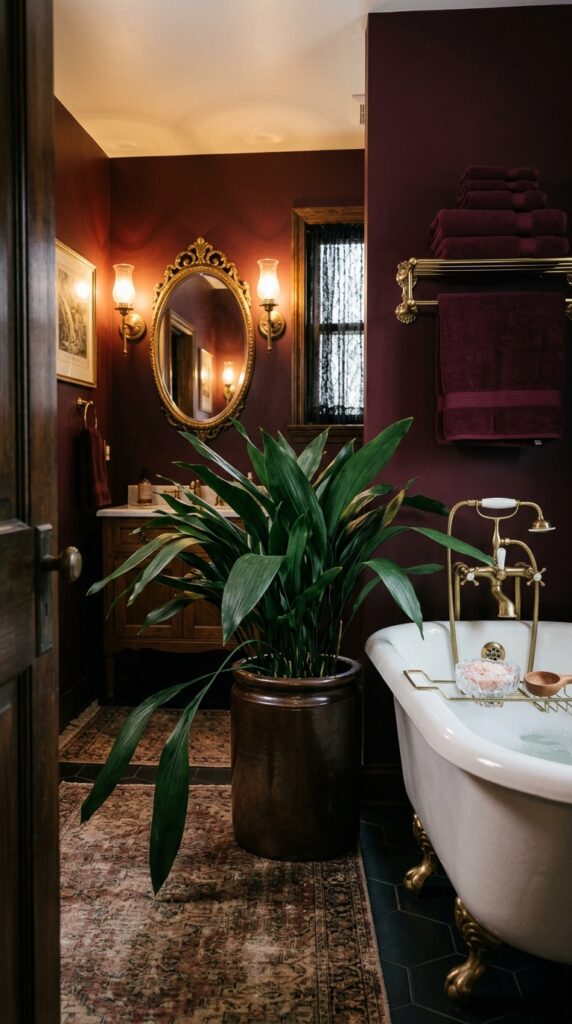
Aspidistra elatior tolerates deep shade, irregular watering, fluctuating temperatures, and low humidity conditions with a stoic reliability that makes it genuinely unique among decorative houseplants. Water moderately and allow the soil to dry partially between sessions — I water mine roughly once every two weeks and have never seen a yellow leaf or a drooping stem. It grows slowly, which means you will not be repotting it constantly, and that slow growth gives each individual leaf a chance to develop fully, giving the plant an almost architectural, considered quality rather than a wild or overgrown look. Feed once monthly during spring and summer with a diluted balanced liquid fertilizer to support steady, healthy growth. Wipe the broad leaves regularly with a damp cloth to keep them gleaming and ensure the plant absorbs every available photon of light efficiently.
Eucalyptus (Eucalyptus globulus)
Hanging fresh eucalyptus from your showerhead is the single fastest bathroom upgrade I have ever discovered, and I am almost embarrassed that it took me this long to find out about it. The moment hot water hits those silver-green leaves and releases the essential oils into the steam, your entire shower experience transforms into something that feels genuinely medicinal and luxurious — clearing your sinuses, calming your nervous system, and making every morning shower feel like a spa treatment rather than a routine obligation.
The visual impact is equally impressive — those trailing bundles of rounded silver-blue leaves with the classic gray-green color have a soft, organic elegance against white subway tile or a frameless glass shower wall. I replace my bundle every two to three weeks and the whole process costs almost nothing from a farmers market or grocery store floral section.
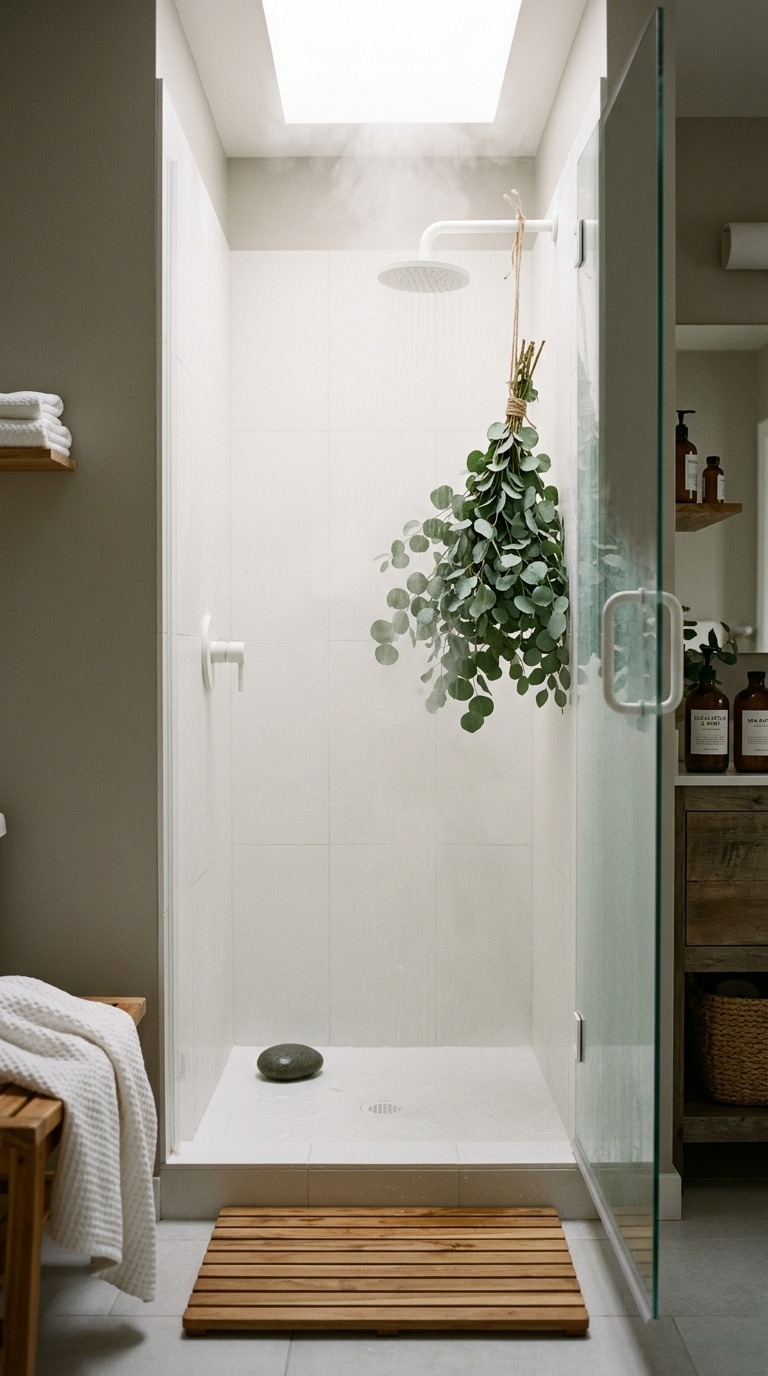
Silver Dollar Eucalyptus, with its round coin-like leaves, is the variety I reach for most consistently because it releases the strongest fragrance and holds its shape beautifully for two to three weeks before drying and fading. Spiral Eucalyptus has a longer, more trailing form that drapes dramatically down the shower wall if you prefer a more bohemian, abundant look.
Tie the bundle tightly with natural jute twine and hang it from the showerhead with the leaves pointing downward — the steam rises through the leaves and releases the aromatic compounds more effectively this way. Do not saturate the bundle directly with the showerhead spray, as constant direct water contact will cause the leaves to turn brown prematurely. This is one bathroom decor idea that genuinely improves how you feel physically, and that combination of beauty and function is what great home decorating always aspires to achieve.
Heartleaf Philodendron (Philodendron hederaceum)
Heartleaf philodendron has a softness and warmth to it that I find genuinely comforting in a bathroom setting — those heart-shaped leaves trailing from a hanging planter beside a mirror create this enveloping, cocooning effect that makes the bathroom feel less like a functional room and more like a personal sanctuary you retreated into intentionally.
The leaves are a deep, velvety green with a subtle sheen, and when they catch warm lamplight in the evening the effect is almost jewel-like. I have mine hanging beside my bathroom mirror in a handwoven macrame planter, and the combination of the organic plant form, the natural fiber of the macrame, and the warm wood vanity beneath it creates a layered, textural richness that took years of trying other combinations to finally land on. It is the one plant arrangement in my home that always makes me feel completely at ease.
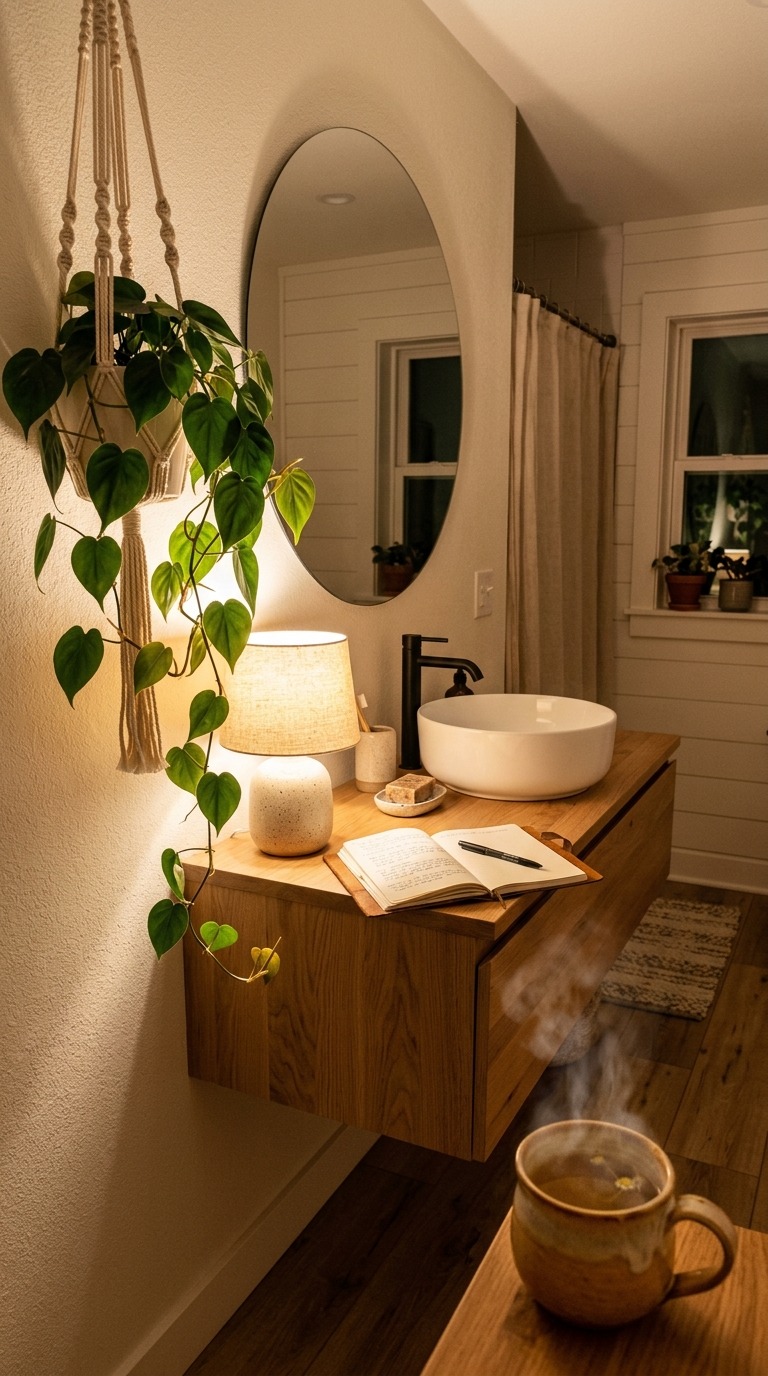
Heartleaf philodendrons are fast-growing, resilient, and genuinely enthusiastic about the warm, humid conditions a bathroom naturally provides, which makes them one of the most satisfying plants to grow in this particular room of the house. They thrive in medium to bright indirect light but tolerate lower light better than many trailing varieties, maintaining their deep green color without significant fading in less-than-ideal conditions.
Water when the top inch of soil dries out — approximately once a week in a bathroom environment — and fertilize monthly during spring and summer with a balanced liquid fertilizer to support their naturally vigorous growth. Trim long vines occasionally to keep the shape full and encourage bushier growth from the base.
This plant propagates effortlessly in water, so snip a cutting, pop it in a glass of water on your windowsill, and within weeks you have a brand new plant to gift or expand your bathroom collection with.
Your bathroom deserves to feel like the most restorative room in your entire home, and these sixteen plants are genuinely the most accessible, most visually impactful way to get there without a renovation budget or professional design help.
I want you to read back through this list one more time and identify the single plant that made your heart do a small, excited thing — the one you could already picture in your specific bathroom, in your specific light, against your specific wall color. That instinctive response is always the right one. Trust it completely.
Go find that plant this weekend, bring it home, give it the best spot you have, and watch how quickly your relationship with your bathroom routine shifts from something you rush through to something you genuinely look forward to each day.