12 Small Laundry Room Ideas That Actually Make a Difference
You open that tiny laundry room door and immediately feel the walls closing in. Sound familiar? Most people assume a small laundry room just means living with the mess — detergent bottles crowding the machine, nowhere to fold a single shirt, and that constant dread of sorting through a pile that has nowhere to go. But here’s the truth: the most functional laundry rooms I’ve ever seen weren’t the biggest ones. They were the smartest ones.
Whether you’re dealing with a closet-sized nook, a narrow corridor, or a shared utility space, these 12 ideas will transform how your laundry room feels and functions — without knocking down a single wall.
Go Vertical With Open Floating Shelves
The number one mistake people make in a small laundry room is thinking horizontally. Floor space is precious, so stop fighting for it. Your walls are your biggest untapped asset.
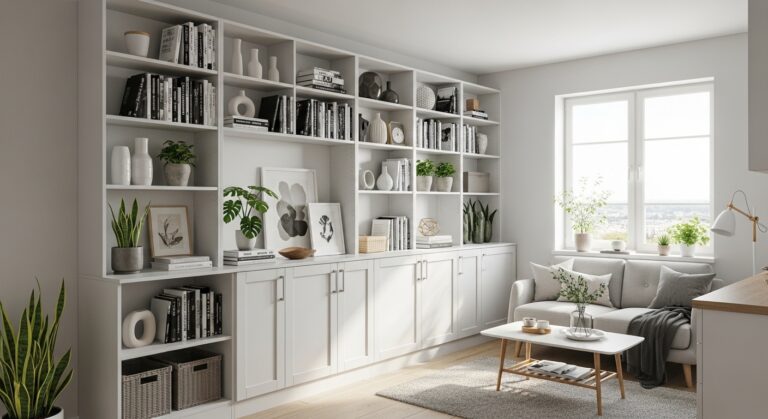
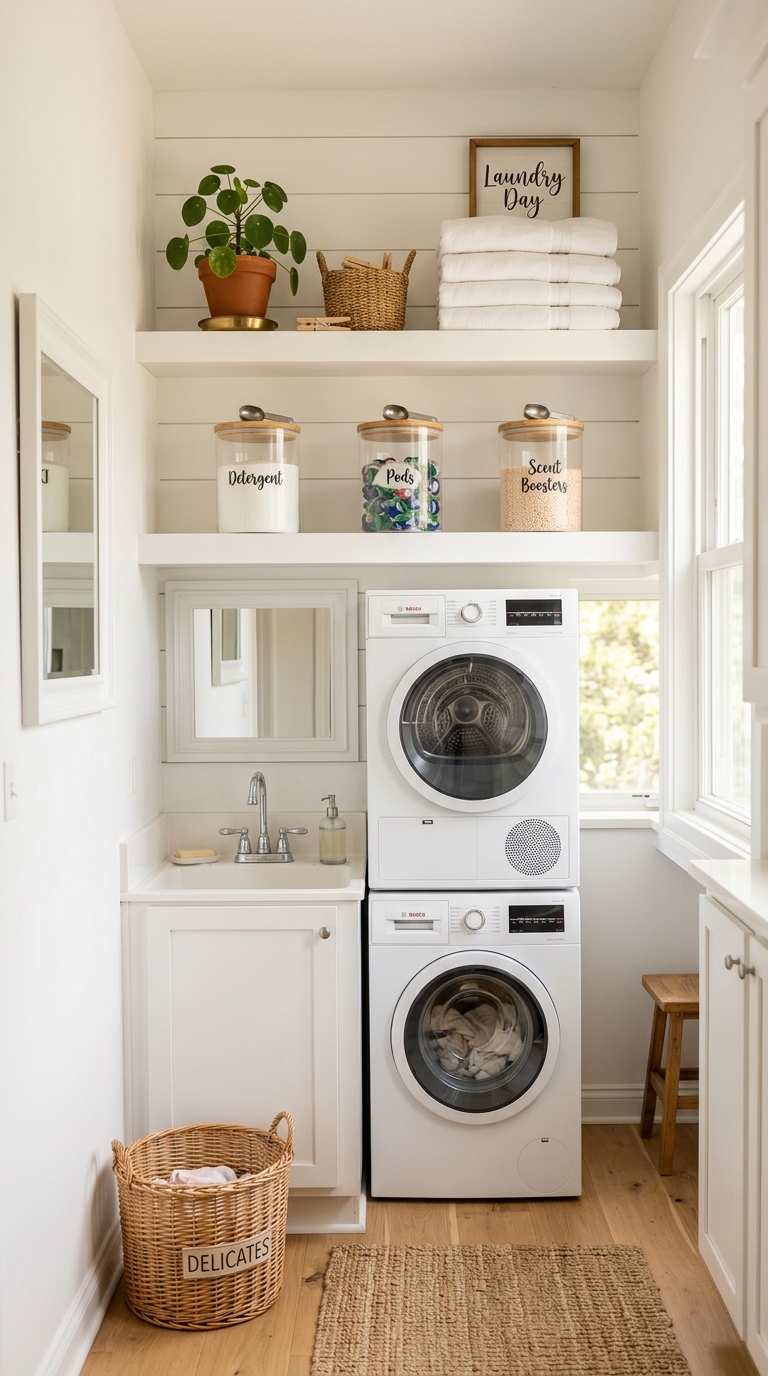
Install open floating shelves above your washer and dryer and suddenly you’ve created a complete storage system without stealing an inch of floor space. Use the top shelf for rarely used items like extra hangers or seasonal items. Keep the middle shelf at arm’s reach for everyday supplies — detergent, fabric softener, dryer sheets. Reserve the lower shelf for a decorative basket where you toss dryer balls or lint rollers.
The visual trick here is using matching containers. When everything lives in the same style of jar or basket, the eye reads “organized” instead of “cluttered.” Even a $40 set of matching canisters from a home store completely transforms the shelf from chaotic to clean.
Practical tip: Use shelf brackets rated for at least 50 lbs per shelf. Detergent and cleaning supplies are heavier than you’d think, and nothing ruins a good laundry session like a shelf giving way mid-wash.
Use a Fold-Down Ironing Board That Mounts to the Wall
If you’re currently dragging a full-size ironing board out of a closet every time you need it, you already know the pain. In a small laundry room, that board takes up floor space you simply don’t have — and finding somewhere to store it is its own separate problem.
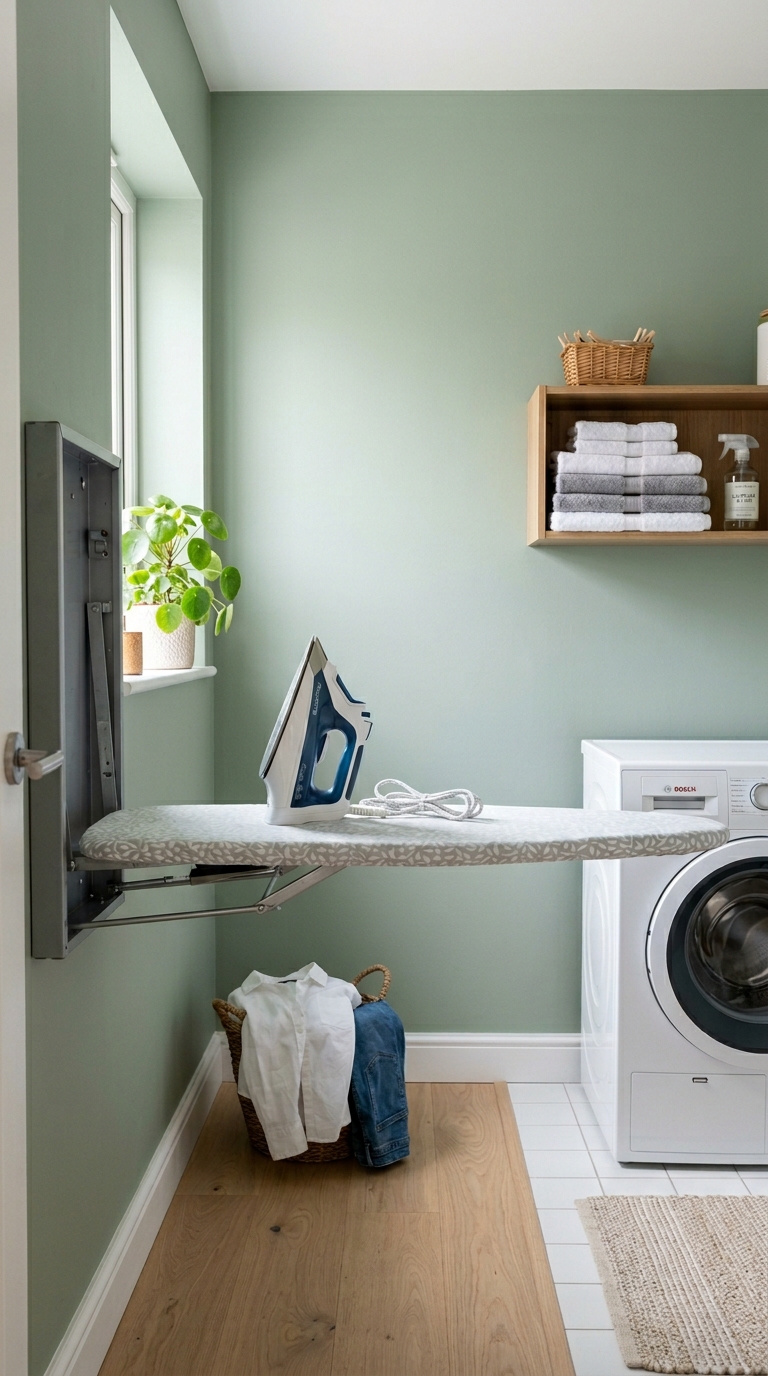
A wall-mounted fold-down ironing board solves this completely. When you’re not using it, it folds flat against the wall and looks like a cabinet door or a simple panel. When you need it, it folds down and becomes a fully functional ironing surface in about three seconds.
These units now come with built-in compartments for the iron itself, a small shelf for starch spray, and even a mirror on the back in some designs. You get a full ironing station that disappears when you’re done.
I’ve seen this single upgrade completely change how someone experiences their laundry room. One person told me she used to avoid ironing for weeks just because she dreaded getting the board out. After installing a fold-down unit, she started ironing items the same day they came out of the dryer — total behavior change.
Install a Retractable Clothesline Between Walls
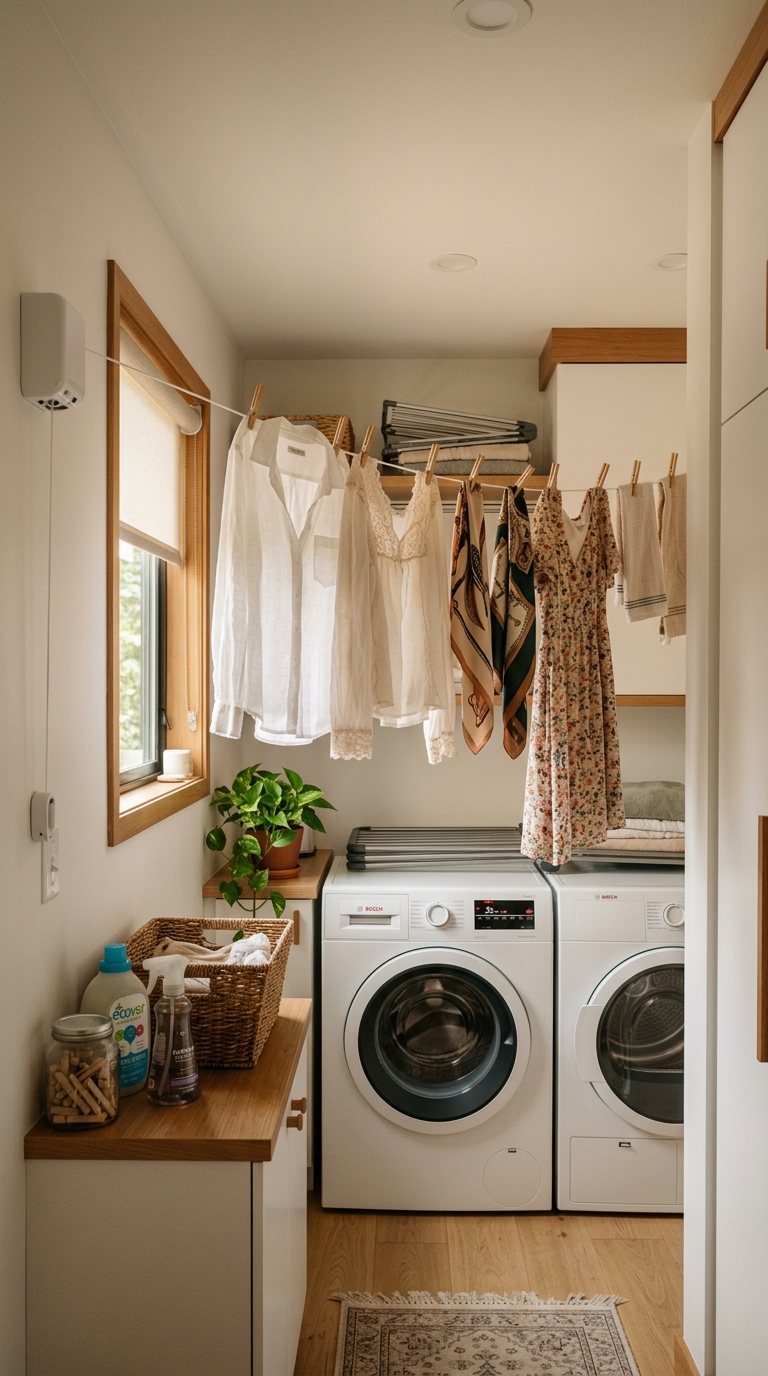
Here’s something most laundry room guides forget to mention: drying space. You have a dryer, yes — but delicates, wool sweaters, bras, and activewear all need to air dry. Where does that happen in a small space?
A retractable clothesline mounted between two walls is one of the most underrated small laundry room upgrades you can make. You pull it out when you need it, clip your delicates across the line, and retract it completely when you’re done. No hanging rack to trip over, no towel bar covered in damp clothes.
The modern versions of these are sleek — they look like a small cylinder on the wall when retracted, not like something from a 1970s basement. Some models extend up to 15 feet and hold 30+ pounds. Mount it at a height that allows air circulation beneath the hanging items, ideally at least five feet off the floor.
- Choose a stainless steel or powder-coated model for humidity resistance
- Mount into wall studs, not just drywall, for real weight support
- Position it near a vent or open the door slightly while items dry to reduce moisture in the room
Replace a Standard Door With a Sliding Barn Door or Pocket Door
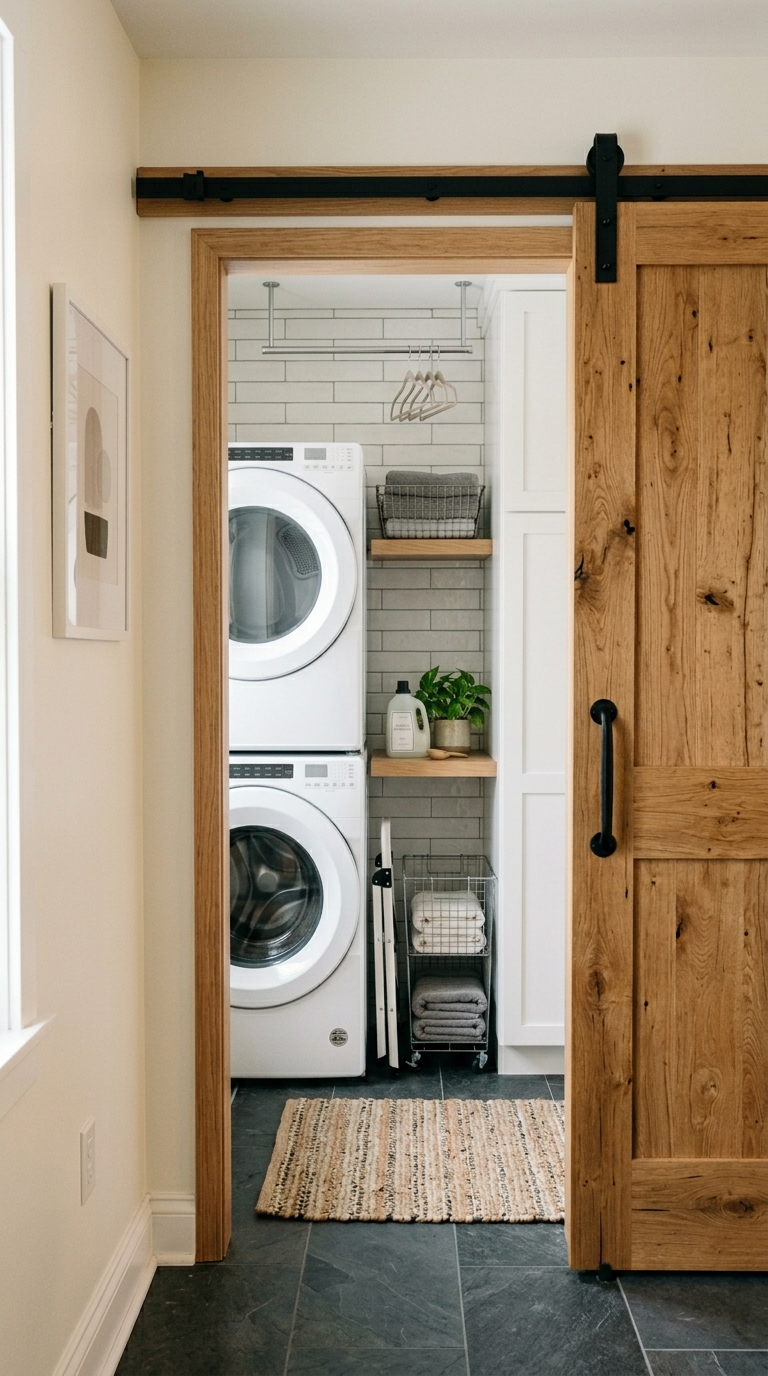
This one surprises people every time. You’d be amazed how much functional square footage you’re losing to your laundry room door. A standard swing door needs about 10 to 12 square feet of clearance to open properly — and in a small laundry room, that space you’re “giving” to the door is space that could hold a hamper, a folding table, or a storage rack.
Switching to a barn door that slides along a wall track — or a pocket door that disappears into the wall — instantly reclaims that entire arc of floor space. It’s not a small gain. That space completely changes how the room functions.
Barn doors are the easier installation since they don’t require opening up the wall. They slide on a track mounted above the door frame and rest flat against the wall when open. They’ve also become a genuinely beautiful design feature — wood-panel barn doors, painted metal styles, and frosted glass options all look intentional and stylish rather than like a workaround.
Practical note: Measure your wall clearance before committing. You need enough unobstructed wall space beside the door frame for the door panel to slide into when open.
Add a Slim Rolling Cart Between the Washer and the Wall
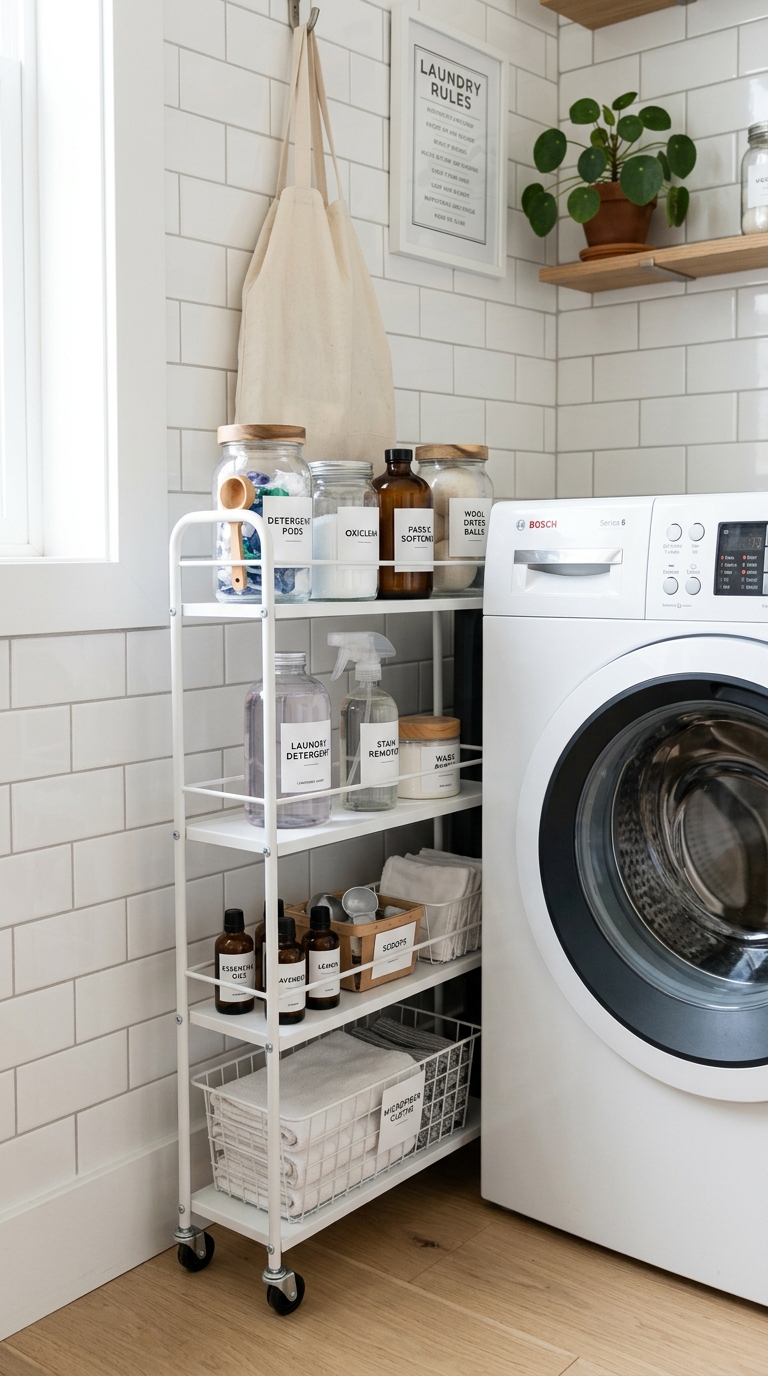
That gap between your washing machine and the wall or between the washer and dryer is a notorious black hole — socks disappear in there, dust gathers, and it serves absolutely no purpose. Time to put it to work.
Slim rolling carts designed specifically for these gaps are one of the easiest and most affordable laundry room upgrades. They typically measure between 4 and 7 inches wide, slide on smooth-rolling wheels, and include multiple shelves or drawers for supplies. Pull it out when you need something, push it back in when you don’t.
What goes in the cart matters. This is an ideal spot for:
- Stain removers and spot treatment sticks
- Extra dryer sheets or wool dryer balls
- Delicate laundry bags in different sizes
- A small sewing kit for quick button repairs
- Measuring spoons for powdered detergent
The best part about a rolling cart is that it’s completely renter-friendly and requires zero installation. You slide it in, fill it up, and start using it immediately.
Use the Back of the Door for Hidden Storage
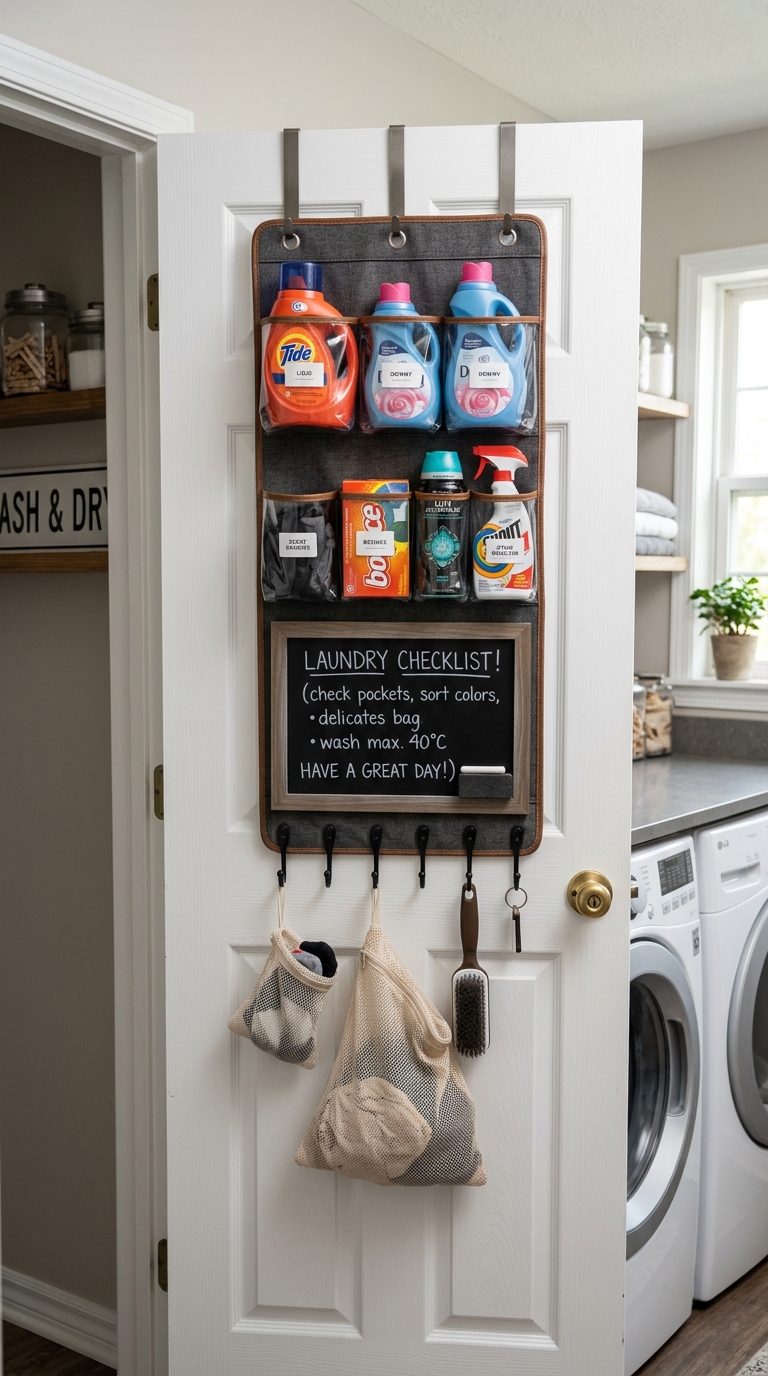
You probably look at the back of your laundry room door every day and see nothing. But what you’re actually looking at is a full panel of completely unused storage real estate.
An over-the-door organizer — the kind designed specifically for laundry rooms rather than the flimsy shoe organizers people try to repurpose — can hold an enormous amount without taking up a single inch of floor or wall space. Look for ones with deep pockets, hooks, and even small shelves built into the design.
Here’s what works beautifully on the back of a laundry room door:
- A vertical rack of clear pockets for smaller items like clothespins, safety pins, and detergent pods
- S-hooks for hanging reusable shopping bags or mesh laundry bags
- A small chalkboard panel for writing reminders — “handwash only items in sink,” “dry on low,” etc.
- A hook for the iron’s cord to hang when the iron is stored
If you have a hollow-core door, use over-the-door hooks that hang over the door itself rather than screws. For solid doors, you can install simple hooks or a mounted rack using short screws.
Create a Folding Station on Top of Front-Load Machines
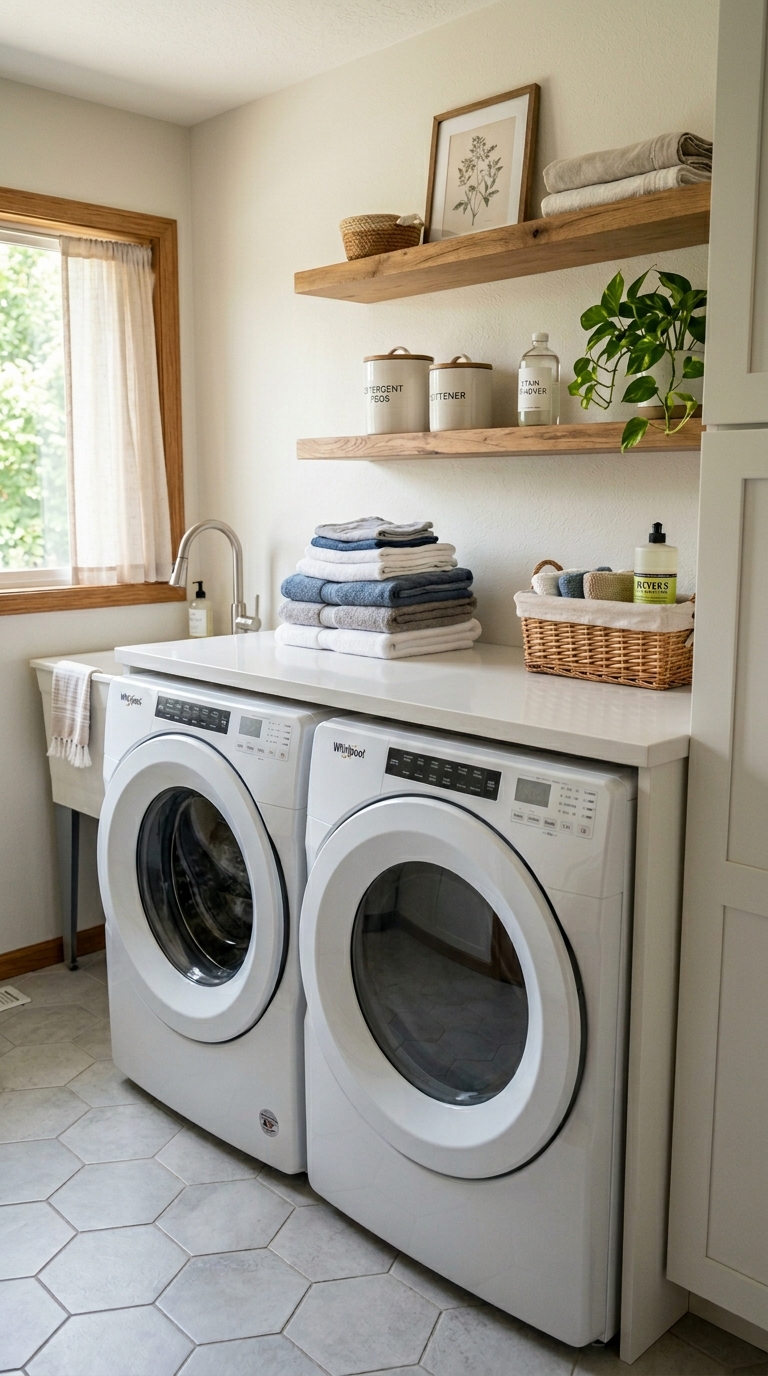
If you have front-loading machines, you are sitting on one of the most underused flat surfaces in your home — the tops of the machines themselves. People often let this space collect random clutter or leave it bare, but with a simple countertop slab cut to size, you transform it into a dedicated folding station.
A piece of butcher block, laminate countertop, or even a thick wooden board cut to size and laid across the top of both machines gives you a firm, flat folding surface right where you need it. No walking laundry across the house to fold it on the bed. No balancing act on the couch. You fold it the moment it comes out of the dryer, right there.
For a cleaner look, you can have a countertop cut to exact measurements at any home improvement store — they’ll cut it the same day, often for a small fee. A piece 54 inches wide and 27 inches deep typically spans both machines perfectly with a slight overhang.
Add a small basket at one end for folded items waiting to be put away, and you have a complete folding station that takes up exactly zero additional floor space.
Hang a Pegboard for Flexible, Customizable Storage
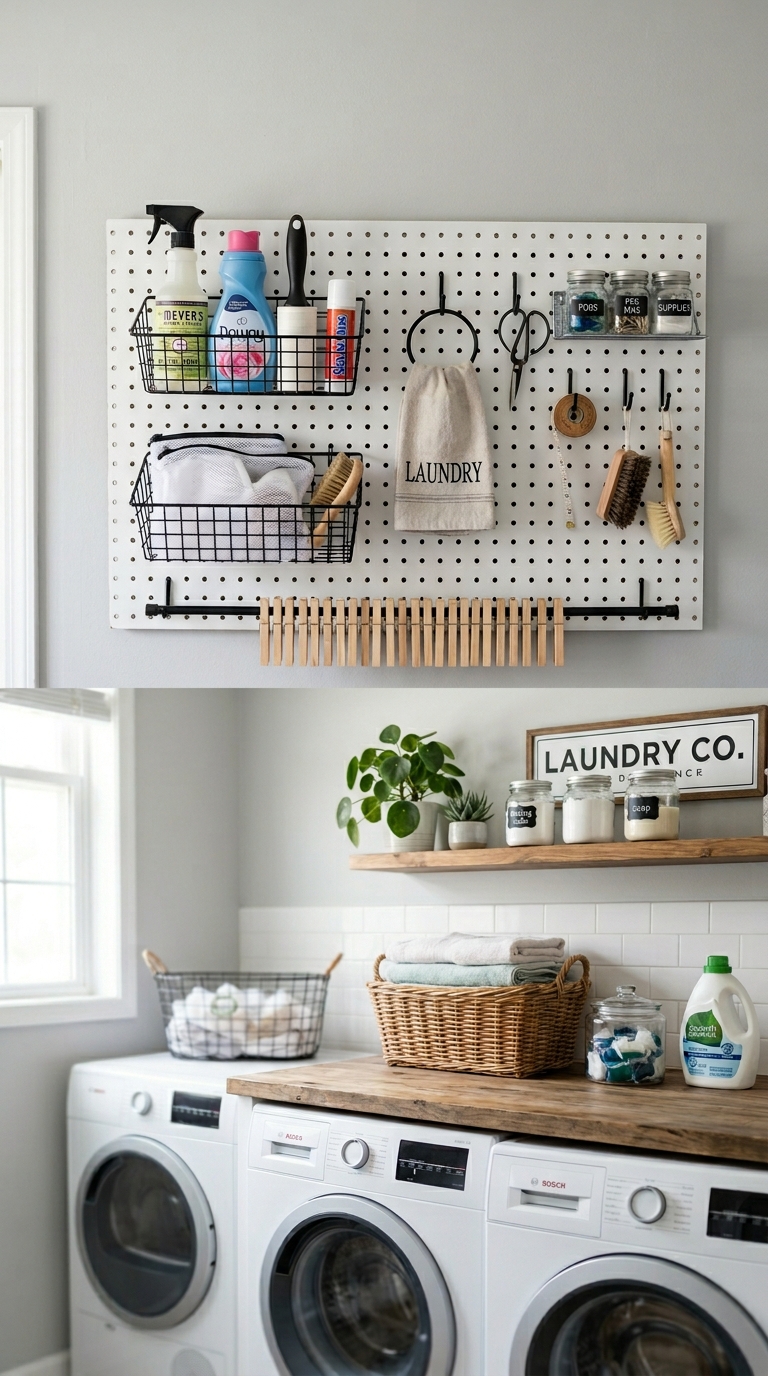
Pegboards get dismissed as a garage solution, but they’re one of the most versatile small laundry room upgrades available — and they’ve had a serious design upgrade in recent years.
A painted pegboard in a coordinating color, fitted with stylish hooks, small baskets, and ledge shelves, looks completely at home in a modern laundry room. The real advantage of pegboard over standard shelving is that you can rearrange it whenever your needs change. Add a hook here, move a basket there — no new holes in your wall.
Use your pegboard for things that typically end up in a drawer or scattered on top of the machines:
- Hooks for hanging garment bags or reusable bags
- Small baskets for clips, pins, and miscellaneous items
- A ledge shelf to prop up a small bottle of detergent
- Hooks for the cord of your iron or handheld steamer
Mount it on the wall beside the machines or behind the door, paint it the same color as your walls if you want it to recede visually, or go with a contrasting color for a design-forward look.
Use Labeled Divided Hampers to Sort as You Go
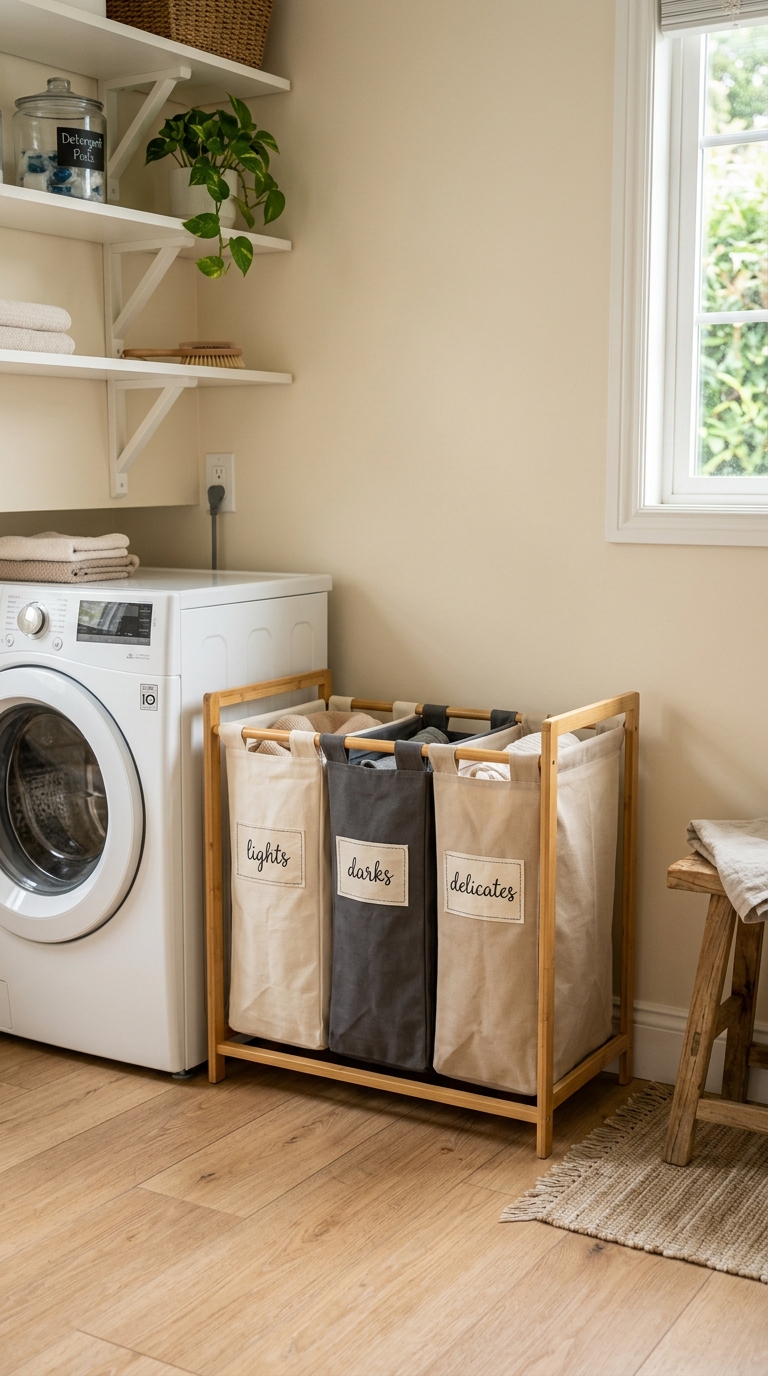
Here’s an idea that saves you significant time every single week, not just space: divided laundry hampers with labeled sections. Instead of one big hamper that turns into a sorting project every laundry day, you sort your clothes as you drop them in — lights, darks, delicates, done.
The key is choosing the right hamper format for a small space. A three-section divided hamper with a slim profile is far more space-efficient than three separate round hampers. Some of the best models available now look more like furniture than laundry equipment — linen fabric with a bamboo frame, labels in matching fonts, no bulky plastic in sight.
Place the hamper in a corner or against a short wall. You’ll find that the time you used to spend sorting before laundry becomes time you use for literally anything else. And because you can visually see which section is full, you’ll also stop doing half-empty loads that waste water and energy.
Install Under-Cabinet LED Lighting for a Brighter, Bigger Feel
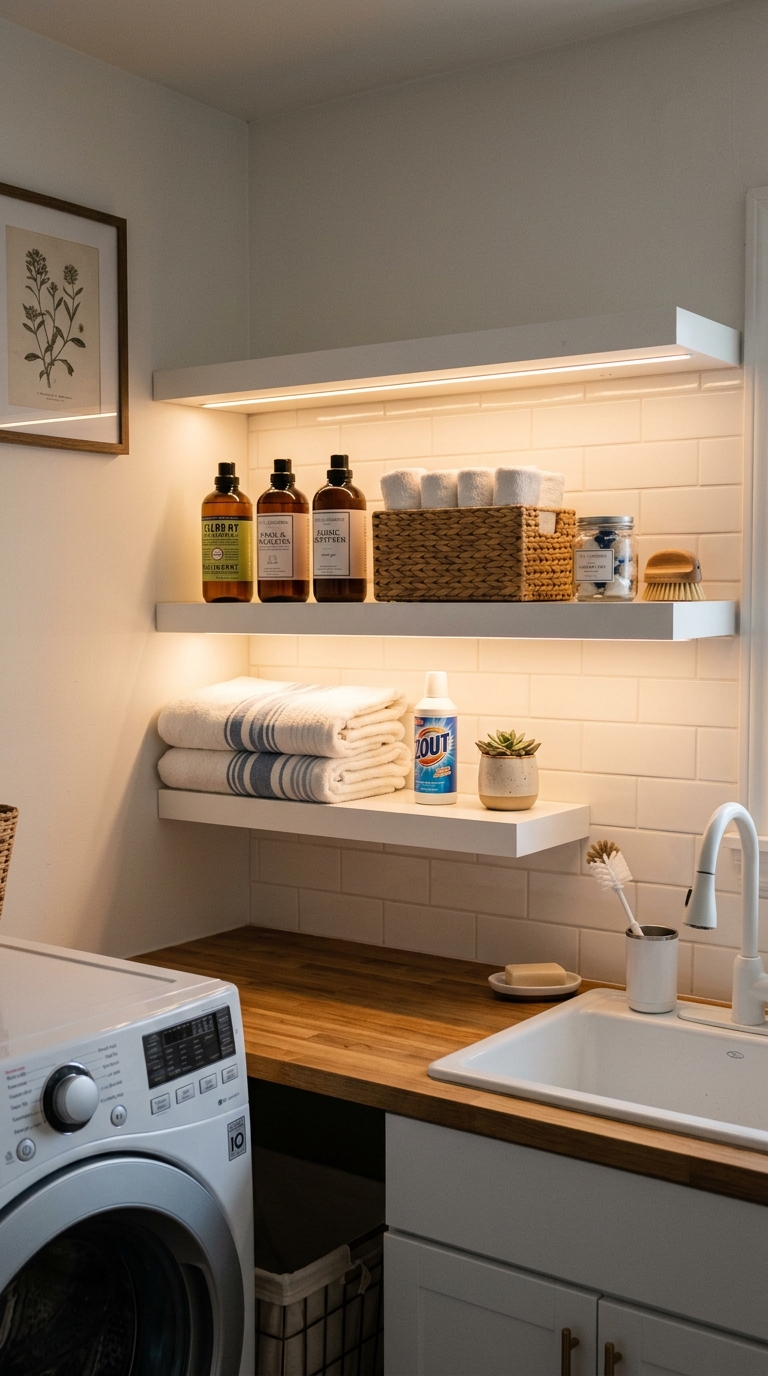
Small rooms feel smaller when they’re dimly lit. This is especially true for laundry rooms, which are often internal rooms without windows — relying entirely on a single overhead bulb that casts flat, unflattering light and creates shadows in the corners and inside cabinets.
Under-cabinet LED strip lighting is a cheap, easy, and surprisingly impactful upgrade. You stick adhesive light strips to the underside of your shelves or upper cabinets, plug them into any outlet, and suddenly every surface is illuminated from below. The room looks bigger, cleaning is easier, and you can actually read the tiny text on your detergent labels.
For laundry rooms specifically, look for LED strips in a warm white (2700K to 3000K range) — they make the room feel welcoming rather than clinical. Many strips now come with a simple dimmer or even color-changing options if you want a bit of personality. The entire installation takes about 20 minutes and costs between $15 and $40 depending on how many strips you need.
Dedicate One Full Wall to Built-In Cabinet Storage
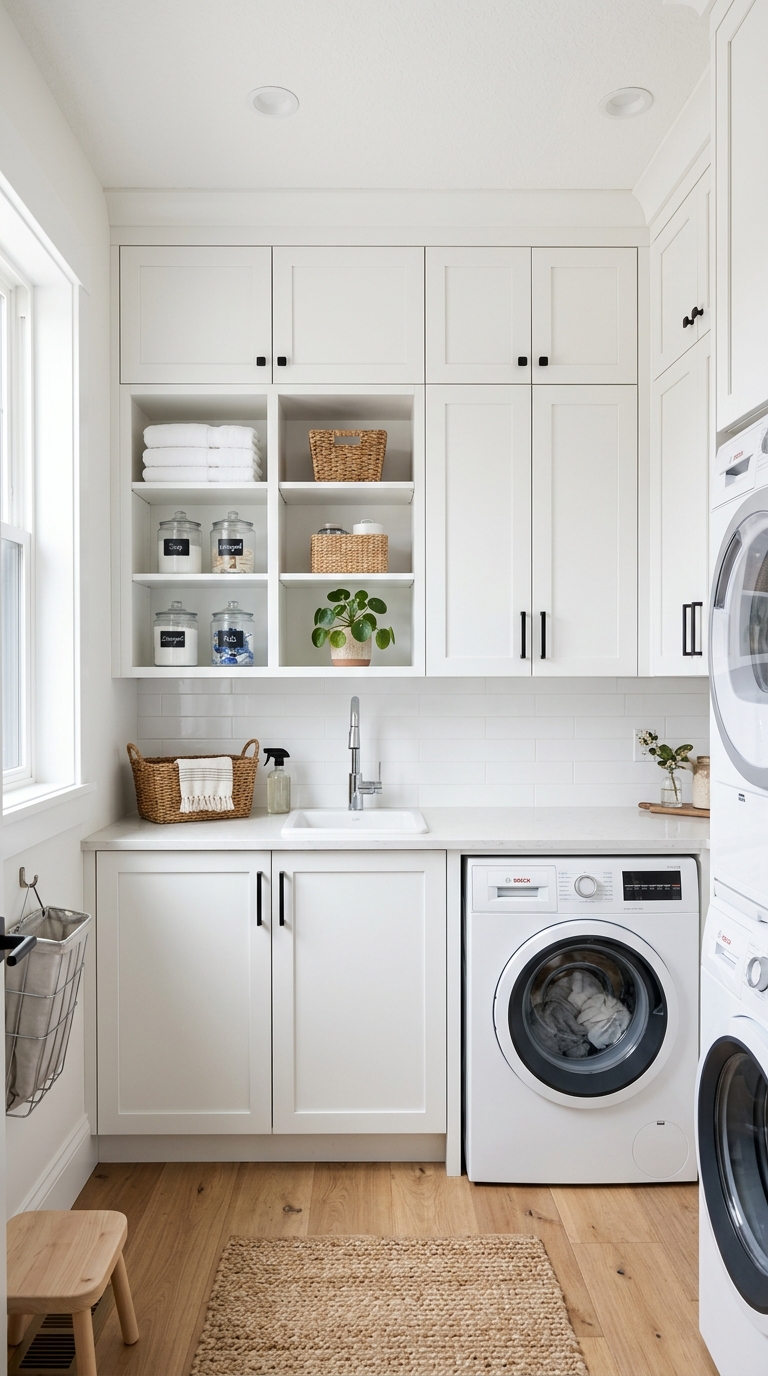
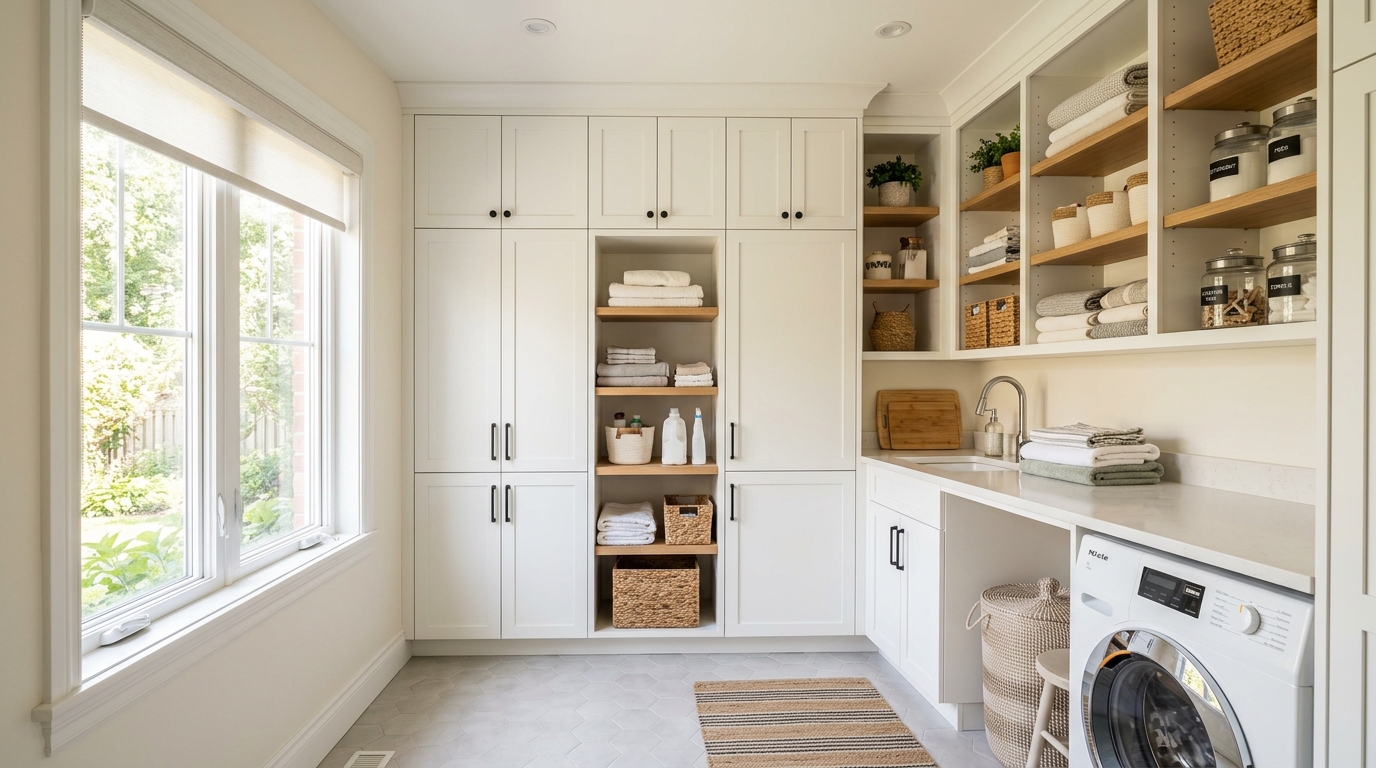
If you’re willing to invest a little more — either in professional installation or in a good DIY project — converting one wall of your small laundry room to floor-to-ceiling built-in cabinets is the single biggest functional upgrade you can make.
This doesn’t mean custom carpentry that costs thousands. IKEA’s SEKTION system, Home Depot’s Martha Stewart cabinet line, and several other flat-pack cabinet systems can be configured to fit exactly the dimensions you need and installed in a weekend. You get closed storage that hides everything behind clean doors, a consistent visual style that makes the room look intentional, and — critically — storage tailored to what you actually use.
The design that works best in small laundry rooms is a mix of:
- Full upper cabinets for bulk storage like extra detergent, cleaning supplies, and paper towels
- A middle section of open shelving for everyday items you grab frequently
- Lower cabinets with drawers for miscellaneous small items, spare buttons, and tools
Keep the cabinet doors in the same color as the walls to make them recede visually — this makes the room feel larger even with more storage installed.
Add a Utility Sink if Your Space Allows
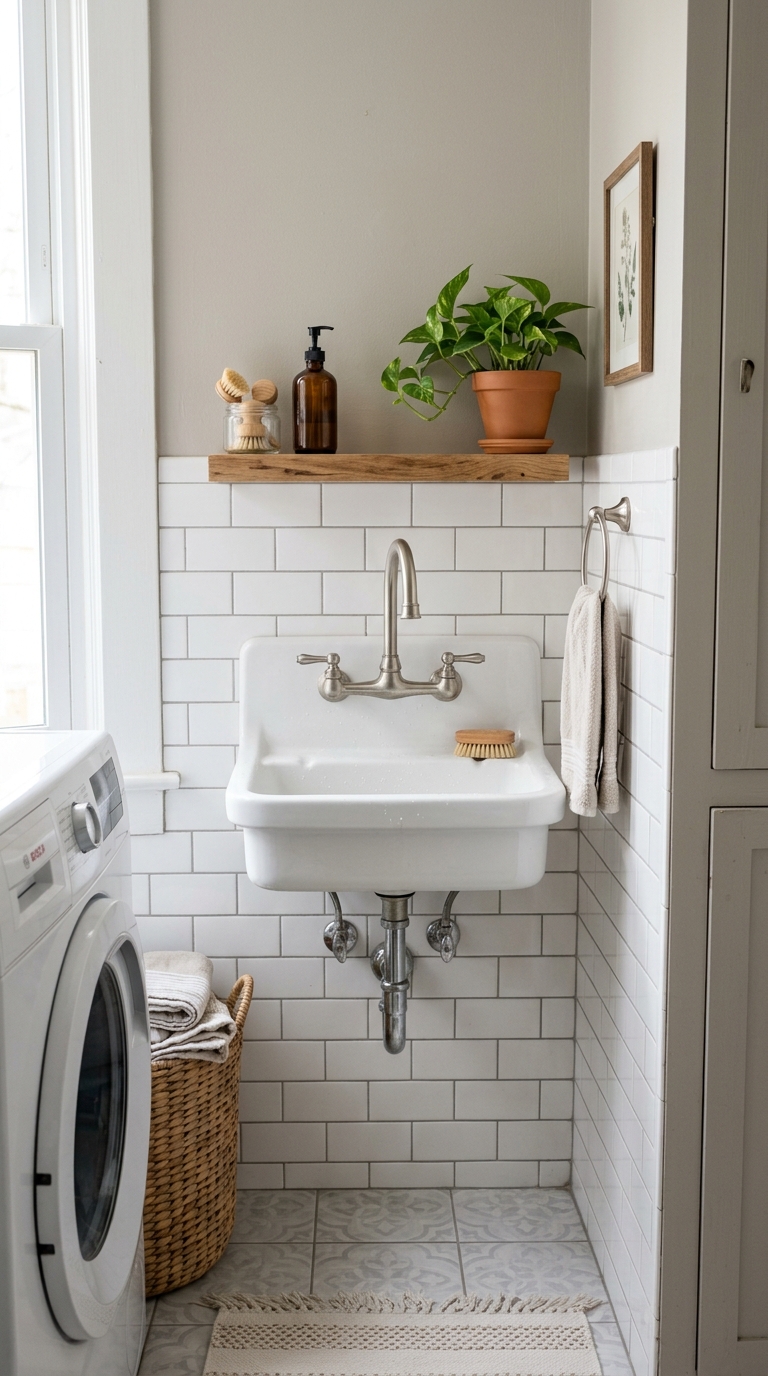
If your small laundry room has at least a small corner to spare and access to plumbing — or you’re willing to work with a contractor — adding a utility sink is the upgrade that makes the whole room feel complete.
Hand-washing delicates, soaking stained items before washing, rinsing cleaning supplies, filling a bucket — all of these tasks either don’t happen or happen somewhere inconvenient (the bathroom sink, the kitchen) without a utility sink in the laundry room. When it’s there, you actually use it, and the room becomes a true functional utility hub rather than just a machine storage closet.
Wall-mounted utility sinks take up the least floor space and leave the area below open for a hamper or a slim cabinet. Compact freestanding models with legs are also available in sizes as small as 18 by 20 inches — barely bigger than a large mixing bowl.
Pair it with a mounted soap dispenser, a small towel bar for a hand towel, and a small shelf above for a stain-treatment stick and a bottle of hand soap, and you have a genuinely complete laundry station that handles everything from pre-treat to wash to dry in one space.
Bringing It All Together
The best small laundry room isn’t the one with the most upgrades — it’s the one designed around how you actually do laundry. Start with the one or two ideas that solve your most frustrating daily problem. Maybe that’s the lack of folding space, or the chaotic shelving, or the door that blocks everything. Fix that first.
Once you’ve solved the main frustration, everything else gets easier. You start seeing potential in spaces you once ignored — that gap beside the machine, the back of the door, the top of the cabinet you never quite reach. Small rooms reward creative thinking more than large ones ever do, because every smart choice genuinely changes how the space works.
You don’t need a bigger laundry room. You just need a smarter one.