Need a Room Refresh? Try These 12 Mirror Wall Decor Ideas
That feeling usually comes from one underrated design secret — mirrors. Not just any mirror tossed on a wall, but thoughtfully placed, creatively styled mirror decor that works with your space instead of against it. The truth is, most people hang a mirror and call it a day. But when you treat a mirror like the design tool it truly is, the results are genuinely jaw-dropping.
We’ve spent time studying what top interior designers across the USA are doing with mirror wall decor right now — and honestly, some of these ideas are so clever they almost feel like cheating. Whether your home is modern, bohemian, farmhouse, or somewhere in between, this list gives you 12 fresh mirror wall decor ideas that your space will thank you for.
No repeated ideas here. No gallery walls. No basic sunburst mirrors. Just 12 original, deeply creative concepts that push the boundary of what mirror decor can actually look like in a real home.
What Makes Mirror Wall Decor Worth Doing Right
Before we jump into the ideas, let’s talk about why mirrors deserve more respect in your decorating toolkit. A well-placed mirror doesn’t just bounce light around — it shapes the entire mood of a room. It creates depth where there’s flatness, warmth where there’s coldness, and energy where a wall feels forgotten.
Mirrors also solve real design problems. Got a dark hallway that feels like a cave? A narrow dining room that swallows conversation? A bedroom corner that collects visual noise? The right mirror placement addresses all of these without a single renovation. That’s the real power here.
Now, with that in mind, here are your 12 ideas — each one fresh, fully actionable, and ready to inspire your next home project.
Tinted Antique Mirror Panel Wall
Most people reach for clear glass mirrors. But tinted antique mirror panels — think soft smoky grey, warm bronze, or barely-there green — bring something entirely different to the wall.
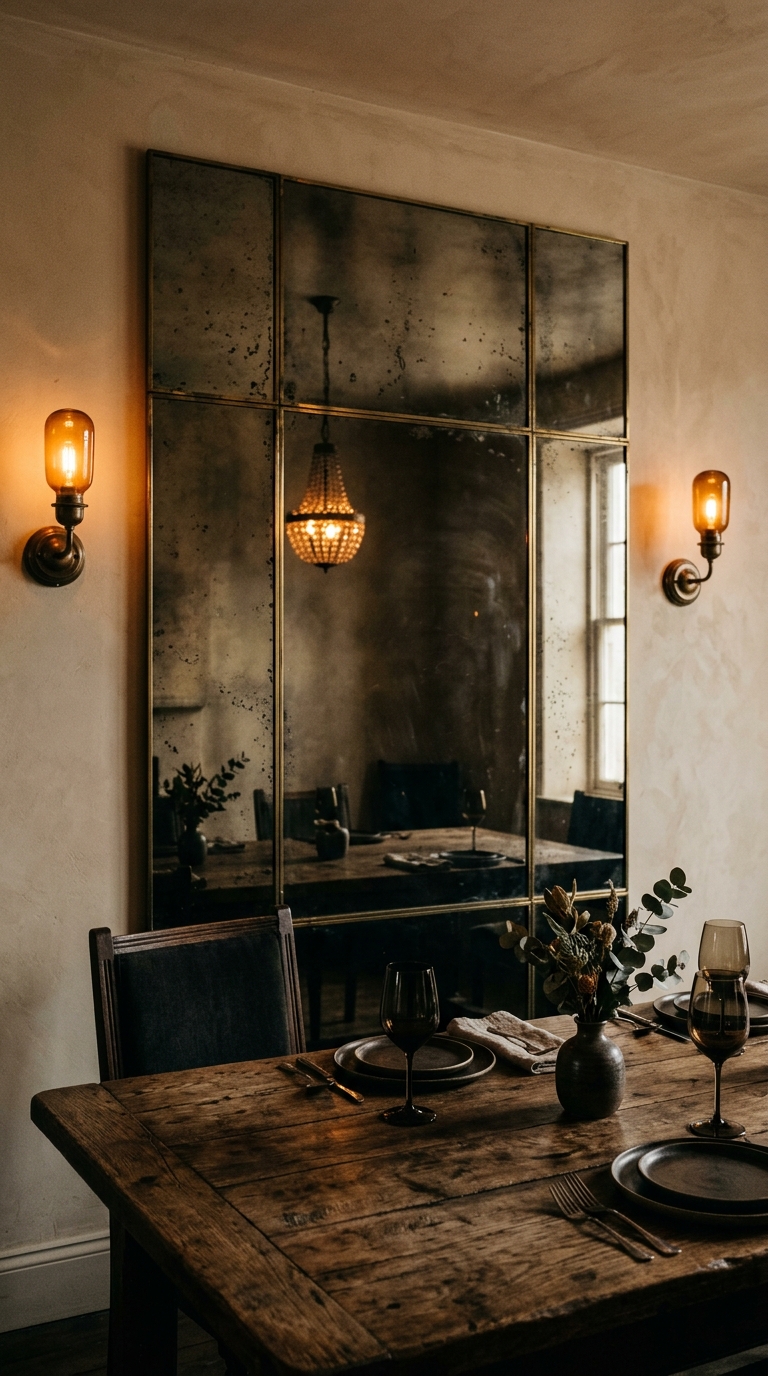
These panels have an aged, almost atmospheric quality that feels like you pulled them from a Parisian mansion. The tint softens the reflection slightly, which means they don’t aggressively bounce harsh light. Instead, they give back a warmer, more romanticized version of the room.
Here’s how to do this right:
- Use three to five vertical panels of equal width, spaced about two inches apart
- Frame them with thin brass or matte black trim for a finished, tailored look
- Place them on a wall that receives indirect afternoon light for maximum effect
- Pair with aged wood furniture, linen textiles, or rattan accents to lean into the vintage warmth
This idea works beautifully in dining rooms, primary bedrooms, and sitting rooms. It feels luxurious without being cold or overly modern.
Staircase Runner Mirror Strip
Here’s one you almost never see on USA decor blogs, and it deserves way more attention. Instead of decorating your staircase wall with artwork, run a continuous vertical strip of frameless mirror panels along the wall beside your staircase steps — from floor to ceiling or landing to landing.
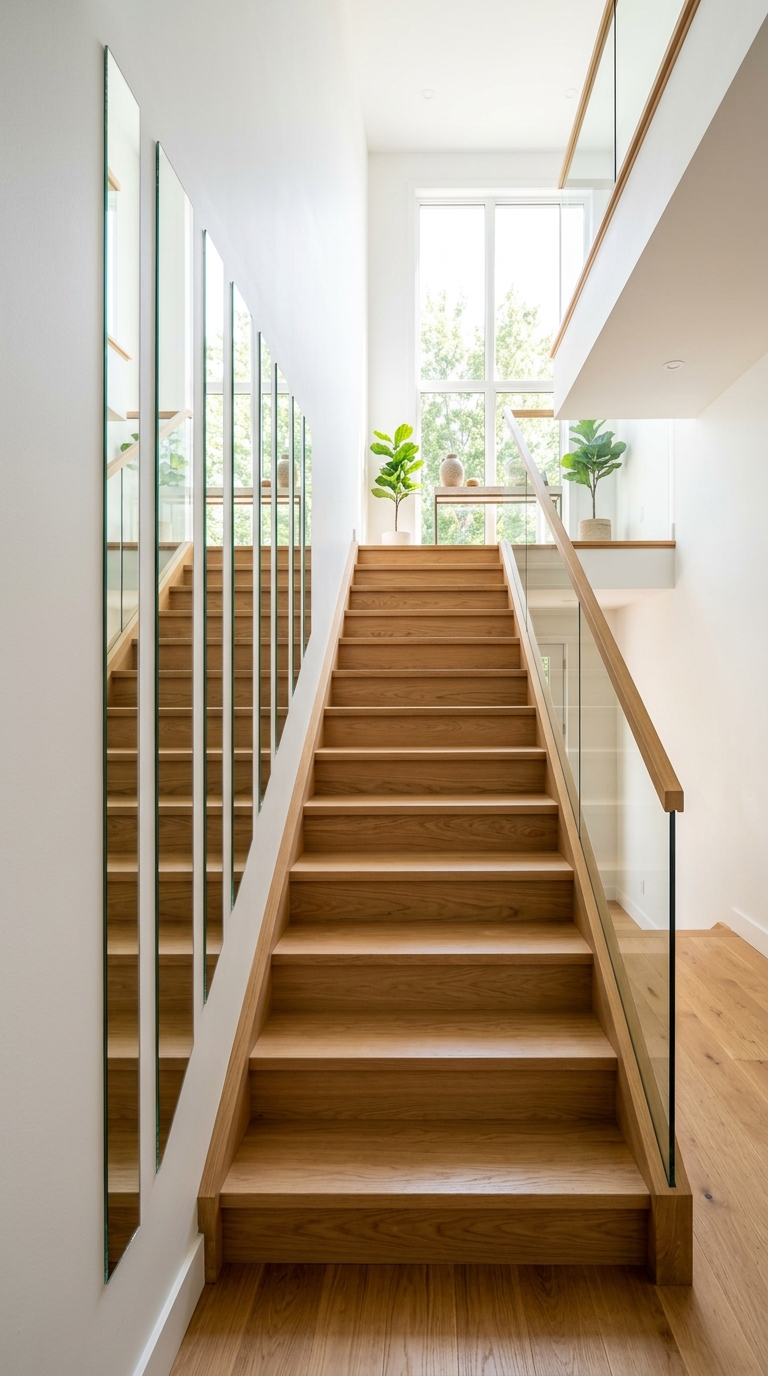
Why does this work so well? Because staircases are transition spaces. They don’t always get natural light, and the wall beside them tends to feel like wasted real estate. A vertical mirror runner visually widens that narrow corridor feel, bounces light down the stairwell, and creates a striking architectural moment that feels intentional and custom.
Keep these tips in mind:
- Use panels cut to 12 to 18 inches wide for a sleek, elongated effect
- Follow the staircase angle so each panel aligns with the rise of the steps below it
- Leave a thin gap between panels for a segmented, modern look rather than a continuous sheet
- Add a small wall-mounted brass hook or ledge at the base for keys or a small plant
This is especially powerful in townhouses, two-story homes, or narrow row houses where the staircase wall is long but feels underused.
Woven Macramé and Mirror Combination Wall
Take a round or oval mirror — something with a natural wood or rope-wrapped frame — and surround it with macramé wall hangings at varying heights and textures. This combination creates a layered, textural wall moment that feels bohemian but elevated.
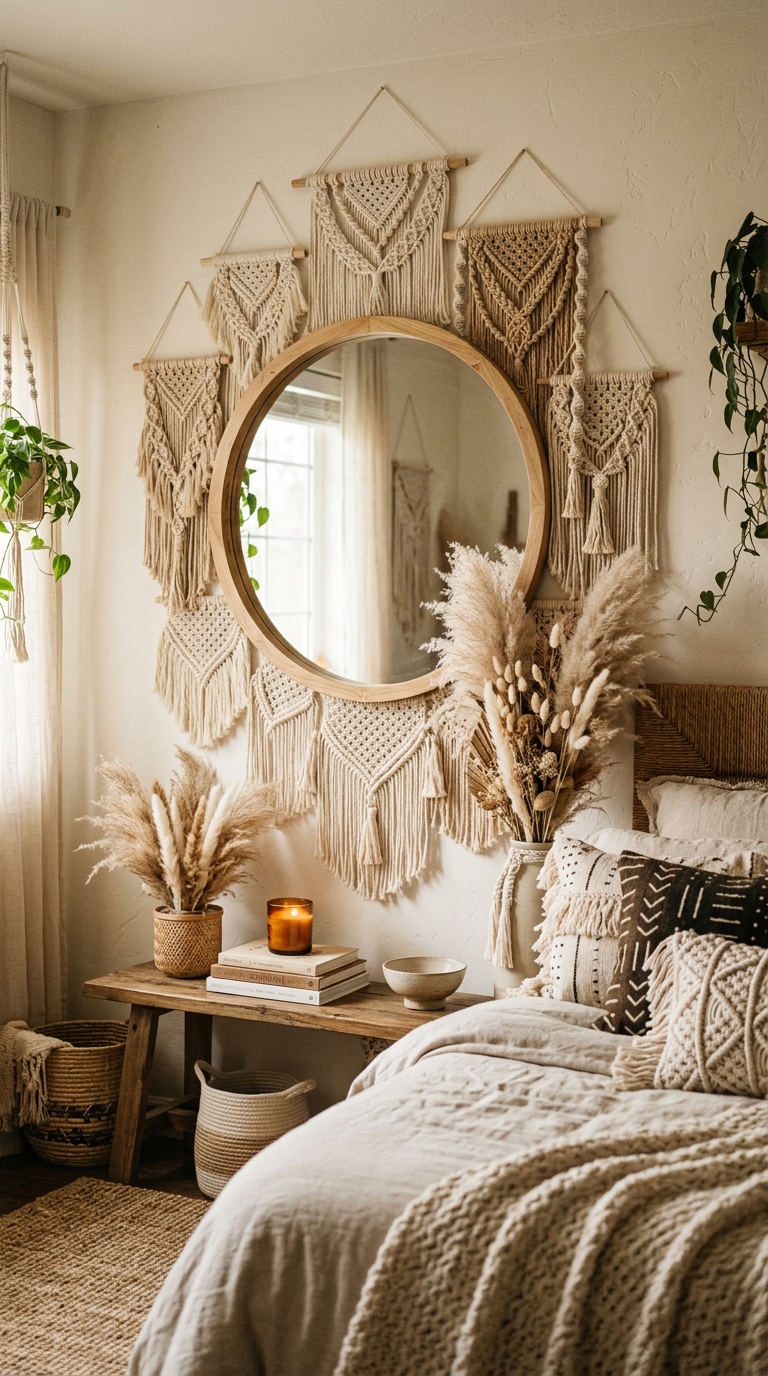
The key is treating the mirror as the center of a textile story, not an isolated piece. The macramé pieces extend outward like organic branches, softening the hard reflective surface of the mirror while adding dimension and handmade warmth.
Here’s how to style this:
- Choose a mirror with a diameter of 20 to 30 inches as your anchor piece
- Hang two to three macramé pieces of different lengths around it — one above, one to the lower left, one to the lower right
- Stick to a natural palette: cream, ivory, warm tan, and bleached wood tones
- Add a small dried pampas grass bundle or cotton stem to one of the macramé hangers for extra texture
This idea shines in bedrooms, nurseries, and cozy living room reading corners. It photographs beautifully and feels intentional without being rigid.
Oversized Leaning Mirror Behind Open Shelving
This is the kind of idea that makes people stop and stare when they walk into a room. Take a large leaning mirror — floor-to-ceiling height if possible — and position it directly behind a freestanding open shelf unit. The mirror peeks out above and around the shelves, reflecting everything stored there back into the room.
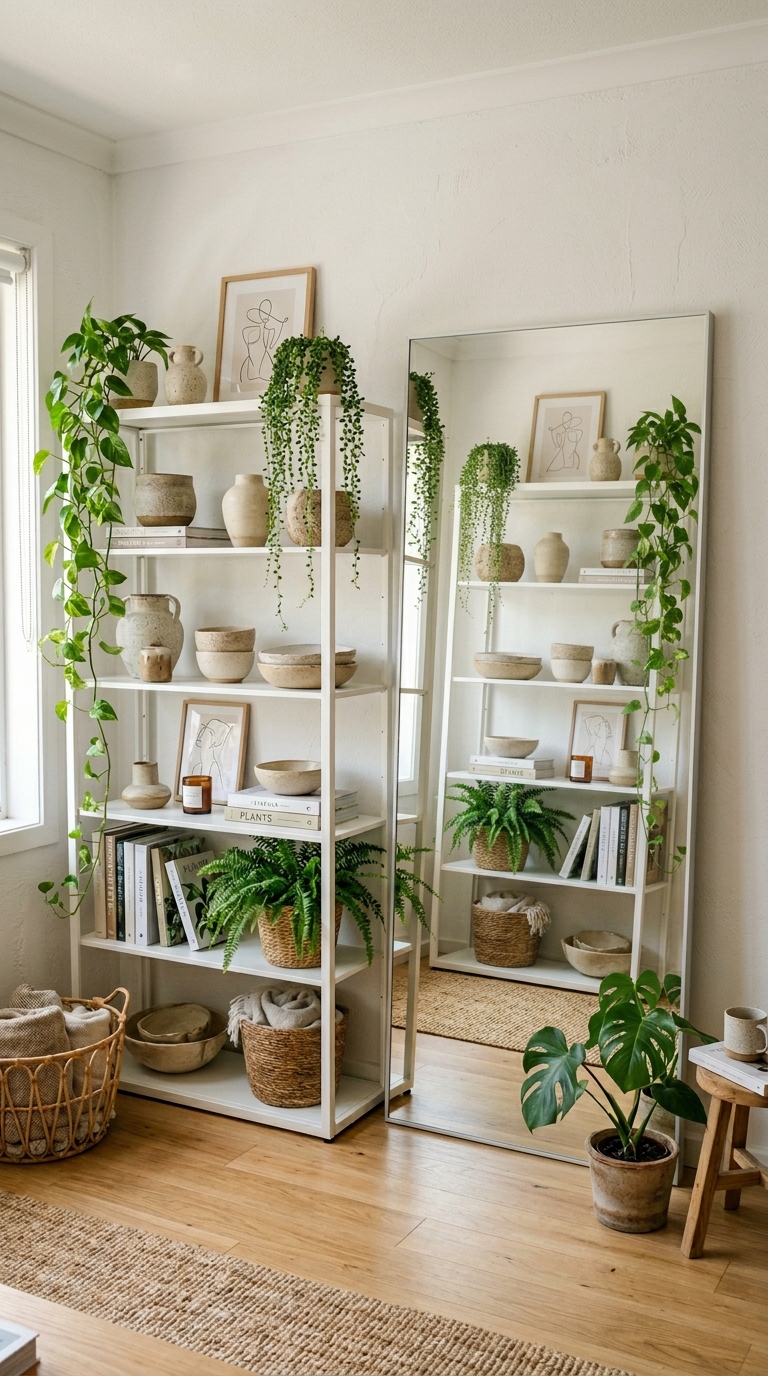
The effect is magical. Your books, plants, ceramics, and candles suddenly appear in double. The room gains instant depth, and the shelving arrangement becomes visually richer than it ever was on its own. It also makes the shelf look styled from every angle.
What makes this idea work well:
- Use a frameless or thin-framed mirror with clean edges
- Choose a shelf that doesn’t reach the ceiling so the mirror remains visible above it
- Style the shelves with objects that look beautiful reflected — clear glass vessels, ceramics, trailing pothos plants
- Keep the floor in front of the shelf clear so the reflection reads cleanly
This works especially well in home offices, living rooms, and entryways where you have a console table or credenza backed against a wall.
Mirrored Niche with Backlit Edges
If your home has a recessed niche — those built-in alcoves often found in hallways, living rooms, or above fireplaces — you have a ready-made canvas for one of the most striking mirror wall decor ideas on this list. Line the back wall of the niche with a mirror and add LED strip lighting around the interior edges of the recess.
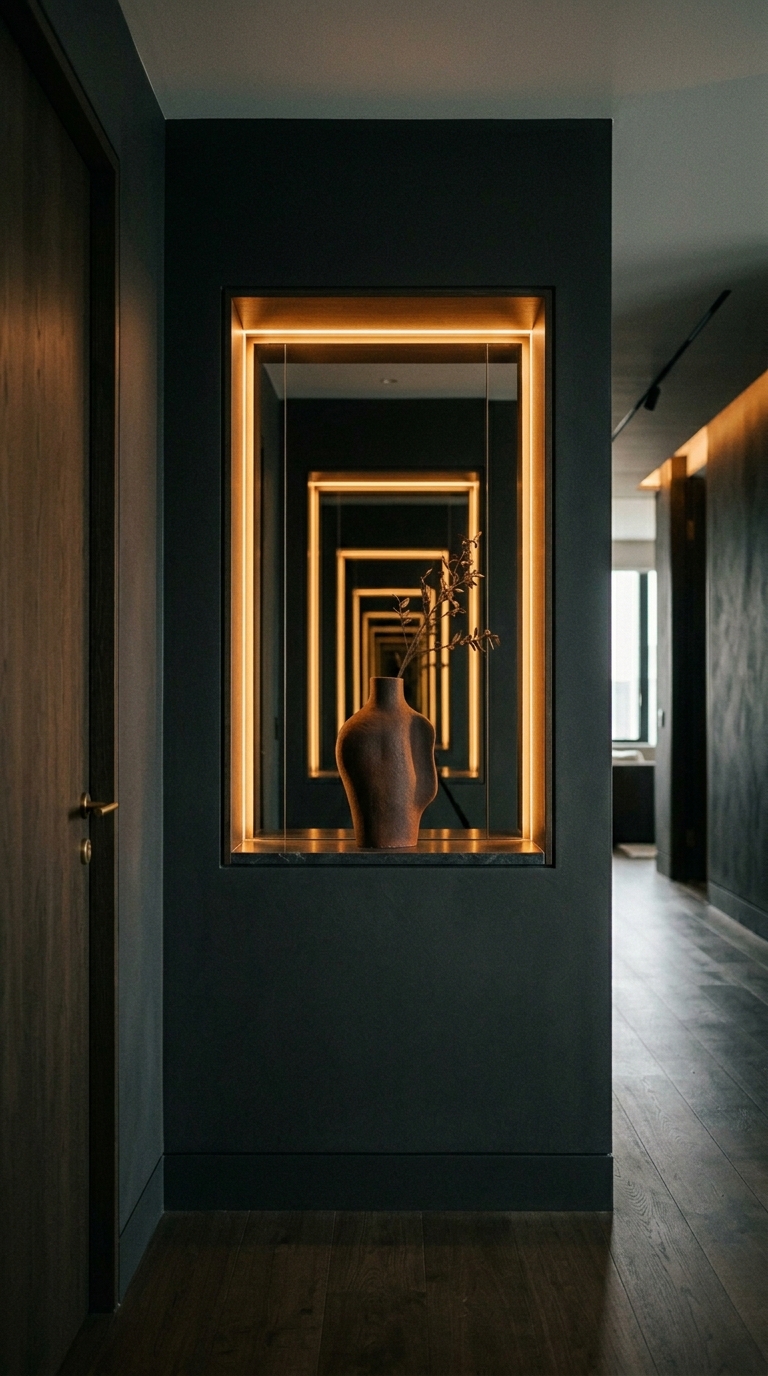
The result looks like something from a high-end hotel lobby. The mirror reflects the LED glow back into the room, and the niche glows like a piece of living art. You can style the shelf within the niche with a single sculptural object, a vase, or a small plant — and the mirror doubles it beautifully.
Tips to get this right:
- Use warm white LED strips (2700K to 3000K) for a cozy, amber glow rather than a clinical blue-white
- Keep the objects inside the niche minimal — one to three pieces maximum
- Choose a mirror that fits the niche snugly, edge to edge, with no visible gaps
- Pair with a dimmer switch so you can control the intensity based on the time of day
This idea is particularly stunning in narrow hallways and entryways where a niche exists but has been left plain.
Clustered Convex Bubble Mirrors in Odd Numbers
Convex mirrors — those round, outward-curved mirrors that give a fish-eye view of the room — have been in interior design for centuries. But clustering them together in an intentional, odd-numbered grouping is a genuinely modern and fresh take.
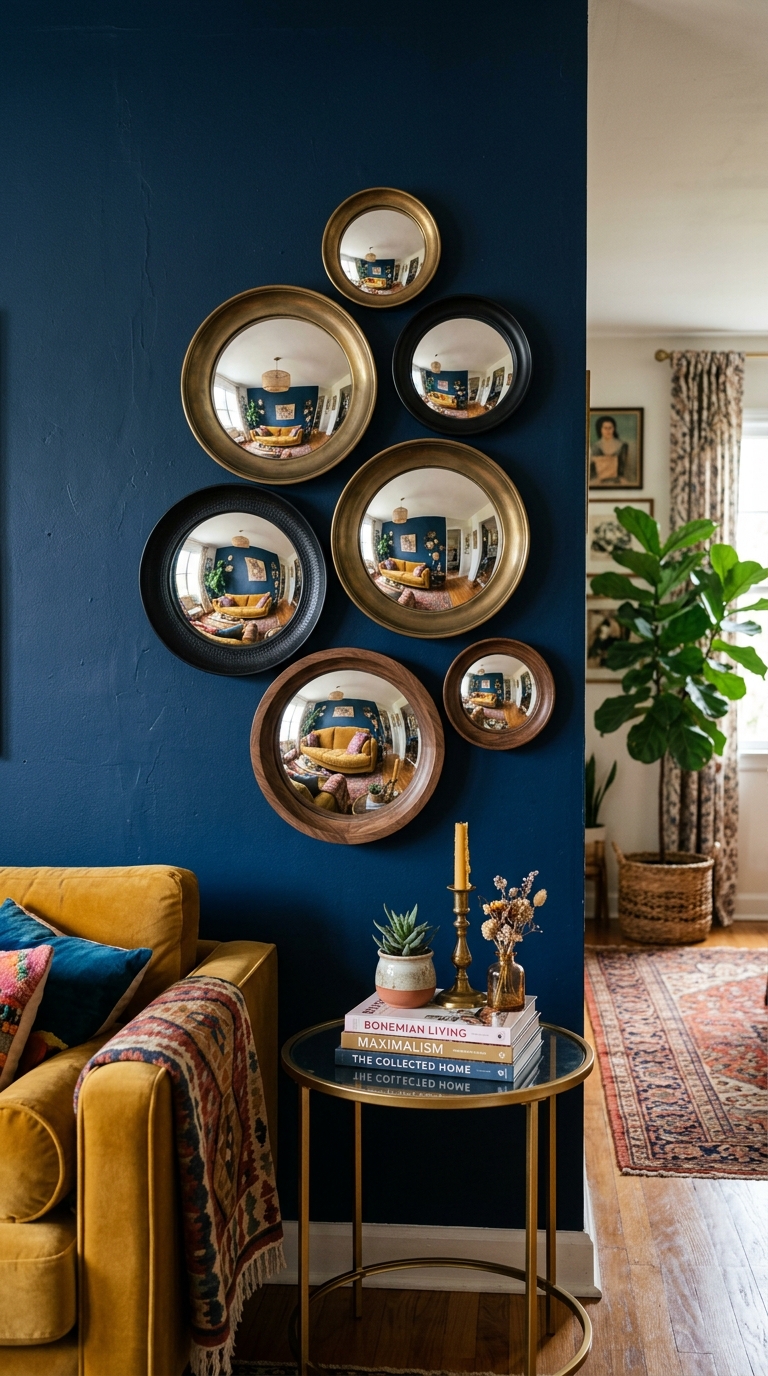
Try grouping five, seven, or nine convex mirrors of different sizes together on a single wall. Space them organically, not in a rigid grid. Let some sit closer together and others drift apart slightly. The convex shape means each mirror captures a slightly different wide-angle slice of the room, creating a layered, almost kaleidoscopic effect as you move around.
Here’s what makes this cluster work:
- Mix frame styles slightly — brass on some, black on others, plain wood on a few — for an eclectic but cohesive feel
- Keep the largest mirror near the center or slightly above center of the cluster
- Use an odd number of mirrors — odd groupings feel more natural to the human eye
- Step back and adjust spacing before committing to final placement
This idea is bold without being aggressive. It suits maximalist, eclectic, and even transitional interiors with equal ease.
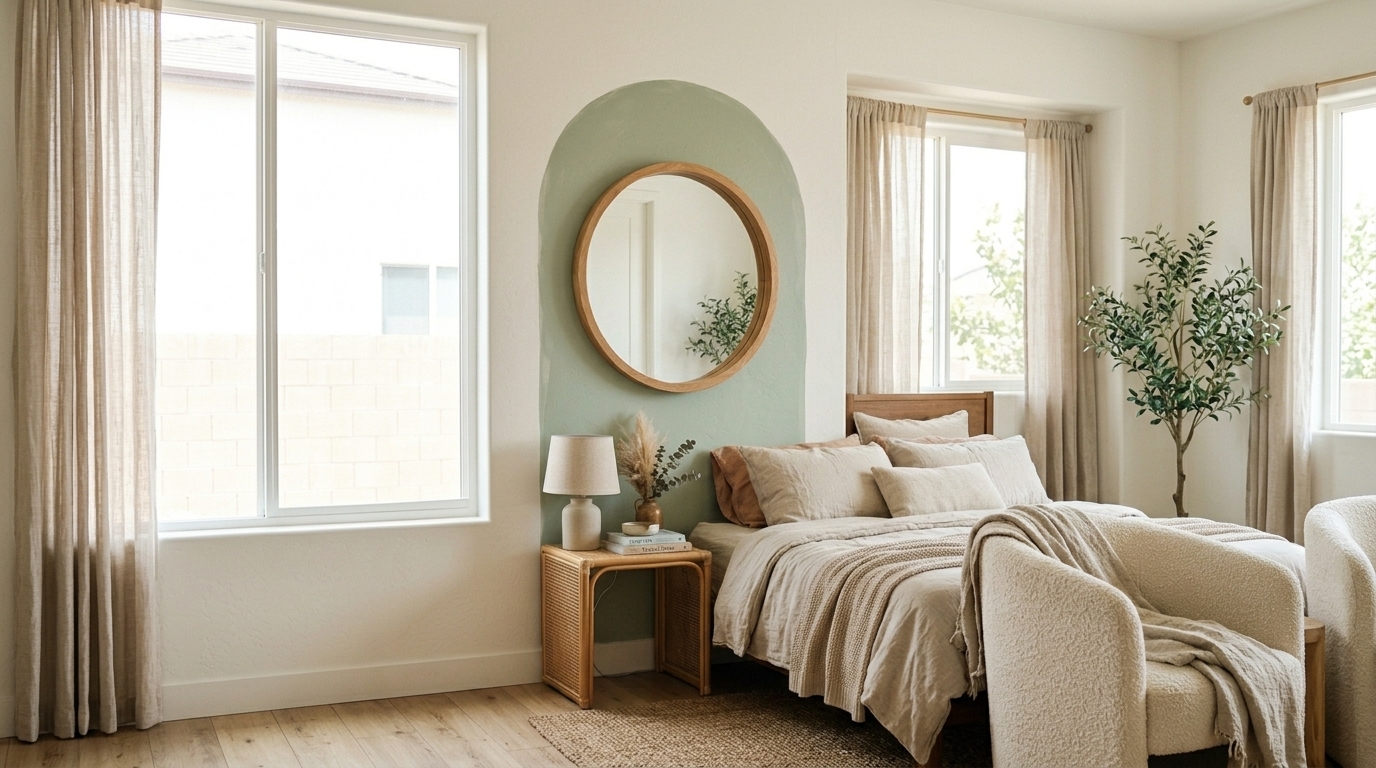
Mirror Framed Inside a Painted Arch
Paint a soft arch shape directly onto your wall — either in a contrasting color or a subtle tone-on-tone finish — and hang your mirror inside it so the arch acts as a painted frame around the mirror itself.
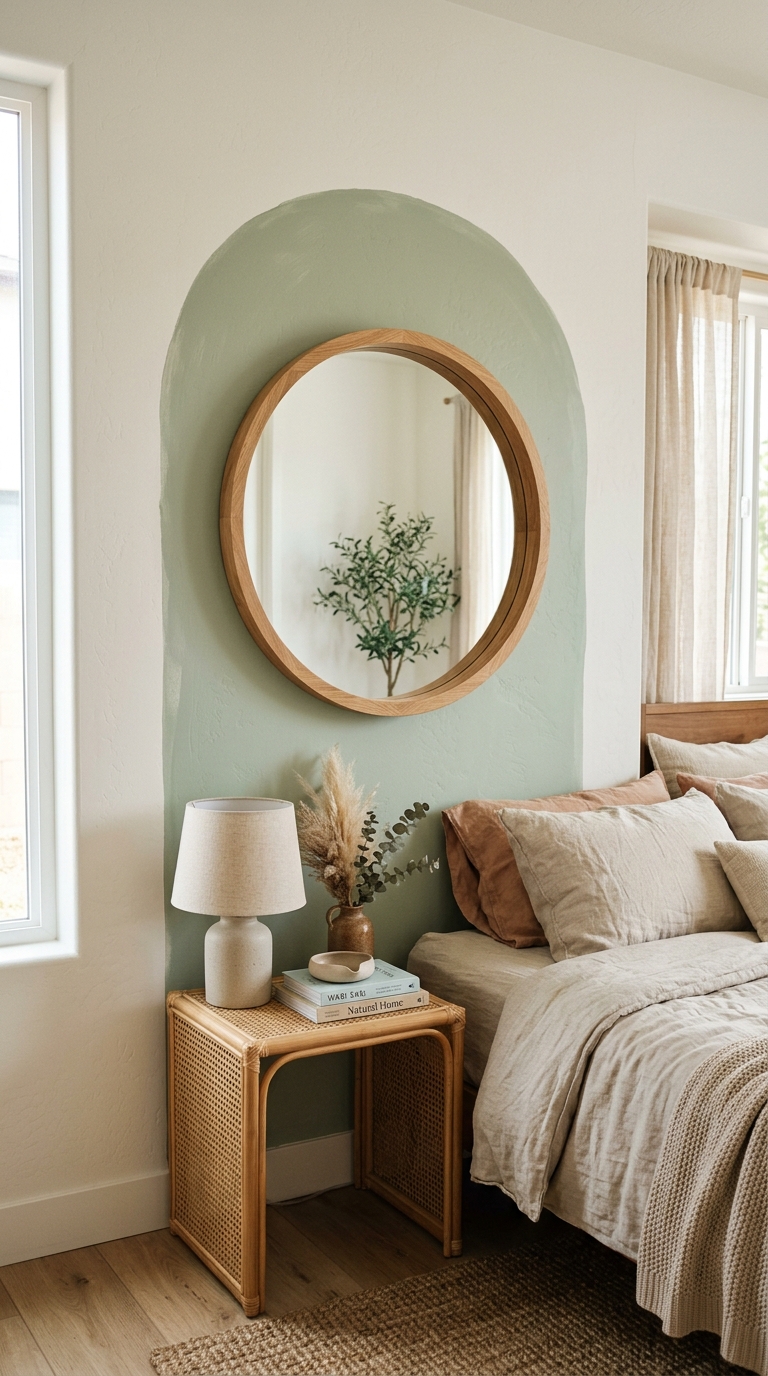
This idea layers two design elements into one wall moment. The painted arch gives architectural interest and that organic, arched doorway silhouette that’s incredibly popular in modern interior design. The mirror inside it reflects the room and adds depth. Together, they look like a custom built-in that cost thousands but can actually be done over a weekend with paint and a single hanging mirror.
How to execute this idea:
- Use a round or arch-shaped mirror so the curves echo the painted arch shape behind it
- Paint the arch in a warm clay, sage green, or terracotta for a natural palette
- Allow the painted arch to extend a few inches beyond the mirror on all sides so both elements are clearly visible
- Keep the surrounding wall in a neutral so the arch and mirror pop without competition
This is a stunning idea for bedrooms, entryways, and dining rooms. It photographs like a magazine spread.
Vintage Window Frame Mirror Wall
Find an old wooden window frame — or build one from reclaimed wood — and fill each window pane with individual mirror glass pieces. Hang it on the wall as you would a window, with the frame intact and the mirror panes reflecting the room back just as a real window would let in light.

The effect is deeply nostalgic and tactile. It brings architectural character to flat, featureless walls and gives the impression of a window that opens onto something beautiful. Because each pane reflects a slightly different part of the room, the overall composition feels layered and alive.
This idea works in:
- Farmhouse, cottage, and vintage-inspired homes
- Dining rooms where you want warmth without heavy art
- Small bedrooms where a real window isn’t possible but you want the visual effect of one
- Bathrooms where mirrors are both functional and decorative
Sourcing tip: check architectural salvage stores, Habitat for Humanity ReStores, or Facebook Marketplace for genuine vintage window frames at very low cost.
Mirrored Ceiling-to-Floor Column on a Narrow Wall
Got a thin slice of wall between two doorways, beside a fireplace, or in a tight hallway? Instead of leaving it blank or cramming a narrow picture there, run a floor-to-ceiling column of mirror panels — about 10 to 14 inches wide — straight up that slim vertical space.
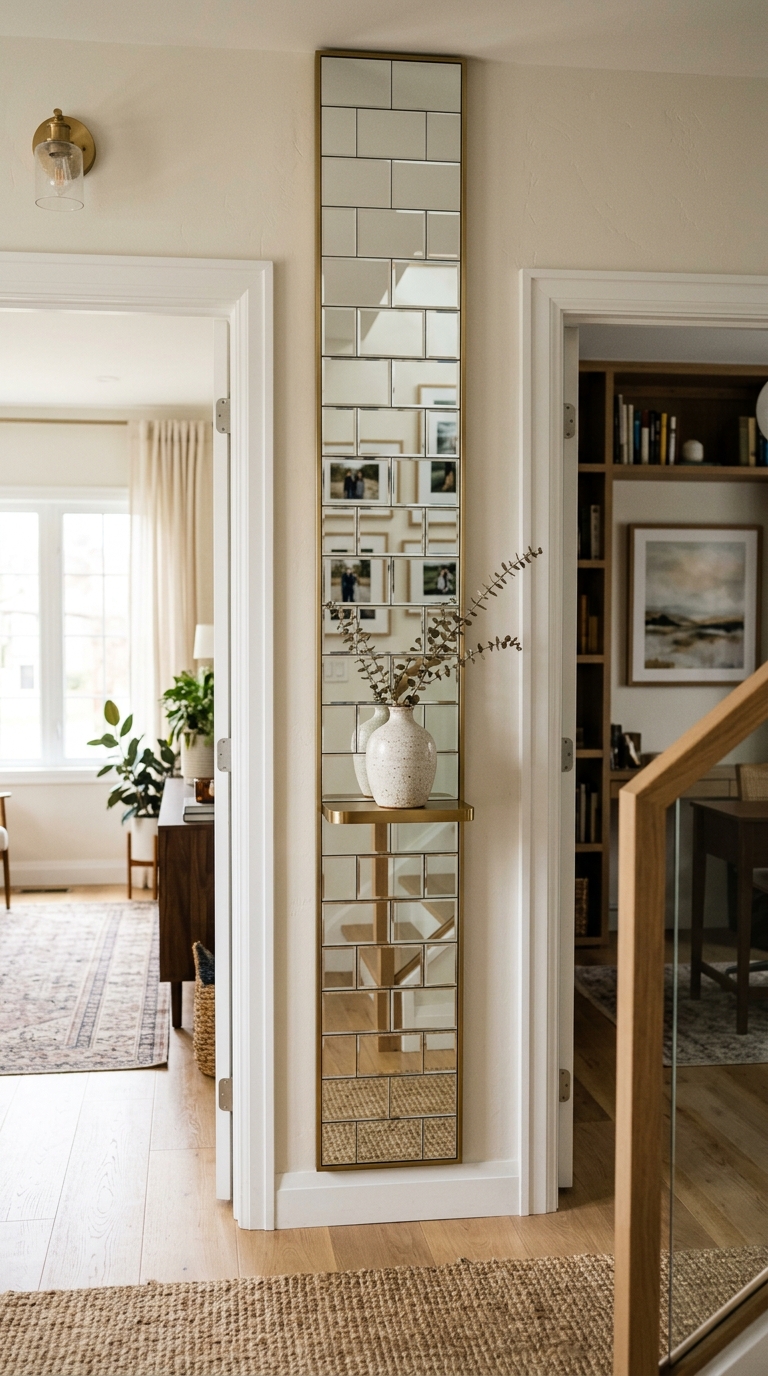
This design trick turns an architectural awkward spot into something that feels intentional and custom. The vertical mirror column draws the eye upward, making ceilings feel taller, and reflects enough of the adjacent space to open the whole area without overwhelming it.
Here’s how to pull it off:
- Use two or three stacked mirror panels with minimal gaps between them
- Frame the column with thin wood molding or metallic trim for a finished look
- Position a small floating shelf halfway up the column and place one decorative object on it
- Keep the surrounding wall in a simple light color so the column stands out clearly
This is one of those ideas that looks incredibly custom but is actually very approachable for a DIY weekend project.
Mixed Metal Mirror Medallion Wall
Think of a single large mirror at the center of the wall surrounded by a halo of decorative metal medallions, sun-shaped metal wall art, or hammered brass discs — all in varying sizes — arranged in a constellation pattern extending outward from the mirror.
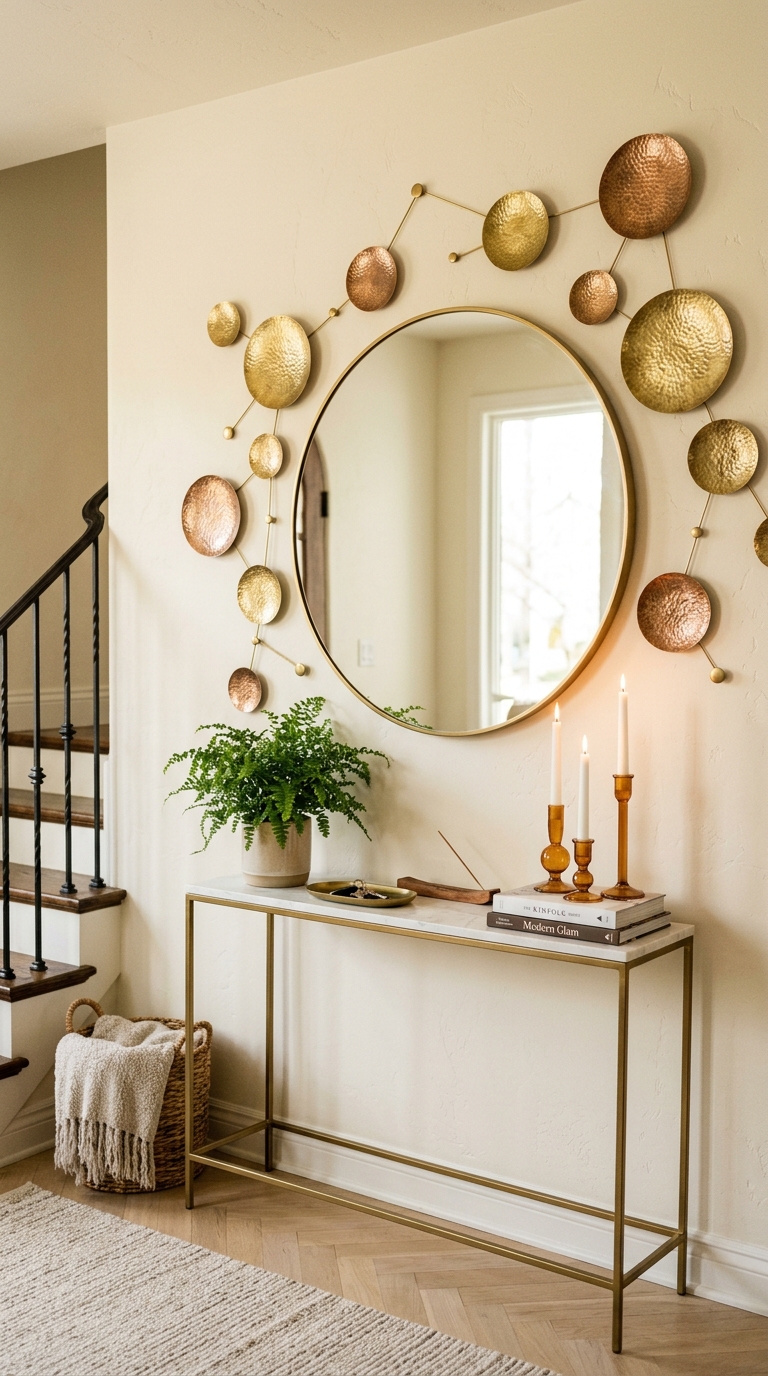
The mirror serves as the sun, and the metal medallions become its rays — but in an organic, scattered way rather than a stiff sunburst. The mixed metals (brass, copper, bronze, gunmetal) catch light differently at various times of day, creating a dynamic wall that never looks the same twice.
To make this work visually:
- Keep the mirror itself simple and round with a minimal frame
- Use at least 8 to 12 medallions or metal disc pieces of varying sizes
- Spread them outward unevenly — some closer to the mirror, some drifting further
- Stick to warm metal tones if your room has warm wood tones, or cool metals for modern grey interiors
This works especially well over a console table, sofa, or in a formal entryway where you want an immediate visual impact.
Japandi Floating Mirror with Dried Branch Display
Japandi design — that perfect marriage of Japanese minimalism and Scandinavian warmth — calls for restraint, natural materials, and intentional simplicity. One of the most beautiful ways to bring this aesthetic to a mirror wall is by mounting a single clean round or square mirror and pairing it with a vertical arrangement of dried branches that frame one side of it.
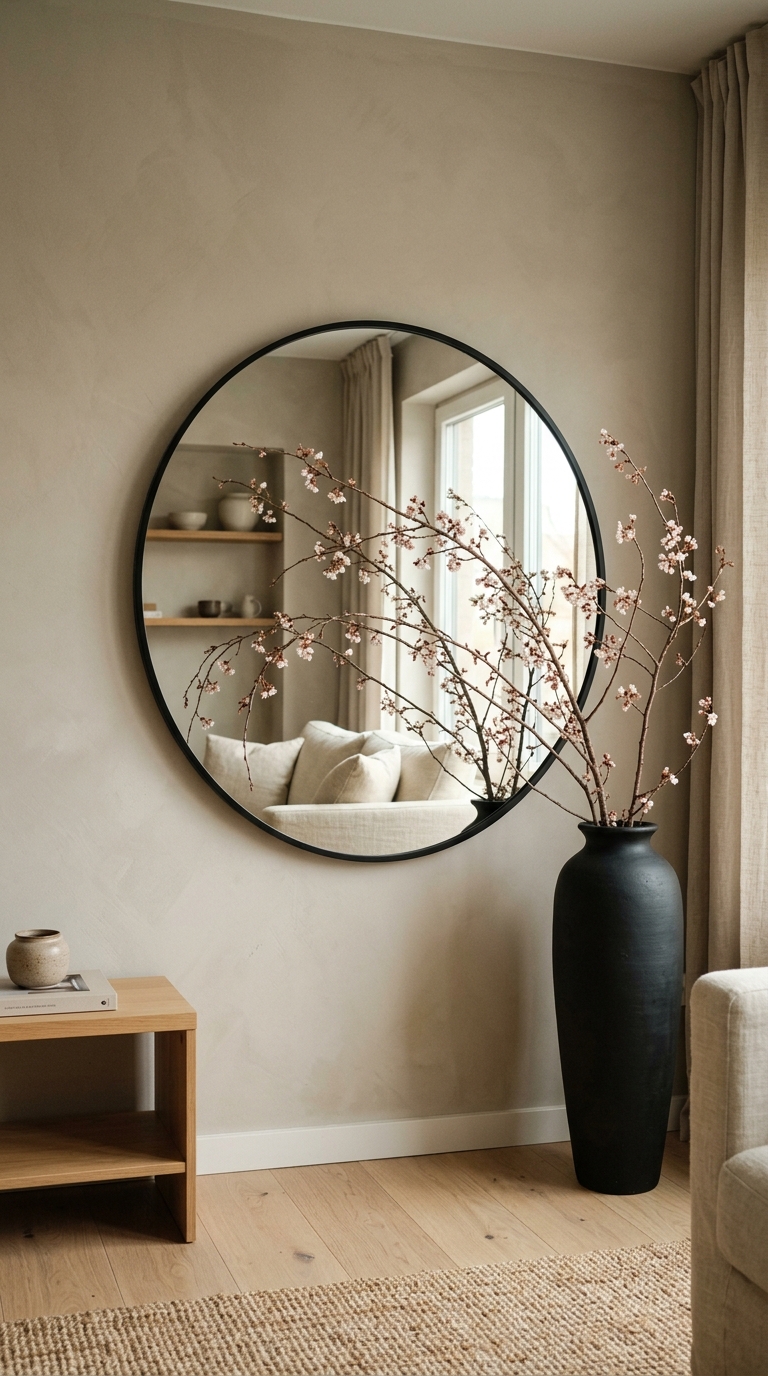
You’re not hanging the branches — you’re propping them in a tall, slender floor vase positioned directly beside the mirror so the branches naturally extend upward and curve across the face of the mirror. The dried branches and their reflection create a deeply serene, nature-forward wall moment.
What you need for this look:
- A mirror with a simple natural wood or matte black frame, 24 to 36 inches in diameter
- A tall floor vase in matte ceramic, aged clay, or black stoneware
- Dried branches like cherry blossom stems, pampas plumes, or white birch twigs
- A clean neutral wall — warm white, greige, or pale stone tone works best
This idea requires almost zero installation complexity and costs very little to pull off, but the result feels deeply sophisticated and well-traveled.
Geometric Mirror Mosaic as a Focal Point
This final idea is for the bold decorator who wants a wall that people cannot stop looking at. Take multiple diamond, triangle, hexagon, or rhombus-shaped mirrors — all cut from the same type of glass, ideally with a slight brass or bronze bevel — and arrange them together in a deliberate geometric mosaic pattern on a single wall.
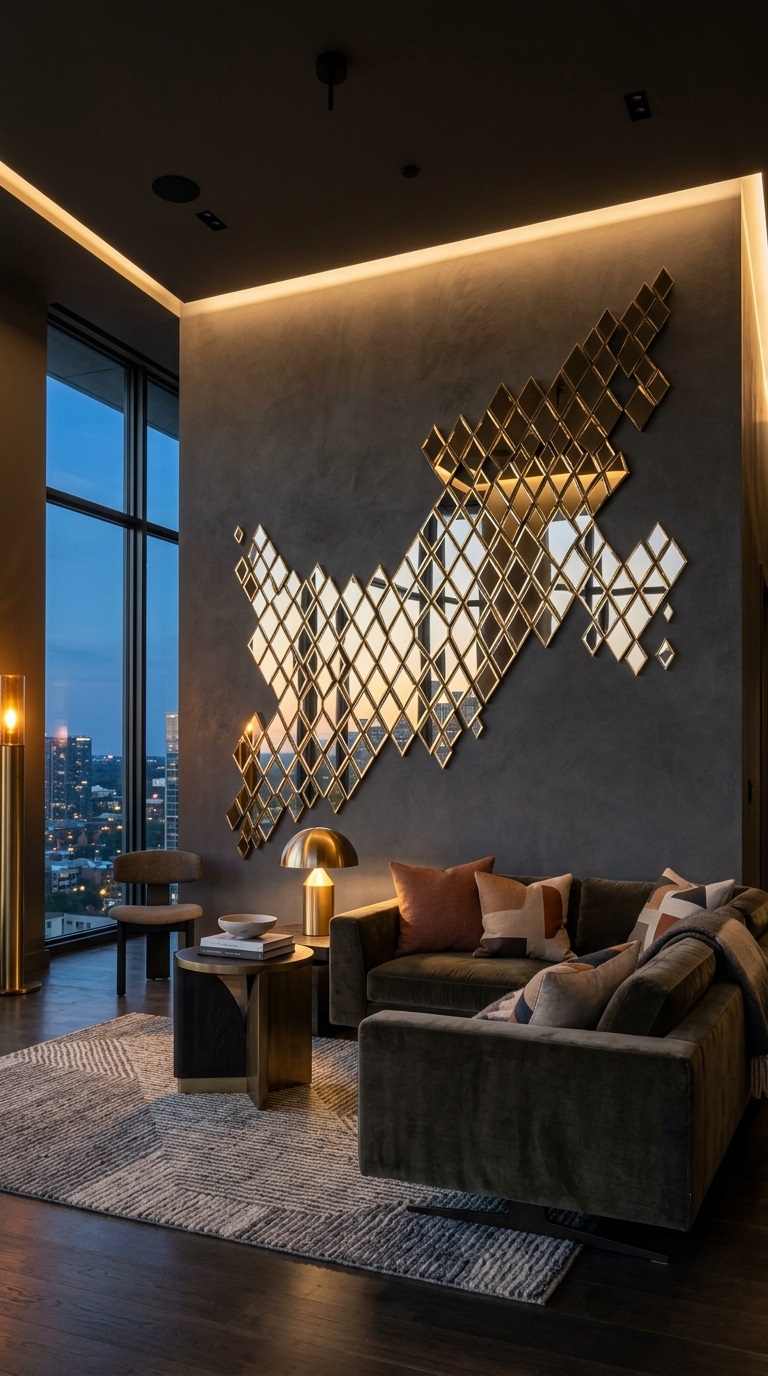
Unlike a mirror gallery wall (which uses framed mirrors of mixed shapes), this idea uses unframed geometric mirror pieces treated like tiles in a mosaic. They sit close together with minimal gaps, forming a larger abstract composition that becomes the centerpiece of the entire room.
Design tips for this idea:
- Sketch your arrangement on paper first using graph paper — this prevents costly mistakes
- Stick to two or three geometric shapes maximum so the mosaic reads as a unified design
- Use mirror adhesive and wall clips for secure installation, especially for heavier pieces
- Place this feature wall opposite a window or light source for maximum light play
- Keep all surrounding furniture and decor minimal so the mirror mosaic remains the hero
This is a strong choice for modern, industrial, art-forward, and maximalist interiors. It works in living rooms, home bars, and even bold bedroom accent walls.
How to Choose the Right Mirror Wall Idea for Your Space
Now that you have 12 genuinely fresh ideas in front of you, the next question is: which one actually fits your home and your life? Here’s a simple way to think through it.
Start with your existing style. Are you naturally drawn to warm, organic textures and natural materials? Ideas like the macramé mirror combination (Idea 3), the Japandi floating mirror (Idea 11), and the vintage window frame mirror (Idea 8) will feel most at home in your space. Do you love clean lines, modern architecture, and bold geometric shapes? The geometric mosaic (Idea 12), the mirrored ceiling column (Idea 9), and the tinted antique panels (Idea 1) will give you that designer-forward edge.
Consider your light situation next. Rooms that are naturally dark need mirrors positioned to work with whatever light source exists — windows, sconces, lamps. The backlit niche mirror (Idea 5) and the staircase runner mirror (Idea 2) are specifically designed to solve dark-corner problems.
Finally, think about your budget and your DIY comfort level. The arch-painted mirror (Idea 7) and the macramé combination (Idea 3) are both very low-budget, high-impact options. The tinted antique panels (Idea 1) and the geometric mosaic (Idea 12) require a bit more investment but deliver truly custom results.
Practical Tips Before You Hang Anything
A few real-talk points from experience before you start drilling holes in your walls:
Always use a stud finder before mounting heavy mirrors. A mirror that falls is not just a decorating disaster — it’s a safety issue. For mirrors over 10 pounds, hit a wall stud or use proper drywall anchors rated for the weight.
Consider the reflection before you finalize placement. Stand where the mirror will hang and look at what it will reflect. A mirror that reflects a cluttered shelf, an ugly HVAC unit, or the back of a door wastes its potential. Position mirrors so they reflect beautiful things — windows, plants, artwork, or a well-lit architectural feature.
Clean your mirror before photographing or styling around it. Fingerprints and dust catch light in unflattering ways and undercut even the most beautiful arrangement.
Group your planning and purchases together. When you buy mirrors for a cluster or mosaic wall, order them all at once from the same source. Slight variations in glass tint or frame batch coloring can be noticeable when pieces sit side by side.
Final Thoughts: Your Wall Deserves Better Than Average
The walls of your home are a canvas — not storage space for random artwork or bare paint. Mirror wall decor, done thoughtfully, can genuinely transform how you feel inside a room every single day. You walk in and the space feels bigger. The light feels better. The whole room tells a more interesting story.
These 12 ideas give you real options across every style, every budget, and every type of space. Pick the one that excites you most and start there. You don’t need to overhaul your whole home at once. One well-executed mirror wall can change everything.
So which idea are you doing first?