15 Hallway Wall Decor Ideas to Transform Empty Walls
Why Your Hallway Deserves More Attention Than You’re Giving It
You walk through your hallway at least a dozen times a day — and yet most people treat it like a forgotten corridor, a pass-through space that doesn’t deserve real attention. But here’s the thing: your hallway is the first impression your home makes on every single person who walks through the door, including you. When it’s empty and cold, the whole house feels unfinished. When it’s warm, layered, and personal, it sets the tone for everything beyond it.
We’ve put together 15 genuinely creative hallway wall decor ideas that go way beyond slapping a mirror on the wall and calling it done. Whether your hallway is long and narrow, short and wide, or barely exists at all, there’s something here that will make you see that space with completely new eyes. Let’s get into it.
The Gallery Wall Done Right
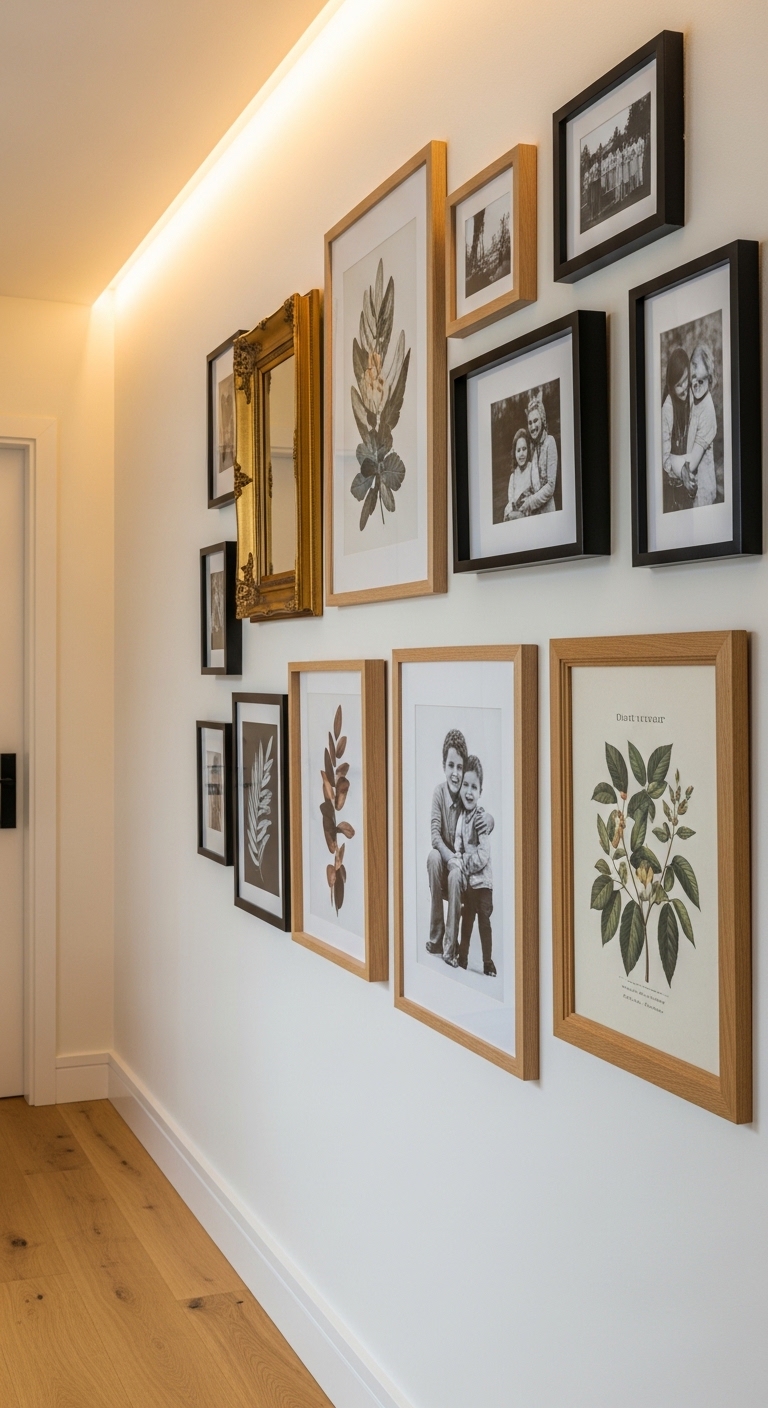
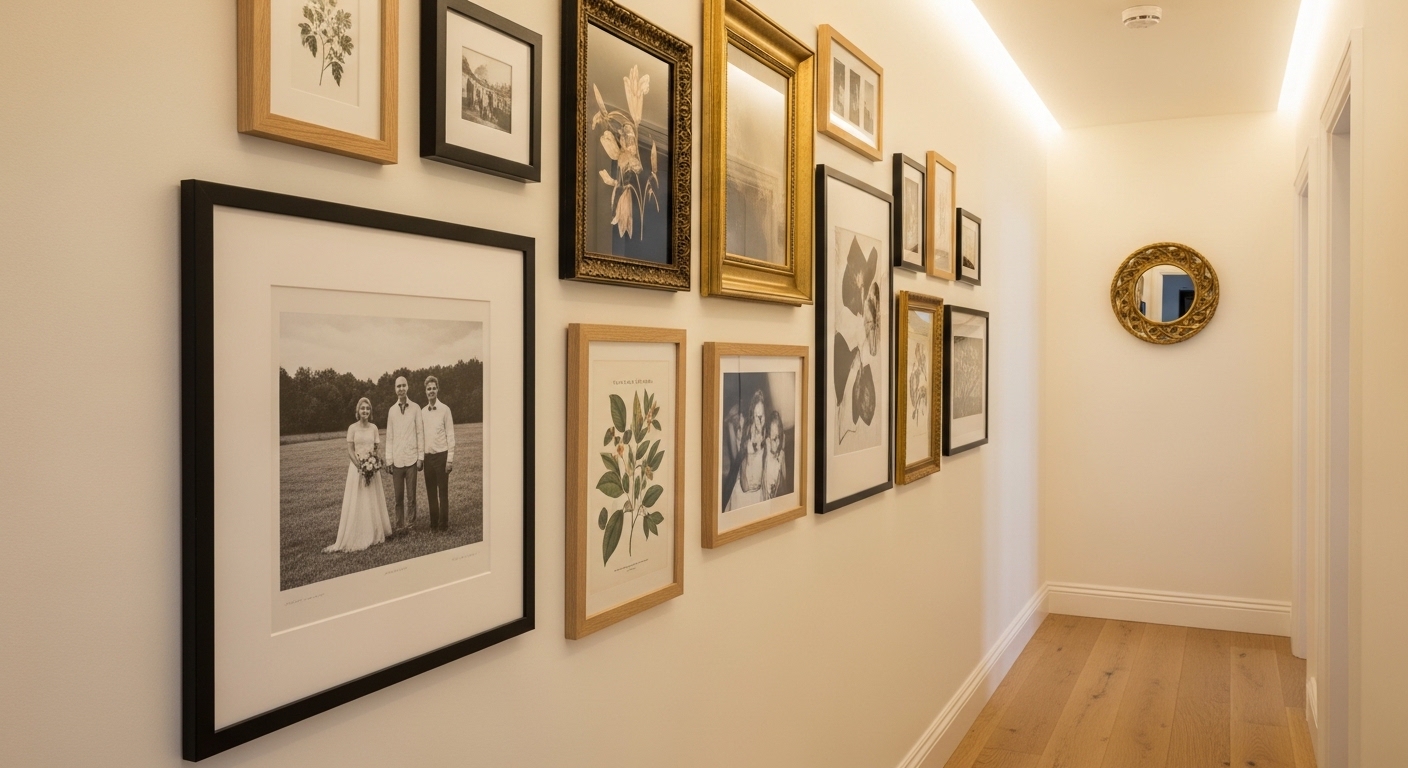
Gallery walls have earned a mixed reputation — mostly because people hang random frames in rows and wonder why it looks messy. When you do a gallery wall thoughtfully, it becomes the single most talked-about feature in your home. The key is intention. Pick one unifying element: a color palette, a frame finish, or a visual theme. You don’t need to match everything exactly — you just need one thread that ties the whole collection together.
Think about mixing frame sizes deliberately. Put your largest piece off-center, not in the middle. Let negative space do some of the work. A great hallway gallery wall feels curated, like a tiny personal museum, not like a Pinterest board printed and pinned to the wall.
What Works Best Here
- Mix black frames, natural wood, and one ornate gilded frame for depth
- Include at least one oversized piece — 24×36 inches or larger — to anchor the arrangement
- Use washi tape on the wall first to map out positions before you hammer a single nail
- Combine art prints, family photos, and typographic quotes in the same collection
- Leave 2–3 inches between frames — enough breathing room without feeling sparse
Pro Tip: Lay your entire arrangement on the floor before touching the wall. Take a photo from above. If it looks good on the floor, it will look great on the wall.
Oversized Statement Mirror
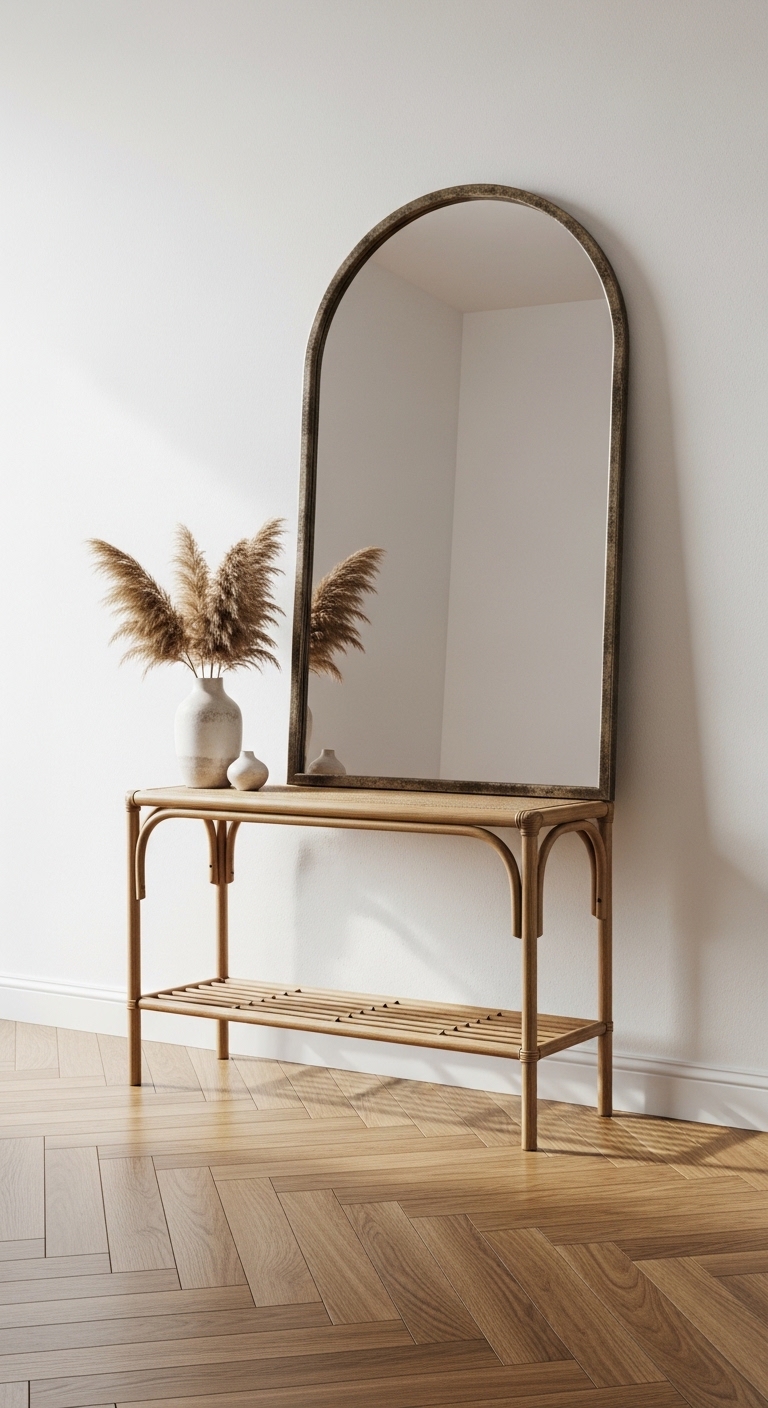
A single large mirror can do more for a narrow hallway than almost anything else. It bounces light, doubles the perceived width, and adds a sense of occasion to an otherwise utilitarian space. The trick is to go bigger than you think you should. Most people choose a mirror that’s too small — it ends up looking like an afterthought rather than a design decision.
For a standard hallway that’s around 36 to 48 inches wide, we’d suggest a mirror that’s at least 30 inches wide and 48 inches tall. Go floor-length if you can. Lean it casually against the wall instead of hanging it flush — that relaxed, intentional lean communicates confidence and style in a way that perfectly centered hanging never quite does.
How to Choose the Right Size and Style
- Arch-top mirrors bring softness and architectural interest to a boxy hallway
- A starburst or sunburst frame turns the mirror into sculpture
- Place a small table or bench below the mirror to ground it visually
- Position the mirror across from a window to maximize light reflection
Wallpaper Accent Panel
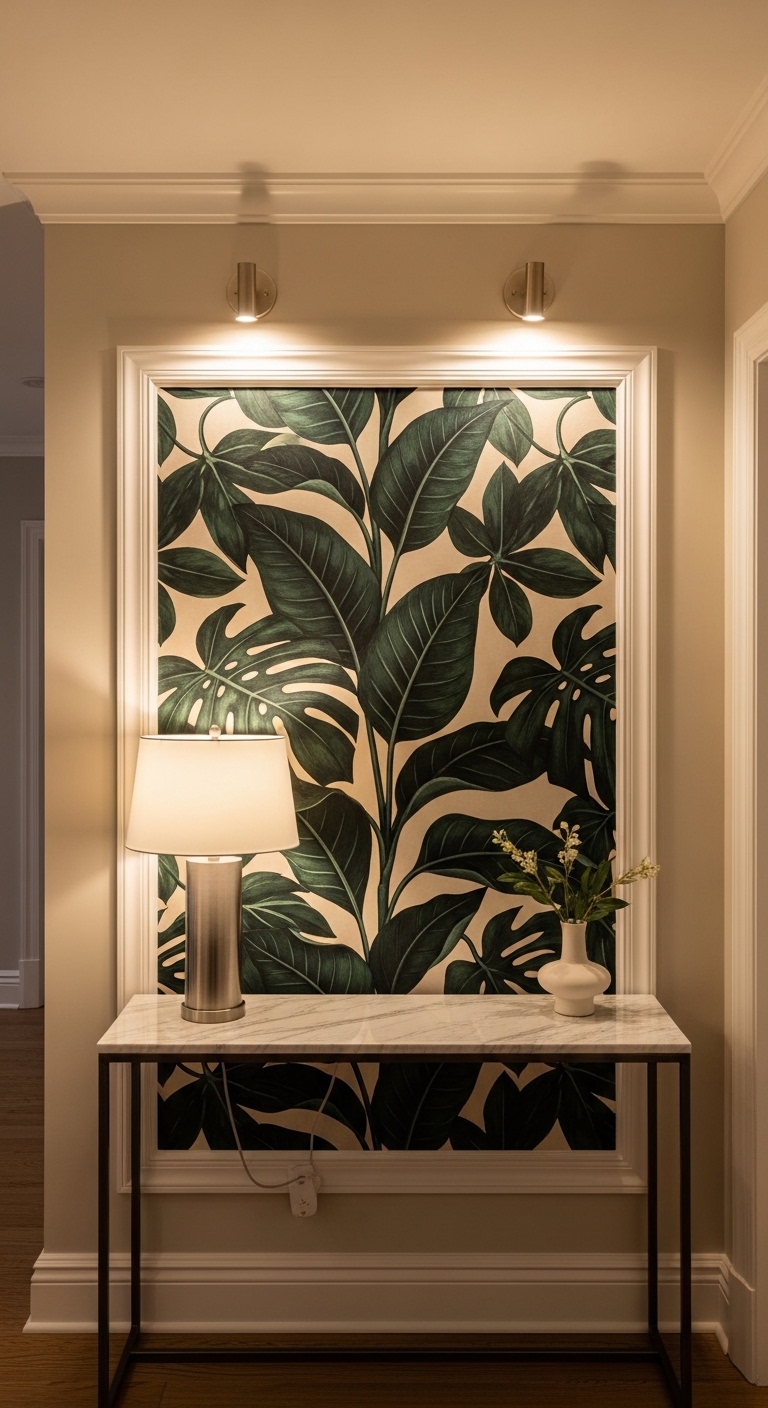
Full wallpaper rooms can feel overwhelming, but a single wallpapered panel in your hallway? That’s a completely different story. It creates a focal point without commitment, it’s surprisingly affordable, and it lets you use bold, graphic, or textured patterns you’d never dare put on every wall. Think of it as a giant piece of art that you install once and never have to straighten.
The trick is to define the panel clearly. Use picture rail molding or simple wooden trim to frame the wallpapered section — it elevates the whole thing from “DIY experiment” to “architectural detail.” Choose wallpaper with depth: grasscloth texture, botanical prints, geometric patterns, or moody deep-colored designs all work brilliantly in hallways.
How to Define the Panel Properly
- Grasscloth wallpaper adds organic texture that photography literally cannot do justice
- Dark dramatic patterns (navy, forest green, charcoal) make narrow hallways feel intentional rather than tight
- Use removable peel-and-stick wallpaper if you rent — the quality has improved dramatically
- A single panel behind a console table creates an instant vignette
Floating Shelves as Art Displays
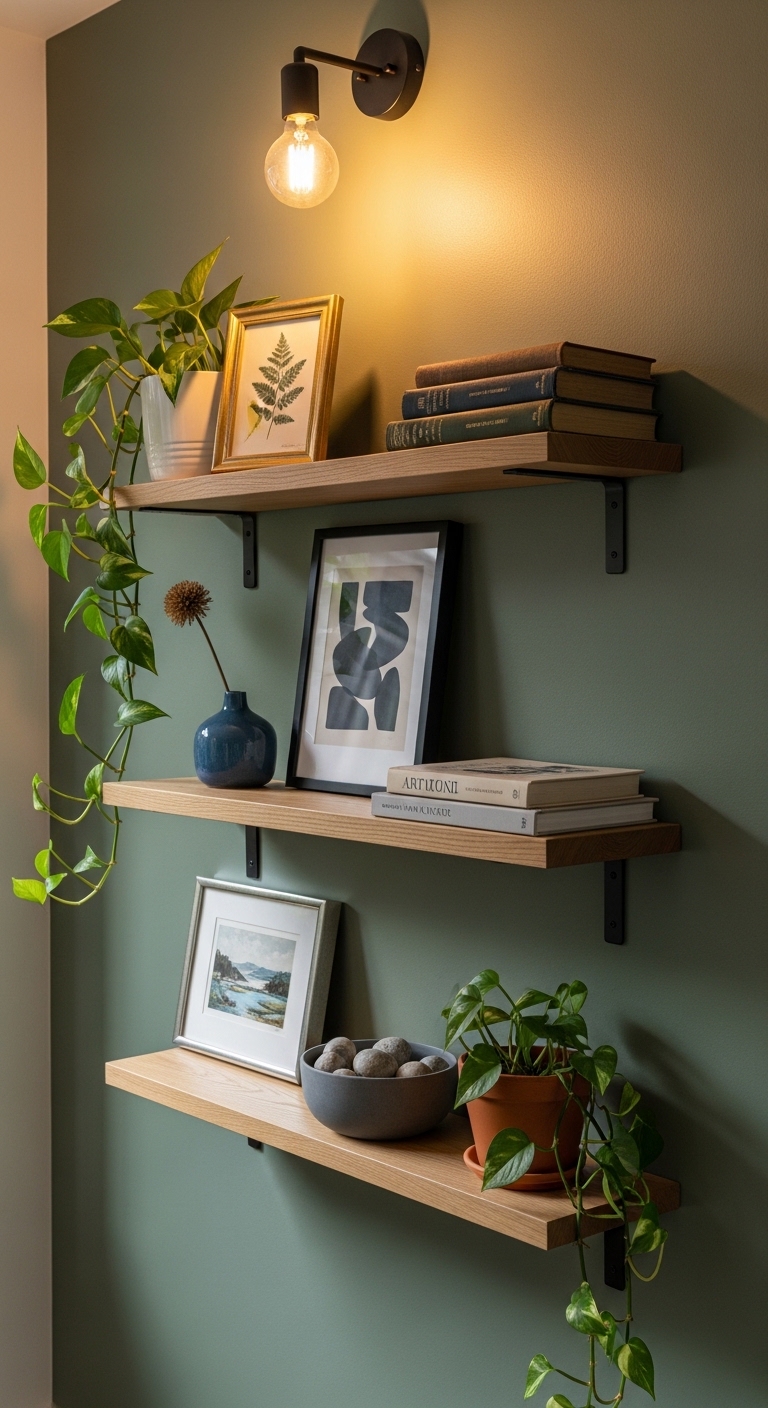
Floating shelves in a hallway serve double duty — they’re functional and they’re visual. The real magic happens when you style them thoughtfully rather than loading them with stuff. Think of each shelf as a curated shelf in a boutique: a small stack of books, one meaningful object, a tiny plant, and one framed photo. That’s your sweet spot.
Stagger the shelves at different heights rather than lining them up evenly. Uneven heights feel dynamic and natural, like the objects on the shelves have been gathered over time — because they have been. Use shelves in a contrasting color or material to the wall: black metal brackets against a white wall, natural oak against a dark painted wall.
How to Style Your Shelves Without Overcrowding
- Group objects in odd numbers — threes and fives always look more intentional than pairs
- Let one object hang slightly over the shelf edge for a relaxed, editorial look
- Mix heights within each shelf: tall candlestick, medium vase, small stone or figure
- Books turned spine-in (pages facing out) create a beautiful neutral backdrop
Real Talk: The biggest mistake with shelf styling is overcrowding. If you’re unsure whether to add one more object, don’t. Empty space on a shelf is a design choice, not a gap to fill.
Wainscoting or Board and Batten
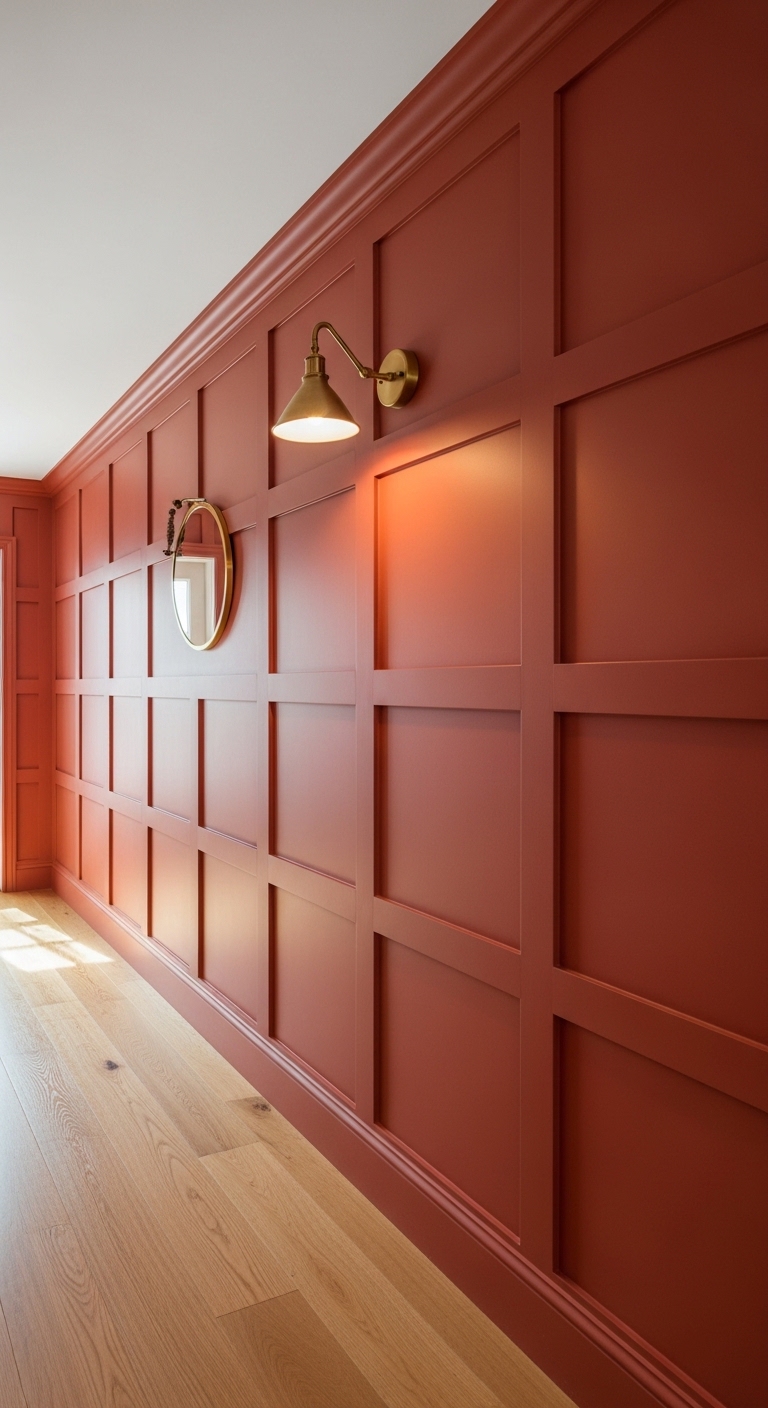
If you want your hallway to feel like it was designed by an architect, board and batten paneling is one of the fastest ways to get there. It adds structure, height, and a richness that paint alone simply cannot achieve. When you paint the paneling and the wall above it the same color — especially in a deep warm tone — the effect is genuinely stunning and looks like it belongs in a magazine.
You can do a full DIY board and batten project for the cost of a couple of trips to the hardware store. The boards themselves are just flat MDF strips attached in a grid pattern to your existing wall, then caulked, primed, and painted. The transformation per dollar spent is hard to beat in home decor.
DIY or Professional — What You Need to Know
- Classic wainscoting sits at chair-rail height (about 32–36 inches up)
- Modern board and batten often runs full height for a more dramatic effect
- Deep colors like terracotta, charcoal, or forest green make paneling feel luxurious
- A simple panel molding grid (just squares) works for beginners — no fancy routing required
- Finish with a satin or semi-gloss paint for durability in a high-traffic hallway
A Dramatic Single Artwork Piece
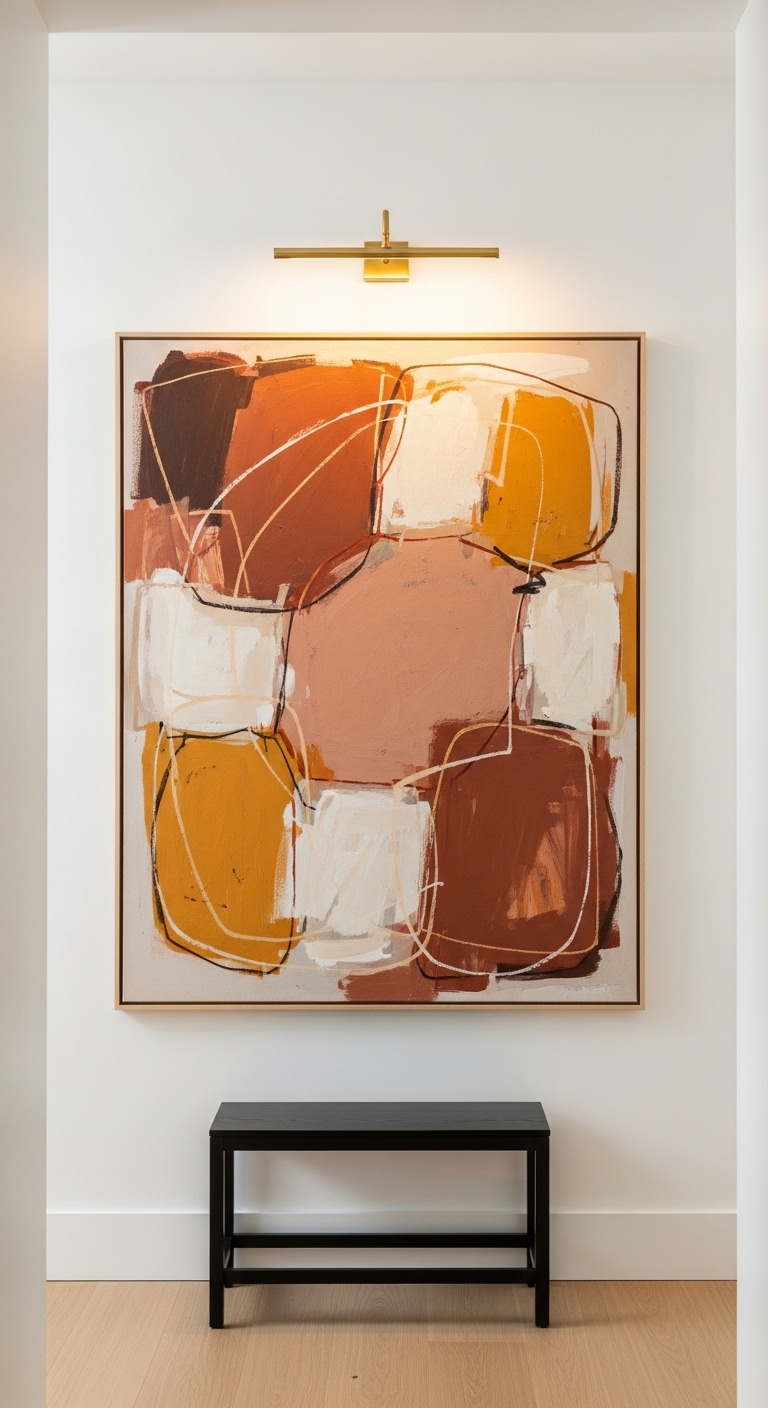
Sometimes the bravest thing you can do in a hallway is hang one big piece of art and let it breathe. No surrounding frames, no shelves, no accessories competing for attention — just one strong piece that earns its spot on the wall. This approach works especially well in hallways that feel cramped or cluttered, because the simplicity creates the visual calm the space desperately needs.
When you choose one piece, the quality and scale of that piece matter enormously. Go for something that genuinely moves you — an abstract canvas with colors that repeat elsewhere in your home, a large-format black and white photograph, or a hand-painted piece from a local artist. The hallway is actually a perfect place to invest in original art because it gets so much daily exposure.
How to Choose and Hang One Statement Piece
- The piece should be at least 60% as wide as the wall it hangs on
- Center it at eye level — standard is 57–60 inches from floor to center of the artwork
- Use a picture light above the artwork to give it gallery-level presence
- Abstract expressionist works with warm neutrals work in almost any hallway palette
Vintage Map or Architectural Print Collection
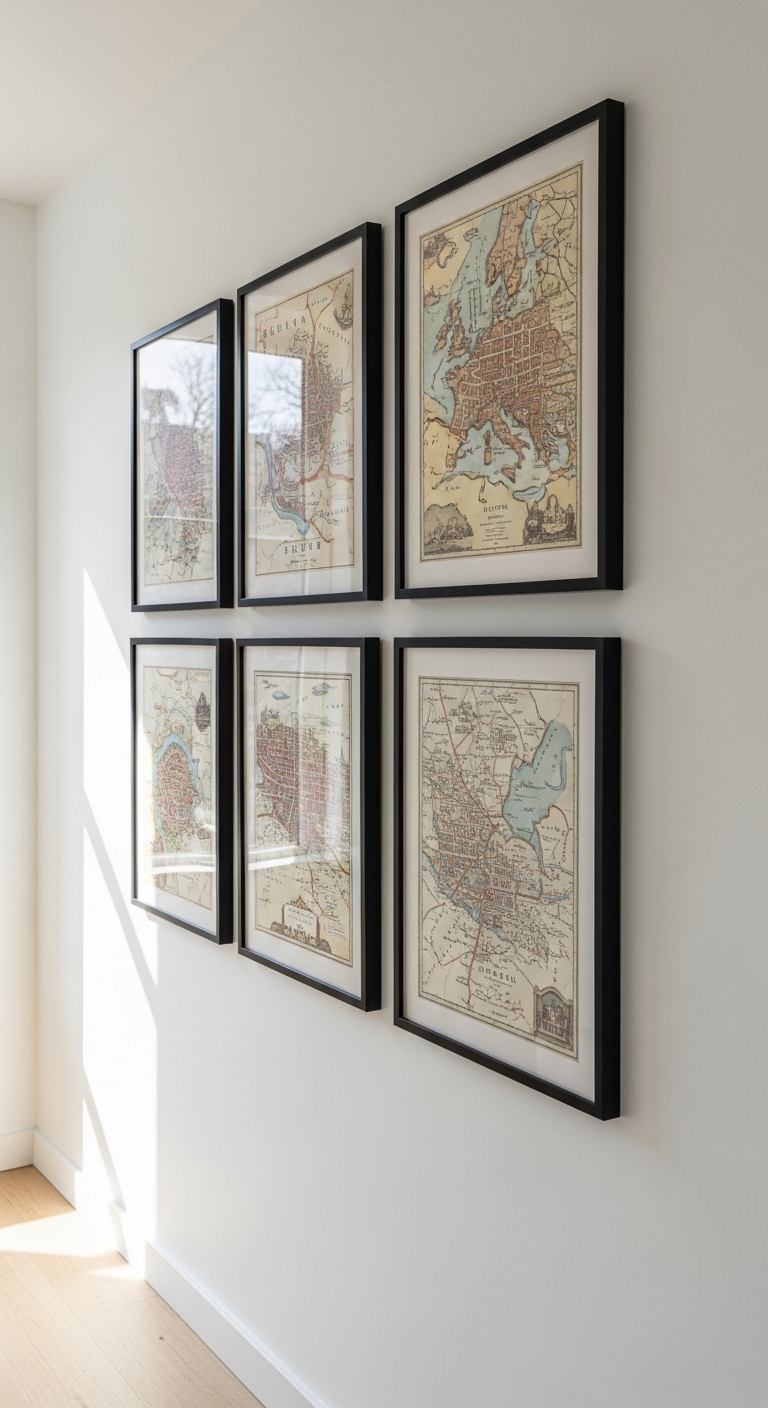
Maps and architectural drawings have a timeless intellectual quality that works beautifully in hallways. They tell a story — of places you’ve been, places you dream of, cities you’ve fallen in love with, or just the inherent beauty of old cartography. A collection of three to five vintage maps or architectural blueprints in matching frames creates a cohesive, conversation-starting display that feels personal without being overtly sentimental.
You can find high-quality printable antique maps for very little cost online. Print them large — at least A2 or even A1 format — and frame them in identical thin black or warm wood frames. The uniformity of the frames lets the diversity of the maps do the talking.
Where to Find Prints and How to Frame Them
- Sepia-toned antique city maps have a warmth that suits almost every interior style
- Architectural cross-section prints (ships, buildings, machinery) feel scholarly and fascinating
- Mix a large world map with smaller regional maps for scale variation
- Matching mats inside mismatched frames create cohesion without rigidity
Painted Mural or Accent Color Arch
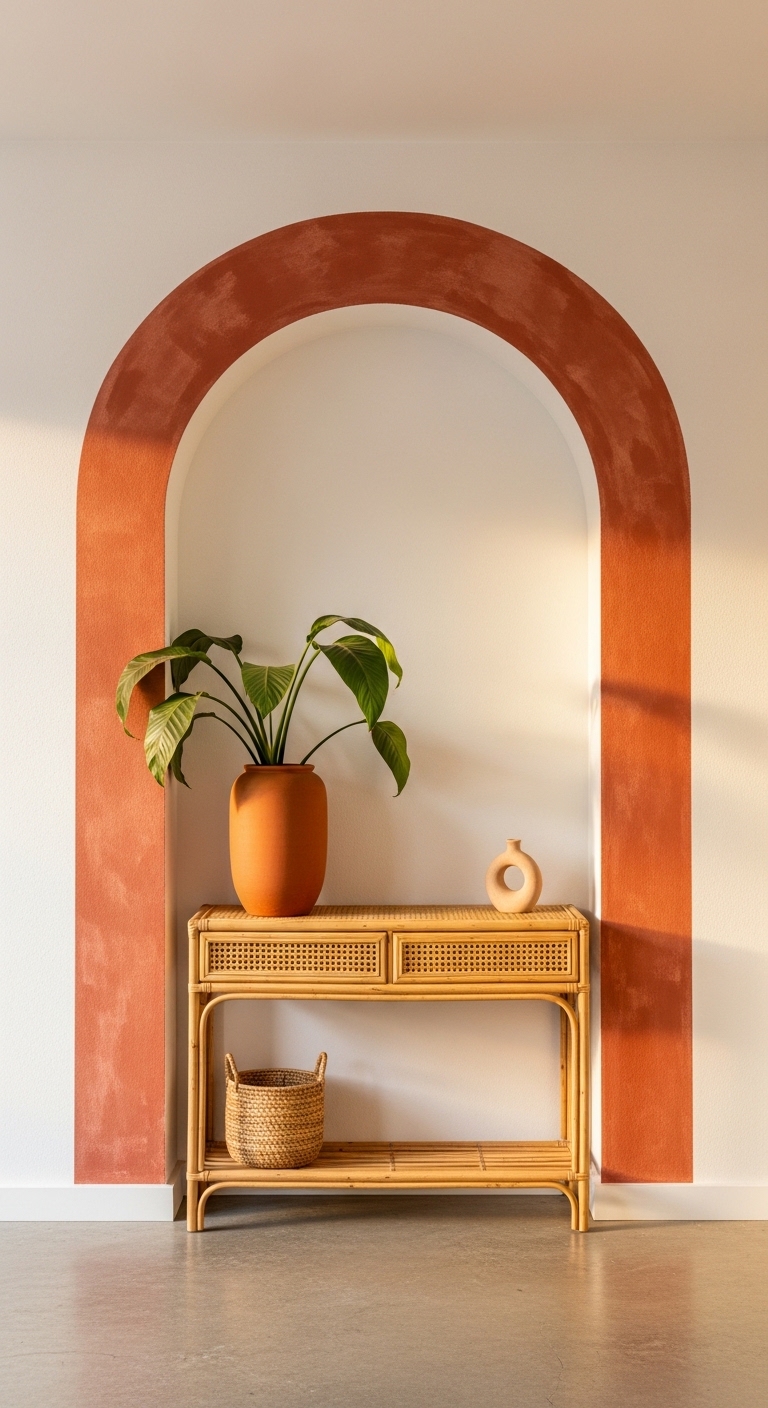
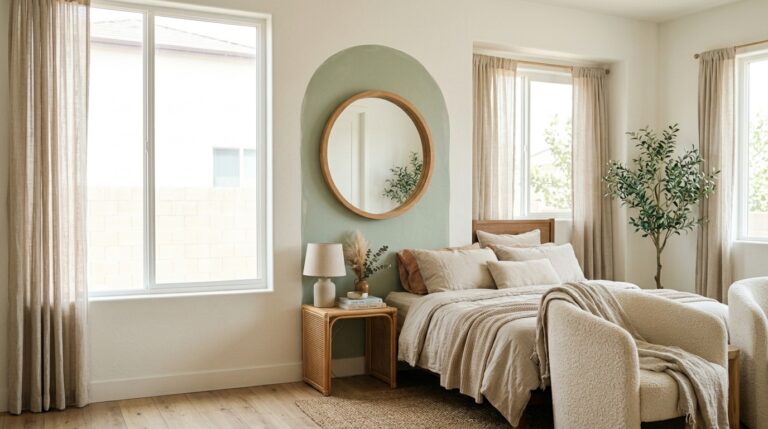
You don’t need to hire a mural artist to paint something genuinely beautiful on your hallway wall. One of the most effective trends in interior design right now is the painted arch — a simple curved or arched shape painted directly on the wall in a contrasting color. It frames a piece of furniture, a light fixture, or just creates a beautiful soft focal point in what would otherwise be a flat, featureless wall.
Use a large piece of string and a pencil to draw your arch freehand — the slight imperfection makes it feel artistic rather than clinical. Or tape a clean geometric half-circle and paint within it. Use a color that connects to the rest of your home’s palette, just taken up or down a notch in saturation.
How to Paint a Perfect Arch Without a Professional
- A dusty rose arch on a cream wall is endlessly popular for good reason — it’s genuinely beautiful
- Terracotta arch on white creates a Mediterranean warmth in seconds
- Use an eggshell or matte finish on the arch to keep it feeling soft
- Place a plant, lamp, or small bench inside the arch to complete the composition
- A half-arch starting at the floor works brilliantly behind a console table
Practical Note: Always prime the arch area first if you’re painting a deep color over white, especially for terracotta and burnt orange shades — they tend to require two to three coats otherwise, and the edge work gets harder with each additional layer.
Macramé or Textile Wall Hanging
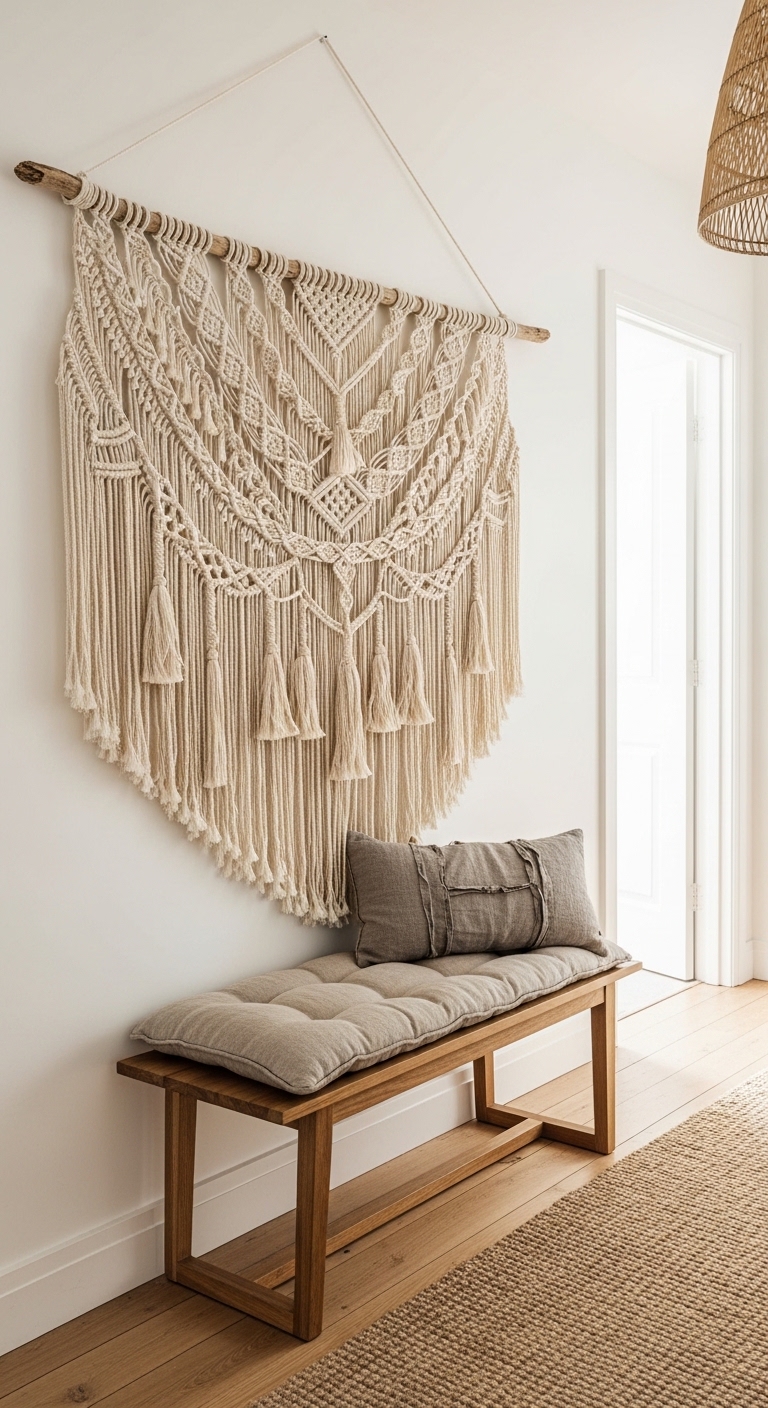
Textile wall hangings bring something that framed art and mirrors simply can’t: texture that you can almost feel from across the room. A well-made macramé piece, a woven tapestry, or a chunky yarn wall hanging adds warmth, softness, and an artisanal handmade quality that instantly makes a hallway feel lived-in and welcoming rather than sterile and transactional.
The scale matters. A small, fussy hanging on a large wall just looks timid. Go for something that fills at least a third to half of your wall height. Natural cotton rope in undyed cream or off-white works in any interior style — it’s warm enough to feel organic, neutral enough to not fight with anything else you have going on.
Choosing the Right Scale and Material
- Large-scale macramé works especially well in bohemian, coastal, and Scandinavian-inspired hallways
- Natural dye macramé in terracotta, rust, or sage adds color without harshness
- Chunky woven tapestries pair beautifully with plaster or limewash walls
- Hang from a driftwood branch instead of a rod for an organic, collected feel
Hooks and Hanging Hats as Decor
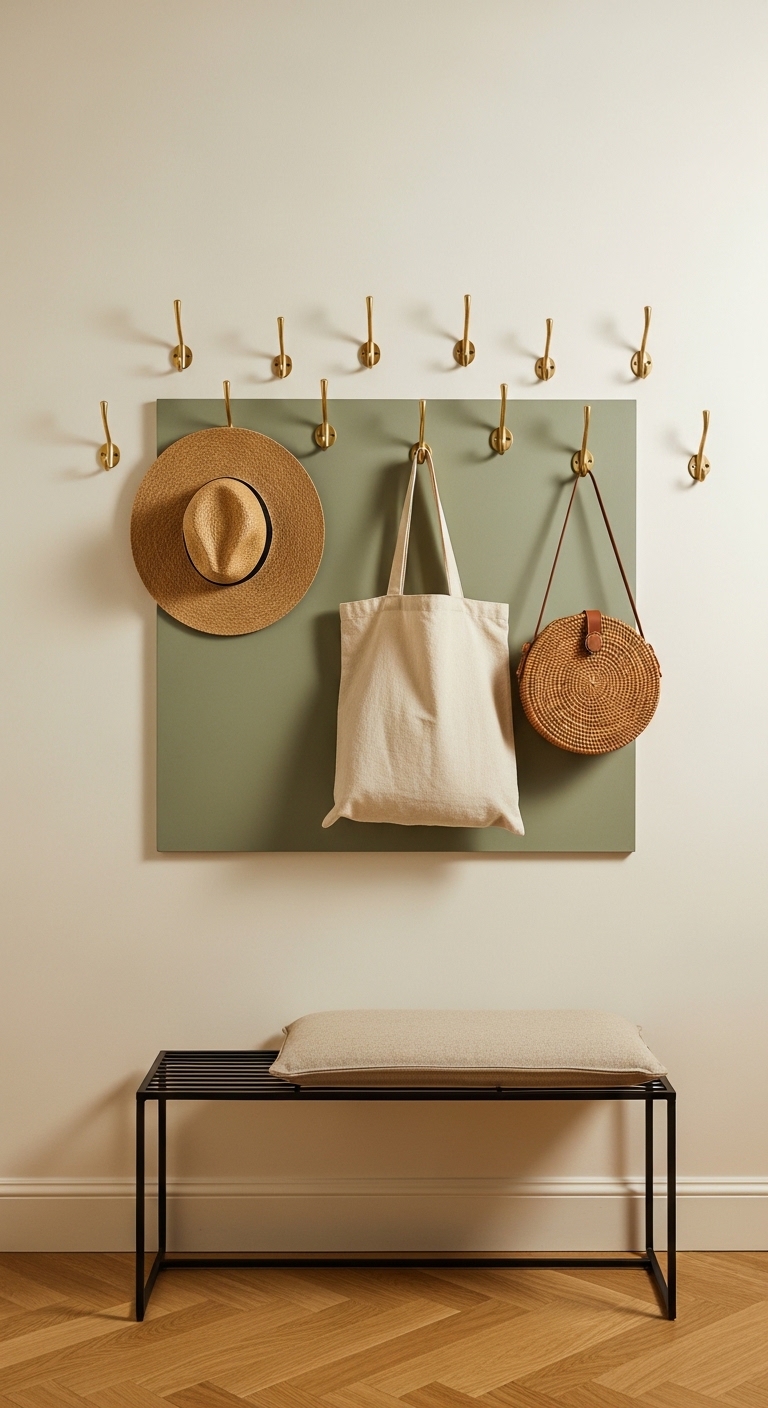
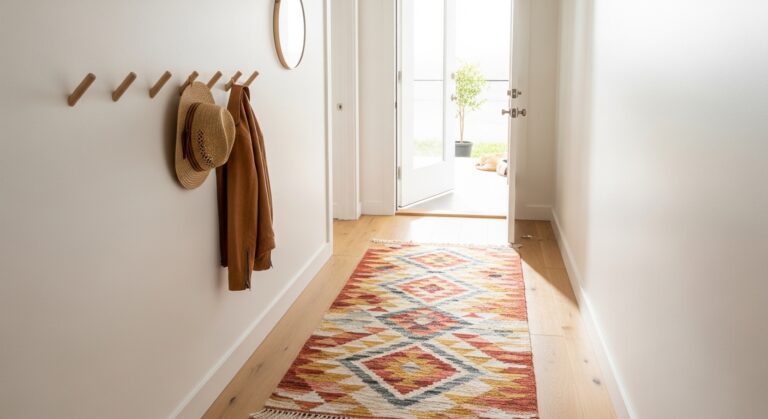
This is one of the most underrated hallway decor moves in existence: treat your functional hooks as part of the design. Instead of installing a boring rack from a hardware store, mount a row of sculptural individual hooks — ceramic knobs, hand-forged iron hooks, brass wall hooks with decorative backplates — and then actually hang things on them that are beautiful as well as useful.
A collection of hats hung in a diagonal line, a few wicker bags, a beautiful canvas tote next to a vintage scarf — these things create a visual story about the people who live in the home. It’s functional, personal, and genuinely decorative all at once. Frame the hooks with a painted panel or a strip of wallpaper behind them to give the arrangement a deliberate setting.
How to Make Functional Hooks Look Beautiful
- Stagger hooks at slightly different heights for a relaxed, collected look
- Vintage wooden Shaker-style peg rails have a clean timeless quality
- Ceramic hooks in matte black or off-white feel contemporary and elevated
- A woven hat or two always adds texture and a sense of easy living
- Back the hook arrangement with a painted arch or rectangular color panel for definition
Black and White Photography Series
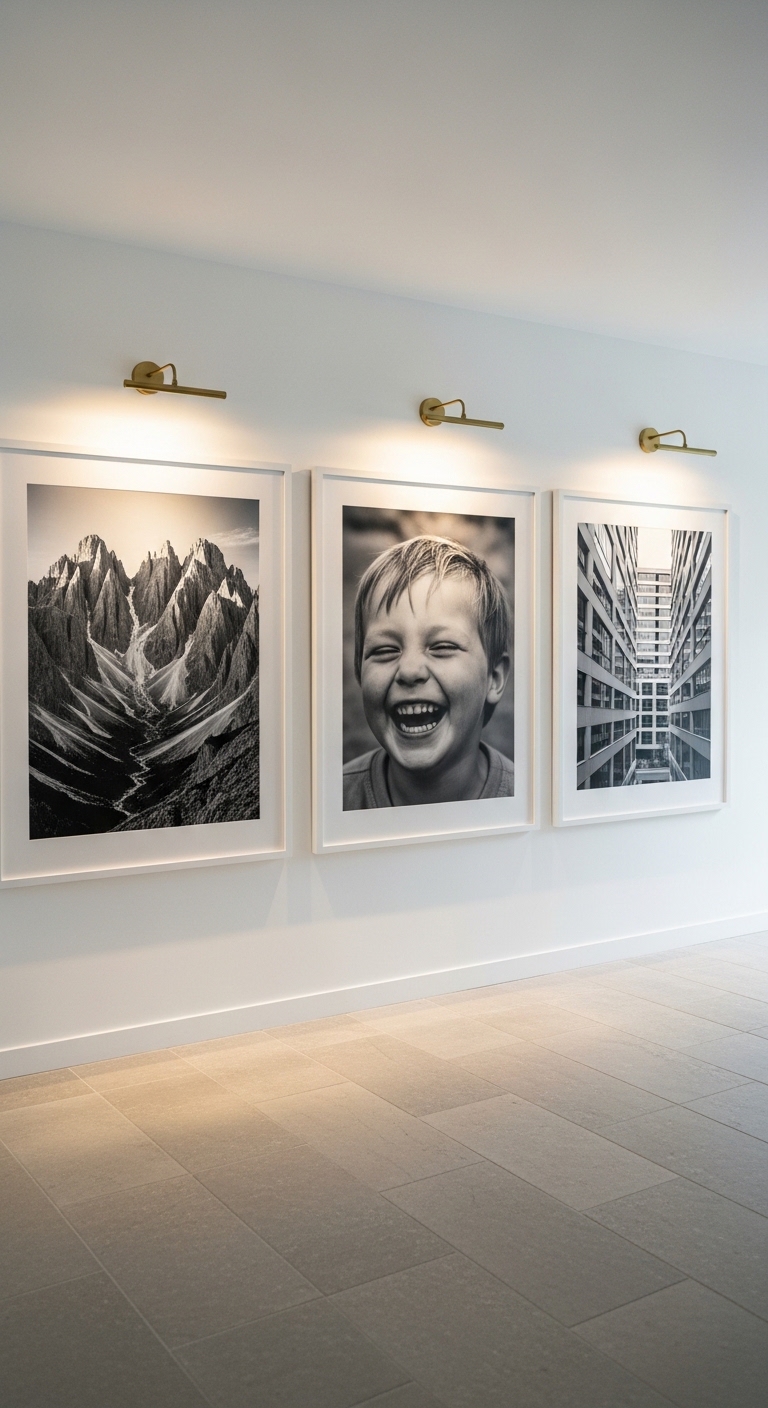
Black and white photography has a way of making the ordinary feel extraordinary. A series of black and white photos — whether travel landscapes, candid family moments, street photography, or abstract architectural shots — creates a cohesive and deeply personal wall display. The monochrome palette means you never have to worry about clashing with your wall color or the rest of your decor. It works with literally everything.
The power is in the curation. Choose photos that share a similar mood or compositional quality, even if the subjects differ. All wide open spaces, or all tight portrait crops, or all images with strong graphic shadows. That visual consistency is what makes the series read as a collection rather than a random assortment.
How to Curate and Print Your Series
- Print photos slightly larger than you think — 8×10 at minimum, 11×14 ideally for wall displays
- Identical white frames with wide white mats create a gallery-quality presentation
- Three horizontal landscape photos in a row read as cinematic and editorial
- Vary the subject (portrait, landscape, detail shot) while keeping the mood consistent
Living Plant Wall or Vertical Garden
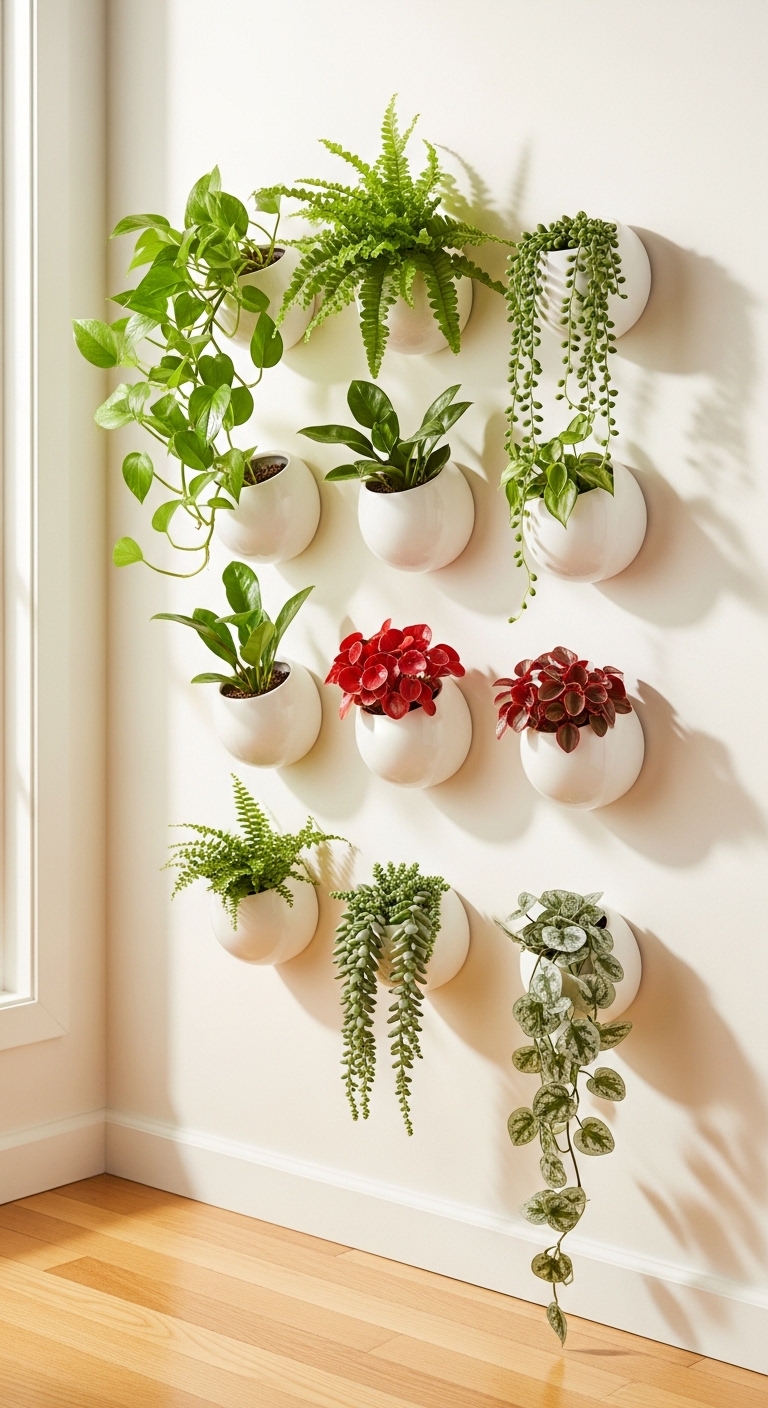
Nothing makes a hallway feel alive quite like actual living things. A small vertical plant arrangement — whether mounted wall planters, a series of hanging pots, or a proper pocket-style plant wall system — brings color, texture, oxygen, and a calming organic energy that no art print can replicate. Even if your hallway has no natural light, there are plenty of low-light plants that thrive in exactly those conditions.
The key to making a plant wall look intentional rather than chaotic is variety within a framework. Use the same style of pot — all white ceramic, all terracotta, all black metal — and vary the plants inside them. Trailing plants like pothos or string of pearls cascade beautifully downward. Compact plants like ferns or peace lilies hold their shape neatly.
Best Plants for a Low Light Hallway
- Golden pothos, heartleaf philodendron, and ZZ plants all thrive in low light hallways
- Wall-mounted terracotta pots in a grid pattern look architectural and beautiful
- Install a small shelf specifically for plants, with a grow light tucked underneath
- Use saucers or closed planters to protect your wall from water damage
- A single large statement plant — a monstera or fiddle-leaf fig — in a corner works just as well
Plant Care Tip: Water your hallway plants with a small squeeze bottle or turkey baster for precision — drips on hardwood or tile can damage the floor finish over time. A silicone mat beneath hanging pots is a simple fix.
Typographic Quote Wall
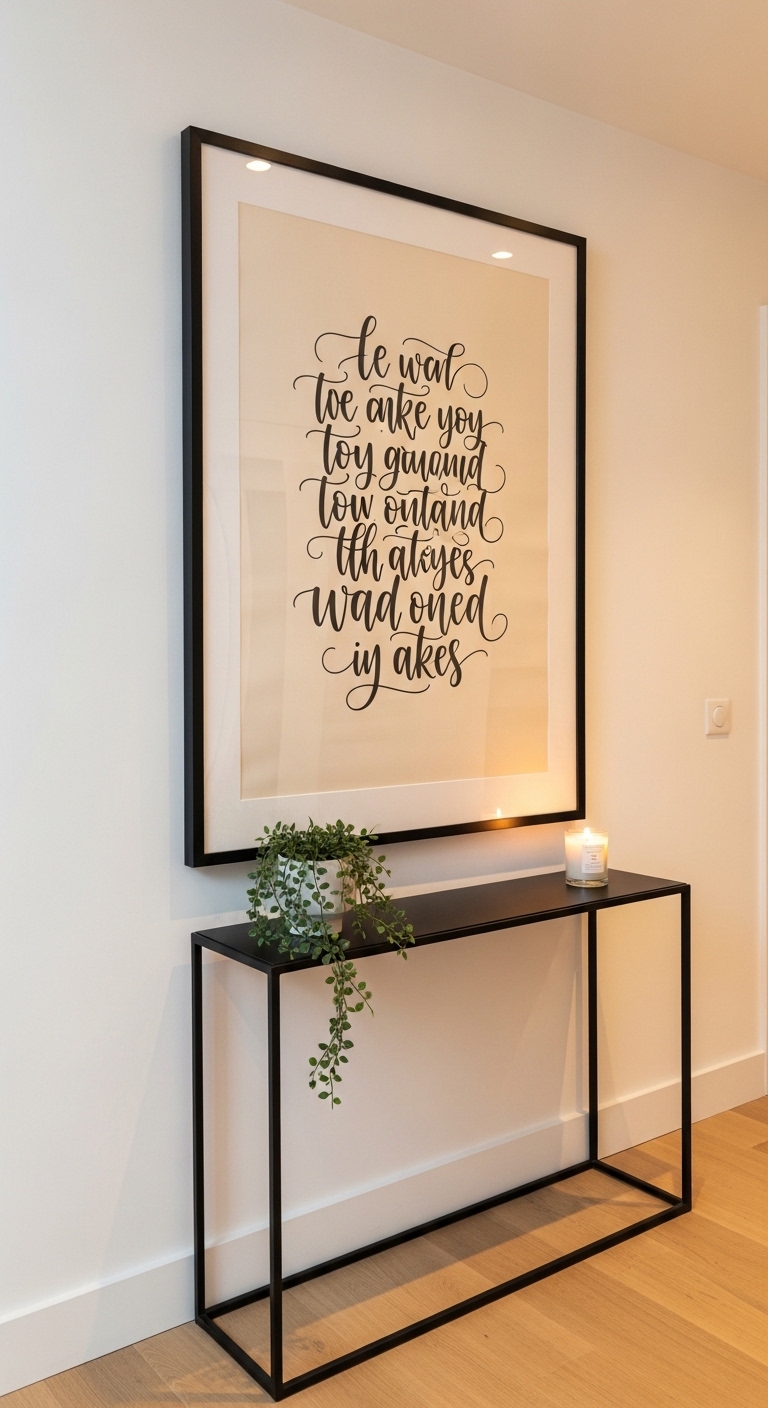
Words have power — especially the right ones, in the right place. A beautifully rendered typographic quote on your hallway wall gives you something meaningful to read each time you walk past. It can be a line from a poem, a family motto, a word in another language, or simply a single word that anchors something important to you. The design of the lettering matters just as much as the words themselves.
Vinyl wall decals are the easiest route — they’re clean, professional, and removable. But a custom hand-lettered piece by a calligrapher has an authenticity and warmth that vinyl can’t replicate. You can also create your own print using a free design tool and print it large at a local print shop for a fraction of what you’d pay in a frame store.
Choosing the Right Words and Lettering Style
- Short punchy words or phrases work better than long sentences in narrow hallways
- A single word in massive font — GATHER, WANDER, HOME — creates instant impact
- Serif calligraphy fonts feel warm and personal; clean sans-serif feels modern and architectural
- Frame the quote inside a simple border or panel for a more finished look
- Match the text color to another accent in the hallway for visual coherence
Color-Drenched Wall with Tonal Art
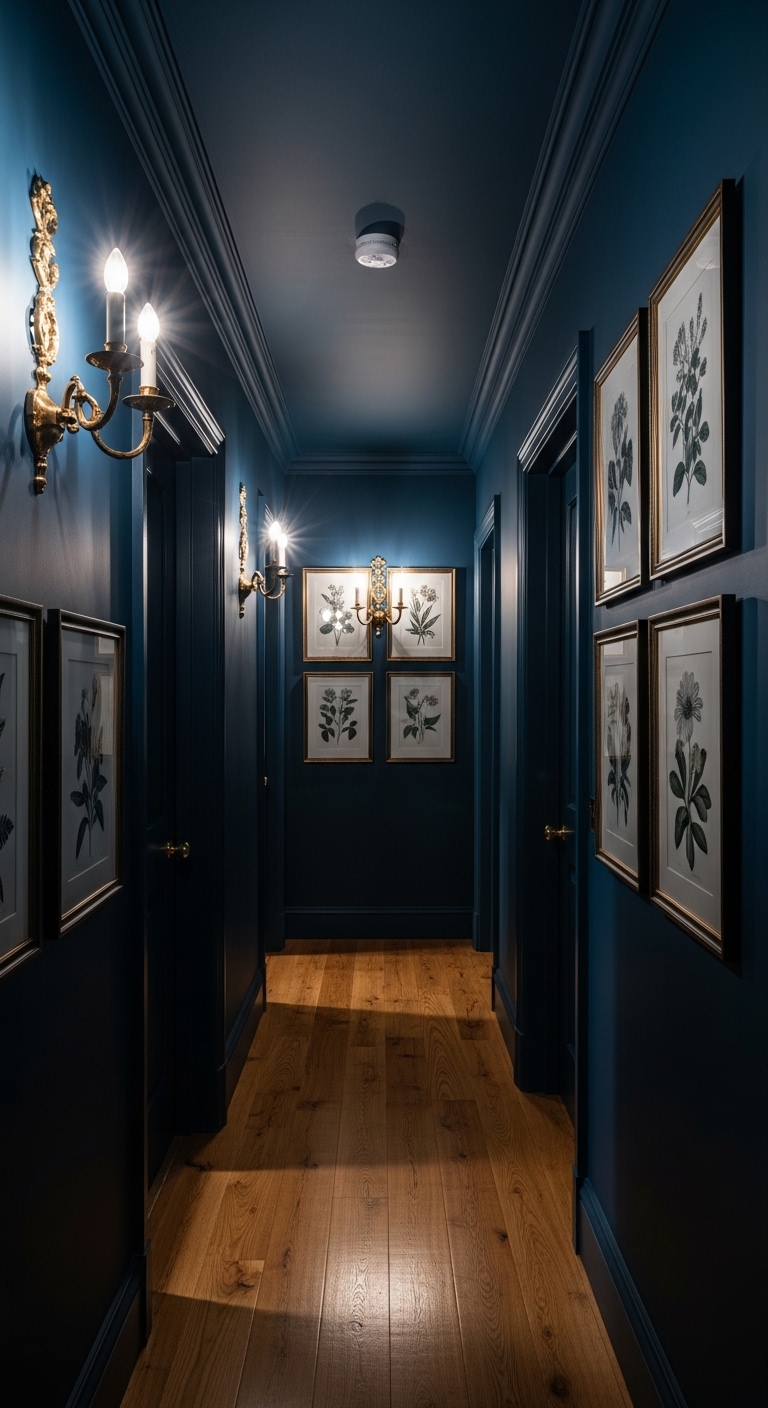
Color-drenching — painting not just the walls but the ceiling, trim, and even the door in the same deep shade — is one of the most transformative things you can do to a hallway. A narrow hallway that feels cramped and awkward in white suddenly feels intentional, cozy, and architecturally interesting when wrapped in a single rich tone. The trick is to go tonal with your art choices, too.
When the walls are a deep color, hang art that shares that color family. Warm terracotta walls call for art in rust, gold, and burnt orange. Deep forest green walls love botanical prints and amber-toned photography. The wall and the art become one layered composition rather than competing elements.
How to Pick the Right Color and Match Your Art
- Deep teal, navy, forest green, and terracotta are all proven hallway colors that age beautifully
- Paint the ceiling the same color — it creates an enveloping, jewel-box effect
- Use high-gloss paint on the ceiling for a lacquered, luxe finish at low cost
- Brass and gold hardware reads magnificently against deep colored walls
- Hang art with light backgrounds (botanical prints, sketches) for maximum contrast
A Curated Family Memory Timeline
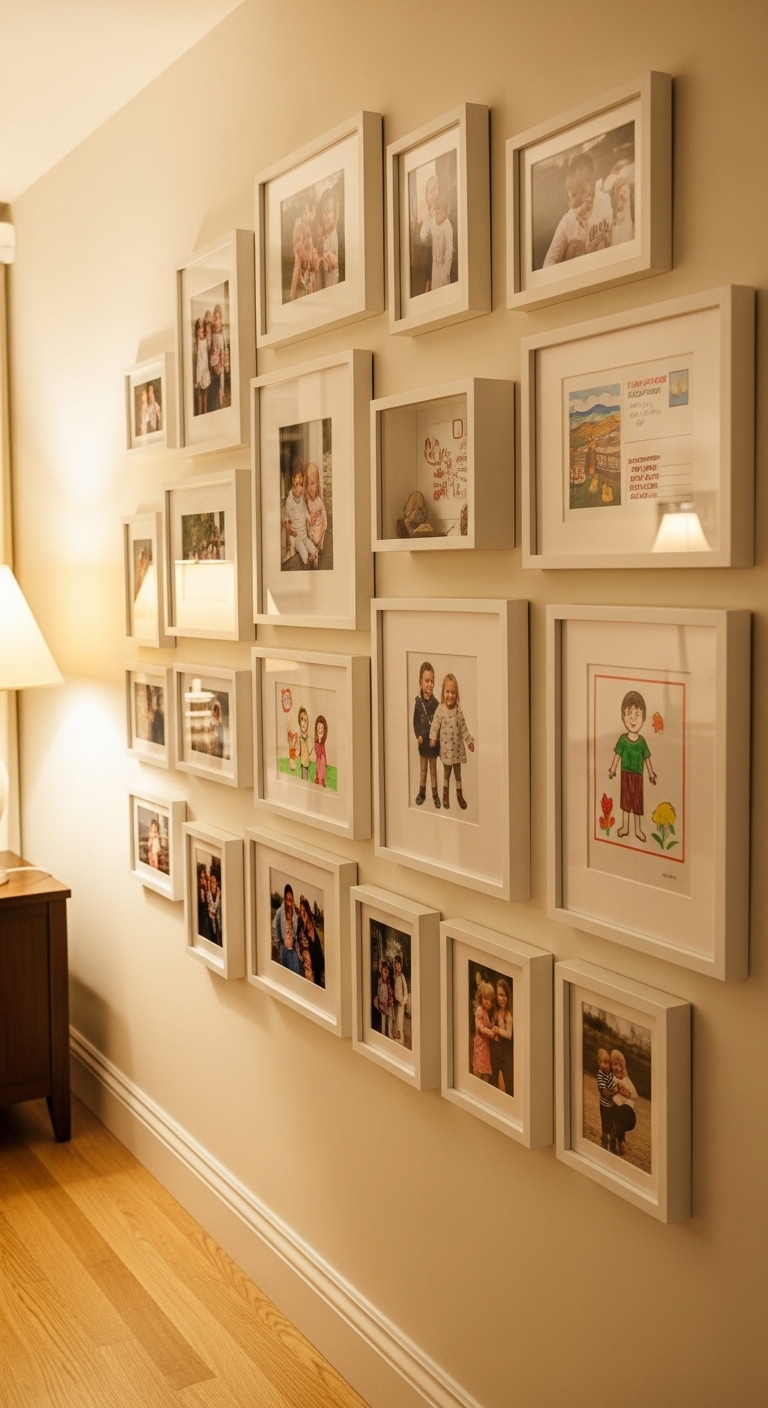
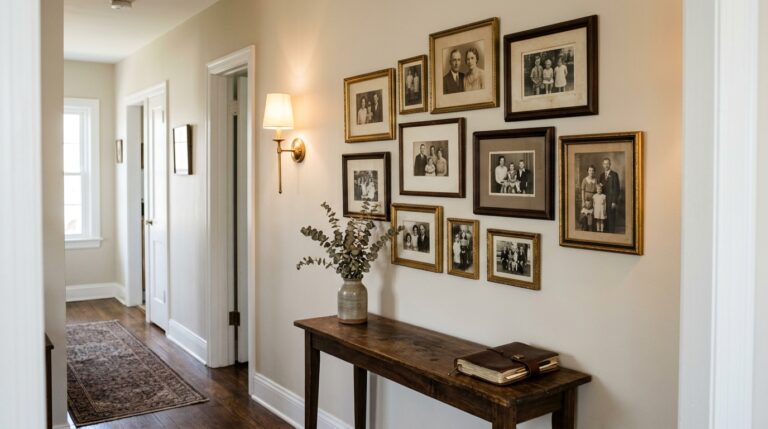
This last idea is the most personal, and often the most powerful. Instead of decorating with art or objects you found in a store, create a timeline of your family’s story along your hallway wall. It doesn’t have to be chronological — it can be thematic, geographical, or just emotionally resonant. Meaningful photos, mementos, postcards, children’s drawings mounted in simple frames, a ticket stub, a pressed flower — all given equal visual weight through consistent framing or display method.
The beauty of this approach is that it grows and evolves with you. Every few months you can add something new, swap something out, or move things around. Your hallway becomes a living document of your life — which is, when you think about it, the most meaningful thing a home can be.
How to Build a Display That Grows With You
- Use identical frames in one finish — all white, all black, or all natural wood — so varied content feels cohesive
- Mix sizes freely when the frames match, from tiny 4×6 prints to large 11×14 photos
- Include one or two 3D elements: a shadow box, a small mounted keepsake
- A low narrow ledge shelf lets you lean frames and swap content without re-hanging
- Arrange loosely — gaps, slight misalignments, and variation in height feel intentionally personal
Final Thoughts
Every single idea on this list is achievable — whether you have two hours or two weekends, a tight budget or room to invest. The hallway is small, but the impact of getting it right is enormous. It’s the space that greets you home every evening and sends you out every morning. It deserves intention, personality, and a little love.
Start with one idea. Just one. Hang the gallery wall, paint the arch, lean the mirror. Live with it for a week. Once you see what one good design decision does to that overlooked corridor, you’ll wonder why you waited so long to start.