These 15 Outdoor Kitchen Decor Ideas Are Perfect for Summer Hosting
Have you ever walked into someone’s backyard and thought, “I could live out here”? That feeling doesn’t happen by accident. It’s the result of smart, intentional outdoor kitchen decor — the kind that turns a simple cooking space into a full sensory experience. If you’ve been scrolling through the same recycled Pinterest boards seeing pergolas, stainless steel grills, and string lights over and over again, you’re in the right place. We’re skipping all of that today.
This blog covers 15 genuinely fresh outdoor kitchen decor ideas — ideas your neighbors haven’t tried yet, ideas your designer friends will ask you about, and ideas that work in real backyards with real budgets. Whether you’re starting from scratch or refreshing what you already have, something here will spark exactly what you’ve been looking for.
Build a Spice Wall That Doubles as Living Art
Most outdoor kitchens treat storage as an afterthought. You end up with a plastic bin of seasonings sitting on the counter, looking sad and out of place. Flip that entirely by turning one wall of your outdoor kitchen into a living spice display.
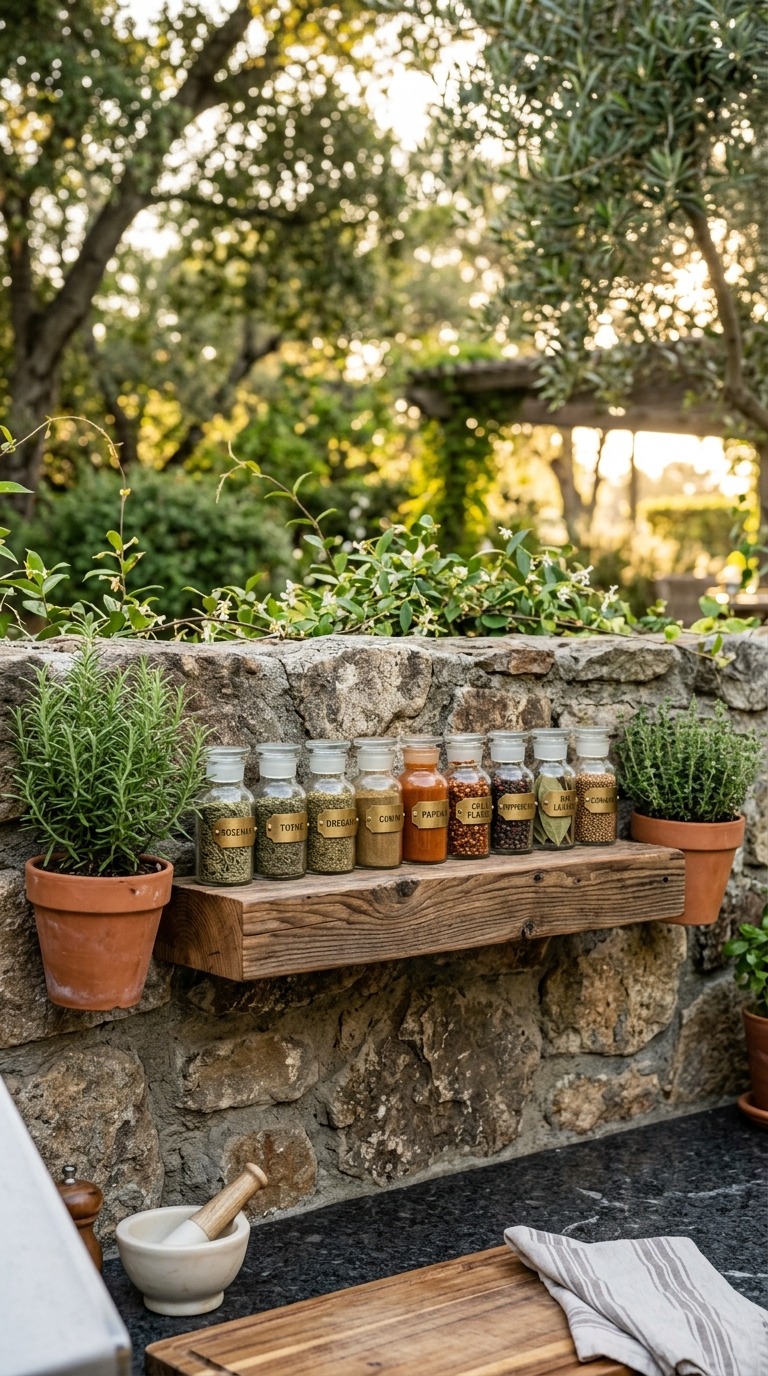
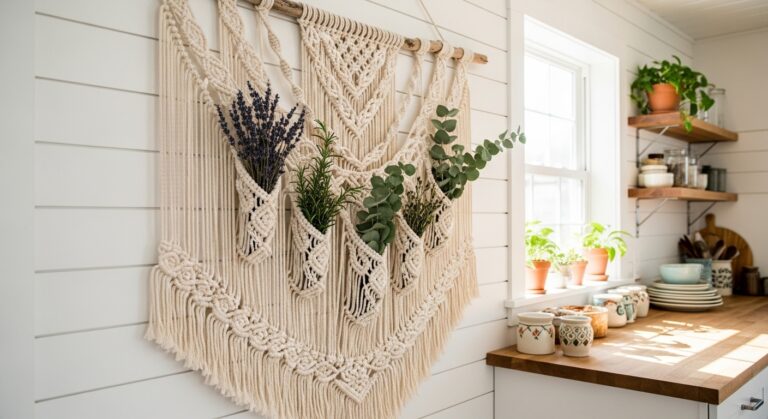
Install a series of narrow cedar floating shelves at eye level and fill them with matching glass apothecary jars, each holding a different spice or dried herb. Label them with small brass tags. In between the shelves, mount two or three small terracotta wall planters growing fresh rosemary, thyme, and oregano directly on the structure.
Here’s why this works so well:
- It keeps your spices accessible without cluttering counter space
- The green of the living herbs against the warm cedar creates a natural, magazine-worthy backdrop
- Every guest who walks into your outdoor kitchen immediately understands this is a space where serious cooking happens
- It tells a story about you as a cook without you saying a single word
The secret to making this look intentional rather than cluttered is consistency. Stick to one jar style, one label font, and no more than three plant species. Restraint is what makes this idea pop.
Use Zellige Tile as a Statement Backsplash
Everyone’s seen subway tile backsplashes. They’re fine. But if you want your outdoor kitchen to feel genuinely one-of-a-kind, zellige tile is the upgrade you didn’t know you needed.
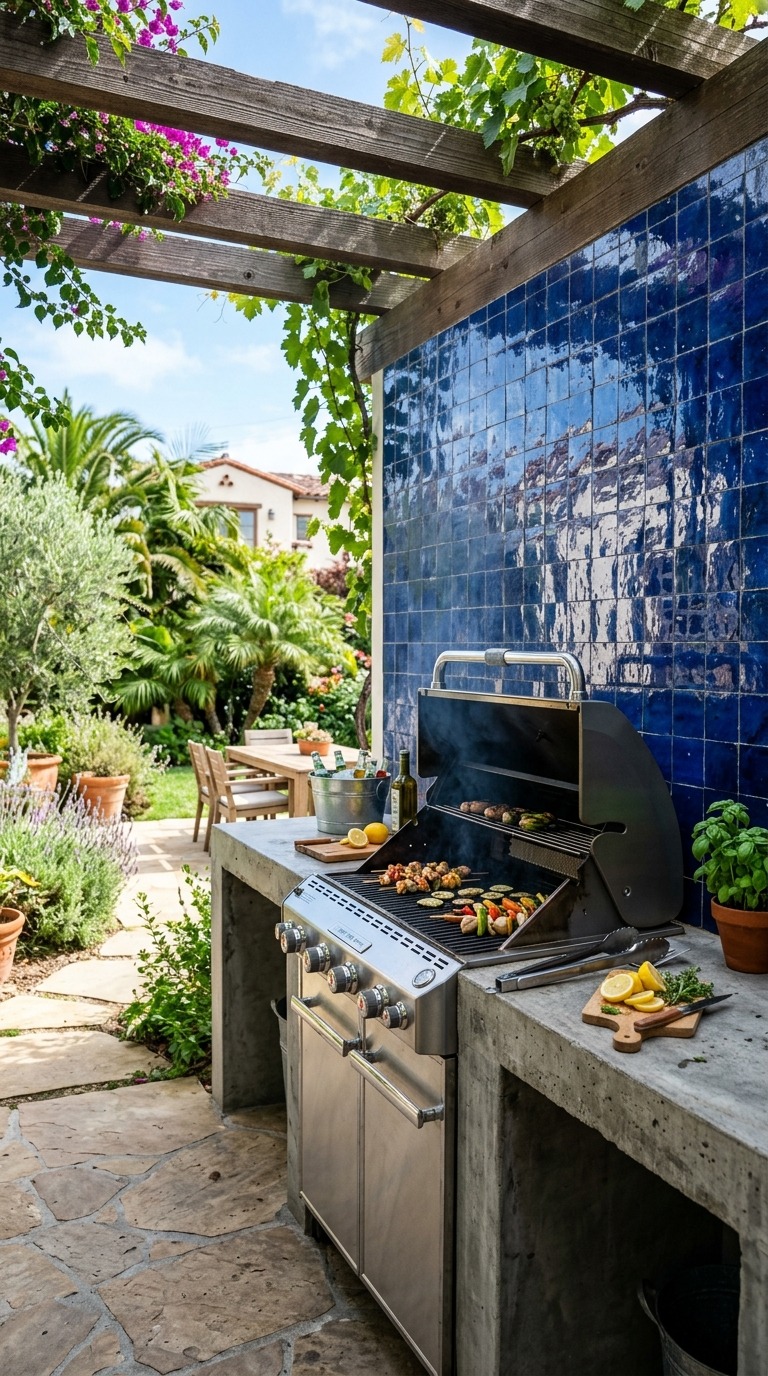
Zellige is a hand-crafted Moroccan clay tile with an intentionally irregular, slightly uneven surface. Each tile catches light differently. The result is a backsplash that looks like it was pulled from a five-star boutique hotel in Marrakesh — because it was inspired by exactly that.
Choose a deep terracotta, sage green, or rich cobalt color. The slight variation in each tile’s glaze means your backsplash looks different at noon versus sunset. It genuinely changes throughout the day, which makes your outdoor space feel dynamic and alive in a way a flat tile simply never can.
Pair the zellige backsplash with a simple concrete countertop and bare stainless appliances. Let the tile be the hero and let everything else play a supporting role. This contrast is the design principle behind some of the most beautiful restaurant interiors in the country.
Create a Dedicated Cocktail Station With a Copper Sink
Here’s a truth most outdoor kitchen blogs won’t tell you: your guests spend more time at the drink station than the grill. So why does the grill get all the design attention?
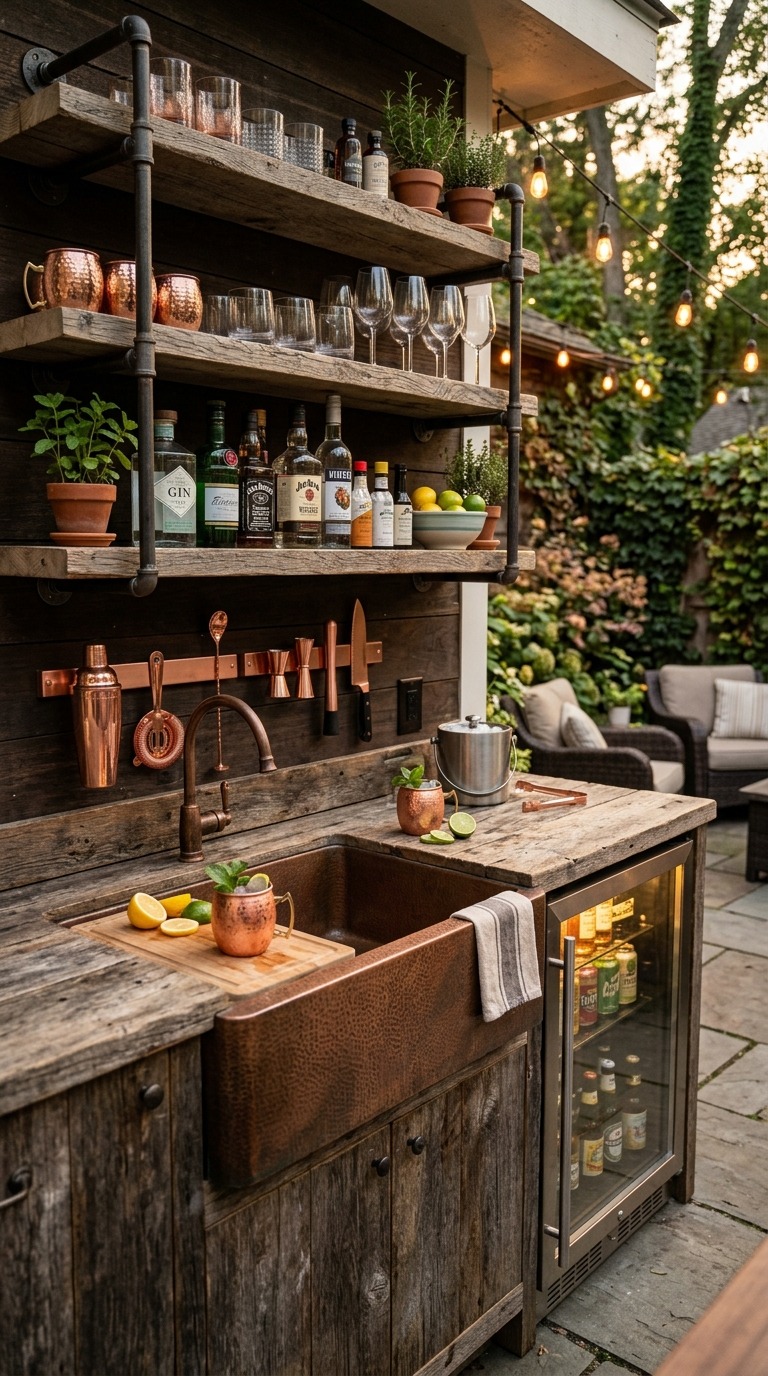
Build a dedicated cocktail and beverage corner completely separate from the cooking zone. The centerpiece should be a copper farmhouse-style sink. Copper naturally develops a gorgeous patina over time outdoors, meaning it literally gets more beautiful as it ages.
Around the sink, add:
- A small under-counter bar fridge with a glass door so everyone can see the drinks
- Open shelving above made from iron pipe and weathered oak boards
- A magnetic strip on the wall holding bar tools like a jigger, muddler, and bar spoon
- A small recessed ice well cut directly into the countertop
This setup does something brilliant — it keeps guests gathered in one spot while the cook works undistracted at the grill. Party flow improves dramatically when you give people their own destination within the outdoor kitchen.
Hang an Outdoor Chandelier Directly Above Your Kitchen Island
Most people never look up when they design an outdoor kitchen. That’s exactly why this idea works so well — because when you hang a real chandelier directly above your outdoor kitchen island or prep counter, it stops every single person who walks into that space cold.
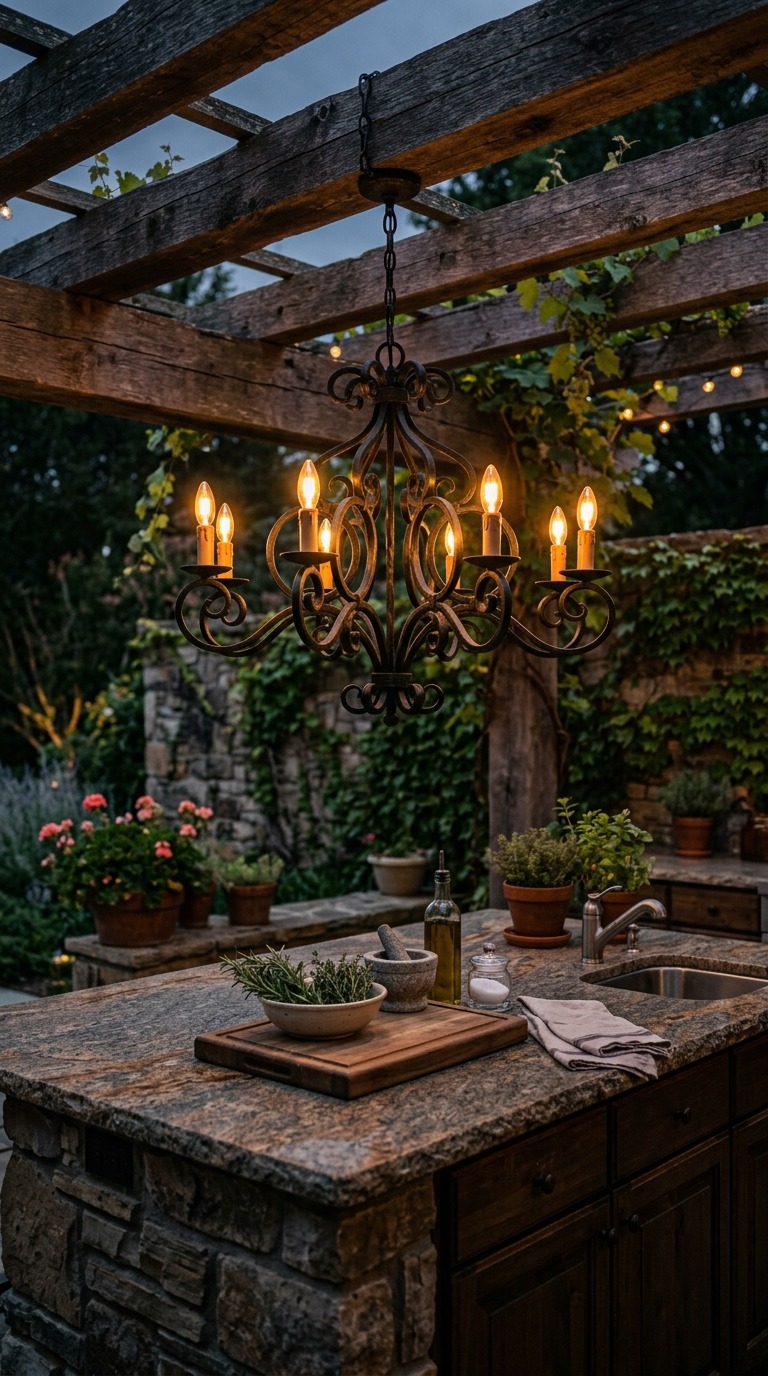
An outdoor chandelier positioned over your kitchen island does something no under-counter light strip or patio lantern can do. It draws the eye upward, it defines the kitchen zone as its own architectural space, and it adds a layer of drama and intentionality that makes your outdoor kitchen look genuinely designed rather than assembled.
The key is choosing the right fixture for the right mood:
- A black wrought iron chandelier with candelabra-style bulbs gives your island a moody, old-world kitchen feel — like a farmhouse kitchen pulled straight outdoors
- A woven rattan or bamboo pendant chandelier creates a relaxed, organic energy that pairs beautifully with natural stone countertops and wood cabinetry
- A lantern-style cluster chandelier in weathered bronze works perfectly over a longer island where you want light distributed across the full prep surface
Always choose a fixture rated for damp or wet outdoor environments. Hang it from a pergola beam, a custom-built overhead frame, or a solid ceiling joist inside a covered kitchen structure. The ideal hanging height above your countertop is 36 to 40 inches — low enough to feel intimate, high enough to never obstruct your workspace.
The result is a kitchen that looks intentional, layered, and quietly luxurious from every angle.
Frame Your Outdoor Kitchen With an Arbor Covered in Climbing Vines
A lot of outdoor kitchens feel like they were dropped into a backyard rather than growing out of it naturally. The fix is vertical greenery that connects your cooking structure to the surrounding landscape.
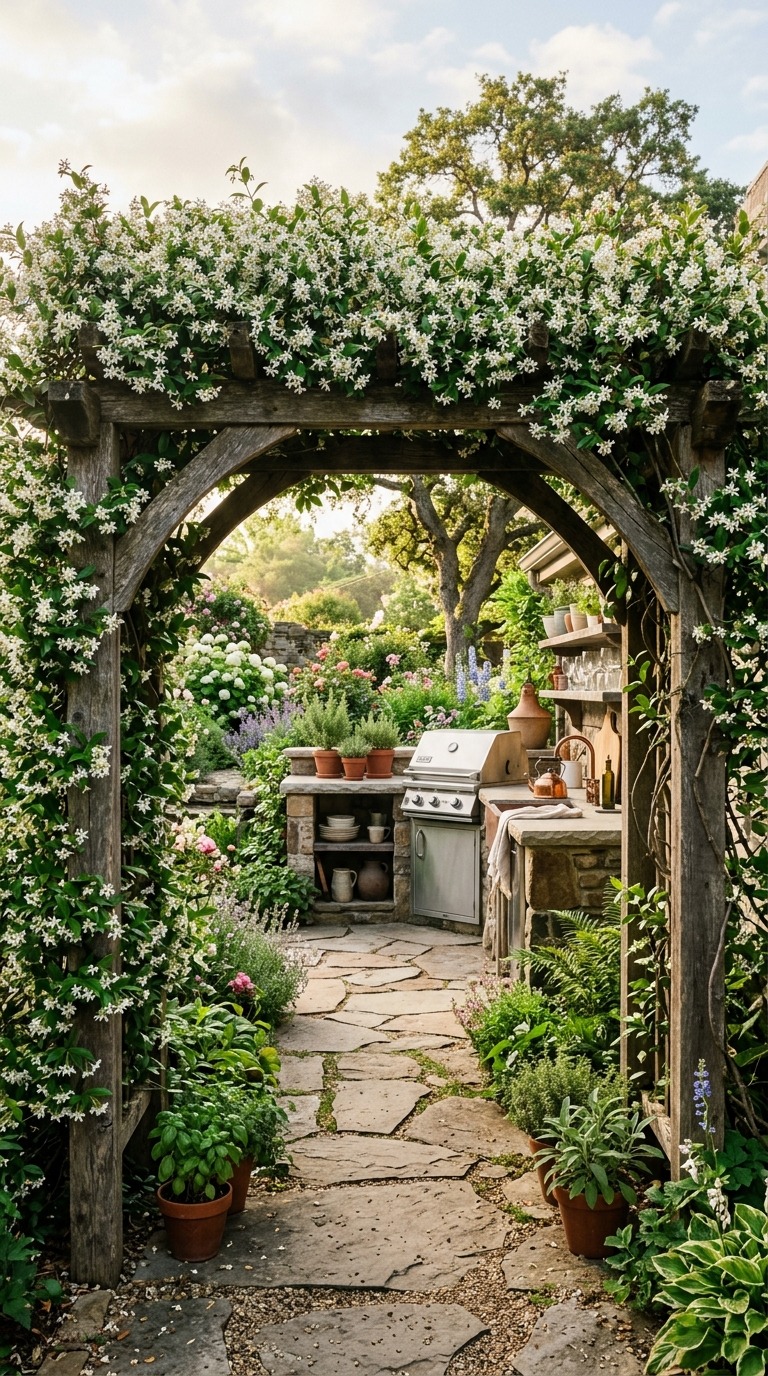
Build or install a simple wooden arbor or archway at the entrance point of your outdoor kitchen. Plant climbing varieties like star jasmine, wisteria, or climbing roses at the base on both sides. Within one growing season, the arbor begins to fill in. Within two, it looks like it’s been there for decades.
What this does for your outdoor kitchen decor:
- It creates a natural transition from open yard to kitchen space, making the area feel intentional and designed
- The fragrance from jasmine or rose while you cook is genuinely one of the most pleasant sensory experiences imaginable
- It provides soft dappled shade in summer without blocking airflow
- It photographs beautifully in every season, including when the vine is dormant and shows its sculptural branch structure in winter
This idea costs almost nothing beyond time and patience, which makes the payoff feel especially rewarding.
Add a Chalkboard Menu Wall
This idea comes straight from the restaurant industry, and it works just as beautifully at home. Designate one wall panel or a large framed section of your outdoor kitchen as a chalkboard surface using exterior-grade chalkboard paint.
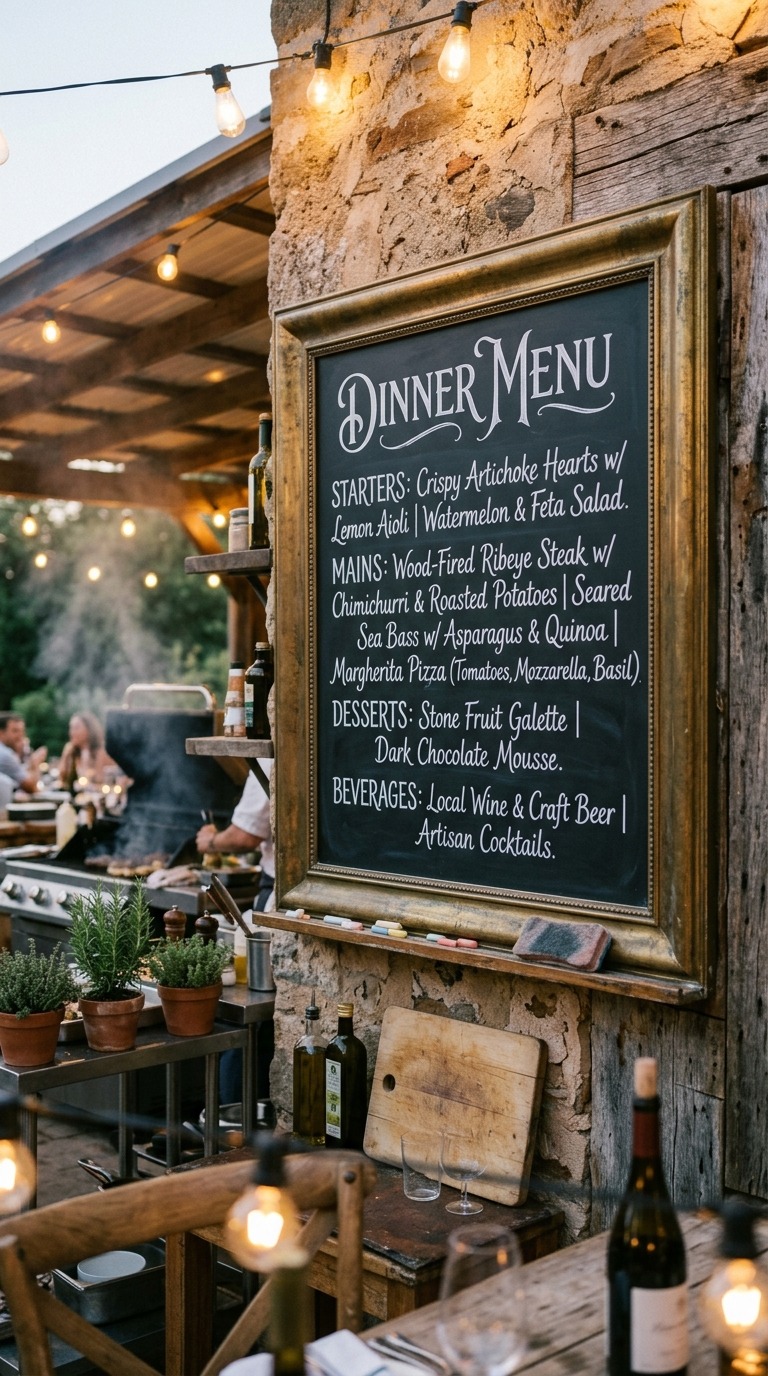
Before every gathering, write your menu on it. Saturday afternoon cookout? List your smoked brisket, grilled corn, and summer coleslaw in neat chalk lettering. Hosting a birthday dinner? Write a full three-course menu complete with a signature cocktail name.
Here’s what nobody tells you about this idea: it changes the energy of your gatherings completely. When guests walk into your outdoor kitchen and see a handwritten menu on the wall, they immediately feel like they’ve arrived somewhere special. It sets expectations, creates anticipation, and gives the evening a sense of occasion.
Between gatherings, use the board for grocery lists, cooking notes, or motivational food quotes. A narrow chalk ledge below keeps chalk and an eraser handy. A brushed brass frame around the board elevates it from craft project to design feature.
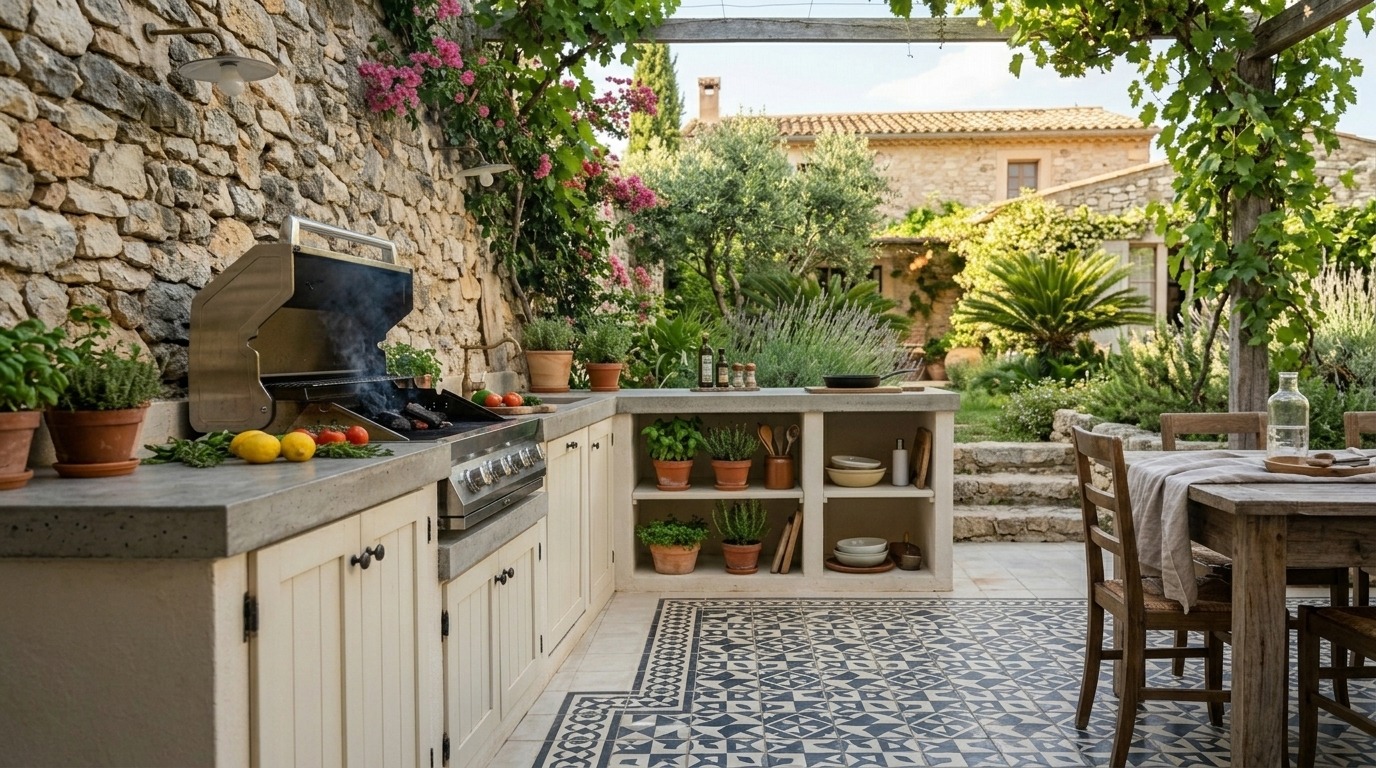
Lay Encaustic Cement Floor Tiles in the Cooking Zone
The floor is the most underdecorated surface in almost every outdoor kitchen we’ve ever seen. Most people pour a plain concrete pad, call it done, and move on. You can do so much better.
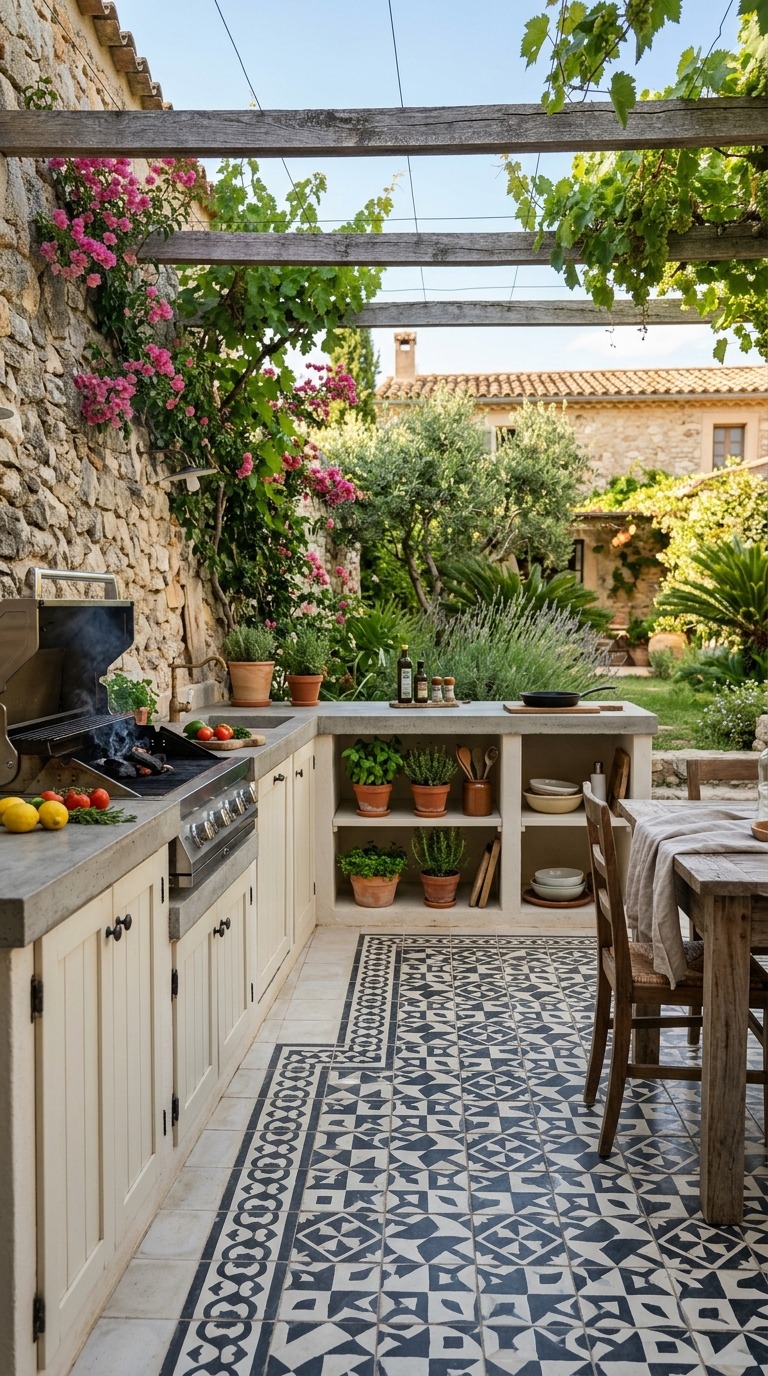
Encaustic cement tiles are handmade tiles with intricate geometric or floral patterns pressed directly into colored cement. They’re used throughout Spanish colonial homes, Moroccan riads, and some of the most beautiful boutique hotels in Mexico and the American Southwest. They are fully outdoor-appropriate and get more beautiful with age as they develop a natural patina.
Install them in just the cooking and prep zone — you don’t need to cover the entire patio, just the defined kitchen footprint. Use a bold black and white geometric pattern for a modern look, or go with terracotta and cream florals for a Mediterranean aesthetic.
The contrast of a patterned cement tile floor against simple cabinetry and countertops creates the kind of layered, curated look that most people assume requires an interior designer.
Hang Vintage Cast Iron Cookware as Wall Decor
Your cookware shouldn’t live in a drawer. If you cook outdoors regularly and you own cast iron pans, hanging them on your outdoor kitchen wall is one of the most character-rich decor moves you can make.
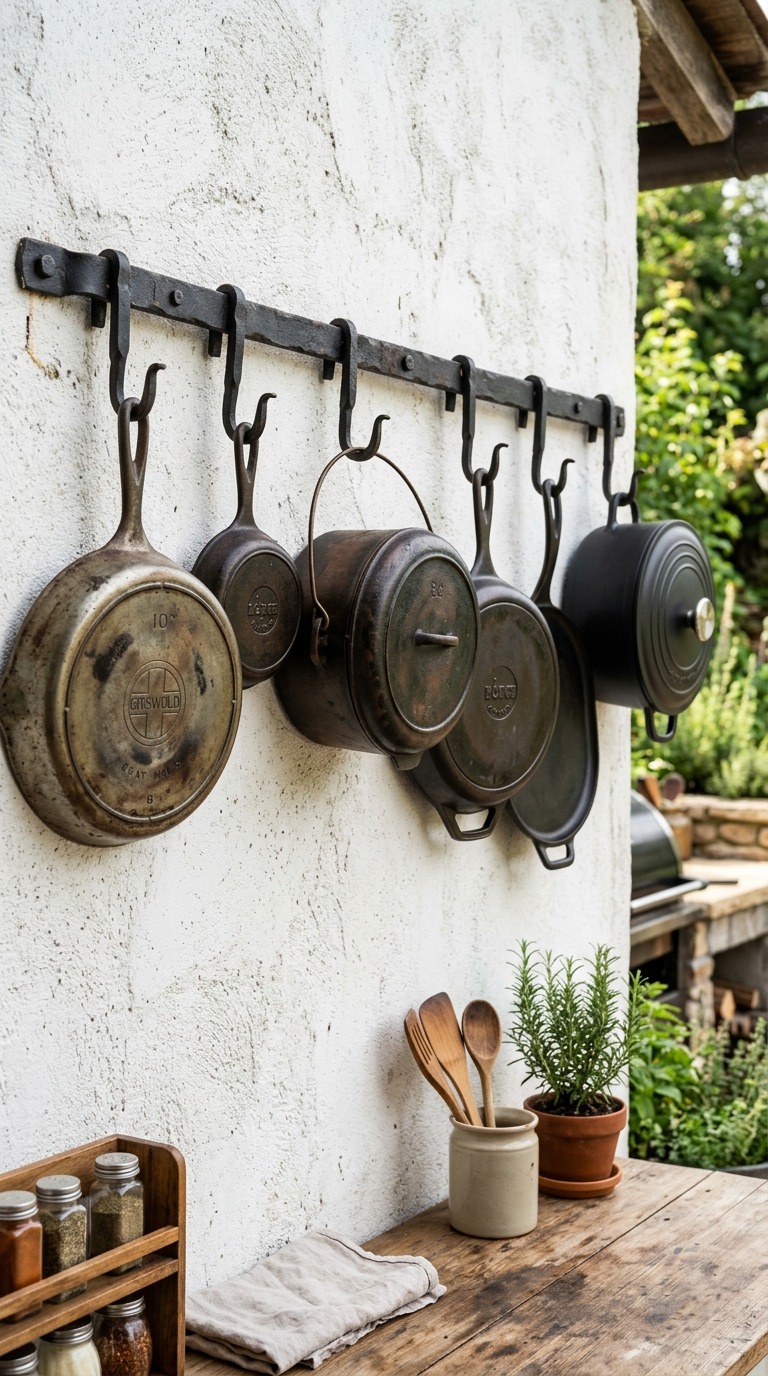
Install a black iron pot rack or a series of heavy-duty wall hooks on one exterior wall panel. Hang your cast iron skillets, dutch ovens, and grill pans at varying heights. The dark iron against a light stucco or wood-paneled wall creates a bold, visual rhythm that tells your guests everything they need to know: a serious cook lives here.
If you want to take this further, mix in a few vintage cast iron pieces — the kind you find at estate sales and antique markets. Older pieces often have beautifully ornate handles and a depth of seasoning color that newer cookware simply can’t replicate. They become conversation starters while functioning as genuine wall art.
The practical bonus? Your cast iron is right where you need it, dries faster in open air, and the iron actually benefits from hanging exposure rather than being stacked and scratched in a cabinet.
Create a Herb Garden Island With Built-In Planter Boxes
Rather than buying herbs from the grocery store, what if your kitchen island literally grew them? This idea integrates planter boxes directly into your outdoor kitchen island structure.
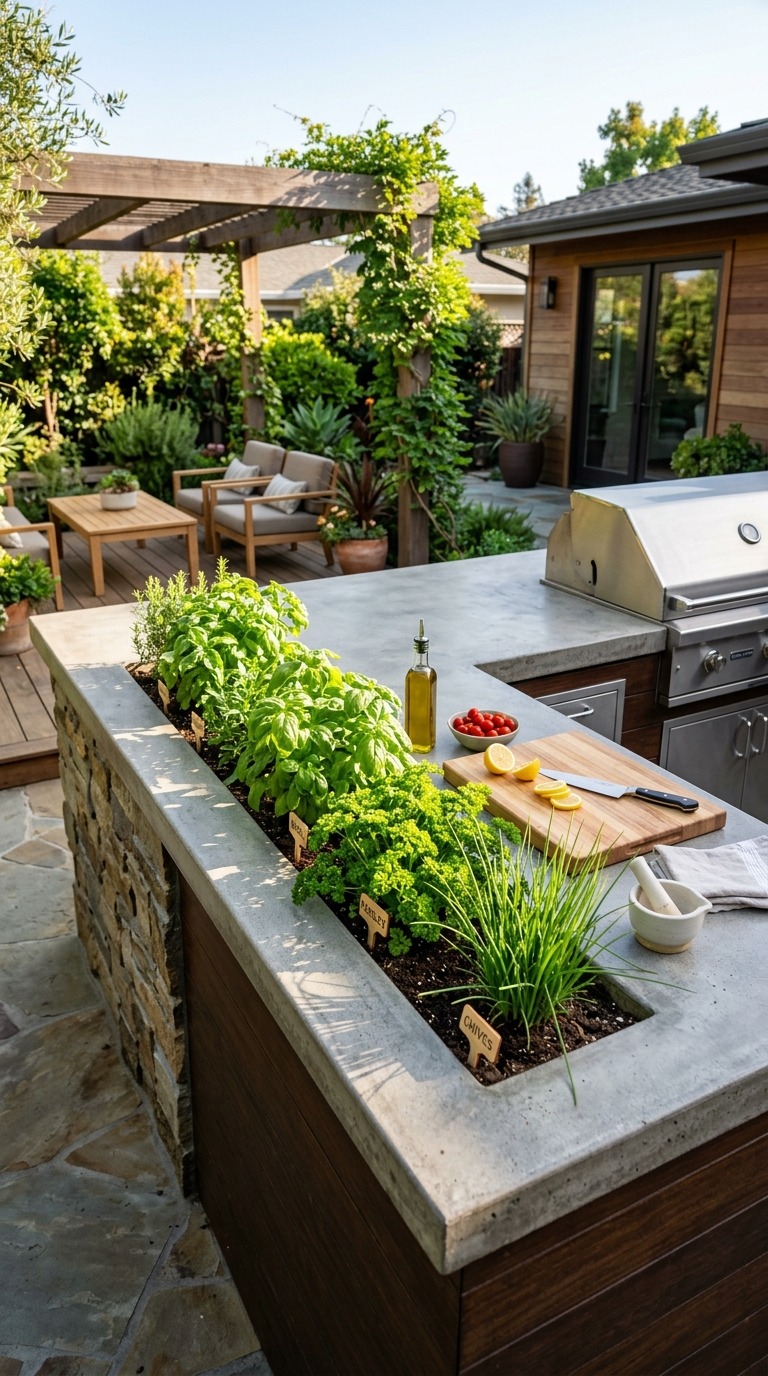
Build or commission an island that incorporates two or three recessed planter boxes at counter height on the non-cooking side. Fill them with culinary herbs: basil, cilantro, mint, flat-leaf parsley, and chives. The herbs sit at the perfect height for reaching over and snipping a handful while you cook.
The visual effect is striking. A kitchen island that grows its own ingredients signals a level of intention and care that resonates with every guest who sees it. It also subtly encourages everyone present to cook more adventurously — when fresh herbs are literally at your fingertips, you use them.
Practical tips for making this work well:
- Line the planter boxes with cedar or composite material so moisture doesn’t degrade the island structure
- Install a small drip irrigation line so watering is effortless
- Rotate seasonal herbs — basil in summer, sage and rosemary in fall
- Choose a planter depth of at least 10 inches to give root systems room to thrive
Use an Antique Door as a Privacy Screen
This is one of the most creative and budget-friendly outdoor kitchen decor ideas that almost nobody is talking about. Find an old salvaged wooden door — the taller and more ornate the better — and repurpose it as a decorative privacy screen or room divider at the edge of your outdoor kitchen.
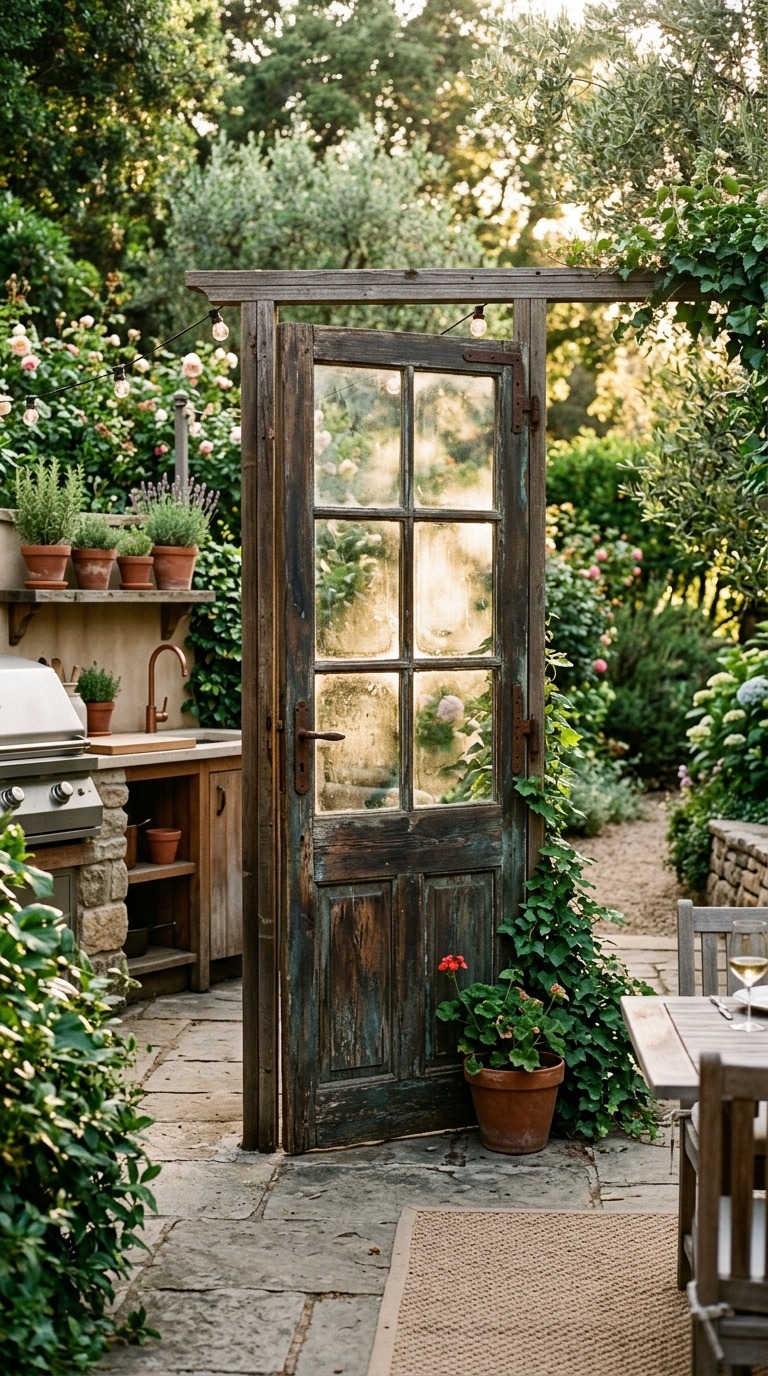
A single antique door propped against a fence or mounted on a simple bracket immediately creates a sense of enclosure and intimacy. It suggests a boundary without building a wall. Lean two or three doors at slight angles to create a more substantial screen, or hang them from a simple overhead frame.
Where to source them: Habitat for Humanity ReStores, architectural salvage yards, and Facebook Marketplace consistently have old doors in beautiful condition for under fifty dollars each. Sand lightly, apply a clear exterior sealant, and you’re done.
The most stunning version of this idea uses a door with original glass panes still intact. Light comes through the glass differently throughout the day, casting ever-changing shadows and patterns across your kitchen floor.
Install a Dramatic Range Hood as a Sculptural Focal Point
Inside kitchens, the range hood is often the single most impactful design element in the entire room. Outdoors, almost no one thinks to apply this logic. That’s your opportunity.
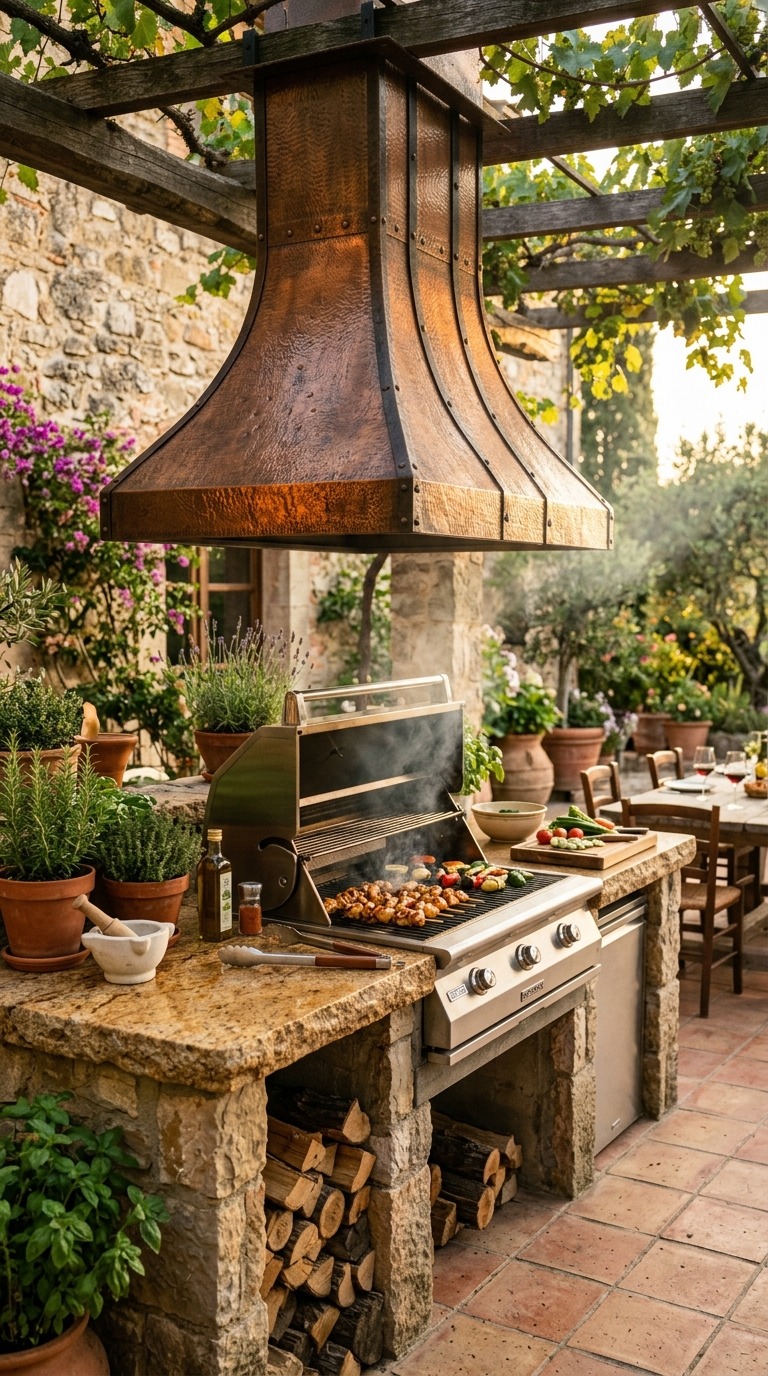
A custom fabricated range hood — shaped from blackened steel, hand-hammered copper, or rough-hewn stone — does two things simultaneously: it ventilates your cooking zone properly and it gives your outdoor kitchen an unmistakable focal point that anchors the entire design.
A bell-shaped copper hood above a built-in grill carries the energy of a professional kitchen. A flat blackened steel hood with exposed rivets delivers industrial drama. A plastered stone arch hood creates a Tuscan farmhouse feeling that no other single element can replicate.
The beauty of this idea is the range hood’s scale. It’s large enough to be seen from across the yard, which means it shapes the visual identity of the entire space from a distance. Even guests who don’t cook will notice it and comment on it.
Lay a Weather-Resistant Outdoor Rug to Define Zones
One of the most transformative and underused tools in outdoor kitchen decor is the outdoor rug. Not a small accent rug — a full-sized, room-defining rug that establishes your kitchen and dining area as a distinct room within the larger backyard.
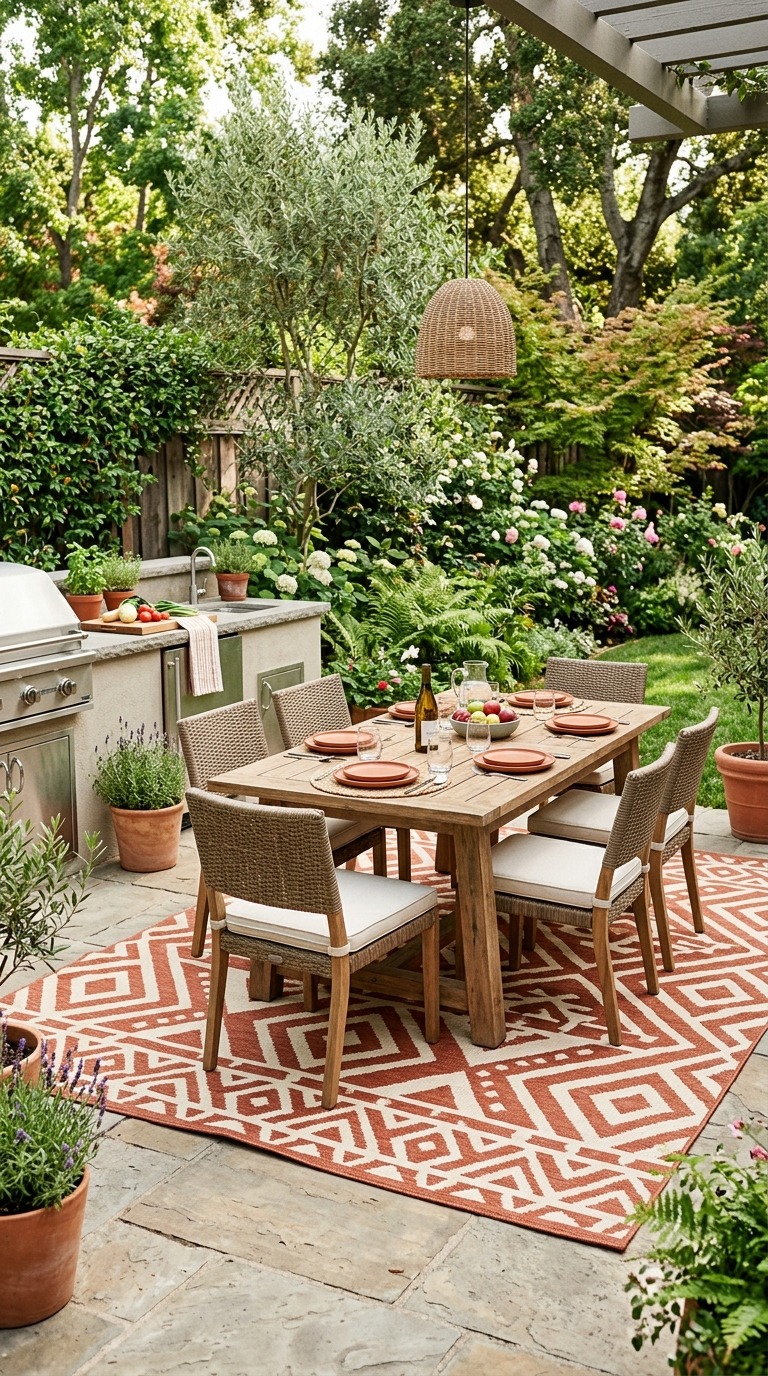
A large outdoor rug (think 8×10 feet or larger) placed beneath your dining table and extending under the first two feet of the kitchen island creates instant visual cohesion. It tells your eye where the “room” begins and ends. Outdoor spaces without a rug often feel disconnected and loosely organized. With one rug, the space clicks into focus.
Choose a flat-weave polypropylene rug in a bold geometric pattern — Moroccan-inspired diamonds, oversized Greek key borders, or bold stripes all work beautifully outdoors. These hold up to weather, foot traffic, and regular hosing down without losing their color or structure.
Layer a smaller, contrasting rug under a separate seating lounge area nearby for a curated, multi-zone feel that makes your backyard look like a spread from an Architectural Digest outdoor living feature.
Design a Built-In Spice Drawer Tower Inside Your Kitchen Island
Most outdoor kitchens treat the inside of their island as dead storage — maybe a cabinet door hiding a propane tank or a shelf holding random tools. You can turn that same space into one of the most functional and visually striking features your outdoor kitchen has ever seen.
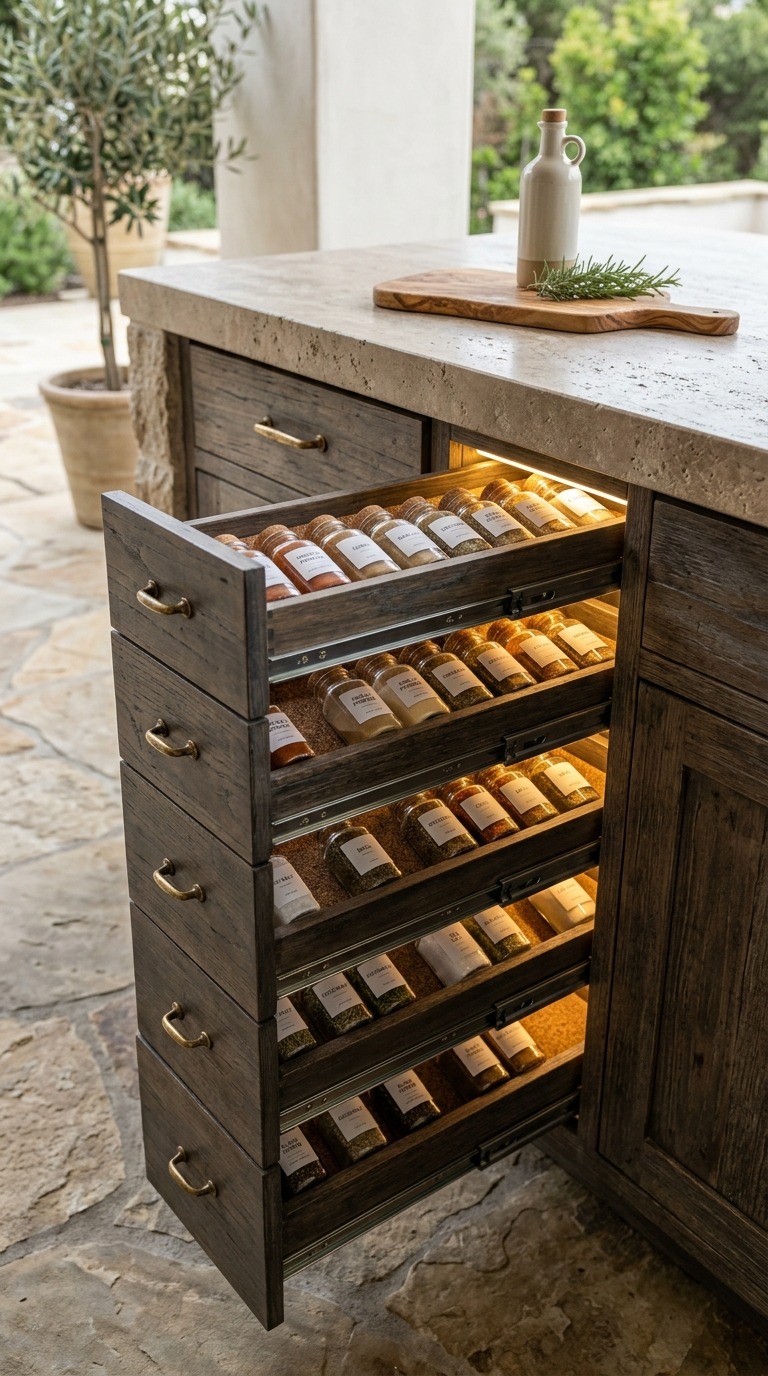
Here is what makes this a genuine design feature rather than just a storage solution:
- The drawer fronts can be solid brass, matte black steel, or raw walnut to match your kitchen’s overall palette
- When the drawers are closed, the tower looks like a piece of custom furniture — clean, intentional, and architectural
- When you pull them open while cooking, every spice you own is visible and reachable in under two seconds
- No rummaging, no knocking bottles over, no mystery jars at the back of a dark cabinet
The spice tower works especially well positioned on the prep side of your island — the side facing away from the grill — so you reach across a clean, organized surface every time you season a dish.
Finish the tower panel with a thin strip of integrated LED lighting along the top edge so it glows softly and practically at night, turning your island into the most organized and beautiful cooking station in any backyard on your street.
Create a Wabi-Sabi Concrete and Moss Wall Feature
This is the idea for the design-forward homeowner who wants their outdoor kitchen to feel like nothing else in the neighborhood — because it will be nothing else in the neighborhood.
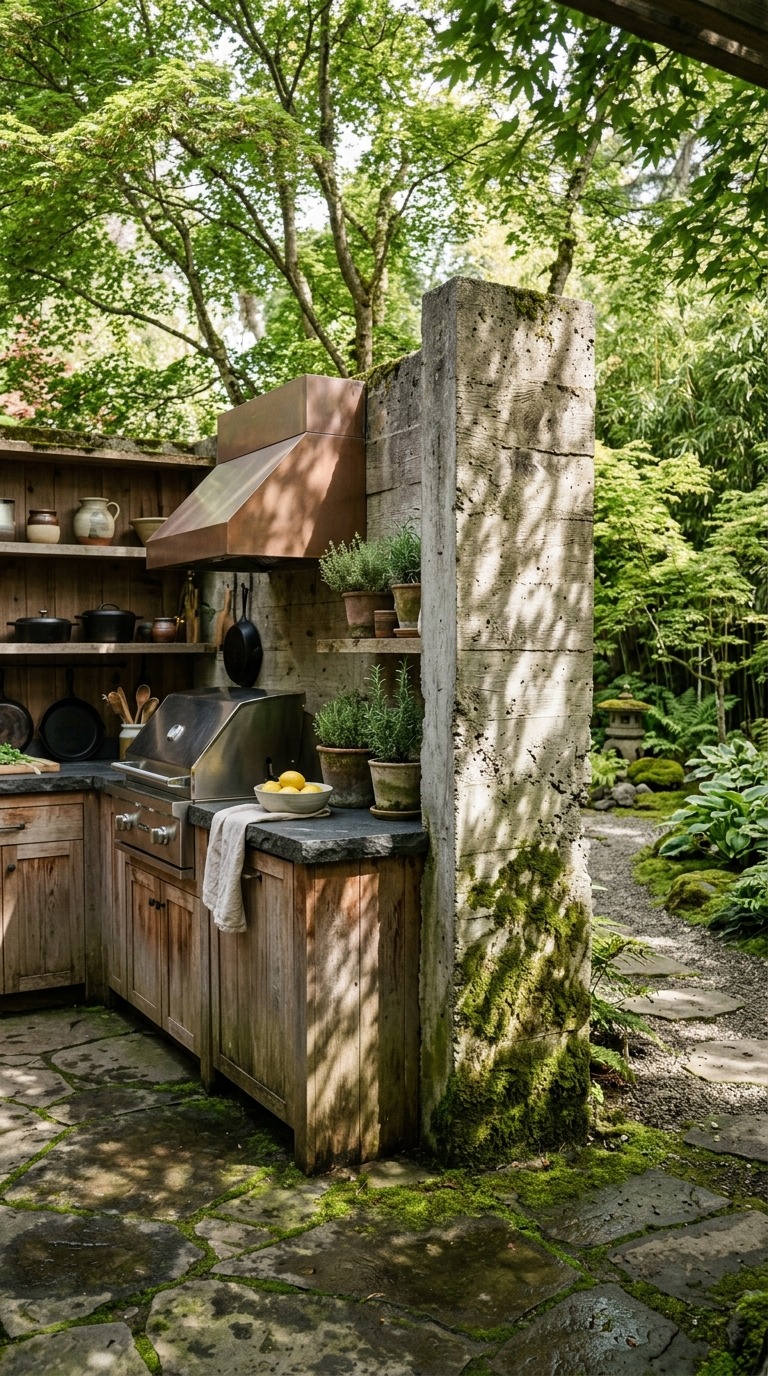
Wabi-sabi is the Japanese philosophy of finding beauty in imperfection and natural decay. Applied to outdoor kitchen decor, it means celebrating materials that show their age, that crack slightly, that gather moss, that look better in five years than they did on day one.
Create a small feature wall beside or behind your outdoor kitchen using rough, board-formed concrete panels. These are concrete poured against raw wood forms, which leave the grain pattern of the wood imprinted into the concrete surface. Then — and this is the bold part — encourage moss growth on the lower portion of the wall by applying a moss slurry (blended moss, buttermilk, and water) directly to the concrete surface. In a humid or shaded spot, moss establishes within a few months.
The contrast of rough concrete at the top and a soft green moss carpet at the base creates an organic, quietly stunning backdrop that no other decor idea on this list can replicate.
Install a Reclaimed Wood Ceiling With Integrated Edison Bulb Pendants
The ceiling of your covered outdoor kitchen is a design surface that almost every homeowner ignores entirely. When you cover a patio or pergola and leave the ceiling unfinished, you’re leaving half your design potential on the table.
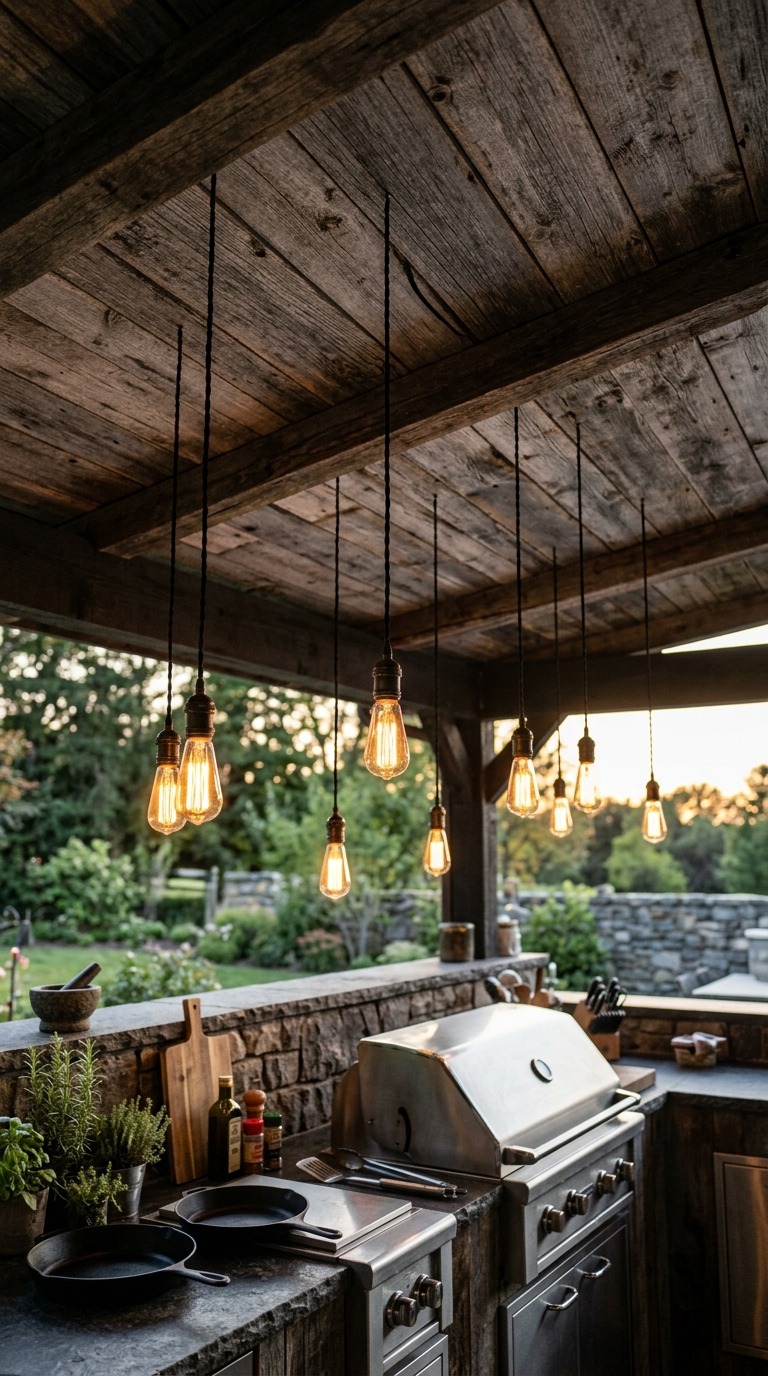
Install horizontal planks of reclaimed barn wood across the underside of your pergola or covered structure. The weathered gray and brown tones of reclaimed wood have a natural, time-worn beauty that no new lumber can ever replicate. Space the planks slightly apart — a half-inch gap between each plank — so air moves freely and the structure breathes, which genuinely matters for longevity in an outdoor cooking environment where heat and moisture are constant.
Here is why this idea works so specifically for the kitchen zone:
- Task lighting above your prep counter becomes beautiful rather than purely functional
- The warm amber glow of Edison bulbs reflects off stainless appliances and stone countertops, making surfaces look richer and more textured
- Reclaimed wood directly overhead connects the hard materials of your kitchen — concrete, steel, stone — to something organic and warm
- The varying pendant heights draw your eye upward, making the covered kitchen feel taller and more spacious than it actually is
This single ceiling finish does more to define your outdoor kitchen as a genuine destination than almost any appliance upgrade you could make.
Final Thoughts
Your outdoor kitchen isn’t just a place to cook. It’s the backdrop for your family’s summer memories, the stage for friendships deepening over a long Saturday meal, and the corner of your property that says the most about who you are as a homeowner. Every one of these 15 ideas gives you a way to make that space genuinely yours — not a copy of what everyone else is doing, but a reflection of your actual taste and personality.
You don’t need to do all fifteen at once. Pick the two or three that excite you most and start there. Even a single well-executed idea — a copper sink, a zellige backsplash, a wabi-sabi moss wall — can completely transform the feeling of your outdoor kitchen and make it the most talked-about spot on the block.
So which one are you starting with?