Want a Cozy Kitchen? Try These 14 Sage Green Kitchen Ideas
Have you ever walked into a kitchen that just felt like a breath of fresh air — calm, grounded, and somehow both timeless and completely current? That is exactly what sage green does to a kitchen. It is one of those rare colors that manages to feel cozy without being dark, fresh without being cold, and stylish without being trendy.
If you have been scrolling through design inspiration wondering how to give your kitchen a personality without a full renovation, this is the article you have been waiting for.
We are going to walk through 14 genuinely beautiful sage green kitchen ideas together — everything from bold cabinet transformations to the tiniest finishing touches that completely change the energy of a space.
Whether you rent, own, or are mid-renovation with a tight budget, there is something here you can actually use today. So grab your coffee, get comfortable, and let us talk about why sage green might just be the best design decision you make this year.
Sage Green Lower Cabinets with Crisp White Uppers
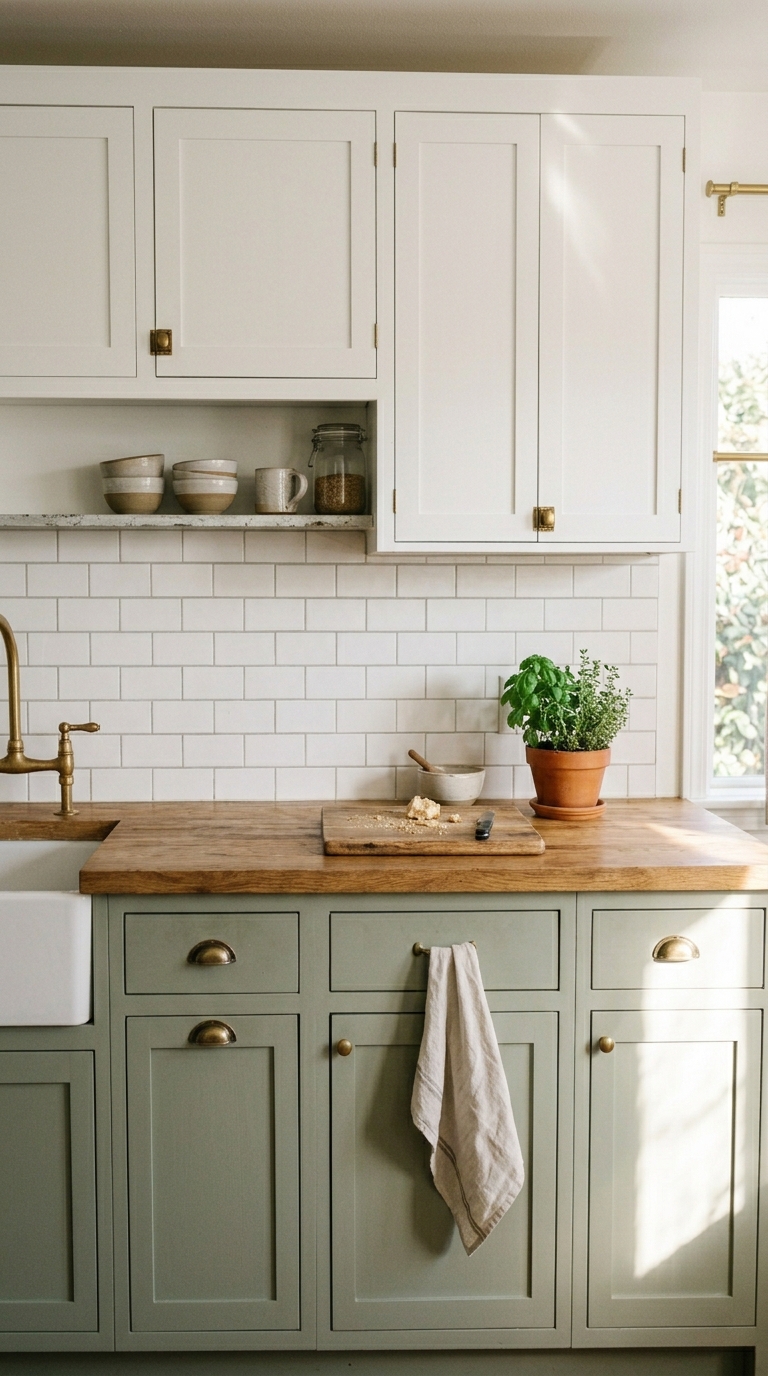
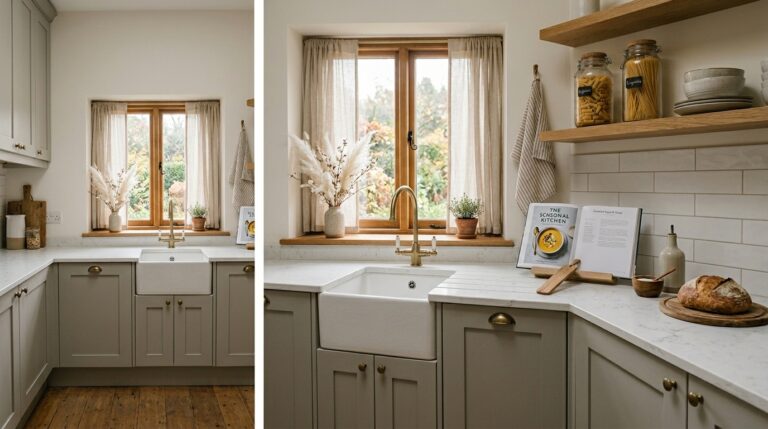
There is a reason this combination keeps showing up in the most beautiful kitchen photographs online — it works every single time. The sage green grounds the lower half of the kitchen with warmth and color while the white upper cabinets keep everything feeling open, airy, and bright. The contrast is not jarring or dramatic.
It is more like the visual equivalent of a deep breath. The room immediately feels intentional and curated without being overdone, and the sage somehow makes the white look creamier and more inviting than it would on its own.
To pull this look off in your own kitchen, start with the lower cabinets only so the project feels manageable and the budget stays realistic. A good quality chalk-finish or cabinet-specific paint in a sage tone like Farrow and Ball’s Mizzle or Behr’s Aged Thyme works beautifully here.
Hardware is everything — swap out any chrome or builder-grade knobs for unlacquered brass or antique gold pulls and you will be genuinely amazed at the difference. Keep the upper cabinets bright white and the backsplash simple so the sage has room to breathe and the whole kitchen feels balanced rather than busy.
Full Sage Green Kitchen Cabinets for a Bold Commitment
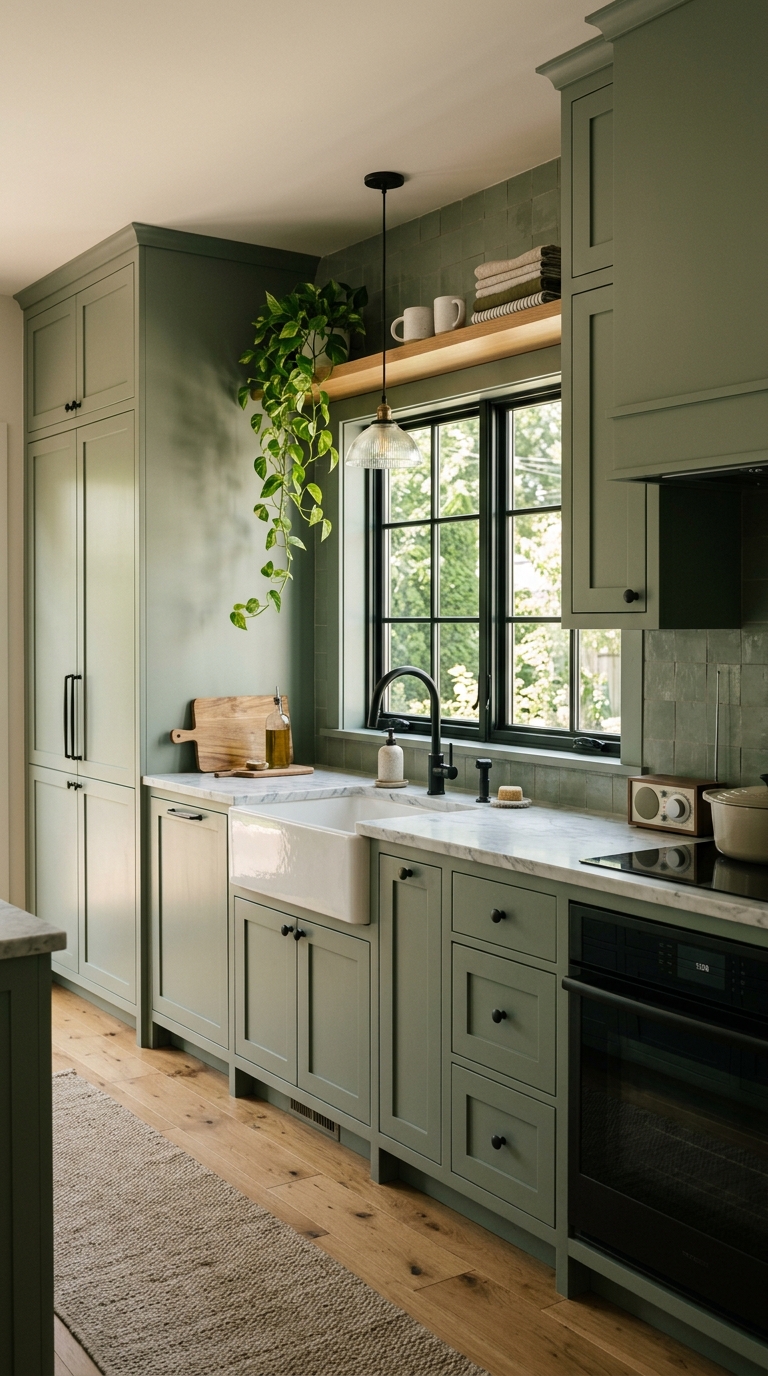
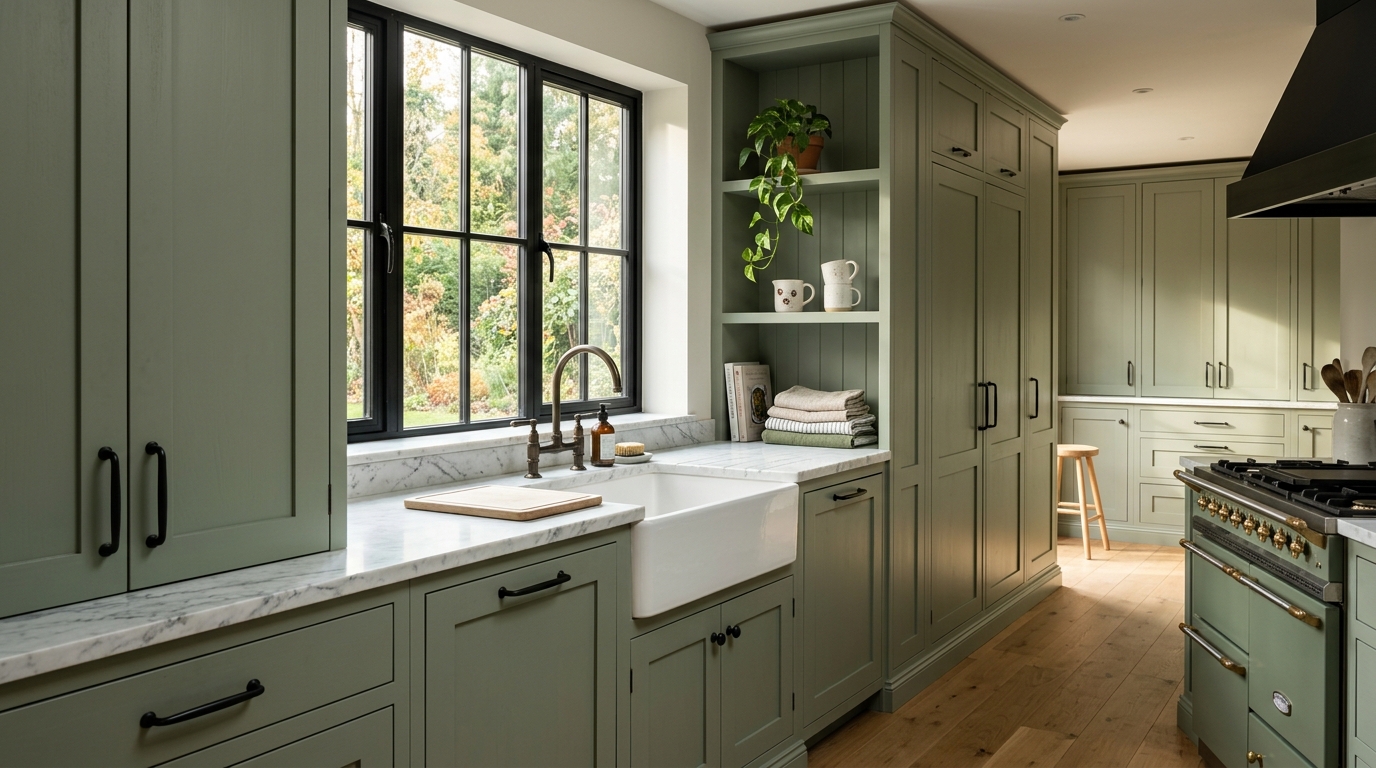
Committing to sage green on every single cabinet in the kitchen is a move that reads as deeply confident and intentional, and when it is done well, the result is genuinely stunning. The key is that sage green is muted enough to carry an entire kitchen without overwhelming the eye.
Unlike a saturated jewel tone or a bold primary color, sage has that earthy, almost weathered quality that makes a full room feel cozy and layered rather than loud. You walk in and the whole space wraps around you like a well-decorated sitting room.
If you are going all in, the secret to success is contrast through texture rather than color. Pair your full sage cabinetry with countertops in natural stone, butcher block, or even a concrete finish — anything that adds visual interest without competing for attention.
Matte or flat paint finishes work best for an all-sage kitchen because they absorb light softly and avoid the sterile look that high-gloss can sometimes create. Add open shelving in one section painted the same sage tone and style it with white ceramics, wooden bowls, and trailing greenery to break up the expanse of cabinetry and make the space feel lived-in and genuinely personal.
Sage Green Island in a White Kitchen
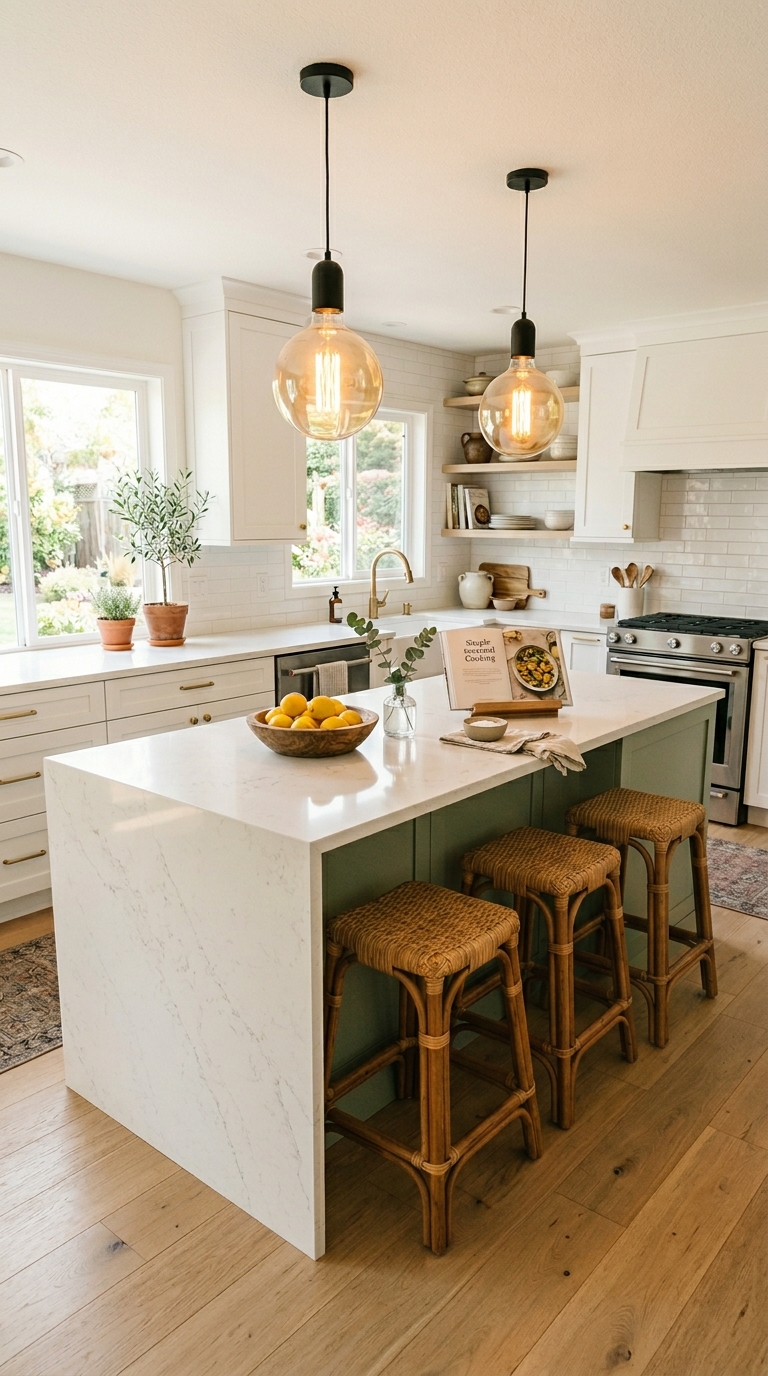
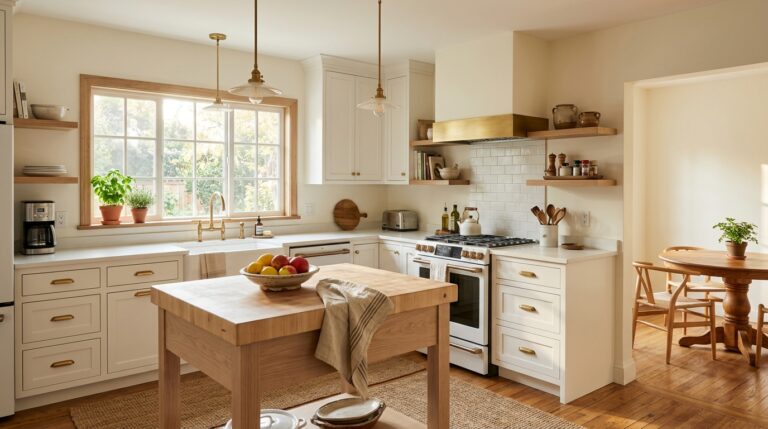
Using a sage green island as the single statement piece in an otherwise white kitchen is one of the most versatile and universally flattering design moves you can make. The island becomes the visual anchor of the room — the thing your eye goes to first and lingers on.
Because it is just one element, you get all the warmth and character of sage without any risk of the room feeling heavy or enclosed. It is the design equivalent of wearing one great accessory with a simple outfit. Everything else can stay neutral while the island does all the personality work.
Choose an island that has enough surface area and presence to earn its starring role — ideally something at least four feet long with seating on one side. The countertop material you choose for the island makes a huge difference, and a thick white quartz or a warm butcher block top both complement sage green beautifully in different ways. Rattan or natural wood barstools bridge the gap between the green and the neutral surround and keep the whole palette feeling organic and warm.
Style the island with a few deliberately chosen objects rather than cluttering it, and it will look like it was pulled straight from an editorial photo shoot.
Sage Green Open Shelving Against Warm White Walls
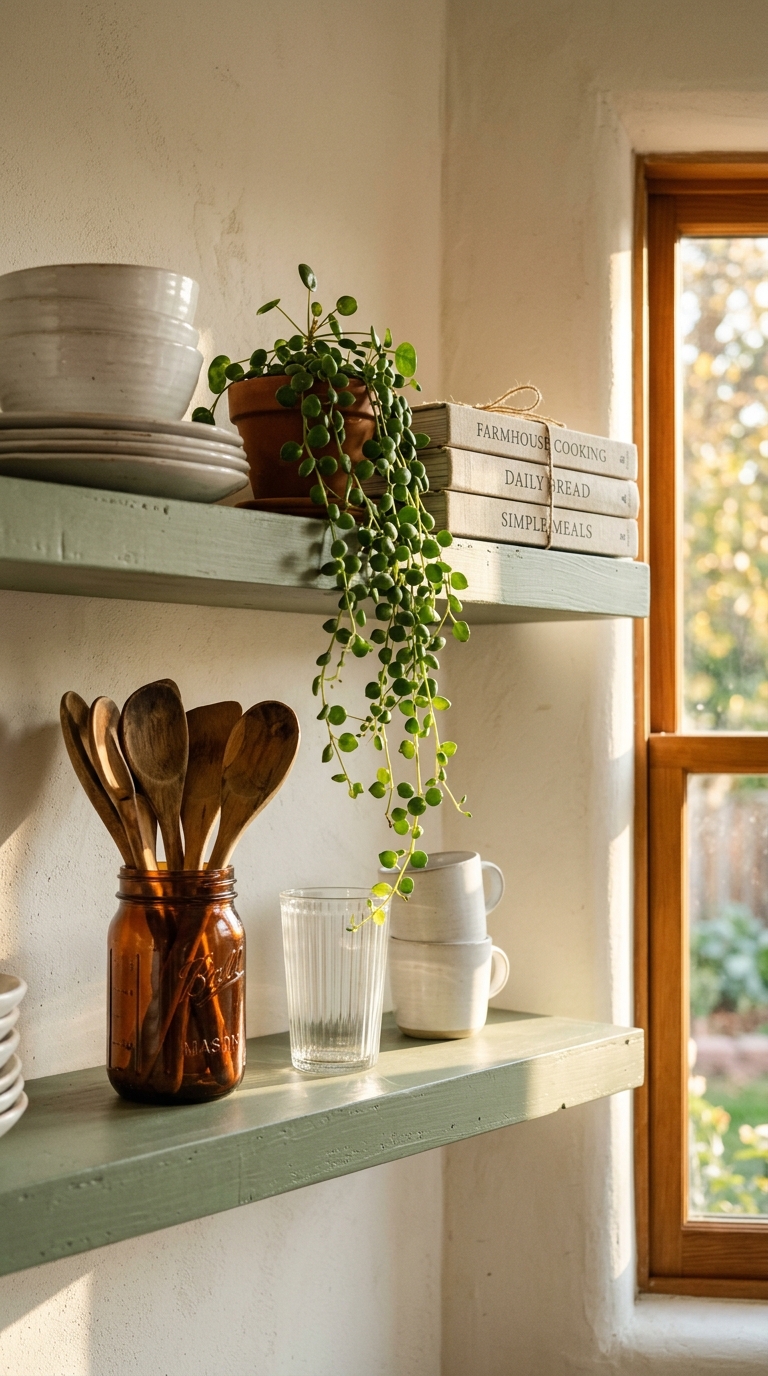
Open shelving in sage green is one of those ideas that looks like it took a professional decorator to pull off, but is actually one of the most approachable changes you can make to a kitchen. The shelves themselves become both functional storage and curated display, and the sage green color gives them enough visual weight to feel intentional without demanding attention the way a full cabinet repaint would. Against a warm white or off-white wall, floating sage shelves look almost architectural — like they were always meant to be exactly there.
The styling of the shelves is just as important as the color, and this is where so many people get it wrong by either overcrowding or being too minimal. The sweet spot is a mix of practical and pretty: stacked plates and bowls you actually use, a plant or two that trails gracefully, a small basket for odds and ends, and one or two objects that simply make you happy to look at. Vary the height of objects so your eye moves around the shelf rather than sitting on one level, and leave a few deliberate gaps — empty space on a shelf reads as intentional breathing room, not forgetfulness.
Sage Green Tile Backsplash as the Star of the Kitchen
Not everyone is ready to repaint cabinets or commit to a full renovation, and that is completely fine — because a sage green tile backsplash gives you just as much personality and visual impact for a fraction of the upheaval. Zellige tiles in sage green are particularly special because the handcrafted variation in each tile means no two kitchens will ever look exactly the same. The way they catch and scatter light throughout the day makes them feel almost alive in the kitchen, shifting from a muted grey-green in the morning to a warmer, more vibrant tone in afternoon sun.
If zellige feels like too much of a commitment, a simple subway tile in a sage green glaze is just as beautiful and significantly easier to source and install. The grout color you choose will dramatically alter the final result — a warm white or putty grout will soften the whole look and make it feel vintage and handcrafted, while a matching sage grout creates a more moody, tonal effect. Scale matters with backsplash tiles, so go larger than you think you need if your kitchen has decent ceiling height, and run the tile all the way to the upper cabinets rather than stopping at a random point on the wall.
Sage Green Kitchen with Natural Wood Accents
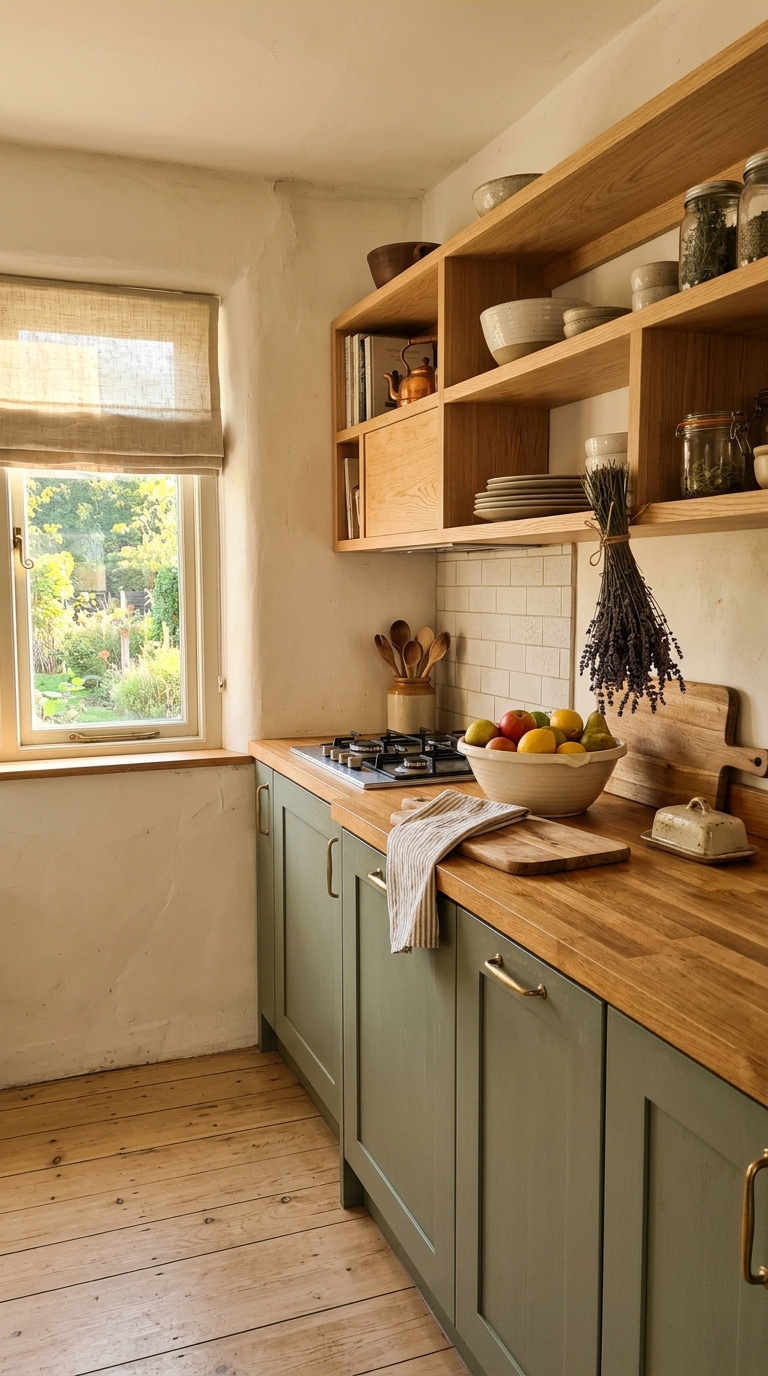
Sage green and natural wood together create a combination that feels less like a designed kitchen and more like somewhere a person who genuinely loves cooking actually lives and works. The warmth of the wood — whether it shows up in open shelving, a butcher block counter, or exposed ceiling beams — balances the cool, herbal quality of the sage and stops it from ever veering into cold or clinical territory. There is a distinctly Scandinavian-meets-cottage quality to this pairing that feels incredibly current but also like it will never go out of style.
When layering wood tones into a sage green kitchen, choose one dominant wood tone and let the others play supporting roles. A light oak or ash feels fresh and airy alongside sage, while a darker walnut adds richness and a more sophisticated edge. Avoid matching your wood tones too precisely — the slight variation between a honey butcher block and a slightly cooler oak shelf is what makes the space feel genuinely organic rather than showroom-coordinated. Bring in additional natural textures through woven baskets, a jute runner, linen window treatments, and a few ceramic pieces in earthy tones to build a kitchen that feels fully layered and deeply personal.
Moody Sage Green Kitchen with Dark Countertops
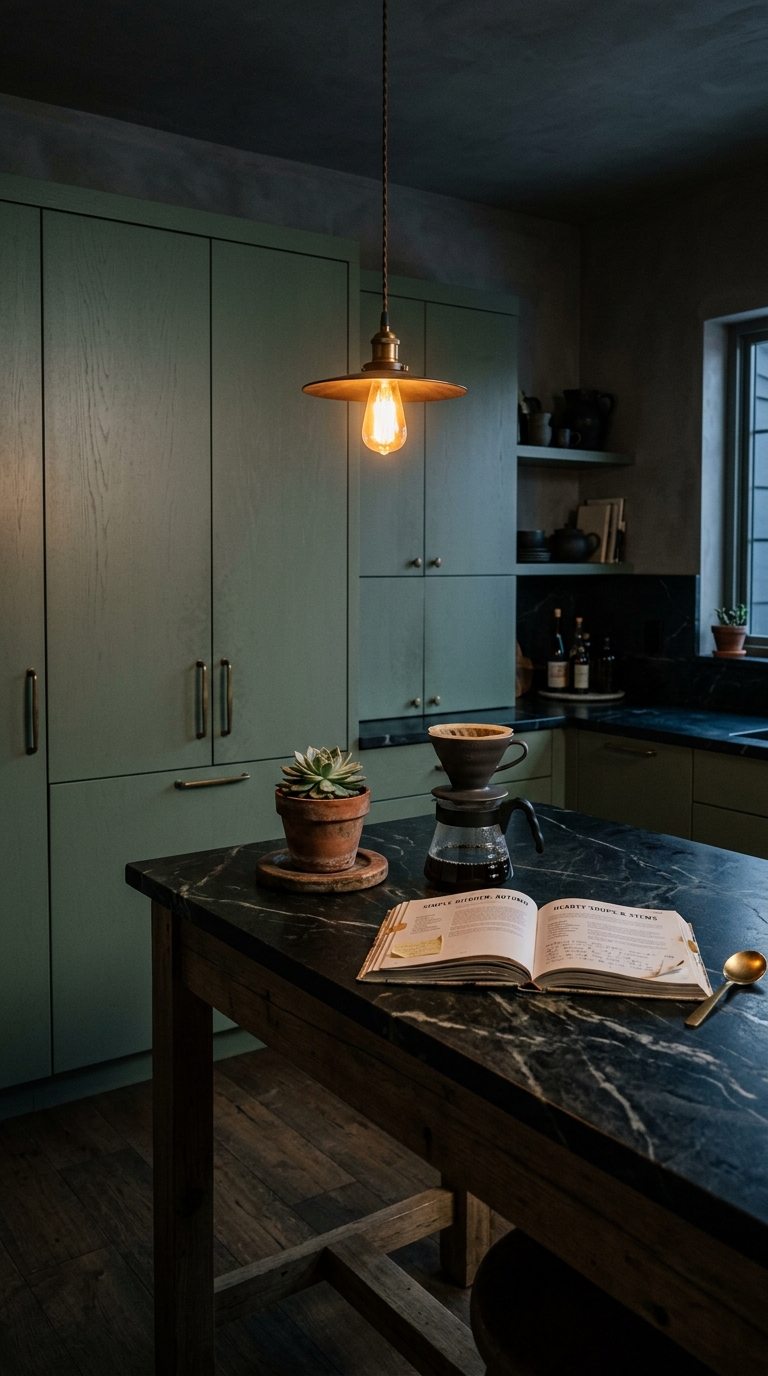
Most people assume sage green has to live in a bright, airy kitchen — but pairing it with dark countertops creates a version of this color that is genuinely unexpected and deeply sophisticated. The contrast between the muted green and a near-black surface in soapstone, dark granite, or black quartz creates a kitchen that feels less like a typical family space and more like a beautifully designed room you happen to cook in. It reads as confident, curated, and just a little bit moody in the best possible way.
The success of this look depends on keeping everything else in the room relatively restrained so the contrast between the sage and the dark counter does the talking. Dark hardware in matte black or oil-rubbed bronze ties the countertop into the cabinetry without adding a third competing element. Lighting is non-negotiable here — a moody dark-countertop kitchen needs layered light sources including under-cabinet strips, pendant lights, and ideally a window or two to prevent the whole room from feeling closed in. Style the surfaces with a few objects in earthy, organic tones — dark ceramics, a stone pestle and mortar, a cast iron pot — and the result will feel genuinely editorial.
Sage Green Painted Kitchen in a Rental
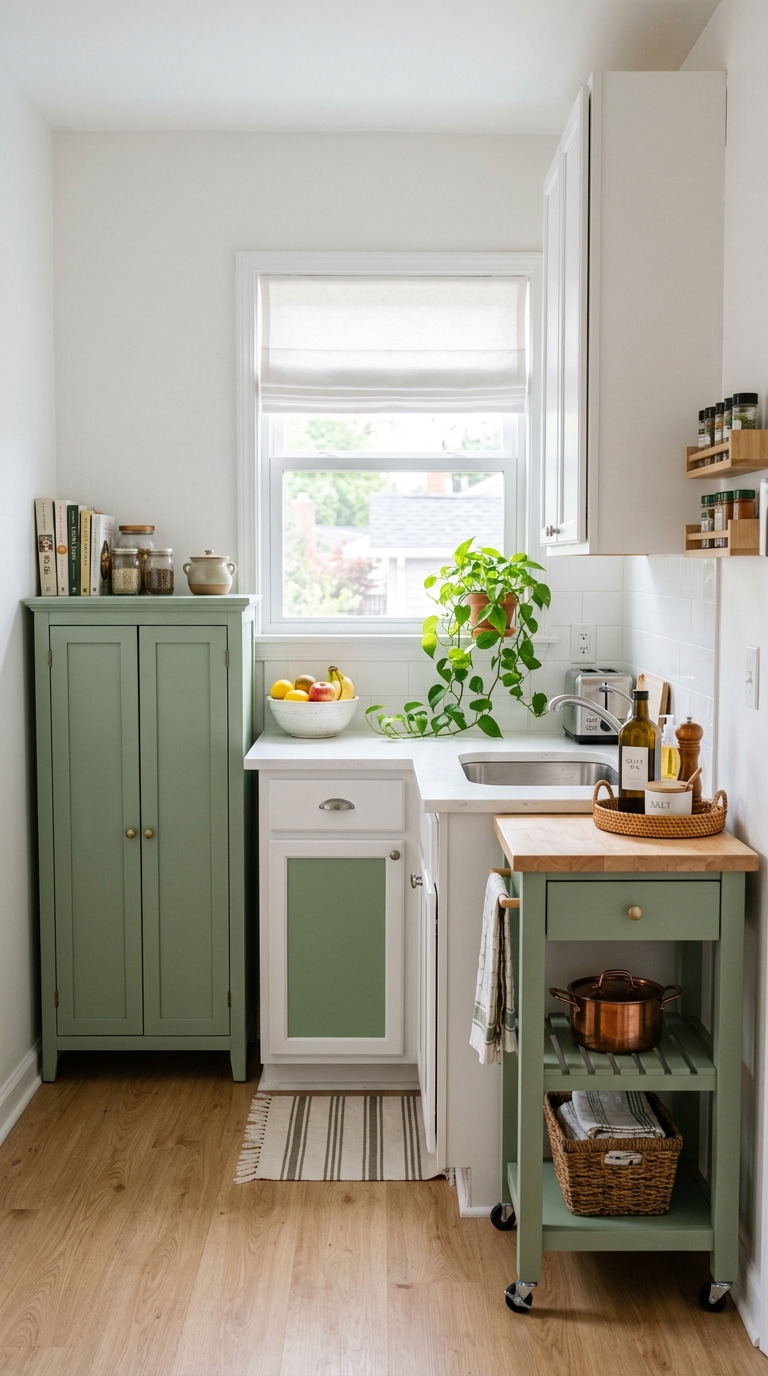
Living in a rental does not mean you have to accept a kitchen that feels completely impersonal and uninspiring, and sage green is actually one of the most renter-friendly color stories there is because of how many non-permanent ways you can bring it in. Removable peel-and-stick contact paper now comes in beautifully muted sage tones and can transform the faces of dated cabinet doors in an afternoon with zero damage and easy removal when you move out. It is one of those changes that costs very little and photographs beautifully.
Beyond contact paper, you can build a genuinely cohesive sage green kitchen in a rental by bringing in a freestanding pantry cabinet or vintage dresser painted in your chosen shade, a butcher block cart for extra counter space, and a collection of sage-toned textiles like dish towels, a runner rug, and cloth napkins stored in an open basket. Terracotta pots with trailing plants add the organic warmth that ties sage green together effortlessly in any space. When you eventually move, everything comes with you and your next kitchen gets the same treatment in a weekend.
Sage Green Kitchen with Warm Terracotta Accents
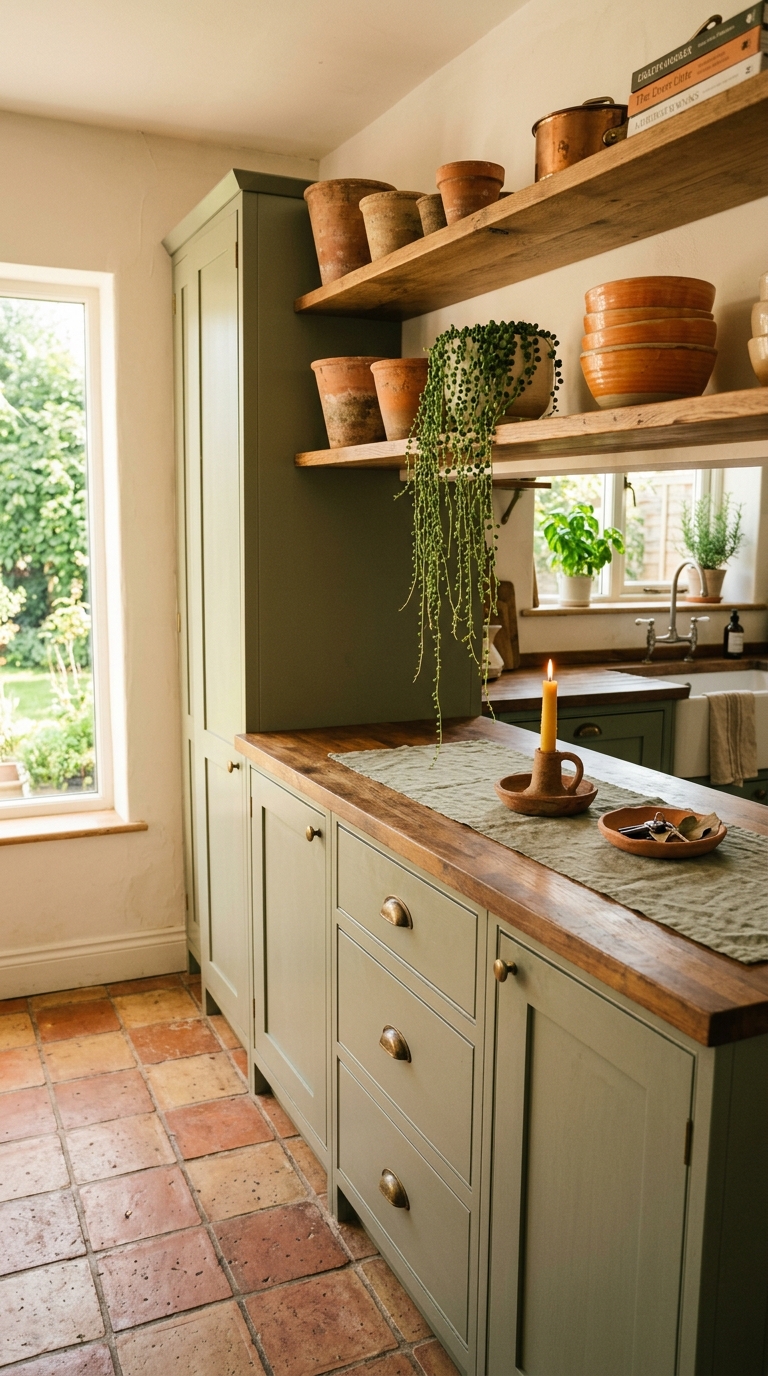
Sage green and terracotta is one of those color pairings that feels almost instinctively right — like something you would find in a Provençal farmhouse or a beautifully lived-in Italian kitchen.
The earthy warmth of terracotta activates the botanical quality of sage in a way that cooler neutrals simply cannot. Together they tell a story of warmth, texture, and a lifestyle that genuinely values beauty in everyday things like the bowl you use for fruit or the plant on the windowsill.
You do not need to go all in on terracotta to make this pairing sing — a terracotta tile floor is the most transformative single element, but even a collection of terracotta pots on open shelves, a few orange-toned ceramic serving pieces stored in plain sight, or a warm-toned clay candle holder on the counter will do the job beautifully.
The secret is repetition in small doses — scatter terracotta throughout the kitchen in objects of different sizes rather than grouping it all in one spot, and the two colors will feel woven together rather than contrasted. Add in natural linen, beeswax candles, and a few dried herbs hanging from a hook, and your kitchen will feel like the most beautiful room in the house.
Sage Green Kitchen with Black Accents and Hardware
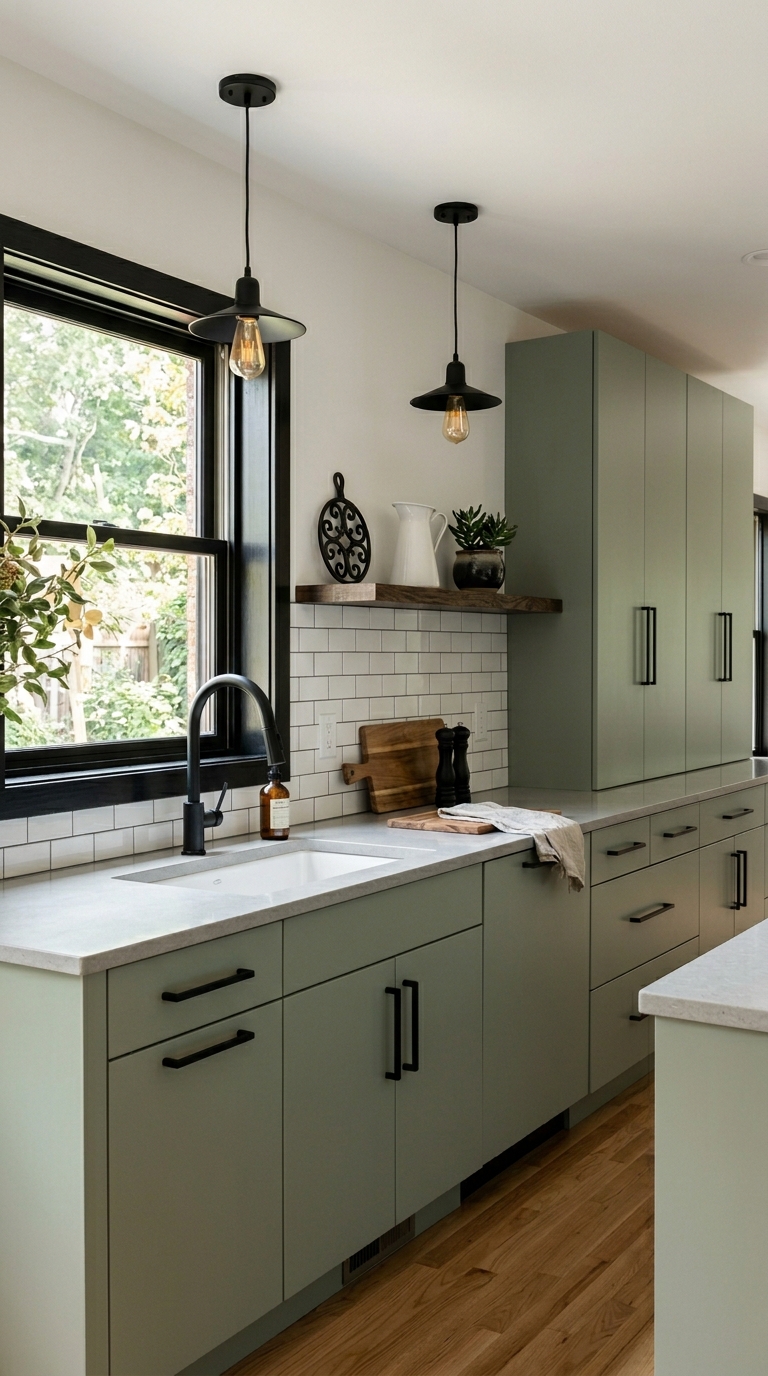
There is something about the pairing of sage green with matte black that feels immediately modern and intentional — it takes the sweetness out of the green and adds a sharper, more architectural edge that works beautifully in contemporary kitchens. The black hardware acts like punctuation marks throughout the cabinetry, drawing the eye from one cabinet to the next and giving the whole space a sense of rhythm and structure. It is a combination that reads as both design-forward and completely timeless.
Every piece of hardware in the kitchen should switch to matte black for this look to land properly — cabinet pulls, drawer knobs, the faucet, light fixtures, and even the oven handle if possible. Consistency in finish is what elevates the space from a random collection of good choices to a truly considered kitchen. Keep the countertops and backsplash relatively neutral — a light grey quartz or a white surface works beautifully — so the sage and black can play together without competition. Avoid adding any other metal tone to the room, because even a single gold or chrome element will interrupt the visual dialogue between the green and black and make the whole thing feel slightly off.
Sage Green Kitchen with Vintage and Antique Touches

A vintage or antique-touched kitchen that centers on sage green has a quality that feels completely unlike anything you could buy new and assemble from a showroom. The age of the objects — the slight crazing on an old ceramic plate, the patina on a brass hook, the chips in a beloved mixing bowl — adds layers of warmth and story that genuinely cannot be faked or fast-tracked. Sage green as the backdrop for all of this vintage character works so well because it already carries an inherently aged, botanical quality of its own.
Source your vintage pieces from antique fairs, estate sales, charity shops, and online marketplaces where character is built into the price rather than designed for it. A freestanding painted dresser in sage green does double duty as both statement furniture and practical pantry storage. Mix your display intentionally — group old items by color or material rather than era so the collection feels curated rather than collected at random. Let things show their age honestly and resist the urge to style everything too perfectly, because the slight imperfection is exactly what makes a vintage-inspired sage kitchen feel genuinely real.
Sage Green Kitchen Ceiling for Unexpected Drama
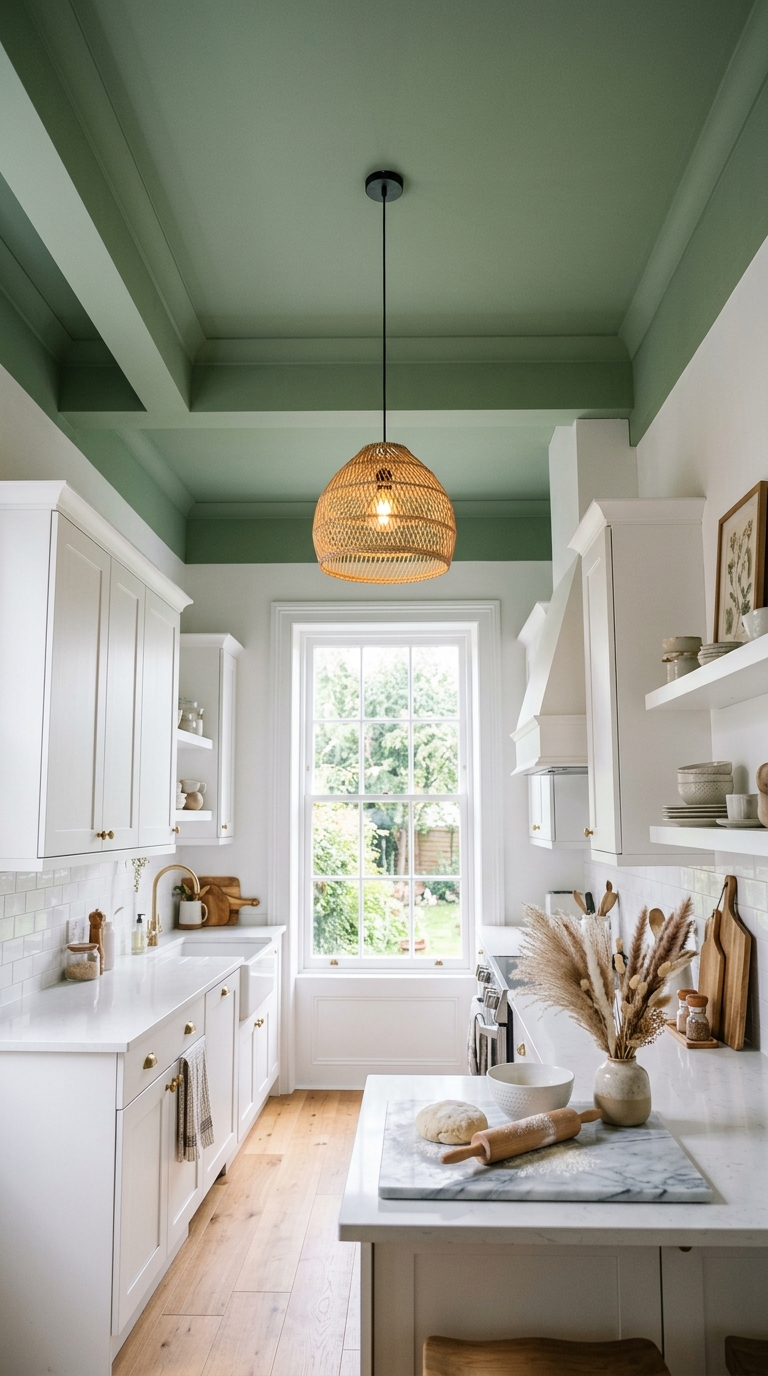
Painting the ceiling sage green while leaving the walls and cabinets white is one of those design moves that feels slightly brave before you do it and completely genius the moment it is done. The sage pulls the eye upward and creates an enveloping quality — like the kitchen has its own personality from floor to ceiling rather than being a box of white walls punctuated by cabinets. It also makes standard ceiling heights feel more intentional and interesting, because the color draws attention to a surface most kitchens completely ignore.
The practical advantage of a painted ceiling is that it requires zero structural change and relatively little time or paint. One to two coats of a quality matte paint in your chosen sage tone is typically all you need, and the transformation is immediate and dramatic. Choose a sage with slightly warm undertones rather than a cool or grey-leaning version for the ceiling specifically, because the extra warmth prevents the sage from reading as grey or clinical when it sits above you rather than at eye level. Tie the look together with a rattan or natural fiber pendant light so the ceiling feels anchored rather than floating.
Sage Green Kitchen with Marble Countertops and Gold Hardware
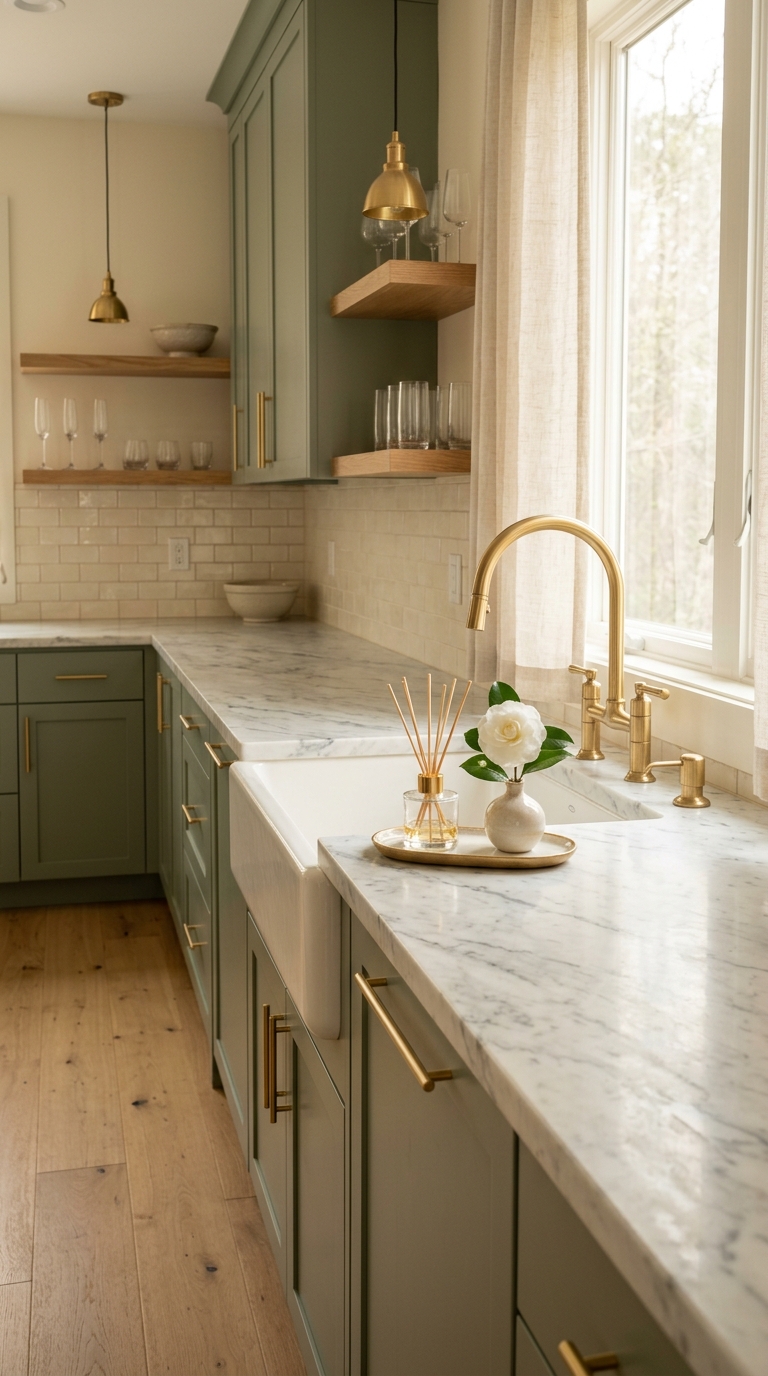
This combination — sage green with white marble and brushed gold hardware — is genuinely one of the most beautiful pairings in kitchen design, and it has a timeless, almost European quality that photographs brilliantly and feels even better in person. The cool veining of the marble brings out the grey undertones in the sage without making either feel cold, and the warmth of the brushed gold bridges the two materials and ties everything together into one deeply cohesive palette. The whole room reads as quietly luxurious without announcing itself.
Marble countertops are an investment but not always the budget-buster people assume — choosing a honed rather than polished finish reduces cost and also makes the material feel more relaxed and approachable in a kitchen that gets regular use. Engineered marble or a high-quality marble-look quartz is also a completely valid alternative that gives you the aesthetic without the maintenance commitment. Brushed gold rather than polished gold is the hardware finish to choose here because it reads as warmer and more organic, and it shows fingerprints and daily wear far less than a shiny alternative. Style the countertops sparsely so the marble can be appreciated as the material feature it genuinely is.
Sage Green Kitchen Accessories and Textiles for an Easy Update
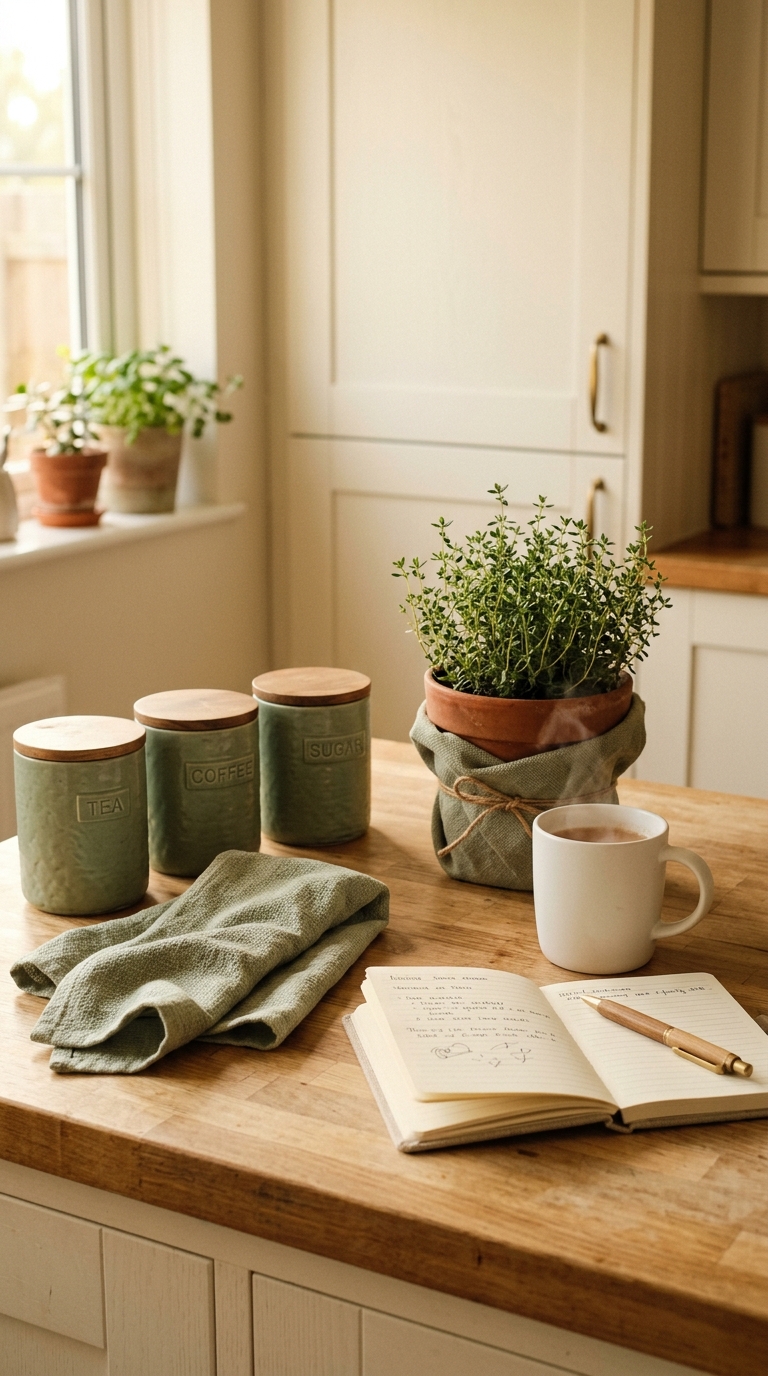
Sometimes the most satisfying design transformation comes not from renovation or painting but from the quiet accumulation of the right small objects — and sage green lends itself to this approach more beautifully than almost any other color. A collection of sage green ceramics, kitchen textiles, and small accessories can completely shift the mood and palette of a white or neutral kitchen without a single permanent change.
It is the most accessible entry point into this whole color story, and it works just as well for someone who moved in last week as for someone who has lived in the same kitchen for twenty years.
Start with the items you touch and use every single day because those are the ones that will genuinely shift how the kitchen feels to live in. Dish towels, a ceramic soap dispenser, a matching canister set, a linen apron, a fabric-covered cookbook — these are the everyday objects that, when unified in sage green, create a kitchen that feels genuinely considered and personal.
The following objects make the most impact when brought together in a sage palette:
- Linen dish towels and napkins in soft sage and cream
- Ceramic canisters for coffee, tea, and sugar storage
- A sage-toned apron hung on a visible hook
- Small potted herbs in ceramic pots with sage-toned glazing
- A fabric-lined market basket for storing bread or produce
Layer in natural materials alongside the sage accessories — a wooden tray to corral items on the counter, a small rattan basket, a beeswax candle in a clay holder — and the whole collection will feel intentional and warm rather than randomly color-coordinated.
This is genuinely the most budget-friendly way to test how much you love sage green in your kitchen before committing to anything larger.
Your kitchen does not need a full renovation to feel completely transformed — it just needs one great idea and the courage to try it. Whether you start with a full cabinet repaint, a single statement island, or simply a new collection of sage green ceramics on your counter, the warmth and personality this color brings into a kitchen is something you will feel every single morning when you walk in to make your coffee. Pick the idea that excited you most while reading today, take one small step toward it this week, and watch how quickly your kitchen begins to feel less like a functional room and more like a genuine sanctuary. Your home deserves to feel beautiful, and honestly — so do you.