Apartment Bedroom Decor Ideas for a Chic Modern Look
You scrolled past the same beige walls for the third morning in a row and felt absolutely nothing. No warmth. No personality. Just a room you sleep in and leave. I know that feeling intimately because I lived it for two years in my first apartment in Chicago, convincing myself that decorating a rented bedroom was somehow not worth the effort. It absolutely is. And once I started — really started — I never looked back. A beautiful bedroom costs less than you think and changes how you feel every single morning.
This article gives you twelve real, specific, deeply personal bedroom decor ideas I have either tested myself or helped friends implement in their own small apartments. You will not find vague suggestions like “add some throw pillows” here. You will find actual colors, actual brands, actual textures, and the honest reasoning behind every single choice. Whether you rent or own, whether your bedroom is 200 square feet or a generous 350, these ideas work. Let’s make your room feel like the sanctuary you actually deserve.
Soft Sage Green Walls That Breathe
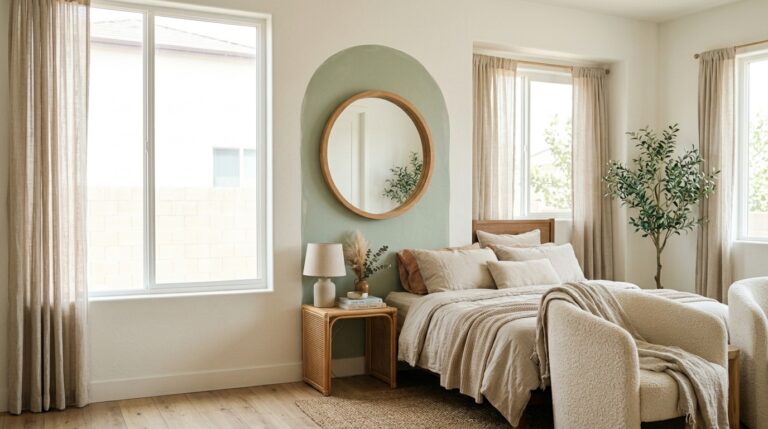
Imagine waking up in a room that smells like a countryside morning even though you live on the sixth floor of a city apartment building. That is genuinely what sage green walls do to a space. The color sits in this perfect soft middle ground between grey and green, and it catches light differently depending on the hour — almost silvery at dawn, warmer and more leafy by afternoon. I painted my spare room in this palette two years ago and my guests consistently describe sleeping in it as the most restful experience they have had in ages. The color feels genuinely alive without demanding attention.
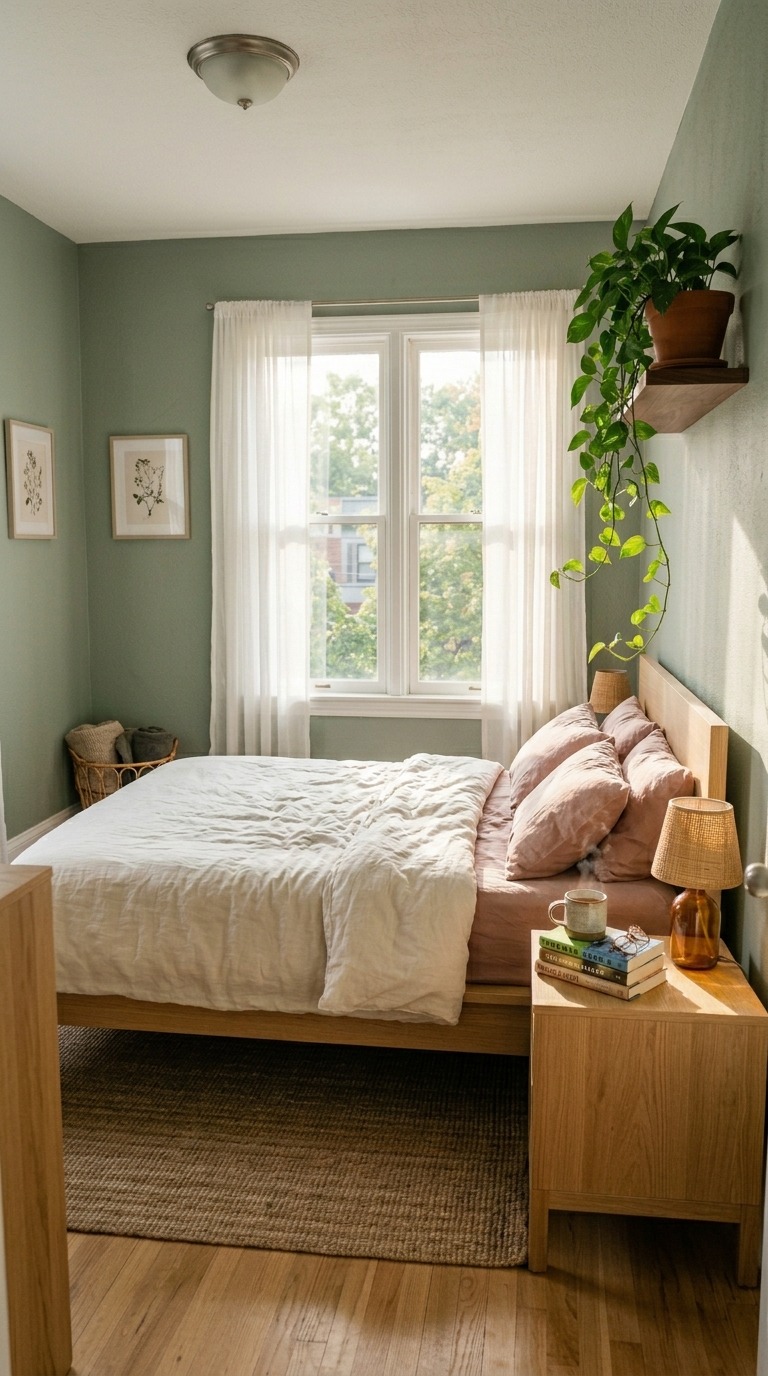
For an apartment bedroom, I always recommend Sherwin-Williams Comfort Gray in a matte finish. It reads as sage in most light conditions but carries enough grey undertone to stay sophisticated rather than nursery-adjacent. Pair it with ivory linen bedding, a light oak bed frame, and dusty rose or terracotta accent cushions and the whole room becomes effortlessly cohesive. Avoid bright white trim with this color — go for an off-white like Benjamin Moore White Dove on the baseboards instead. The warm undertone in White Dove bridges the gap between the sage walls and your wood furniture beautifully. My honest personal note: this color makes even the ugliest apartment overhead lighting look better.
Deep Navy Accent Wall Drama
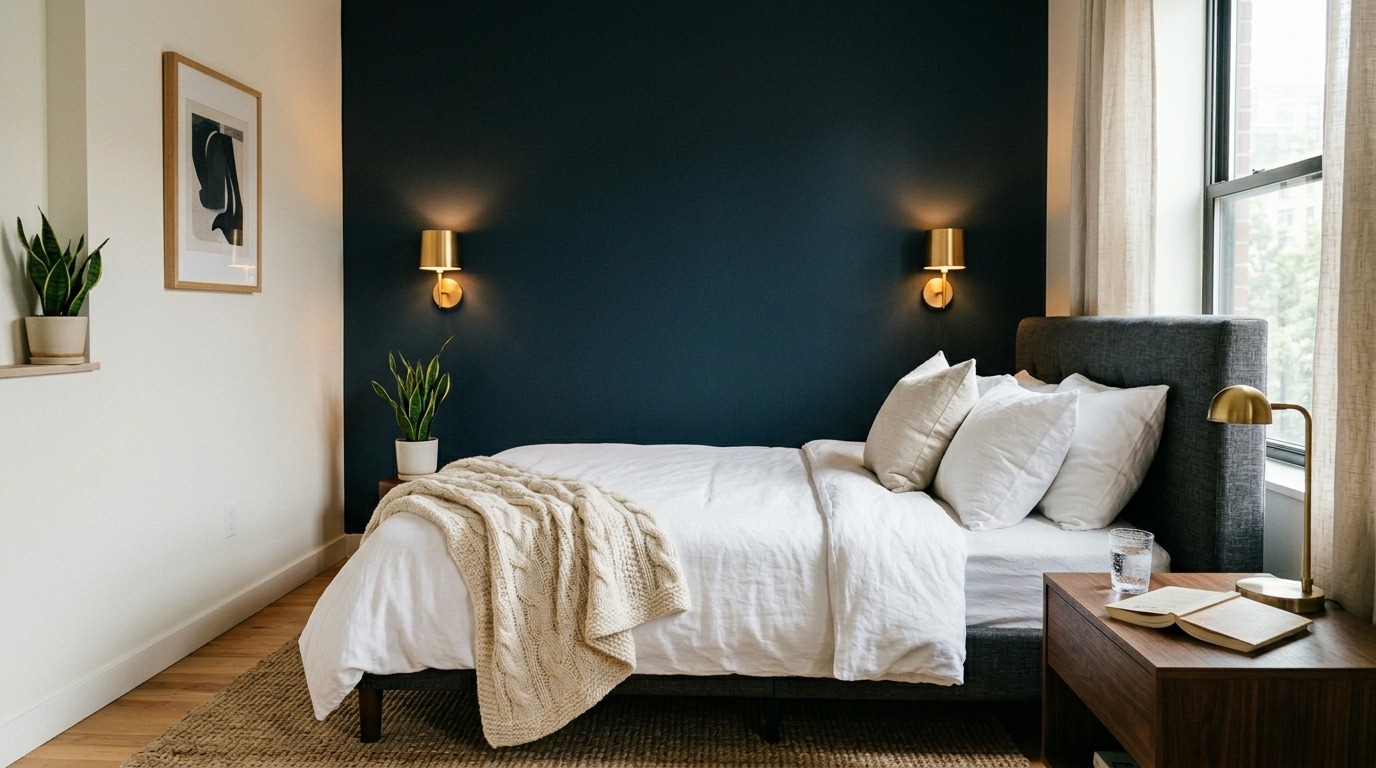
There is something unapologetically luxurious about one very deep, very confident wall color in a small bedroom. Navy done correctly does not shrink a space — it gives the room a dramatic focal point that makes everything else feel intentional. The wall behind your bed becomes almost like a piece of art. I helped a friend do exactly this in her tiny Brooklyn studio and the transformation was jaw-dropping. She went from a forgettable white box to a room that genuinely felt like a boutique hotel suite. The key is committing fully — half measures look unfinished — and choosing a navy with the right undertones for your light situation.
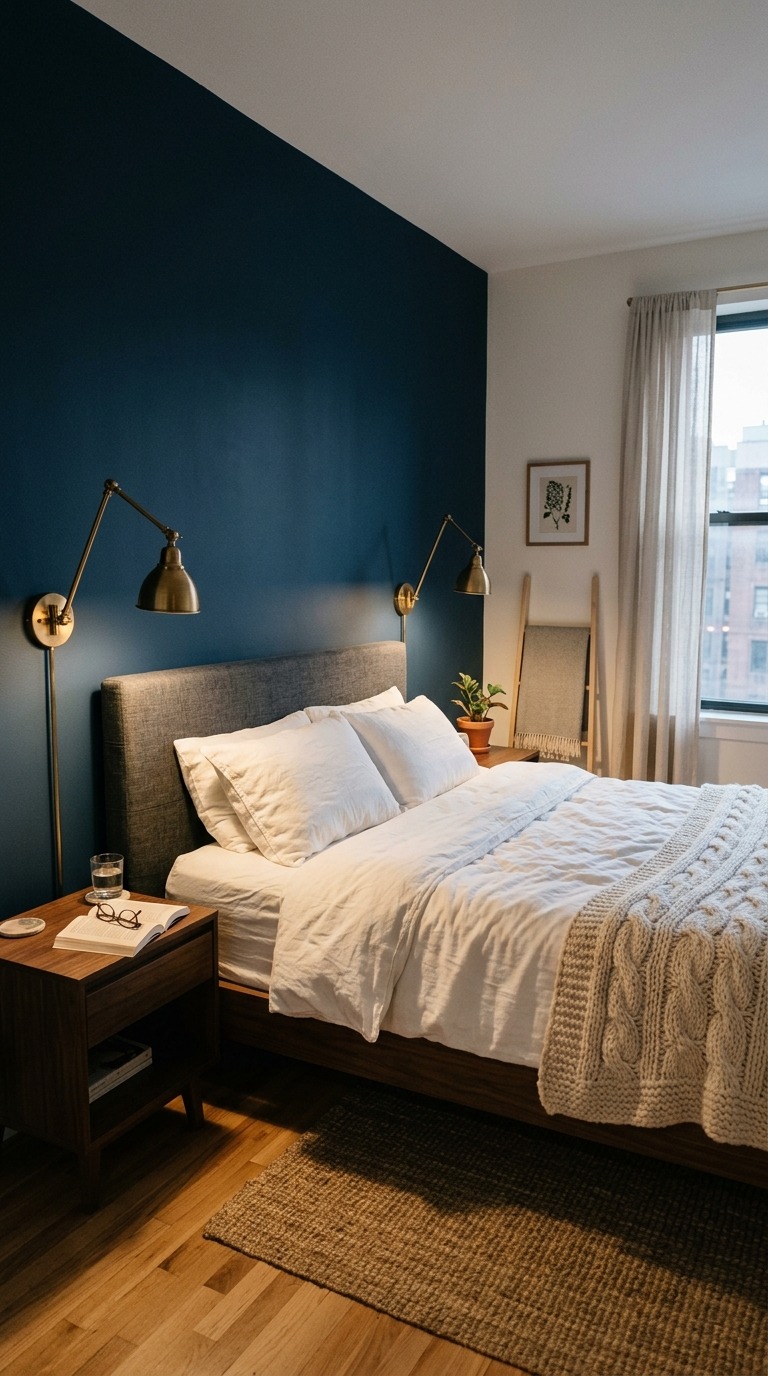
Farrow & Ball Hague Blue is my absolute first recommendation for this look. It carries just enough green undertone to avoid going cold and flat under artificial light, which is a common pitfall with cheaper navy paints. Pair it with white or light linen bedding rather than dark tones — the contrast does all the heavy lifting. A brass or aged gold reading lamp on the nightstand warms the whole palette beautifully. Keep the remaining three walls in a clean white like Benjamin Moore Chantilly Lace and the room will feel expansive rather than cave-like. The high contrast between the navy and white is the entire magic of this look.
Warm Terracotta for Earthy Radiance
Terracotta is having a major moment in interior design right now and I genuinely believe it deserves every bit of attention it gets. Unlike trendy colors that fade quickly, terracotta has roots in Mediterranean, Moroccan, and Southwestern design traditions that span centuries. In a bedroom, it wraps you in warmth the way a cashmere sweater feels against your skin on a cold morning — comforting, grounding, and completely enveloping. When morning light hits terracotta walls, the whole room glows amber and gold in a way that makes you want to linger in bed an extra hour. I am not exaggerating when I say this color genuinely changed how I felt waking up.
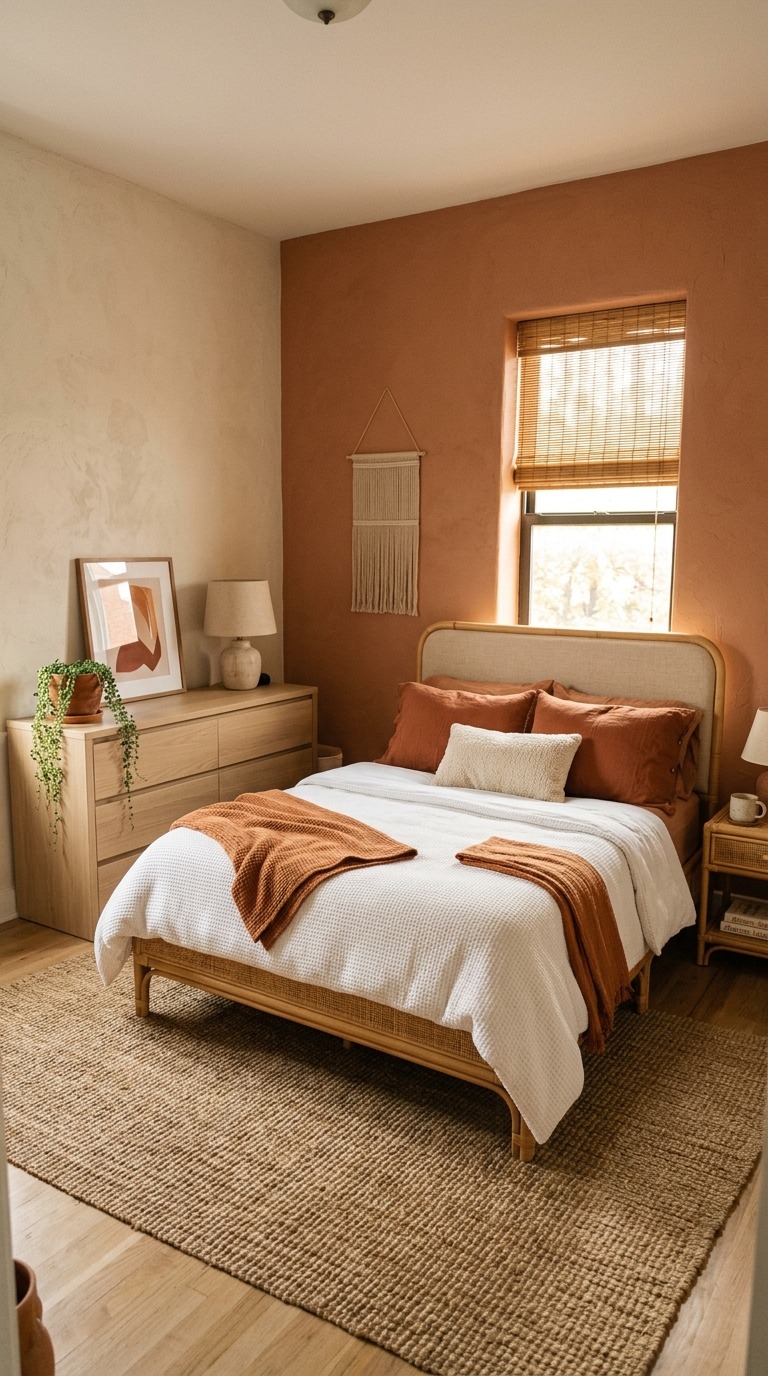
Benjamin Moore Cavern Clay is the terracotta shade I return to again and again for clients and friends. It carries a muted, slightly dusty quality that keeps it from reading as too orange or too childlike, which is the main concern people have with this family of colors. Pair the walls with natural textures — rattan, seagrass, undyed linen, raw cotton — and the room feels like a sophisticated desert retreat. White and cream bedding prevents the warm walls from overwhelming the space. Add a trailing pothos or string-of-pearls plant and suddenly your apartment bedroom feels curated rather than decorated. Avoid cool-toned greys as accent pieces — they fight the warmth you have worked so hard to build.
Layered Textiles for Instant Coziness
Layering textiles is genuinely the single fastest way to transform a bedroom from cold and sparse to deeply inviting, and you do not need to spend a fortune doing it. The trick is mixing textures rather than matching colors perfectly — a waffle-knit base layer under a smooth linen duvet under a chunky cotton throw creates visual depth and tactile interest that makes a bed look like it belongs in a design magazine. I started doing this in my own bedroom after years of trying to find the “perfect” one-and-done duvet, and the moment I stopped trying to match everything precisely, my room finally started feeling genuinely cozy rather than just neat.
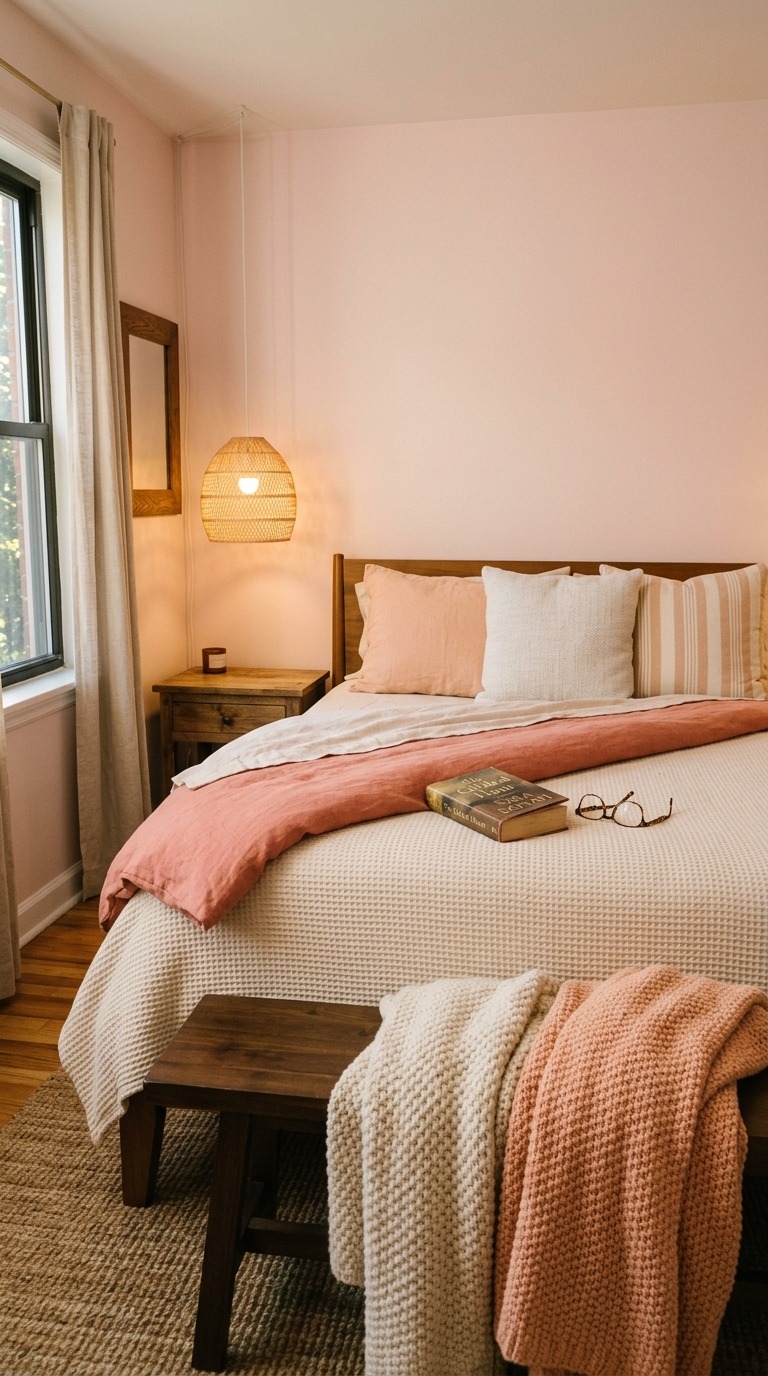
Start with a base duvet in natural off-white or cream cotton — something breathable and washable. Add a linen duvet cover in a muted tone like soft peach, dusty blue, or warm oatmeal on top. Then layer a chunky knit or waffle throw draped casually across the lower third of the bed. Use at least three sizes of pillows — European shams in the back, standard sleeping pillows in the middle, and two smaller accent cushions in front. Keep the wall color quiet and warm to let the textiles do their work. Sherwin-Williams Oleander in its palest application gives you a barely-there blush backdrop that elevates every soft layer stacked in front of it.
Statement Headboard as Focal Art
Your headboard is the most powerful design element in your entire bedroom and most apartment dwellers completely underestimate it. A beautiful headboard functions as wall art, architectural detail, and textural anchor all at once, which means investing in the right one effectively does the work of three separate purchases. I upgraded my own headboard before I repainted my walls and was genuinely stunned by how dramatically it elevated the room without changing anything else. A tall, upholstered headboard in a bold fabric like velvet or textured boucle creates instant visual drama that makes even the most builder-basic apartment bedroom feel intentional and designed.
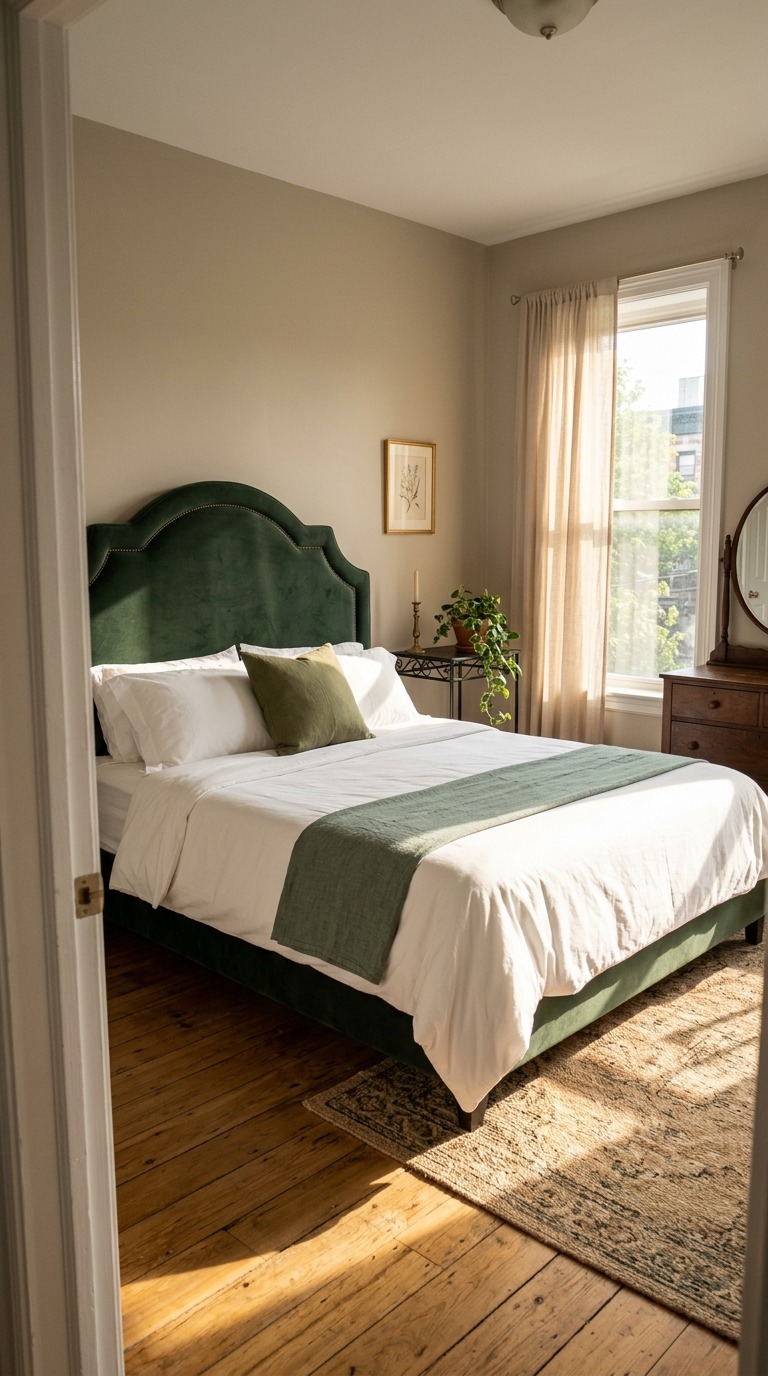
For apartments, an arched headboard silhouette is particularly effective because the curved top line softens the hard rectangular geometry of rental walls and ceilings. Choose a jewel-toned velvet — forest green, deep teal, dusty plum — paired with very simple neutral bedding so the headboard gets its rightful starring role. Keep the walls in a warm neutral like Farrow & Ball Elephant’s Breath in its lighter application, which reads as a sophisticated warm taupe that lets every other element in the room shine. The velvet texture absorbs light in a way that makes the whole room feel richer and more expensive at every hour of the day. Add slim metal nightstands and minimal accessories to let the headboard breathe.
Plants and Biophilic Greenery
Plants turn a bedroom from a place you sleep into a living environment, and I say that as someone who killed seven succulents before finally learning how to keep things alive. The science genuinely supports what your gut already suspects — being surrounded by greenery lowers cortisol, improves sleep quality, and makes you feel more relaxed. But beyond the wellness case, plants add a layer of organic texture and natural color that no painted wall or purchased accessory can replicate. A well-placed trailing pothos on a shelf above your headboard, a generous fiddle-leaf fig in the corner, and a small rubber plant on the windowsill transform the entire energy of an apartment bedroom instantly.
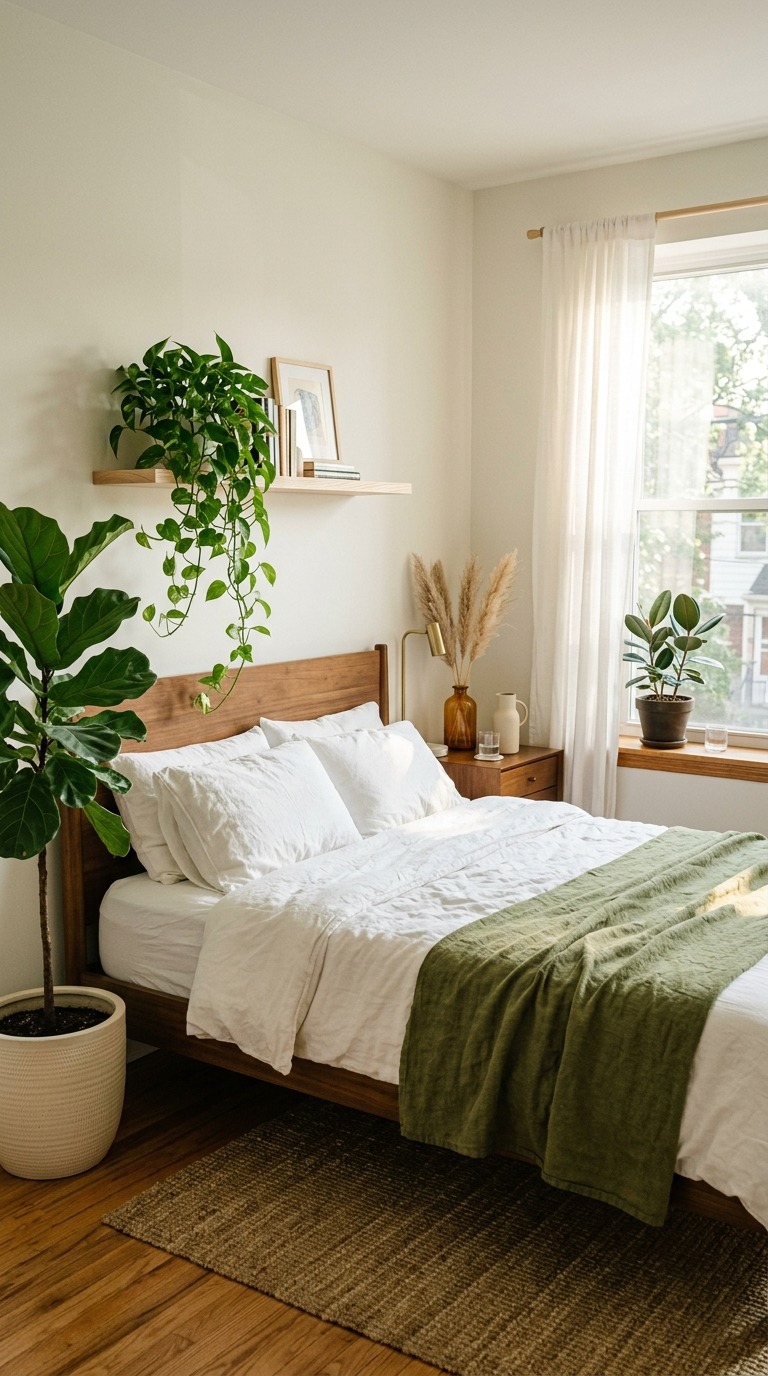
The most important thing I have learned about plants in a bedroom is placement. You want greenery at three different heights — floor level, mid-height on a nightstand or dresser, and elevated on a shelf or hanging planter. This creates a layered living landscape rather than a single awkward tree in the corner. Keep your wall color very clean and light — Benjamin Moore Simply White in an eggshell finish is perfect because it lets every shade of green in your plant collection pop naturally. Pair the greenery with warm wood furniture in walnut or oak and you have created a genuinely biophilic sanctuary without renovating a single thing in your apartment. The plants become your most impactful, living decor element.
Mirrors to Expand and Illuminate
Every small apartment bedroom needs at least one substantial mirror, and I am consistently amazed by how many people either skip them entirely or settle for a tiny bathroom-scale mirror propped on the dresser. A large mirror — leaning against the wall, mounted above a dresser, or placed beside a window — does two powerful things simultaneously. It bounces natural light deeper into your space, making even a dark north-facing room feel brighter and more alive. And it creates a visual doubling effect that genuinely makes a small room feel larger without moving a single piece of furniture. I added a large arched mirror to my Chicago apartment and my room felt twenty percent bigger overnight.
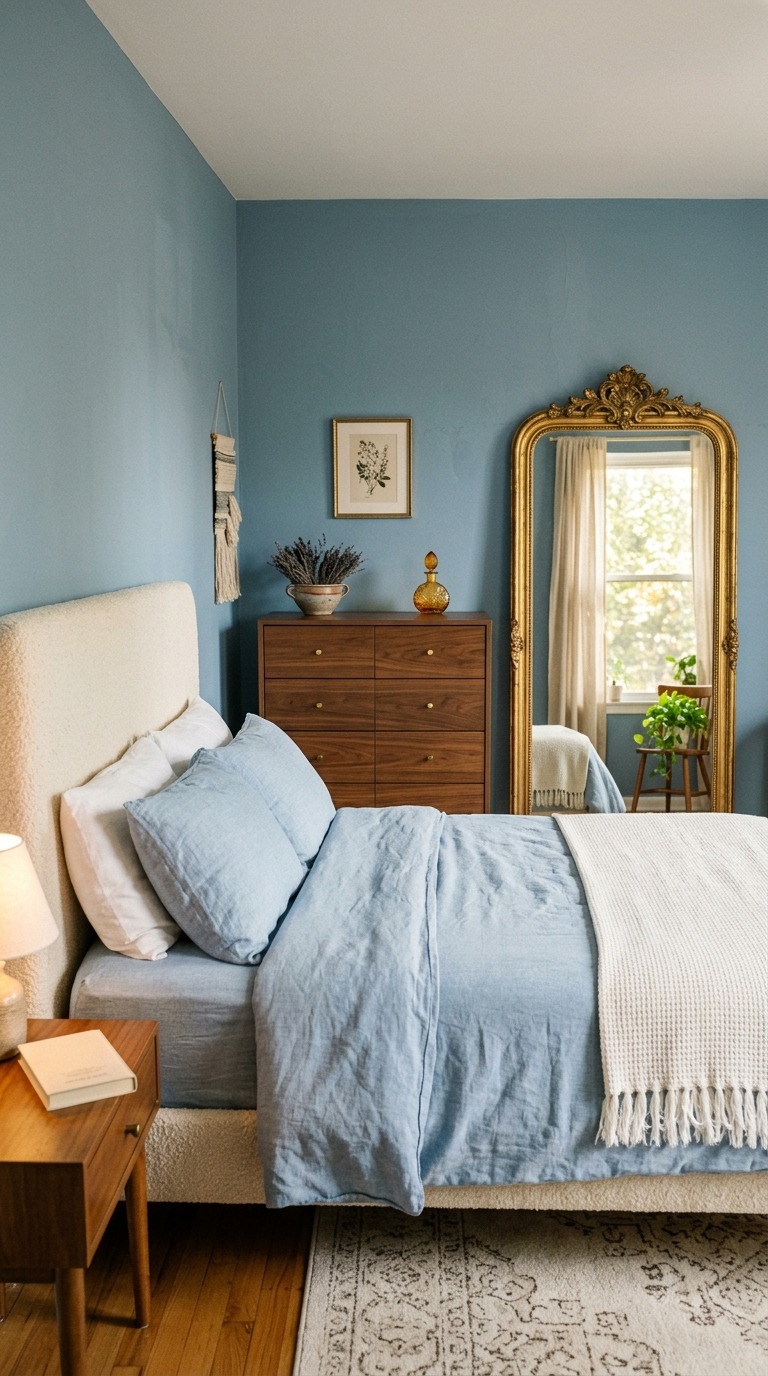
The frame style of your mirror carries enormous decorative weight, so choose it like you would a piece of art. An ornate vintage gold frame adds warmth and an eclectic collected quality to an otherwise minimal room. A clean black metal arch frame gives a contemporary edge. A raw wood or bamboo frame feels organic and beachy. Placement matters just as much as style — position the mirror so it reflects something beautiful, like your window, your best-dressed corner of the room, or your most interesting plant. Pair the walls in a soft dusty blue like Sherwin-Williams Rain and the mirror becomes a brilliant portal that amplifies the serene cool-toned palette. The reflective depth is your most powerful optical trick in a small space.
Warm Ambient Lighting Layers
No single element transforms a bedroom as completely or as inexpensively as thoughtful lighting, and yet most apartment dwellers never move beyond the single overhead fixture that came with the space. Overhead lighting casts a flat, harsh light that makes every bedroom feel like a waiting room rather than a sanctuary. The moment you layer in warm ambient sources — bedside table lamps, a low pendant, a few candles on the dresser — the entire room shifts emotionally. Your brain literally relaxes. Cortisol drops. The space feels enclosed in warmth rather than exposed under fluorescence. I made this change before any other in my current apartment and it was the single highest-impact decorating decision I have ever made.
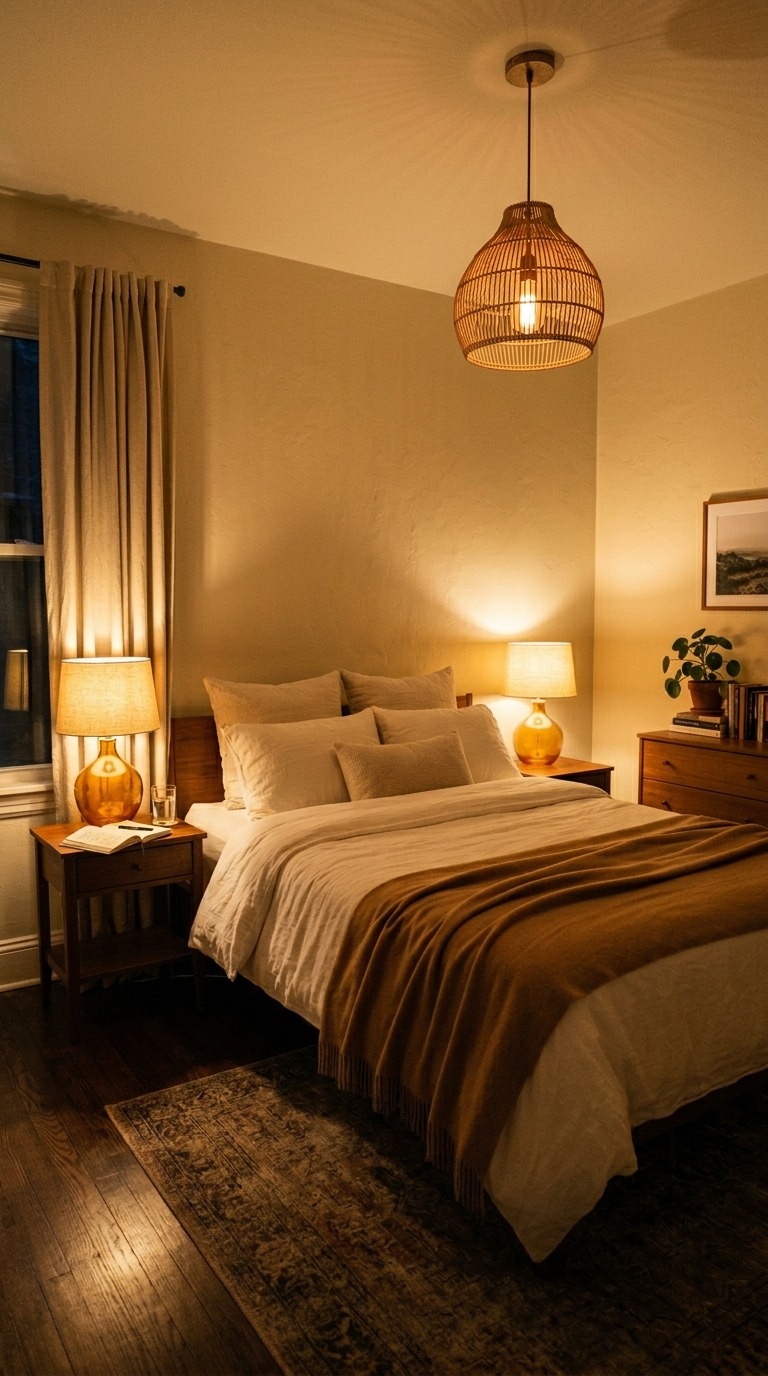
For apartment bedrooms, aim for three distinct light sources at varying heights — a low pendant or flush mount overhead, matching table lamps on both nightstands, and either a floor lamp in a corner or small accent lamps on the dresser. Choose warm white bulbs in the 2700K to 3000K range — cool daylight bulbs at 4000K or above completely destroy the cozy atmosphere you are building. Amber glass or linen lamp shades diffuse light in the warmest, most flattering way possible. Keep your walls in Benjamin Moore Navajo White or a similar warm cream and the warm bulbs will make the paint glow like candlelight every evening. Skip the overhead entirely after 7 PM and use only your layered lamp sources. The difference will astound you.
Floating Shelves for Personality and Storage
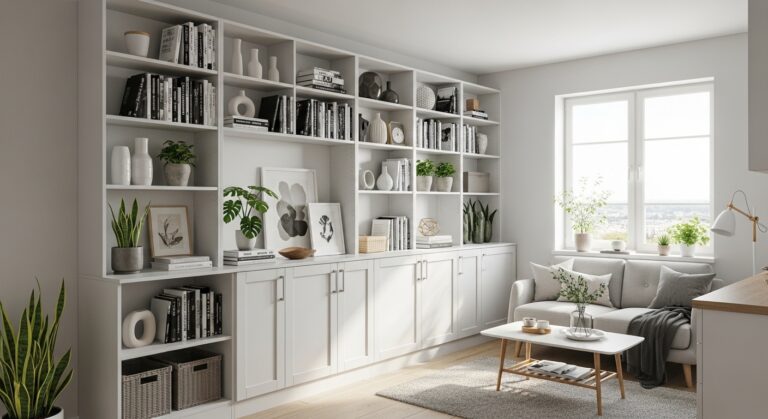
Floating shelves in a bedroom serve a dual purpose that I think gets underappreciated in most apartment decorating conversations. They give you storage without sacrificing floor space, which matters enormously in small rooms. But more importantly, they become a curated display surface that tells the story of who you are — your books, your small ceramics, your trailing plants, your little found objects from travels. A shelf styled with intention communicates warmth and personality in a way that bare walls simply cannot. I spent years hanging generic art prints in my apartment bedrooms before I realized that a thoughtfully arranged shelf of objects I actually loved did far more emotional work.
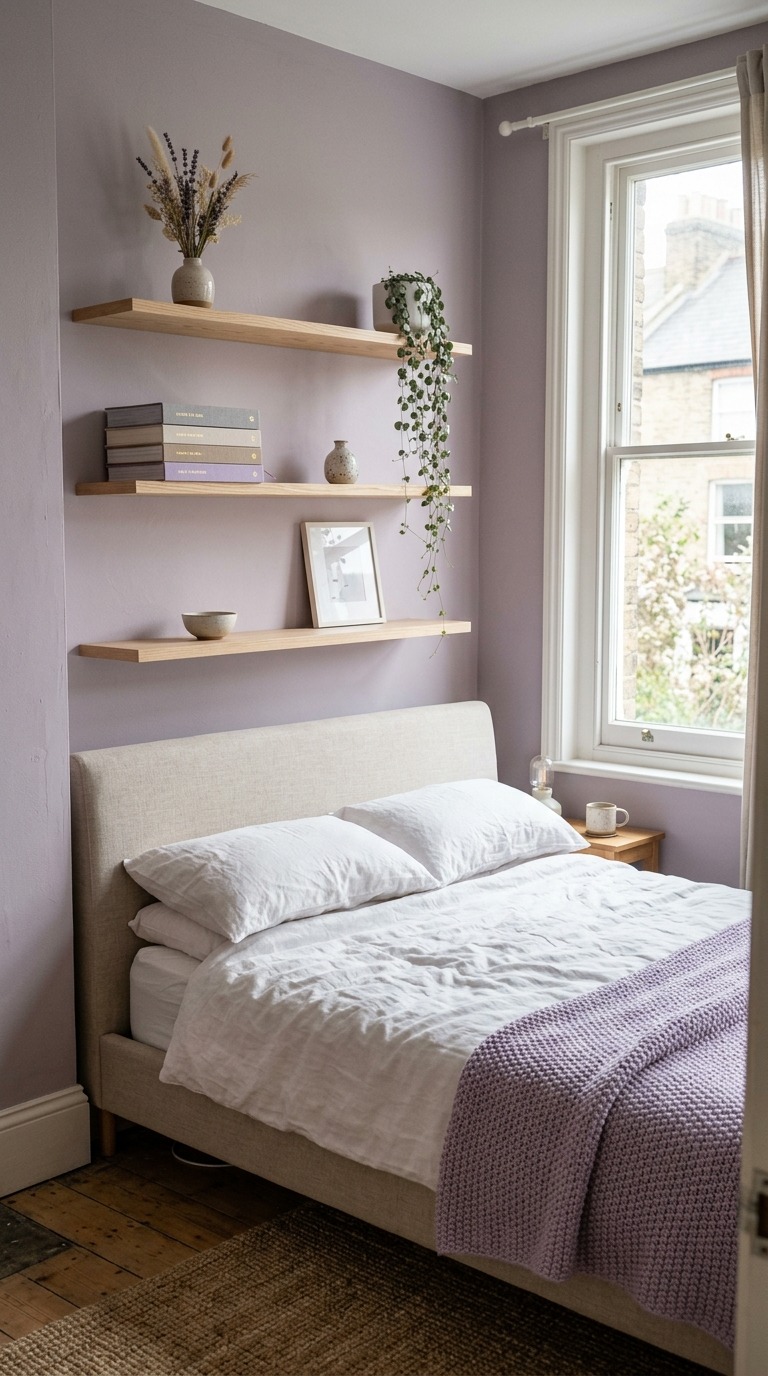
The key to styling bedroom shelves without creating visual clutter is the rule of three — group objects in odd numbers and vary height within each group. One tall ceramic vase, one medium trailing plant, one small stacked book. Then leave breathing room between each grouping. Use shelves in a natural wood tone that picks up the warmth in your bed frame or floor and mount them at varying heights to create movement along the wall. Keep the wall color quiet — Farrow & Ball Brassica in its palest application gives you a dusty soft lilac that is sophisticated and unusual without being overwhelming. The curated shelf vignette beside your bed becomes the most personal and visually interesting feature in the room.
Vintage and Thrifted Furniture Mixing
Mixing vintage and thrifted furniture pieces is the decorating strategy I wish someone had taught me when I moved into my first apartment, because it is both more affordable than buying everything new and infinitely more characterful. Rooms furnished entirely from the same store or era feel flat and showroom-like, while rooms built from collected pieces across different decades and styles feel genuinely lived-in and personal. The secret to making eclectic vintage mixing work is not matching everything but finding one consistent thread — a shared wood tone, a repeated color, a similar scale — that ties the disparate pieces into a cohesive whole that still feels intentional.
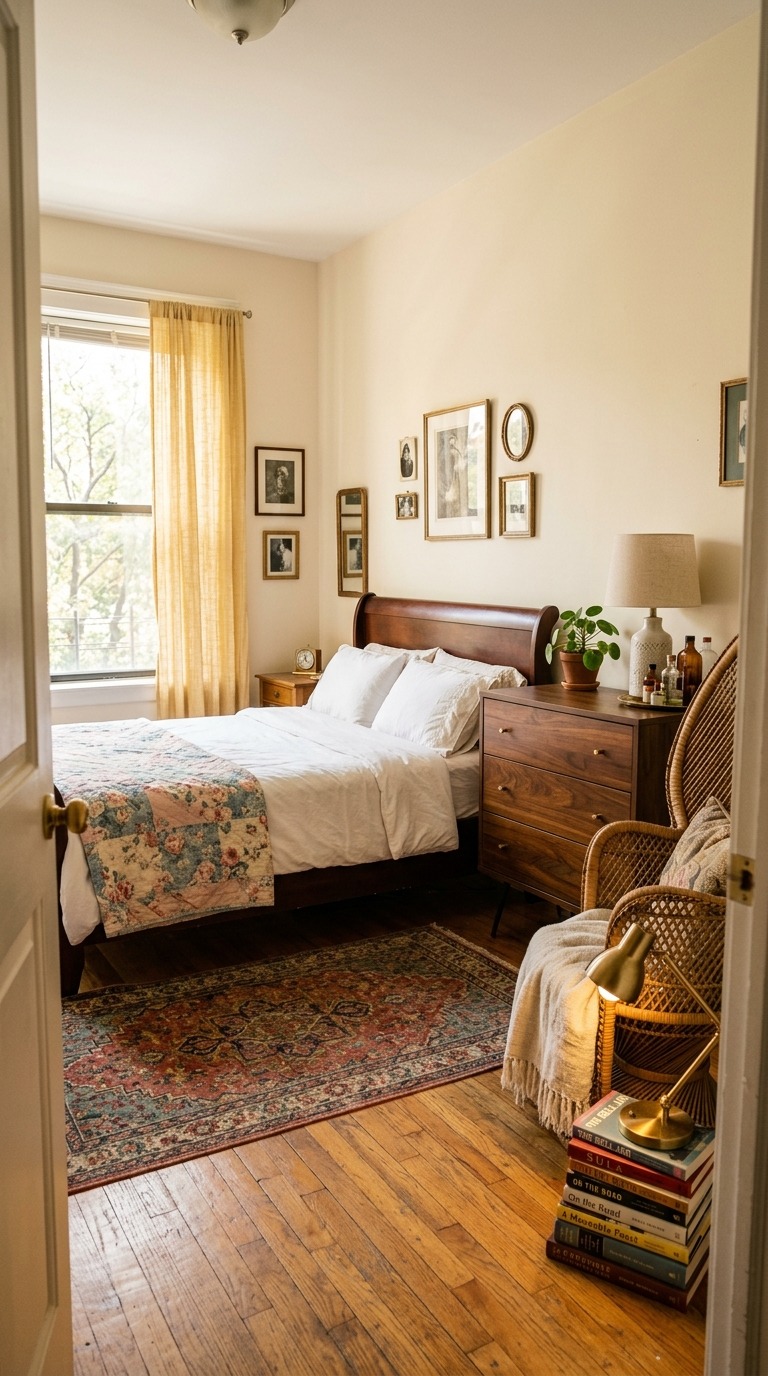
Start by anchoring the room with one hero vintage piece — a curved wooden bed frame, a sculptural mid-century dresser, a beautiful rattan chair in the corner. Build around it with simpler supporting pieces. Keep your bedding clean and neutral so the furniture gets the attention. Walls in Sherwin-Williams Antique White give you a warm ivory backdrop that flatters every wood tone from pale ash to deep mahogany without competing with the character of your furniture. Shop Facebook Marketplace, local thrift stores, and estate sales — the best pieces cost a fraction of new furniture and carry decades of warmth and story. Your bedroom starts feeling genuinely curated the moment you stop trying to make everything match perfectly.
Curtains That Reach the Ceiling
Hanging curtains at ceiling height instead of window height is the single most effective visual trick available to every apartment dweller regardless of budget, and I cannot believe it took me until my late twenties to discover it. The moment those curtain rods go up near the ceiling and the fabric flows from near the top of the wall all the way down to pool gently on the floor, the entire room gains six inches of perceived height. Your ceilings look taller. Your windows look larger. The whole space feels more architectural, more intentional, more expensive. I have shown this trick to four friends who implemented it within a week of seeing my apartment because the effect is genuinely that immediate and dramatic.
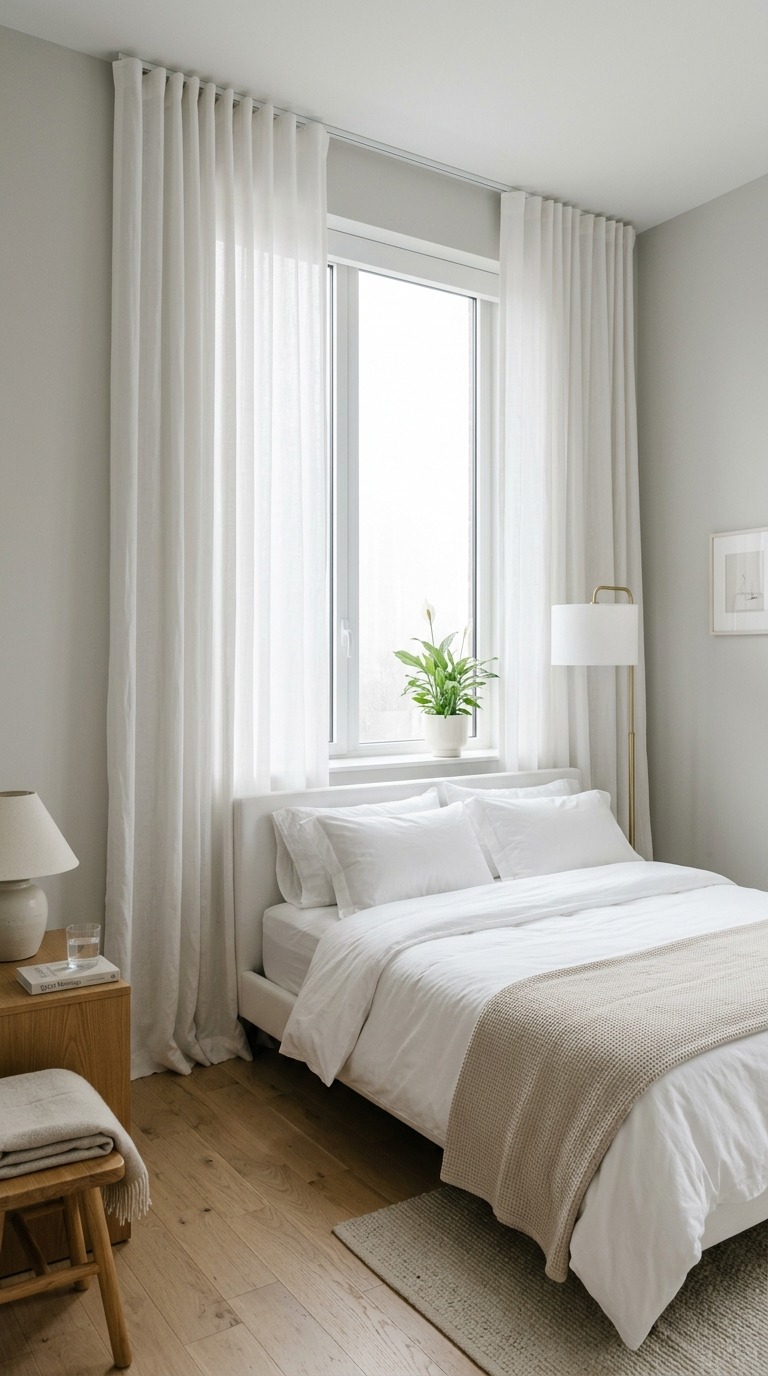
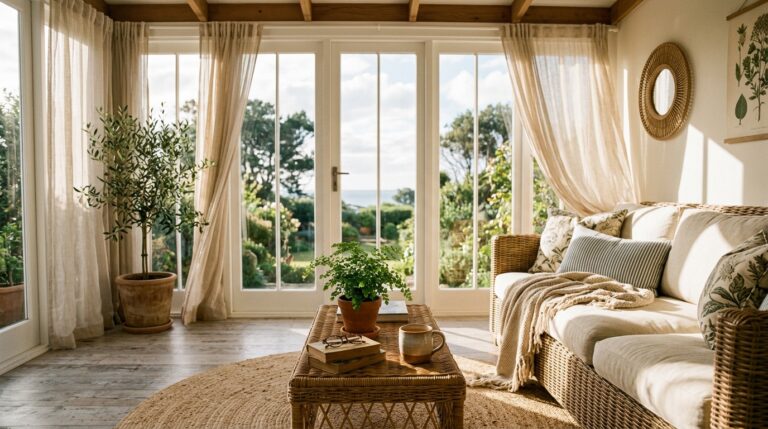
Choose curtains in a light, slightly sheer fabric like linen or cotton voile rather than heavy blackout panels for a bedroom that still wants to feel airy and bright during the day. Mount your rod as close to the ceiling as physically possible — even one inch below the ceiling versus one inch above the window frame makes a noticeable difference in perceived height. Width matters too — your curtains should be at least double the width of the actual window so they gather generously when open. Benjamin Moore Gray Owl on your walls gives you a whisper of cool grey that makes white linen curtains glow luminously. The floor-to-ceiling drama costs almost nothing extra and changes the entire proportion of the room.
A Reading Nook Corner
A dedicated reading nook corner in a bedroom is something I used to think required a big house with a bay window and a built-in window seat. Then I carved one out of a corner of my 280-square-foot apartment bedroom and discovered that the entire principle translates perfectly to small spaces — you just need one comfortable armchair, one good lamp, and one little side table within arm’s reach. The reading nook corner creates what designers call a “room within a room” effect that makes even a small apartment bedroom feel layered and multi-dimensional. It gives you a psychological shift too — a place to sit that is not the bed, which actually improves how well you sleep because your brain stops associating your bed with everything except rest.
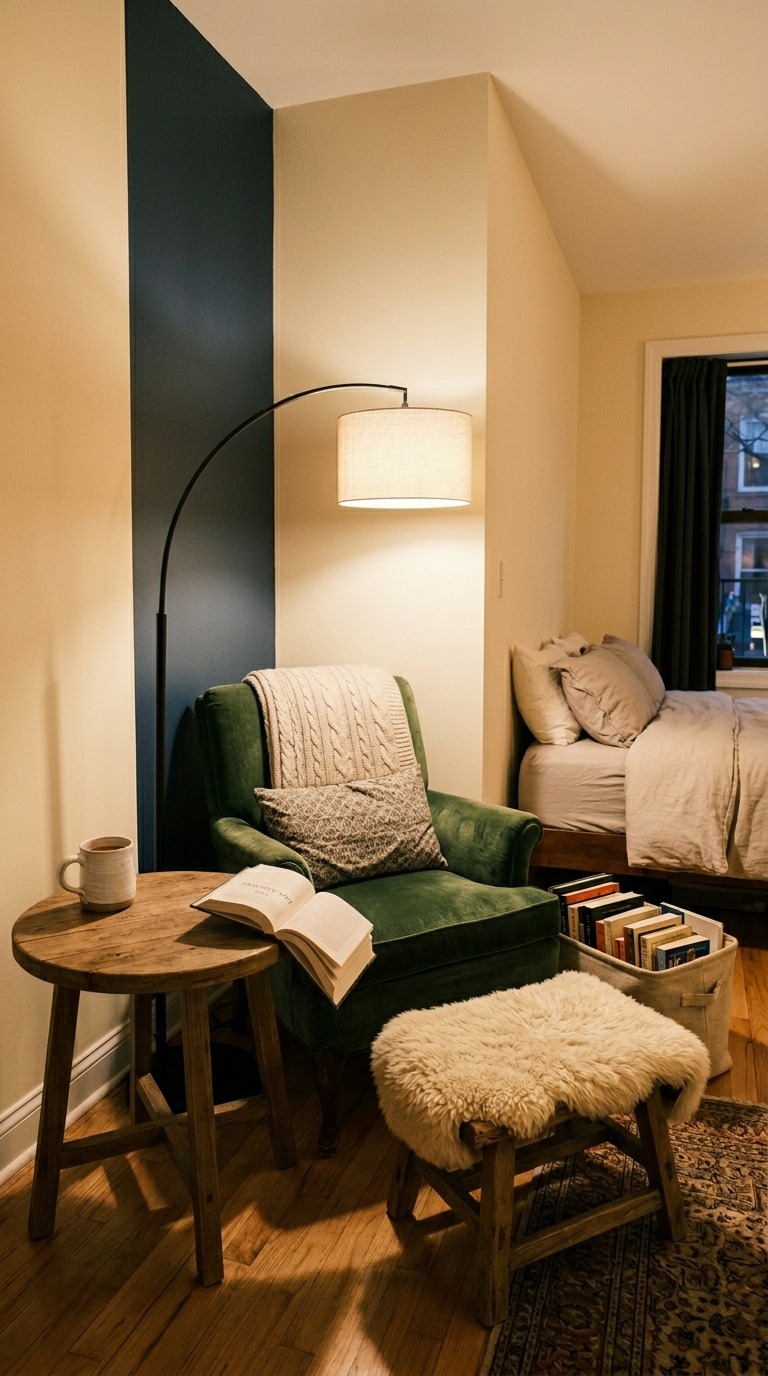
Choose an armchair with generous proportions and a fabric that contrasts your bedding — if your bed is dressed in pale linens, a deep forest green velvet or a rich rust bouclé chair becomes a visual anchor in the opposite corner that gives the room balance. Add a slim arched floor lamp that curves directly over the chair so the light falls exactly where you need it for reading without flooding the whole room. A small round side table at arm height holds your mug, your bookmark, your current read. Keep the nook corner wall in a deeper, more intimate color — Benjamin Moore Hale Navy creates a cozy enclave effect even on a single accent wall. Let the chair and the lamp be the stars.
The truth about a beautiful bedroom is that it does not happen all at once, and it absolutely should not. The rooms I love most — including my own right now — grew piece by piece over months and years, each new addition chosen because it genuinely spoke to something personal rather than because it was on trend. Pick one idea from this list today. Just one. Paint that accent wall. Hang those ceiling-height curtains. Move your lighting around tonight and see what happens when you cut the overhead and turn on only your lamps.
Your bedroom is the first thing you experience when you wake up and the last thing you see before you fall asleep. It shapes your mood in ways that ripple outward into your entire day. You deserve a space that feels like a true sanctuary — not someday when you own a home, not eventually when you have more money, but right now, in the apartment you actually live in. Start today, go slowly, stay personal, and trust that every single thoughtful addition you make will compound into something genuinely beautiful over time.