12 Backyard Garden Ideas That Will Make You Fall in Love With Your Outdoor Space All Over Again
There is something that happens the moment you step outside on a warm morning, coffee in hand, and realize your backyard could genuinely be your favorite room. I felt that exact feeling three summers ago when I finally stopped looking at my sad patch of grass and started treating it like a room worth designing. That moment changed everything for me, and I want the same shift to happen for you today.
This article gives you twelve deeply personal, genuinely actionable backyard garden ideas that I have either tried myself or researched obsessively until I understood every detail. Whether you have a sprawling suburban lot or a modest city backyard, these ideas will give you the creative spark and the real practical guidance you need to start building your outdoor dream space this season.
Raised Cedar Garden Beds
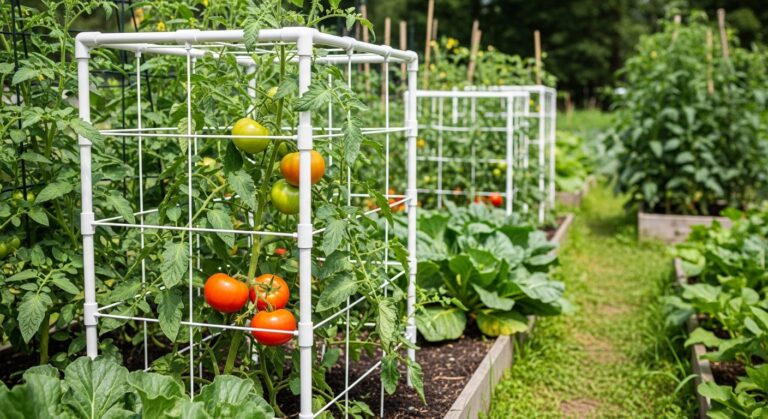
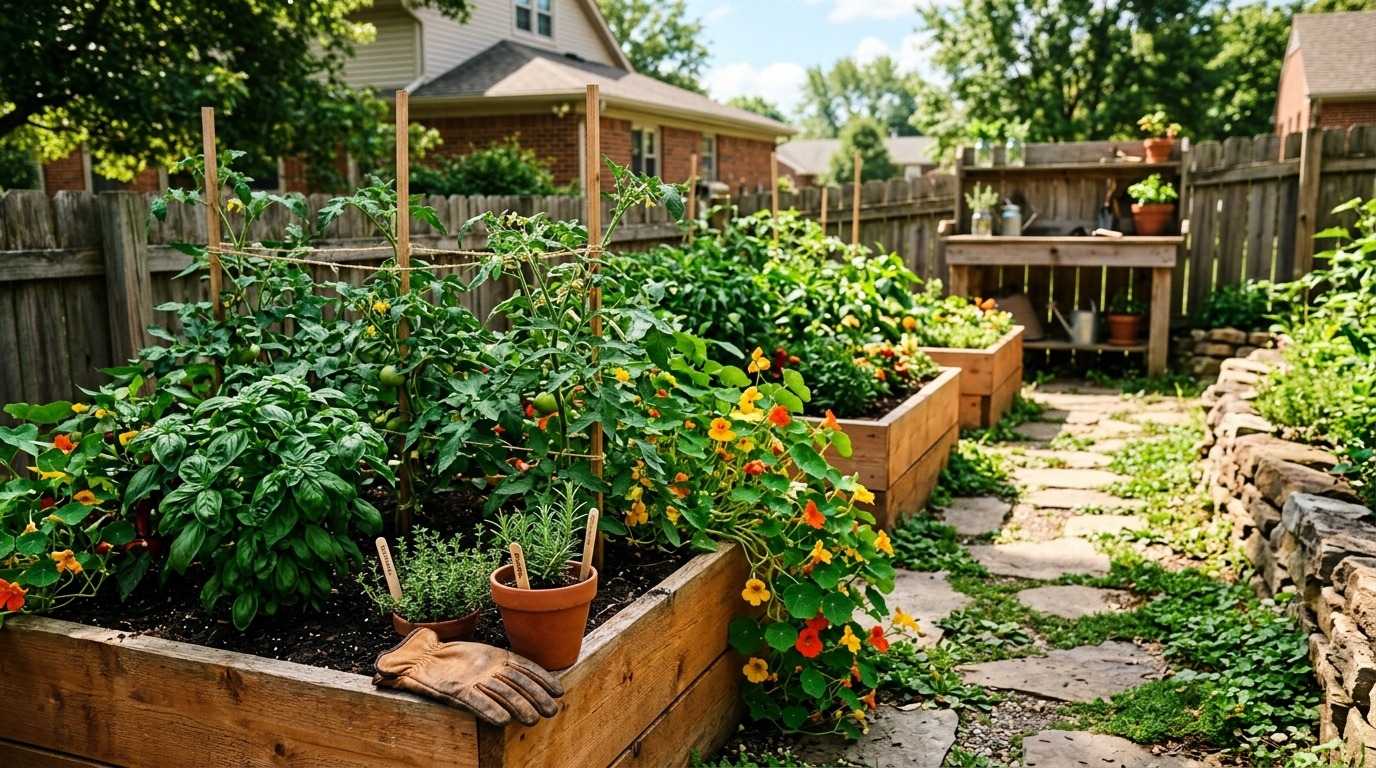
Picture stepping outside on a Saturday morning in June and running your hand along the smooth cedar edge of a raised bed bursting with cherry tomatoes, dark basil, and cascading nasturtiums in fiery orange. The beds sit at a comfortable height so you never kneel on cold ground. Sunlight pools in the rich dark soil and the whole corner of your backyard smells like summer in the most wonderful way possible.
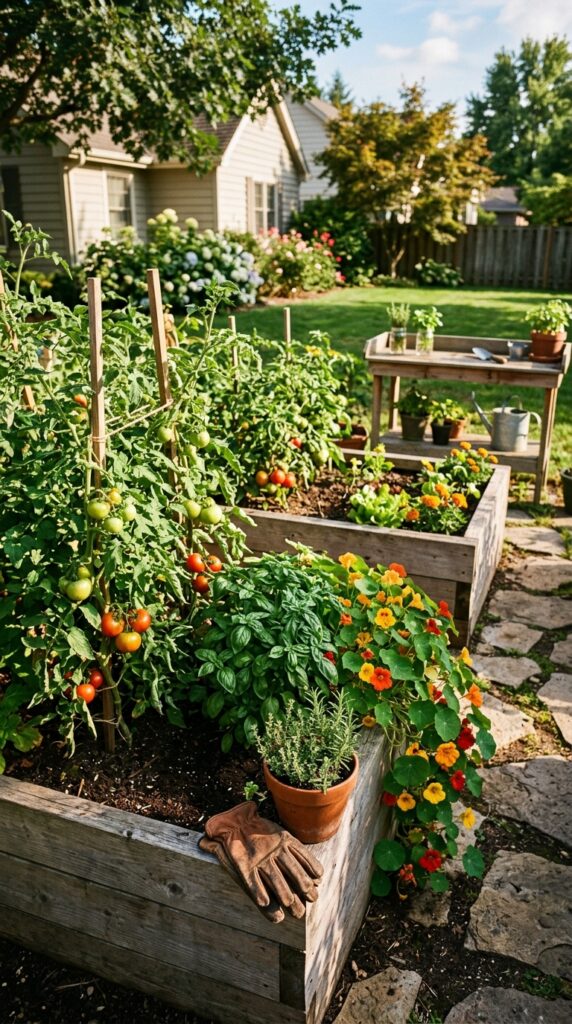
Cedar is the wood I always recommend because it resists rot naturally without any chemical treatment, which matters deeply when you grow food your family eats. I built my first three beds using untreated cedar boards from the lumber yard and filled them with a blend of topsoil, aged compost, and perlite. The key practical detail that changed everything for me was staggering the bed heights — one at 12 inches, one at 18, one at 24 — so the whole setup reads like a living landscape installation rather than a functional grid.
Dreamy Cottage Flower Garden
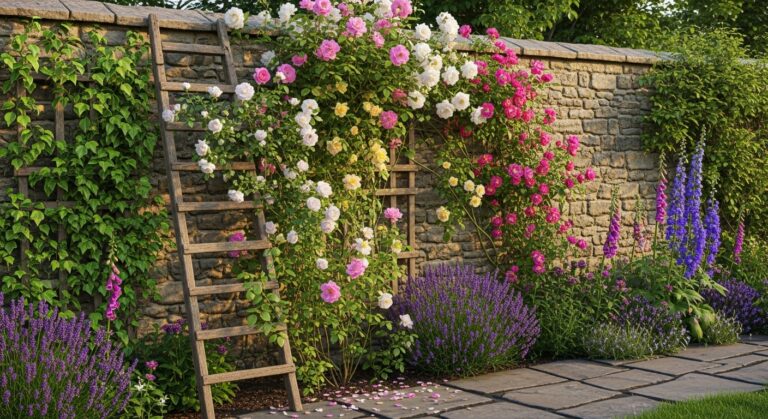
Close your eyes and picture a garden that looks like it grew itself — roses tumbling over a fence, foxglove shooting up in pale pink towers, echinacea swaying in a summer breeze, and lavender threading through everything like purple ribbon. A cottage garden does not demand perfection. It demands layers, abundance, and the beautiful audacity to let plants grow into each other without apology. This style is the antidote to every stiff, over-manicured yard you have ever seen.
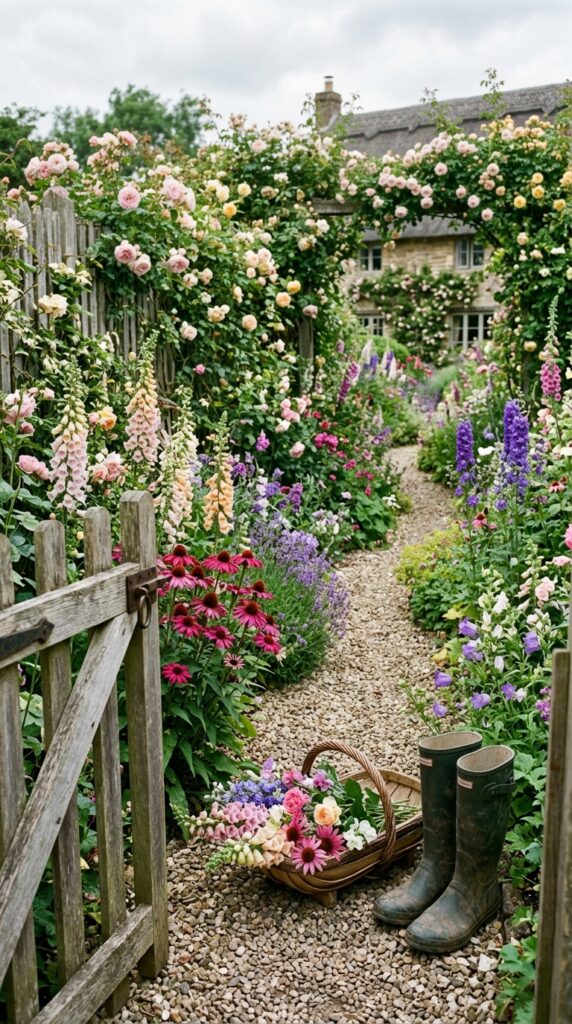
The secret I discovered after two attempts at building my own cottage garden is that you need at least three heights working together at all times. I anchor the back of every border with tall growers — foxglove, delphiniums, and climbing roses on a basic fence-mounted trellis. The middle layer gets echinacea, catmint, and salvia. The front spills with creeping thyme, alyssum, and self-seeding annual poppies. This layered planting creates depth that photographs beautifully and genuinely looks different every single week from May through October.
Vertical Garden Wall
If your backyard is small enough that every square foot counts, a vertical garden wall will genuinely transform the way you see your outdoor space. When I first planted one against the side fence of my old townhouse, I stood back and could not believe how instantly the entire yard felt greener, more intentional, and more alive. Going vertical takes planting off the ground and turns a plain fence or wall into a living, breathing feature you will want to show every person who visits.
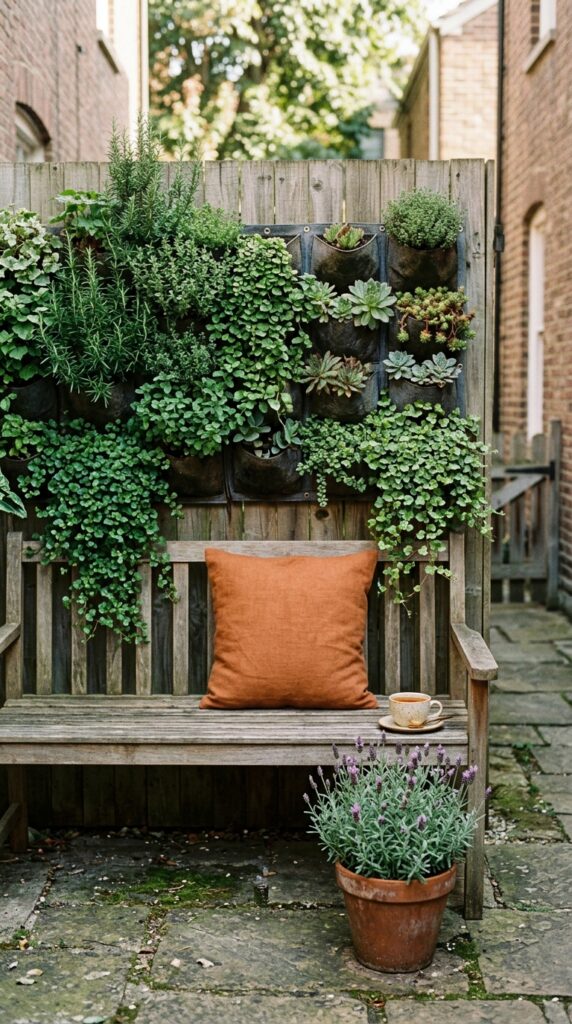
The most practical approach I have found uses modular fabric pocket planters mounted directly onto fence boards with heavy-duty exterior screws. I fill the top rows with drought-tolerant herbs like thyme, oregano, and rosemary because they handle sun and dry conditions without drama. The middle rows get trailing nasturtiums and compact lettuces. The bottom pockets hold mint, which I keep contained here specifically because mint spreads aggressively in the ground. Water consistently with a drip line run along the top row and let gravity do the rest of the work.
Fire Pit Seating Garden
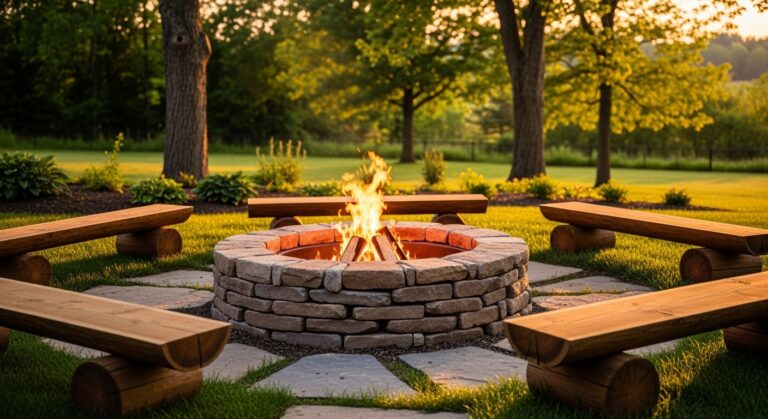
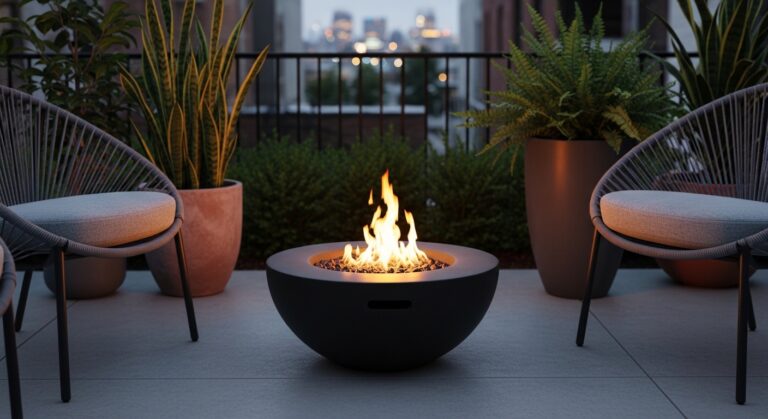
There is a specific kind of magic that happens when flames catch in a garden fire pit and people instinctively lean forward in their chairs. Every conversation gets warmer, every evening gets longer, and suddenly your backyard becomes the place everyone wants to be after dinner. I added a simple stone fire pit to the far corner of my garden three years ago and it has become the single most-used feature in the entire outdoor space by a wide margin.
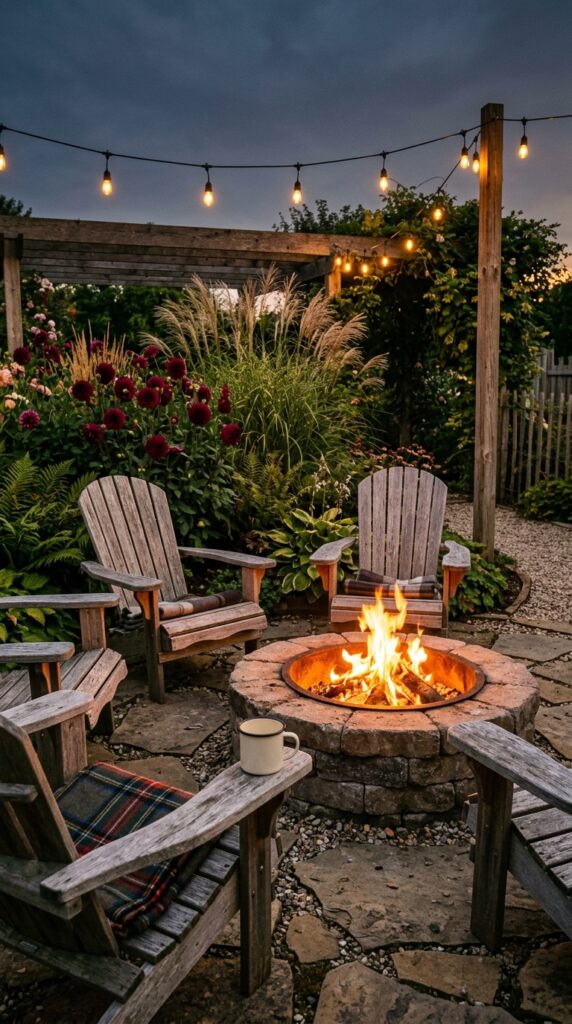
Position the pit on a non-combustible surface — I laid a circular base of natural flagstone pavers, which also defines the seating zone beautifully. Allow at least four feet of clearance between the flames and any seating so warmth reaches guests without discomfort. I built a curved planted border of dahlias, tall ornamental grasses, and rudbeckia directly behind the seating area, which creates a natural privacy screen and makes the whole setup feel intentionally designed rather than casually assembled. Adding a string of weatherproof Edison bulbs on a low overhead wire extends the ambiance long after the fire dies down.
Pergola Garden Room
A pergola turns an ordinary backyard into a destination. The moment I installed mine — a simple cedar structure I assembled over a long weekend — the entire garden reorganized itself around it. Suddenly there was a reason to walk to that corner, a place to aim for, a center of gravity that gave the whole yard a sense of purpose and intention. If you are going to make one structural investment in your outdoor space this year, a pergola delivers more visual impact per dollar than almost anything else.
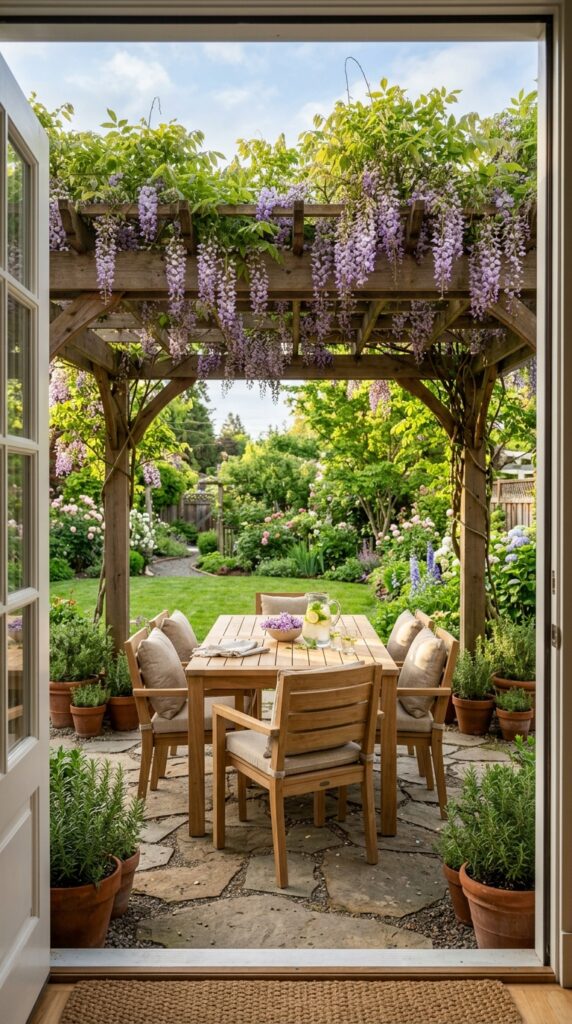
Train a climbing plant up every post from day one — wisteria, climbing roses, or a fast-growing grape vine all work beautifully. I chose wisteria on two posts and a climbing rose called New Dawn in pale blush pink on the other two. Within two growing seasons the overhead canopy was dense enough to create genuine dappled shade across the table below. Line the interior base of the pergola with terracotta pots of rosemary and lavender so guests enjoy scent as well as shade. Hang a simple outdoor lantern from a central beam to extend the space well into the evening.
Cottage Herb and Cutting Garden
I discovered the herb and cutting garden combination almost by accident when I ran out of space to keep them separate. Planting culinary herbs alongside flowers grown for cutting turns a practical garden area into one of the most sensory, satisfying corners of the entire yard. Every morning I walk through it just to brush the rosemary with my hand and let the scent travel with me into the kitchen. That ritual alone was worth building the whole garden.
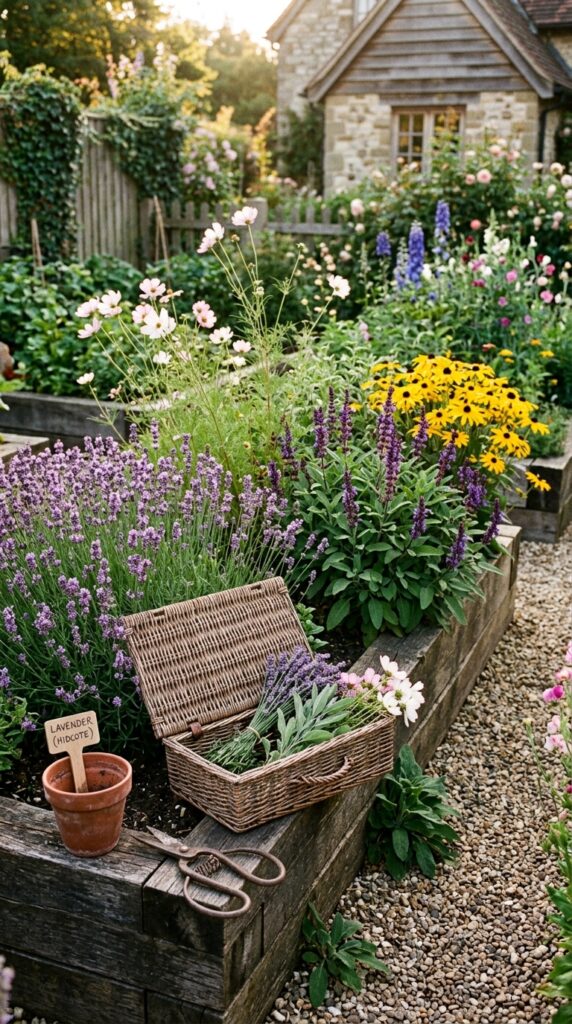
The key is choosing herbs that also offer visual interest — lavender, sage, bronze fennel, and chive blossoms earn their place in both the kitchen and any flower arrangement you cut. Pair them with tall cutting flowers like cosmos, zinnias, and rudbeckia, which bloom prolifically all summer the more you cut them. I use a simple raised bed framework here so soil quality stays high and drainage stays perfect even through the wettest weeks. Harvest herbs in the morning when their oils are most concentrated and immediately put cut flower stems into water for the longest vase life.
Native Wildlife Garden
A native wildlife garden gives something back to the ecosystem outside your back door, and I do not think people fully understand how transformative that feels until they sit beside one on a summer afternoon and watch the butterflies arrive. The first season I planted a dedicated pollinator border with black-eyed Susans, purple coneflower, and wild bergamot, I counted seven different species of butterfly in a single week. My garden felt genuinely alive in a way it never had before with imported ornamentals.
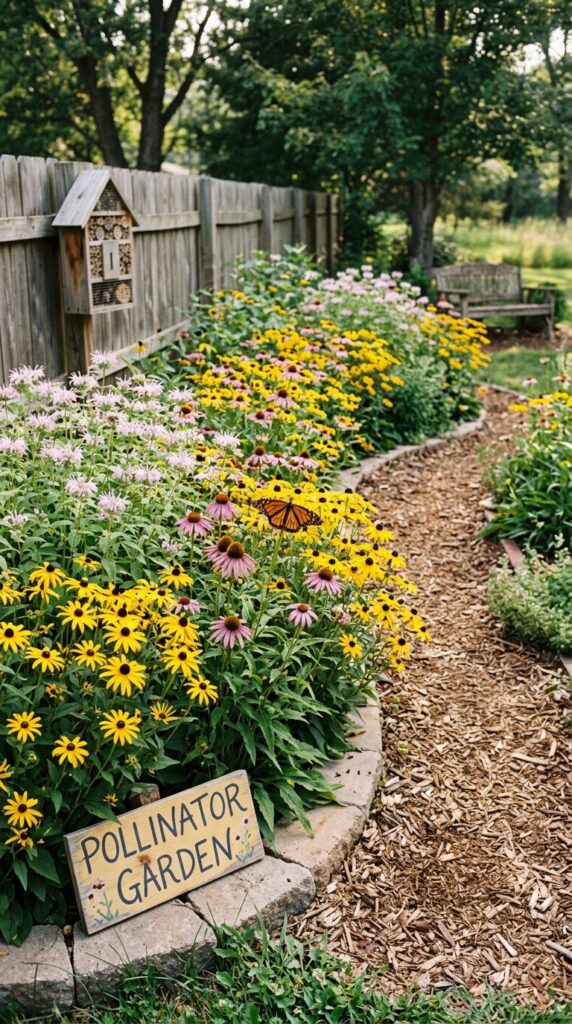
Native plants require dramatically less water, no fertilizer, and no pest intervention once established because they evolved precisely for your local conditions. I cleared a large curved border along the back fence, removed the turf, and filled it with native perennials sourced from a local native plant nursery rather than a big box garden center. The difference in plant quality matters enormously — locally sourced natives adapt faster and establish stronger root systems in their first season. Add a simple cedar bee hotel mounted at eye height and a shallow ceramic dish of fresh water to create a complete mini habitat that genuinely supports your local ecosystem.
Container Garden Patio
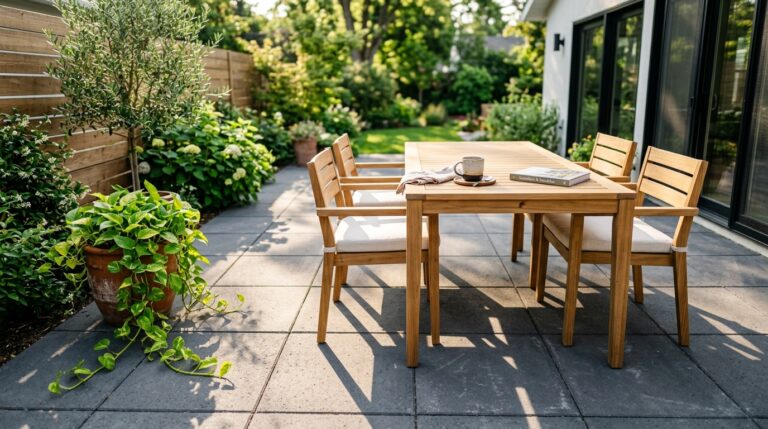
Container gardening on a patio showed me that a small space has absolutely no business being boring. When I lived in a house with a back patio barely twelve feet wide, I used containers in every size and material I could find — aged terracotta, galvanized metal, pale concrete, old olive jars — and filled them with a deliberate mix of thriller, filler, and spiller plants so each pot told its own visual story while contributing to the whole. That patio became one of my proudest garden achievements despite being the smallest space I ever worked with.
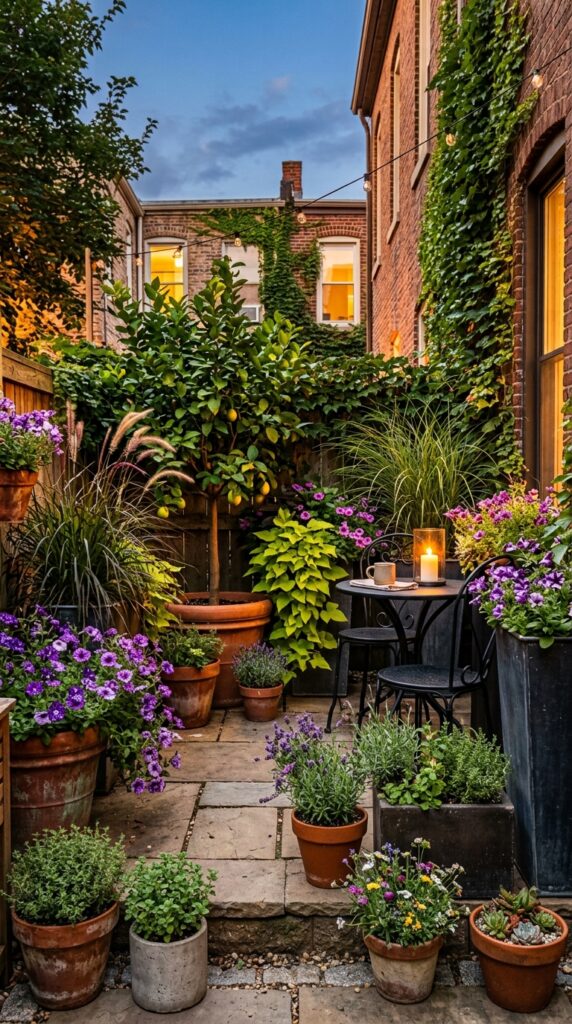
The thriller-filler-spiller rule genuinely works and I cannot recommend it strongly enough. Each container needs a tall dramatic focal plant, a mounding plant to fill the middle, and a trailing plant to cascade over the edge. I love ornamental grass as the thriller, calibrachoa as the filler, and sweet potato vine in chartreuse as the spiller — that combination looks expensive and grows effortlessly from June through the first frost. Group containers in odd numbers and vary heights by placing shorter pots on upturned terracotta pots or small wooden crates to build a layered skyline effect.
Garden Pathway and Border
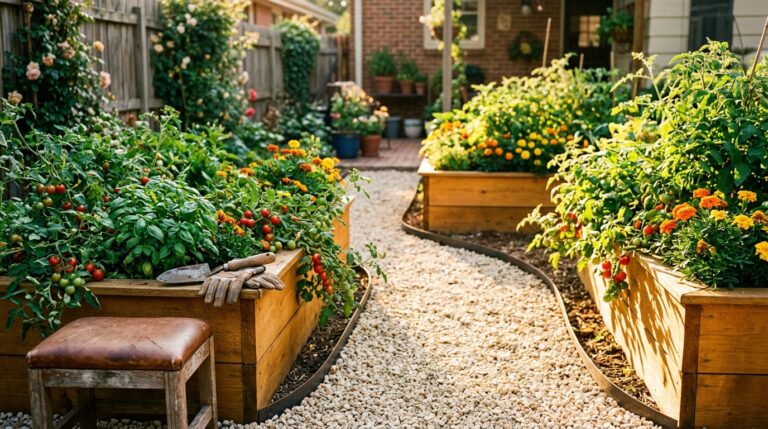
A garden pathway does something quietly remarkable to the experience of being in an outdoor space — it gives you somewhere to go and something to discover at the end. Before I laid my flagstone path, my backyard was a space I crossed to reach the shed. After the path curved through the planting borders, it became a garden I actually walked through slowly, noticed things in, and genuinely spent time enjoying. That shift cost me less than two weekends of work and has paid back in daily pleasure ever since.
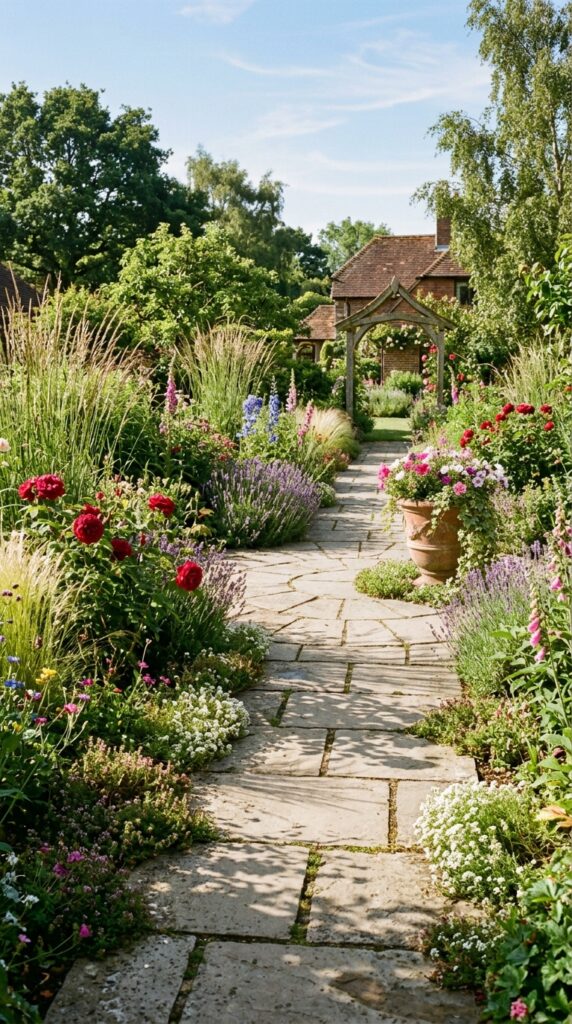
Flagstone is my personal preference over pavers or gravel because natural irregular stones settle into a garden and look as though they have always been there. I set each stone with a sand base and planted creeping thyme between the joints — it releases the most beautiful herbal fragrance when you brush it with your foot and it requires essentially no maintenance once established. Border both sides of the path with generous plantings at varying heights so guests feel embraced by the garden as they walk rather than simply passing through an open lawn.
Outdoor Water Feature Garden
Water in a garden changes everything on a sensory level that no other element quite matches. The first summer I added a small tiered stone fountain to the shaded corner under my oak tree, I noticed I started seeking that corner out specifically — drawn by the gentle sound of moving water before I even consciously registered why. That space under the tree had been a blank problem area for years, and the fountain transformed it into the most peaceful corner of the entire property practically overnight.
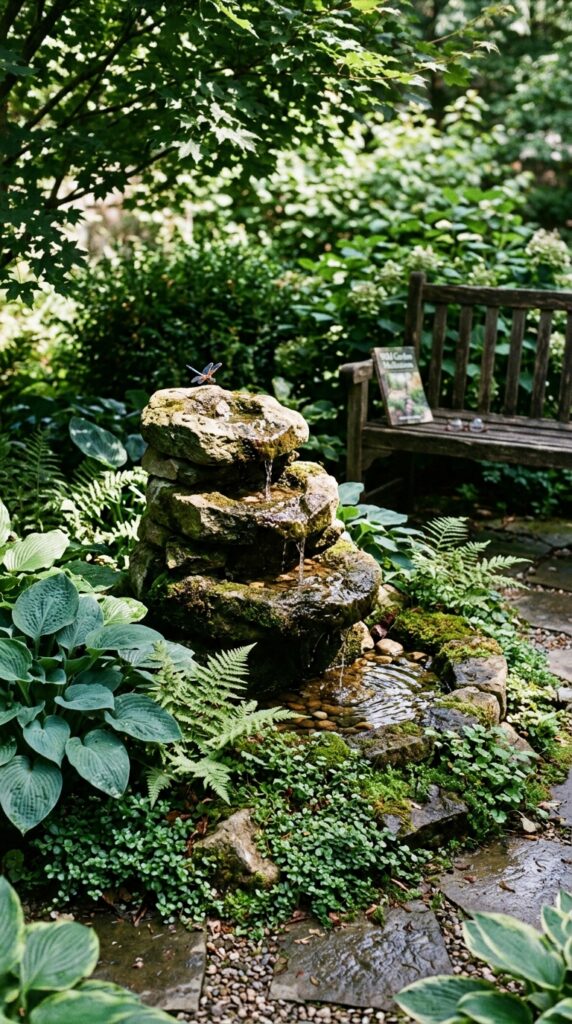
A tiered stone fountain or a simple recirculating urn fountain installs in a single afternoon and runs on a low-draw pump that costs pennies to operate. Position the feature in a spot where you can actually hear it from your primary seating area — sound carries beautifully across a garden and the auditory calm it delivers rivals any visual feature. Plant the surrounding ground with hostas, ferns, and creeping Jenny, which all love the humidity a water feature generates and create the kind of lush shaded groundcover that makes a feature feel fully integrated rather than dropped into bare soil.
Garden String Light Canopy
String lights in a backyard garden are one of those ideas that sounds simple until the moment you switch them on for the first time on a warm evening and the whole space transforms into something that feels genuinely enchanted. I strung weatherproof Edison bulbs in a low canopy above my outdoor sofa three summers ago and I genuinely do not think I have spent a single summer evening inside since. There is something about that warm golden overhead glow that makes any ordinary Tuesday feel like an occasion worth savoring.
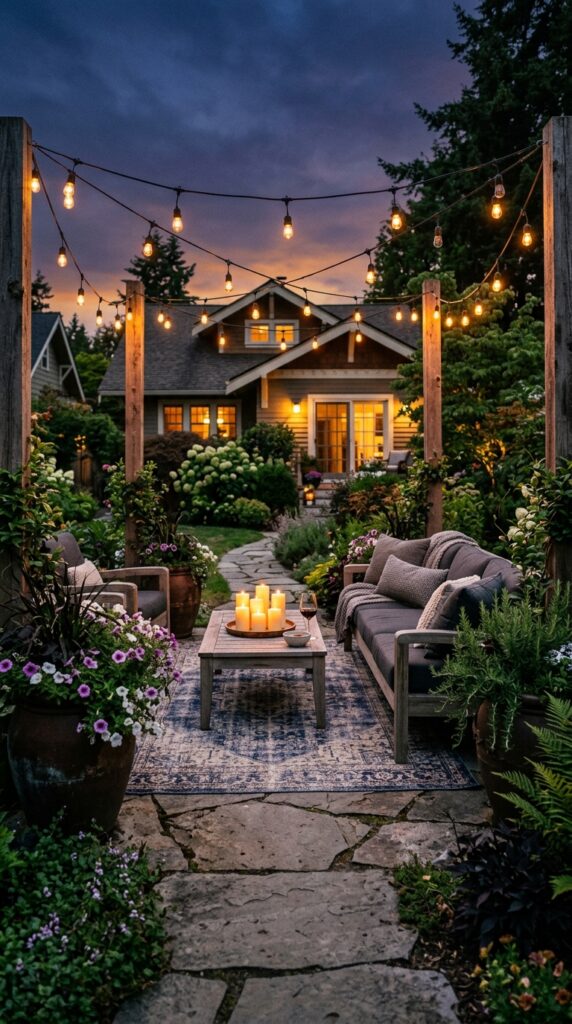
Use properly rated outdoor string lights on commercial-grade wire rather than the cheap indoor versions people try to use outside — they fail quickly in rain and heat. Mount them between sturdy wooden posts set in concrete or anchor them to the pergola structure if you have one. Hang the strands at a consistent height of eight to nine feet so the glow falls at a flattering level across faces and furniture. Pair the overhead string lights with a cluster of three or four pillar candles on the coffee table below so the lighting has warmth at eye level as well as overhead.
Layered Mixed Border Garden
A layered mixed border running the full length of a garden fence is the single most transformative thing I have ever done to a backyard, and I say that as someone who has built raised beds, installed pergolas, and laid stone pathways. When a border is planted in genuine depth — tall growers at the back, mid-height in the middle, low spillers at the front — the whole garden feels finished, abundant, and professionally designed in a way nothing else quite replicates. My border took one full weekend to plant and looked established within six weeks.
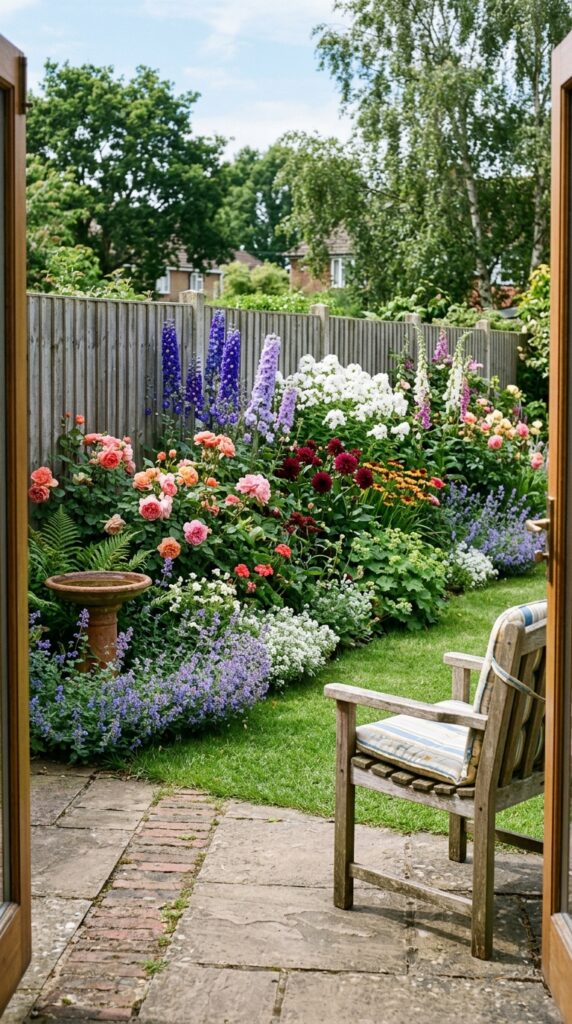
The layering principle that changed everything for me was treating each third of the border depth like its own distinct planting zone. Back layer gets tall structural plants — delphiniums, roses on a fence-mounted wire, and tall ornamental grasses that add movement. Middle layer gets dahlias, catmint, salvias, and geraniums. Front layer gets creeping phlox, alyssum, and low sedums that soften the hard edge where the border meets the lawn. Repeat plant groupings every three to four feet along the length of the border so the eye travels smoothly rather than jumping between individual specimens fighting for attention.
Conclusion
Your backyard garden does not need to be finished all at once to feel like something genuinely worth loving. Pick one idea from this list — just one — and give it your full attention this weekend. The momentum that builds from one real, visible change in your outdoor space is extraordinary and deeply motivating.
I truly believe that the garden you dream about is closer than you think. You do not need a big budget or a big lot. You need a clear idea, a willingness to start, and the confidence that your outdoor space deserves as much thoughtful care and personality as any room inside your home.