15 Cheap Trellis Ideas to Upgrade Your Garden on a Budget
Ever looked at your garden and thought, “This needs something — but I have no idea what”? A trellis might be exactly what you’re missing. It adds structure, beauty, and vertical growing space without requiring a landscaping degree or a big budget. The best part? You can build or buy one for next to nothing.
Whether you’re growing climbing roses, cucumbers, sweet peas, or just want a gorgeous garden backdrop, a trellis transforms an ordinary outdoor space into something that looks intentional and lush. And you don’t need to spend hundreds of dollars to get there.
We’ve pulled together 15 genuinely creative, budget-friendly trellis ideas that real gardeners actually use — from repurposed wood to bamboo, wire to old ladders. Let’s get into it.
Why Every Garden Needs a Trellis
Before we jump into the ideas, let’s talk about why a trellis is one of the smartest investments you can make in your garden — even on a tight budget.
Vertical growing is a game-changer, especially if your garden space is limited. Instead of spreading plants out horizontally, you train them upward. This saves ground space, improves air circulation, and actually produces healthier plants. Cucumbers grown on a trellis, for example, develop straighter fruits and suffer far fewer fungal problems than those sprawling on the ground.
A trellis also adds year-round visual interest. Even in winter, the structure itself becomes a design element. And when spring rolls around, watching your vines climb up a handmade trellis feels deeply satisfying in a way that store-bought garden décor never quite matches.
Now, let’s get to the good stuff
Bamboo Pole Trellis
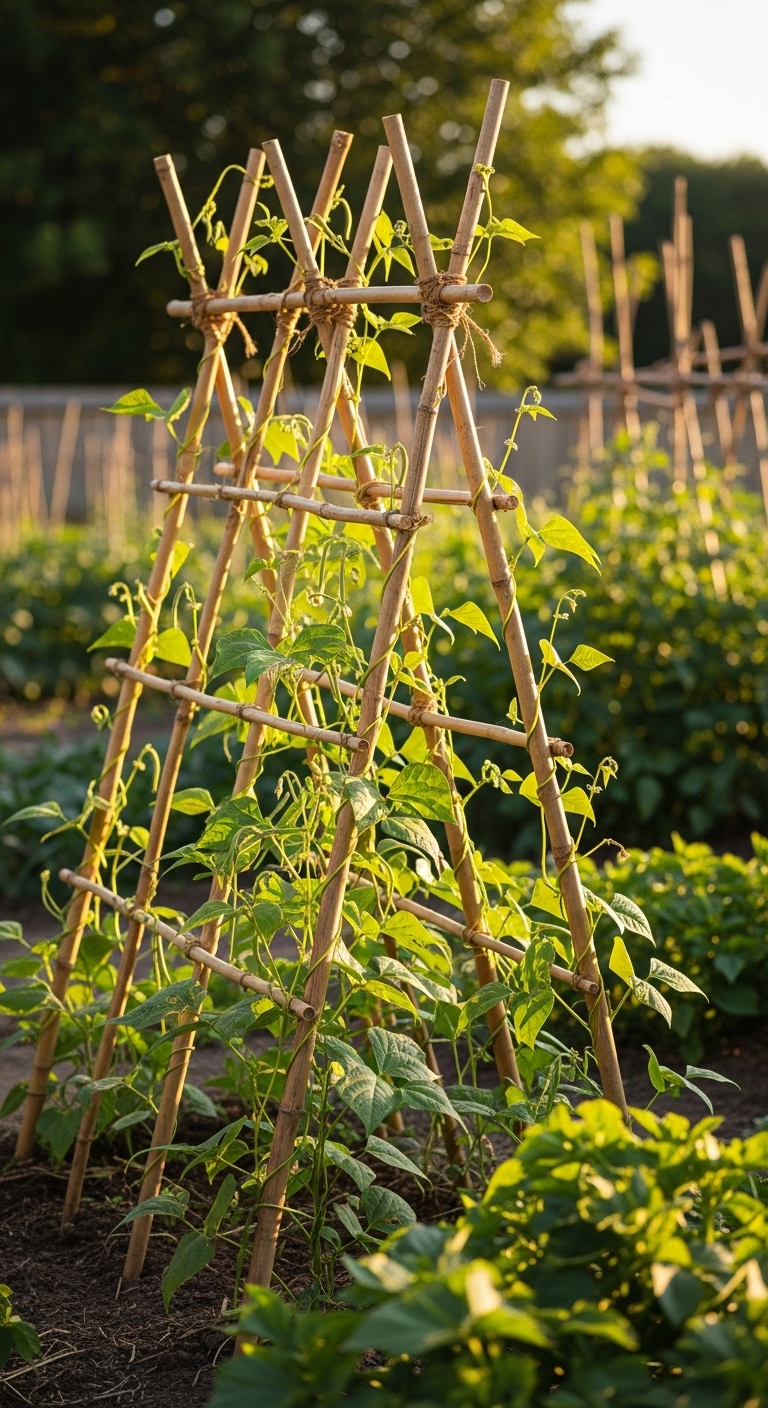
If you want the most affordable trellis on the planet, bamboo is your answer. A bundle of bamboo poles costs just a few dollars at most garden centers or online, and you can build something genuinely beautiful in under an hour.
Here’s the classic approach: push several bamboo poles into the ground in a row, then weave horizontal poles across them and secure everything with jute twine. You can also lean two rows of poles toward each other at the top to form a tent or A-frame shape — this works especially well for runner beans and peas.
What makes bamboo brilliant:
- It’s lightweight but surprisingly strong
- It weathers beautifully over time, developing a silver-grey tone
- You can cut it to any height with simple garden shears
- It’s fully compostable at the end of its life
- It blends naturally into almost any garden style
One practical tip: push the poles at least 12 inches into the ground. Climbing plants loaded with foliage can get surprisingly heavy in summer, and a shallow bamboo trellis will lean or fall over in a strong wind.
Old Wooden Ladder Trellis
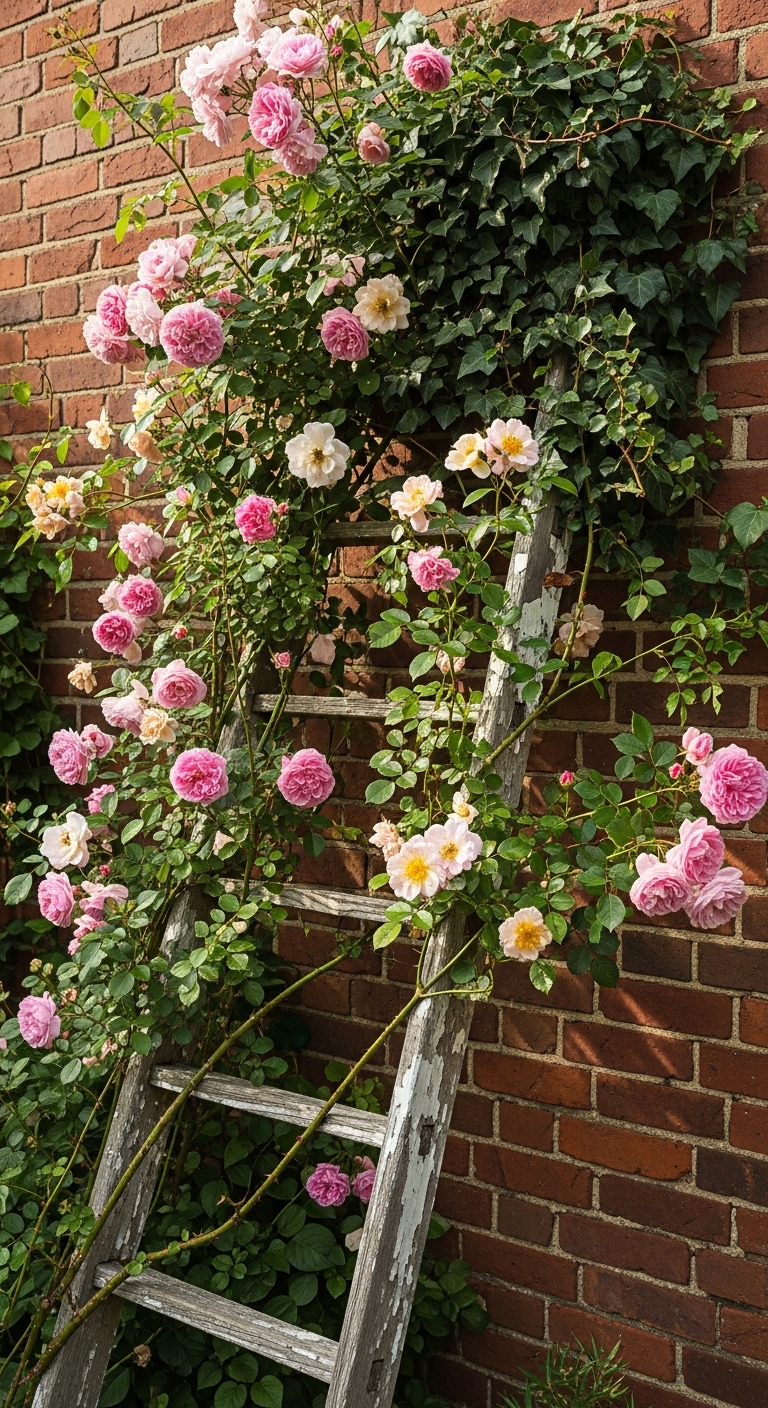
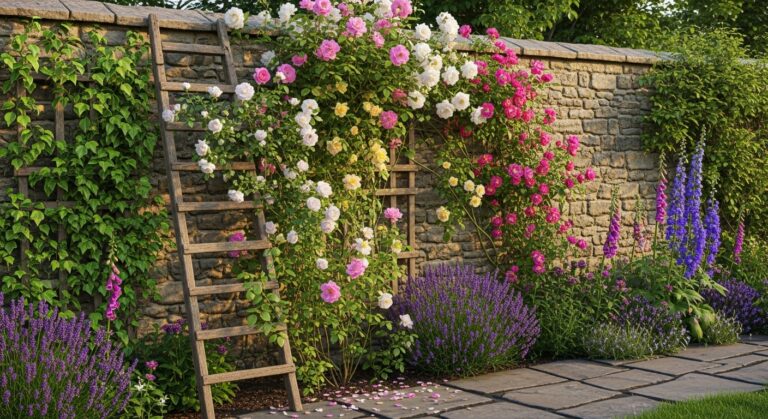
Chances are you’ve got an old ladder sitting in your garage or shed collecting dust. Before you haul it to the tip, consider this: a leaned wooden ladder makes one of the most charming and functional trellises you can create — for literally zero dollars.
Lean it against a fence, a wall, or even stand it freestanding with a bit of ground anchoring, and let your climbing plants do the rest. Clematis, jasmine, and even light climbing roses grow beautifully through the rungs.
You can leave the ladder as-is for a rustic, weathered look, or sand it back and paint it a bold colour — deep green, matte black, or classic white all look stunning. A painted ladder trellis in a cottage garden setting looks like something from a Pinterest board, except you made it yourself from something you already owned.
Tips for getting the most from a ladder trellis:
- Sand down any rough or splintering wood before placing it near plants
- Use a waterproof outdoor paint or wood sealer to extend its life
- Secure the base with a couple of tent pegs or ground stakes if you live in a windy area
- Add some twine horizontally between rungs for extra climbing support
Wire and Wooden Post Trellis
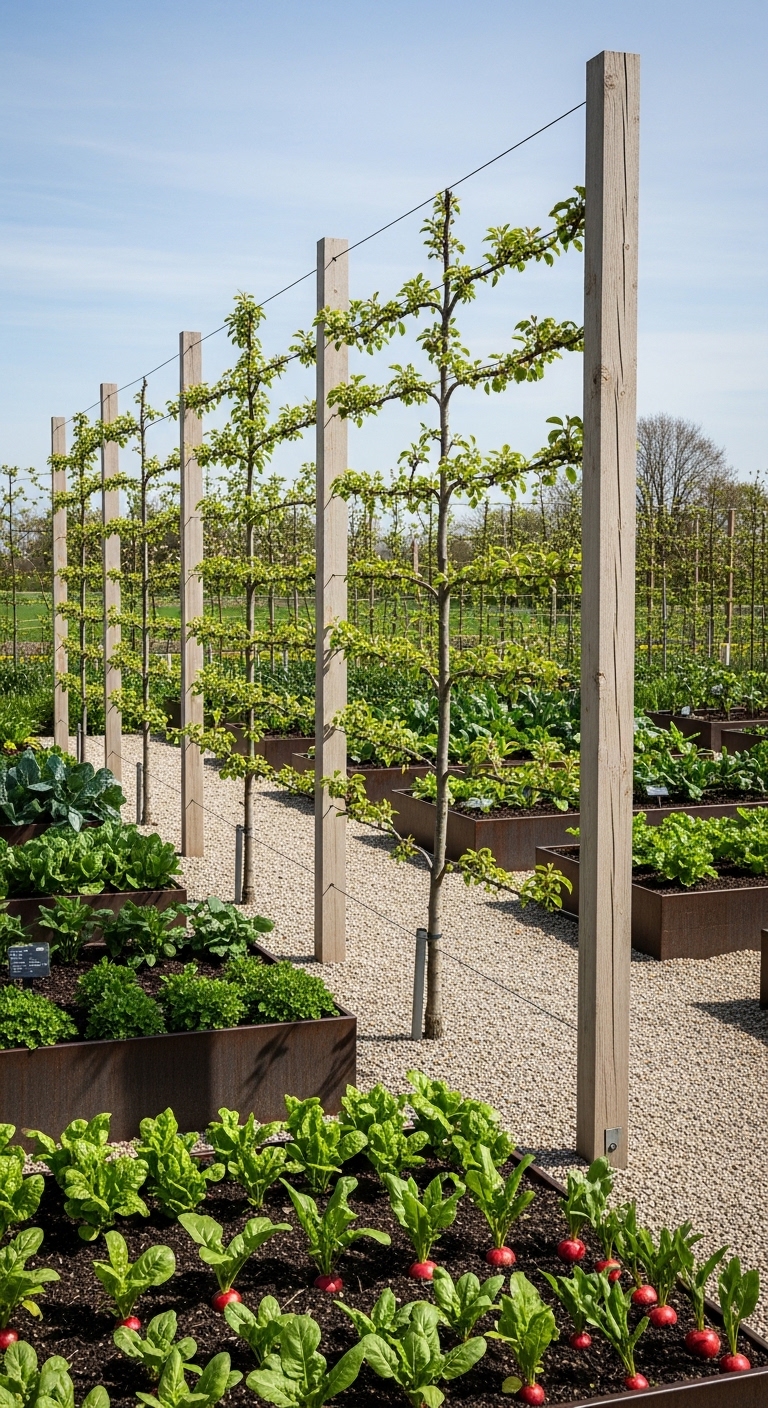
This is the trellis that serious vegetable gardeners and fruit growers swear by — and it’s far cheaper than you’d expect to build yourself.
The basic concept is simple: you drive two or three sturdy wooden posts into the ground and string galvanized wire horizontally between them at regular intervals. It’s clean, functional, incredibly strong, and surprisingly beautiful in the right setting.
This style works brilliantly for:
- Espalier fruit trees (apple, pear, plum)
- Grape vines
- Raspberry canes
- Climbing roses trained flat against a fence line
- Rows of sweet peas in a cutting garden
The materials are inexpensive. You can pick up treated fence posts cheaply at any DIY store, and a roll of galvanized wire is a few dollars and lasts for years. Use a wire tensioner at each end to keep the lines taut and neat.
One important detail: space your wires about 18 inches apart vertically. This gives plants enough room between tiers and makes it easier to tie and train stems as they grow.
PVC Pipe Trellis
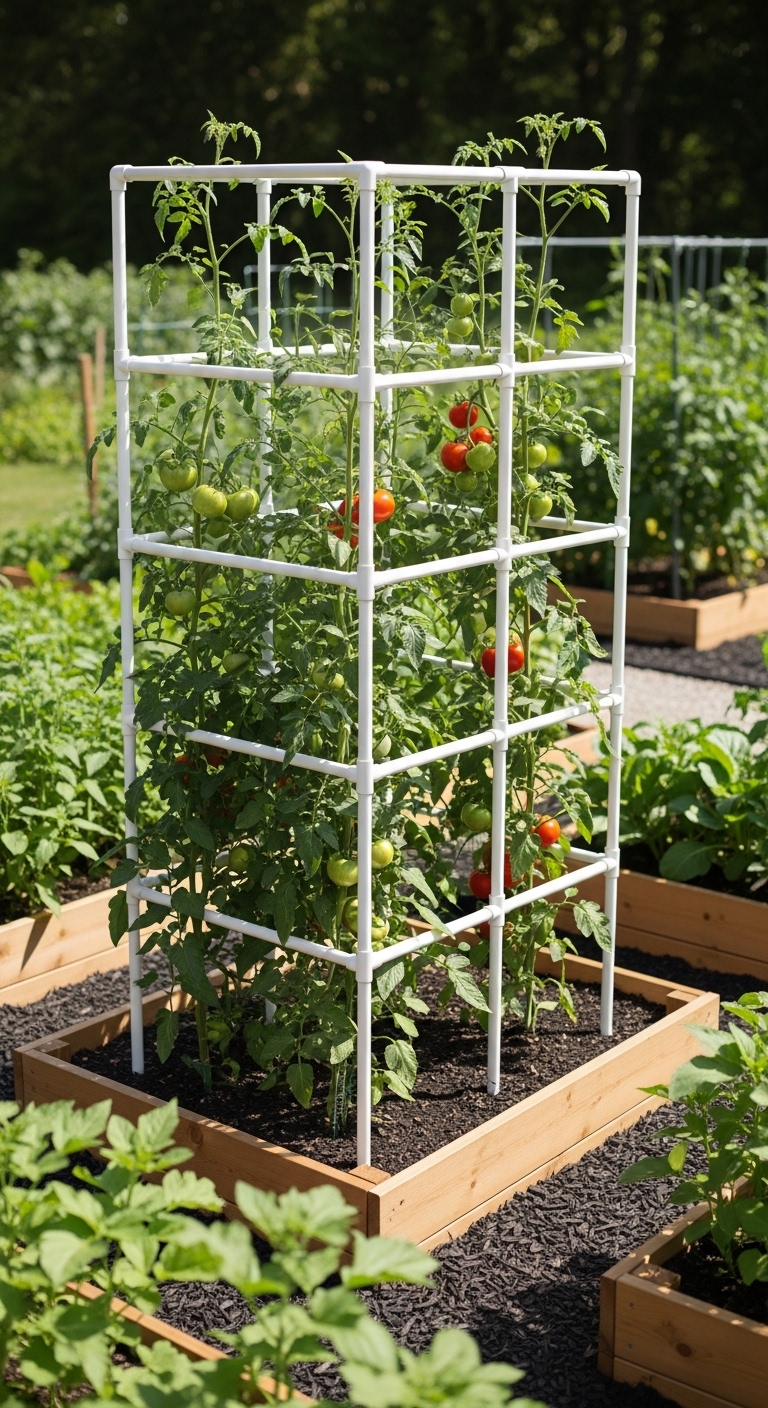
PVC pipe gets a bad reputation in garden design, but hear us out — when used creatively, it makes one of the most durable, lightweight, and affordable trellis structures available.
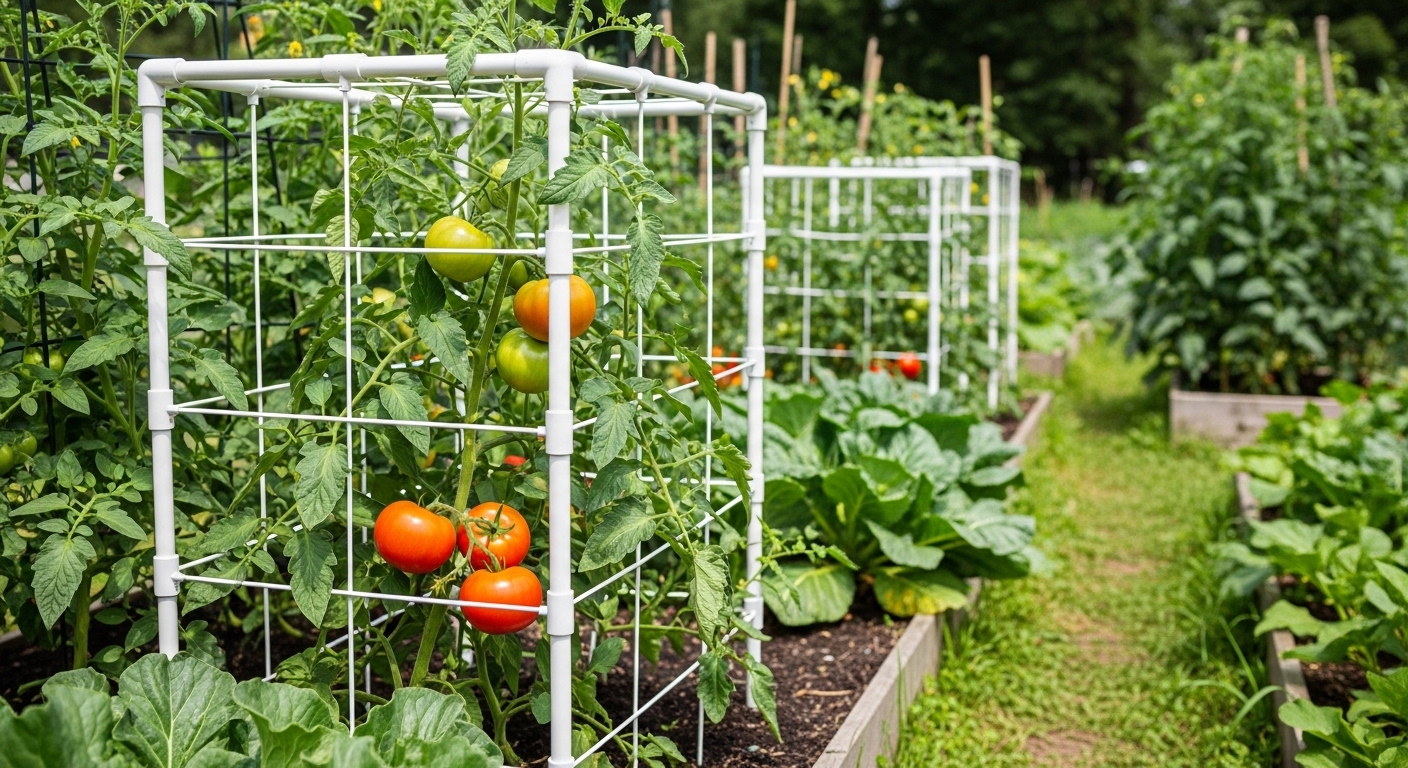
You can buy PVC pipe from any plumbing or DIY store for very little money, cut it to length with a hacksaw, and connect it using T-joints and elbow connectors. No tools beyond a basic hacksaw are needed.
The most popular design is a simple rectangular grid — two vertical uprights connected by horizontal pipes across, creating a ladder-style trellis. You can thread twine or garden netting through the grid for even more climbing surface.
Why PVC works well:
- It doesn’t rot, rust, or warp
- It’s incredibly light — easy to move and store at the end of the season
- You can paint it with spray paint to match your garden aesthetic
- It’s surprisingly strong for its weight
- Connections snap together quickly with standard plumbing fittings
For a raised bed tomato trellis, build a simple A-frame from PVC and drape garden netting over it. Your tomato plants will thank you for the support, and you’ll spend maybe five dollars on materials.
Repurposed Wooden Pallet Trellis
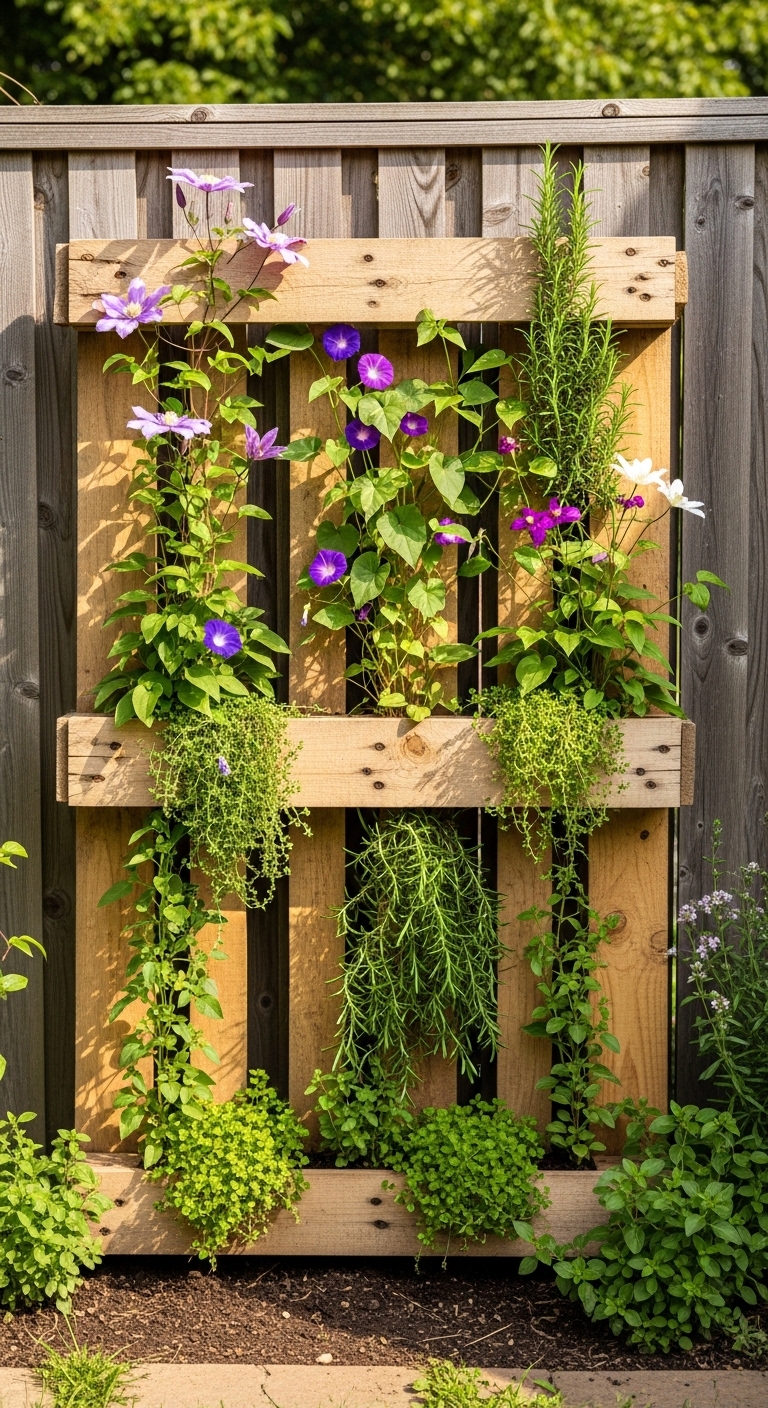
Wooden pallets are one of the great free resources of the modern world. Businesses, hardware stores, and garden centers throw them out constantly — and they make fantastic trellises with almost zero effort.
Stand a pallet upright and lean it against a wall or fence, or anchor it into the ground with two metal stakes. The slats create a natural grid that climbing plants love. You can also add a few extra horizontal pieces of timber across the wider gaps to create more climbing surface.
For a polished look, sand the pallet down, fill any major gaps with wood filler, and give it a coat of outdoor wood paint. A freshly painted pallet trellis looks intentional and stylish rather than improvised.
Best plants for a pallet trellis:
- Sweet peas
- Nasturtiums
- Climbing beans
- Lightweight clematis varieties
- Ivy or creeping thyme for a slower, denser cover
One important safety note: always check that the pallet is marked HT (heat treated) rather than MB (methyl bromide treated). MB-treated pallets were chemically treated with a pesticide and should never be used in a food garden. HT pallets are completely safe.
Copper Pipe Trellis
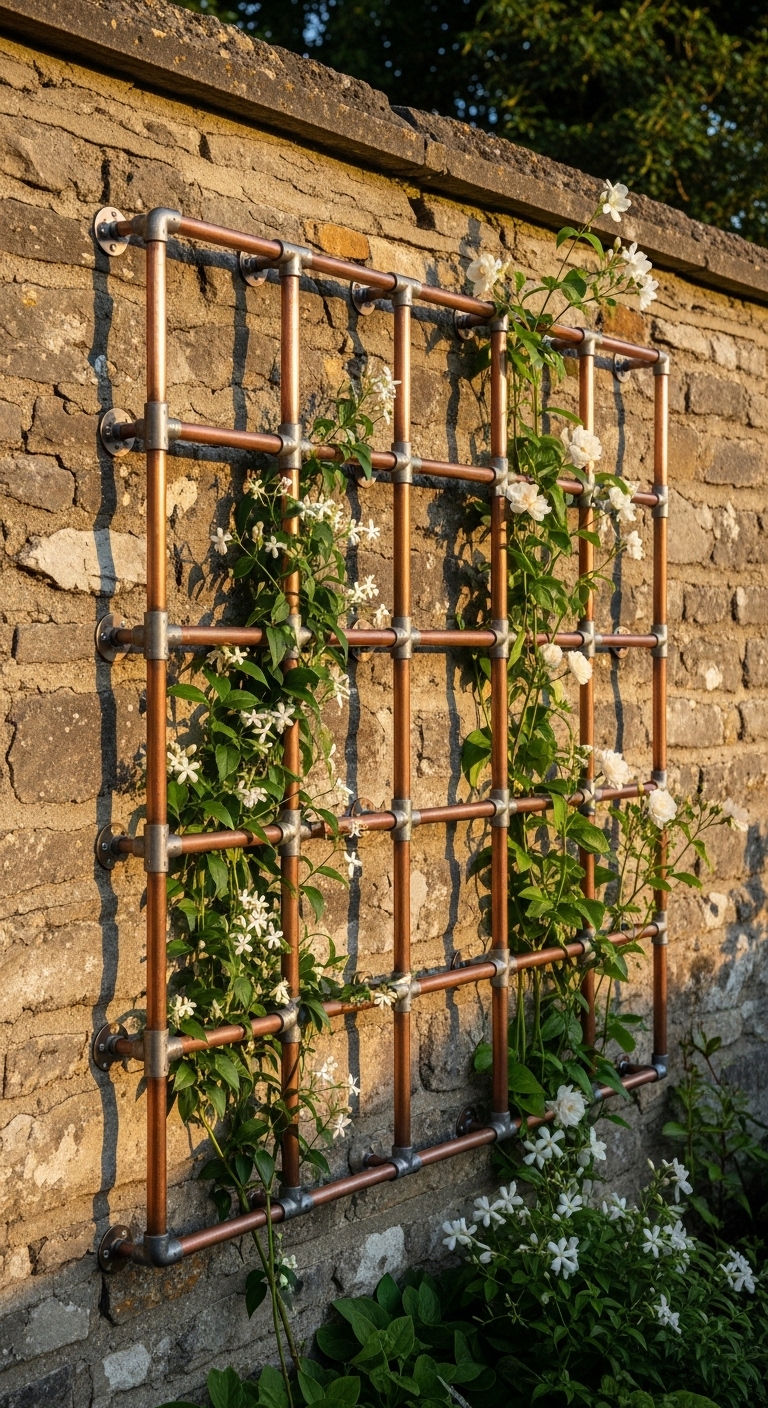
If you want to build something that looks genuinely expensive while spending very little, copper pipe is your secret weapon. It’s more affordable than most people realize, especially if you buy off-cuts from a plumbing supplier, and the warm metallic tone it develops over time is absolutely stunning.
Build a simple rectangular frame from copper pipe, add a few cross-bars for structure, and mount it flat against a wall or fence using pipe clips. As it weathers, it develops a beautiful verdigris patina that turns from bright orange-gold to rich, mottled green-brown — completely naturally, with zero effort from you.
What works especially well on a copper trellis:
- Climbing roses (the warm tones complement almost any flower colour)
- Jasmine
- Passion flower
- Wisteria (for a larger, more heavy-duty version)
Use standard plumbing T-joints and straight connectors — no soldering required. Everything simply pushes and clicks together, and you can disassemble it in minutes if you ever want to change the design.
Twine and Branch Natural Trellis
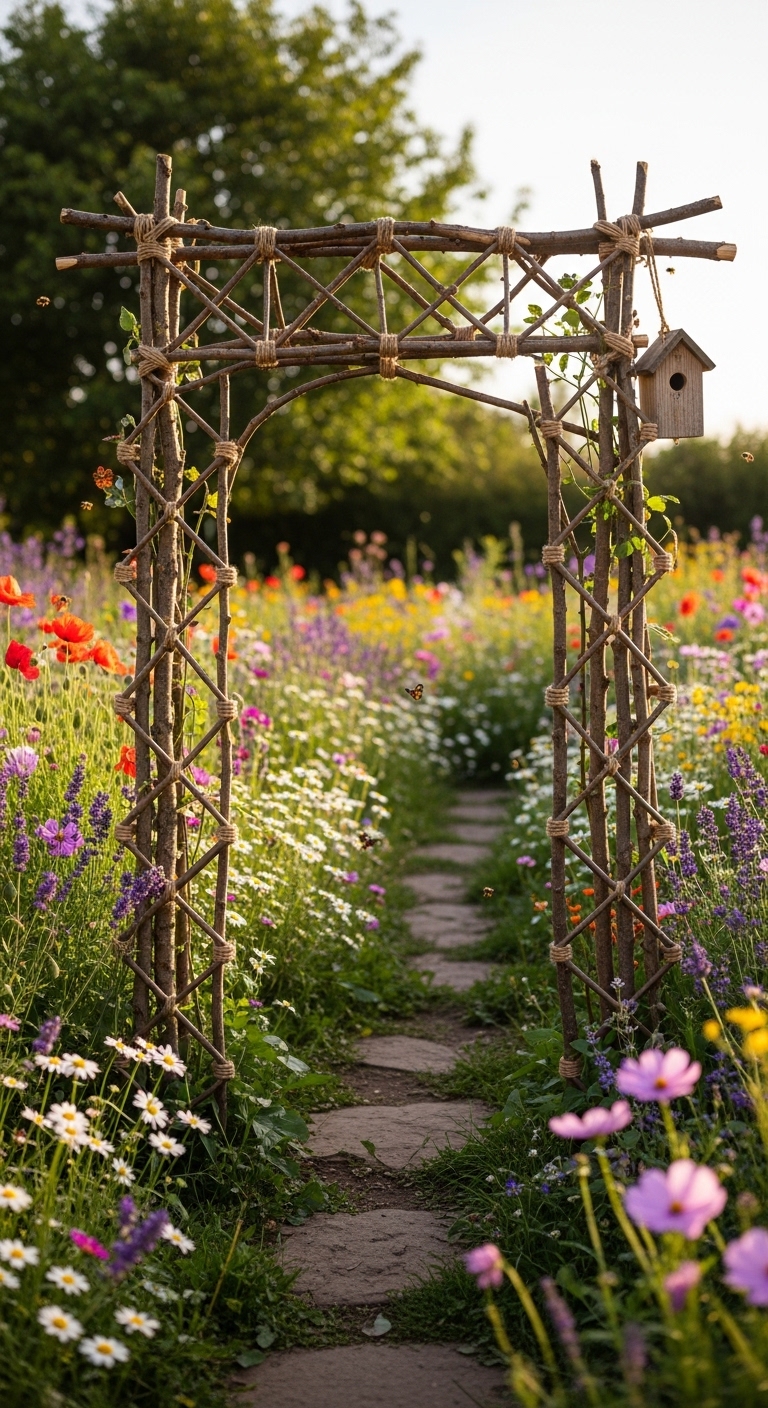
This one costs almost nothing if you have access to any trees or hedgerows. Collect sturdy, straight branches of similar thickness — hazel, willow, and birch all work beautifully — and weave them together using jute twine to create a grid or diamond pattern.
The result looks like something from an artisan garden show, and it costs you a few dollars of twine at most. Push the vertical branches firmly into the ground and weave horizontals across, tying each intersection securely.
Natural branch trellises work best in cottage-style or wildflower gardens where the organic look fits the aesthetic. They typically last two to three seasons before the wood starts to soften and degrade — but at that point, you simply compost the whole thing and build a fresh one.
Practical tips for a branch trellis:
- Use branches that still have their bark on — they’re stronger and last longer
- Choose branches at least 1 inch in diameter for the main vertical supports
- Soak willow branches in water before bending them — they become far more flexible
- Tie intersections with a double knot for extra security
Metal Rebar Trellis
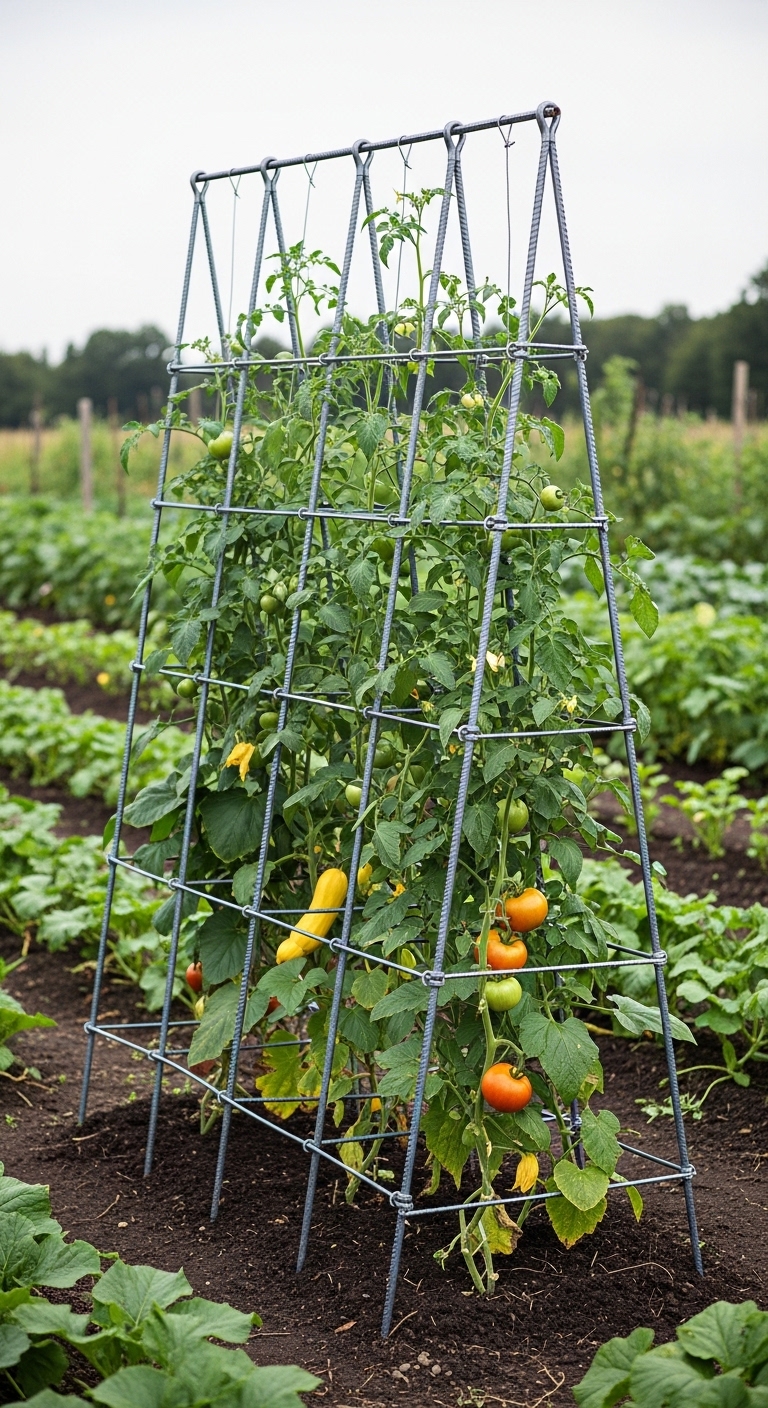
Rebar — the steel reinforcing rod used in construction — is one of the most underrated trellis materials in the gardening world. It’s incredibly strong, weather-resistant, and costs very little from any builders’ merchant.
Drive rebar stakes into the ground at intervals, then connect them horizontally with galvanized wire or zip ties. You can also bend rebar into arches using simple leverage — lean it across two fixed points and press down gradually to create a gentle curve. Rebar arches covered in climbing plants are absolutely beautiful.
Where rebar trellises shine:
- Supporting heavy crops like butternut squash, melons, or climbing courgettes
- Creating permanent structures that don’t need replacing every year
- Building arched garden walkways
- Forming circular or spiral trellis shapes for visual interest
The only downside is that rebar is heavy and not the easiest material to work with if you want complex shapes. But for simple vertical or arched structures, it’s nearly indestructible and genuinely cheap.
Chicken Wire Trellis Frame
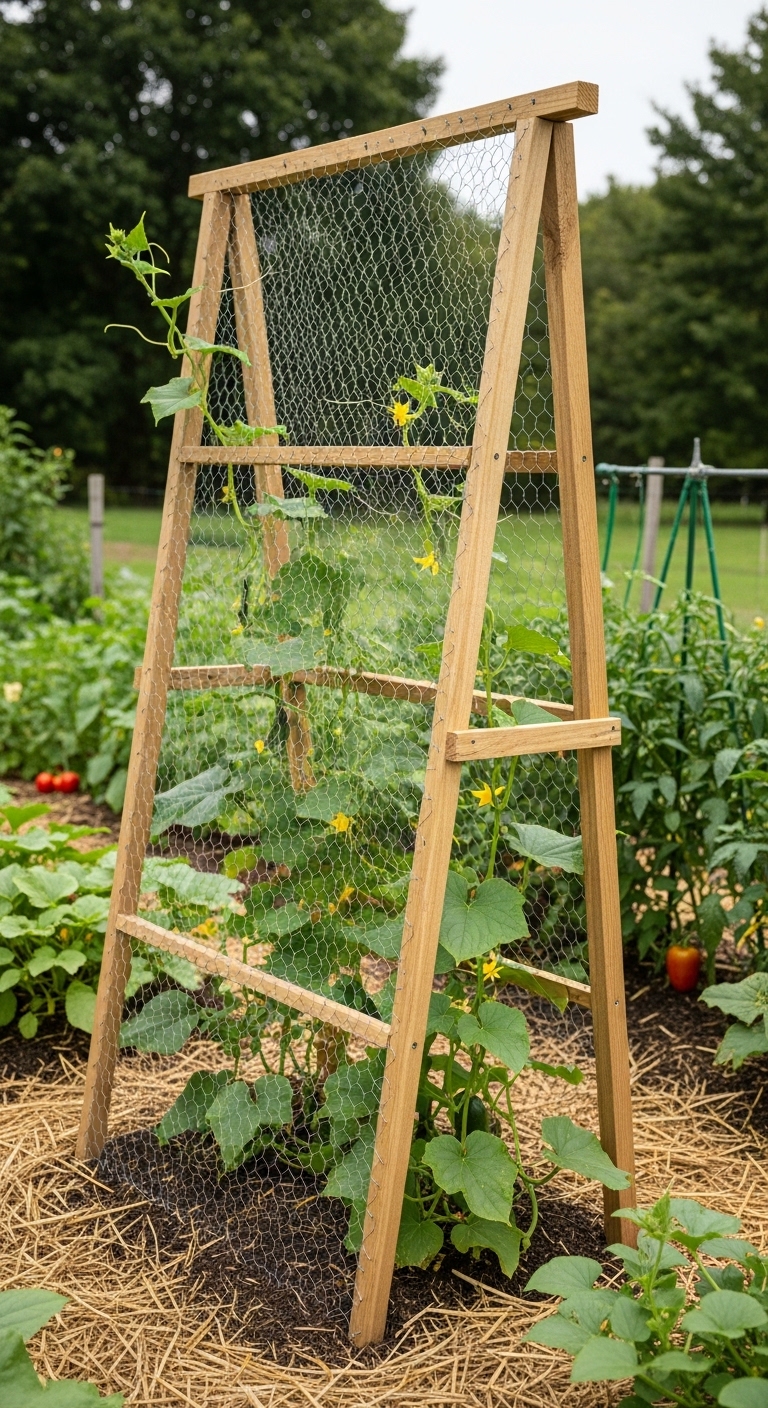
Chicken wire is one of those materials that’s been used in gardens for over a century — and for good reason. Stretched over a simple wooden frame, it creates a perfectly functional trellis that plants love to climb.
Build a basic rectangular frame from 2×2 timber, staple chicken wire tightly across it, and either lean it against a support or mount it between posts. The hexagonal mesh gives climbing plants multiple attachment points, and lighter plants can weave themselves through it without any tying.
Chicken wire trellis works brilliantly for:
- Cucumbers and gherkins
- Lightweight squash varieties
- Climbing peas
- Sweet peas and morning glory for colour
One tip: wear gloves when handling chicken wire. The cut ends are surprisingly sharp, and working with it bare-handed is not a fun experience. Pliers help when you’re stapling it to the frame — you’ll want to pull it taut before fixing to avoid sagging.
Upcycled Window Frame Trellis
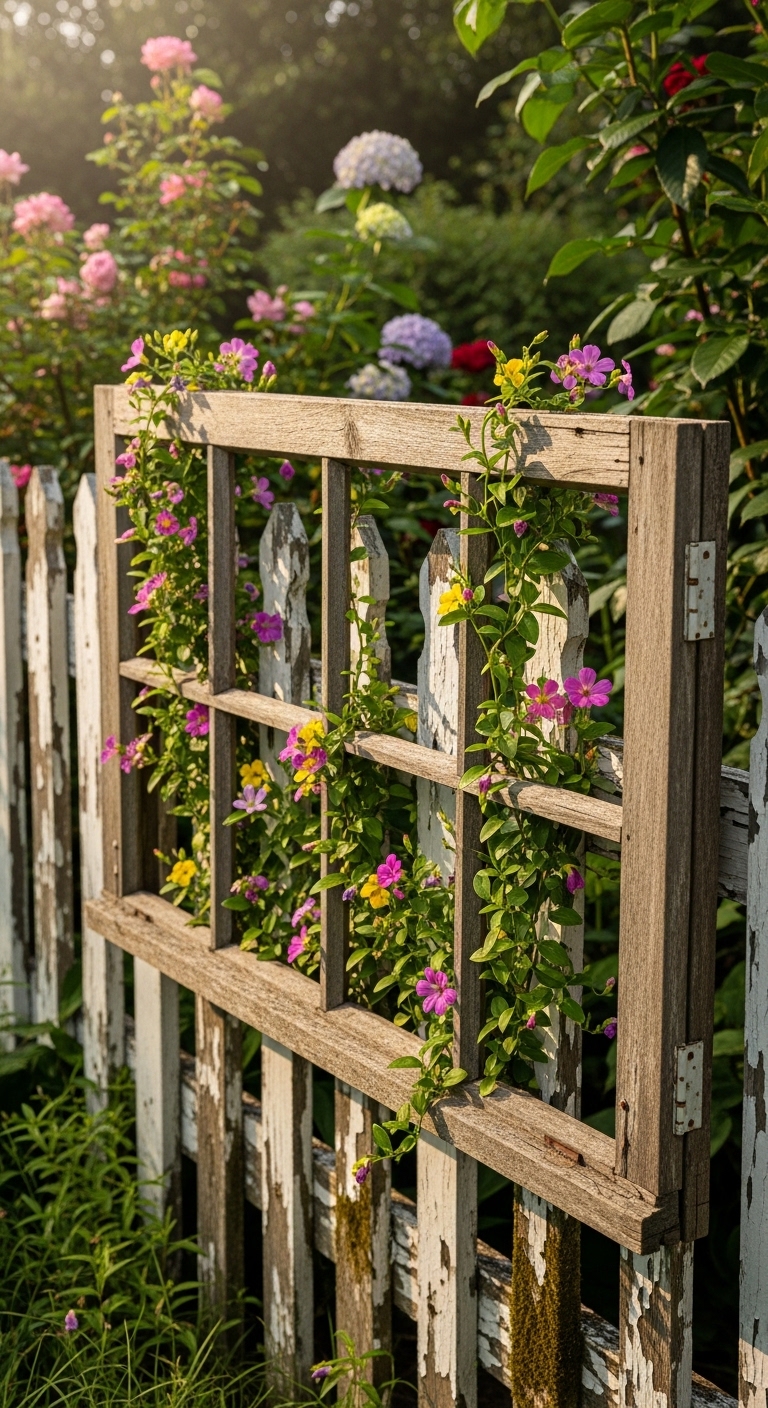
Old window frames are one of the best free or ultra-cheap finds for garden upcycling. Check salvage yards, Facebook Marketplace, or even ask neighbours who are renovating — they often give them away.
Remove any remaining glass (carefully), sand down rough edges, add a coat of outdoor paint, and either mount the frame flat against a fence or set it up freestanding as a garden focal point. The existing grid of the window frame creates a natural trellis structure, and you can string additional twine through the gaps for more climbing support.
Multi-pane window frames look especially beautiful, particularly in painted timber. A sage green or French blue window frame propped against a stone wall with roses climbing through it is genuinely magazine-worthy.
Extra ideas with window frames:
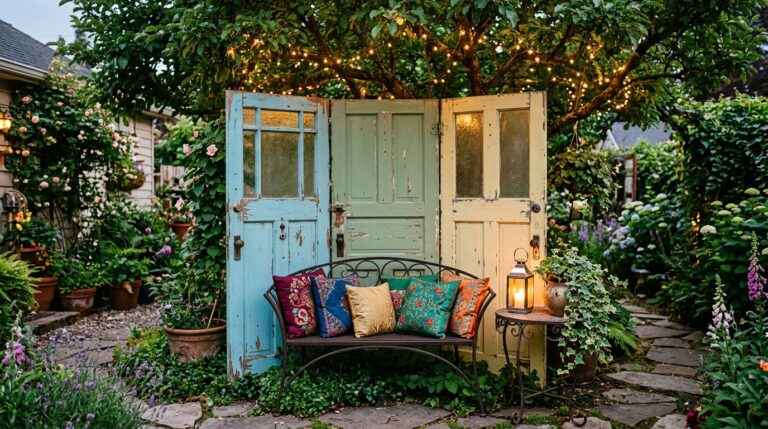
- Use two frames hinged together to create a freestanding trellis screen
- Mix different sizes together as a garden gallery wall
- Add small hooks to hang lightweight potted plants from the frame edges
Cattle Panel Arch Trellis
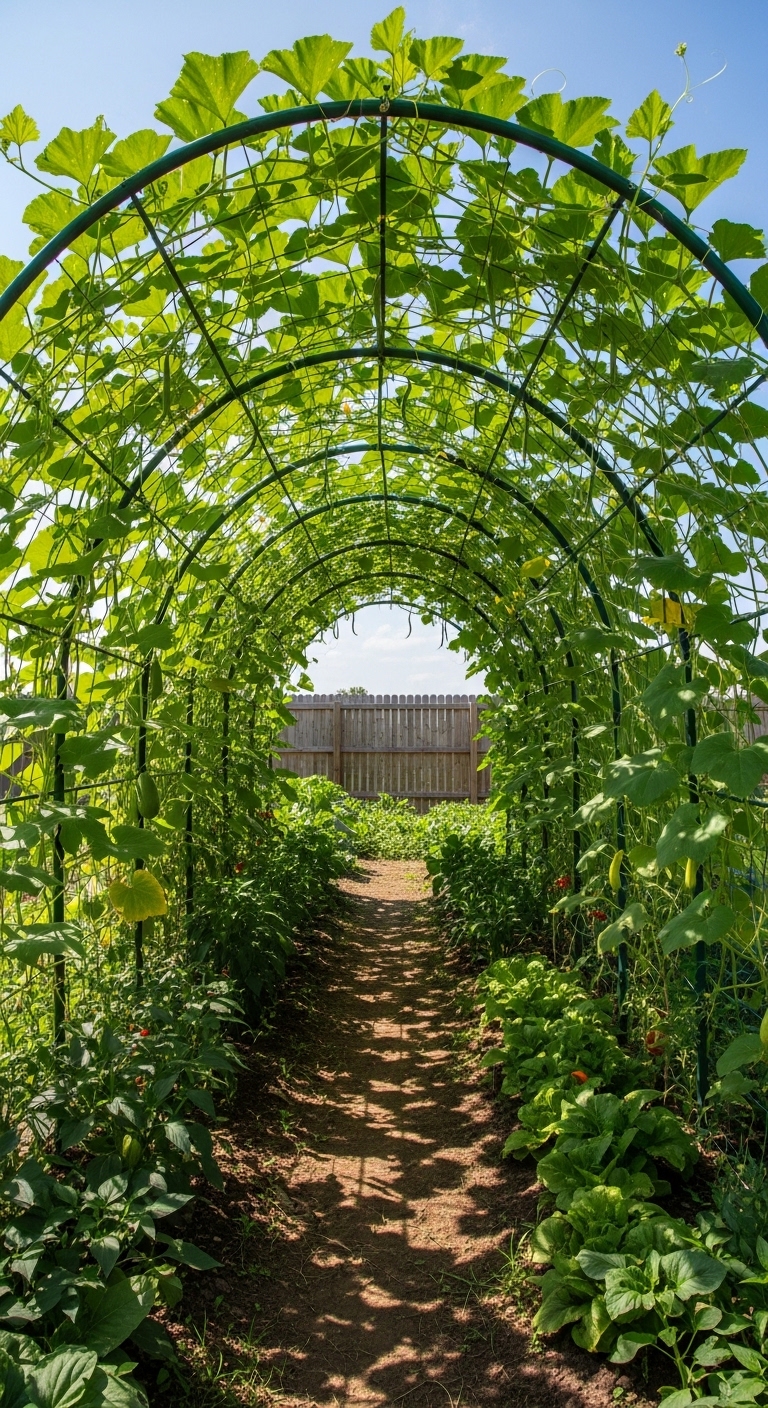
Cattle panels — the heavy-gauge wire grids used for livestock fencing — are one of the best-kept secrets in the vegetable gardening world. They’re rigid, durable, and when bent into an arch between two raised beds, they create a stunning tunnel of productivity.
You can train squash, melons, cucumbers, or beans up and over the arch, eventually creating a leafy green tunnel that produces food hanging overhead. It’s one of the most visually impressive things you can do in a kitchen garden, and it costs a fraction of what a dedicated garden arch structure would.
Why cattle panel arches are brilliant:
- Extremely strong — supports heavy crops with zero sagging
- Lasts for years with zero maintenance
- Creates a dramatic garden focal point
- Makes harvesting vertical crops much easier
- Works beautifully as a garden pathway feature
Cattle panels are available from agricultural suppliers and are usually sold in standard lengths. Two people make the bending and installation process much easier.
Woven Willow Trellis
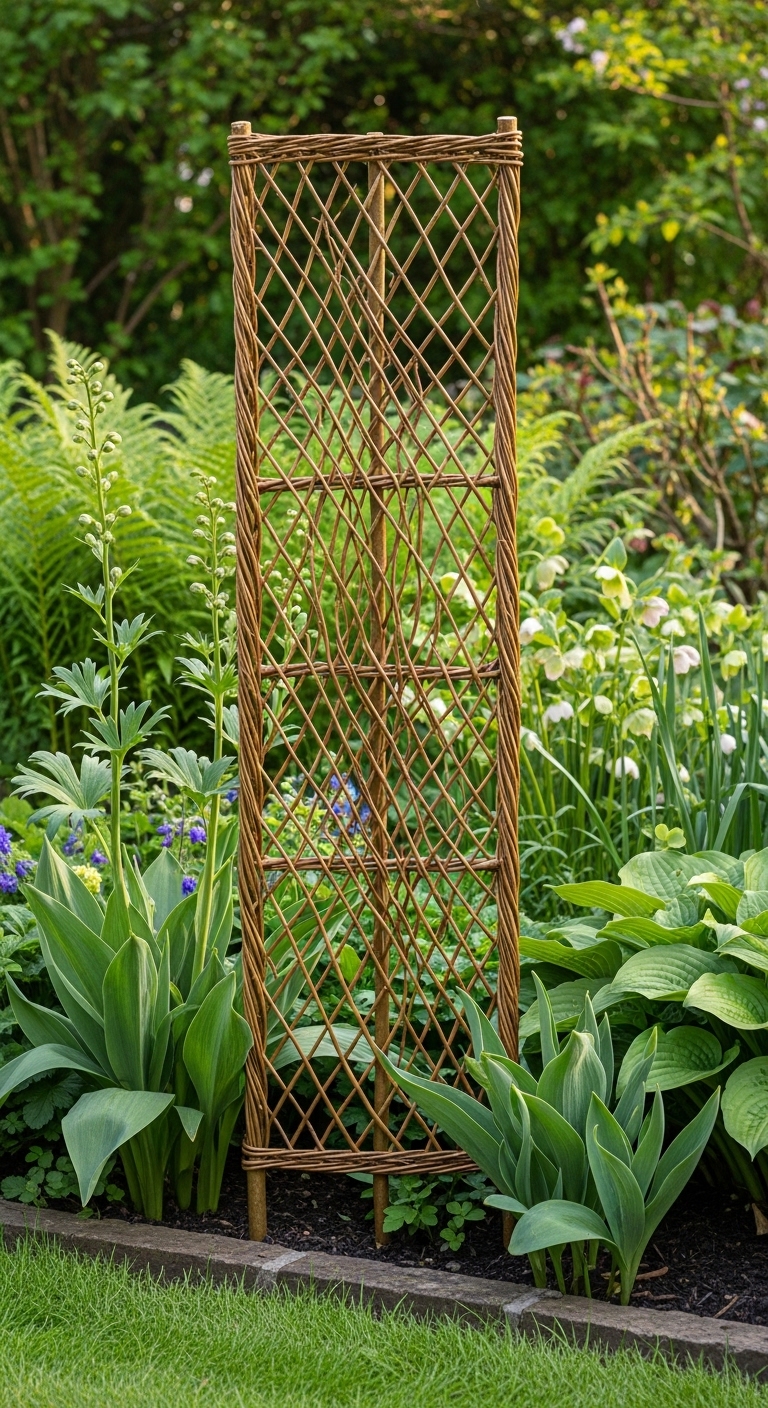
Woven willow has been used in gardens and farming for thousands of years — and it still looks absolutely beautiful today. If you have access to a willow tree or can buy willow rods from a basket-making supplier, this project creates a trellis that’s both functional and genuinely artistic.
The technique involves weaving flexible willow rods in and out of vertical stakes pushed into the ground. It takes a bit of practice to get the weave even, but even an imperfect first attempt looks wonderfully rustic and handmade.
Living willow is even more exciting — use fresh, unrooted willow rods and some of them will actually take root in the soil and start growing, turning your trellis into a living, growing garden structure that gets denser and more beautiful every year
Wooden Dowel Grid Trellis
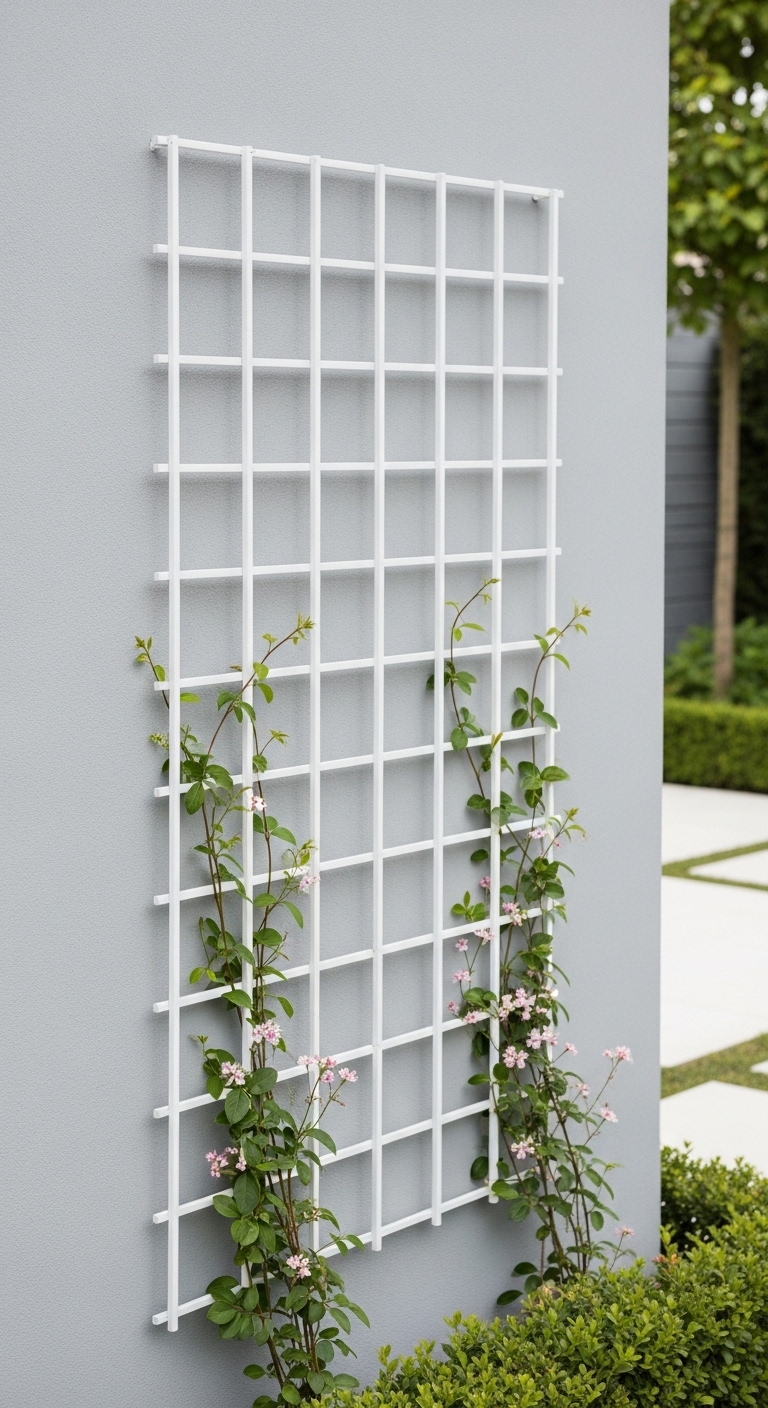
Wooden dowels are inexpensive, lightweight, and surprisingly effective as a trellis material for lighter climbing plants. You can buy a pack of 50 dowels from a craft or DIY store for just a few dollars, and build a neat, attractive trellis in an afternoon.
The approach is simple: glue or tie the dowels into a grid pattern, with spacing of around 6 to 8 inches between each rod. Mount the finished grid flat against a wall or fence using screw hooks, and you have a trellis that looks intentional and neat in any garden style.
Dowel trellises work best with:
- Sweet peas
- Nasturtiums
- Lightweight annual climbers
- Indoor climbing plants on interior walls or balconies
Paint the finished trellis in any outdoor wood paint colour. A matte black dowel trellis against a white wall is a particularly striking combination that suits modern and contemporary garden designs.
Repurposed Bicycle Wheel Trellis
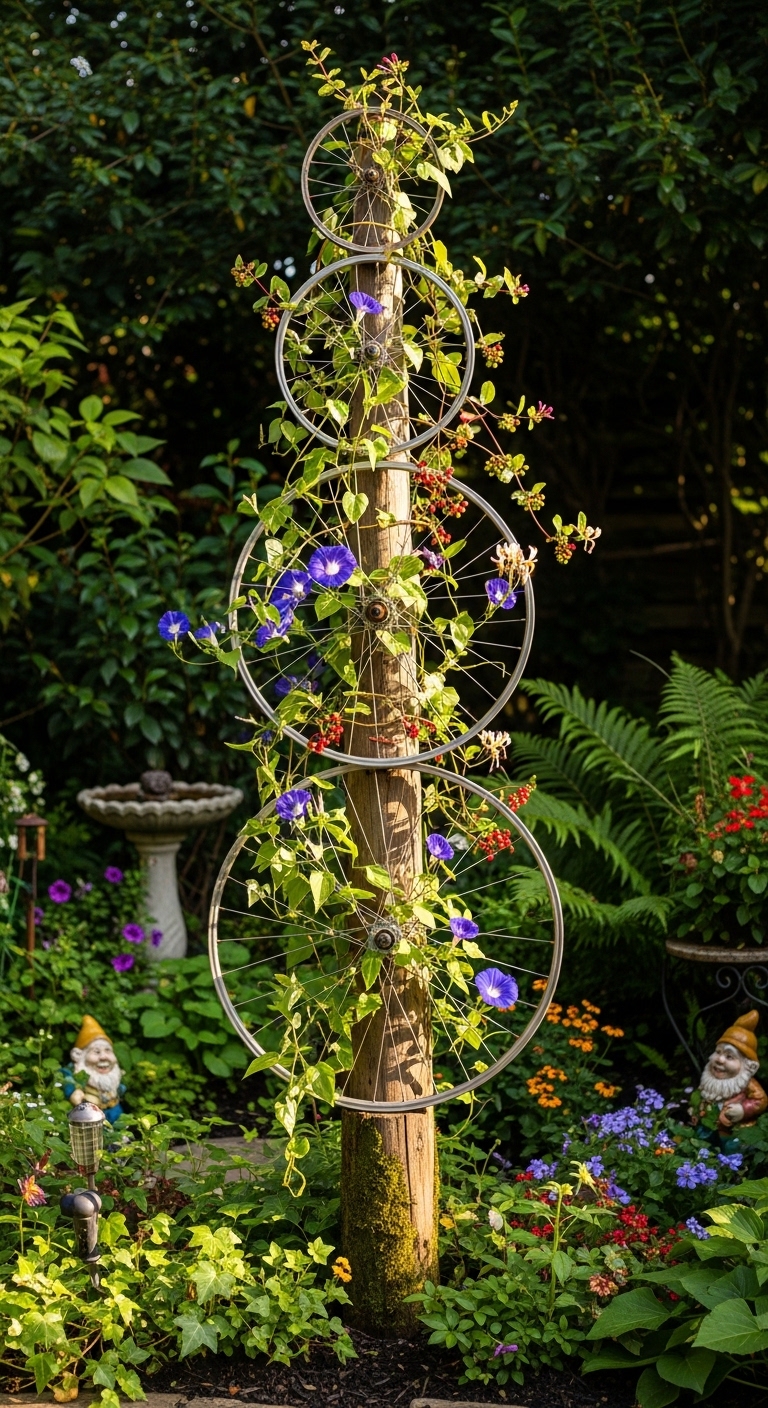
For the gardener who loves a bit of personality in their outdoor space, a bicycle wheel trellis is one of the most unique and conversation-starting ideas on this list. Old bicycle wheels are easy to find for free or almost nothing — check charity shops, bike repair cafes, or put a post on your local community group.
Mount one or several wheels on a post or fence, positioning them at intervals. The spokes create a natural radial climbing structure, and vines will weave through them beautifully. Mix different wheel sizes together for a sculptural, eclectic look.
This isn’t just a trellis — it’s garden art. And it costs next to nothing.
String and Hook Wall Trellis
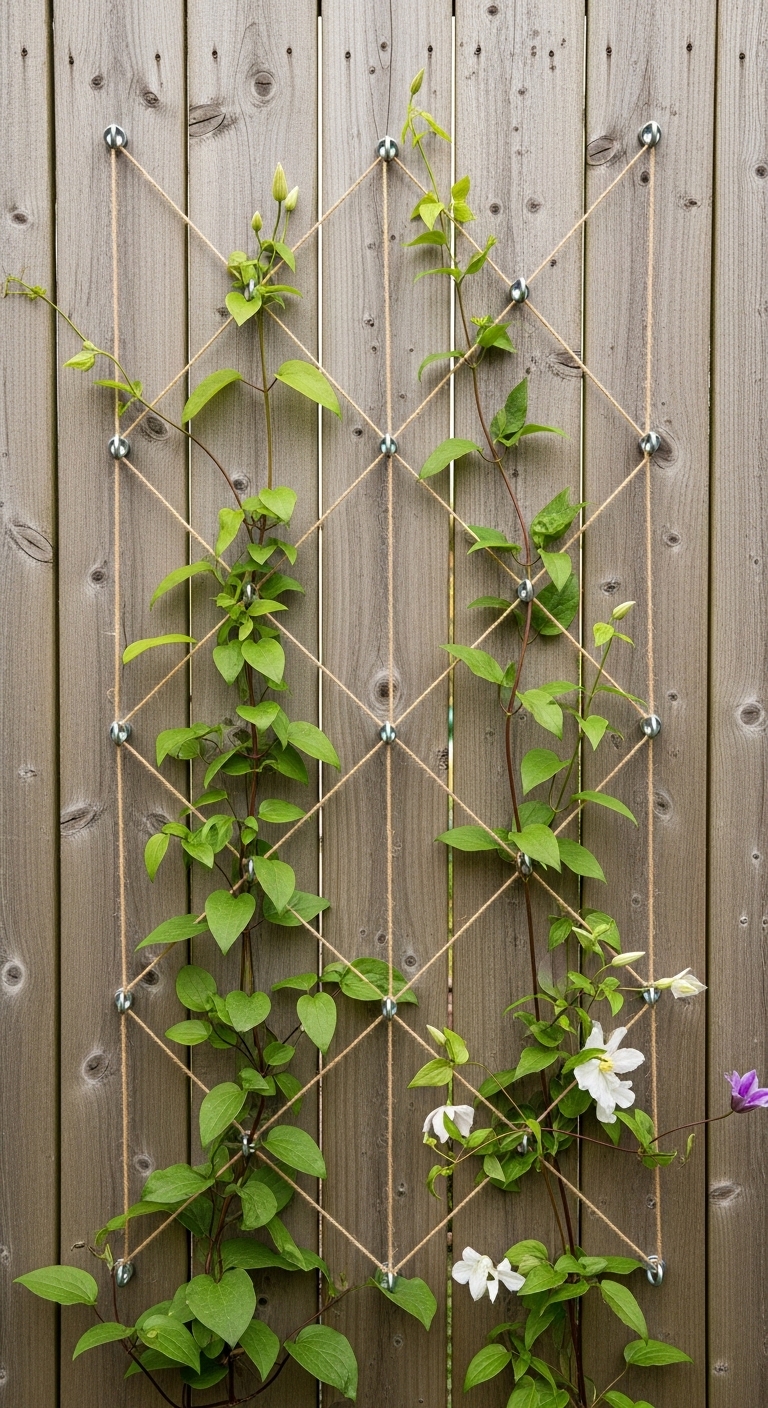
The simplest and cheapest trellis idea of all — and one that works brilliantly in a small garden or on a balcony. All you need are a handful of cup hooks, a roll of garden twine, and about twenty minutes.
Screw the hooks into a fence, wall, or timber panel in a grid pattern. Then string twine between them horizontally, vertically, or diagonally to create whatever pattern you like. A diamond lattice pattern looks especially elegant and supports climbing plants just as well as any store-bought trellis panel.
Why this idea deserves more credit:
- Total cost is often under two dollars
- Completely customizable to any size or shape
- Easy to change the design by re-stringing
- Works on balconies, small patios, and indoor spaces
- Replace the twine at the start of each season for a fresh start
Final Thoughts: Your Budget Trellis Journey Starts Today
You don’t need to spend a fortune to have a garden that looks thoughtful, productive, and genuinely beautiful. Every single idea on this list proves that creativity and a willingness to look at everyday materials differently can produce garden structures that rival anything you’d find in an expensive garden centre.
Start with whatever materials you already have. An old ladder, a few bamboo poles, some salvaged wood, or a roll of wire — any of these can become something wonderful with a bit of effort and imagination. And the satisfaction of watching your plants climb up something you built yourself? That’s one of the best feelings a garden can give you.
Pick the idea that excites you most, gather your materials this weekend, and get building. Your garden is waiting.