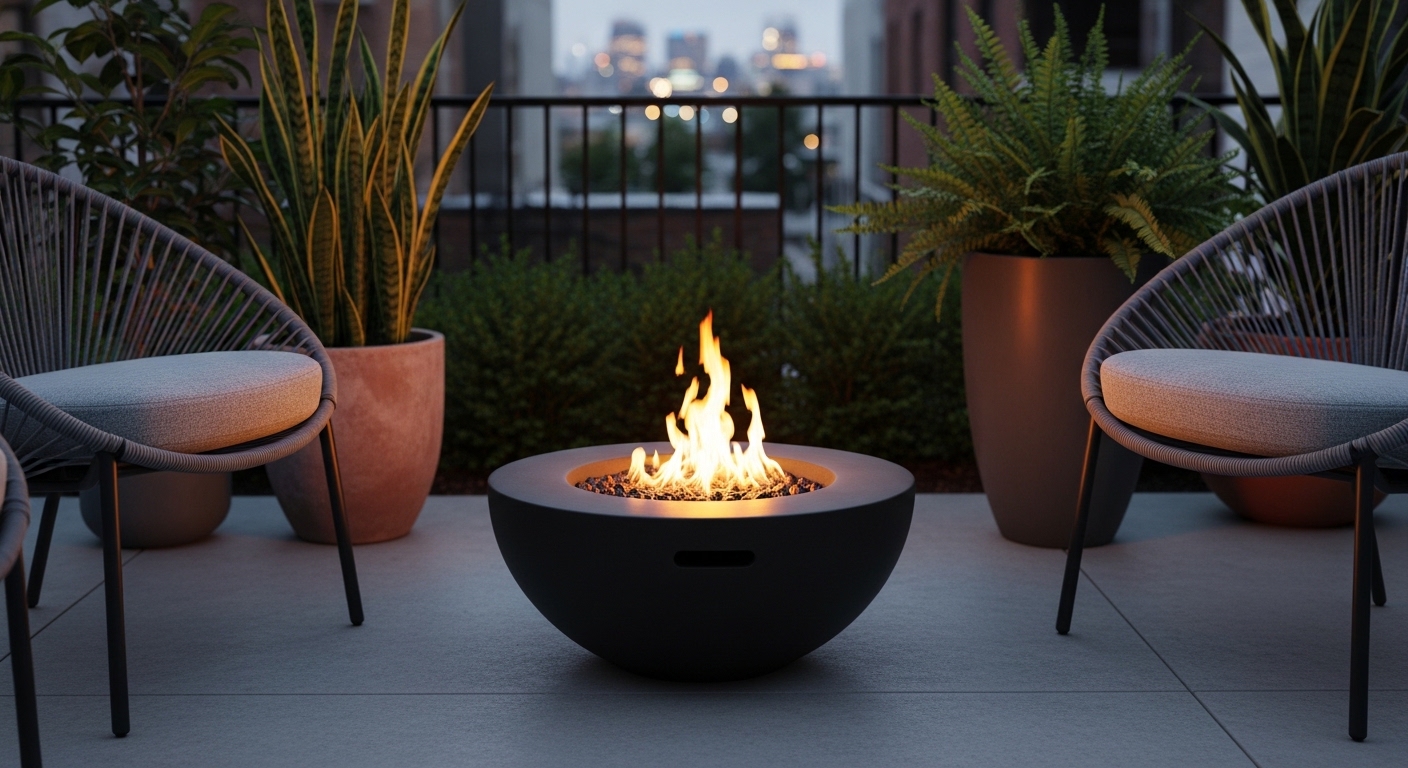
12 Small Backyard Fire Pit Ideas for Tight Spaces
You don’t need a sprawling yard to enjoy crackling flames on a cool evening. If you’ve been staring at your compact outdoor space and thinking, “There’s no way a fire pit fits here,” — think again. Some of the coziest fire pit setups I’ve ever seen exist in the tightest little backyards, on narrow patios, and even on small apartment terraces. The trick isn’t space. It’s smart design.
Whether you want a romantic corner for two or a compact gathering spot for a small group of friends, these 12 fire pit ideas will transform even the tiniest outdoor space into a warm, inviting retreat you’ll actually use.
Why Small Backyards Actually Make Great Fire Pit Spaces
There’s something magical about intimacy. When your seating is close together and the fire is right there, conversation flows naturally. You don’t need to shout across a large patio. A small backyard creates that cozy, around-the-campfire feeling without even trying.
Before we dive into the ideas, keep a few things in mind:
- Always check local fire codes and HOA rules before installing any fire pit
- Keep a minimum of 10 feet clearance from structures, fences, and overhanging trees
- A fire extinguisher or bucket of sand nearby is non-negotiable
- Gas fire pits are often easier to manage in tight spaces than wood-burning ones
- Ventilation matters — don’t place a fire pit under a covered area without proper airflow
Now, let’s get into the good stuff.
Sunken Fire Pit with Built-In Bench Seating
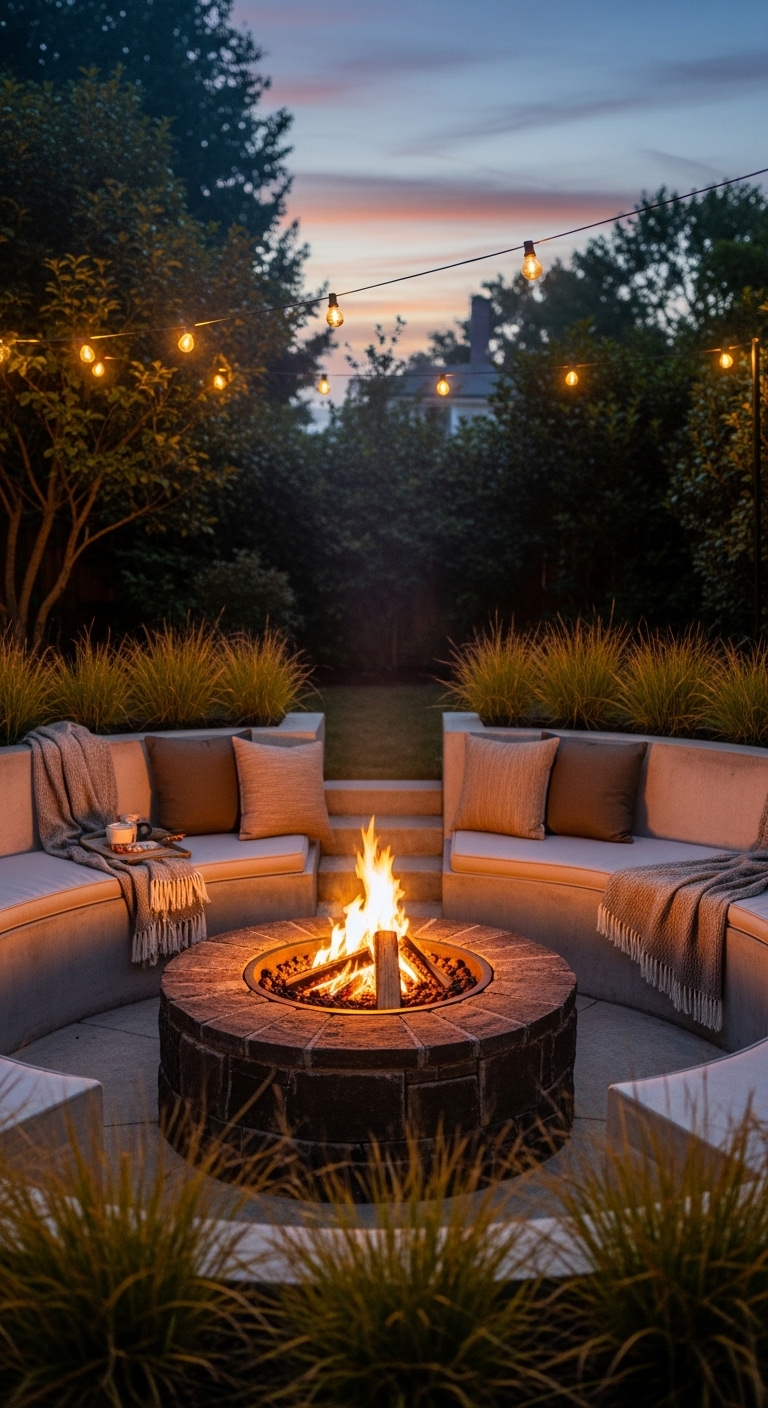
This is one of the most space-efficient designs you can create. By digging down 18 to 24 inches and building a low circular seating wall around the perimeter, you create a self-contained entertainment zone that doesn’t sprawl outward.
The sunken design keeps the fire visually anchored and away from foot traffic. The built-in concrete or stone bench eliminates the need for bulky outdoor furniture, which is a game-changer in tight spaces.
What makes it work in small yards:
- The footprint stays compact because seating wraps the pit rather than extending outward
- No chairs to move, store, or trip over
- The sunken bowl creates a natural windbreak, helping your fire burn more efficiently
- Visually, it reads as a design feature rather than an addition squeezed into leftover space
For a backyard measuring 15 by 20 feet, a sunken pit with an 8-foot diameter seating circle fits beautifully without dominating the space. Add a few weatherproof cushions on the bench and hanging string lights between two fence posts, and you’ve created something genuinely special.
Tabletop Fire Pit for Compact Patios
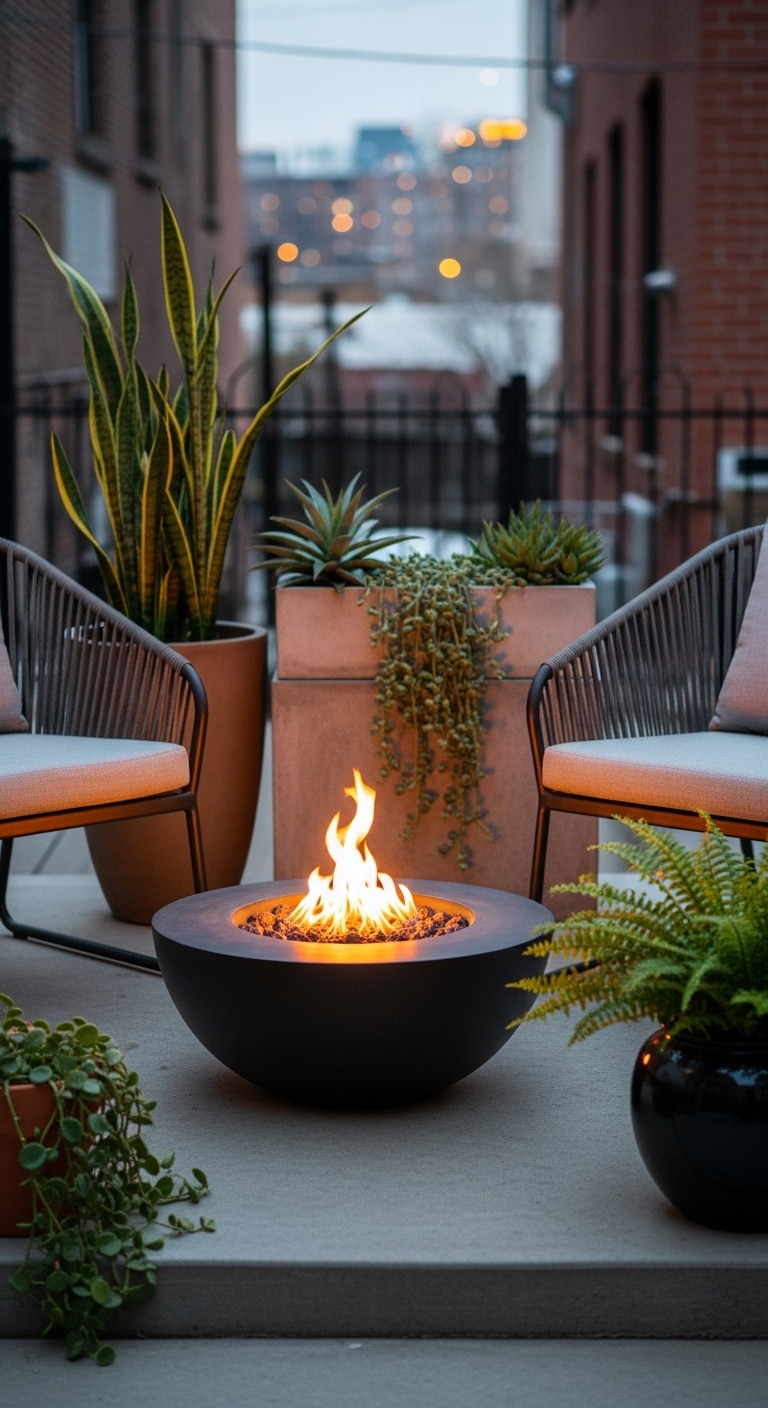
If your backyard is really just a patio — think 8 by 10 feet or smaller — a full in-ground fire pit simply isn’t realistic. That’s where tabletop fire pits shine. These are small, often propane-powered fire bowls that sit right on your outdoor table or a standalone pedestal.
They produce real flames, real warmth, and a real ambiance without requiring any installation, permits, or clearance worries in most areas.
Why this idea works:
- Zero installation — just connect the propane canister and light it
- Moves with you (great for renters who can’t permanently alter their outdoor space)
- Works on balconies, small patios, and even indoors in certain models
- Modern designs look sophisticated, not like a compromise
Popular tabletop fire pit styles include concrete bowls, brushed copper vessels, and minimalist steel cylinders. Choose one that complements your existing furniture, and it becomes a decorative element even when the flame isn’t lit.
Corner-Positioned L-Shape Fire Pit Setup
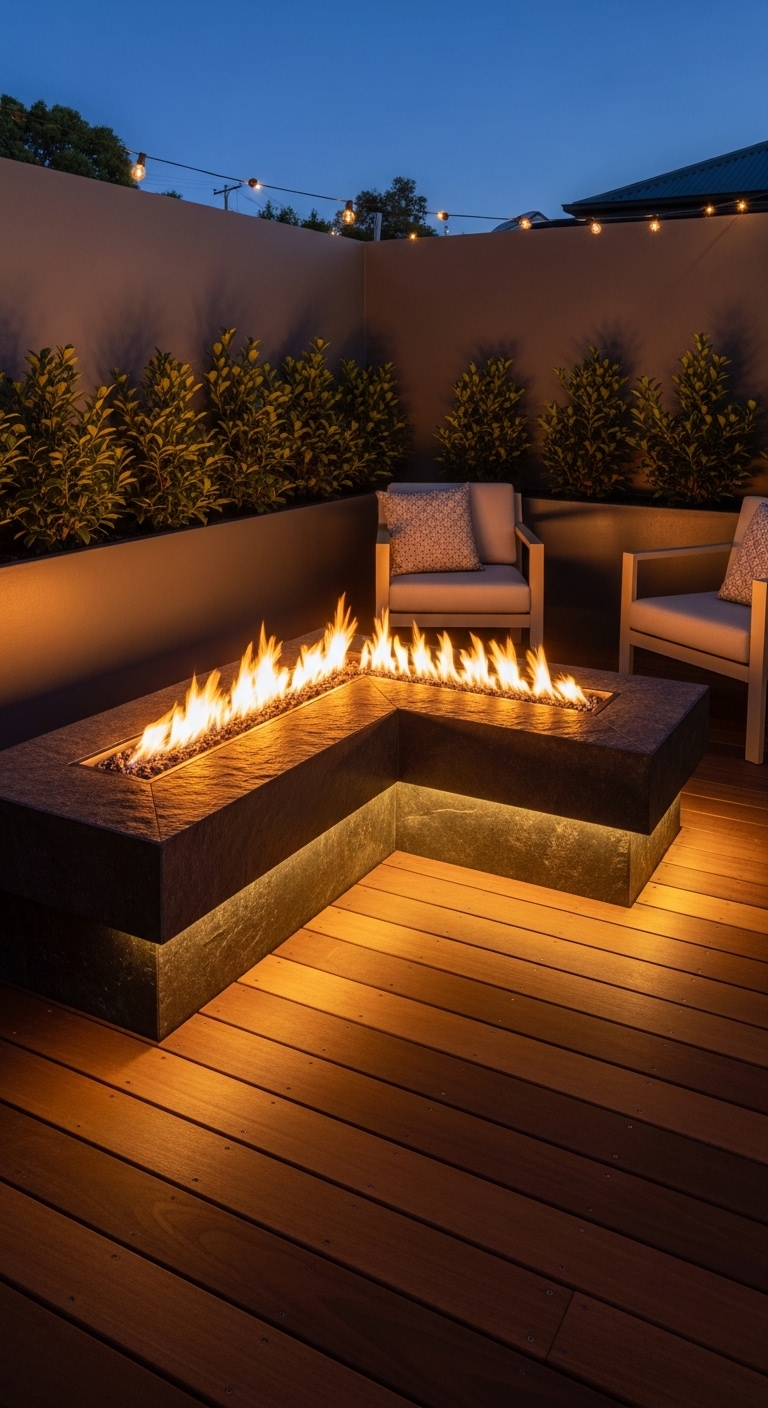
Every small backyard has corners, and most of those corners go completely to waste. Positioning a fire pit in the corner of your yard or deck with an L-shaped seating arrangement turns dead space into the best seat in the house.
A corner setup means you’re only “using” space that wasn’t serving a purpose anyway. The two walls behind you — whether that’s a fence, a privacy screen, or the sides of your house — actually enhance the cozy factor.
Practical tips for a corner fire pit:
- Use a low rectangular or square propane fire table rather than a round pit — it fits corners better
- Add planter boxes along the two walls to soften the enclosed feel and add greenery
- Limit seating to two or three chairs positioned at a slight angle toward the fire
- Install a small privacy screen or trellis if the corner feels too exposed
This layout feels intentional, not cramped. And when you’re sitting in that corner with a fire in front of you and greenery on both sides, you’ll feel like you’re in a private outdoor room.
Portable Steel Fire Pit Bowl
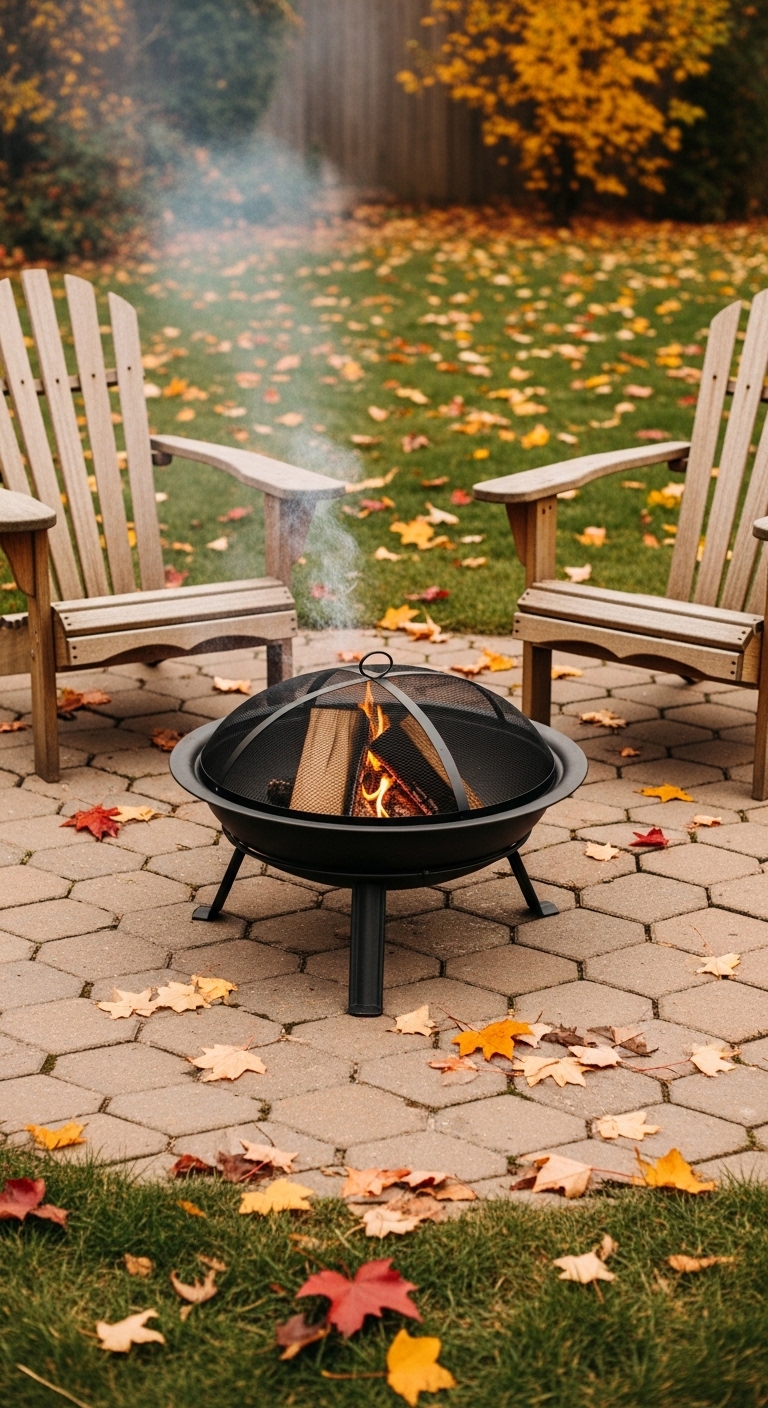
Sometimes the best solution is the most straightforward one. A portable steel fire pit bowl costs between $50 and $300, requires zero installation, and can be used anywhere in your yard — or stored away when you need the space for something else.
In tight backyards, flexibility is everything. On some evenings you need that area for a kids’ play space or a garden party. With a portable pit, you just pick it up and move it.
What to look for in a good portable fire pit:
- A mesh spark screen cover to keep embers contained
- Legs that elevate the bowl and protect your grass or deck
- A diameter no larger than 30 inches for tight spaces (24 inches is ideal)
- Powder-coated steel or cast iron for durability and weather resistance
Place it in the center of a small gravel circle, add two Adirondack chairs, and you have a complete fire pit area that you can break down in under five minutes. It’s the most versatile option on this list.
Gas Fire Pit with Minimalist Stone Surround
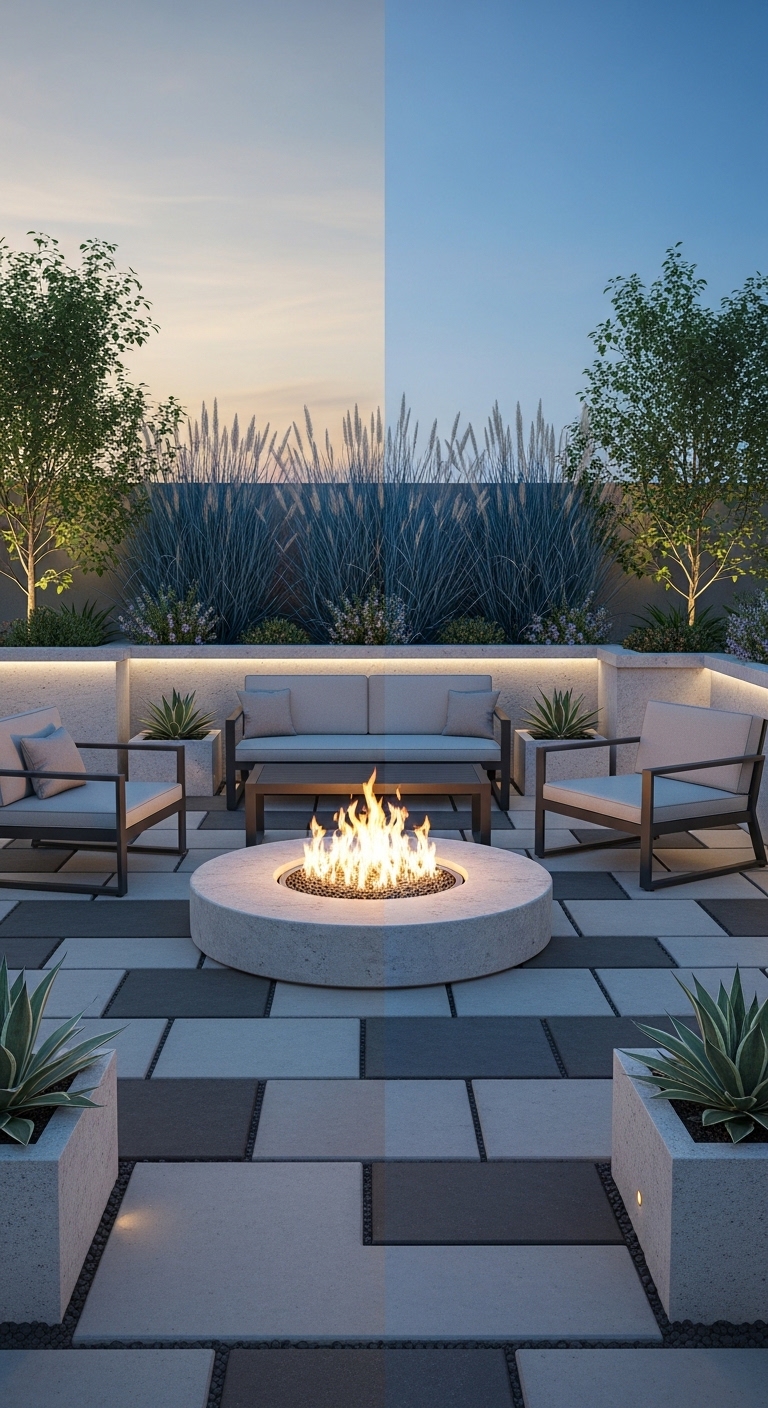
Gas fire pits have earned their place in the small backyard world for one very practical reason: control. You flip a switch (or twist a knob), and you have a clean, consistent flame. You turn it off, and within seconds the space is safe to walk through.
For small yards where space serves multiple purposes, this kind of on/off flexibility is invaluable.
Why gas works better than wood in tight spaces:
- No smoke or ash means you can sit closer without coughing
- No wood storage required (wood piles take up precious square footage)
- No waiting for embers to die before you can leave — just turn it off
- Consistent flame height means no sparks shooting toward nearby fencing or furniture
A clean gas fire pit with a low stone or concrete surround looks incredibly elegant in a minimalist outdoor space. Keep the surrounding planting simple — a few ornamental grasses or low succulents — and this becomes a striking focal point even during the day.
Fire Pit Table as Dual-Purpose Furniture
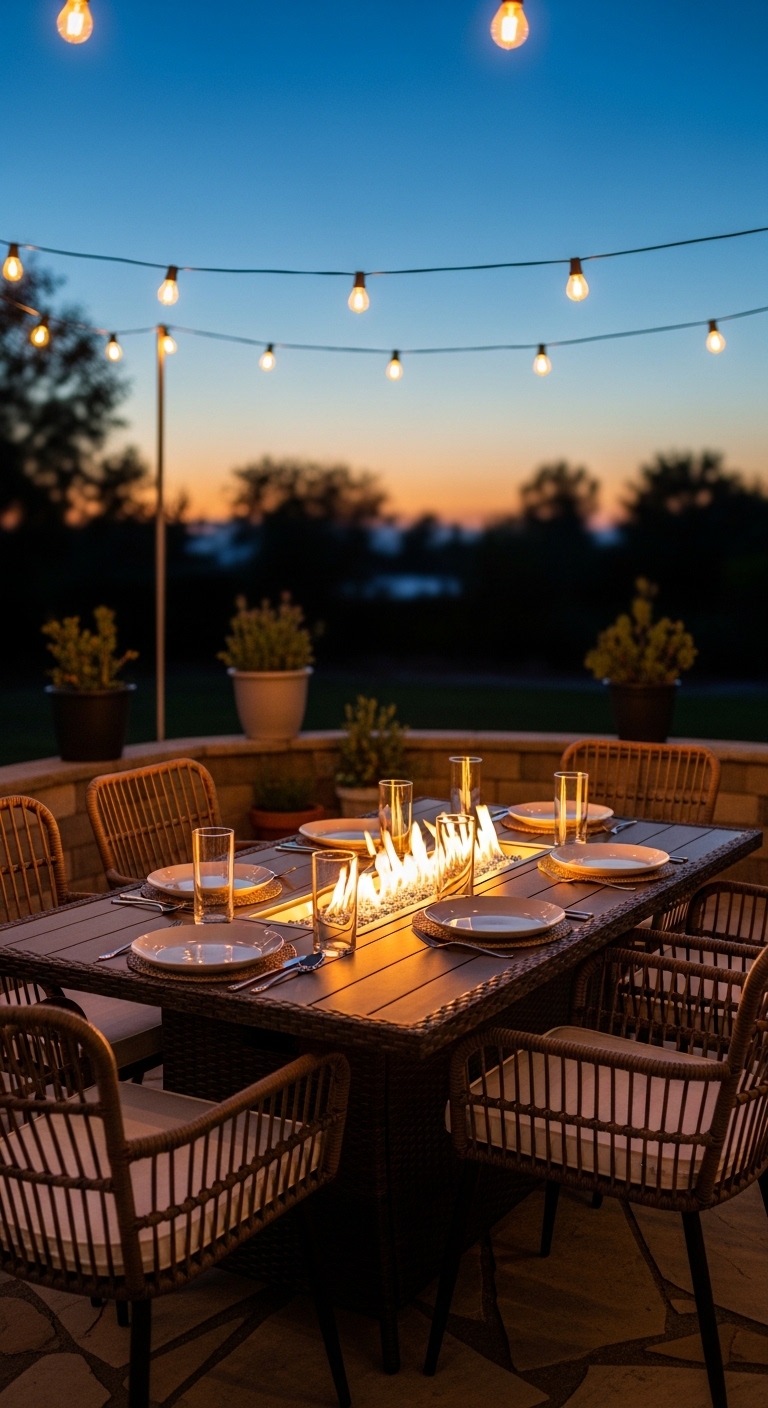
In small backyards, every piece of furniture needs to earn its place. A fire pit table — an outdoor dining or coffee table with a gas burner built into the center — pulls double duty as a functional table and a fire feature.
This is one of the smartest space-saving investments you can make. You replace two separate items (a table and a fire pit) with one beautifully designed piece.
How to choose the right fire pit table:
- A coffee table height (around 18 inches) works for lounge-style seating
- A dining table height (around 28 to 30 inches) works for al fresco meals where the flame acts as centerpiece
- Look for models where you can cover the burner insert with a flat lid, turning it back into a regular table
- Opt for propane versions with a hidden tank compartment in the table base — cleaner look, no gas line needed
This setup works beautifully in backyards where the patio IS the backyard. Four chairs, one fire pit table, and you’ve got both a dining space and an evening fire lounge without any compromise.
Vertical Fire Feature — Wall-Mounted or Freestanding Fire Column
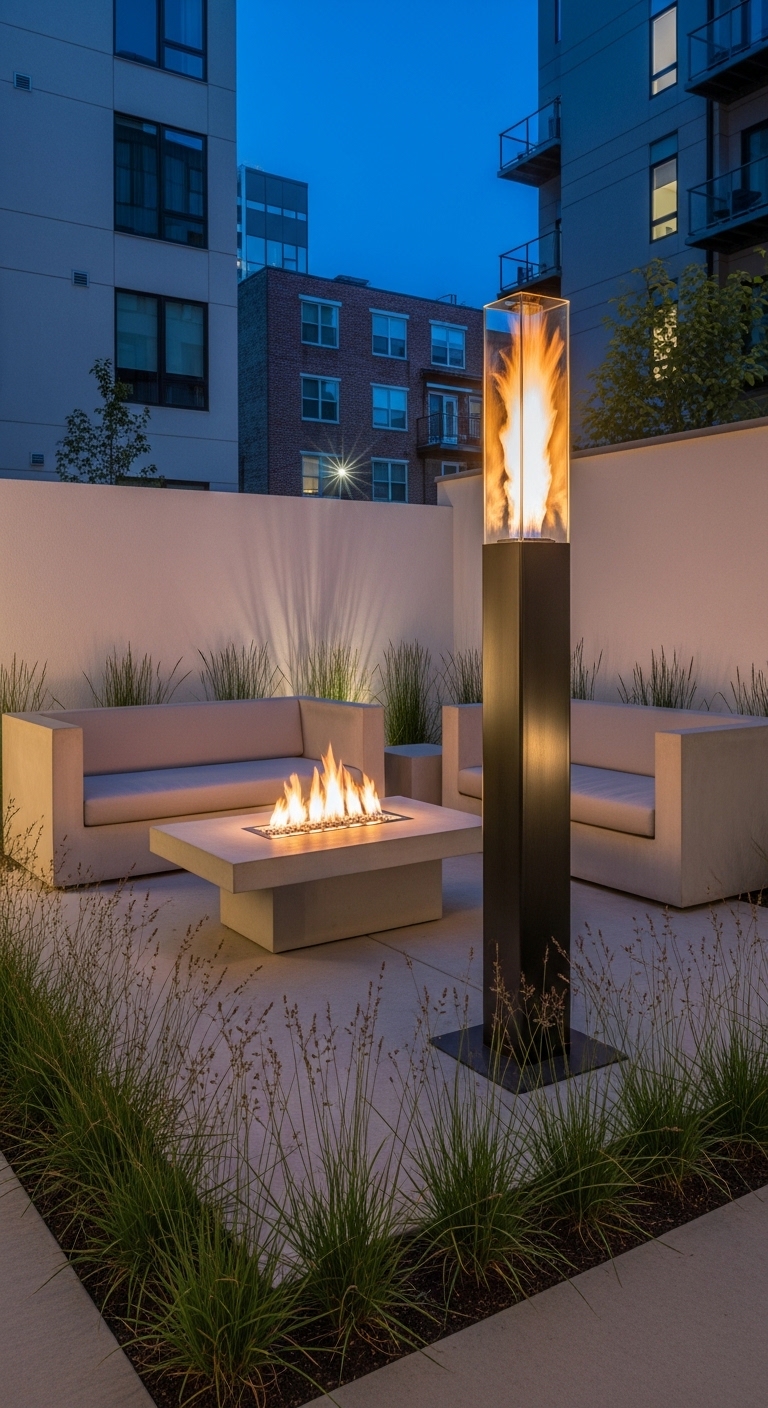
When you’re short on horizontal space, go vertical. A fire column or wall-mounted fire feature produces a dramatic flame display while occupying only a tiny ground footprint — sometimes as small as 12 inches by 12 inches.
These work especially well in contemporary outdoor spaces where you want something visually striking that doesn’t compromise any usable area.
Types of vertical fire features:
- Fire columns — freestanding tall cylinders (usually 3 to 5 feet tall) with a gas burner at the top
- Wall-mounted fire panels — flat bio-ethanol or gas fire features that mount directly to a wall or fence
- Fire obelisks — narrow pyramid-shaped structures that house a flame inside tempered glass panels
The visual impact of a vertical flame in a small space is genuinely impressive. Because the fire is elevated, it creates an ambient glow that spreads across more of your yard. It also acts as a privacy screen accent when placed in front of a fence.
Gravel Circle Fire Pit Area
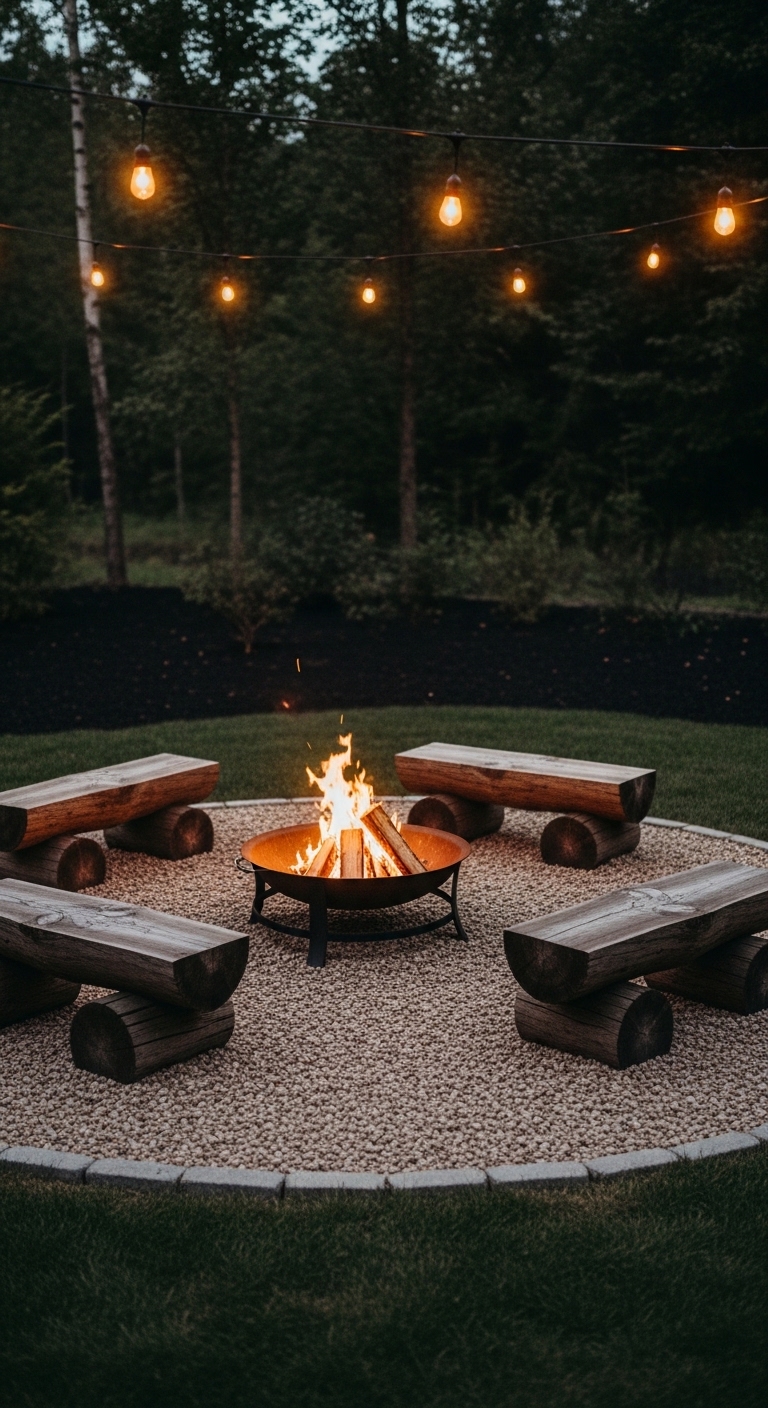
Creating a defined zone for your fire pit is one of the most effective design tricks for small yards. Instead of placing a fire pit on an existing patio (where it competes for space with other activities), you carve out a dedicated gravel circle — typically 10 to 12 feet in diameter — specifically for fire pit use.
The gravel serves multiple practical purposes: it’s non-combustible, keeps the area clean, defines the fire pit “room,” and visually separates this zone from the rest of your yard.
How to create a gravel fire pit circle:
- Mark a circle using a stake and string as a compass
- Excavate 3 to 4 inches and install a landscape fabric barrier to suppress weeds
- Fill with pea gravel or fire-resistant lava rock (avoid river rocks — they can crack under heat)
- Add a simple border of landscape edging, bricks, or timber to define the circle
- Place your fire pit (portable, sunken, or mounted) in the center
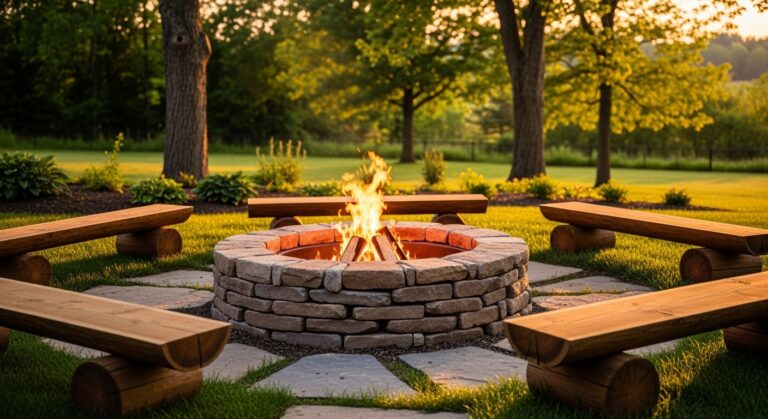
Use log sections or small stone stumps as seating around the edge — they’re inexpensive, rustic-charming, and take up zero storage space.
Small Courtyard Fire Pit with Mediterranean Tile Design
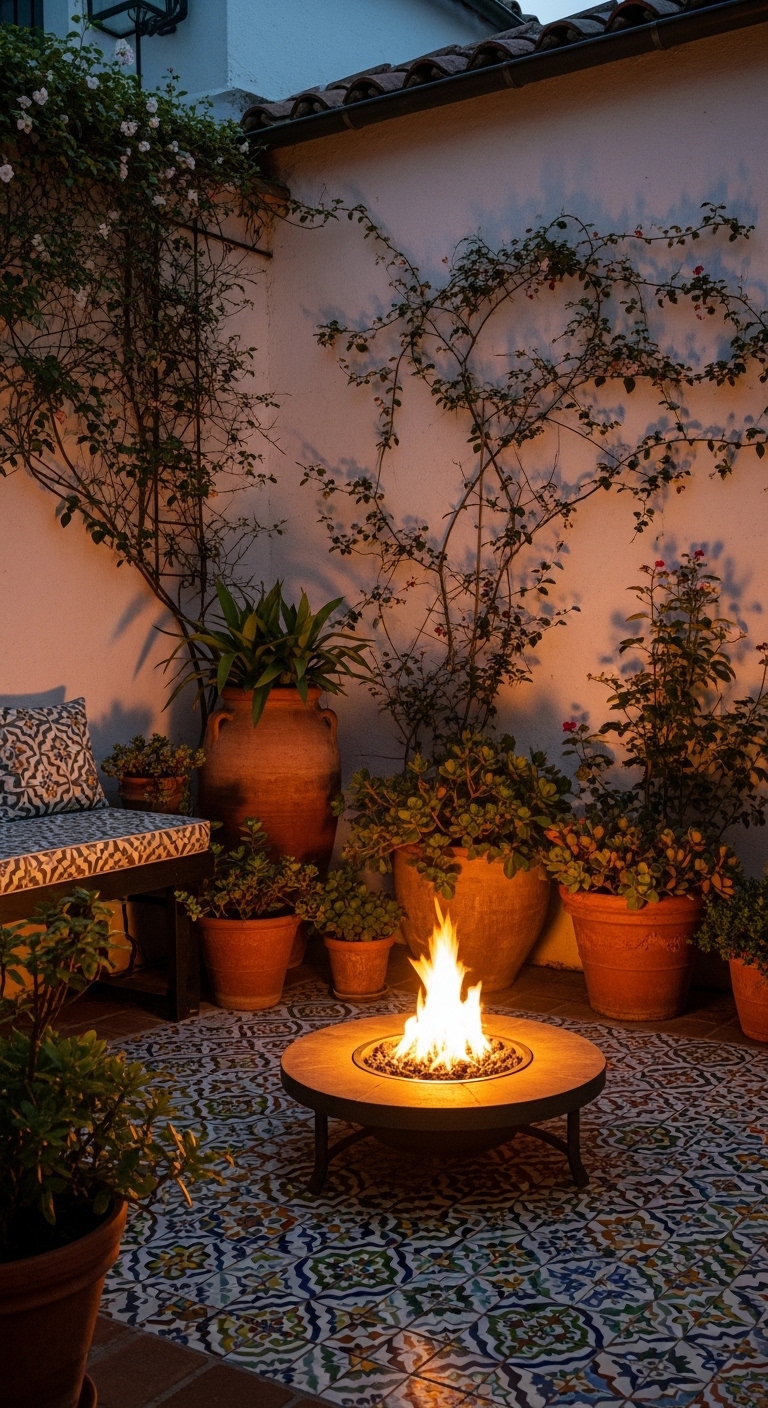
If your backyard is more of a walled courtyard or enclosed urban space, lean into that architectural vibe. A Mediterranean or Moroccan-influenced fire pit area transforms a potentially claustrophobic enclosed space into an enchanting private oasis.
The key elements are:
- Colorful tile work (Talavera or cement tile) used as the fire pit surround or patio floor
- Low-slung seating — floor cushions, low benches, or pouf ottomans
- Terracotta pots overflowing with herbs, trailing plants, or citrus trees
- Warm amber lighting (lanterns, string lights, or wall sconces) to complement the fire
- A gas fire pit with a round, ornate stone or tile surround as the centerpiece
This style thrives in enclosed, compact spaces. The walls become an asset rather than a limitation, holding the warmth, the light, and the fragrance of the plants close around you. In an 8-by-8 courtyard, this feels genuinely luxurious.
Fire Pit on a Small Deck with Safety Screen Enclosure
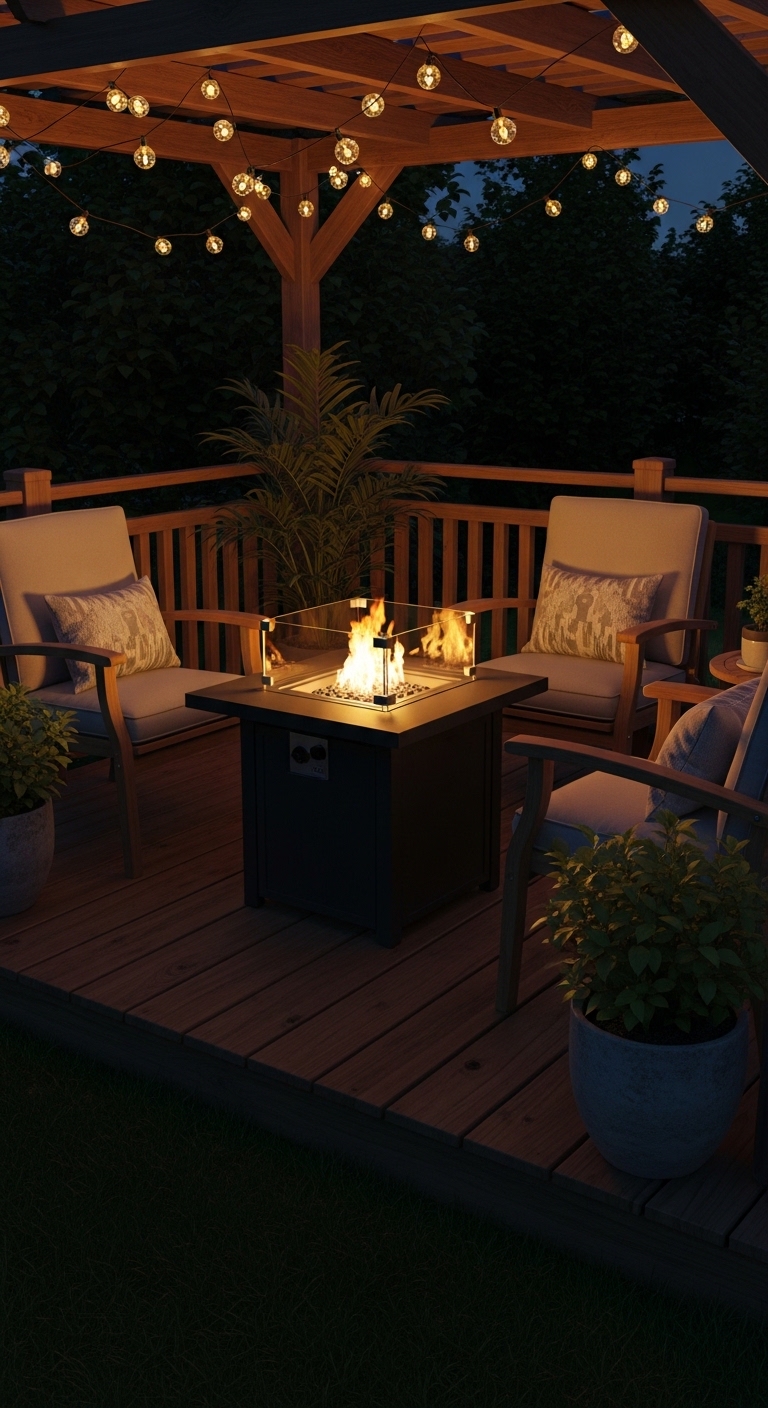
Putting a fire pit on a wood deck understandably makes people nervous — and rightfully so if you’re not careful. But with the right setup, a deck-mounted fire pit is completely safe and absolutely stunning.
The critical rules for deck fire pits:
- Always use a gas or bio-ethanol fire pit — never wood-burning on a deck
- Use a fire pit rated and designed for deck use (look for this explicitly in the product specs)
- Place a deck protector pad rated for high heat under the unit
- Install a glass wind guard to contain the flame and protect from breezes that might scatter heat sideways
Design tips for a deck fire pit:
- Integrate the fire pit into a low built-in platform to lower the visual center of gravity
- Use teak, ipe, or composite decking materials that offer better heat resistance
- Keep plants at the perimeter, not adjacent to the fire
- A pergola overhead creates a “room feel” but ensure adequate clearance (typically 8 feet minimum) and no flammable curtains nearby
A well-designed deck fire pit feels like an extension of your living room — just with open sky above and the smell of fresh air around you.
Bio-Ethanol Fire Pit for Zero-Clearance Spaces
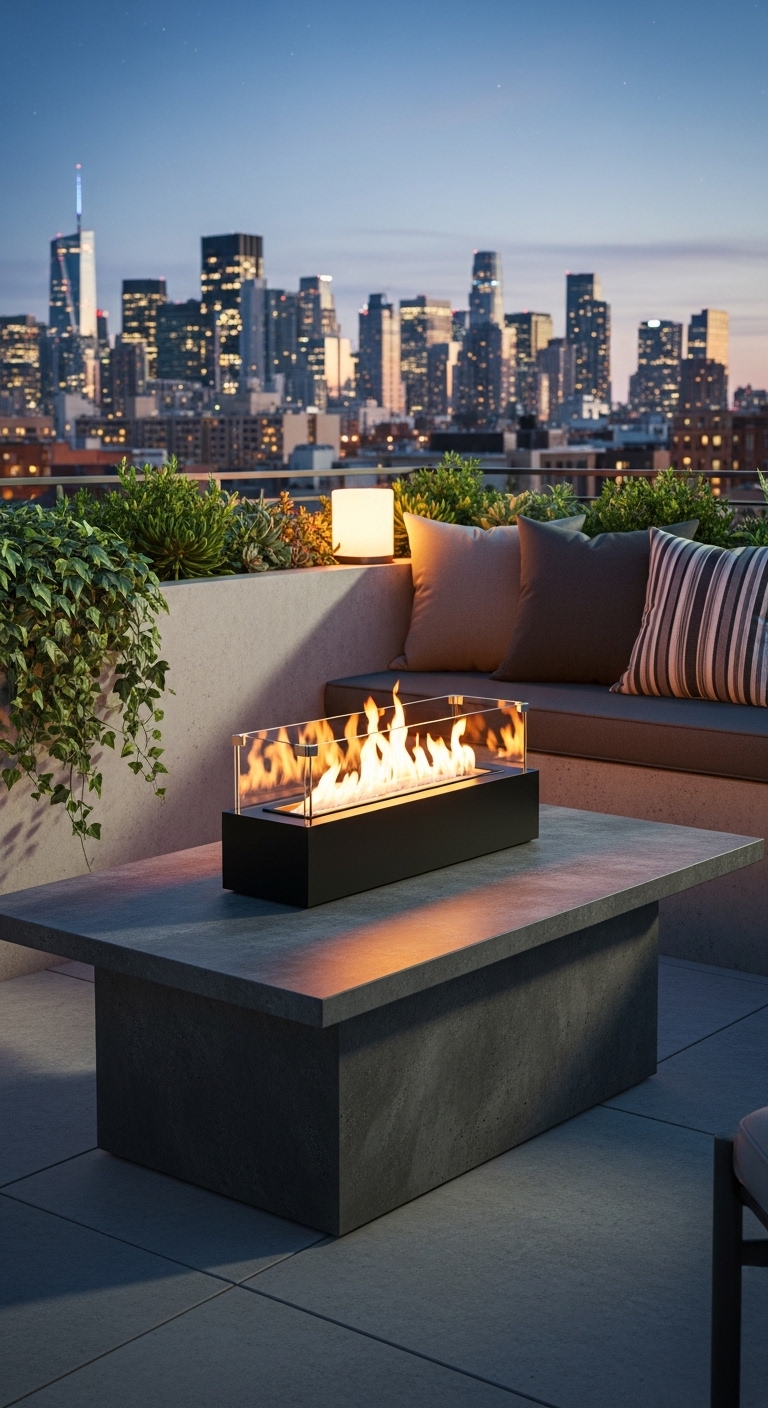
Bio-ethanol fire pits are the ultimate solution for spaces where traditional fire pits simply aren’t feasible — small balconies, enclosed patios, or areas with strict HOA regulations. Bio-ethanol burns cleanly, producing no smoke, no ash, and no harmful emissions.
Because of this, many bio-ethanol burners don’t require any ventilation requirements, and several can even be used indoors.
Why bio-ethanol is ideal for tight spaces:
- No gas line, no propane tank — just a bottle of bio-ethanol fuel that you pour in
- Virtually no smoke means you can use it in covered areas and tight quarters
- Many designs are sculptural and beautiful — they work as art pieces even when not lit
- Safe to use on balconies, rooftop terraces, and enclosed courtyards
The flame on bio-ethanol burners is smaller than gas or wood fire, so manage your expectations around warmth — these are more about ambiance than heat output. But for intimate evenings with a glass of wine and soft lighting, they’re perfect.
DIY Cinder Block Fire Pit — Budget-Friendly Compact Build
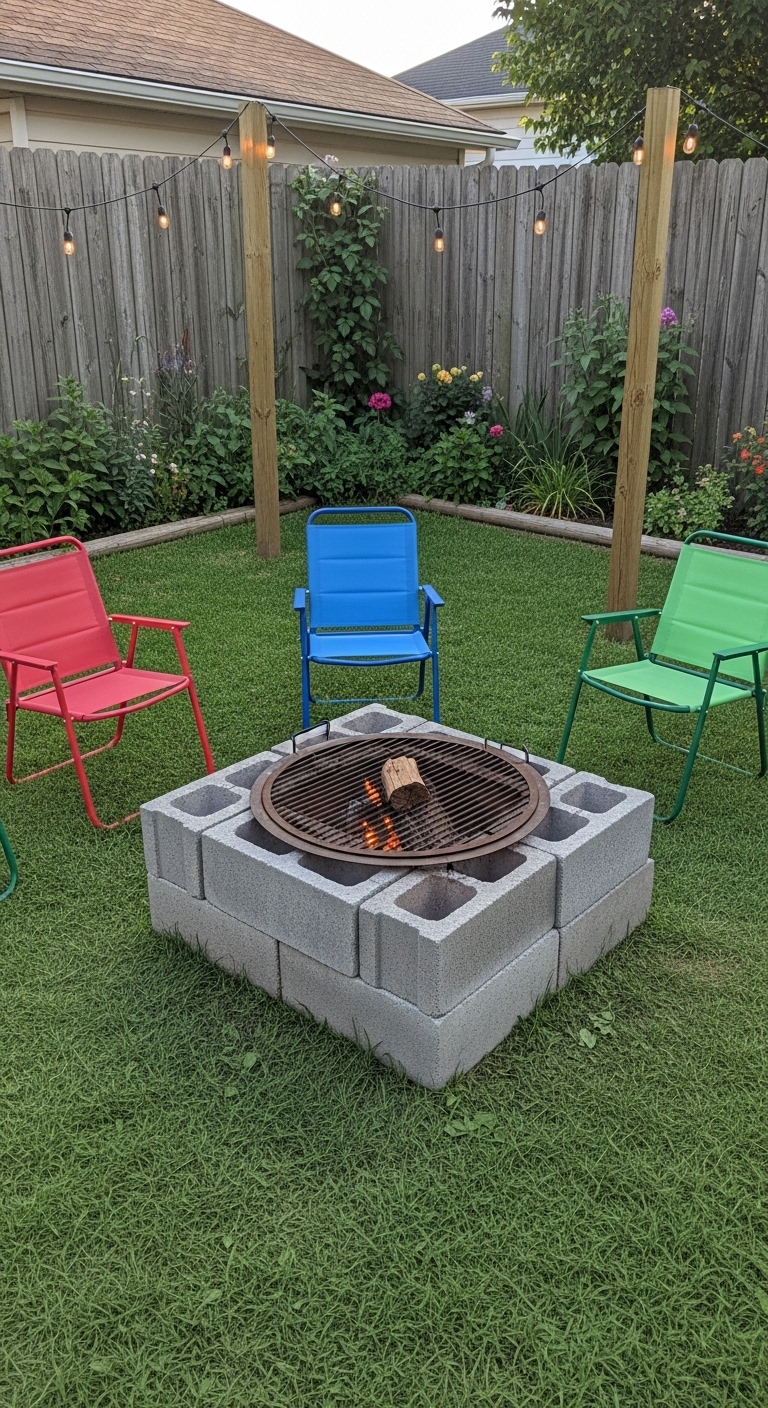
Not every fire pit needs to be an expensive design project. One of the most satisfying small-backyard fire pit builds you can do yourself in a single afternoon is a cinder block fire pit. It costs $30 to $80 in materials, requires no mortar, and creates a surprisingly sturdy and attractive fire area.
How to build a basic cinder block fire pit:
- Lay 8 cinder blocks in a square pattern on a flat, level surface (grass, gravel, or concrete)
- Stack a second row of 8 blocks, staggering the joints for stability
- Place a steel grate or fire ring insert inside the block square
- Your fire pit is ready to use
For a more polished look, paint the cinder blocks with a masonry heat-resistant paint in charcoal, terracotta, or matte black. You can also add a capstone layer of flat pavers across the top blocks to create a shelf for drinks or s’more supplies.
The total footprint can be as small as 24 by 24 inches, making this easily the most compact permanent fire pit on this list.
Final Thoughts: Making the Most of Your Small Space
The biggest mistake people make with small backyards is waiting — waiting for a bigger home, a larger yard, a “proper” outdoor setup. But the truth is, a compact outdoor space with intention and warmth beats a neglected large yard every single time.
You don’t need a lot of square footage to build memories around a fire. You just need the right idea for your specific space, a little creativity, and the willingness to actually use what you create.
Start with what you have. Pick one idea from this list that feels manageable — whether that’s a simple $50 portable bowl or a weekend DIY cinder block project — and do it this season. You’ll wonder why you waited so long.
The fire’s waiting. Go light it.