15 Stunning River Rock Landscaping Ideas for Front Yards
Have you ever pulled up to a house and thought, “Wow, that front yard just works?” Chances are, river rocks played a big role in that first impression. These smooth, naturally tumbled stones carry an effortless beauty that mulch and grass simply cannot replicate. They bring texture, depth, and a timeless quality to any outdoor space — and the best part? Once you lay them, they practically take care of themselves.
Whether you’re dealing with a slope that erodes every time it rains, a shady patch where nothing wants to grow, or a front yard that just feels flat and boring, river rocks offer a solution that’s both practical and gorgeous. Let’s dig into 15 stunning ideas that will genuinely transform your curb appeal.
Why River Rocks Belong in Your Front Yard
Before we jump into the ideas, let’s talk about why river rocks have become one of the most popular landscaping materials out there. They don’t decompose like mulch, they don’t attract pests like wood chips, and they handle water drainage far better than most ground covers. In dry climates, they’re a godsend for water-wise gardening. In wet climates, they prevent soil erosion and redirect runoff like a charm.
They come in dozens of sizes — from pea gravel all the way to large, watermelon-sized boulders — and in colors ranging from creamy white and warm tan to charcoal gray and rust red. You can source them locally, which usually means they already look like they belong in your region’s natural landscape.
The Dry Creek Bed Feature
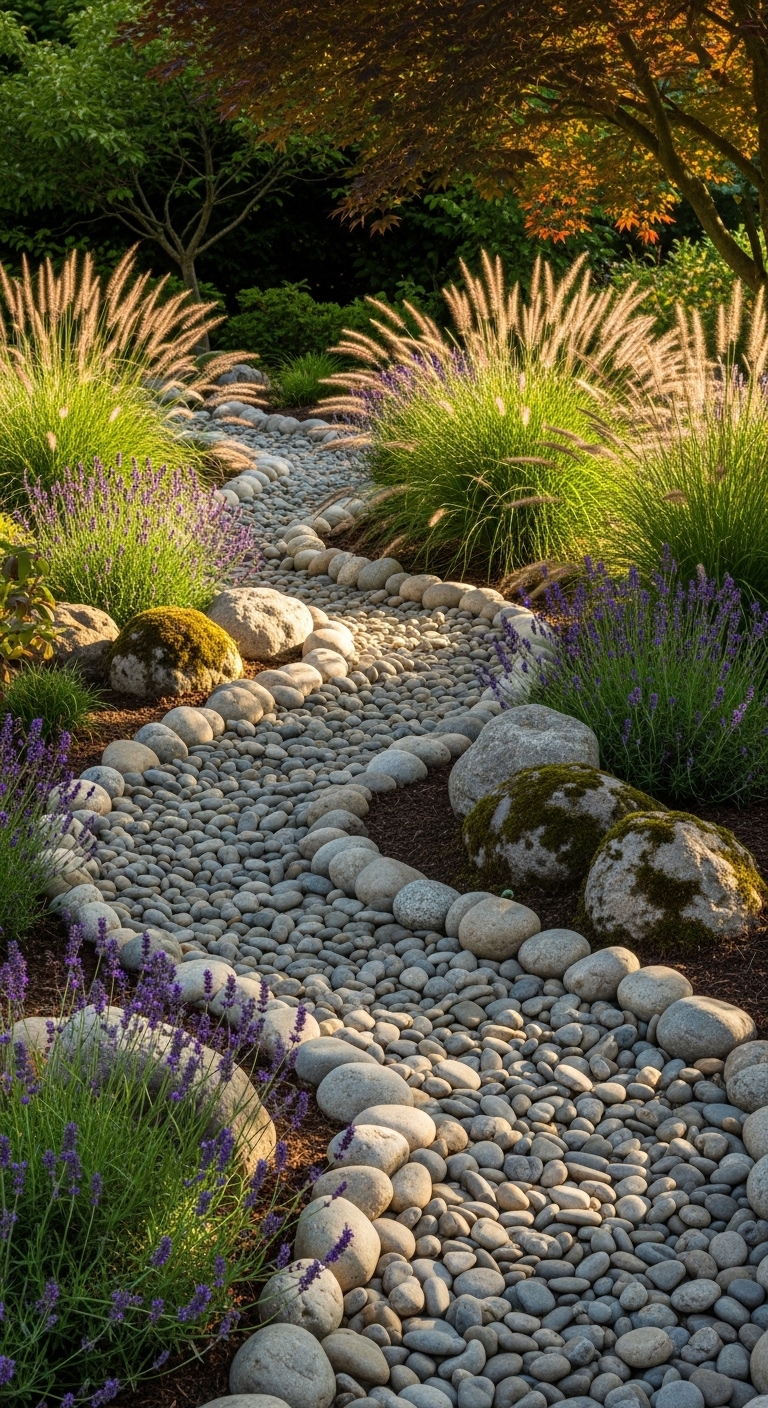
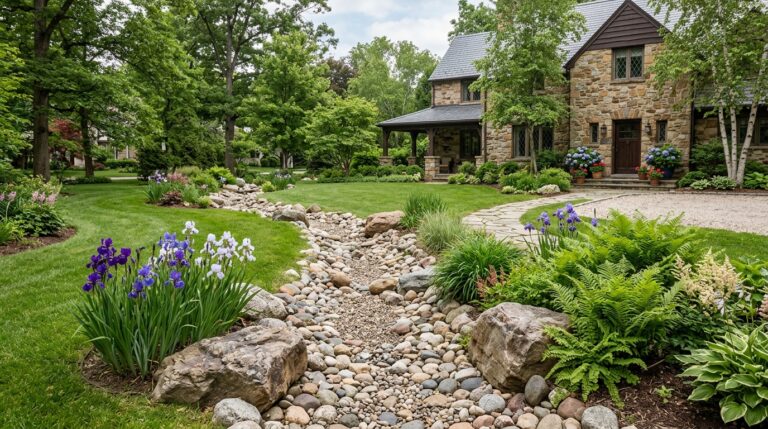
This is hands-down the most requested river rock design I see homeowners tackle — and for good reason. A dry creek bed mimics the look of a natural stream without a drop of actual water. It runs along the natural contour of your yard, guiding the eye from the street to your front door while quietly solving your drainage problem at the same time.
The key to making a dry creek bed look believable is variation. You don’t want uniformly sized stones arranged in a straight channel. Mix large anchor rocks along the edges with medium-sized stones in the center and small pebbles filling the gaps. Nature never places rocks in perfect rows, so neither should you.
- Use rocks between 2 and 6 inches in the center of the “stream” and larger edging stones on the sides
- Line the bed with landscape fabric underneath before laying rocks to block weeds
- Plant ornamental grasses, rush, or sedge along the banks to complete the natural illusion
- Curve the bed gently — straight lines read as man-made; curves read as nature
River Rock Mulch Replacement Around Planting Beds
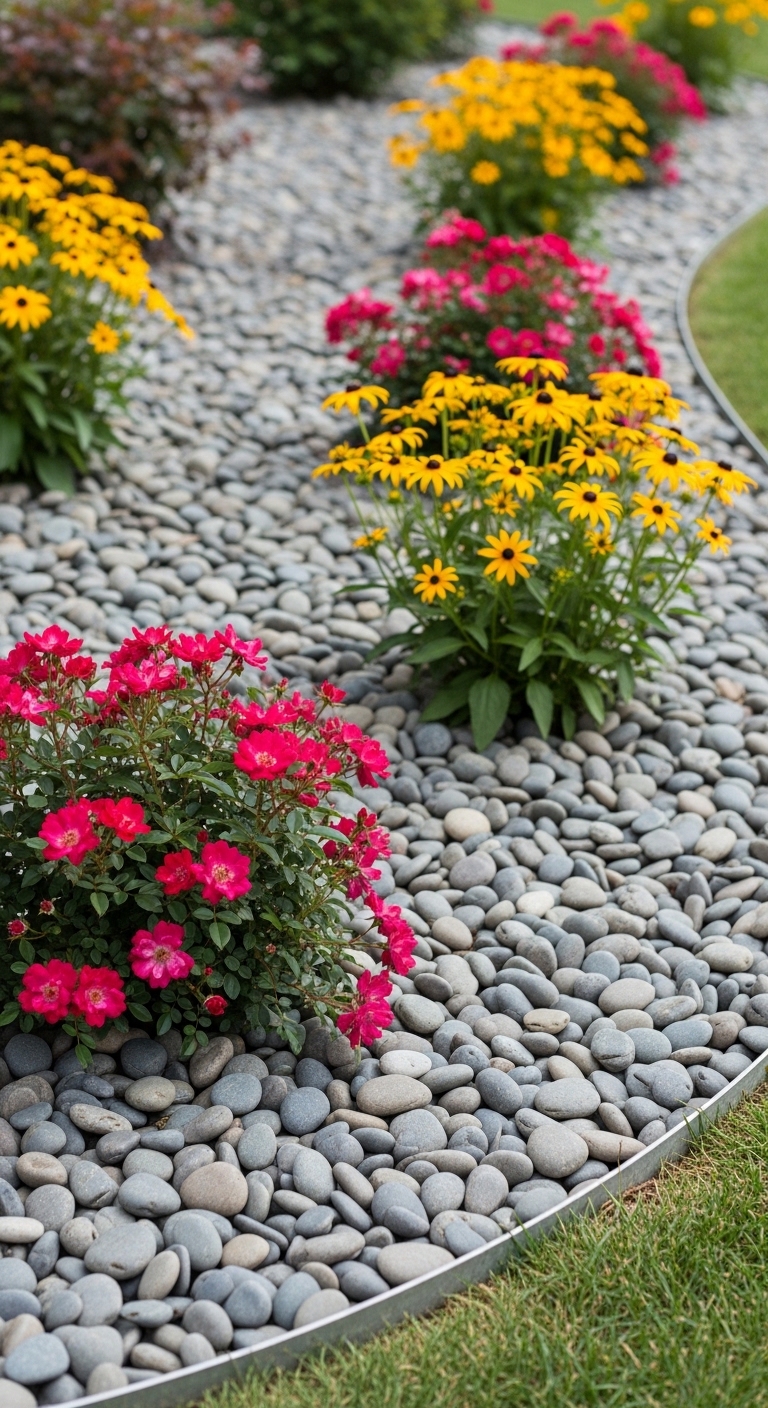
Replacing traditional mulch with river rocks around your planting beds is one of those low-effort, high-impact upgrades that feels almost too simple. But the results speak loudly. River rocks stay put through rainstorms and windstorms. They don’t fade to a dull gray after a summer season. And they create a crisp, polished look that makes your plants pop.
The trick here is choosing the right rock size. Rocks between 1.5 and 3 inches work best for most planting beds — small enough to nestle around plant bases, large enough to look substantial and not scatter onto your lawn.
One real-world tip: always install a quality landscape fabric underneath before laying river rocks around plants. Without it, soil and debris work their way up through the stones over time and you end up with a muddy mess within two to three years. Choose a heavy-duty woven fabric, not the cheap thin film type.
A Bold River Rock Border Along Walkways
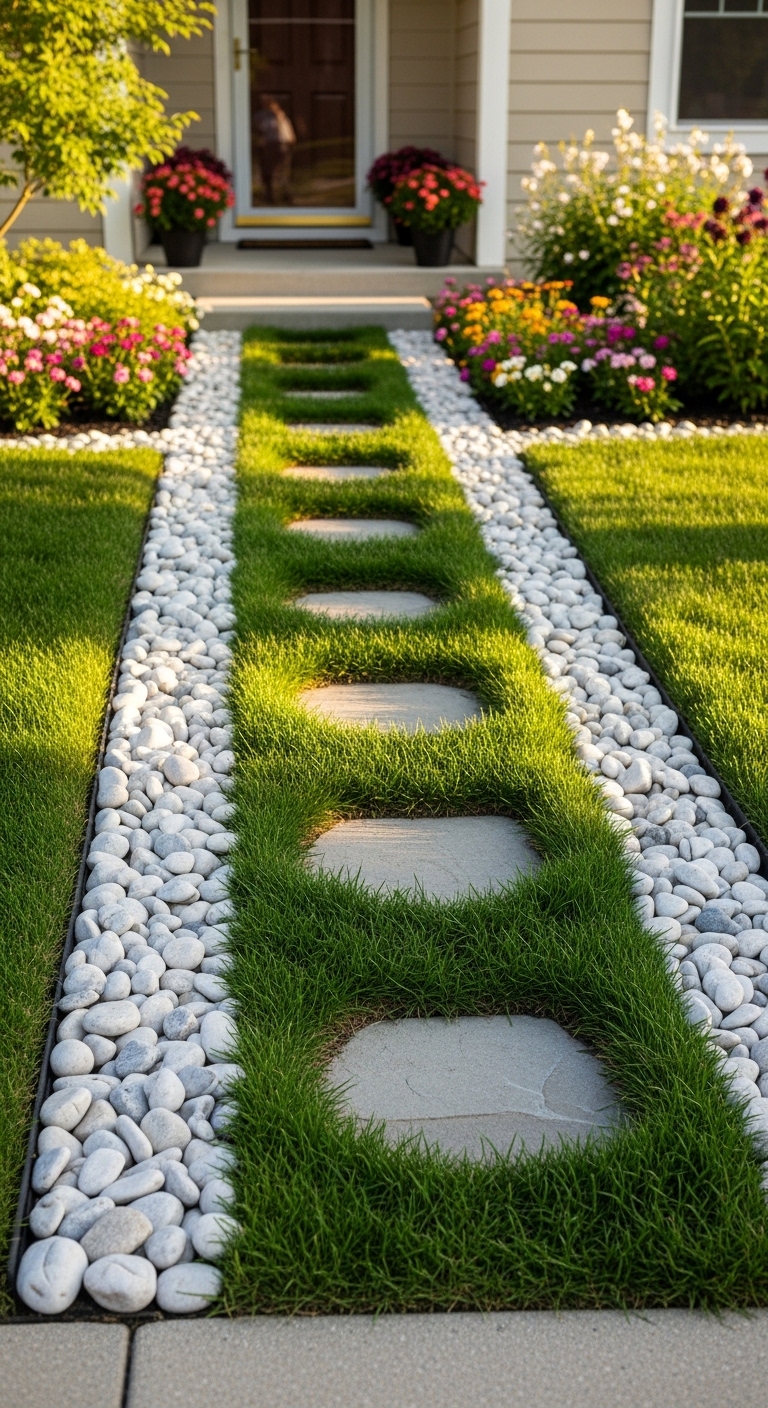
There’s something deeply satisfying about a well-edged pathway. Adding a river rock border on each side of your front walkway instantly elevates the entire entry experience. It creates a clear visual frame that guides guests toward your front door while adding texture and dimension to what might otherwise feel like a plain strip of concrete or stepping stones.
This idea works well with both formal and cottage-style homes. For formal homes, use uniformly sized, light-colored rocks arranged in neat parallel rows. For more relaxed or cottage aesthetics, mix sizes and let the border feel more organic and piled than perfect.
Zen-Inspired River Rock Garden Bed

If your front yard faces south or west and gets punishing afternoon sun, a Zen garden design might be exactly what you need. Inspired by traditional Japanese rock gardens, this style leans into minimalism and negative space. River rocks become the stars of the show rather than supporting players.
Large, statement-worthy river rocks — think 12 to 24 inches across — anchor the design while fine gravel or pea stone fills the surrounding ground. Some homeowners use a special rake to create subtle patterns in the fine gravel, adding a meditative quality that genuinely makes passersby slow down and look.
This style pairs beautifully with low, spreading plants like Japanese junipers, ornamental grasses, or a single weeping cherry tree.
River Rock Drainage Swale Along the Driveway
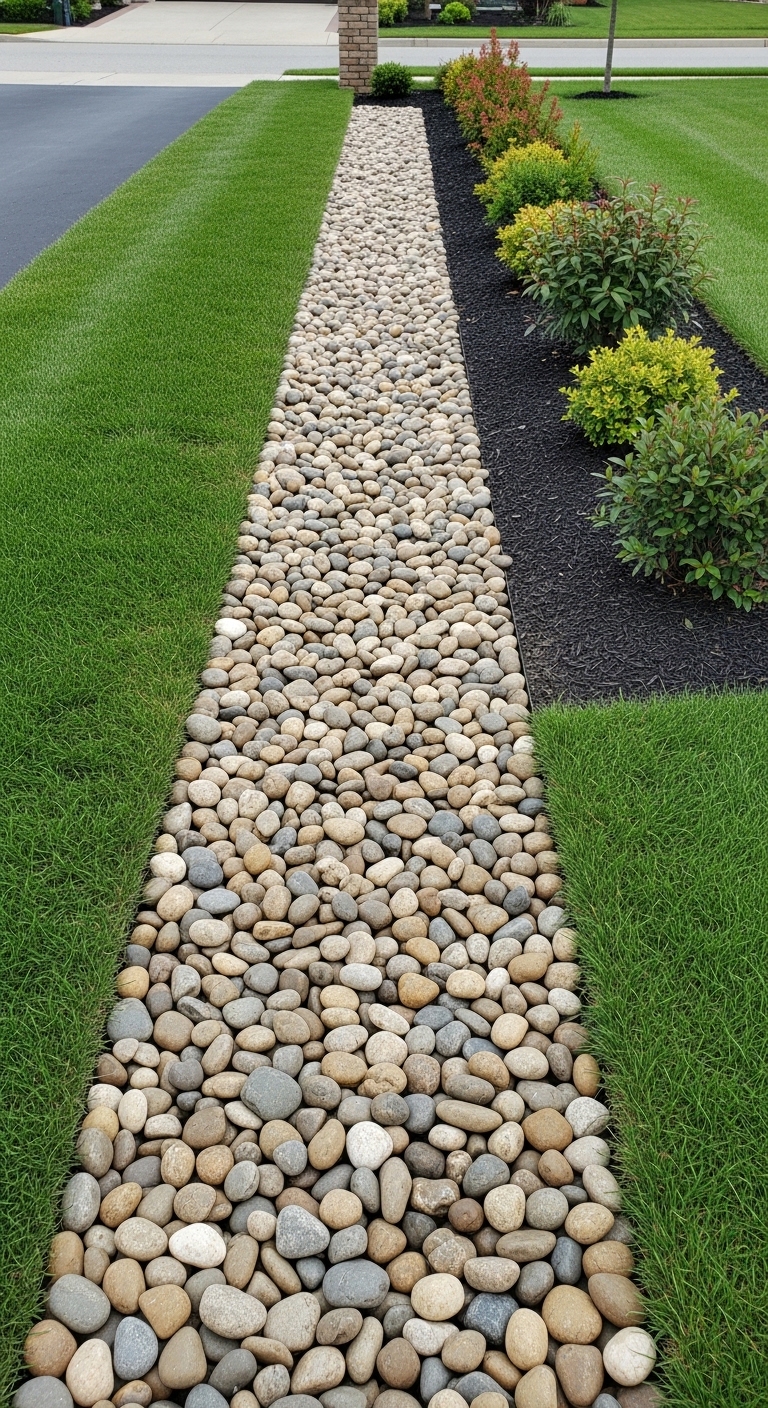
If rainwater rushes down your driveway and pools at the base of your front steps every time it storms, you already know the frustration. A river rock drainage swale solves this problem while looking intentional and attractive rather than utilitarian.
A swale is essentially a shallow, wide channel running parallel to your driveway that captures and redirects stormwater. Filling it with river rocks slows the water flow down, prevents erosion, and gives the runoff time to percolate into the soil rather than just racing across pavement.
Size matters here: use 3 to 5-inch stones for the main swale body. They’re heavy enough to stay put during heavy rain and large enough to allow good water flow between them.
River Rock Accent Around a Feature Tree
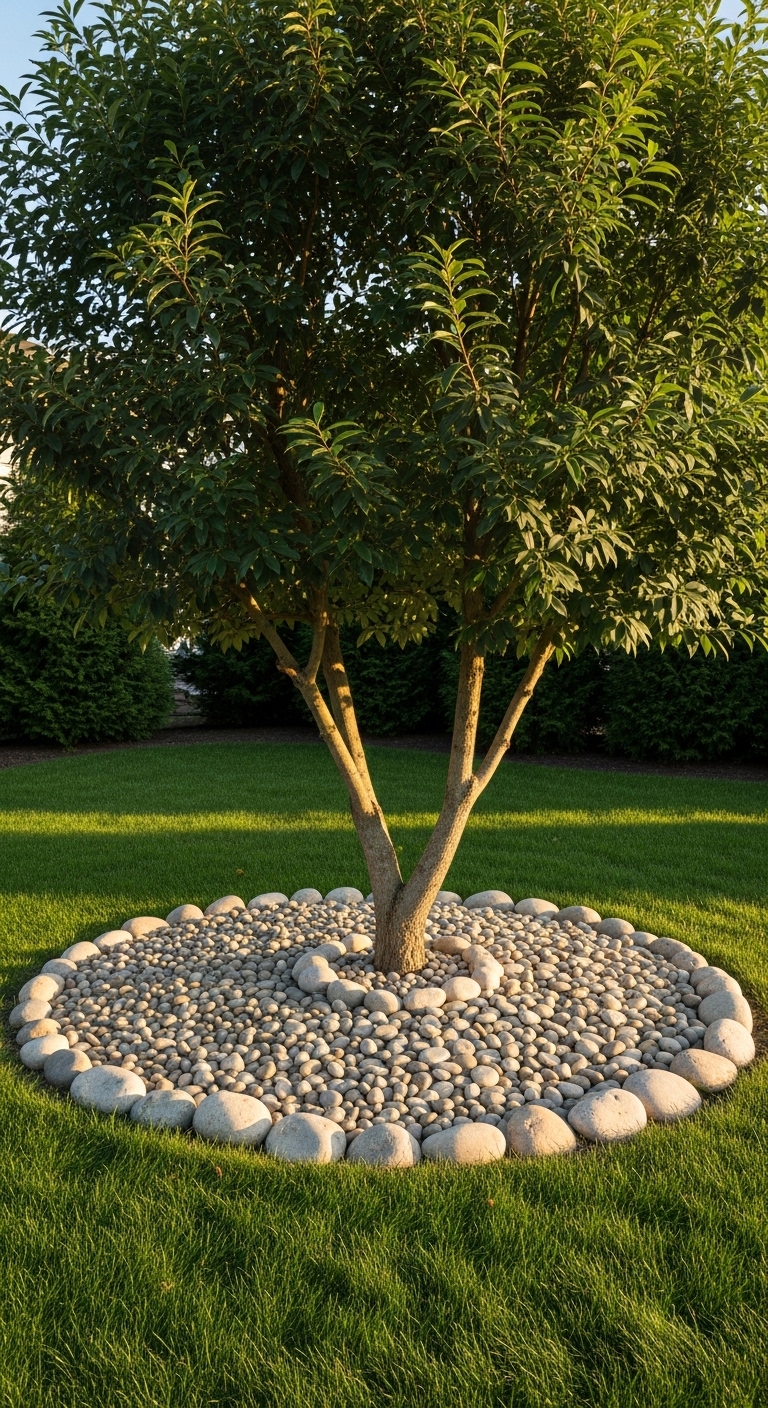
Every front yard has — or should have — one focal point tree. The way you treat the ground around that tree’s base communicates a lot about how intentional your landscaping choices are. A circular river rock “collar” around your feature tree replaces the tired ring of mulch with something far more elegant.
The design principle here is transition: start with smaller 1-inch stones close to the trunk and gradually move to larger 3 to 4-inch stones as you expand outward. This creates a sense of natural radiating energy from the tree’s base.
Equally important: keep rocks away from the actual trunk by a few inches. River rocks hold heat and if they’re pressed against bark, they can damage the tree over time.
Low-Maintenance River Rock Lawn Replacement
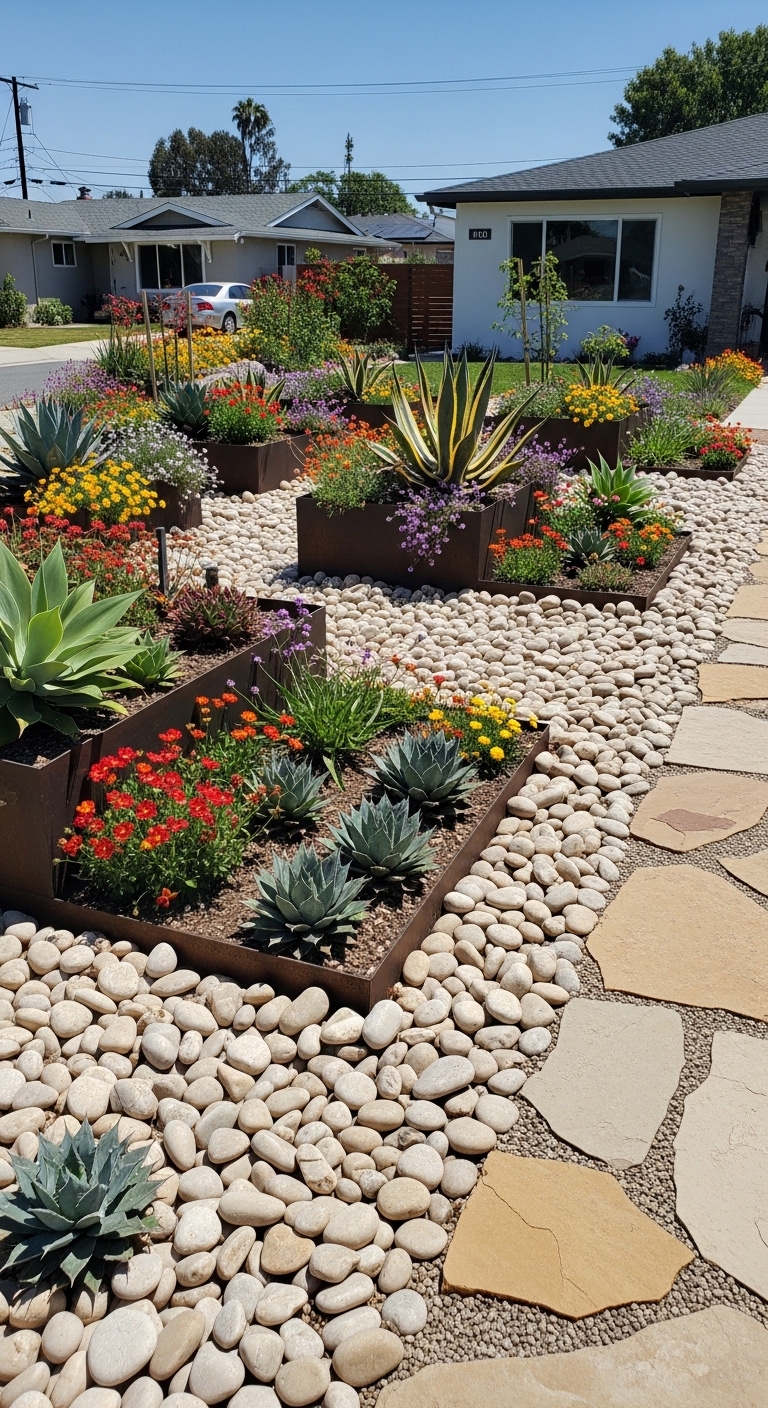
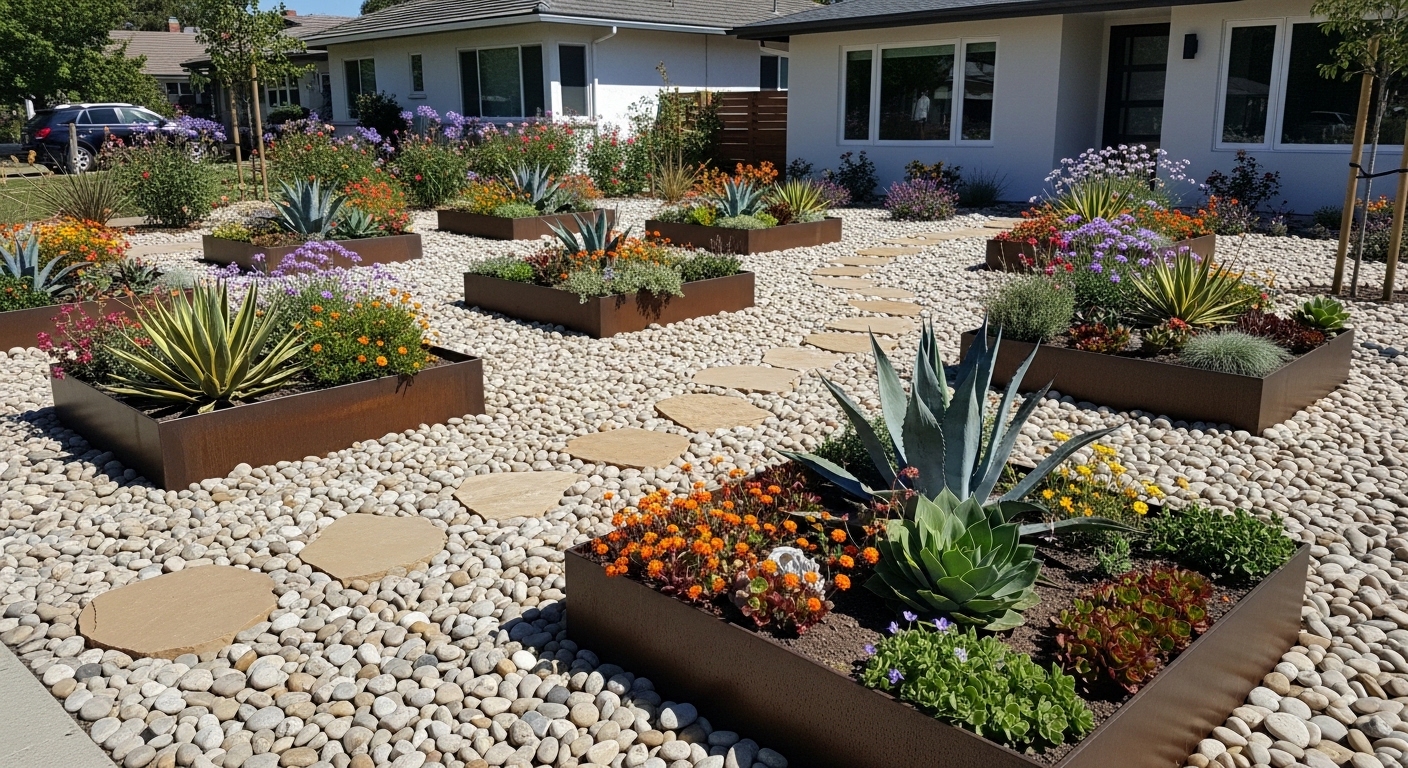
Water restrictions are a reality for millions of homeowners, and the traditional green lawn is increasingly expensive to maintain. Replacing part — or all — of your front lawn with river rocks paired with drought-tolerant plants isn’t just practical; it can look absolutely spectacular.
The secret to making a rock lawn look rich rather than sparse is layering plants at different heights. Use tall ornamental grasses or agaves as vertical anchors, mid-height flowering perennials for color, and low-spreading succulents as a ground layer between the rocks. The rocks then become the unifying backdrop that ties it all together.
- Choose rocks in earthy tones — warm tans, terracotta, and sandy beiges — for a cohesive, organic feel
- Install decomposed granite or a layer of pea gravel beneath larger rocks for better stability
- Use native drought-tolerant plants that naturally look at home among rocks
River Rock Stepping Stone Garden Path
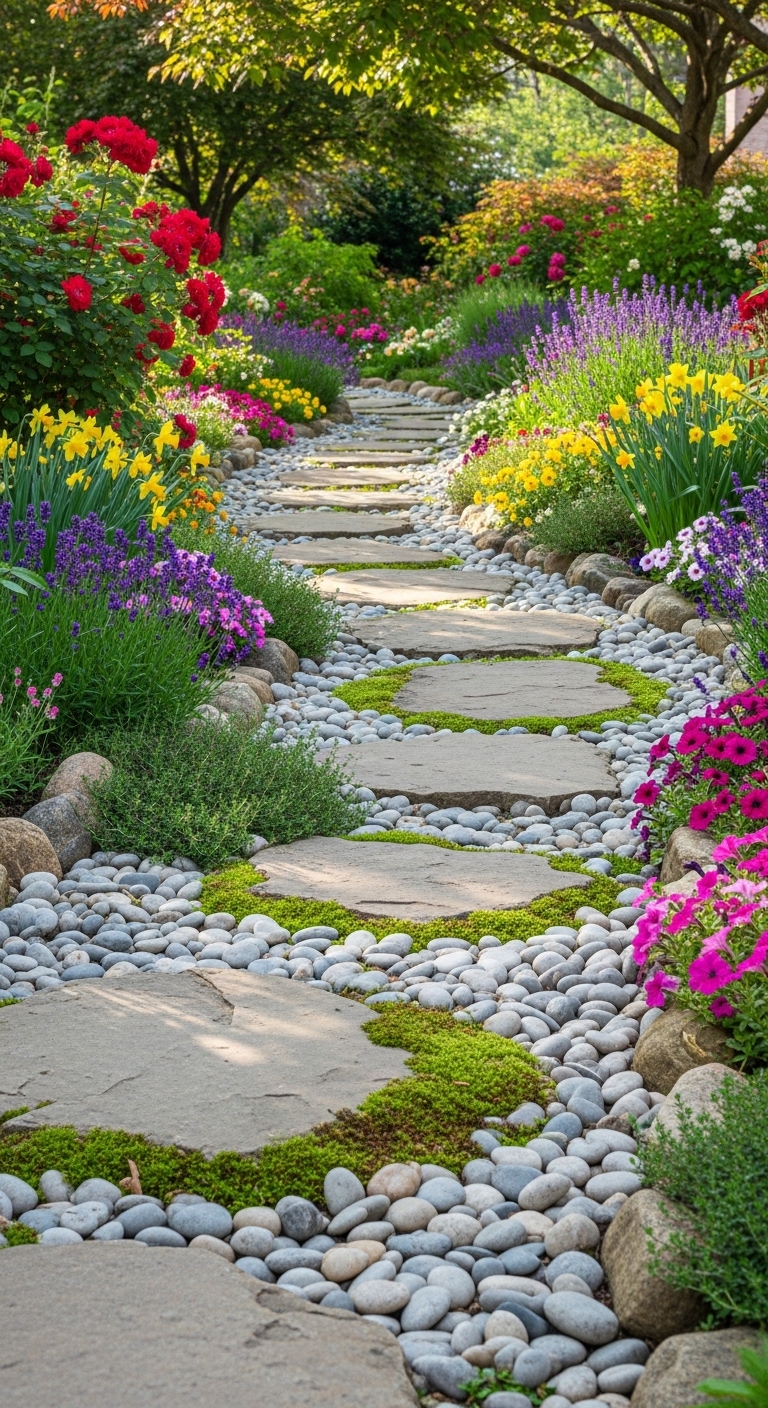
A stepping stone path through your front yard becomes infinitely more interesting when you fill the spaces between the stones with river pebbles instead of leaving bare soil or grass. The pebbles do double duty: they prevent weeds from growing between the stones and they give the path a finished, intentional look.
For this design, choose flat stepping stones that are at least 16 inches wide so they feel comfortable underfoot, and fill the gaps with pea gravel or small river pebbles between 0.5 and 1.5 inches. Let creeping ground covers like thyme or ajuga work their way through the rocks over time for a naturalistic, cottage-garden feel.
River Rock Retaining Wall Accent
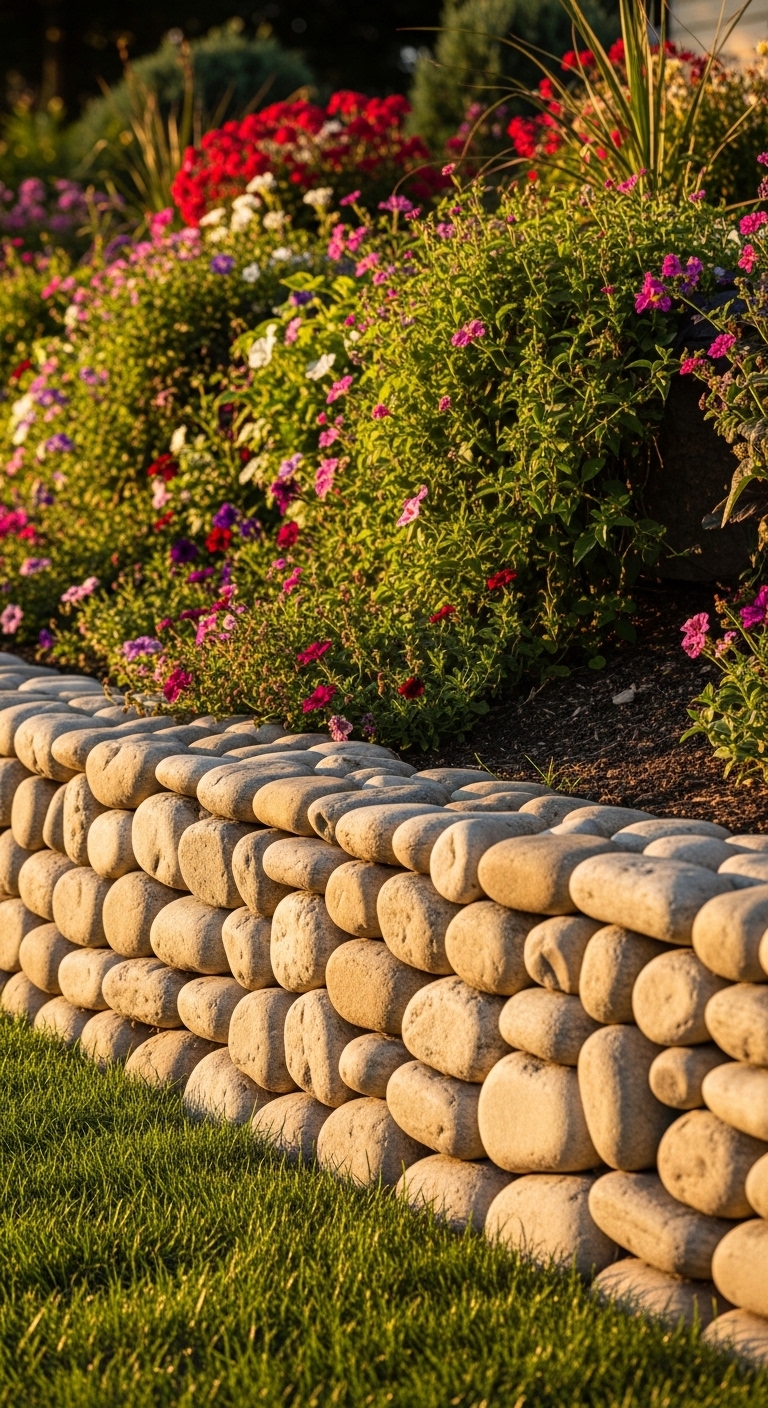
If your front yard has a slope — even a gentle one — a river rock retaining wall adds structure while looking completely natural. Unlike concrete block walls, river rock walls look like they’ve been there forever, as if the earth itself arranged them.
You don’t need to be a professional mason to build a low decorative river rock wall under 18 inches. The key is to start with your largest, flattest rocks as a base layer, slightly embedded in the soil for stability, then layer progressively smaller rocks on top, leaning them slightly backward into the slope. This backward lean is what keeps the wall stable over time.
Decorative Boulders as Landscape Focal Points
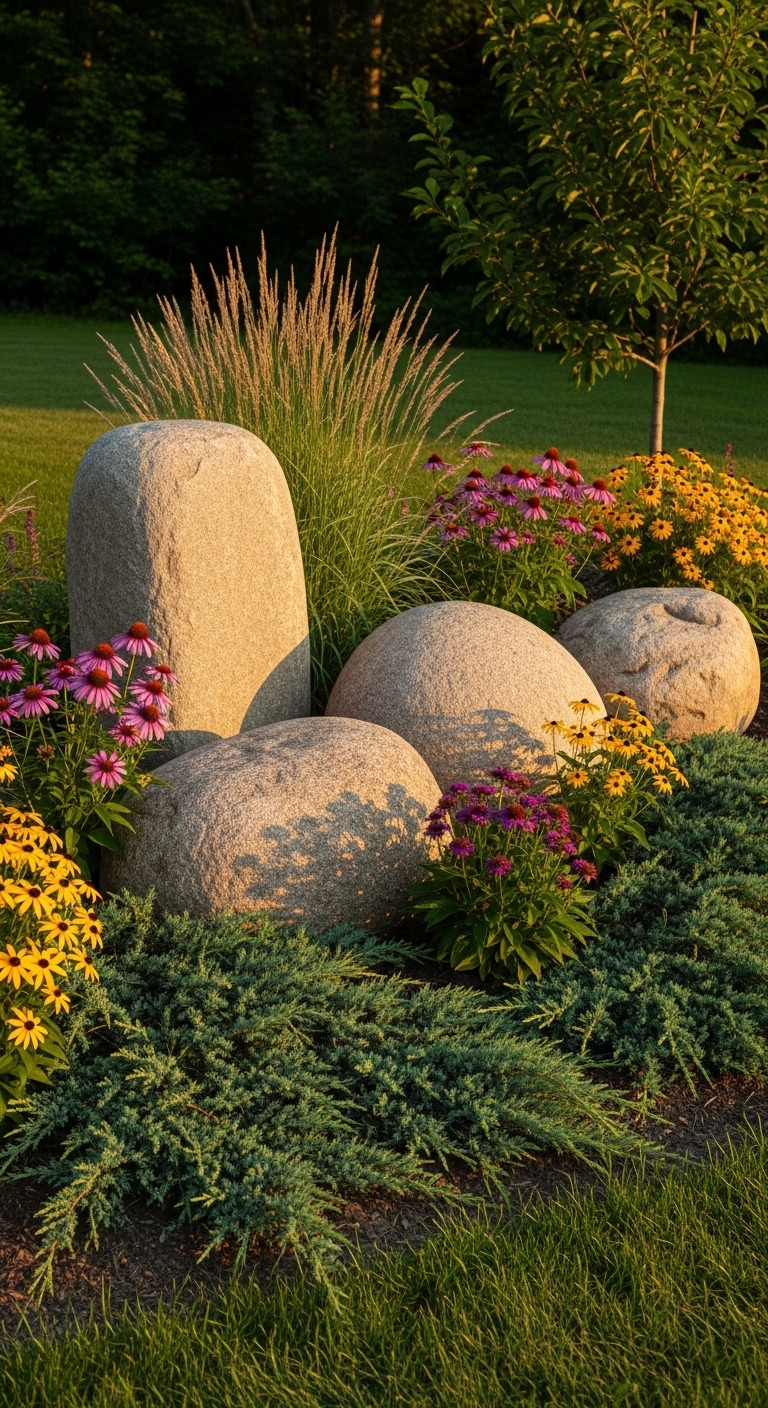
Sometimes the most impactful thing you can do in a front yard is place two or three large boulders in a planting bed and let them speak for themselves. Large river boulders — the ones that weigh anywhere from 50 to 200 pounds — add genuine drama and a sense of permanence that smaller rocks simply can’t achieve.
The design rule for boulder placement is the odd-number principle: always use 1, 3, or 5 boulders, never even numbers. Arrange them at varying heights (you can partially bury the larger ones to make them look like they’re emerging from the earth) and different distances apart. Cluster two close together and place one farther away for the most natural-looking grouping.
River Rock Edging Between Lawn and Beds
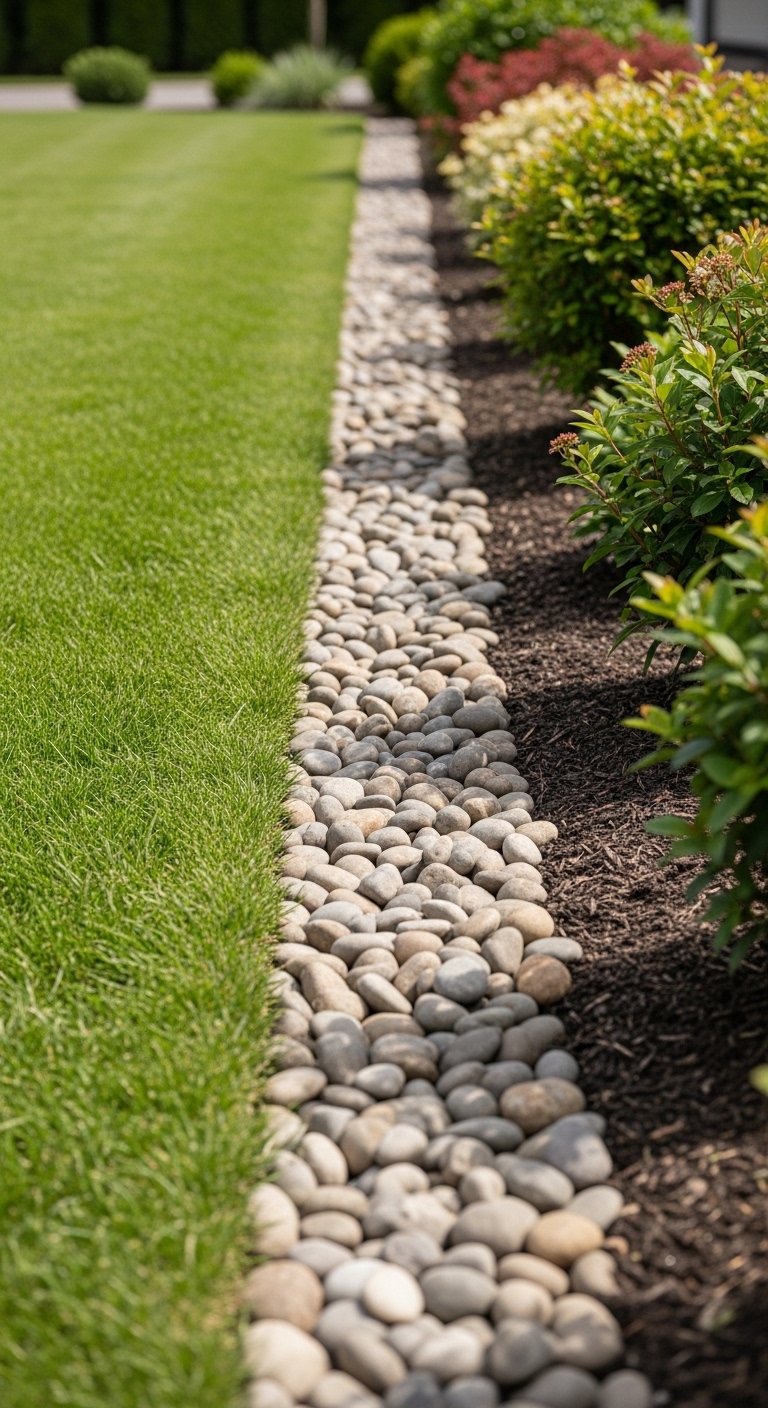
If you’re not ready to commit to a full river rock makeover, simply using river rocks as edging between your lawn and garden beds is a low-cost, high-impact starting point. A single row of medium-sized rounded stones — about 4 to 6 inches each — creates a natural border that’s easier to maintain than plastic edging and far more attractive than metal strips.
This works especially well in yards where lawn mowing gets tricky near curved bed edges. The rocks give your mower a clear path to follow and protect the plant roots from blade damage.
River Rock Ground Cover in Shaded Spots
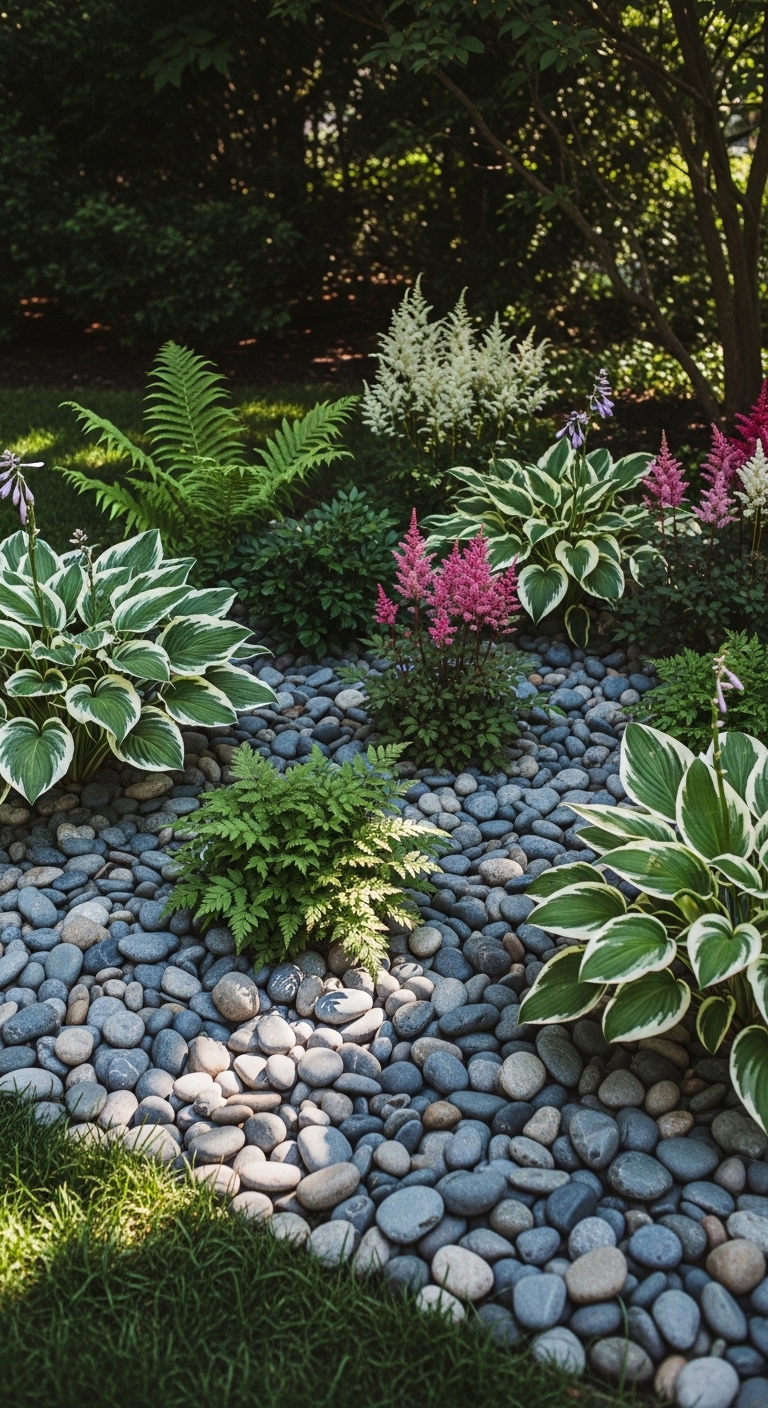
Every yard has that one spot — under a large tree, against a north-facing wall, or beneath an overhang — where grass simply refuses to grow. Instead of fighting it with seeds and fertilizer year after year, embrace it with a river rock ground cover and shade-tolerant plants.
Dark charcoal or gray river rocks work beautifully in shaded areas because they contrast well with the lush green of shade plants like hostas, ferns, and astilbe. The rocks also keep the soil cool and moist underneath, which these shade-lovers appreciate.
Mixed Media — River Rocks with Ornamental Grasses
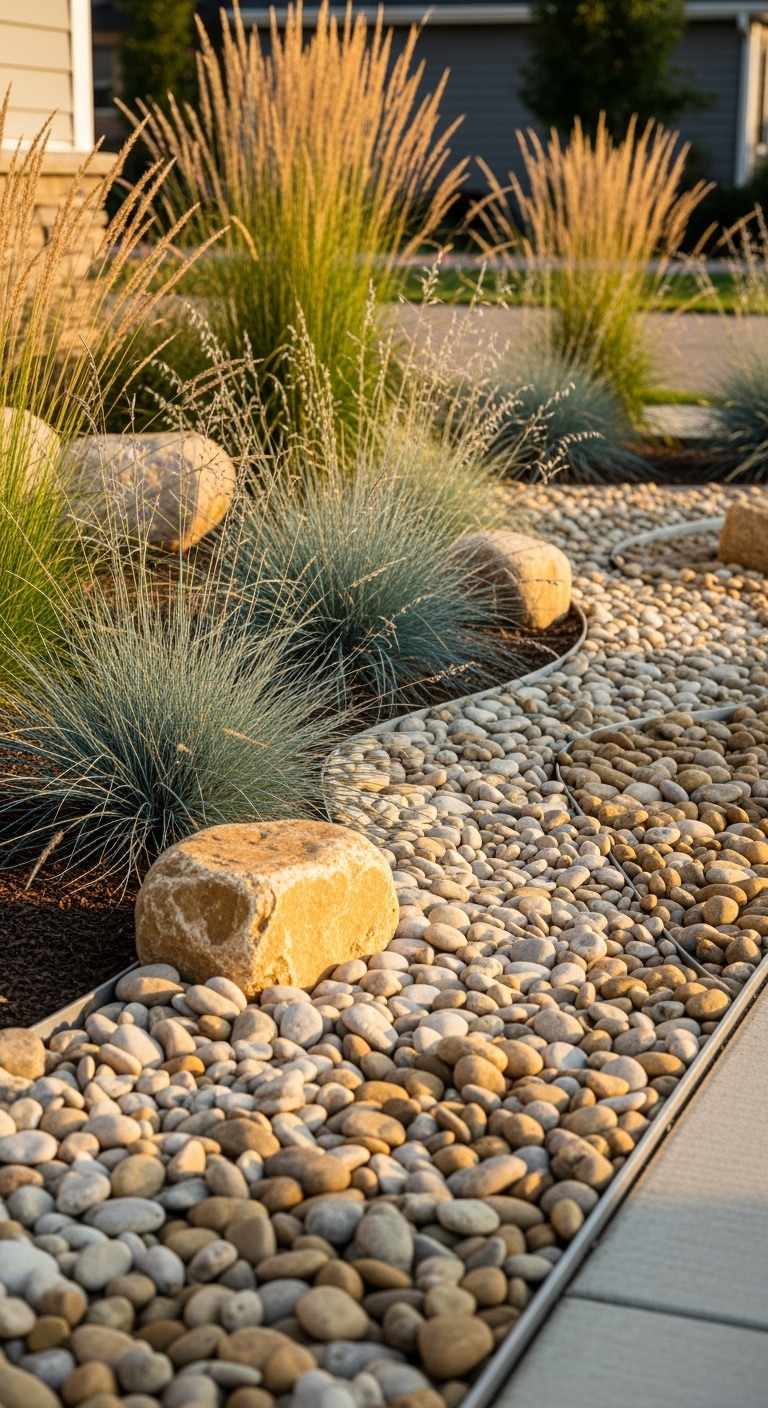
One of the most underrated combinations in front yard landscaping is ornamental grasses planted directly in river rock beds. The contrast between the rigid, smooth stones and the soft, flowing movement of grasses creates a dynamic, alive-feeling landscape that changes with every breeze.
Feather reed grass, blue oat grass, and fountain grass all work beautifully in this setting. Plant them in odd-numbered clusters of 3 or 5, spaced far enough apart that the rocks remain visible between them. The rocks serve as the stable, permanent backdrop while the grasses provide all the movement and seasonal interest.
River Rock Water Feature Integration
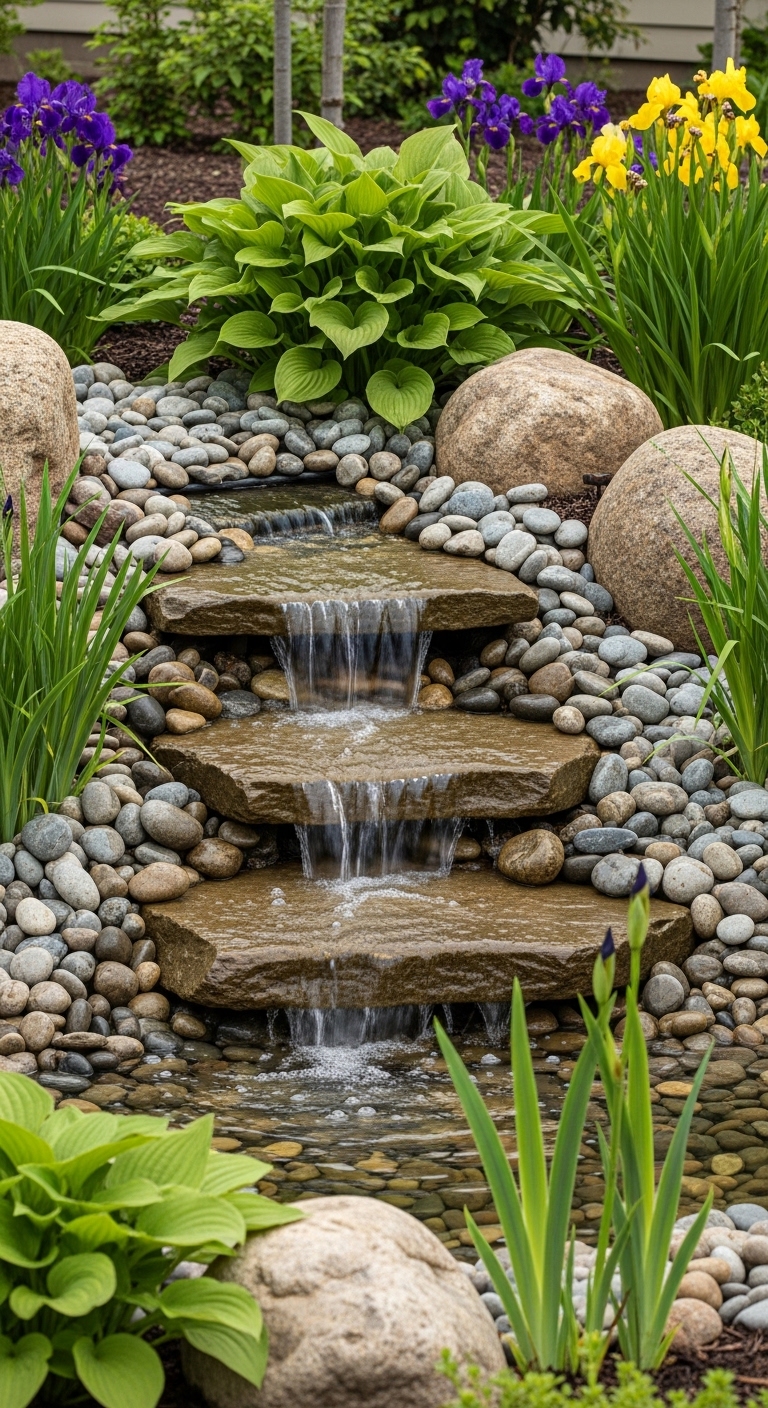
If you’ve ever sat near a mountain stream and felt immediately calmer, you understand the appeal of adding a water feature to your front yard. River rocks and water are natural partners, and a pondless waterfall or bubbling rock fountain creates a sensory experience that no other landscaping element can match.
The pondless design is the most practical choice for front yards — water circulates from a buried reservoir, runs over a cascade of river rocks, and disappears back underground. No open pond means no drowning hazards, no algae-filled standing water, and no mosquitoes. The design looks as natural as a real mountain stream and the sound travels all the way to the street.
River Rock Color Contrast Design
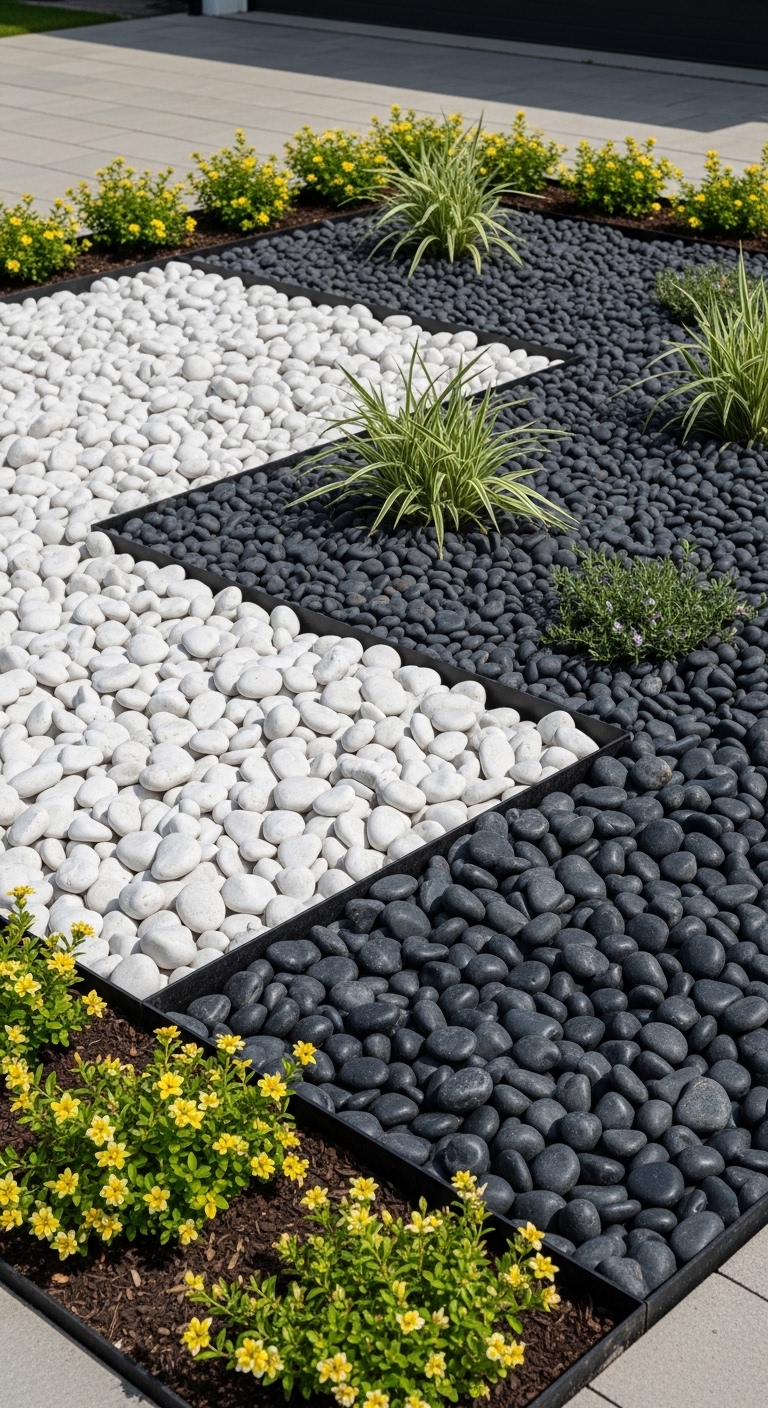
For homeowners who love clean lines and contemporary style, using two contrasting river rock colors in deliberate patterns creates a front yard that looks like a professional landscape architect designed it. White river rocks against charcoal black stones make a bold graphic statement that stands out immediately from the street.
The key is to keep the shapes simple: straight lines, clean curves, or gentle sweeping S-shapes. The contrast itself provides all the visual interest you need. Over-complicating the pattern dilutes the effect.
How to Get Started: Practical Tips Before You Buy
Before you head to the landscape supply yard, here are the most important things to keep in mind. Always buy river rocks from a bulk landscape supplier rather than big-box stores — you’ll pay a fraction of the price per ton and you’ll have far more variety to choose from.
Calculate your coverage needs before purchasing. One ton of river rock covers roughly 60 to 80 square feet at 2 to 3 inches deep. It’s always better to overestimate slightly than to run short mid-project.
- Always install landscape fabric under river rocks to prevent weed growth and soil migration
- Use steel or aluminum edging to keep rocks contained and prevent them from spreading into lawn areas
- Rinse your rocks with a hose after installation to remove dust and reveal their true colors
- Top up your rock layer every few years as stones settle and compact over time
The Lasting Value of River Rock Landscaping
What makes river rocks such a smart investment for your front yard comes down to one simple truth: they look better over time, not worse. As they settle and weather, they blend more naturally into the landscape. A well-designed river rock front yard can easily add real perceived value to your home, and it dramatically reduces the time and money you spend on weekend yard maintenance.
Whether you choose one of these 15 ideas or combine several of them together, the result will be a front yard that feels intentional, beautiful, and uniquely yours. Start with the idea that excites you most — even a small river rock border or a dry creek bed on one side of your yard is a meaningful first step. Once you see the difference, you’ll wonder why you waited so long.
Ready to transform your front yard? Pick your favorite idea from this list and start gathering inspiration photos from your neighborhood walks. The best landscaping always starts with what you genuinely love to look at every single day.