Potted Flowers for Patio and Front Porch Decorating Ideas
You walk past your front porch every single day, and yet something always feels a little… flat. Maybe the welcome mat is doing its best, or a lonely shrub sits there looking politelhopeless. Here’s the truth — a few stunning planters filled with the right potted flowers can completely transform your outdoor space in a single afternoon. We’re talking jaw-dropping color, texture, and life that makes neighbors stop and stare.
Whether you’ve got a sun-drenched patio, a shaded front stoop, or a narrow entryway that feels impossible to style, there’s a potted flower combination here that will work for you. This guide walks you through 20 of the most beautiful, practical, and eye-catching potted flower ideas for patios and front porches — including exactly which blooms to pair, what containers work best, and honest tips from someone who has killed plenty of plants before getting this right.
Let’s dig in.
Potted Flowers Work Better Than You Think
Before we get into the ideas, let’s talk about why planters beat traditional garden beds for patio and porch styling. First, you control everything — the soil, the drainage, the placement. Don’t like where something looks? Pick it up and move it. That kind of flexibility is priceless when you’re styling an entry or entertaining space.
Second, potted flowers give you seasonal control. You can swap out spring tulips for summer petunias without tearing up a single plant bed. Third, layering planters at different heights — a tall urn here, a low terracotta pot there — creates that “designed” look that takes a plain patio and turns it into an actual destination.
The biggest mistake most people make? Going too small with their pots and too cautious with their color. Go bigger, go bolder, and the results will genuinely surprise you.
Classic Geranium Statement Urn
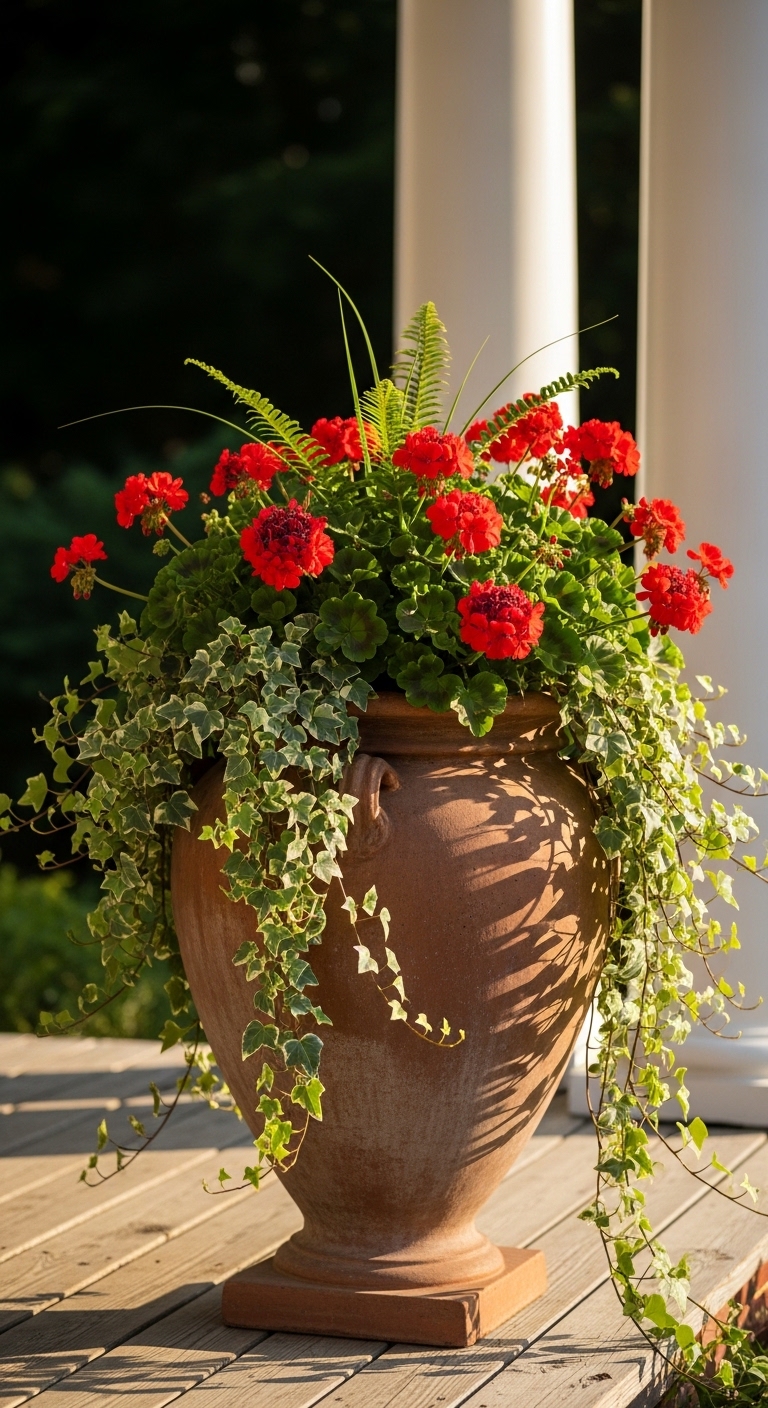
There’s a reason geraniums have been porch favorites for over a hundred years — they simply deliver. Plant deep red or coral geraniums in a classic oversized terracotta urn, and you instantly signal “someone thoughtful lives here.” The terracotta color plays beautifully against nearly any brick or painted surface.
- Choose a pot that’s at least 14 inches wide so roots have room to spread
- Water consistently but never let them sit in soggy soil — geraniums hate wet feet
- Deadhead spent blooms every few days and you’ll get continuous color from spring through first frost
- Add a trailing sweet potato vine around the edges to soften the urn’s silhouette
The best part about geraniums is that they’re genuinely hard to kill once established. Even if you forget to water for a couple of days in the summer heat, they’ll forgive you.
Cascading Petunias in Hanging Baskets
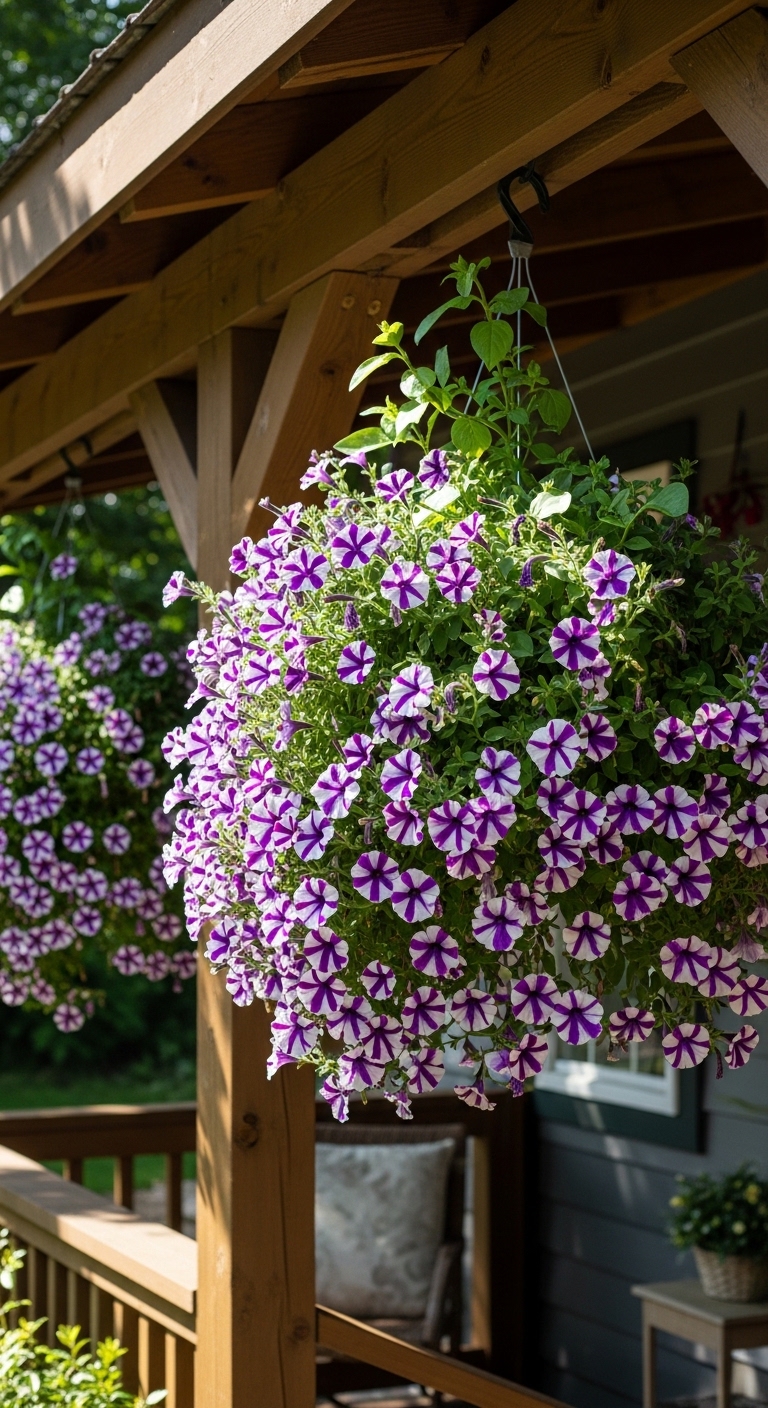
Wave petunias might be the most underrated porch flower alive. When you hang two large baskets on either side of your front door and let them cascade freely, they create a curtain of color that feels genuinely magical — especially in the evening light.
- Purple and white combinations are classic; hot pink and coral work equally well for a bolder look
- Use a slow-release fertilizer when planting and feed with liquid fertilizer every two weeks
- These need at least six hours of sun, so check your porch exposure before committing
- Water daily in summer heat — hanging baskets dry out fast
One real-life tip: those wire baskets lined with coconut fiber look the most lush and natural. Plastic hanging pots work fine, but the natural fiber baskets photograph beautifully and age gracefully.
Lavender in Galvanized Metal Pots
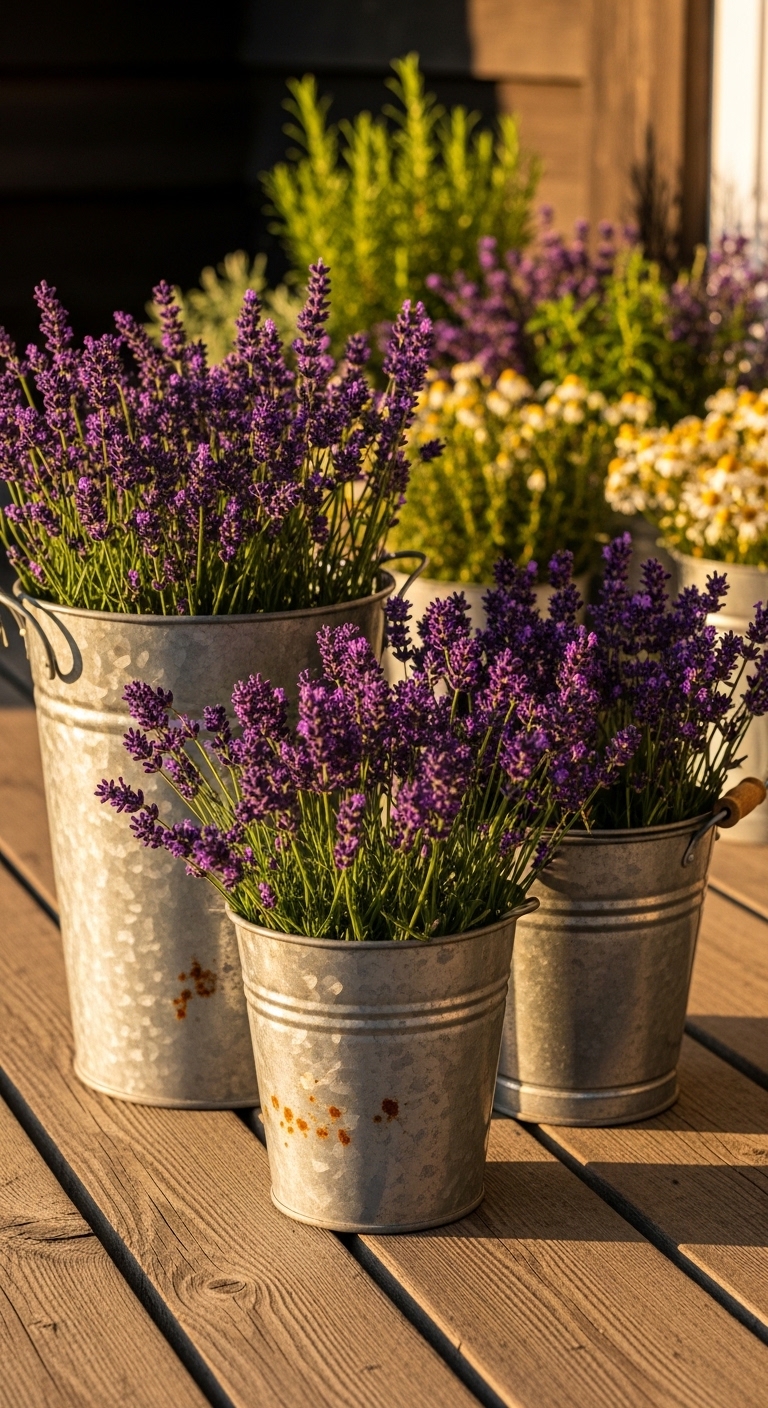
Lavender on a porch isn’t just beautiful — it’s genuinely sensory. Every time someone brushes past it or a breeze moves through, the scent hits you. That experience elevates your front entry in a way no decorative sign or wreath ever quite manages.
- Group three galvanized metal buckets of different heights together for a farmhouse-style vignette
- Lavender needs extremely well-draining soil — mix in gravel or perlite generously
- In humid climates, give it maximum airflow and don’t crowd it with other plants
- Trim after the first bloom flush to encourage a second round of flowers
Varieties like Hidcote and Munstead are compact enough for container life without getting unruly. If you’re in a very hot and humid region, Spanish lavender handles the conditions better than English types.
Tropical Bougainvillea Climber in a Large Planter
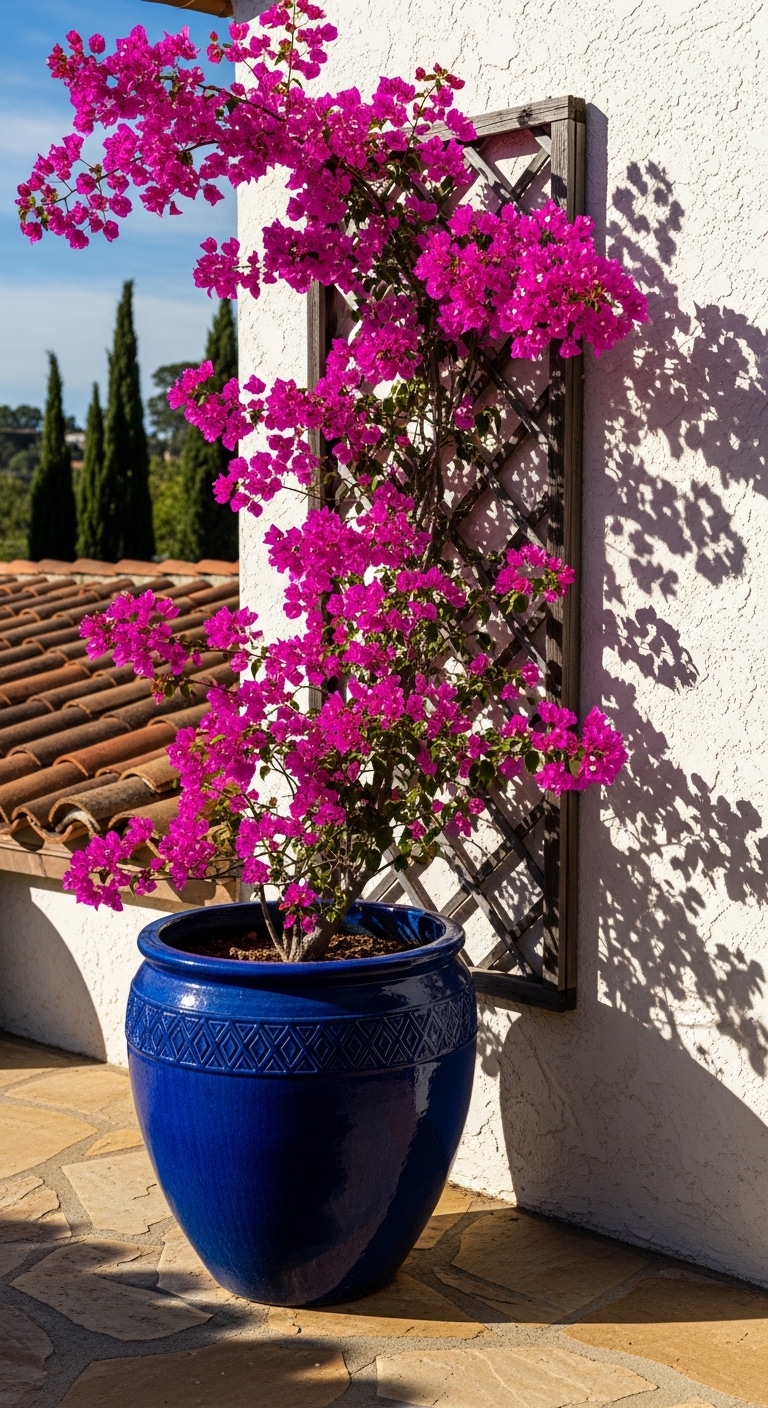
If your patio gets relentless full sun and you want something that absolutely stops people in their tracks, bougainvillea is your answer. The papery, electric-bright bracts in magenta, orange, or coral look almost unreal against a white or gray wall.
- Plant in a heavy pot — these get large and top-heavy when they start climbing
- The secret to maximum blooms is mild stress: water deeply, then let the soil dry out considerably before watering again
- Provide a small trellis or obelisk inside the pot so it has structure to climb
- Feed with a low-nitrogen, high-phosphorus fertilizer to push flower production over leaf growth
One word of warning: bougainvillea has thorns. Position your pot somewhere guests won’t accidentally brush against it. But as a focal point against a fence or wall? Nothing competes with it.
Sunny Marigold and Black-Eyed Susan Combo
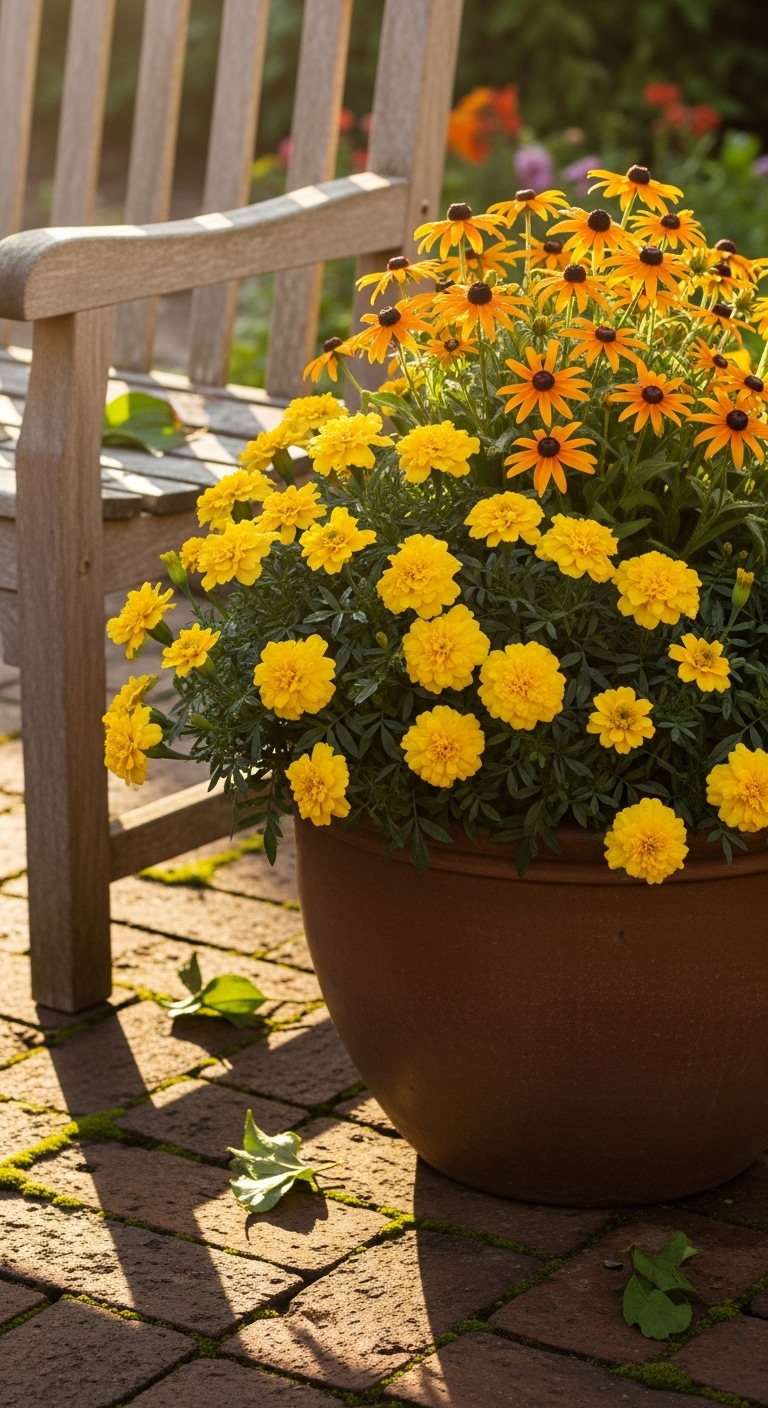
This combination is pure summer joy. The warm gold and orange palette feels welcoming in a way that cooler flower colors simply don’t match. Marigolds and black-eyed Susans also happen to bloom on similar schedules, peak together beautifully, and share sun and water preferences.
- Both tolerate heat and short dry spells better than most flowers
- Marigolds naturally repel aphids and whiteflies, protecting everything nearby
- Deadhead marigolds regularly; black-eyed Susans can be left to self-clean more naturally
- Plant in full sun — these two struggle in shade
This is an excellent combination for anyone who travels frequently in summer. Neither plant is needy, and the color payoff is enormous for the effort you put in.
White Hydrangeas in Classic Urn Planters
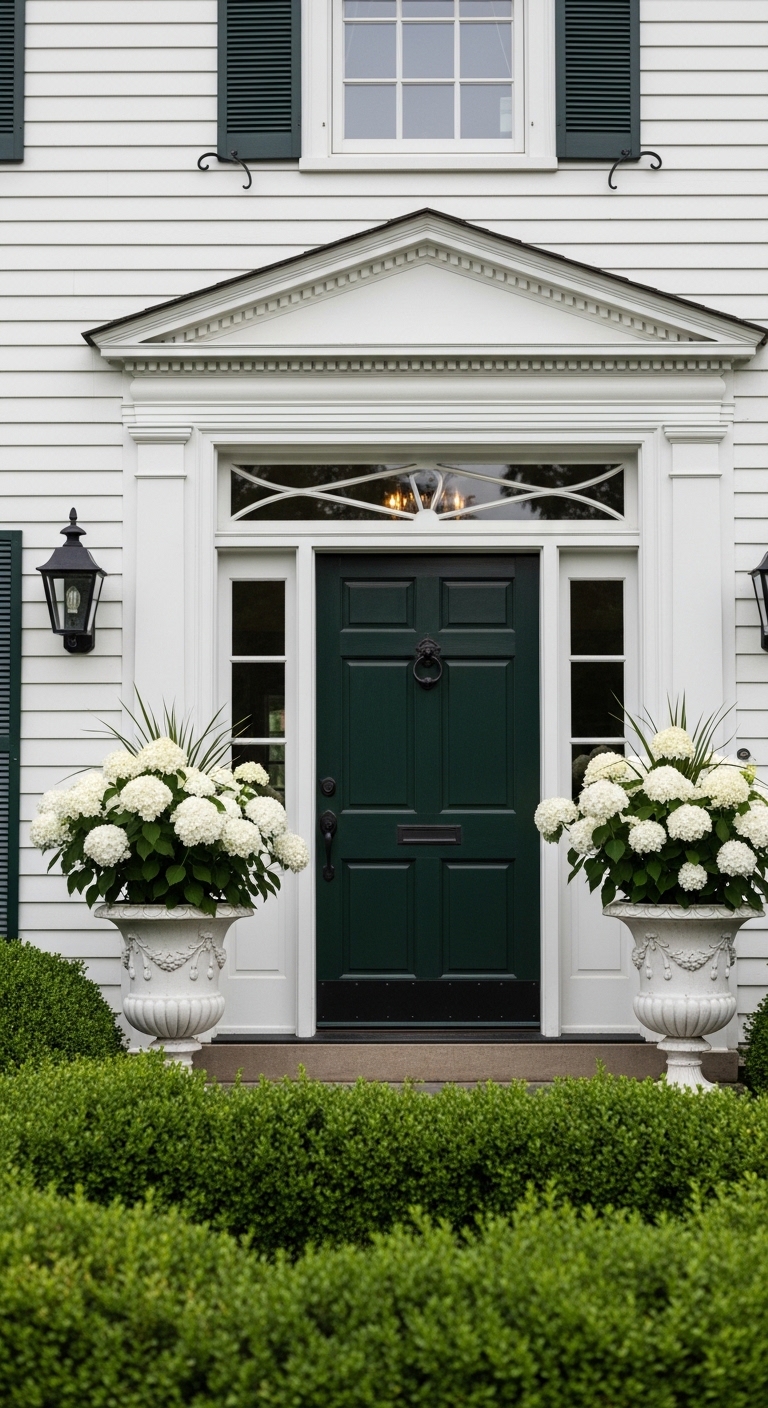
Few things say “curated and elegant” like a matched pair of white hydrangea urns flanking your front door. This look works on everything from a coastal cottage to a formal colonial entry, which is exactly why it’s become such a timeless choice.
- Use Incrediball or Annabelle hydrangeas — both handle container life well and produce enormous blooms
- Hydrangeas need consistently moist soil, so plan to water every day or every other day in summer
- Morning sun with afternoon shade is the sweet spot for container hydrangeas
- These prefer slightly acidic soil, so add some soil acidifier to your potting mix
The white flower color acts like a neutral — it makes your door color pop regardless of whether you’ve painted it navy, red, black, or sage green. It’s one of the most versatile porch planting choices you can make.
Zinnias in Painted Wooden Window Boxes

Zinnias are one of the most cheerful flowers on earth. They bloom in every warm color you can imagine, they love heat, and they attract butterflies constantly — which means your porch becomes a little wildlife sanctuary all summer long.
- Window boxes on your porch railing create a layered look that feels intentional and lush
- Mix colors freely — zinnias look best in wild, abundant combinations rather than single-color plantings
- They need excellent drainage, so make sure your window box has drain holes and use quality potting mix
- Water at the soil level rather than overhead to prevent powdery mildew on leaves
Zinnias also make excellent cut flowers. You can snip blooms for your indoor vases all season, and cutting actually encourages the plant to produce even more flowers.
Dusty Miller and Blue Salvia Contrast Planter
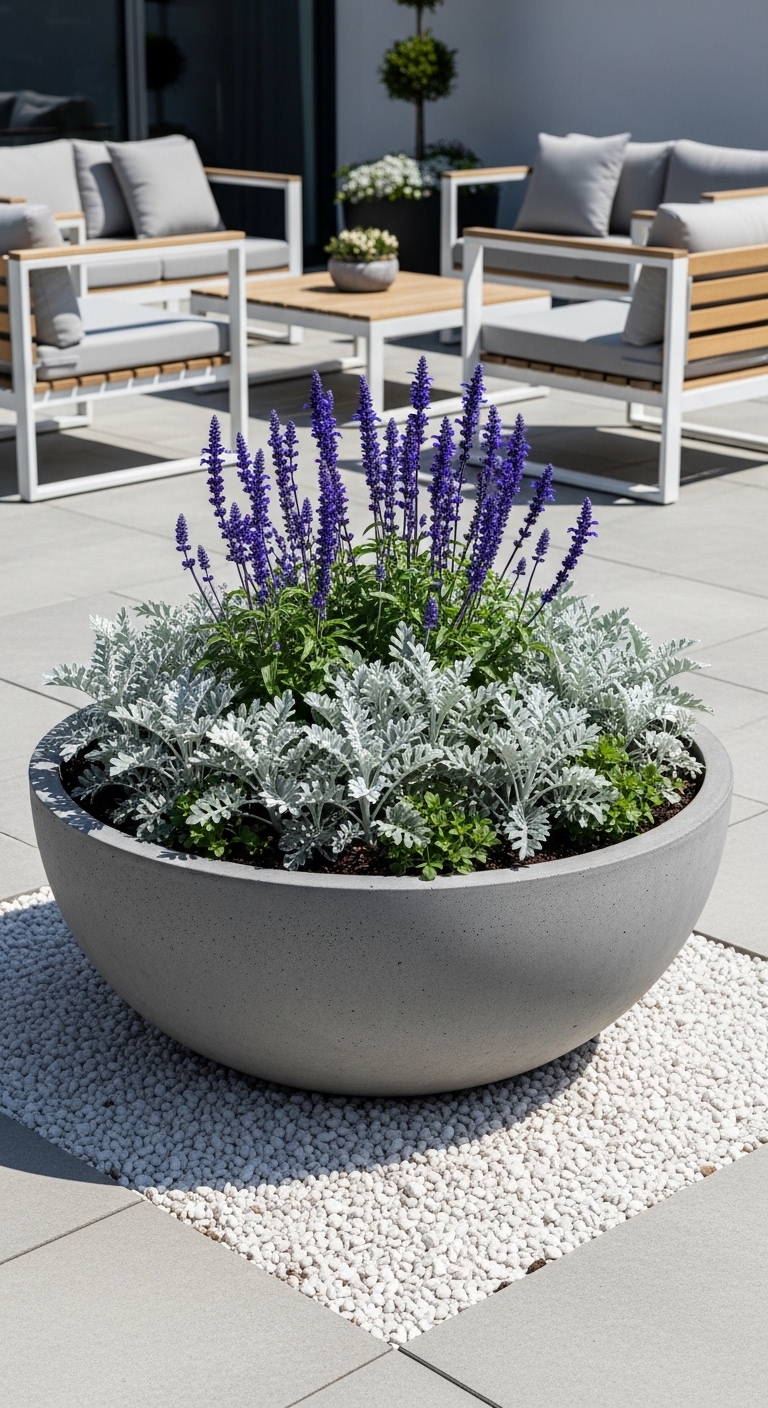
This is a sophisticated combination that not enough people try. Silver dusty miller paired with deep blue salvia creates a striking contrast that looks deliberately designed — almost architectural in its effect. It reads as cool, confident, and modern.
- Dusty miller thrives in heat and actually looks better as summer intensifies
- Blue salvia provides vertical interest with its tall flower spikes that bees absolutely love
- Both are drought-tolerant once established — ideal if you’re not the most diligent waterer
- This combo works especially well in gray, white, or charcoal-colored concrete containers
This planter combination photographs exceptionally well, too. If you’re going for a patio that looks great in photos, this cool-toned pairing against a concrete or stone background is a reliable winner.
Impatiens for a Shaded Porch
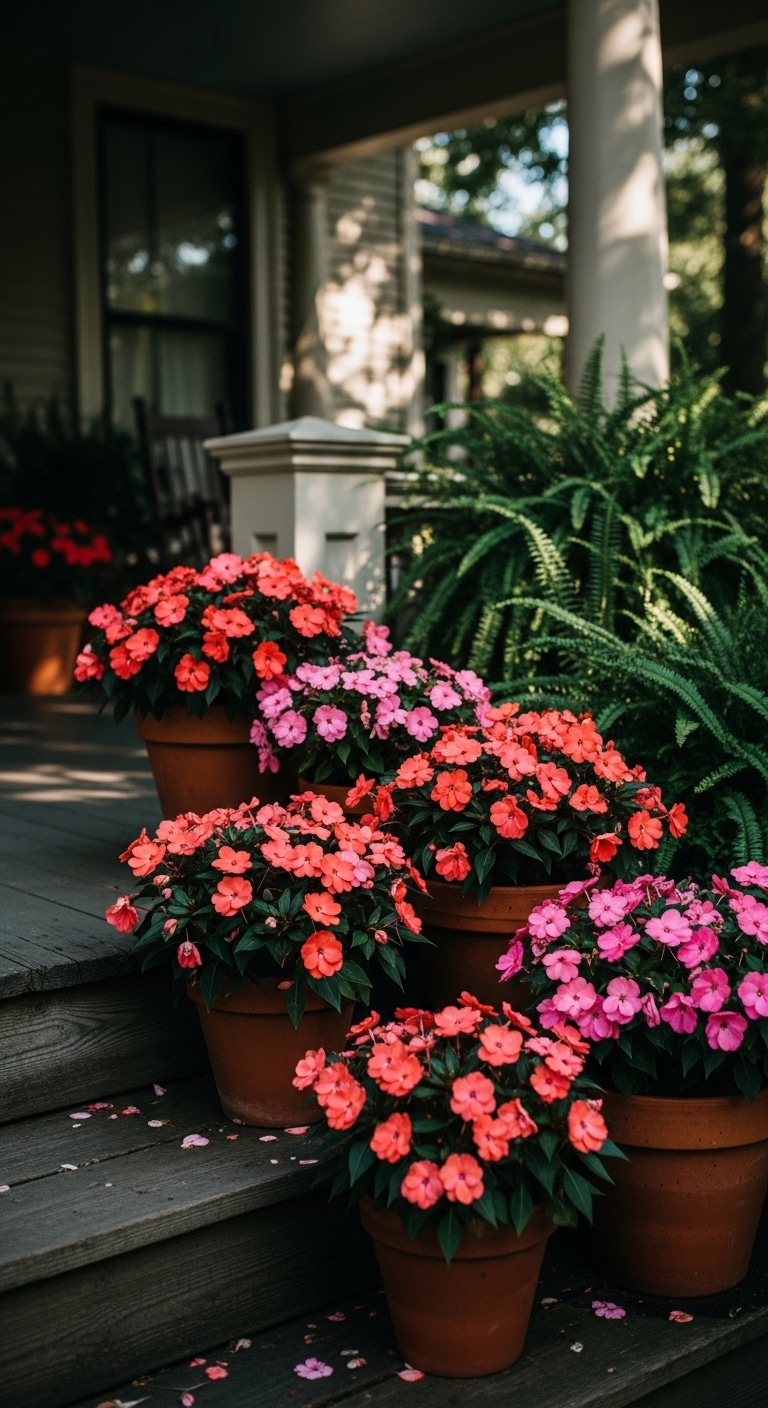
If your front porch gets little direct sun, stop fighting it and start celebrating it. Impatiens are one of the few truly vibrant flowering plants that genuinely prefer shade, and they bloom nonstop from spring until frost.
- Coral, hot pink, and white impatiens together create a tropical feel even in deep shade
- Keep the soil consistently moist — impatiens wilt quickly in dry conditions
- Use a balanced fertilizer every two weeks for continuous heavy blooming
- Cluster multiple pots of different heights for a full, layered look that disguises the shaded limitations of your space
New Guinea impatiens tolerate a bit more sun than standard varieties and have larger, showier blooms. If your porch gets a couple of hours of indirect light, New Guinea types will reward you with extraordinary color.
Tropical Canna Lily as a Patio Centerpiece
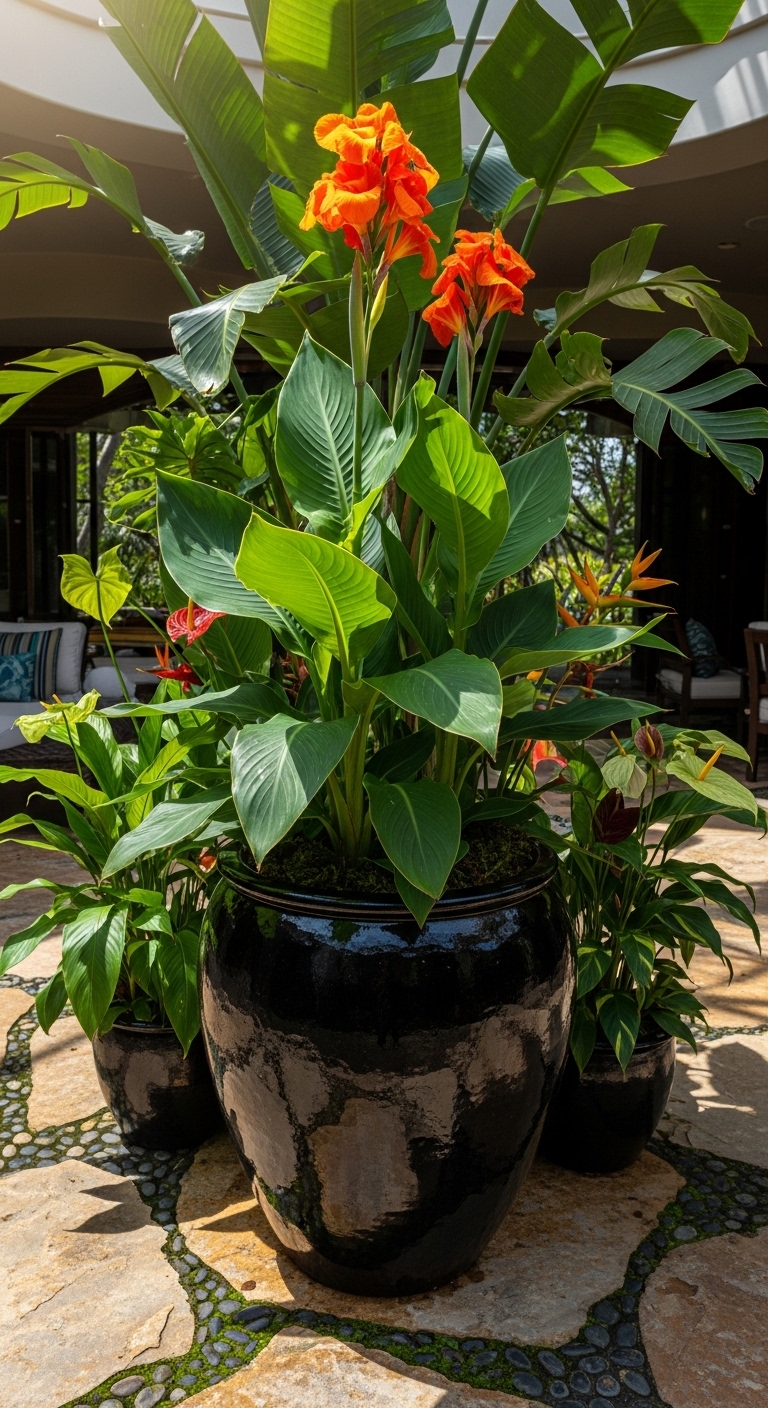
If you want one plant that commands a space without any supporting cast, canna lilies are it. The combination of enormous tropical foliage and bold blooms in orange, red, or yellow makes them look like they belong at a five-star resort. One large specimen in a dramatic pot instantly anchors an entire patio.
- Cannas need at least six hours of sun and warm temperatures — they’re tropical at heart
- Feed heavily with a high-potassium fertilizer throughout the growing season
- The pot needs to be large — at minimum 18 inches wide, and deeper is better
- Pair with trailing sweet potato vine or calibrachoa around the base to fill the pot’s lower zone
Black glazed ceramic pots are a brilliant choice with orange or red cannas. The color contrast is simply extraordinary, and the dark container makes the warm flower tones look even more electric.
Idea 11: Sweet William and Snapdragon Spring Combo
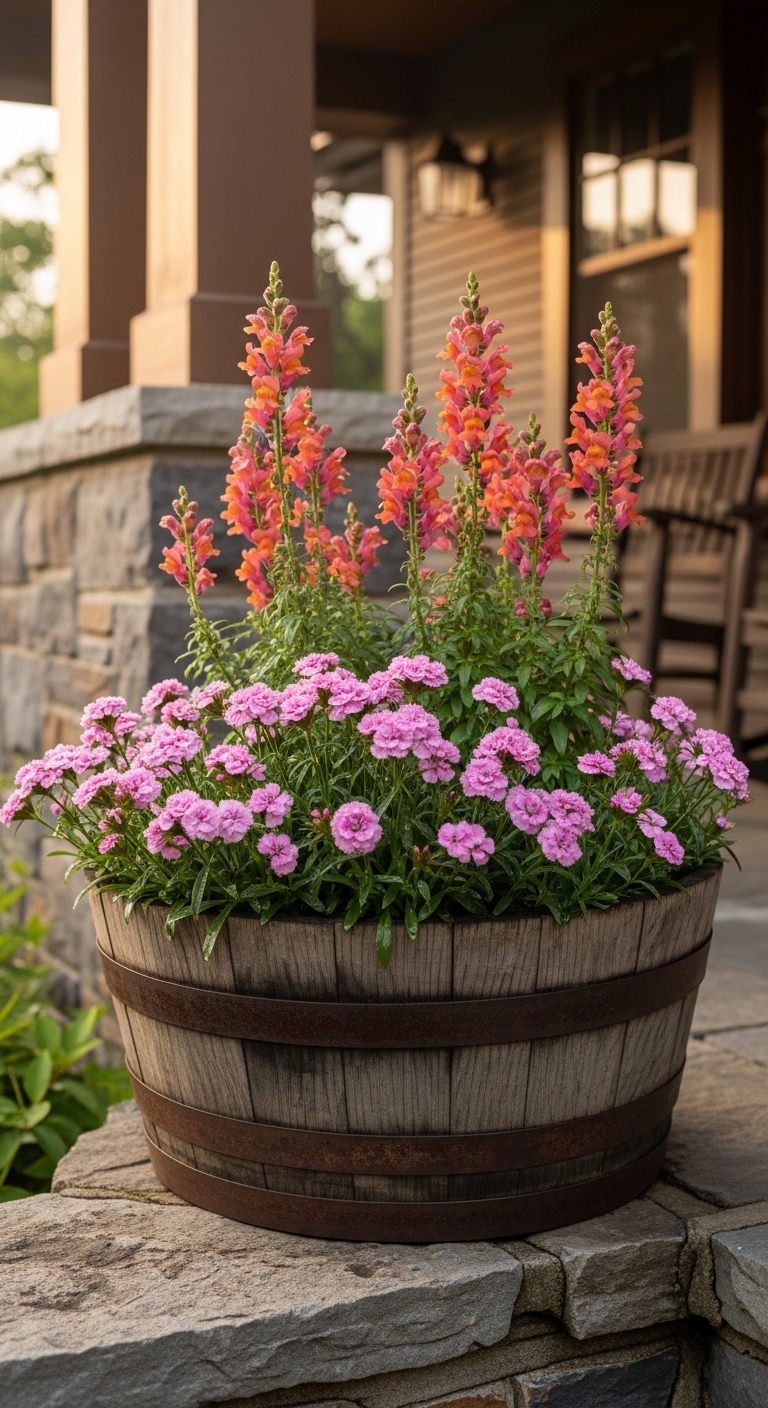
Before summer takes over, spring is the perfect time to load up your porch with the kind of cool-season flowers that simply can’t survive July heat. Sweet William and snapdragons together create a romantic, slightly old-fashioned arrangement that feels genuinely lovely.
- Both prefer cool weather and will bloom enthusiastically in spring temperatures
- Snapdragons provide vertical height while sweet William fills in beautifully at a lower level
- When warm weather arrives, replace them with heat-tolerant summer flowers — treat this as your spring “first act”
- Water regularly but ensure excellent drainage
Wooden half-barrel planters are perfect for this combination. Their natural, rustic look softens the formality of the flowers and creates a “country garden” feel that suits everything from cottages to craftsman bungalows.
Oxalis and Begonia Shade Garden in Pots
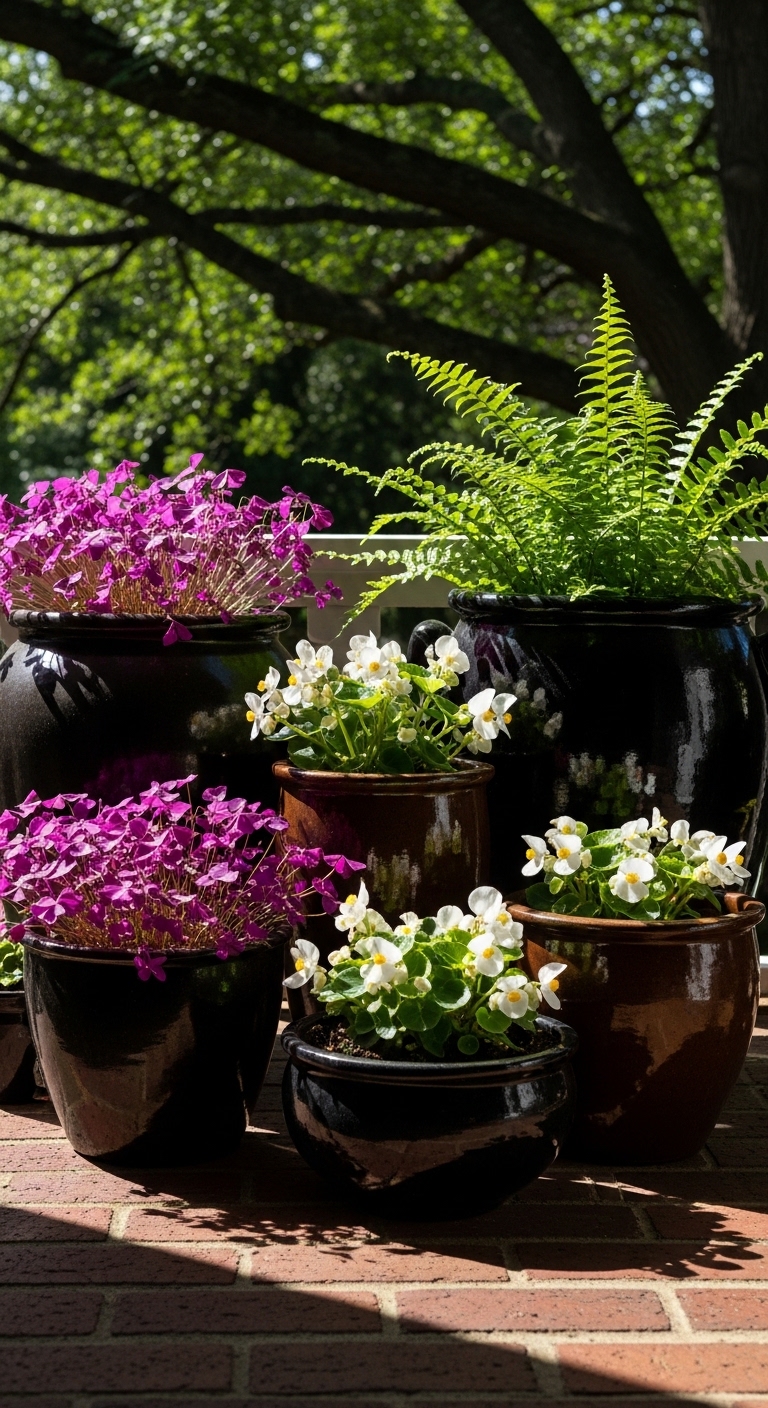
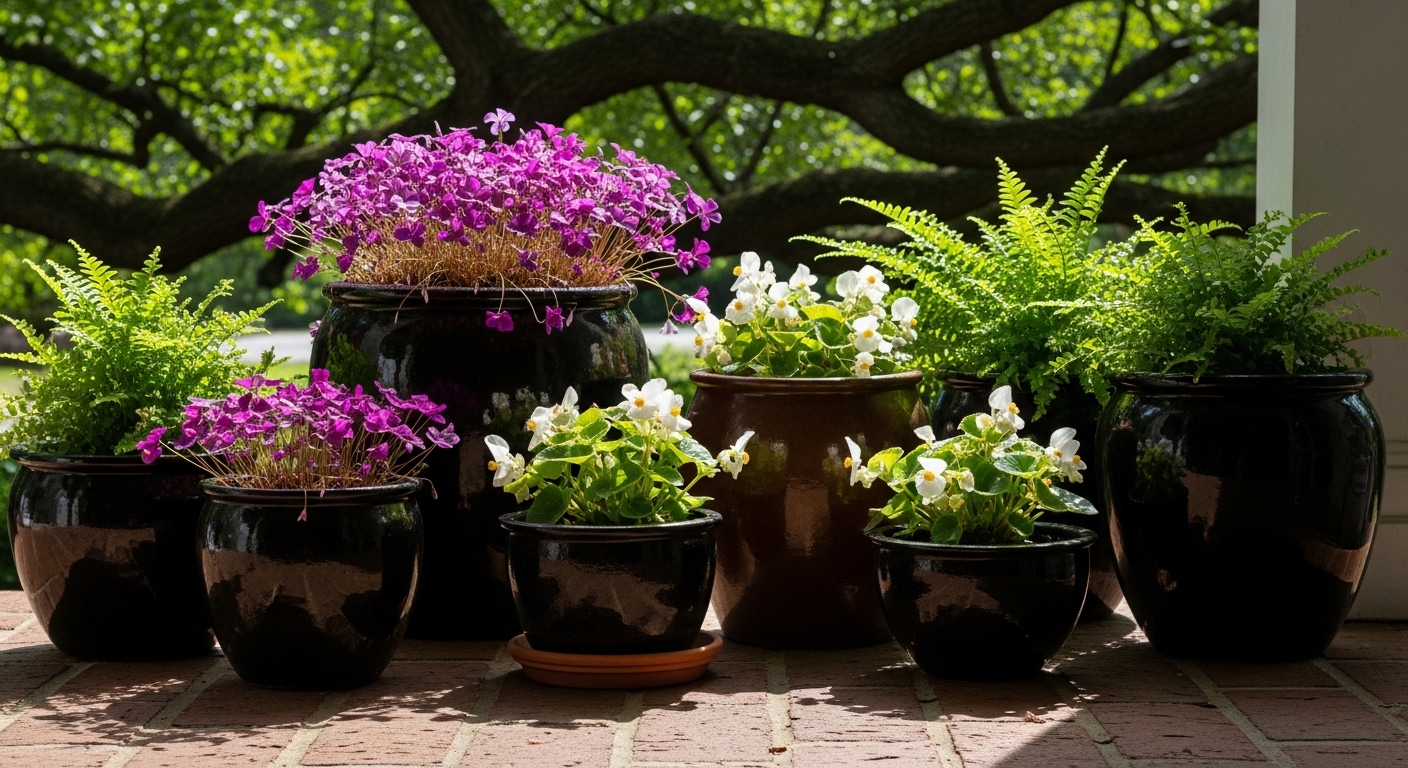
Purple oxalis — with its shamrock-shaped deep burgundy leaves — is one of the most underused porch plants available. Pair it with white or blush begonias, and you get a combination that’s visually rich without requiring any direct sunlight at all.
- Oxalis folds its leaves at night and opens them in the morning — a small detail that makes it feel alive and responsive
- Begonias paired with oxalis create a contrast of texture and color that’s genuinely sophisticated
- Both thrive in consistent indirect light and prefer evenly moist soil
- The deep purple of oxalis makes white flowers appear brighter by contrast
This is one of those combinations that landscape designers charge real money to specify. You can achieve the same elevated look by simply choosing these two plants and giving them a collection of varied terracotta pots at different heights.
Calibrachoa “Million Bells” in Tiered Planters
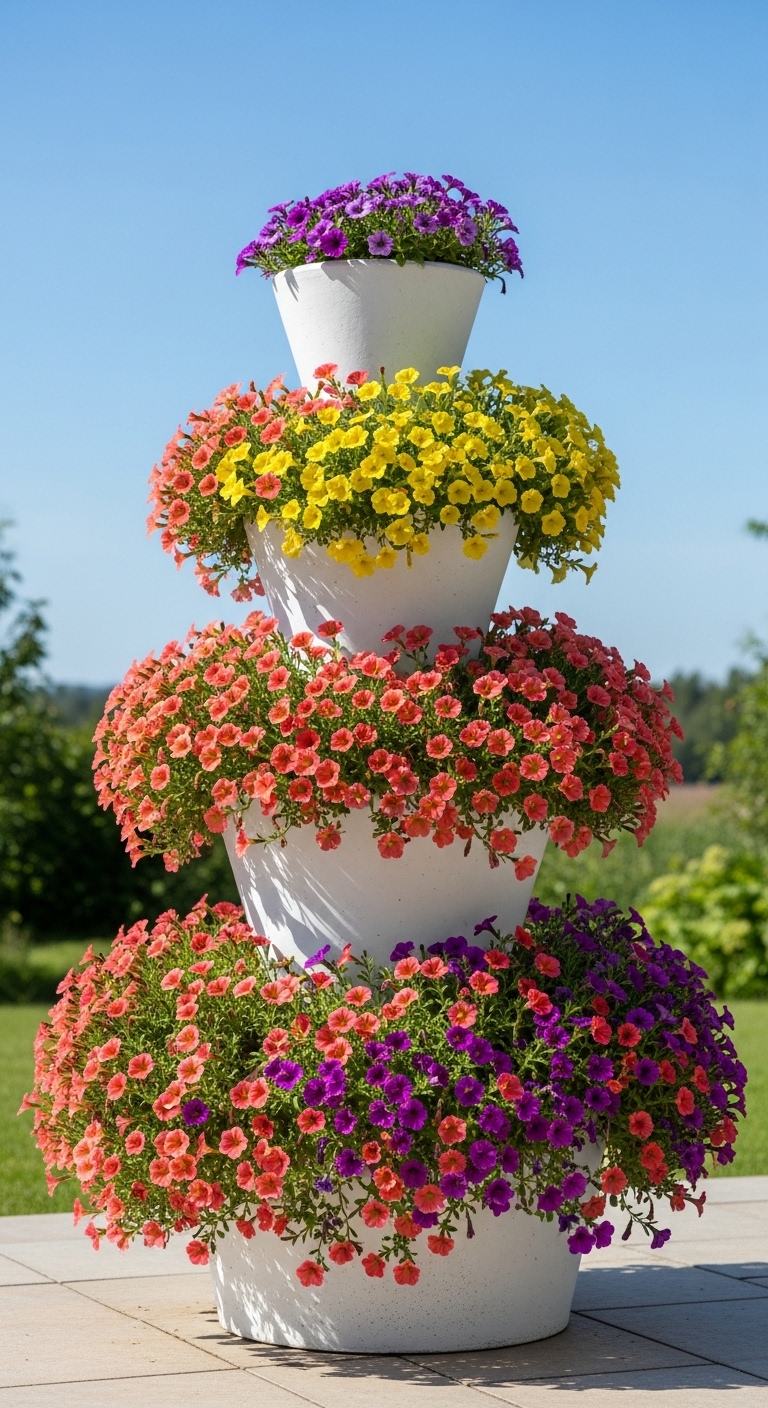
Calibrachoa looks exactly like a miniature petunia, but it blooms even more profusely and handles heat with more grace. When you plant it in tiered planters and let it cascade freely, you get a waterfall of tiny, vibrant blooms that covers the entire planter structure.
- Choose a mix of three colors — coral, soft yellow, and purple is a combination that works beautifully
- Feed every two weeks with a liquid fertilizer high in phosphorus to sustain continuous blooming
- Self-cleaning means you don’t need to deadhead — this is genuinely low-maintenance color
- Full sun produces the most prolific bloom coverage
Tiered planters are an investment but a smart one. They create height and structure without requiring multiple individual pots, and they look impressive even before the plants fill in completely.
Ornamental Pepper and Yellow Marigold Bold Combo

Here’s an unconventional idea that pays off enormously: ornamental peppers are technically vegetables, but as a visual statement in a patio container, they’re extraordinary. Their tiny, jewel-colored fruits in purple, orange, red, and yellow glow like Christmas lights. Pair them with golden marigolds and the whole container looks like autumn celebration.
- Ornamental peppers love heat and full sun — summer patio conditions suit them perfectly
- The fruits are real, though extremely hot — keep out of reach of children who might taste them
- Marigolds at the edge of the pot provide a natural, flowing border to the upright pepper plants
- Both plants are drought-tolerant once established
This combination works especially well in late summer and fall when you want something that transitions beautifully from peak summer into the cooler months.
Lobelia and White Alyssum Window Box
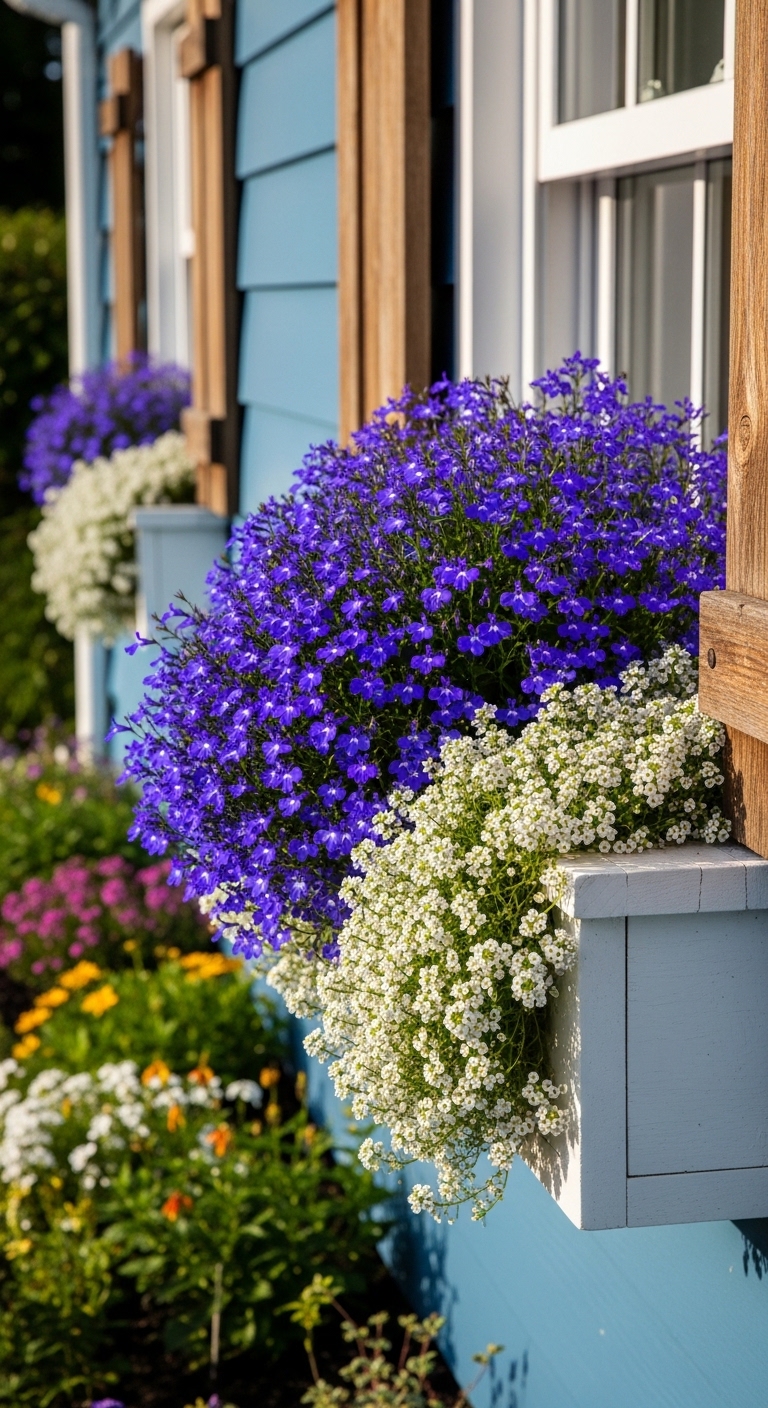
Blue flowers are surprisingly rare in the gardening world, which is exactly why this combination stands out. Trailing deep blue lobelia spilling over the front of a window box, combined with white sweet alyssum that smells faintly of honey, is one of the most charming combinations you can plant on a porch.
- Blue lobelia needs consistently moist soil — it wilts faster than most plants and recovers slowly
- Sweet alyssum self-seeds freely and will return in subsequent seasons in mild climates
- This combination works in partial sun as well as full sun — quite versatile
- Cut both plants back by one third in midsummer to reinvigorate bloom production for the fall
The honey fragrance of alyssum near your front door is a detail that visitors notice without always being able to identify. It creates a welcoming sensory experience that genuinely makes your home feel more alive
Fuchsia in Hanging Baskets for Deep Shade
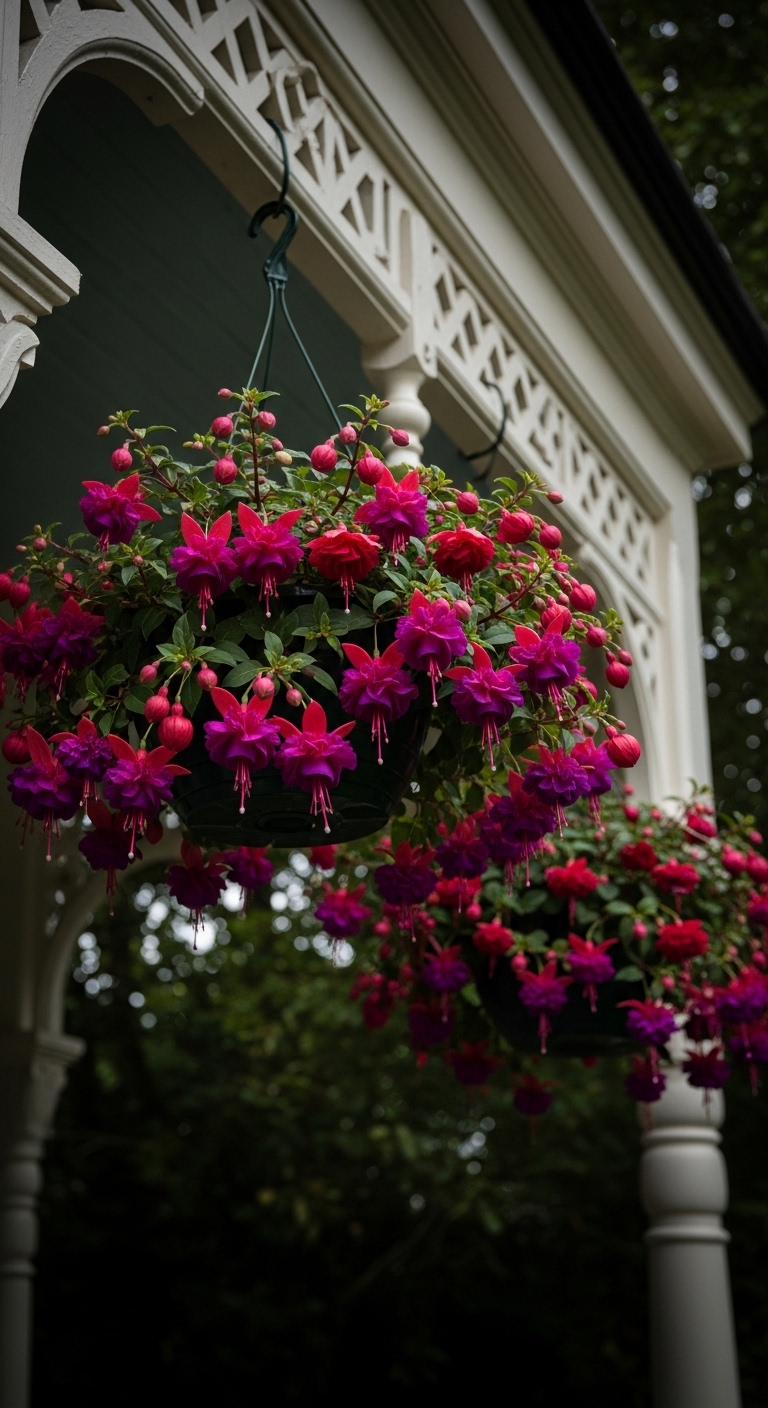
Fuchsia is the queen of the shaded porch hanging basket. The dangling, earring-like blooms in combinations of deep red, pink, purple, and white look almost tropical despite being totally shade-adapted. On a Victorian or craftsman porch with deep overhangs, fuchsia baskets look absolutely magnificent.
- Fuchsia must have shade — even partial direct sun in summer will cause them to drop buds
- Keep soil consistently and evenly moist; fuchsia does not forgive drought
- Feed weekly with a balanced fertilizer throughout the growing season
- Remove spent flowers to maintain appearance, though many modern varieties are largely self-cleaning
Hardy fuchsia varieties like Gartenmeister Bonstedt are more forgiving in variable conditions and produce extraordinary, tubular orange-red flowers that hummingbirds cannot resist
Agapanthus (Lily of the Nile) in Modern Concrete Planters
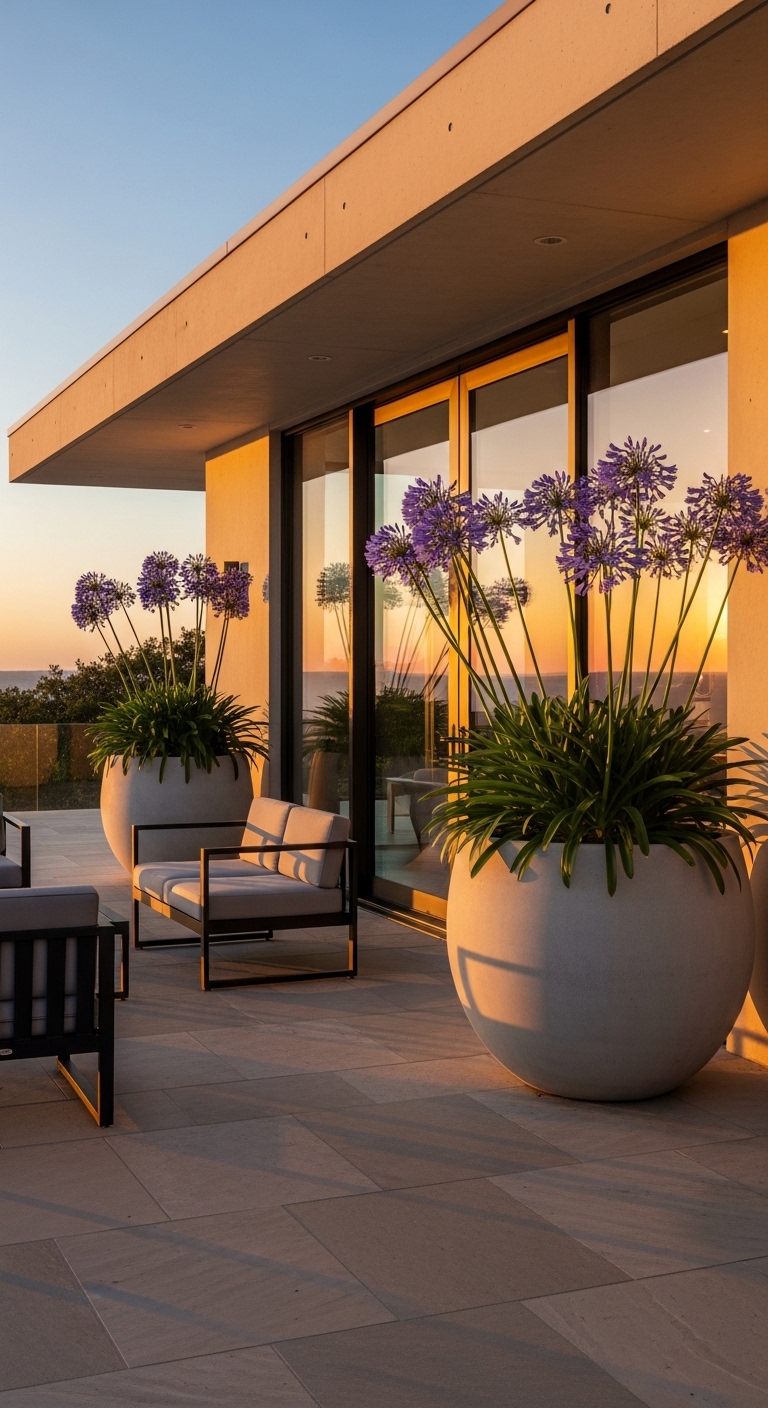
Agapanthus in concrete planters is one of those combinations that looks like something from an expensive design magazine. The tall, strappy dark green leaves and elegant globe-shaped flower heads in deep blue or white have a sculptural quality that suits modern and contemporary homes perfectly.
- Agapanthus is surprisingly drought-tolerant once established and prefers to be slightly root-bound — don’t over-pot it
- Full sun to partial shade works; it blooms most heavily in full sun
- These are semi-evergreen in mild climates and add winter structure even out of bloom
- Feed in spring with a low-nitrogen fertilizer to focus energy on flowers rather than leaves
One thoughtful detail: the seed heads that remain after blooming are architecturally beautiful and worth leaving on the plant into autumn. They add a second season of visual interest without any additional effort.
Lantana in Terracotta for Heat-Baked Patios
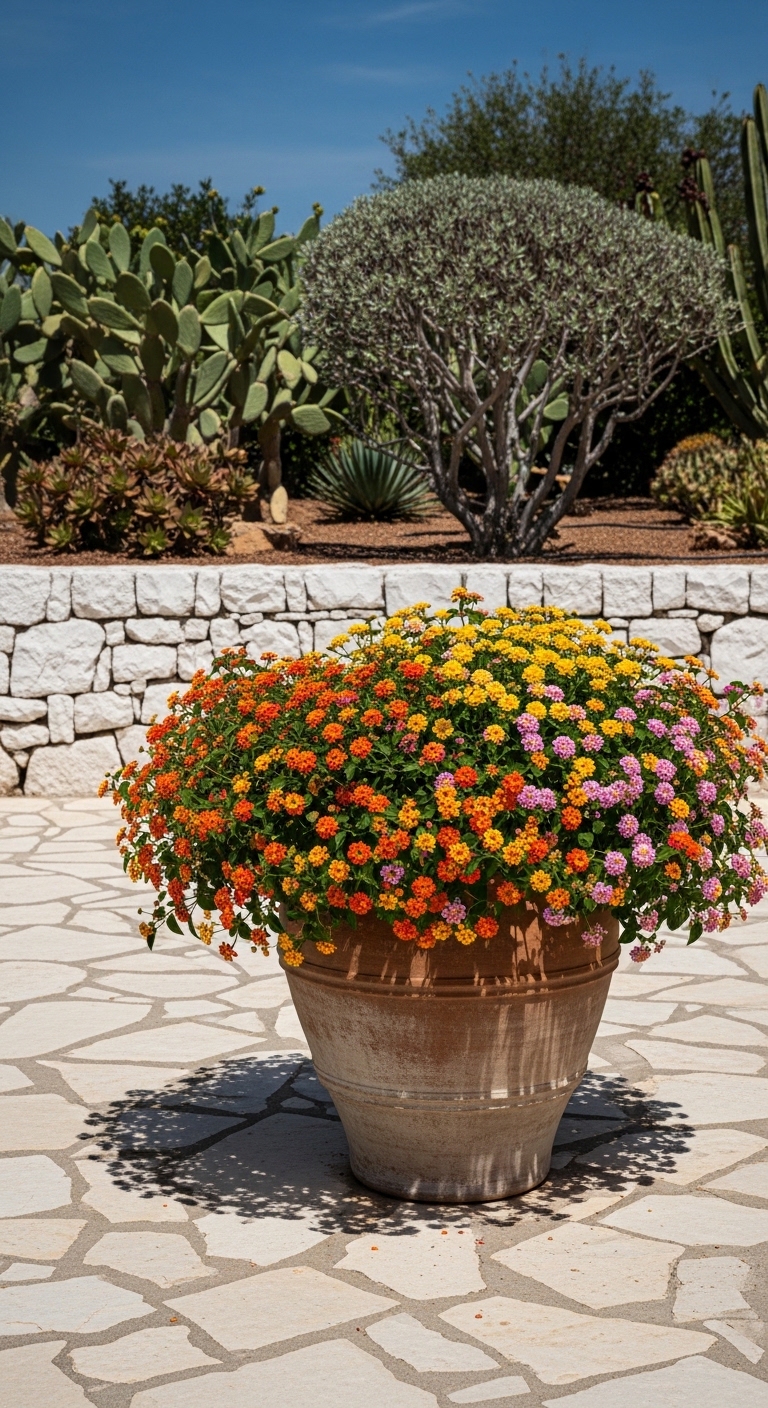
If your patio bakes in full sun all day and you’ve struggled to keep anything alive, lantana is your solution. It actually blooms better under heat and drought stress, and the flowers shift color as they age — a single cluster moves from yellow to orange to pink to lavender, creating an almost watercolor effect on each bloom head.
- Lantana handles extreme heat and reflected light from walls or concrete — conditions that destroy most flowers
- Butterflies and pollinators mob lantana constantly, turning your patio into a living garden ecosystem
- Trim lightly every few weeks to keep plants bushy and productive
- Note that lantana is toxic to pets — worth knowing before placing it where dogs have access
Terracotta pots are the ideal partner for lantana. They dry out quickly between waterings, which these plants genuinely prefer, and the earthy red-orange of terracotta complements lantana’s warm color palette beautifully
Roses in Half-Barrel Planters for Front Porch Romance
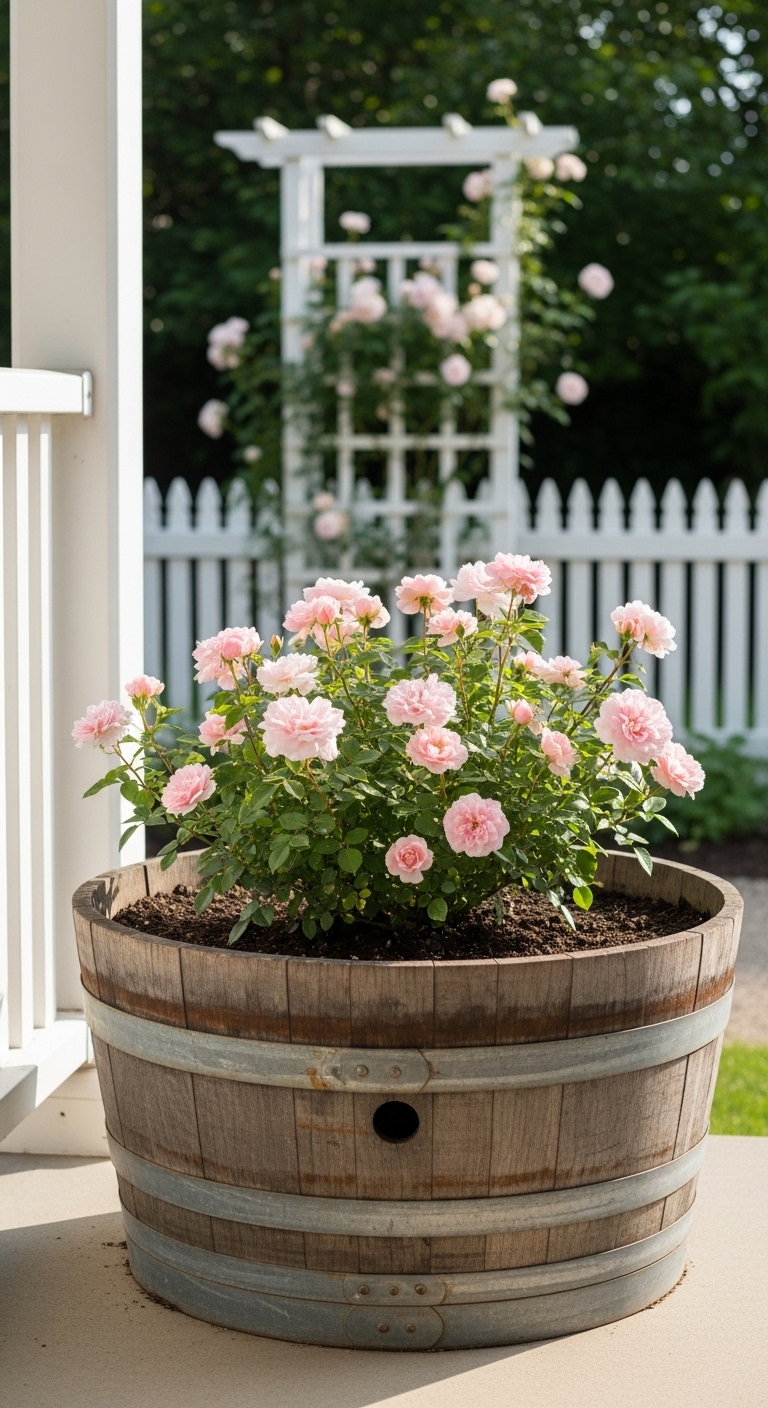
Nothing says “this person genuinely loves their home” quite like roses on the front porch. Miniature and patio rose varieties have been developed specifically for container growing, and modern disease-resistant breeding means they’re far more manageable than the demanding hybrid teas of previous generations.
- Choose compact varieties like Drift roses, Knock Out roses, or miniature David Austin types
- Half-barrel planters give roots enough room to anchor and resist summer heat
- Deadhead consistently to extend bloom time; roses slow down fast when spent flowers are left
- Feed with a rose-specific fertilizer that’s high in potassium for the best flower production
Place your rose planter where it gets at least six hours of direct sun. Morning sun with some afternoon shade in hot climates is the sweet spot — it keeps blooms from burning and extends their life on the plant.
Tropical Bird of Paradise as a Grand Patio Statement
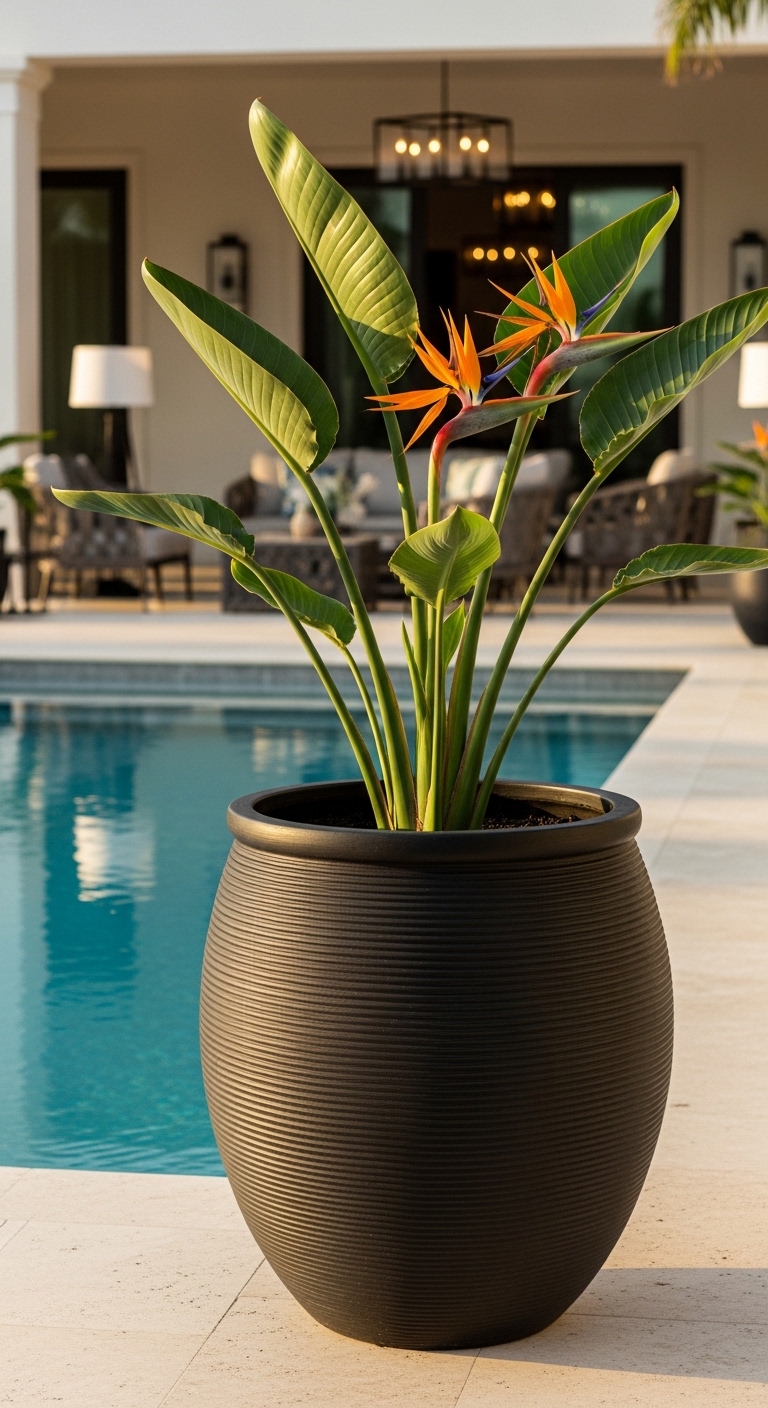
For the grand finale: bird of paradise in a large, dramatic container is the ultimate patio statement plant. This is the piece that makes guests stop, look, and ask “where did you get that?” The combination of enormous paddle-shaped leaves and those extraordinary orange and blue flowers is unlike anything else you can grow in a pot.
- Bird of paradise loves heat, full sun, and being slightly root-bound — resist repotting too frequently
- Water deeply but allow the soil to dry considerably between waterings
- This plant blooms most reliably when it experiences a slight cool-down in autumn — that temperature shift triggers the following season’s flower buds
- A large, heavy pot is essential both aesthetically and practically — this plant gets tall and needs ballast
In warm climates — zones 9 through 11 — bird of paradise can stay outdoors year-round. In cooler zones, move the pot indoors to a bright sunny window over winter and bring it back outside once night temperatures stay above 50°F. The effort is entirely worth it.
Pulling It All Together: How to Style Your Planters Like a Pro
Now that you have 20 beautiful ideas to work with, here are the principles that will help you turn individual pots into a cohesive, designed outdoor space.
Stick to a color palette. Choose two or three main colors and repeat them across multiple pots. If your door is navy blue, echo that with deep blue salvia or agapanthus in your planters rather than fighting it with unrelated colors. The repetition is what makes a porch look designed rather than random.
Vary your container heights deliberately. Use at least three different heights — a tall statement container, a medium-height round pot, and a low or trailing planter. This variation creates visual rhythm and makes the space feel professionally styled.
Mix textures alongside colors. Pair something fine-textured like alyssum or lobelia with something bold and structural like canna leaves or agapanthus. That textural contrast keeps the eye moving and makes even simple combinations look sophisticated.
Don’t neglect maintenance. Even the most beautifully chosen flowers will look tired and unkempt if you skip deadheading and feeding. Fifteen minutes twice a week keeps your porch looking like a magazine feature all season long.
Seasonal transitions are your friend. Plan for at least two rounds of planting — a cool-season spring arrangement and a heat-tolerant summer one. Having a plan for both means your porch looks intentional and fresh all year rather than trailing off in exhaustion by August.
The Final Word
Your patio and front porch deserve more than a single forgotten pot by the door. These 20 potted flower ideas give you a full toolkit — from deep-shade performers like impatiens and fuchsia to full-sun powerhouses like lantana and bougainvillea, from elegant white hydrangeas for a formal entry to wild, joyful zinnias for a playful cottage feel.
The investment is minimal compared to the return. A few well-chosen containers, the right plants for your specific sun conditions, and a commitment to basic maintenance is genuinely all it takes to create an outdoor space that you’re proud to come home to every single day.
Start with one or two of these ideas this season. Once you see what a difference they make, you’ll wonder why you waited so long.