15 Stunning Homemade Decorative Trellis Ideas That Make Your Garden Look Like a Magazine Cover
What if your garden structure could be just as beautiful as the flowers growing on it? Most gardeners treat a trellis as purely functional — a thing you hide behind the roses. But the smartest gardeners know that the right trellis is the feature. It’s the thing your eye lands on first, the thing that gives your outdoor space architecture, depth, and personality even in the dead of winter when nothing is blooming.
These 15 homemade decorative trellis ideas are different from anything you’ve seen on a standard gardening list. Every single one puts visual beauty first — while still doing the practical job of supporting your climbing plants beautifully.
Why Decorative Trellises Change Everything About a Garden
Here’s something most gardening advice skips over entirely: your garden has a visual structure problem in about eight months of the year. Flowers come and go. Foliage rises and falls. But a beautifully designed trellis stands there looking gorgeous in January, in March, and in the height of July all at once.
When you build a decorative trellis yourself, you’re not just supporting a plant — you’re installing a permanent piece of garden art. The climbing plant becomes a seasonal costume for a structure that earns its place year-round.
Let’s get into the ideas.
Arched Moon Gate Trellis
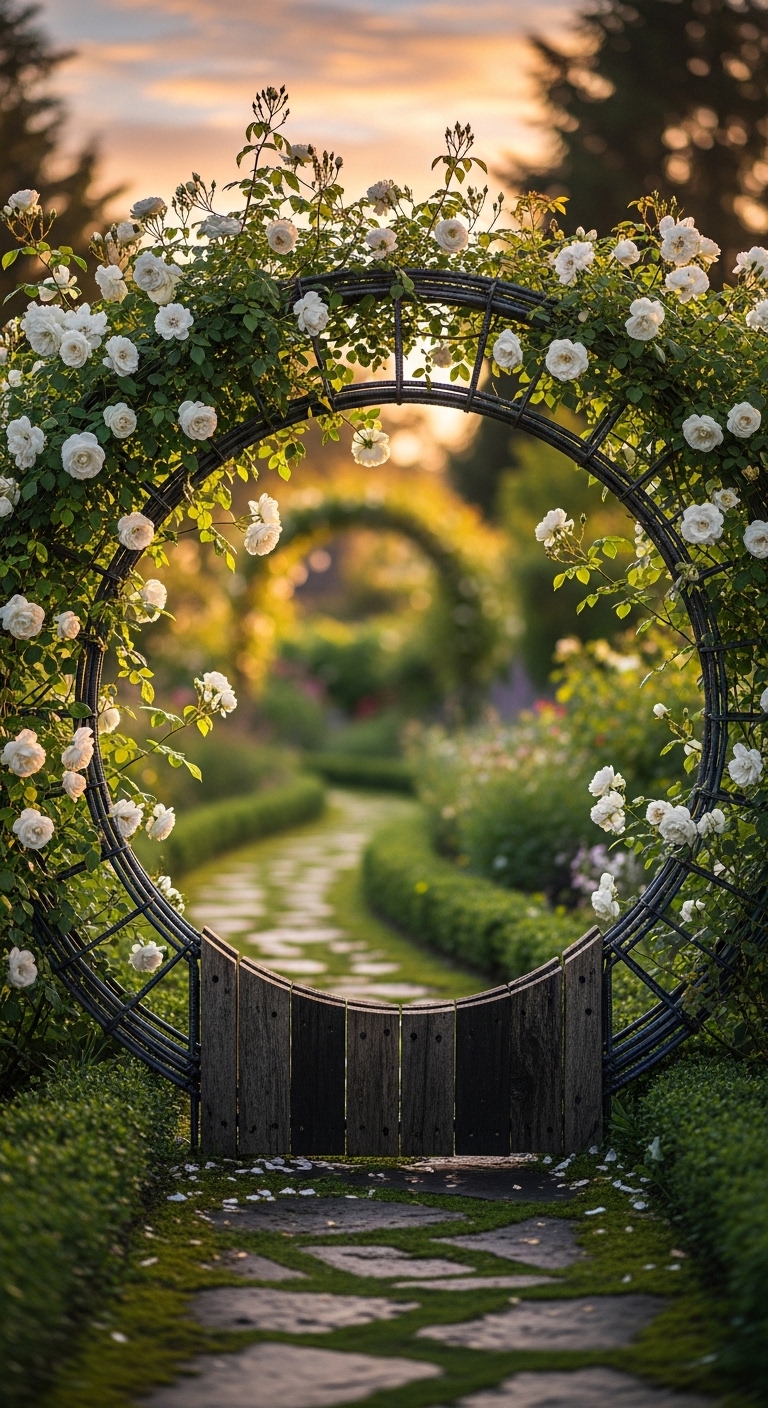
A moon gate — a perfectly circular opening in a garden structure — has been a feature of classical Chinese garden design for centuries. When you build one as a freestanding trellis, it becomes the single most dramatic focal point your garden can have.
Build the circular frame by bending two lengths of flexible conduit or thick rebar into semicircles and joining them at the top and bottom. Weld or bolt them together, then mount the whole circle between two upright wooden or steel posts. The circle can range from 4 feet to 6 feet in diameter depending on how grand you want to go.
What makes this breathtaking:
- Framing effect — the circle frames whatever is behind it like a living painting
- Year-round presence — even bare in winter, the geometric form is striking
- Climbing plant harmony — roses or clematis growing around the circle look like they were designed by a professional
Plant white climbing roses or purple clematis around the frame and let them gradually colonize the circle over two to three seasons. The result genuinely looks like something from a high-end garden design magazine.
Geometric Diamond Pattern Wall Trellis
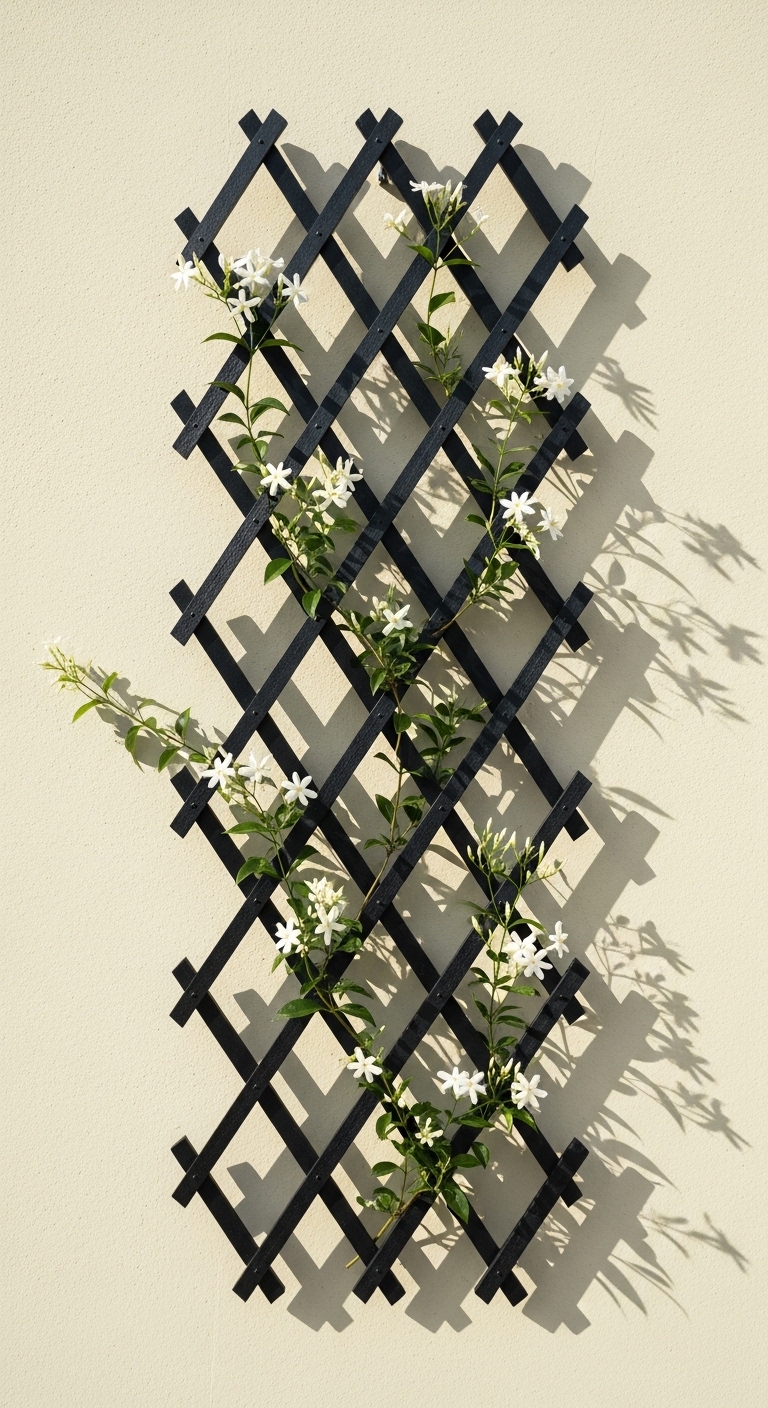
Forget the standard square lattice. A diamond-pattern trellis cut from thin hardwood strips and painted in a strong, deliberate color transforms a plain garden wall into a piece of architectural art.
Cut your timber strips to uniform widths — about 1 inch wide and 3/8 inch thick works beautifully. Lay them diagonally across your wall in two directions, crossing at 45-degree angles and fixing at every intersection with a small brad nail. The trick is keeping the spacing perfectly consistent — a chalk line snapped across the wall before you start saves you from a lopsided result.
Paint options that look genuinely stunning:
- Matte black against a pale wall — bold and contemporary
- Deep navy against warm brick — rich and layered
- Terracotta against a whitewashed surface — Mediterranean and warm
- Forest green against grey stone — classic and grounded
Fix the whole panel flush to the wall with small standoff brackets so climbing plants can weave behind and through the strips naturally.
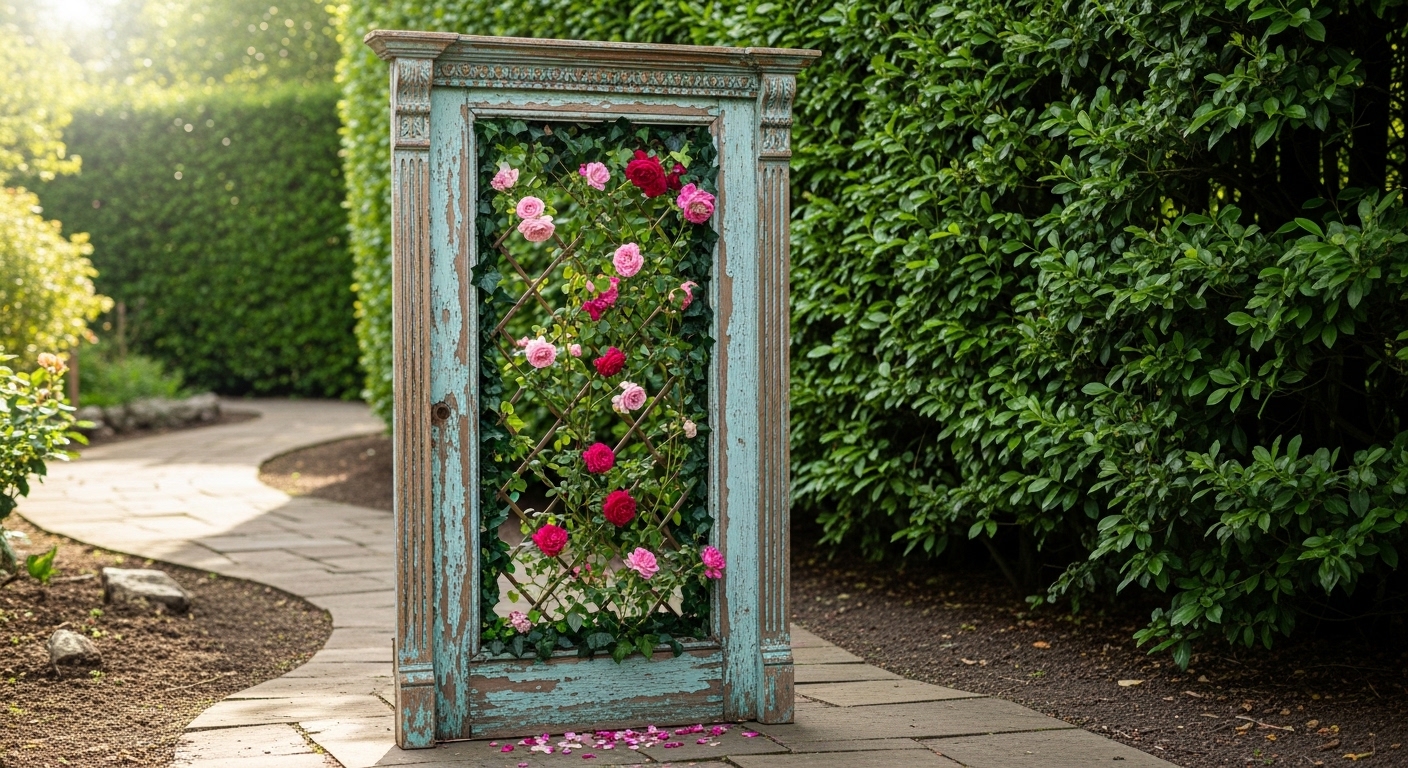
Vintage Window Frame Trellis
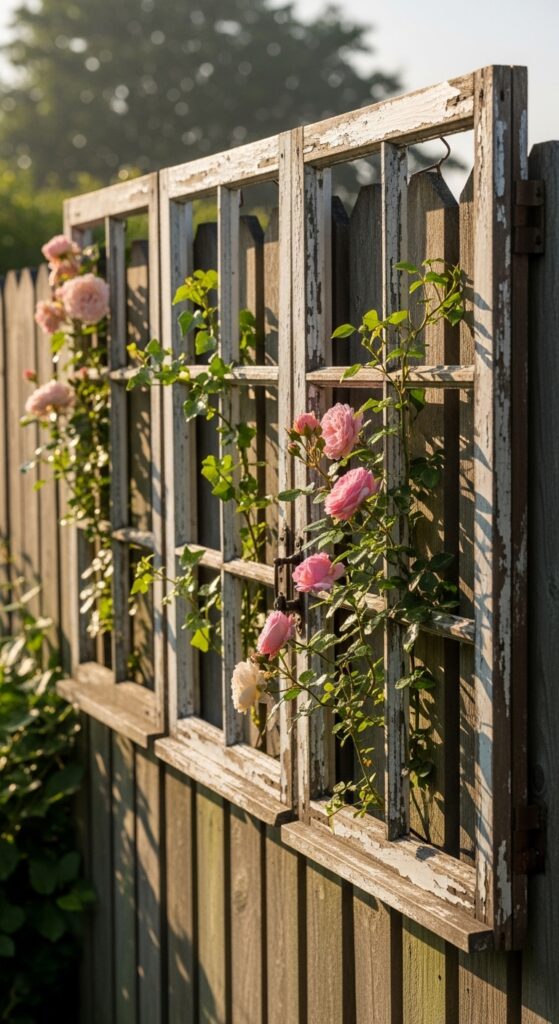
Old window frames from salvage yards or estate sales are one of the garden world’s most underused treasures. Mount them on a fence or wall and they instantly create a romantic, layered, deeply personal trellis that no shop could ever sell you.
Source old wooden window frames — the more character and age, the better. Mount them directly onto your fence using heavy-duty screws through the frame into the fence posts. You can use individual frames as standalone pieces or arrange three or four in a row for a gallery-wall effect.
String horizontal wires or add a simple internal grid of twine across the open pane areas to give climbing plants something to grab in the spaces between the wooden frame sections.
The beauty here is the history the frames carry. A window that once looked into someone’s kitchen now becomes a portal through which roses and jasmine bloom. That’s genuine garden poetry, and it costs almost nothing.
Painted Mural Trellis Panel
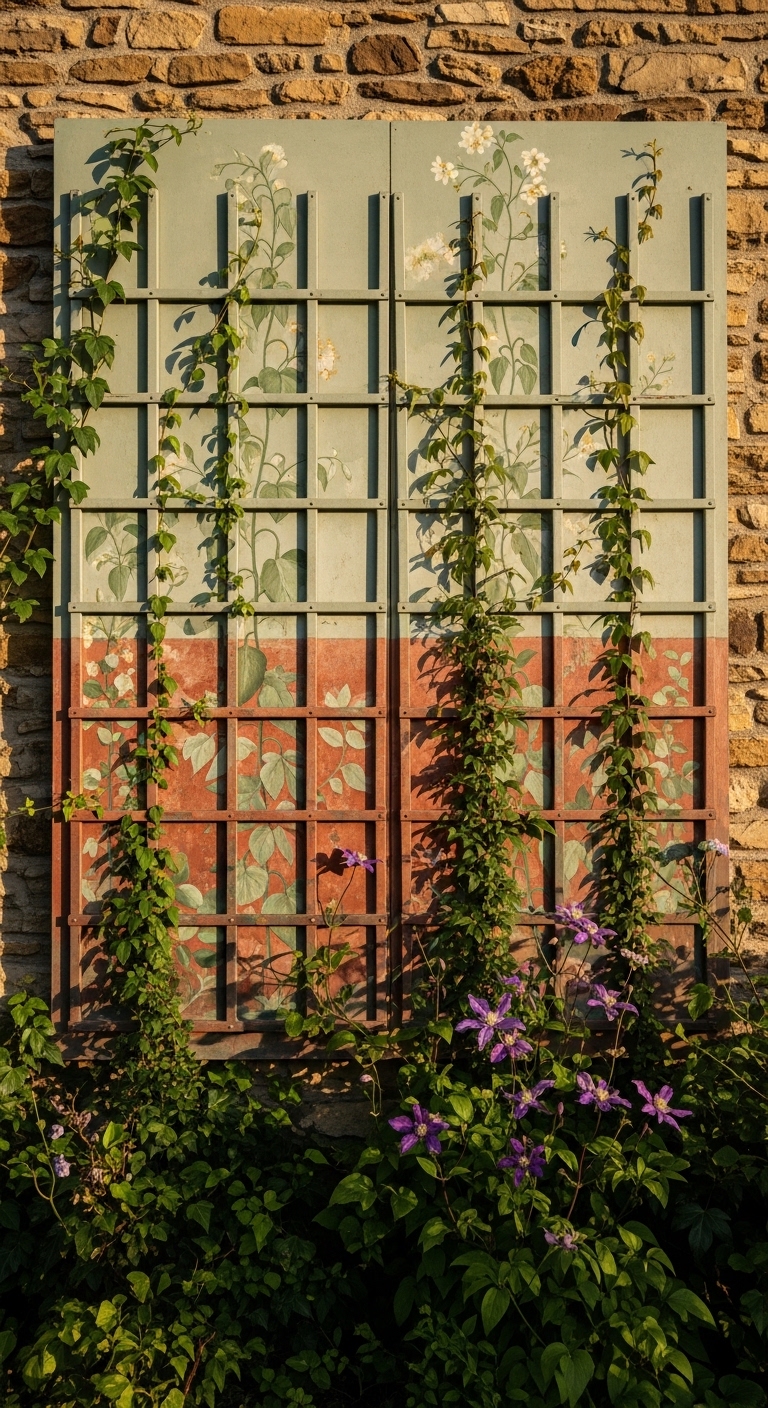
This idea takes the concept of a decorative trellis to its logical extreme — you paint the garden you want on the trellis panel before a single real plant has climbed it, and then let living plants gradually replace and interact with the painted ones.
Build a flat panel from exterior-grade plywood, mounted on a sturdy frame and fixed to your garden wall. Prime it and paint a botanical scene in muted, naturalistic colors — climbing stems, oversized leaves, open flowers. Use exterior-grade paint for longevity.
Then plant real climbers at the base of the panel. As they grow, they weave in and out of the painted stems, creating a magical blur between the two-dimensional art and the living garden in front of it.
This works especially beautifully on:
- Shaded north-facing walls where few plants grow well anyway
- The back wall of a courtyard garden
- The side of a garden shed that needs visual softening
Scallop-Top Wooden Trellis Fence
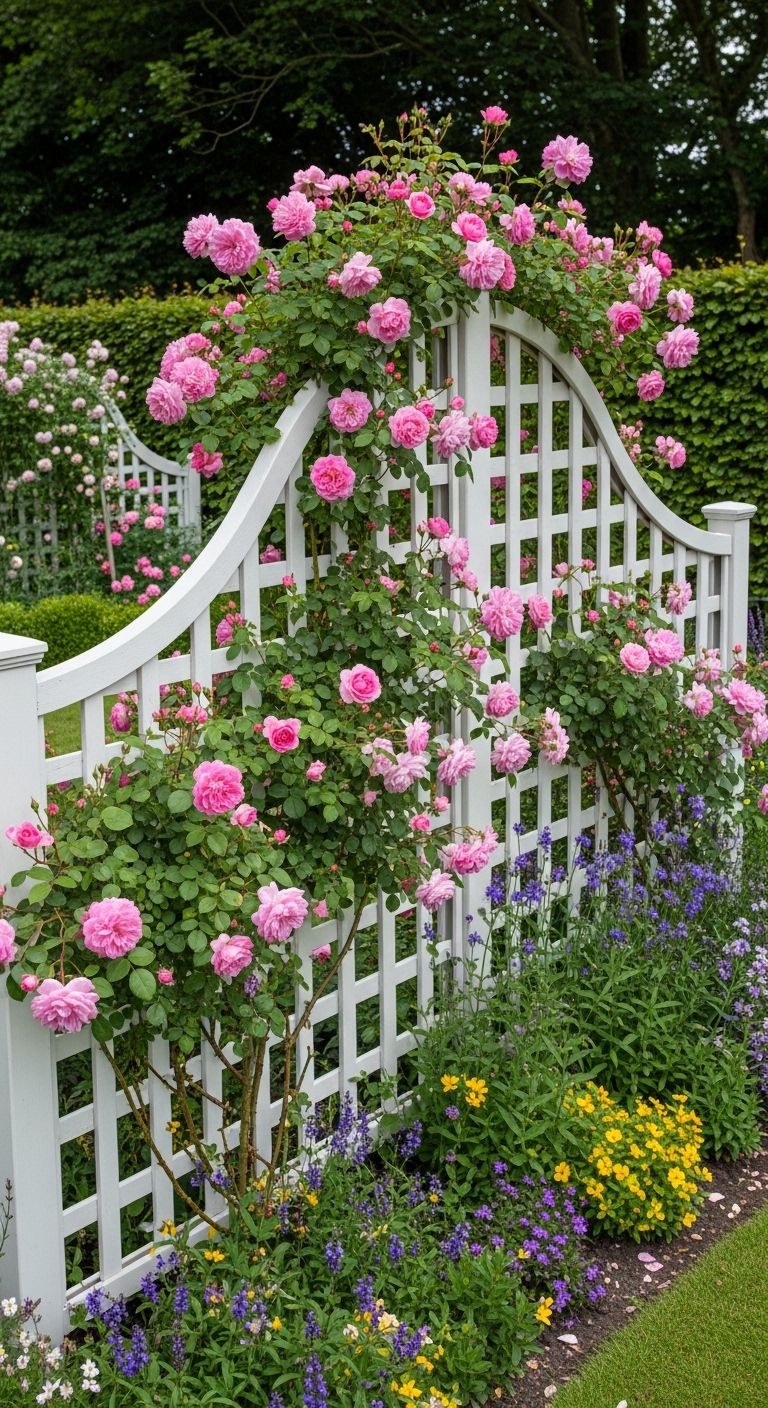
Most homemade trellis panels have flat or simple pointed tops. A scalloped top — where the upper edge curves gracefully in repeating arcs — elevates the same basic structure into something that looks genuinely custom-designed.
Build the trellis panel as you normally would: a timber frame with a lattice or slatted fill. Then, before painting, use a jigsaw to cut the curved scallop pattern into the top rail. Draw your curves first with a compass or a round template — a dinner plate works perfectly for a gentle arc — and make sure each scallop is evenly spaced and symmetrical.
The scalloped silhouette reads beautifully against the sky or against a plain wall behind it. Paint it white or cream and it immediately reads as a considered, architectural garden feature rather than a DIY project.
Moroccan Arch Trellis
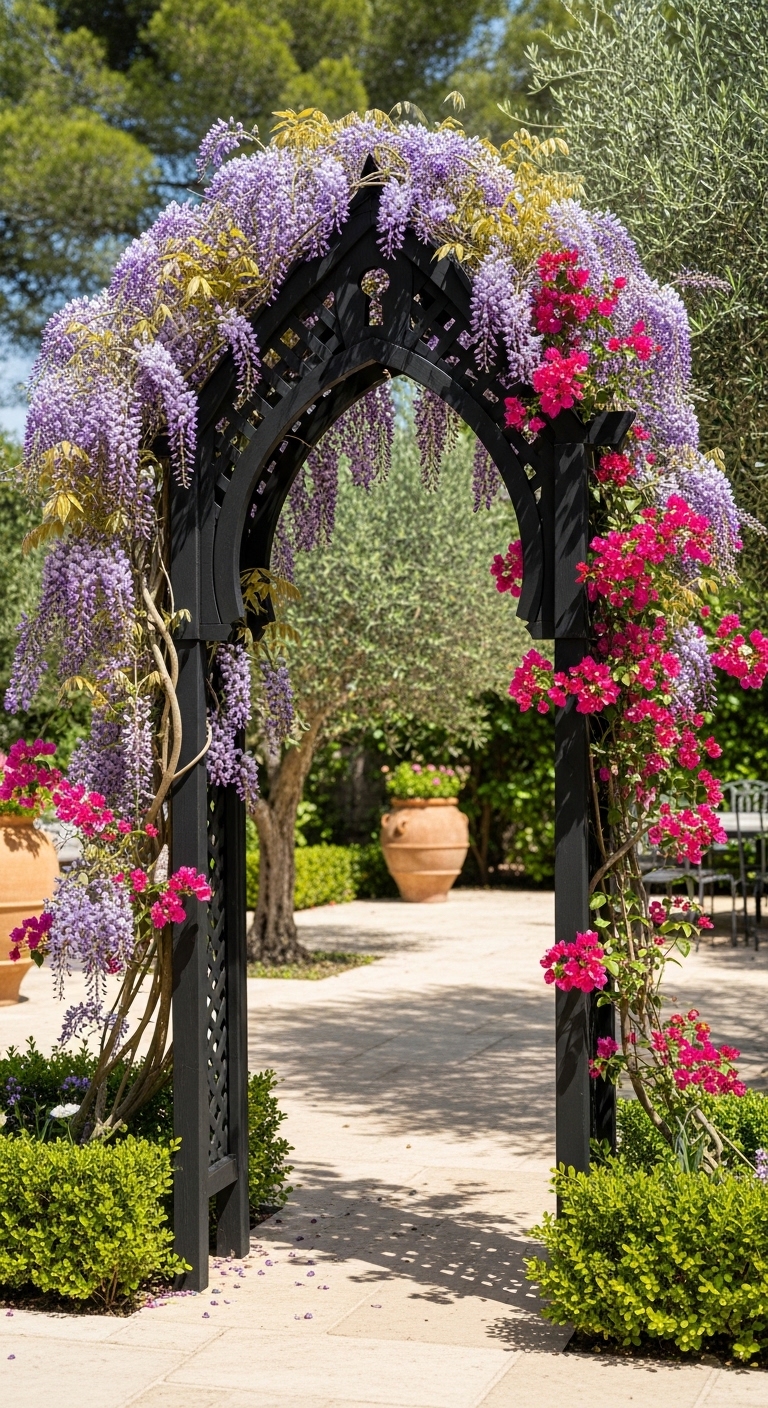
The Moorish keyhole arch — pointed at the top rather than rounded — brings an exotic, romantic quality to a garden that you simply cannot achieve with a standard rectangular frame. Build this in wood or metal and it becomes an instant statement piece.
Cut the arch shape from two pieces of exterior plywood or use a metal fabricator to bend flat bar steel into the keyhole profile. Mount two vertical uprights, attach the arch overhead, and fill the space with a simple grid of horizontal bars or wire. The ornate arch profile does all the visual work — the inner structure just needs to support the plants.
Pair this with:
- Wisteria — the purple-blue flower clusters draping over a Moroccan arch look like something from Andalusia
- Bougainvillea in warmer climates
- Rosa ‘Veilchenblau’ — a purple-tinged rose that suits the exotic aesthetic perfectly
Position the arch at the entrance to a garden path and it completely transforms the experience of moving through your outdoor space.
Driftwood Sculptural Trellis
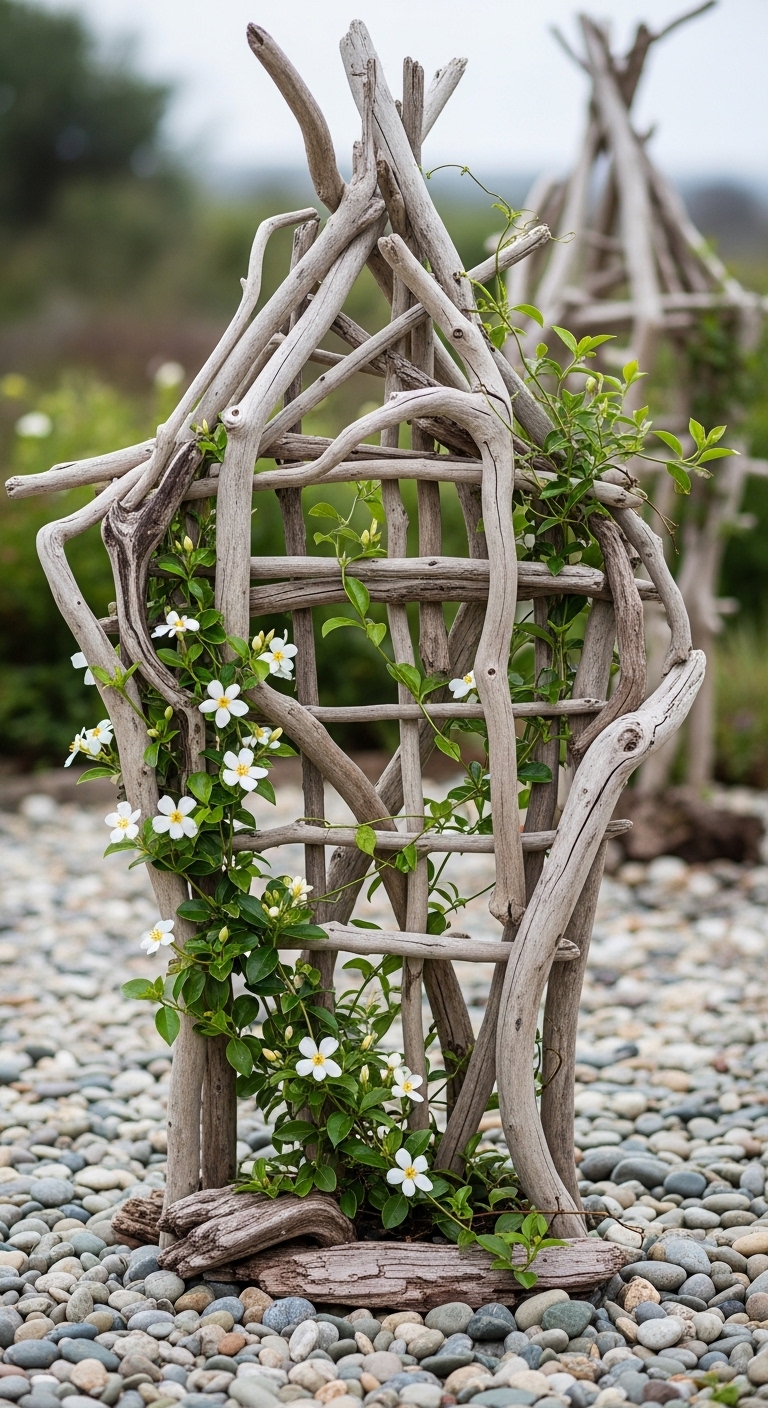
If you live near a coast or a river, driftwood gives you one of the most naturally beautiful building materials on earth — already shaped, textured, and weathered by forces you couldn’t replicate in a workshop.
Collect pieces of driftwood in varying thicknesses and lengths. Use the thickest piece as your vertical upright, sinking it at least 18 inches into the ground for stability. Attach smaller, more character-filled pieces horizontally and diagonally using marine-grade screws or stainless steel wire lashing.
The key to making this look intentional rather than accidental is working with the natural curves and angles of the wood rather than fighting them. Let the piece tell you where it wants to go. The result is genuinely sculptural — a piece of outdoor art that happens to also support a climbing plant.
This suits coastal gardens, zen-inspired spaces, and naturalistic garden styles beautifully.
Wrought Iron Style Painted Wood Trellis
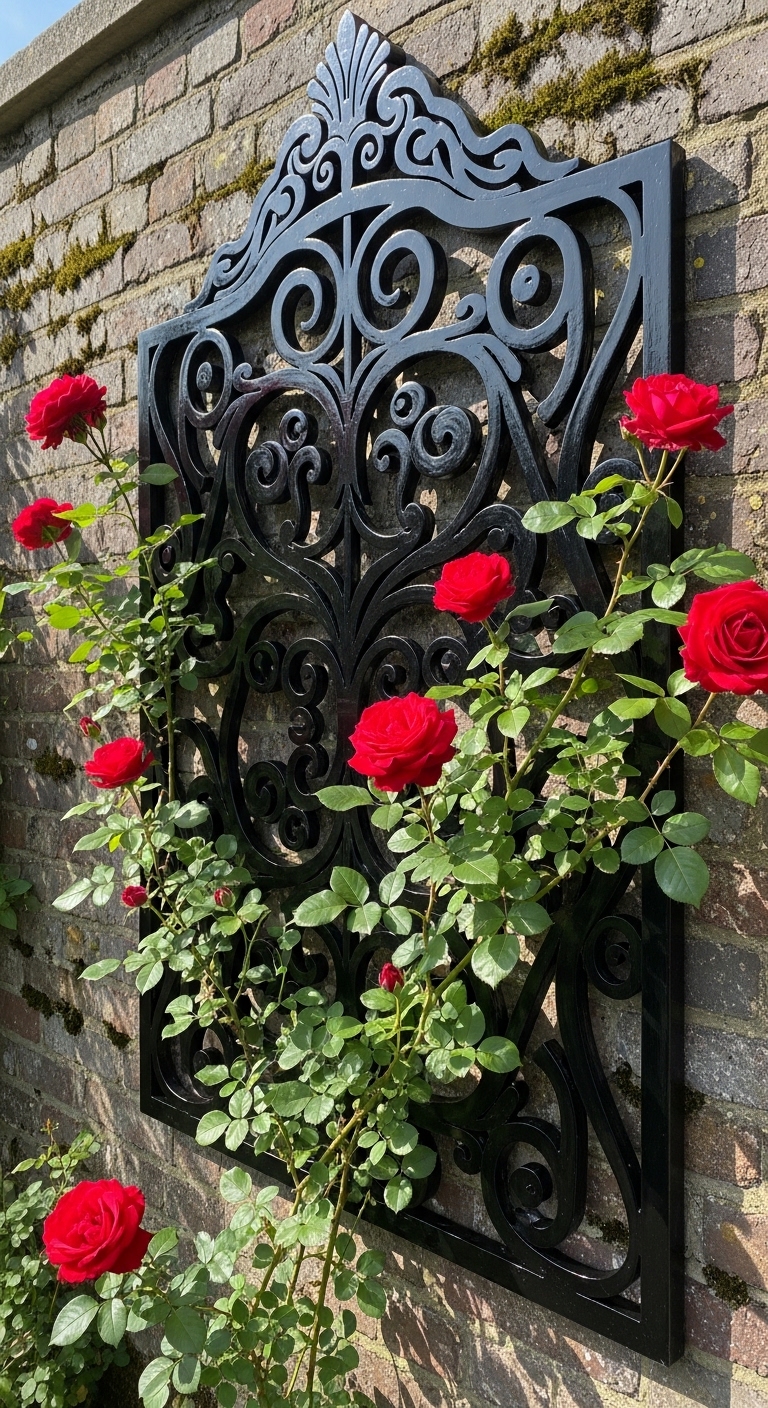
Real wrought iron trellises are extraordinarily expensive. But with a jigsaw, some exterior MDF or plywood, and a can of gloss black spray paint, you can build something that genuinely reads as iron from just a few feet away — at a fraction of the cost.
The trick is in the scroll and curve details. Cut your basic frame from timber, then cut decorative scrollwork and curved detail pieces from thin exterior-grade MDF or plywood. Attach these detail pieces to the face of the frame with wood glue and small brad nails. When the whole thing is painted in gloss black, the dimensional detail created by the layered pieces catches light exactly the way wrought iron does.
Use this style trellis against:
- Red brick walls for a classic Victorian garden look
- Pale rendered walls for dramatic contrast
- Dark timber fencing for a more contemporary layered effect
Ombre Painted Slatted Trellis
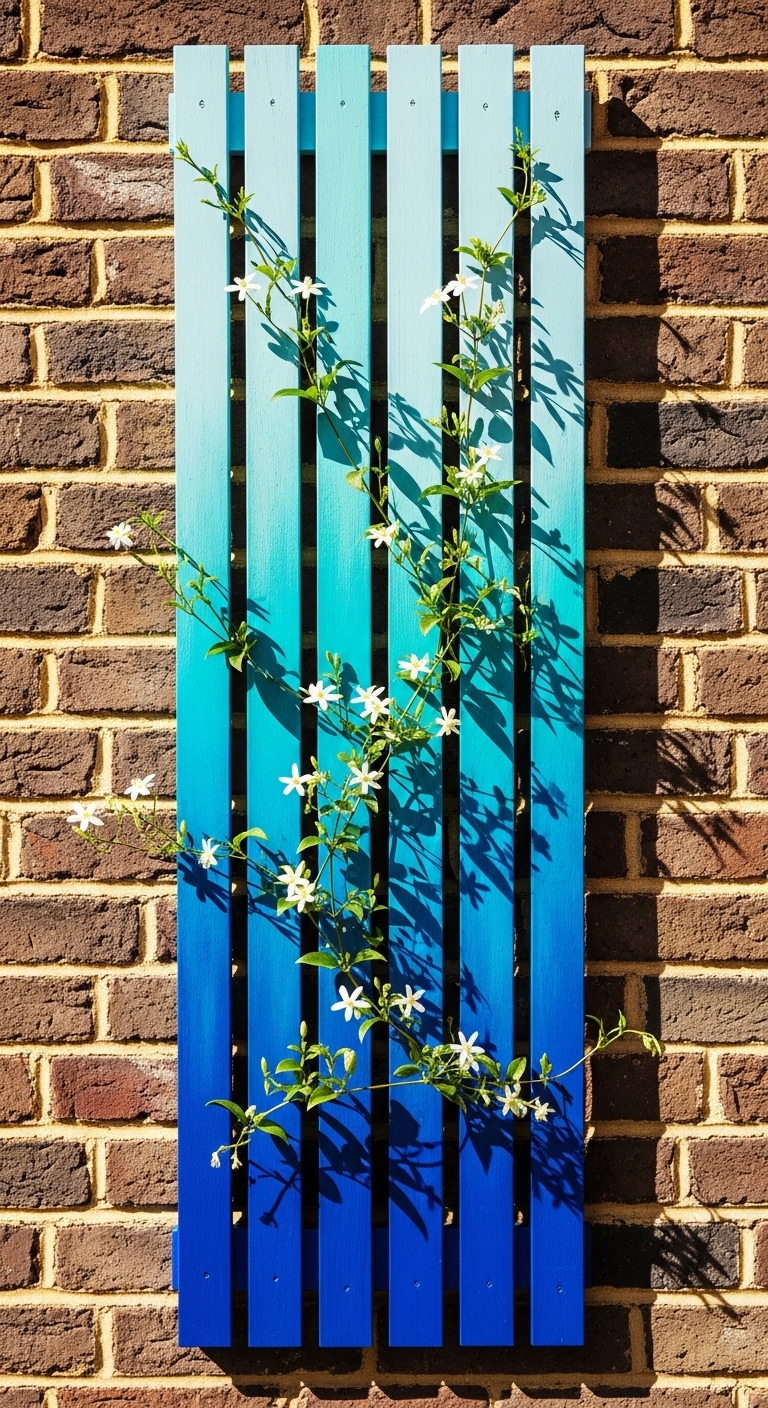
Most people build a trellis, paint it one color, and call it done. But what if the trellis itself carried a color story — a gradient that moved from deep, saturated tones at the base to pale, airy tones at the top, just like the natural transition from earth to sky?
Build a simple slatted trellis from parallel horizontal timber strips fixed to two vertical supports. Sand everything smooth and prime it. Then paint each slat individually, mixing your chosen color progressively lighter as you move up the panel.
A cobalt-to-sky-blue gradient looks stunning. So does deep terracotta fading to dusty peach, or forest green fading to sage. The effect is subtle enough to read as intentional design rather than indecision, and it gives the whole structure a sense of movement and atmosphere.
Plant light-stemmed climbers with small flowers — star jasmine, climbing snapdragons, or small-flowered clematis — so the planting frames the color story rather than burying it.
Reclaimed Door Frame Trellis
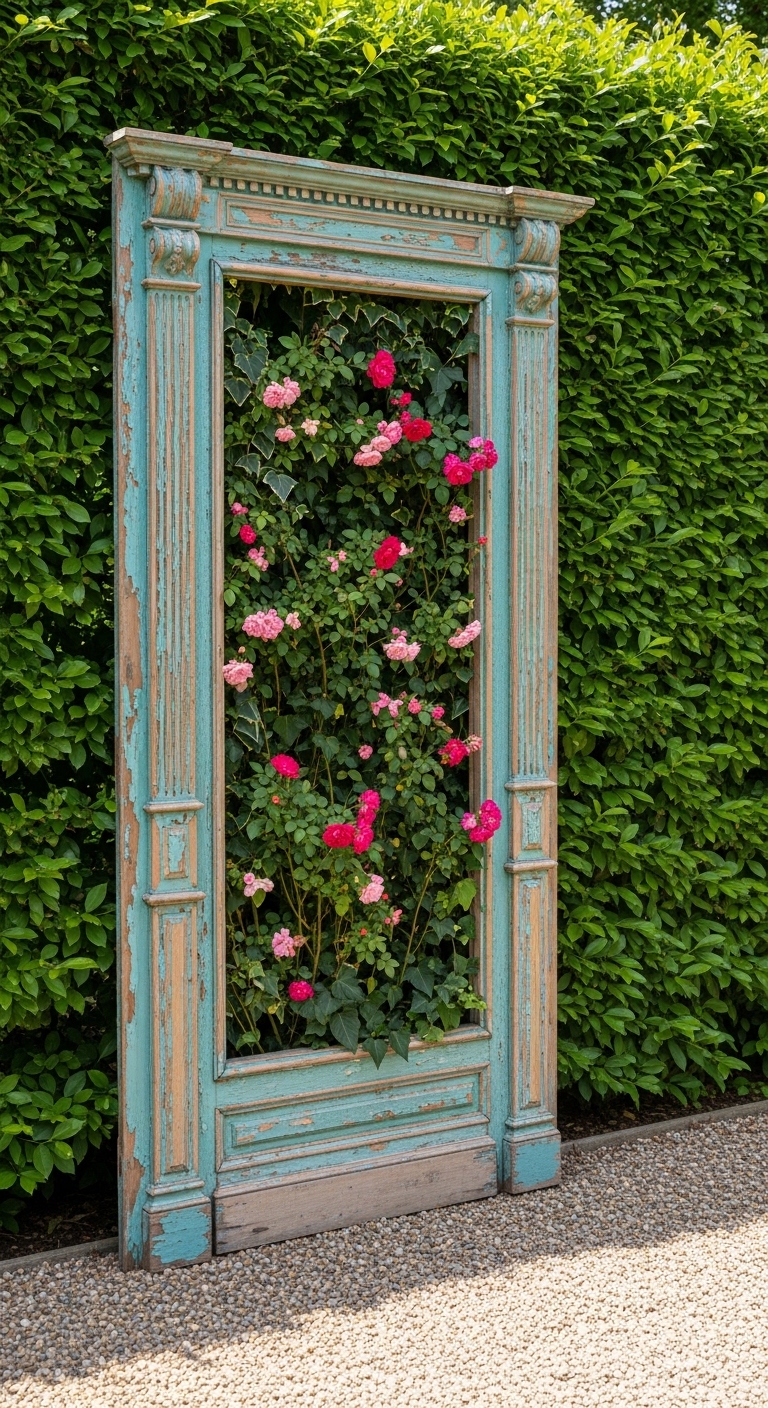
A reclaimed door frame standing in the middle of a garden — leading nowhere, framing a view of nothing but more garden — is one of the most evocative and romantic things you can place in an outdoor space. It carries the suggestion of a threshold, a transition, a story.
Source an old door frame from an architectural salvage yard. Strip out the door itself but keep the frame, the architrave moldings, and the decorative details. Set it into the ground with two buried steel fence posts sleeved inside the uprights for stability — door frames are not designed to be freestanding, so they need internal reinforcement.
String horizontal wires across the opening from jamb to jamb to give plants something to climb. Then plant a climbing rose or clematis at the base of each upright and let it work upward over a couple of seasons until the frame becomes a living doorway of flowers.
Chevron Pattern Timber Trellis
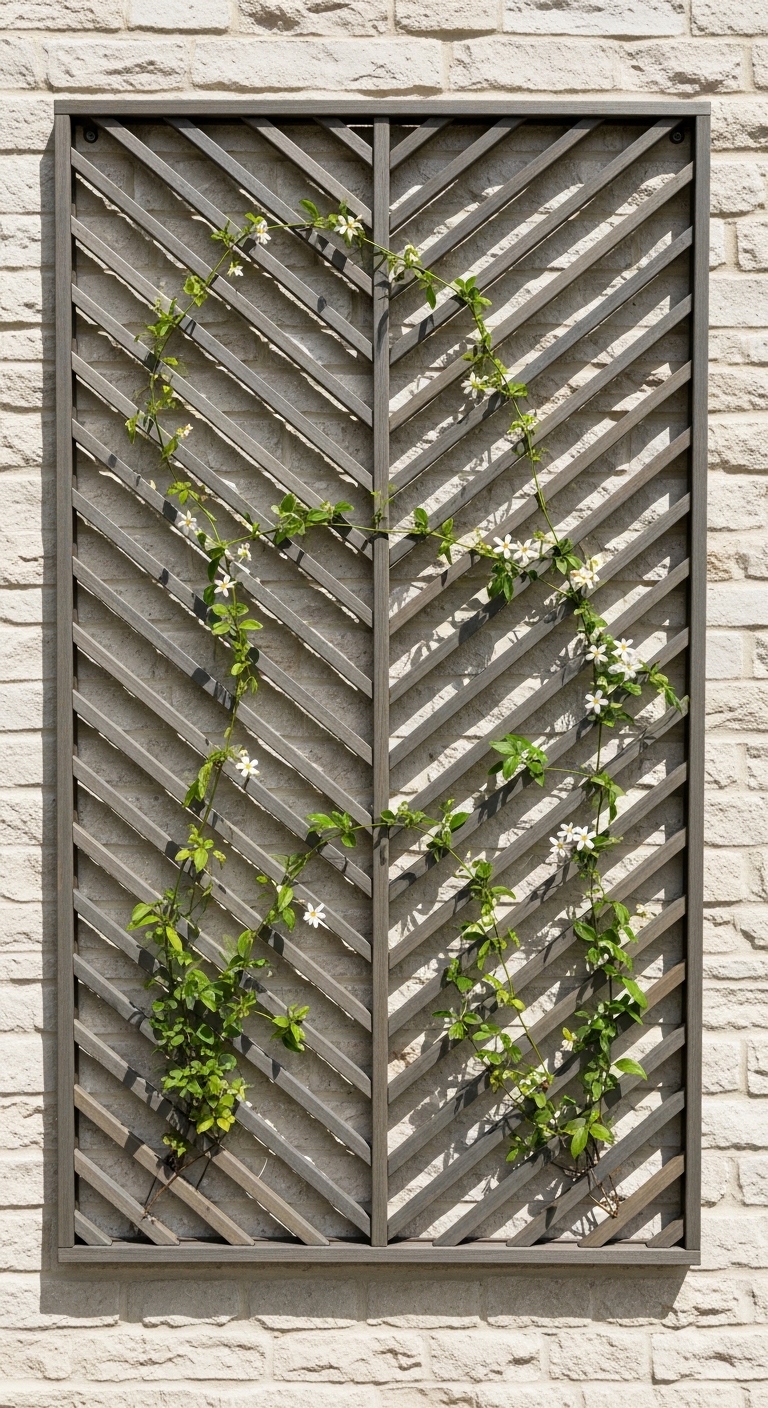
The chevron pattern — that bold, repeating V-shape — brings a graphic energy to a trellis that no standard grid or diamond pattern can match. It reads as deliberately modern, confident, and design-forward.
Cut your timber strips to uniform widths and lengths. Lay them in alternating diagonal directions to create the chevron, nailing or screwing each strip to a backing frame at the correct angle. A paper template mapped out on the wall first saves you from expensive mistakes — draw the chevron pattern to scale before you cut a single piece of wood.
This trellis style suits:
- Contemporary and minimalist gardens
- Urban courtyard spaces
- The back wall of a modern deck or terrace
Paint it in charcoal, warm grey, or deep slate for maximum graphic impact.
Oversized Monogram Initial Trellis
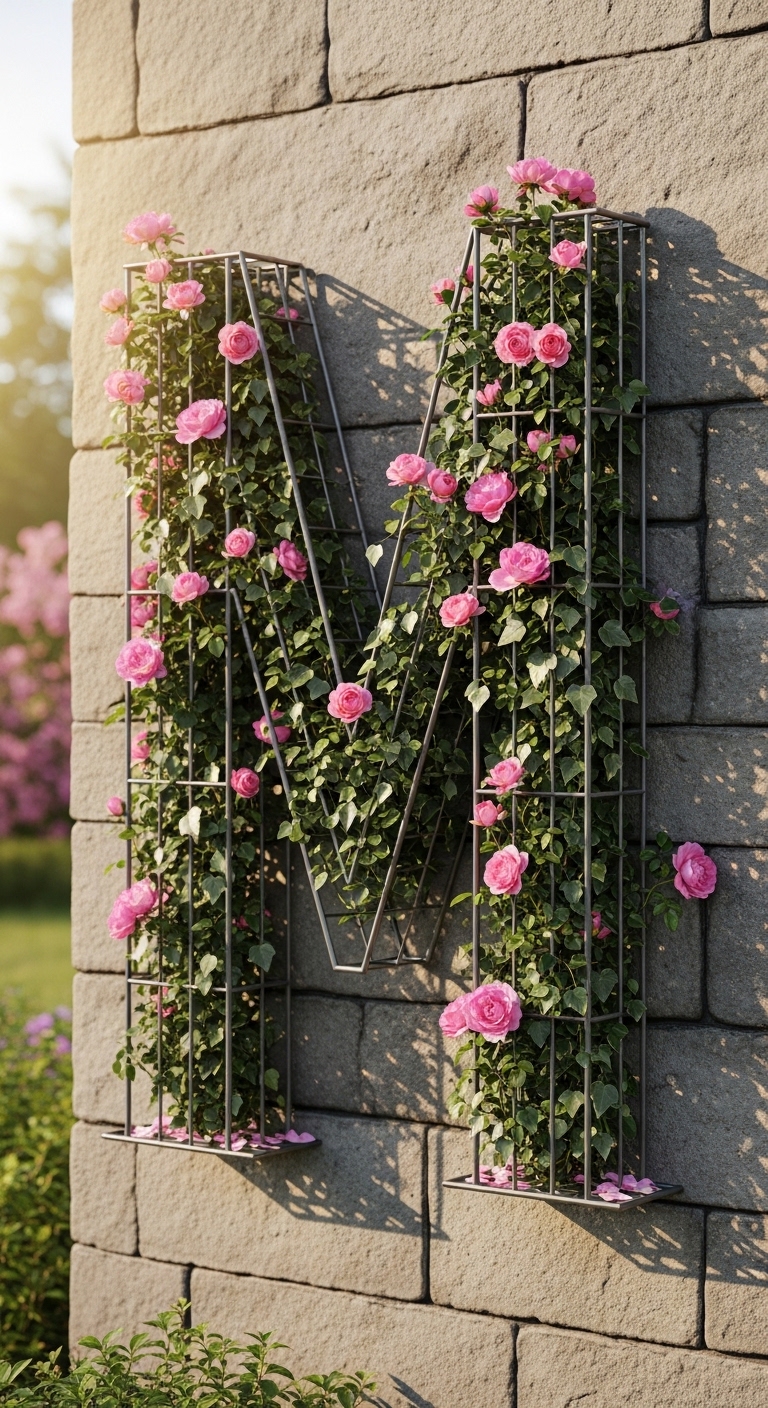
This is the most personal trellis on this list — a large-format initial letter built as a freestanding or wall-mounted structure, clothed in climbing plants that make it into a living monogram for your garden and your home.
Have a metal fabricator bend flat bar steel or thick rebar into the outline of your chosen letter — most will do this relatively inexpensively from a simple drawing. Alternatively, cut the letter shape from exterior-grade plywood with a jigsaw for a softer, more rustic version. Mount it on a wall or build a base that lets it stand freely.
Weave horizontal wire through the letter form at regular intervals so climbing plants have plenty of anchor points. Small-leaved climbers like star jasmine or climbing hydrangea work best — they outline the letter form rather than swallowing it entirely.
This makes an incredible feature at the entrance to a kitchen garden or potager, personalized to your household in a way nothing off a shelf ever could be.
Tiered Pagoda Trellis Tower
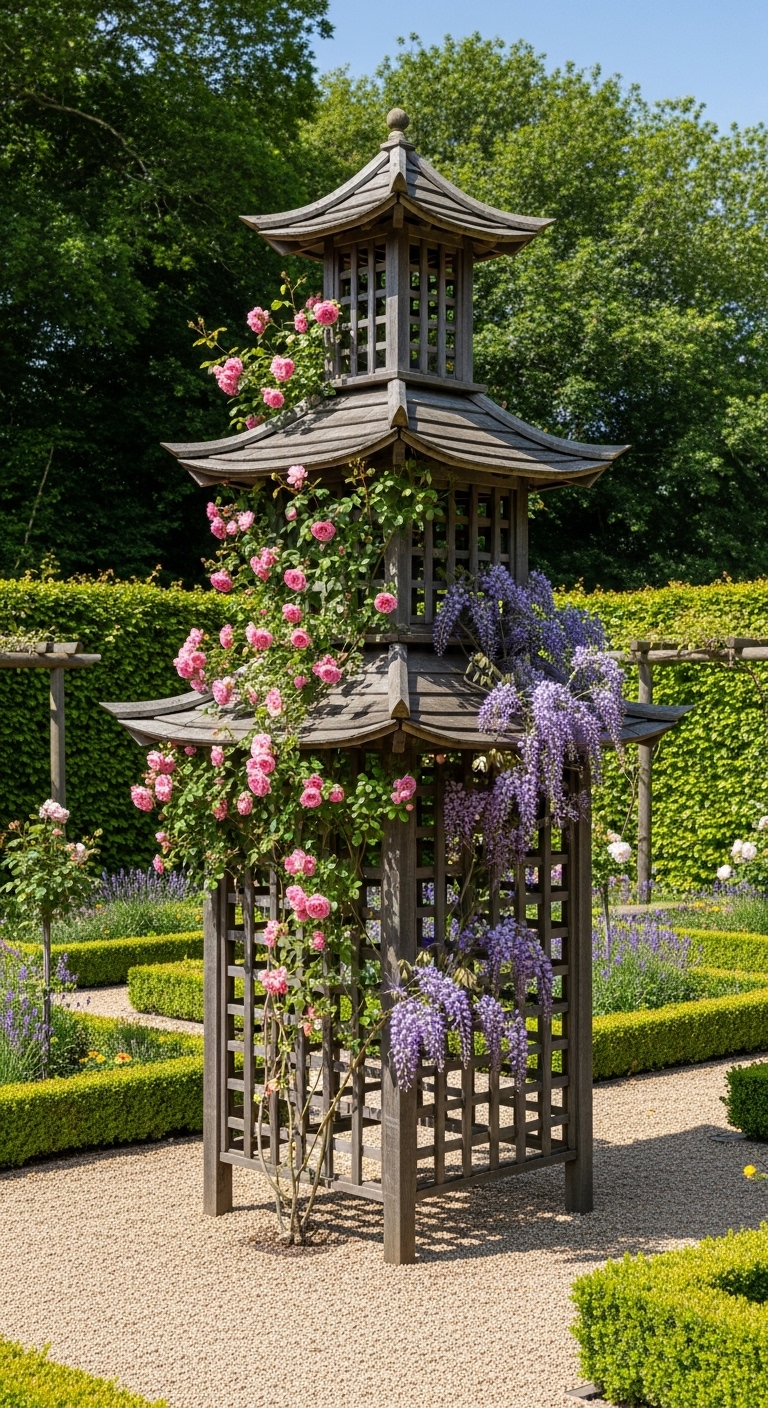
A pagoda-style trellis tower brings genuine architectural scale and drama to the center of a garden bed. It’s the kind of structure that transforms a flat planting into a three-dimensional composition with a clear focal point.
Build the central upright from a 4×4 post. Add three tiers of horizontal brackets at regular height intervals, each tier slightly wider than the one above and with the bracket ends cut at an upward angle to suggest the pagoda silhouette. Fill the space between the uprights with vertical timber slats or wire grid panels. Cap the top with a small finial.
Paint it in dark charcoal, black, or deep Japanese indigo for an Eastern-inspired aesthetic, or in classic white for a formal English garden feel.
This structure works beautifully:
- As the centerpiece of a rose garden
- At the corner of a formal knot garden
- As a vertical accent in an otherwise flat cottage border
Sunburst Fan Trellis with Painted Rays
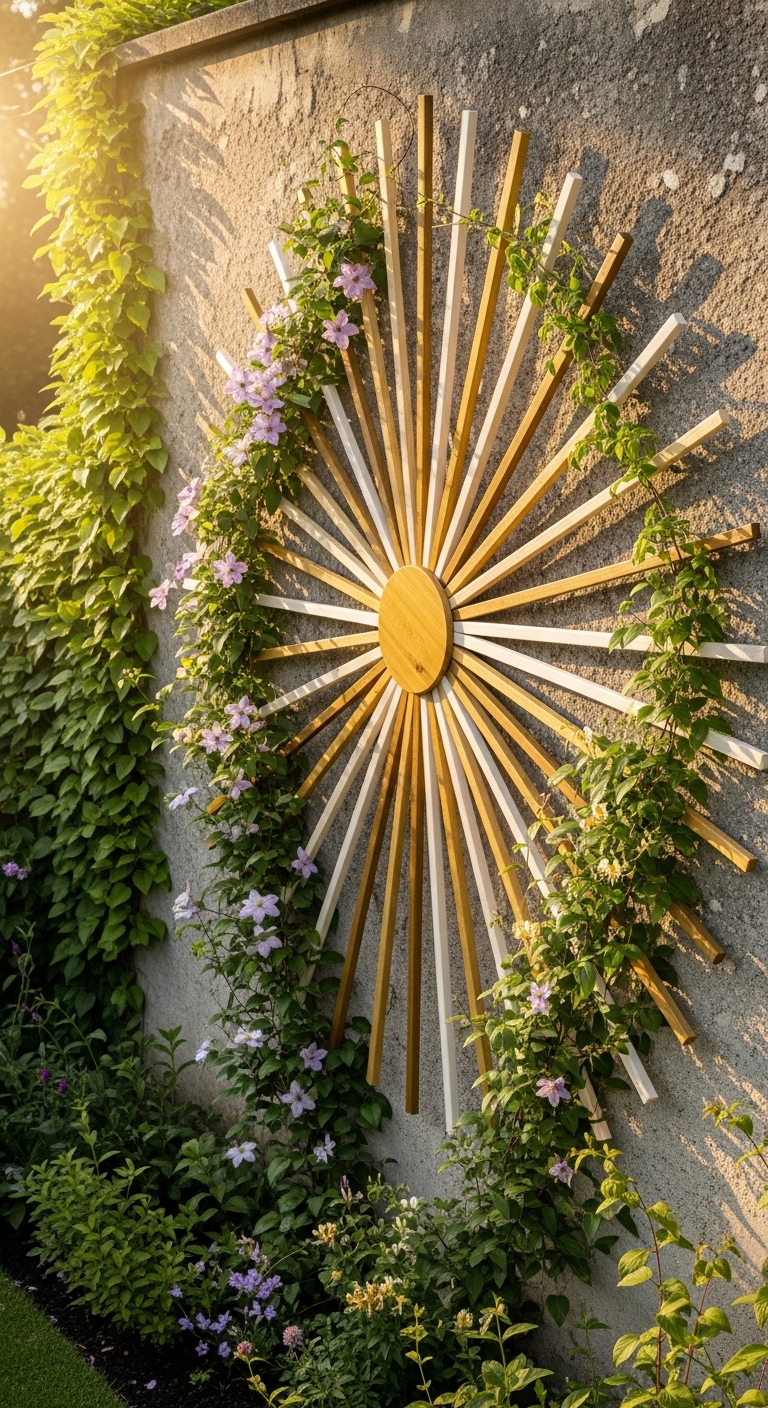
A sunburst trellis — a central circle with radiating lines spreading outward like rays — is one of those designs that looks extraordinarily complex but is actually built from very simple geometry.
Cut a central circle from exterior plywood — about 12 inches in diameter. Drill evenly spaced holes around the outer edge of the circle, one for each ray. Cut your ray timbers to graduated lengths — longer at the sides and slightly shorter at the top and bottom — and fit them into the drilled holes, fixing with exterior wood glue and screws from behind.
Mount the whole piece high on a garden wall where it can be seen from a distance. Paint it in warm gold, antique brass, or cream with gilded tips on the rays for maximum decorative impact.
This becomes an extraordinary backdrop for climbing plants whose stems and flowers radiate outward from the base, naturally echoing the sunburst form of the structure behind them.
Living Wall Grid Trellis with Built-In Planters
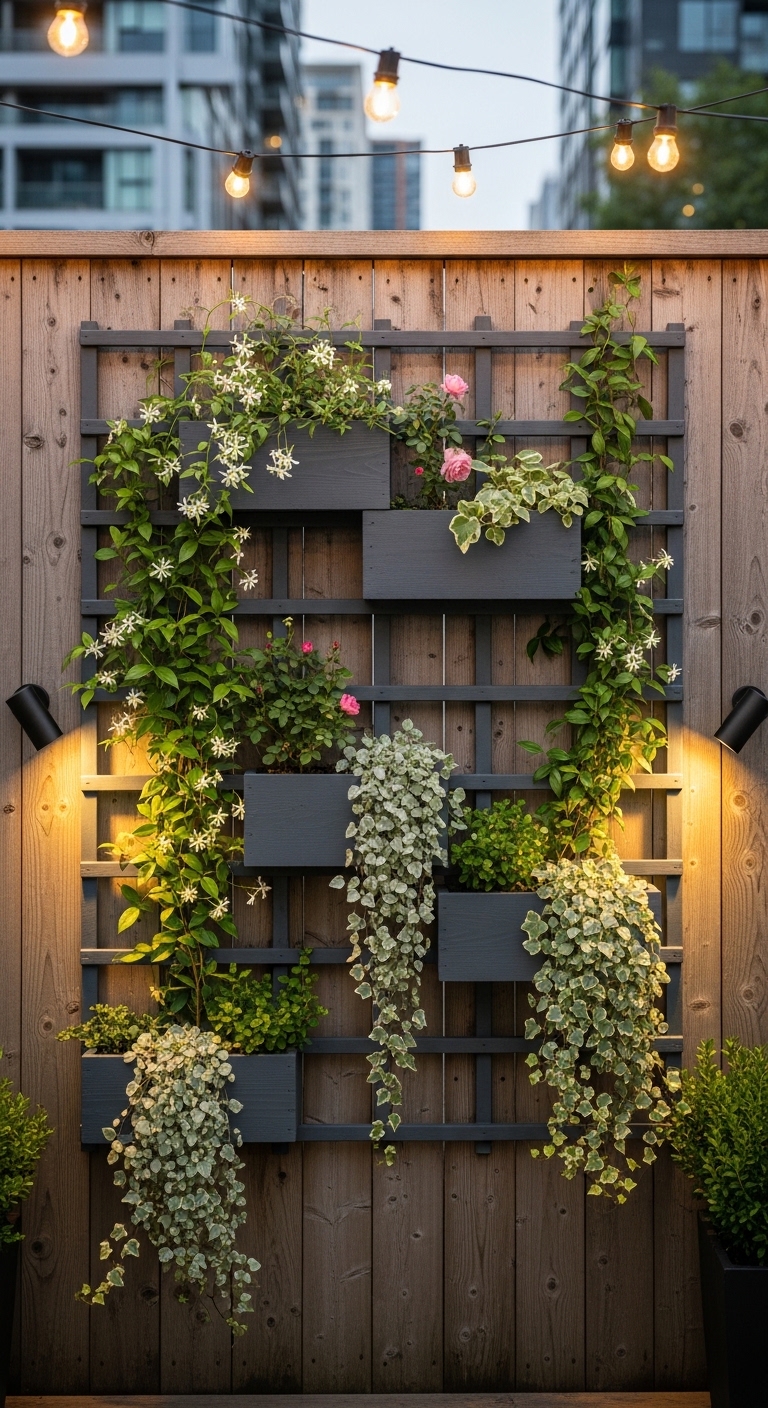
Our final idea brings the decorative trellis concept to its fullest expression — a structure that combines a climbing plant framework with built-in shelf planters, creating a layered, three-dimensional living wall that is both trellis and display shelf simultaneously.
Build a series of horizontal and vertical timber rails mounted on a fence or wall to create a large grid. At selected intersections — roughly every 18 to 24 inches — attach small timber shelf boxes, about 6 inches deep, that can hold small pots. Paint the entire grid in a single coordinating color.
Plant climbing plants at the base to grow up through the grid. Fill the shelf boxes with trailing plants — trailing lobelia, ivy, calibrachoa — so you have plants moving upward from the bottom and cascading downward from the shelves simultaneously.
The effect is a genuinely lush, layered vertical garden that reads as a designed piece of garden architecture rather than a simple trellis. It transforms even the most boring fence into something you’d photograph.
Matching Your Trellis Style to Your Garden
The most important piece of advice I can give you: resist the urge to build every trellis in the same style. The most interesting gardens layer their visual elements — a formal scallop-top panel next to a wild driftwood sculpture, a graphic chevron panel beside a romantic reclaimed window frame.
When you mix intentional geometry with organic materials, contemporary graphics with heritage colors, your garden develops the same layered complexity that makes the great gardens so endlessly interesting to be in.
Pick two or three ideas from this list that genuinely excite you. Build them. Live with them for a season. Then add the next one. A garden built slowly, with intention and personal taste, will always outshine one that was perfectly installed all at once.
The One Rule Every Decorative Trellis Must Follow
It must earn its place before the plants arrive. If you look at your finished structure and it only makes sense with plants on it — if it looks like a bare, awkward frame without the climbing roses — it’s not decorative enough yet. Add more detail, a stronger paint color, a more considered form.
The best decorative trellises are beautiful and interesting on the first day you install them, before a single tendril has found its way onto the structure. The plants that come later just make a beautiful thing more beautiful.
That’s the standard worth building toward.