15 Indoor Staircase Garden Ideas That Bring Nature Home
You walk past your staircase a hundred times a day without really seeing it. I know because I did the same thing in my own home for years — treating those steps and that wall beside them like dead space, just a way to get from one floor to the next. Then one afternoon I carried a trailing pothos upstairs and set it on the third step just to get it out of the way, and I stopped at the bottom and genuinely caught my breath. The whole hallway had changed.
That single moment sent me down the most wonderful rabbit hole of plant styling, shelf hunting, and creative experimenting, and today I want to share every beautiful idea I discovered with you. Whether you have a grand sweeping staircase or a narrow little flight squeezed into a corner, there is a living garden idea in this article that will completely transform how your home feels the moment you walk through the front door.
1. The Cascading Pothos Waterfall
There is something genuinely magical about watching a pothos vine trail downward in long elegant sweeps along a staircase wall. The way the leaves overlap and layer creates this lush green curtain effect that makes an ordinary hallway feel like the entrance to a secret garden. When I finally installed three staggered oak floating shelves along my staircase wall and let my golden pothos hang free, my husband stood at the bottom of the stairs and said it looked like we lived somewhere entirely new.
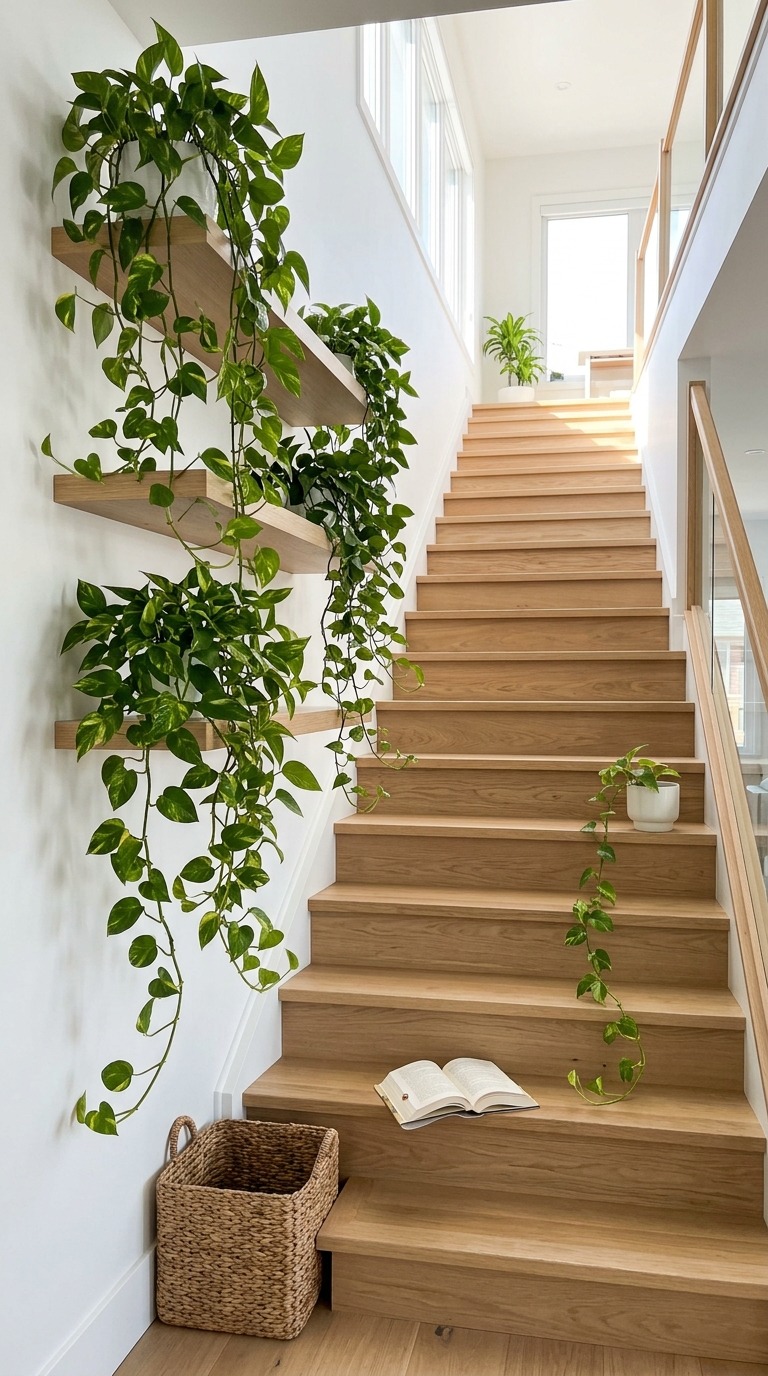
Golden pothos thrives in the lower-to-medium light that most staircase walls receive, which makes it the perfect plant for this setup. Mount your shelves at three different heights — roughly eighteen inches apart — so the trailing vines from each shelf overlap beautifully with the one below. I used matte white ceramic pots to keep the look clean and let the greenery do all the talking. Water thoroughly once a week and give the leaves a gentle wipe every month to keep them looking their absolute glossiest best.
2. The Riser Step Pot Collection
Placing individual pots directly on the stair risers is the simplest staircase garden idea and also one of the most charming when you do it with intention. The key is choosing pots of genuinely varying heights and plants with different silhouettes — something spiky, something round and mounding, something trailing — so the eye travels upward like a visual staircase of its own. I arranged a collection of terracotta pots on my side stairs during a Sunday afternoon and it genuinely felt like installing a piece of living sculpture in my home.
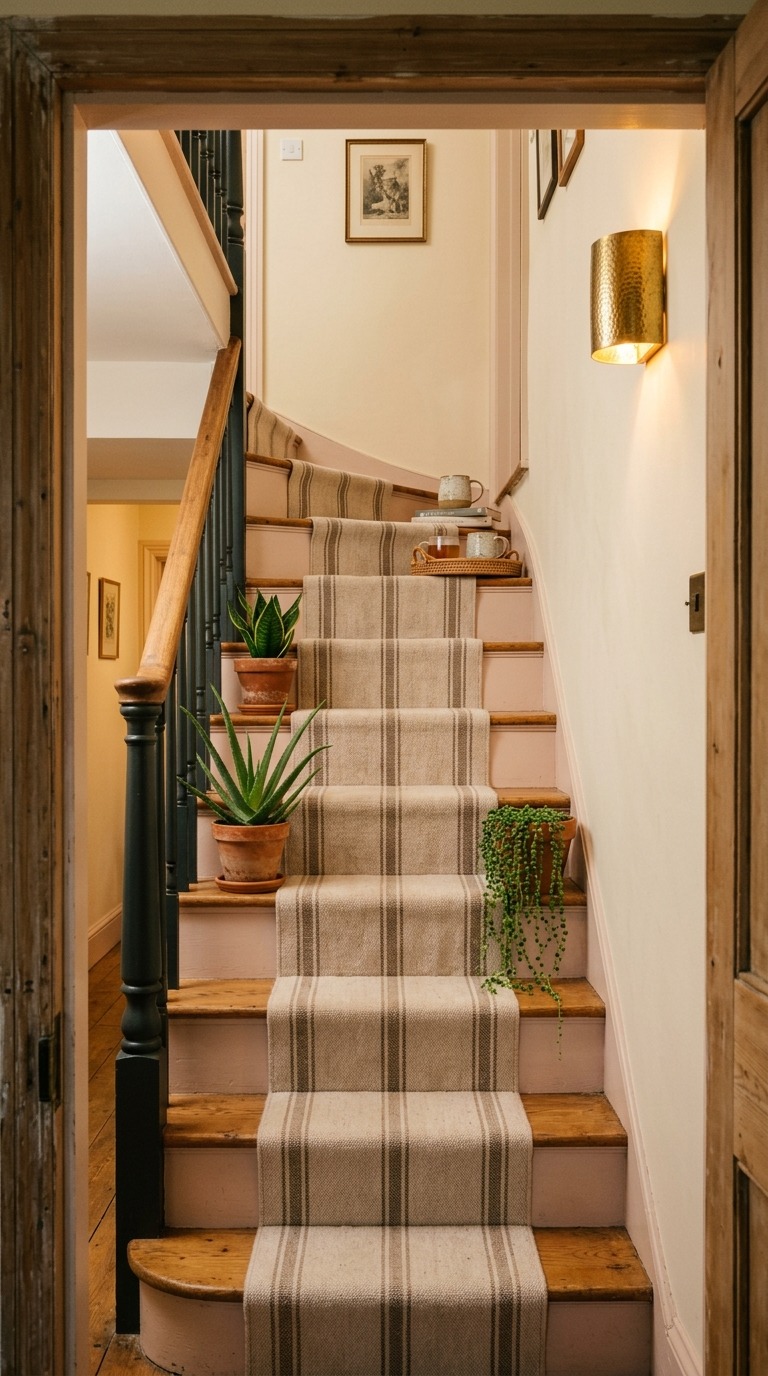
Keep safety front of mind and place your pots against the wall side of each step with plenty of walking room remaining. Choose compact plants that stay in their lane — a snake plant, a small aloe vera, a rosette succulent, or a trailing string of pearls are all brilliant options for this look. Use a cachepot rather than a pot with drainage holes to avoid any water on the steps. I love mismatched terracotta for a warm organic feel, but matching matte black pots look incredibly sleek in modern homes.
3. The Under-Stair Mini Jungle
The space under your stairs is probably one of the most underused square feet in your entire home, and when you fill it with a dense collection of tropical plants it transforms from a forgotten corner into the most talked-about spot in the house. I spent one weekend building out this exact look in my own home — clearing out the storage boxes I had shoved under there for years — and replacing them with a monstera, two peace lilies, and a gorgeous bird of paradise in a dark charcoal pot. The difference was staggering.
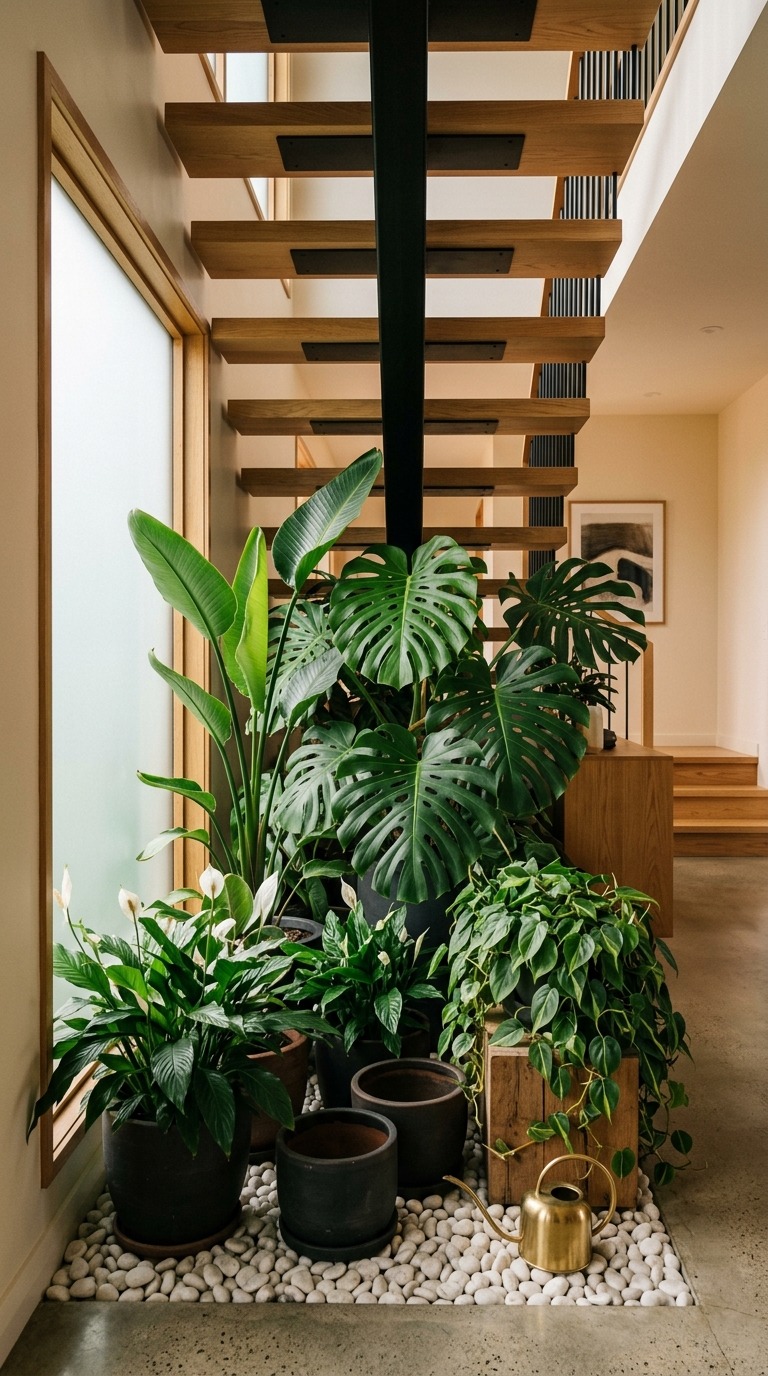
Tropical plants are ideal for under-stair gardens because many of them genuinely prefer the indirect lower light that this sheltered space provides. Monstera deliciosa, peace lily, dieffenbachia, calathea, and snake plant all perform beautifully here. Lay a bed of decorative white pebbles or smooth river stones across the floor of the space to create a finished garden-floor look and help with humidity around the pots. Mist the leaves twice a week and rotate each plant a quarter turn monthly so every side gets some light love.
4. The Living Wall Panel
A full living wall panel beside your staircase is one of those design moves that genuinely makes people gasp when they walk into your home. I saw my first one in a friend’s townhouse and spent the entire dinner party thinking about how I could do it in my own space. It creates a vertical garden experience that feels like you have brought a piece of a botanical garden indoors, and the lush green density of it against a white or dark wall is simply breathtaking every single time you pass by.
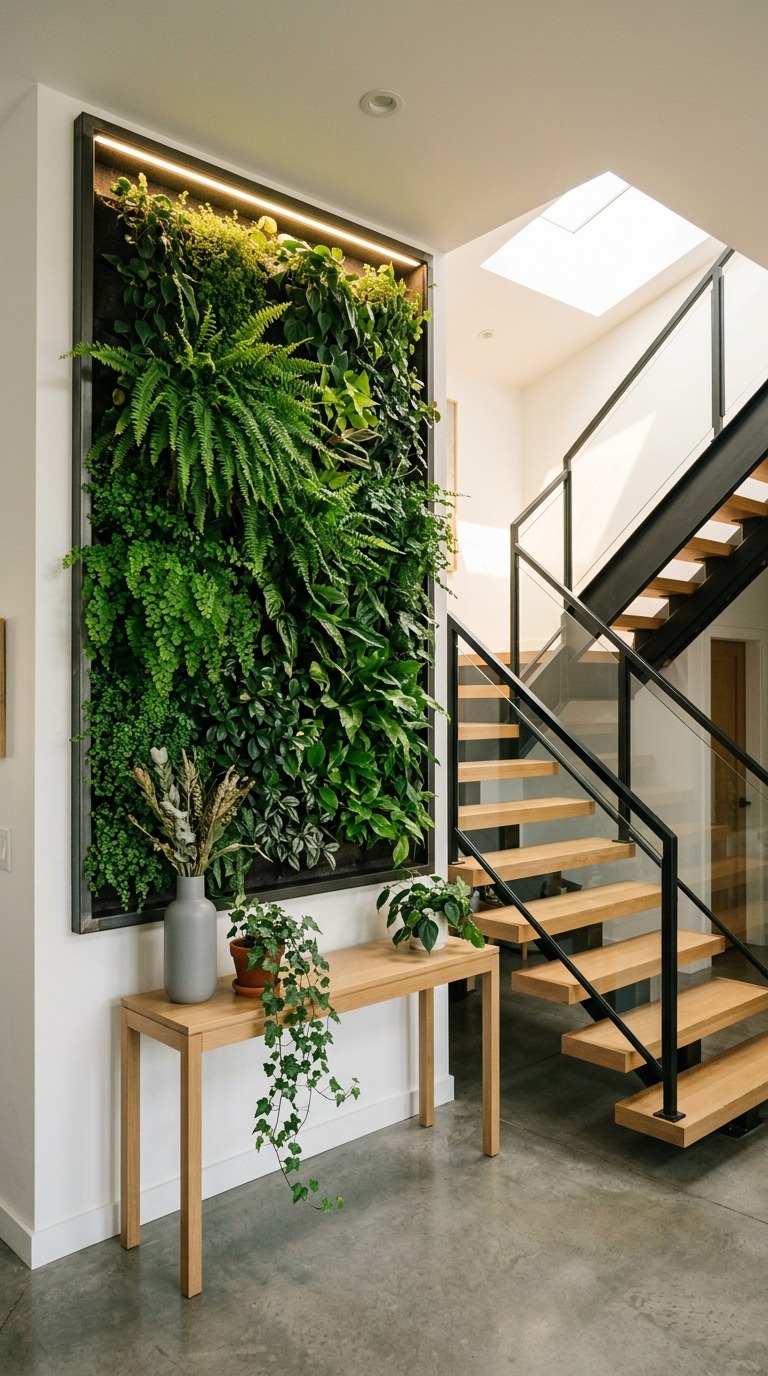
You can buy modular living wall systems online that mount directly to drywall and include built-in irrigation channels — brands like Floralink and Woolly Pocket make beautiful options that even a weekend DIYer can install. For plants, choose varieties with different leaf shapes and textures: ferns for soft feathery fullness, creeping ficus for dense coverage, and baby tears for a delicate trailing finish between larger specimens. Install a discreet LED grow light strip along the top to supplement natural light and keep every plant thriving regardless of which direction your staircase faces.
5. The Macrame Hanging Garden
Macrame plant hangers bring a warmth and handcrafted quality to a staircase garden that no shelf or pot arrangement quite replicates. The texture of the knotted cotton cord against trailing green foliage creates this beautifully layered bohemian softness that feels genuinely cozy and personal rather than styled. I made my first set of macrame hangers following a YouTube tutorial one rainy afternoon and hung five of them along my staircase wall at varying heights, and I still smile every single morning when I walk past them.
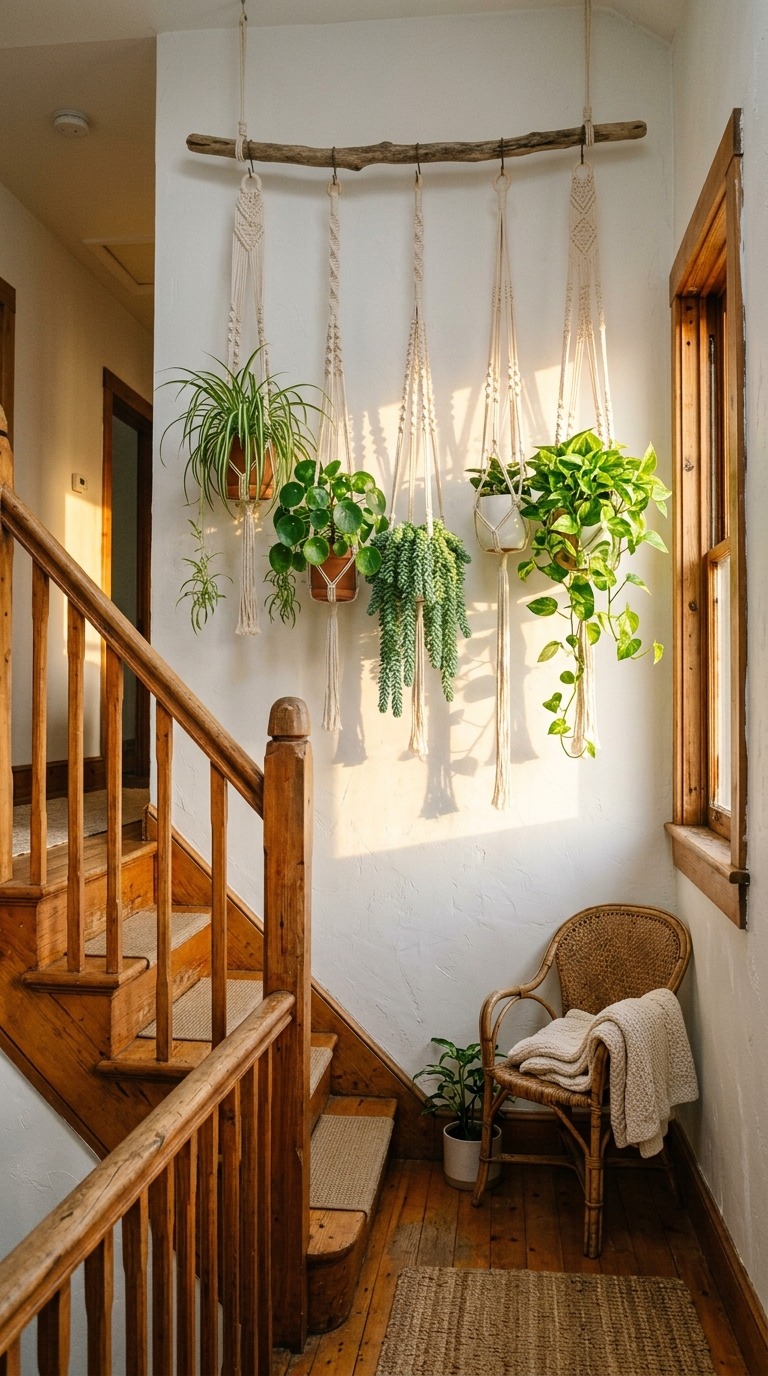
Mount a thick driftwood rod or a simple brass curtain rod high on the wall beside your staircase and hang your macrame planters at staggered lengths so they create a cascading visual rhythm. Spider plants, burro’s tail, and small pothos are ideal choices because they stay compact, trail gracefully, and forgive you when you forget to water them for a week. Use natural cotton macrame cord in cream or undyed natural for a warm organic look, or choose sage green dyed cord if you want something more intentional and color-coordinated with your plant palette.
6. The Tiered Wooden Ladder Display
A leaning wooden ladder used as a plant display beside your staircase is one of those ideas that looks like it cost a fortune to put together but is actually one of the most affordable and flexible setups you can create. I found a beautiful ash wood ladder at a local vintage market for twelve dollars, leaned it against the wall beside my staircase, and spent a happy hour arranging my succulents and trailing plants across each rung. Every single person who visits our home asks about it within the first five minutes.
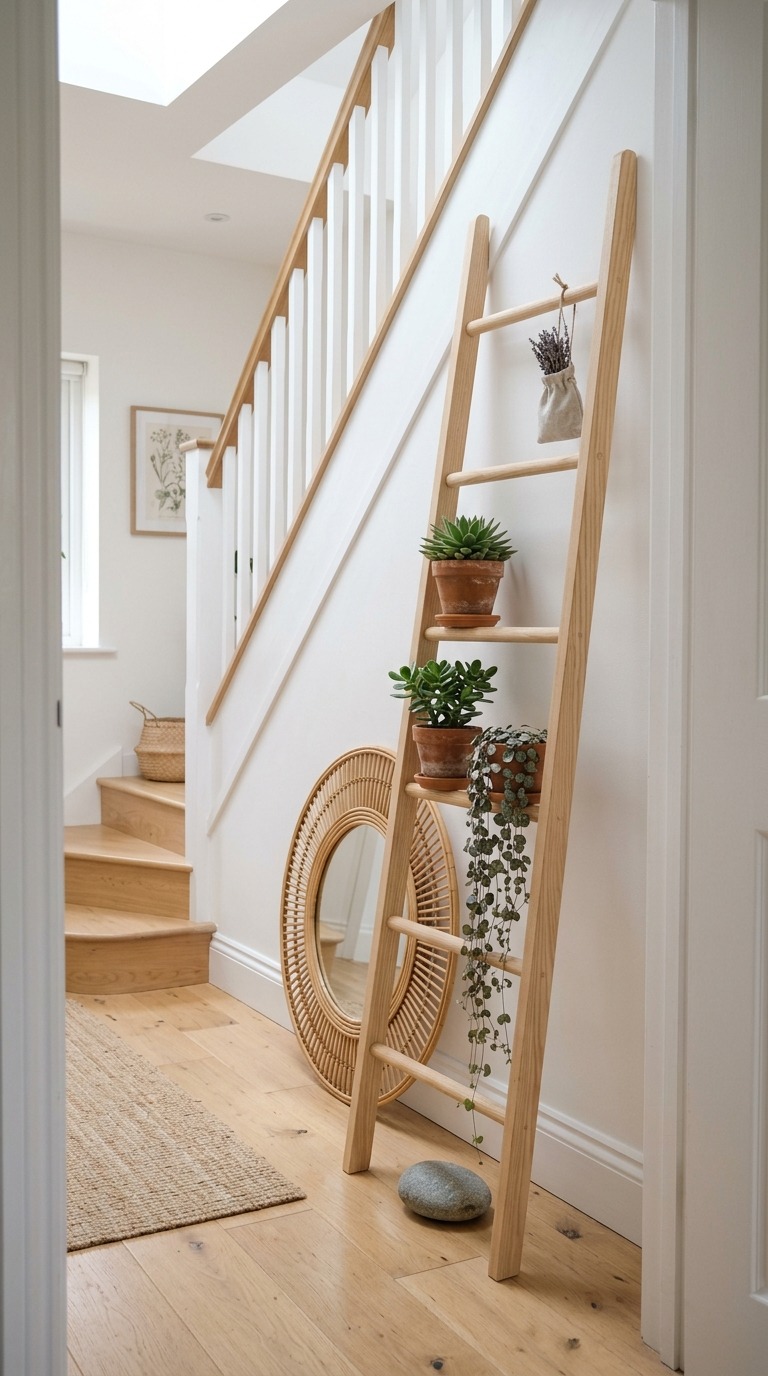
Choose a ladder in natural wood — ash, oak, or pine — rather than painted or metal so the organic warmth complements your plant collection instead of competing with it. Style each rung with a mix of pot types: terracotta for succulents, woven wicker cachepots for trailing plants, and a small glass cloche on the top rung for an air plant or a tiny preserved moss arrangement. Keep the pots light in weight so the ladder stays stable against the wall, and anchor the top of the ladder discreetly to a wall stud with a small hook for peace of mind if you have children or pets at home.
7. The Herb Garden Stair Steps
Growing a functional herb garden on your staircase steps near a window is one of those ideas that combines beauty and everyday practicality in the most satisfying way. I moved my herb collection from the kitchen windowsill to the lower steps of my back staircase last spring, and the difference in how much I actually use fresh herbs in cooking has been remarkable — they are right there, lush and happy, every single time I walk past on my way to the kitchen. Snipping a handful of basil or thyme on the way to dinner feels genuinely luxurious.
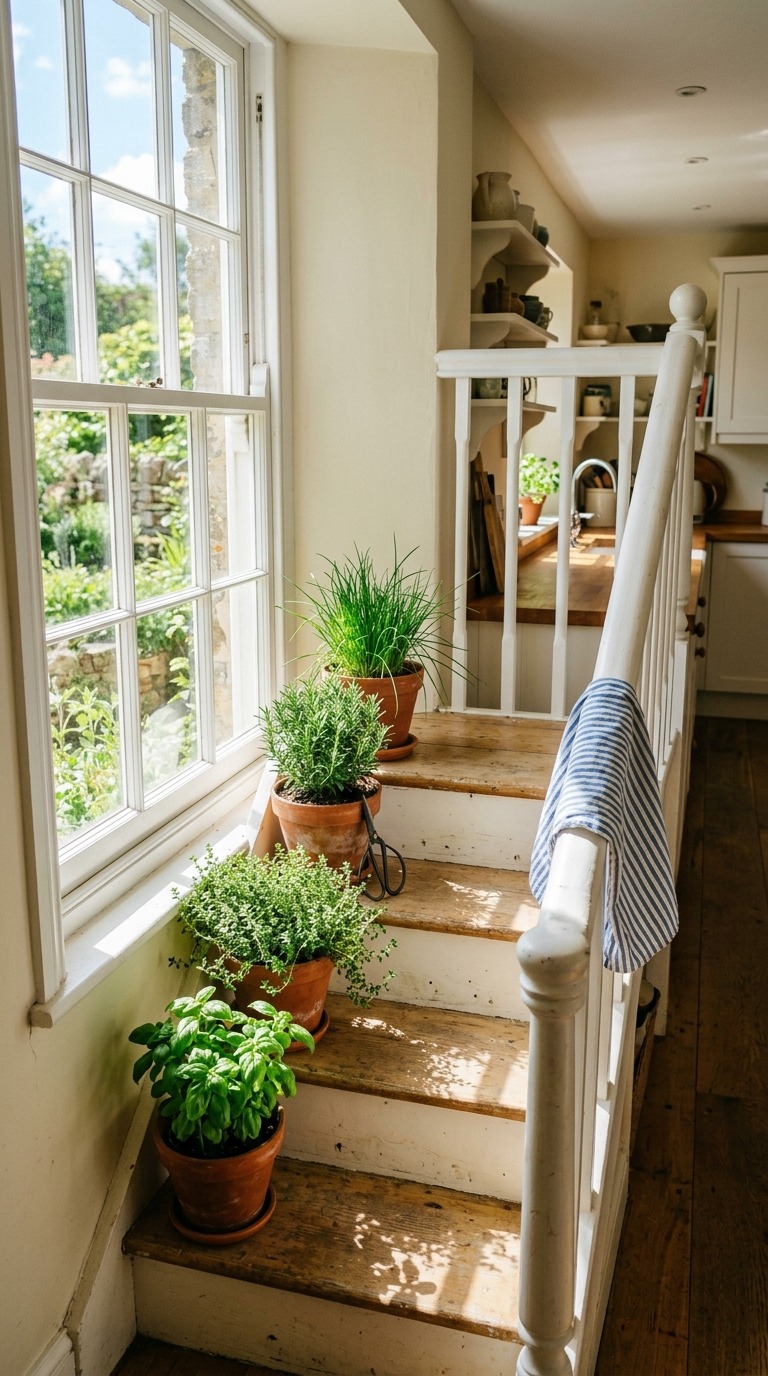
Position your herb staircase within reach of your brightest natural window — herbs genuinely need a minimum of six hours of direct sun daily to thrive indoors. Basil, thyme, rosemary, chives, mint, and oregano all do beautifully in this setup. Use matching terracotta pots for a cohesive look, or mix glazed ceramic in complementary tones for something a little more decorative. Line the steps with a thin rubber grip mat underneath each pot to protect the wood finish and prevent any sliding — a small practical detail that makes this beautiful idea genuinely liveable long-term.
8. The Zen Pebble and Bamboo Corner
A Zen-inspired bamboo and pebble garden beneath your staircase creates a quiet, meditative focal point that makes your entire home feel calmer and more intentional the moment you step inside. I have always been drawn to Japanese garden principles — that idea of curating empty space as deliberately as filled space — and when I created a simple pebble and bamboo arrangement under my staircase it became the one corner of my home where I genuinely exhale every time I pass by. The restraint of it is what makes it so powerful.
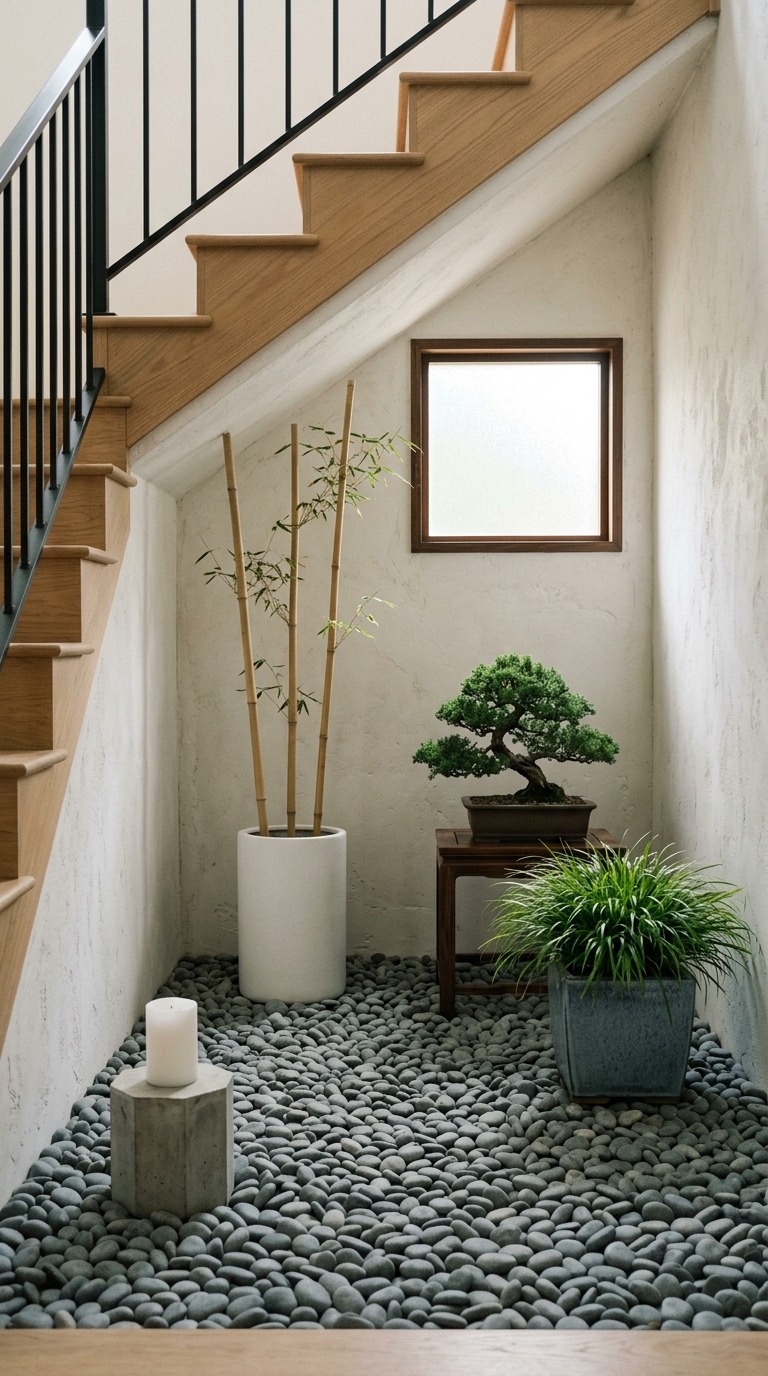
Lucky bamboo or clumping garden bamboo in a tall ceramic pot works brilliantly for the central anchor of this arrangement. Add a bonsai tree on a low display stand — a juniper or ficus bonsai from a specialist nursery is perfect — and fill the remaining floor space with smooth grey or white river pebbles purchased in bulk from a garden center. Keep the color palette strictly neutral: white, grey, green, and dark wood only. Resist the urge to add anything else. The beauty of a Zen staircase garden lives entirely in its gorgeous, intentional simplicity and quiet restraint.
9. The Glass Terrarium Gallery Wall
Glass terrariums mounted on a staircase wall create a gallery effect that feels more like curated art than a plant display, which is exactly what makes this idea so special. The geometric shapes of the glass containers — triangular, hexagonal, spherical — catch the light and throw tiny prismatic patterns across the wall as the day moves, and there is something deeply satisfying about a collection of miniature living worlds arranged at eye level where you can appreciate every tiny leaf and moss clump up close. I mounted seven geometric terrariums on my dark-painted staircase wall and it looks genuinely extraordinary.
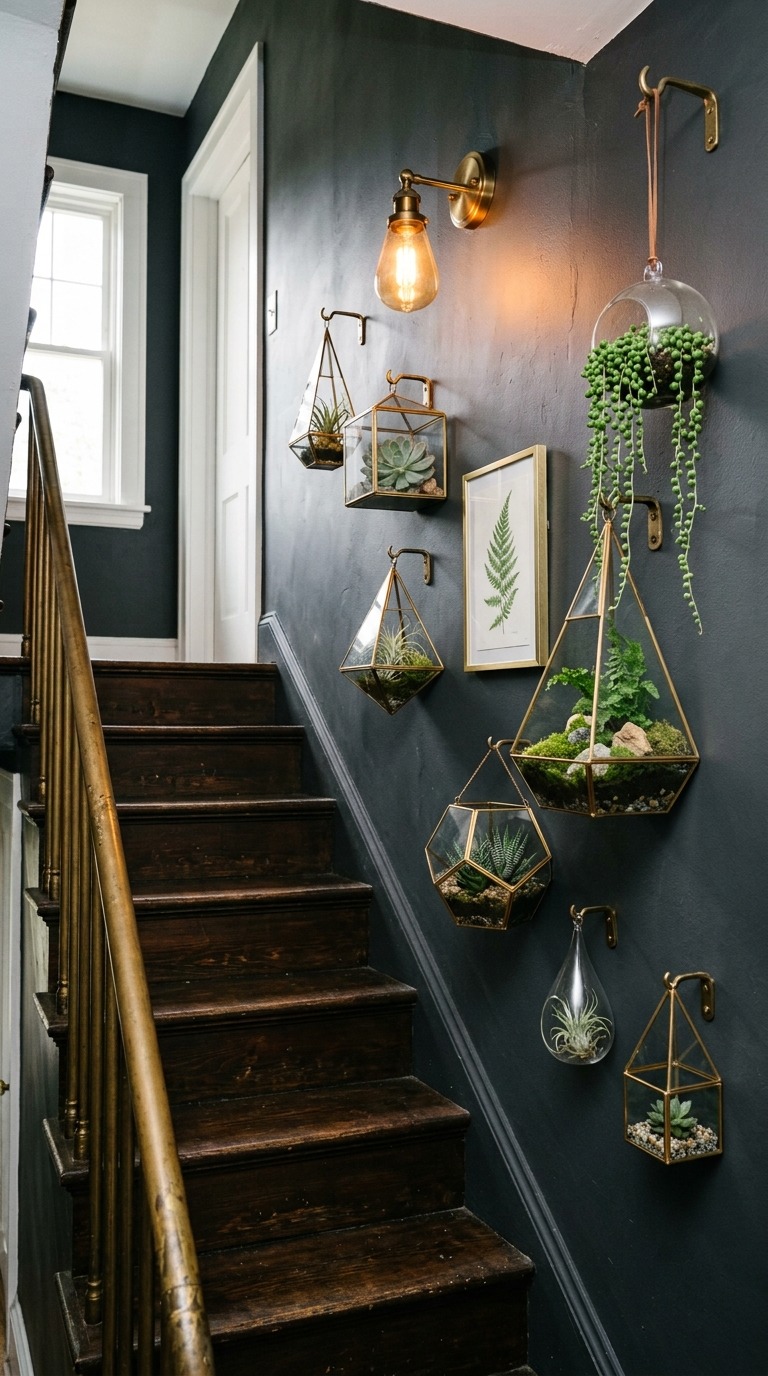
Choose open geometric terrariums — not sealed — for air plants, succulents, and small cacti, which all need good airflow to thrive. Closed glass terrariums work beautifully for moss gardens and humidity-loving miniature ferns. Mix glass shapes deliberately: two triangular, two spherical, three hexagonal arranged in a loose organic cluster rather than a rigid grid. Use brass or matte black wall brackets for mounting — both finishes photograph beautifully and add a jewelry-like quality to the overall display. Mist air plants twice weekly and give each terrarium a quarter rotation monthly so the plants grow evenly toward the light.
10. The Banister Railing Planter Clip Garden
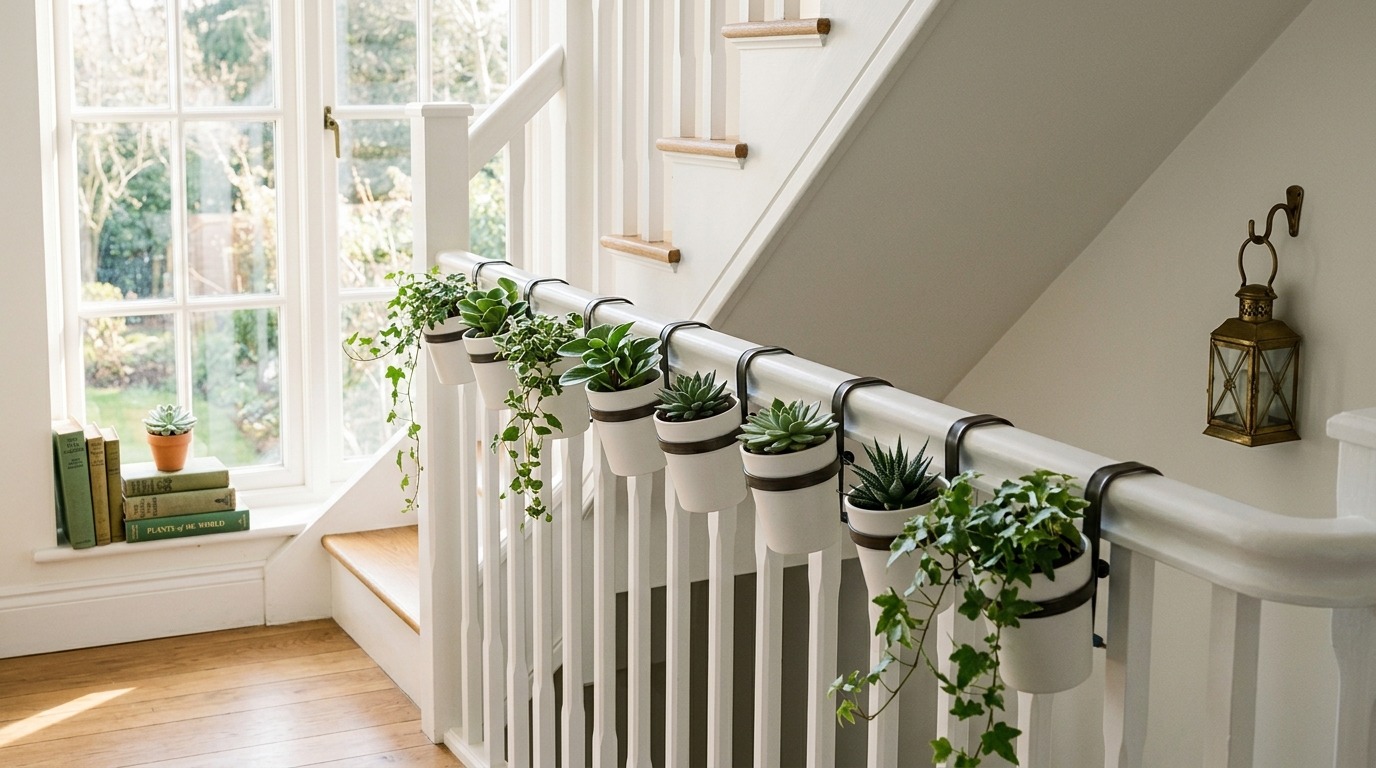
Clip-on railing planters are one of the most underrated staircase garden tools I have ever discovered, and I genuinely cannot believe it took me this long to try them. They attach to almost any banister rail — wooden, metal, or painted — with a simple clamp mechanism, and they hold small pots securely so you can line your entire banister with living greenery without drilling a single hole in your wall or railing. The effect when you look down a banister lined with trailing ivy and compact succulents is genuinely like walking through a garden pergola.
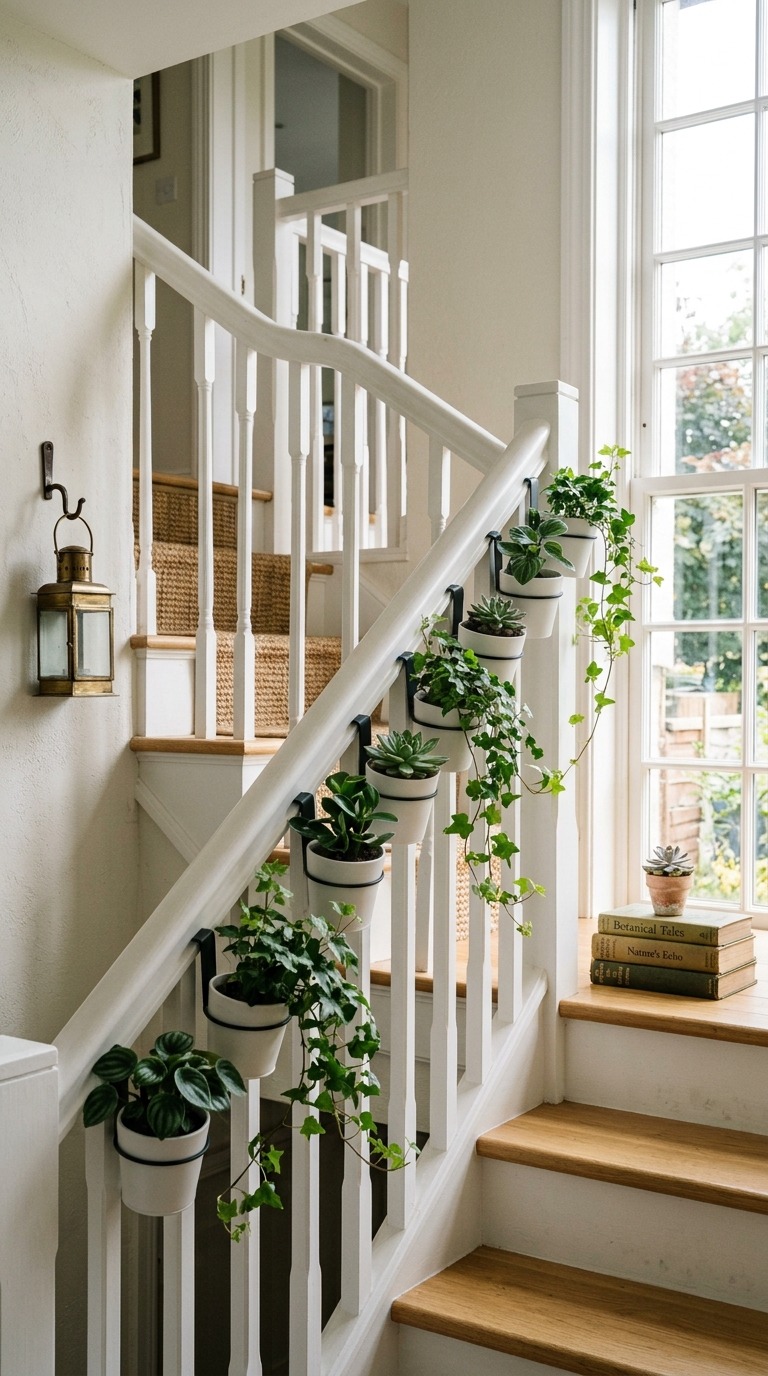
Look for powder-coated steel or cast iron railing planter clips online — they come in matte black, antique brass, and white to match different banister finishes beautifully. Choose plants that stay compact and trail rather than grow tall and bushy: trailing ivy, peperomia, small echeveria rosettes, and compact pothos are all perfect options for this application. Water carefully using a small watering can with a long narrow spout so you direct water exactly into each pot without any splash onto the staircase wood or carpet runner below the planting display.
11. The Vertical Trellis Vine Wall
Training climbing vines up a slim trellis panel mounted beside your staircase creates a vertical garden that grows more beautiful with every passing month as the vines reach higher and fill in thicker. I installed a cedar trellis panel along the wall beside my main staircase eighteen months ago, tucked a heartleaf philodendron at the base, and the vine has now climbed almost to the ceiling — it is one of those living home features that gets better and better with time rather than staying static. Guests genuinely stop and stare at it every time.
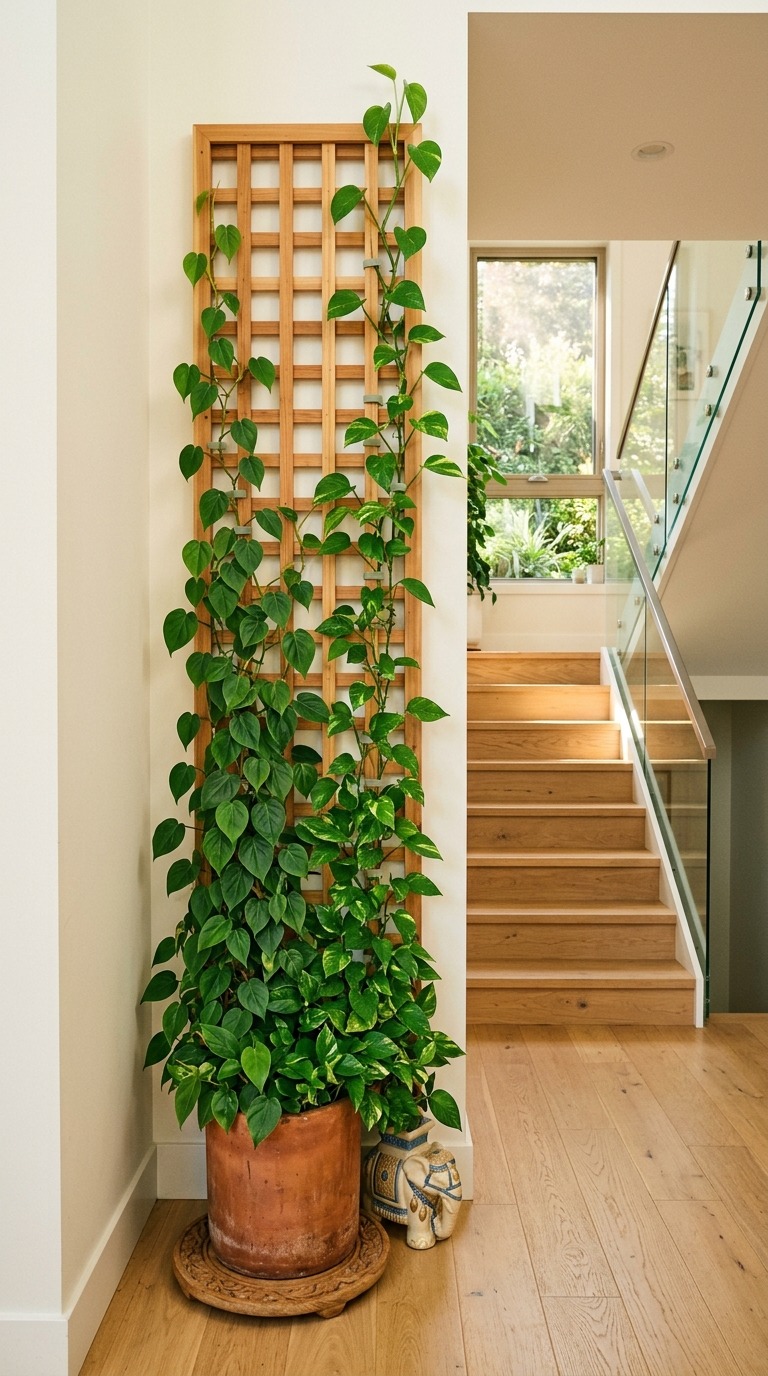
Use a slim cedar or bamboo trellis panel in a width that suits your wall space — between twelve and twenty-four inches wide is ideal for a staircase wall without overwhelming the space. Heartleaf philodendron, climbing pothos, and creeping fig are the three best vine choices for this look because all three climb happily indoors, tolerate indirect light brilliantly, and grow at a satisfying pace that rewards your patience. Attach the vines to the trellis using soft silicone plant clips rather than wire or twine so you avoid any stem damage as the plant grows thicker and woodier over the climbing seasons.
12. The Floating Shelf Botanical Library
Combining books and plants on floating shelves along your staircase wall creates an atmosphere that feels genuinely curated and lived-in rather than decorated, which is the distinction I always chase in my own home. The mix of botanical books with cloth or linen spines alongside small thriving plants blurs the line between library and garden in the most charming way. I styled my staircase shelves this way after years of keeping books and plants in completely separate rooms, and bringing them together beside the stairs felt like a small revelation in how a home can feel.
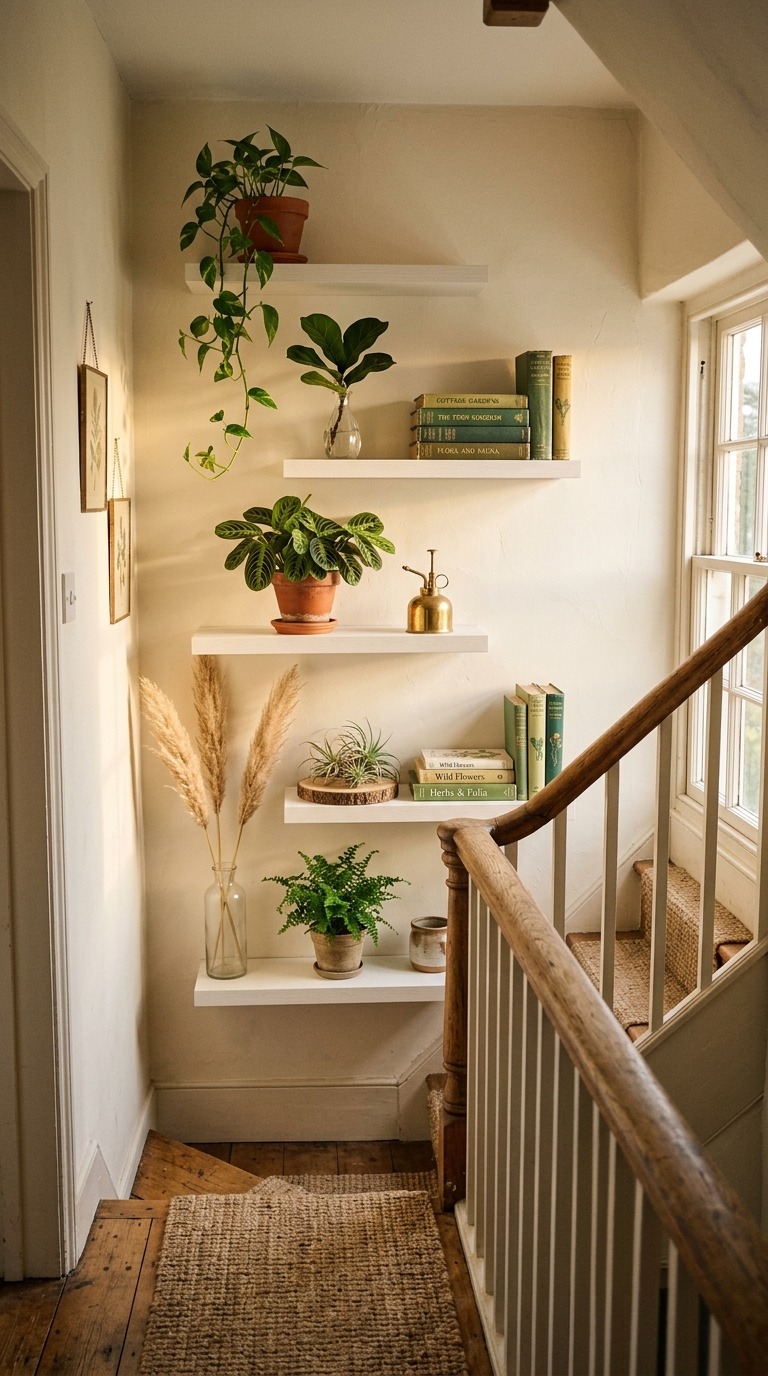
Install five floating shelves at genuinely different heights rather than evenly spaced — asymmetry creates visual interest and keeps the eye moving upward along the staircase naturally. Style each shelf with a maximum of three plants and two or three books so nothing feels cluttered or chaotic. Use matching white or natural oak shelves for a cohesive backdrop that lets the plant colors and book spines do all the visual work. I love including a small antique brass plant mister on one shelf as a functional decorative object — it signals that this is a genuinely tended living space rather than a styled-once-and-abandoned display.
13. The Orchid and Driftwood Statement Corner
Using orchids and a driftwood mounting as a staircase landing focal point creates a look that feels genuinely sophisticated and gallery-worthy without requiring any particular design skill — the natural beauty of the materials does all the work for you. I mounted a large piece of bleached driftwood on my landing wall as a horizontal display shelf and placed three white Phalaenopsis orchids across it in varying heights, and the whole corner instantly became the most elegant spot in our entire home. The organic curves of the driftwood against the graphic architectural lines of white orchid blooms is one of those pairings that never stops feeling special.
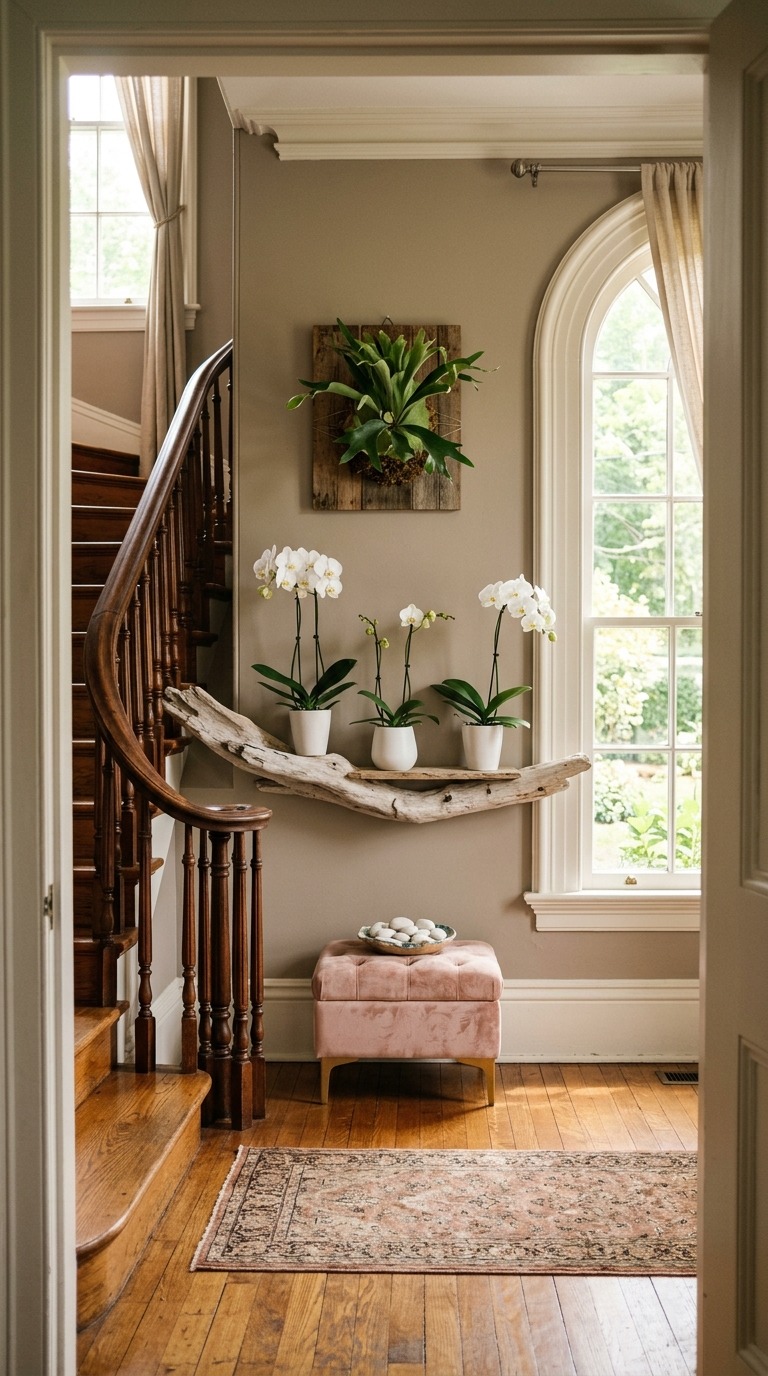
White Phalaenopsis orchids are ideal for staircase landings because they bloom for months at a time and thrive in the bright indirect light that most landing windows provide. When the blooms eventually finish, cut the spike above the second node — do not cut it all the way down — and new blooms will follow within a few months with patience. A mounted staghorn fern on a reclaimed wood plaque hung above the driftwood arrangement adds height and a dramatic architectural quality that elevates the entire corner from lovely into genuinely breathtaking. Water staghorn ferns by soaking the mounting board in the bathtub for twenty minutes once every two weeks.
14. The Scented Jasmine Archway
Training a fragrant jasmine vine up and over a staircase doorframe creates an indoor garden feature that engages all your senses — not just your eyes — and that is something very few home decorating ideas genuinely achieve. Star jasmine fills a staircase with the most intoxicating sweet scent, especially in the mornings when the temperature drops slightly overnight, and having that fragrance greet you every time you walk toward the stairs feels like a tiny daily luxury that costs almost nothing to create. This is genuinely one of my favourite ideas in this entire list.
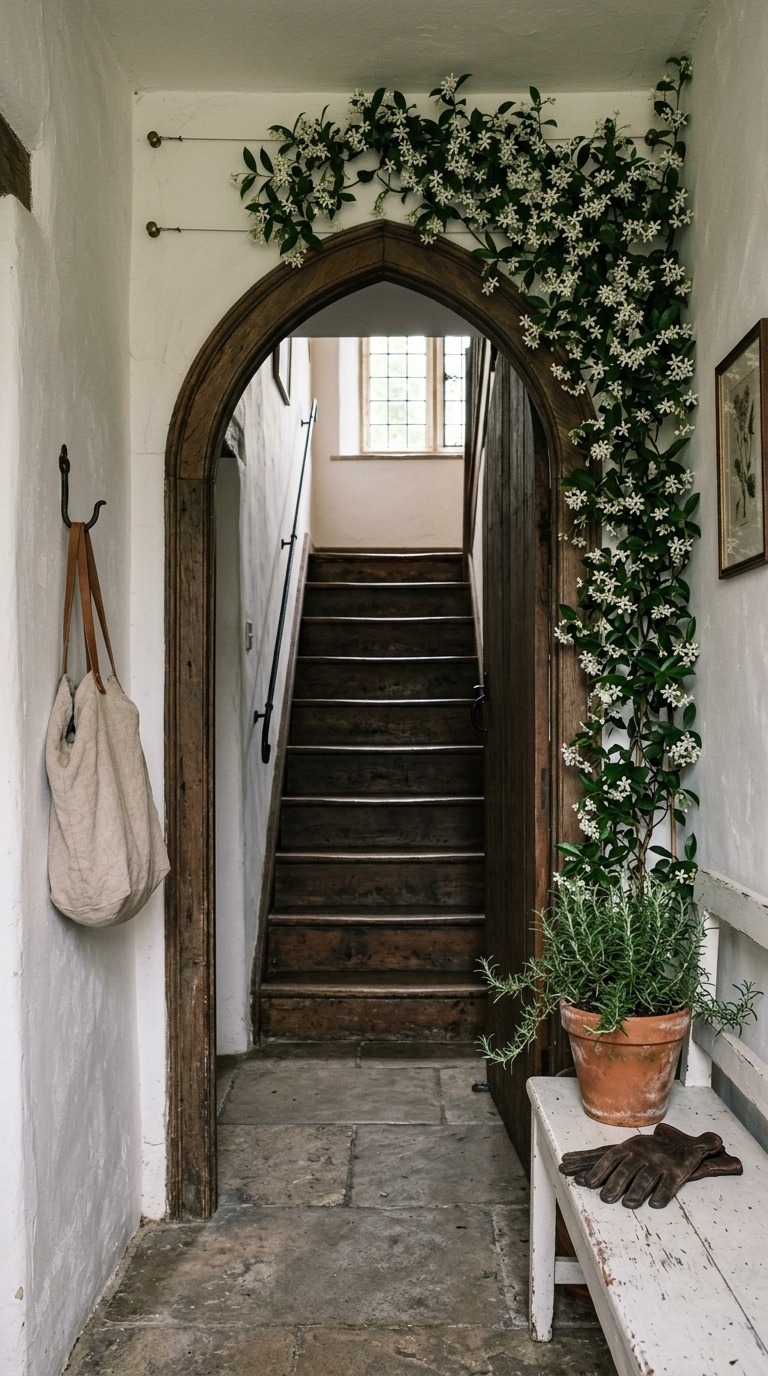
Fix slim steel wire guides to the doorframe using small brass cup hooks spaced about six inches apart, then gently train your jasmine stems along the wire as the plant grows, using soft plant ties to encourage the direction you want. Star jasmine (Trachelospermum jasminoides) is the most reliable indoor choice — it tolerates lower light better than most jasmine varieties and produces abundant blooms in spring and summer. Plant yours in a large terracotta pot placed at the base of the doorframe and keep the soil consistently moist but never waterlogged. Feed monthly with a liquid fertiliser during the growing season to keep the flowers coming beautifully.
15. The Skylight Tropical Canopy
If your staircase ends at a landing with a skylight above, you hold the most spectacular indoor garden opportunity in your entire home and I want to encourage you to use it fully. Hanging large trailing plants from ceiling hooks directly below a skylight creates a tropical canopy effect — dappled green light moving across the walls as the sun shifts through the day — that feels like something from a luxury boutique hotel rather than an ordinary family home. I installed three ceiling-hung planters below my landing skylight and the living light display they create genuinely stops me in my tracks on sunny mornings.
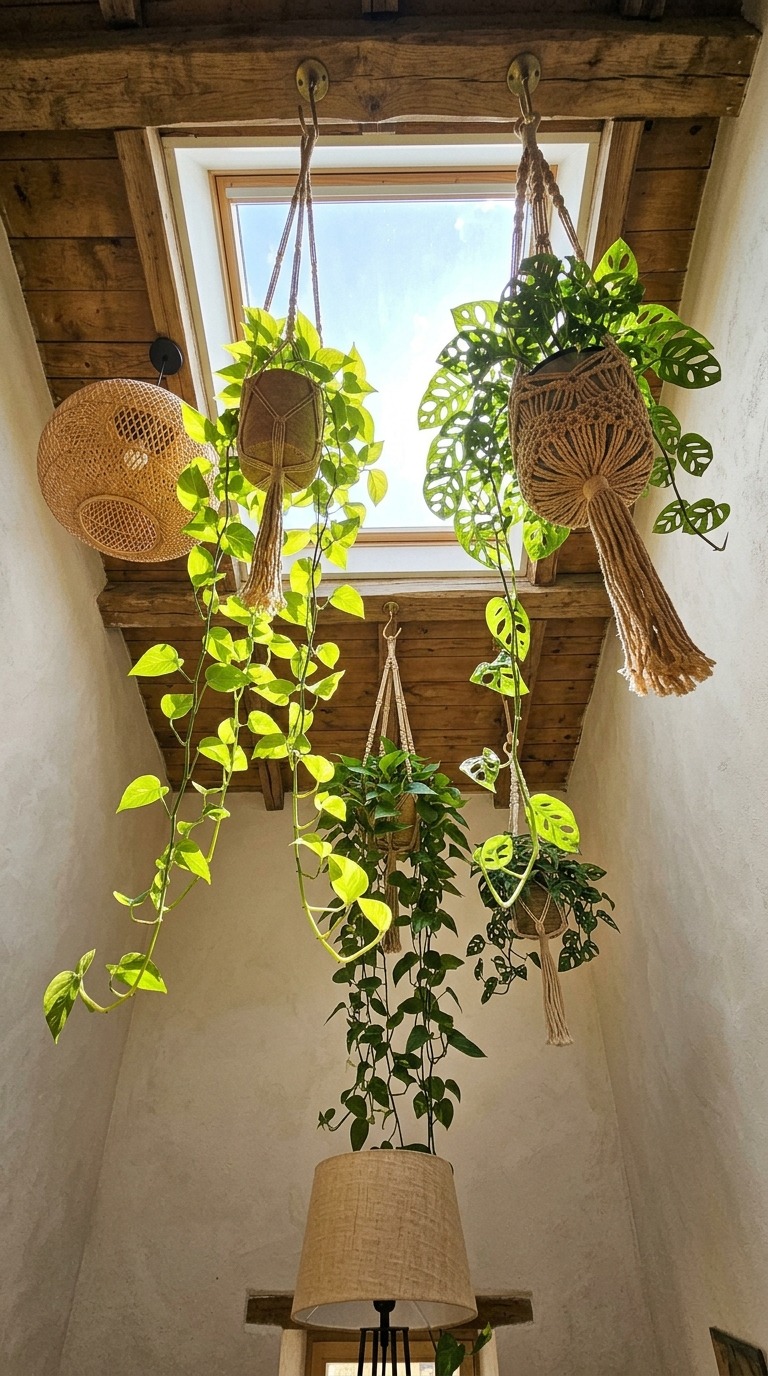
Use heavy-duty brass ceiling hooks rated for at least ten pounds each and always anchor them directly into a ceiling joist — never just into drywall alone. Monstera adansonii, golden pothos, and heartleaf philodendron are the three best plants for hanging below a skylight because they all love the bright overhead light and grow long trailing vines that create the canopy effect beautifully. Stagger your planters at three different heights — eighteen, thirty-six, and fifty-four inches below the ceiling — so the plants occupy the full vertical space of the landing and create that lush layered look that makes the whole staircase feel like a living breathing botanical experience from top to bottom.
Conclusion
Your staircase has been waiting patiently for you to notice it, and I genuinely hope this article has shown you just how much living beauty you can grow in that vertical space you walk past every single day without a second glance. Pick one idea from this list today — just one — and start there. You do not need to transform everything at once.
Even a single trailing pothos on a floating shelf beside your stairs, or three terracotta herb pots lined along the sunniest lower steps, will shift how your home feels in a way that is completely out of proportion to how small and simple the change actually is. Your staircase can become the most alive and welcoming space in your home. Go make it grow.