15 Dining Room Table Decor Ideas That Will Make Every Meal Feel Like a Special Occasion
Have you ever sat down at your dining table and thought, “Something about this space just doesn’t feel right”? Maybe it looks perfectly fine in photos but somehow feels flat and uninspiring when you’re actually sitting there. You’re not alone — and the good news is, transforming your dining table from forgettable to genuinely beautiful doesn’t require a designer budget or a complete room overhaul.
Your dining table is one of the most lived-in surfaces in your entire home. It’s where your family gathers for weeknight dinners, where friends linger over wine on a Saturday night, where homework gets done and birthday candles get blown out. It deserves to feel as warm and intentional as those moments themselves.
In this article, I’m sharing 15 real, practical, beautiful dining room table decor ideas — each one something you can actually try today, with things you may already own or can find without spending a fortune.
The Layered Centerpiece With Fresh Greenery
There is something about fresh greenery on a dining table that immediately makes a room feel more alive. When you layer a wooden bowl with eucalyptus branches, tuck in a tapered candle in an earthy holder, and let a linen runner anchor everything underneath, the whole table exhales. It stops being just a flat surface and starts feeling like a place where people actually want to pull out a chair and stay a while. The natural colors — dusty greens, warm amber, creamy linen — work with almost every wall color and dining chair style you could already have at home.
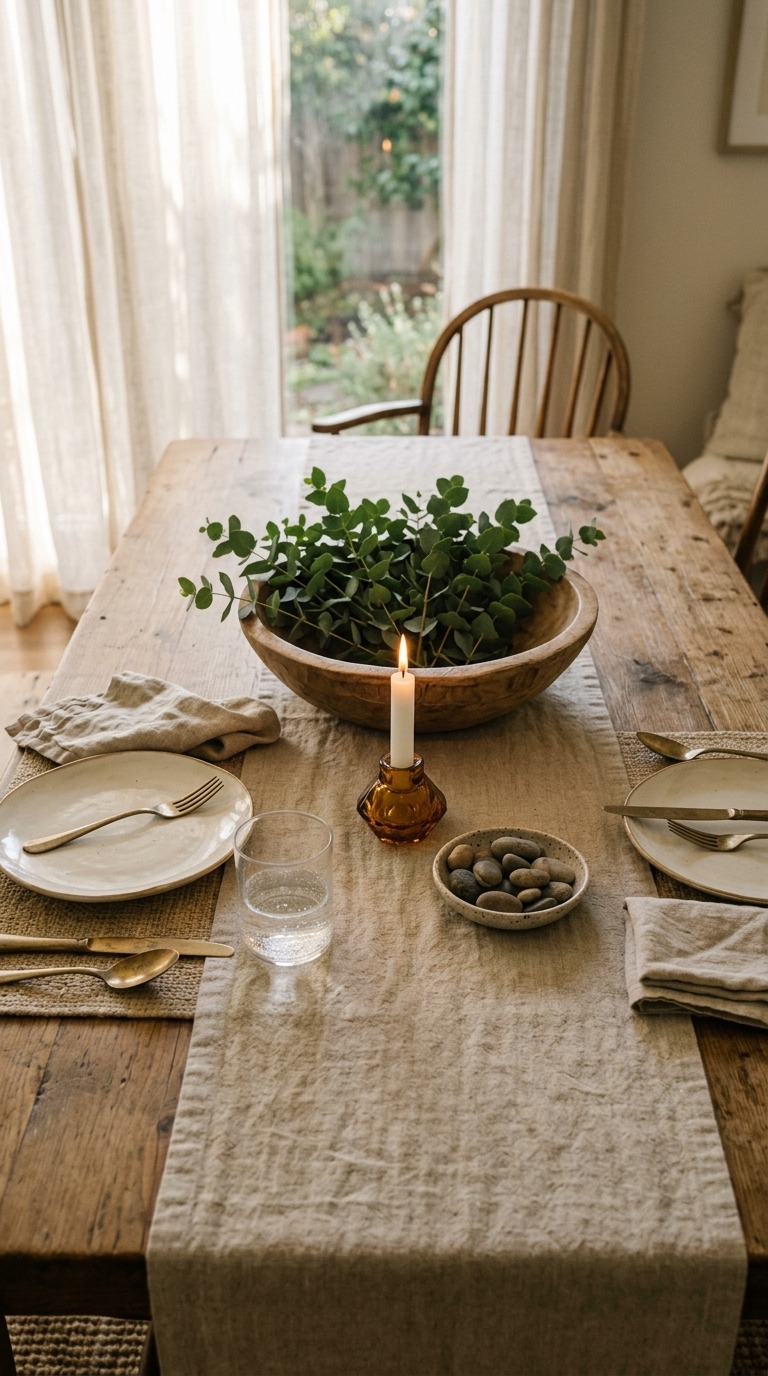
Layering is the real secret to making this work beautifully. Start with your runner as the foundation, then add height variation with a tall stem or two, a mid-height candle, and something low and textural like a small dish or a cluster of smooth stones. You don’t need to match everything perfectly — a slight mismatch between the wood tone of your bowl and the metal of your candleholder is exactly what makes it feel curated rather than catalog-perfect. Swap out the greenery every week or two and you’ll have a centerpiece that always feels fresh without ever feeling fussy.
Seasonal Fruit as a Living Decoration
Fruit as table decor is one of those ideas that sounds almost too simple — until you try it and immediately understand why designers keep coming back to it. A wide, shallow bowl filled with seasonal fruit brings color, texture, organic shape, and genuine warmth to your dining table without a single artificial element in sight. In autumn you reach for figs, pears, and persimmons. In summer you pile in peaches and plums. Even a mound of bright lemons in a white ceramic bowl carries a cheerfulness that no faux floral arrangement can quite match.
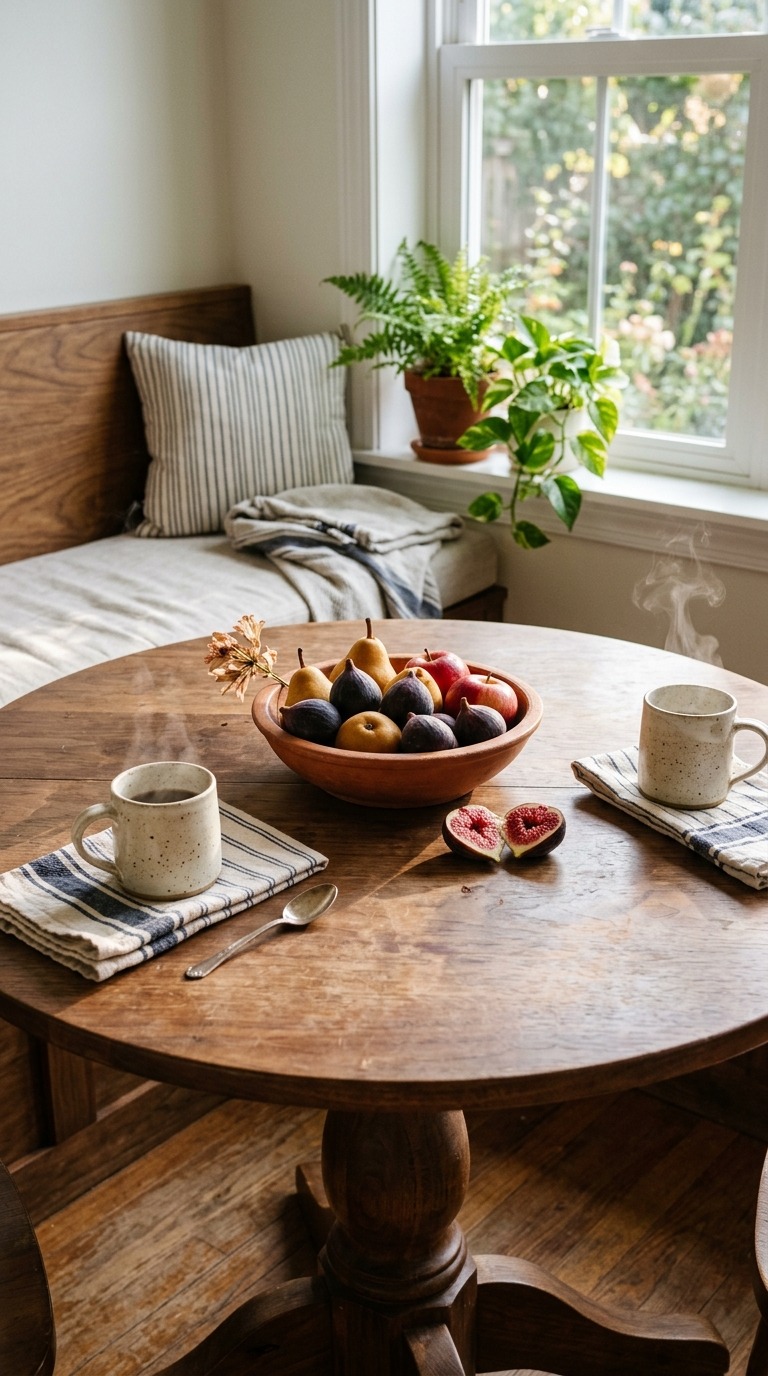
The trick is to choose a bowl that feels generous in scale — too small a vessel makes fruit look like a grocery store display rather than a decor moment. Go wide and shallow rather than tall and narrow. Arrange the fruit loosely without overthinking symmetry, and let one or two pieces sit outside the bowl naturally. Add a single dried stem or a sprig of fresh rosemary tucked alongside the fruit and the whole arrangement looks intentional and beautiful. Best of all, when dinner time comes, the decor becomes dessert — and that feels pretty perfect.
Candles in Varying Heights for Instant Atmosphere
Nothing on earth changes the mood of a dining room faster than candlelight. It softens everything — the light, the conversation, even the way people hold themselves at the table. When you group taper candles in mismatched holders of different heights down the center of your table, the effect is both dramatic and deeply inviting. You don’t need a formal occasion to light them either. A Tuesday night pasta dinner feels instantly more special when the overhead lights go down and the candles come on.
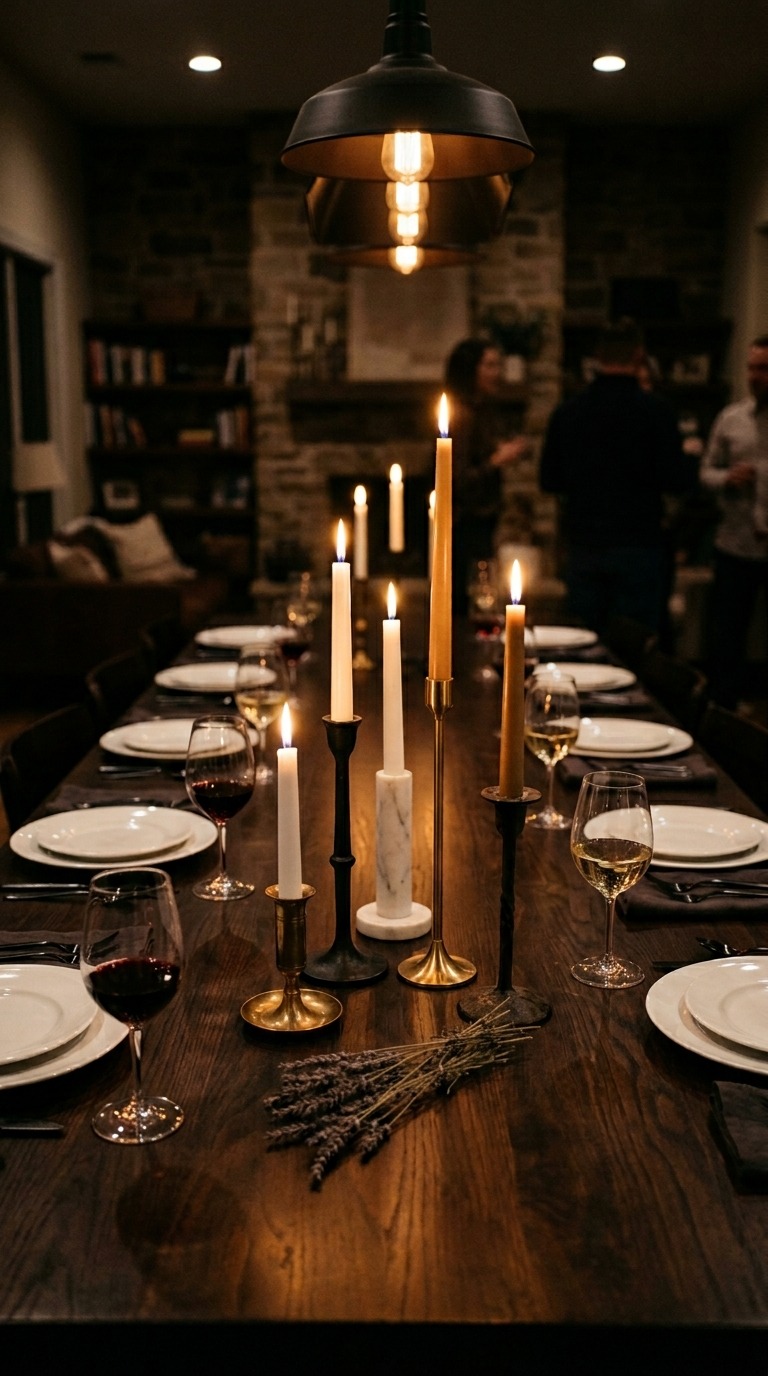
The mismatched holder approach is key — intentional variety is what separates a beautiful candle arrangement from something that looks like a forgotten birthday setup. Mix materials freely:
- Aged brass
- Black matte iron
- White or cream marble
- Ribbed clear glass
- Raw terracotta
Space them at slightly uneven intervals rather than perfectly measured gaps, and let the varying flame heights do their visual work. Always use unscented candles at the dining table so the fragrance never competes with the food — this is one of those small details that makes a genuinely big difference to the overall dining experience.
A Simple Linen Table Runner Done Right
A linen runner is genuinely one of the best investments you can make for your dining table — and I mean that from years of personal experience styling tables for every season and occasion imaginable. The right runner anchors everything you place on top of it, adds texture to a bare wood surface, and gives the table a finished, intentional quality even when nothing else is styled on top of it. Washed linen in particular has this beautiful lived-in softness that looks better the more you use and wash it, which is a rare and wonderful quality in a home textile.
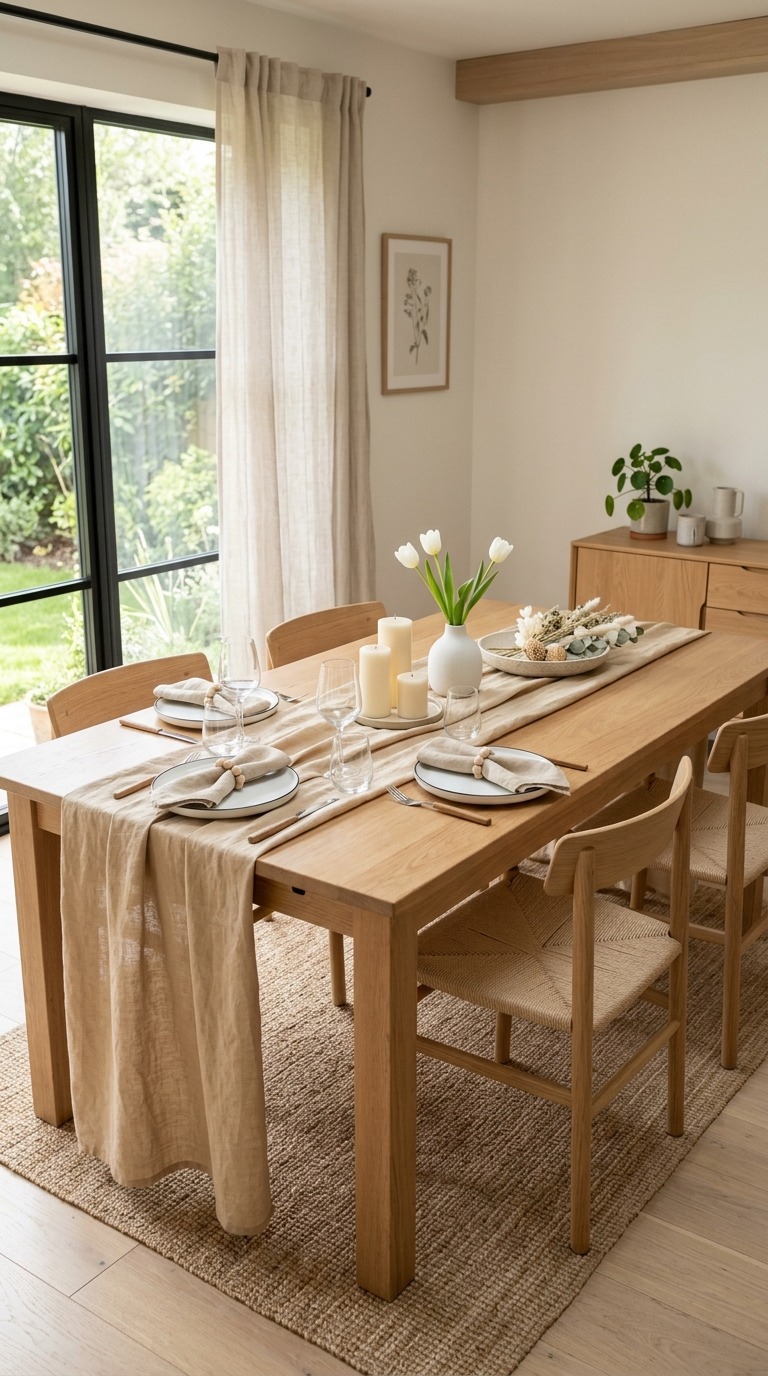
Letting the runner drape a few inches off each end gives it that relaxed, unstudied quality that feels much more current than a perfectly centered, rigidly trimmed version. Choose a runner that is wide enough to feel substantial — at least fourteen to sixteen inches — so it reads as a real design element rather than an afterthought. Neutral tones like oatmeal, natural linen, dusty sage, or soft terracotta work across all seasons. Layer a small arrangement on top and you have a table that looks styled and beautiful with almost zero effort every single day.
A Statement Vase With a Single Stem
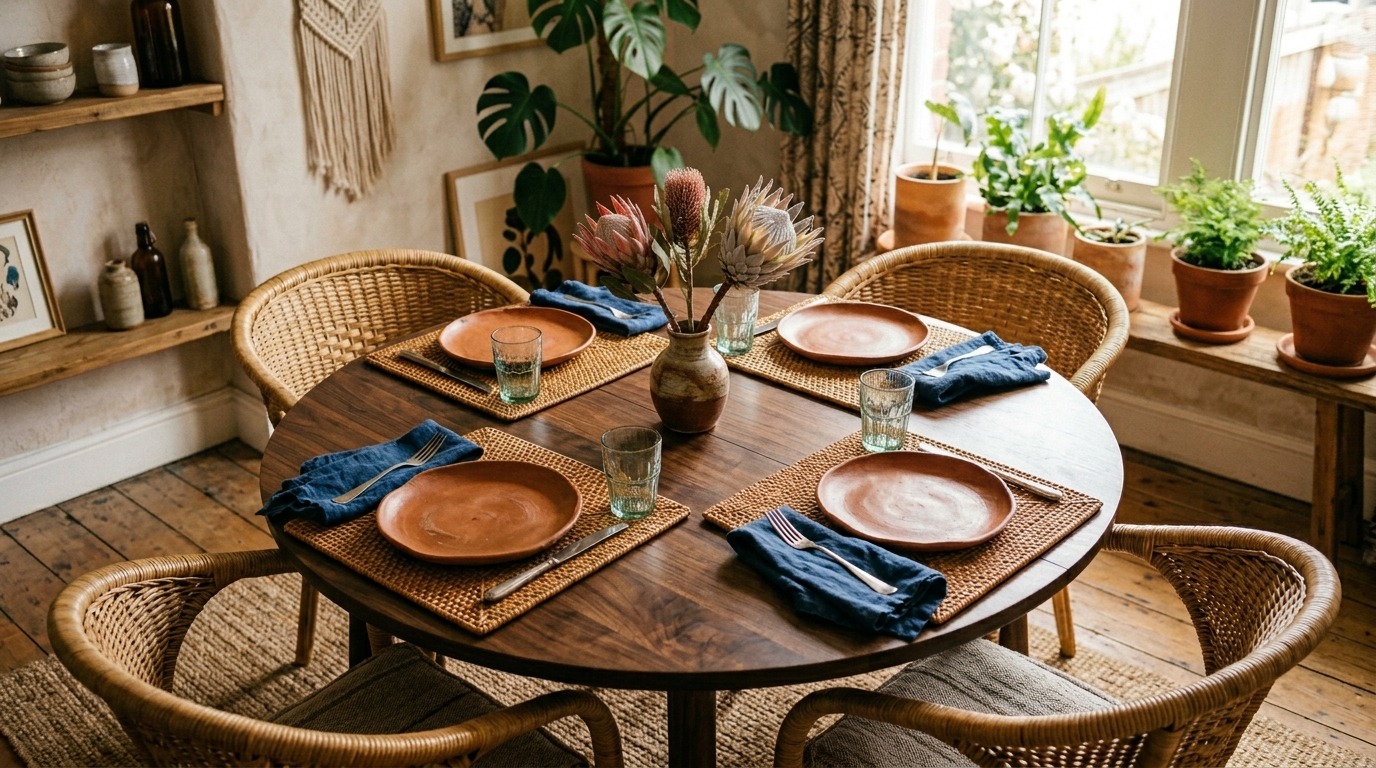
Sometimes one single beautiful object communicates more than an entire elaborate arrangement ever could. A tall, well-chosen vase holding one dramatic stem — pampas grass, a single protea, one long branch of flowering quince — becomes a genuine focal point that anchors the table without crowding it. This approach works especially well on smaller dining tables where a sprawling centerpiece would feel overwhelming, but it reads just as elegantly on a large table when the vase itself has real presence and personality.
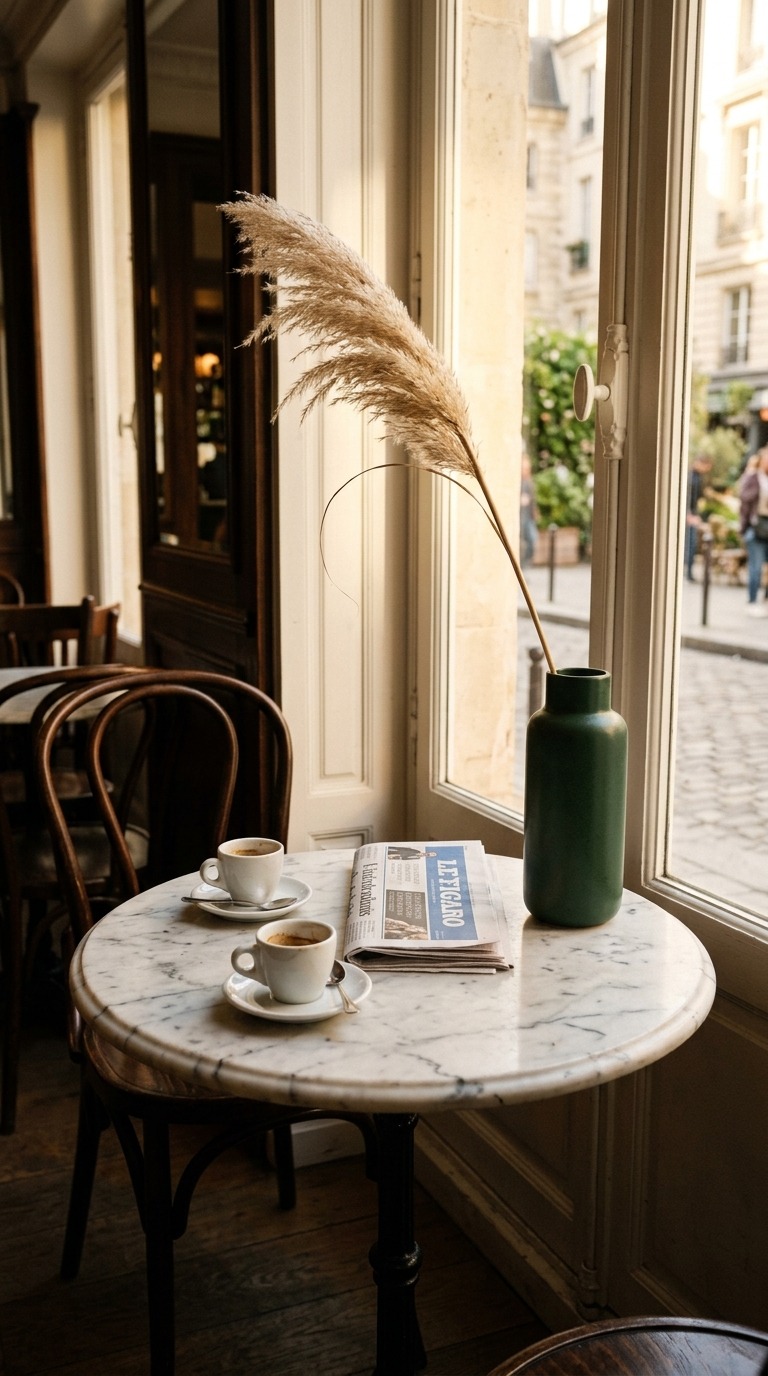
The vase is doing most of the visual work here, so choose one that genuinely excites you. Look for interesting glazes, unexpected proportions, or sculptural silhouettes that make the vase itself worth looking at even when it’s empty. A dried stem or a branch from your own garden is often far more beautiful and interesting than a store-bought floral arrangement, and it lasts for months without any care. Set the vase slightly off-center rather than exactly in the middle of the table, and the whole composition immediately feels more like something a real person put together thoughtfully rather than something staged.
Cloth Napkins Folded With Personality
Cloth napkins are so consistently underestimated as a decor element, and every time I bring this up with friends who are trying to elevate their dining table, they immediately understand once they try it. Switching from paper napkins to fabric ones — even inexpensive cotton or linen blends — instantly signals that the table has been thoughtfully set. They add softness, color, and texture to every place setting, and they give you an easy way to introduce seasonal colors or patterns without changing anything else on the table.
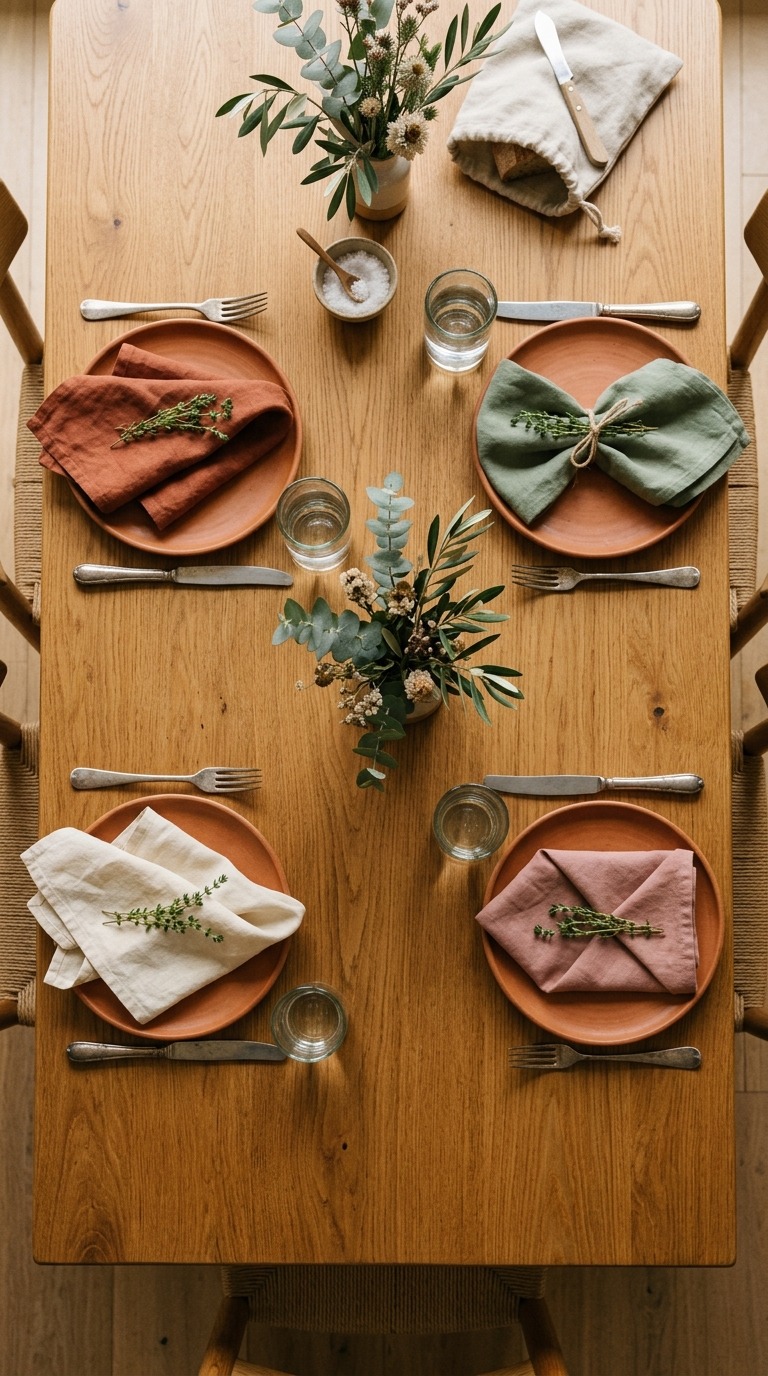
The fold matters more than most people realize. You don’t need origami skills — a loosely gathered napkin tied with a thin piece of jute twine looks far more interesting than a perfect triangle. Try tucking a small sprig of fresh rosemary, thyme, or a single dried flower stem into the fold for a detail that surprises and delights anyone sitting down to the table. Mix coordinating colors rather than perfectly matching sets, and your table will look curated and full of warmth rather than like a hotel banquet setup.
Wooden Chargers for Warmth and Texture
Wooden charger plates are one of those quiet, hardworking decor elements that transform a table setting without drawing attention to themselves — they just make everything on top of them look better. Placed beneath your everyday dinner plates, they immediately add a layer of warmth, natural texture, and visual depth that a bare table or a plain placemat simply cannot provide. Acacia, mango wood, and light teak chargers all have gorgeous natural grain variation that makes each one feel unique and genuinely handcrafted.
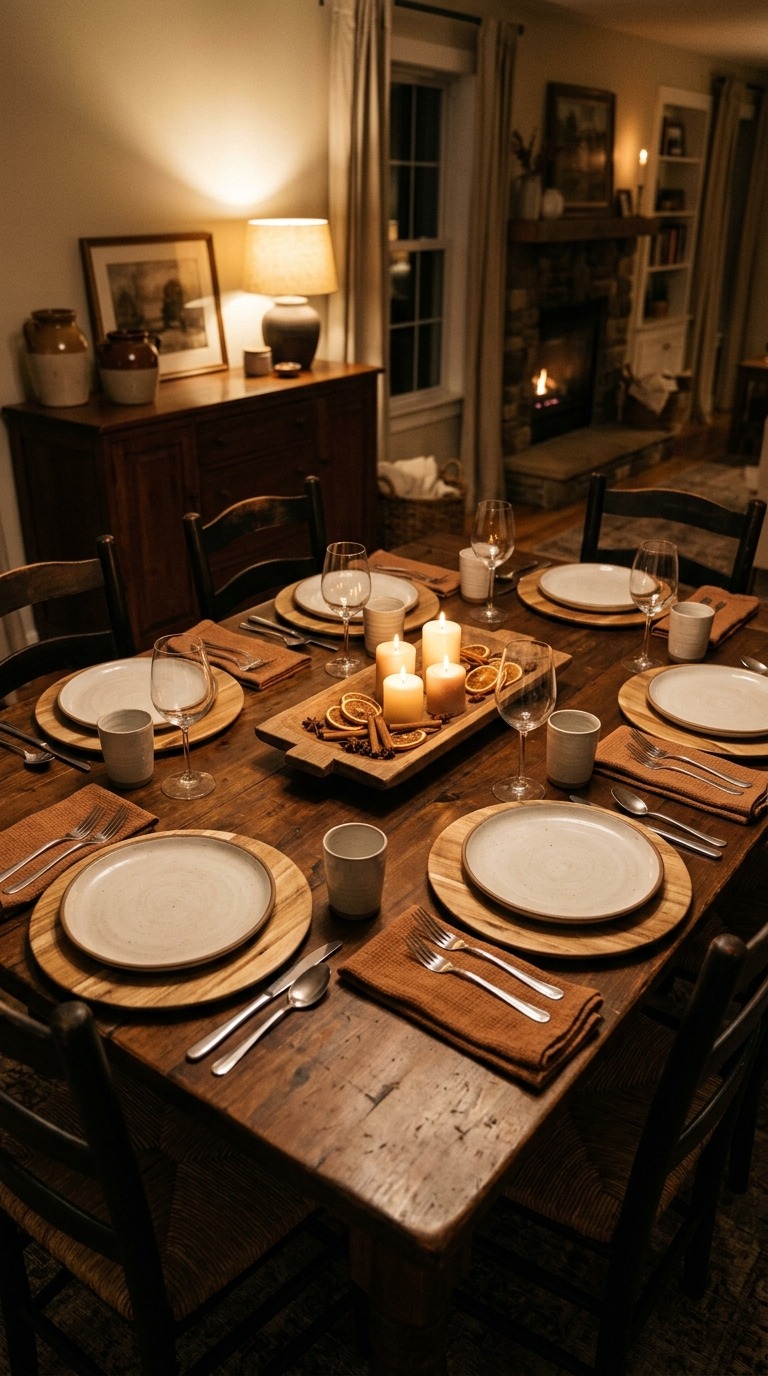
The beauty of natural wood on a dining table is that it works in almost every interior style — rustic farmhouse, organic modern, coastal, Scandinavian, and even more contemporary spaces where the wood provides an intentional contrast to sleeker finishes. You don’t need to reserve chargers for dinner parties. Put them out on a regular Wednesday night and watch how much more beautiful and intentional the table suddenly looks. They’re easy to stack and store, they wipe clean in seconds, and they genuinely elevate your table every single time you use them.
A Low Floral Arrangement That Doesn’t Block Conversation
One of the most common dining table decor mistakes I see is choosing a centerpiece that’s so tall nobody can make eye contact across the table during a meal. A beautiful arrangement completely loses its purpose if it turns dinner into a game of leaning sideways to see your guests. Low, wide floral arrangements are the answer — and honestly, they often look more lush and intentional than tall ones because you can see the full composition of blooms and foliage from your natural seated position.
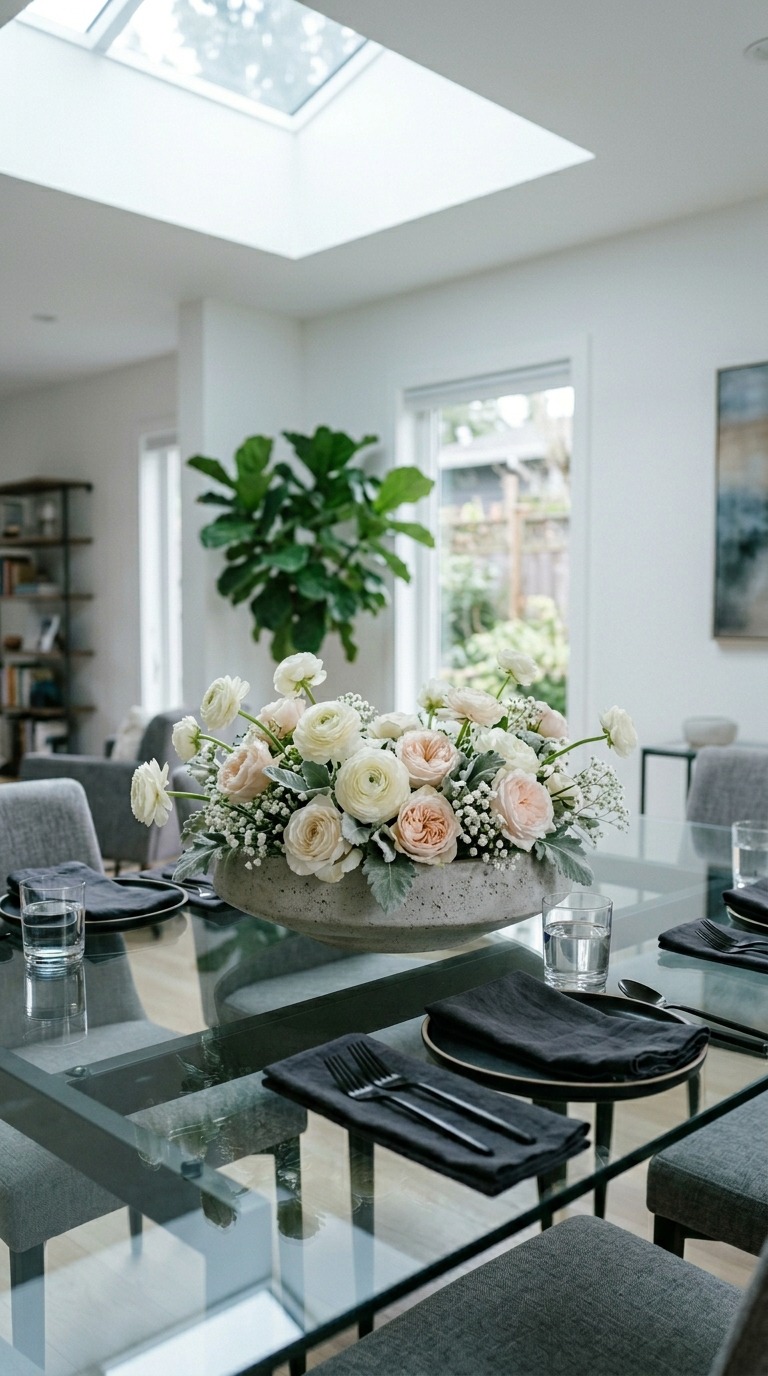
A wide, shallow vessel is your best friend here — a low ceramic bowl, a flat wooden tray, or even a terracotta saucer works beautifully. Fill it with blooms that have short or trimmed stems, letting them nestle together in an intentionally imperfect cluster. Mix textures and shapes rather than using just one flower type: big open roses alongside small filler blooms, soft leaves tucked between petals, and a few interesting seed heads or dried elements for contrast. Keep the whole arrangement under eight to ten inches tall and the result is both genuinely beautiful and completely practical for real family meals.
Artful Placemats That Tell a Story
The right placemats do far more than protect a table surface — they define each person’s space at the table and contribute enormous texture and visual warmth to the overall setting. Woven rattan or seagrass mats bring a relaxed, natural quality that works brilliantly in casual homes and beautifully in more elevated spaces too. Handwoven textile mats in linen or cotton add color and a sense of craft. Even a simple stone-washed cotton mat in a muted earth tone transforms a bare table setting into something that looks genuinely considered.
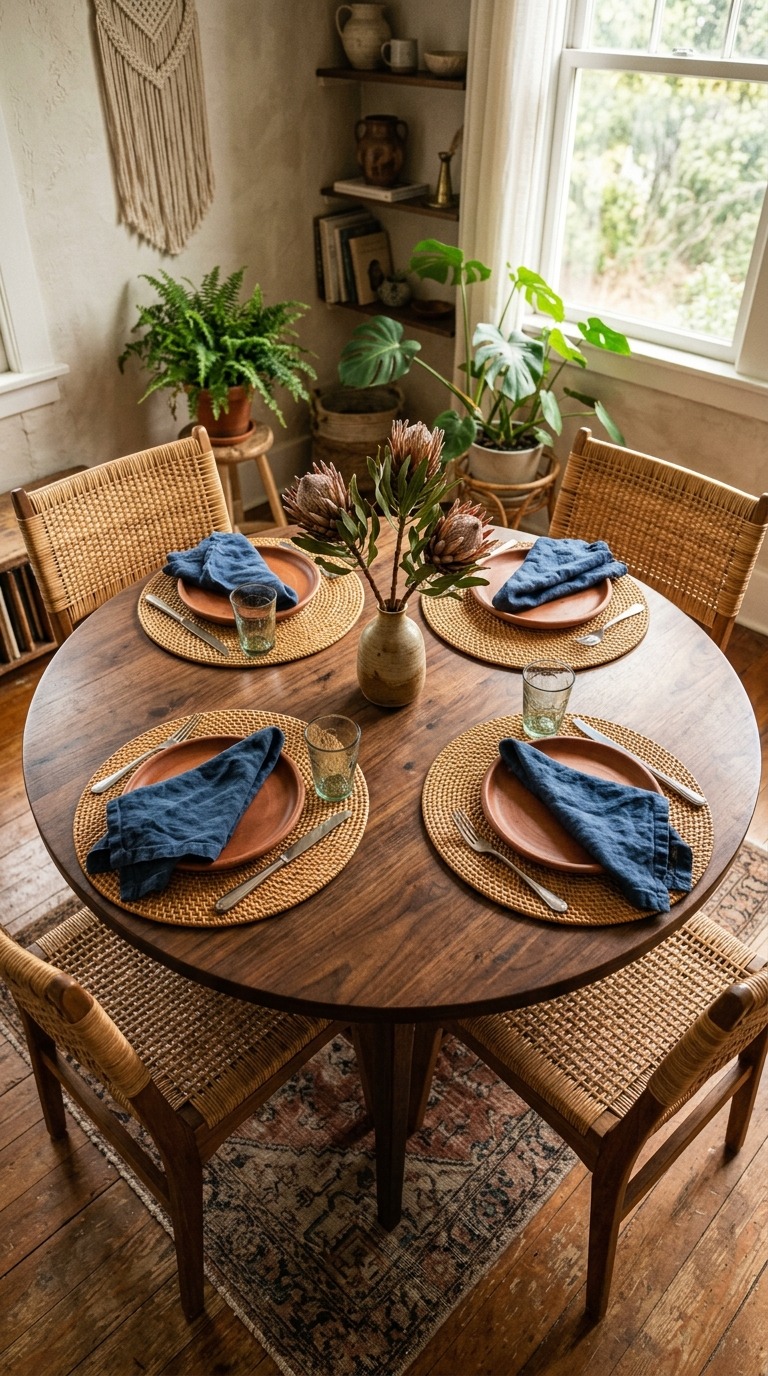
Mixing mat textures across the table — say, two woven rattan mats and two natural linen mats in the same color family — creates a subtle visual interest that feels collected and personal rather than a matched set straight out of a box. If your dining table has a beautiful surface you want to show off, keep the mats smaller so the wood peeks through at the edges. If your table is more utilitarian and the mats are carrying more visual weight, go larger and let them make a bolder statement. Either way, this is one of the fastest and most affordable ways to completely refresh how your dining table looks and feels.
A Tray as a Styling Tool
A tray is one of the most versatile and underused styling tools in the entire home — and on a dining table it works particular magic. When you group your centerpiece elements inside a tray, they instantly read as a cohesive, intentional vignette rather than a collection of random objects sitting on a table. The tray contains the composition visually, makes the arrangement easy to lift off the table entirely when you need the full surface for a meal, and brings its own material beauty to the overall look.
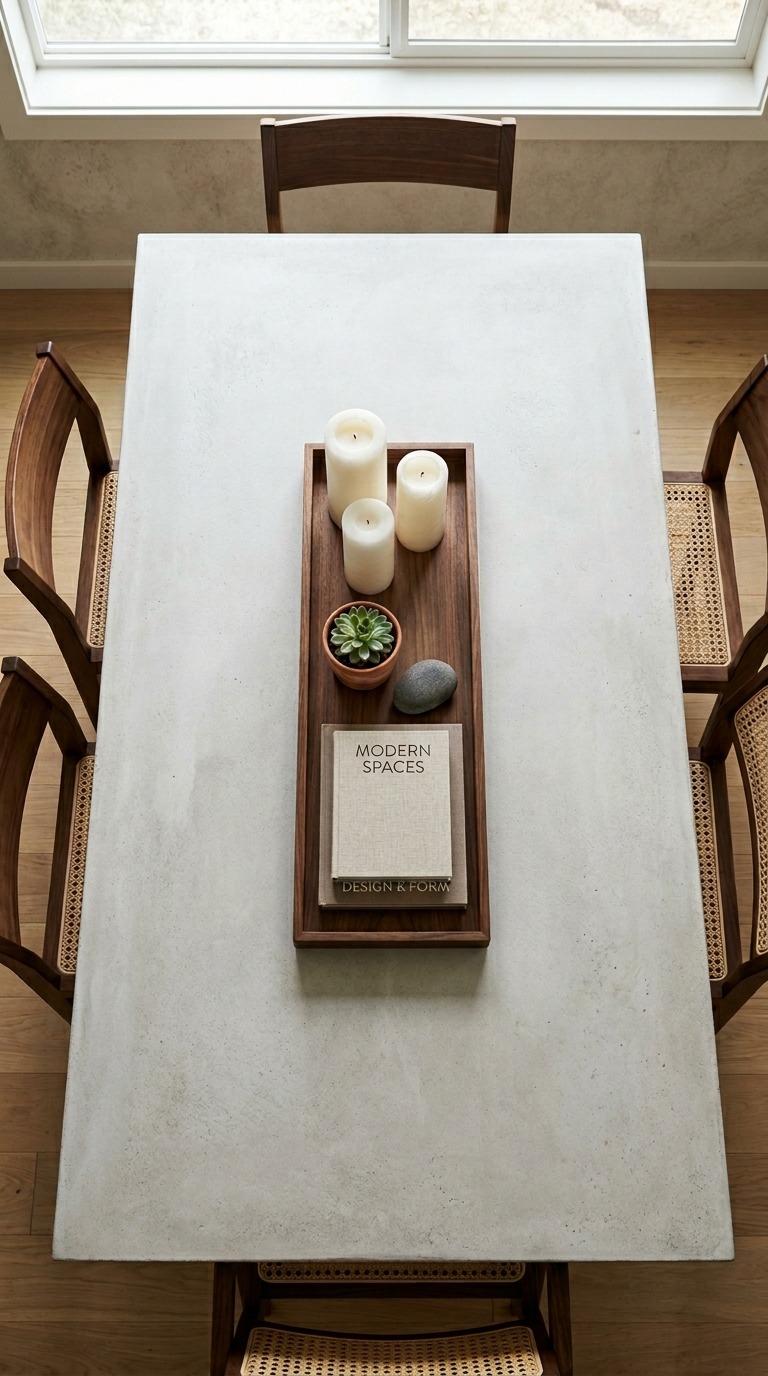
Choosing the right tray shape makes a real difference to the overall feel. Long, narrow trays suit rectangular tables and give a linear, gallery-like quality to the arrangement inside. Round trays feel softer and work beautifully on round or oval tables. Dark walnut trays bring drama and depth. Whitewashed or natural wood trays feel airy and relaxed. Fill your tray with a small combination of candles, a tiny plant, one or two beautiful objects that mean something to you, and perhaps a small stack of books — and you have a centerpiece that feels genuinely personal and lived-in every single day.
Natural Stone and Crystal Accents
There’s a grounding, almost meditative quality that natural stones and crystals bring to a dining table — one that you genuinely feel when you sit down, even if you can’t immediately name what’s creating it. Smooth river stones, a piece of raw quartz, a cluster of amethyst geode, or a chunk of rose quartz placed casually along a table runner creates a sense of earthy, intentional calm that no artificial object can quite replicate. These elements connect the interior to the natural world in a way that feels both timeless and deeply personal.
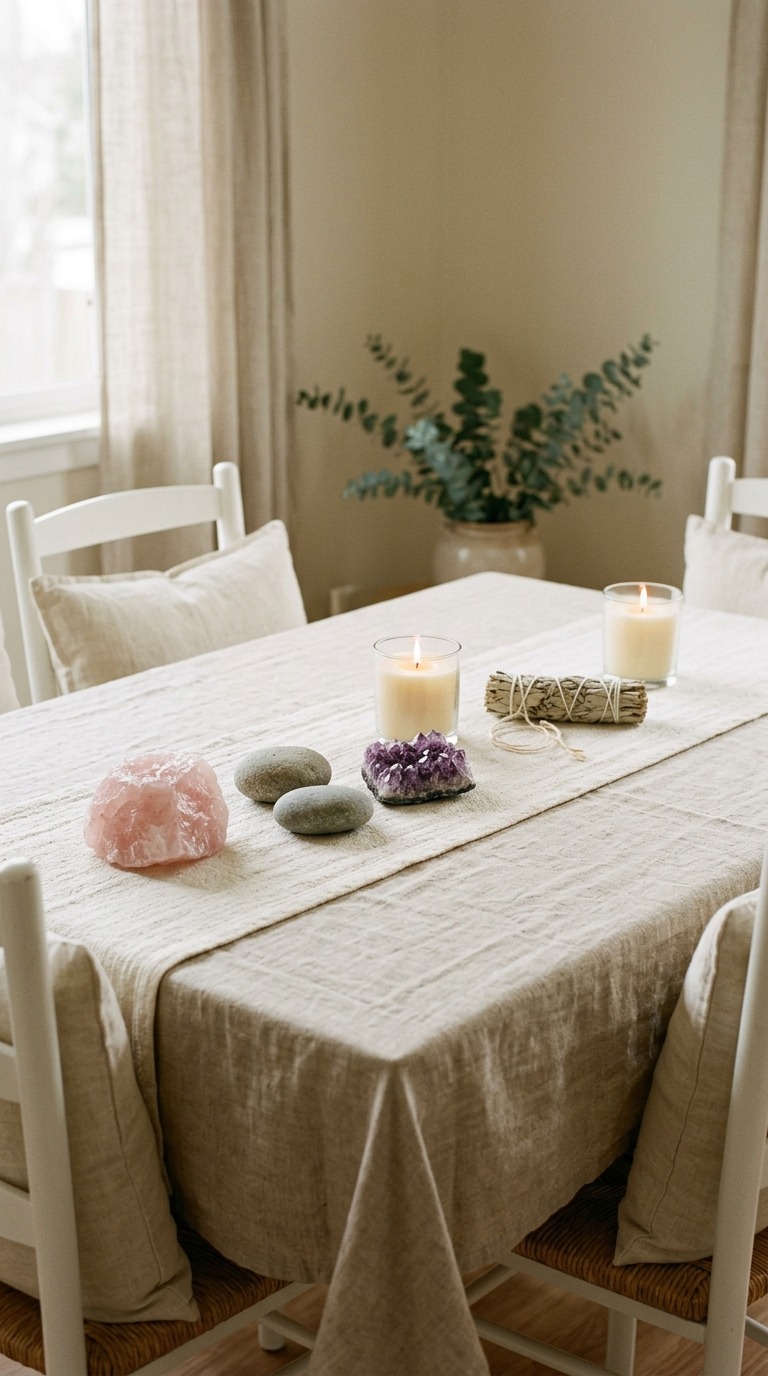
You don’t need to be someone who believes in the energy properties of crystals to love how they look on a dining table — their sheer visual beauty is reason enough. The translucency of clear quartz, the purple depth of amethyst, the warm blush of rose quartz, and the perfect smoothness of river stones each bring a completely different textural quality to a table arrangement. Mix them with candles, dried botanicals, or a simple linen runner and you’ll have a centerpiece that feels genuinely unique to your home — because no two stones in the world are exactly alike.
Books as Both Decor and Conversation Starters
Stacking a few beautiful books at the center of your dining table is an idea that works on every level — visually, practically, and conversationally. Coffee table books with handsome spines and covers on topics like architecture, botany, art, travel, or food become genuine decor objects that also invite people to reach over, flip through a page, and start talking about something interesting before the meal even begins. They bring color, height variation, and a sense of personality to your table that purely decorative objects sometimes can’t achieve.
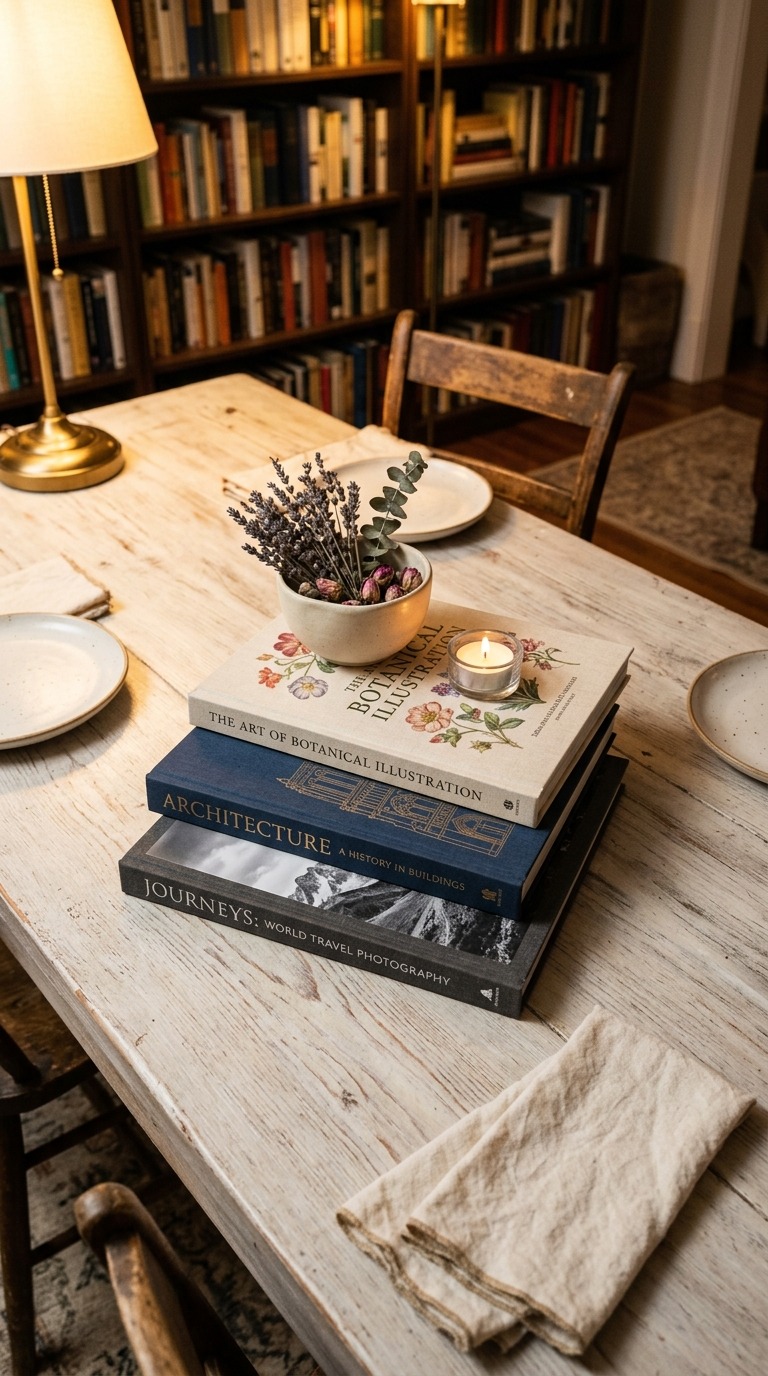
Choose books that genuinely reflect your interests rather than books you’ve selected purely for their aesthetic covers — people notice the difference, and there’s something wonderful about a dining table that tells guests a little something real about the person who set it. Stack two or three volumes of varying sizes with the largest at the bottom, and place something small and beautiful on top — a ceramic dish, a single candle, a smooth stone — to complete the vignette. The books can be rotated seasonally, replaced when you finish reading them, or swapped for new ones that are exciting you right now.
An Unexpected Pop of Color Through a Table Cloth
A tablecloth gets unfairly dismissed as old-fashioned by a lot of modern decorators — and I think that’s a real shame, because a beautifully chosen tablecloth can completely transform the personality of a dining room in about thirty seconds flat. When you choose a cloth in a rich, unexpected color — deep terracotta, inky navy, warm rust, or a dusky sage green — it becomes the focal point of the entire room and makes everything placed on top of it feel more intentional and more elevated. A slightly relaxed, unstarched drape looks far more current and inviting than anything rigidly pressed and perfectly symmetrical.
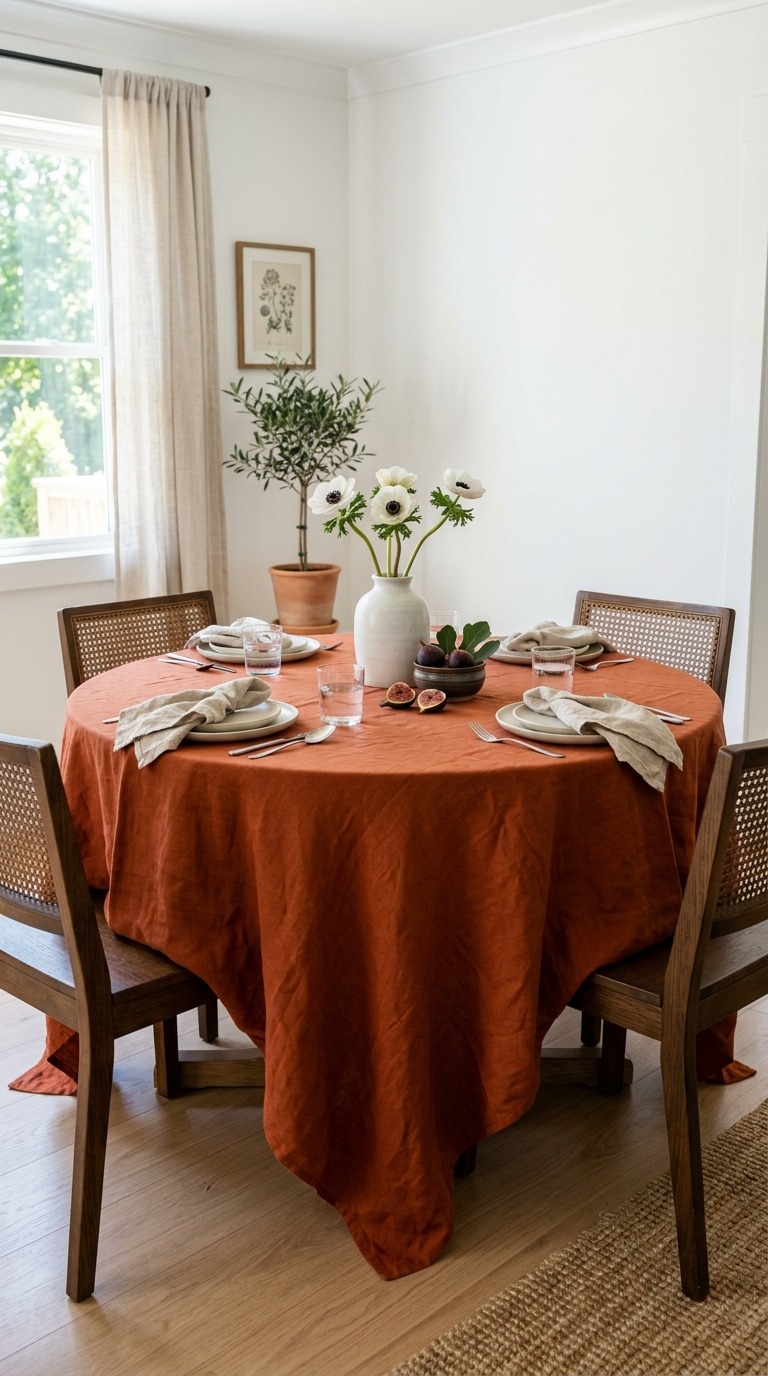
The contrast principle is what makes this approach work so well: pair a bold, saturated tablecloth with the most minimal possible tableware on top — simple white plates, plain glassware, a single small arrangement in a white or neutral vase — and the whole composition feels sophisticated rather than busy. The cloth carries the color and the drama; everything else stays quiet and lets it breathe. This is genuinely one of the fastest ways to give your dining room a completely fresh look for any season or occasion without touching a single piece of furniture.
A Herb Garden as a Living Centerpiece
Growing herbs in small terracotta pots and grouping them as a living centerpiece on your dining table is an idea that gives you beauty, fragrance, and actual dinner ingredients all in one gorgeous arrangement. Basil, rosemary, thyme, mint, and chives all look wonderful in terracotta, all thrive near natural light, and all smell incredible — which means every meal you eat at that table is accompanied by the gentle, green, alive scent of something growing. It’s one of those rare decor ideas where form and function work together in the most satisfying possible way.
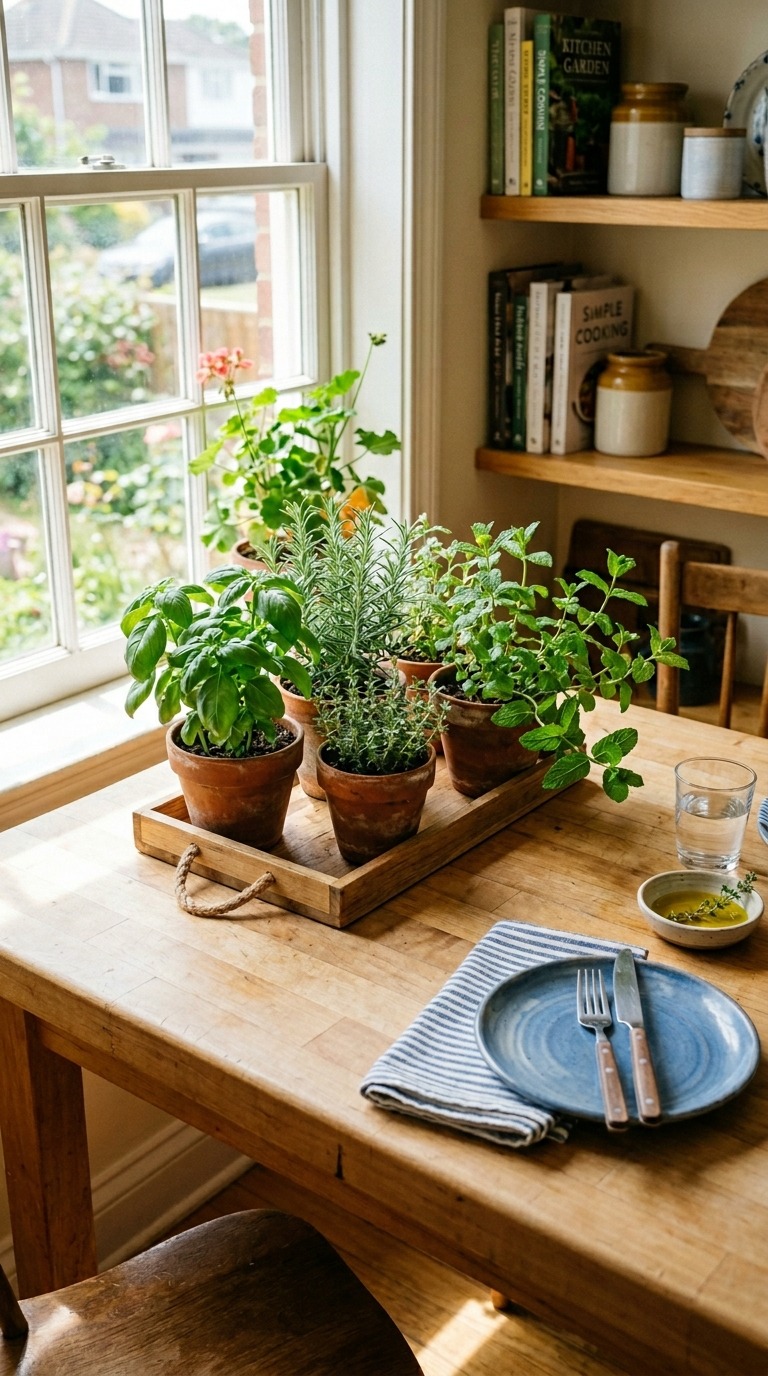
Keep the pots grouped on a small tray so you can lift the whole arrangement off easily when you need the surface, and so the grouping reads as a cohesive centerpiece rather than scattered individual pots. Choose terracotta sizes that vary slightly — one slightly taller, two medium, one small — for natural height variation without any artificial effort. Let the herbs grow naturally and trim them into your cooking as you go. As the seasons change, swap out tender basil for hardy rosemary and sage, and your living centerpiece evolves naturally throughout the year without ever feeling stale.
Personal Objects That Make the Table Yours
The most beautiful dining tables I’ve ever sat at had one thing in common — they felt like they belonged to someone specific. Not a showroom, not a catalog page, but a real person with real taste and real memories. When you style your dining table with objects that genuinely mean something to you — a small ceramic piece you brought home from a trip, a few smooth stones collected from a beach you love, a tiny framed print that makes you smile every time you look at it — the whole space takes on an irreplaceable warmth that no perfectly curated store purchase can manufacture.
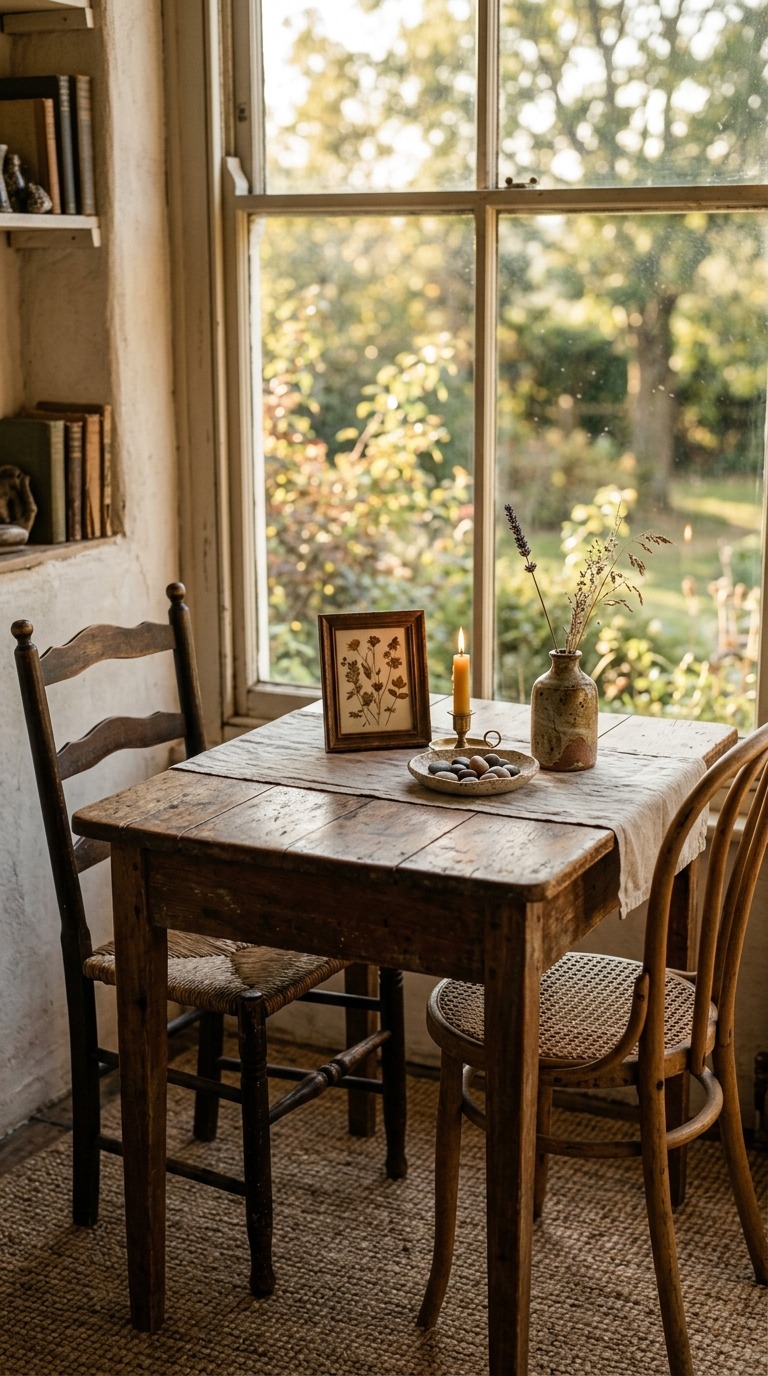
This kind of personal styling takes confidence, because it requires trusting your own eye and your own story rather than following a formula. But it always, always works — because authenticity reads as beauty. Start small: choose just one or two meaningful objects, place them thoughtfully at the center of your table alongside a candle or a small plant, and see how the space shifts. Your dining table should feel like an extension of who you are and what you love. When it does, every single meal eaten there feels just a little bit more like home.
Your dining table is one of the most important gathering places in your entire home, and it deserves to feel as beautiful and intentional as the moments that happen around it. You don’t need to implement all fifteen of these ideas at once — just pick one that genuinely excites you, try it this week, and notice how differently the whole room feels. Small, thoughtful changes add up to something genuinely transformative over time. Your home is your sanctuary, and your dining table is one of the most joyful places to start making it feel that way.