12 DIY Privacy Screen Ideas for Your Backyard, Patio, and Garden
You know that sinking feeling when you step outside with your morning coffee, sink into your favorite chair, and then catch your neighbor staring right at you over the fence? I felt that exact moment two summers ago, and it completely changed how I thought about my backyard. That one awkward glance sent me down a rabbit hole of DIY privacy screen ideas that honestly transformed our outdoor space into something I genuinely love.
This article gives you twelve of my absolute favorite privacy screen ideas — ones I have either built myself, helped a friend build, or researched so deeply I could probably build them in my sleep. Whether you have a small patio, a sprawling garden, or a narrow side yard crying for some screening, I promise you will find something here that fits your space, your budget, and your style perfectly.
Cedar Horizontal Slat Screen
There is something genuinely beautiful about a horizontal cedar slat screen that no prefab fence panel ever captures. The way the warm honey-toned wood catches late afternoon light, the slim gaps between each board letting a soft breeze pass through — it makes a patio feel like a private outdoor room designed just for you. I built one along our back patio two years ago and it immediately became my favorite thing about our entire yard.
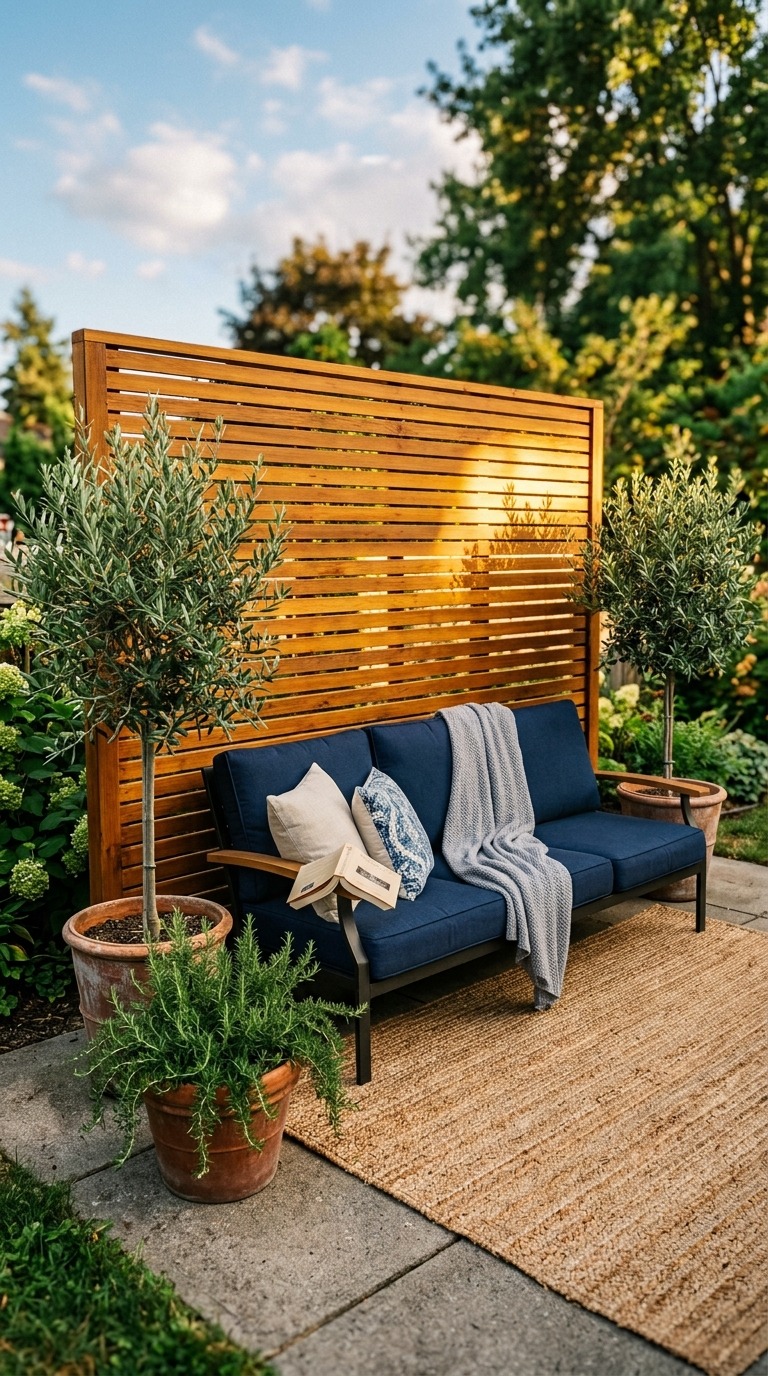
For this project, grab pressure-treated cedar boards in a one-by-four or one-by-six width from your local lumber yard. Space each slat about half an inch apart and mount them horizontally onto four-by-four cedar posts set in concrete. Seal the whole thing with Cabot Australian Timber Oil in Teak Brown — it protects the wood beautifully and deepens the color in the most gorgeous way. Pair the screen with deep navy or forest green cushions and you have an outdoor space that looks genuinely designed.
Bamboo Panel Fence on a Cedar Frame
Bamboo is one of those materials that works almost anywhere and costs almost nothing, which is exactly why I keep coming back to it when friends ask me for budget-friendly privacy ideas. You can buy pre-rolled bamboo fence panels at most garden centers or online for very little money, and when you mount them onto a simple cedar or pine frame, they look absolutely intentional and stylish. The natural warm tan tones of bamboo pair beautifully with almost any outdoor color palette.
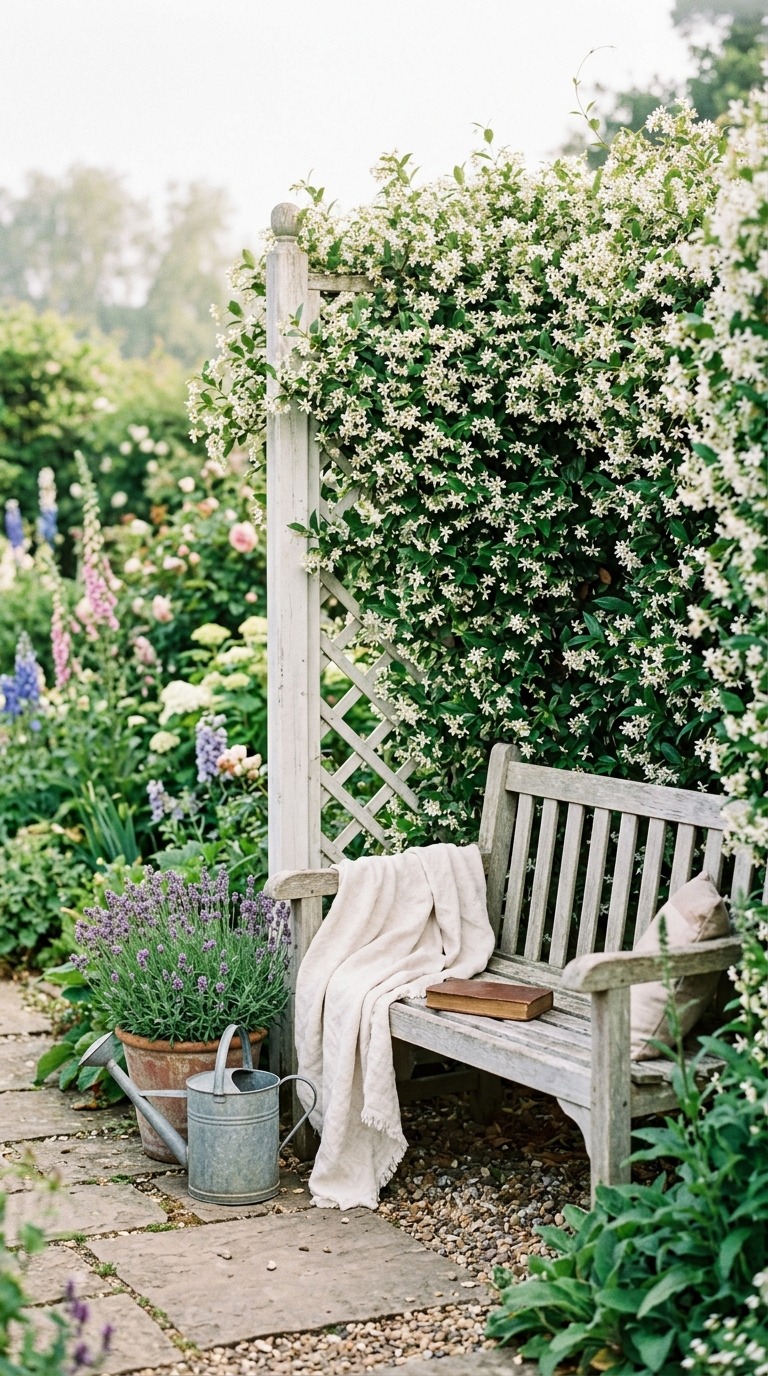
Build a basic rectangular frame from two-by-four pine or cedar lumber, set it into the ground with concrete footings, and staple or zip-tie the bamboo roll panel directly to the frame. Seal the cedar frame with Rust-Oleum Varathane Outdoor Oil in Golden Pecan to protect it through every season. Bamboo does weather over time, so plan to replace the roll panels every two to three seasons — but honestly, at the price point, that is completely fine and I still think this is one of the smartest privacy screen investments you can make on a budget.
Lattice Trellis with Climbing Jasmine
A lattice trellis covered in star jasmine is one of those privacy screen ideas that genuinely gets better every single year, and that long-game quality is what makes it so special in a garden setting. The first season it gives you partial screening while the vine establishes itself, and by season two or three it becomes this glorious wall of green covered in tiny white flowers that smell absolutely incredible on warm evenings. I planted one along our side fence three years ago and it is now completely impenetrable to the eye.
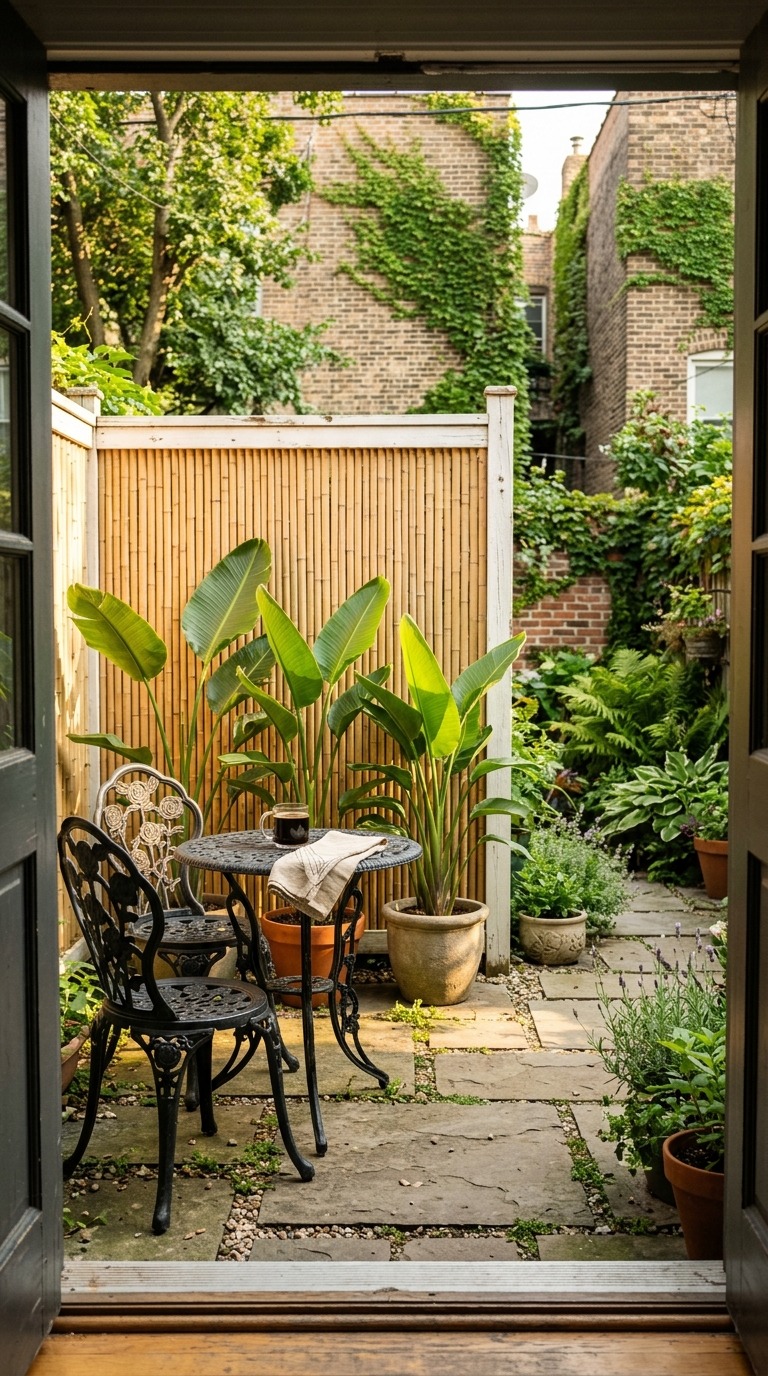
Use a one-and-a-half-inch grid cedar lattice panel for the best climbing support, and mount it into the ground or against an existing fence with galvanized L-brackets. Paint it with Sherwin-Williams Alabaster SW 7008 in an exterior satin finish — that soft warm white makes the green foliage absolutely pop. Star jasmine, clematis, and Confederate jasmine all climb lattice beautifully. The honest personal note I will add is this: plant it in spring, water it consistently for the first season, and do not give up on it if it looks scraggly at first.
Upcycled Wooden Pallet Screen
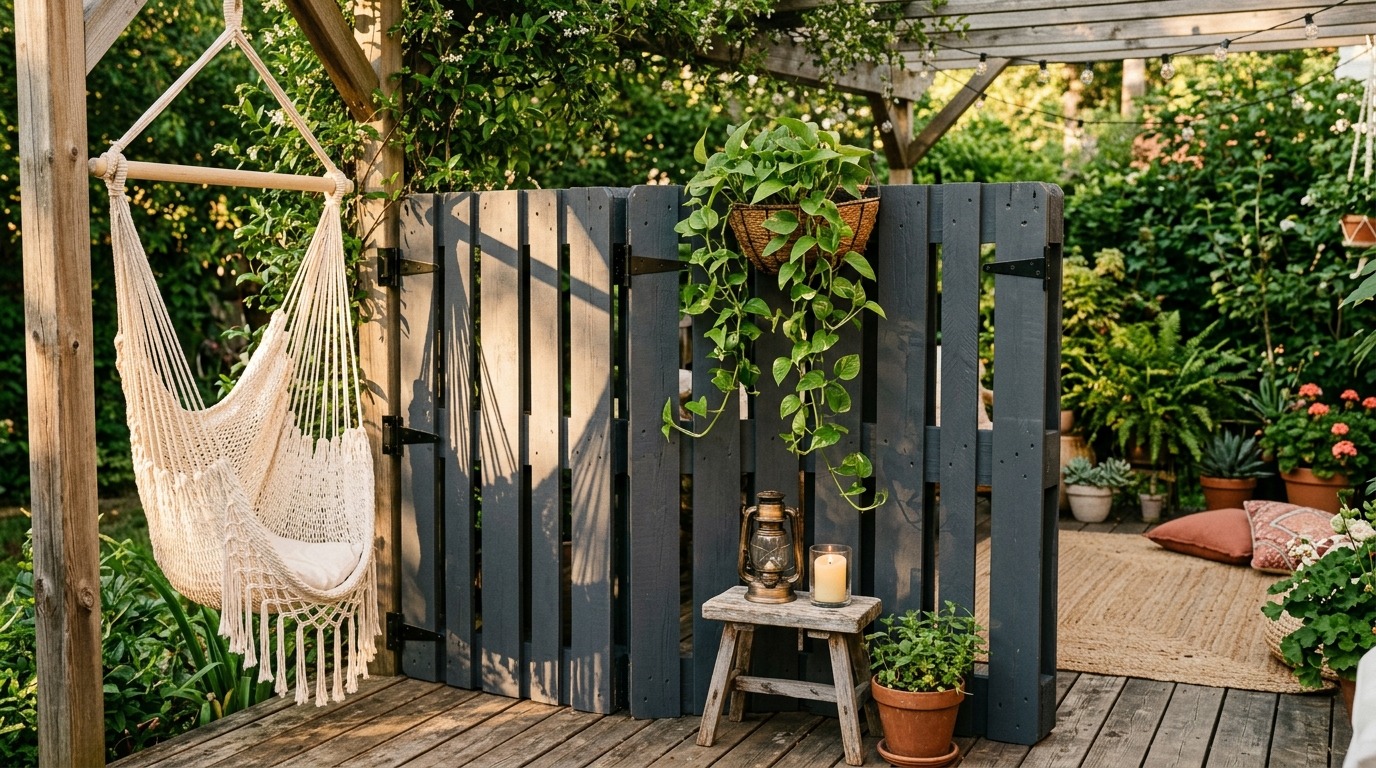
Pallet screens are genuinely one of the most satisfying weekend DIY projects I have ever finished, because the whole thing costs practically nothing and looks like you spent actual money on it when you get the finish right. You need three to five heat-treated wooden pallets — look for the HT stamp on the side to confirm they are safe to use — and then sand them thoroughly with eighty-grit sandpaper before doing anything else with them. That sanding step is what separates a polished result from a splinter-y eyesore, so do not skip it.
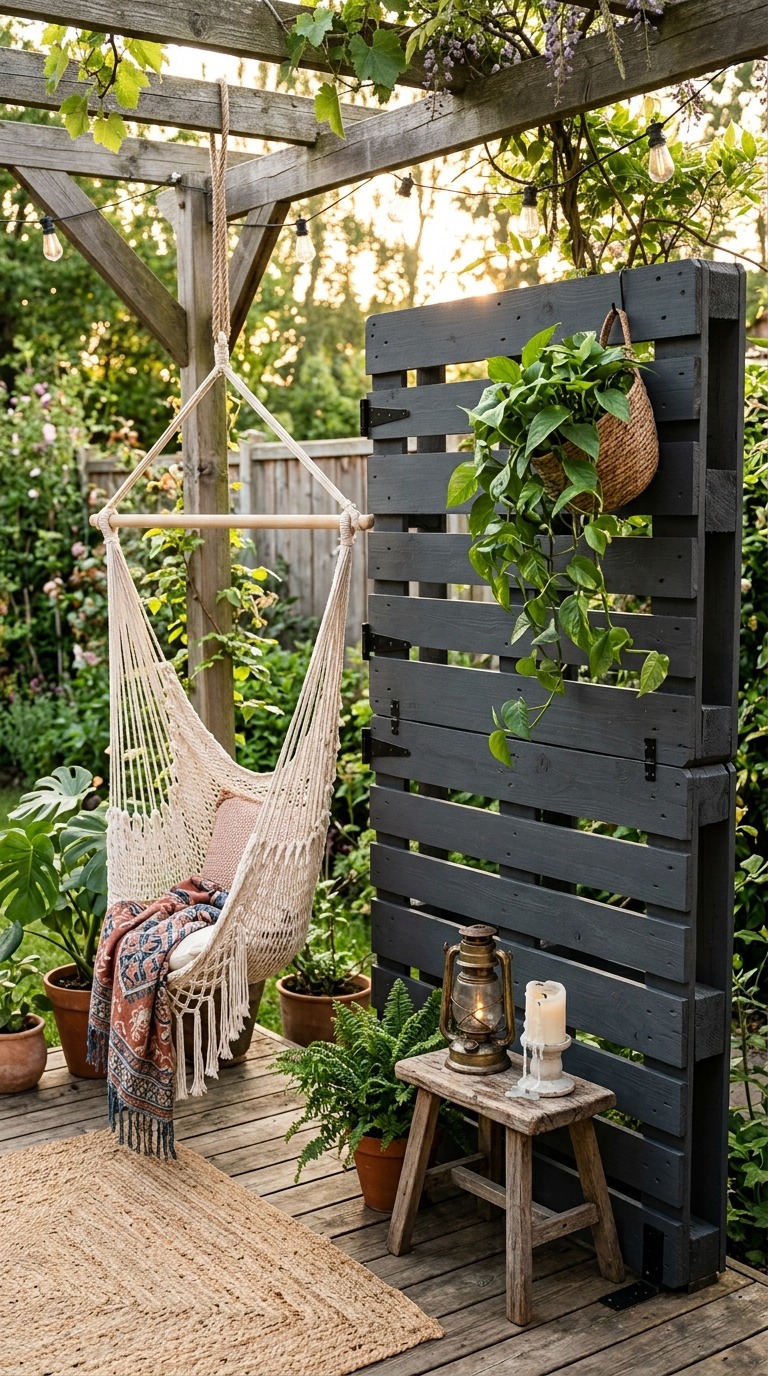
Connect the pallets side by side using heavy-duty black metal gate hinges so the screen folds slightly for added stability. Paint them with Valspar Signature Exterior Paint in Iron Ore — that deep charcoal is incredible on raw wood and it weathers gracefully. Add a simple hook at the top of each pallet and hang trailing plants or string lights for extra dimension. The accordion fold means you can adjust the angle of the screen depending on where the afternoon sun sits, which is a practical bonus I genuinely did not expect to love as much as I do.
Outdoor Curtain Privacy Screen
Outdoor curtains give you something no solid screen ever can — the option to open up the space completely when you want a full view and pull everything closed when you want total privacy and shade in one move. I hung a set on our pergola two summers ago using a galvanized metal conduit pipe threaded between two wooden posts, and the whole installation took me less than two hours including one very relaxed coffee break. The transformation was instant and dramatic in the best possible way.
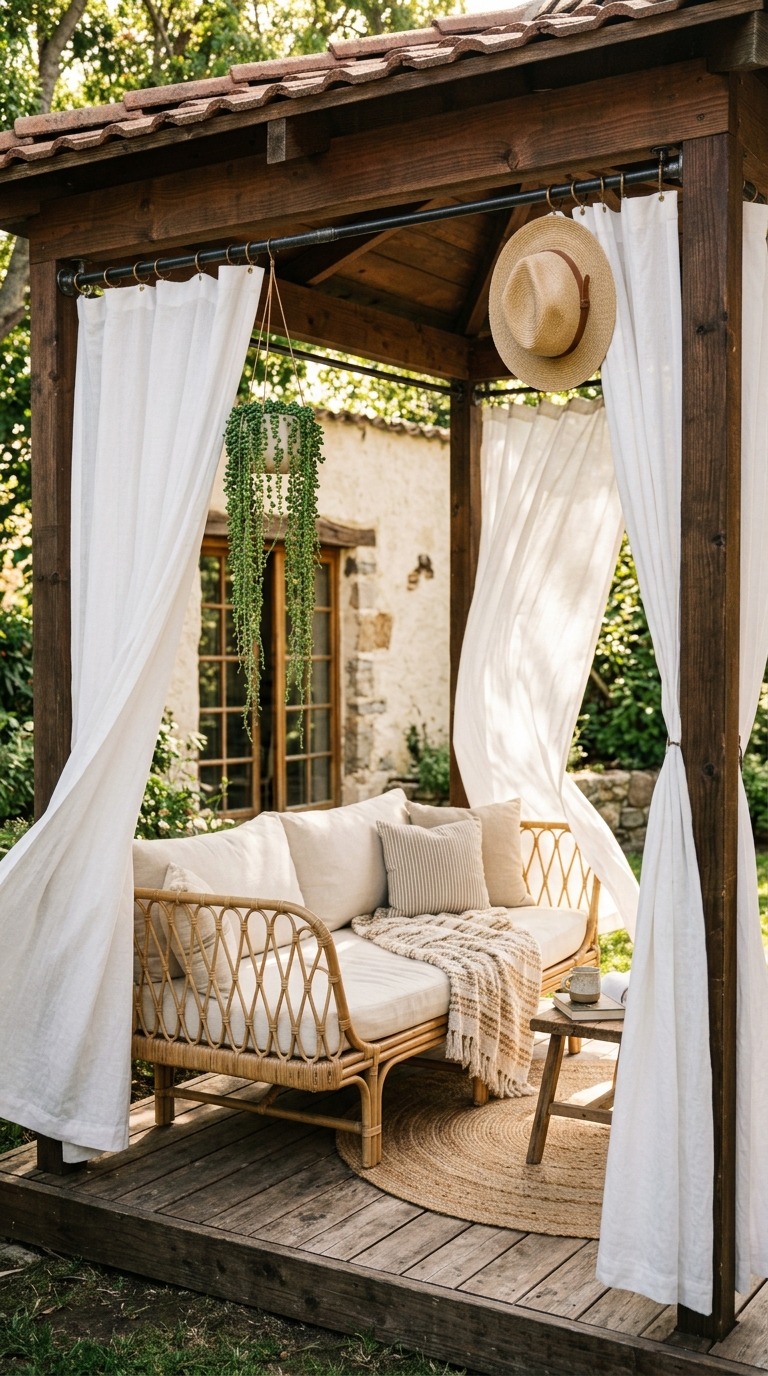
Choose curtains made from outdoor-rated acrylic or polyester fabric labeled as UV-resistant and waterproof — regular indoor curtains will fade and mildew within one season outdoors and it is simply not worth the frustration. Pottery Barn Outdoor makes some beautiful options, but you can also find excellent panels at IKEA labeled DYNING or SAJAO that hold up surprisingly well. Pair crisp white or soft natural linen-look panels with dark hardware for a Hamptons-meets-garden aesthetic that feels genuinely elevated and far more expensive than it actually is.
Built-In Planter Box with Tall Trellis
A built-in planter box with an attached trellis above it is genuinely one of the cleverest privacy solutions I know, because it does three jobs at once — it screens your space, it gives you a home for plants you would be growing anyway, and it anchors your outdoor seating area so it feels like a defined room rather than just furniture sitting on a deck. The planter grounds the whole structure and eliminates any wobbling or wind concerns that freestanding screens sometimes have when they get tall.
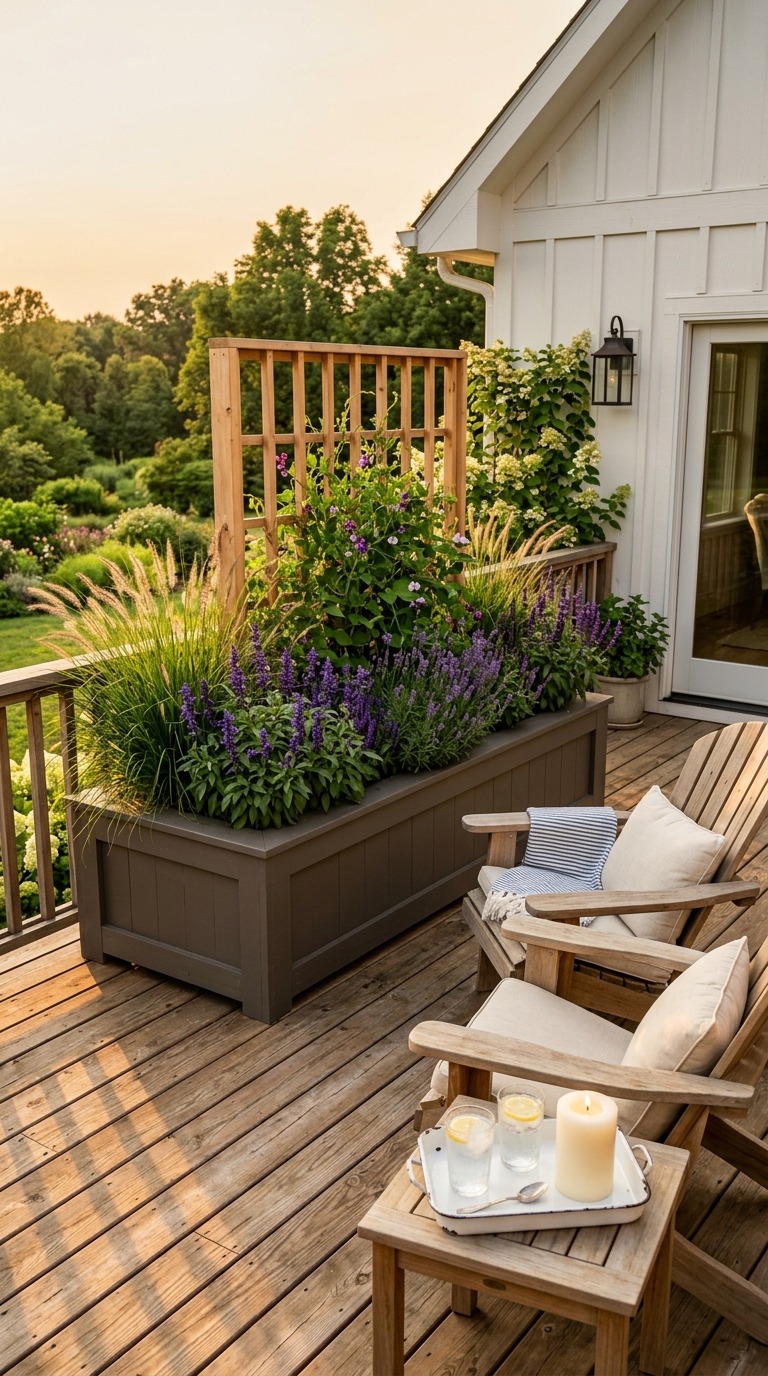
Build the planter box from cedar boards using pocket hole joinery — a Kreg Jig makes this genuinely foolproof even for a first-time builder. Fill it with a moisture-retentive potting mix and plant tall ornamental grasses like Karl Foerster feather reed grass alongside trailing sweet potato vine for a lush layered look. Paint the whole structure with Farrow and Ball Exterior Eggshell in Mole’s Breath — that warm grey-brown tone is sophisticated without trying too hard. I added one to our deck last spring and it completely defined our seating zone in a way furniture arrangement alone never could.
Repurposed Vintage Door Screen
Vintage door screens are one of those ideas that sounds like it belongs on a Pinterest board but genuinely works beautifully in a real garden, and the secret is finding the right doors. I sourced three mismatched timber doors from a local architectural salvage yard for almost nothing — they were already worn and characterful, which is exactly the point. The varying heights of the three doors actually add to the charm rather than looking accidental, and once you hinge them together they stand surprisingly sturdy on flat ground.
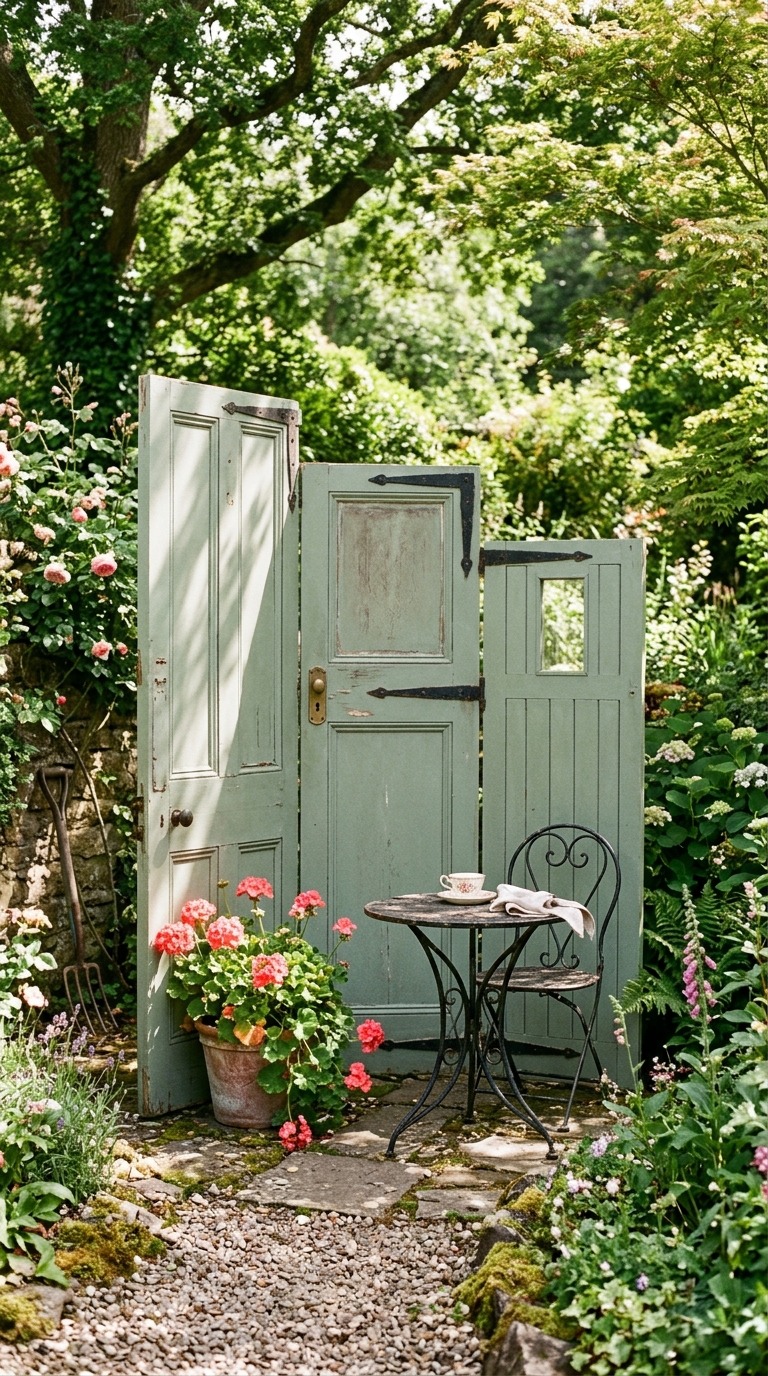
Sand any loose paint and treat the wood with an exterior wood primer before painting — do not skip this step or the paint will peel by summer’s end. Apply two coats of Sherwin-Williams Exterior Latex in Retreat SW 6207, a soft sage green that makes old wood look like it belongs in a French country garden. Hinge the doors together using heavy-duty black wrought iron hinges rated for exterior use and space the feet wide enough that the screen stands without tipping. Hang a basket of trailing geraniums from one door and the whole thing becomes a genuine garden feature.
Woven Willow or Reed Hurdle Panel
Woven willow hurdle panels are an absolute dream for anyone who wants privacy that feels truly organic and garden-appropriate rather than constructed and fence-like. These panels look like they grew there, especially once you tuck some lavender or herbs around their base and let the whole thing settle into the garden. I brought a set of four panels home from a garden fair three summers ago and they immediately made the most overlooked corner of our yard feel intentional and lush. They genuinely transformed the whole feeling of that space.
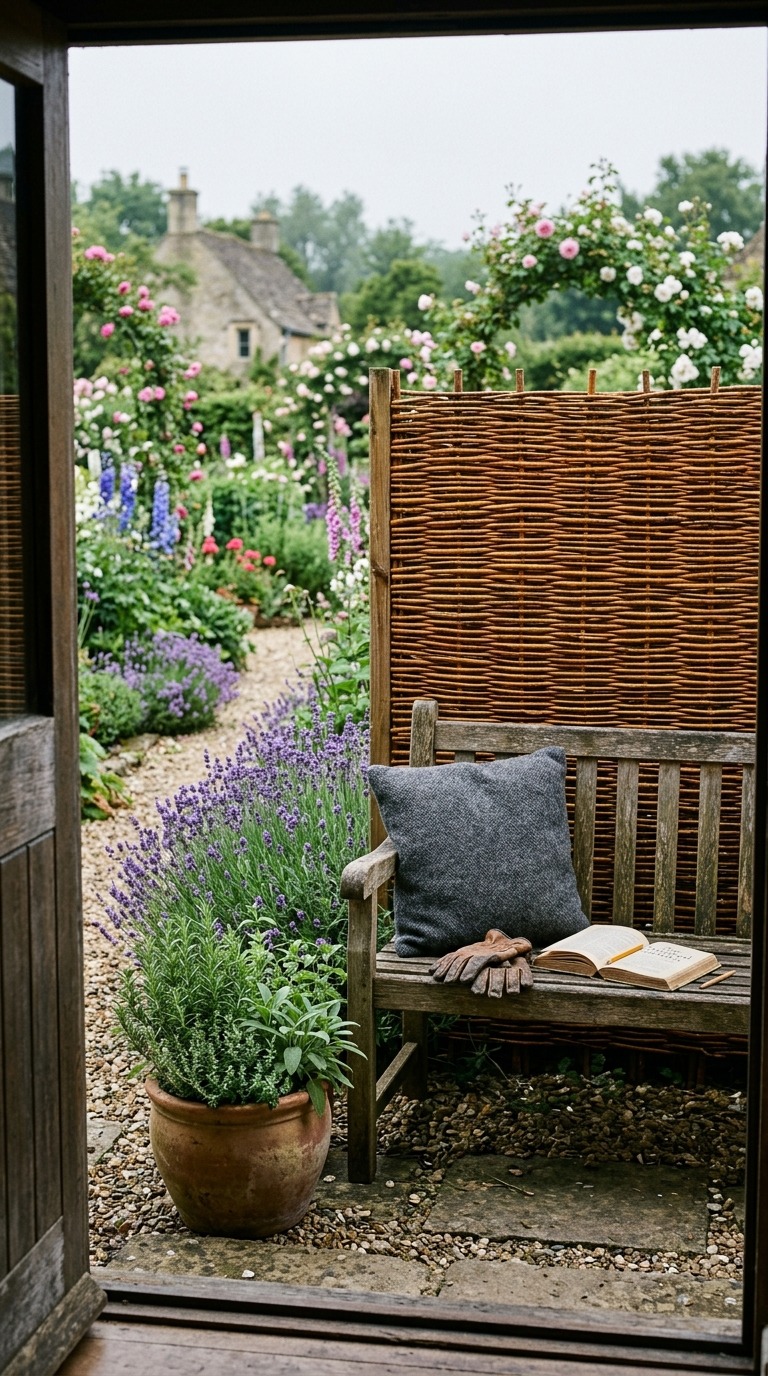
Willow hurdles do weather over time — they shift from golden amber toward silvery grey as they age, which many gardeners including me actually prefer. Treat them yearly with a natural raw linseed oil to slow the weathering if you want to preserve the warm tone longer. Mount them between timber fence posts using galvanized wire ties or timber clips so they stay upright even in wind. Pair the natural woven texture with Benjamin Moore Camouflage 2143-30 on any adjacent trim or fence — that warm earthy olive tone connects the panel to the garden palette beautifully.
Corrugated Metal and Timber Frame Screen
Corrugated metal and timber frame screens suit a modern industrial aesthetic in a way that no other material really matches, and when you combine the metal with raw black steel posts, the whole thing looks expensive and architectural even though the materials cost very little. I helped my sister build one for her urban backyard last summer and we genuinely finished the whole project in one weekend including the time it took to argue about the exact angle of the panels, which is a very real part of any sibling DIY project.
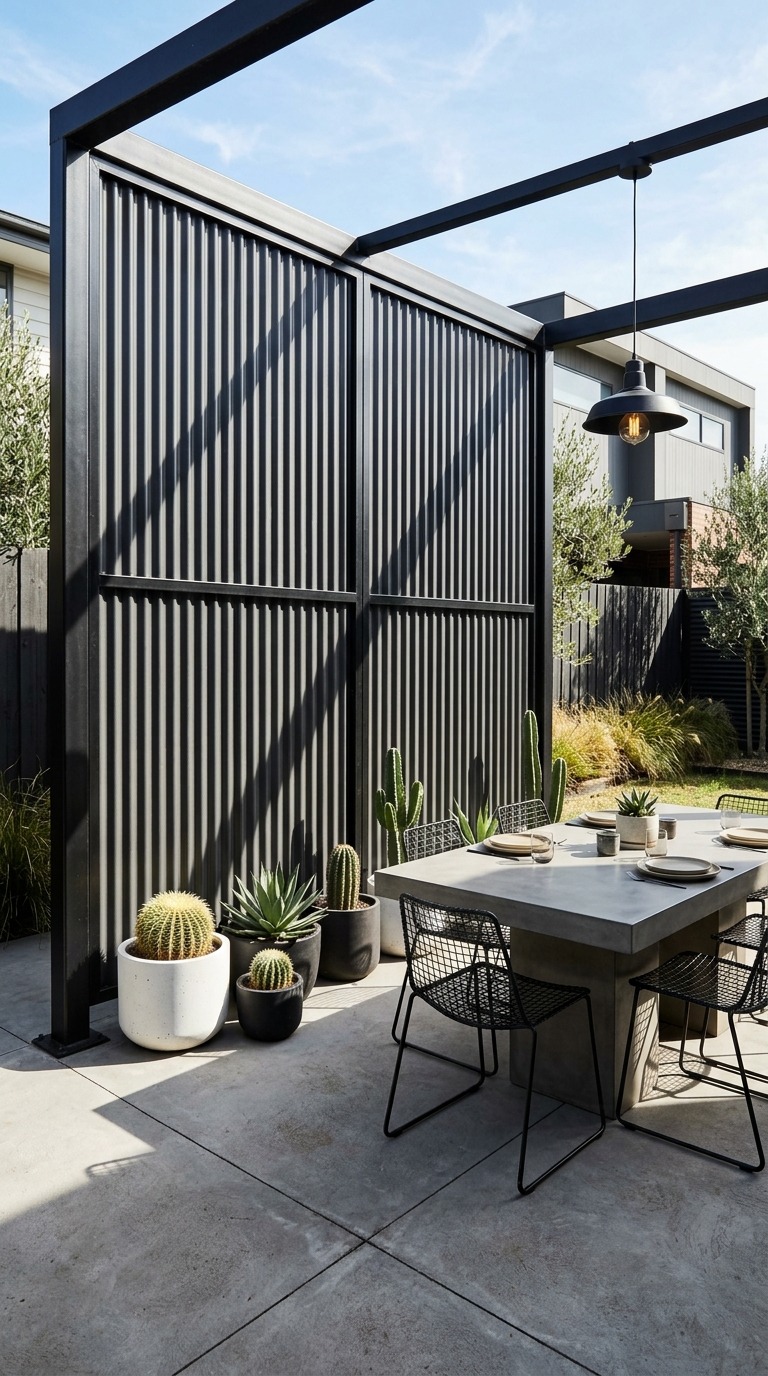
Use standard corrugated Corten weathering steel sheeting from a roofing supplier cut to your height — most suppliers will cut to size for a small fee and it makes handling dramatically easier. Mount the panels into a welded or bolted black steel tube frame set in concrete footings. Leave a half-inch gap between each sheet for airflow and a deliberate design detail. Pair the metal with Benjamin Moore Black Panther 2125-10 on the timber frame elements for a graphic high-contrast look. I genuinely think this is one of the most architecturally interesting DIY screens on this entire list.
Freestanding Lattice with Planter Feet
A freestanding lattice panel set into weighted planter boxes is the perfect solution when you rent your home or simply do not want to commit to anything permanent, because the whole structure moves easily wherever you need it and takes nothing with it when you leave. I used this exact setup on a rental patio years ago and it genuinely gave me the privacy of a proper fence without a single hole drilled into anything. The planters act as ballast weights so the screen stays put even in a moderate breeze, which surprised me every time it held its ground.
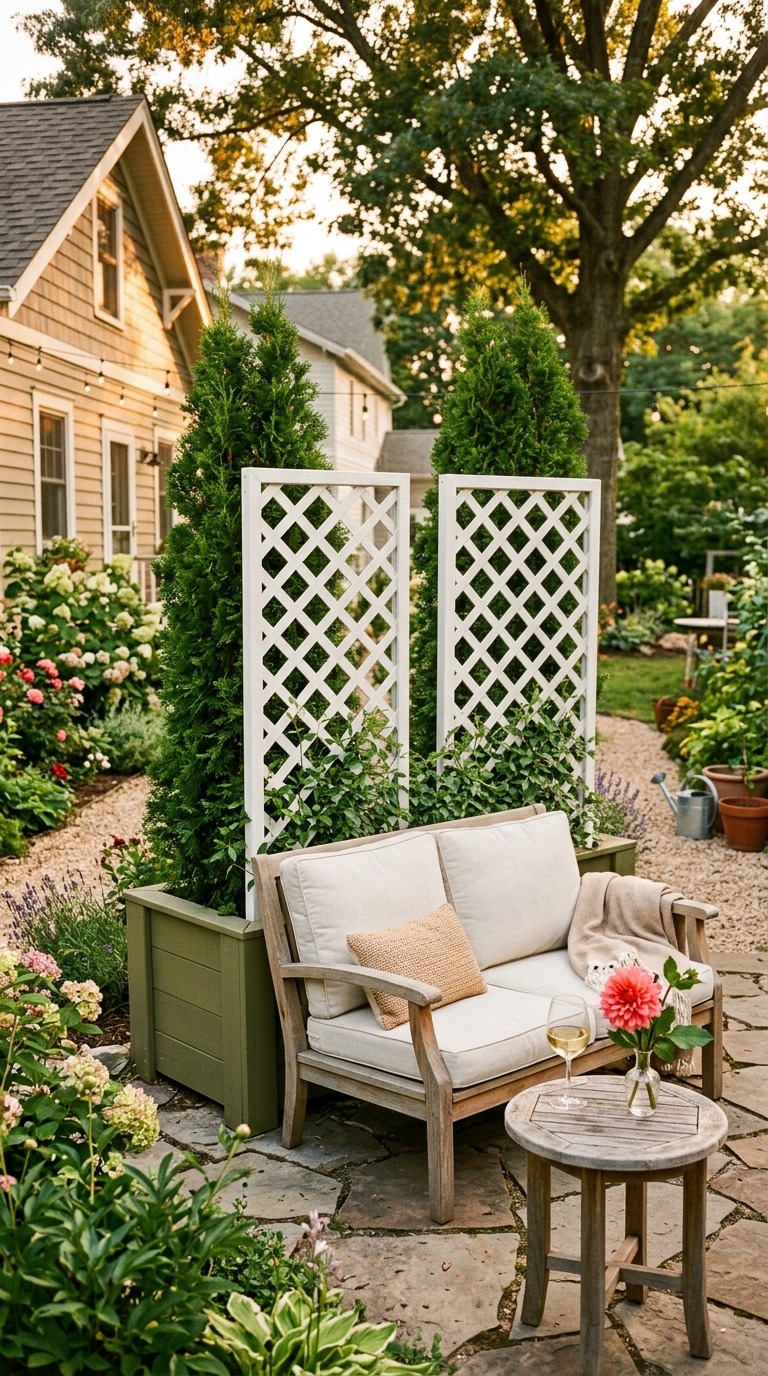
Build the planter boxes from one-by-eight pine boards joined at the corners with deck screws, then fill them with landscaping gravel in the bottom third and potting mix on top. Plant columnar arborvitae — Green Giant or Emerald Green varieties both work brilliantly — in each planter so they grow up behind the lattice and eventually create a living screen above it. Paint the lattice panel and planter boxes with Sherwin-Williams Duration Exterior in Westhighland White SW 7757, a clean warm white that makes greenery absolutely sing against it. The arborvitae adds privacy height that the lattice alone cannot reach.
Hanging Basket Wall of Ferns and Greenery
A hanging basket wall of lush ferns creates privacy that honestly feels more like a spa or a boutique hotel garden than a DIY backyard project, and that gap between effort and result is what makes this idea so genuinely exciting to share. The layered hanging baskets block sightlines surprisingly effectively because the cascading foliage overlaps between baskets and fills in all the gaps naturally. I did a version of this on our shaded back porch three summers ago using a simple cedar beam and it is still the most commented-on corner of our entire outdoor space.
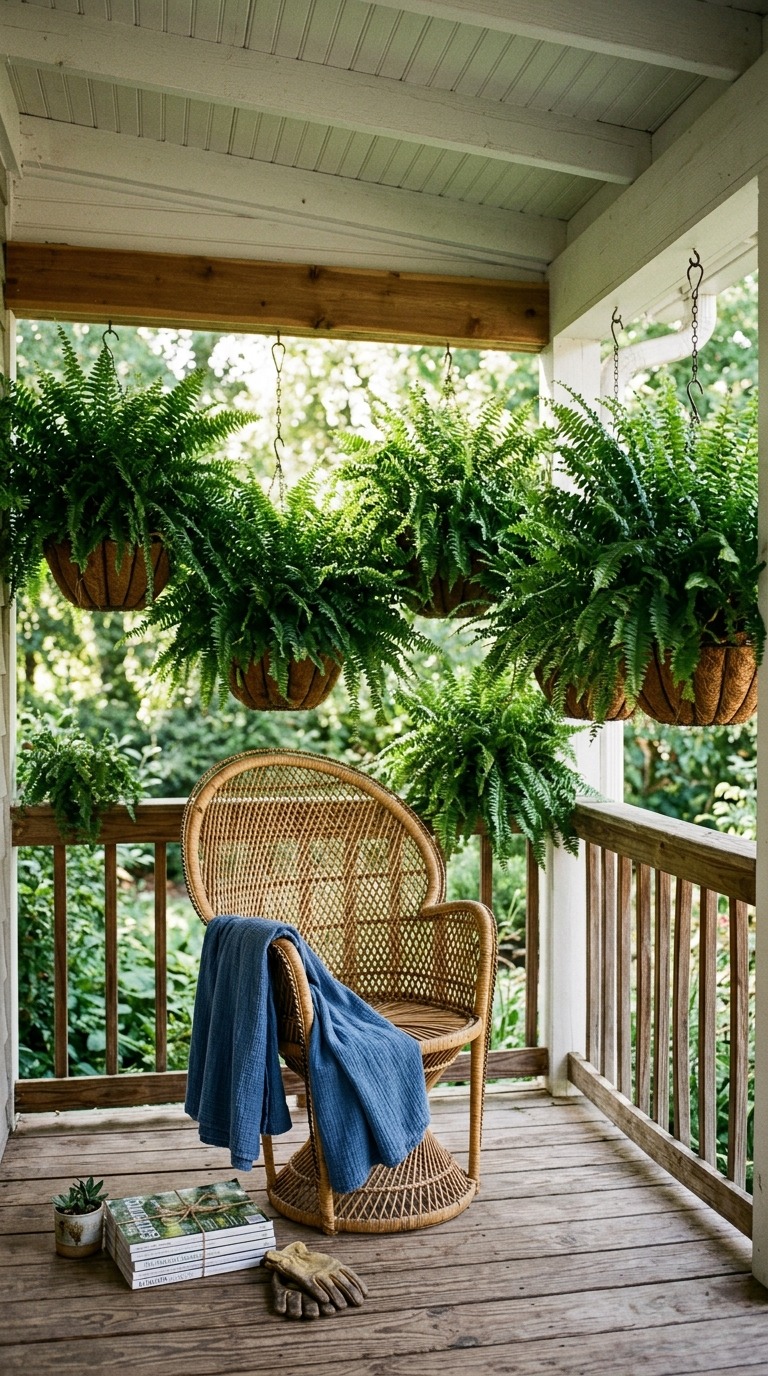
Mount a four-by-four cedar beam horizontally between two posts or hooks attached to an existing structure — make sure it can support the weight of fully watered baskets, which get heavier than you expect. Use fourteen-inch coco-lined wire baskets and plant them with Boston ferns, trailing pothos, or maidenhair ferns depending on your light levels. Water them with a slow drip irrigation line attached along the beam for easy maintenance. Benjamin Moore Peale Green HC-121 painted on any adjacent walls makes the green foliage look even richer and more intentional as a backdrop color.
Living Hedge in Raised Planter Boxes
A living hedge grown inside raised planter boxes is genuinely one of the most elegant privacy solutions on this entire list, because it looks completely intentional and landscape-designed from the moment you install it — even before the plants fully fill out. The boxes themselves create structure and height instantly while the plants grow to add natural density and color over the following seasons. I have seen this idea work on rooftop terraces, timber decks, and ground-level patios and it consistently looks more expensive than anything else around it.
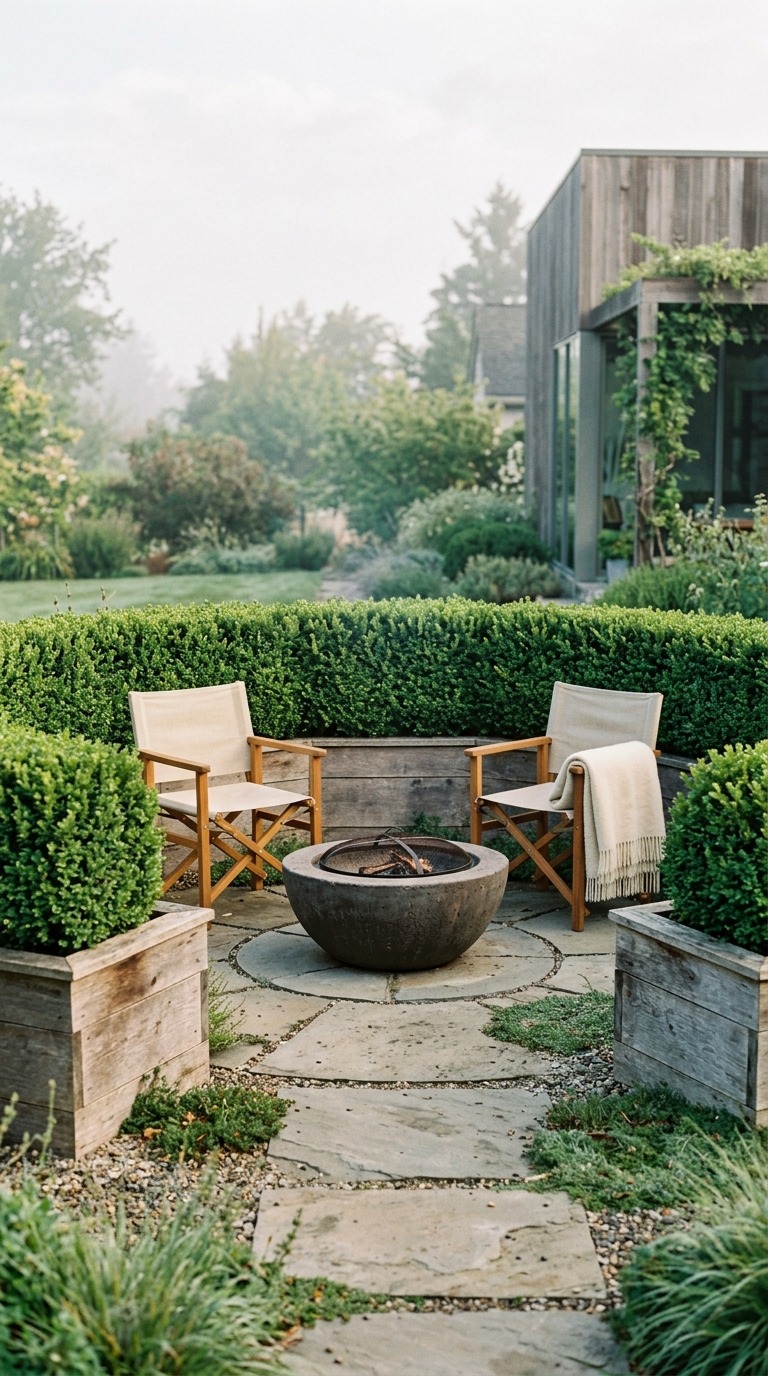
Use fifteen-inch-deep cedar raised bed boxes for enough root space to support mature hedging plants — this depth matters and shallower boxes will stress the plants in summer heat. Boxwood, privet, and Emerald Green arborvitae all clip beautifully into clean shapes and stay dense year-round in most climates. Paint the planter boxes with Farrow and Ball Exterior Eggshell in Railings No. 31 — that deep near-black navy is striking against lush green and it photographs beautifully too. I think this idea works as well on a small city balcony as it does on a large suburban backyard, and that versatility is genuinely rare.
Conclusion
Your backyard, patio, or garden deserves to feel like a true escape — not a performance space for the whole neighborhood. The right privacy screen completely changes how you use your outdoor space, how relaxed you feel in it, and honestly how much time you actually spend there enjoying it.
Pick one idea from this list today and start small — gather your materials, measure your space, and commit to that first weekend project. I promise the moment you sit outside in your newly screened space with a cup of something warm and nobody watching, you will wonder why you waited even one more season to make it happen.