12 Magical Backyard Garden Ideas to Try Right Now
You step outside on a quiet Saturday morning, coffee in hand, and your backyard feels like it belongs to someone else — someone with magic in their garden and wonder in every corner. That feeling? You can have it too, and it starts today.
I have spent years turning ordinary backyards into spaces that genuinely stop people in their tracks. This article gives you twelve enchanted garden ideas I have personally tested, each one designed to layer beauty, atmosphere, and that unmistakable feeling of stepping somewhere truly special.
Winding Flagstone Pathway Through Lush Borders
You step onto the first stone and the garden immediately asks you to slow down. The path curves gently to the right, disappearing behind a billow of catmint and salvia, and something in you wants to follow it wherever it leads. This is the single most powerful transformation I have ever made in any garden. One curving flagstone path turned a flat, forgettable lawn into a place people genuinely wanted to explore, linger in, and never quite leave behind.
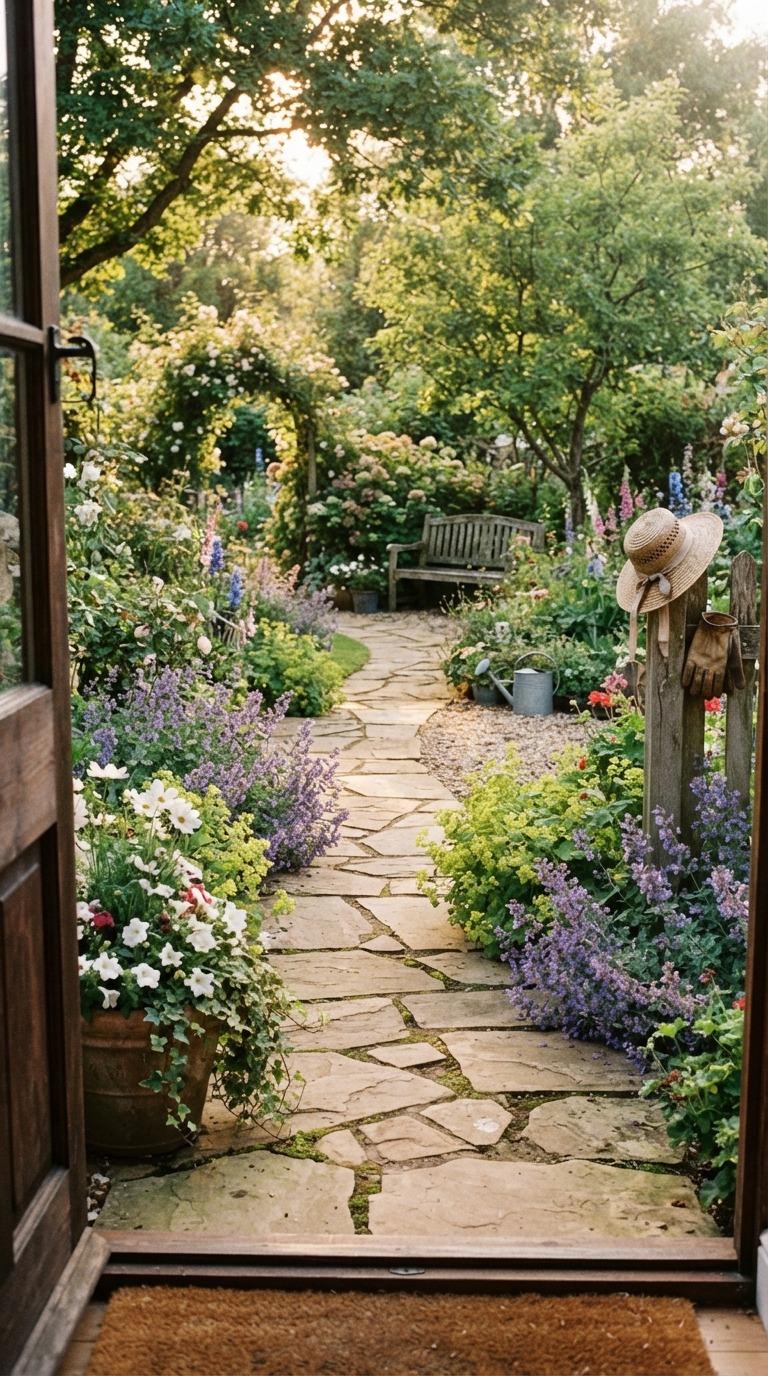
For the stones, choose irregular natural flagstone in warm buff or gray tones — the imperfection is the whole point. Let creeping thyme spill between the gaps and allow lady’s mantle to drape softly over the edges. I planted catmint on both sides of my own path and within one summer it created this gorgeous, billowing, purple-blue border that practically glows in the afternoon sun. The key is keeping the curves generous and never letting the destination reveal itself too soon. Mystery is everything in an enchanted garden.
Rose-Draped Arbor at the Garden Entrance
Walking under a rose-covered arbor in full bloom is one of those experiences that genuinely makes your breath catch. You pass through a curtain of blooms and fragrance and suddenly you are in another world, even if you only walked ten steps from your back door. I installed a weathered cedar arbor in my garden three years ago and covered it with New Dawn climbing rose — that legendary soft blush pink variety — and it stopped being just a garden the moment those first canes reached the top.
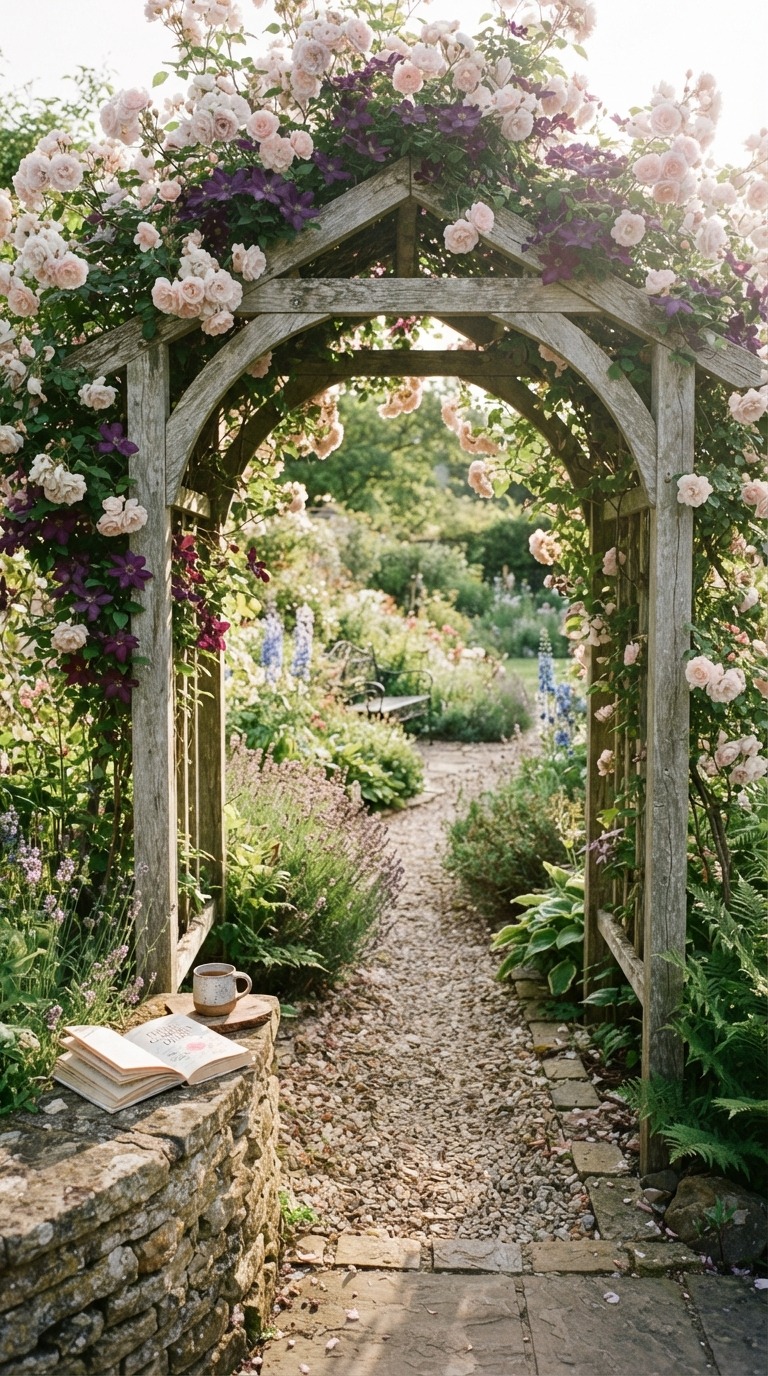
Choose a timber or aged cedar arbor rather than bright white painted wood. The weathered tone makes it look as though the garden grew up around it naturally over decades, which is exactly the atmosphere you want. Pair your New Dawn rose with a Jackmanii clematis for purple blooms after the roses fade, and you extend the show well into autumn. I always plant two climbers at the base of each leg — one rose, one clematis — because the fullness you get from two plants is extraordinary compared to one lone climber struggling to cover the whole structure alone.
Moss-Covered Stepping Stones in a Shade Nook
There is a particular kind of stillness in a shaded garden corner planted with ferns, hostas, and moss-covered stepping stones that you simply cannot manufacture anywhere else. It feels ancient, cool, and completely removed from the noise of ordinary life. I created a little shade nook under a mature oak on the side of my garden, and it became the spot where everyone gravitates on hot summer afternoons without fail, every single year.
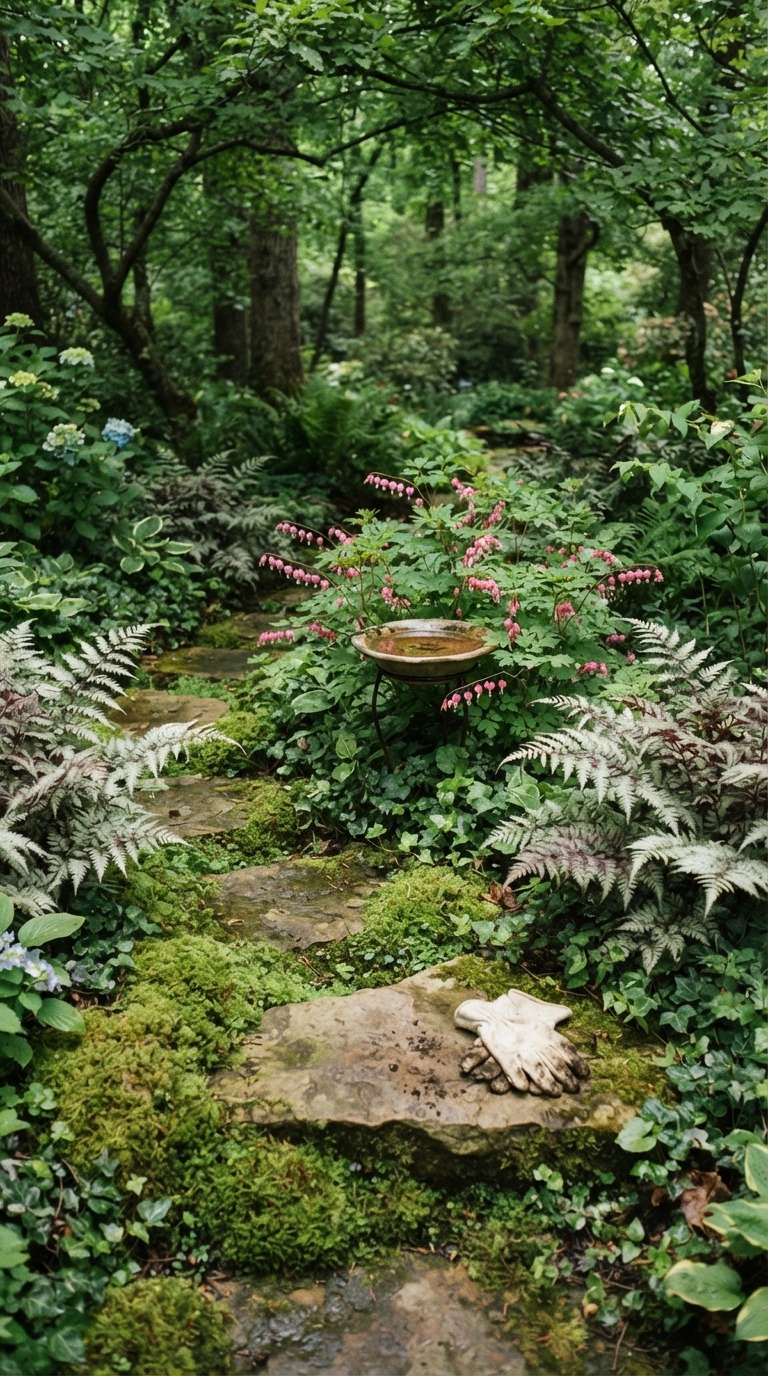
Use large flat stones — bluestone or irregular sandstone work beautifully — and encourage moss growth by keeping the area damp and applying a yogurt-and-moss slurry painted directly onto the stone surface. Plant Japanese painted ferns, Sum and Substance hostas, and bleeding heart around the stepping stones, and tuck a small ceramic birdbath in the center. The combination of damp coolness, rustling fern fronds, and bird song creates something genuinely magical that no amount of garden decor can replicate or replace anywhere.
Fairy Light Canopy Strung Through Garden Trees
The moment the sun dips and those warm white lights flicker on through the tree canopy, your backyard becomes somewhere completely different — somewhere that feels honestly dreamlike and deeply lovely. I strung a long strand of 200 warm white Edison-style fairy lights through the branches of my apple tree and the oak beside it, and that simple act transformed my garden into a place I wanted to sit in every evening from June through October without exception.
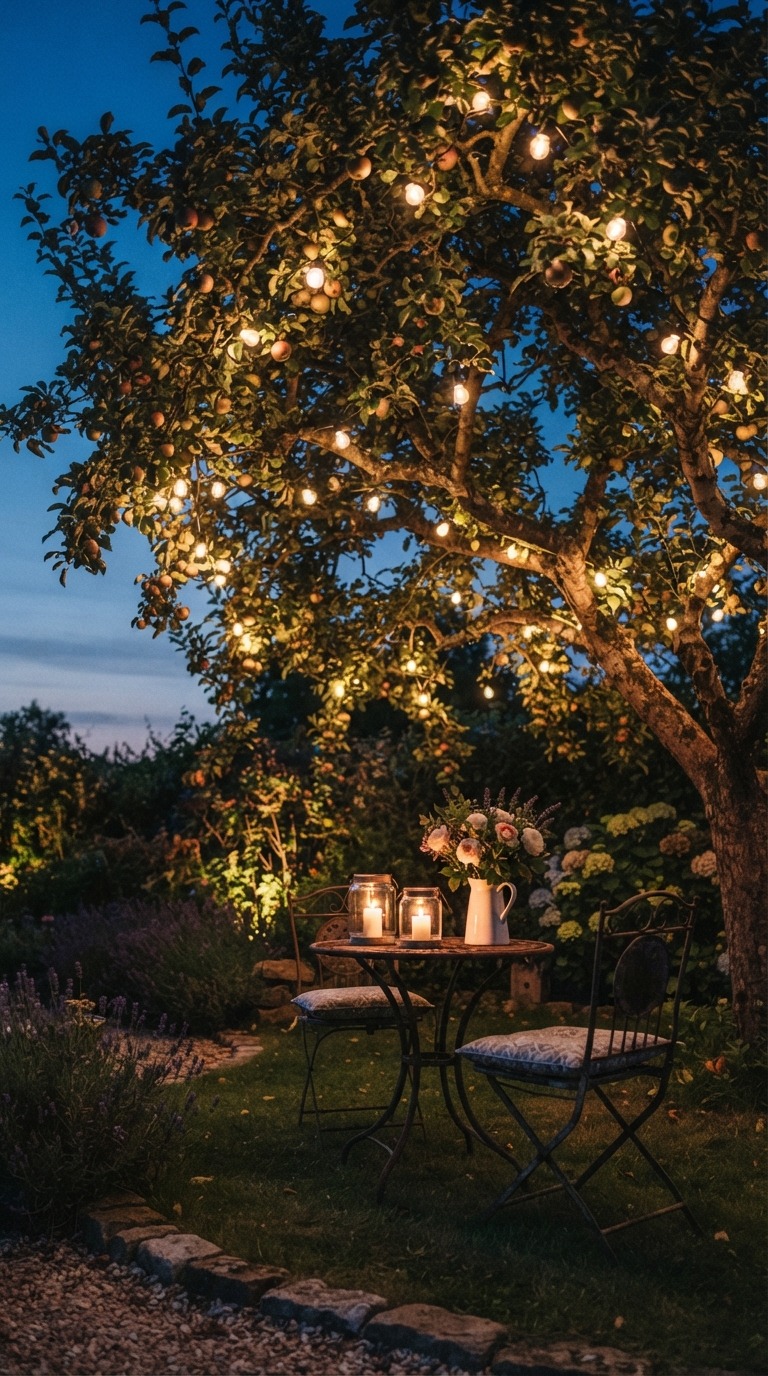
Always choose warm white lights at 2700K color temperature — anything cooler strips the gold from the scene and makes the garden feel clinical rather than enchanted. Use a single long strand of at least 60 feet with connectable ends so you can weave it continuously from branch to branch without visible breaks. I recommend solar-powered strands for trees in open gardens since they charge during the day and switch on automatically at dusk. Add a few glass lanterns with pillar candles on a small garden table below the lit tree and you have created an outdoor living room that rivals any indoor space for sheer warmth and beauty.
Wildflower Meadow Patch for Butterflies
Replacing a section of flat lawn with a wildflower meadow is the most alive thing you can do for your garden, full stop. The first summer my meadow patch bloomed, I counted four butterfly species, two types of bumblebee, and a goldfinch on one Tuesday afternoon — and I had not done anything except scatter seeds and step back. That abundance of life makes the space feel genuinely enchanted in a way that planted borders, however beautiful, simply never quite match.
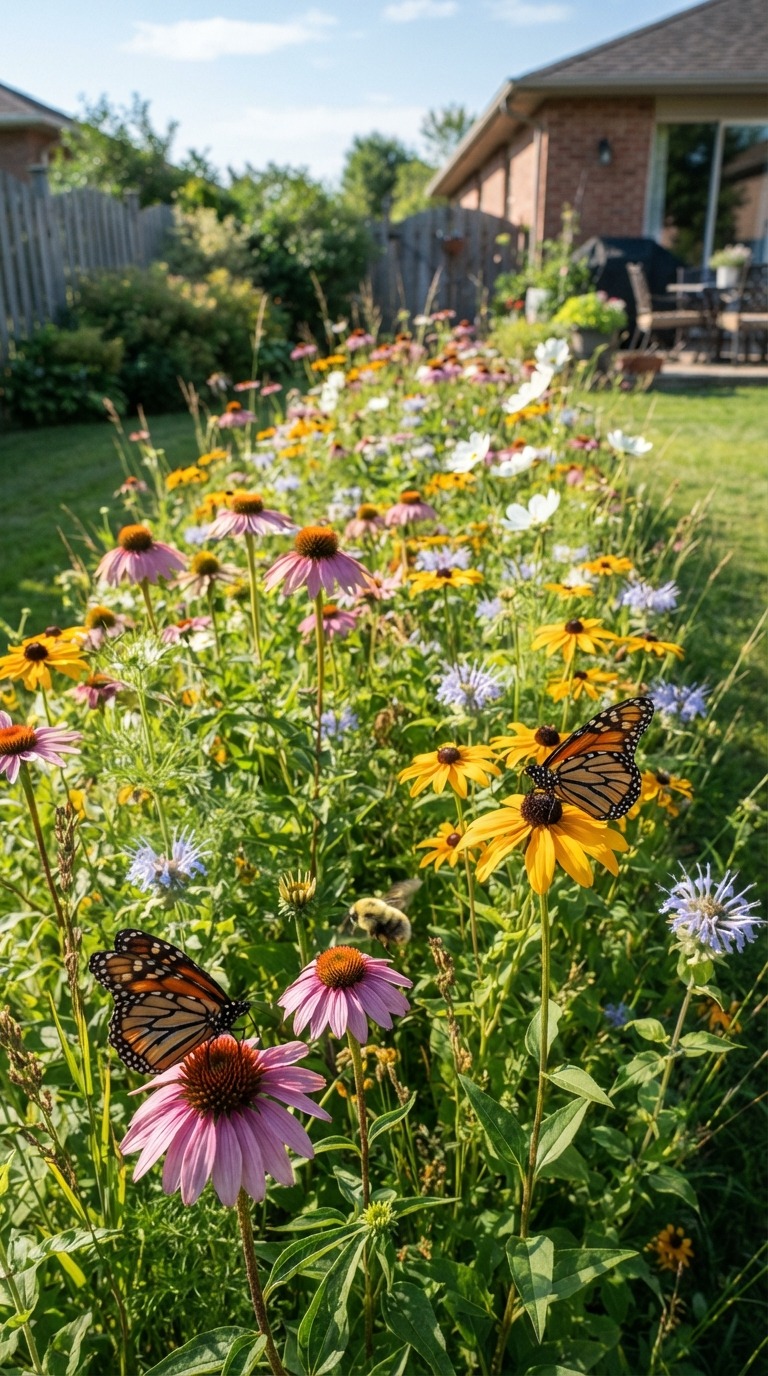
Sow a native wildflower mix that includes black-eyed Susan, purple coneflower, native asters, cosmos, and wild bergamot. These are tough, reliable, and deeply beautiful through the entire growing season from June right through to the first hard frost. Prepare the ground properly by removing existing grass and raking the soil before sowing — bare soil is essential for good germination. I cut my meadow patch down to six inches every March and it comes back fuller and more colorful every single season, almost as if it rewards the patience you gave it the year before.
Cottage Garden Border With Climbing Roses
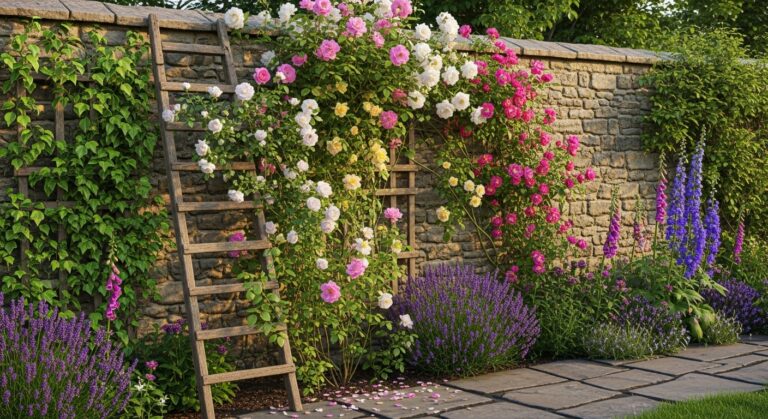
Standing in front of a timber fence completely covered in soft pink climbing roses, with foxgloves, delphiniums, and catmint tumbling at its feet in every shade of lavender and blue, is like looking at a painting that smells extraordinary. This is the planting combination I return to again and again in every garden I work on because nothing else creates that sense of abundant, unhurried beauty quite so completely and naturally. It looks effortless, which is the greatest compliment any garden can receive.
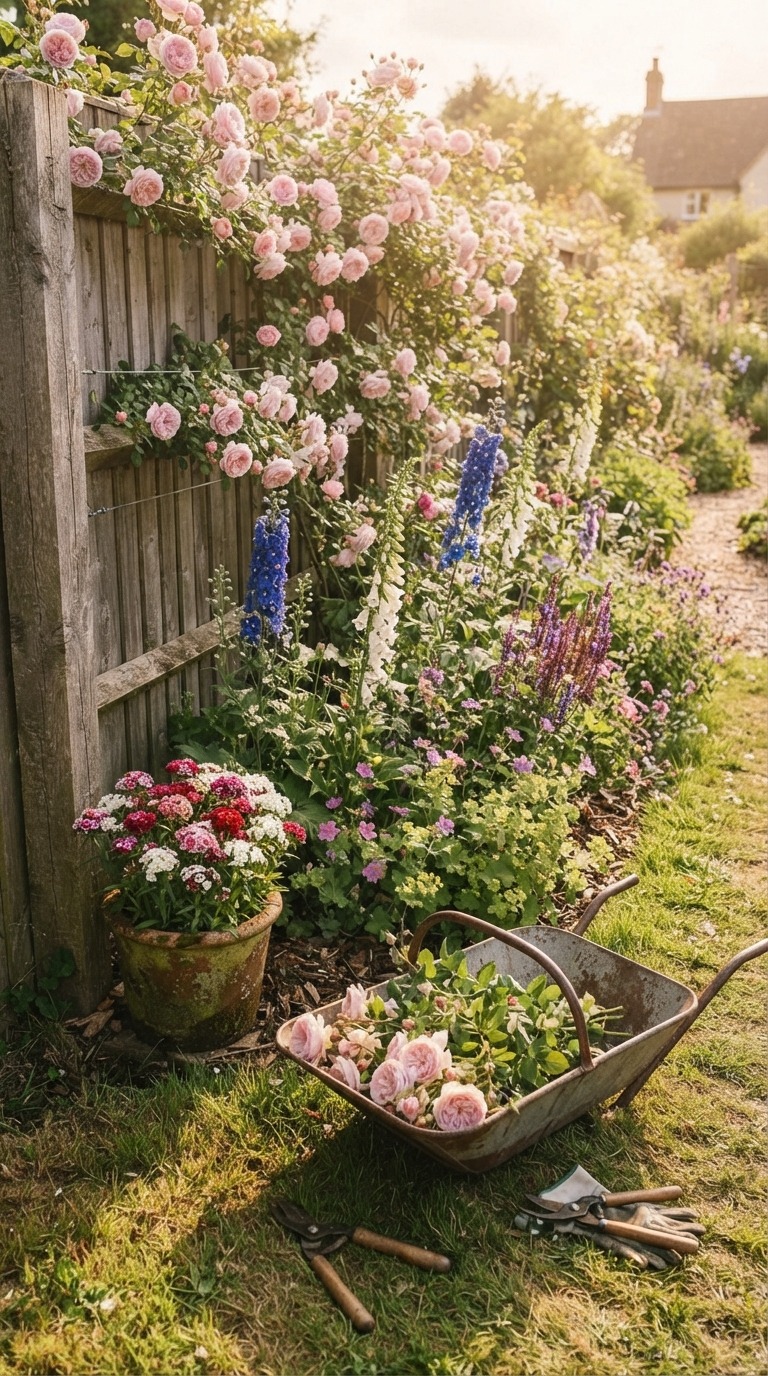
Train Constance Spry or New Dawn roses along horizontal wires fixed to the fence — horizontal training encourages more flowering shoots than vertical, and the difference in bloom quantity is genuinely dramatic. Plant foxgloves, salvia Caradonna, sweet William, and Delphinium Pacific Giants in drifts of five or seven plants in front of the fence. I always add one or two plants of sweet peas at the base of the fence posts for fragrance because the combination of rose scent and sweet pea drifting across a warm summer evening is something I honestly look forward to every single year.
Naturalistic Garden Pond With Iris Borders
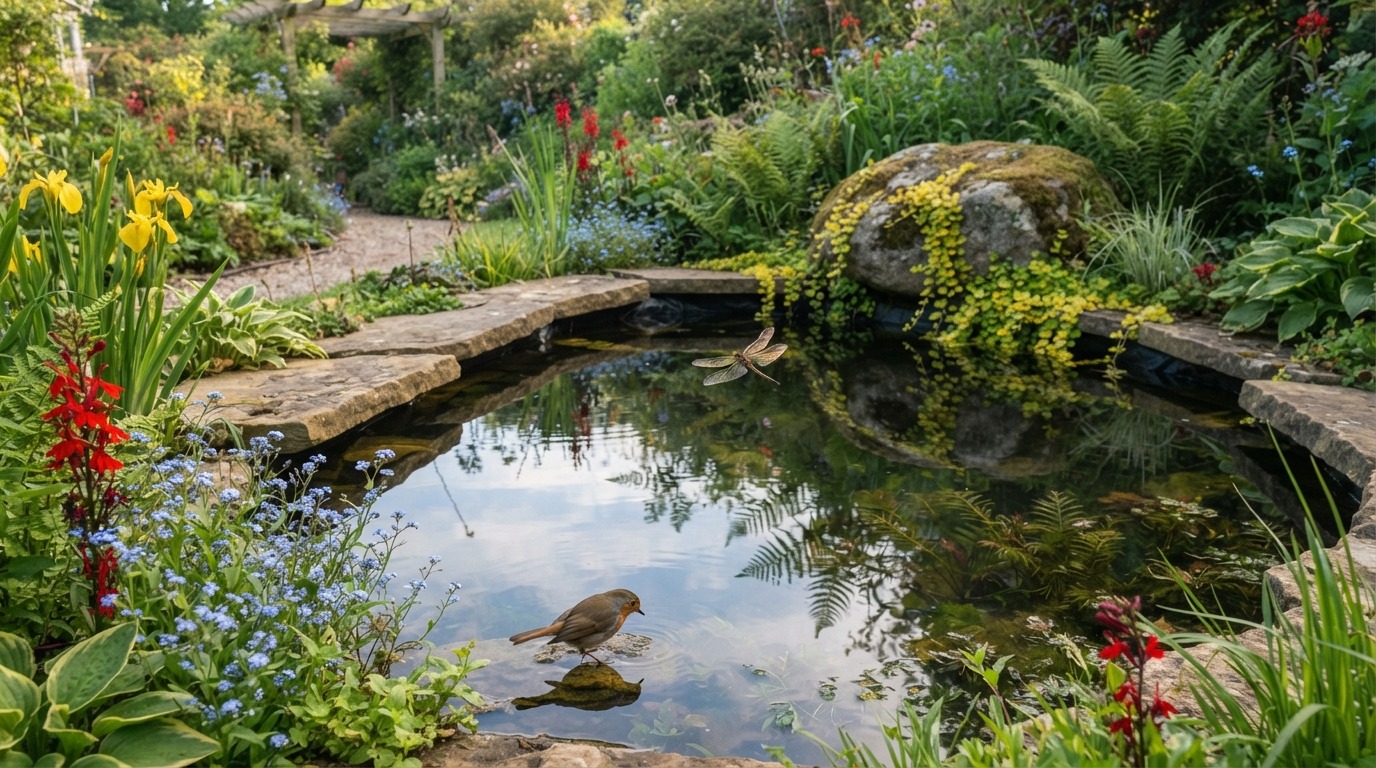
A small naturalistic pond brings a quality of life and movement to a backyard that no other single feature can rival. The first summer after I installed my pond — just a four-by-six-foot dug-out lined with flexible pond liner and edged with irregular sandstone — dragonflies appeared within two weeks, frogs arrived by midsummer, and birds visited the shallow edge every single morning. The garden felt genuinely wild in the most beautiful and deliberate way possible.
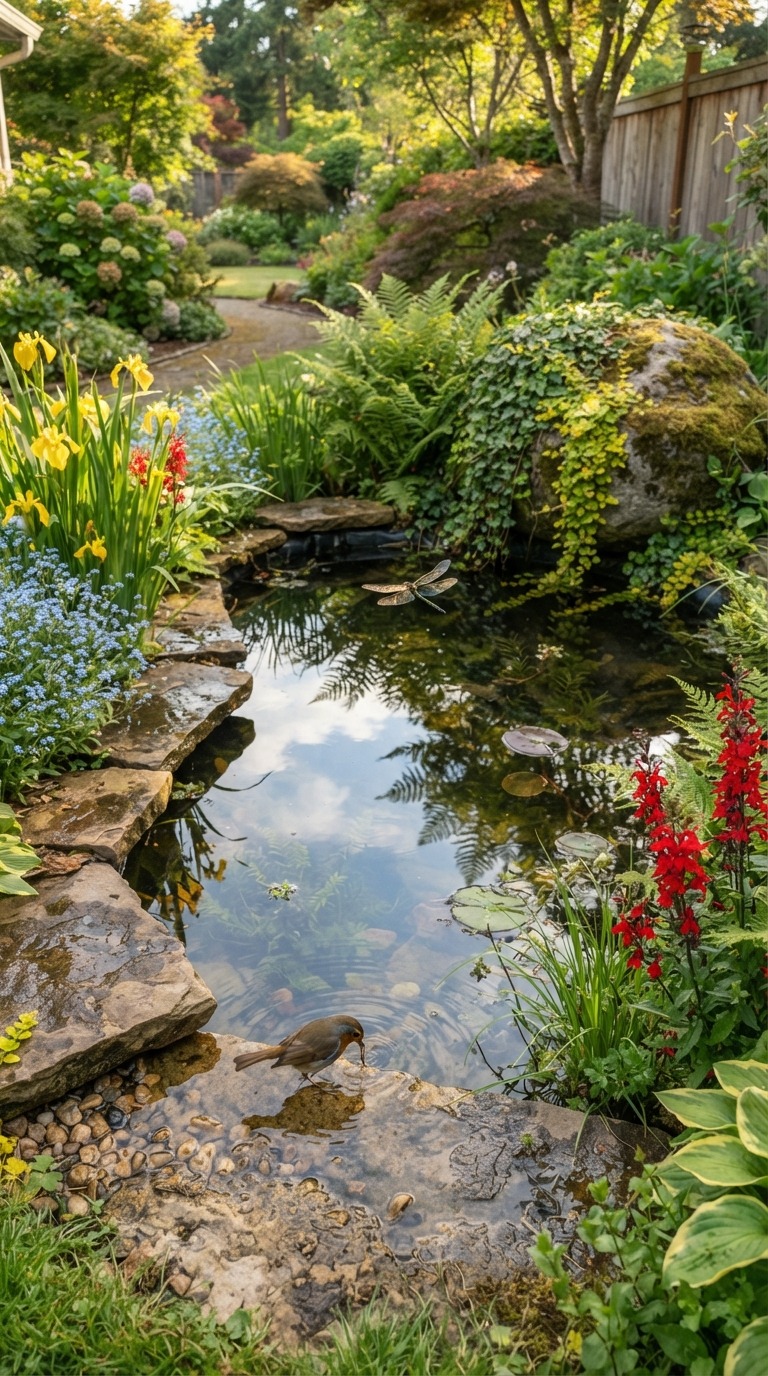
Edge the pond with yellow flag iris, water forget-me-not, marsh marigold, and cardinal flower for a planting that looks as though it simply appeared there naturally. Keep the edging irregular — avoid perfect circles or rectangles entirely. I use large flat stones that overhang the water slightly on one side and slope gently into the shallows on the other, creating a safe place for birds to drink and bathe. Add one or two oxygenating plants like hornwort beneath the surface and the water stays naturally clear without any chemical treatments or filters required.
Fragrant Evening Garden Seating Corner
There is a moment on warm evenings when the jasmine opens fully and the breeze carries its scent directly across the garden toward wherever you are sitting, and it is one of the simple, genuine pleasures of living with an enchanted garden. I planted a white-flowering Star jasmine along the trellis behind my garden bench three years ago and it has since transformed every single evening I spend outside from ordinary to quietly extraordinary in a way nothing else has managed before.
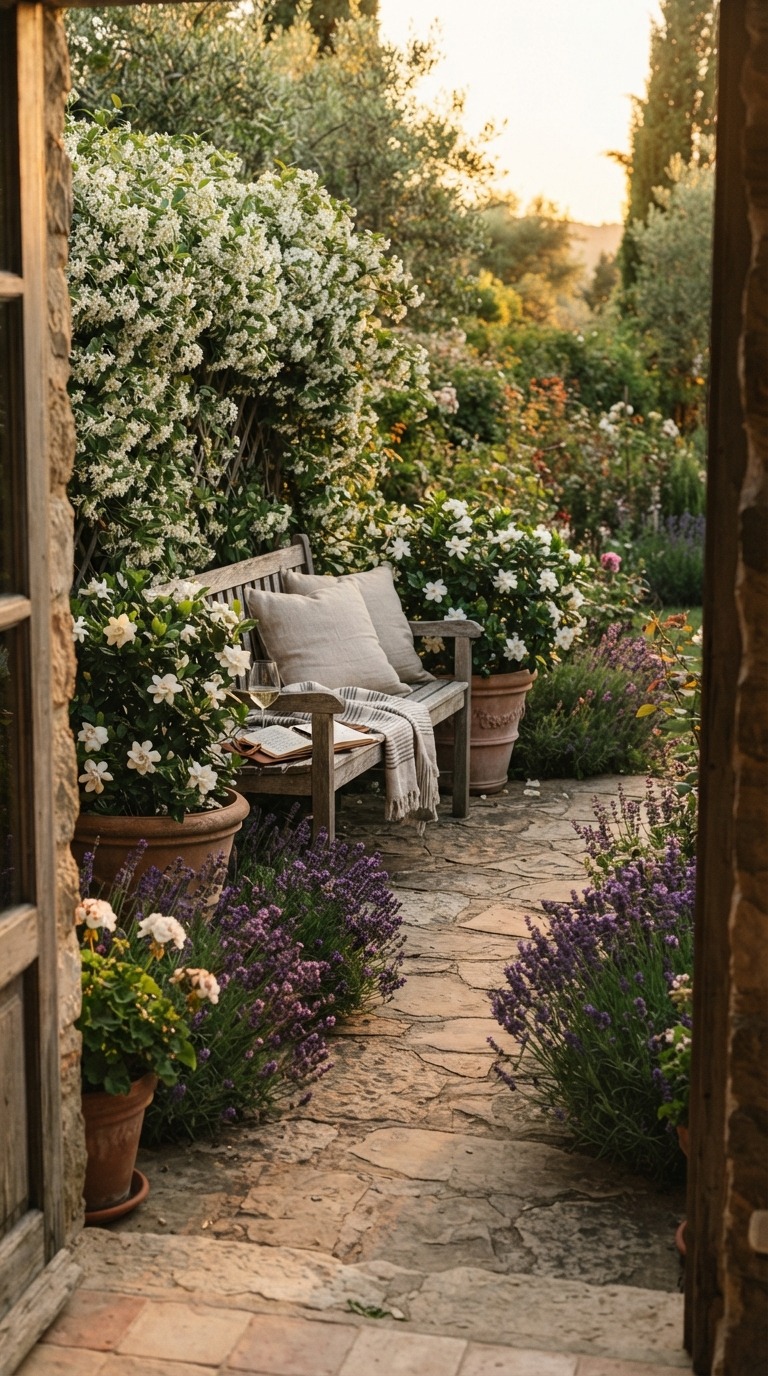
Position your seating area so that the prevailing breeze blows from the planted side toward you — fragrance travels on air currents and the placement of your seat relative to the wind makes the difference between smelling nothing and being enveloped by scent. Combine Star jasmine with Rosa The Generous Gardener, lavender Hidcote, and evening-scented stock planted in containers close to the bench. I set two large terracotta pots of gardenia on either side of my bench and the warmth of the pots in the evening air intensifies the fragrance in a way that feels almost indulgent every time you sit down.
Wooden Pergola With Draping Wisteria
The first spring that wisteria blooms over a pergola in full force, you will stand underneath it and completely understand why people devote entire gardens to this single plant. The hanging purple racemes, some reaching eighteen inches long, release a scent so sweet and so distinctly their own that you will remember that specific afternoon for years. I trained a Wisteria sinensis Blue Moon variety over my cedar pergola and it took three growing seasons to reach full coverage, but the wait was absolutely and completely worth every single day.
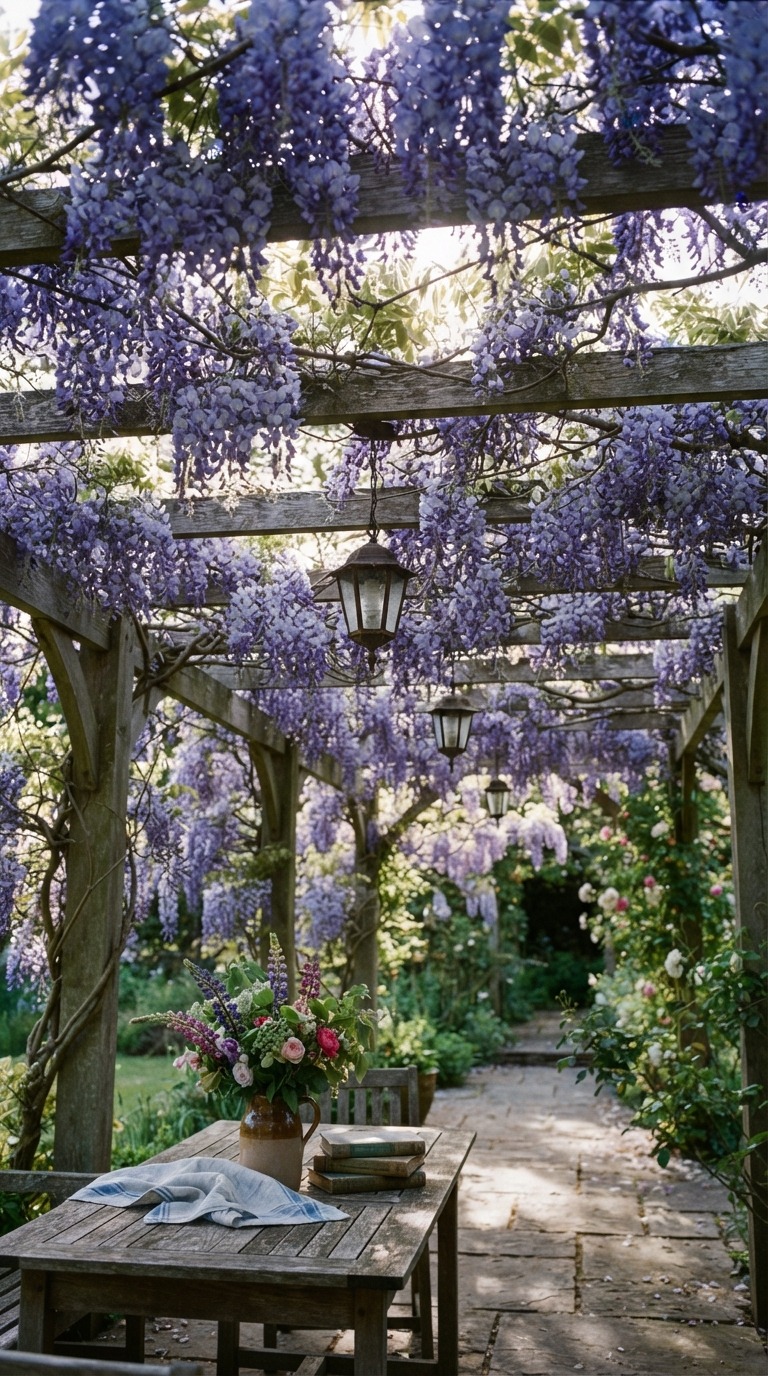
Build or buy a sturdy cedar or pressure-treated pine pergola with crossbeams strong enough to eventually hold a mature wisteria — this plant becomes genuinely heavy and needs serious structural support. Install horizontal galvanized wires between the uprights at twelve-inch intervals to give the stems something to grip and weave through as they grow. Prune wisteria twice yearly — once in August and once in February — cutting the whippy side shoots back hard to encourage flowering spurs rather than leafy vegetative growth. I hung three vintage lanterns from the pergola crossbeams and the combination of lantern light filtering through wisteria leaves on a May evening is something I would genuinely describe as magical without any exaggeration.
Vintage Ornament Collection in Garden Beds
A single garden ornament placed in an obvious spot looks like decoration. A thoughtfully arranged collection of aged stone urns, weathered cast-iron pieces, and mossy garden sculpture half-hidden among the planting looks like history, like the garden has its own long story that predates you. I started collecting aged garden pieces from estate sales and salvage yards about five years ago, and the character they add to a garden is something no new piece can replicate no matter how carefully it is crafted.
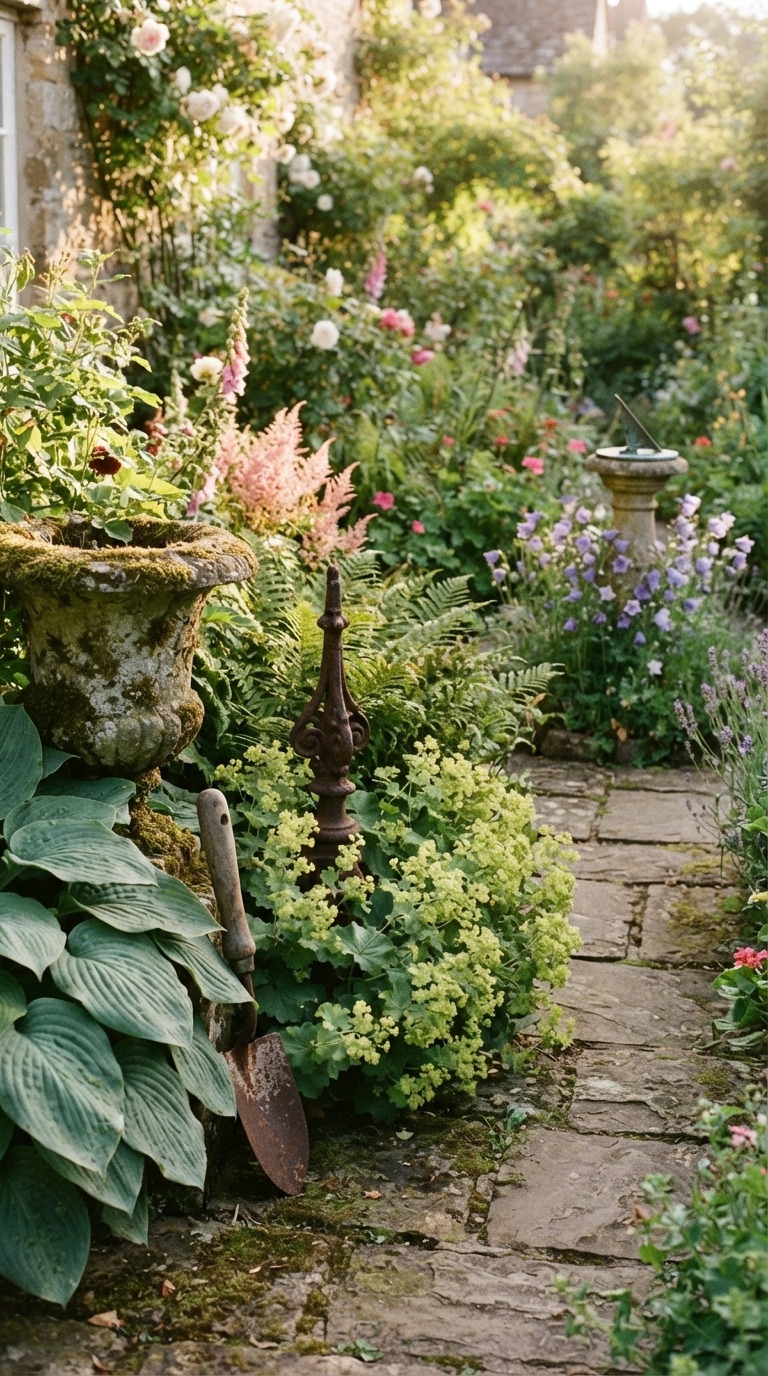
Place your ornaments where they require a moment to discover rather than immediately demanding attention from the garden gate. Tuck a mossy stone urn into the ferns, half-hidden by a hosta leaf. Set a weathered sundial at the end of a border where the path curves so it reveals itself gradually as you approach. I leave my cast-iron pieces to develop their own natural patina of rust and moss because that weathering is exactly what makes them feel genuinely old and genuinely earned by the garden they inhabit.
Arched Flowering Tunnel of Climbing Roses
Walking through a tunnel of climbing roses in full bloom is one of those garden experiences that stays with you for life. The arches close overhead, roses tumble on both sides, the air is thick with scent, and for thirty seconds you are somewhere that feels completely removed from everything ordinary. I built a simple tunnel of six metal arches spaced four feet apart through the center of my kitchen garden and planted White Eden rose on each side — and it has become the single most photographed corner of my entire property.
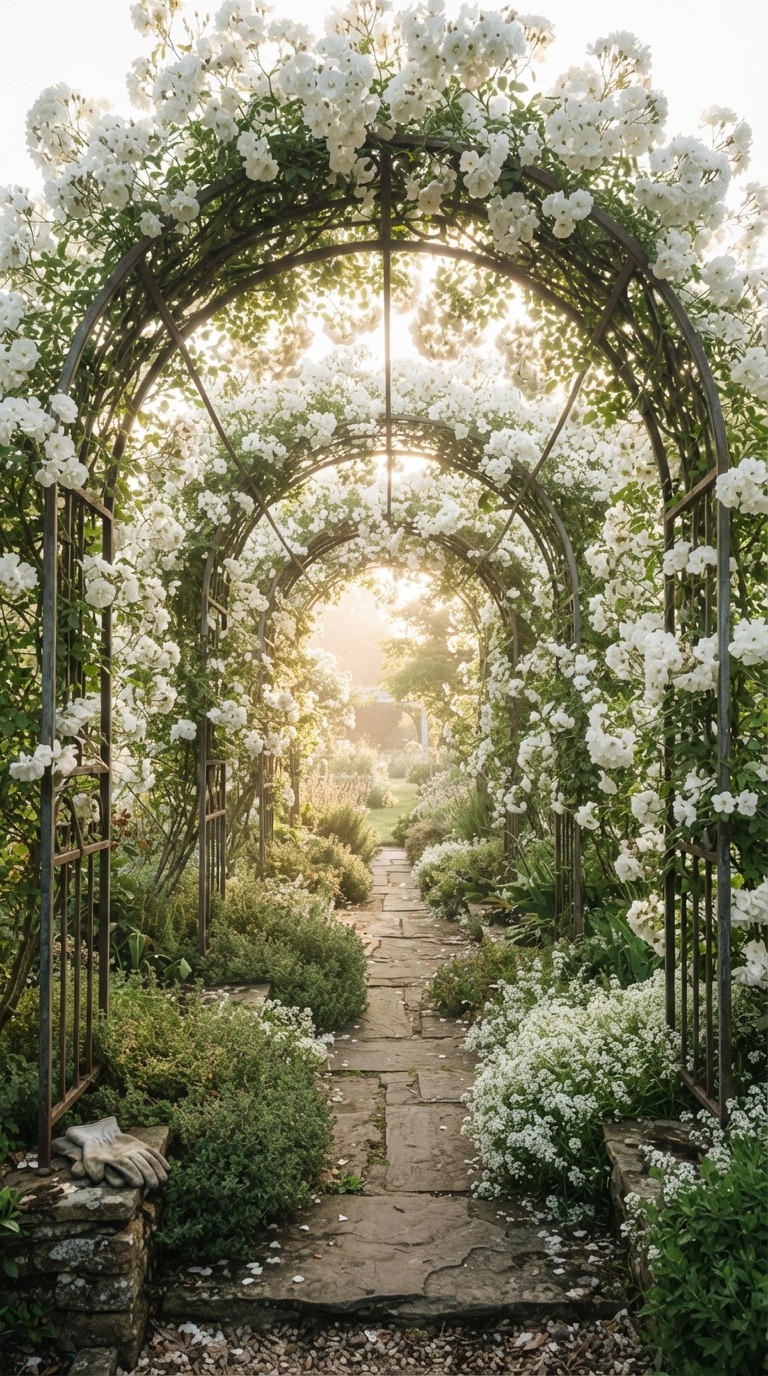
Use metal arches rather than wood — steel or galvanized iron can easily hold the weight of mature climbing roses, which become surprisingly substantial after three or four seasons of growth. Space arches four to five feet apart and plant one rose at the base of each leg, training the canes horizontally along guide wires stretched between arches at twelve-inch intervals to encourage maximum flowering from base to crown. I always underplant the base of each arch with sweet alyssum and creeping thyme, which soften the transition between stone path and metal upright and make the whole structure feel genuinely grown rather than installed.
Recirculating Fountain in a Shaded Corner
Close your eyes for a moment and imagine sitting in your garden on a warm afternoon with the gentle, constant sound of water moving over stone somewhere nearby. That sound changes the entire mood of the space — it softens it, slows it, and adds a layer of sensory richness that plants and lighting alone cannot fully provide. I added a small two-tier cast-stone recirculating fountain to the shaded corner of my garden two summers ago and it immediately became the most calming, most frequently visited corner of the entire outdoor space.
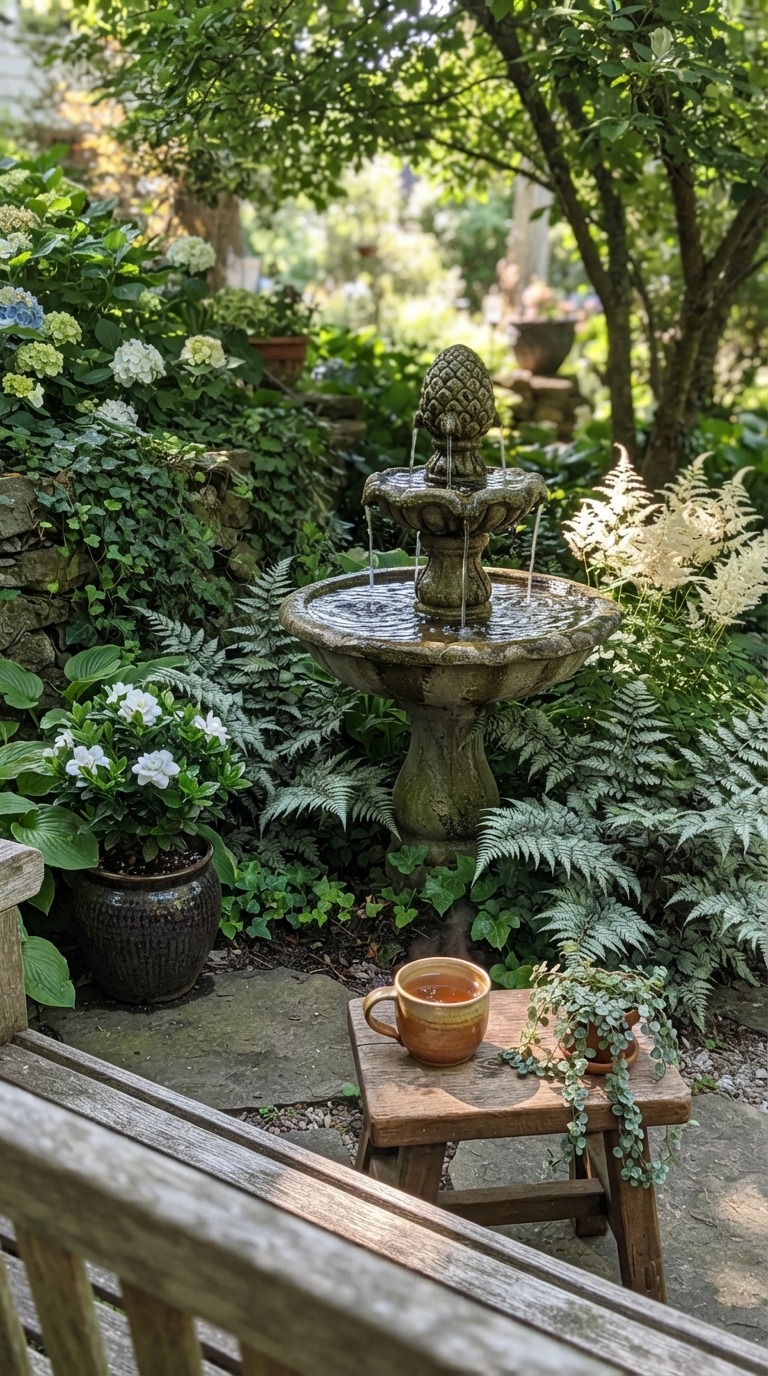
Choose a solar-powered recirculating fountain so you avoid any electrical installation work and can position it freely wherever the atmosphere calls for it. Surround the base with Japanese painted ferns, white astilbe, and dark-leafed heuchera for a planting that frames the water beautifully and stays lush even in the deeper shade where fountains often sit most naturally. I set a simple wooden garden bench three feet from my fountain so the water sound is close enough to be clearly heard above ambient noise, and I planted a container of white gardenia just behind the bench for fragrance that mingles with the cool, damp air that a fountain always creates around itself.
Conclusion
Your backyard does not need to be large or expensive to feel genuinely enchanted. It needs layers, atmosphere, living detail, and one or two ideas that make you stop and feel something real every single time you step outside into it.
Pick just one idea from this list today — a single winding path, one climbing rose, a strand of fairy lights — and begin there. Magic in a garden is never built all at once. It grows slowly, season by season, and that slow unfolding is actually the most beautiful part of the whole wonderful journey.