10 Large Master Bedroom Decor Ideas That Actually Make Your Space Feel Like a Luxury
Have you ever walked into a large master bedroom and thought — this is just… a big empty room? More square footage doesn’t automatically mean more beauty. In fact, oversized bedrooms are one of the trickiest spaces to decorate well. Too little furniture and it feels cold. Too much and it feels chaotic. But here’s the good news: with the right decor ideas, a large master bedroom becomes the most spectacular room in your home. Let’s get into it.
Build a Statement Bed Wall That Anchors the Entire Room
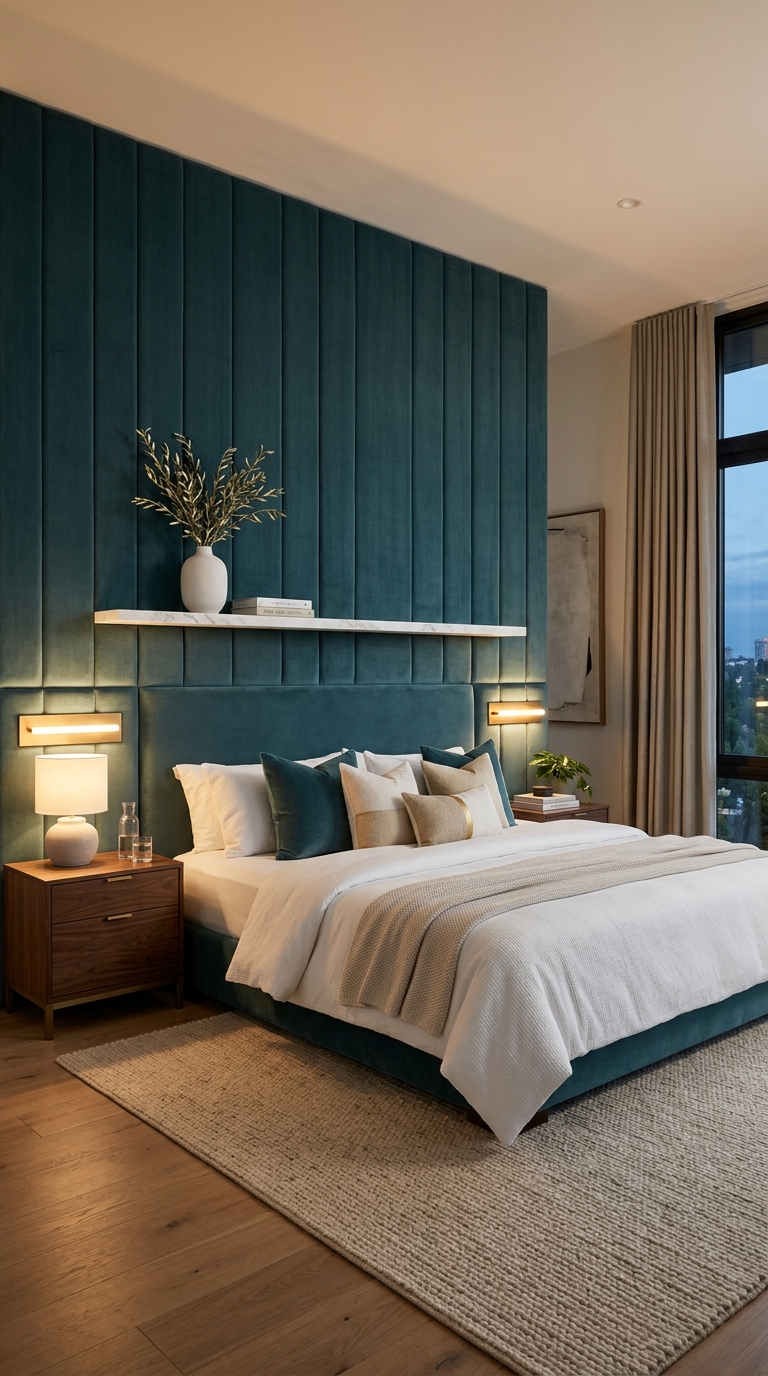
In a large master bedroom, the biggest mistake people make is floating the bed in the middle of a wall with nothing around it. The bed disappears. Instead, design a full bed wall — a dedicated architectural moment that pulls every eye straight to it the second you walk through the door.
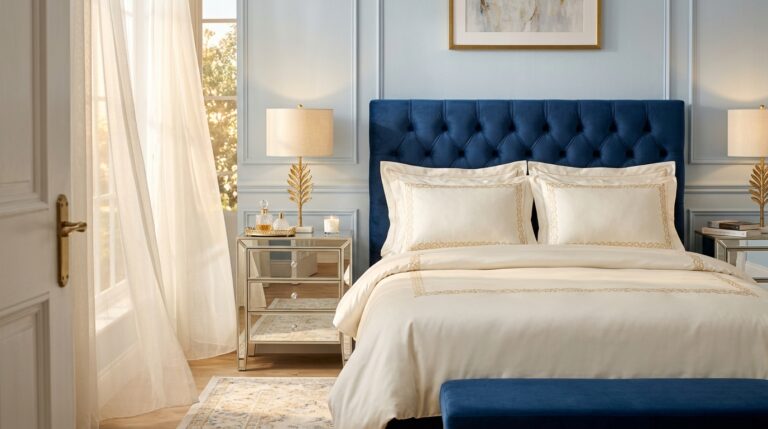
Think floor-to-ceiling upholstered panels in a deep, rich fabric like velvet or bouclé. Choose a color that contrasts your wall — dusty sage panels against warm white walls, or charcoal panels against a creamy backdrop. Mount a custom wood or marble shelf above the headboard that stretches the width of the wall. Add integrated sconces that sit flush into the panel so there are no dangling cords.
- Choose panel fabric that adds texture, not just color
- Keep lighting symmetrical — one sconce on each side of the headboard
- Add a thin floating shelf above the headboard for books or a small vase
- Use a matte finish on panels to avoid reflections at night
This one design move alone transforms the entire scale of the room. It gives the bedroom a backbone — a visual anchor that makes everything else feel intentional.
Create a Dedicated Sitting Area With a Real Design Identity
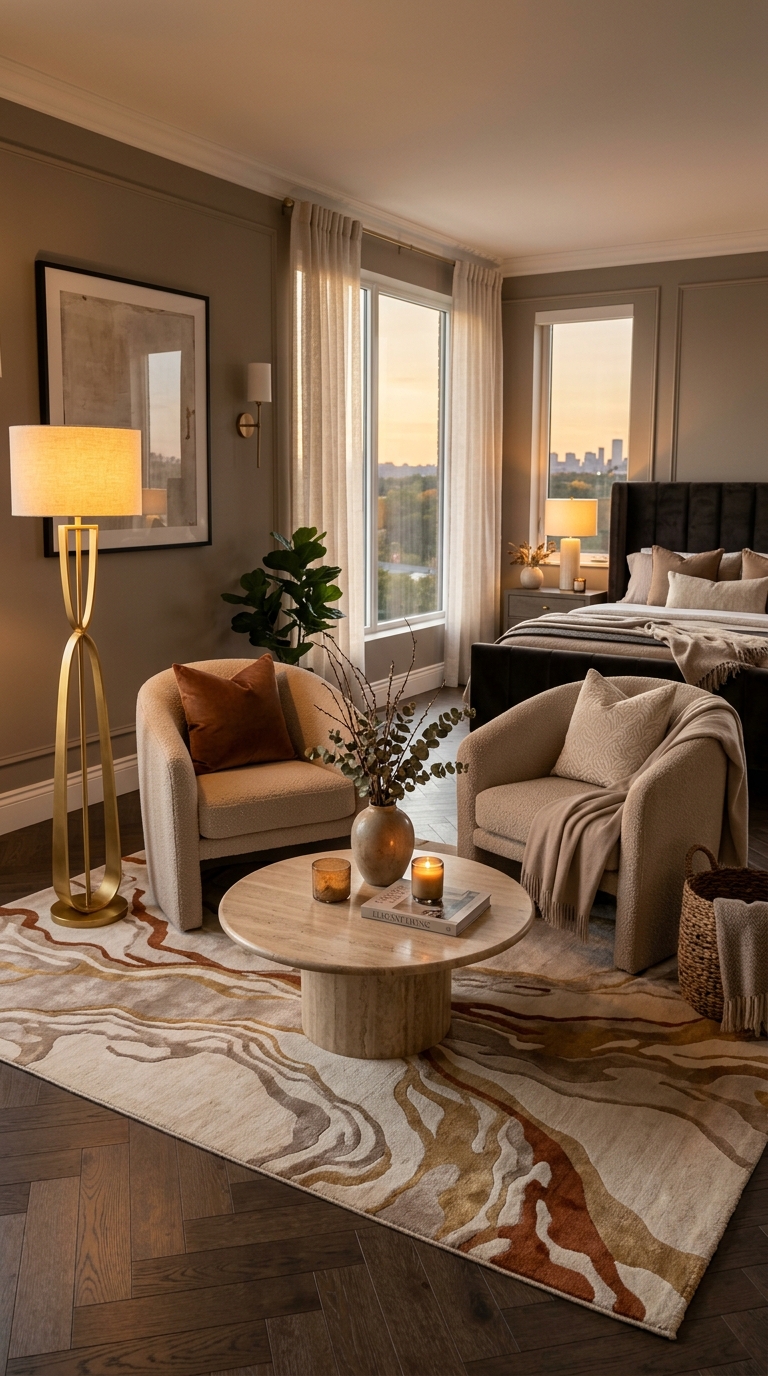
Here’s what separates a well-decorated large bedroom from an average one — a sitting area that actually looks like it belongs in the room rather than being an afterthought. Most people shove two chairs in a corner and call it a day. You’re going to do much better than that.
Define the sitting area with a large area rug — something bold enough to clearly mark the zone. Place two accent chairs that complement but don’t match your bed frame. Add a low round coffee table between them. A small side table with a table lamp completes the grouping.
The secret here is creating visual separation. If your bedroom is one big open space, the sitting area needs its own identity. Use a different lighting fixture above it — a small pendant or a sculptural floor lamp creates a ceiling moment that says “this is its own space.”
- Choose chairs with arms and a high back for elegance
- Layer the rug under both chairs and the coffee table
- Pick a lamp with a warm bulb — 2700K feels cozy, not clinical
- Add a tray on the coffee table with a candle and a small plant
This setup gives you a space to read, drink your morning coffee, or just sit without being on the bed. It’s a lifestyle upgrade you’ll use every single day.
Use a Double-Sided Feature Wall to Add Depth and Drama
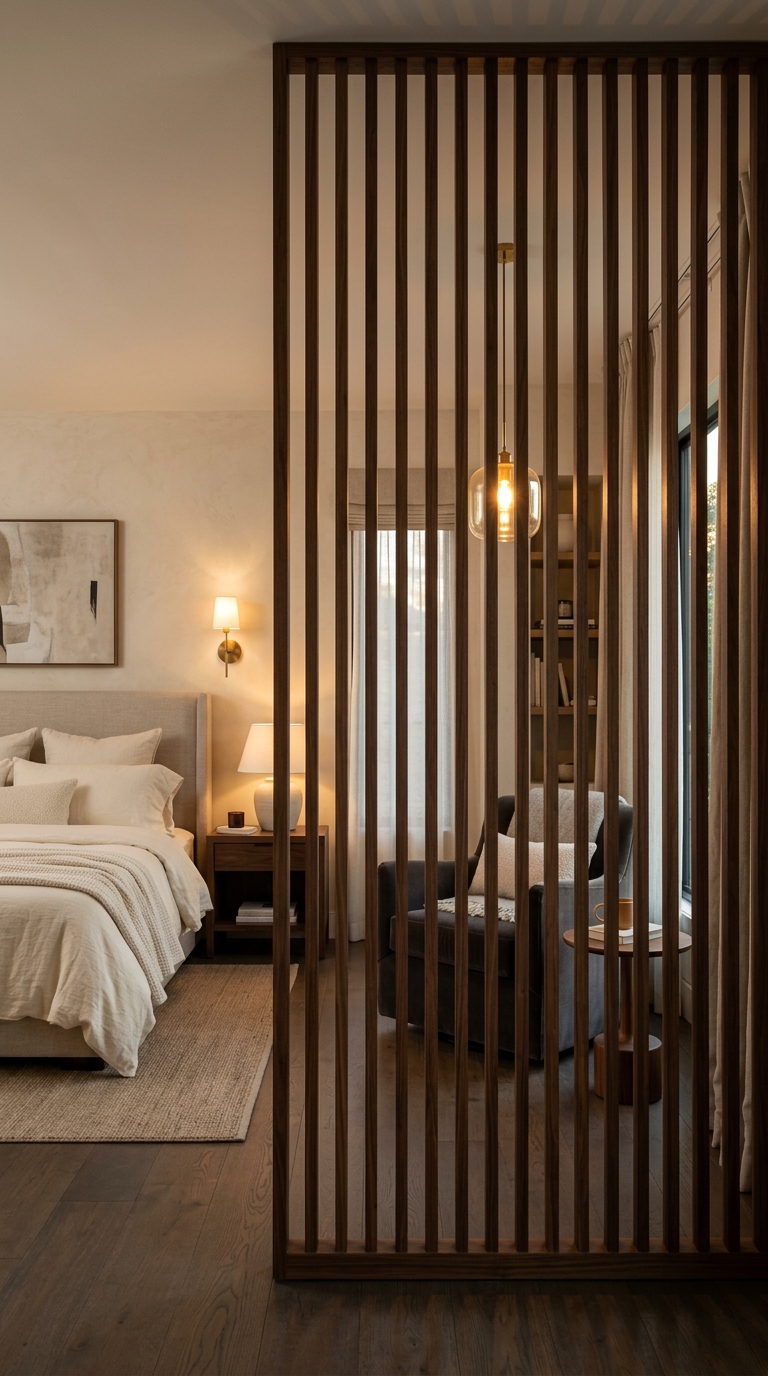
Most bedrooms have one accent wall. A large master bedroom has the space to think bigger — a double-sided feature wall that works as a room divider and a design statement at the same time.
Picture this: a slatted wood partition, open enough to see through slightly, that separates a small dressing area or reading nook from the sleeping area. On the bedroom side, the slats are stained dark walnut. On the dressing side, they’re painted white to brighten the space. The partition doesn’t reach the ceiling — it stops about a foot short — which keeps the room feeling open while still defining zones.
This idea works especially well in bedrooms that are more rectangular than square. Use the depth of the room to your advantage instead of fighting it.
- Go with vertical slats — they make ceilings feel higher
- Leave 10–12 inches between each slat for a breathable, open feel
- Add a small pendant light on each side of the partition
- Use the nook side for a vanity, a reading chair, or a small wardrobe
This idea turns a big empty room into a thoughtfully zoned sanctuary — and it photographs beautifully too.
Go Bold With an Oversized Chandelier That Commands Attention
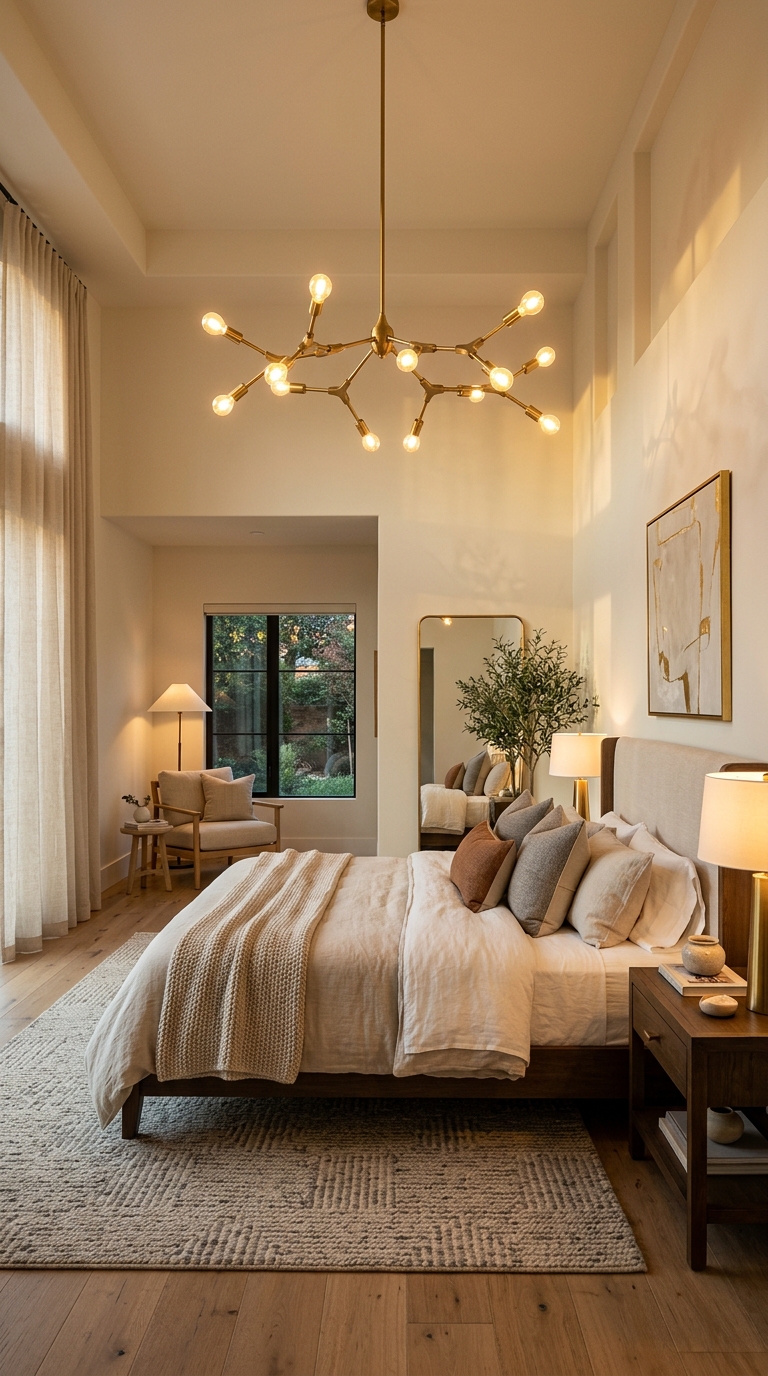
In small rooms, you choose a chandelier that fits. In a large master bedroom, you choose a chandelier that leads. Oversized lighting is one of the fastest ways to make a large bedroom feel intentional and curated rather than just big.
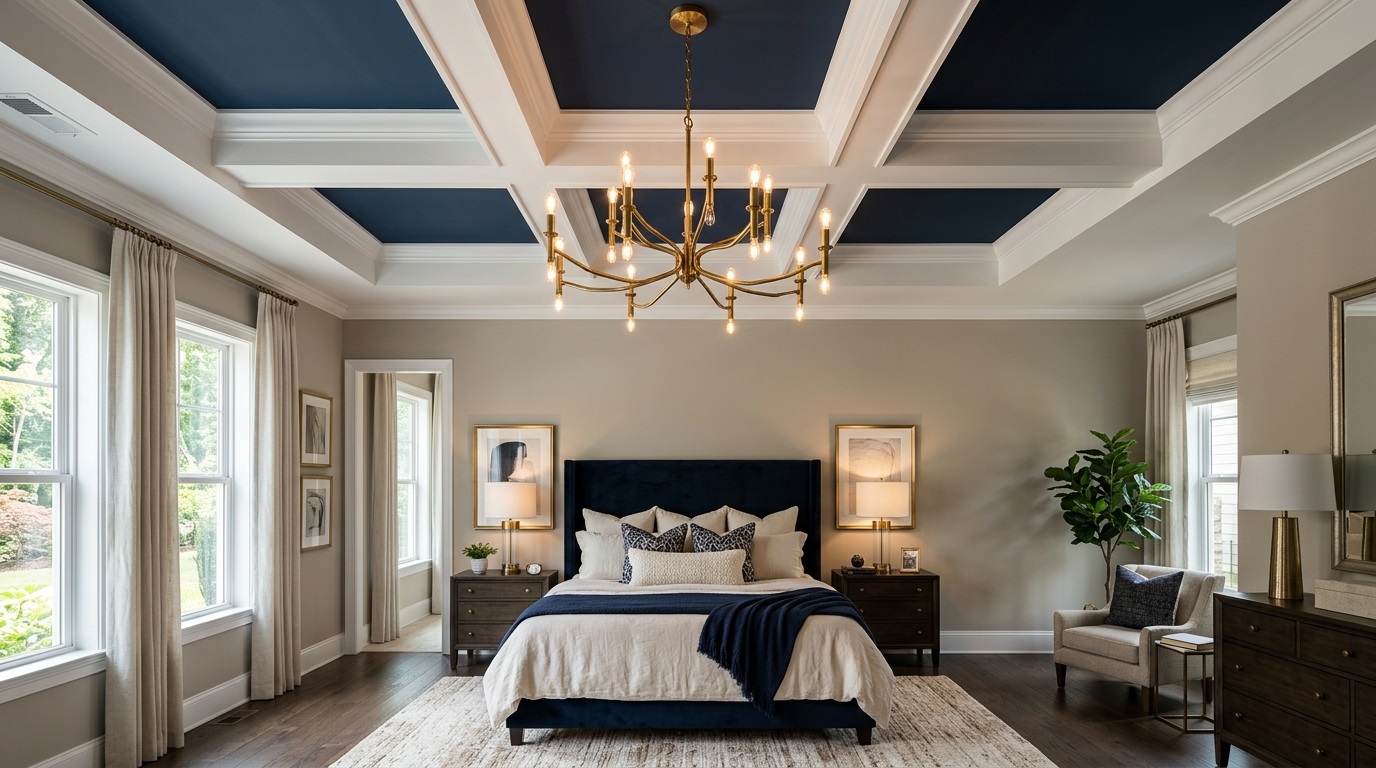
Choose a chandelier that would make most people say “is that too large?” — and hang it anyway. A 36–48 inch wide chandelier in a room with high ceilings creates a jaw-dropping focal point. Whether you go with a branching brass design, a cascading crystal piece, or an organic rattan globe, the chandelier sets the entire mood of the room from the moment someone walks in.
Position it centered over the bed, not centered in the room. This keeps the chandelier connected to the main furniture grouping and feels far more intentional.
- Hang it lower than you think — 7 feet from floor to bottom of fixture is a good rule
- Choose a dimmable option — you need different moods at different times of day
- Match the metal finish to your other hardware (door handles, lamp bases, drawer pulls)
- Avoid anything too ornate if your style leans modern — a sculptural simple shape reads luxury without being fussy
Lighting in a bedroom isn’t just functional — it’s emotional. The right chandelier makes you feel something every time you walk into the room.
Layer Your Flooring to Define Zones Without Walls
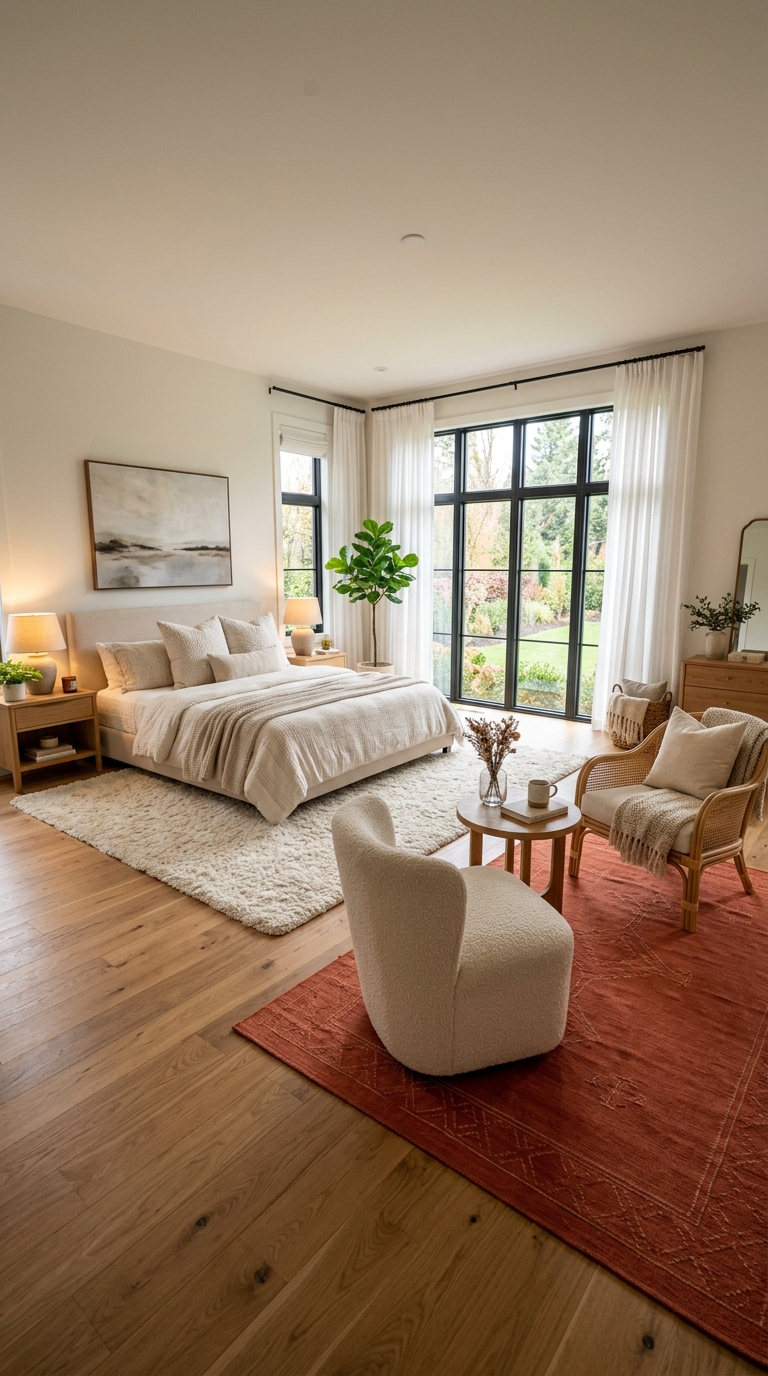
Here’s an idea most bloggers skip right over, and it’s one of the most effective tools in a large bedroom: layered flooring. Instead of using one continuous surface, use two or three flooring materials to visually organize the space.
Start with hardwood or large-format tile throughout. Then layer an ultra-plush rug under the bed area — something at least 9×12 feet so it extends generously past the bed frame on three sides. In the sitting area, use a flatweave or patterned rug in a different but complementary texture. If you have a dressing area, a sheepskin or small runner in front of the wardrobe completes the layered look.
The flooring itself becomes part of the decor. You’re using texture and warmth underfoot to tell the story of each zone.
- Keep rug colors in the same family — vary texture, not the palette
- A rug under the bed should be large enough that you step onto it when getting up
- Avoid rugs that are too busy — in a bedroom, calm patterns or solid tones work best
- Use rug pads under every rug for safety and to prevent slipping
When you layer your flooring thoughtfully, the room tells its own visual story without you having to hang a single piece of art.
Design a Custom Built-In Wardrobe Wall That’s Also Art
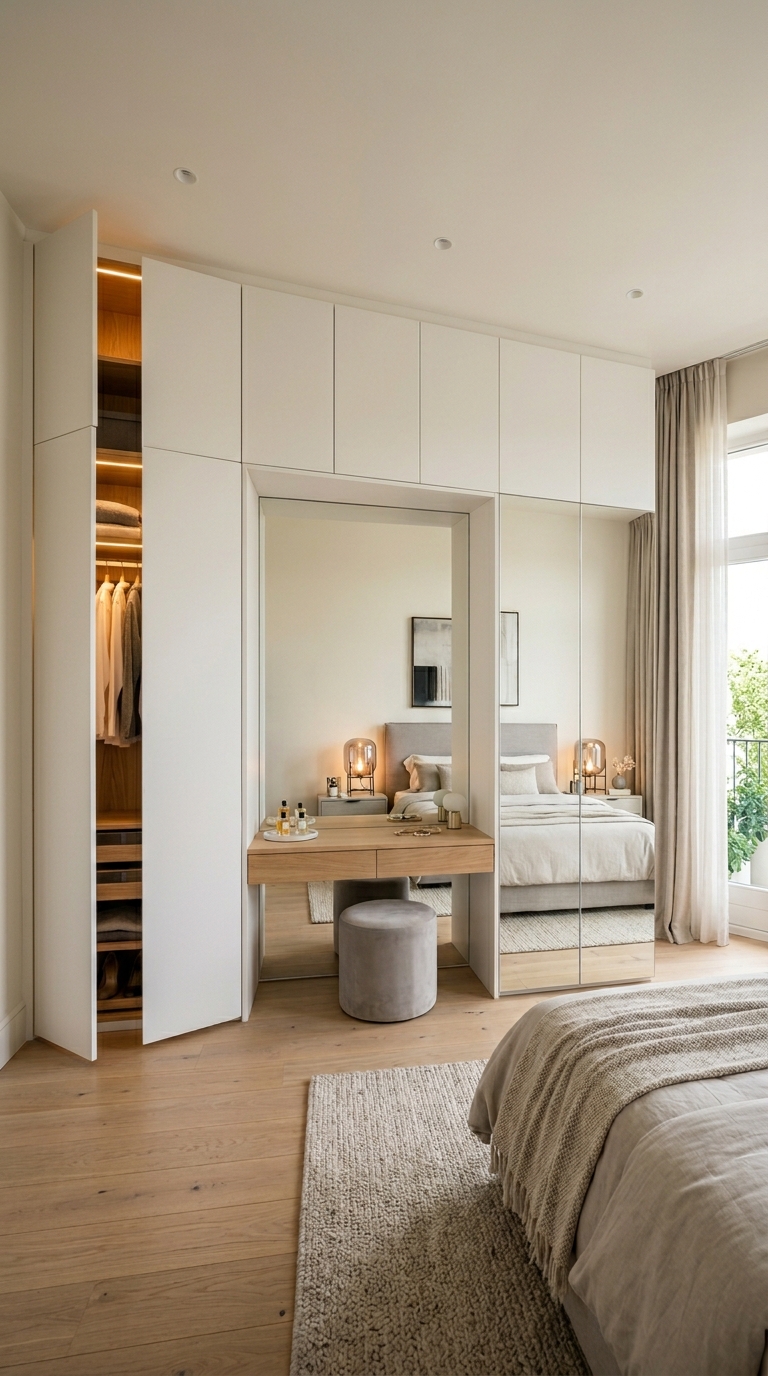
In a large master bedroom, a freestanding wardrobe looks small and isolated. A built-in wardrobe wall, on the other hand, becomes an architectural feature that runs the full width of one wall and looks like it was always meant to be there.
The key is to design it with the same attention you’d give a kitchen — handle style, finish, interior layout, lighting. Choose flat-front doors in a painted MDF or lacquer finish for a clean, modern look. Add push-to-open hardware for a handle-free minimalist aesthetic. Run LED strip lighting along the interior shelf edges so the inside glows when you open the doors.
Go one step further: incorporate a built-in dressing table section in the center of the wardrobe wall, flanked by closed storage on both sides. Add a mirror above the dressing table that fills the entire center panel. This creates a built-in vanity moment that’s completely integrated into the design.
- Use full-height doors — floor to ceiling — to maximize storage and visual impact
- Choose a finish that contrasts with your walls slightly — oyster white on warm white walls, for instance
- Interior lighting makes wardrobe organization dramatically easier
- If budget allows, include pull-out shoe racks and adjustable shelving
Once you build this, you’ll wonder how you ever lived without it. It solves storage and adds beauty at the same time.
Bring the Outdoors In With a Living Wall or Statement Plants
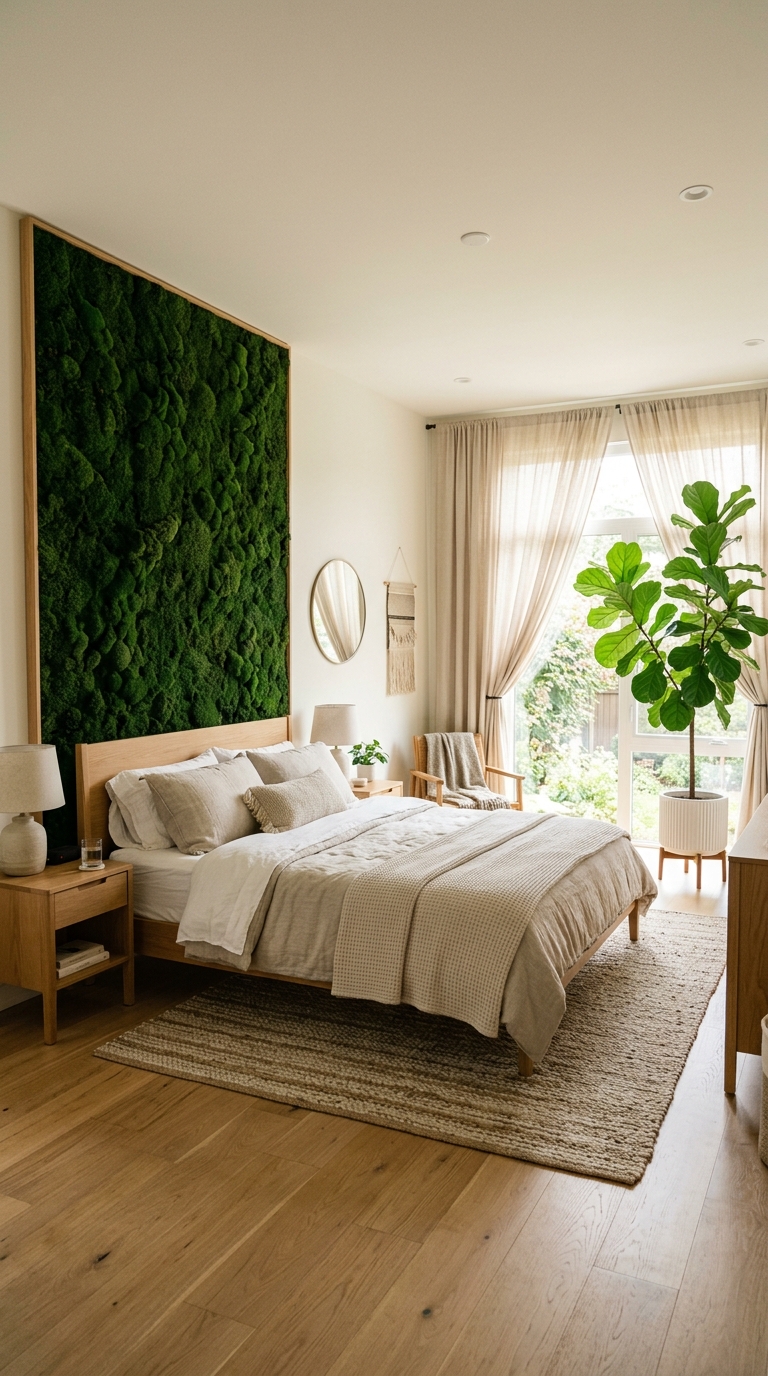
Large bedrooms have wall space most of us would kill for — so use some of it to grow something. A living wall (also called a green wall) on one side of the room adds life, texture, color, and even air quality benefits that no piece of furniture can match.
You don’t need to install a complex irrigation system. A panel of preserved moss in various shades of green — from forest to lime — mounted in a simple frame creates a maintenance-free living wall that looks incredible year-round. For something more alive, a modular planter system with trailing pothos, ferns, or philodendrons works beautifully in a bedroom with indirect natural light.
If a full wall feels too much, go with three oversized statement plants instead: a fiddle leaf fig in the corner, a large snake plant flanking the bed, and a trailing marble queen pothos on a high shelf. Together they bring the same energy as a garden without the maintenance of a full wall system.
- Position plants near windows for natural light — don’t force them into dark corners
- Use ceramic or stone pots, not plastic — the container is part of the decor
- Water your plants on a schedule — a neglected plant looks worse than no plant
- Preserved moss walls need zero watering and look fresh for years
There’s something genuinely calming about sleeping in a room with living things. It shifts the whole atmosphere.
Install a Dramatic Ceiling Treatment That Changes Everything
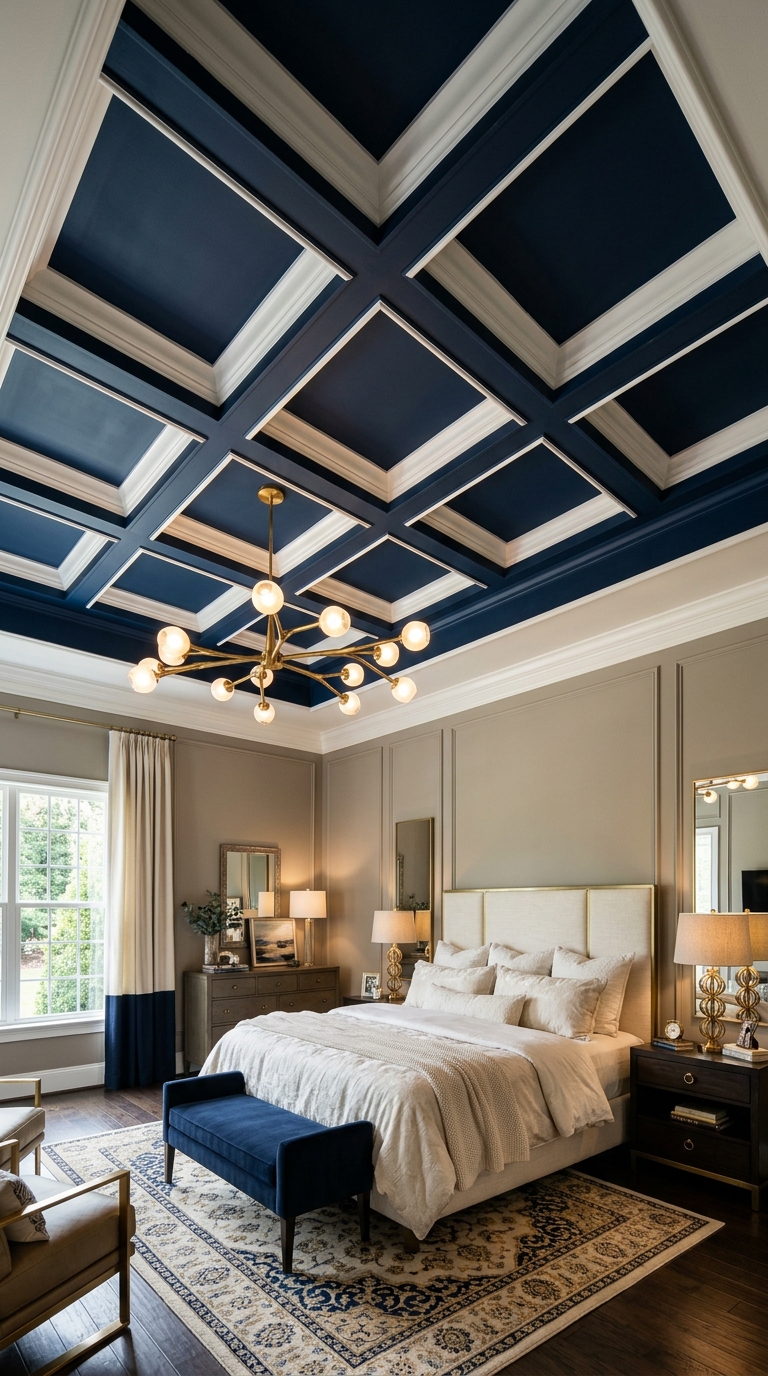
Here’s a design idea that most people don’t even think about when decorating a bedroom — the ceiling. In a large master bedroom with high ceilings, a dramatic ceiling treatment is one of the highest-impact changes you can make, and often at a fraction of the cost of other renovations.
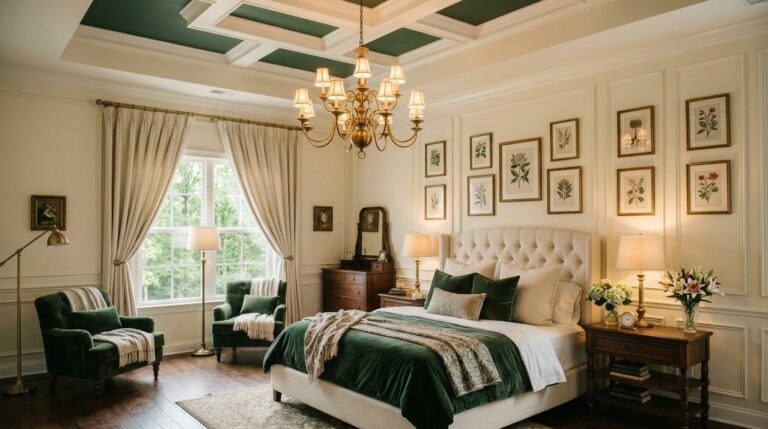
Consider a coffered ceiling with deep beams painted in a contrasting tone — white room, dark navy coffered ceiling. Or add a plaster ceiling rose and run a decorative cornice around the perimeter of the room. For a more modern take, install thin wooden batten strips across the ceiling in a linear pattern, then paint the whole thing — ceiling and battens — the same matte color so it reads as pure texture.
Another option: a painted mural ceiling. Commission a simple cloud wash or an abstract color gradient in soft terracotta and blush tones. When you lie in bed and look up, the ceiling becomes a piece of art.
- A dark ceiling actually makes a room feel more intimate, not smaller
- Use the same cornice detail throughout the room for cohesion
- Ceiling treatments work best when the rest of the room is relatively simple
- Always prime a ceiling before any specialty treatment — adhesion matters
Look up in your bedroom right now. Is the ceiling doing anything for you? If not, this idea is waiting for you.
Design a Moody, Layered Lighting System — Not Just Overhead Lights
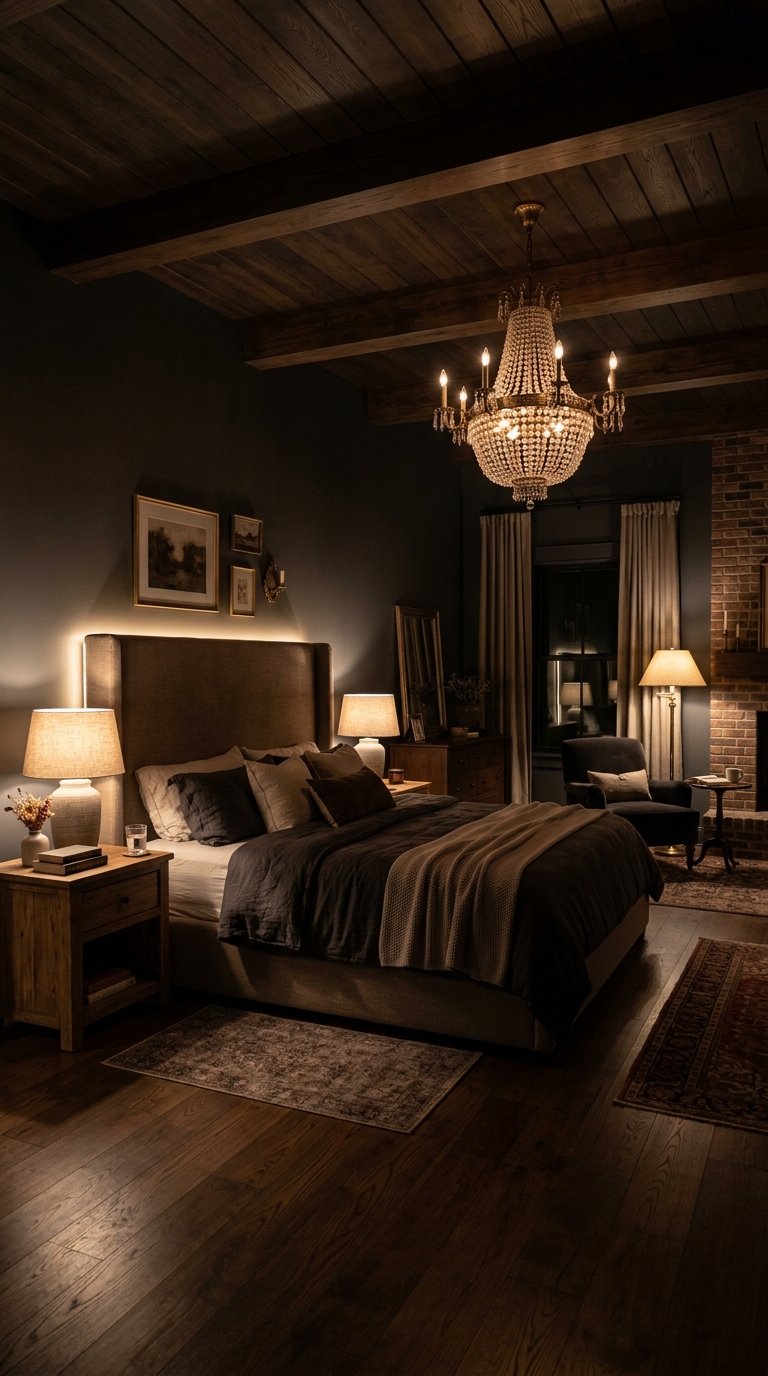
A large master bedroom needs at least four layers of light to feel like a sanctuary. Overhead lighting, task lighting, accent lighting, and ambient lighting all play different roles — and together, they transform how the room feels at every hour of the day.
Start with a dimmer on your main overhead fixture — this alone changes everything. Add bedside table lamps with warm-toned shades for reading. Install LED strip lighting behind your headboard panel for a soft indirect glow that makes the bed look like it’s floating. Finally, add a floor lamp in the sitting area for a fourth light source that you can use independently.
The goal is to never need more than one light source at a time during evening hours. Layered lighting creates mood the same way music does — you choose what you need for how you feel.
- Warm white bulbs (2700K–3000K) only in the bedroom — cool white feels clinical
- Use smart bulbs that let you control color temperature and brightness by app
- Sconces on each side of the bed free up nightstand surface space
- Never use a single harsh overhead light as your only source at night
When you master lighting in a large bedroom, you don’t just illuminate the room — you create a feeling that follows you every time you walk in.
Curate a Gallery Wall That Tells a Personal Story
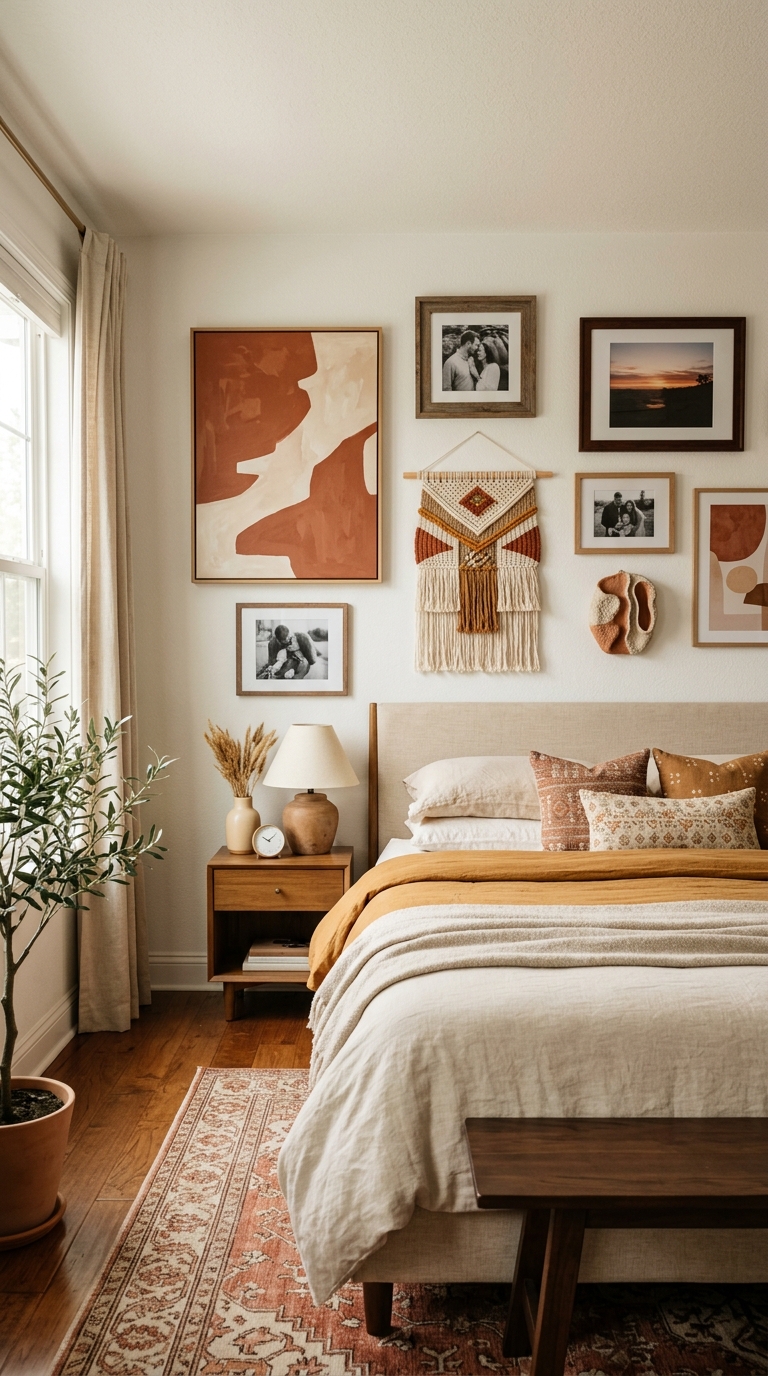
In a large master bedroom, blank walls feel abandoned. A thoughtfully curated gallery wall on one of your larger walls turns that dead space into a personal exhibition — and it makes the room feel deeply inhabited rather than staged.
The most important rule: don’t buy a random set of matching prints. Curate a mix of mediums — one large oil painting or canvas print, two or three framed photographs (personal or professional), a small abstract in a contrasting frame, and one unexpected object like a woven textile or a sculptural wall piece. The combination of different textures and sizes is what makes a gallery wall feel collected rather than assembled.
Keep your palette cohesive — if your room uses warm earth tones, your artwork should echo terracotta, ochre, rust, and cream. Lay the arrangement out on the floor before you put a single nail in the wall. Take a photo of it. Adjust. Then hang.
- Center the largest piece at eye level — everything else radiates from there
- Use consistent matting inside frames for a unified look
- Leave 2–3 inches between frames for breathing room
- Mix frame finishes — natural wood, black, and gold together feel curated, not matchy
A gallery wall in a bedroom is the most personal design choice you can make. It says: someone real lives here, with a life worth looking at.
The Takeaway: Your Large Bedroom Is a Canvas, Not a Challenge
A large master bedroom isn’t a problem to solve — it’s an opportunity most people never get. The ideas above work because each one respects the scale of the space and uses it deliberately. You’re not filling square footage. You’re designing a retreat.
Pick two or three of these ideas that resonate with your style and your budget, and start there. You don’t have to do everything at once. The best rooms in the world were built one intentional decision at a time — and yours can be too.