What Is the 2/3 Rule for Living Rooms?
Some living rooms instantly feel calm, balanced, and beautifully put together the moment you walk in. Others feel awkward, cramped, or strangely unfinished — even when the furniture itself is expensive or stylish. In many cases, the difference comes down to one thing: proportion.
That’s where the 2/3 rule comes in.
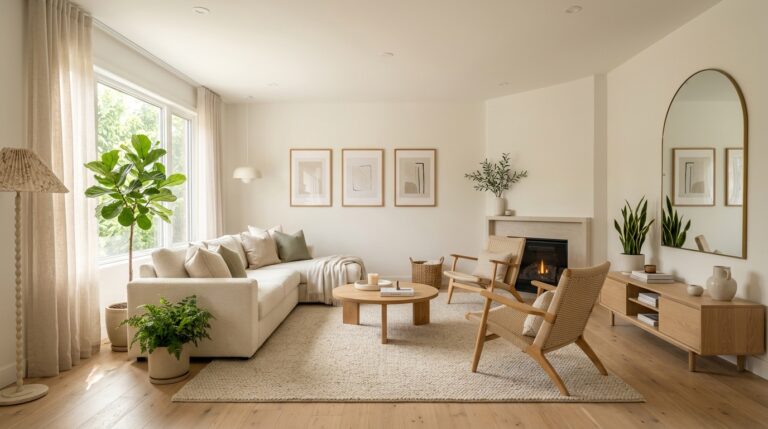
The 2/3 rule is one of the simplest interior design guidelines used to create visual harmony in a living room. Designers use it to help furniture and décor pieces relate to one another in a way that feels balanced instead of overwhelming. Whether you are choosing artwork above a sofa, sizing a coffee table, placing a rug, or arranging furniture on a wall, this rule helps everything feel more intentional and connected.
The best part is that you do not need to be an interior designer to use it. Once you understand the basic idea, you can apply it to almost every part of your living room layout. In this guide, you will learn exactly what the 2/3 rule means, why it works so well, and how to use it with practical real-life examples in your own home.
2/3 Rule for Living Rooms?
The 2/3 rule is a design principle that says a smaller item should be roughly two-thirds the size of the larger item it relates to. In living room design, this proportion creates a sense of balance that feels visually pleasing to the eye.
For example:
- A coffee table should be about two-thirds the length of the sofa
- Artwork above a couch should cover roughly two-thirds of the sofa’s width
- A sofa should usually occupy around two-thirds of the wall behind it
Interior designers often use this guideline because it helps rooms feel naturally balanced without looking too crowded or too empty. When furniture pieces are correctly proportioned, the entire space feels calmer and more cohesive.
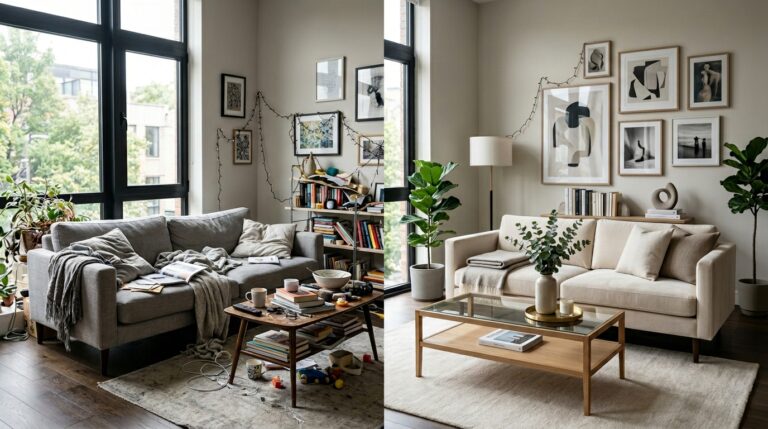
However, the 2/3 rule is not meant to be treated like strict math. It is simply a reliable starting point for creating good scale and proportion. You do not need perfect measurements for it to work. The goal is to avoid extremes — pieces that are far too small can look disconnected, while oversized pieces can make a room feel heavy and cramped.
Why the 2/3 Rule Works So Well
One reason the 2/3 rule is so popular in interior design is because it instantly creates a calmer and more balanced appearance. The human eye naturally prefers proportions that feel harmonious, and this rule helps achieve that without requiring complicated planning.
It also prevents some of the most common living room design mistakes. Tiny artwork floating above a large sofa, rugs that are too small for the seating area, or oversized coffee tables that dominate the room can all make a space feel visually uncomfortable. Using the 2/3 rule helps avoid these problems by keeping furniture and décor in proportion with each other.
Another benefit is that it makes a room feel intentional. Instead of furniture looking randomly placed, every piece feels connected to the overall layout. This creates a more polished and professionally designed appearance, even in smaller or budget-friendly spaces.
Finally, the rule helps maintain breathing room in a layout. Leaving the right amount of open space around furniture prevents the room from feeling cramped while still keeping everything visually connected. The result is a living room that feels comfortable, functional, and easy to enjoy every day.
The Most Common Ways to Use the 2/3 Rule
One of the reasons the 2/3 rule is so useful is because it can be applied to almost every part of a living room. From furniture sizing to wall décor, this simple proportion helps create layouts that feel balanced, comfortable, and visually connected.
Here are the most common ways designers use the 2/3 rule in real living rooms.
Artwork Above a Sofa
Hanging artwork above a sofa is one of the easiest places to apply the 2/3 rule.
Ideal Artwork Width
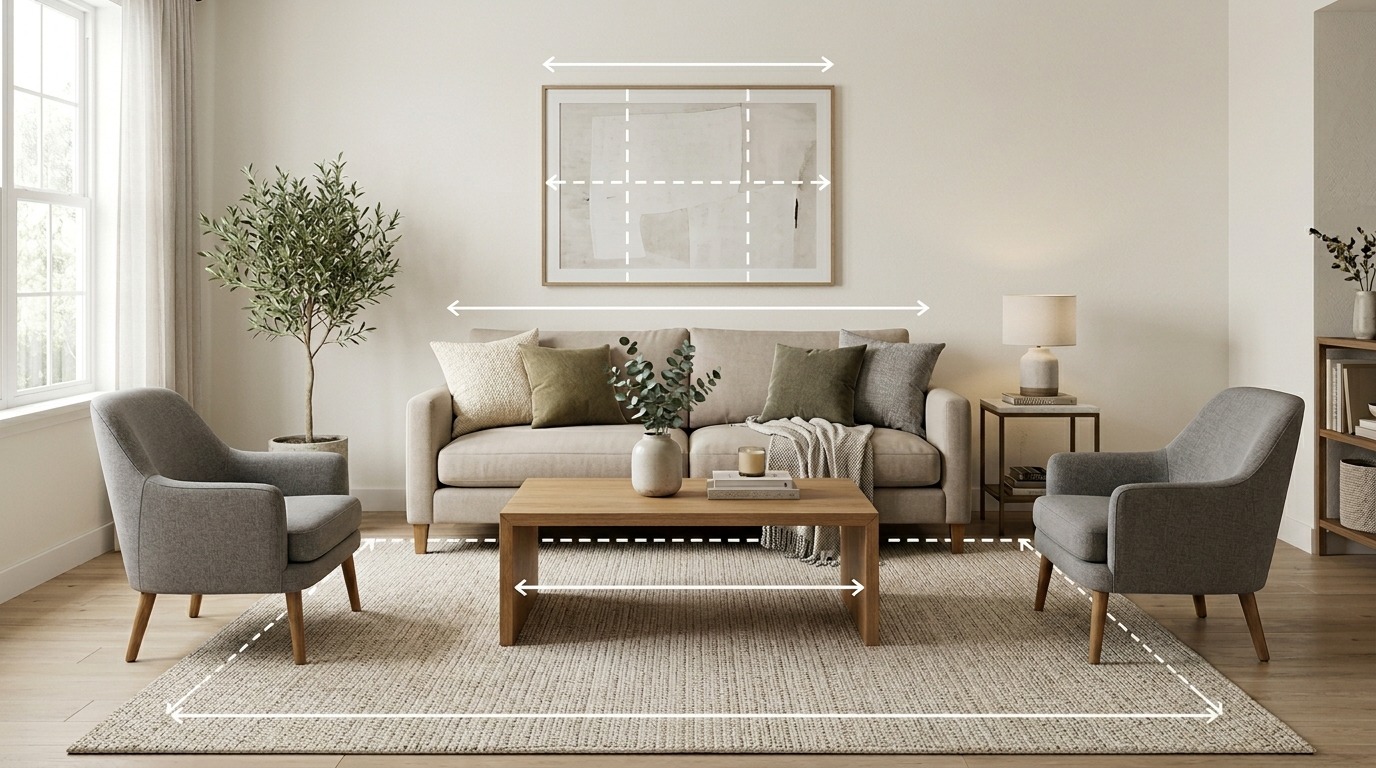
As a general guideline, artwork should span about two-thirds of the sofa’s width. This creates a balanced relationship between the furniture and the wall décor above it.
For example, if your sofa is 90 inches wide, your artwork or grouped wall décor should ideally cover around 60 inches of space.
This proportion matters because scale has a huge impact on how the room feels. Tiny artwork above a large sofa often looks disconnected and awkward, almost like it is floating alone on the wall. On the other hand, artwork that stretches nearly the full width of the sofa can feel too heavy and overwhelming.
The 2/3 proportion creates a comfortable middle ground that feels visually settled and intentional.
Gallery Wall Alternative
The same rule works for gallery walls too. Instead of using one large frame, you can group multiple smaller pieces together so the total arrangement spans roughly two-thirds of the sofa width.
This approach keeps the display balanced while adding more personality and visual interest to the room.
Coffee Table Sizing
Coffee tables are another key element where proportion makes a major difference.
Coffee Table Length
A coffee table should generally be about two-thirds the length of your sofa. This sizing helps the table feel connected to the seating area without overpowering it.
For example, a sofa that measures 84 inches long would pair well with a coffee table around 56 inches in length.
Why This Proportion Matters
Using the correct coffee table size helps keep the entire seating arrangement visually balanced. If the table is too small, the sofa can look oversized and unsupported at the ends. If the table is too large, it can dominate the room and restrict movement.
The 2/3 rule also improves functionality. A properly sized coffee table allows people to move comfortably around the furniture while still keeping drinks, books, and décor within easy reach.
The result is a layout that feels both stylish and practical.
Sofa Placement on a Wall
The 2/3 rule can also help determine whether your sofa is the right size for the wall behind it.
How Much Wall Space a Sofa Should Take
Ideally, a sofa should fill around 60–70% of the wall width it sits against. This creates a balanced composition with enough open space on either side.
For example, if a wall is 12 feet wide, a sofa between 7 and 8 feet long will usually feel proportionate.
Why Leaving Space Matters
Many people assume bigger furniture automatically looks better, but a sofa that stretches wall-to-wall can make a living room feel cramped and visually heavy.
Leaving some empty space around the sofa creates breathing room and helps the layout feel lighter and more relaxed. It also gives you room for side tables, floor lamps, or decorative accents without making the room feel overcrowded.
Balanced spacing is often what separates a comfortable living room from one that feels cluttered.
Matching the Sofa to the Room Size
The overall scale of the sofa should also relate to the size of the room itself.
Sofa-to-Room Proportion
A good rule of thumb is that the sofa should feel roughly two-thirds the scale of the room. The goal is to create a seating area that feels substantial without overwhelming the available space.
A properly scaled sofa helps the room feel grounded while still leaving enough open floor space for movement and balance.
Common Mistakes
One of the most common mistakes is choosing an oversized sofa for a small room. Large sectionals can dominate the space, block pathways, and make the room feel crowded.
The opposite problem happens when a sofa is too small. Tiny seating in a large living room can make the space feel empty and disconnected, especially if the surrounding furniture also lacks scale.
The 2/3 rule helps avoid both extremes by encouraging better proportion between the furniture and the room itself.
Rug Placement and Proportion
Rugs play a major role in defining a living room layout, and size matters more than many people realize.
Choosing the Right Rug Size
A rug should be large enough to anchor the furniture grouping. In most living rooms, at least the front legs of the sofa and chairs should sit on the rug.
This helps visually connect the furniture and creates a clear seating zone within the room.
Why Small Rugs Fail
One of the biggest decorating mistakes is using a rug that is too small for the space. Small rugs often make furniture feel disconnected, as though every piece is floating separately instead of working together.
This floating effect can make even a well-decorated room feel unfinished.
A properly sized rug creates cohesion, improves balance, and helps the entire living room feel more polished and inviting.
How to Apply the 2/3 Rule Step by Step
The best thing about the 2/3 rule is that it is simple enough for anyone to use. You do not need advanced design knowledge or complicated tools to make your living room feel more balanced. Once you understand the process, applying the rule becomes surprisingly easy.
Here is a simple step-by-step approach you can use in your own space.
Step 1: Choose Your Anchor Piece
Start by identifying the main anchor piece in the room. In most living rooms, this is usually the sofa or the primary seating area.
The anchor piece is the largest or most visually dominant item in the space, and the rest of the room should relate proportionally to it. Once you establish this focal point, it becomes much easier to size surrounding furniture and décor correctly.
For example:
- If you are choosing artwork, the sofa becomes the anchor
- If you are selecting a coffee table, the sofa is still the reference point
- If you are choosing a rug, the entire seating arrangement acts as the anchor area
Starting with the anchor helps create a layout that feels intentional instead of random.
Step 2: Measure the Anchor
After choosing the anchor piece, measure its width or length depending on what you are styling.
For example:
- Measure the sofa width for artwork placement
- Measure the sofa length for coffee table sizing
- Measure the wall width for sofa placement
- Measure the seating area when choosing a rug
You do not need perfect precision, but having rough dimensions helps you avoid choosing pieces that are dramatically too large or too small.
Even a quick tape measure can make a huge difference in achieving proper scale.
Step 3: Calculate Two-Thirds
Next, calculate roughly two-thirds of the measurement.
A simple way to do this is to multiply the number by 0.66 or divide it into thirds and use two of those sections.
For example:
- A 90-inch sofa would pair well with artwork around 60 inches wide
- An 84-inch sofa works nicely with a coffee table about 56 inches long
- A 12-foot wall may suit a sofa around 8 feet wide
The goal is not mathematical perfection. You are simply aiming for proportions that feel visually balanced to the eye.
Small variations are completely normal and still work beautifully.
Step 4: Check Room Clearance
Before finalizing your layout, always make sure the room still feels comfortable to move through.
Good design is not just about appearance — it also needs to function well in everyday life.
Pay attention to:
- Walking paths around furniture
- Door swing clearance
- Leg room near coffee tables
- Space between seating pieces
- Easy movement throughout the room
Even correctly sized furniture can feel awkward if everything is packed too tightly together.
The best living rooms balance both proportion and practicality.
Is the 2/3 Rule Always Exact?
Although the 2/3 rule is incredibly useful, it should never feel restrictive.
A Flexible Guideline, Not a Strict Formula
The purpose of the rule is to create visual balance, not perfect mathematics. Interior designers often use it as a starting point rather than a hard rule that must be followed exactly.
A piece that is slightly larger or smaller than the exact two-thirds measurement can still look fantastic if the room feels balanced overall.
In fact, trying to force exact measurements can sometimes make a room feel overly staged or unnatural.
The real goal is harmony:
- Avoid pieces that feel dramatically undersized
- Avoid furniture that overwhelms the space
- Aim for comfortable visual proportions
If the room feels calm, connected, and easy to move through, the rule is working.
When You Can Break the Rule
There are many situations where adjusting the 2/3 rule makes complete sense.
Small Apartments
Compact living rooms often require more flexibility. In smaller spaces, furniture may need to be slightly scaled down to maintain open walking space and prevent crowding.
Oversized Statement Pieces
Sometimes a dramatic oversized artwork or bold coffee table is intentionally used to create impact. In these cases, breaking the rule can become part of the room’s personality.
Unique Room Layouts
Not every living room is perfectly shaped. Awkward corners, open-concept layouts, fireplaces, and unusual architecture may require custom proportions that work better for the specific space.
The key is understanding the rule first so you know when and how to bend it successfully.
Common Living Room Design Mistakes the 2/3 Rule Fixes
Many living room problems actually come down to poor proportion. The 2/3 rule helps correct some of the most common decorating mistakes people make.
Tiny Rugs
Small rugs are one of the biggest design errors in living rooms. They make furniture feel disconnected and create a floating effect where nothing visually belongs together.
A properly sized rug helps anchor the entire seating area and instantly makes the room feel more cohesive.
Oversized Coffee Tables
Coffee tables that are too large can overwhelm a seating area and make movement difficult. They often leave little space for walking or relaxing comfortably.
Using the 2/3 rule helps maintain balance between the table and the sofa while improving functionality.
Small Artwork Above Large Sofas
Tiny artwork above a wide sofa often looks unfinished and visually lost on the wall.
Choosing artwork that spans roughly two-thirds of the sofa width creates a more polished and professionally styled appearance.
Furniture Pushed Too Close Together
Many people overcrowd their living rooms by placing furniture too tightly together.
Even beautifully sized furniture can feel uncomfortable if there is no breathing room between pieces. The 2/3 rule encourages spacing that feels open, balanced, and comfortable.
Empty-Looking Walls
Large blank walls with undersized furniture can make a room feel cold and incomplete.
Correctly scaled furniture and décor help fill the space proportionally without making the room feel cluttered.
Quick Examples of the 2/3 Rule in Real Living Rooms
Sometimes the 2/3 rule feels abstract until you see it applied in real-life situations. These simple examples show how it works across different parts of a living room.
Example 1: Sofa and Artwork
Imagine a standard three-seater sofa. Instead of choosing a small frame that looks lost on the wall, you select artwork (or a grouped set of pieces) that spans roughly two-thirds of the sofa’s width.
The result is a visually grounded focal point. The artwork feels connected to the sofa rather than floating above it, and the wall suddenly feels intentionally styled instead of unfinished.
Example 2: Sofa and Coffee Table
Now picture the same sofa with a coffee table placed in front of it.
Using the 2/3 rule, the coffee table is sized to be about two-thirds the length of the sofa. This creates a natural balance between seating and surface space.
The coffee table no longer feels oversized or too small. Instead, it fits comfortably within the seating zone, making the entire arrangement feel structured and easy to use.
Example 3: Rug and Seating Area
In this example, the rug defines the entire seating zone.
Rather than choosing a small rug that sits under only part of the furniture, the rug is large enough that the seating arrangement visually “lands” on it. At least the front legs of the sofa and chairs sit on the rug, creating a unified base.
This makes the room feel grounded, connected, and far more cohesive than a layout where furniture appears to float separately.
Expert Design Insights About the 2/3 Rule
The 2/3 rule is widely used by interior designers because it consistently produces balanced and visually pleasing spaces.
What Designers Say
Design professionals often emphasize proportion as one of the most important elements of interior layout. According to JL Coates, the 2/3 rule helps create layouts that feel naturally settled, avoiding the common mistake of mismatched furniture scaling.
Kate Moynihan highlights how the rule brings a calming effect to a room by ensuring that objects relate to each other in a visually harmonious way. When proportions feel right, the entire space feels more relaxing and organized.
Similarly, Real Simple discusses how balanced living room layouts depend heavily on scale, noting that properly sized furniture improves both aesthetics and functionality. The consistent message across experts is simple: proportion matters more than individual pieces.
Final Thoughts
The 2/3 rule is one of the easiest and most effective ways to instantly improve a living room layout. It takes something that often feels complicated — interior design — and turns it into a simple, usable guideline.
Instead of treating it like a strict formula, think of it as a starting point. A way to guide your decisions so your furniture and décor feel naturally balanced.
When proportions are right, everything else falls into place. A well-balanced living room doesn’t just look better — it feels better. Comfortable, polished, and intentionally designed without trying too hard.
FAQ Section
What is the 2/3 decorating rule?
The 2/3 decorating rule is a design guideline that suggests a smaller element in a room should be about two-thirds the size of the larger piece it relates to, helping create visual balance and harmony.
Does the 2/3 rule work in small living rooms?
Yes, but it should be applied flexibly. In smaller spaces, proportions may need slight adjustments to maintain enough walking space and avoid overcrowding.
How do I calculate the 2/3 rule for furniture?
Measure the larger piece (like a sofa), then multiply its size by roughly 0.66. This gives you a general target size for the related furniture or décor.
Should a coffee table always be two-thirds the sofa size?
It is a strong guideline, but not mandatory. Most designers use it as a starting point to ensure balance, not as a strict rule.
Can I break the 2/3 rule in interior design?
Yes. The rule can be adjusted for small spaces, unique layouts, or when using intentional statement pieces. The goal is visual balance, not rigid math.