12 Apartment Decorating on a Budget Ideas
You just signed the lease. You walk in, look around at four bare walls and a sad overhead light, and suddenly your Pinterest board feels like it belongs to someone with a completely different bank account. Sound familiar? Here’s the truth nobody tells you upfront — a beautiful apartment has nothing to do with how much money you spend. It has everything to do with how creatively you think.
We’ve been where you are. And after testing every trick in the book — from thrift store flips to renter-friendly wall magic — we pulled together the 12 apartment decorating on a budget ideas that genuinely transform a space without making you feel guilty at checkout. These are not fluff tips. These are real, room-changing moves you can start this weekend.
Let’s get into it.
Build a Gallery Wall With Thrifted Frames
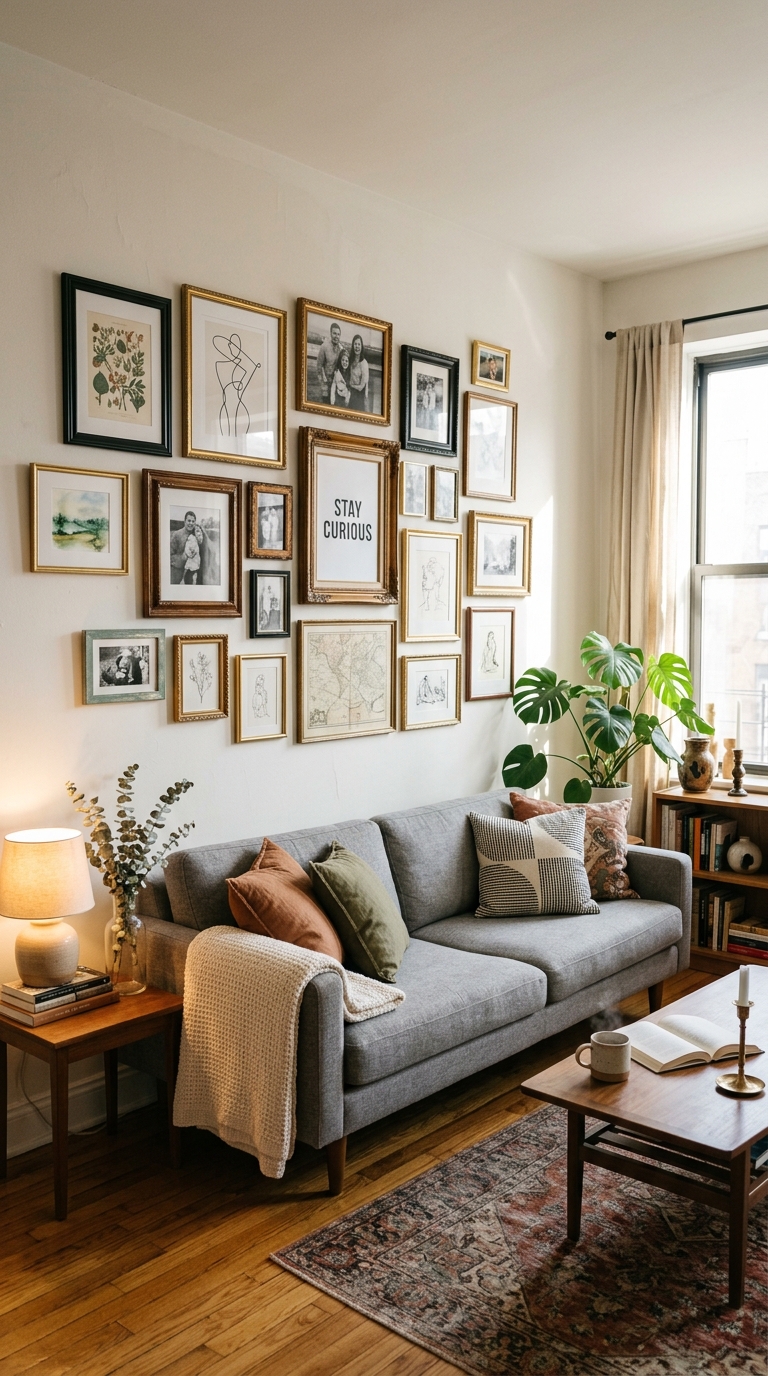
Nothing kills a bare wall faster than a gallery wall done right. The catch? You do not need to spend $40 per frame at HomeGoods. Your local Goodwill, Facebook Marketplace, and weekend garage sales are hiding gold.
Here is how to pull it off without it looking like a random mess:
- Pick a unifying element — same frame color, same mat style, or same art theme. Consistency is what separates a curated wall from clutter.
- Print your own art from free sites like Unsplash or Canva, or grab printable art packs on Etsy for under $5.
- Lay everything out on the floor first, take a photo, then transfer it to the wall. This saves you from fifteen unnecessary nail holes.
- Mix sizes intentionally — one large anchor piece surrounded by smaller ones creates visual hierarchy.
Real talk: a gallery wall we put together for a studio apartment in Atlanta cost exactly $23. Three frames from Goodwill, two printed from home, one IKEA Ribba frame on clearance. Guests consistently compliment it.
Use Removable Wallpaper to Create an Accent Wall
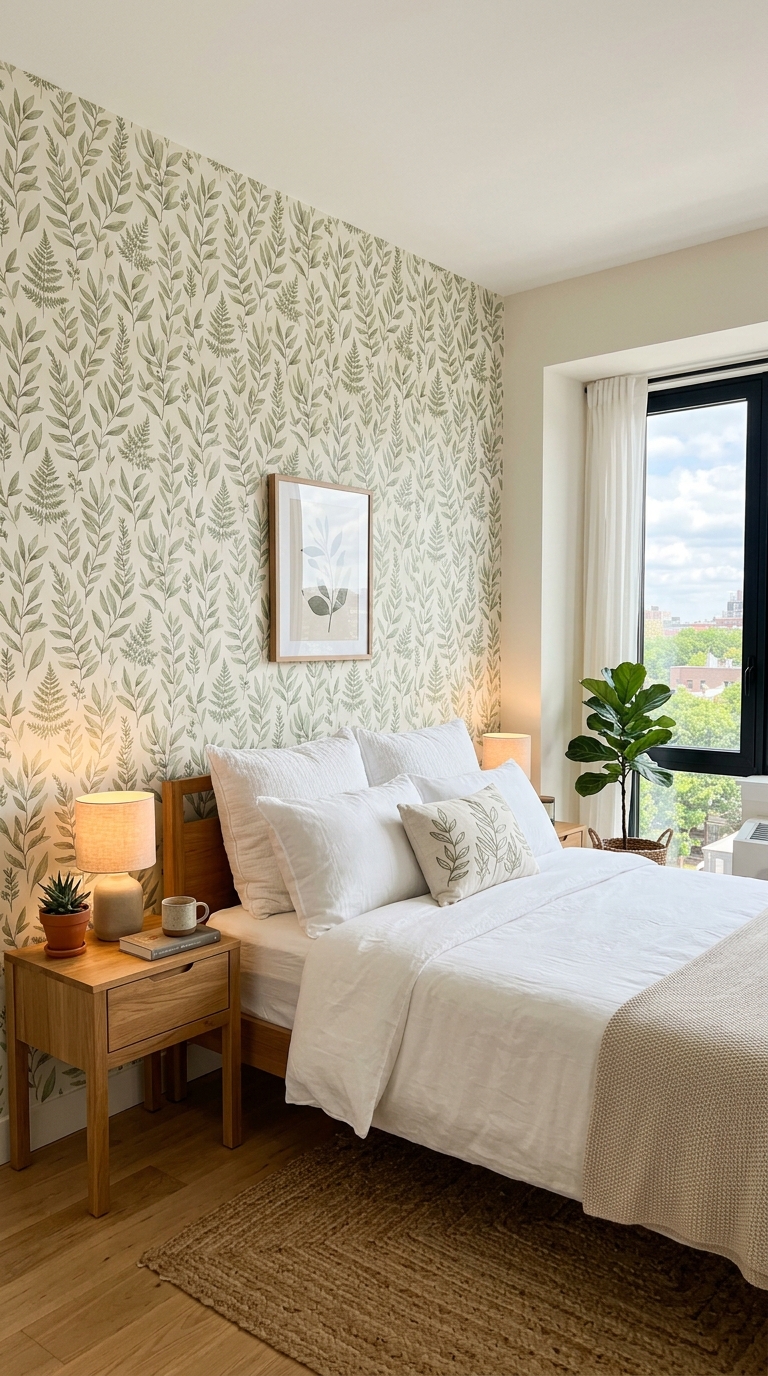
If your lease says “no painting,” removable peel-and-stick wallpaper is your best friend. The quality has jumped dramatically in the last few years — some patterns look so real that guests genuinely ask who painted your wall.
What makes this idea so powerful for renters:
- You apply it yourself with no professional help needed — most brands go up in under two hours.
- When you move out, it peels off cleanly without damaging the wall (test a small corner first, always).
- Covering just one wall behind your sofa or bed creates a dramatic focal point that changes the entire feel of the room.
- Brands like Chasing Paper, Tempaper, and even Amazon’s budget options offer stunning geometric, botanical, and textured patterns.
The visual impact versus the cost ratio here is unbeatable. A 28-square-foot roll runs between $35 and $55 and transforms a bedroom wall into something that looks like a designer touched it.
Swap Out Lighting Fixtures and Add Layered Lighting
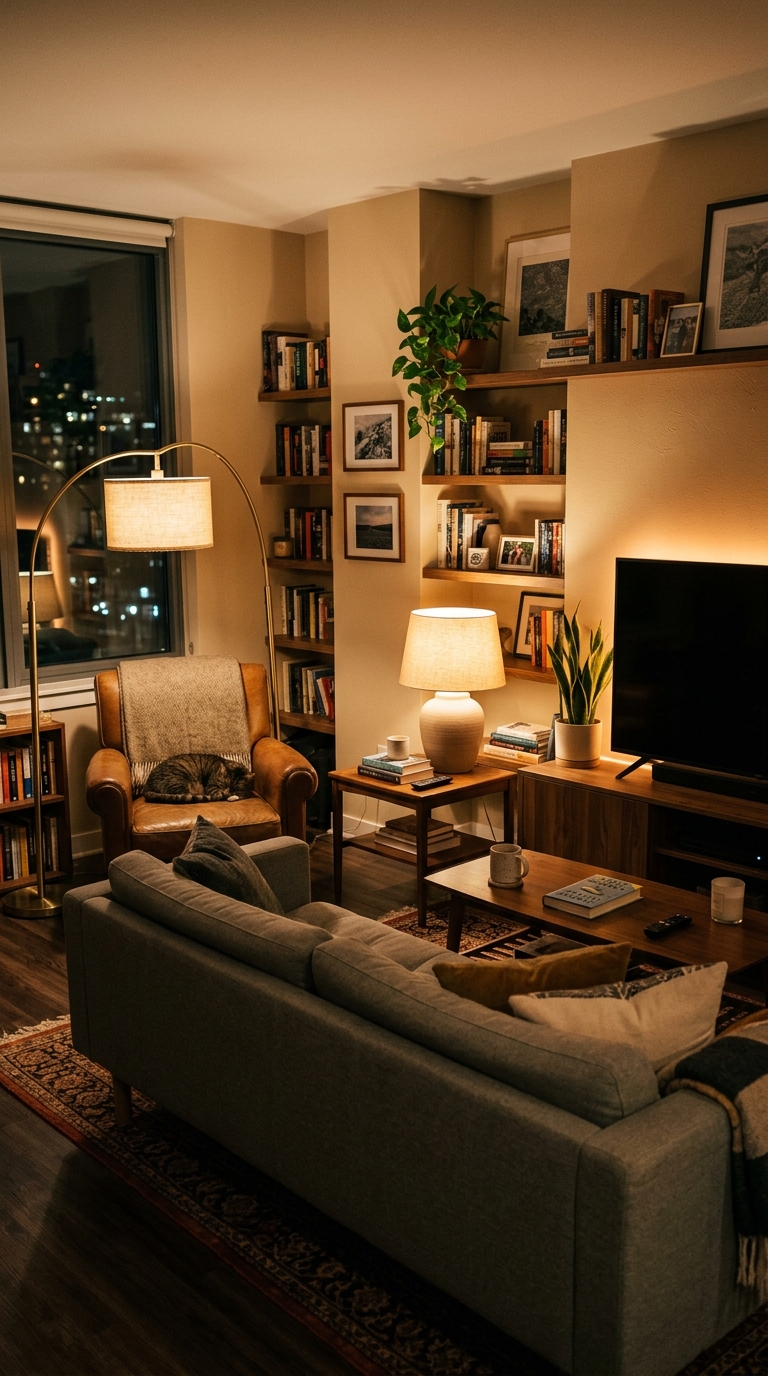
The single biggest mistake renters make is living under the original overhead lighting. That flat, cold, builder-grade ceiling light is doing your apartment zero favors. Changing your lighting setup costs less than $60 and creates a transformation that feels expensive.
Here is the layered lighting approach that interior designers actually use:
- Floor lamps in corners push warm light upward and outward, making a room feel bigger.
- Table lamps on side tables or shelves create intimate pools of light that feel cozy and intentional.
- LED strip lights behind your TV, under shelves, or along headboards add depth and a modern edge.
- Swap a harsh white bulb for a warm 2700K bulb in any existing fixture — this alone changes the entire mood.
You can swap most apartment light fixtures back before you move out, so do not be scared to replace that overhead light with a pendant or a drum shade fixture you found on clearance.
Invest in One Quality Area Rug
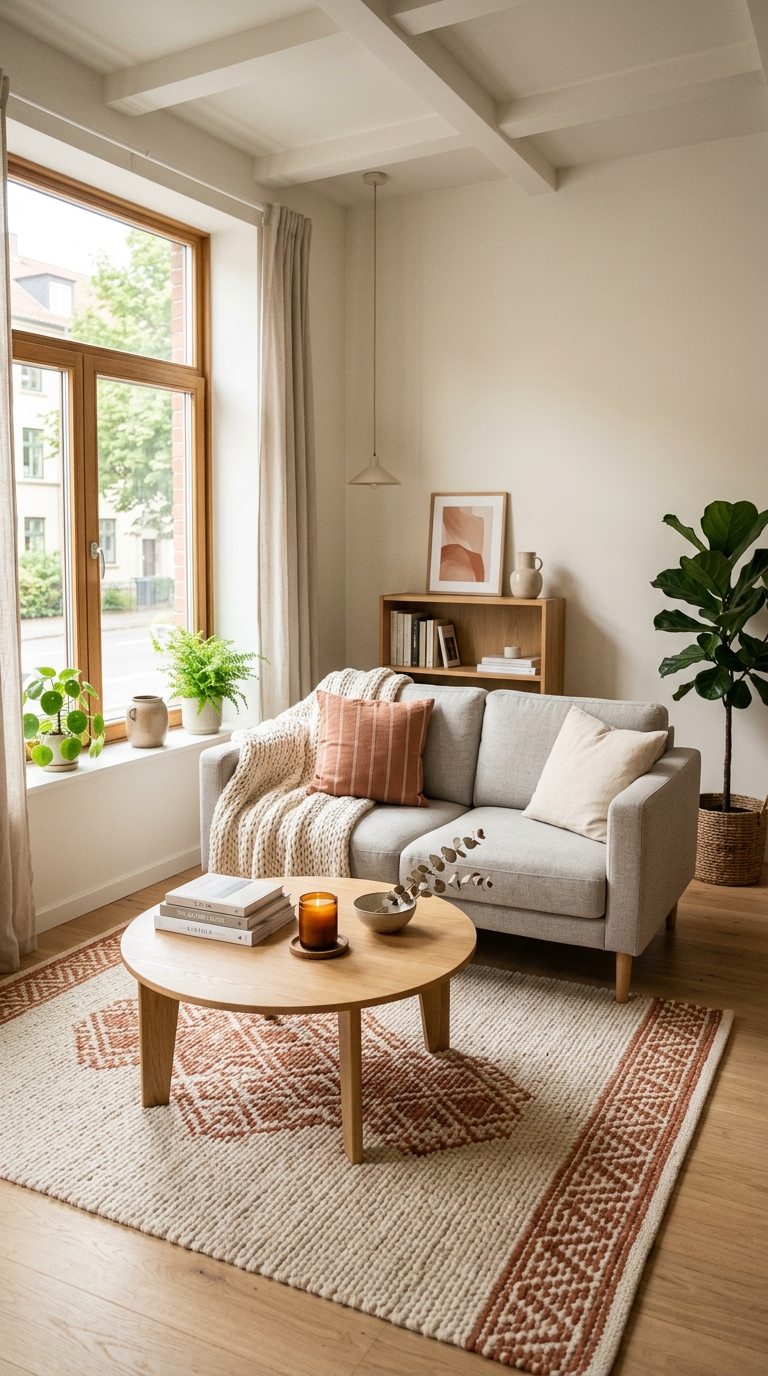
A rug is not just a floor covering. It is a room anchor. The moment you slide a well-sized rug under your sofa and coffee table, your living room goes from “random furniture placed here” to “this was intentional.” It visually defines the space, adds warmth, and ties your color palette together.
Budget tips for finding great rugs:
- Ruggable offers machine-washable rugs that look high-end but cost significantly less than traditional options.
- Wayfair’s clearance section frequently has rugs under $80 that look nothing like $80 rugs.
- IKEA’s jute and flat-weave options are workhorses — durable, affordable, and neutral enough to work with anything.
- Thrift stores occasionally carry beautiful vintage or Persian-style rugs that just need a good clean.
Size matters more than pattern. Always go bigger than you think you need. In a living room, the front legs of your sofa and chairs should sit on the rug.
Add Indoor Plants for Life and Color
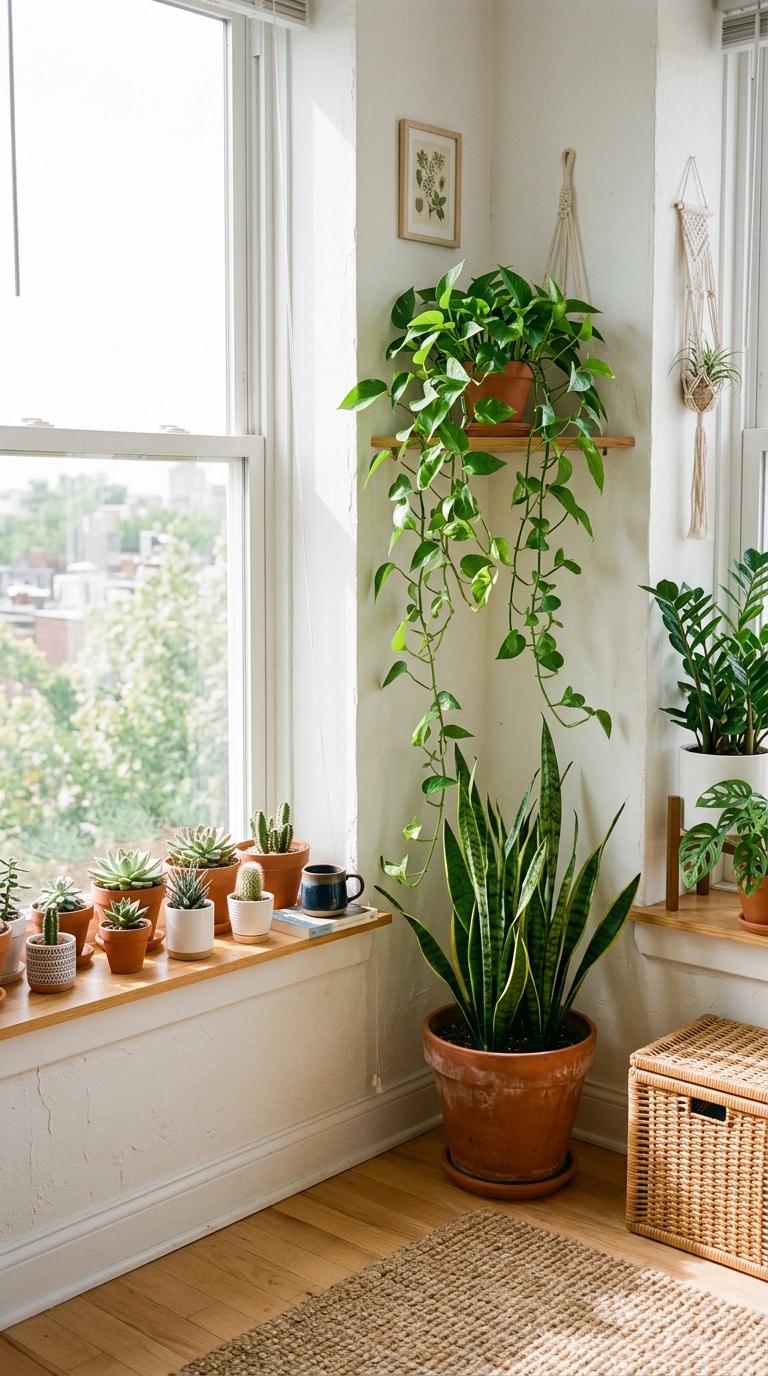
Plants are the most underrated decorating tool in existence. A single pothos on a shelf or a snake plant in the corner adds color, texture, life, and warmth to a space — and it keeps growing, meaning your decor literally improves over time for free.
If you have been scared to try plants because you kill them, start with these:
- Pothos — thrives in low light, needs water once a week, nearly impossible to kill
- Snake plant — survives neglect, tolerates dim rooms, looks architectural and sleek
- ZZ plant — drought-tolerant, glossy leaves, grows slowly and stays tidy
- Spider plant — great for hanging planters near windows, produces babies you can propagate
For the pots themselves, skip the expensive ones. A dollar store terracotta pot with a coat of spray paint looks custom. IKEA’s Fejka line offers realistic-looking faux plants if you travel frequently or have no natural light at all.
Rethink What You Already Own Before Buying Anything New
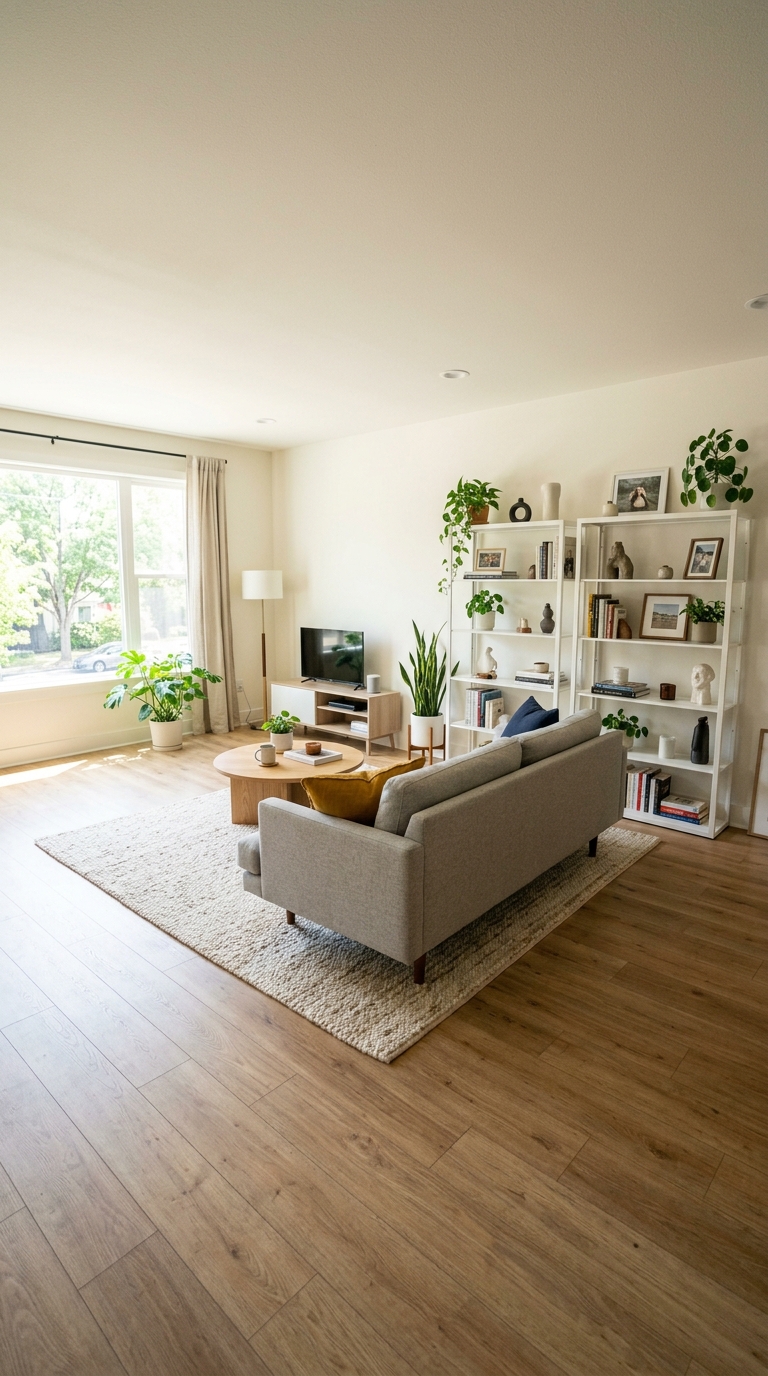
Before you spend one single dollar, walk through your current place with fresh eyes. Most people are sitting on decor treasure they completely ignore because familiarity makes things invisible.
Try these zero-cost moves first:
- Rearrange your furniture — pulling your sofa away from the wall and floating it in the room immediately looks more intentional.
- Repurpose items from other rooms — that candle holder in the bathroom could anchor your coffee table vignette.
- Rotate your art — move a piece from the bedroom to the living room and suddenly both rooms feel new.
- Declutter ruthlessly — removing five unnecessary items from a shelf makes the three remaining items look curated.
This step always comes first. You might discover your apartment only needs editing, not buying.
Use Mirrors to Make Any Room Feel Bigger
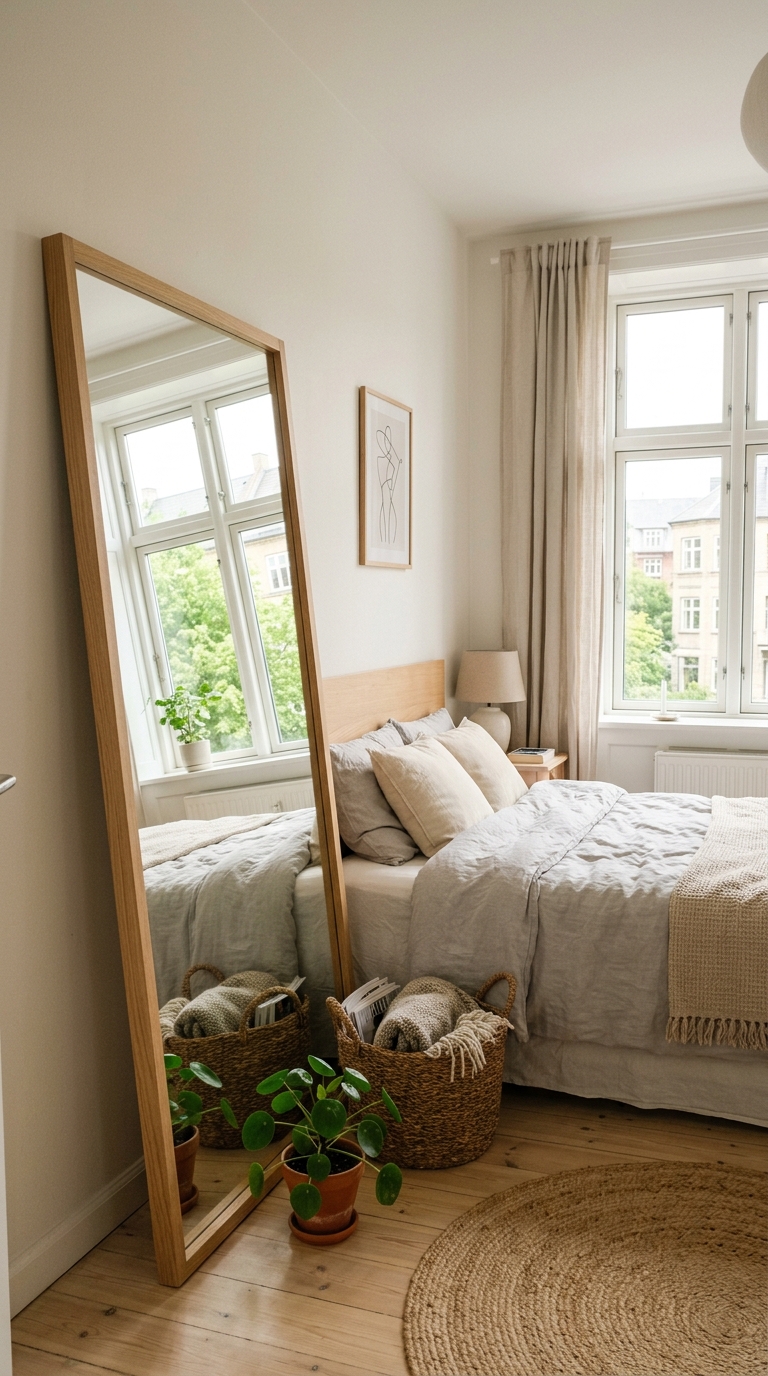
Mirrors are a decorator’s secret weapon, especially in small apartments. They bounce light around, create the illusion of depth, and make tight spaces feel airy and open. A well-placed mirror can make a 500-square-foot apartment feel like 700.
Smart ways to use mirrors on a budget:
- Lean a large floor mirror against the wall instead of mounting it — it looks intentional and costs nothing in installation.
- Place a mirror opposite a window so it reflects the outdoor light and doubles the brightness in the room.
- Group three small round mirrors on a blank wall as a decorative cluster — this works as both art and function.
- Thrift stores and Facebook Marketplace consistently have beautiful mirrors for $10 to $30.
Target, IKEA, and HomeGoods are the three best affordable mirror sources in the US. The IKEA Hovet full-length mirror is a fan favorite for good reason.
Style Open Shelving Like a Pro
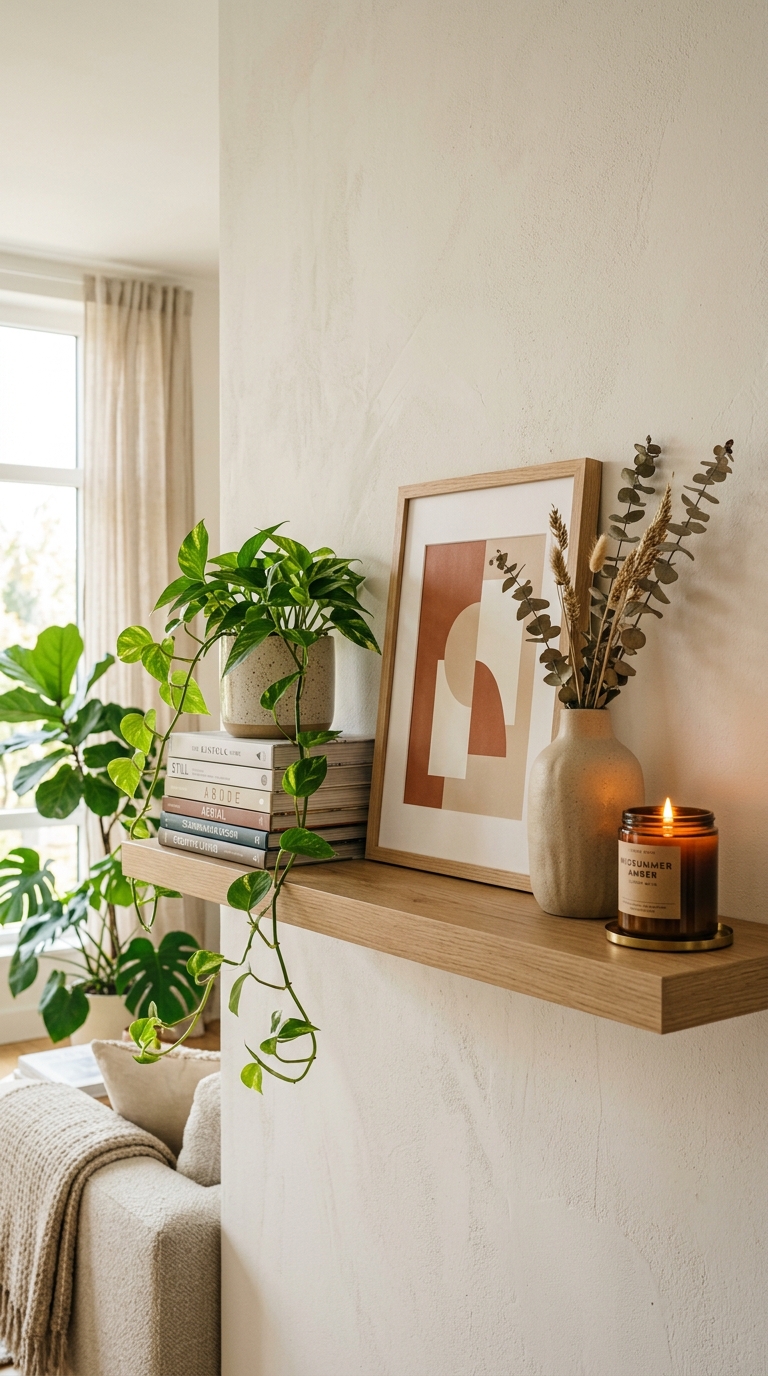
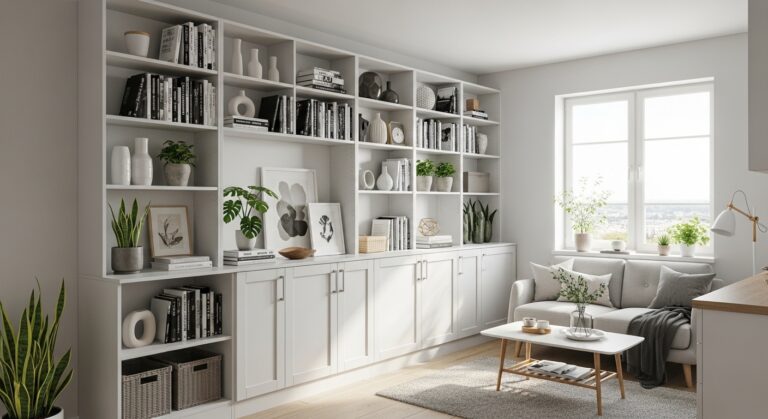
If you have floating shelves, bookcases, or open kitchen shelving, you already have a major decorating opportunity — and most people waste it by just stacking things randomly. Styled shelving looks like a magazine spread and costs nothing if you use what you already own.
The rule of thirds approach works every time:
- Divide your shelf into thirds visually and place one “hero” item in each section — a plant, a stack of books, a small art piece.
- Mix heights — tall items next to short items create visual movement.
- Layer items by placing something in front of something else — a small frame leaning against a larger book stack, for example.
- Add one organic element per shelf — a small plant, a pinecone, a piece of driftwood — to keep it from feeling too stiff.
Books are free decor. Stack them horizontally with a small object on top for a look you see in $5,000-a-month apartments in New York City.
Hang Floor-to-Ceiling Curtains for Height and Drama
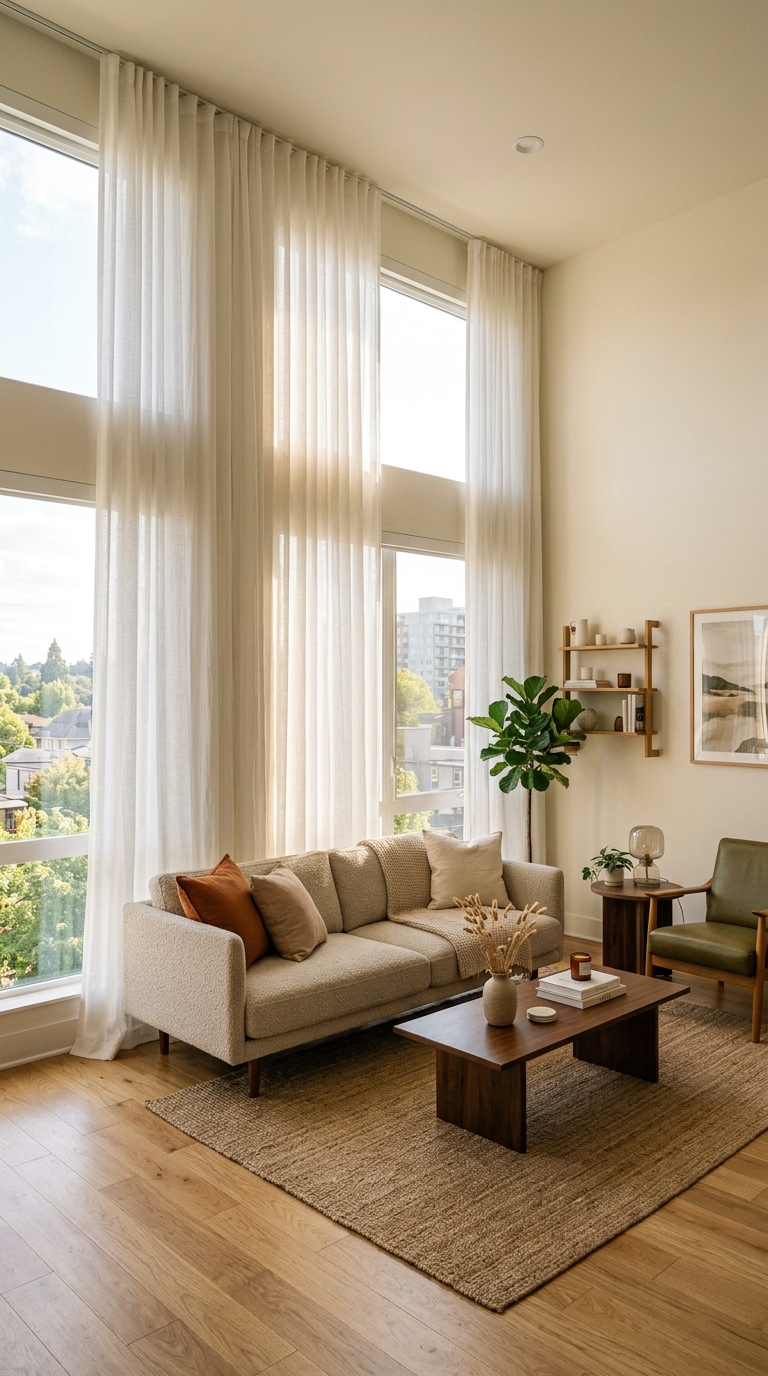
Here is one of the most dramatic bang-for-your-buck decorating moves you can make in a rental: hang your curtain rod as close to the ceiling as possible and let the curtains fall all the way to the floor. Even in a room with standard 8-foot ceilings, this trick makes the space feel tall, luxurious, and custom.
What to know before you buy:
- Standard curtain panels are 84 to 96 inches. For ceiling-height hanging, you usually need 108-inch panels or two standard panels sewn together.
- IKEA’s Sanela velvet curtains and Target’s threshold linen blend panels look expensive but cost under $40 per panel.
- Stick to one or two colors that already exist in your room’s palette — curtains are large surfaces and they set the tone.
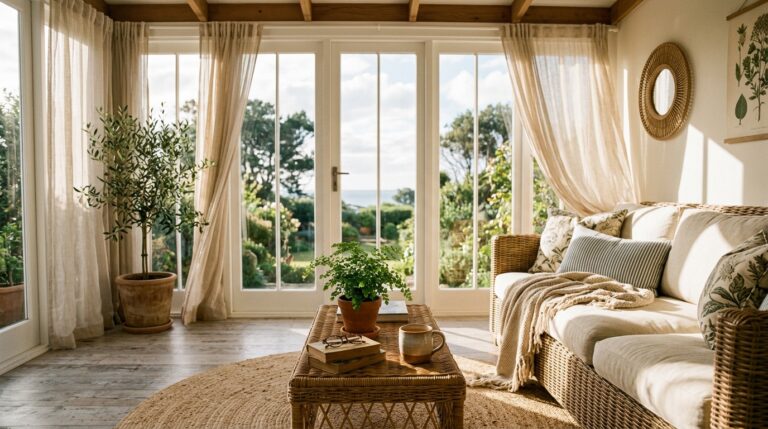
- Sheer white or linen curtains filter light beautifully and make any room feel softer and more elevated.
This is the single most impactful low-cost change you can make to a living room or bedroom. Every interior designer recommends it.
Shop Secondhand First — Always
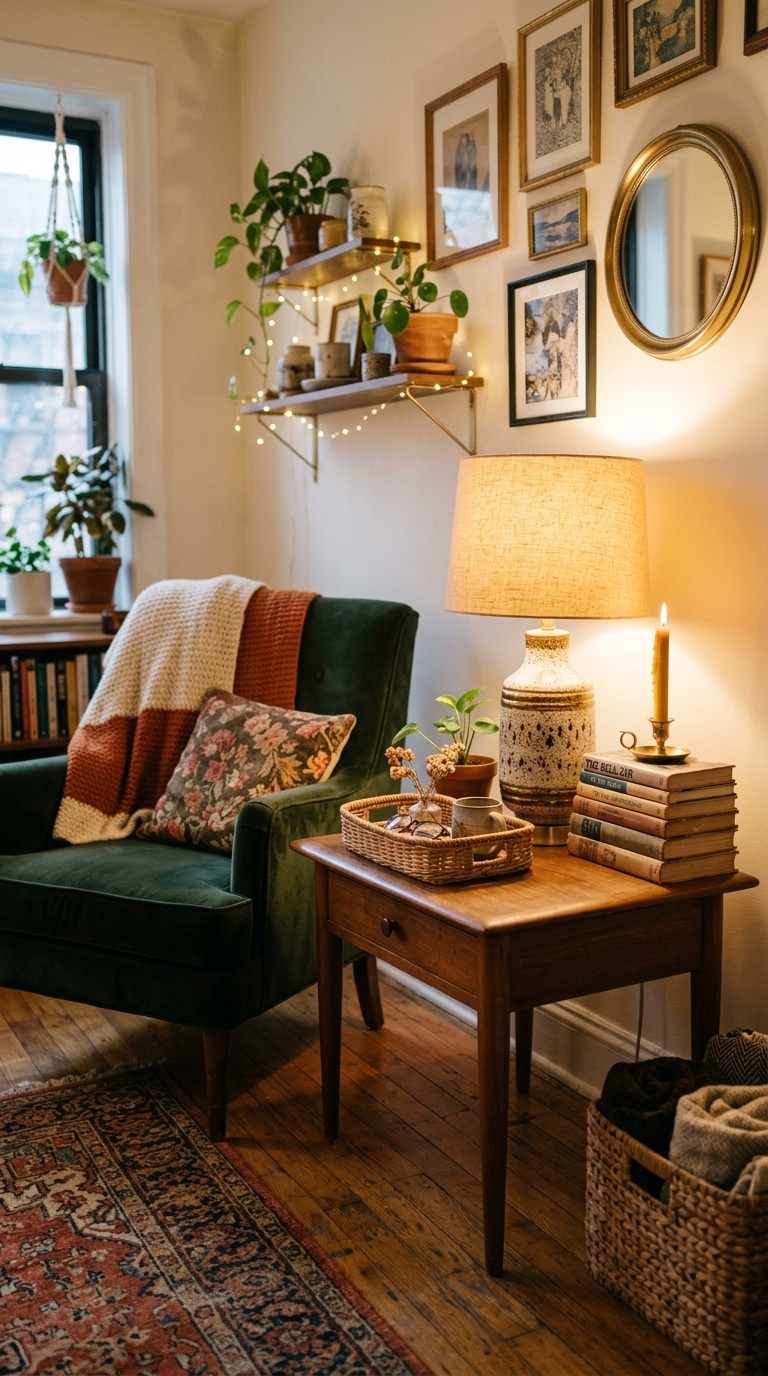
Before you buy anything new for your apartment, give yourself a secondhand first rule. This means checking Facebook Marketplace, Craigslist, OfferUp, thrift stores, and estate sales before you walk into a Target or a furniture showroom. The savings are not marginal — they are transformative.
What you can realistically find secondhand for under $50:
- Coffee tables and side tables in solid wood
- Bookcase frames (IKEA Kallax shows up on Marketplace constantly, often half price)
- Lamps with unique bases you can swap shades on
- Accent chairs that just need new throw pillows to feel fresh
- Picture frames, mirrors, vases, and decorative trays
The key is going in with a clear vision so you recognize the right piece when you see it. Save a few inspiration images to your phone. Know your measurements. And always check the FREE section of Facebook Marketplace — you would be shocked what people give away.
AI Image Prompt: “A cozy apartment corner decorated entirely with secondhand thrift store finds — a wooden mid-century side table, a vintage lamp, a woven basket, a stack of old books, warm cozy lighting, artisan home aesthetic”
Create Zones With Rugs and Furniture Arrangement
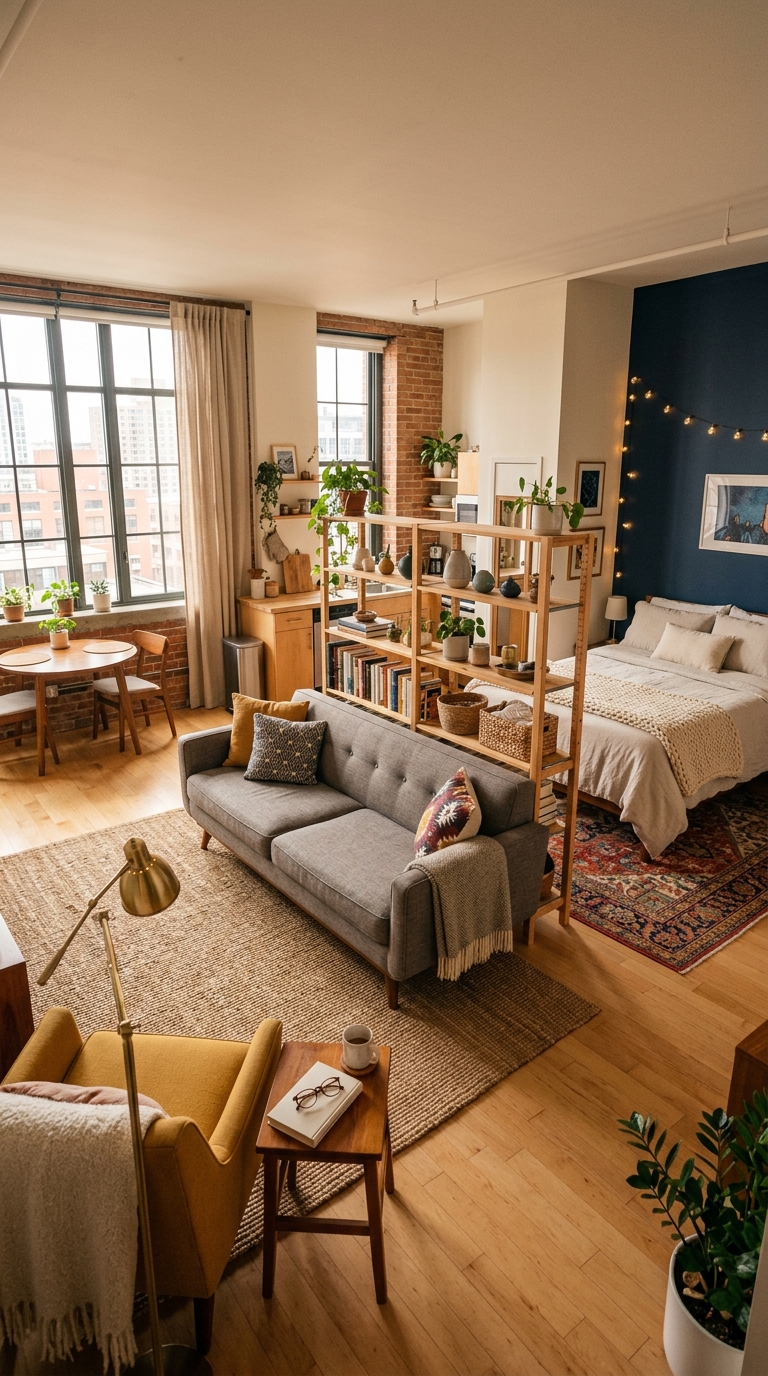
In a studio or open-plan apartment, the biggest challenge is making one room feel like multiple purposeful spaces. The solution is zone creation — and you do not need walls to do it.
Here is how to define zones without construction:
- Use a large area rug to mark the living room zone. Everything that sits on or touches the rug belongs to that zone.
- Place a console table behind your sofa to visually separate the living area from a dining or workspace behind it.
- Use a bookcase as a room divider — it provides separation while still keeping the space open and connected.
- A pendant light or floor lamp positioned over a specific area signals “this is the reading corner” or “this is the dining spot.”
Add Texture Through Throw Pillows, Blankets, and Baskets
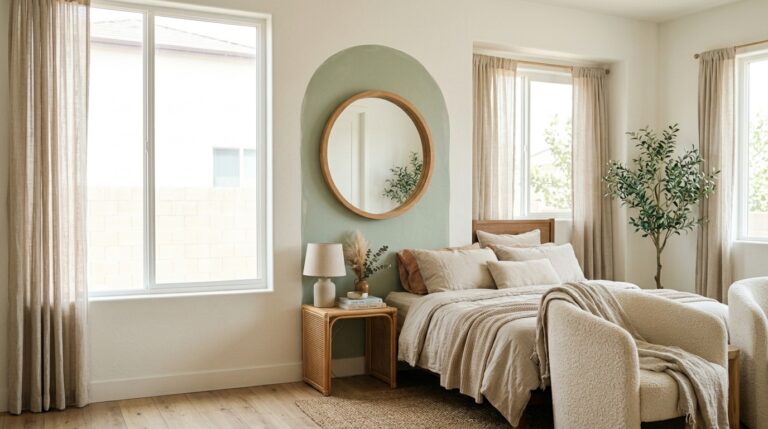
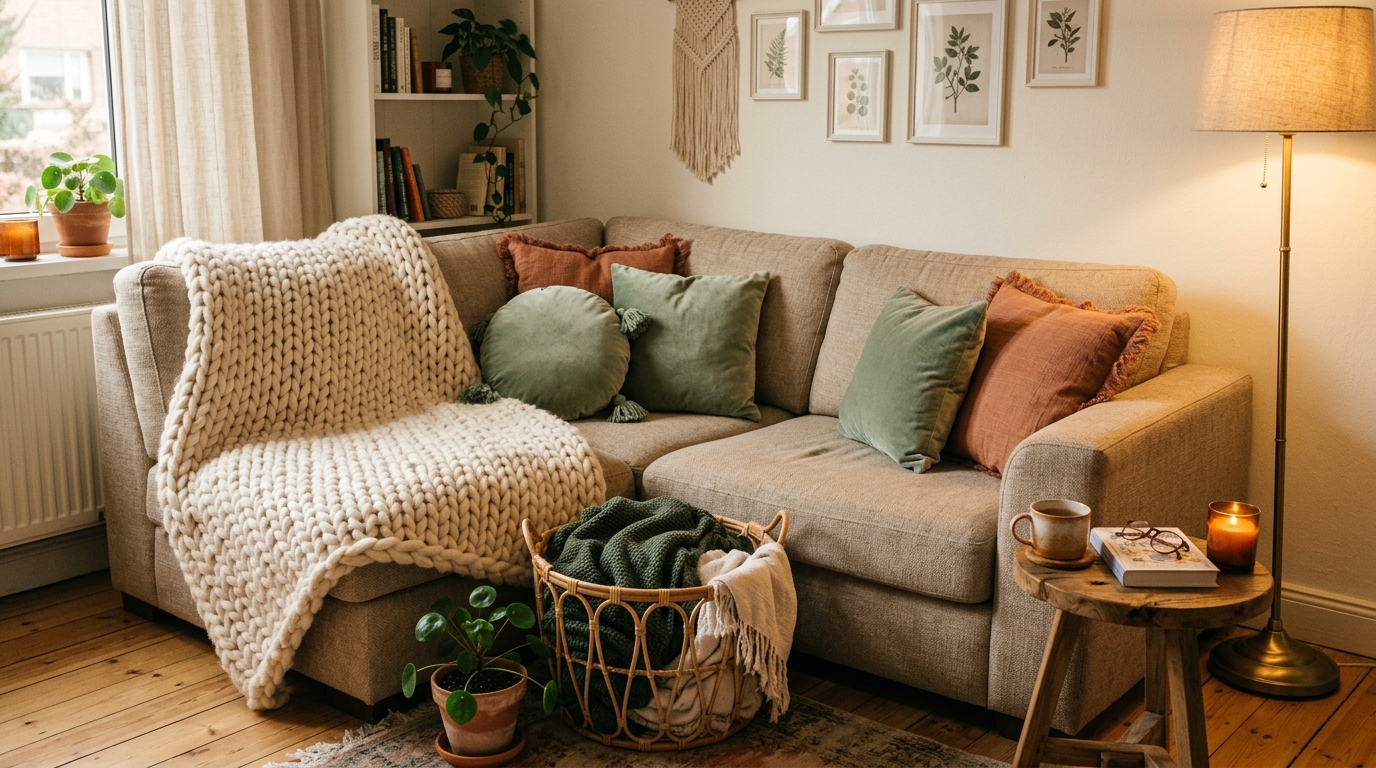
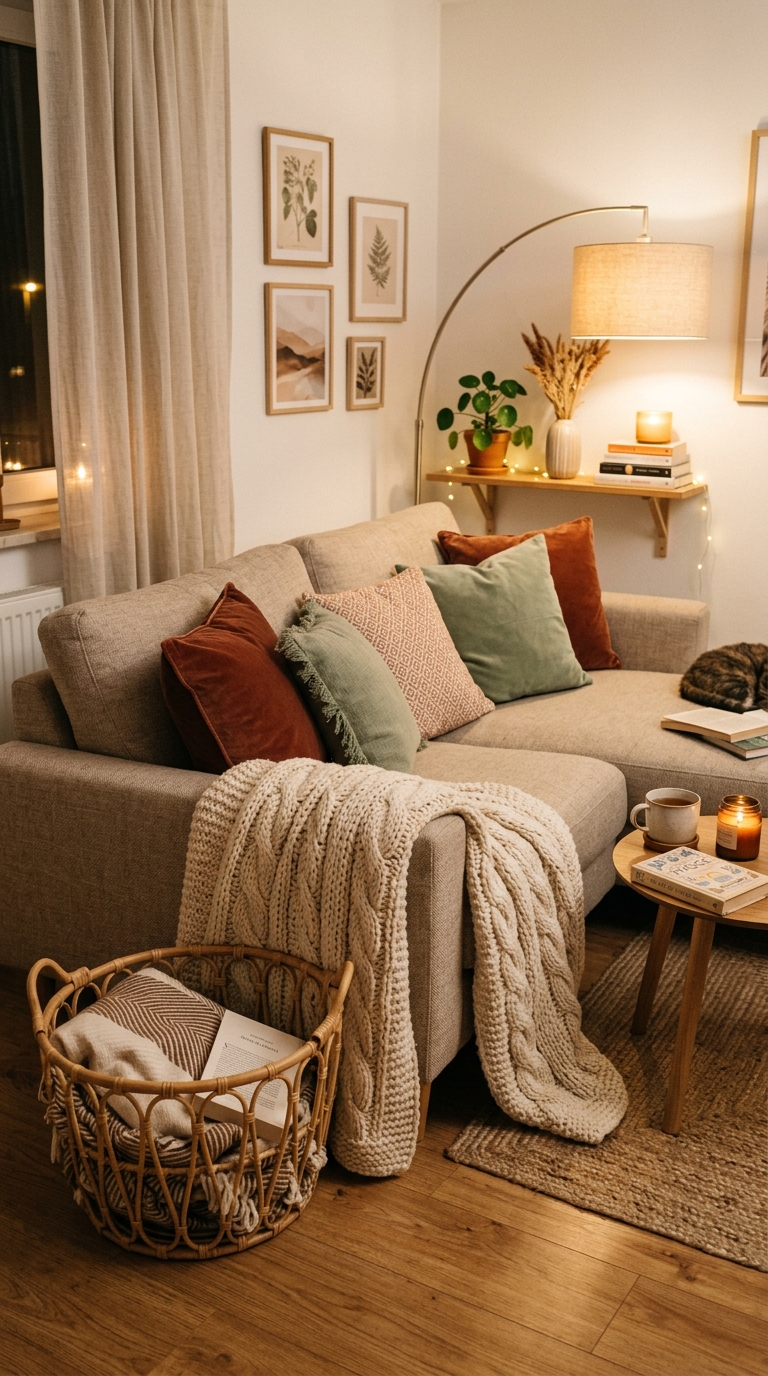
Color gets all the attention in decorating advice, but texture is what makes a space feel genuinely warm and lived-in. A neutral apartment with layered textures — woven baskets, chunky knit throws, velvet pillows, linen cushion covers — feels more elevated than a colorful apartment with zero texture variation.
The best budget sources for textured accents:
- TJ Maxx and HomeGoods for throw pillows and blankets at 50 to 70 percent below retail
- IKEA for wicker and rattan baskets that look organic and expensive
- Amazon for chunky knit throws under $30 that photograph beautifully
- Target’s Threshold and Studio McGee lines consistently deliver texture-rich pieces at accessible prices
The rule we live by: every seating area needs at least three textures. Your sofa might be smooth fabric. Add a woven pillow, a velvet cushion, and a knit throw — now it looks like someone styled it professionally.
Baskets serve double duty. They hide clutter (extra blankets, magazines, remote controls) while adding organic warmth to any corner.
The Smarter Way to Start: Plan Before You Shop
Before you run out and try all twelve of these ideas at once, take thirty minutes to do this first. Walk through your apartment with your phone. Photograph every corner. Then write down three things: what the room is missing, what is not working, and what you already have that could be repositioned or repurposed.
This exercise consistently reveals that most apartments need editing more than buying. Once you know your gaps, prioritize the ideas that give you the highest visual impact for the lowest cost. In most spaces, that order looks like this:
- Lighting upgrade first — it changes everything immediately
- Curtains second — dramatic, fast, and affordable
- A rug third — anchors the furniture and defines the space
- Plants and texture last — the finishing layer that pulls it all together
You do not need to do this all at once. Great apartments are built gradually, one intentional choice at a time. Give yourself permission to go slowly, thrift patiently, and decorate with purpose rather than panic.
Final Thoughts
Every single idea in this list is achievable for under $100 — and most of them work for under $50. The apartments that look stunning on Instagram are not decorated with expensive furniture. They are decorated with intention, patience, and a willingness to see potential where others see plain.
Start with one idea this weekend. Rearrange your furniture. Hang your curtains higher. Add one plant. The momentum you build from one small win will carry you through the rest.
Your apartment already has good bones. You just need to give it a little personality.