15 Bohemian Living Room Ideas That Feel Cozy & Stylish
Have you ever walked into a living room that felt so alive, so layered, and so completely free that you just wanted to stay forever? That warm, collected-over-time feeling you get from a beautifully styled bohemian space is not an accident — and it is absolutely something you can recreate in your own home. Bohemian living rooms speak a language of color, texture, and personality that no other design style even comes close to matching. In this article, I am sharing 15 genuinely beautiful, deeply personal bohemian living room ideas that will help you transform your space into something that feels truly, wonderfully yours.
Layered Rugs That Anchor the Whole Room
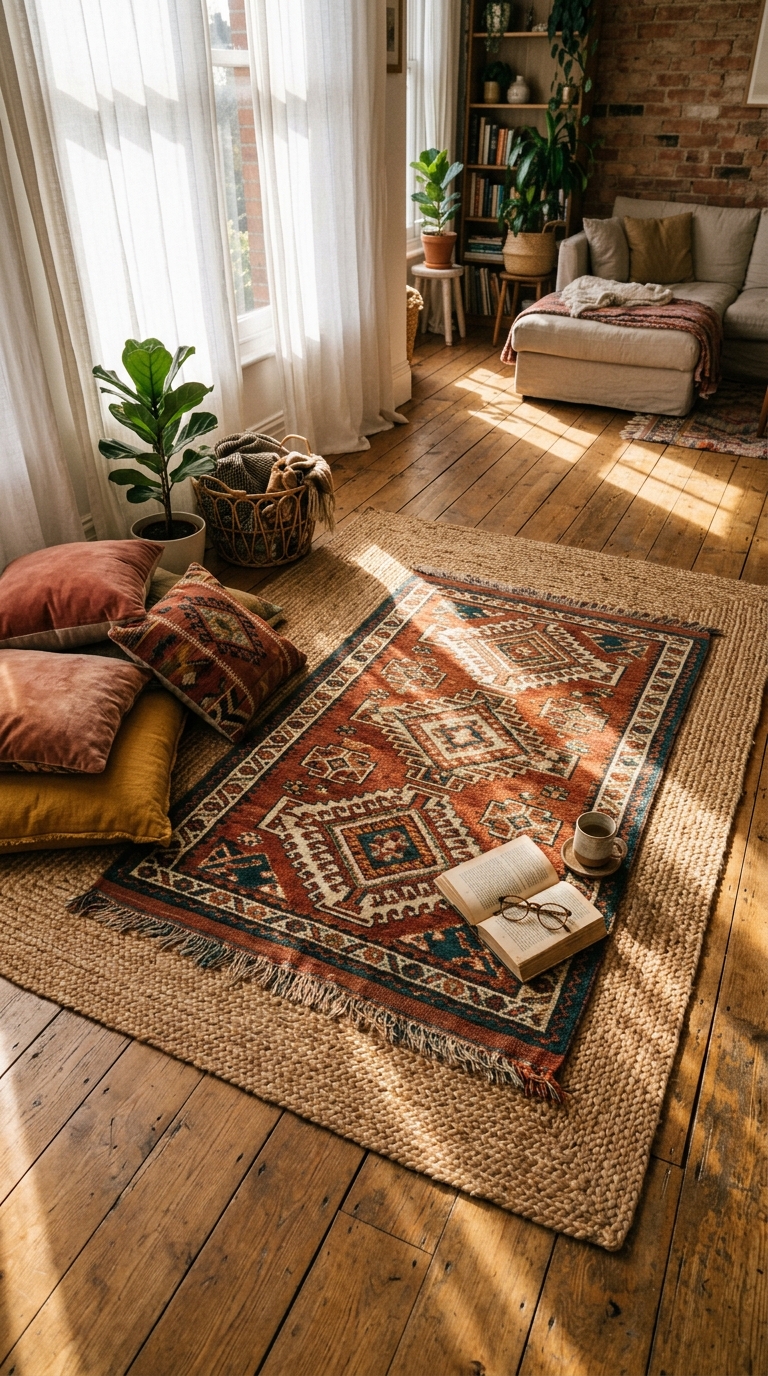
There is something incredibly grounding about walking into a room where the floor itself tells a story. Picture a large natural jute rug stretched across worn wooden boards, and layered right on top, a smaller vintage-style Moroccan rug in faded rust and deep indigo. The combination creates this rich, collected feeling — like pieces you found in a market somewhere far away finally landed in exactly the right home. The textures contrast beautifully, the patterns play off each other without fighting, and the whole floor becomes a visual anchor that ties every other element in the room together. It feels warm underfoot, visually generous, and completely, effortlessly bohemian.
To pull this off in your own space, start with a large neutral base rug — jute, sisal, or a flat-weave cotton in oatmeal or warm ivory works perfectly. Then layer a smaller, bolder rug on top, slightly off-center toward the seating area. Do not worry about everything matching. Intentional mismatch is exactly what makes the layered rug look so authentically bohemian. Let the smaller rug angle slightly if it wants to — that casual placement always looks more natural than perfectly aligned edges. If your rugs feel like they slide too much, a simple rug gripper pad underneath solves everything without disrupting the aesthetic at all.
A Canopy Bed-Inspired Reading Corner
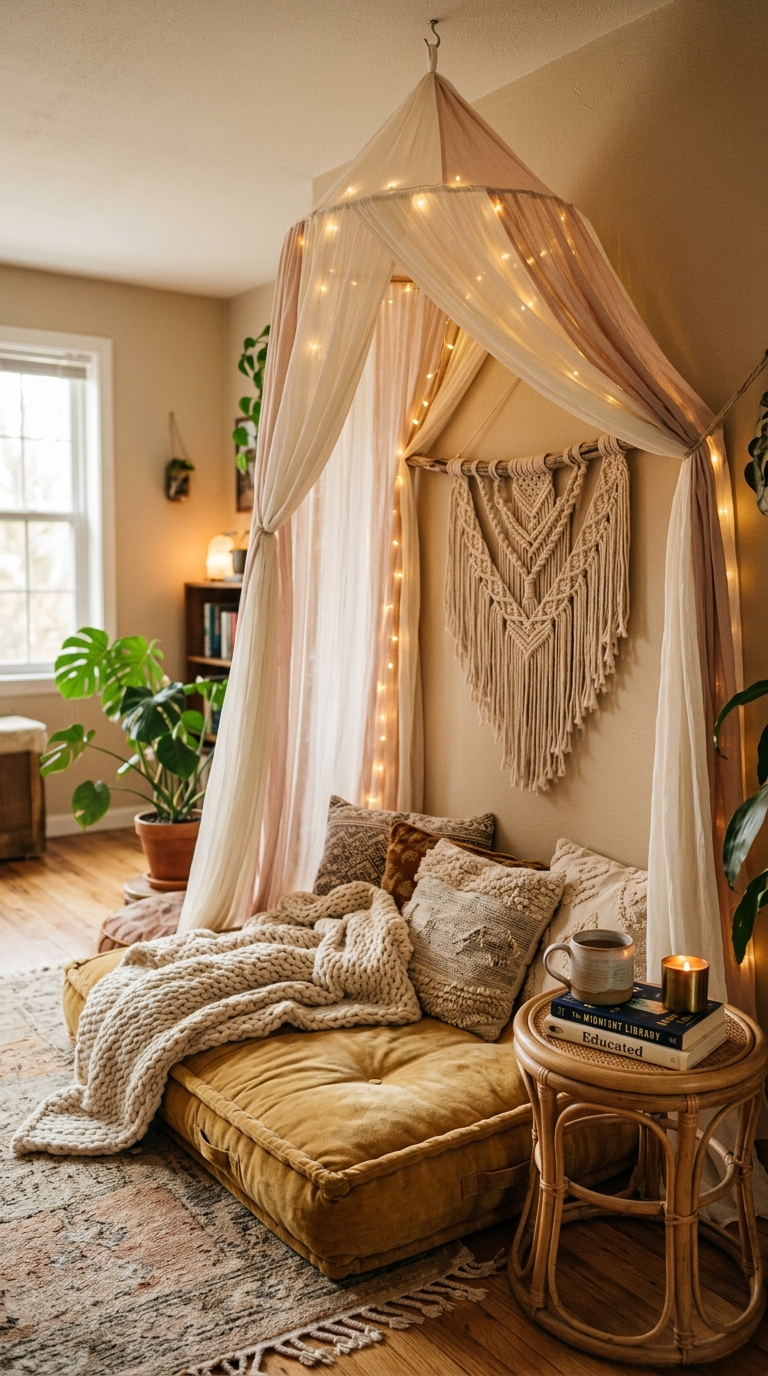
Close your eyes and imagine a corner of your living room completely transformed into a private little sanctuary — sheer fabric cascading from a single ceiling hook, string lights weaving through the folds, and a fat floor cushion waiting for you underneath. This kind of canopy reading nook feels like a room within a room, and in a bohemian living space, it lands as the most magical focal point imaginable. The soft glow of warm string lights against ivory fabric creates an atmosphere that feels genuinely transportive — like you stepped out of your everyday life the second you ducked inside. A small rattan table beside the cushion, a mug of something warm, and a good book complete the whole picture perfectly.
To build this corner yourself, all you really need is a sturdy ceiling hook, a generous length of sheer or gauze fabric in a soft neutral, and string lights with warm-toned bulbs. Drape the fabric loosely from the hook and let it fall naturally rather than forcing it into a rigid shape — the organic drape is everything. Choose a floor cushion large enough to actually sit in comfortably, then style the surrounding space with a small collection of meaningful objects like a candle, a trailing plant, or a woven basket. Keep the palette soft and warm inside the canopy and save your bolder colors for the rest of the room so this corner always reads as a calm, intentional retreat.
Maximalist Gallery Walls Done Right
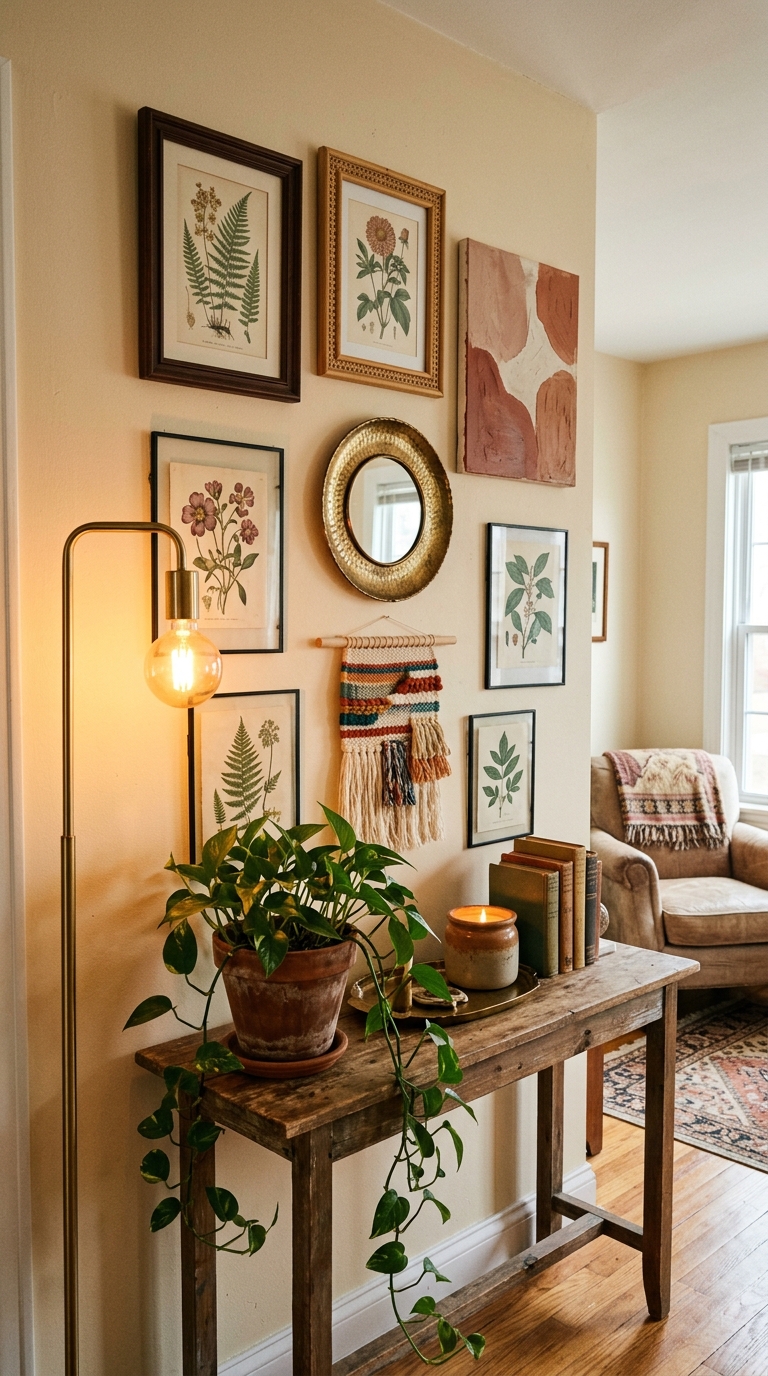
A bohemian gallery wall is not a random pile of frames — it is a curated story about the person who lives there. Imagine an entire wall dressed with vintage botanical prints, a handwoven textile square, a small round mirror with a hammered brass edge, and one large unframed canvas in smoky terracotta. Everything sits at slightly different heights, the frames range from dark walnut to raw rattan to thin black metal, and the whole arrangement breathes and moves your eye from piece to piece in the most satisfying way. The warm light from a nearby floor lamp pulls golden tones out of every piece, and a trailing pothos sitting on the console table below makes the whole display feel alive and layered.
The secret to a bohemian gallery wall that actually looks intentional rather than chaotic is mixing object types, not just frame styles. Pull in at least one textile piece — a small macramé panel, a fabric swatch in a simple clip frame, or a woven wall hanging — among your printed or painted pieces. Vary your frame sizes dramatically, placing your largest piece slightly off-center rather than dead center, and let a few smaller frames cluster near the edges like an afterthought. Lay everything out on the floor first before a single nail goes in. Live with the arrangement for a day, then adjust anything that feels forced. The most beautiful gallery walls always look like they grew organically over years, even when they came together in a single afternoon.
Jewel-Toned Velvet Sofas as a Statement Piece
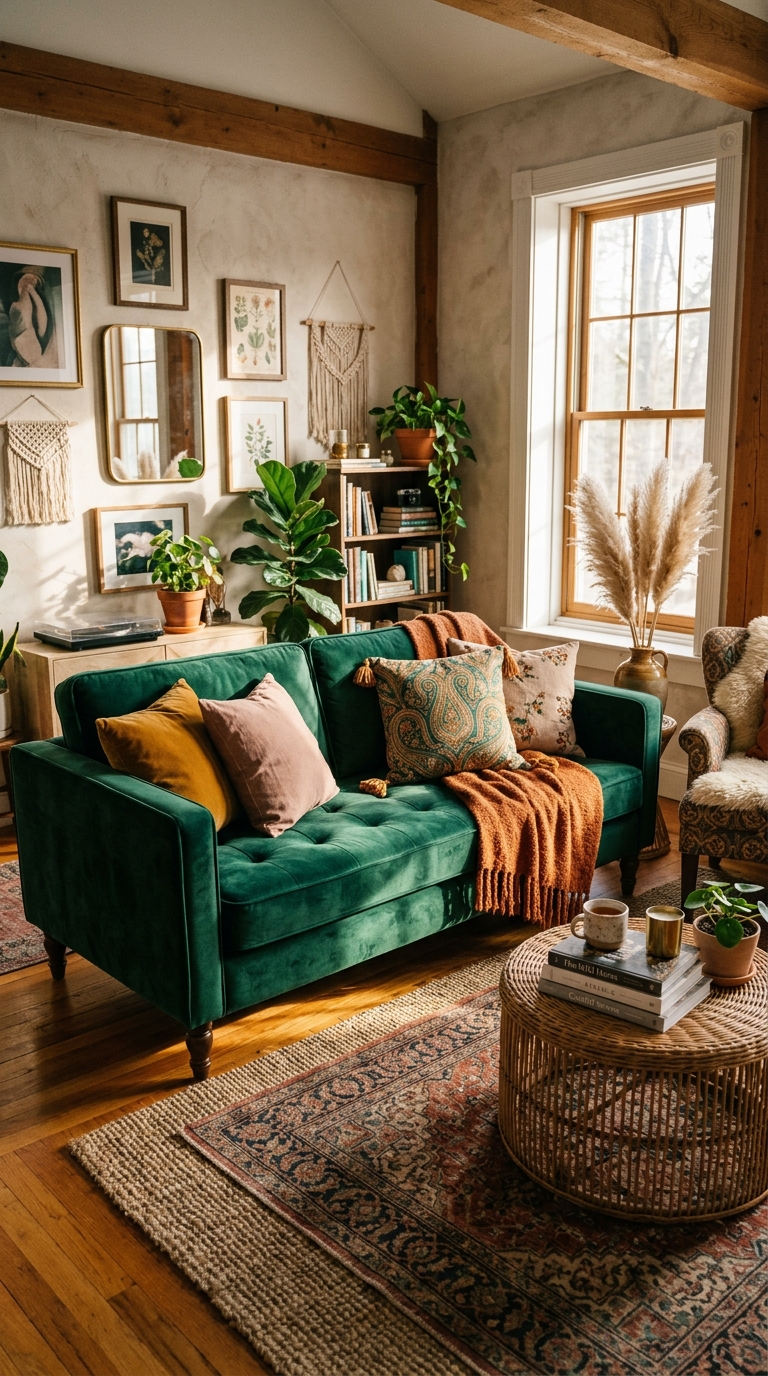
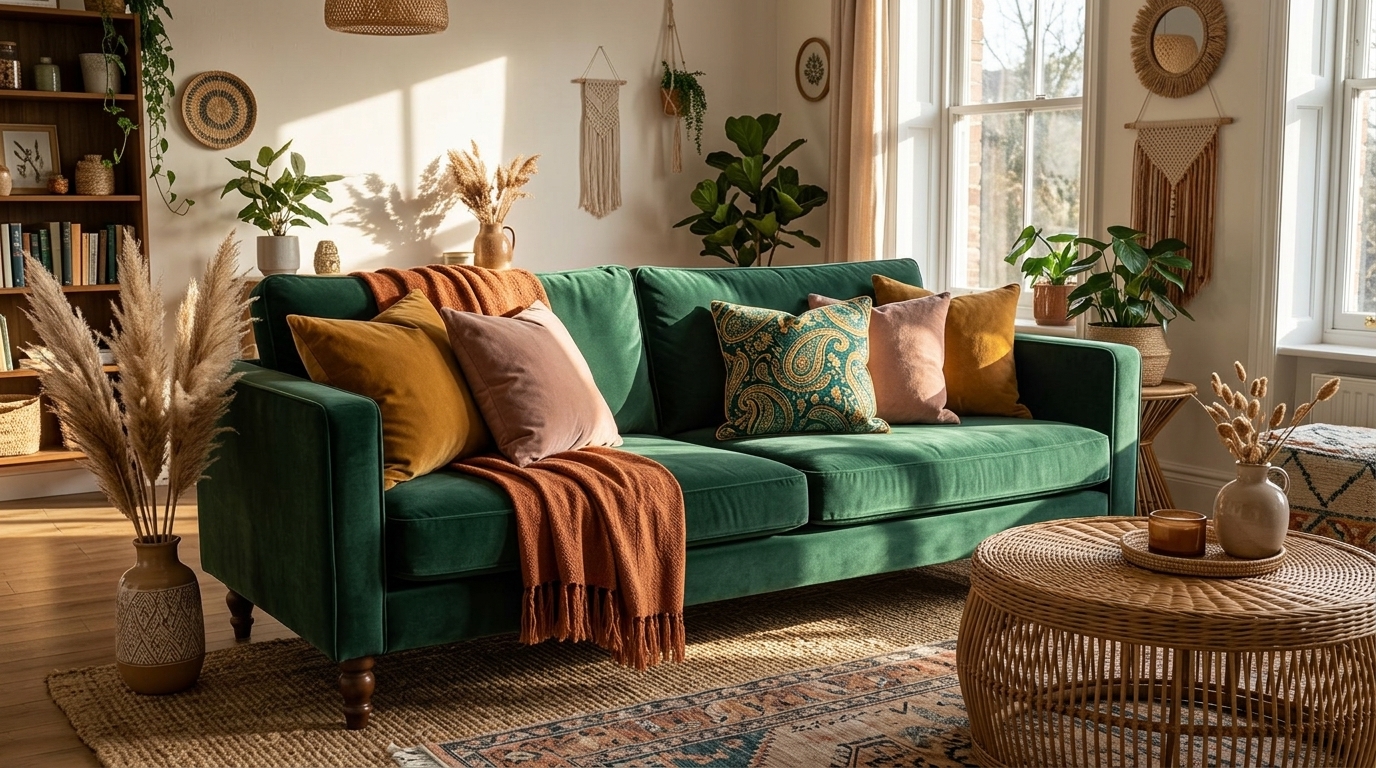
Walk into any truly stunning bohemian living room and there is almost always one piece that stops you cold — and nine times out of ten, it is a jewel-toned velvet sofa that owns the entire space. Picture a low, wide emerald green velvet sofa with dark walnut legs, covered in a riot of layered cushions in mustard, blush, and printed paisley. The velvet catches the afternoon light and shifts from deep forest green to something almost teal depending on the angle, and every throw and cushion you pile on top only makes it richer. It feels luxurious and relaxed at the same time, which is really the entire point of bohemian design — living beautifully without taking any of it too seriously.
When you shop for a statement sofa in this style, prioritize velvet over any other fabric because nothing else delivers that same depth of color and light-responsiveness. Go for a shade that feels slightly daring — deep sapphire, forest green, burnt amber, or plum all work brilliantly in bohemian spaces. Keep your surrounding furniture in natural materials like rattan, raw wood, and wicker so the sofa becomes the clear star without competition. Pile your cushions in at least four different sizes and textures — think chunky knits alongside embroidered cotton alongside printed linen — and never buy a matching cushion set. The whole beauty of this look lives in the glorious, happy mismatched abundance of it all.
Indoor Plants Styled Like Living Art
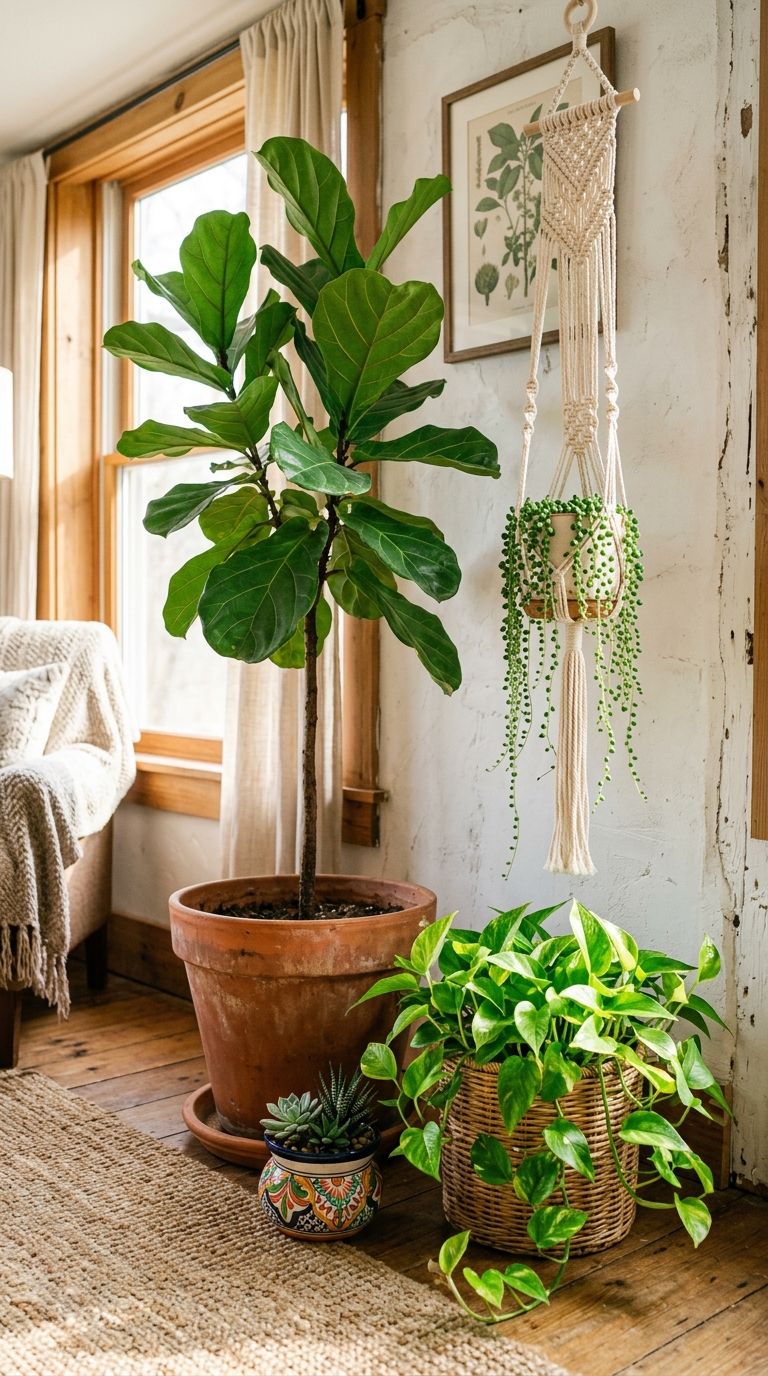
The most effortlessly beautiful bohemian living rooms always feel like the plants chose to live there rather than being placed. Imagine a sun-washed corner where a tall fiddle-leaf fig stretches toward the ceiling in a wide terracotta pot, a hanging macramé holder at eye level carries a trailing string of pearls, and at floor level, small hand-painted ceramic pots cluster together like a little family of green. The varying heights create a sense of visual rhythm that no piece of furniture can quite match, and when morning light hits all those different shades of green at once, the whole corner glows with something that honestly feels alive. Plants in a bohemian room are never decorative afterthoughts — they are the soul of the whole space.
Building a plant corner that looks this intentional starts with varying your container heights dramatically rather than lining everything up at the same level. Use hanging planters, tall plant stands, mid-height pedestals, and floor-level pots all in the same corner to create that lush layered effect. Stick to a container palette of terracotta, hand-thrown ceramics, wicker, and woven baskets — keep the vessels as characterful as the plants themselves. Choose plants with different leaf shapes and textures: something bold and large-leaved like a monstera, something trailing like a pothos or string of hearts, and something small and sculptural like a cactus or echeveria. That variety in form is what makes the whole arrangement feel like living, breathing art.
Macramé and Woven Textiles on Every Wall
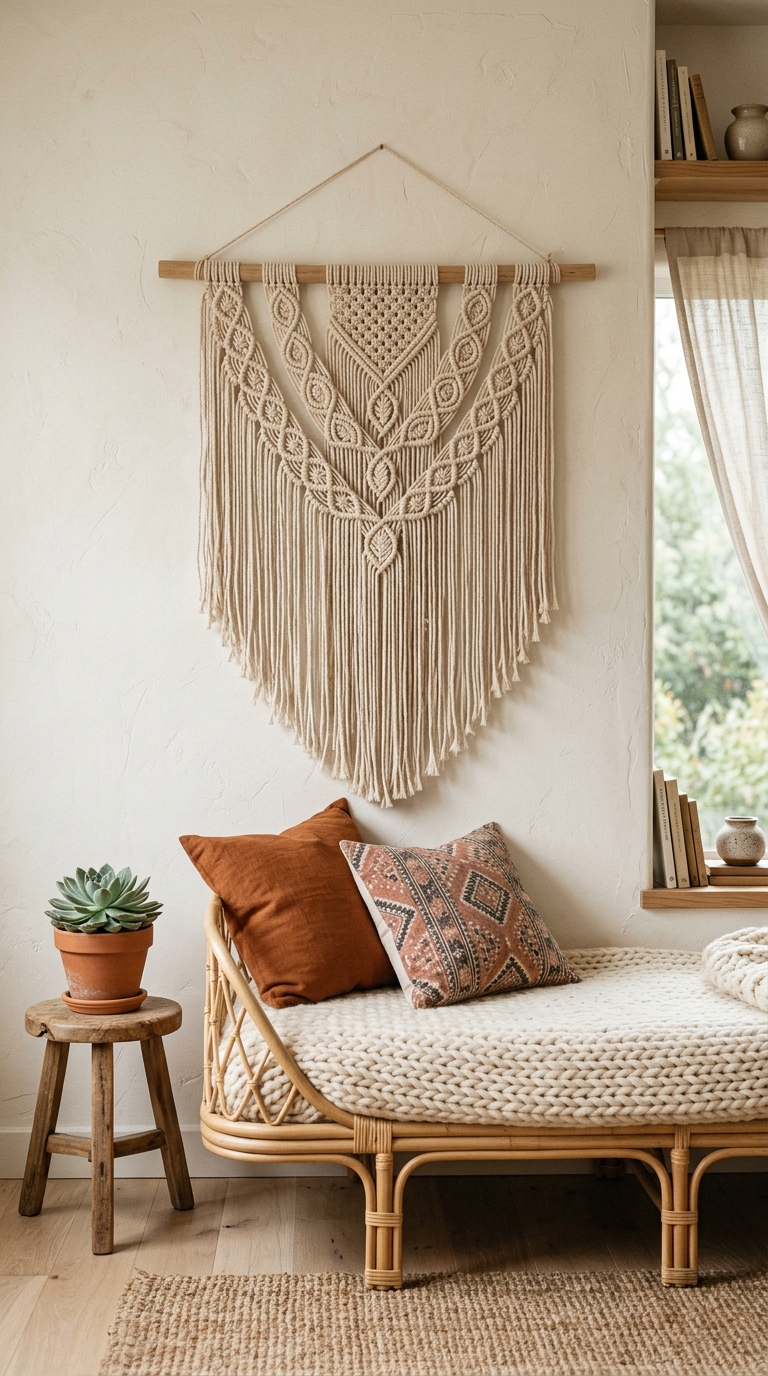
There is a reason macramé has never really left — it brings a handmade warmth and organic texture to a wall that no framed print can fully replicate. Picture a large, intricately knotted cotton wall hanging mounted on a thick wooden dowel, its long fringed ends falling nearly to the top of a rattan daybed below. The natural, undyed cotton rope picks up the warm cream and ivory tones in the daybed textiles, and the whole arrangement reads as deeply considered while feeling completely casual. The texture of the knotwork creates gentle shadows as the light shifts through the day, giving the wall a quiet sense of movement that makes the whole room feel more alive, more handmade, more genuinely human.
To style textiles on your walls with real intention, anchor your largest piece — whether macramé, a woven tapestry, or a fabric panel — above your main seating area as you would hang a piece of art. Scale matters enormously here: a small macramé piece on a large empty wall always looks timid, so choose or commission something that fills at least two-thirds of the wall width above your sofa or daybed. Layer smaller textile pieces on adjacent walls or mix them into your gallery arrangement for a cohesive story throughout the room. Natural fiber colors like undyed cotton, warm oatmeal, and dusty blush work in almost any bohemian palette, but do not shy away from adding one deep-toned woven piece in rust, forest green, or indigo to ground the textile collection with a little depth.
Low-Slung Floor Seating and Cushion Clusters
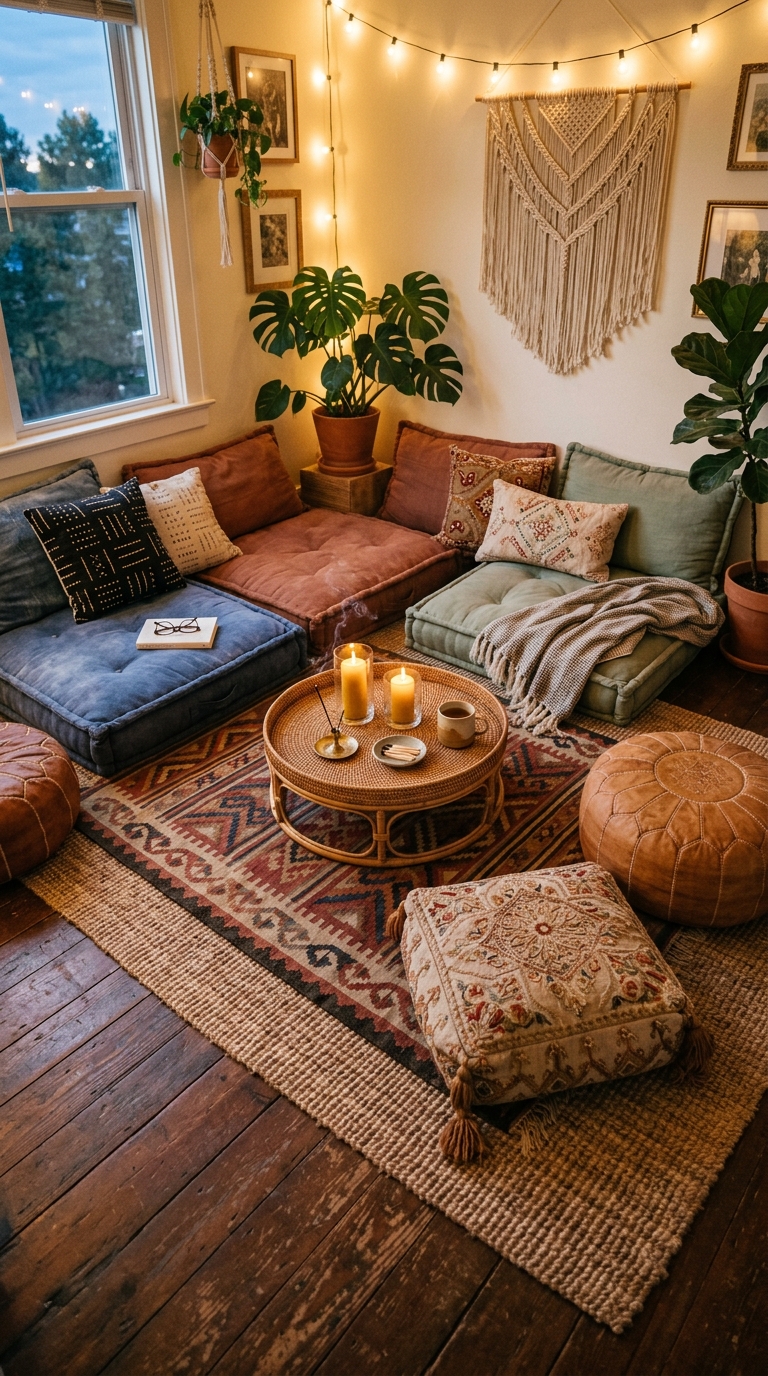
Some of the most inviting bohemian living rooms skip the sofa entirely — or at least push it to the edge — and let floor seating become the entire point. Imagine a wide layered rug with oversized floor cushions scattered across it in faded indigo, warm rust, and muted sage, a few leather poufs tucked between them, and a low rattan tray in the center holding a cluster of mismatched candles and a small brass incense holder. The whole arrangement sits low to the ground, which completely changes the energy of the room — conversations feel more intimate, the ceiling feels higher, and everything has this wonderfully relaxed, gathered-together quality that you simply cannot manufacture with conventional furniture.
Pulling this look together in your own space works best when you invest in quality floor cushions with removable, washable covers since they take the most wear and contact. Choose covers in natural fabrics like cotton canvas, linen, or block-printed cotton, and vary your sizes between large square cushions, medium rounds, and small bolsters for a truly layered effect. Keep your low surface — whether a rattan tray, a carved wooden block, or a stack of books serving as a table — at a height that makes sense for someone sitting cross-legged beside it. Candles, trailing plants, and small collected objects on that central surface pull the whole floor arrangement together into something that feels genuinely intentional and deeply welcoming.
Vintage and Thrifted Furniture Mixed Together
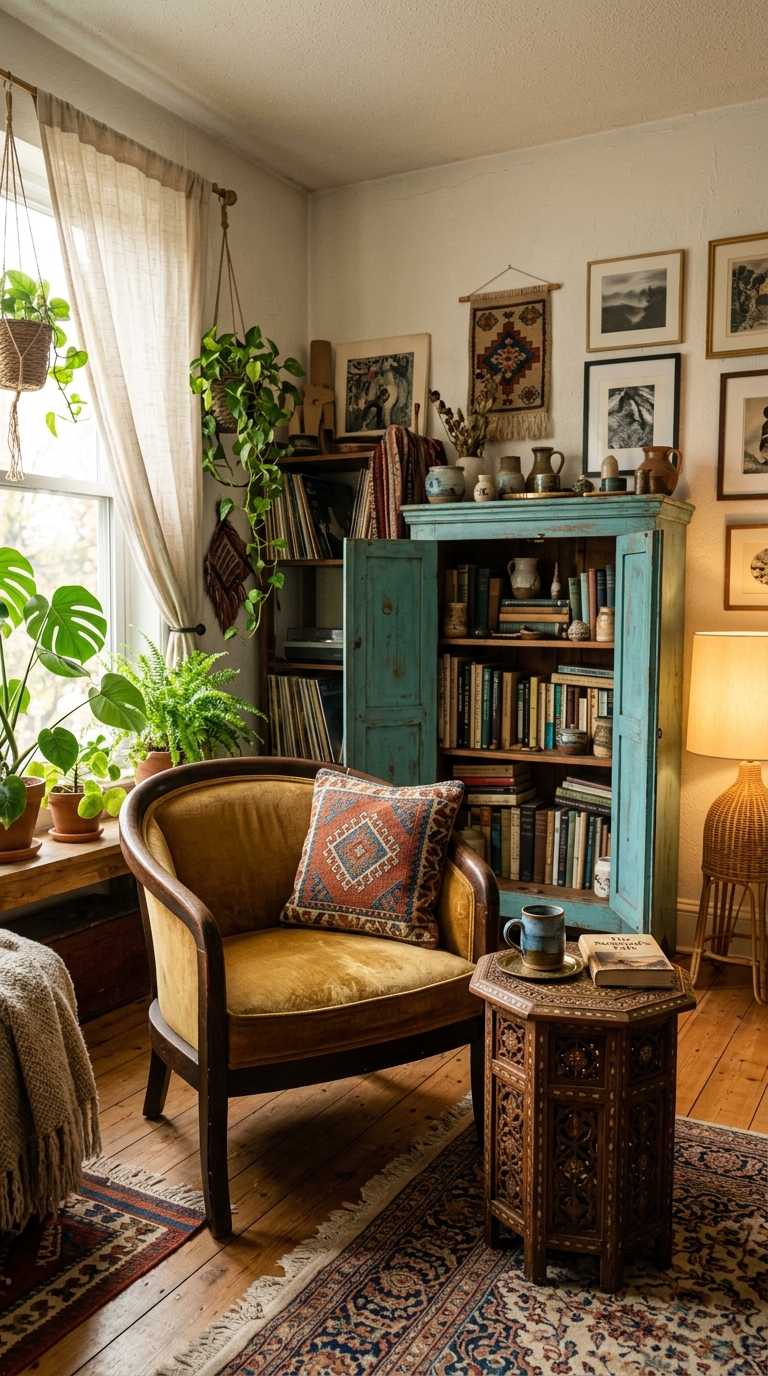
Nothing in a bohemian living room tells a richer story than a piece of furniture that clearly lived somewhere else before it found you. A curved 1970s armchair in its original worn mustard upholstery, a hand-carved Moroccan side table, a distressed turquoise cabinet — every piece carries history, and together they create a room that feels genuinely curated rather than catalog-purchased. The beauty of mixing vintage and thrifted pieces is that each one has its own character, its own slight imperfection, its own beautiful quirk that a brand-new piece simply cannot offer. When these pieces land together in the same space, the effect is a room that feels deeply personal, endlessly interesting, and wholly unique to the person who collected it all.
The most important rule when mixing vintage pieces is to commit to a consistent color story even while your furniture styles vary wildly. If your chair is mustard, your cushions warm rust, and your cabinet a distressed teal, those colors are all playing in the same warm, earthy, complex family — and that shared palette is what makes mismatched pieces feel intentional rather than random. Shop thrift stores, estate sales, and online vintage marketplaces with patience rather than urgency. The best bohemian rooms come together slowly, one meaningful piece at a time, and that unhurried approach always shows in the final result.
Warm Ambient Lighting Instead of Overhead Fixtures
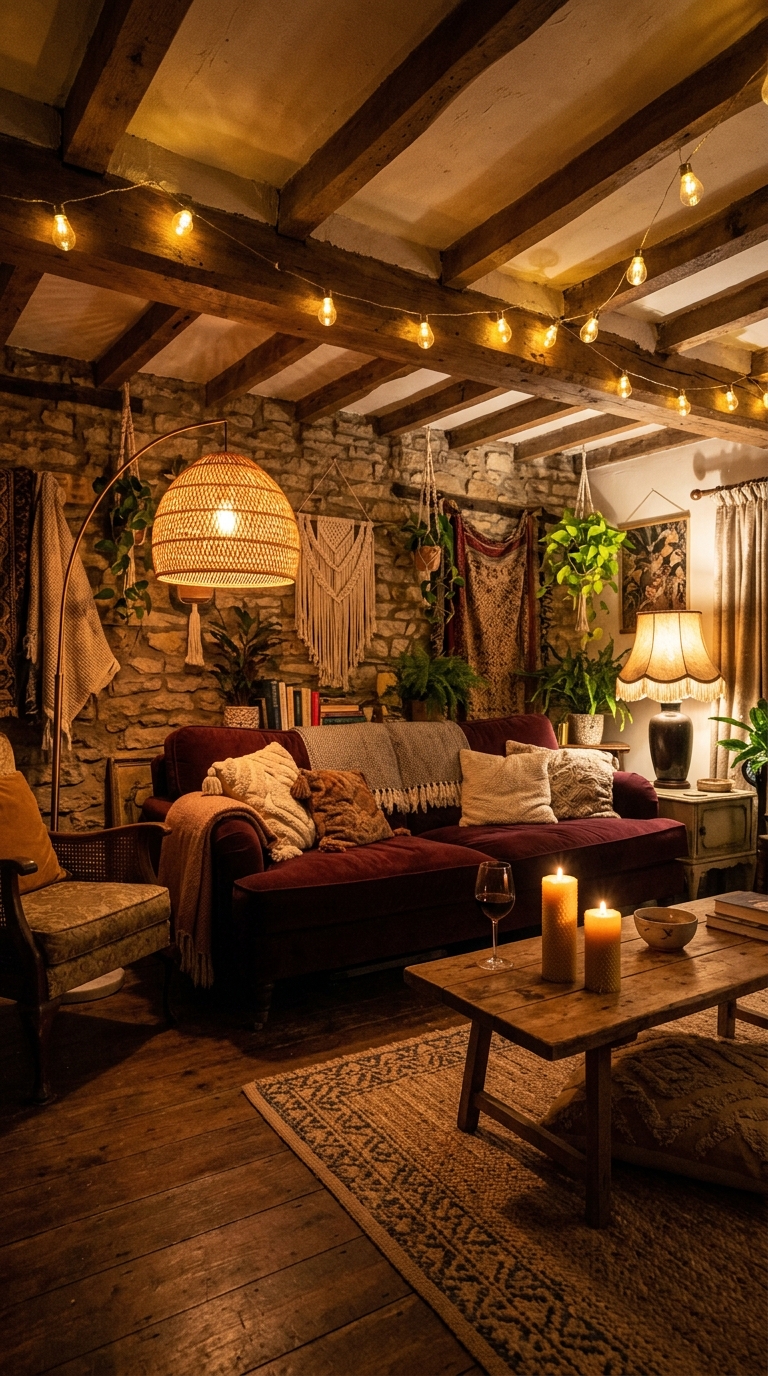
Lighting is the single most underestimated element in any living room, and in a bohemian space, the way you light a room is just as important as everything you put inside it. Imagine your room at eight in the evening — no harsh overhead fixture in sight, just the warm amber pool of a tall arched floor lamp in one corner, string lights draped lazily across an exposed beam above, two pillar candles flickering on the coffee table, and a fringed table lamp glowing on the side table. The combined effect is something extraordinary — the room feels completely wrapped in warmth, every texture seems deeper and richer, and the whole space transforms from a living room into an experience you never want to leave.
Switching your living room to layered ambient lighting means thinking in terms of at least four separate light sources placed at different heights around the room. A tall floor lamp covers one corner, a table lamp covers another, candles or a lantern cluster handle the central surface, and string lights or fairy lights add overhead warmth without the harshness of a ceiling fixture. Choose bulbs with a warm color temperature — anywhere between 2200K and 2700K gives you that golden, candle-like glow that makes everything look better. Dimmer switches on any hardwired lamps are worth every penny because the ability to shift the intensity of your lighting completely shifts the mood of the entire room.
Dedicated Corner for Books and Curiosities
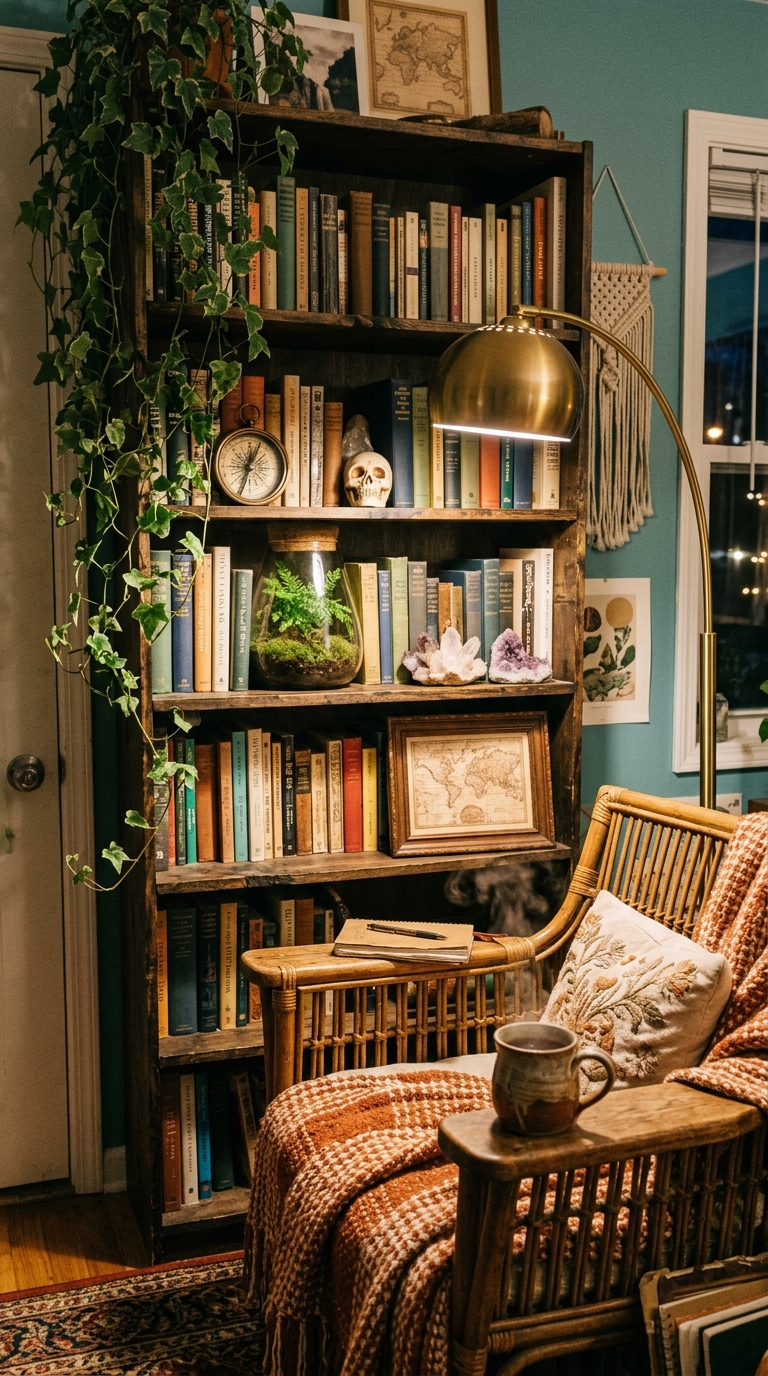
A true bohemian living room always has at least one shelf or corner that reads like a tiny private museum — and once you build one, you will honestly wonder how you ever lived without it. Picture a tall, slightly weathered bookshelf stacked with books of every size, spine colors ranging from faded paperback cream to deep burgundy hardcover, with small meaningful objects tucked between them: a brass compass, a glass terrarium, a cluster of rose quartz, a tiny framed vintage map you found at a market in a city you once visited. A trailing ivy cascades from the top shelf, a rattan armchair sits directly in front, and a warm arc lamp bends over the whole arrangement like it belongs nowhere else on earth. The corner becomes magnetic — everyone who walks into the room gravitates toward it.
Building a curiosity shelf that feels genuinely bohemian rather than cluttered comes down to the ratio of books to objects and the intentional use of negative space. Aim for roughly sixty percent books and forty percent objects, and resist the urge to fill every single gap. Let a few shelves breathe with empty space between clusters — that breathing room is what lets the eye appreciate each object rather than skipping over everything in one visual rush. Choose objects with a mix of organic and found materials: anything handmade, anything natural, anything that carries a story or a memory. Objects with personal meaning always photograph better, style better, and feel infinitely more authentic than anything purchased purely for decoration.
Earthy Color Palettes Rooted in Nature
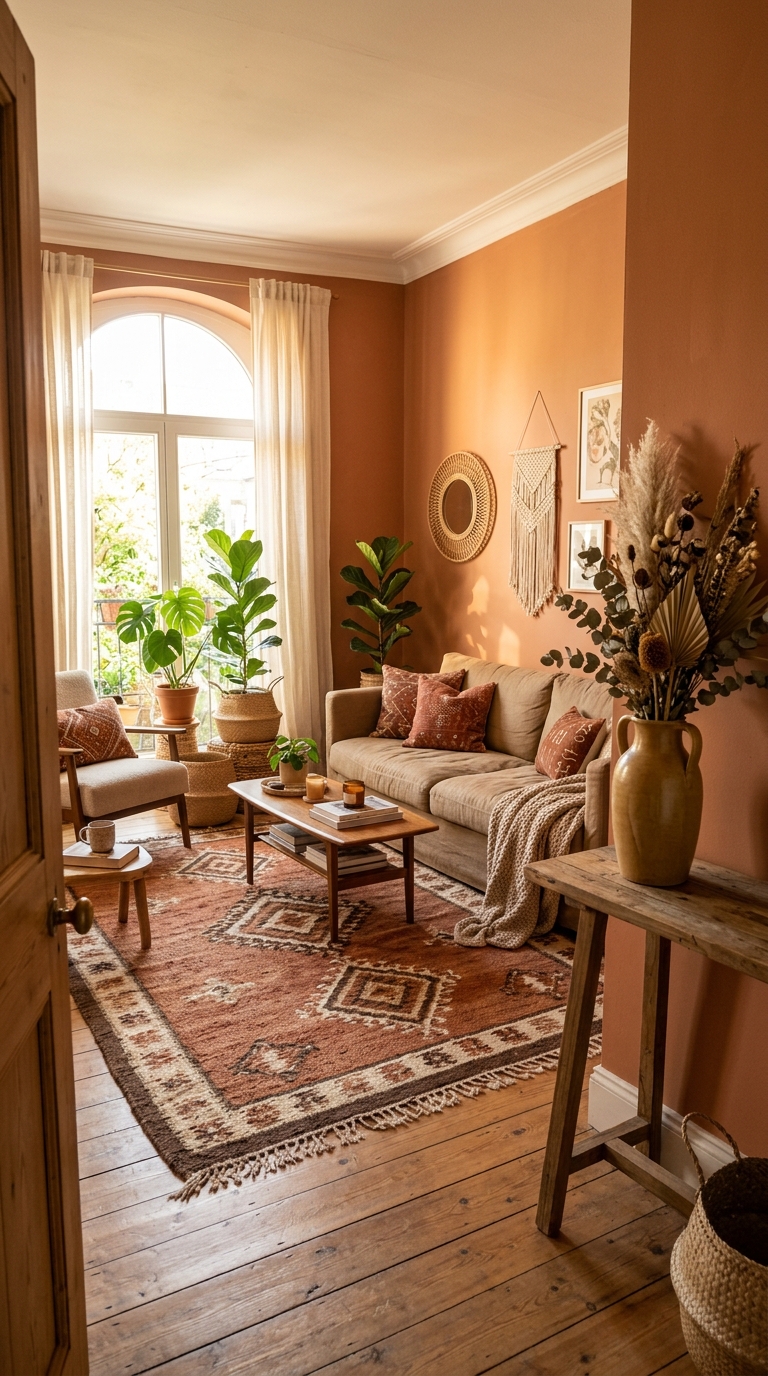
There is a reason that the most breathtaking bohemian living rooms you have ever seen all seem to share this deep sense of groundedness — and the secret is always the color palette. Terracotta walls warming in the morning light, a linen sofa in dusty sand, a hand-knotted rug in burnt sienna and cream, wooden furniture with honest natural grain running through it — every color in this palette comes directly from the earth, and that connection to nature is exactly what makes the space feel so calming and so complete. There is no harshness here, no stark white or cold grey, just warm, layered tones that shift beautifully as the light changes through the day and make you feel genuinely held by the room around you.
Committing to an earthy palette in your own living room starts with your wall color, which acts as the foundation everything else builds on. Terracotta, warm sand, sage green, or deep ochre all work brilliantly as bohemian wall colors, and any of them will instantly make your space feel warmer and more cohesive than a standard neutral white. Build your textile and furniture palette from that wall color outward, pulling in shades that echo it rather than fight it. Dried botanicals, woven baskets, wooden bowls, and ceramic pieces in muted earth tones all contribute to the palette without adding visual noise. The goal is a room that feels like a single continuous breath — warm, grounded, and completely at peace with itself.
Open Shelving Styled With Intention
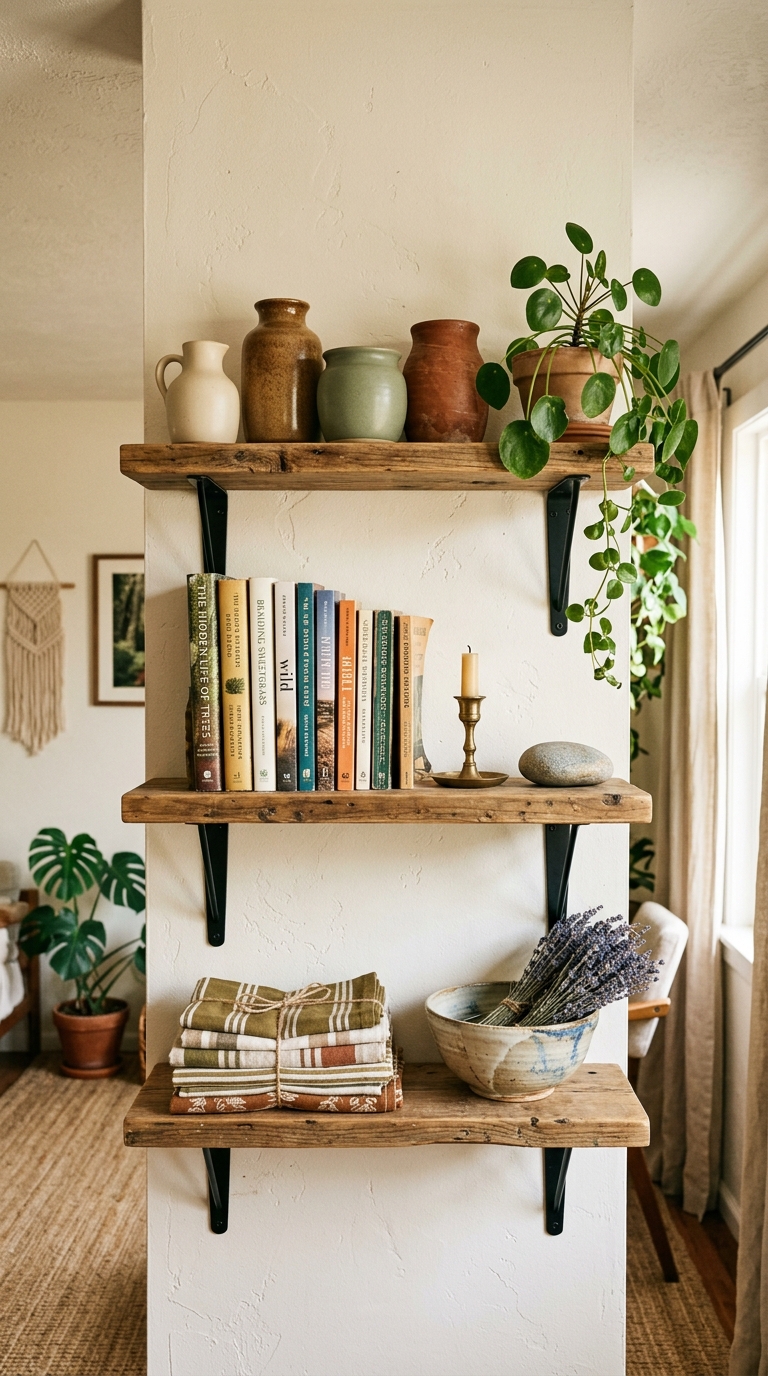
Open shelving in a bohemian living room is not just storage — it is one of the most powerful decorating opportunities in the entire space, and when you style it well, it stops every single guest in their tracks. Picture raw, slightly reclaimed wood shelves on black hairpin brackets: the top shelf holds ceramic vessels of different heights in matte cream and sage, a trailing plant spilling over the edge. The middle shelf mixes the spines of well-loved books with a small brass candleholder and a smooth river stone. The bottom shelf has a folded stack of woven cloth and a hand-thrown bowl of dried lavender. Every shelf tells its own quiet story, and together they form one visually rich, deeply personal display that feels completely effortless.
The real skill in open shelf styling is knowing when to stop adding things. Edit ruthlessly: for every object you put on a shelf, ask whether it earns its place through beauty, meaning, or texture. Remove anything that is purely functional without being beautiful, anything that is the wrong color for the palette, and anything that feels like filler. Work in odd numbers — groups of three or five objects almost always look more natural than groups of two or four. Mix heights constantly so the eye keeps moving rather than landing flat. And change things seasonally — swap dried botanicals for fresh ones, rotate your ceramics, add a new little found object from your next travels. Living with open shelving means your decor is always quietly, gently evolving right alongside you.
Bringing the Outdoors In With Natural Materials
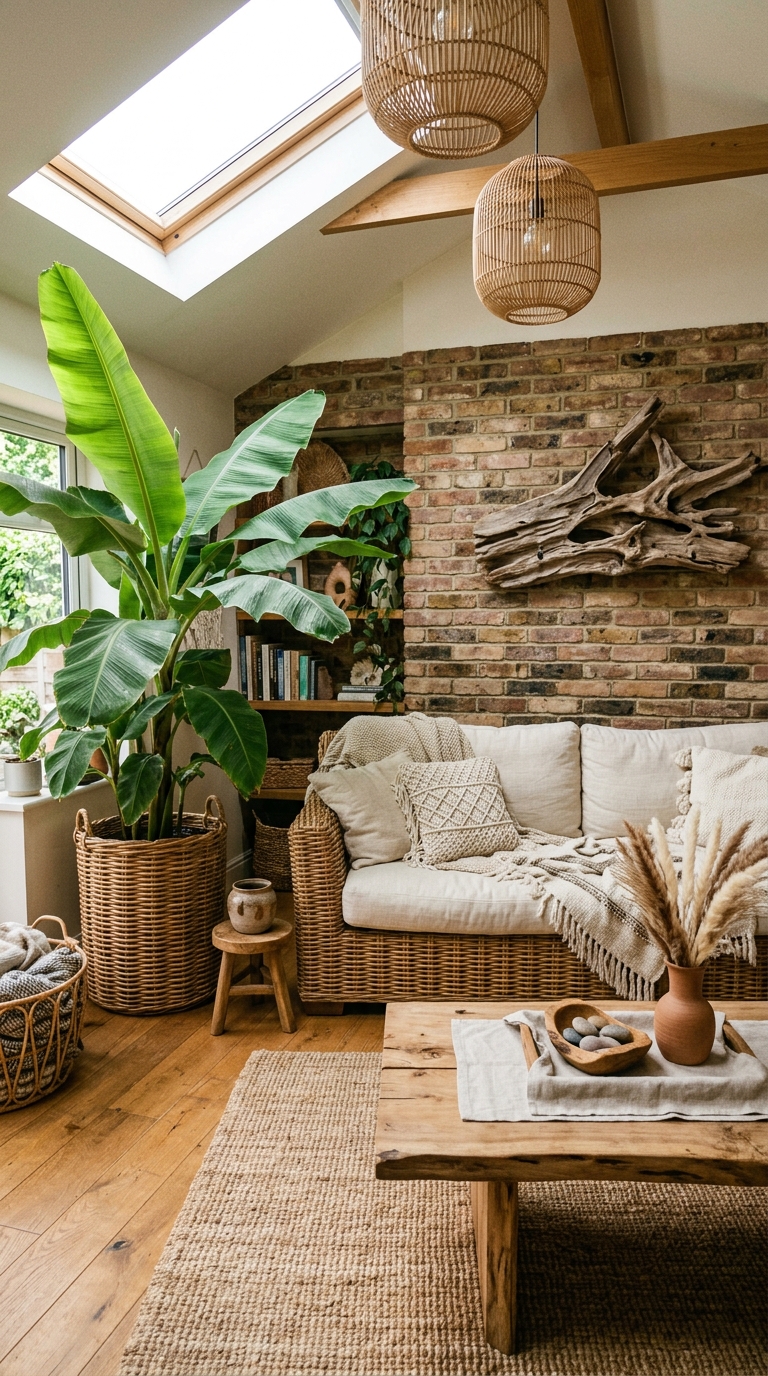
Bohemian design and natural materials share a relationship that goes deeper than trend — it is a genuine philosophy about bringing the outside world into your daily life and letting it soften everything it touches. A wide rattan sofa, a driftwood wall piece, a banana leaf plant filling one entire corner with its dramatic tropical leaves, a raw-edge wooden coffee table, woven pendant lights overhead — every single element in this palette comes from nature, and that shared origin creates a room that feels coherent, generous, and profoundly calm. The varied textures of rattan, wood grain, woven fiber, and living foliage all play beautifully together because they speak the same organic language, and that visual harmony is what makes the whole space feel so deeply restful.
The single most impactful thing you can do to bring natural materials into your living room is to replace synthetic or mass-produced pieces one at a time with their natural counterparts. Swap a plastic storage basket for a hand-woven wicker one. Replace a glass-and-chrome side table with a raw-edge wooden one. Add a large driftwood or branch piece as wall art instead of a framed print. Let these changes accumulate slowly, and you will find that your room gradually shifts into a space that feels genuinely alive with organic warmth. Natural materials age beautifully too — they develop patina, soften with time, and only get more characterful the longer they live in your home.
Scent, Candles, and Sensory Layers
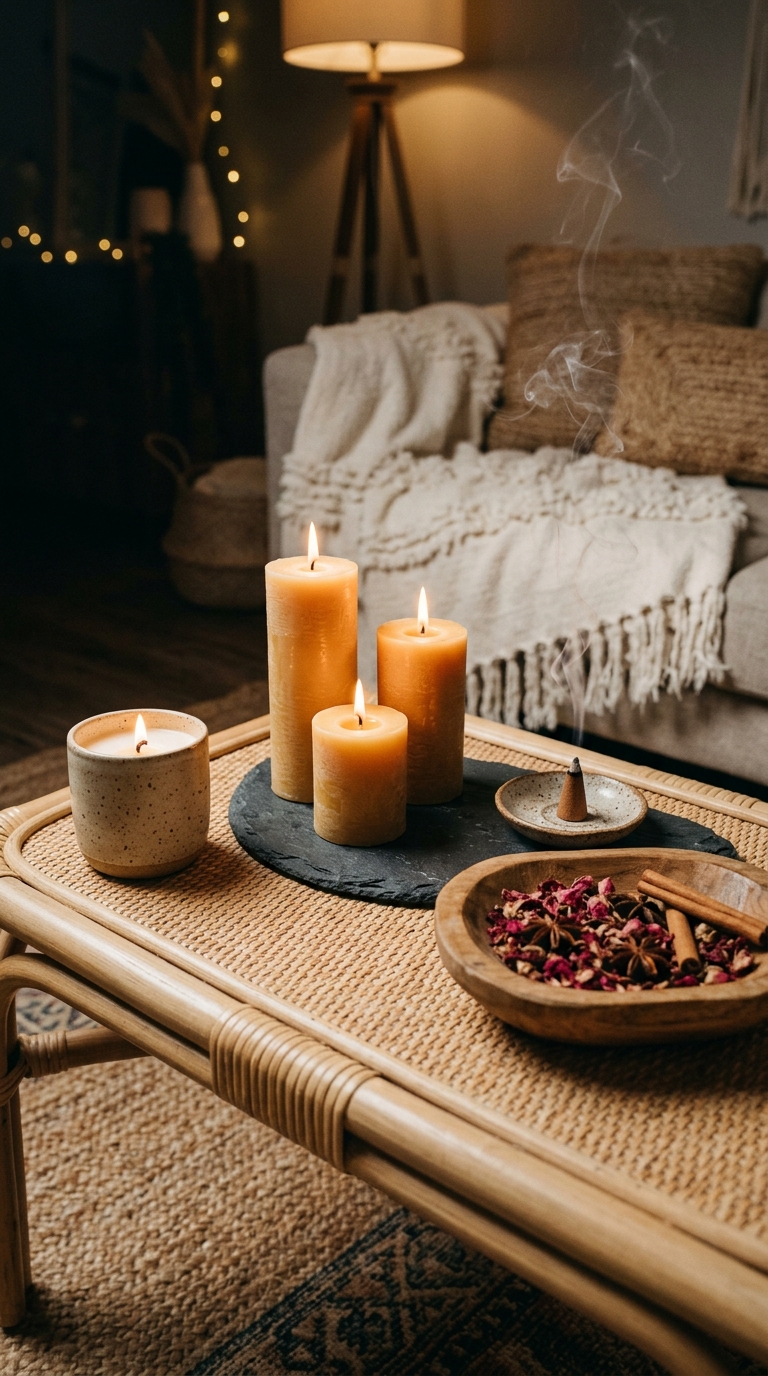
A truly immersive bohemian living room does not just look beautiful — it smells like a place you want to stay. Imagine walking in at the end of a long day to the warm flicker of beeswax pillar candles on a slate tray, the thin curl of sandalwood incense from a small ceramic dish, a wooden bowl of dried botanicals releasing a faint hint of something soft and earthy into the air. The sensory experience of a beautifully layered room goes far beyond what you can see, and in a bohemian space, scent and texture and soft sound all combine to create an atmosphere that wraps around you the moment you cross the threshold. This is where design becomes something much richer than decoration — it becomes the feeling of home.
Building sensory layers in your living room starts with choosing candles in natural, unscented or lightly scented wax like soy or beeswax, which burn cleaner and more beautifully than paraffin. Place them at different heights across your coffee table and side tables rather than clustering all in one spot. Add incense occasionally — not every day, but on the evenings when you want the room to feel especially atmospheric. Keep a small bowl of dried botanicals somewhere central so the room carries a faint natural fragrance even without any candles lit. The combination of warm flickering light, gentle natural scent, and rich surrounding texture is the final layer that transforms a beautifully decorated bohemian living room into a space that genuinely feeds your soul.
Personal Art and DIY Wall Decor
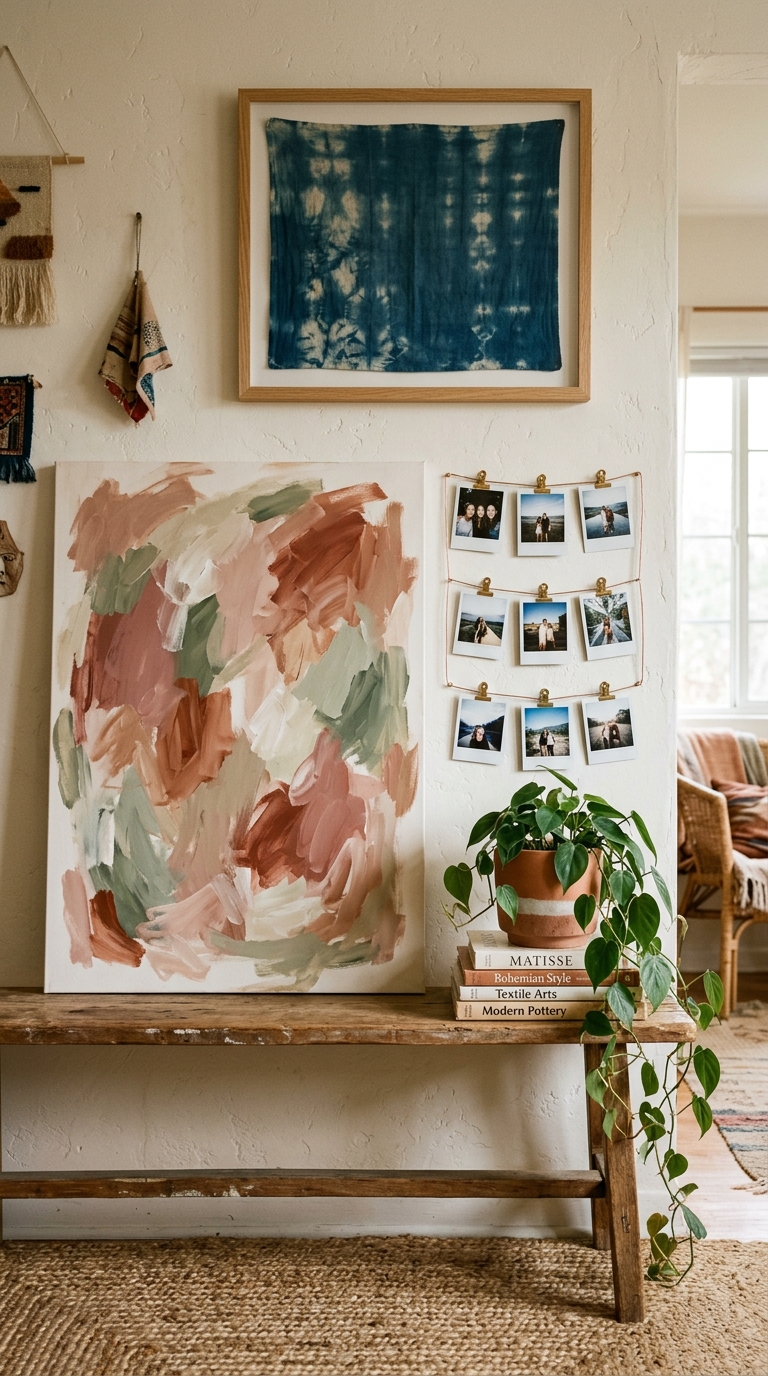
The most personal and affecting walls in any bohemian living room are never the ones filled with store-bought art — they are the ones with something the homeowner made themselves, something imperfect and genuine and entirely theirs. A large canvas with loose abstract brushstrokes in dusty rose and sage, leaned casually against the wall rather than hung, a string of polaroid photos clipped along a copper wire, a hand-dyed fabric panel in deep indigo — this kind of wall is not just decorated, it is narrated. Every piece holds something of the person who lives there, and that intimacy is something no amount of money spent at a home goods store can ever quite replicate. It is the realest, warmest version of bohemian decorating there is.
You absolutely do not need to be a trained artist to create wall art that belongs in a beautiful bohemian space. A large canvas, a few tubes of acrylic paint, and the willingness to move intuitively without overthinking will get you somewhere genuinely wonderful almost every time. Lean your canvas rather than hanging it for a more casual, artsy effect. String polaroids or film photographs along copper wire with brass clips for a deeply personal touch that costs almost nothing. Experiment with fabric dyeing — a length of cotton muslin in an indigo tie-dye or shibori pattern framed simply becomes a stunning textile art piece. Your home should hold evidence of the life you actually live, and nothing in bohemian design honors that principle more beautifully than art made by your own hands.
Your most beautiful room is already waiting for you inside the ideas you have just read. You do not need to overhaul everything at once — pick just one section that made your pulse quicken a little, one idea that felt most like home, and start there today. Roll out a layered rug, hang a piece of macramé, light every candle you own tonight and see what happens to your room when the overhead light goes off. Bohemian design is not a rigid style to execute perfectly — it is a living, evolving expression of who you are, what you love, and how you want to feel inside your own walls. And honestly, nothing is more beautiful than a home that truly feels like the person who lives there.