15 River Rock Landscaping Ideas That Will Transform Your Outdoor Space
Have you ever walked past a yard and felt instantly drawn to how calm and put-together it looked — without a single flower in sight? Chances are, river rocks played a starring role. These smooth, naturally tumbled stones carry a quiet beauty that grass and mulch simply can’t compete with. They’re low-maintenance, incredibly versatile, and they add a polished, organic look that holds up season after season.
Whether you have a tiny front yard or an expansive backyard, river rocks work in just about every space and style. And the best part? Once they’re down, they basically take care of themselves. No watering, no mowing, no seasonal replanting.
In this guide, we’re going to walk through 15 genuinely creative river rock landscaping ideas — not the tired, generic suggestions you’ve seen a hundred times. These are practical, visually stunning, and totally doable. Let’s get into it.
Dry River Bed That Actually Looks Like Water
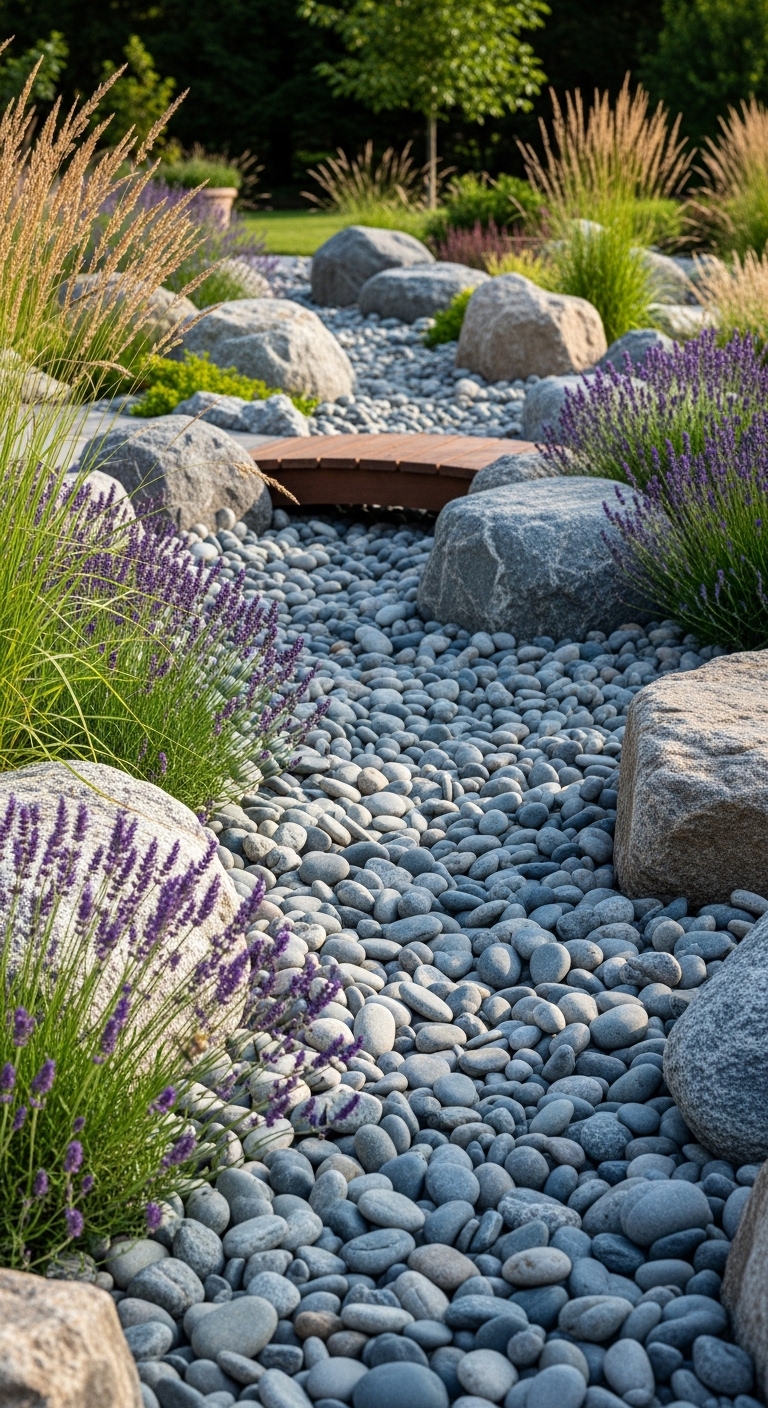
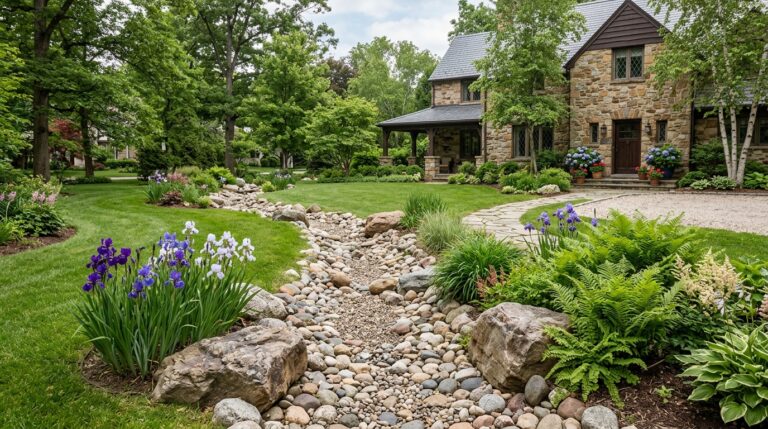
One of the most jaw-dropping things you can do with river rocks is create a dry riverbed that mimics the look of a real flowing stream through your yard. This works especially well in areas prone to drainage issues or in yards where a traditional garden bed just doesn’t make sense.
To pull this off convincingly:
- Use a mix of rock sizes — larger boulders along the edges, medium stones in the middle, and tiny pebbles along the center to simulate a current’s natural sorting effect
- Curve the bed slightly rather than running it in a straight line
- Plant ornamental grasses like blue fescue or Karl Foerster on both banks for movement
- Add a few stepping stones crossing the “river” for a functional, scenic touch
The key here is variety. A dry riverbed made of just one size of rock looks staged. When you layer different sizes and mix in a few dark accent rocks, the whole thing suddenly looks like nature did the work.
River Rock Ground Cover as a Grass Replacement
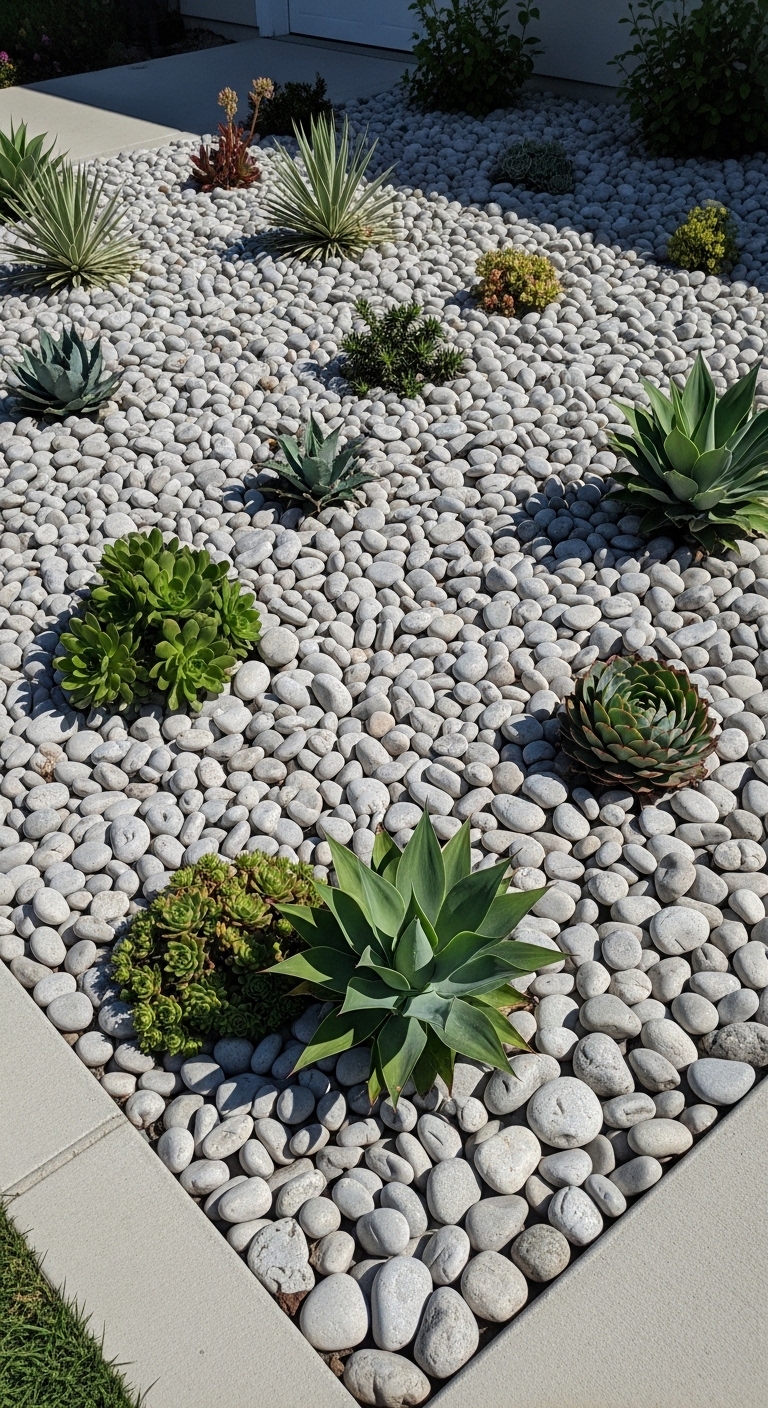
Grass is needy. It needs water, fertilizer, mowing, edging, and still manages to look patchy in dry summers. River rocks as a full ground cover is one of the smartest swaps you can make — especially in drought-prone climates.
- Lay landscape fabric underneath to prevent weeds while allowing drainage
- Choose a neutral color like grey or tan to complement your home’s exterior
- Group plants in clusters rather than spacing them out evenly — it looks more natural
- Use a defined border (concrete, steel edging, or wood) to keep rocks from migrating
This approach drastically cuts your water bill. In hot, dry climates, homeowners report saving hundreds of dollars per year in water costs after switching from grass to rock ground cover.
River Rock Mulch Around Garden Beds and Trees
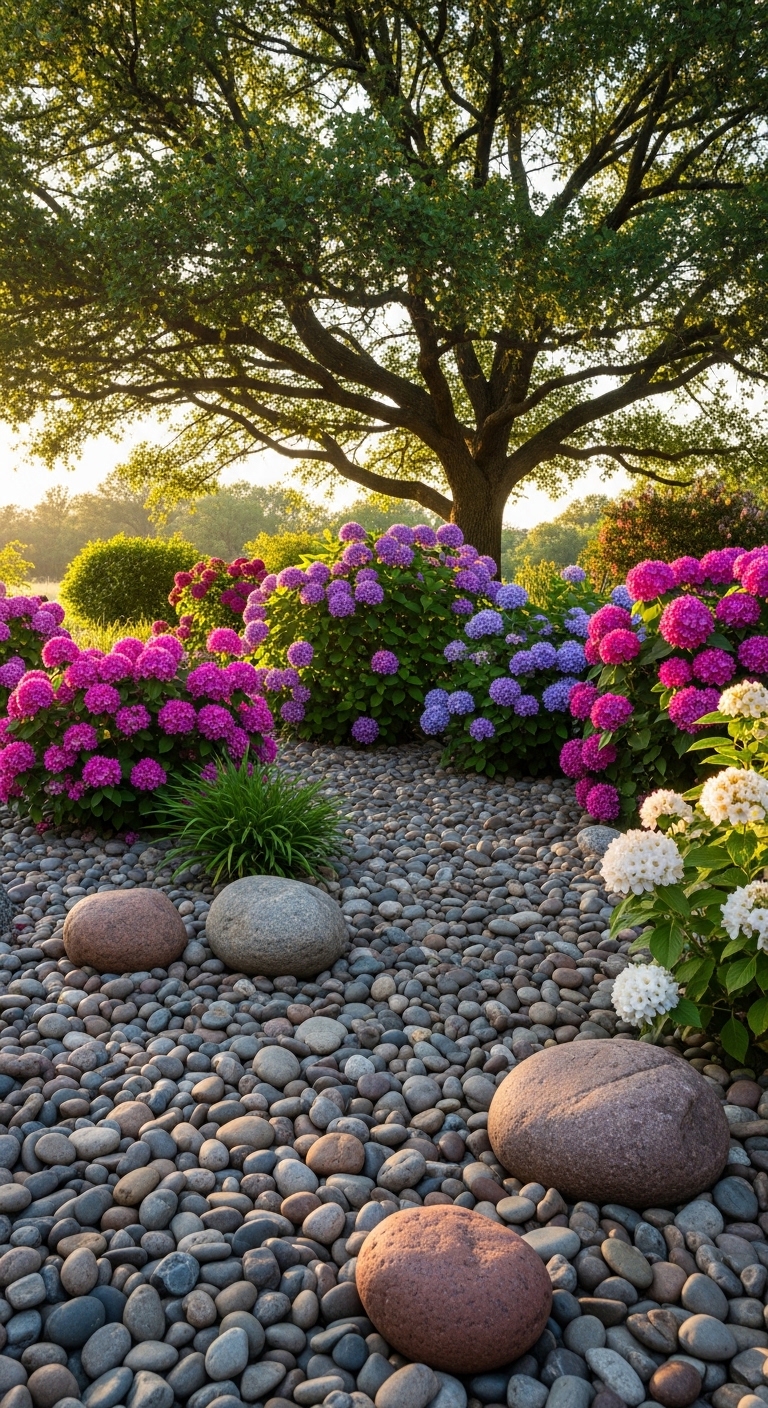
If you’re tired of refreshing wood mulch every spring — fading, washing away, or attracting pests — river rock mulch is a game-changer. It does the same job of suppressing weeds and retaining soil moisture, but it never decomposes, never needs replacing, and honestly looks far more intentional.
- Stick to small to medium-sized rocks (1–3 inches) for proper ground coverage around roots
- Keep rocks a few inches away from tree trunks to prevent moisture buildup against the bark
- Mix warm-toned and grey rocks together for a more organic, less uniform appearance
- Edge the bed cleanly with metal or stone edging so rocks don’t scatter into the grass
One thing to keep in mind: river rocks absorb heat during the day and release it at night, which can benefit plants in cooler climates but stress out heat-sensitive plants in hot zones. Know your plants before you commit.
Zen-Inspired Rock Garden With Raked Gravel and Boulders
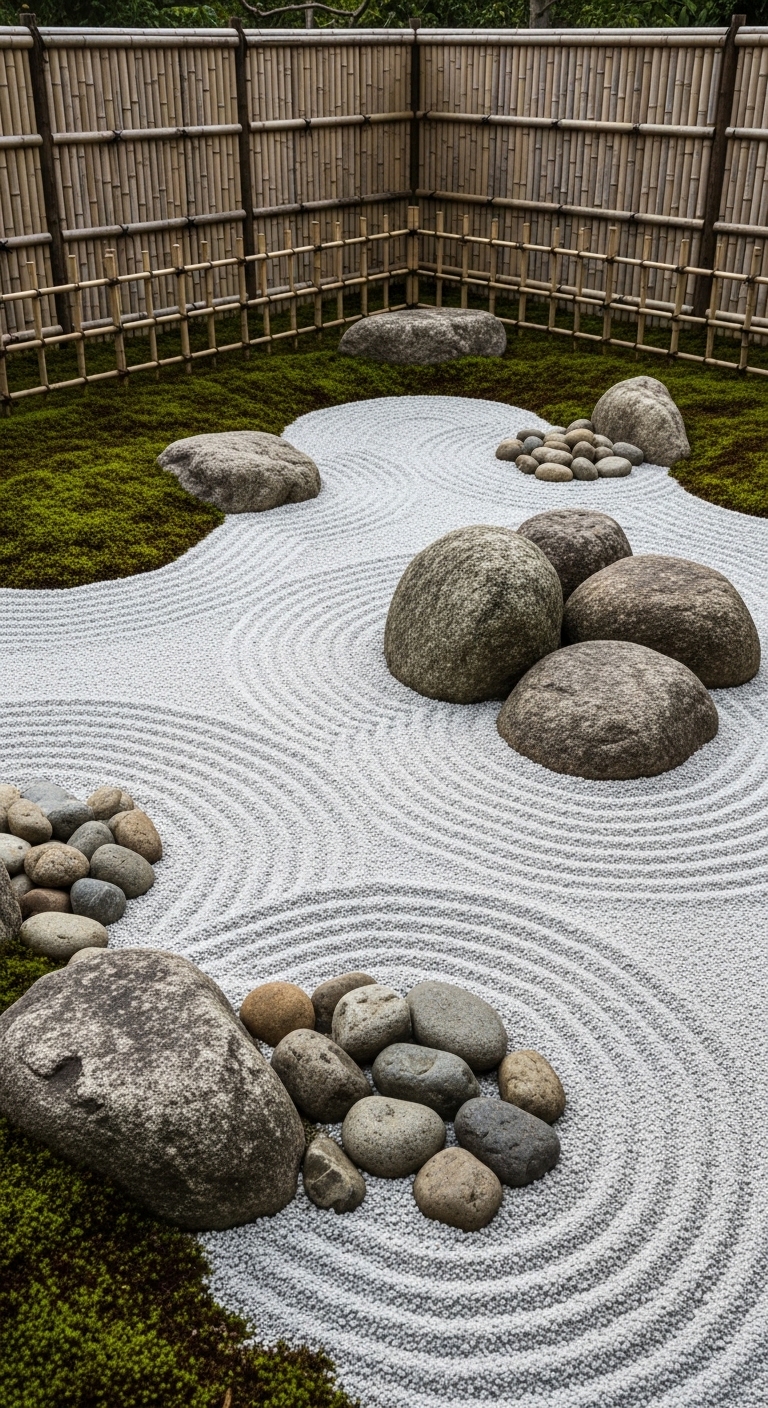
If you want outdoor space that makes you breathe more slowly the moment you step outside, a zen-inspired rock garden is the move. Originating in Japanese garden design, this style uses carefully placed boulders, fine raked gravel, and minimal plant life to create a meditative atmosphere.
- Odd numbers of boulders feel more natural — try groupings of 3 or 5
- Rake the gravel in concentric circles around rocks to represent water ripples
- Add low ground covers like creeping thyme or moss between rocks for texture
- Keep the color palette simple: grey, white, and one accent plant with deep green foliage
This design works beautifully in small spaces. A 10×10 corner of your yard can become a fully immersive zen corner with just a few boulders, a bag of fine gravel, and some thoughtful placement.
River Rock Pathway Through the Garden
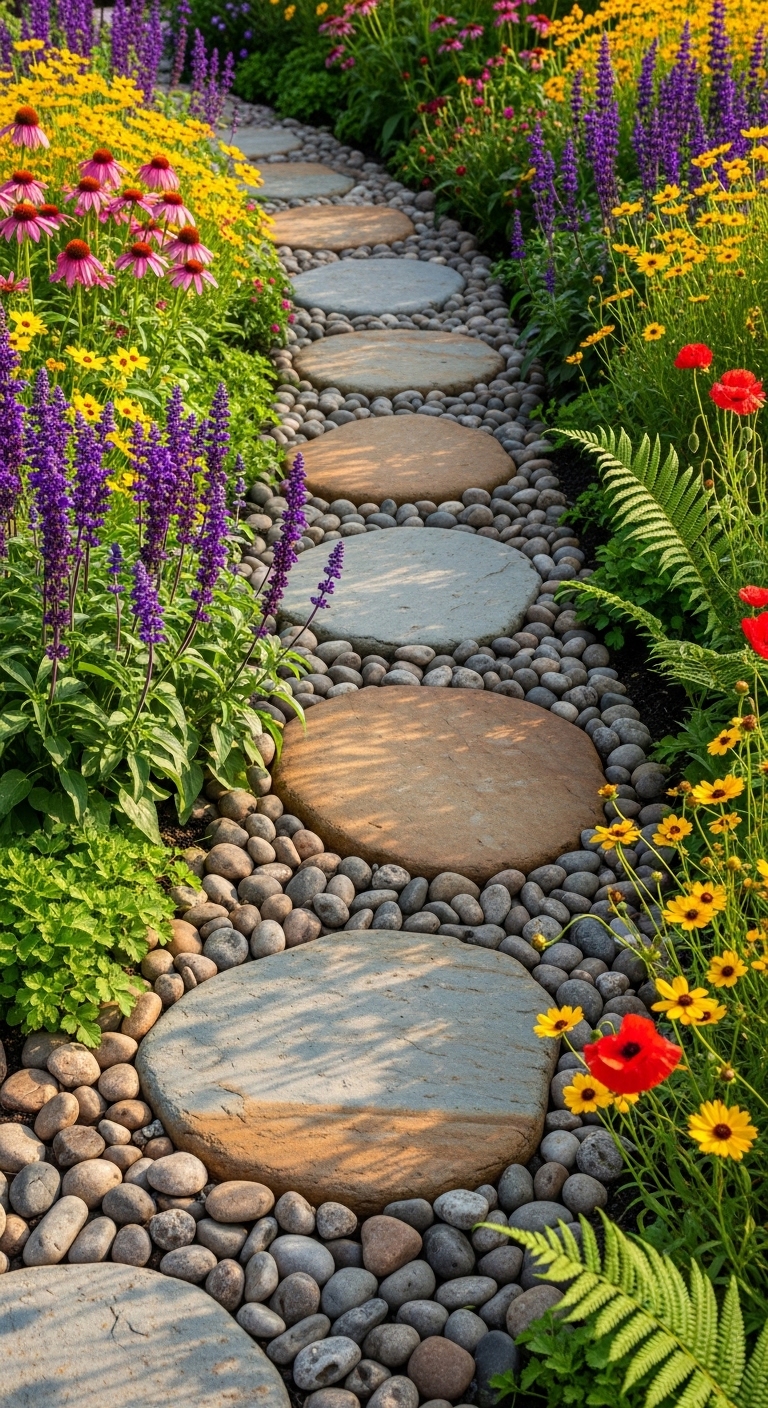
A river rock pathway is one of the most functional landscaping upgrades you can make. It gives you a clear route through garden beds, protects soil from compaction, and looks absolutely beautiful running between lush plantings.
- Use large, flat stones as the actual stepping surface and fill the gaps with smaller river rocks
- Space stepping stones about 18–24 inches apart to match a natural walking stride
- Curve the path gently — straight paths feel formal and rushed, curved ones invite exploration
- Add low border plants like hostas or creeping phlox along the edges so the path feels framed
The combination of flat stepping stones plus loose river rock fill creates the best of both worlds — secure footing with beautiful, flowing texture between each step.
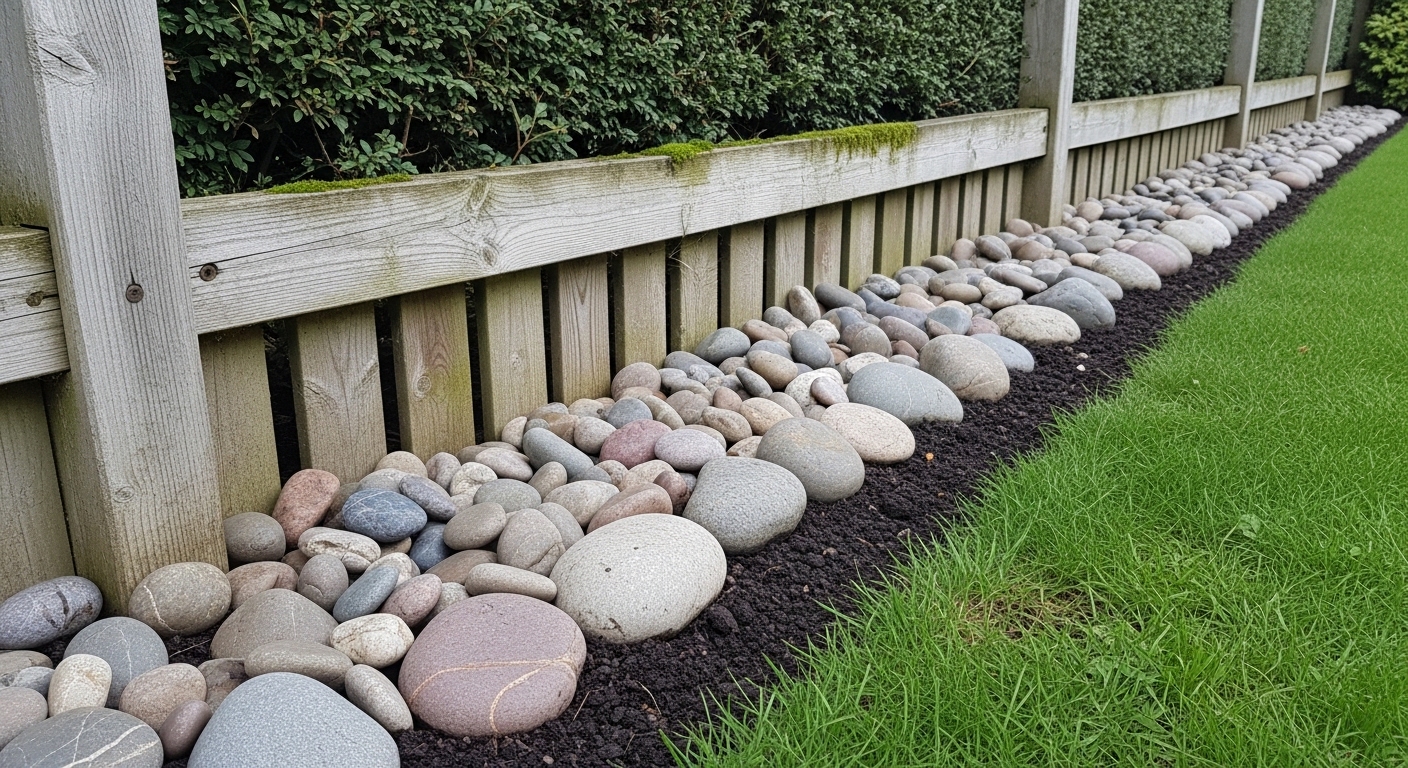
Rock Border Along Fence Lines and Property Edges
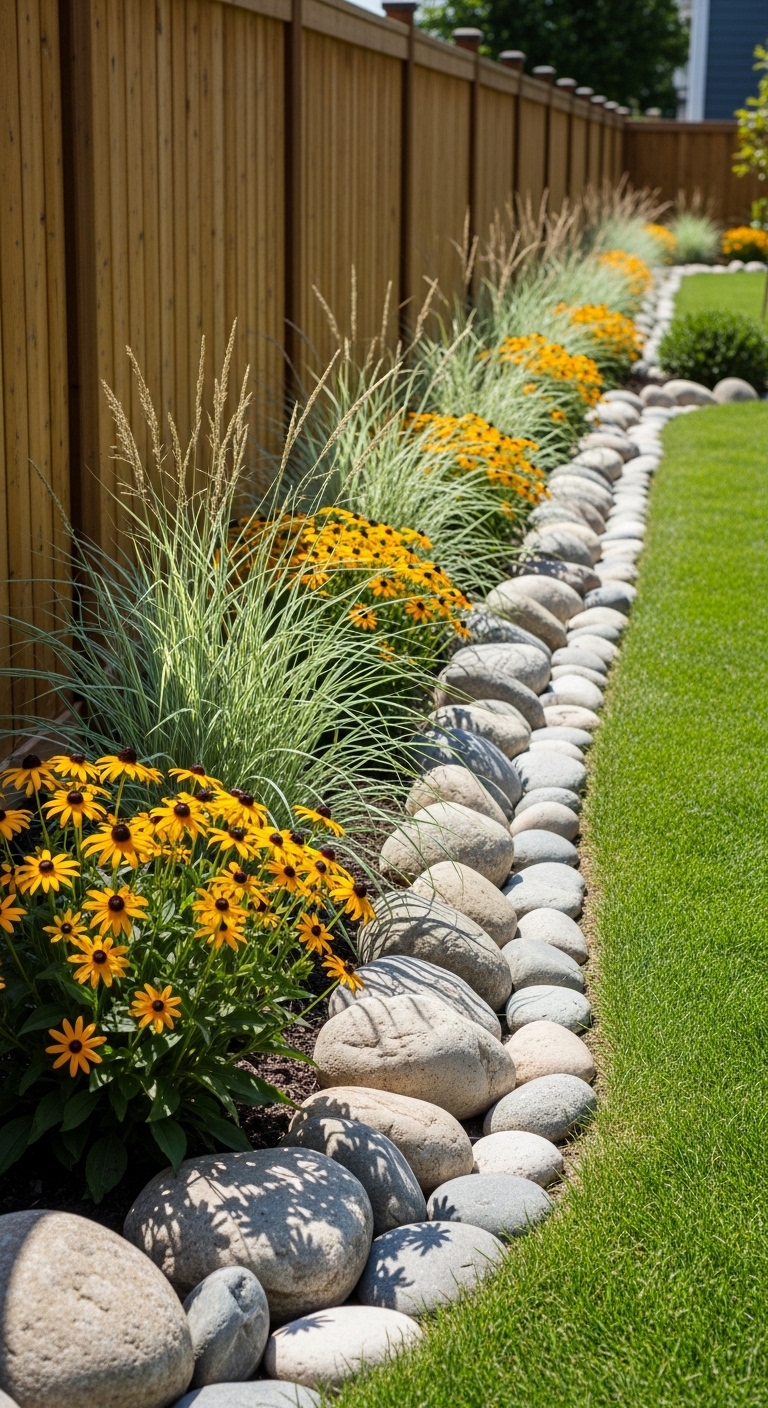
One of the simplest and most impactful uses of river rocks is as a clean, defined border along fences, walls, or property edges. It takes what might otherwise be a bare, forgettable strip of ground and turns it into a design feature.
- Go for rocks in the 3–5 inch range for a bold, visible border that holds its position
- Stagger rock sizes instead of lining up uniform pieces — the random placement looks more natural
- Plant low ornamental grasses or wildflowers directly behind the rock border for contrast
- Use this technique along driveways, too — it frames the space and eliminates the muddy grass edge problem
This idea requires almost no installation complexity. You don’t need professional help or special equipment. Lay your landscape fabric, set your rocks, and you’re done in an afternoon.
Decorative Rock Around a Fire Pit or Outdoor Living Area
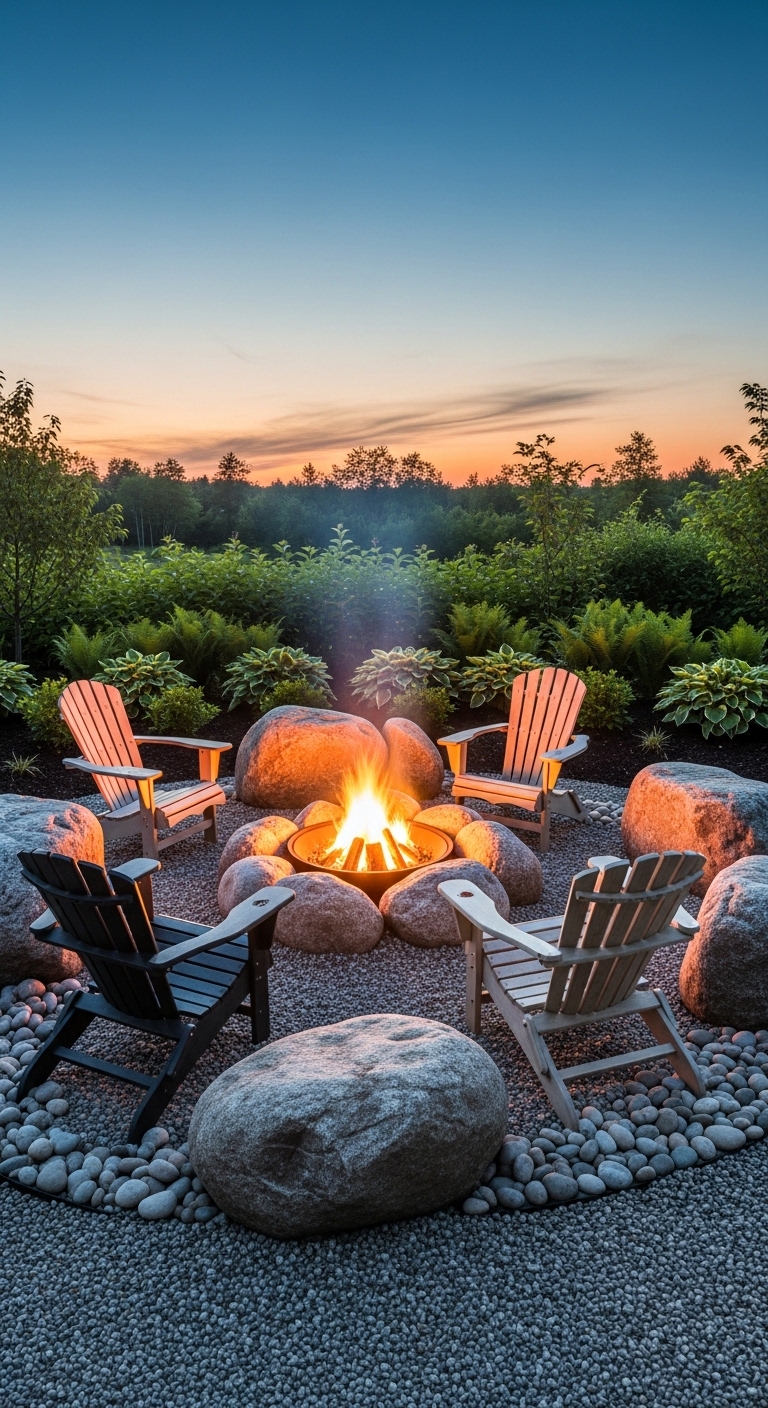
River rocks and fire pits are a natural pairing. The stone texture around an outdoor living area adds a rugged, grounded quality that makes the space feel intentional rather than thrown together.
- Create a full rock apron around the fire pit extending 3–4 feet in all directions for safety and aesthetics
- Use a mix of large accent boulders and medium loose fill to vary the texture
- Define the seating area with a slightly raised ring of larger rocks as a natural visual border
- Add a few drought-tolerant plants like Russian sage or ornamental onion at the outer edge
The heat-retaining properties of river rocks also make them practical here — they stay warm into the evening, extending the comfortable use of your outdoor living area after the fire dies down.
River Rock Drainage Solution That Looks Beautiful
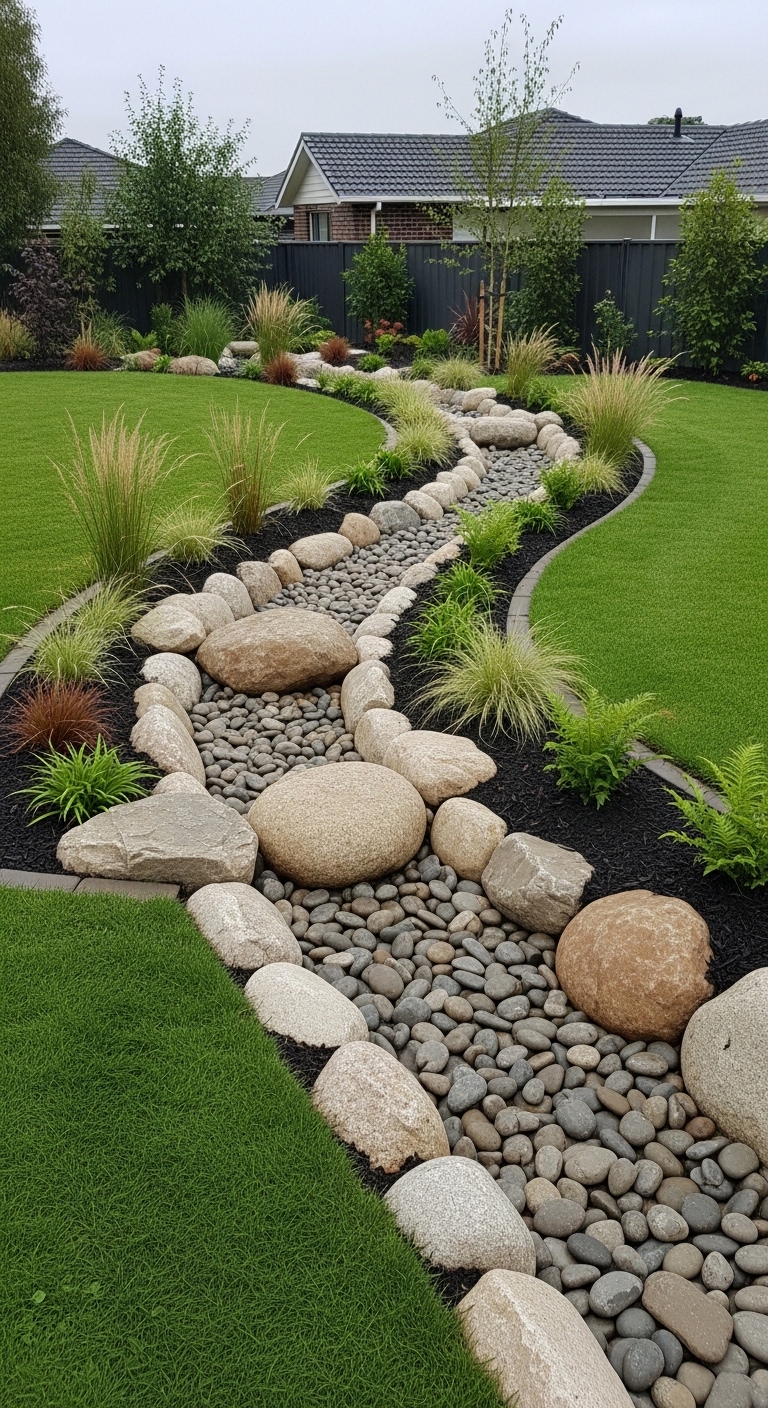
Here’s a landscaping truth not enough people talk about: some of the most beautiful yard features started as practical drainage solutions. If you have a low spot where water pools, a French drain hidden under a decorative river rock channel is both functional and gorgeous.
- Dig a shallow swale following the natural water flow path and line it with landscape fabric
- Fill it with a deep layer (4–6 inches) of 1.5–3 inch river rocks for good water movement
- Edge the swale with boulders or larger rocks to define it visually
- Plant moisture-loving plants like iris, cardinal flower, or rain lilies along the edges — they’ll love the extra water that flows past their roots
This idea essentially hides your drainage infrastructure in plain sight. Instead of a muddy trench or an ugly plastic pipe, you get a natural-looking river feature that actively improves your yard’s water management.
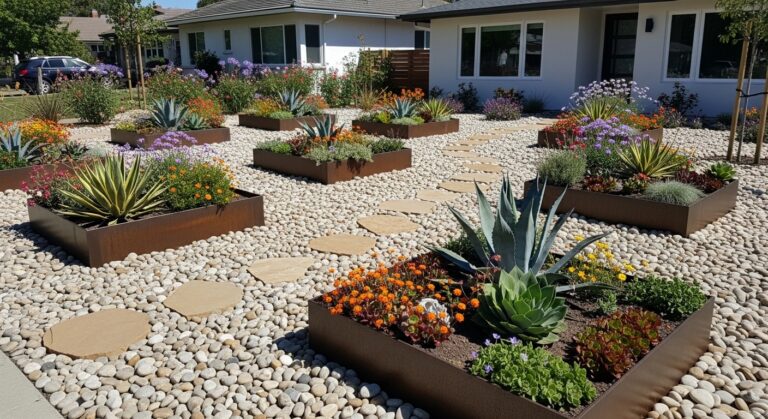
River Rock Raised Planter Surrounds
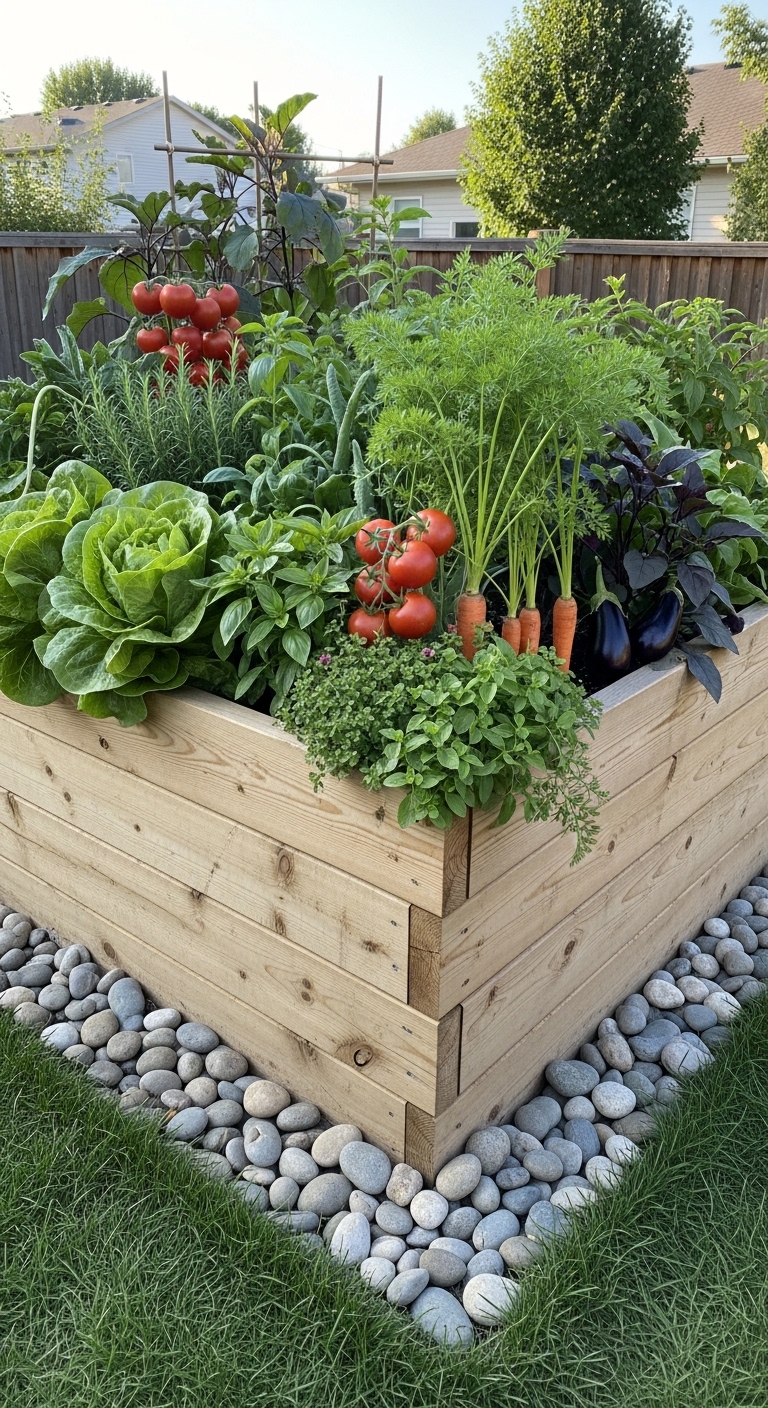
Raised garden beds look even sharper when you surround them with a layer of river rock at the base. The contrast between the clean lines of the raised bed and the organic texture of the surrounding rocks creates a really satisfying visual tension.
- Use rocks to fill the gap between the bottom of the raised bed and the surrounding ground
- Extend the rock surround 12–18 inches outward from the bed’s perimeter for a defined apron
- Mix light grey and cream-toned rocks for a clean, modern look that complements wood or corten steel planters
- This also discourages pests like slugs that tend to avoid crossing rough rock terrain
The practical bonus here is that no more muddy splash-back reaches your vegetables when it rains. The rock buffer absorbs the impact and keeps the area immediately around the bed clean.
Stacked River Rock Retaining Wall
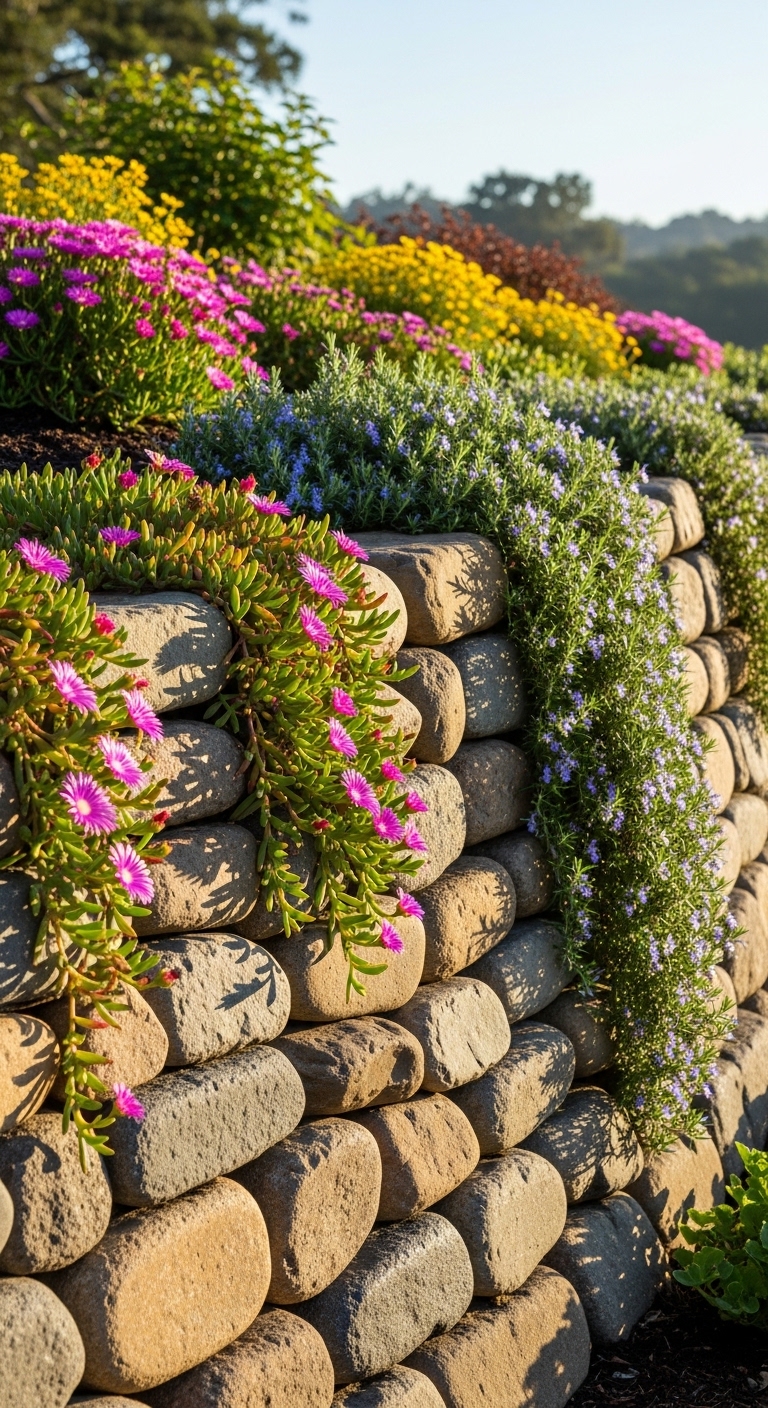
If your yard has any slope to it, a stacked river rock retaining wall is one of the most visually striking things you can build. Unlike poured concrete walls, rock retaining walls have warmth, texture, and a quality that makes them look like they’ve been there forever.
- For walls under 2 feet, you can stack flat river rocks yourself without mortar — the weight holds them
- For anything taller, consult a professional and consider mortar or a geotextile fabric behind the wall
- Let plants cascade over the top of the wall — ice plants, creeping rosemary, and trailing sedum all look incredible tumbling over stone
- Leave small pockets between larger rocks where you can tuck in small succulents or rock-garden plants
The plants spilling over the wall soften it and blur the line between hardscape and garden in a way that always looks expensive and intentional.
Water Feature With River Rock Surrounds
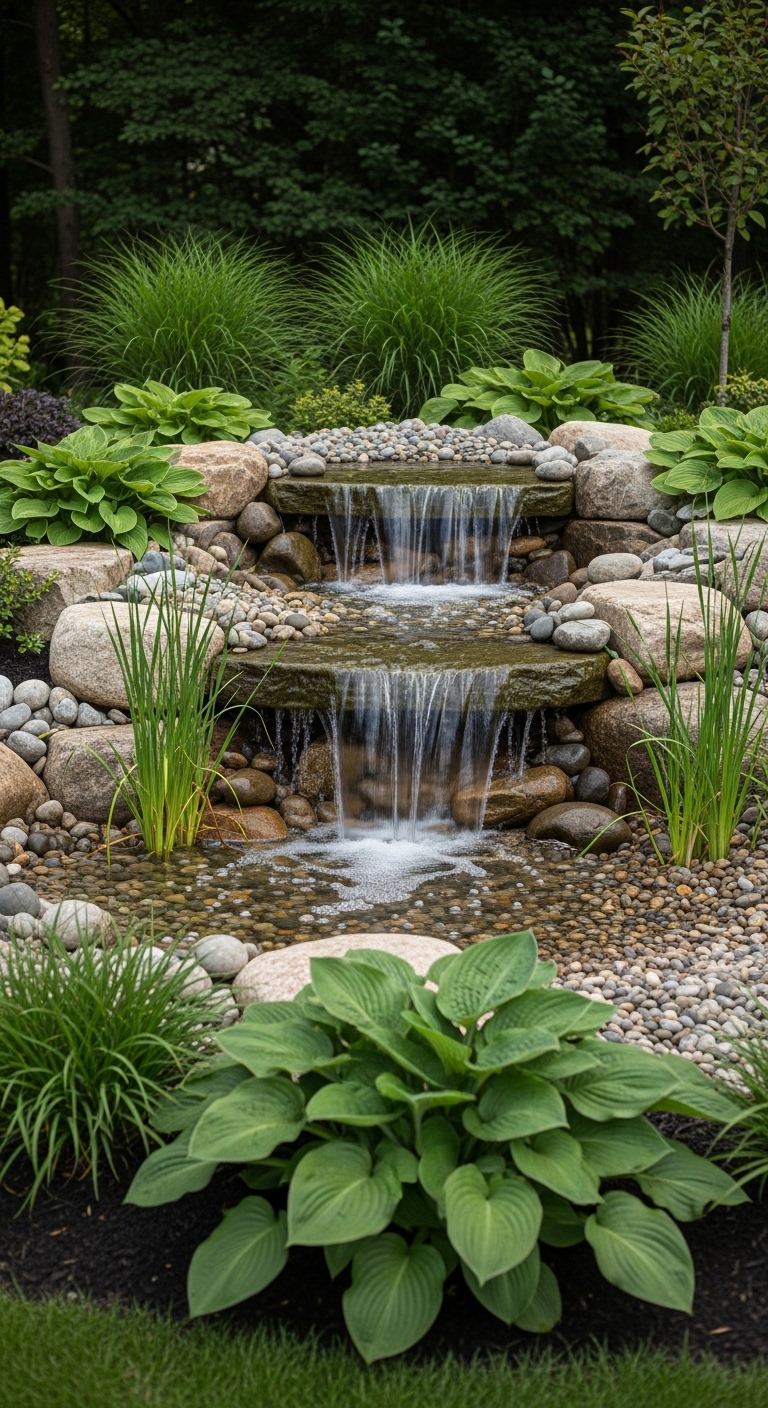
You don’t need a pond or a professional-grade water feature to bring the sound of water into your yard. A simple recirculating fountain or pondless waterfall surrounded by river rocks is surprisingly achievable as a weekend project.
- River rocks around a water feature do double duty: they hide the pump and reservoir while creating a natural streambed look
- Use larger boulders to guide the water flow and smaller rocks to fill in the surrounding basin
- Position the pump basin beneath a deep layer of rocks so it becomes invisible from any angle
- Pair the feature with moisture-loving plants like Japanese iris, horsetail reed, or astilbe
The sound of water trickling over rocks does something genuinely powerful for an outdoor space. It masks street noise, attracts birds, and creates a sensory experience you just can’t get from a plant or statue.
Desert or Xeriscape Landscaping With River Rocks
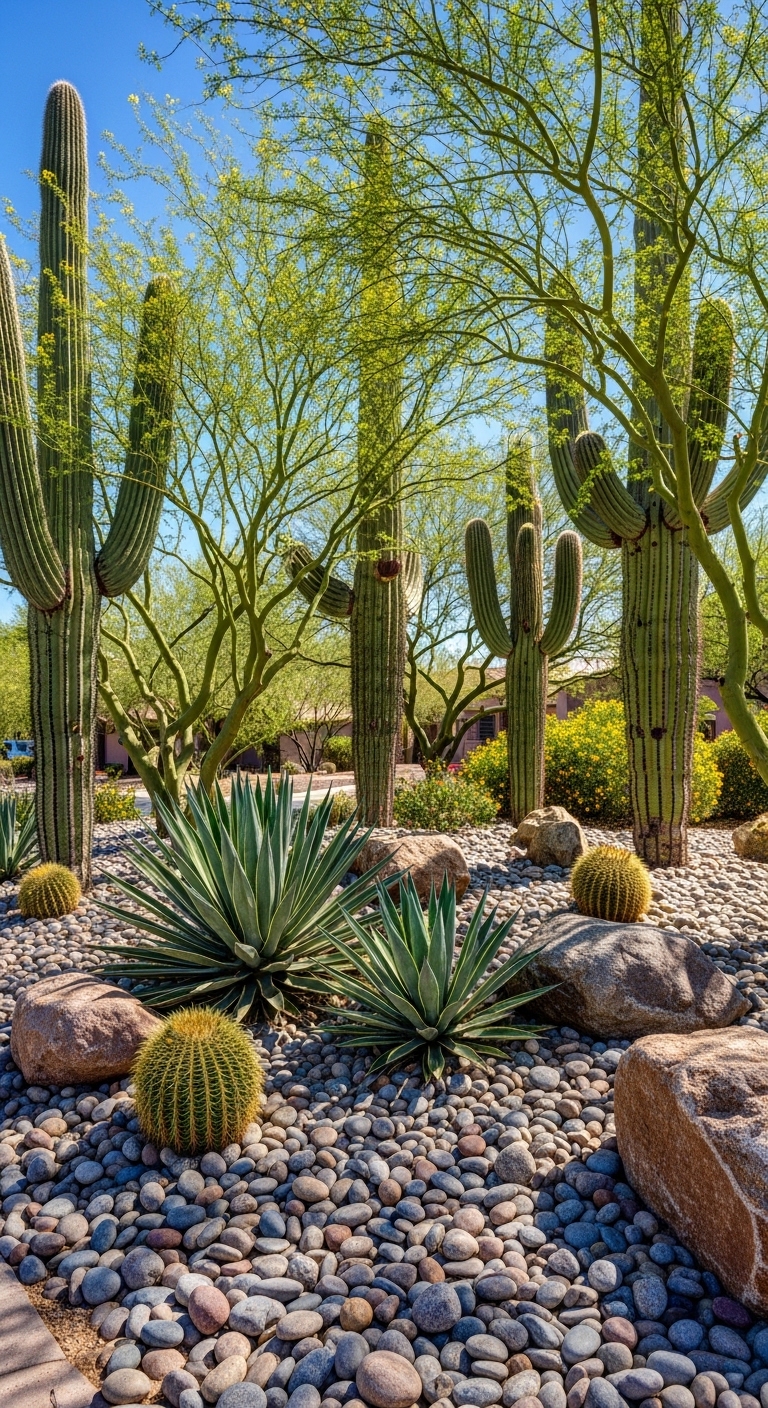
In dry climates, river rock landscaping isn’t just beautiful — it’s smart water stewardship. A xeriscape design using river rocks as the dominant ground cover, with strategically placed drought-tolerant plants, can reduce outdoor water use by up to 60%.
- Choose warm-toned rocks — terracotta, rust, sandy tan — to complement the desert plant palette
- Group plants together in “islands” of soil surrounded by rocks rather than spacing them evenly
- Use decomposed granite for the main ground cover and river rocks as accent borders and feature areas
- Include a variety of plant heights: ground-hugging sedums, mid-height agave, and tall saguaro or palo verde for dimension
This landscape style requires virtually no maintenance once established. You’re essentially working with the climate rather than against it — a principle that pays off every single year.
River Rock Edging Along Sidewalks and Driveways
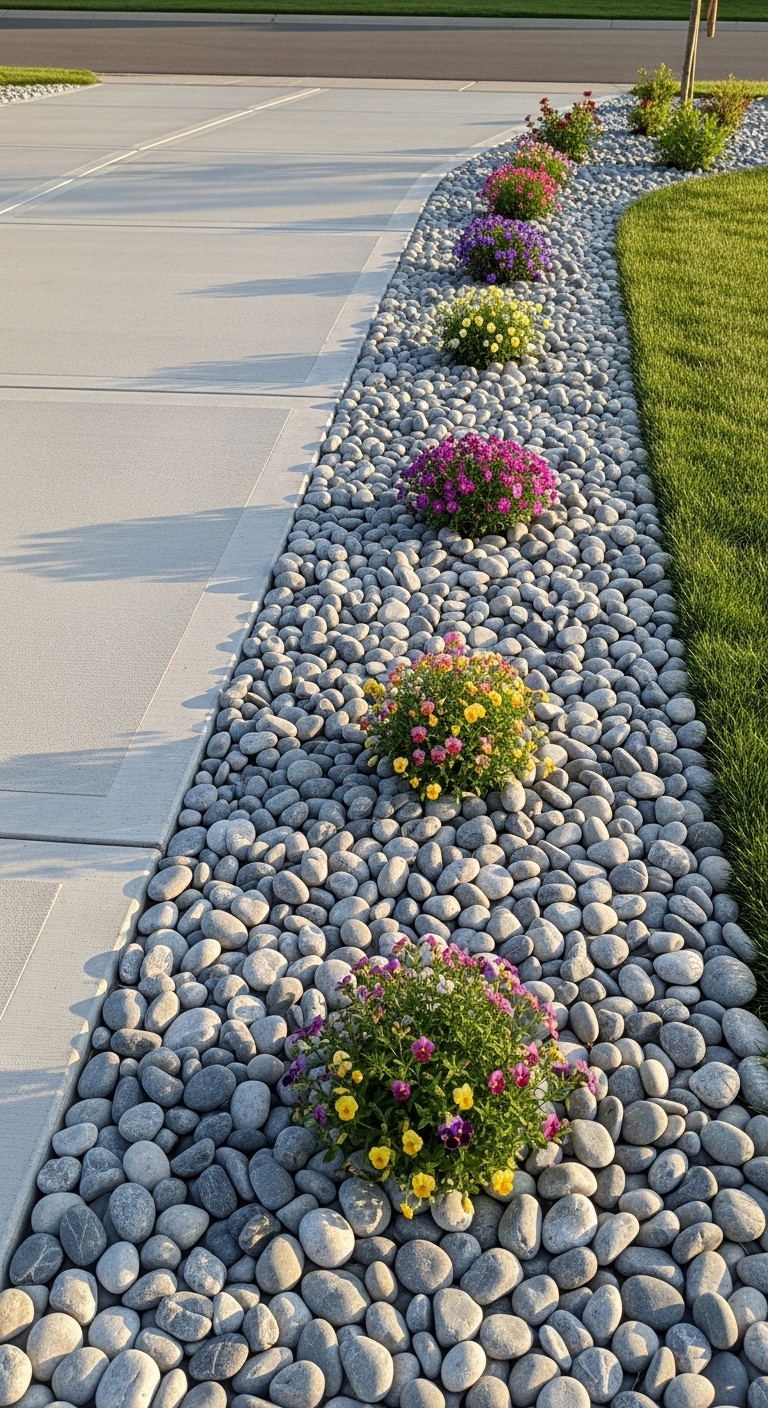
The strip of ground between your driveway or sidewalk and your lawn is usually an afterthought — a weedy, scruffy no man’s land. A clean river rock edge transforms it into one of the first things people notice about your home in a positive way.
- Install a metal or concrete edge between the rock strip and the lawn to prevent grass from creeping in
- Use rocks in the 2–4 inch range for good visual weight without looking chunky
- Plant low-growing perennials like creeping phlox, sedum, or ornamental thyme directly in the rock strip — they’ll fill in beautifully over time
- Keep the strip consistent in width (usually 12–24 inches) for a polished, intentional look
This is one of the highest-ROI curb appeal projects you can do. It costs very little, takes a single afternoon, and makes your home look significantly more well-kept and designed.
Rock Garden on a Hillside or Slope
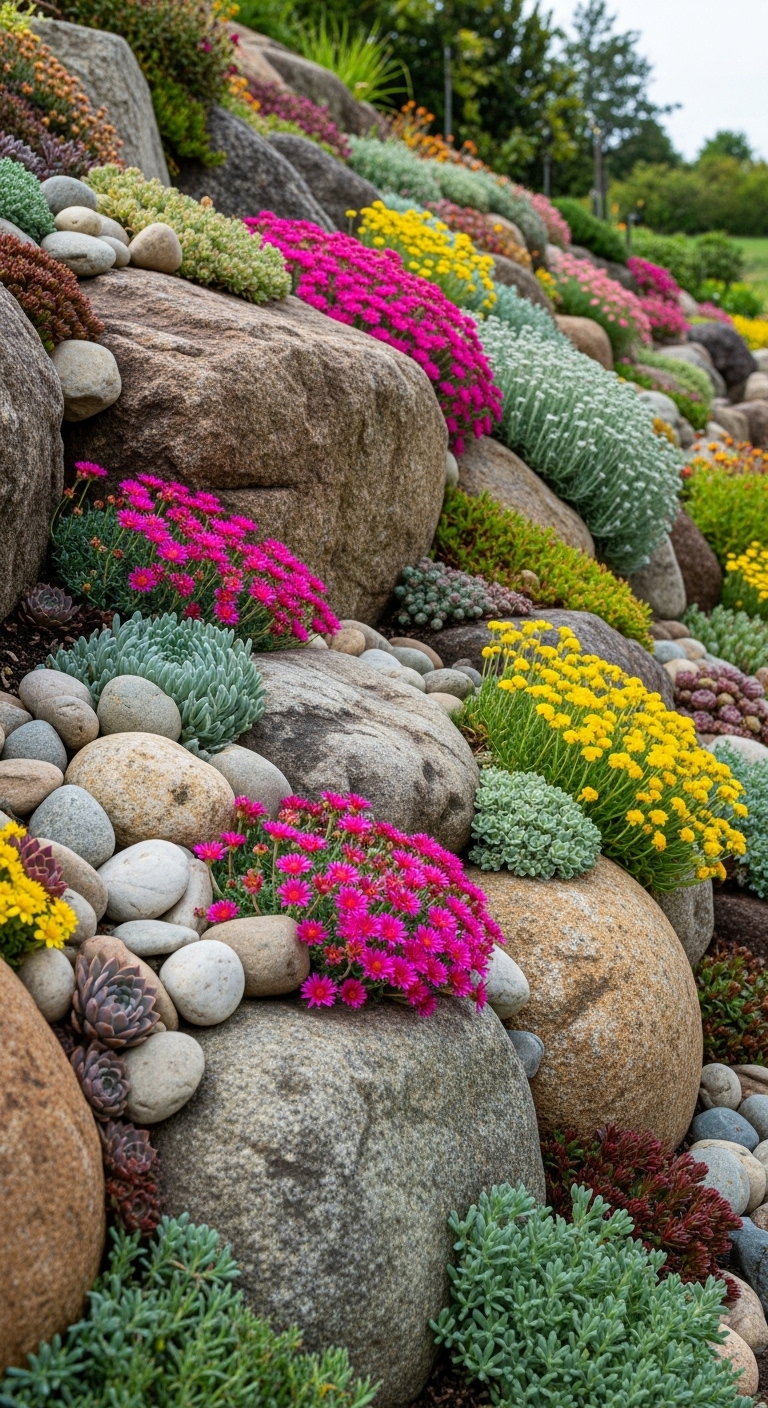
Slopes are one of the hardest landscaping challenges in any yard. Grass erodes, mulch washes away, and maintaining them is a nightmare. A hillside rock garden solves all of that while creating a genuinely stunning feature.
- Start with large anchor boulders set partially into the slope — they create structure and prevent erosion
- Fill between the boulders with medium river rocks, then use smaller rocks and gravel for surface coverage
- Plant into pockets of soil between the rocks using alpine plants, creeping phlox, hens and chicks, or rock cress
- Install the rocks with their flat faces at a slight backward angle to direct water into the hillside rather than down it
The result is a hillside that practically takes care of itself. The rocks hold soil in place, the plants fill in slowly, and the whole thing looks like a natural alpine scene.
Decorative Rock Focal Point or Sculpture Garden
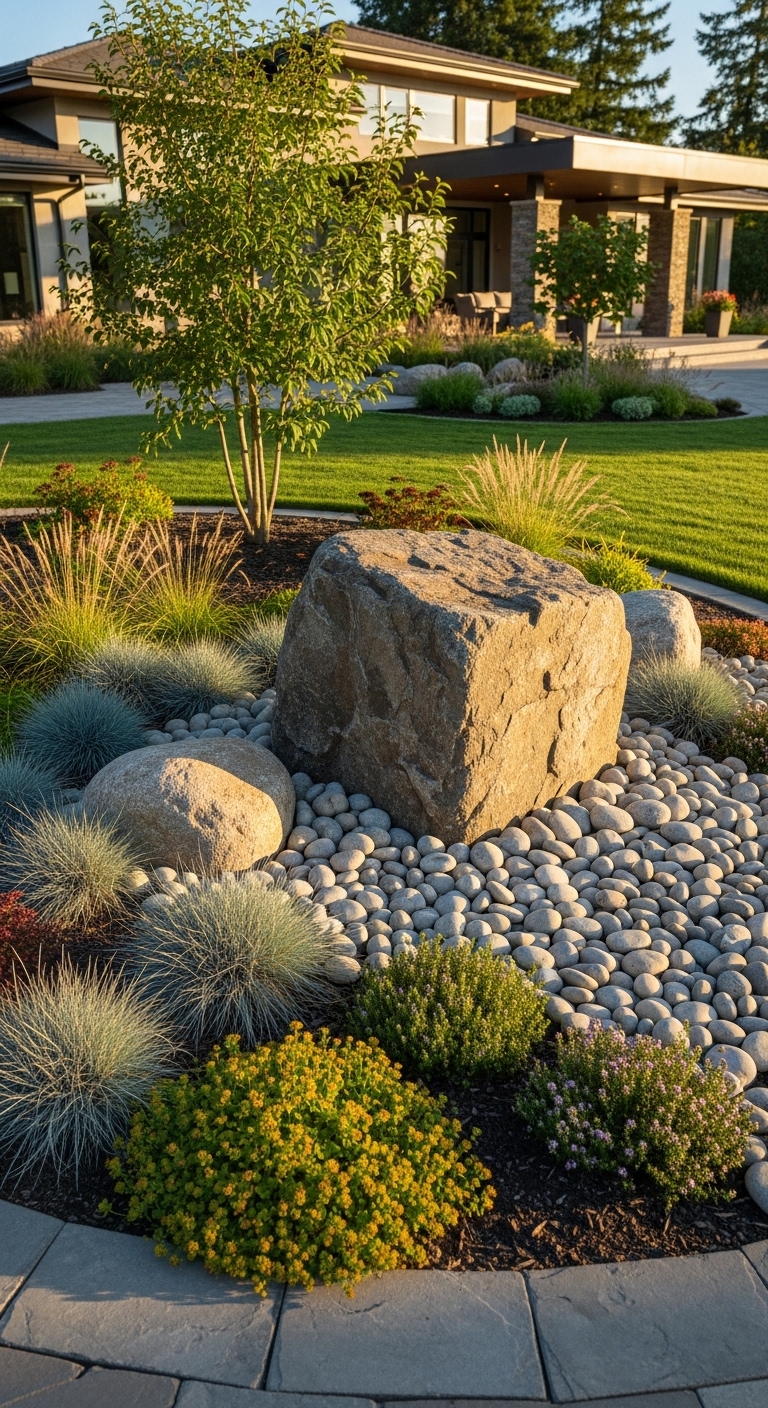
Our final idea is about using river rocks purely as art. A carefully composed arrangement of river rocks, boulders, and specimen stones in a key area of your yard — like a front entry, a corner of a patio, or the center of a circular garden — can become a genuine focal point.
- Select one or two genuinely interesting specimen rocks — unusual color, size, or shape — as the centerpiece
- Arrange smaller rocks around them in a way that radiates outward, like a sunburst pattern
- Keep the planting around the rock sculpture minimal and low — you want the rocks to be the star
- Add subtle outdoor lighting aimed at the boulder from the ground to make it dramatic after dark
This approach treats your rocks the way a museum treats sculpture — with intention, space, and framing. It takes the idea of “rocks in a yard” and elevates it into something genuinely artistic.
Final Thoughts: Making River Rocks Work for Your Yard
What makes river rock landscaping so special is that it genuinely works in every climate, every yard size, and almost every design style. Whether you lean toward clean and modern, wild and natural, or serene and meditative, there’s a river rock application that fits your vision.
The real secret is this: commit to the design before you buy the first rock. Know your drainage situation, your plant choices, your edge treatments, and your maintenance expectations before you start. River rocks reward intentional design. When they’re placed thoughtlessly, they just look like someone dumped a bag of rocks. When they’re placed with purpose, they make a yard look like it was designed by a professional.
Start with one idea from this list — the dry riverbed, the rock pathway, or even just the driveway edging — and see how it transforms your perspective on what’s possible with stone. Once you see it, you’ll want to keep going.