How Many Walls Should Be Decorated in a Room? A Simple Design Guide
Why This Question Matters
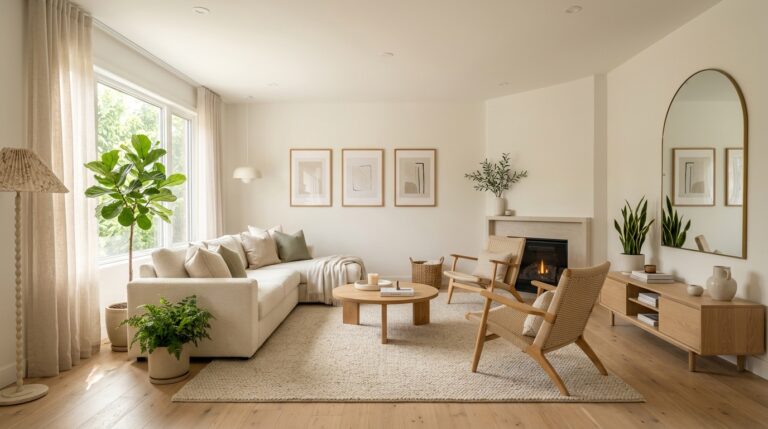
Walk into any beautifully styled room, and you’ll probably notice something subtle but powerful—it doesn’t feel crowded, yet it doesn’t feel empty either. That balance doesn’t happen by accident. It comes down to a simple design question that confuses almost everyone at some point: should you decorate all the walls or just a few?
It’s easy to assume that more décor means a better-looking space. After all, blank walls can feel unfinished. But here’s the twist—too much decoration can quickly tip a room from stylish to overwhelming. That’s where understanding balance becomes essential in interior design.
And the good news? You don’t need to guess your way through it. There’s a professional guideline that takes the stress out of decision-making and helps you figure out exactly how many walls deserve attention—and how many should quietly breathe in the background.
2. Quick Answer: The 1–3 Wall Rule
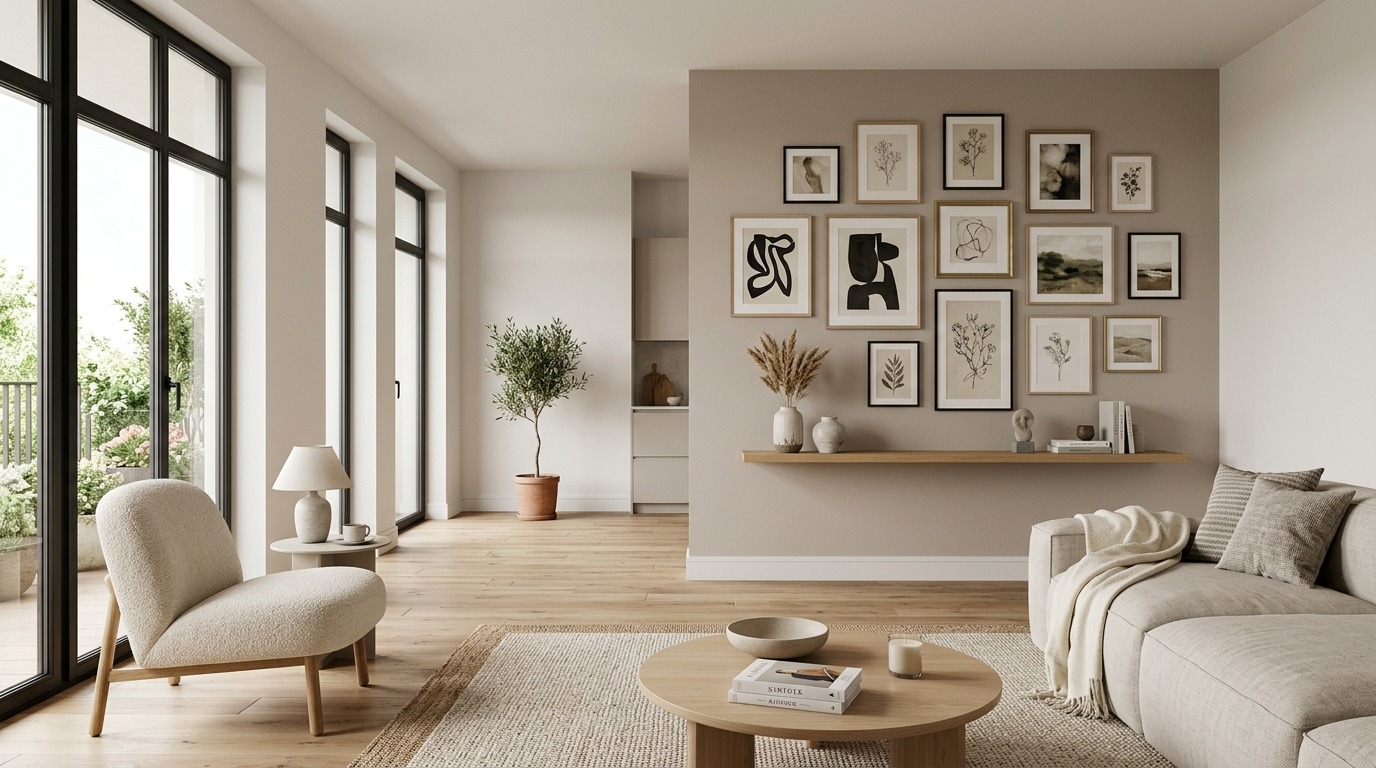
Here’s the simple answer interior designers often follow: most rooms look best with 1 to 3 decorated walls.
That’s it. Not all four. Not every available surface. Just a carefully chosen one, two, or three walls depending on the space.
But of course, it’s not one-size-fits-all. The ideal number shifts based on the room’s size, layout, and how the space is used. A compact studio won’t follow the same logic as a large open living area.
At the heart of this guideline is a simple design truth—less is often more when it comes to wall décor. Instead of filling every surface, the goal is to create impact where it matters most, allowing the room to feel intentional, open, and visually balanced.
3. How Many Walls to Decorate Based on Room Size
Not every room follows the same rulebook. The size and layout of your space quietly decide how much decoration feels “just right.” Here’s how it breaks down in real-life design thinking.
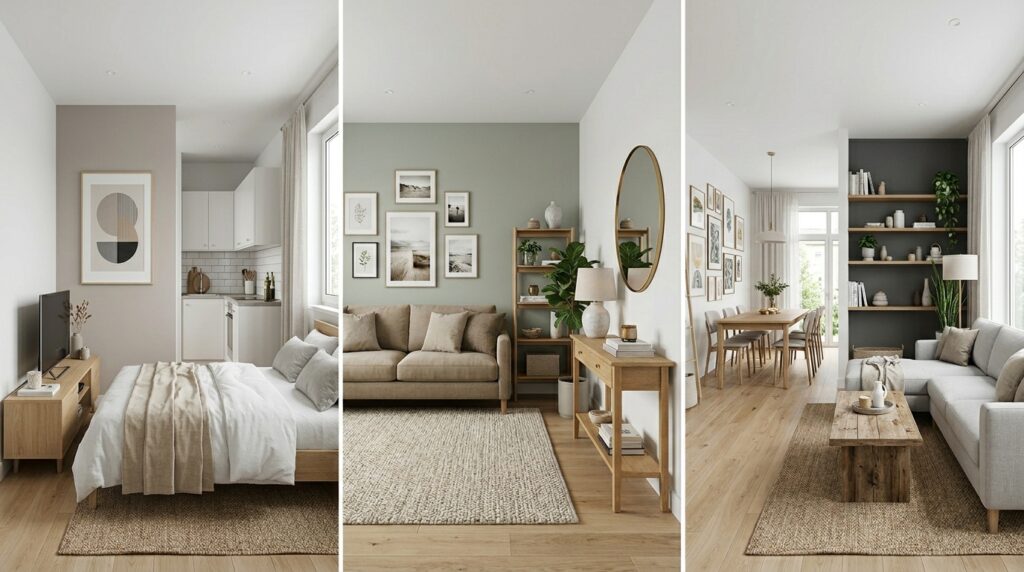
3.1 Small Rooms (Studio, Compact Spaces)
Recommended: 1 wall (feature wall)
Purpose: Creates a strong focal point without overwhelming the space
Result: Keeps the room open, airy, and visually uncluttered
In smaller rooms, every inch counts. Adding décor to too many walls can quickly make the space feel tight. That’s why designers often rely on a single statement wall to anchor the room and keep everything else calm and balanced.
3.2 Medium Rooms
Recommended: 2 walls
Purpose: Adds balance and visual interest
Result: Avoids emptiness while preventing overload
Medium-sized rooms give you a bit more freedom. One decorated wall alone might feel too bare, but going all-in can feel excessive. Two well-chosen walls strike the sweet spot—enough detail to feel styled, but still light enough to breathe.
3.3 Large Rooms / Open Layouts
Recommended: 2–3 walls
Purpose: Maintains flow across a larger spacResult: Keeps cohesion without making the room feel empty
Bigger spaces come with a different challenge—they can feel too empty if under-decorated. Using 2 to 3 walls helps distribute visual weight across the room, creating a natural flow without losing that sense of openness.
4. Key Design Principles Behind Wall Decoration
Beyond room size, a few timeless design principles help you decide how to approach wall décor in any space.
4.1 Always Leave Breathing Space
At least one wall should stay blank or minimally styled.
This empty space isn’t wasted—it’s essential. It gives the eye a place to rest and keeps the room from feeling visually overwhelming.
4.2 Focus on Natural Focal Points
Some walls naturally draw attention without effort.
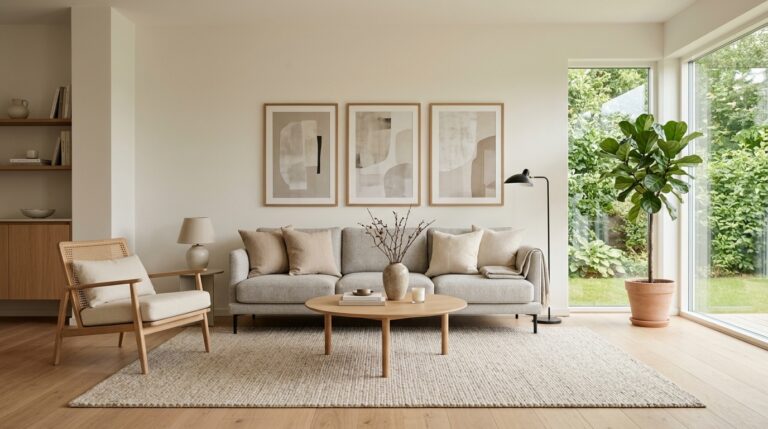
Think behind a sofa, above a bed, or around a fireplace. These are the spots where décoreels intentional rather than forced.
4.3 Avoid Decorating All Four Walls
Covering every wall can make a room feel busy and closed-in.
Most of the time, restraint creates a more stylish result. The only exception is when the décor is extremely minimal or consistently uniform.
4.4 Work With Furniture Placement
Wall décor should feel connected to the furniture, not random.
A well-decorated wall usually complements what’s in front of it, helping the entire room feel grounded and thoughtfully arranged.
4.5 Match Art Style With Wall Count
The type of artwork you choose influences how many walls you should decorate.
Bold, oversized pieces often work best on a single feature wall, while smaller or lighter artworks can be spread across 2 to 3 walls for a balanced look.
5. Common Mistakes People Make
Even with the best intentions, wall décor can go wrong fast. Most of the time, it’s not about the style—it’s about how it’s used in the space.
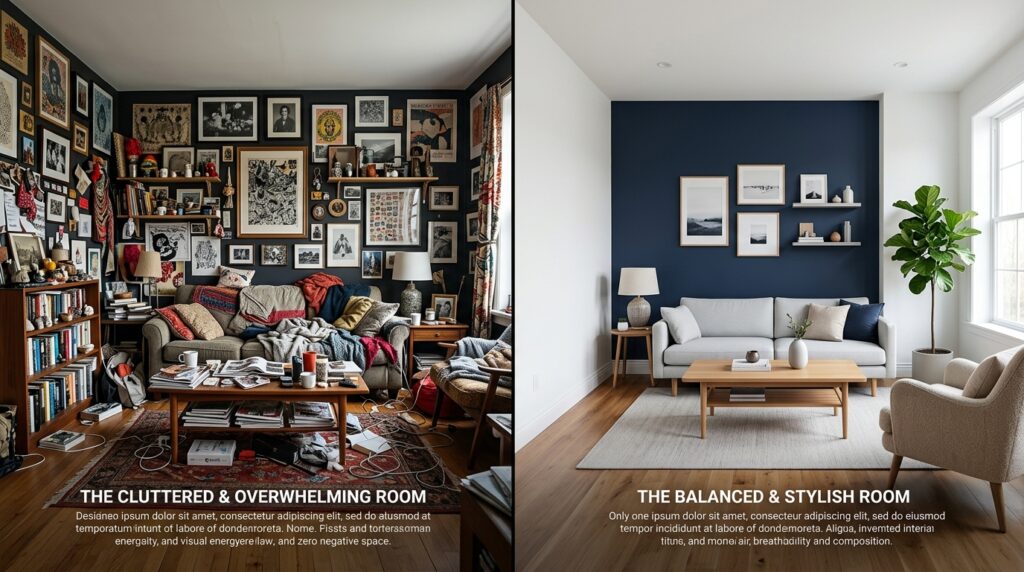
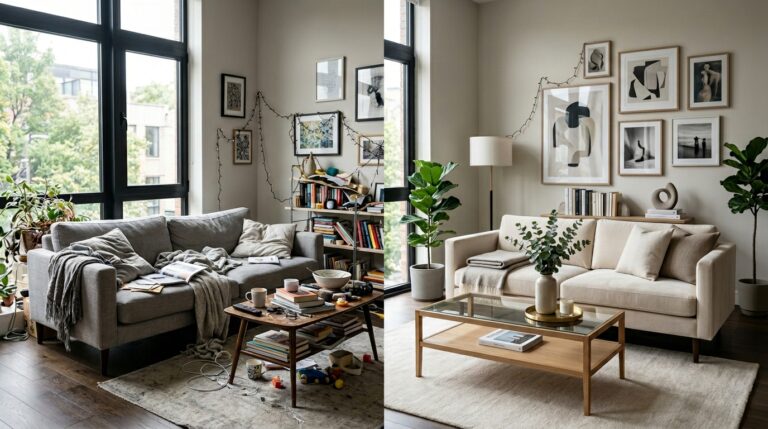
One of the biggest mistakes is decorating every wall in the room. While it may feel like you’re making the space more “complete,” it often ends up doing the opposite—making the room feel heavy and visually crowded.
Another common issue is ignoring room size when choosing décor. What works beautifully in a large living room can easily overwhelm a small studio if applied the same way.
People also tend to add wall art without thinking about furniture placement. When décor floats randomly instead of connecting with sofas, beds, or tables, the whole room can feel disconnected and unplanned.
And then there’s the classic trap of overcrowding small spaces with too many visuals. In compact rooms especially, too much on the walls competes for attention and reduces the sense of openness that makes the space feel comfortable in the first place.
6. Simple Rule of Thumb (Easy Takeaway)
When in doubt, keep it simple. These quick guidelines make decision-making effortless:
- Small room → 1 wall
- Medium room → 2 walls
- Large room → 2–3 walls
- Always leave at least one wall minimal
Think of it as a flexible formula rather than a strict rule. The goal isn’t to fill space—it’s to shape it.
Conclusion
At the end of the day, wall decoration isn’t about how much you add—it’s about how well everything works together. Balance is what turns a decorated room into a thoughtfully designed space.
The 1–3 wall guideline isn’t just a rule; it’s a reminder that restraint often leads to better design. When you focus your effort instead of spreading it everywhere, each wall gets more meaning, more impact, and more presence.
And maybe that’s the real secret—good design doesn’t shout from every corner. It knows when to pause, when to highlight, and when to let the space simply breathe.