15 Small Master Bedroom Decor Ideas That Make Every Inch Feel Luxurious
Have you ever walked into a tiny master bedroom and thought, “There’s no way I can make this feel cozy and stylish”? You’re not alone. Millions of people deal with compact sleeping spaces every single day — and here’s the thing most design blogs won’t tell you: small doesn’t mean sacrificed. In fact, some of the most breathtaking master bedrooms in the world are under 150 square feet.
The secret isn’t a bigger room. It’s smarter decor choices.
Whether you’re working with a narrow layout, low ceilings, or awkward corners, the right design moves can completely transform how your bedroom feels. We’re not talking about expensive renovations or gut-reno projects. We’re talking about intentional, well-placed choices that trick the eye, maximize function, and create an atmosphere you’ll genuinely love waking up in.
Let’s walk through 15 small master bedroom decor ideas that actually work — tested, practical, and beautiful enough to rival any luxury hotel suite.
Use a Floor-to-Ceiling Accent Wall to Add Visual Height
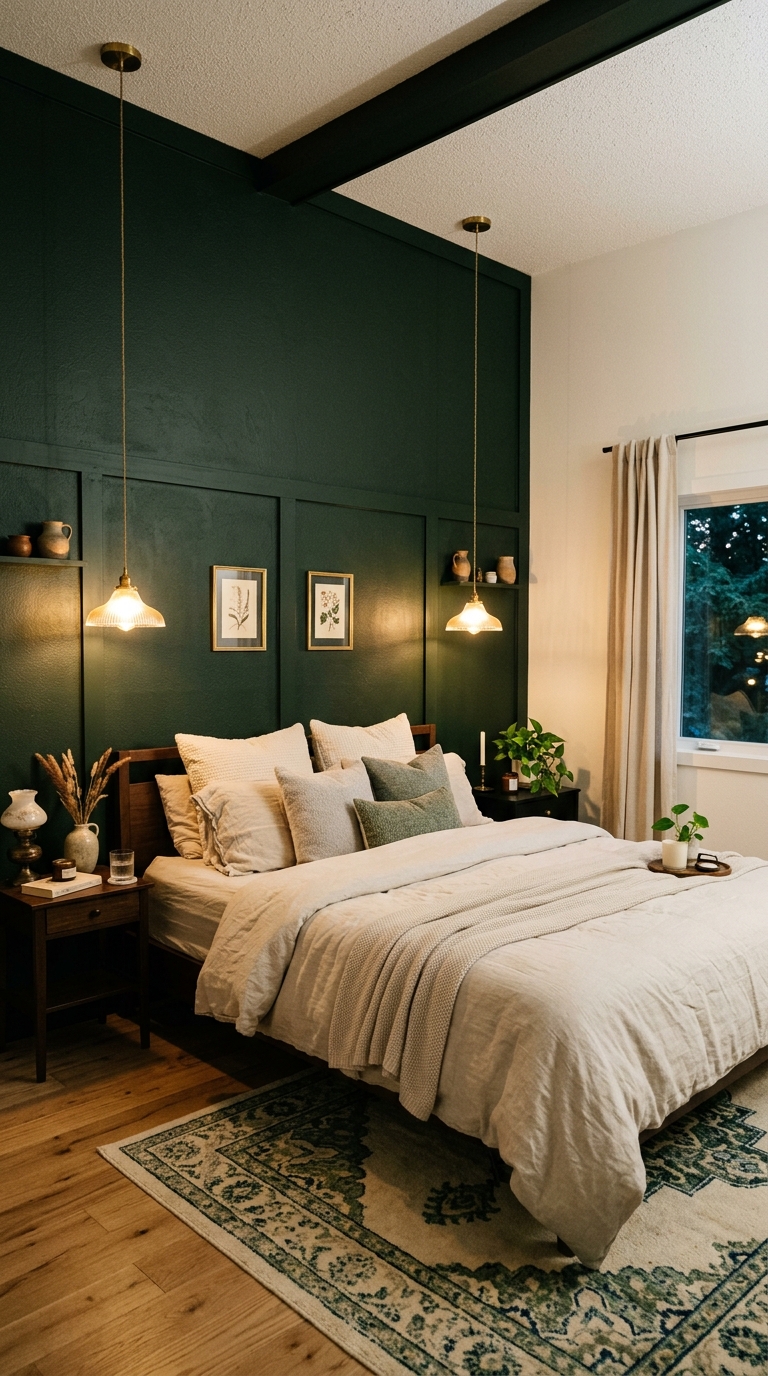
One of the fastest ways to make a small master bedroom feel taller and more dramatic is by drawing the eye upward. A floor-to-ceiling accent wall does exactly that — it creates a strong vertical line that instantly makes the room feel bigger than it is.
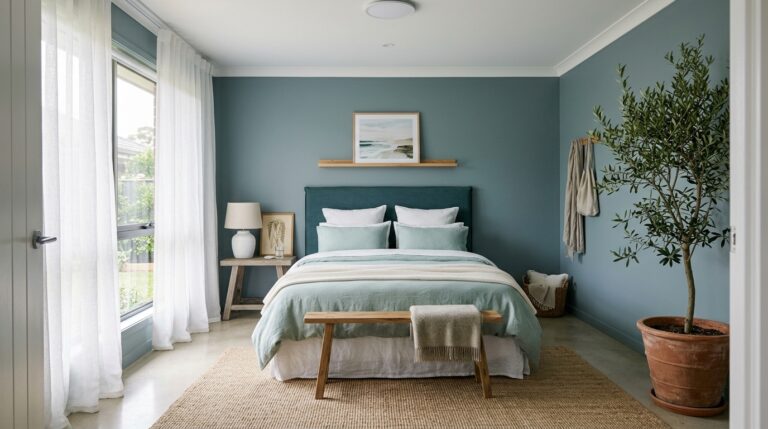
You don’t need wallpaper or expensive materials. A deep, moody paint color on a single wall — think charcoal, forest green, navy, or dusty terracotta — adds depth without closing the space in. The trick is to keep the remaining three walls in a lighter, complementary shade so the contrast does the heavy lifting.
What works really well here:
- Vertical shiplap painted in the same tone as the wall (no contrast stripes — it’s all one cohesive surface)
- A gallery wall that runs from baseboard to ceiling with varied-size frames
- A tall upholstered headboard that visually connects the bed to the accent wall
Real talk: A friend of mine painted the wall behind her bed in deep terracotta, and it completely changed the energy of her 120-square-foot room. It felt like a boutique hotel — and she spent less than $40 on paint.
Choose a Platform Bed With Built-In Storage Underneath
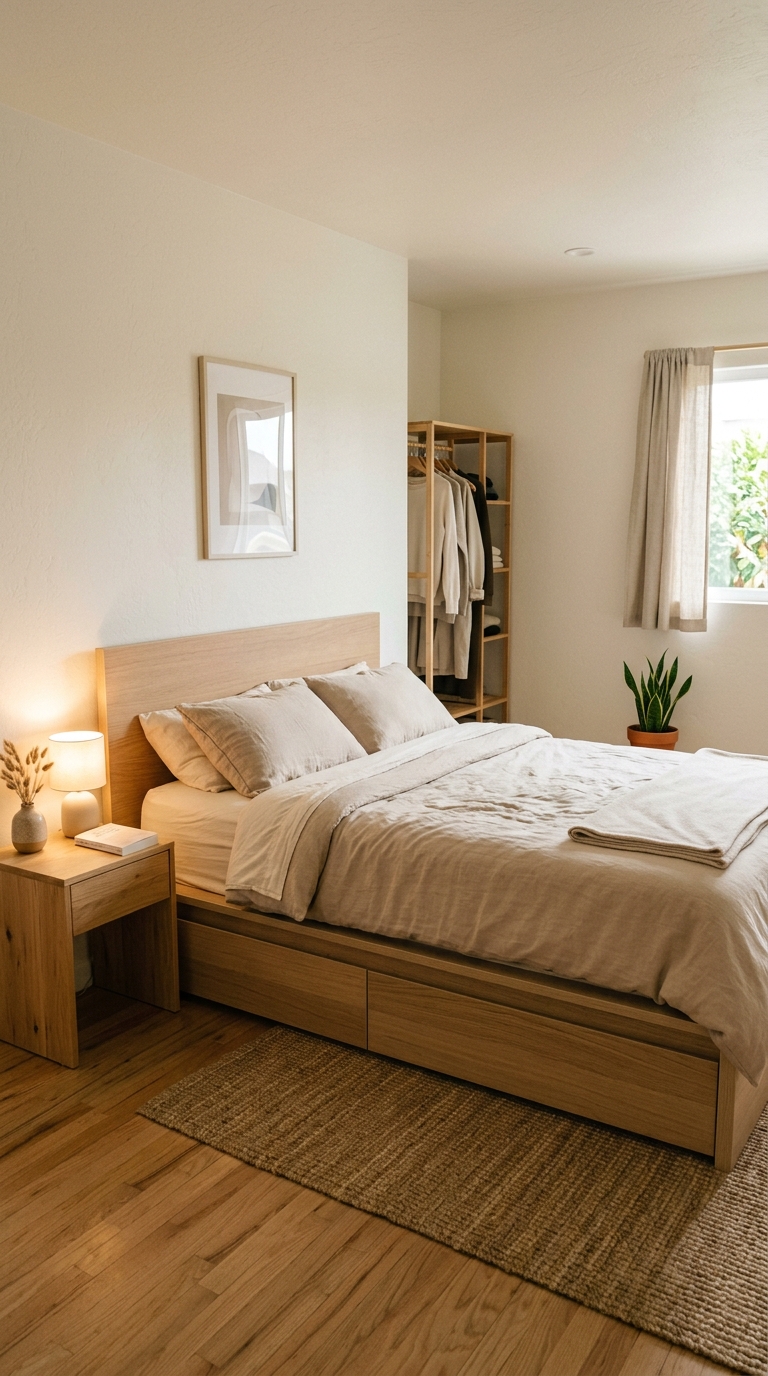
In a small master bedroom, every single piece of furniture needs to pull double duty. A platform bed with built-in drawers underneath is one of the most efficient investments you can make for a compact space.
You essentially gain a chest of drawers without using any floor space for one. Seasonal clothing, extra bedding, spare pillows — all of it disappears cleanly beneath the bed frame. The visual result is also sleeker. Platform beds sit lower to the ground, which makes ceilings feel higher by comparison.
Why this idea works so well in small rooms:
- Eliminates the need for a bulky dresser (freeing up precious floor space)
- Low profile keeps sightlines open and the room feeling airy
- Clean, modern lines work with almost any decor style
- Upholstered options add softness and warmth without extra accessories
If you’re going the upholstered route, choose a fabric in a neutral tone — oatmeal, greige, or soft grey. It blends into the room rather than demanding attention, which is exactly what you want in a tight space.
Install Floating Nightstands to Free Up Floor Space
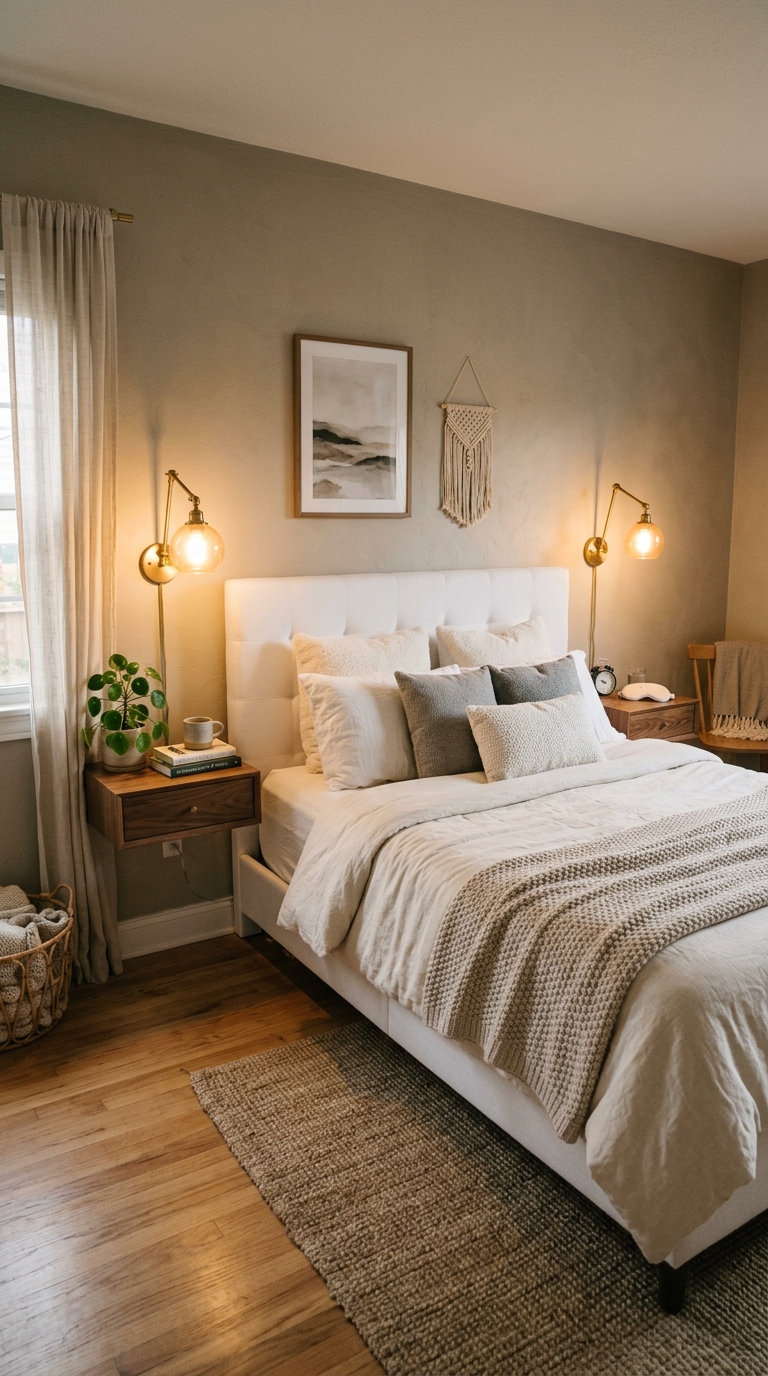
Here’s one of those decor moves that feels minor but makes a massive difference visually: swap your traditional bedside tables for floating wall-mounted nightstands.
Traditional nightstands take up floor space and create visual clutter at the sides of the bed. Wall-mounted shelves or floating nightstands do the same job — hold your lamp, phone, book, water glass — without touching the floor at all. The result? The floor looks larger, the room feels more open, and the whole space gets a cleaner, more intentional look.
Practical tips for floating nightstands:
- Mount them at mattress height for comfort and proportion
- Choose a shallow depth (8–10 inches is plenty) to avoid jutting into the walkway
- Add a small drawer unit if you need storage, or use wall sconces above them to keep surfaces clear
- Match the finish to your bed frame for a cohesive, designed look
The walkable floor space this creates is genuinely surprising. Even a few extra visible inches of floor makes a room breathe differently.
Layer Lighting Instead of Relying on One Overhead Fixture
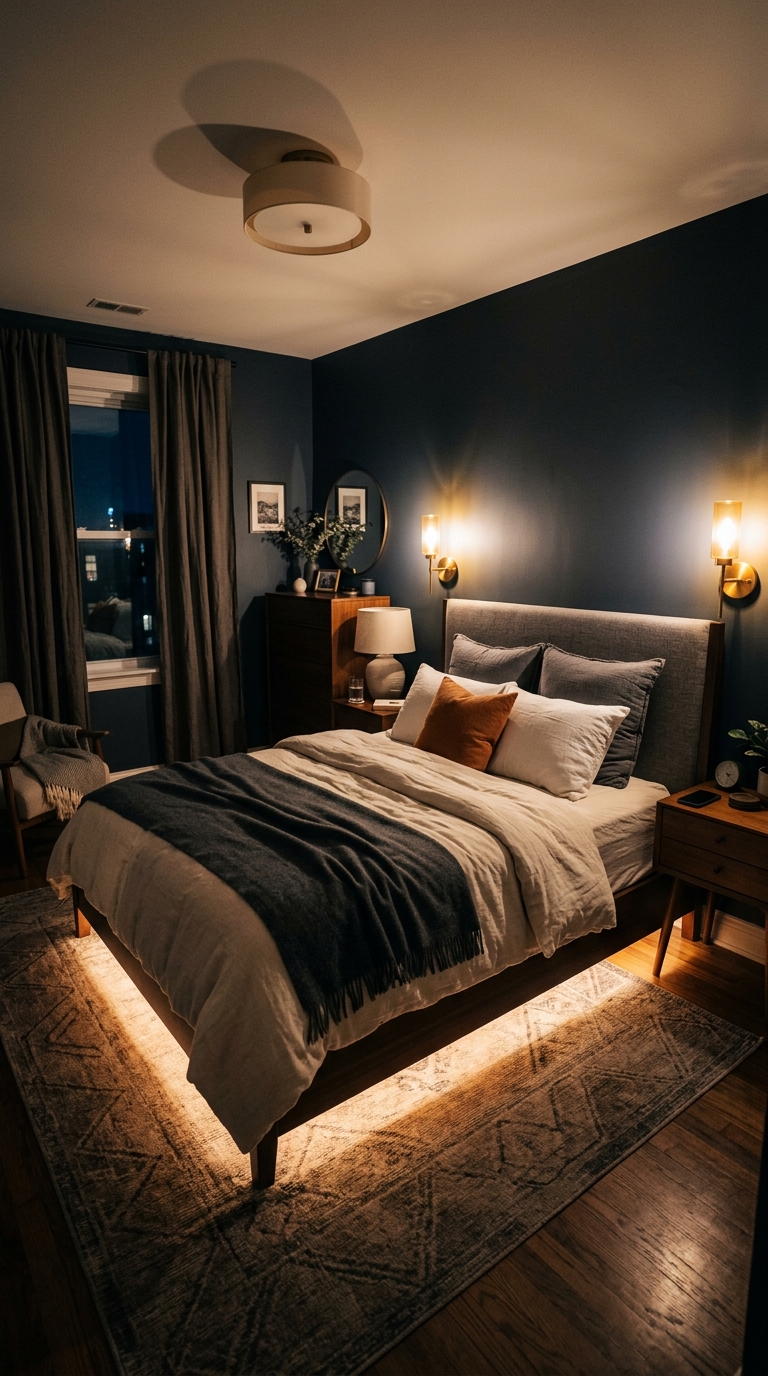
Nothing makes a small bedroom feel more like a cramped box than harsh overhead lighting. It flattens the room, highlights every tight corner, and creates zero ambiance. The fix? Layer your lighting — and do it intentionally.
Layered lighting means combining three types: ambient (general light), task (functional, directed), and accent (mood-setting). In a small master bedroom, this strategy makes the space feel multi-dimensional and genuinely luxurious.
A simple layered lighting plan for a small bedroom:
- Ambient: A soft flush-mount fixture or recessed lighting on a dimmer
- Task: Wall-mounted sconces on either side of the bed (frees up nightstand surfaces too)
- Accent: LED strip lighting behind a headboard, under the bed frame, or inside a wardrobe
Dimmers are non-negotiable here. Being able to shift from bright morning light to soft evening glow changes how the entire room feels — and it costs less than $20 to add a dimmer switch yourself.
Use Mirrors Strategically to Double the Visual Space
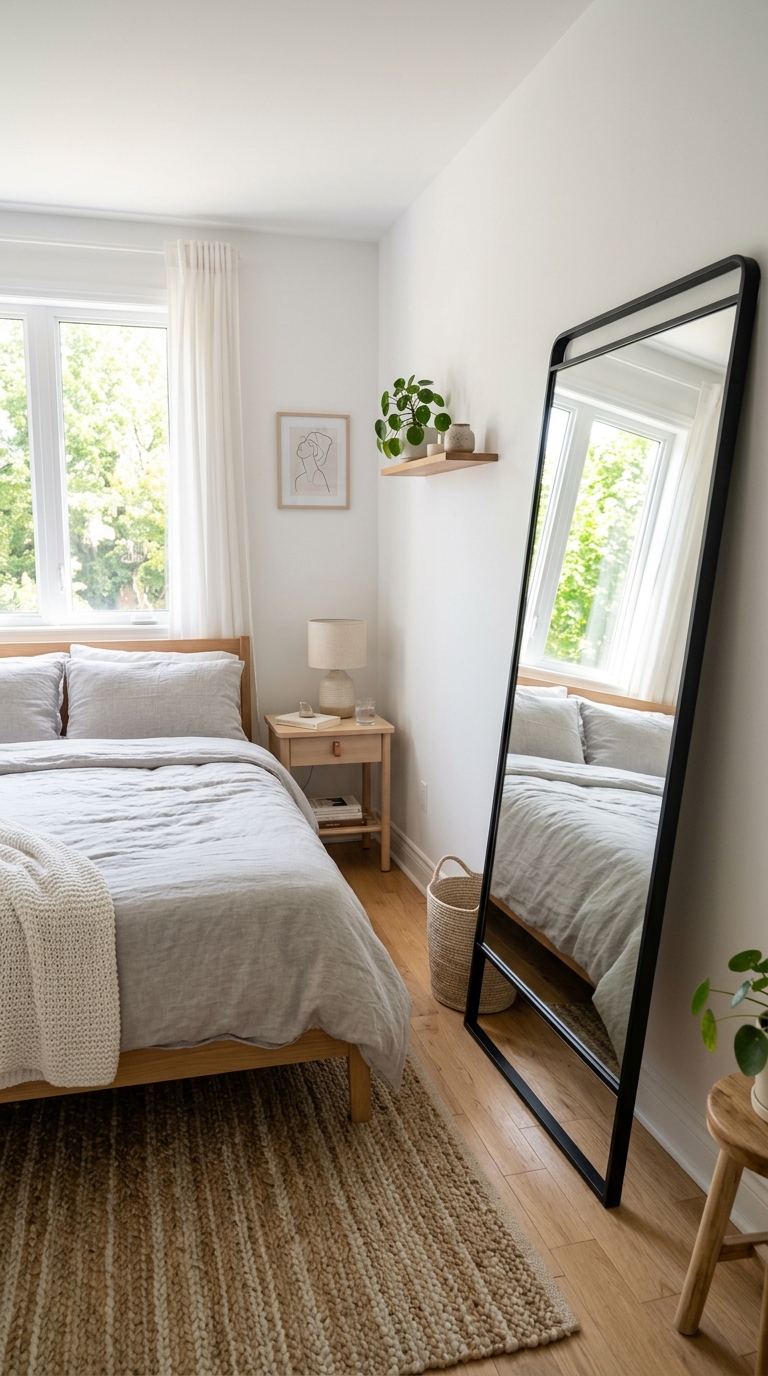
Mirrors are one of the oldest tricks in interior design, and there’s a reason designers still swear by them: they genuinely work. In a small master bedroom, a well-placed mirror reflects light and creates the illusion of depth — making the room feel like it has more square footage than it actually does.
But placement matters enormously. A mirror behind a door or tucked in a corner does almost nothing. You want your mirror to reflect either natural light or another visually appealing part of the room.
Smart mirror placement ideas:
- A large leaning mirror opposite a window to bounce natural light across the room
- Mirrored wardrobe doors instead of solid panels — functional and space-expanding
- A full-length mirror on the back of the bedroom door
- A round decorative mirror above the dresser to add shape and visual interest
The leaning mirror is my personal favorite. It’s effortless, works in any style, and adds that editorial, styled-by-a-designer look without any installation required.
Go Vertical With Your Storage Solutions
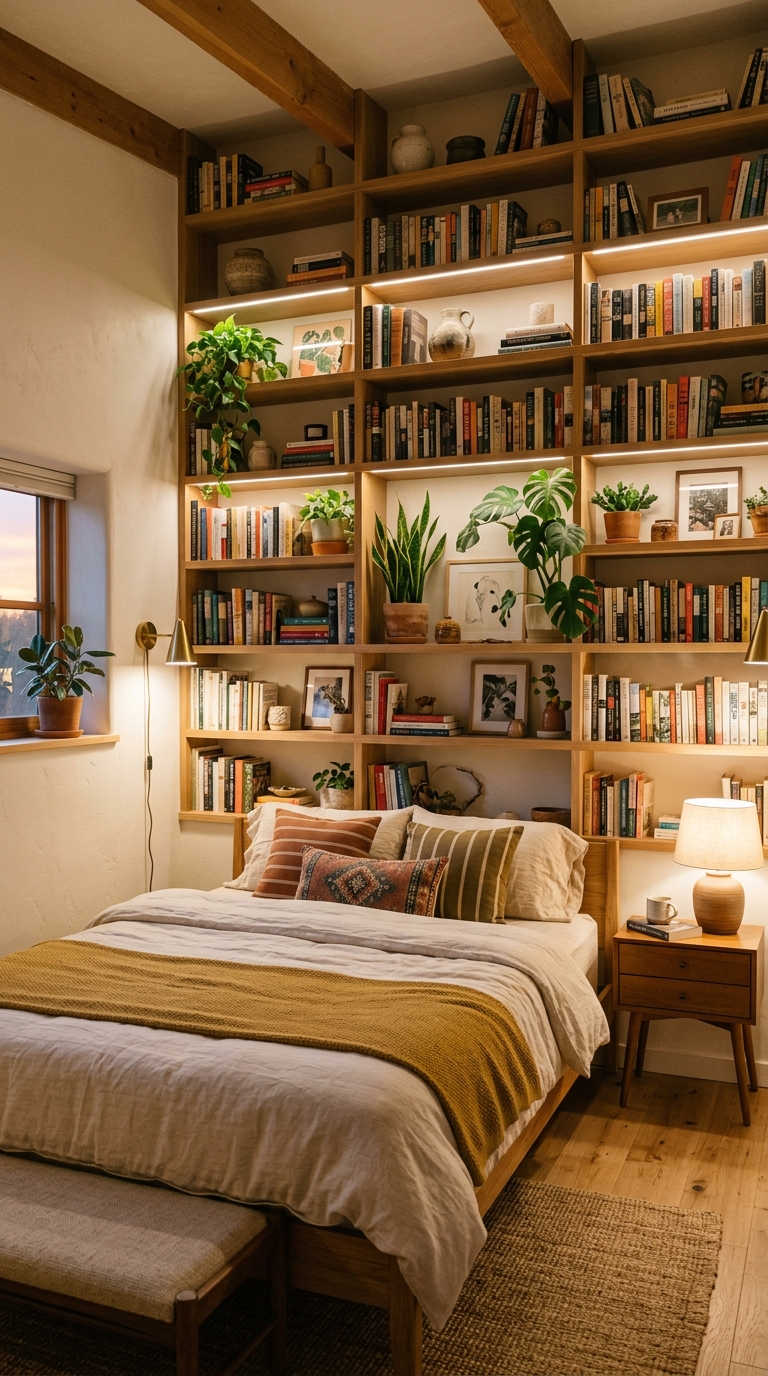
When floor space is limited, the only direction left is up. Vertical storage is one of the most underused strategies in small master bedroom design — and it completely changes what’s possible in a compact room.
Think tall, narrow bookshelves that reach toward the ceiling. Think wall-mounted hooks near the door. Think open shelving above the bed for decorative objects and books. When storage climbs the walls, it keeps the floor clear, which is the number one visual trick for making a small room feel larger.
Vertical storage ideas that actually look great:
- Floor-to-ceiling open shelving on either side of a window (built-in look, huge impact)
- A tall, slim wardrobe with interior organizers to maximize every inch of depth
- Pegboard wall panels for a creative, customizable storage display
- Hooks at varying heights near the entry of the room for bags, robes, and accessories
The key is keeping vertical storage organized. One cluttered shelf at eye level will undo all the hard work. Think: curated, intentional, and visually edited.
Choose a Light, Cohesive Color Palette Throughout
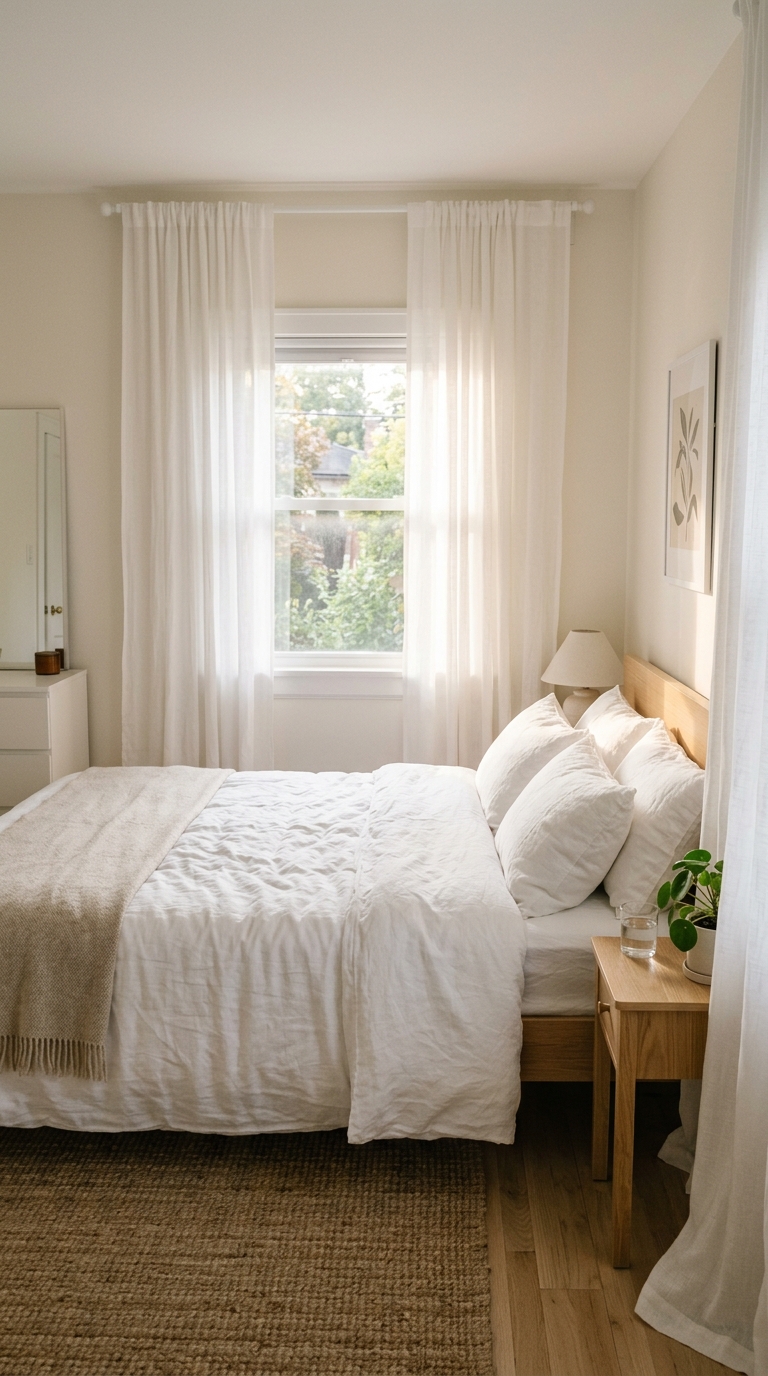
Color has more power over how a room feels than almost any other element. In a small master bedroom, a well-chosen color palette can either open the space up beautifully — or accidentally make it feel claustrophobic.
The golden rule for small spaces: stay within a tight, cohesive palette of two to three colors maximum. When walls, bedding, curtains, and larger furniture pieces all live in the same color family, the eye reads the room as one continuous, uninterrupted space — which makes it feel larger.
Colors that expand small bedrooms:
- Soft whites, creams, and warm off-whites for walls and ceilings
- Earthy neutrals — warm greige, soft taupe, sandy beige — for textiles
- One deeper accent (sage green, dusty blue, blush) introduced through pillows or a throw
- Natural wood tones as a grounding element throughout
Painting the ceiling the same color as the walls (or one shade lighter) is a designer trick that works especially well in rooms with lower ceilings. It removes the hard visual “cap” and lets the room breathe.
Maximize Natural Light With the Right Window Treatments
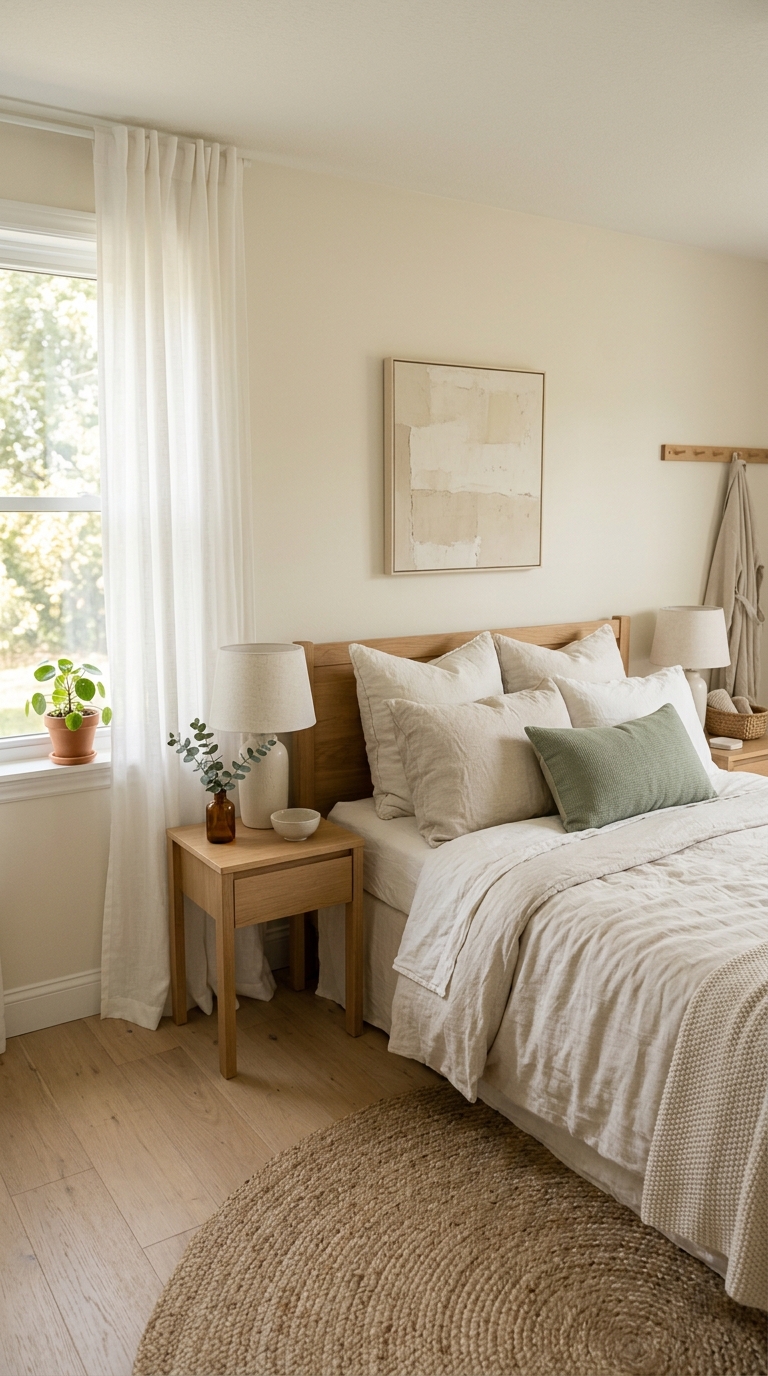
Natural light is your most powerful free design tool in any small space. The more you let in, the bigger, airier, and more inviting your bedroom will feel. But the wrong window treatments can block precious light and drag the whole room down.
The goal is maximum light during the day with the option for privacy and darkness at night. That combination is very achievable — you just need to choose the right layers.
Window treatment strategies for small master bedrooms:
- Hang curtain rods close to the ceiling (not just above the window frame) so panels frame the window from ceiling to floor — this adds height instantly
- Choose sheer curtains in white or cream as the first layer to diffuse light softly
- Add blackout roller blinds behind the sheers for nighttime privacy
- Avoid heavy, dark drapes unless you’re going for a deliberate moody aesthetic and compensating with other light sources
Hanging curtains four to six inches above the window — or all the way to the ceiling — is one of those changes that people can never exactly pinpoint, but immediately notice. The room just looks taller and more finished.
Add a Cozy Reading Nook in an Unused Corner
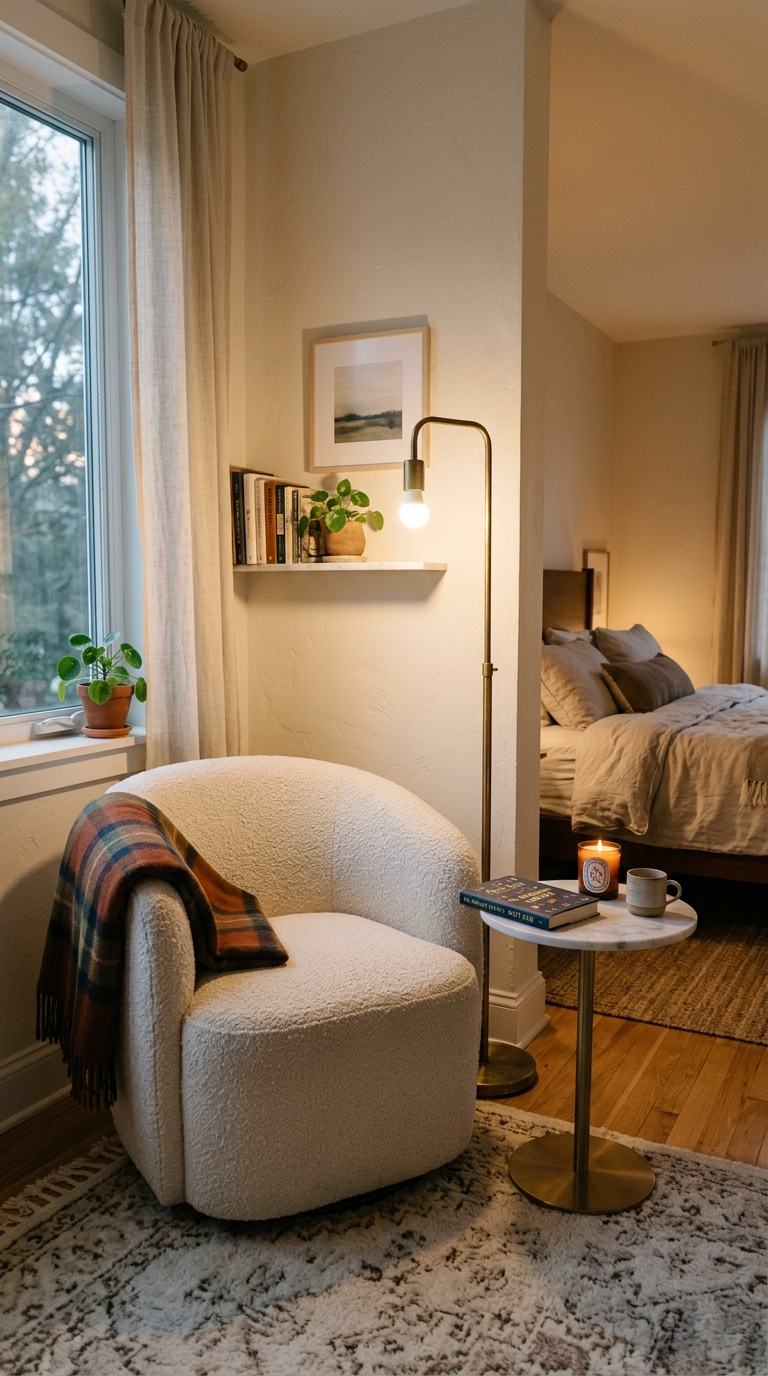
Every small master bedroom has at least one awkward corner that seems impossible to use. Instead of leaving it empty or cramming in a chair that doesn’t quite fit, turn it into an intentional, cozy reading nook.
A reading nook in the bedroom serves two purposes: it adds function (a dedicated spot to wind down with a book before sleep) and it adds visual warmth. A well-styled corner tells the story of a person who lives intentionally — and it makes the room feel more complete, more curated, and more personal.
How to create a cozy reading corner in a tight space:
- A small curved or barrel chair in a soft fabric (nothing with arms that jut out too far)
- A slim floor lamp positioned just above and behind the chair for reading light
- A small round side table for tea, a candle, or books
- A soft throw draped over the chair and a single cushion for texture
Keep the nook’s color palette aligned with the rest of the room. If you choose a chair in a contrasting color or pattern, make sure it echoes something else in the space — a pillow, a throw — so it feels intentional rather than random.
Incorporate Natural Textures for Warmth and Depth
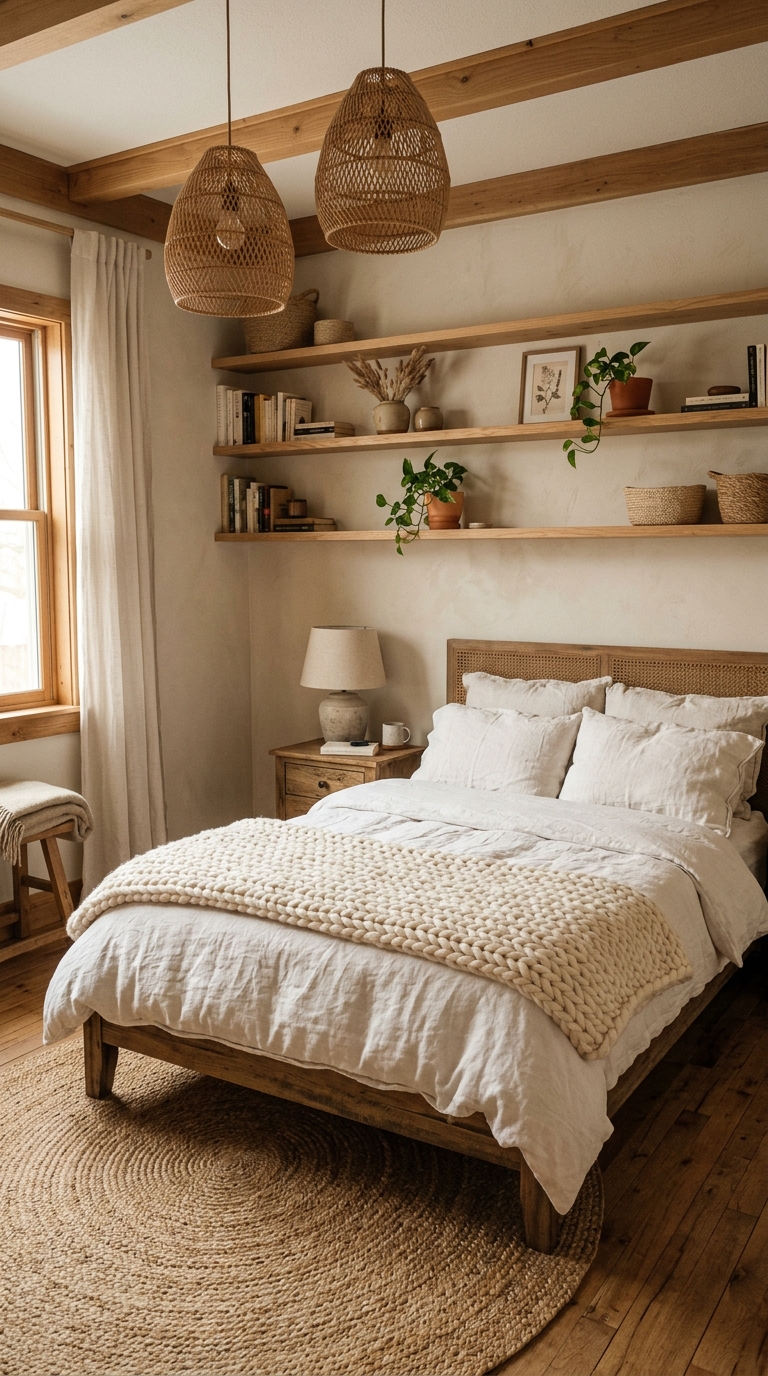
Small rooms can sometimes feel flat or one-dimensional, especially when the color palette is intentionally light and neutral (which, as we covered, it often should be). The way to add richness without adding visual weight is through texture.
Natural textures — linen, jute, rattan, wood grain, stone, cotton waffle weaves — create tactile interest that the eye reads as depth. A room layered with different textures feels lived-in, warm, and genuinely inviting in a way that smooth, shiny surfaces simply can’t replicate.
Natural texture combinations that work beautifully:
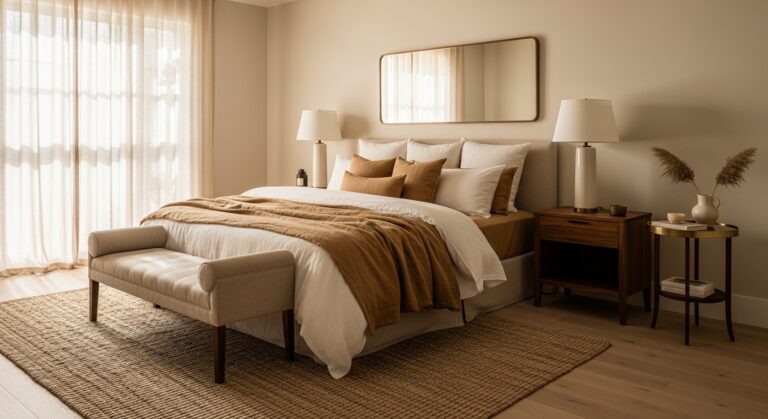
- Linen bedding + a chunky knit throw + a jute area rug under the bed
- Rattan light fixture + smooth wooden nightstands + woven basket storage
- Linen curtains + a tufted velvet pillow or two + raw wood shelf brackets
The rule of three works brilliantly here: pick three different natural textures and repeat them consistently throughout the room. That repetition is what creates cohesion rather than chaos.
Use an Area Rug to Define the Space and Add Softness
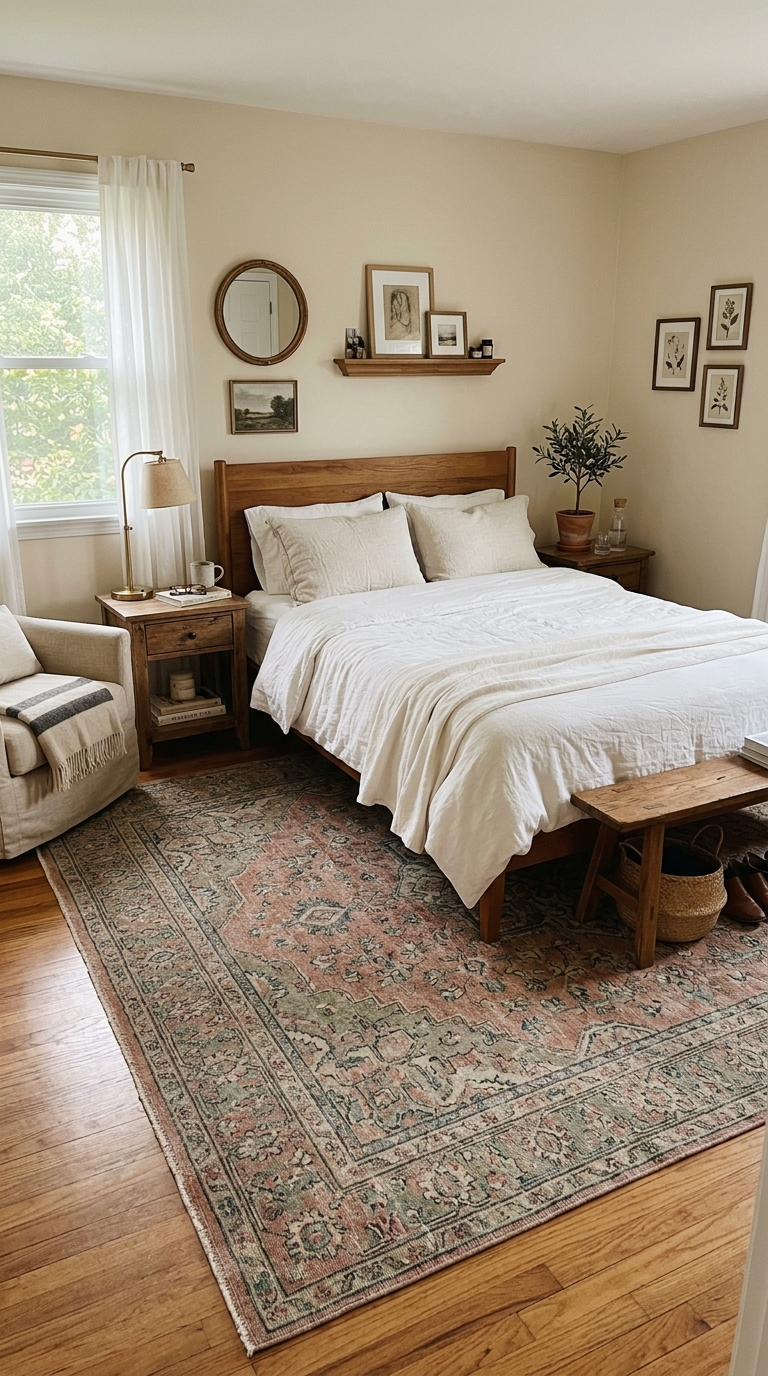
An area rug under the bed does more work than most people realize. It visually anchors the bed as the room’s focal point, adds warmth underfoot on cold mornings, absorbs sound, and brings the entire design together in a way that bare floors simply can’t.
In a small master bedroom, the biggest mistake people make with rugs is going too small. A rug that just barely peeks out from under the bed looks like an afterthought. You want the rug large enough that it extends at least 18–24 inches beyond the sides and foot of the bed.
Rug choices that work well in small master bedrooms:
- A natural jute or sisal rug for an organic, grounding look
- A low-pile wool rug in a subtle pattern (a gentle geometric or a tone-on-tone texture)
- A vintage-style Persian rug in muted tones for warmth and personality
- A plush, solid-color rug in a soft neutral for a luxurious, hotel-like feel
If your budget is tight, look at vintage or secondhand rug marketplaces. Some of the most beautiful rugs are the ones that have a little age and history in them — and they’re often a fraction of the cost of new ones.
Create a Focal Point With a Statement Headboard
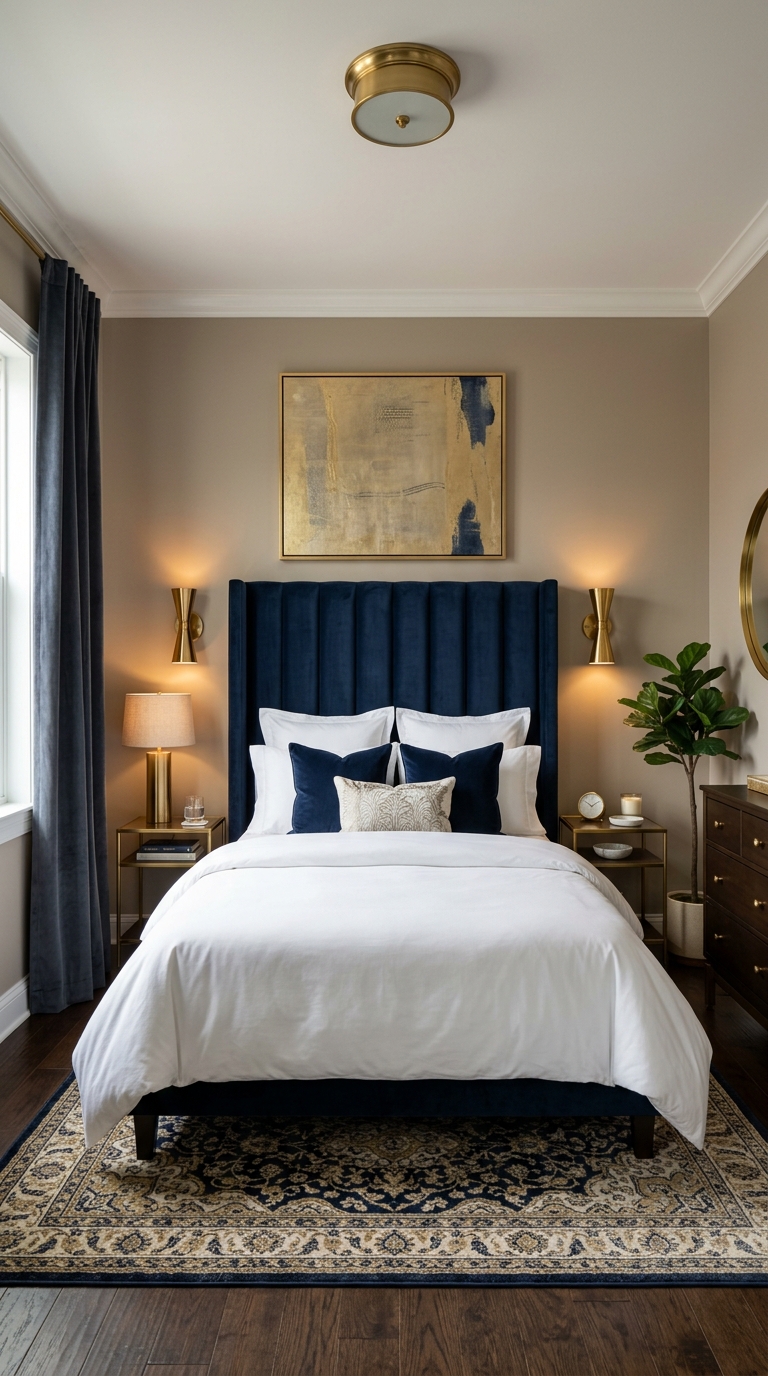
In any bedroom — large or small — the bed is the star. Everything else supports it. One of the most effective ways to make a small master bedroom feel designed and intentional is by giving the bed a truly stunning headboard that commands attention.
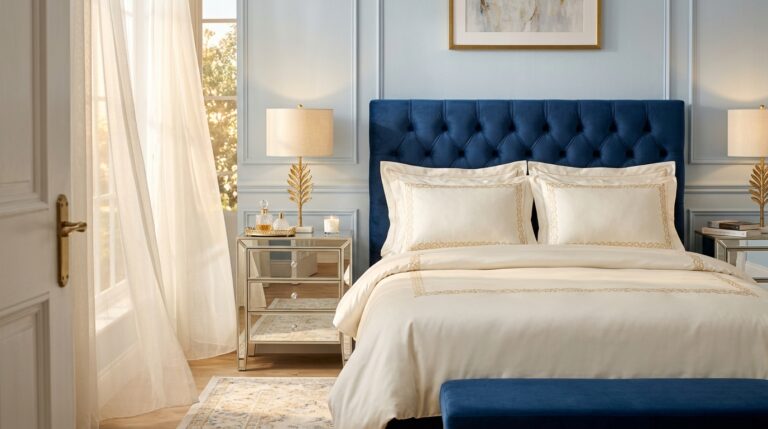
A statement headboard doesn’t need to be enormous. It needs to be interesting. An upholstered headboard in a rich fabric, a wooden headboard with architectural detail, or even a DIY fabric panel mounted directly to the wall — any of these transforms the bed from a piece of furniture into a design moment.
Headboard ideas that shine in small spaces:
- A tall, slim channel-tufted headboard in deep velvet (navy, forest green, or cognac)
- A natural rattan or cane headboard for an organic, bohemian feel
- A wood-slat headboard with a built-in shelf running along the top
- A DIY fabric-wrapped panel mounted flush to the wall, extending wider than the mattress
Whatever headboard you choose, mount it higher than you think you need to. A headboard that nearly grazes the ceiling draws the eye upward and creates an incredible sense of height in a low-ceilinged room.
Declutter Aggressively and Embrace Intentional Minimalism
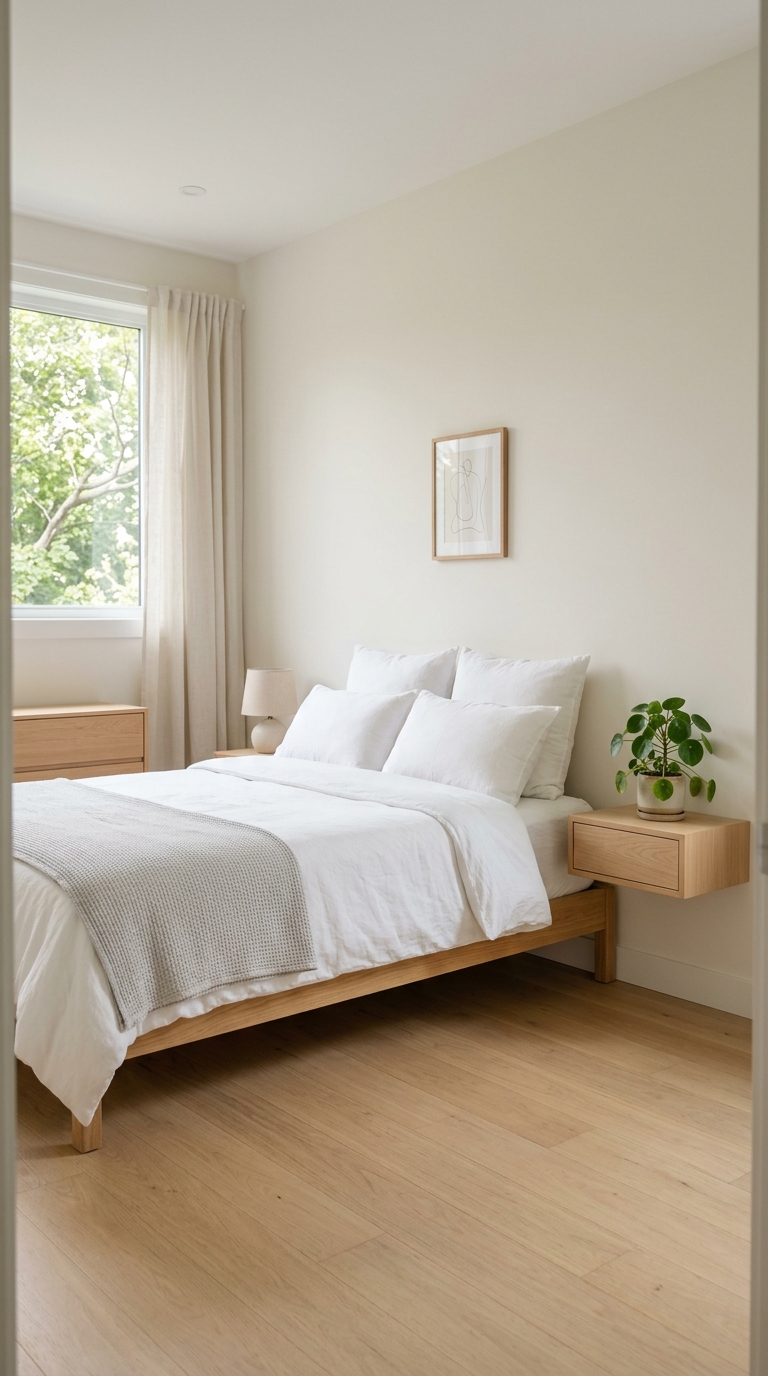
This one isn’t glamorous, but it might be the most impactful item on this entire list. Nothing shrinks a small master bedroom faster than clutter. And nothing expands it more effectively than decluttering with real intention.
Minimalism in a small bedroom doesn’t mean cold or sterile. It means curated. Every object in the room should earn its place — either by being functional, beautiful, or emotionally meaningful. If something is none of those three things, it doesn’t belong in the room.
A practical approach to bedroom minimalism:
- Keep surfaces (nightstands, dresser tops) to a maximum of three items each
- Use a “one in, one out” rule for bedroom decor — every new item requires removing something
- Store items you don’t use daily behind closed doors, in drawers, or in under-bed storage
- Choose decor pieces with dual function — a beautiful bowl that also holds jewelry, a decorative ladder that also holds throws
Spend one afternoon with a box and a trash bag going through your bedroom. I promise you — the feeling of the room after that single session will motivate you to keep it that way. Clarity in a space creates clarity in the mind.
Bring the Outdoors In With Plants and Natural Elements
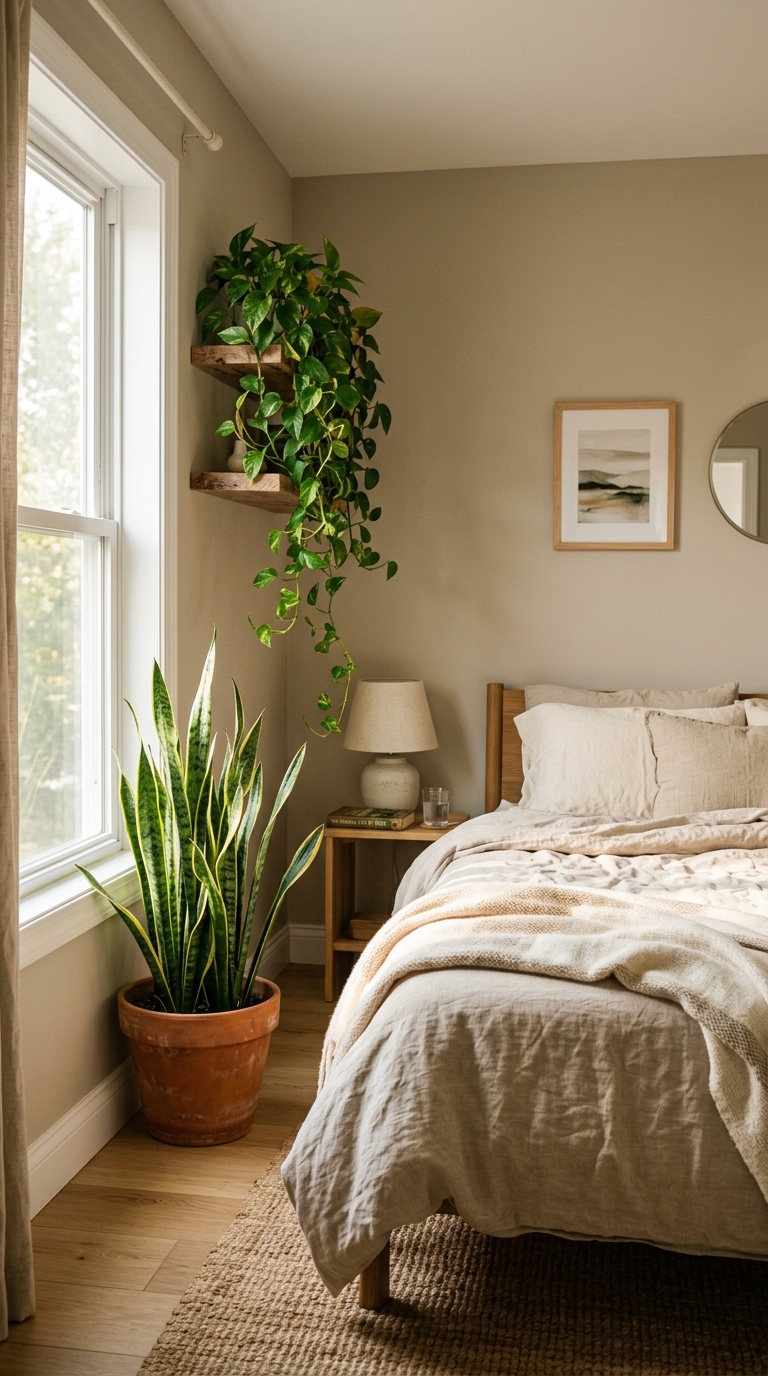
A small master bedroom can feel cut off from the natural world, especially in urban apartments. Adding living plants changes that entirely — and the effect goes beyond aesthetics. Plants introduce organic shapes, natural color, and a sense of life into a space. Research consistently shows that having greenery in bedrooms reduces stress and improves overall mood.
The key in a small room is choosing the right plants and placing them thoughtfully. You’re not creating a jungle — you’re adding considered pops of nature.
Best plants for small master bedrooms:
- A tall fiddle-leaf fig or snake plant in a corner to add height and drama
- Small pothos or trailing ivy on a floating shelf (the trailing vines add softness)
- A compact peace lily on a nightstand — it thrives in low light and purifies air
- Dried pampas grass in a ceramic vase for low-maintenance texture and warmth
If you’re not confident with live plants, high-quality dried botanicals (dried grasses, eucalyptus, preserved ferns) are a genuinely beautiful alternative that requires zero maintenance and lasts for years
Design a Smart, Stylish Wardrobe Wall That Does Everything
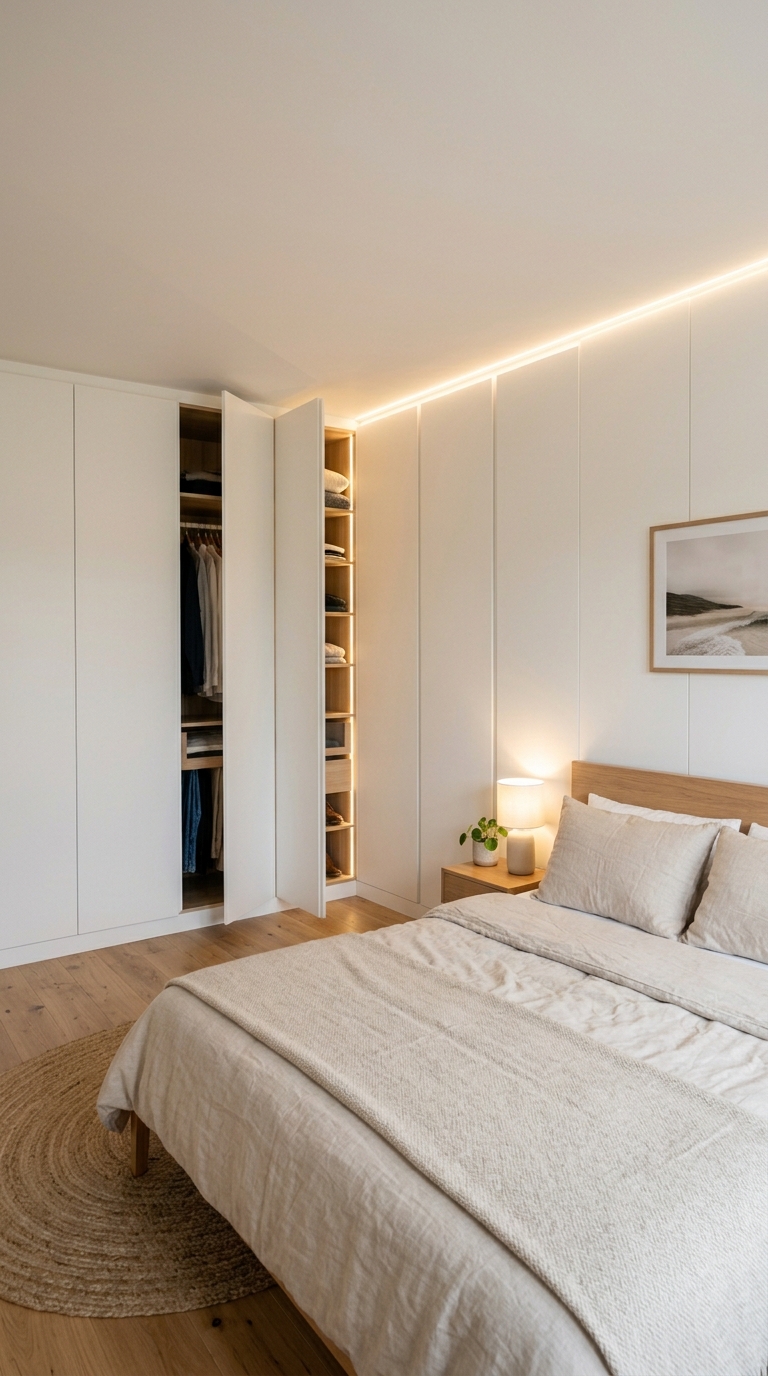
When a separate walk-in closet isn’t an option, the solution is a full wardrobe wall — a built-in or fitted wardrobe system that runs the entire length of one wall. Done right, this single element transforms your small master bedroom’s function and its appearance.
A floor-to-ceiling wardrobe wall provides enormous storage capacity while visually expanding the room because it gives the eye a single, uninterrupted surface to read rather than multiple competing pieces of furniture.
What to look for in a small bedroom wardrobe wall:
- Mix of hanging space, shelves, and drawers to accommodate all clothing categories
- Sliding or hinged doors in a light wood finish, white, or mirror (mirrored doors double the room visually)
- Integrated lighting inside the wardrobe so you can actually see what you own
- A handle-free design (push-to-open mechanism) for the cleanest possible look
The moment you replace freestanding wardrobes and scattered clothing storage with one unified wardrobe wall, the room makes sense. Everything has a place, the floor opens up, and the bedroom finally feels like the retreat it was always meant to be.
Bringing It All Together
Here’s what ties all 15 of these ideas together: intention. A small master bedroom doesn’t need more space — it needs more thoughtful design. Every item in the room should serve a purpose, every surface should feel considered, and the overall atmosphere should reflect what you want to feel when you walk through that door at the end of a long day.
Start with one or two ideas from this list. Maybe it’s swapping out your nightstands for floating shelves. Maybe it’s finally getting that statement headboard you’ve been eyeing. Maybe it’s just spending an afternoon decluttering and seeing how the room changes before you spend a single penny.
Small bedrooms, done right, feel more intimate, more cozy, and more personal than massive rooms ever could. You have everything you need — you just need the right plan to bring it to life.